Abstract
Major benefits of ivermectin (IVM) treatment for COVID-19 have been known since the results of 20 such randomized controlled trials (RCTs) were reported, as compiled in January 2021. Of the eight of these RCTs that tracked mortality or morbidity in patients with serious cases, seven showed statistically significant clinical improvements. The pooled mortality reduction in these eight RCTs was 78% in the treatment vs. controls groups, and the RCT that used the highest dose of IVM reported a 92% reduction in mortality (p < 0.001). Three RCTs for IVM prevention of COVID-19 and two animal studies of IVM at low human-equivalent doses likewise reported pronounced efficacy. Here we note the recent publication of RCTs for IVM treatment or prevention of COVID-19 in mainstream scientific journals that confirm these previously reported findings.
Background
The consistently observed, major benefits of ivermectin (IVM) for COVID-19 treatment have been known since a January 2021 meta-study compiled results of 20 such randomized clinical trials (RCTs).1 Of the eight of these RCTs that tracked mortality or morbidity in patients with moderate or severe symptoms (4 double-blind,2-5 1 single-blind,6 and 3 non-blinded7-9), seven showed statistically significant clinical improvements (all but Podder et al.8). The pooled mortality reduction in these eight RCTs for the IVM treatment group vs. controls was 78% (mortality of 2.1% for IVM, 9.5% for controls). The RCT that used the highest dose of IVM, 1,600 μg/kg total, had 2 vs. 24 deaths in the treatment vs. control group (n=200 each),7 a 92% reduction in mortality (p < 0.001).
Complementing these IVM treatment studies, three RCTs evaluated IVM for prevention in subjects exposed to COVID-19 patients. These studies reported relative COVID-19 incidences of 20%, 16% and 13% compared with incidences in controls, with even lower relative incidences for serious such cases. In addition, two animal studies of IVM treatment at low human-equivalent doses for SARS-CoV-2 in hamsters10 and for a closely related betacoronavirus in mice11 likewise found major, highly statistically significant treatment benefits.
Yet some skeptical reviewers had dismissed this overwhelming RCT evidence for clinical efficacy of IVM against COVID-19, claiming insufficient quality of the studies,12,13 as had been indicated by the lack of publication of any in mainstream scientific journals. The recent publication of five such RCTs for IVM in top-tier journals, including Lancet eClinicalMedicine14 and BMC infectious diseases,15 all reporting major, statistically significant clinical benefits against COVID-19, dismantles these skeptical critiques.
Five recently published studies in mainstream scientific journals
Among these five recently published RCTs was a prevention study of April 2021 by Seet et al.16 IVM was administered to 617 subjects, with 2,420 other subjects assigned to either a control group or to one of three other preventative regimens. The subjects were then tracked for onset of COVID-19 symptoms and positive nasopharyngeal PCR tests over a 42-day period. IVM at a dose of 12 mg was given just once on day one, while the three other preventative regimens were each administered daily during this 42-day period. Yet IVM at this single low dose yielded the best clinical results, reducing incidence of symptomatic COVID-19 by 50% (p=0.003) and of ARDS symptoms by 49% (p=0.012) with respect to controls. IVM at that single low dose, however, yielded only a non-significant 8% reduction in relative incidence of positive PCR tests.
Of the four recently published RCTs that studied IVM treatment of COVID-19, Chaccour et al., as previously released in preprint, monitored outcomes for 40 generally young patients with mild COVID-19 symptoms.14 A single dose of IVM at 400 μg/kg significantly reduced the duration of hyposmia/anosmia (p<0.001), but gave only a modest reduction in viral load. Shahbaznejad et al. reported that IVM in a single dose of 200 μg/kg reduced duration of COVID-19 symptoms and hospitalization (p=0.02 for each).17 IVM also reduced duration of coughing (p=0.02) and of shortness of breath (p<0.05). No conclusions could be drawn regarding mortality, since only one patient died, within 24 hours of hospitalization in critical condition, a 78-year old woman in the treatment group with a history of diabetes and heart failure.
Mahmud et al. administered a single dose of IVM at 12 mg plus doxycycline at 100 mg twice daily for five days.18 The IVM treatment group had statistically significant clinical benefits v. controls by four different measures, p=0.001 to 0.003, and had a reduced percentage of positive PCR tests at 14 days with p=0.002. Okumus et al. administered IVM at 200 μg/kg for five consecutive days, in addition to the standard of care used for both the treatment and control groups, which included azithromycin.15 At the end of the five-day study follow-up period, spO2 was increased; CRP, ferritin and D-dimer blood levels were reduced; and percentage of PCR-negative tests were increased vs. controls, all to statistical significance (p=0.032, 0.02, 0.005, 0.03, and 0.01, respectively).
More pronounced reduction by single-agent IVM of COVID-19 morbidity v. infectivity
The findings of two of these five recently published RCTs, Chaccour et al.14 and Seet et al.,16 both fit a pattern established in a prior RCT3 and two animal studies10,11 of more pronounced alleviation by IVM as a single agent of COVID-19-related symptoms and morbidities than reductions in viral load. Indeed, one RCT of IVM at an unusually high dose, 3,000 μg/kg total over 5 consecutive days, yielded a statistically significant reduction in viral load in COVID-19 patients vs. controls only for the subgroup of treated patients (45%) in which the highest levels of plasma IVM levels were obtained.19
This disparity between reduction in morbidity vs. infectivity by IVM for COVID-19 may be explainable by the indicated clinically operative biological mechanism of IVM as reported in seven molecular modeling studies.20-26 Those studies found that IVM bound strongly to regions of SARS-CoV-2 viral spike protein, one subdomain of which (RBD) controls viral binding and replication via host cell ACE2 receptors, with another subdomain (NTD) governing viral attachments to sialic acid (SA) binding sites on blood, endothelial and other host cells.27 The latter such attachments of SARS-CoV-2 to SA binding sites on red blood cells (RBCs) are responsible for the clumping that is observed in vitro when virus is mixed with RBCs in this hemagglutinating virus. Whereas the common cold human betacoronavirus strains contain an enzyme, hemagglutinin esterase (HE), that releases viral-RBC clumps, the three virulent betacoronavirus strains—SARS-CoV-2, SARS-CoV, and MERS—lack HE.27 IVM, if it is found to bind to NTD sites on SARS-CoV-2 spike protein, might thus limit viral virulence by blocking such hemagglutinating bindings.
The biological mechanism of IVM that is operative clinically against COVID-19 remains to be confirmed, as do indications of its greater reduction of morbidity than of infectivity per the studies noted. The recent publication of the five RCTs noted in top tier scientific journals, however, positively confirms the major, statistically significant clinical benefits of IVM, as previously reported in several prior such RCTs, for COVID-19 treatment and prevention.
References
1. Hill A, Abdulamir A, Ahmed S, et al. Meta-analysis of randomized trials of ivermectin to treat SARS-CoV-2 infection. Research Square. 2021;doi:10.21203/rs.3.rs-148845/v1.
2. Babalola O, Bode C, Ajayi A, et al. Ivermectin shows clinical benefits in mild to moderate COVID19: A randomised controlled double blind dose response study in Lagos. medRxiv. 2021;doi:10.1101/2021.01.05.21249131.
3. Kirti R, Roy R, Pattadar C, et al. Ivermectin as a potential treatment for mild to moderate COVID-19 – A double blind randomized placebo-controlled trial. medRxiv. 2021;doi: 10.1101/2021.01.05.21249310.
4. Mahmud R. Clinical Trial of Ivermectin Plus Doxycycline for the Treatment of Confirmed Covid-19 Infection (NCT04523831). https://clinicaltrials.gov/ct2/show/results/NCT04523831?view=results. Updated October 9, 2020. Accessed April 2, 2021.
5. Niaee MS, Gheibi H, Namdar P, et al. Ivermectin as an adjunct treatment for hospitalized adult COVID-19 patients; A randomized multi-center clinical trial. Research Square. 2020;doi:10.21203/rs.3.rs-109670/v1.
6. Hashim HA, Maulood MF, Rasheed AM, et al. Controlled randomized clinical trial on using Ivermectin with Doxycycline for treating COVID-19 patients in Baghdad, Iraq. medRxiv. 2020;doi:10.1101/2020.10.26.20219345.
7. Elgazzar A, Hany B, Abo Youssef S, et al. Efficacy and Safety of Ivermectin for Treatment and prophylaxis of COVID-19 Pandemic. Research Square. 2020;doi:10.21203/rs.3.rs-100956/v1.
8. Podder CS, Chowdhury N, Sina MI, et al. Outcome of ivermectin treated mild to moderate COVID-19 cases; a single-centre, open-label, randomised controlled study. IMC J Med Sci. 2020;14(2):002.
9. Okumus N. Ivermectin for Severe COVID-19 Management (NCT04646109). https://clinicaltrials.gov/ct2/show/results/NCT04646109?view=results. Updated January 27, 2021. Accessed April 21, 2021.
10. Melo GD, Lazarini F, Larrous F, et al. Anti-COVID-19 efficacy of ivermectin in the golden hamster. bioRxiv. 2020;doi:10.1101/2020.11.21.392639.
11. Arévalo AP, Pagotto R, Pórfido JL, et al. Ivermectin reduces in vivo coronavirus infection in a mouse experimental model. Scientific Reports. 2021;11(1):7132.
12. COVID-19 Scientific Advisory Group Rapid Evidence Report: Ivermectin in the Treatment and Prevention of COVID-19. Alberta Health Services. https://www.albertahealthservices.ca/assets/info/ppih/if-ppih-covid-19-sag-ivermectin-in-treatment-and-prevention-rapid-review.pdf. Published February 2, 2021. Accessed May 24, 2021.
13. Sax PE. Ivermectin for COVID-19 — Breakthrough Treatment or Hydroxychloroquine Redux? NEJM Journal Watch. https://blogs.jwatch.org/hiv-id-observations/index.php/ivermectin-for-covid-19-breakthrough-treatment-or-hydroxychloroquine-redux/2021/01/04/. Published January 4, 2021. Accessed May 24, 2021.
14. Chaccour C, Casellas A, Blanco-Di Matteo A, et al. The effect of early treatment with ivermectin on viral load, symptoms and humoral response in patients with non-severe COVID-19: A pilot, double-blind, placebo-controlled, randomized clinical trial. EClinicalMedicine. 2021;10.1016/j.eclinm.2020.100720.
15. Okumuş N, Demirtürk N, Çetinkaya RA, et al. Evaluation of the effectiveness and safety of adding ivermectin to treatment in severe COVID-19 patients. BMC Infectious Diseases. 2021;21(1):411.
16. Seet RCS, Quek AML, Ooi DSQ, et al. Positive impact of oral hydroxychloroquine and povidone-iodine throat spray for COVID-19 prophylaxis: An open-label randomized trial. International Journal of Infectious Diseases. 2021;106:314-322.
17. Shahbaznejad L, Davoudi A, Eslami G, et al. Effect of ivermectin on COVID-19: A multicenter double-blind randomized controlled clinical trial. Clinical Therapeutics. 2021;https://doi.org/10.1016/j.clinthera.2021.04.007.
18. Mahmud R, Rahman MM, Alam I, et al. Ivermectin in combination with doxycycline for treating COVID-19 symptoms: a randomized trial. Journal of International Medical Research. 2021;49(5):03000605211013550.
19. Krolewiecki A, Lifschitz A, Moragas M, et al. Antiviral effect of high-dose ivermectin in adults with COVID-19: a pilot randomised, controlled, open label, multicentre trial. SSRN. http://ssrn.com/abstract=3714649. Published 2020. Accessed November 23, 2020.
20. Dayer M. Coronavirus (2019-nCoV) Deactivation via Spike Glycoprotein Shielding by Old Drugs, Bioinformatic Study. Preprints.org. 2020;doi:10.20944/preprints202005.0020.v1.
21. Hussien MA, Abdelaziz AEM. Molecular docking suggests repurposing of brincidofovir as a potential drug targeting SARS-CoV-2 ACE2 receptor and main protease. Network Modeling Analysis in Health Informatics and Bioinformatics. 2020;9(1):56.
22. Suravajhala R, Parashar A, Malik B, et al. Comparative Docking Studies on Curcumin with COVID-19 Proteins. Preprints.org. 2020;doi:10.20944/preprints202005.0439.v2.
23. Nallusamy S, Mannu J, Ravikumar C, et al. Shortlisting Phytochemicals Exhibiting Inhibitory Activity against Major Proteins of SARS-CoV-2 through Virtual Screening. Research Square. 2020;doi:10.21203/rs.3.rs-31834/v1.
24. Kalhor H, Sadeghi S, Abolhasani H, et al. Repurposing of the approved small molecule drugs in order to inhibit SARS-CoV-2 S protein and human ACE2 interaction through virtual screening approaches. Journal of Biomolecular Structure and Dynamics. 2020;10.1080/07391102.2020.1824816:1-16.
25. Agrawal L, Poullikkas T, Eisenhower S, et al. Viroinformatics-Based Analysis of SARS-CoV-2 Core Proteins for Potential Therapeutic Targets. Antibodies (Basel). 2021;10(1).
26. Toor HG, Banerjee DI, Lipsa Rath S, et al. Computational drug re-purposing targeting the spike glycoprotein of SARS-CoV-2 as an effective strategy to neutralize COVID-19. Eur J Pharmacol. 2021;890:173720.
27. Scheim DE. From cold to killer: How SARS-CoV-2 evolved without hemagglutinin esterase to agglutinate, then clot blood cells in pulmonary and systemic microvasculature. http://ssrn.com/abstract=3706347. Published 2020. Accessed March 30, 2021.
May 26, 2021
Posted by aletho |
Science and Pseudo-Science, Timeless or most popular | Covid-19, Ivermectin |
Leave a comment
Over the last two months I’ve literally been bombarded by people asking me about my opinions on ivermectin as a treatment for covid, so I figured I’d better look in to it. Ivermectin is an anti-parasitic drug, used primarily to treat infections caused by parasitic worms. It was discovered in the 1970’s, and the researchers who discovered it were awarded the Nobel prize for their discovery in 2015.
The interest in ivermectin as a potential treatment for covid-19 is likely due to a study published way back in June of 2020, that showed a large reduction in SARS-CoV-2 in a cell culture after addition of ivermectin. If ivermectin were shown to be effective against Covid, that would be great, because it’s generic, cheap, safe, and widely available, so it would be easy to start treating people quickly. Unfortunately, that also means western pharmaceutical companies have zero interest in doing research on ivermectin, because there is no way to make a decent profit from it.
Who does have an interest? Poorer countries, that can’t afford expensive new drugs. That means the research on ivermectin as a treatment for covid has been pretty much entirely carried out outside the west.
I’ve managed to find four reasonably large randomized controlled trials looking at ivermectin for covid, and those are the trials we’re now going to discuss (I also found a fifth one, but it only enrolled 12 patients in each group, which to me is so small it’s not even worth looking at). Note that (as far as I’m aware) none of these studies has yet been published in a peer-reviewed journal. Personally, I don’t think peer-review is worth very much, so that doesn’t bother me at all, but it’s just something to be aware of.
The first trial was carried out in Bangladesh and completed in October. It included patients over the age of 18 with mild to moderate covid confirmed with PCR. Patients with severe covid were excluded from the study. According to the researchers the study was double-blind and placebo-controlled, although it is unclear from the study protocol whether the control group actually received a placebo, and what the placebo consisted of.
The intervention group received a single 12 mg dose of ivermectin plus 100 mg of doxycycline twice a day for five days (doxycycline is an antibiotic). Thus this wasn’t really a trial of ivermectin, it was a trial of ivermectin + doxycycline.
A total of 400 people were recruited in to the trial, and they were divided evenly between the intervention group and the control group. The average age of the participants was 40 years. The primary end point for the study was recovery within seven days, which the researchers defined as follows: absence of a fever for at least three days, significant improvement in respiratory symptoms, significant improvement on lung imaging, absence of complications requiring hospitalization, and an oxygen saturation above 93% .
This is a problematic end point, because a couple of the things in that list are not very specific, which leaves it up to the researchers to decide whether someone has recovered within seven days or not. Maybe that wouldn’t be such a problem if we could be 100% confident that there was complete blinding of the participants and the researchers, but based on the information provided I’m not even remotely certain that that was the case. And if there wasn’t blinding, then the researchers could easily have manipulated the results to make them appear more impressive.
Ok, let’s get to the results.
In the group treated with ivermectin + doxycycline, 61% had recovered within 7 days, and in the control group, 44% had recovered within 7 days. The difference was statistically significant (p-value <0,03).
At the two week mark after recruitment in to the study, participants had a second PCR test performed. In the group receiving ivermectin + doxycycline, 8% had a positive PCR test at two weeks. In the control group, 20% had a positive PCR test. Again, the result was statistically significant, in fact highly so (p-value <0,001).
Three people died in the control group, compared with zero people in the treatment group. However the result was not statistically significant (which of course doesn’t mean that there isn’t a difference – even if there is a real difference in mortality, this study simply was not large enough to be able to detect it).
So, what can we conclude?
This study suggests that ivermectin + doxycycline can shorten symptom duration, and also decreases viral load. If the results are real, the effect is actually pretty impressive. However, it is not clear from the published data that the study really was effectively blinded, and that means we can’t be very confident that the results are real. Additionally, it is unfortunate that the researchers chose to combine two separate drugs in one study, because it muddies the waters and makes it impossible to know whether it was the ivermectin or the doxycycline that was producing a benefit. Let’s move on to the next trial.
This was an open-label trial (i.e. both the researchers and the patients knew who was in which group) involving 140 patients, and the results were posted on MedRxiv in October 2020. As with the previous study, the treatment being tested was ivermectin plus doxycycline. The study was carried out in Iraq.
In order to be included in the study, patients had to have confirmed covid (based on a combination of symptoms, radiology, and PCR). All levels of severity of disease were admitted in to the study. Those with mild symptoms had to have been symptomatic for three days or less, while those with severe symptoms had to have had severe symptoms for at most two days, and those with critical symptoms had to have had critical symptoms for at most one day. The researchers motivate this somewhat weird set of inclusion criteria by saying that they wanted to see how effective ivermectin plus doxycycline is at the earliest stage of each phase of the disease.
Patients were randomized to either 200 ug/kg of ivermectin per day (roughly 14 mg per day for an average 70 kg person) for two days, and 100 mg of doxycycline twice a day for five to ten days. Unfortunately the researchers decided to break randomization because they felt it would be “unethical” to put people with critical illness in to the control group (personally I think it’s unethical to break randomization, because the results become less scientifically valid and thereby less useful to all the other millions of patients around the world). So all participants with critical covid recruited in to the study ended up in the ivermectin + doxycycline group. In the end there were 48 people with mild to moderate disease in each group. In the ivermectin + doxycycline group there were 11 people with severe disease and 11 people with critical disease, while in the control group there were 22 people with severe disease and no people with critical disease.
So, technically, this study wasn’t actually randomized at all. However, the fact that everyone with critical illness was placed in the treatment group should make the treatment look worse, not better, so if there is a positive effect of treatment in spite of that, then it’s likely bigger than this study shows.
The average age of the patients was 50 years in the treatment group and 47 years in the control group. Among those with mild to moderate disease, symptoms had started a median of three days earlier, while those with severe disease had first become symptomatic seven days earlier, and those with critical disease had started having symptoms nine days earlier.
The primary end point was time to recovery. This is very problematic in an unblinded study, because “time to recovery” is quite subjective, and it is very easy for the researchers to manipulate the results in whatever direction they want. Anyway, let’s look at the results.
The average time to recovery was eleven days in the group treated with ivermectin plus doxycycline, and 18 days in the control group. The result was highly statistically significant (p-value < 0,0001). That would mean that ivermectin and doxycycline together shorten the time to recovery by almost 40% in relative terms! If the study had been double-blind, and it was very clear exactly what the criteria for “recovery” were, that would be a very impressive result, especially considering that the people in the treatment group were on average sicker to start. However, since neither of those things are true, the result is highly questionable.
Two people died in the ivermectin + doxycycline group, compared with six people in the control group. This also seems impressive, but again, the study isn’t statistically powered to show an effect on mortality.
So overall so far we have two studies that suggest that the combination of ivermectin and doxycycline can be beneficial when used to treat patients with covid-19. However, both studies have flawed methodologies that make the results suspect. And if there is a real benefit, then we still don’t know whether to attribute that benefit to ivermectin or to doxycycline, or to some combination of the two. Let’s move on.
Next up we have a trial that went up on MedRxiv at the beginning of January 2021. The study was carried out in Nigeria. It was double-blind, which is good, but unfortunately it was very small. 62 patients were included in total, and randomized to three different treatment arms, so there were only around 20 patients per group.
Participants were included in the study if they had a positive PCR test. There was apparently no requirement that they have any symptoms. Obviously, this is a problem, since we know that the risk of a false positive result rises enormously when asymptomatic people are being tested. Funnily enough, even though they included asymptomatic people, they excluded people with severe covid, so this was really a trial of people with mild to non-existent disease. Why they tested people without symptoms is unclear, and why they then went even further and decided to try treating asymptomatic people with drugs is even less clear.
After inclusion in the study, participants were randomized to one of three treatments. The first group received a 6 mg dose of ivermectin which was repeated every 48 hours. The second group received a 12 mg dose of ivermectin, also repeated every 48 hours. The third group was the “control” group, but for some reason the researchers opted to give the “control” group lopinavir/ritonavir rather than a placebo. No explanation is offered for this strange decision. Since the control group was given an active drug rather than a placebo, we can’t say for certain whether the ivermectin is helping the patients, even if there is a positive treatment effect. It’s equally possible that the lopinavir/ritonavir is hurting the patients.
The participants were re-tested with PCR at four days, seven days, ten days, and 14 days, and this was used as the basis to determine how successful the different treatment arms were. PCR-positivity isn’t even a remotely patient-oriented outcome, so as with so much else to do with this study, this is problematic. Anyway, let’s take a quick look at the results and then move on to the next study.
On average it took nine days for participants in the control group to become PCR negative, six days for participants in the low dose ivermectin group, and five days in the high dose ivermectin group. If the two ivermectin groups are combined, the average time to PCR negativity becomes five days, and the reduction compared with the control group is four days (42% relative risk reduction), which is statistically significant (p-value 0,007). There were no deaths in any of the groups treated, which isn’t really surprising since it was a small study and many of the participants were completely asymptomatic to begin with.
So, what can we say about this study?
Not much. The number of participants is tiny, the control group isn’t a real control group, and the results are based entirely on the flawed PCR-test, not on any real reduction in symptoms or in any other outcome that actually matters in any way. The results are somewhat promising, but that’s really all we can say.
Ok, let’s get to the final study.
Like the previous study, this was posted on MedRxiv in early January 2021. It was double-blind, and it was carried out in India. In order to be included in the study, potential participants had to be over the age of 18 and have mild to moderate covid, with the diagnosis confirmed by PCR.
I’m not sure why these studies keep focusing on people with mild disease, since it’s more important to find an effective treatment for severe disease. I guess it stems mainly from a hypothesis that ivermectin is unlikely to be effective if given later in the disease course. But we still need to know whether it’s a good idea to give it to people with severe disease, so it’s unfortunate that this group was excluded in three out of the four studies.
A total of 115 people were recruited in to the study. The average age of the patients was 53 years. Half received 12 mg of ivermectin on the first and second day after inclusion in the study, while the other half received an identical placebo pill (ivermectin has a long half-life in the body, which is why it’s generally enough to just give one or two doses and then stop).
The primary end point chosen for the study was whether or not participants had a positive PCR-test at six days after inclusion in the study. Just as in the previous study, the researchers have chosen a totally meaningless end point, that tells us nothing about whether the drug in any way actually helps patients. Luckily, they did actually measure some other things too, that actually do matter, like length of hospital stay, ICU admission, and death.
So, what happened?
At the six day time point, 68% in the control group still had a positive covid PCR, compared with 76% in the ivermectin group. So the control group seemed to do better than the ivermectin group according to the irrelevant metric chosen by the researchers. However, this difference wasn’t even close to being statistically significant (p-value 0,35). Let’s look instead at some metrics that actually do matter.
In terms of symptoms, 84% in the ivermectin group were symptom free by day six, compared with 90% in the control group. So again, the control group seemed to do better than the ivermectin group. However, again, this result was not statistically significant (p-value 0,36).
If we look at invasive ventilation and mortality however, we do see an apparent benefit in the group treated with ivermectin. Five people in the control group ended up receiving invasive ventilation, compared with only one person in the ivermectin group. Four people died in the placebo group, compared with zero in the ivermectin group. So in terms of the more serious end points, that actually matter to patients, ivermectin seems to be better than placebo. However, as with all three previous studies, this study was far too small to say whether that difference was really due to ivermectin or just due to chance.
So, the final study gives a weirdly mixed message. In terms of PCR-positivity and likelihood of being symptom free at six days, the placebo seemed to be better, but in terms of invasive ventilation and death, ivermectin seemed to be better. However, none of the differences were statistically significant and could easily just be due to chance. So, overall, the final study is not able to show any benefit to treating patients with ivermectin.
Ok, let’s wrap up. Three of the four trials did produce some signal of benefit. However, all four trials had major flaws, and two of the trials that did find a benefit were also giving doxycycline, which makes it impossible to disentangle whether the potential benefit was coming from ivermectin or doxycycline. But these trials were all small, so it’s perfectly possible that there is a benefit but that the trials were just too small to detect it. What we really need now is a big, high quality, double-blind, randomized controlled trial of ivermectin as a treatment covid.
However, lacking that, we can try to put the results from these four trials together in to a little meta-analysis of our own, just for fun, to try to compensate for the fact that these studies were small, and therefore not really statistically powered to find anything but the biggest effects imaginable. When we do that, this is what we get:

I’m sure you’re all as nerdy as me, and love looking at forest plots. What this one shows is a 78% reduction in the relative risk of dying of covid, if you get treated with ivermectin!
The result is statistically significant (p-value 0,01). If the result is real, that is pretty damn amazing. That would mean that four out of five covid deaths could be avoided if everyone was treated with ivermectin (potentially together with doxycycline), a dirt cheap generic drug that’s been around for decades, and which we know is safe. It blows all the currently approved drugs for covid out of the water in terms of effect size.
There is of course, as always, a risk of publication bias. In other words, there might be more studies of ivermectin out there that haven’t had their results published, because they were less impressive. So let’s have a quick peek over at clinicaltrials.gov, and see if there is anything suspicious going on.
There are currently five trials of ivermectin for covid listed as completed at clinicaltrials.gov, but for which results haven’t yet been published. However, four out of those five were completed less than two months ago, and one was completed three months ago, so most likely they just haven’t gotten around to posting their results yet. So the risk of publication bias seems to be relatively low. It will be interesting to see what those studies show, when they do get published.
Do I think the huge reduction in mortality is real? I think it’s very possible. These were after all randomized controlled trials, so the risk of confounding factors is low (with the exception of doxycycline, which could be responsible for some or even all of the beneficial effect seen). And, as mentioned, the risk of publication bias appears to be pretty low. And the outcome for which there is a big effect size is mortality, which is a hard outcome that is hard for researchers to manipulate.
January 17, 2021
Posted by aletho |
Science and Pseudo-Science, Timeless or most popular | Covid-19, Doxycycline, Ivermectin |
Leave a comment
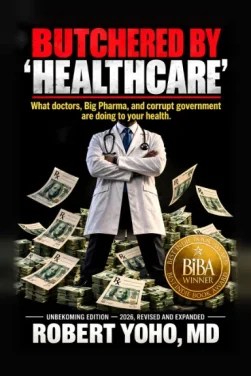 Butchered by “Healthcare” is Robert Yoho’s plain-spoken account of how American medicine stopped being a profession and became an industry. 341 pages. Over a thousand references. Thirty-eight chapters.

