Latin American media, businessman rebut US’ claim of China ‘taking over’ Panama Canal
By Tang Luyi and Tao Mingyang – Global Times – July 3, 2026
The US’ latest claim that China is trying to take control over Panama Canal has drawn rebuttals from Spanish-language media outlets, while a Chinese businessman based in Panama told the Global Times that the canal’s core operations rest entirely in the hands of the Panamanian authorities, making the claim of the so-called Chinese pursuit of control of the canal completely groundless.
US President Donald Trump claimed on Wednesday that the US will not let China take over the Panama Canal, Reuters reported. In delivering remarks at the opening of the Theodore Roosevelt Presidential Library, Trump claimed “China is trying to take over the Panama Canal, and we’re not going to let that happen,” according to the NBC.
The remarks quickly drew criticism from Spanish-language media. Colombian news magazine Semana cited a statement from the Chinese Embassy in Panama, which said that China has never participated in the management or operation of the Panama Canal, nor has it ever interfered in the canal’s affairs. The embassy said China has always respected Panama’s sovereignty over the canal and recognizes it as a permanently neutral international waterway.
Trump’s claim that the Panama Canal was sold to Panama “for one dollar” in 1977 has been widely questioned by historians, Panama-based newspaper La Estrella de Panamá reported.
The Torrijos-Carter Treaties were signed by the Panamanian and US governments in 1977, establishing that the Panama Canal would be turned over to Panamanian control on Dec 31, 1999, and the treaties were the outcome of bilateral negotiations between the two countries, according to the report.
The report noted that this is not the first time the US has used the Panama Canal as a political bargaining chip, and that the Panamanian government has repeatedly reaffirmed that sovereignty over the canal belongs to Panama, and that it is a permanently neutral international shipping waterway.
Refuting the false narrative that “China is controlling the Panama Canal”, a Chinese businessman surnamed Xu, who has been engaged in trade in Panama for a long time, told the Global Times on Friday that core functions of the canal – including channel scheduling, transit approval and the setting of toll rules – are entirely in the hands of the Panamanian authorities.
Hong Kong-based CK Hutchison only obtained commercial operating rights for cargo handling and warehousing at terminals on both ends of the canal through open bidding, which constitutes market-based supporting investment and by no means amounts to overall control of the canal, Xu said, noting that all Chinese vessels transiting the canal pay tolls in full under the same standards applied to shipping companies worldwide, and the claim that China seeks control of the canal is completely untenable.
In the eyes of the Panamanian public, it is the US that has long and deeply shaped the geopolitical security landscape surrounding the canal, Xu said. Relying on historical treaties, the US retains the power to send troops to Panama if it unilaterally determines a security risk exists, and has repeatedly exerted pressure on the country through various means. By hyping the “China threat” narrative, the US is in fact seeking a pretext to maintain its hegemony over the waterway, he said.
Panama’s public and business communities widely recognize the value of cooperation with China, Xu noted. Since the establishment of diplomatic ties between China and Panama in 2017, China has helped resume local infrastructure projects and supported the development of Panama’s coffee industry through the platform of the UN Food and Agriculture Organization, with the practical cooperation winning broad recognition from various sectors in the country, he said.
Chinese Foreign Ministry spokesperson Lin Jian said on April 29 that it is the US that has framed normal affairs concerning relevant terminals as issues of politics and security, and it is the US that has been making pretenses and slandering others with rumors.
“China’s position on the Panamanian ports issue is clear and [China] will firmly defend its legitimate rights and interests. We urge relevant countries not to be blinded and utilized by those with ill intention,” Lin said.
Does the Pentagon even know who its boat strikes are killing?
By Adam Isacson | Responsible Statecraft | July 1, 2026
The numbers are stomach-turning. In less than 10 months, U.S. forces acting on orders from the Trump administration have killed 215 people in 63 aerial attacks on small boats in the Caribbean Sea and the eastern Pacific.
Since the first attack on September 2, the Trump administration has told us that they are killing drug traffickers. But drug trafficking, especially being a low-level courier, is not a crime punishable by the death penalty, and, even if it were, the U.S. legal system assumes innocence and guarantees a day in court. Skipping that step makes this murder under U.S. law: the equivalent of a cop shooting a fleeing suspect in the back.
The administration is attempting to get around this by claiming that every one of the dead is a “narco-terrorist,” a member or “affiliate” of a profit-seeking criminal group recently added, with no outside review, to a secret Defense Department list of “Designated Terror Organizations,” or DTOs. Because the United States is in a “non-international armed conflict” with the DTOs, a secret Justice Department memo argues, our military is permitted to kill them on sight, even with no self-defense justification.
Yet the administration has still not presented any evidence that a bombed vessel was even carrying drugs, much less that its deceased crew was affiliated with a criminal or “designated terrorist” organization.
What we know so far indicates that the U.S. military is being used to assassinate unknown individuals based on alarmingly flimsy evidence. And the targeting criteria are quite loose.
On the rare occasions when crew members have been recovered, “Military briefers have admitted to members of Congress that they cannot satisfy the evidentiary burden necessary to hold or prosecute survivors of the boat strikes,” reported the Intercept’s Nick Turse, who has covered the boat strikes extensively. Three survivors have been recovered alive; all have been let go without charges.
Questioning Secretary of State Marco Rubio at a hearing earlier this month, Sen. Tim Kaine (D-Va.) revealed that those carrying out boat-strike targeting are using three criteria that Kaine was not authorized to disclose publicly. He could disclose, however, that “evidence of narcotics on the boat” was remarkably not one of the three criteria.
In fact, the U.S. military usually doesn’t even know the identities of the people on the boats. The Washington Post reported that the targeting instructions in the boat-strike campaign’s August 5 Defense Department Execute Order (EXORD) “do not require positive identification of any individual but rather ‘reasonable certainty’ that adult males are members of, or affiliated with,” a DTO.
A former U.S. official who had read the EXORD told the Post, “The campaign may be killing individuals who in some cases have a tenuous link to any organized drug-running operation.” That official added, “When you define ‘DTO’ and ‘affiliate’ so loosely and you’re attacking boats, (the guidelines are) basically meaningless.”
The term “affiliate,” which the Trump administration is using to end lives on the open ocean, is especially squishy. Rep. Adam Smith (D-Wash.), the ranking Democrat on the House Armed Services Committee, told the New Republic’s Greg Sargent that, in a briefing with Pentagon officials, “They did not in any way, shape, manner, or form explain what the ceiling and floor are for ‘affiliated.’” People who received a classified briefing interviewed by the Intercept “said that they were under the impression that little more than a conversation with a DTO member might confer ‘affiliate’ status.”
Vague claims of “affiliation” or behavioral patterns introduce confirmation bias and guesswork into a lethal process. This vastly increases the probability that the boat strikes are killing people who have committed no crime at all.
“Some people who are familiar with boat movements” along the Caribbean coast of Colombia and Venezuela told the Latin American Center for Investigative Journalism that “it is common for the same boats that carry drugs on the outward journey to bring passengers back. The capitanes, as the boat operators are known, take whatever work they can get.”
The Intercept raised the possibility, acknowledged by a senior military officer, that some of those killed in the first strike on September 2 may have been migrants or human trafficking victims. That boat had 11 people aboard, a strangely large number for a short-hop drug delivery of less than 100 miles between Venezuela and Trinidad.
Evidence points to some of those killed in boat strikes being fishermen plying their trade. While residents of poor coastal fishing communities may “take occasional trafficking jobs to get by,” which blurs their identities, the likelihood of dying in a strike is scaring people away from getting in boats simply to fish, the New York Times reported from coastal Colombia and Ecuador. “Residents described entire communities abandoning fishing because the small ‘lanchas,’ or speedboats, used by traffickers and fishers are often indistinguishable.”
In Santa Marta, Colombia, the family of fisherman Alejandro Carranza, killed in a September 15 strike, insists that he was not involved in the drug trade. “If he was some kind of narcoterrorist,” the mother of three of Mr. Carranza’s children asked New York Times reporters, “then why are we living in misery instead of a mansion?”
Two of those killed in an October 14, 2025 strike were Chad Joseph, 26, and Rishi Samaroo, 41, both from the village of Las Cuevas, Trinidad. Their families are suing the United States for damages under the Death on the High Seas Act and the Alien Tort Statute. The complaint in Burnley v. United States argues that both men had been in Venezuela for months working on farms and, in their final communications, told their families that they had obtained passage by boat home to Trinidad.
In Sucre, Venezuela, where 90% of the population lacks basic food security, some of the dead were fishermen or taxi drivers who agreed to crew a boat that shipped drugs to Trinidad in exchange for a few hundred dollars. Some, like a “beloved” indoor soccer player, may simply have been aboard for the ride.
To all the concerns about the quality and reliability of intelligence used to target people for lethal boat strikes, we must add recent cases elsewhere pointing to U.S. reliance on faulty intelligence, or even just hunches. In March 2025, the Department of Homeland Security rendered 252 Venezuelan migrants to El Salvador’s feared Terrorism Confinement Center (CECOT) prison, alleging that they were all “terrorist” group members, an assertion that proved shockingly wrong, according to subsequent investigations. The New York Times revealed that an early March raid on an alleged DTO encampment in northern Ecuador, planned jointly by U.S. and Ecuadorian forces, in fact targeted a dairy farm. A March bombing in Iran that killed students at a school for girls is a well-known recent example elsewhere.
If even a few of the boat-strike victims are just fishermen, passengers, or low-level couriers with no relationship to big criminal syndicates, the Trump administration’s justification for the strikes simply cannot be sustained. It would confirm that this justification rests on a very rickety foundation of questionable intelligence, which should expose many in the chain of command to national and international criminal or civil liability.
The boat strikes need to stop immediately, and its architects and willing implementers must be investigated and held accountable at the earliest opportunity.
Adam Isacson has worked on defense, security, and peacebuilding in Latin America since 1994. He now directs WOLA’s Defense Oversight program, which monitors U.S. cooperation with Latin America’s security forces, as well as other security trends.
The Right-Wing Zionist Wave Sweeping Latin America
José Niño Unfiltered | June 30, 2026
Abelardo de la Espriella’s razor-thin victory over leftist Iván Cepeda on June 21, 2026 represented the most recent rightward shift in Latin America’s politics. The defense attorney from Barranquilla captured 49.66 percent of the vote against Cepeda’s 48.7 percent—a margin of roughly 250,000 votes in what Al Jazeera called one of Colombia’s closest elections. Within hours, Israeli Foreign Minister Gideon Sa’ar called to congratulate him, and de la Espriella posted his response publicly.
“Colombia will restore and strengthen its relationship with the State of Israel like never before. Israel can count on Colombia as a loyal friend and steadfast ally,” de la Espriella declared. Sa’ar called him “a true friend of the Jewish people and the State of Israel,” adding that he looked forward to “revitalizing relations between Israel and Colombia and taking them to their highest level ever” and that he had already invited the incoming president to visit Israel.
Israeli Prime Minister Benjamin Netanyahu offered his own congratulations, saying he looked forward to “working with you to strengthen the bond between Israel and Colombia.” De la Espriella has pledged to reverse Petro’s 2024 decision to cut ties with Israel and has promised to relocate the Colombian embassy to Jerusalem.
No figure looms larger in this transformation of Latin American politics than Argentine President Javier Milei. The libertarian economist who took office in December 2023 has positioned himself as Israel’s most devoted ally anywhere on earth.
“I am sincerely proud to be the most Zionist president in the world,” Milei declared at Yeshiva University in March 2026. At the Western Wall in June 2025, he proclaimed that “My support for Israel comes from the heart, because I believe this is a just cause—the cause of the West. I will always stand by your side.”
Milei personally studies Torah with Rabbi Shimon Axel Wahnish from the Moroccan Jewish community in Argentina and has said he intends to convert to Judaism after leaving office. In June 2025, he became the first non-Jewish head of state to receive Israel’s Genesis Prize, known as the “Jewish Nobel,” awarded for his “unequivocal support” of Israel.
He directed his entire $1 million prize toward creating the American Friends of Isaac Accords, the vehicle through which Argentina and Israel formally signed the Isaac Accords on April 19, 2026 in Jerusalem. The framework explicitly mirrors the Abraham Accords that normalized relations between Israel and several Arab states, but targets the Western Hemisphere instead.
The goals are clear. Partner countries should move their embassies to Jerusalem, designate Hamas and Hezbollah as terrorist organizations, shift anti-Israel voting patterns at the United Nations, and create frameworks for trade in technology, agriculture, water, health, and cybersecurity.
At least one nation had embraced the embassy mandate well ahead of the Accords. Paraguay’s Santiago Peña reopened his country’s embassy in Jerusalem on December 12, 2024, making Paraguay the sixth country in the world—after the United States, Guatemala, Honduras, Kosovo, and Papua New Guinea—and the first since the October 7 attacks to establish diplomatic presence in the contested city.
“Mr. prime minister, on behalf of all the Paraguayan people, we were with you, we are with you, we will stay with the people of Israel forever,” Peña declared at the ceremony with Netanyahu present. He called the move “a tipping point in our own history” and “a moral obligation that the Paraguayan people have asked us to fulfill.”
Paraguay was not alone in courting Tel Aviv. Ecuador’s Daniel Noboa, the banana fortune heir who won re-election in 2025, traveled to Jerusalem in May of that year for meetings with Netanyahu, at which Noboa declared that “Israel and Ecuador have the same enemies” and pledged to fight poverty, terrorism, and suffering “until the end.” Israeli diplomatic sources confirmed to Jewish Insider that both Ecuador and Paraguay are expected to formally join the Isaac Accords framework.
Nowhere did the shift register more dramatically than in Chile. José Antonio Kast’s victory in Chile’s December 2025 election delivered perhaps the most symbolically significant prize. Kast overturned four years of Gabriel Boric’s more pro-Palestinian governance. After Iran’s 2024 drone attack on Israel, Kast had warned that “Iran launches a drone and missile attack on Israel. They could be the same drones that it gifted to Bolivia to monitor our borders. Chile has a serious national security problem.”
In May 2026, Kast met with Israeli President Isaac Herzog and pledged to return Chile’s ambassador to Israel, ending a lengthy vacancy by naming Gabriel Zaliasnik as ambassador. He promised expanded cooperation in agriculture, health, artificial intelligence, technology, and security. Notably, Kast achieved this while governing a country home to the largest Palestinian diaspora outside the Arab world, estimated at 500,000 people.
The same paradox surfaced again, more sharply still, in Central America. Nasry “Tito” Asfura won Honduras’s late 2025 election with Trump’s endorsement, becoming president on January 27, 2026. Despite his Palestinian Christian ancestry, the conservative former mayor of Tegucigalpa made Israel one of his first international destinations after being elected, traveling there alongside the United States.
“It is a great honor for me to be in Israel again and to strengthen the ties which have been in existence over the last 77 years,” Asfura stated in Jerusalem. “I hope we are entering a new era where we can improve our relations, relations of brotherhood, and prosperity, of investment.” Israeli Foreign Minister Sa’ar told the Jerusalem Post Magazine that Asfura “has a clear worldview that is pro-Western, pro-American, and pro-Israeli,” and characterized the broader regional shift as a “Blue Wave” of right-wing governments aligning with the United States and Israel.
Bolivia’s Rodrigo Paz ended nearly 20 years of socialist MAS party rule by winning the October 2025 election. Within weeks, he restored diplomatic relations with Israel—ties the prior government had severed in 2023. Netanyahu congratulated Paz personally, and the two agreed to “promote cooperation in various fields, with an emphasis on security, and to restore the vibrant tourism of many Israeli travelers to Bolivia’s natural landscapes and rich cultures.”
Not every convert to the cause fits the expected profile. Nayib Bukele represents the most curious figure in this constellation. The Salvadoran president, who has Palestinian ancestry on his father’s side, has become an ardent Israel supporter despite his Palestinian Christian heritage. After October 7, 2023, Bukele posted that “As a Salvadoran with Palestinian ancestry, I’m sure the best thing that could happen to the Palestinian people is for Hamas to completely disappear. Those savage beasts do not represent the Palestinians.” El Salvador voted against the UN General Assembly resolution calling for a humanitarian ceasefire in Gaza in December 2023.
To the south, another government moved along the same axis. José Raúl Mulino, Panama’s security-focused former defense minister, won the 2024 elections and tilted the country firmly toward Washington and Jerusalem. In May 2026, Israeli President Herzog made the first official visit by an Israeli head of state to Panama. Mulino issued a joint declaration pledging expanded cooperation in security, commerce, technology, agriculture, and water management. Panama remains the only Latin American country that has never recognized a Palestinian state.
The October 2026 Brazilian presidential election represents the next battleground. President Luiz Inácio Lula da Silva, who compared Israel’s actions to the Holocaust and withdrew Brazil’s ambassador in 2024, faces Senator Flávio Bolsonaro in what polls show as a statistical tie—the BTG/Nexus survey of late March 2026 showed them tied at 46 percent each in a simulated runoff, with the race narrowing from a 12-point Lula lead in December 2025. The first round is scheduled for October 4, 2026, with a runoff on October 25 if no candidate clears 50 percent.
Flávio Bolsonaro, whose father Jair Bolsonaro was imprisoned for the January 8, 2023 coup attempt and barred from office, has positioned himself as the conservative consolidation candidate. A Bolsonaro victory would add the hemisphere’s largest country to the pro-Israel bloc. The Brazil-Israel Parliamentary Caucus signed the Isaac Accords “Declaration of Shared Principles” in April 2026, demonstrating legislative support even while Lula governs.
Behind each of these realignments lay forces larger than any single election. Trump’s return to the presidency in 2025 directly tied American financial and political backing to right-wing candidates. The region’s growing evangelical Christian population, with its theologically driven support for Israel, has provided an important voting base. As the Jerusalem Post observed, Israeli officials have declared 2026 “the year of Latin America.” With more than a dozen countries having restored or strengthened ties with Israel, the Isaac Accords and the broader rightward shift have fundamentally redrawn the hemisphere’s diplomatic map with direct implications for Israel’s global standing, American regional strategy, and the future of Palestinian diplomacy in the Western Hemisphere.
The latest boondoggles in Eurasia—from the Russo-Ukrainian war to the Iran war—have forced the Judeo-American project to seek softer targets. Latin America, with its fractured polities, corrupt elites, and vast resources, is the obvious prize. The so-called right-wing resurgence is not a recovery of national pride but rather a vassalage dressed in conservative robes. Each new president who rushes to Tel Aviv is a tool, not a leader. Pace some naive nationalist minds in the West, Zionism is not nationalist in nature, but rather an expansionist movement with global ambitions. The illusion that it respects sovereignty must be shattered by serious political movements. A coordinated multi-national resistance is the only force that can stop this hemispheric takeover and other Jewish supremacist endeavors from consolidating across the globe.
Abelardo De la Espriella’s Victory Renews Pressure on Venezuela
José Niño Unfiltered | June 26, 2026
Colombia elected Abelardo de la Espriella as its next president on June 21, 2026, delivering the country’s leadership to a man who spent nearly a decade publicly calling for the violent overthrow of Venezuela’s socialist government. His victory over leftist Senator Iván Cepeda by fewer than 250,000 votes marks a dramatic rightward shift for a nation that shares a porous 1,400-mile border with Venezuela and hosts millions of Venezuelan refugees.
De la Espriella takes office on August 7, 2026. If Brazil’s November presidential election delivers Flávio Bolsonaro to the Planalto Palace, the two largest nations bordering Venezuela will be governed by leaders who have explicitly endorsed forceful regime change in Caracas. Combined with the apparent willingness of acting Venezuelan President Delcy Rodríguez to cooperate with Washington, the conditions may finally exist for completing what the Trump administration attempted and failed to accomplish in 2019.
De la Espriella’s hostility toward Caracas is neither recent nor cautious. He first articulated his position on Venezuela during a 2018 appearance on Peruvian TV personality Jaime Bayly’s Miami television program. According to to his own subsequent writings, he urged Venezuelans to commit tyrannicide against Nicolás Maduro. Days later he published a column titled “Death to the Tyrant” in Barranquilla’s El Heraldo, writing that “the death of Nicolás Maduro becomes necessary to guarantee the survival of the Republic.”
When U.S. forces captured Maduro in January 2026, de la Espriella publicly celebrated, claiming he had predicted it years earlier. He sold the American operation not as an “invasion” but as “the arrest of an international criminal and head of the Cartel de los Soles,” arguing that Washington acted according to the law due to Venezuela’s alleged lack of institutional legitimacy.
His campaign platform explicitly called for a renewed military alliance with Washington. In February, De la Espriella announced that he would immediately begin “bombing the camps of the narco-terrorists and spraying drug crops,” adding that “this cannot be done without a strategic alliance with the United States and the State of Israel.” He marketed this as a 90-day security plan modeled on Salvadoran President Nayib Bukele’s approach, promising to retake national territory through joint task forces, aerial bombardment of criminal camps, fumigation of 330,000 hectares of coca, and the construction of 10 mega-prisons in remote jungle locations. He has also promised to establish American military bases on Colombian territory as part of a comprehensive security restructuring.
Colombia may soon find a partner in this posture across its longest border. Five months after de la Espriella’s inauguration, Brazilians will decide their own presidential election. Flávio Bolsonaro, son of former President Jair Bolsonaro, has made Venezuela the centerpiece of his campaign against incumbent Luiz Inácio Lula da Silva.
When Maduro was kidnapped in January, Flávio immediately seized on the moment. He posted that “Venezuela has become one of the most extreme examples of how an authoritarian regime can destroy a nation,” calling Maduro a “narcoterrorist.” At the time, his brother Eduardo texted him saying “you are elected president, because we know that a lot of things will come out of Maduro,” predicting that Maduro’s capture would expose Lula’s ties to the Venezuelan regime.
At CPAC in March 2026, Flávio displayed a photograph of Lula embracing Maduro to a crowd that booed loudly. He accused Lula of maintaining ties with leftist dictatorships through the São Paulo Forum, which he described as a network linking Lula, Cuban communism, and drug cartels. Brazil’s Supreme Court opened an investigation into Flávio for defamation, which he denounced as political censorship.
Flávio took Lula to task for “publicly criticizing President Trump’s actions on Venezuela, Iran, Cuba, and the fight against drug trafficking.” He pledged that under his presidency, Brazil would serve as a reliable U.S. partner rather than an opponent on these issues. Reuters polling in late October shows Flávio and Lula locked in a statistical tie heading into the October first round.
What these leaders propose is not new. Washington reached for it in 2019. The Trump administration’s first attempt to topple Maduro collapsed in spectacular fashion. National Security Adviser John Bolton appeared at a January 28, 2019 press conference at the White House with a notepad reading “5,000 troops to Colombia,” held visibly in front of cameras while announcing new oil sanctions against Venezuela’s state company PDVSA—signaling Washington’s interest in using Colombian territory as a staging ground for military pressure on Caracas. Colombia’s Foreign Minister Carlos Holmes Trujillo Garcia said his government had no knowledge of what the note meant.
On February 23, 2019, a U.S.-backed humanitarian aid plot from Cúcuta ended in violence when Venezuelan security forces blocked the convoy with tear gas and rubber bullets. According to a USAID Office of Inspector General report, only 8 of 368 metric tons of aid actually reached Venezuela—the rest was distributed inside Colombia or shipped to Somalia.
The failure at Cúcuta had a quieter companion in Brazil. The Brazilian military establishment proved decisive in blocking regional intervention. Vice President Hamilton Mourão, a retired general, stated flatly that “under no circumstances” would Brazil allow the U.S. to use its territory for military action against Venezuela. He emphasized that “nobody is betting on a military solution.”
Brazil’s Vice President Hamilton Mourão stated firmly that the United States could not use Brazilian territory to invade Venezuela. Senior Brazilian military figures similarly warned against being drawn into a conflict that could make their forces a buffer between American and Venezuelan troops. The military’s resistance held even as President Jair Bolsonaro gave ambiguous public signals, while gesturing toward all options, he acknowledged that the possibility of intervention was “near-zero.”
That said, what failed in 2019 may succeed in 2027 because Venezuela’s current leadership appears willing to cooperate with Washington in ways Maduro never would. A CIA authored classified assessment, reported by the Wall Street Journal, identified Delcy Rodríguez as the best suited candidate to lead a transitional government. Days after Maduro’s capture, Rodríguez was sworn in as acting president on January 5, 2026. On January 15, CIA Director John Ratcliffe traveled to Caracas for a two-hour meeting with Rodríguez—the highest-ranking Trump administration official to visit Venezuela since Maduro’s removal—to deliver the message that “the United States looks forward to an improved working relationship.” The meeting came at the personal urging of President Donald Trump, who had spoken with Rodríguez by phone the previous day and called her “a terrific person,” writing on Truth Social that “we are making tremendous progress, as we help Venezuela stabilize and recover.”
The optics devastated hardline Chavistas. Mario Silva, host of the flagship pro-government propaganda program La Hojilla on state television VTV, accused Rodríguez of treason. In a May 2026 broadcast, he accused her inner circle of negotiating Venezuela’s future with Washington “behind the movement’s back.” He reportedly went further in a YouTube video, suggesting that Rodríguez was the only figure in the Venezuela government in touch with the CIA prior to January 3.
If such allegations prove to be true, smart money suggests Rodríguez would fold under sustained pressure from a multinational coalition. Trump has already removed her from DEA and OFAC sanctions lists despite the DEA having classified her as a “priority target” for drug trafficking as recently as 2022. She oversaw the deportation of diplomat Alex Saab directly to the United States after the Maduro government had fought for years to free him.
The Latin American Right has been ascendant for half a decade. Javier Milei in Argentina. Daniel Noboa in Ecuardo. José Antonio Kast in Chile. Now Abelardo de la Espriella in Colombia. If Flávio Bolsonaro wins Brazil’s November election, the two largest economies bordering Venezuela will both be governed by leaders who have explicitly endorsed American pressure campaigns against Caracas.
De la Espriella’s campaign pledged to restore the cooperative relationship with Washington that existed before Gustavo Petro. Flávio Bolsonaro has promised to align Brazil with U.S. pressure campaigns. With Rodríguez already meeting CIA directors in Caracas and following Washington’s orders on matters like Saab’s deportation, the path toward a final resolution of Venezuela’s political crisis may be shorter than anyone anticipated.
What Brazil’s generals blocked in 2019 may prove irrelevant in 2027 if Flávio Bolsonaro controls the presidency and appoints loyalists to military commands. What Colombia’s Ivan Duque hesitated to support may become explicit policy under de la Espriella. And what Maduro would never accept, Rodríguez appears willing to negotiate.
The question is no longer whether a multinational coalition will pressure Venezuela toward elections. The question is whether Rodríguez will call those elections voluntarily or wait until Colombian and Brazilian forces mass on her borders with American backing.
One thing is clear: the political crisis in Venezuela is far from over.
From Evo Morales to Rodrigo Paz: Bolivia’s Dramatic Shift Toward Israel
Israel finds another South American country to prey on
José Niño Unfiltered | June 3, 2026
Bolivia is experiencing its deepest political and economic crisis in four decades, and the responses from Washington and Jerusalem have been striking in their similarity. Since early May 2026, a massive wave of protests led by Indigenous communities, miners, peasant unions, transport workers, teachers, and supporters of former leftist president Evo Morales has swept the country. Dozens of roadblocks have shut down highways, cutting off food, fuel, and medical supplies to cities. Protesters are demanding the resignation of President Rodrigo Paz, a center-right figure who took office on November 8, 2025, ending nearly 20 years of rule by the left-wing Movement for Socialism.
The protesters’ core grievances include fuel shortages, year-on-year inflation exceeding 20 percent at the time Paz took office, austerity cuts including the elimination of state fuel subsidies under Supreme Decree 5503—which practically doubled the consumer cost of fuel overnight—and a land classification law, Law 1720, seen as threatening Indigenous land rights by making farmland eligible for seizure as loan collateral. Although the government repealed Law 1720 on May 13, protests have continued to spread, with demands expanding to include wage increases, labor reform, and Paz’s resignation
The Paz government came to power on a platform of re-aligning Bolivia with the United States and Western financial institutions. Within weeks of taking office, Paz met with Secretary of State Marco Rubio and signed a deal restoring Bolivia’s full diplomatic relations with Israel, which had been severed in 2023 under the prior MAS government to protest the war in Gaza. He also secured a $3.1 billion loan from a Latin American development bank, invited the DEA back into Bolivia, and joined Trump’s “Shield of the Americas” security coalition alongside Argentina, El Salvador, and a dozen other right-leaning governments.
When the protests erupted in mid-May, both the United States and Israel issued statements that journalist Max Blumenthal flagged for their remarkable similarity. Blumenthal, editor at The Grayzone, tweeted that “The US and Israel have released strikingly similar statements on Bolivia. It’s almost like they’re one single consolidated regime mobilized in defense of global oligarchy, and against indigenous resistance.”
The Israel Foreign Ministry posted on May 17 that “The State of Israel expresses its support and solidarity with the government and people of Bolivia, as well as with President @Rodrigo_PazP, who was legitimately and democratically elected. We are following with concern the humanitarian situation caused by the riots and road blockades, which have led to shortages of food and essential supplies for the population. Israel supports the efforts of the Bolivian government to promote dialogue and preserve democratic stability in the country.”
Two days later, the State Department’s Bureau of Western Hemisphere Affairs tweeted that “In Bolivia, riots and blockades have created a humanitarian crisis, causing shortages of medicine, food and fuel. We condemn all actions aimed at destabilizing the democratically elected government of @Rodrigo_PazP and support it in its efforts to restore order for the peace, security, and stability of the Bolivian people.”
U.S. Deputy Secretary of State Christopher Landau called the protests a “coup d’état” and said “Make no mistake about it. This is a coup that’s being financed by this unholy alliance between politics and organized crime throughout the region.” Secretary of State Marco Rubio declared that “the United States stands squarely in support of Bolivia’s legitimate constitutional government. We will not allow criminals and drug traffickers to overthrow democratically elected leaders in our hemisphere.”
The coordinated messaging reflects a deeper history between Bolivia and Israel that has oscillated dramatically over eight decades.
Bolivia’s relationship with Israel began on a supportive note. On November 29, 1947, Bolivia voted yes on UN General Assembly Resolution 181, the Partition Plan that paved the way for Israel’s declaration of statehood. Bolivia formally recognized Israeli sovereignty in 1949, and the two countries established diplomatic relations in 1950. This support was not accidental. Bolivia had served as a sanctuary for thousands of Jewish refugees fleeing Europe throughout the 1930s and 1940s. German-Jewish mine owner Maurice Hochschild used his relationship with Bolivian President Germán Busch to facilitate visas for German and Austrian Jewish refugees, and founded the Sociedad de Protección a los Inmigrantes Israelitas (SOPRO) to support refugee integration. An estimated 7,000 Jewish immigrants had settled in Bolivia by the end of 1942, per the U.S. Holocaust Memorial Museum. The Jewish community established the Círculo Israelita de Bolivia in La Paz, which became the highest synagogue on earth at nearly 12,000 feet above sea level.
For the first five decades of their formal relationship, Bolivia and Israel maintained stable and cooperative ties. Israel’s development cooperation agency MASHAV, founded in 1958, extended its agricultural technology transfers, water management expertise, and capacity-building programs to countries across Latin America and Africa. A bilateral visa waiver established in 1972 allowed Israeli citizens to travel to Bolivia without a visa. Every year, some 20,000 IDF veterans discharged from compulsory military service headed to South America to decompress, and Bolivia—with its dramatic Andean landscapes, the Salar de Uyuni salt flats, the Amazon basin, and the Yungas jungle—became one of the most popular destinations on the circuit.
Everything changed with the election of Evo Morales in 2006. Morales, Bolivia’s first Indigenous president, built his foreign policy around a fierce anti-imperialist agenda that treated U.S. foreign policy and Israeli military actions as twin expressions of the same Jewish supremacist system of dominance engulfing most of the globe. He rapidly aligned Bolivia with the ALBA bloc, which included Cuba, Nicaragua, Ecuador, and Venezuela, with Iran as an outside partner.
The first direct rupture came on January 14, 2009, during Israel’s Operation Cast Lead. Morales announced Bolivia’s severing of diplomatic relations, calling Israel’s treatment of Palestinians “a genocide.” He demanded that Prime Minister Ehud Olmert face criminal charges and called for Israeli President Shimon Peres to be stripped of his Nobel Peace Prize.
The relationship deteriorated further during Israel’s 2014 Gaza War. Morales declared Israel a “terrorist state” and announced the cancellation of the 1972 visa waiver agreement. “We are declaring [Israel] a terrorist state,” Morales stated during a talk with a group of educators in the city of Cochabamba. Earlier that month, he had filed a request with the UN High Commissioner for Human Rights to prosecute Israel for crimes against humanity.
The Morales years also introduced a significant covert dimension to Bolivia’s estrangement from Israel. As Bolivia aligned with Iran, the country became what U.S. intelligence officials described as a “secondary node” for Iranian intelligence operations in the region. Morales’s disputed reelection in October 2019 triggered mass protests, and he resigned under pressure from the military on November 10, 2019, after Bolivia’s military commander publicly called on him to step down. The interim government led by Jeanine Áñez, who assumed the presidency on November 12, immediately began reversing Morales-era foreign policies. Within days, Foreign Minister Karen Longaric announced the expulsion of Venezuelan diplomatic staff and Bolivia’s withdrawal from ALBA, and the government joined the Lima Group. Bolivia severed ties with Cuba on January 24, 2020, becoming the only country in the Western Hemisphere without diplomatic relations with Havana. On November 27, 2019, just two weeks after Morales’s resignation, Bolivian Foreign Minister Karen Longaric announced the restoration of diplomatic relations with Israel.
Bolivia’s October 2020 elections brought the Movement for Socialism back to power under Luis Arce. The most provocative development of the Arce period came in July 2023 when Bolivia’s Defense Minister Edmundo Novillo traveled to Tehran and signed a security and defense memorandum of understanding with Iranian Defense Minister Mohammad Reza Ashtiani. The agreement included provisions for Iranian military drones to be deployed in Bolivia for ostensible border security and counternarcotics purposes.
Following Hamas’s October 7, 2023 attack on Israel and the subsequent Israeli military campaign in Gaza, the Arce government moved quickly. On October 31, 2023, Bolivia became the first Latin American country to sever diplomatic relations with Israel over the latest Gaza war. Deputy Foreign Minister Freddy Mamani announced the decision “in repudiation and condemnation of the aggressive and disproportionate Israeli military offensive taking place in the Gaza Strip.” Israel’s Foreign Ministry spokesman Lior Haiat called the move “a surrender to terrorism and the Ayatollah regime in Iran.”
In October 2024, Bolivia filed a Declaration of Intervention at the International Court of Justice, joining South Africa’s case alleging Israeli genocide in Gaza. Bolivia’s October 2025 presidential election produced a watershed result. Rodrigo Paz won with more than 54 percent of the vote, the first time in 20 years that no MAS candidate won the presidency. Paz, son of a former Bolivian president and educated in the United States, campaigned under the slogan “Capitalism for all.” Israeli Foreign Minister Gideon Sa’ar signaled Israel’s desire to mend bilateral relations with Paz in the days following his election.
On December 10, 2025, Sa’ar and Bolivian Foreign Minister Fernando Aramayo signed a joint declaration in Washington restoring full diplomatic ties. Bolivia’s Foreign Ministry stated that “Bolivia and Israel fully restore their diplomatic relations and open a new stage of strategic cooperation.” Prime Minister Benjamin Netanyahu called Paz directly on December 10, 2025. The two “agreed on the need to promote cooperation in various fields, with an emphasis on security, and to restore the vibrant tourism of many Israeli travelers” to Bolivia, per an Israeli government readout. Netanyahu personally invited Paz to visit Israel.
Israel’s most significant strategic interest in Bolivia is its lithium. Bolivia holds the world’s largest proven lithium reserves, an estimated 23 million metric tons representing approximately 20 percent of global reserves. Under Morales and Arce, Bolivia struck lithium deals primarily with China and Russia. Bolivia’s rapprochement with Israel places it within the orbit of the Isaac Accords, a framework modeled on the Abraham Accords and championed by Argentine President Javier Milei. The Genesis Prize Foundation celebrated Paz’s election as “a new opportunity for friendship and closer ties with Israel.” The unusually strong expression of solidarity with Paz’s government amid the May 2026 protests represents a level of public backing rarely extended to a foreign head of state.
As Bolivia is drawn into the web of the Isaac Accords, the pattern becomes unmistakable. Israel’s intervention in Bolivian politics is a calculated maneuver to secure lithium and dismantle indigenous resistance to naked forms of resource extraction. When we stop viewing Israel as just another nation and start recognizing it as an imperial entity, things become clearer. This is a transnational power structure that advances the interests of a Jewish supremacist elite at the expense of every nation in its path. Bolivia is simply the latest frontline in the expansion of this parasitic endeavor.
Avoiding Catastrophic Failure in Cuba
SONAR21 | May 28, 2026
ALERT MEMORANDUM FOR: The President
FROM: Veteran Intelligence Professionals for Sanity (VIPS)
SUBJECT: Avoiding Catastrophic Failure in Cuba
Dear President Trump:
We are deeply concerned that the current U.S. approach to Cuba makes an ugly humanitarian disaster – for which the U.S. will be responsible – increasingly likely. We also believe that any military option will draw us into a losing war.
Cuba is not Venezuela. U.S. relations with Cuba have never been good, even before Fidel Castro’s rise in 1959. Washington has never grasped Cubans’ deep national pride and yearning for sovereignty, nor their culture of respect for institutions. Whether we like it or not, the government has residual legitimacy, and even Cubans wanting significant change will rally behind the flag if there is an attack from outside.
The Cuban people are indeed suffering, but reports alleging broad popular support for U.S. sanctions and even military intervention are heavily colored by people who are in the pay of the USG. Given the false choice between living under the current government with U.S. “maximum pressure” sanctions and living under a new system, some Cubans would indeed opt for change. But their protests aren’t about blaming the government, and even those who want major change in Cuba do not trust the U.S. The 65-year embargo and the ongoing oil blockade are sources of deep, if latent, suspicions toward us.
The language in Executive Orders dated 29 January and 1 May, alleging that “the policies, practices, and actions of the Government of Cuba constitute an unusual and extraordinary threat” to U.S. national security, suggests confusion between reality and politically motivated allegations. These narratives are mostly fake.
- Cuba does seek ways to evade U.S. sanctions – as any country would to survive – and several countries help it, albeit at steadily declining levels. Such efforts can hardly be called a “threat” to the United States. While ideally the Cuban military business conglomerate, GAESA, would operate more transparently, it’s cynical of us not to see their need for its secrecy in the face of aggressive U.S. intelligence operations and sanctions.
- Since at least 1992, the USG has had no evidence of Cuba providing any operational, logistical, or training support to any terrorist organization. Stretching the definition of “terrorist” to include a couple of fugitives from U.S. law appears disingenuous.
- A careful review of the intelligence surrounding the tragic, unnecessary shootdown of the two Cuban-American aircraft as they departed Cuban airspace on 24 February 1996 shows clearly that the indictment of former President Raúl Castro last week is not fact-based.
- Neither does the USG have evidence that China and Russia are operating signals intelligence “spy bases” in Cuba directed against the U.S. As the Intelligence Community knows well, Russia abandoned its main facilities after the collapse of the USSR, and there has never been any indication of a Chinese facility pointed at the U.S.
- While debate over the alleged “sonic attacks” or “microwave attacks” against U.S. personnel continues to rage in some quarters, no evidence has been uncovered in the past nine-plus years to support the accusation of a Cuban role in such attacks on the island and in China, Europe, and the U.S.
- The covert operations under U.S. “democracy promotion” or regime-change programs generate information that supports the views of the U.S. constituency that controls them, so the resulting picture is deceptive. We recommend that you review these covert activities closely. If you decide to approve them, sign onto them in a Presidential Finding and official Congressional Notification. The record shows that covert action planners misled President Kennedy about the prospects for the Bay of Pigs operation, and CIA analysts were kept in the dark.
Administration statements, aggressive airborne intelligence collection, and ship movements around Cuba suggest preparations for military action. The Cuban military is weak and lacks even basic supplies, and Cuba’s doctrine of “War of All the People” may seem naïve to us. Cuba will react with what conventional hardware it has and can attain, perhaps even drones, in defense of its leadership and sensitive facilities.
But U.S.-driven “regime collapse” and occupation or imposition of a government of our choosing will fail badly. The same people who keep ’57 Chevrolets on the road with a coat hanger will wreak havoc against a foreign-imposed regime. Administration declarations show a wise tendency to keep U.S. boots off the ground, but it’s also important to know that swarms of Cuban nationalists will silently undermine any system that we impose. The implications of any of these scenarios for migration pressures would be catastrophic.
Press reports indicate that the U.S. is in some kind of “negotiation” with a grandson of former president Raul Castro, who holds no official position in Cuba. In any case, our experience with conflicts worldwide leads us to point out that talks with a gun at one’s temple are not a true negotiation. U.S. coercion against Cuba hasn’t worked for more than six decades. A negotiation without blockades, guns pointed at leaders’ heads, and political indictments can work much better.
FOR THE STEERING GROUP, VETERAN INTELLIGENCE PROFESSIONALS FOR SANITY (VIPS)
- Fulton Armstrong, former National Intelligence Officer for Latin America (ret.)
- Marshall Carter-Tripp, Foreign Service Officer (ret.); Division Director, State Department Bureau of Intelligence and Research
- Philip Giraldi, former C.I.A., Operations Officer (ret.)
- Matthew Hoh, former Capt., USMC, Iraq & Foreign Service Officer, Afghanistan (associate VIPS)
- Larry Johnson, former C.I.A. Intelligence Officer & State Department Counter-Terrorism Official (ret.)
- John Kiriakou, former C.I.A. Counterterrorism Officer and former senior investigator, Senate Foreign Relations Committee
- Karen Kwiatkowski, former Lt. Col., U.S. AF (ret.); at Office of Sec. of Defense watching the manufacture of lies on Iraq, 2001-03
- Ray McGovern, former U.S. Army infantry/intelligence officer & C.I.A. analyst; C.I.A. Presidential briefer (ret.)
- Elizabeth Murray, former Deputy National Intelligence Officer for Near East, National Intelligence Council; C.I.A. political analyst (ret.)
- Scott Ritter, former MAJ., USMC, former chief UN Weapon Inspector, Iraq
- Coleen Rowley, F.B.I. Special Agent and former Minneapolis Division Legal Counsel (ret.)
- Lawrence Wilkerson, Colonel (USA, ret.), Distinguished Visiting Professor, College of William and Mary (associate VIPS)
- Sarah G. Wilton, CDR, USNR, (ret.)/D.I.A., (ret.)
- Robert Wing, former Foreign Service Officer (associate VIPS)
- Ann Wright, Col., U.S. Army (ret.); Foreign Service Officer (resigned in opposition to the war on Iraq)
The US Military Keeps Blowing Up Small Boats in the Caribbean and Pacific
By Adam Dick | Peace and Prosperity Blog | May 28, 2026
Suppose a Latin American nation’s military kept blowing up private American small boats in the Caribbean Sea and Pacific Ocean, killing nearly all the United States citizens on them in the process. The Donald Trump administration and a horde of US Congress members would be shouting about terrorism and supporting major responsive military actions. However, the actual perpetrator of the blowing up of small boats in the Caribbean and Pacific since early September has been the US government and the victims have been mainly residents of Latin American nations, so the destruction and killing just keeps going on with little pushback from politicians in Washington, DC.
At The Intercept, Nick Turse is keeping a tally of the ongoing slaughter at sea. He counts, relying on information derived from US government sources, 60 strikes killing 197 people. The number of survivors of the strikes is just six.
This is a killing spree, not an ordinary drug interdiction effort.
The blowing up of small boats started in conjunction with the movement toward a regime change war against Venezuela. The small boats were claimed by the Trump administration, though never with convincing argument, to be part of a supposed grand threat of “narco-terrorism” from the South American country. Even if that argument had some credibility, discerning observers asked: Why were the small boats being summarily destroyed and everyone on board killed instead of more typical actions being taken, such as stopping and searching boats and detaining and arresting people on board?
Come January 3, the US military invaded Venezuela and carried off its president to America. The Trump administration has since been imposing demands on the nation’s government. The war justifying rationale for the US government blowing up small boats had thus come to an end. But, the slaughter at sea has continued nonetheless. The latest strike included in Turse’s tally was on Wednesday. It was the fifth such strike this month in the Pacific and Caribbean. The continuation of attacks on boats and the people on them seems to be either a macabre demonstration of the tendency of a government program to continue even after the reason for its creation is gone or part of the preparation for further intervention abroad.
Delcy’s ‘gatekeeper’: sources say ex-Trump official Claver-Carone holds keys to Caracas
By Max Blumenthal | The Grayzone | May 25, 2026
Speaking with reporters on May 21, US Secretary of State Marco Rubio announced that Venezuelan President Delcy Rodriguez was on her way to New Delhi to discuss energy issues, and that he would be in India as well.
“This is an important trip, I’m glad we’re able to do it,” Rubio chirped after explaining the trio of nations would discuss how to increase Venezuelan oil sales to India.
His statement — and his announcement of Rodriguez’s trip before she had — perfectly illustrated Washington’s newfound dynamic with the Venezuelan government. Following over twenty years of hostile relations with Venezuela’s socialist-oriented leadership, the US Secretary of State was apparently so intimately involved with day to day affairs in Caracas that he was claiming responsibility for Rodriguez’s international itinerary.
In fact, according to an insider who enjoys close contacts within both the Venezuelan and US governments, Rubio’s influence over Rodriguez is said to be traced to one “gatekeeper”: former Trump Latin America envoy Mauricio Claver-Carone. “Mauricio [Claver-Carone] is picking who can operate and Delcy [Rodriguez] is taking instructions,” the source told The Grayzone.
A former senior US official with access to leadership in both Caracas and Washington offered the same assessment, remarking to The Grayzone, “Mauricio’s calling the shots on private sector economic positions, and if anyone wants in, they have to go to him.”
Hand-selected by former National Security Advisor John Bolton to serve as his Latin America charge during Trump’s first term, Claver-Carone no longer occupies an official governmental role. Instead, he has leveraged his legacy in the public sector to establish a Miami-based investment firm called the Lara Fund which could become a key player in the MAGA financial feeding frenzy in Caracas.
Described by the New York Times as the “architect of Trump’s tough Latin America policies,” Claver-Carone is a Cuban-American regime change zealot who once engaged in fisticuffs with Cuban diplomats as a young man. During Trump’s first term, he unleashed a financial “flamethrower” on Cuba, issuing scores of new sanctions that unraveled the Obama-era normalization policy and plunged the island back into economic misery.
Claver-Carone has similarly masterminded many of the policies that define Trump’s relationship with Venezuela, from its recognition of the previously unknown Juan Guaido as the country’s “interim president” to the deportation of hundreds of Venezuelan migrants from the US to El Salvador’s maximum security CECOT prison. Many of those migrants had been prompted to journey to the US by the economically crushing sanctions unleashed at Claver-Carone’s direction.
The Grayzone’s sources described the Trump veteran as the architect of the military invasion that saw Maduro spirited away to a federal penitentiary and installed Rodriguez as president following a stand-down by Venezuelan security forces.
“If he was in charge of implementing the kinetic side, maybe [Rodriguez] thinks she has to listen to him on finance,” the Venezuela insider said of Claver-Carone.
A report this January by investigative journalist Aram Roston described Claver-Carone as a “key backer” of Rodriguez following Maduro’s abduction, and cited sources who claimed he exercised decisive influence over Venezuela policy despite having left the administration.
Claver-Carone is now said to be at the heart of the most sensitive and consequential task Venezuela faces: the restructuring of its $170 billion in defaulted sovereign debt. Forced from several previous positions by corruption scandals and rancorous clashes, an operative with no official governmental position appears to be shaping the economic contours of Project Venezuela.
“He’s got a lock on everything”
This May, the US Treasury Department authorized Caracas to hire a financial advisor to assist with the herculean task of restructuring its debt. The Venezuelan government selected Centerview Partners, a top-drawer investment and financial advisory firm based in New York City.
According to the former US senior official, Claver-Carone’s romantic partner and business colleague, Jessica Bedoya, boarded a private jet to Caracas soon after the big announcement, arriving with a top advisor from Centerview. It was her second trip to the Venezuelan capital, they said, after visiting in February to discuss financial matters.
Claver-Carone did not respond to calls to his personal phone from The Grayzone, or to detailed questions sent by text and email.
His partner, Bedoya, is the founder of the Lara Fund investment firm where he serves as managing partner. Her bio notes that she has also worked in the CIA and National Security Council.
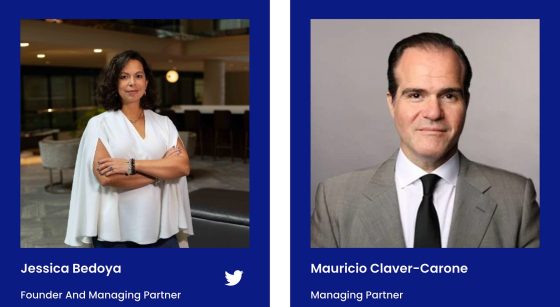
Jessica Bedoya and Mauricio Claver-Carone’s headshots, as featured on Lara Fund’s webpage
Some insiders worry that her reported presence in the Venezuelan capital, together with Claver-Carone’s outsized influence, could represent a conflict of interest, allowing them to steer debt restructuring agreements to their own personal benefit.
“Now he’s got a lock on everything,” the Venezuela insider said of Claver-Carone. “He could say to anyone who wants to work in Venezuela, I’m the guy. I have the keys. If you want to play ball, invest with me.”
The former US official said Claver-Carone was raising capital for his Lara Fund while he served as a special government employee at the State Department. While Bedoya was running the firm, they said Claver-Carone was leveraging his position inside the Trump administration to pitch potential investors.
“Arbitrary and authoritarian actions that showed him to be a real thug”
When Trump appointed Claver-Carone to serve as the first American president of the Inter-American Development Bank (IDB) in 2020, he hired Bedoya as his chief-of-staff. The couple’s secret romance at the bank triggered an embarrassing ethics investigation after a hand-written contract was discovered showing they had agreed to pursue “absolute happiness,” and included a clause with punishments including “candle wax and a naughty box” if either party breached the deal.
An independent probe ordered by the IDB discovered that Claver-Carone had increased his paramour’s salary by 40% – a $133,000 reward in less than a year. Investigators also found that the couple had racked up expenses on an IDB credit card during romantic getaways.
Claver-Carone refused to participate in the investigation while accusing its authors of “fabrications.” In the end, IDB governors voted unanimously in favor of his firing. The US government endorsed their decision.
“President Claver-Carone’s refusal to fully cooperate with the investigation, and his creation of a climate of fear of retaliation among staff and borrowing countries, has forfeited the confidence of the bank’s staff and shareholders and necessitates a change in leadership,” they wrote.
The Argentine governor of IDB, Guillermo Francos, delivered a similarly harsh assessment of Claver-Carone’s tenure. “Claver was a disaster for several reasons,” Francos remarked in 2022. “For having an inappropriate relationship, for having disproportionately increased the salary of this inappropriate relationship, for having lied, and for these arbitrary and authoritarian actions that showed him to be a real thug.”
When Claver-Carone returned to the second Trump administration, it was not long before his proclivity for conflict jeopardized his position.
Throughout 2025, Claver-Carone’s spiteful attitude reportedly complicated Trump administration attempts to prop up a key right-wing ally in South America, Argentine President Javier Milei. Milei’s chief of staff happened to be Guillermo Francos – the former IDB governor whom Claver-Carone held personally responsible for outing his secret relationship with Bedoya. According to the Argentine paper Clarin, Claver-Carone attempted to retaliate by unsuccessfully pressuring Milei to fire Francos. He then attempted to undermine a major IMF loan package to Argentina by demanding the country first sever its credit line from China. This was met with an apparent rebuke from Treasury Secretary Scott Bessent, who visited Buenos Aires to express confidence in the IMF loan just weeks after Argentina’s central bank extended its credit line from Beijing.
The following month, in May 2025, Claver-Carone announced he was leaving the State Department to return to his Lara Fund. His departure gave the appearance that he had been forced out of his job, however, he maintained his clout through his direct line to Rubio.
The former US official told The Grayzone that Claver-Carone is now angling to become a Cuban American version of Jared Kushner, the Trump son-in-law who has leveraged his proximity to the president and role as Middle East negotiator to rake in billions from Israel and several Gulf monarchies despite having no official government title. To do so, he has allegedly inserted himself into the byzantine process of restructuring Venezuela’s debt.
When the Trump administration announced that Venezuela could hire a financial advisor to assist with its sovereign debt, Rodriguez initially planned a public bidding process for the coveted position. But then, according to the ex-US official, Claver-Carone issued support for Centerview, leading to the firm’s selection. (Opposition bloggers have speculated that Centerview was chosen because one of its partners, Matthieu Pigasse, is a self-described “pro-market socialist” who previously worked on deals with Maduro and Venezuela’s state owned PDVSA oil company.)
In recent weeks, according to sources, Claver-Carone has attempted to undermine financial advisors who had been working with the Venezuelan government to restructure its debt since 2014.
They said that when Claver-Carone’s partner, Bedoya, arrived in Caracas this month, allegedly on a private jet with Pigasse, she began pushing to remove the advisory mandate from David Syed, a seasoned French lawyer who had advised Caracas on debt-related issues for over a decade, and is considered incorruptible.
“The effort to push [Syed] out created a lot of tension,” remarked the Venezuela insider. “You can’t understand debt restructuring by parachuting in without his knowledge.”
Syed did not respond to The Grayzone’s request for comment. Hamouda Chekir, another Centerview partner who works on Venezuela’s debt, did not respond to calls and text messages sent to his personal phone.
Scandal-stained firms as vehicles for extracting profit from Venezuela
Just before leaving the State Department in May 2025, Claver-Carone convinced Rubio not to renew a sanctions waiver that allowed Chevron to sell Venezuelan oil in the US market. In doing so, he eliminated a mechanism which was explicitly designed to promote transparency and prevent local officials from skimming cash.
This January, after abducting Maduro, the Trump administration granted confidential licenses to a pair of notoriously corrupt trading houses, Vitol and Trafigura, to export Venezuelan oil. The deal came months after Trump’s re-election campaign received a whopping $6 million donation from a senior trader at Vitol.
Robert Bachmann, an analyst at the Swiss watchdog Public Eye, told the Washington Post at the time, “Trump is taking advantage of firms that know how to circumvent regulation.”
Both companies had been caught engaging in a series of elaborate bribery schemes across Latin America and Africa. In 2020, the Department of Justice (DOJ) forced Vitol to pay a $135 million penalty for bribing officials for licenses in Mexico, Ecuador and Brazil. Trafigura paid a similarly staggering fine in 2024 for a lucrative bribery scheme in Brazil. In the US, Vitol was rung up by the California Attorney General for manipulating spot market prices of oil.
But almost as soon as the Trump administration entered office, it neutered the DOJ corrupt foreign practices division charged with enforcing the judgments against Trafigura and Vitol on the grounds that it was “impeding America’s national security objectives.”
Now, the profits these scandal-stained firms generate through oil sales abroad – including to Israel – are channeled back into a US-run account with little public oversight. A percentage of sales is then delivered back to the Venezuelan government. Where the rest goes is anybody’s guess.
“The Venezuelans are the owners of the oil, and we know nothing. There is no transparency,” said José Guerra, an economist aligned with the Venezuelan opposition, complained to the Washington Post about the Trafigura and Vitol licensing agreements.
Trump, for his part, has essentially admitted Venezuelan oil profits are channeled into a slush fund for his international rampage. “We’ve taken out so much oil in Venezuela, we’ve paid for the cost of the war [with Iran] about 25 times over,” the president boasted during a May 23 campaign rally. While the president’s claim was absurd, as Venezuela is currently exporting only about one million barrels of oil a month – hardly enough to cover a full day of warfare – it revealed his avaricious attitude toward the entire operation.
Among certain Venezuelan opposition activists, Claver-Carone has become a figure of contempt who is partially blamed for Trump’s declaration that their de facto leader, the coup plotter and Nobel Peace Prize winner Maria Corina Machado, “doesn’t have the support within, or the respect within, the country.”
The Trump administration’s embrace of Delcy Rodriguez, and the Venezuelan president’s faithful compliance with Washington’s financial schemes, have prompted some top Democrats to adopt Machado as a partisan cudgel. This January, Chris Murphy, a ranking Democrat on the Senate Foreign Relations Committee, praised the opposition leader as “impressive” following a meeting on Capitol Hill, while taking a nasty swipe at Rodriguez. Machado “reminded us that Trump replaced Maduro with Maduro’s head of torture,” Murphy proclaimed.
If the Democrats take Congress after this year’s midterm elections, the Trump administration’s dealings in Venezuela will face intense scrutiny from the House Oversight Committee. Bipartisan pressure will then build for fresh elections to usher in a new government. “Delcy Rodríguez is a terrible person,” the regime change-obsessed Florida Republican Sen. Rick Scott told the Wall Street Journal this month. “We’ve got to have an election soon.”
In the meantime, a flock of MAGA-aligned financial vultures has swooped into Caracas to feast on the petro-state’s post-Maduro carcass. Donald Trump Jr. is said to be hunting for opportunities in the capital for his 1789 Capital fund, while a startup backed by pro-Trump tech oligarchs Peter Thiel and Palmer Luckey, Erebor Bank, just struck a lucrative deal to reconnect Venezuela’s central bank to the global economy. In the midst of this frenzy, a figure with no government title, Claver-Carone, appears to be establishing the new pecking order.
CIA Waging Covert War Against Drug Cartels in Mexico – Reports
Sputnik – 13.05.2026
The US Central Intelligence Agency (CIA) is waging a covert war against drug cartels in Mexico and is now directly involved in the assassinations of their members, media reported, citing sources.
The previously unreported CIA campaign in Mexico, overseen by the elite and top-secret Ground Branch, is aimed at the complete dismantling of drug cartels, the report said on Tuesday. Since last year, CIA officers have been personally involved in assassination attempts against cartel members, primarily mid-level ones, the report added.
One of the US intelligence operations in the country was the car bombing of Francisco Beltran, a suspected member of the Sinaloa Cartel, on a highway near Mexico City in March, the report read. According to the report, CIA officers planted a bomb directly in Beltran’s car.
Such operations may be illegal in Mexico, the broadcaster reported, adding that not all missions were coordinated with the Mexican government, creating the risk of retaliatory action by cartels in the United States.
In March, US President Donald Trump announced that the US and Latin American countries were creating a military coalition to combat drug cartels in the region.
Villains of Judea: Samuel Zemurray
Inside the life of the ruthless businessman who financed coups in Central America and shaped Israeli statehood
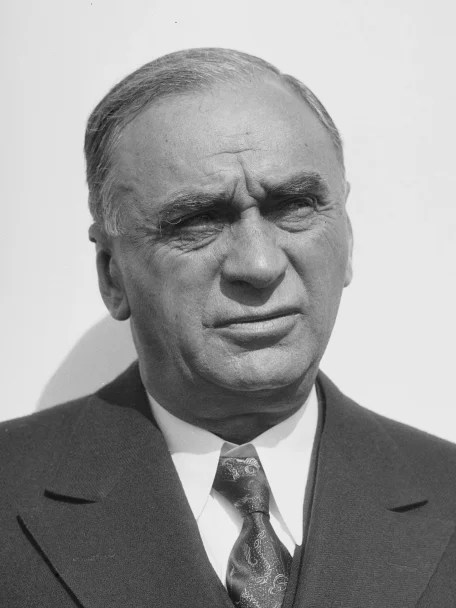
José Niño Unfiltered | May 7, 2026
Leftist commentators consistently push a shallow and economically reductive narrative that frames American foreign policy as the sole domain of greedy White capitalists while choosing to ignore the obvious Jewish power structure directing these events. When the veneer of this supposed corporate imperialism is stripped away, it becomes clear that the United States has often served as a vehicle for the specific goals of organized Jewry. The life of Samuel Zemurray stands as prime evidence of this hidden mechanism.
Few figures in American business history wielded power as ruthlessly or as secretly as Zemurray. Born Schmiel Zmurri on January 18, 1877, to a poor Jewish family in Imperial Russia, this teenage immigrant would rise from peddling rotting bananas off railroad cars in Alabama to become the controlling force behind the United Fruit Company, the most powerful agricultural corporation on earth. Along the way he overthrew governments, bribed presidents, hired mercenaries, and played a pivotal behind-the-scenes role in the creation of the State of Israel.
The man who would topple presidents arrived with nothing but a steamer ticket and family connections in the Deep South. After his father died, the 14-year-old Zemurray emigrated to the United States in 1892, traveling in steerage class and landing in New York before making his way to Selma, Alabama, where relatives had settled. He worked as a chicken catcher, carpenter’s assistant, delivery boy, traveling merchant, and housecleaner, eventually saving enough to bring his mother and 6 siblings over from Europe. Standing approximately 6 feet 3 inches tall with enormous energy and hustle, Zemurray was described as a man who could swear fluently in 5 languages. He encountered his first banana around 1893 in Selma, at that time an exotic and expensive delicacy in the United States, and the fruit became his life’s obsession.
Zemurray brought to the banana trade the same scrappy, rule-bending hustle that had carried him from steerage to a Selma general store. In 1895, at age 18, Zemurray traveled to the docks of Mobile, Alabama, and built a niche specializing in what the industry called “ripes” — bananas that were nearly overripe and being discarded by importers. He bought them for pennies and rushed them inland by rail before they spoiled, famously bribing Western Union telegraph operators to wire ahead with sales offers to towns along the route. Starting with just $150, he had saved $100,000 by age 21 and earned the lifelong nickname “Sam the Banana Man.” By selling bananas directly off moving trains, Zemurray turned minimal investments into substantial profits and was soon selling over one million bananas annually.
In 1903, Zemurray signed a contract with United Fruit giving him rights to distribute the company’s ripest bananas. He partnered with Ashbell Hubbard to form the Hubbard-Zemurray Company and by 1905 had moved to New Orleans, acquired the Thatcher Brothers Steamship Company, and taken control of the Cuyamel Fruit Company. By 1910, he had bought 5,000 acres along the Cuyamel River in Honduras near Omoa and borrowed aggressively to expand into plantations, railroads, and bridges. Unlike the patrician executives of United Fruit who ran operations from their offices in Boston, Zemurray spent months each year working directly on his Central American plantations, learning conversational Spanish, mapping land, clearing fields with a machete, killing snakes, and supervising construction in person.
Zemurray’s appetite for direct action soon extended far beyond plantation supervision. The most audacious act of Zemurray’s early career was his personal financing and orchestration of a coup d’état in Honduras in 1910 and 1911. The crisis arose when U.S. Secretary of State Philander C. Knox attempted to resolve Honduras’s large debt to British banks by having J.P. Morgan buy the bonds, in exchange for which a Morgan bank official would collect customs duties on Honduran imports. This arrangement would have obliterated the tax concessions Zemurray had privately negotiated with Honduran officials, effectively threatening to destroy his business. After lobbying the State Department unsuccessfully and being told directly to “butt out” of U.S.-Honduras relations, Zemurray devised an alternative.
While under surveillance by U.S. Secret Service agents enforcing neutrality laws, Zemurray recruited mercenaries in the French Quarter of New Orleans, hired the flamboyant soldier of fortune Lee Christmas and the notorious mercenary Guy “Machine Gun” Molony, and purchased a former U.S. Navy vessel called the Hornet. The conspirators evaded Secret Service surveillance, slipped away from New Orleans, and sailed to Honduras with rifles and ammunition Zemurray had stashed on Ship Island. They joined forces with Manuel Bonilla, the former Honduran president whom Zemurray supported as the preferred replacement. Through a combination of military action, bluffing, and recruiting local rebel forces, the coup succeeded. Bonilla was inaugurated as president of Honduras on February 1, 1912, and immediately rewarded Zemurray with extensive land concessions, duty-free import privileges, and favorable tax arrangements.
The spoils of that intervention elevated Zemurray from ambitious importer to regional kingmaker. Zemurray became known as “the uncrowned king of Central America.” After Bonilla’s death in 1913, he controlled a string of Honduran presidents and in 1925 secured exclusive lumber rights to 1/10 of Honduran territory. The episode established the template for what came to be called “banana republic” politics.
In 1929, Zemurray sold Cuyamel to United Fruit for $31.5 million in stock, becoming one of the wealthiest men in America and the single largest individual stockholder in the company. He nominally retired and moved to an estate outside New Orleans. But the Great Depression devastated United Fruit. The company’s stock collapsed by roughly 90 percent, wiping out most of Zemurray’s fortune. After his written suggestions were dismissed and his proposals ignored at board meetings, Zemurray took extraordinary action — traveling personally to visit individual shareholders and collecting their proxy votes. At a dramatic board meeting in 1932 or 1933, Zemurray placed the collected proxies on the table and reportedly declared to the assembled executives, “You’ve been fucking up this business long enough. I’m going to straighten it out.” He became managing director immediately and then formally president of United Fruit in 1938, serving until 1951.
Under Zemurray’s leadership, United Fruit became a behemoth. It owned rail transportation monopolies, radio communications infrastructure, steamship lines, and port facilities across 13 nations. In some Central American countries, the company operated as what critics described as “a state within a state.” Zemurray openly admitted that bribery was the foundation of his operations.
The most historically catastrophic action tied to Zemurray and United Fruit was the 1954 CIA-backed coup that overthrew Guatemalan President Jacobo Árbenz, a democratically elected leader who had introduced agrarian land reforms. Árbenz’s land reform law, Decree 900, expropriated uncultivated United Fruit land for redistribution to landless peasants. Under Zemurray’s influence, United Fruit launched one of history’s most consequential corporate lobbying campaigns.
Edward Bernays, known as “the father of public relations,” orchestrated press tours, planted stories, and produced films painting Guatemala as a Soviet beachhead in the Western Hemisphere. Both Secretary of State John Foster Dulles and CIA Director Allen Dulles had prior connections to United Fruit as former partners at Sullivan and Cromwell, the company’s main law firm. President Eisenhower authorized Operation PBSUCCESS with a $2.7 million budget. The CIA armed and trained a force under Carlos Castillo Armas, conducted psychological warfare operations, and engineered Árbenz’s resignation on June 27, 1954. Castillo Armas installed a military dictatorship that reversed land reforms, eliminated labor rights, and initiated decades of U.S.-backed military rule that led to over 200,000 deaths in a decades-long civil war.
While Zemurray built his banana empire in public view, he pursued another project almost entirely in the shadows. Beginning in the 1920s, he became personally close with Chaim Weizmann, the leader of the World Zionist Organization and Israel’s eventual first president. At the end of World War II, Zemurray was approached by Zionist leaders and asked to help procure ships for the clandestine network transporting Jews from displaced persons camps in postwar Europe to British Mandate Palestine. Working entirely behind the scenes, he raised money and used his connections to facilitate logistics.
The Jewish corporate magnate was instrumental in obtaining the ship that became the Exodus 1947 for the Haganah, which would explain its Honduran registration — Zemurray’s United Fruit Company effectively controlled much of Honduras. The Exodus carried over 4,500 Jewish refugees toward Palestine in 1947 before being intercepted by the British Royal Navy. The incident became an international cause célèbre and accelerated international support for Jewish statehood.
Zemurray’s most consequential contribution to the founding of Israel was his behind-the-scenes lobbying effort that helped secure passage of UN Resolution 181 on November 29, 1947, the Partition Plan that divided Mandatory Palestine into Jewish and Arab states. The resolution required a 2/3 majority to pass. According to author Rich Cohen, Zemurray made calls from his New Orleans home to Latin American heads of state, pressing for affirmative votes or abstentions. Haiti switched from a “no” vote to an abstention. Nicaragua switched from an abstention to a “yes.” In total, 13 of the 33 “yes” votes came from Latin America, including countries where United Fruit operated.
Samuel Zemurray died in New Orleans on November 30, 1961, at age 84. His philanthropy included major donations to Tulane University, the New Orleans Museum of Art, the Audubon Nature Institute, and Jewish refugee relief efforts. He also contributed financially to The Nation magazine.
If we look closely at the history of 20th century American interventionism, the shadow of the Jewish hand becomes impossible to ignore. Zemurray was not an outlier but a precursor to the modern reality where the United States operates as a private military company for the advancement of Jewish interests abroad.
The multitude of seemingly perpetual interventions of the past century were not driven by the abstract greed of villainous, White American billionaires but by the deliberate orchestration of a distinct group with its own tribal loyalties. We are destined to remain powerless subjects in our own land as long as we fail to unmask the true masters of our state and break free from the suffocating grasp of Jewish supremacy.
Recognizing the crimes of devious figures like Samuel Zemurray is a necessary first step in this process to reclaim our polities from the machinations of organized Jewry.
Cuba, Nicaragua, Mexico – Pentagon Reportedly Eyeing Targets in Latin America
Sputnik – 06.05.2026
The US military revived a jungle training school Panama after a 25-year hiatus, Bloomberg reported.
This isn’t just training, it’s preparation for intervention, Russian military expert Alexander Stepanov told Sputnik.
Cuba is the main focus—precision strikes on key infrastructure could help in seizing government centers and ports, he pointed out.
Nicaragua is next—its ties with China, strategic location, and anti-American leadership make it a priority to eliminate Daniel Ortega’s government, according to the expert.
He added that Mexico may see US operations framed as anti-drug efforts, but aimed at undermining sovereignty and taking full control.
The bigger picture: The Pentagon is seeking to form a regional US contingent to target governments regarded as unwelcome by the United States—all under the revived Monroe Doctrine, Stepanov concluded.
Leaked audios reveal pro-Israel groups ‘paid’ for US pardon of convicted drug trafficker Juan Orlando Hernandez
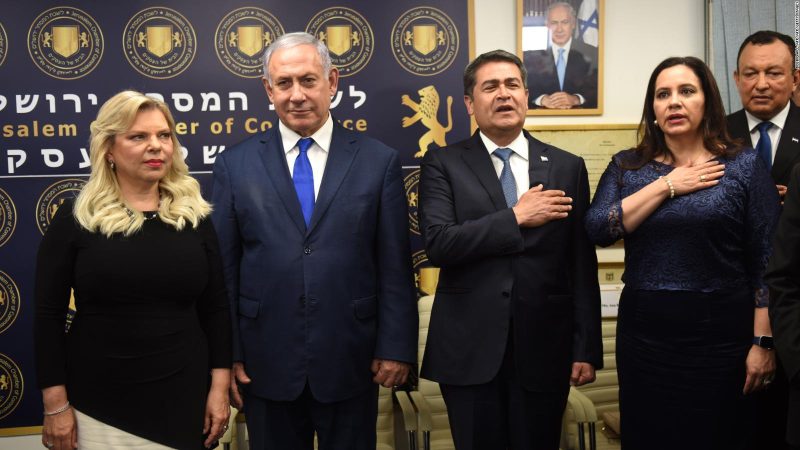
The Cradle | April 30, 2026
WhatsApp, Signal, and Telegram audio messages published by Canal RED and Hondurasgate on 29 April reveal pro-Israel groups “paid” for the release of former Honduran president and convicted drug trafficker Juan Orlando Hernandez (JOH) from US federal prison last year.
“The pardon money … came from a board of rabbis and people who supported Israel, and they had previously supported Yani Rosenthal,” JOH is heard saying in the leaked audios.
Yani Rosenthal is the former president of the right-wing Liberal Party of Honduras. He was convicted in December 2017 of laundering drug proceeds for a prominent Honduran drug cartel.
In 2024, JOH was convicted in a US federal court of three counts of drug trafficking and weapons conspiracy and received a 45-year prison sentence. He was also found guilty of receiving money from the former leader of the Sinaloa Cartel, Joaquin Archivaldo “El Chapo” Guzman, to finance electoral fraud.
JOH was pardoned late last year by US President Donald Trump, who called the DEA investigation into Hernández a “Biden administration set up.” Trump announced the pardon hours before Honduras’s presidential elections.
In that same social media post, Trump endorsed the current President Nasry “Tito” Asfura and threatened to cut aid to Honduras if he was not elected.
“The Prime Minister of Israel is going to give us his support. They had everything to do with my departure and negotiations,” JOH says in one of the audios released on Wednesday.
According to Canal RED, the leaked audios show that Trump’s pardon for JOH “was secured through intense lobbying led by Roger Stone and the Republican caucus … with the support of Israeli Prime Minister Benjamin Netanyahu.”
The audios also suggest that Hernandez’s return to Honduras and his upcoming presidential run are being financed by Israel.
“Mr. President, I’m here asking about my case, if there’s any resolution, if you have anything to share with me to see if there’s been any progress with the Supreme Court. I want to believe that you won’t sideline me because, thanks to me, you’re sitting in that chair … And I hope for your support. Because that’s what we discussed with President Trump,” JOH tells President Asfura in one of the leaked audios.
According to the report, Trump and Netanyahu are “seeking millions in compensation” in exchange for securing Asfura’s election and JOH’s possible reelection.
“The negotiations at the Florida residence included the expansion of Zones for Employment and Economic Development (ZEDEs), the construction of a new military base, a free trade agreement, and a law to incentivize investment in AI, whose contracts would be awarded directly to private American companies such as General Electric,” Canal RED reports.
ZEDEs, or “private states”/’model cities,” permit autonomous courts and foreign legal systems in Honduras, which civil groups say surrender sovereignty.
Additionally, a second set of leaked audios released on Thursday involving JOH, Asfura, and Honduran Vice President Maria Antonieta Mejia indicates the formation of a news outlet funded with more than half a million dollars in Honduran public funds, along with contributions from Javier Milei’s government in Argentina, aimed at ‘attacking’ the left-wing governments of Gustavo Petro in Colombia and Claudia Sheinbaum in Mexico.
Featured Video
Iran’s Next Strike May Not Explode. It Could Shut You Down
or go to
Aletho News Archives – Video-Images
From the Archive
Zionism’s Violent Legacy
By Donald Neff | Washington Report On Middle East Affairs | January 1996
On January 4, 1948, Jewish terrorists drove a truck loaded with explosives into the center of the all Arab city of Jaffa and detonated it, killing 26 and wounding around 100 Palestinian men, women and children.[1] The attack was the work of the Irgun Zvai Leumi – the “National Military Organization,” also known by the Hebrew letters Etzel – the largest Jewish terrorist group in Palestine. The Irgun was headed by Revisionist Zionist Menachem Begin and had been killing and maiming Arabs, Britons and even Jews for the previous ten years in its efforts to establish a Jewish state.
This terror campaign meant that at the core of Revisionist Zionism there existed a philosophical embrace of violence. … continue
Blog Roll
 Aletho News
- Trump’s Iran war is on an Israeli leash
- Saudi oil boss issues global supply warning
- Riyadh Says Its Oil System Is Intact. The Numbers Say Otherwise.
- Trump and Netanyahu Want to “Finish the Job” on Iran
- US ‘one-sided dictation’ not Iran’s beliefs makes rational talks impossible: Baghaei
- Iran’s Next Strike May Not Explode. It Could Shut You Down /Col Doug Macgregor
- Iran: US political targets legitimate if assassinations return
- Iraq shuts key border crossing with Iran under US pressure: Report
- Undersea Internet cables could be targeted in retaliation for attacks on Iran: IRGC deputy chief
- EU sending ‘biased’ observers to interfere in Serbian election – president
- If Americans Knew
- The Israel Lobby’s Changing Fortunes
- AIPAC has become such a political liability that it’s shifting to a more “nimble” approach to buying politicians
- At least 160 Israeli settler attacks in 2 weeks
- Will Gaza’s Ancient Christian Community Disappear Forever?
- Israel’s vision of regional security rests on keeping Arab states weak
- Heidi Levine recounts how Palestinian youths helped save her in settler attack
- DAILY UPDATE: Latest essential news on Palestine, Israel, & region
- Trump’s Intensifying Sabotage of the ICC, for Israel’s Sake
- Israeli military detain US and UK volunteers in West Bank including Democratic NY politician Brad Lander
- Americans at National Conservatism Conference held in Israel this year criticize Israel
- No Tricks Zone
- E-Cars Reduce CO2 Emissions By Only 41% Compared To Internal Combustion Engine Vehicles
- Predictions Made By Renowned Climate Professor Over Past Decades Have Been Proven To Be Poor
- New Study Suggests Large Regions Of The Pacific Ocean Have Been Cooling For The Last 80 Years
- Germany’s Green Energy Debacle: High Energy Costs Force Kahla Porzellan to Close After 182 Years!
- New Study: 50 Years Of The Most Aggressive ‘Net Zero’ Policies Can Only Affect The Global Climate By 0.03°C
- US September “Heat” Was No Record…Many Records Set Decades Ago
- Latest European Green Energy Debacle; Portugal’s Largest Flagship Solar Park Insolvent!
- Green Energy Debacle: German Expert Professor Fritz Vahrenholt Warns Of Severe Economic And Social Consequences
- Two More Paleo Reconstructions Affirm Meters-Higher Sea Levels Across Ireland, Brazil 7000-6000 Years Ago
- New Study: Earth And Venus Surface Warmth Largely Explained By Convection And Lapse Rate, Not CO2 Or Radiation

