Interpol Activates Arrest Warrant Against Morales at Bolivia’s Request – Interior Minister
Sputnik – 09.01.2020
The International Criminal Police Organization (Interpol) has activated an international arrest warrant for former Bolivian President Evo Morales per the Bolivian government’s request, according to the country’s interior minister, Arturo Murillo.
“I have given the order at 6:00 [10:00 GMT on Wednesday] to Interpol to activate the international order [against Morales]”, Bolivian President Evo Murillo said during a press conference on Wednesday, as quoted by the state Agencia Boliviana de Informacion.
He added that it was important for Morales be held to account for his actions in his own country.
In December, the Bolivian authorities issued an arrest order for ousted Morales, accusing him of sedition, terrorism, and sponsoring terrorism. Morales claimed he was not afraid of the warrant, calling it illegal and unconstitutional.
Late last year, Bolivia experienced a change in leadership following mass protests against the results of the October general election. Morales stepped down as president on November 10 and fled to Mexico. Most of Bolivia’s senior officials resigned in his wake. This resulted in the senate’s second vice speaker, opposition lawmaker Jeanine Anez, declaring herself interim president. Morales has characterized the situation as a coup.
MAS Can Get Over 40 Percent of Vote Even Without Morales as Its Candidate – Bolivian Journalist
By Ekaterina Blinova – Sputnik – 09.01.2020
Bolivia’s highest electoral body has set the date for the country’s general vote. Although Evo Morales’ Movement Towards Socialism (MAS) was eventually allowed to participate, the chances of the de facto government committing fraud to upend a MAS victory are high, says Alberto Echazu, a journalist from the media platform La Resistencia Bolivia.
On Sunday, the Supreme Electoral Tribunal of Bolivia declared that the country would hold a general vote on 3 May 2020 with the candidates having to be submitted to the electoral authority by 3 February.
The de facto government in La Paz, meanwhile, continues to crack down on Evo Morales’ supporters and leftist media sources.
Alberto Echazu, a journalist with the left-wing media outlet La Resistencia Bolivia, which has recently been subjected to arrests and intimidation, has described the unfolding situation as the country braces for new general elections.
Sputnik: The Supreme Electoral Tribunal (TSE) of Bolivia announced on 31 December that Evo Morales’ MAS will be able to participate in the 2020 general elections. Why did the de facto interim government request TSE to decide the fate of MAS? Did they hope to somehow weaken MAS’ positions or expel the party from the election race? What are MAS’ chances in the upcoming May 2020 elections and what obstacles could the party face, in your opinion?
Alberto Echazu: The de facto regime is trying to block and nullify MAS’ legal status as a national party so that it cannot be an electoral option in the upcoming elections. Using the false idea that MAS is the party of a government that committed fraud, the regime is trying to criminalise it and expel it from the election race. This is all because they are very aware of MAS’ strength, it being the only party that can obtain a vote higher than 40 percent even without Evo Morales as its candidate.
Some media sources have performed surveys of how residents intend to vote, and despite MAS’ candidate not having been decided yet, the party is leading in the polls against a group of right-wing candidates such as Fernando Camacho, Carlos Mesa, and others.
MAS has every chance of winning the elections as it is still the biggest and strongest party nationwide, however, the chances of the regime actually committing fraud in order to avoid a MAS victory are fairly high. The regime has not held back from using every resource at hand, regularly violating constitutional rights and even international treaties and international human rights.
Sputnik: Who are the most likely MAS presidential candidates to take part in the 2020 general elections? What’s your take on the candidacy of Andronico Rodriguez, named by some media outlets as Morales political heir? Is he charismatic enough to unify the Left?
Alberto Echazu: The most likely MAS’ pairing is Luis Arce as presidential candidate and Andronico Rodriguez as vice president. Luis Arce was Evo Morales’ minister of economy and is seen as the one responsible for the country’s economic stability and success in the last 14 years.
The economic model, labelled Modelo Económico Social Comunitario Productivo (Social Communal Productive Economic Model) was one of the most important reasons behind Bolivia’s economic miracle, giving Arce a great reputation and prestige among the urban middle class, him being the main thinker behind it. He is also highly respected among MAS’ supporters as he was not only a technical cadre in Morales’ government but also very committed politically, having been a member of the Socialist Party before joining Morales’ government.
Andronico Rodriguez has great charisma among MAS’ supporters as he was named Morales’ successor and is seen as an important young cadre. Because of his age he is not expected to be the presidential candidate (he is 30 years old).
This pairing has great acceptance among MAS’ supporters and could receive a large number of votes, both of them being very respected figures and having Morales’ trust and blessing.
Sputnik: Could you please shed light on the political persecution of leftist journalists, in particular, La Resistencia Bolivia, that provided the coverage of the Bolivian coup. Have any international human rights organisations or entities protecting journalists paid attention to these incidents so far?
Alberto Echazu: Political persecution against members of the alternative media platform La Resistencia Bolivia, of which I am a member, is due to our work broadcasting and informing about the coup in our country and all of the assassinations and violations of human rights during the coup and the de facto government.
The regime silenced the rest of the media that tried to inform with some kind of impartiality as soon as it took power and forced to halt the broadcast of any media outlet that refused to comply with the regime’s policies of legitimising the coup and the de facto government.
Two members of La Resistencia Bolivia were arrested on New Year’s Eve. The charges are “sedition” and “misuse of state assets”, even though the police have no evidence. They have been unjustly detained for a week and spent New Year in judicial cells. It is all clearly for political reasons.
The timing of the detentions was strategically planned so that there was not any social protest or support against this injustice, but in spite of that there has been a lot of support on social media, and as people go back to normality after the festive period the denouncing of this abuse has increased, given that La Resistencia has gained a lot of respect and followers for being almost the only media outlet left that informs about what is going on in Bolivia.
In that regard, different human rights organisations have expressed their solidarity towards our detained members and the persecution against the platform like Defensoría del Pueblo (People’s Defence), and Asociación de Madres de Plaza de Mayo from Argentina, but the police intimidation of society in general has stopped people from protesting, as happened in other cases of abuse and arrests as well.
Twitter Shutters Dozens of Venezuelan Government-Linked Accounts
By Morgan Artyukhina | Sputnik | 08.01.2020
Dozens of Twitter accounts for figures and institutions related to the Venezuelan government, including military branches, political leaders and journalists, were suddenly suspended without explanation on Tuesday, a day after Washington condemned the National Assembly for failing to re-elect presidential claimant Juan Guaido.
The social media giant has suspended the accounts of numerous Venezuelan government institutions, including the country’s Army, Navy, National Guard, Air Force, Central Bank, Finance Ministry, Oil Ministry, National Center for Information Technology (CNTI) and National Commission for Information Technology.
The accounts of government figures like Victor Clark, the governor of Venezuela’s Falcon state; former Bolivarian National Army Forces General Commander Jesus Suarez; and Freddy Bernal, the coordinator of the country’s subsidized food distribution program, the Local Committees for Supply and Production (CLAP), were also shut down.
Still other accounts shuttered include Red Radio Venezuela, the presidential press office and the press office for the mayor of Caracas.
According to TeleSur, no explanation has been given for the suspensions, just a notice that the accounts had ostensibly violated Twitter’s terms of use.
While a few of the accounts have since been unlocked, such as Bernal’s and the Finance Ministry’s, most remain locked.
Toeing the State Department Line
TeleSur noted that according to Twitter’s rules, an account can be closed if it’s being used for spam, has been hacked, participates in abusive or bellicose behavior or impersonates another account – but the closed accounts haven’t violated any of these rules.
The crackdown mirrors one by the social media giant in September that targeted numerous Cuban news outlets and journalists. As Sputnik reported, dozens of Cuban accounts were shut down just moments before Cuban President Miguel Diaz-Canel addressed the nation about a chronic fuel shortage caused by US sanctions and collective methods of coping with the shortages.
Twitter has steadily treaded closer to the US State Department’s line in recent years, adopting the same bellicose stance against accounts associated with governments targeted by Washington, including those of Venezuela, Iran, Russia and China. Under the guise of combating disinformation, Twitter, along with Facebook and Google, have closed down accounts spreading information and news that run counter to the US government’s official line on events such as the Guaido’s declaration of his own interim presidency and the anti-Beijing protests in Hong Kong. However, in the recent crackdowns on Cuban and Venezuelan accounts, Twitter has not even attempted to offer a veil of justification.
Washington Decries Guaido’s Ouster
On Sunday, Guaido failed to secure re-election as the speaker of Venezuela’s National Assembly, a post he received in January 2019 amid rotating leadership of the legislature by the country’s opposition parties. Instead, 81 of the 150 lawmakers chose Luis Parra, an independent opposition member representing Yaracuy State.
Parra recently left the centrist opposition party Primero Justicia, the party of Henrique Capriles, who challenged Venezuelan President Nicolas Maduro in the 2013 presidential election.
Unsure if he would win re-election, Guaido postured as if he had been barred entry to the legislature, attempting to scale the fences outside on Sunday. However, there’s no evidence Guaido was actually prevented from entering the building in a normal way, especially since Guaido loyalists like William Davila entered without trouble.
Video footage later emerged showing Guaido refusing to enter unless in the company of several lawmakers whose parliamentary immunity has been revoked for alleged criminal offenses, Venezuelanalysis noted.
After opposition members failed to convince Guaido to enter, he and they later met at the headquarters of anti-government newspaper El Nacional, declaring the parliament’s vote void and re-electing Guaido as speaker, with several figures standing in for legislators who had left the country.
Washington quickly denounced the events in the National Assembly, with US Vice President Mike Pence declaring Guaido the country’s “only legitimate president” and US Special Envoy to Venezuela Elliot Abrams promising new sanctions against Maduro.
Guaido’s claim to be interim president is recognized by roughly 50 countries, mostly European and US-allied nations, while Maduro, who won reelection in 2018, remains recognized as the president of Venezuela by roughly 75% of the world’s nations. Since January 23, 2019, Guaido has launched four attempted coups d’etat, each of which has gained less traction than the last.
Evo Morales’ potential successor speaks out
The Grayzone | December 28, 2019
Andrónico Rodríguez could be the next president of Bolivia. The 30-year-old labor organizer spoke with Wyatt Reed about the far-right US-backed coup against President Evo Morales, repression of their leftist MAS party, and how the upcoming election may be rigged.
Mexico orders ambassador in Bolivia to return after she declared non grata
Press TV – December 30, 2019
Mexico has ordered its ambassador in Bolivia to return to the country in order to ensure her safety.
The Mexican Foreign Ministry said on Monday that the order was issued after Bolivia declared Mexico’s Ambassador Maria Teresa Mercado a “persona non grata.”
Bolivia’s interim leader Jeanine Anez announced Monday that the country has decided to expel Mexico’s ambassador and two Spanish diplomats.
“The constitutional government that I preside over has decided to declare persona non grata the ambassador of Mexico in Bolivia, Maria Teresa Mercado, the charge d’affaires of Spain, Cristina Borreguero, and the (Spanish) consul, Alvaro Fernandez,” Anez said.
The announcement came after Bolivia accused Spanish embassy staff of trying to infiltrate the Mexican mission in the Bolivian capital, La Paz, with a group of masked men to take out former Bolivian president Evo Morales’s aide.
Madrid has strongly denied the accusation.
“The ministry wishes to clarify that the charge d’affaires was purely making a courtesy visit and vehemently denies there was any aim to facilitate the exit of people holed up inside the building,” Spain’s Foreign Ministry said in a statement.
The Mexican embassy in La Paz has become the center of the diplomatic row after it housed nine officials from Morales’s former government.
On Thursday, Mexico said the Bolivian regime is “harassing” and “intimidating” its diplomatic personnel in La Paz in what seems to be retribution for the granting of asylum by Mexico to Morales.
Mexico City said Bolivia has, among other things, boosted police presence outside the Mexican diplomatic mission in La Paz since Monday, intimidating the diplomats.
Last month, Mexican President Andres Manuel Lopez Obrador gave political asylum to Morales, who had been forced to resign under pressure from the country’s military.
Morales has since relocated to Argentina.
Morales, who had already been president since 2006, won his country’s presidential election in October, but the Bolivian military and opposition claimed that the election had been rigged, inciting deadly street protests.
The 60-year-old president, who enjoys a broad popular base both at home and in Latin America, nevertheless decided to step down and go into exile in Mexico amid threats of violence against him and with an apparent intention not to push the country toward further instability.
Bolivian Vassals Are Merely Aping Their Imperial Masters
By Stephen Karganovic | Strategic Culture Foundation | December 30, 2019
A serious diplomatic row with significant international law implications has erupted between the government of Mexico and the Bolivian coup regime installed by foreign interests in November 2019. Readers will recall that the legal President of Bolivia, Evo Morales, notwithstanding his overwhelming electoral victory in October 2019, was made to resign shortly thereafter under the duress of traitorous elements of the police and military apparatus who were bribed by the ruling imperial power in the Western hemisphere and directed to remove him. The coup was, as usual in these situations, justified by alleged electoral fraud. Morales was replaced by a racist and quasi-fascist de facto regime. The President initially received political asylum in Mexico and since then has moved to Argentina, where he also was granted refuge. Several of his cabinet officials and parliamentarians of his party, Movement Toward Socialism (MAS), took refuge in the Mexican embassy in La Paz, where they still remain.
The coup regime, fearing a groundswell of popular support for Morales and his party, and seeking to detain potential candidates from the MAS leadership who might run in the new elections promised to take place a few months from now, demanded that Mexico hand over the officials (about 20 at the end of November) who had taken refuge in its embassy. They are being pursued on specious charges of “terrorism and corruption,” also fully consistent with the color revolution playbook. The intentions of the usurpers toward the officials of the legitimate government are rather plainly reflected in the ominous terminology they used to denounce Argentina for granting refuge to Morales and Mexico for doing the same for officials who were left behind in Bolivia. According to Roxana Lizarraga, the regime “minister of communication,” both countries “have become a refuge for criminals.” When the Mexican government refused to comply, coup regime forces proceeded to encircle the Mexican diplomatic compound in La Paz and to interfere with its normal operation, brazenly disregarding clear prescriptions of the Vienna Convention, which enshrines the absolute inviolability of diplomatic premises. Mexican President Lopez Obrador very pointedly condemned the conduct of the lawless Bolivian coup authorities as “something that it would not have occurred even to Pinochet to do.”
In Latin American terms, it should be pointed out, the terminology to which the Mexican President resorted is anything but hyperbole. Latin American countries have a long history of coups and revolutions and, quite apart from the prescriptions of the relatively recently adopted (1969) Vienna Convention, they have a lengthy tradition of respecting each other’s diplomatic premises as places of refuge where today’s rulers may end up seeking shelter tomorrow. The siege of Mexico’s diplomatic mission in La Paz is therefore doubly obnoxious. It is a crude infringement of a positive norm of international law, but at the same time also violates a deeply ingrained Latin American tradition.
At a press conference on December 26, Mexican Foreign Minister Marcelo Ebrard disclosed that at least 29 countries, most from Latin America but also member states of the European Union, have contacted the Mexican diplomatic mission in La Paz to express their concern for its safety and support for its inviolability. What followed was a truly bombshell announcement of the Mexican Foreign Minister that in response to the abuse and illegal conduct of Bolivian coup regime forces Mexico will file suit at the International Court of Justice to seek a cease and desist order against the Bolivian authorities (also here). To which the coup regime “interior minister” Arturo Murillo laconically responded: “See you in court.”
But it so happens that Murillo’s insolence is not entirely baseless. He is an official of an illegally installed puppet regime, and he is also a sharp student and very mindful of the atrocious example disseminated by his puppet-masters. He is following their obnoxious model to the smallest detail.
Murrillo’s nonchalance is quite understandable, for instance, in light of the 1986 ICJ case where tiny Nicaragua squared off against Murillo’s imperial puppet masters, who were charged with supporting a seditious proxy army and mining Nicaragua’s harbors. Amazingly, the Court ruled in Nicaragua’s favor and even awarded it damages. But the imperial cowboys simply brushed it off on the pretext that they had no obligation to abide by judgments that were “contrary to [their] national interest.” That was effectively the end of the matter, and who can blame Murillo today for being unconvinced that the breach of international law complained of by Mexico will ever be punished, regardless of the way the International Court of Justice might rule in the Mexican lawsuit?
Is there any particular need to recall a more recent outrage in London? Independent journalist Julian Assange was unceremoniously seized by the British police within the premises of the Ecuadorian embassy, with the full connivance of the Ecuadorian puppet regime, and in complete disregard of not just the fact that Assange was a political refugee fully protected by the Vienna Convention, but also of his status as an Ecuadorian citizen?
But for the ultimate model of these lawless operations, we need go no further than the sarcastically named “Operation Nifty Package,” by which Panamanian leader Manuel Noriega was extracted from the Vatican Nunciature in Panama City, where he had taken refuge following the armed invasion of his country by Murillo’s scofflaw imperial mentors. Just like their Bolivian acolytes, the invaders surrounded the Vatican diplomatic mission, resolving to “smoke out” their prey by making life inside it unbearable both for him and the diplomatic staff: “The plan involved music, mostly heavy metal and rock, with a few ballads thrown in. It was blasted on loudspeakers, at deafening volumes, around the clock.” A “nifty package,” indeed, and so in keeping with the dignity of a hyperpower, which impressionable Bolivian janissaries have now updated with dozens of drones intimidatingly overflying the Mexican compound in La Paz and armed goons harassing Mexican diplomatic personnel, including the ambassador, who venture outside.
The emerging pattern of lawlessness in virtually every segment of international affairs is acutely exemplified in this truly postmodern diplomatic row.
Colombia: Farmers Leader Shot to Death in Front of His Family

Social leader Reinaldo Carrillo in Pitalito, Department of Huila, Colombia. 2019. | Photo: Twitter / @ENGmateocastroe
teleSUR | December 26, 2019
The National Association of Farmer Users (ANUC) activist Reinaldo Carrillo was killed at dawn on Wednesday by hitmen who entered his house and shot him in front of his family in Pitalito town, Department of Huila, Colombia.
“We reject the murder of Reinaldo Carrillo. He was a member of a group of people which expected the government to grant them the ownership title of a vacant land called La Conaca,” said the ANUC, an organization legally recognized as “victim of the armed conflict” and “subject of reparation.”
“Reinaldo is the fifth ANUC leader killed in Huila over the last year… we demand that the authorities’ actions bring about results so that these cases are not added to the long list of impunities.”
A few minutes after the event, local Caracol Radio reported that the attack was perpetrated by three subjects aboard a motorcycle.
Although the 34-year-old social leader was immediately taken to the Pitalito hospital, he died due to the seriousness of his injuries.
“Infinite sadness. My solidarity with Reinaldo’s family, friends, and colleagues. Land ownership remains at the center of the armed conflict,” environmental activist Tatiana Roa said and added that the ‘Lords of The Land” continue to dispose of the life of Colombian farmers at will.

“Lucy Villareal, the mother of two girls, belonged to that extraordinary group of women who work and also take care of their children with love so that we can have a better country. Her cause does not die with her vile murder. We need a government capable of defending the life of every Colombian.”
Less than 24 hours before, the folk artist and social activist Lucy Villareal was also killed after participating in a workshop with children in the department of Nariño.
Between 2018 and 2019, the number of human rights defenders and social leaders killed increased by 13 percent in Colombia, according to the Inter-American Commission on Human Rights (IACHR).
Merry ‘Bloody Christmas’: Venezuela Uncovers Guaido’s Plot to Provoke US Intervention
© REUTERS / Manaure Quintero
By Tim Korso – Sputnik – 23.12.2019
Venezuela reported on 22 December that at least one of its servicemen was killed in an attack on a military unit by unidentified gunmen. The latter reportedly sought to rob an ammunition depot, but ultimately failed, with some of them ending up detained by Caracas’ forces.
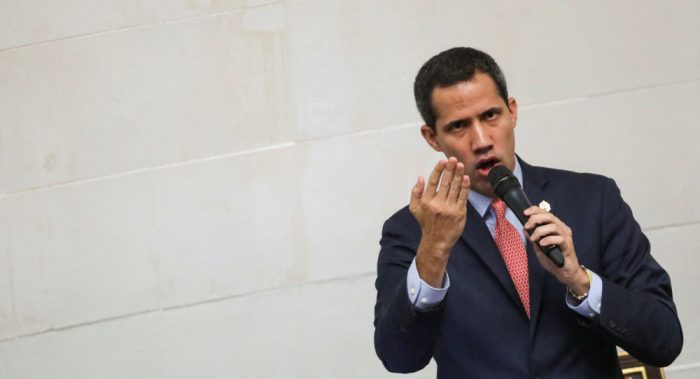
Venezuelan Minister of Popular Power for Communication and Information Jorge Rodriguez has reported that investigators have uncovered a plot organised by a group loyal to opposition leader Juan Guaido and involving the governments of Peru and Brazil. According to Rodriguez, the plot, called “Bloody Christmas”, suggested attacks on several military units across Venezuela.
In addition to this, the minister said that the members of “Guaido’s group” were planning to shoot down a Colombian Air Force plane using missiles stolen from the Venezuelan military in a staged false-flag attack on the country’s neighbour. The plotters allegedly planned to thereby give the US a pretext to start a “war” with Venezuela.
Rodriguez stated that some of the missiles and assault weapons stolen by the plotters have been recovered, but others remain in the hands of those who are still at large. According to him, a total of 9 RPG rocket launchers were stolen, though it’s unknown how many have been returned.
Attack on Ammunition Depot
Earlier, on 23 December, Venezuelan authorities reported that one soldier was killed as a result of the assault on one of the country’s military units by unknown assailants, which sought to rob an ammunition store. After the attack was repelled, Venezuelan authorities managed to capture some of the gunmen.
An investigation has been started into the incident, but it is not immediately clear who orchestrated the attack.
Back in April 2019, Venezuela experienced an unsuccessful coup attempt organised by opposition leader and self-proclaimed interim President Juan Guaido. The latter appealed to the country’s military to stand against democratically elected President Nicolas Maduro, although only a few of them heeded the call, resulting in the coup’s failure. Guaido has since then fled abroad along with some of his supporters.
Panama: A Grieving People Recalls 30 Years of the US Invasion
teleSUR | December 20, 2019
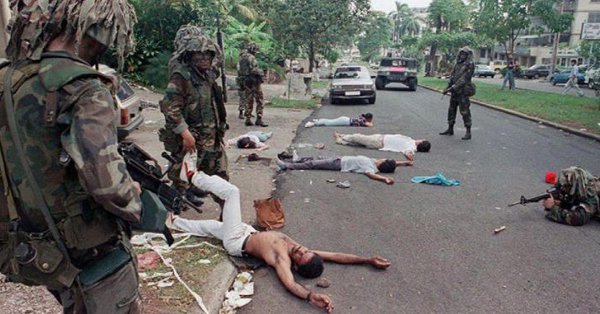
For the first time over the last 30 years, Panamanian authorities agreed to declare “National Day of Mourning” on December 20, which is the date on which the United States invaded Panama in 1989.
“The government acknowledges declaring December 20 as a day of national mourning to honor Panamanians and all the innocents who lost their lives and defended our territory’s integrity,” President Laurentino Cortizo tweeted on Wednesday.
On Dec. 20, 1989, President George H.W. Bush ordered “Operation Just Cause” and deployed some 26,000 soldiers to overthrow General Manuel Antonio Noriega.
Until then, he had been one of the most faithful collaborators of the Central Intelligence Agency (CIA) and the Drug Enforcement Administration (DEA).
Noriega fueled the Bush administration’s hostility when he requested the closure of “The School of the Americas,” where the U.S. had trained thousands of Latin American military since 1946. Upon losing Washington’s support, however, the U.S. Department of Justice accused him of drug trafficking.
Official declassified documents, which were published by Panama Files for the first time this week, indicate that 202 civilians and 314 militaries were killed during Operation Just Cause.
In an unofficially recognized manner, historians, activists, and families argue that the U.S. invasion killed up to 4,000 civilians.
“El Chorillo neighborhood, where the Panamanian Defense Forces central headquarters were located, was razed during the battle,” local outlet El Siglo recalls.
Mirta Guevara, who was a Public Prosecutor at the time, remembers that nobody imagined what the U.S. was planning to do. She was studying court records on the night of December 19 when her husband came in and told her, “Close those files. They are going to invade us.”
“I was shocked because, although one sees such things at the movies, I had never imagined it. I think that no Panamanian imagined that they were going to invade us,” Guevara recalls and now says that such an action had no justification. “Many people died.”
Of what happened in Panama not only oral accounts remained. A year after the invasion, a documentary showed a woman who asked the U.S.-imposed government to recognize whether what happened was “war, invasion or liberation.” They replied to her that it was a “government of democracy and justice.”
“Democracy for whom? Justice for whom? For those who are in the mass graves or for those who are in the government? For those of us who go hungry or for those who have everything?” the woman said without fear of the repression that was lived in the country.
In another documentary called “Unjust Cause,” which was made by the Panamanian filmmaker Rafael Vergara, scenes of brutal aggression are reported, one of which happened when U.S. troops bombarded a civil building because their inhabitants did not want to leave.
To resist the invasion, the Panamanians organized themselves in the “Battalions of Dignity”, which were groups of guerrilla fighters who were persecuted by the invasion-born government, which was led by Guillermo Endara, to whom a judge gave the presidency secretly the night before the invasion.
“Those who seized power mounted on the invading tanks remain silent,” a witness told Prensa Latina.
“After 30 years, the curtains, which hid the worst massacre experienced by Panama and the largest U.S. military deployment after Vietnam, begin to fall.”
In his chronicle “The Panama Invasion: A Heroine of the Little Hiroshima,” Colombian journalist Hernando Calvo described what happened in El Chorrillo neighborhood through the testimony of Ana.
She recalled a Dantesque scenario in which invading troops prevented helping injured family members, tanks hit dead or alive people lying on the street, and flamethrowers burned dead bodies at the beach.
Media, Human Rights Groups Silent Over Politically-Motivated Murder of Journalist in Bolivia
By Alan Macleod | MintPress News | December 20, 2019
Argentinian journalist Sebastian Moro was found unconscious, left for dead, covered in bruises, scratches and other signs of violence on November 10. Moro was wearing a vest identifying him as press covering the dramatic U.S.-backed coup against democratically elected President Evo Morales in Bolivia.
The 40-year-old worked for the influential Argentinian newspaper Pagina/12. Hours earlier he had denounced what he saw as a far-right takeover of power. His last known words, published in his newspaper hours before he was found, were denouncing the kidnappings of government officials, and mob attacks on journalists and media outlets. He had been one of the only voices exposing the local opposition’s campaign of terror to the world. Moro spent six days in a La Paz hospital before finally succumbing to his injuries.
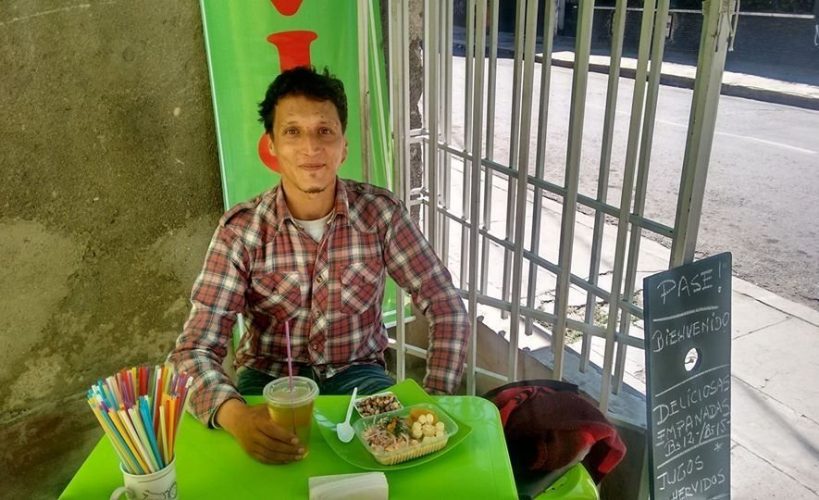
A photo of Sebastian Moro at a cafe in Bolivia not long before his death. Photo | Facebook
Despite the world’s attention being focused on the Andean country, media has steadfastly ignored the likely beating to death of a foreign journalist for political reasons. No mention of Moro has been made in the New York Times, CNN, MSNBC, Fox News or any mainstream Western outlet, despite his story being well known in his native Argentina. Nor has his case been mentioned by the major human rights networks such as Amnesty International or Human Rights Watch. Even the Committee to Protect Journalists has not acknowledged his killing. Its list of deceased journalists in 2019 shows none across South America.
In fact, both media and the human rights industry have been leading a campaign to legitimize the new coup administration of Jeanine Añez and whitewash her crackdown on independent media. Taking their line from the Trump administration, corporate media refused to call the events in Bolivia a coup, preferring instead to frame it as Morales “resigning.” The New York Times welcomed the end of the “increasingly autocratic” Morales and expressed its relief that the country was in the hands of more “responsible” leaders. Meanwhile, the Wall Street Journal’s headline read “a democratic breakout in Bolivia.”
Human Rights Watch, too, has been key in pushing through the U.S.-backed overthrow of a democratically elected head of state and whitewashing the violence that still engulfs Bolivia. Its director Ken Roth claimed that the coup was an “uprising” aimed at “defending democracy” from a “strongman” while the organization described Añez’s law giving Bolivia’s notorious police and armed forces complete immunity from all crimes while they massacred protestors as merely a “problematic decree.”
In fact, the only English language source that has reported on Moro’s death is the Orinoco Tribune, a tiny Venezuelan website with a staff of two people, according to its website. The Tribune translated an Argentinian article and published it on its website. MintPress News reached out to the Tribune for comment on the story. The editor replied that Moro’s case, as well as the total media silence over it, highlighted the need to create and encourage new grassroots media outlets. It also noted that after the coup against Honduran President Manuel Zelaya in 2009:
One [of the] very first gestures the U.S. coup against Zelaya made in Honduras was to shut down community radio and snatch journalists. Tortured reporters were then tossed out on the highway as a warning for others. The lucky ones lived. The coup in Bolivia seems to be on the same learning curve.”
As MintPress has reported, there has been a coordinated assault on independent media in Bolivia. New Communications Minister Roxana Lizarraga announced that this was part of the “dismantling of the propaganda apparatus of the dictatorial regime of Evo Morales,” claiming that Morales’ “militants who misused the state media system” are being “withdrawn.” Outlets like TeleSUR and RT en Español have been shut down and reporters have been shot. Lizarraga also declared that she would persecute any journalists involved in what she called “sedition,” noting that she already had a list of “troublesome” individuals and outlets.
Human rights groups have also been subject to oppression. New Interior Minister Arturo Murillo directly threatened a newly arrived human rights delegation from Argentina. “We recommend these foreigners who are arriving…to be careful,” he said, “We are looking at you. We are following you,” warning them that there will be “zero tolerance.” He added that “At the first false move that they make, trying to commit terrorism and sedition, they will have to deal with the police.” Fourteen members of the group were subsequently arrested, to silence in the press.
The largest NGOs exist primarily to protect and advance power under the guise of standing up for human rights. Human Rights Watch started as an anti-Soviet Cold War propaganda machine, Amnesty International’s co-founder was an FBI asset involved in the murder of Black Panther leaders like Fred Hampton. This explains their disinterest in Moro’s murder amid the wider crescendo of violence in Bolivia. Those that stand up to power are rarely remembered fondly in corporate media.
Alan MacLeod is a MintPress Staff Writer as well as an academic and writer for Fairness and Accuracy in Reporting. His book, Bad News From Venezuela: Twenty Years of Fake News and Misreporting was published in April.
Bolivia’s New US-Backed Interim Gov’t Wastes No Time Privatizing Economy
By Alan Macleod | MintPress News | December 16, 2019
It has been barely one month since the administration of Jeanine Añez seized power in a military coup in Bolivia, but it has wasted no time in attempting to transform the economy and society. Its latest move is aimed at privatizing the country’s economy. A government spokesperson confirmed the fears of many, claiming that “I believe the government should reduce its own size” and a protagonistic role should be given to private enterprises. In case that was not clear enough, he emphasized, “Yes, I’m talking about privatization.” Bolivia’s economy is dependent on its nationalized oil and gas industries.
After military generals appeared on television demanding his resignation, longtime president Evo Morales stepped down, citing the growing, targeted paramilitary violence against his MAS (Movement towards Socialism Party) colleagues. Morales, and his Vice-President Alvaro Garcia Linera, fled to Mexico for safety. The military chose Senator Jeanine Añez as his successor.
Añez is a strongly conservative Christian who has described Bolivia’s indigenous majority as “satanic” and vowed to bring the Bible back into politics. She has also provided the military carte blanche to use unlimited force in suppressing all resistance to her rule, even creating a squad of masked, heavily armed death squads aimed at uprooting leftist and foreign “terrorists.” Despite this, large areas of the country are in open rebellion and completely uncontrolled by the new government.
For a supposed “transitional” government, a caretaker regime holding the reins until imminent elections are organized, the Añez administration has certainly made some bold moves. It has already pulled Bolivia out of multiple international and intercontinental political and economic organizations, such as ALBA (the Bolivarian Alternative for the Americas) and UNASUR (the Union of South American Nations), both of which had a more left-of-center outlook.
Meanwhile, it has expelled large numbers of foreign nationals, including around 700 Cuban doctors that made up the backbone of the country’s new free healthcare system. It has also recognized U.S.-backed anti-president Juan Guaidó as the rightful ruler of Venezuela. With U.S. support, Guaidó attempted another Bolivia-style coup last month. Interior Minister Arturo Murillo has accused the Venezuelan government of being at the head of a vast narcotics conspiracy, ignoring his own boss’s ties to drug-runners (Añez’s nephew was caught with more than half a ton of cocaine in Brazil).
Murillo has formally requested the Israeli military come to train Bolivia’s armed forces and has eliminated entry visas for Americans and Israelis. Considering the IDF’s expertise in suppressing an indigenous population, Murillo’s intentions are worrying an increasing number of his countrymen. The government has also participated in a crackdown on dissenting journalism, closing down many TV networks including Bolivia TV, RT and TeleSUR. Even foreign journalists have been assaulted, detained and killed.
This latest move at privatizing the economy is part of an effort to “dismantle the apparatus of the dictatorial regime of Evo Morales,” as the Minister of Communication, Roxana Lizarraga, put it. On the orders of the International Monetary Fund, criticized by many as simply an extension of the U.S. government, the country’s oil and gas industries were privatized in 1996. International corporations like Enron, Shell and Repsol YPF were not even required to pay for their shares, making the move tantamount to the biggest giveaway in modern Bolivian history. Furthermore, royalties paid to the government were slashed to just 18 percent.
Water was also privatized. Bechtel, an American corporation, increased the prices to levels almost no Bolivian could afford to the point where water and sewage cost over half of an average Bolivian’s yearly wage. Bechtel also persuaded the government to privatize the sky, making it illegal to gather rainwater. The result was mass thirst that led to nationwide protests that became known as the Water War.
Within months of gaining office, Morales made good on his promise to nationalize key sectors of the economy. The move generated an extra $31.5 billion in government revenue over the next decade. He used the money to fund ambitious social programs. For example, over 11 percent of the revenues went to fund public universities, indigenous associations and a basic income grant to all low-income Bolivians over 60 years old.
Under Morales’ guidance, poverty halved and extreme poverty fell even further as citizens felt the benefits of the country’s natural resources. This, the Center for Economic Policy Research stresses, could not have been possible without nationalizing the hydrocarbons industry. Perhaps more important than all this, however, was the newfound dignity Bolivia’s indigenous majority felt at seeing the first indigenous president in the country’s history. The community is often treated with contempt bordering on revulsion by the light-skinned elite, but Morales has been part of a movement that inspired them to organize and take a protagonistic role in their country’s politics and society.
With the U.S. and the local elite back in charge of Bolivia and promising to re-privatize the economy, both their newly won social status and their improved economic circumstances are at imminent risk. A reversal of this policy will take coordinated resistance on the scale of the 2000 Water War.
Alan MacLeod is a MintPress Staff Writer as well as an academic and writer for Fairness and Accuracy in Reporting. His book, Bad News From Venezuela: Twenty Years of Fake News and Misreporting was published in April.
Chile Denounces Over 350 Eye Injuries On Human Rights Day
teleSUR | December 10, 2019
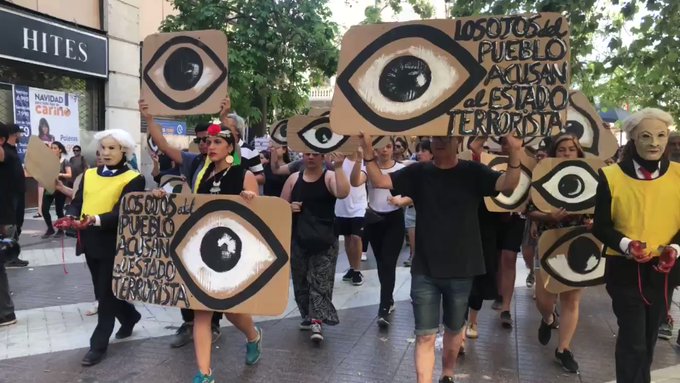
After more than two months of mobilizations against the policies of right-wing President Sebastian Piñera, sectors of the population took to the streets Tuesday in what was called “March for the Eyes of Chile,” in commemoration of the International Human Rights day.
The Chilean people denounced the government’s excessive violence after 352 people lost their vision partially or totally during the violent repression to social protests. Organizations defending the rights of peoples mobilized to the meeting point for protesters at the renamed ‘Plaza of Dignity.’
The main objective of the march was to denounce the violent repression by police that until Dec. 6, caused 3,449 injured, including 2,767 men, 397 women, and 254 children and adolescents, according to the National Human Rights Commission.
Those attending the demonstration came with posters that had one eye drawn to remember the 352 people who have eye wounds, of which 331 are from injury or trauma and 21 from bursting or loss.
The posters also show a message denouncing “the eyes of the people accuse the terrorist state.”
For his part, the Director of the NHRC Sergio Micco said that the organization has proven on countless occasions that serious violations of human rights have occurred in the demonstrations. “We are facing a situation of denunciation of serious violations of human rights… there are abusive and negative behaviors that are continually repeated such as excessive use of riot guns,” he commented.
The Director of the Carabineros, Chile’s military police Mario Rozas, announced the suspension of the use of pellets as an anti-riot tool, except in cases of “legitimate defense when it represents a death threat.”
The measure follows a study by the University of Chile that states that these pellets are composed of only 20 percent rubber, while the other 80 percent have different elements, such as lead. However, on Nov. 23, Al Jazeera reported that Chilean police continue to implement pellets despite the official suspension of their use.
The unrest in the South-American country was sparked by a government’s decision to increase metro fees [premised on reduced carbon energy] but quickly spread to hold other social issues such as income inequality and swelling costs of living. The state’s response to the popular grievances has since led to the death of 23 demonstrators while around 3,000 have been injured.
The Inter-American Commission on Human Rights (IACHR) along with numerous other rights groups condemned the constant violations of human rights by police and military against the population in Chile.
Featured Video
BRITAIN’S WARNING: PREPARE FOR WAR
or go to
Aletho News Archives – Video-Images
From the Archives
British weapons and personnel doing much of the killing in Yemen
Press TV – June 18, 2019
A detailed report published by the Guardian newspaper has shown how Britain is massively contributing to Saudi Arabia’s devastating war on Yemen as it suggests that London is not only supplying the bombs that fall on Yemenis, but it provides the personnel and expertise that keep the war going.
The comprehensive report by Arron Merat published on Tuesday showed that Britain was doing much of the killing in Yemen as the country continues to provide Saudi Arabia with everything it needs to turn its southern impoverished neighbor into a graveyard.
“Every day Yemen is hit by British bombs – dropped by British planes that are flown by British-trained pilots and maintained and prepared inside Saudi Arabia by thousands of British contractors,” said Merat in the report. … continue
Blog Roll
 Aletho News
- Pakistan reopens Iran border after boosting security: Report
- Why are so many Brazilians voting for Flávio Bolsonaro?
- Democrats Put Anti-Russia Agenda Ahead of American Workers
- Elijah Magnier: Yemen’s Strikes Are Shattering Saudi Arabia’s Long-Term Strategy
- Pentagon designates Chinese cultural centers national security threat
- Israel Demolishes Home Of Lebanese Journalist Whose Viral Film Exposed Pager Attack
- Record Oil, Empty Tanks: The UAE’s Miracle Recovery
- Burnham tackles Britain’s poverty with aggression in Yemen
- Peace in Ukraine: the easy way – or the hard way
- Trump & the Rrrrussians
- If Americans Knew
- An error has occurred; the feed is probably down. Try again later.
- No Tricks Zone
- Sudden Stratospheric Warming, Powerful El Niño Combination May Lead To Extreme Europe Cold, Energy Crisis!
- Two New Studies Find Thwaites Glacier Melt Cannot Be Driven By Human Activity Or A Warming Ocean
- E-Cars Reduce CO2 Emissions By Only 41% Compared To Internal Combustion Engine Vehicles
- Predictions Made By Renowned Climate Professor Over Past Decades Have Been Proven To Be Poor
- New Study Suggests Large Regions Of The Pacific Ocean Have Been Cooling For The Last 80 Years
- Germany’s Green Energy Debacle: High Energy Costs Force Kahla Porzellan to Close After 182 Years!
- New Study: 50 Years Of The Most Aggressive ‘Net Zero’ Policies Can Only Affect The Global Climate By 0.03°C
- US September “Heat” Was No Record…Many Records Set Decades Ago
- Latest European Green Energy Debacle; Portugal’s Largest Flagship Solar Park Insolvent!
- Green Energy Debacle: German Expert Professor Fritz Vahrenholt Warns Of Severe Economic And Social Consequences

