Hernandez declared winner of Honduras presidential race, opposition calls for rallies
Press TV – December 18, 2017
In Honduras, incumbent Juan Orlando Hernandez has been declared the winner of last month’s disputed presidential election after a partial recount, with the opposition candidate rejecting the results and calling for fresh protests.
The Supreme Electoral Tribunal said Sunday after the official recount that Hernandez has won with 42.95 percent to 41.42 for challenger Salvador Nasralla.
“We have fulfilled our obligation (and) we wish for there to be peace in our country,” the tribunal’s president David Matamoros said.
Matamoros said the tribunal had resolved all the disputed issues, and that votes were recounted at select polling stations.
The count has, however, been questioned by the two main opposition parties and monitors with the Organization of American States (OAS).
As he left for the United States, Nasralla rejected Hernandez’s re-election as illegitimate and called for more protest rallies on Monday.
“The declaration by the court is a mockery because it tramples the will of the people,” Nasralla said. He added that he was “very optimistic” because “the people do not endorse fraud.”
He also said he would urge the OAS in Washington to invoke its democratic charter against Honduras.
The former Honduran president, Manuel Zelaya, who backed Nasralla, tweeted Hernandez “is not our president,” urging people to take to the streets in protest.
Meanwhile, the OAS secretary general, Luis Almagro, said “serious questions” surrounded the election results, urging Honduran officials to avoid making “irresponsible announcements.”
He also called for a fresh presidential election to guarantee peace in the country, which has been the scene of angry protests and clashes since the November 26 presidential election.
However, European Union election observers said the vote recount showed no irregularities.
The initial results had shown Nasralla with a significant lead over Hernandez with nearly 60 percent of the vote counted.
The electoral tribunal then went mysteriously silent, giving no further public updates for about 36 hours, and when they resumed, Nasralla’s lead steadily eroded and ultimately reversed in favor of Hernandez.
The protests and violence, which broke out over the manner of announcing the results, has killed at least 22 people.
NYT’s Argentina Op-Ed Fails to Disclose Authors’ Financial Conflict of Interest
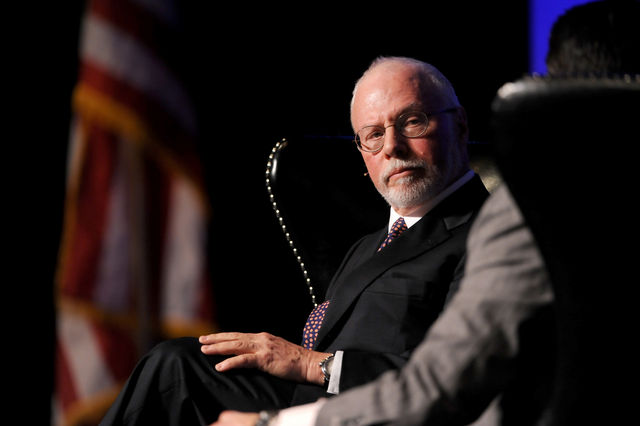
Photo: Paul Singer
By Eli Clifton | LobeLog | December 13, 2017
On Tuesday, Mark Dubowitz and Toby Dershowitz, two executives at the hawkish Foundation for Defense of Democracies (FDD), took to the op-ed pages of The New York Times to celebrate last week’s announcement that Argentina’s former president, Cristina Fernández de Kirchner, would face treason charges for her alleged role in covering up Iran’s alleged involvement in the 1994 bombing of a Jewish community center in Buenos Aries, killing 85 people.
But their op-ed fails to disclose a serious financial conflict of interest underpinning their attacks on Kirchner. One of FDD’s biggest donors financed a multi-year public diplomacy campaign against Kirchner all while attempting to collect $2 billion in debt from Argentina.
Indeed, legitimate questions exist about the bombing and suspicious 2015 death of Argentine Special Investigator Alberto Nisman who claimed in 2006 that Iran ordered the bombing. But Kirchner’s supporters fear that Argentina’s President Mauricio Macri is using judicial reforms and charges against Kirchner to remove his political opposition.
FDD has been eager to promote Nisman’s work. The group also runs AlbertoNisman.org “to honor the legacy of late Argentine Prosecutor Natalio Alberto Nisman and his tireless pursuit of justice.” FDD continues this work despite serious questions about large unexplained deposits to Nisman’s bank account.
Moreover, their rush to denigrate Kirchner omits a major conflict of interest in Dubowitz and Dershowitz’s funding. Between 2007 and 2011, hedge-fund billionaire Paul Singer contributed $3.6 million to FDD. That coincided with his battle to force Argentina to repay the full amount of the sovereign debt held by Singer’s firm, Elliott Management, a payout that Kirchner rejected. Ninety-three percent of Argentina’s creditors accepted losses, but Singer was one of the few holdouts. Having bought up Argentina’s defaulted bonds at pennies on the dollar, he had then sued the country for payment in full.
Singer embarked on a 15-year legal battle to collect on Argentina’s debt payments by attempting to seize Argentine government assets around the world, including a 100-meter three-masted tall ship when it docked in Ghana). After financing public diplomacy campaigns against Kirchner, Singer’s firm walked away with approximately 75 percent of what he was owed, $2.4 billion. The deal, finalized last year, was largely credited to Mauricio Macri, Kirchner’s successor.
Groups receiving Singer’s donations kept up a steady drumbeat of attacks on Kirchner and sought to tie her to Iran and Nisman’s suspicious death. “We do whatever we can to get our government and media’s attention focused on what a bad actor Argentina is,” Robert Raben, executive director of the American Task Force Argentina (ATFA) explained to The Huffington Post.
ATFA, a group created by Singer and other hedge fund holdouts, spent at least $3.8 million dollars over five years in its efforts attacking Argentina.
“Argentina and Iran: Shameful Allies” was the headline of one ATFA ad that ran in Washington newspapers in June 2013 as the Obama administration was weighing whether to file an amicus brief with the U.S. Supreme Court in Argentina’s favor. The ad featured side-by-side photos of Kirchner and then-Iranian President Mahmoud Ahmadinejad connected by the question, “A Pact With the Devil?” That same spring, FDD release an English-language summary of a new “ground-breaking” report by Nisman detailing “Iran’s extensive terrorist network in Latin America.”
This was followed by a flood of op-eds by FDD fellows and a series of hearings held by the House Homeland Security Subcommittee. According to FDD’s vice president, Toby Dershowitz, the report, which contains serious flaws and leaps of logic (detailed by Jim Lobe here and here), provided:
[A] virtual road map for how Iran’s long arm of terrorism can reach unsuspecting communities and that the AMIA attack was merely the canary in the coal mine. … The no-holds-barred, courageous report is a ‘must read’ for policy makers and law enforcement around the world and Nisman himself should be tapped for his guidance and profound understanding of Iran’s terrorism strategy.
Singer’s largesse also extended to the American Enterprise Institute (AEI) where he contributed $1.1 million in 2009. AEI Fellow Roger Noriega, who received $60,000 directly from Elliott Management in 2007 to lobby on the issue of “Sovereign Debt Owed to a U.S. Company,” published an article on the group’s website—“Argentina’s Secret Deal with Iran?”—citing secret documents about an alleged nuclear cooperation agreement between Tehran and Buenos Aires “brokered and paid for” by then-Venezuelan President Hugo Chávez.
In 2013, Noriega and Jose Cardenas, a contributor to AEI’s “Venezuela-Iran Project,” co-authored a seven-page policy report—“Argentina’s Race to the Bottom”—charging that Kirchner’s government was “casting its lot with rogue governments like those in Venezuela and Iran.”
Singer also gave $500,000 to The Israel Project (TIP) in 2007 and $1 million in 2012. By May 2015, the group’s magazine, The Tower, published no fewer than 48 articles that mentioned Argentina and 40 that cited Nisman and the 1994 bombing.
Neither AEI, TIP, nor FDD has bothered to disclose its funding from Singer when publishing work that advanced his public pressure campaign against Kirchner. Indeed, there is no public record of why Singer chooses to fund these organizations. But his funding poses a conflict of interest, especially when The New York Times publishes Dershowitz and Dubowitz without any public acknowledgement that their criticism of Kirchner conveniently follows the narrative and financial interests of one of the duo’s biggest financial donors.
The massacre of children and others at El Mozote
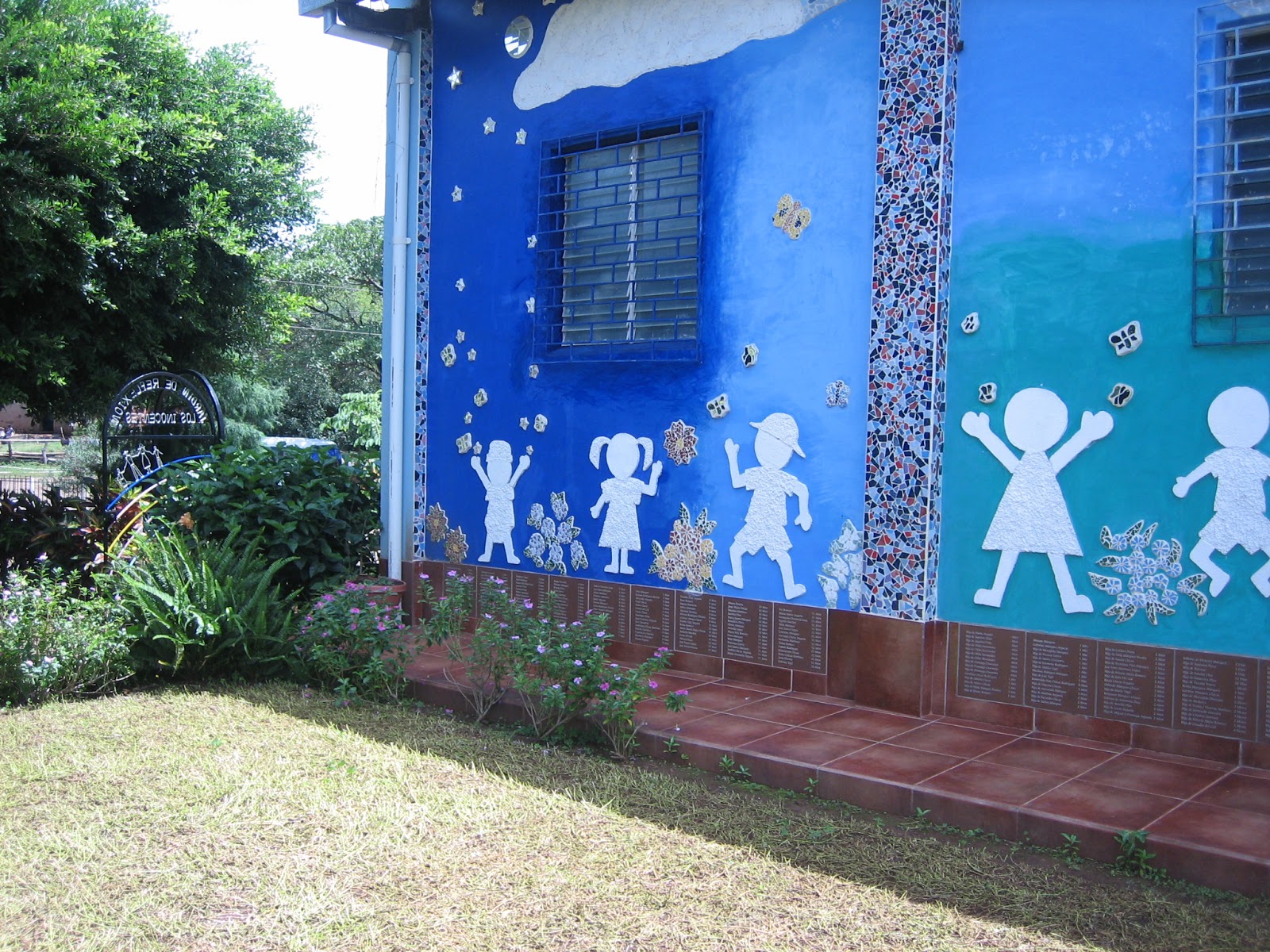
Garden next to church in El Mozote where hundreds of child victims lie buried.
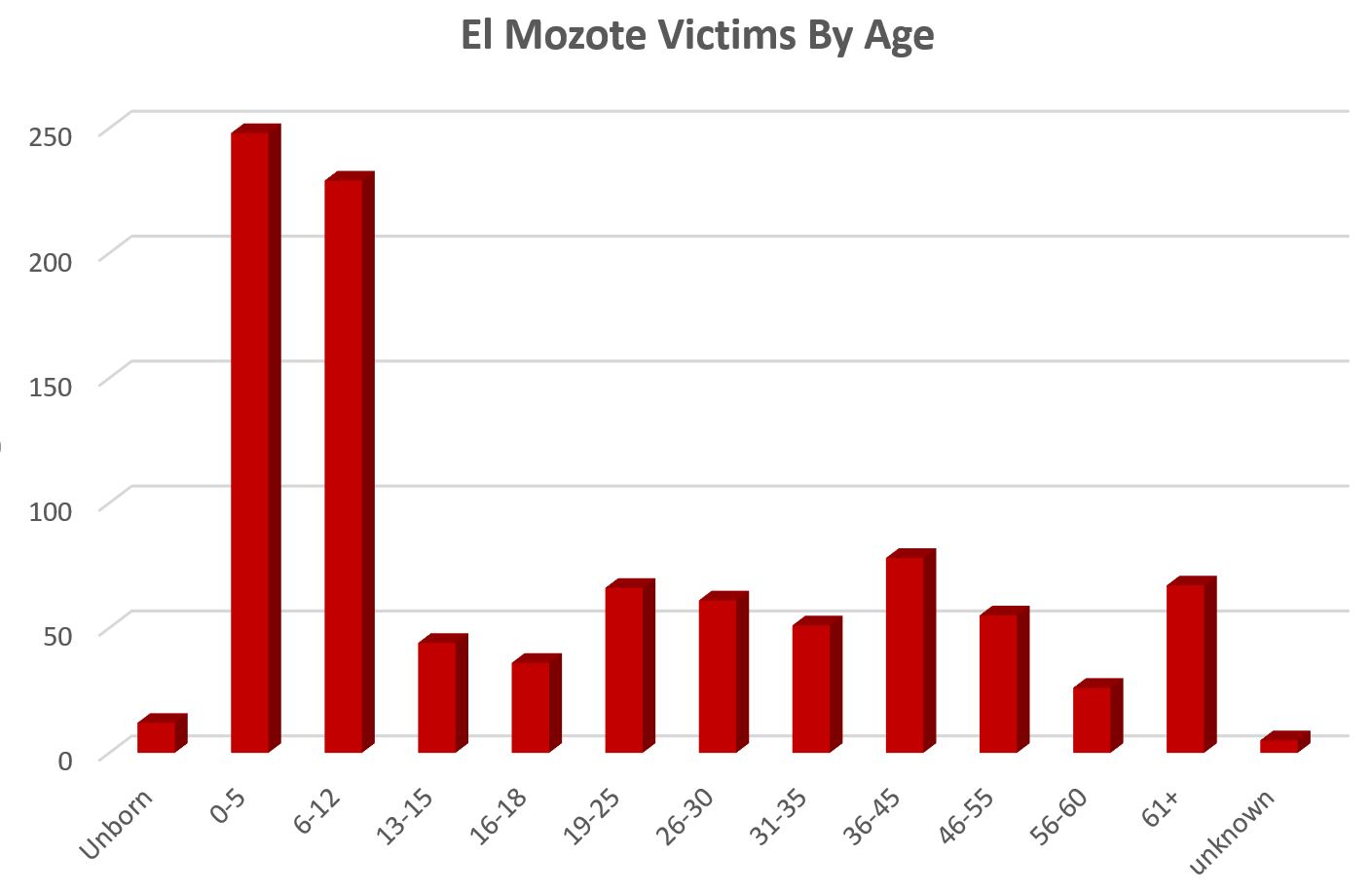
Thirty-six years ago, from December 10-12, 1981, the armed forces of El Salvador massacred hundreds of children in the town of El Mozote and surrounding communities. Last week El Salvador’s government divulged the results of the first official register of the victims who died in that massacre. Of 978 victims executed, 553 or 57% were under 18 years of age and 477 were 12 and under. Twelve infants died in their mothers wombs. Henceforth, at El Salvador Perspectives, we will refer to this atrocity as the “Massacre of Children and Others at El Mozote.”
As it covers the trial, the online periodical El Faro has offered us another view into the lives of the victims. A photogallery at the site shows ordinary objects of life in the village. The objects were recovered during the course of exhumations locating the bodies of the army’s massacre. Like the artifacts from Pompeii or Joye de Ceren, these items from everyday life give us a glimpse into the pre-disaster lives of the victims.
On this 36th anniversary, president Salvador Sanchez Ceren traveled to El Mozote for the first time during his presidency. In his speech, the president spoke of a debt to the victims, of the government’s efforts to invest in the zone as a form of reparations through public works, a health clinic, and cultural activities. The president indicated there were plans to construct a center devoted to historic memory so the events at El Mozote would not be forgotten. Despite his reference to historic memory, however, the president made no indication that the military would be required to open its archives from the time. He also made no mention of the current trial proceedings where former military commanders are charged with responsibility for the massacre of children and others at El Mozote.

Criminal law in El Salvador talks about those who are the material authors of a crime, the ones who pulled the trigger, and the intellectual authors of a crime, the ones who gave the orders for the crime. There have been previous trials in El Salvador for the material authors of such crimes as the murder of the Jesuits, a housekeeper and her daughter in 1989, or the murders of the four US churchwomen in 1980. But the current trial in the courtroom in San Francisco Gotera is the first full trial of the intellectual authors of atrocities committed during the civil war. For that reason, as well as the magnitude of the crime of a massacre of hundreds of children and others, the trial is historic.
The El Mozote criminal prosecution has developed a momentum and a seriousness not seen in any other case involving war crimes from the time of El Salvador’s civil war. It is a momentum pushed by the zealous efforts of the human rights lawyers for the victims who have called witness after witness to the stand to describe the loss of their families at the time. I have seen the coverage of the suit and the commentary about it in social media increasing as each new witness takes the stand. In small steps, the country is starting to confront what justice means for a military command which ordered its soldiers to massacre children.
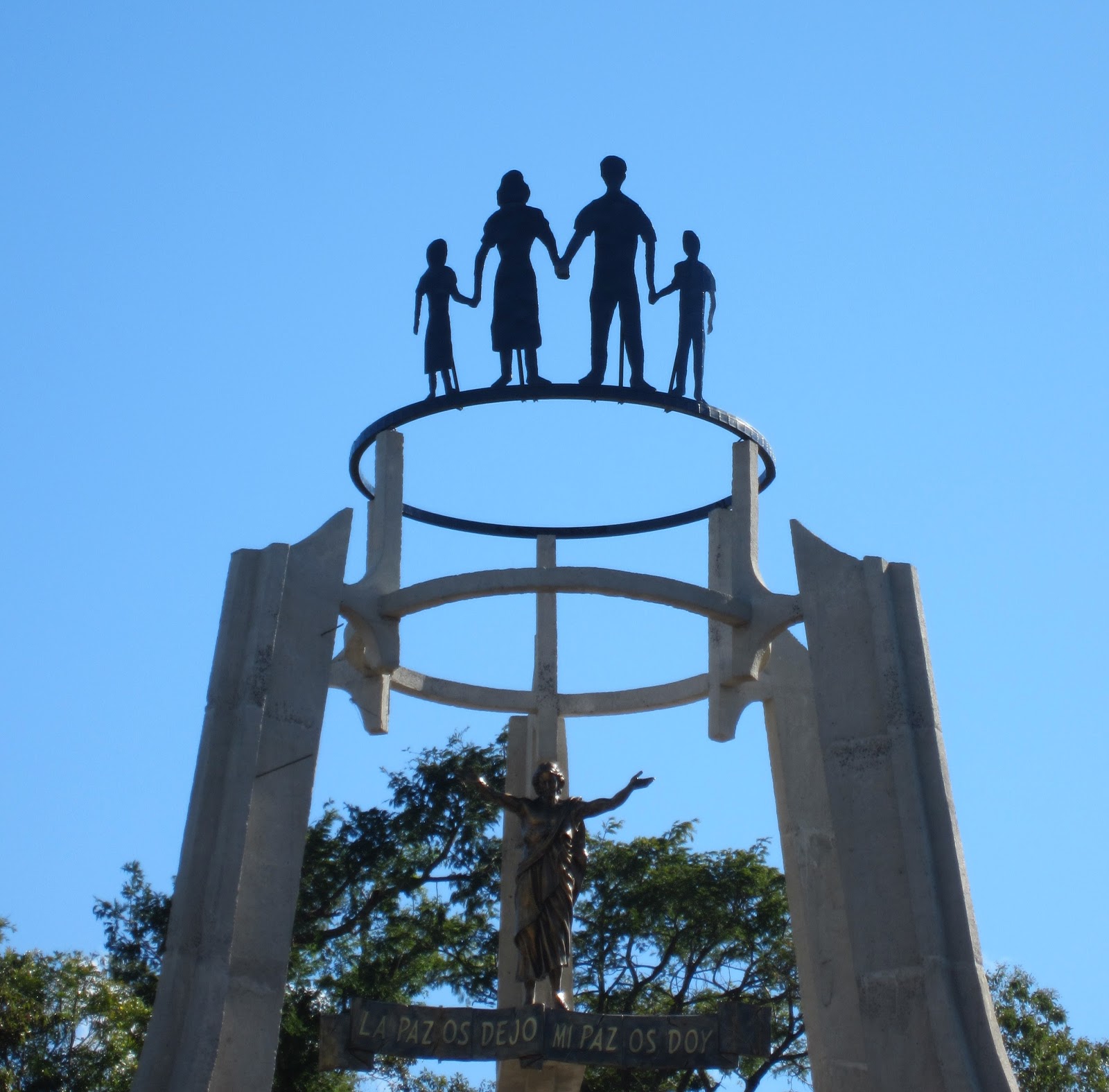
Mayor Killed in Mexico, 3rd in Less Than a Month
teleSUR | December 10, 2017
Mexican Mayor Jose Santos Hernandez was killed on Friday afternoon, the third murder of its kind this month. The other two murders took place in Veracruz.
Officials said gunmen intercepted Santos’ car, forced him from the vehicle – in which he was traveling with family – and killed him.
He is the sixth mayor killed so far this year, an AFP report stated.
Mexico’s murder rate has soared extraordinarily and has put the Latin American country on track to reach a historically high death figure by the closing of 2017, which would surpass 2011 and 2012 ‘war on drug’ numbers.
There have been almost 24,000 murders reported at the end of October.
Data from the National Association of Mayors reveals that approximately 50 mayors have been murdered since 2003 and 82 since 2006.
Half of the murders are committed in the states of Oaxaca, Michoacan, Veracruz and Guerrero.
Veracruz is regarded as one of the most violent states in the country.
Venezuela’s Electoral System Reliable, Says Monitor
By Ryan Mallett-Outtrim | Venezuelanalysis | December 8, 2017
Venezuela’s voting system remains one of the most reliable in the world, an international group of electoral experts said Thursday.
The country’s electronic voting system boasts some of the world’s best checks and balances, and is both “safe and reliable”, according to Nicanor Moscoso, the head of the Latin American Council of Electoral Experts (CEELA).
“The results have never been formally refuted. It is the most audited process in the world,” he said.
The comments were made after Moscoso concluded talks with Venezuela’s electoral authority, the CNE.
Praising the work of the CNE, Moscoso said the electoral system is heavily automated and easy for voters to use.
“Venezuelans can be sure that Sunday will deliver the real results of the democratic will,” Moscoso said, referring to upcoming municipal elections this Sunday.
More than 300 mayoral positions nationwide are up for grabs, with the ruling socialist party, the PSUV, hoping to repeat its surprise victory in October’s regional vote. The party secured 18 of the country’s 23 state governorships in the elections.
Ahead of the vote, opposition parties had expected to make major gains, and largely refused to acknowledge the unexpected results once they came in. Prominent opposition parties including Voluntad Popular, Primero Justicia and Vente Venezuela have all vowed to boycott Sunday’s vote.
The boycott is likely to backfire on the opposition, according to Phil Gunson of the International Crisis Group.
“I don’t think there are many instances in history where governments have been brought down by electoral boycotts,” he told The Guardian.
“I think the very least you can ask of an opposition is that it shows up and puts up a fight,” Gunson added.
Honduran Opposition Seeks Annulment of Election Results
teleSUR | December 2017
The main opposition parties in Honduras independently submitted requests to annul the results of the Nov. 26 presidential election, which they consider fraudulent and skewed in favor of President Juan Orlando Hernández.
Salvador Nasralla, the leader of the Alliance of Opposition Against the Dictatorship, called on the Supreme Electoral Tribunal (TSE) to initiate a total recount of all votes and documents.
Before Nasralla presented his official challenge before the TSE, he warned that 200,000 extra votes had already been counted.
“Honduras has become a global joke,” he told reporters.
The candidate stressed his optimism, claiming that justice will prevail in the end.
“I know the people will defend the result (of the recount),” said Nasralla, who indicated that once the legal bodies perform their duties after the formal challenge, he plans to travel abroad to denounce the “fraud we have found.”
Meanwhile, the Liberal Party secretary, Octavio Pineda, also delivered a formal request to the TSE to annul the results. “Principles have been violated since the current president was allowed to participate in the electoral process when the Constitution forbids it,” he said.
The TSE has up to 10 days to respond to requests for annulment.
The election, which occurred two weeks ago, has left Hondurans unsure of who will be their next president for the next four years. This uncertainty has triggered protests in the Central American country that has left at least 11 dead and 15 wounded.
Argentina’s Cristina Fernandez Faces Pretrial Detention

Former Argentine President Cristina Fernandez de Kirchner
teleSUR | December 7, 2017
An Argentine judge has ordered that former Argentine President Cristina Fernandez de Kirchner be put in pretrial detention.
Federal judge Claudio Bonadio alleges that Fernandez committed crimes against the state in trying to “conceal” the possible involvement of five Iranian officials in Argentina in the bombing of the Israeli Argentine Mutualist Association, AMIA, building in Buenos Aires in 1994.
Eighty-six people were killed in the explosion. The bombing remains unsolved.
The judge claims that in signing a memorandum of understanding with Iranian officials in Argentina in 2013, Fernandez agreed to not investigate possible Iranian involvement in the attack, “aggravating” the inquiry and granting the alleged bombers impunity.
The 2013 memorandum was never legally enacted in Iran, but was by the Argentine Congress. However, an Argentine judge ruled the memorandum unconstitutional.
If convicted, Fernandez could face up to 10 to 25 years of jail time or even life in prison.
Fernandez, along with all other 23 newly-elected senators, are set to take up their congressional post this Sunday, Dec. 10. She and the other senators were sworn in last week.
Bonadio also ordered the arrest of former Argentine government official Hector Timerman. Already arrested for alleged involvement in the memorandum is former Secretary General Carlos Zannini, who served under Fernandez. He was questioned about the memorandum by Bonadio in October and denied any wrongdoing.
Also arrested today in the early morning were activists Luis D’Elia and Jorge “Yussuf” Khalil. As officials arrested D’Elía, he yelled “stop the Macri dictatorship!” alluding to current President Mauricio Macri.
Up to 12 other former government officials are suspected of playing a part in the so-called “cover up,” but are not being detained.
Fernandez says the memorandum attempted to advance the investigation and called for the creation of an international commission to investigate the bombing. She says the commission had orders of extradition pending for Interpol to deliver several accused who reside in Iran to Argentina. These extradition orders were never carried out.
An investigation into the memorandum was first ordered by a former attorney general in 2015, but was denied by a federal court in 2016.
UN Expert: No Humanitarian Crisis in Venezuela
By Rachael Boothroyd Rojas | Venezuelanalysis | December 6, 2017
An independent United Nations expert has publicly stated that Venezuela is not suffering from a humanitarian crisis following a recent trip to the country.
Alfred De Zayas, an independent expert on International Democratic and Equitable Order at the United Nations (UN), visited Venezuela in late November to assess its social and economic progress.
On arriving back in Geneva Tuesday, the UN official told press that he did not think the country’s current economic problems had given way to a humanitarian crisis.
“I agree with the FAO [UN Food and Agriculture Organization] and CEPAL [Economic Commission for Latin America & the Caribbean] that the so-called humanitarian crisis does not exist in Venezuela, although there are shortages, scarcity, and distribution delays, etc.” he said.
“What is important is to get to know the causes and take measures against contraband, monopolies, hoarding, corruption, manipulation of the currency and the distortions in the economy caused by an economic and financial war which includes [the effects of international] sanctions and pressure,” he added.
Venezuela’s opposition and private media have often alleged that the country is suffering from a humanitarian crisis in a bid to promote international intervention from foreign governments and agencies such as the UN. Opposition leaders have made the “opening of a humanitarian channel” to allow more food and medicine imports into the country one of their chief demands in negotiations with the national government, which began on December 1.
However, according to De Zayas, international solidarity is what is needed to help Venezuela overcome the current crisis. He also said that mainstream media coverage of the country is often “theatrical” and “does not help to resolve the problems” that the country faces.
During his visit, De Zayas met with government representatives, including Foreign Minister Jorge Arreaza, as well as with opposition leaders and civil society organizations. He also accompanied the initial talks held between the government and opposition in the Dominican Republic on December 1-2.
The UN expert said he would formulate a series of constructive recommendations to address Venezuela’s crisis and present them as a report to the UN Human Rights Council in March 2018. He has now departed to Ecuador, where he will be carrying out a similar visit.
Venezuela’s economy has been severely hit by the decline in global oil prices since 2014, directly impacting on the state’s ability to import the same quantity of food and medicine as in previous years.
The Trump administration imposed economic sanctions on Venezuela in August, prohibiting US financial agencies from negotiating debt relief with the beleaguered country. Canada has also passed sanctions against individual government officials.
Remembering Brazil’s Leftist President João Goulart on Anniversary of His Death
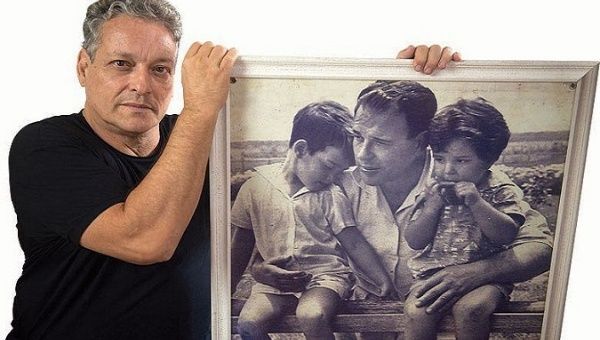
João Vicente Goulart holds a portrait of himself, his father, João Goulart, and his sister, Denize. | Photo: João Vicente Goulart
By Edu Montesanti | teleSUR | December 6, 2017
“Jango was my best friend, a great partner, and the best father to my children. It is still hard to forget,” Jango’s widow, Maria Theresa Goulart told teleSUR.
On Dec. 6, 1976, former Brazilian President João Goulart, popularly known as “Jango,” passed away at 57 years old in his exile with family in Mercedes, Argentina. Officially, he died of a cardiac attack, but evidence points to poisoning.
“There are still some available tissue samples at the Federal Police Criminal Institute of Brazil for a new investigation, as new evidence is expected if we can have more documents declassified and testimonies that would bring new information,” João Vicente Goulart, Jango’s son told teleSUR.
“In the first results analyzed, a substance appeared in tiny amounts which should not be in a human body, called pentaerythritol tetranitrate or erythrin tetranitrate, also known as pentrite,” said Goulart. “It is a chemical with characteristics and end of explosives that, at the time, was only controlled as an exclusive weapon used by the American army,” added Jango’s son, pointing out that secret agents used to infiltrate the family’s house in exile.
“It has been proven that spies removed my father’s documents, they could have easily changed his heart medicine for a poison.”

Jango speaks to a large crowd accompanied by his wife, Maria Theresa Goulart. Photo: João Vicente Goulart
Jango’s body did not undergo an autopsy at the time of his death. His body was buried in São Borja, Brazil, after the assurance that the coffin would not be opened. According to Goulart, “There was severe military repression at my father’s funeral.” There were military officials everywhere, monitoring Jango’s coffin so it could not be opened. In 2006, Mario Neira, a former Uruguayan secret agent, told Goulart that his father had been poisoned.
Overthrown from the Brazilian presidency by a military coup d’état on April 1, 1964, the democratically-elected João Goulart, with more than 70 percent of an approval rating, was exiled three days later with family to Uruguay. In 1973, President Juan Domingo Peron welcomed him. The Goularts were constantly threatened in exile, so the son, João Vicente and Denize, the Goularts’ daughter, left to study in London. Some friends warned former president Jango several times, that he could be killed.
On March 13, 1964, 18 days before the coup, President João Goulart gave a speech to more than 200,000 people in Central do Brasil square in Rio de Janeiro, with his wife Maria Theresa Goulart beside him, for the first time since assuming the presidency. He promised an agrarian reform, reducing remittances of profits overseas, extending democratic rights, along with other very popular reforms.
“Goulart committed the crime of reforming the economy. That was more than (U.S. President) Lyndon Johnson could tolerate and he opted to destabilize the economy and assist a right-wing military takeover,” said the U.S. historian Peter Kuznick to teleSUR.
“The 1964 coup that toppled Goulart’s government was extremely significant,” added Kuznick. “Oliver Stone and I began our documentary about the invasion of Vietnam with a discussion of that coup. We then talk about the Dominican Republic, Greece, Indonesia, and Chile to show that the Vietnam War was part of a pattern.
“A National Intelligence Estimate in the summer of 1963 had warned that Goulart might be establishing ‘an extreme leftist regime, with a strongly anti-U.S. character.’ Johnson’s appointment in December of Thomas Mann as assistant secretary of state to coordinate Latin American affairs was another nail in the Goulart government’s coffin.
“When Goulart responded the next year to U.S. demands to impose austerity on the Brazilian people by instead offering land reform and control of foreign capital and by recognizing Cuba, the U.S. moved quickly to destabilize the economy. Goulart seized U.S. properties.
“Ambassador Lincoln Gordon and U.S. embassy officials urged right-wing Brazilian officers to overthrow Goulart. The U.S. backed Army Chief of Staff General Humberto Castelo Branco. The CIA assisted behind the scenes,” observed Kuznick, who is the director of the Institute of Nuclear Studies at the American University.
The Brazilian historian Victor Schincariol told teleSUR that in order to preserve national peace and people’s security, President Jango didn’t call for a military intervention to protect him. “Goulart was genuinely committed to democracy and social peace. He said that he could not tolerate the death of Brazilians in a virtual civil war.
“At the same time, he knew that the U.S. would support the right-wing forces, which would make the case for the defense of democracy very hard indeed to win,” added the Brazilian researcher at the University of ABC in São Paulo.
On Dec. 18, in the presence of the heads of the military and President Dilma Rousseff, the Brazilian Congress symbolically returned President João Goulart’s mandate, as the OAS exhorted Brazil in 2010 for the crimes against humanity never punished, committed by the military dictatorship that killed 475 people, left 144 “disappeared,” and tortured more than 30,000 people.
There is an Amnesty Act in Brazil, elaborated and passed in 1979 by Brazilian military officials themselves — never addressed in the country by politicians, mainstream media and local elites — that acquits the dictators of the crimes committed between 1964 and 1985.
“Goulart’s and Varga’s legacy was erased, physically and ideologically, by the military dictatorship between 1964-1985. The economy was “globalized;” the case for an industrialization with national capitals, social justice and national independence was substituted by dependence, fascist policies and censorship; the democratic and left-wing forces were imprisoned, killed or left the nation,” said Professor Doctor Schincariol.
“The most important legacy Jango left to Brazil was his tireless fight for workers’ right and social justice,” Jango’s widow, Maria Theresa Goulart told teleSUR. “And for us, his family, his generosity and partnership.”
Honduran opposition urges total vote recount or run-off
Press TV – December 6, 2017
Honduras’ opposition presidential candidate has demanded either an entire vote recount or a run-off poll following a controversial vote-counting process that resulted in favor of incumbent President Juan Orlando Hernandez by a low margin but no declared winner.
Salvador Nasralla, who had earlier demanded a recount of at least one-third of the votes, said in a Twitter post on Tuesday that the electoral tribunal now had to review all the voting cards.
“If you don’t agree with that, let’s go to a run-off between (Hernandez) and Salvador Nasralla,” he added.
It took Honduran authorities more than a week to count the votes from the November 26 presidential election in the country of only nine million people.
Early on Monday, electoral authorities said Hernandez had won 42.98 percent of the votes, compared with Nasralla’s 41.39 percent. But the authorities stopped short of declaring a winner.
As the results began to trickle in last week, Nasralla was in the lead with a significant margin before a 24-hour hiatus in the official vote count reversed that trend. The opposition candidate soon alleged fraud and called on his supporters to take to the streets. Tens of thousands took to the streets on Sunday in a show of support for Nasralla, a former TV star.
Former Honduran president Manuel Zelaya, who was toppled in a US-backed coup in 2009 and now supports Nasralla, also declared through a Twitter message that the opposition was seeking a total recount of the vote, or legislation to allow for a run-off.
Meanwhile, police forces rebelled against the Hernandez administration on Monday, refusing to take part in a crackdown on protesters and calling on the government to address the political stalemate.
A top official at the Honduran electoral tribunal, David Matamoros, invited the opposition to compare their copies of voter tally sheets with the official body’s versions. He also said the tribunal would extend a deadline for legal challenges from Wednesday to Friday.
Meanwhile, protest rallies in favor of Nasralla that started last week continued on Tuesday afternoon as scores of people, including police officers, converged at the Tegucigalpa headquarters of Honduras’ elite police force yelling “Out, JOH,” using President Hernandez’s initials.
Hernandez, who has been commended by the US for his crackdown on violent street gangs, has also claimed victory a number of times since the election but avoided making the claim in remarks broadcast on Monday and Tuesday.
Honduran police refuse to obey government orders to curb protest
Press TV – December 5, 2017
Officers of the Honduras National Police have refused to enforce a curfew after days of deadly violence triggered by allegations of electoral fraud.
Honduran police announced on Monday night that they will refuse to obey orders from the government of the incumbent president, Juan Orlando Hernandez, and will remain in their barracks until a political crisis triggered by last Sunday’s contested presidential election has been resolved.
According to reports, all national police as well as hundreds of members of riot police force known as Cobras were refusing to obey the government’s orders during the protests in the capital, Tegucigalpa and instead are striking.
“We want peace, and we will not follow government orders – we’re tired of this,” said a spokesman outside the national police headquarters in Tegucigalpa.
“We aren’t with a political ideology. We can’t keep confronting people, and we don’t want to repress and violate the rights of the Honduran people.”
Crowds of anti-government protesters greeted the announcement with cheers.
The small Central American nation of 10 million, which suffers from chronic violence and prolific gang activity, held the presidential vote last Sunday.
Rival candidate Salvador Nasralla has cried foul and his supporters have been on the streets protesting.
Tensions have been high since shortly afterwards. Nasralla was in the lead with a significant margin before a 24-hour hiatus in the official vote count reversed that trend last week. The opposition candidate soon alleged fraud and called on his supporters to take to the streets.
In recent days, Tens of thousands took to the streets in a show of support for Nasralla, a former TV star.
Authorities then restricted the freedom of movement in the country in an attempt to control widening unrest.
The Inter-American Commission on Human Rights on Monday reported that they have received preliminary information on the deaths of 11 Hondurans during the protests.
Meanwhile, the electoral tribunal in Honduras has finished counting votes in the country’s contentious presidential election after more than a week, with incumbent President Juan Orlando Hernandez having received more votes in the official tally.
Early on Monday, electoral authorities said Hernandez had won 42.98 percent of the votes, compared with opposition candidate Salvador Nasralla’s 41.39 percent, based on 99.96 percent of the votes counted.
But the authorities stopped short of declaring a winner.
Honduras: Teenage Girl Killed as Army Enforces Curfew
teleSUR | December 2, 2017
Three people – including a teenaged girl – have so far been killed in violent clashes following the disputed Honduran elections, as the armed forces opened fire on unarmed opposition supporters while enforcing a 10-day curfew imposed by the government late Friday.
One man was killed in the port city of La Ceiba on Friday and 19-year-old Kimberly Dayana Fonseca was shot in the head early Saturday in Tegucigalpa as soldiers busted up protesters’ blockades, a spokesman for the national police said, bringing the total death toll to three.
In a brief statement to the press, the head of the Supreme Electoral Tribunal (TSE) David Matamoros announced late Saturday that the scrutiny of more than 1,000 disputed ballots would resume Sunday 9:30am local time.
He also noted that screening more than 5,000 ballots, as requested by the Opposition Alliance, would have taken 12 to 15 days. “We appreciate your presence, but there will be nothing else here today, I reiterate that we will call for tomorrow at 09h30 local time,” the magistrate said.
In response, Opposition Alliance leader Salvador Nasralla accused the TSE of deliberately excluding the towns of Lempira, La Paz and Intebuca after he requested they be reviewed when the turnout was abnormally high (75 percent) compared with the rest of the country (50 percent).
Nasralla insisted it was mathematically impossible that Hernandez could win the election with 30 percent of the votes still uncounted before the electronic system collapsed.
“We want what the Honduran people want,” he told teleSUR in a televised interview. “If the people want, we will run for another election. If they want, I won’t participate if Juan Orlando Hernandez doesn’t either.
“If (electoral authorities) refuse to recount, let’s hold the elections again, but with an international tribunal: that’s our position,” he concluded, describing the situation as “a coup d’etat.”
He also said the leadership of the armed forces had “sold themselves” in shirking their constitutional duties “against a tyrant who forcefully wants to stay in power,” and accused the government of infiltrating opposition protests in order to loot local stores and discredit the movement.
Human rights organizations have denounced the curfew, blaming “excessive force” by state troops. The U.S.-based Action Network has sent an open letter to the U.S: Congress and State Department, expressing “deep concern about reports of fraud and state violence” and calling for the immediate suspension of all U.S. police and military aid to Honduras.
The Venezuelan government firmly condemned on Saturday the “latest attempted blow against democracy from sectors of the Honduran oligarchy. The people’s will and human rights of the people of Honduras must be respected,” said Jorge Arreaza on Twitter.
In a communique, Venezuela’s Foreign Ministry also slammed the “repression and the excessive use of force by State security forces,” accusing “the same actors” responsible for the 2009 coup against the constitutional President Manuel Zelaya.
The Honduran Ministry of Justice ordered the suspension of citizens’ constitutional rights shortly before 11pm Friday. On Saturday, the Committee of the Relatives of the Disappeared in Honduras (Dodafeh) confirmed 11 people have been injured in Tegucigalpa since late Saturday and 41 arrested, six of whom are minors.
The government, controlled by current president and electoral candidate Juan Orlando Hernandez, claims the move is to counter what they call “violent protests” by supporters of presidential candidate and Opposition Alliance leader Nasralla.
The Honduran Roundtable for Human Rights (HRHR) said “excessive force” is being used by Honduran military and state security forces. Nasralla said the suspension of constitutional guarantees is part of a Supreme Electoral Tribunal (TSE) plan to “steal” his “victory,” claiming the electrobal body has committed electoral fraud since polls closed Sunday night.
The HRHR, in a formal statement, said the Armed Forces are creating a “terrorist state” against peaceful protesters, killing at least two people with rubber bullets and injuring dozens. National police forces have “arbitrarily arrested” citizens, intimidated media and thrown tear gas at marchers.
Bolivian President Evo Morales reprimanded the United States and Organization of the American States (OAS) for their alleged complicity: “Nearly a week since the Honduran elections. Why are the U.S. and OAS silently complicit regarding the elections and death of citizens in Honduras? Democracy is in danger in a neighboring country?”
Official election results on the TSE website have remained unchanged since Friday morning, with Hernandez leading by less than one percentage point over Nasralla. Over 94 percent of ballots are counted.
The decree now in effect until Dec. 11 says that people can move about freely only from 6am until 6pm. Outside of that time, they are not allowed to be on highways or in any public space, otherwise they are “putting their lives in danger.” The decree gives the military the right to patrol the streets and detain anyone “violating” the curfew.
Featured Video
Seyed M. Marandi: Negotiations Collapsed – Return to War
or go to
Aletho News Archives – Video-Images
From the Archives
Wartime internment camps in Australia
National Archives of Australia
World War I
During World War I, for security reasons the Australian Government pursued a comprehensive internment policy against enemy aliens living in Australia.
Initially only those born in countries at war with Australia were classed as enemy aliens, but later this was expanded to include people of enemy nations who were naturalised British subjects, Australian-born descendants of migrants born in enemy nations and others who were thought to pose a threat to Australia’s security.
Australia interned almost 7,000 people during World War I, of whom about 4,500 were enemy aliens and British nationals of German ancestry already resident in Australia.
Records of World War I internment camps
World War II
During World War II, Australian authorities established internment camps for three reasons – to prevent residents from assisting Australia’s enemies, to appease public opinion and to house overseas internees sent to Australia for the duration of the war.
Unlike World War I, the initial aim of internment during the later conflict was to identify and intern those who posed a particular threat to the safety or defence of the country. As the war progressed, however, this policy changed and Japanese residents were interned en masse. In the later years of the war, Germans and Italians were also interned on the basis of nationality, particularly those living in the north of Australia. In all, just over 20 per cent of all Italians resident in Australia were interned. … continue
Blog Roll
 Aletho News
- Seyed M. Marandi: Negotiations Collapsed – Return to War
- Tomorrow’s naval blockade showdown
- ‘Israel’ attacks civilians to hide its embarrassing military failures & out of pure sadism
- Any Foreign Military Vessel Approaching Hormuz Under Any Pretext ‘Will Be Dealt With Severely’: IRGC
- Diplomats slam US negotiators’ performance in Iran talks
- Trump Refuses Exit Ramp, War with Iran will Continue
- Trump Says US Naval Blockade in Strait of Hormuz Will Begin Shortly
- US, Iran end 21-hour talks without agreement
- US IRAN TALKS: Who Are the Crazy Ones Here? /Lt Col Daniel Davis
- Talks with the US end without a deal over excessive US demands: Iran
- If Americans Knew
- US-Iran ceasefire negotiations make zero progress – Daily Update
- Pro-Israel ‘Thinktanks’ and Individuals who Influence U.S. Foreign Policy
- Mearsheimer reveals how Israel dictates US policies on Iran, Gaza – video
- After killing 350+, Israel still has a “score to settle” with Lebanon before ceasefire – Daily Update
- Military aid to Israel emerges as the latest political litmus test for Democrats
- The only Palestinian children’s rights organization closes following years-long Israeli campaign against it
- ‘I Can’t Forget the Smell’: Lebanese Reel After Israel Kills Over 300 in Single Day
- DNC Shoots Down Resolutions Calling Out AIPAC and Limiting Arms to Israel
- TCN: Is Israel Blackmailing President Trump?
- Israel killed at least 303 Lebanese yesterday – who were they? Daily Update
- No Tricks Zone
- Cave Discovery Reveals Today’s Desert Climates Were Recently Far Warmer, Wetter, Teeming With Life
- German Expert: Heat Dome Led To Record Temps In Western USA…Warmer In 1934, 1936
- New Study: No Linear Warming Or Glacier Retreat Along Northern Antarctic Peninsula Since 1980s
- An Inconvenient Tree: Uncovered In Alps… Europe Much Warmer Than Today 6000 Years Ago
- New Study Reports A 60% Slowdown In Greenland’s Ice Loss Rate In The Last Decade
- Low Intensity Tornado Wrecks Major Solar Farm, Creating A Potential Toxic Dump
- New Study Finds Warming Saves Lives…Cold Temperatures 12 Times More Deadly Than Excess Heat
- German Science Blog Accuses PIK Climate Institute Of Hallucinating Climate Tipping Points
- Devastating Assessment Of Comirnaty Vaccine By Former Senior Pfizer Europe Toxicologist
- New Study: CO2 Is ‘Effectively Negligible’ As An Explanatory Climate Change Factor Since 2000
 Aletho News