Is US-Funded Destabilization in Latin America Now Paying Off?
By Francisco Dominguez – teleSUR – April 14, 2016
Most progressive governments in Latin America find themselves under intense attack in what is evidently a well synchronized and well financed continental plan of destabilization.
Riots, street demonstrations, anti-corruption campaigns, protests about the domestic negative impact of the world economic crisis, general strikes, impeachment efforts, economic sabotage, and the like, have become the battle horses on which oligarchic forces in cahoots with Washington are riding to carry out “regime change.”
So far, conservative forces in Latin America have been successful in overthrowing President Manuel Zelaya in Honduras in 2009 and President Fernando Lugo in 2012 in Paraguay. Both presidents were ousted by oligarchic parliamentary majorities with mass support from middle class “civic associations”, in complicity with the judiciary, with the latter providing a veneer of legality.
The preconditions for “regime change” take, in some cases, years of careful preparation. This normally involves intoxicating media campaigns of demonization aimed to exacerbate political polarization to the maximum, through the instilling of fear, the staging of aggressive and sometimes violent, middle class mobilizations, the activating of many associations of civil society, and the setting up of, sometimes hundreds, of externally funded NGOs.
The aim is to question the legitimacy of the “target government” which usually involves the systematic discrediting of existing political institutions so as to foster chaos as the most conducive context for “regime change”. This strategy has been “theorized” in manuals that are mass-produced and get heavily promoted free of charge by establishment outfits.(1)
Despite the fastidiousness with which Washington and domestic perpetrators seek to enshrine their efforts at “regime change” in any one nation with the veil of legality, constitutionality, democracy promotion, regional autonomy, and virtuous legitimacy, always a powerful media apparatus is activated the world over, unleashing a barrage of negative reporting and demonization of the “target government” with one overriding message: the solution to created crisis is the ousting of the government.
The favorite demonization is to label the “target government” as a totalitarian dictatorship or in the process of becoming so, unless stopped. This is coupled with regular official condemnatory statements of the “target government” from the U.S. State Dept. and a barrage of U.S. official bodies.
In this “regime change” narrative, the ousting of the target government, being the cause of “civil society’s rebellion”, is fully justified. Thus for example the highly illustrative New York Times editorial of April13, 2002, on occasion of the brief ousting of Hugo Chavez: “Venezuelan democracy is no longer threatened by a would-be dictator.”
The NYT explained that Chavez had been ousted “after the military intervened and handed power to a respected business leader.” The key, therefore, is to portray the “ruler” of the target government as a threat to democratic civilization, thus the NYT editorial justifies the 2002 coup in Venezuela because Chavez “battled the media and alienated virtually every constituency from middle-class professionals, academics and business leaders to union members and the Roman Catholic Church.(2)
So, 21st century “regime change”, different from the more traditional 20th century U.S.-orchestrated coup d’état, involves an intense “battle for hearts and minds”, an essential component of the strategy.(3) Thus, huge financial, political and cultural resources are mobilized to bring about hegemony for “regime change” in society and in all state and civil society institutions, going as far, in some cases, as even co-opting sections of the downtrodden. Most of this is “facilitated” with generous NED and USAID grants awarded over many years.
Faced with its own steady decline and the rise of radical governments in the post-Soviet era, the U.S. seeks to destabilize and oust governments through “color revolutions” as in Georgia, 2003 and the Ukraine, 2004 and 2014. Consequently the U.S. has substantially reorganized its architecture for intervention with the CIA becoming a mere appendix but with USAID and the National Endowment for Democracy and their many associated bodies taking center stage and receiving the lion’s share of the resources. The modality may have changed but U.S. foreign policy remains pretty much what it was: to remove governments it does not like. U.S. State Dept. and USAID budget is bigger than the GPD of many states, in 2016 it was US$50.3 billion.
Among the key U.S. institutions involved in “regime change” is the U.S. State Department, the body with the biggest authority, but there is also the United States Southern Command, the Congress and Senate Foreign Affairs Committees, and the CIA. Then further down the food chain, there are USAID, NED, Office for Transition Initiatives, American Center for International Labor Solidarity and American Institute for Free Labor Development, among the most important ones.
They work closely together and in the pursuance of the same aims, with the International Republican Institute, chaired by John McCain of CHECK; the National Democratic Institute, chaired by Madeline Albright; Transparency International; and Centre for International Private Enterprise. They all channel huge sums to support civil (and when possible) military subversion to create the conditions for “regime change”. They also channel huge sums to fund “civil society” associations, political parties, media outfits, NGOs, professional bodies, trades unions, think tanks, business, student groups and so forth.(4)
These institutions are the field commanders that coordinate the national detachments in every target country around a regional perspective so as to maximize the results of every push for “regime change” in any individual Latin American nation. We are increasingly seeing former right-wing Latin American presidents acting jointly to contribute to the destabilization of Bolivarian Venezuela, for instance.
Additionally there is a raft of “private” or “independent” bodies concerned chiefly with Latin America, the most important of which are Inter-American Press Association; Fundacion para el Analisis y los Estudios Sociales – led by Jose Maria Aznar; the Instituto Prensa y Sociedad; hundreds of Think Tanks; and possibly thousands of NGOs that share the “regime change” aim but that do it from a specialist angle. To all of this architecture of U.S. intervention, the overwhelming majority of the world corporate media play a decisive role, making any U.S. led intervention, a lethal political threat to the survival of any “target government”.
Most progressive governments in Latin America have been or are subjected to systematic levels of traumatic and deliberately created social, economic and political chaos, politics and culture, which in many cases it can go on for years. In Cuba for five decades, in Nicaragua (on and off) nearly four decades and in Venezuela for 17 years thus far, with no end in sight.
Venezuela’s Bolivarian government is currently in the crosshairs of U.S. destabilization plans and “regime change” efforts through an economic war that has the Bolivarian process on the ropes. In Argentina, three years of an intense dirty war against Cristina Fernandez’s government, aspects of which had sinister overtones, paid off when at the November 2015 presidential election, the Right’s candidate, Mauricio Macri, won the election by a small margin of 1 percent. In Ecuador, a police mutiny in September 2010, obviously instigated from abroad and with huge U.S. support, nearly succeeded in ousting the government with with President Rafael Correa miraculously escaping with life.
The destabilization against Ecuador continues with the “revolt” of civil society and very violent street protests. And in Brazil, through a very intense and thoroughly intoxicating media campaign, a “regime change” push seeking to oust the democratically elected and legitimate president Dilma Rousseff is underway, as we write it is not clear whether the effort to oust Dilma will be successful or not.
By substantially reducing export revenues that fund progressive social programs, the persistent world economic crisis significantly helps the “regime change” efforts by the U.S. and its allies. It may be just coincidence but the U.S. ambassador in Paraguay when elected president Fernando Lugo was ousted by a right-wing parliamentary coup, was Liliana Ayalde. The current U.S. ambassador in Brazil, where a right-wing parliamentary coup against elected president Dilma Rousseff is in progress, is Liliana Ayalde.
Bolivar once said that the United States appears to be destined by Providence to plague America with misery in the name of liberty. Exactly, through the NED, USAID and others, the United States must stop destabilizing elected governments in the name of “democracy,” “good governance” and “national security.”
Francisco Dominguez is a senior lecturer at Middlesex University, where he is head of the Centre for Brazilian and Latin American Studies.
(1) See Gene Sharp, “From Dictatorship to Democracy,” Serpent’s Tail, 2011, first published in 2002.
(2) “Hugo Chavez Departs,” New York Times, April 13th, 2002
(3) The overthrow of Honduras President Manuel Zelaya, in June 2009, has led to the book with the very suggestive title “The Good Coup” (Mario Caceres di Iorio, CCB, Canada, 2010).
(4) See “Evolution of USAID and NED in Dominguez,” Lievesley and Ludlam, Right-Wing Politics in the New Latin America, Zed, 2011.
Rousseff loses impeachment vote in lower house of Parliament
The BRICS Post | April 18, 2016
The lower house of Brazil’s parliament on Sunday supported the impeachment of President Dilma Rousseff, with those seeking her ouster securing the support of two-thirds of votes.
The divide among the Brazilian people was demonstrated on Sunday by thousands of pro- and anti-impeachment protesters outside the Congress building where the vote was taking place.
As the votes trickled in favouring the impeachment bid, the ruling Workers Party conceded defeat.
“The fight is now in the courts, the street and the senate. We lost because the coup-mongers were stronger,” Jose Guimarães, the leader of the Workers party in the lower house, said.
While she has not been accused of corruption, the popularity of Rousseff’s government has plummeted owing to a graft scandal at state oil company Petrobras and the investment strike targeting Rousseff’s downfall.
The issue of impeachment will now be put forth in the upper house of parliament for the consideration of the senate. If over 50 per cent of senators support it, Rousseff will leave her post for 180 days, during which Brazilian lawmakers will consider her case.
During that period, the country will be led by Vice President Michel Temer. If senators disagree with the arguments of presidential impeachment initiators, Rousseff will return to her post. If Rousseff is found guilty, Temer will remain acting president until the 2018 elections.
Rousseff has accused her critics of mounting a coup. She released a speech on social media over the weekend stressing that “the sovereign will of the people is at stake. Social achievements and the rights of Brazilians are at stake.”
A Guardian report listed the corruption-tainted deputies who voted for the impeachment bid on Sunday condemning the Brazilian President.
Business lobbies have openly thrown their weight behind the ouster of Rousseff, as they look to Vice President and centre-right leader Temer to restore business confidence and growth.
According to Brazilian newspaper O Globo, Temer, watched the impeachment proceedings alongwith bigwigs of his party, including Senator Romero Juca, with whom he is reported to have been planning his next move.
Rousseff watched the vote from the Alvorada Palace, the official presidential residence, together with former President Luiz Inacio Lula da Silva and other allies.
Journey to the End of the Night: The Paris ‘Nuit Debout’ movement
By Gearóid Ó Colmáin | American Herald Tribune | April 17, 2016
In his novel ‘Journey to the end of the night’ Louis-Ferdinand Céline provocatively described the soldiers who had died in the First World War as ‘idiots’. The French writer was referring to the fact the soldiers had given their lives for a cause that was not their own- a futile slaughter of the poor for the benefit of the rich. In the book’s many pertinent reflections on the human condition, the Céline notes how, in modernity, the street has come to constitute the place of dreams. “Que fait-on dans la rue, le plus souvent ? On rêve. C’est un des lieux les plus méditatifs de notre époque, c’est notre sanctuaire moderne, la Rue – what do we most often do in the street, we dream. It is the most meditative place of our time, it is our modern sanctuary.”
Since the French government recently introduced legislation reforming labour laws, a new ‘spontaneous’ and acephalous, social movement has taken root throughout French cities- the ‘Nuit Debout- Up All night’ movement. As the title suggests, the social movement is taking place at night time and one of its slogans is ‘Rêve général !’ – general dream, which is a pun on ‘grève générale’-general strike. So, instead of calling for a general strike in order to bring the government to its knees, the activists are calling for dreaming in the streets!
The movement took off after the release on February 23 of journalist Francois Ruffin’s film ‘Merci Patron’- ‘Thank you boss’, a firm critical of French plutocracy.
Although the film criticizes the avarice of contemporary capitalism, it does not treat the relationship between monopoly capitalism, foreign wars of conquest in the service of capital accumulation, class warfare and mass media disinformation.
Nor does Ruffin’s film expose and denounce the complicity of all corporate French media outlets in war crimes and genocide in the Middle East and throughout Africa, through the dissemination of lies and disinformation about the role of Western imperialism in these wars. There is no mention of the fact that the reason President Laurent Gbagbo of the Ivory Coast was kidnapped in 2010 by French commandos- his country bombed and his character assassinated- was due to the fact that he defied the powerful Club de Paris, the circle of French bankers who control the African neo-colony’s money; Gbagbo had proposed that the Ivory Coast print it’s own currency- a bold move which would have enabled the resource-rich country to build up its own industrial base independent of colonial interests.
Although there is a stand at the place de la Republique claiming to expose the detrimental role of French policy in Africa, there is no real information of what that role is, nor have any of the pan-Africanist intellectuals who have written on the topic been invited to speak and sell their books. The ‘Nuit Debout’ movement is predominantly white and middle class.
Ruffin’s film also fails to point out how French bosses in the cereal industry colluded with terrorism against the people of Libya when they secretly met in Paris with Libyan traitors in November 2010 to organise the bombing and destruction of Africa’a richest and most democratic country.
The French ruling class are not just guilty of destroying centuries of social gains by French workers, they are complicit in genocide and crimes against humanity. So why is Ruffin silent about that fact?
Ruffin writes for ‘leftist’ publications which supported the NATO-backed ‘rebels’ in Libya- rebels who were in fact Al-Qaeda terrorists in the service of NATO. In 2011 the ‘left-wing’ Monde Diplomatique published an article on Libya declaring that there was no doubt about the ‘brutality of the regime’, in spite of the fact all of the crimes imputed to Colonel Gaddafi were carried out by the Takfiri ‘rebels’.
Ruffin and the dishonest publications he writes for are all complicit in the genocide waged by NATO against the people of the Southern Hemisphere states, from the Middle East and Africa to Latin America.
No, none of these uncomfortable realities are depicted in Ruffin’s ‘anti-capitalism.’ Instead, we have ultra-leftist slogans, petty-bourgeois irony and the mindless occupation of a public square by youths, who have neither the education nor the experience necessary to understand the structural reasons and deeper implications of the labour reform they claim to oppose.
The ‘Nuit Debout’ movement is certainly not spontaneous, nor is it grass-roots and acephalous as so many pundits claim.
On the contrary, it is the result of decades of careful policy analysis by US imperial ideologues. Since the undemocratic dissolution of the USSR in, 1991, the United States has perfected a regime change technique commonly referred to as ‘colour revolutions’. The strategy involves co-opting leftist slogans and symbols to serve a right-wing agenda. Lenin and the Bolshevik party had repeatedly denounced Leon Trotsky for utilizing this counter-revolutionary technique both before and after the October Revolution. It has now become a standard tool of US foreign policy.
The manipulation of youthful naivety and rebellion for the purposes of either overthrowing a foreign government hostile to US interests or creating a ‘left-wing’ opposition movement in imperial countries designed to kill all real opposition- this is a strategy which every would be activist needs to study if he wishes to engage in movements capable of real, social, political and economic change.
The ‘Nuit Debout’ movement is being led by petty-bourgeois, bohemians with little or no understanding of contemporary capitalism. The movement is organized on the same principals as the US backed colour revolutions in Eastern Europe and the Arab Spring- empty slogans, idiotic puns and political infantilism. Although we cannot yet prove it, the use of the clenched fist as the movement’s logo coupled with cretinous slogans, are strongly reminiscent of strategies and tactics of CANVAS, the Centre for Applied Non-Violent Actions and Strategies, a regime change youth training organization close to the CIA.
The ruling class in France have evidently spent more time reading Marx than their would-be opponents. For the objective allies of monopoly capitalism in Europe today are the likes of François Ruffin and the other leading bourgeois leftist ideologue of this movement Frédéric Lordon- both of whom mask the reactionary nature of their pseudo ‘anti-capitalism’ or, to be more precise, their ‘anti-neoliberalism’, with a mixture of convoluted semantics, pseudo-intellectualism and ultra-leftist sloganeering.
There are thousands of real, grass-roots organizations in France, and they get much of their information from independent media such as Meta TV, Cercle Des Voluntaires, Reseau Voltaire and many more. Real proletarian analysis of capitalism is provided by communist organizations such as OCF , and URCF. Coherent bourgeois critique of French and EU imperialism is provided by the political party UPR.
The ‘Nuit debout’ activists talk about a ‘convergence of struggle’ yet journalists and activists from these genuinely popular organisations have been forcibly escorted from the Place de la Republique and denounced as ‘fascists’. Antifa is an organisation which purports to fight fascism but spends most of its time attacking all genuine anti-imperialist activists by blackening their name with the label ‘fascist’.
Antifa have been active again in the ‘Nuit Debout’movement where genuine French anti-imperialists such as Sylvain Baron have been forcibly evicted from the square.
This writer repeatedly pointed out in 2011 that the failure of the left to understand the reactionary ideology of the Arab Spring and the role of US agencies in its planning and execution, would have dire consequences for progressive politics. Now, similar techniques are being used throughout the world in order to criminalize real anti-capitalist agitation and create the conditions of military dictatorship. The objective allies of that strategy are petty bourgeois ‘anti-capitalists such as François Ruffin and Frédéric Lordon; these are the phastamagorical, would-be intellectuals who shine in the streets of the nocturnal, metropolitan dream world so eloquently depicted by Céline.

The representation of imperialism’s foreign wars of aggression as ‘revolutions’ and ‘humanitarian interventions’, coupled with an infantile advocacy of vacuous concepts such as ‘social Europe’- this is the nefarious role played by these post-modern ‘revolutionaries’, who are the very avant-garde of reactionary imperialism. A malady when this writer denounced it in 2011, pseudo-leftism has now morphed into a serious planetary pandemic. If this form of leftism did not exist, imperialism would have had to invent it. The ‘Nuit Debout’ movement is now spreading throughout the world. Pseudo-leftist media will zealously present this movement as a global painting of Delacroix’s ‘Liberty Leading the People’ when sadly, it is rather more of a sinister version of the Pied Piper of Hamelin.
The soi-disant ”anti-fascists” in this movement denounce as ”fascists” those who expose corporate media lies used to justify the crimes of NATO’s foreign wars-the foreign wars of capital accumulation waged by the same corporations imposing austerity and class war at home; but it is they who are the fascists, it is they who are the enemies of the working class!
Ideological confusion is the great political illness of our time. Céline describes war and illness as the two ‘infinities of nightmare’. One could describe the two contemporary ‘infinities of nightmare’ as the proliferation of wars of aggression and the triumph of capitalist repression due to the political illness of ultra-leftist cretinism, which has taken over the labour movement in the last 30 years. Until our youth emancipate themselves from the pernicious influence of controlled opposition and pseudo-leftist ideology- which turns them into useful idiots of monopoly capitalism rather than revolutionaries- their good natured activism is tragically destined to precipitate civilization’s journey to the end of the night.
Anti-Dilma Media Lies Exposed as Brazil Congress Votes on Impeachment
teleSUR | April 17, 2016
In the week leading up to the vote in the Brazilian Congress on whether to open an impeachment process against President Dilma Rousseff on Sunday, three out of the five top stories shared on Facebook were false, exposing some 200,000 people to anti-government misinformation, BBC Brazil reported.
According to a study by Brazil’s Research Group on Public Access to Information Policy accessed by BBC Brazil, the third, fourth, and fifth most-shared news stories between Tuesday and Saturday were actually rumors and not true news.
The top story of the three misinformation reports was headlined “Federal police want to know the motives for Dilma donating 30 billion reales to Friboi,” referring to the Brazilian meat-packaging giant. The piece, published on Pensa Brasil, was shared over 90,000 times on Facebook.
The second untrue story, headlined “Businessman orders pro-Dilma militancy to go armed on Sunday: ‘Shoot to kill,’” published on Diario do Brasil based on fabricated quotes, received over 65,000 shares on Facebook.
The third false story, and fifth top on Facebook during the week overall, was also published on Diario do Brasil based on a rumor about a warrant for the arrest of former President Luiz Inacio Lula da Silva linked to the corruption scandal known as Operation Car Wash. The article, titled “Lula leaves Brasilia in a hurry learning of new phase of Car Wash, could it be an arrest warrant?” was shared on Facebook over 58,000 times.
The study comes as the latest example of Brazilian media distorting information and intervening in political processes to whip up support to have Rousseff removed from power.
Brazilian media outlets such as Globo, owned by and aligned with the country’s dictatorship-linked economic elite, have been criticized for “coup-mongering” and manipulating the country’s massive corruption scandals to sway public opinion in favor of the impeachment attempt in Congress.
Political opponents have latched onto widespread fraud to try to remove Rousseff from power in the name of rooting out corruption. But Rousseff is not accused of financial impropriety or personal enrichment, while lower house speaker Eduardo Cunha, leaking the impeachment attempt, is embroiled in a multi-million dollar bribery scandal.
A recent poll by Datafolha found that 61 percent of Brazilians want Rousseff to be impeached, down from 68 percent in March, and that 77 percent support impeachment of Cunha.
As the lower house votes on Sunday on whether to move the impeachment process forward, 318 out of the 594 members of Congress face charges or are under investigation for corruption.
Venezuelan Opposition Rejects Truth Commission Despite Presence of UNASUR, Ex-Presidents
By Lucas Koerner | Venezuelanalysis | April 15, 2016
Caracas – Venezuela’s right-wing opposition coalition, the Roundtable of Democratic Unity (MUD), announced Tuesday it will not participate in the new Truth Commission established by the national government to investigate 2014’s violent anti-government protests known as the guarimbas.
The commission is a response on the part of the administration of President Nicolas Maduro to an amnesty law passed by the country’s right wing-controlled parliament, which was ruled unconstitutional by the Supreme Court (TSJ) Monday on the grounds that it would sanction impunity by freeing those convicted of violent crimes provided that they were committed “with a political end”.
Denouncing the TSJ ruling as politicized judicial activism, the MUD broadcast its refusal to participate in the Truth Commission, questioning its impartiality despite the presence of UNASUR Secretary General Ernesto Samper as well as ex-presidents from Panama, Spain, and the Dominican Republic.
“We’re not going to fall for their booby trap of offering to release a few political prisoners who have every right to be free in the context of some truth commission handpicked by the government and announced on television,” said National Assembly President Henry Ramos Allup.
In particular, the Democratic Action leader took aim at Samper, who he accused of “partiality” towards the government in refusing to take a stance on the Amnesty Law and the TSJ decision.
Samper, for his part, dismissed the criticisms, citing UNASUR’s commitment to non-interference in the internal affairs of its member states.
The former Colombian president praised the commission as “one of peace, not of war” that will “offer Venezuelans the possibility to find a path of sincere dialogue.”
In addition to the UNASUR chief, the commission will include Jose Luis Rodriguez Zapatero, Martin Torrijos, and Leonal Fernandez, the former presidents of Spain, Panama, and Dominican Republic, respectively.
The commission was officially opened on Tuesday. According to Vice-President Aristobolo Isturiz, it will be tasked with “visibilizing and hearing [the testimony of] people affected by the violent acts that occurred in the country [in 2014],” in which 43 people were killed and over 800 injured.
Mexican Federal Agents Implicated in Students’ Disappearance
teleSUR – April 14 2016
Two Mexican federal police officers allegedly participated in the disappearance of 43 Ayotzinapa students, the National Human Rights Commission said Thursday, implicating national agents in the 2014 case for the first time, Agence France-Presse reports.
Jose Larrieta Carrasco, a commission official investigating the case, said the authorities should now look into a “new route in the disappearance” of the students.
Prosecutors have already charged municipal police officers in connection with the mass abduction in the southern city of Iguala on September 26-27, 2014.
But the governmental rights commission said it found an eyewitness who saw two federal agents near Iguala’s courthouse, where municipal officers had stopped a bus carrying 15 to 20 students.
The commission also said another local police department, from the town of Huitzuco, had a previously unknown role in the disappearance.
Many in Mexico, including the families of the disappeared, suspect that the police force was ordered to kill the student protesters by high level members of a local cartel.
Tackling Child Labor in Latin American One Step At A Time
Two Approaches
teleSUR | April 14, 2016
April 16 is the International Day Against Child Slavery in South America. The day marks the death of Iqbal Masih, a Pakistani child who was sold into slavery and murdered at the age of 12. El Movimiento Cultural Cristiano commemorated the young child’s life by vowing to bring awareness to the plight of children forced into labor, especially in South America.
teleSUR English looks at some innovative approaches the progressive governments of Ecuador and Bolivia are taking to combat forced child labor and improve working conditions.
Ecuador
In Ecuador, the government follows a strictly prohibitionist policy. The current Labor Code formally prohibits the employment of children under 15 years old, while the labor day for teenagers over 15 cannot exceed six hours per day and 30 hours a week, without interfering with his or her education.
The Ecuadorean state also implemented various measures and agreements with the production sector, in order to reduce child labor. As a result, both sectors that have employed the highest number of children – agriculture and trade – have reduced their figure by 66 and 15 percent respectively.
As a result, the number of working children under 15-years-old has dropped by almost nine percent since 2007 according to the government, which plans to eradicate child labor by 2017.
Two other factors have helped to make the difference in recent years: one, the improvement of the global employment situation in the country in recent years; and two, better and free access to school, reducing school desertion of children.
Nevertheless, according to a 2015 UNESCO report, rural areas remain the most affected, as children work five more times than in urban areas, while Indigenous children are fives time more affected than Mestizo children. Girls are also still employed to do household work without receiving any remuneration.
Bolivia
In Bolivia, the context is slightly different, as poverty affects more people than in Ecuador: an estimated 850,000 children work in Bolivia according to a 2012 UNESCO report, including 120,000 in the dangerous mining sector. This represents 17 percent of the total labor force, which makes Bolivia the country with the highest ratio of child labor per population.
First, following a prohibitionist approach similar to Rafael Correa in Ecuador, the progressive government of Evo Morales finally ceded to the pressure of a large movement of child workers, organized since the 2011 in a union called Unatsbo.
In December 2013, they protested strongly against a reform of the Labor Code prohibiting further child labor. As the protest turned violent with clashes against the police, their mobilization was largely covered in the media, and Morales finally agreed to hear their requests at the presidential palace.
After months of tough debates in Congress, on Aug. 6, 2014, lawmakers eventually approved the government’s proposal to allow children from 10-years-old to work, yet only if the activity is not “dangerous” and if it does not harm the child’s access to education. In Bolivia, children usually need to work if they want to continue studying, because their parents usually cannot afford the school expenses, even with the governmental help allocated since Morales’ government.
Many professionals working with children in Bolivia admitted that the measure represented a significant improvement for children, providing legal protection in the many cases where they are exploited, and access to health services, at least until Bolivia can totally eradicate poverty.
Since Morales has been in power, the extreme poverty rate declined from 38 percent to 21 percent, and the government has vowed to reach below 10 percent by 2020.
Washington Post Lies to Justify Intervention in Venezuela
teleSUR | April 13, 2016
The noted Brazilian political scientist and theologian Frei Betto recently said that “the Yankees will do everything so that our continent will go back to being their backyard.”
Despite the rhetoric about democratic values that emanates from Washington, the U.S. government has always been willing to use any means necessary to impose their will on Latin America. This has often translated into foreign intervention.
But the U.S. public has grown weary of their government’s imperialist adventures, which as of late have ended in utter disaster. Washington elites know they must first fool the public into believing that intervention is a necessity.
To accomplish this they turn to private media outlets and their editorial boards, who help drum up support for U.S. intervention in foreign countries.
Enter the latest example: a recent editorial by the Washington Post entitled: “Venezuela is in desperate need of a political intervention.”
This from the same paper that was once vilified by U.S. conservatives for its supposed leftist tilt.
The use of the word intervention is deliberate, the Post knows that the Bolivarian Revolution – started by Hugo Chavez and continued by his successor Nicolas Maduro – still commands enormous support. The Venezuelan people will not simply hand the state back over to the very same politicians that abused the working class for decades.
An intervention done in the name of the Organization of American States, as the editorial calls for, is still imperialist. And it’s not just Venezuelans who know it but the whole region, which has seen the OAS used time and again to legitimize the imperialist fancies of the U.S. in the region.
The Post also knows that deceiving their audience sometimes requires outright lies.
Like the New York Times editorial on Venezuela that proceeded the Post’s, the editorial team claims that lack of cooperation between the Maduro government and the opposition-controlled National Assembly is entirely the fault of Maduro.
The Post claimed that he “pursued scorched-earth warfare with the National Assembly,” while the Times claimed that it opposition only reluctantly settled on ousting the democratically-elected Maduro from power.
Lies. All of it.
From the moment they were declared the winners of the parliamentary election, the opposition said their goal was ousting Maduro from power.
There was never an opportunity for cooperation between the Venezuelan government and the opposition and the blame for that lies with the opposition. On the day the new parliament was sworn in, Henry Ramos Allup, a leading figure in the opposition, literally ran his finger across his throat to indicate his feelings about the government and its supporters.
Does that sound like a politician interested in dialogue? Hardly unsurprising that the Post would chose to leave that detail out.
But lying through omission isn’t enough for the Post editorial board. They fancy themselves legal experts, able to pass judgment on Venezuela’s division of powers and the decisions of its Supreme Court.
The Post took issue with the court’s decision to rule a highly controversial “amnesty” bill as unconstitutional. This bill doesn’t promote amnesty for so-called political prisoners, it affords impunity for people directly responsible for the deaths of dozens.
The objective of the opposition’s impunity bill was the release of politicians involved in efforts to oust Maduro by force, politicians like Leopoldo Lopez who was found guilty of inciting the violent protests that led to the deaths of 43 people.
Of course the truth doesn’t fit their narrative, so the Post brazenly claims that state security forces were largely responsible for the deaths during the 2014 protests. The truth is the vast majority of those killed were either innocent bystanders, government supporters, or state security officials.
It wasn’t the state that set up violent blockades, it wasn’t the state that strung up barbed wire so that passing motorists would be decapitated, it was Lopez’s supporters.
Venezuela is confronting a major economic crisis, that much is true, but the Post doesn’t bother with an investigation as to why. No, instead it blames everything on Maduro, including the drought that is affecting Venezuela’s ability to produce electricity. The same drought that is causing similar problems in neighboring Colombia. Is that too the fault of Maduro?
Seems as if the Post’s editorial board is also gifted with the power of premonition, predicting that the opposition’s efforts to prematurely end Maduro’s mandate would be declared void.
Media outlets made the same sort of predictions ahead of the 2015 parliamentary elections, claiming that the government would not recognize the results. Of course Maduro immediately recognized the results.
The opposition is free to pursue a recall referendum against Maduro, as they did with Chavez, which they lost. All that Venezuela’s electoral authority asks is that they follow the rules, something they seem unable to do.
As for an effort to pass a law to shorten Maduro’s term, well even the Post’s friends at the Times understands that “it would be hard to justify carrying out that change retroactively when Mr. Maduro was elected for a six-year term.”
Any foreign intervention, even one under the auspices of the OAS, would indeed result the kind of intense scenes the Post describes, but it would come as a result of millions of Venezuelans hitting the streets to reject it.
Venezuelans, and more broadly speaking Latin Americans, have lived through an era where the shackles of imperialism have been shed. They will not allow the region to become the backyard of the United States ever again.
5 Things You Really Need to Know About the Plot to Oust Brazil’s President Roussef
teleSUR | April 13, 2016
Brazil, Latin America’s largest economy and most populous nation, could be on the verge of major political change that could have ramifications not just across the region but globally.
A committee of the lower house of Congress voted 38-27 on Monday April 10 to recommend the impeachment of leftist President Dilma Rousseff.
The president could soon be ousted from her post in what could be the first impeachment of a Brazilian president since 1992 when Fernando Collor de Mello faced massive protests over corruption charges and resigned moments before his conviction by the Senate.
It’s Aimed at a President Elected by Millions
Dilma Rousseff is Brazil’s first woman president and took office on Jan. 1, 2011 after scoring a resounding victory in the presidential election held in October 2010 under promises she will improve the education system and cut inequality.
Rousseff’s victory in 2011 was also largely attributed to her close association with her predecessor, Luiz Inacio Lula da Silva, also of the Workers Party.
After a successful first term she was re-elected in 2014 seeing off Aécio Neves from the Brazilian Social Democracy Party (PSDB) amassing 52 percent of the electorate’s vote and 54 million vote.
The Workers Party, known as the PT, has now been in power for over a decade, much to the chagrin of the country’s conservative political forces.
Former President Lula da Silva has publicly suggested that efforts to impeach Rousseff are driven by politicians who want to take a shortcut to the presidency.
“Anyone who wants to become president, instead of trying to take down the president, they can run in an election. I ran three of them and didn’t get angry,” said Lula in a recent interview.
Political Opponents of Dilma Have a Majority in the Body That Will Decide Her Fate
The speaker of the lower chamber of Congress, Eduardo Cunha, a political opponent of Rousseff, accepted a petition for impeachment in what was described by the president’s supporters as a vengeful move. Cunha, who is under investigation for undeclared Swiss bank accounts totalling U.S. $5 million, only began impeachment proceedings when lawmakers from the PT voted to open an investigation.
A vote in the full lower house, which comprises of 513 lawmakers, is expected to take place on Sunday. If two-thirds vote in favor, the impeachment will be sent to the Senate. Should the Senate move forward with the impeachment process, Rousseff will immediately be suspended for up to six months while the Senate decides her fate.
In this scenario, Vice President Michel Temer – who comes from the same PMDB party as Cuhna, the man who helped push the call for impeachment – will take office as acting president.
The PT only has 57 lawmakers in the lower house, the PMDB has 67 while the rest are made up of smaller parties whose affiliations will be vital in deciding her fate.
Rousseff’s government has seen a number of defections, including the PMDB, the Progressive Party, and the Social Democratic Party, making it very likely that the lower house will vote for impeachment.
A total of 342 of the 513 lawmakers need to approve of Rousseff’s impeachment in order for the process to proceed to the Senate. The Senate will hold a simple-majority vote whether or not to convene a trial.
The Brasilia-based consultancy Arko Advice said committee votes for impeachment were higher than expected and it raised to 65 percent the odds of Rousseff being ousted by Congress.
The Senate trial would be overseen by the chief justice of the Supreme Federal Tribunal, Ricardo Lewandowski, and two-thirds of the 81 senators must vote for conviction to remove Rousseff from office. If no decision is reached within 180 days, the suspension of the president ends.
Like the lower house, the PT does not command a majority in the Senate, holding only 11 of the seats, meaning that many of Rousseff’s adversaries will be those deciding her fate.
The First Vote for Impeachment Was Dominated by Those Facing Corruption Charges
The committee, largely of comprising of Rouseff opponents, voted on Monday 38-27 in favor of continuing the impeachment process of the President. Amazingly, 36 out of the 65 members of the impeachment commission themselves are accused of corruption. Of those 36, 20 voted in favor of impeachment.
In other words, people accused of corruption voted to open an investigation into a president who has not been found guilty of any wrongdoing.
This is why Rousseff’s supporters say that impeachment without proof of a crime is a coup.
If Ousted, Economic Shock Therapy Will Be Implemented
Brazilian law stipulates that if a trial is convened in the Senate, the president must automatically step down. That means Temer could very soon be the president of Brazil, even if only on a temporary basis.
His party, the PMDB, has already revealed what they intend to do with power.
In a report revealed by “O estado de Sao Paulo,” the PMDB indicated that they would implement sweeping austerity reforms, including cuts to the lauded “Bolsa Familia” program.
The report also said the PMDB would consider cutting a large housing program for the poor and displaced workers and a program to make college education more accessible.
This Impeachment Process Isn’t Even About Corruption
Pressure began mounting on Rousseff in 2015 after Brazil’s once impressive economy shrank by 3.8 percent, the biggest decline since 1981 and a multi-billion dollar corruption scandal was exposed in the country’s state-run oil company Petrobras.
In the past two years, over 100 people have been arrested for their alleged involvement, including senators and top executives at Petrobras and members from both sides of the political spectrum. Dilma though has not been formally investigated.
Yet the investigation into the corruption scandal has taken a political course, with the lead investigator, Sergio Moro, coming under heavy criticism for his alleged anti-PT bias. Most of the politicians under investigation are not members of the PT, yet the cases involving the PT receive the most attention from the press and investigators.
Rousseff’s potential impeachment is totally unrelated to her or PT’s dealings with the state run oil company. Rather Rousseff is accused by her political opponents of breaking fiscal laws. They allege she manipulated government accounts to make the country’s deficit seems smaller than it was ahead of the 2014 presidential election to garner support for her re-election campaign.
The government maintains that the audit court is criticizing steps taken by the government to maintain social programs for Brazil’s poor, such as the widely-praised Bolsa Familia.
Hillary Clinton Justifies her Support for 2009 Coup in Honduras
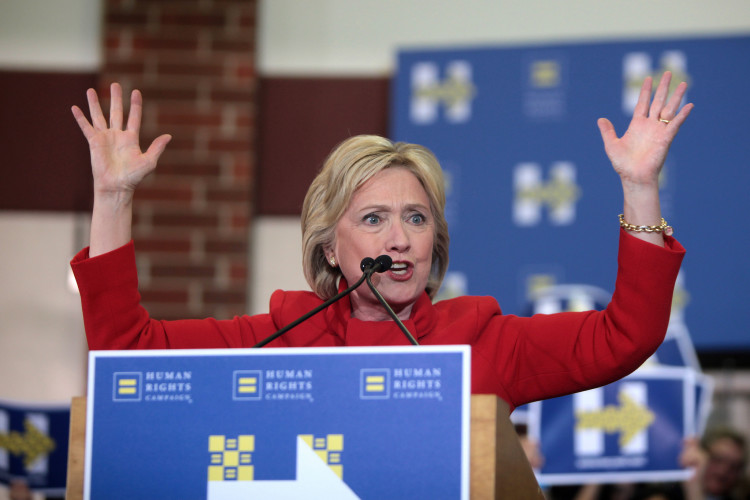 (Photo – Gage Skidmore on Flickr)
teleSUR – April 11, 2016
Democratic presidential frontrunner Hillary Clinton did not express any regret Monday about her support for the 2009 coup in Honduras, despite the deteriorating human rights situation, recently highlighted with the murder of prominent Indigenous activist Berta Caceres.
In fact, in an interview with the New York Daily News, in her opinion, the U.S. aid to military and police forces in Central America will eventually pay off just like Plan Colombia.
Plan Colombia was established under the administration of Bill Clinton in 1999 under the guise of fighting the war on drugs. The U.S. aid package, totalling almost US$2 billion, gave 78 percent of the funds to the Colombian military and police for counternarcotics and military operations against the rebel forces.
Despite a long list of studies and evidence that shows that Plan Colombia contributed to human rights abuses by security forces and the rise of paramilitary forces, Clinton took most of the credit for the current peace talks between the government and the FARC rebels, suggesting Plan Colombia brought peace to Colombia.
“I didn’t like the way it looked or the way they did it but (the coup leaders) had a very strong argument that they had followed the constitution and the legal precedence,” she said in an interview with the New York Daily News.
Democratically-elected president Manuel Zelaya was forcibly put on a plane and sent out of the country by the Honduran military in June 2009.
Clinton justified the move despite opposing advice from her top aides, who urged her to declare it a military coup, and to cut off U.S. aid, as some emails leaked in July revealed.
She admitted that the coup leaders “really undercut their argument by spiriting (Zelaya) out of the country in his pajamas, where they sent the military to take him out of his bed and get him out of the country.”
Nevertheless she strongly rejected the idea of cutting U.S. aid for Honduras, claiming this would have harmed the Honduran people, although it is mainly directed to the country’s security forces. It is used to keep the drug war within Honduran borders – as well as to keep Central American migrants running away from drug violence from reaching the United States.
59 Journalists Murdered in Honduras Since Clinton-Backed Coup
teleSUR – April 11, 2016
Since the 2009 U.S.-backed coup that removed President Manuel Zelaya, 59 journalists have been assassinated in Honduras, with four of them being murdered just in 2016 alone.
The most violent year until now has been 2015, with 218 alerts registered and 12 journalists assassinated.
In April 2015, the Honduras National Congress approved the Journalist Protection Law, which included measures like providing police protection when a journalist receives a threat. The law also planned the creation of a center monitoring threat follow-ups, although the government has not yet approved the budget.
In four years of former President Profirio Lobo’s government, 30 journalists were murdered, while in the current government headed by President Juan Orlando Hernandez, 22 journalists have been assassinated in the two years and three months since he took office. These two post-coup presidencies have been accused of systematic human rights abuses and corruption.
The Attorney General’s office has only processed six cases, while only four people have been prosecuted and sent to jail. There has not been any investigation into who ordered these crimes and the motivations behind each one.
Featured Video
Ian Proud: Economic Reset with Russia to Save Europe
or go to
Aletho News Archives – Video-Images
From the Archives
Jack Ruby: Israel’s Smoking Gun
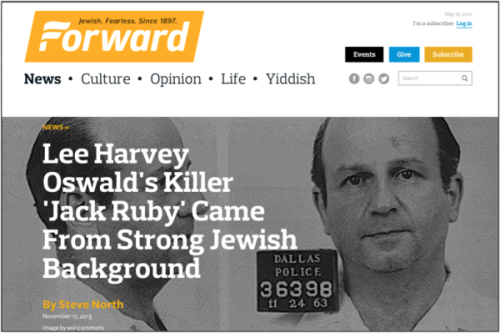
BY LAURENT GUYÉNOT • UNZ REVIEW • NOVEMBER 13, 2021
By a strange paradox, most Kennedy researchers who believe that Oswald was “just a patsy” spend an awful lot of time exploring his biography. This is about as useful as investigating Osama bin Laden for solving 9/11. Any serious quest for the real assassins of JFK should start by investigating the man who shot Oswald at pointblank in the stomach at 11:21 a.m. on September 24, 1963 in the Dallas Police station, thereby sealing the possibility that a judicial inquiry would draw attention to the inconsistencies of the charge against him, and perhaps expose the real perpetrators. One would normally expect the Dallas strip-club owner Jack Ruby to be the most investigated character by Kennedy truthers. But that is not the case. … continue
Blog Roll
Recent Comments


 Aletho News
- Ian Proud: Economic Reset with Russia to Save Europe
- Senator Rand Paul Introduces Federal Bill to END Vaccine Makers’ Liability Shield
- The Hidden Map: US and Israel May Use Unexpected Neighbors to Attack Iran
- Trump, Netanyahu Agree to Target Iranian Oil Exports to China
- Russia open to discussing Ukraine’s ‘external governance’ – senior diplomat
- US Caribbean Buildup Near $3B — Report
- Munich Security Conference and the U.S. elephant in the room
- Epstein Pitched JPMorgan Chase on Plan to Get Bill Gates ‘More Money for Vaccines’
- Germany’s CDU Pushes Real-Name Social Media Mandate and ID Checks
- Patrik Baab: Europe’s New Iron Curtain – Freedom of Speech Dies
- If Americans Knew
- Israel-backed border guards, GHF-linked aid – Not a ceasefire Day 128
- Israel battles Palestinian right of return, one Palestinian at a time – Not a ceasefire Day 127
- Noor’s short life of unimaginable suffering
- Israel Destroyed Gaza’s Hospitals. Now It’s Banning Doctors Without Borders.
- Is Spite of What Zionists Say, It’s a Good Thing to Criticize Governments
- Palestinian mother, daughter recount strip searches, harsh conditions in Israeli detention
- Israel used weapons in Gaza that made thousands of Palestinians evaporate
- ADL’s Stats Twist Israel’s Critics Into Antisemites
- Why Is the World Silent When the Gaza Genocide Is Not Over?
- In Gaza: 8,000 bodies under rubble, 3,000 missing – Not a ceasefire Day 126
- No Tricks Zone
- Unfudging The Data: Dutch Meteorological Institute Reinstates Early 20th Centruy Heat Waves It Had Erased Earlier
- German Gas Crisis…Chancellor Merz Allegedly Bans Gas Debate Ahead of Elections!
- Pollen Reconstructions Show The Last Glacial’s Warming Events Were Global, 10x Greater Than Modern
- Germany’s Natural Gas Storage Level Dwindles To Just 28%… Increasingly Critical
- New Study Rebuts The Assumption That Anthropogenic CO2 Molecules Have ‘Special’ Properties
- Climate Scientist Who Predicted End Of “Heavy Frost And Snow” Now Refuses Media Inquiries
- Polar Bear Numbers Rising And Health Improving In Areas With The Most Rapid Sea Ice Decline
- One Reason Only For Germany’s Heating Gas Crisis: Its Hardcore-Dumbass Energy Policy
- 130 Years Later: The CO2 Greenhouse Effect Is Still Only An Imaginary-World Thought Experiment
- New Study Affirms Rising CO2’s Greening Impact Across India – A Region With No Net Warming In 75 Years
 Aletho News