Macri Gives Go Ahead to US Military Installations in Argentina
teleSUR – May 18, 2016
According to a report among the plans is also the negotiation of another military base in the border with Paraguay and Brazil.
A military delegation sent by Argentine President Mauricio Macri on Wednesday signed an agreement on military cooperation with the United States, which entails the establishment of a U.S. military base in Ushuaia, the southernmost tip of the South American nation.
Ushuaia is the capital of Tierra del Fuego, whose boundaries extend to Antarctica. The Argentine government has justified the installation by saying scientific work” will be performed there.
Earlier this week Vice Defense Minister Angel Tello began a five-day visit to the U.S. aimed at reestablishing bilateral defense relations between the two countries after a freeze in military ties in recent years.
Among the plans reportedly being discussed is the negotiation of another military base in Argentina’s Misiones Province, located in the northeastern corner of the country at the border between Paraguay and Brazil.
Bilateral ties between Argentina and the U.S. had been tense in recent years as the leftist governments of presidents Fernandez and Nestor Kirchner reoriented foreign policy away from the U.S. and toward Latin America in the name of fighting imperialism and strengthening regional integration.
But Macri came to office last year based in part on a promise to rekindle relations with the U.S. while giving the cold shoulder to allies of Argentina’s left-wing Kirchner governments, such as Venezuela. The president has said he wants a “pragmatic and intelligent” relationship with Washington.
Venezuelan President Slams US “Double” Incursion into National Airspace
By Rachael Boothroyd Rojas | Venezuelanalysis | May 18, 2016
Caracas – Venezuelan President Nicolas Maduro has hit out at “mounting aggressions” against his government after it was confirmed that a US plane had twice violated Venezuelan airspace.
The US Boeing 707 E-3 Sentry is reported to have illegally entered Venezuela’s national airspace on May 11th at 6.09am, as well as on May 13th at 6.03 am.
Both incursions were detected by Venezuela’s Bolivarian airforce and have sparked rumours that the US might be conducting covert spying operations over Venezuela.
“This plane has all the mechanisms to carry out electronic espionage,” stated Maduro on his television programme Tuesday.
According to US Airforce information, the Boeing 707 E-3 Sentry provides an accurate, real-time picture of the battlespace to the Joint Air Operations Center, and possesses a powerful radar to “detect, identify and track enemy and friendly low-flying aircraft”.
The double incursion comes as rightwing politicians at home and abroad step up their demands for military intervention against Maduro’s government.
Last Thursday, a former Colombian president made headlines after publicly enquiring which “democratic country is willing to put its armed forces at the service of the protection of the Venezuelan opposition?”
Likewise, rightwing “Justice First” politician and former Venezuelan presidential candidate, Henrique Capriles Radonski, yesterday encouraged Venezuelan troops to form a mutiny against the national government.
“Prepare the tanks and war planes,” said the politician
“The hour of truth is coming to decide whether you are with the constitution or with Maduro,” he added.
A frenzy of international media reports over the last two weeks have painted an apocalyptic vision of the struggling South American country, citing a lack of access to basic food and medicine, skyrocketing inflation and devaluation of the national currency.
“I can say today that we are victims of the worst media, political and diplomatic aggression that our country has lived through in the past ten years,” stated Maduro.
The head of state has confirmed that his government will deliver an official complaint on the airspace incursions to US authorities.
Clinton and Trump
By James Petras | May 17, 2016
Over half the US electorate views the two leading candidates for the 2016 Presidential elections with horror and disdain.
In contrast, the entire corporate mass media, here and abroad, repeat outrageous virtuous claims on behalf of Hillary Clinton and visceral denunciations of Donald Trump.
Media pundits, financial, academic and corporate elites describe the prospects of her presidency as one of responsibility, national security, business prosperity and political normalcy.
In contrast, they paint billionaire Republican candidate, Donald Trump as a grave threat, likely to destroy the global economic and military order, polarize US society and destined to lead an isolated and protectionist US into deep recession.
The super-charged rhetoric, flaunting the virtues of one candidate and vices of the other, ignores the momentous consequences of the election of either candidate. There is a strong chance that the election of ultra-militarist Hillary Clinton will drive the world into catastrophic global nuclear war.
On the other hand, Trump’s ascent to the US Presidency will likely provoke unprecedented global economic opposition from the corporate establishment, which will drive the US economy into a profound depression.
These are not idle claims: The destructive consequences of either candidate’s presidency can best be understood through a systematic analysis of Mme. Clinton’s past and present foreign policies and Trump’s belief that he has the ability to transform the US from an empire to a republic.
Clinton on the Road to Nuclear War
Over the past quarter century, Hillary Clinton has promoted the most savage and destructive wars of our times. Moreover, the more directly she has been engaged in imperial policymaking, the greater her responsibility in implementing foreign policy, the closer we have come to nuclear war.
To identify Hillary Clinton’s path to global war it is necessary to identify three crucial moments. Hillary’s bloody history can be dated initially to her de facto ‘joint Presidency’ with husband Bill Clinton (1993-2001).
Stage One: The Conjugal Militarist Presidency (1993-2001)
During Hilary Clinton’s joint presidency with William Clinton (the Billary Regime) the First Lady actively promoted an aggressive militarized takeover of Eastern Europe, the Balkans, the Middle East and Eastern Africa – often under her favorite messianic doctrine of ‘humanitarian intervention and regime change’.
This justified the relentless bombing of Iraq, destroying its infrastructure and blockading its population into starvation while preparing to carve its territory into ethnic and religious divisions. Over 500,000 Iraqi children were murdered as proudly justified by then-Secretary of State Madeline Albright (1997-2001) and lauded by the Clintons.
In the same manner, Yugoslavia was bombed by the US humanitarian coalition air forces and cruise missiles over 1,000 times from March 24 to June 11, 2009 in the course of sub-dividing the country into five backward ‘ethnically cleansed’ mini-states. Thousands of factories, public buildings, bridges, passenger trains, radio stations, embassies, apartment complexes and hospitals were devastated; over a million victims became refugees while hundreds of thousands were wounded or killed.
The Conjugal Presidency successfully carried out the bloodiest war of aggression in Europe since the Nazi invasion during WWII, in order to subdivide an ethnically diverse and industrially advanced federation whose independent foreign policies had angered the Western corporate empire.
The Clintons launched the military invasion of Somalia (in East Africa) to impose a vassal regime, leading to the death of many thousands and a regional imperial war. Faced with desperate popular resistance from the Somalis, the Clintons were forced to withdraw US troops and bring in thousands of Sub-Saharan African and Ethiopian mercenaries – whose death would pass unnoticed among the US electorate.
From 1992 through 2001 the Clinton war machine helped set up the Yeltsin kleptocratic vassal state in Russia facilitating the greatest peace-time pillage of state resources in world history.
In the post-Soviet breakup era, over 1 trillion dollars of former public assets were seized especially by US and British-allied Zionist gangsters, Clinton-affiliated officials and ‘academics’ and Wall Street bankers. Under Clinton’s vassalage the entire Soviet public health system was eliminated and Yeltsin’s Russia experienced a population decline of 4.3 million citizens, mostly due to diseases, alcohol and drug toxicity, suicide, malnutrition, unemployment and loss of wages, pensions and and an unprecedented epidemic of tuberculosis and infectious diseases once thought wiped out, like syphilis and diphtheria.
Senator Hillary Clinton’s War Crimes by Association: January 3, 2001 to January 21, 2009
During the George W. Bush dynastic regime, Mme. Senator Clinton supported the US war machine ‘sowing death and destruction to the four corners of the earth’ (to quote Bush Jr.), millions in Iraq and Afghanistan died or fled in terror. Bush had only deepened and expanded the mayhem that the Clinton Conjugal Presidency had begun a decade earlier.
Mme. Senator Clinton promoted the US direct and unprovoked invasion and occupation of Iraq and the war in Afghanistan. Mme. Senator Clinton embraced crippling economic sanctions against Iran and she blessed Israel’s military assault against Palestinians in the West Bank and Gaza and Israeli massacres in Lebanon.
Mme. Senator Clinton supported President Junior Bush’s aborted coup against Venezuelan President-elect Hugo Chavez (2002), a prelude to the coup attempts in Latin America that she directed later as US Secretary of State.
Hillary Clinton’s Senatorial term served as a transition linking her initial joint presidential period of wars of conquest onto the next period. As US Secretary of State under President Obama she aggressively promoted global military supremacy.
Secretary of State Hillary Clinton: Naked Militarism Unleashed (2009-2014)
Whatever restraints Mme. Clinton faced as Senator dissolved as she ran amok during her term as Secretary of State. Across Europe, Africa, Latin America and the Middle East, Hillary Clinton bombed, massacred and dispossessed millions of families, shredding entire societies and dismantling the institutions of organized civil life for scores of millions. She never balked at the prospect of ethnocide and even joked that NATO might become ‘Al Qaeda’s Air Force’ as she pushed for a ‘no-fly zone’ over Syria.
A wild-eyed cackle echoed down the marbled corridors as the Foggy Bottom turned into a psycho- ward.
Mme. Secretary promoted the terror mercenary brigades invading Syria in a bid to ‘regime change’ the secular government of Al Assad, driving several million Syrian refugees into flight. Entire ancient Syrian Christian communities were wiped out under her reign of ‘regime change’.
Mme. Secretary Clinton directed US air force bombers and missiles to buttress the despotic Saudi monarch’s drive to obliterate Yemen.
Clinton unleashed the most savage bombing against Libya destroying the country and leading to the ethnic cleansing of a million and a half of Sub-Sahara workers and Black Libyans of sub-Saharan descent.
Under the aegis of murderous jihadi warlords and tribal chiefs, Mme. Clinton joked over the torture death of the wounded captive President Gaddafi, whose nauseating, almost pornographic murder by anal impalement was documented as a kind of ‘regime-change’ snuff film. Less known is the earlier, almost Old Testament-type slaughter of several of Gaddafi’s non-political children and five small grandchildren by a deliberate US missile strike aimed at ‘teaching the dictator’ that even his smallest grandchild cannot be hidden.
Mme. Clinton, who bragged that her Biblical role-model is the ethnocidal Queen Ester, has declared unconditional support for Israel’s war crimes against Palestinians in Gaza, the West Bank and among the diaspora. Hillary endorsed and defended Israeli torture and prison camps for children, the elderly and the homeless.
Mme. Secretary sent her criminal sub-secretary Victoria Nuland (an unreconstructed Neo-Con holdover from the Bush Administration) to orchestrate the violent putsch in the Ukraine. Millions from Ukraine’s huge ethnic Russian population were dispossessed from the Donbas region. Mme. Clinton had sought to convert Russian strategic military assets in Crimea to US-NATO bases aimed at Moscow, causing the residents of Crimea to overwhelmingly reject the coup and vote to re-join Russia.
The forceful intervention by Russian President Vladimir Putin prevented Mme. Clinton’s ethnic cleansing power grab in Crimea and the Donbas. The US retaliated by pushing for massive European Union economic sanctions against Russia.
Consistent with her pitiless Biblical role model, Mme. Clinton openly threatened to obliterate Iran with a nuclear war and incinerate 76 million Iranians to please her Uncle Netanyahu – a demented process that would poison a hundred million Arabs and perhaps a few million Israelis. Even the insane Israeli ‘Samson option’ was never dreamt of being ordered from Washington, DC!
During her tenure as Secretary of State, Mme. Clinton actively obstructed any diplomatic moves to achieve a US-Iran agreement on nuclear technology, parroting the Israeli militarist solution against regional rivals!
Mme. Clinton has remained an unrepentant enemy to the emerging independent Latin American governments. In search of vassal states, Clinton promoted successful military coups in Honduras and Paraguay, but was defeated in Venezuela. She proudly touts the death squad regime in Honduras among her foreign policy successes.
Mme. Hillary backed the death squad and narco-regimes in Colombia and Mexico, which killed over a hundred thousand civilians.
On the path to global war, Mme. Militarist has prepared to encircle Russia, stationing nuclear weapons in the Balkans and Poland. She promised that missiles would be placed in south central Europe and Ukraine.
Clinton raised the nuclear ante by hysterically claiming that the elected Russian President Vladimir Putin was ‘worse than ISIS’… ‘worse’ than Hitler.
Repeatedly threatening global war and actually making aggressive regional war should clearly have marked Mme. Hillary Clinton as unfit for the Presidency of the United States. She is politically, intellectually and emotionally unable to deal realistically with an independent Russia and any other independent power, including China and Iran. Her monomania is a course of violent ‘regime changes’, unable to evaluate any of the catastrophes her policymaking has in fact already produced.
Hillary Clinton was the proud author and director of the so-called US ‘pivot to Asia’. Clinton’s ‘pivot’ has led to a massive buildup of the US air and naval forces surrounding China’s maritime routes to its global markets and access to essential raw materials.
Clinton’s hyper-militarism expanded US war zones to cover Australia, Japan and the Philippines, greatly heightening tensions and increasing the possibility of a military provocation leading to nuclear war with China.
No US presidential contender, past or present, has engaged in more offensive wars, in a shorter time, uttering greater nuclear threats than Mme. Hillary Clinton. That she has not yet set off the nuclear holocaust is probably a result of the Administrative constraints imposed on the Mme. Secretary of State by the less blood-thirsty President Obama. These limitations will end if and when Mme. Hillary Clinton is ‘elected’ President of the United States in a process that the electorate increasingly knows is ‘rigged’ toward that outcome.
Donald Trump: the Peaceful Road to Recession
In sharp contrast to the militarist Mme. Clinton, Donald Trump, ‘the Businessman’, has adopted a relatively peaceful approach to international politics for an American presidential candidate in the current era.
‘Businessman’ Trump envisions productive negotiations with Russian President Putin. Employing his loudly trumpeted deal-making genius to benefit the United States, Trump predicts economic and diplomatic successes with Russia, China and other major powers.
Angered at US military allies enjoying decades of US Treasury largesse, a President Trump promises to withdraw US military bases from Asia and Europe and demanding that overseas allies ‘pony-up’ for their own defense.
What the war mongers in the mass media, academia and Washington bureaucracy, dismiss as ‘Trump’s isolationism’, The Businessman describes as rebuilding America by converting overseas military spending into domestic infrastructure projects and ‘real’ jobs in America.
Trump’s ‘America First’ policy, under his ‘Make America Great Again’ slogan, does not envision wars of conquest against Muslim countries, especially since they have already led to massive floods of Muslim refugees, threatening trade and stability, and Trump opposition to the entry of more Muslim refugees into the US. Trump’s foreign policy of limited military goals and warfare is diametrically opposed to Clinton’s total war strategy. Trump, ridiculed by his rivals for ‘his small hands’, does not appear to have Hillary’s itchy trigger finger on the nuclear button!
Trump mouths contradictory economic statements, especially his proposals to “rebuild America”, while operating in the framework of an imperial system. As President of the United States, his protectionist policies will come into direct confrontation with US and global ‘finance and monopoly capitalism’ and will likely lead to systematic disinvestment and a disastrous economic collapse or, more likely, the Businessman-President’s capitulation to the status quo.
The problem is not Trump’s pledges to tax the rich (as he occasionally promises) , or expand Social Security (as he claims), but his failure to admit that these policies would lead to massive flight by the capitalist elite to avoid taxes. The major threat is that, if Trump follows-up on his America-First policies, there will be massive capital resistance and a Congressional revolt by both finance-dominated political parties, which will paralyze any hope for his economic agenda.
Without political independence to implement his domestic economic agenda, Trump will have to face a massive investment and lending revolt from capitalists and bankers who would be very willing to drive the fragile economy into a major recession – threatening a kind of ‘domestic economic sabotage’.
Trump’s Republican Party (and certainly the Democrats) will never support a program which will force multi-national capital to sacrifice its reliance on cheap overseas labor and double digit profits in order to create American jobs and employ American workers at living wages.
A President Trump would not even secure a handful of Congressional votes to increase taxes on plutocrats to fund his proposed large-scale public works, infrastructure and job creation projects.
The Businessman President would face the full fury of the powerful military-industrial-high tech complex if and when he attempted to retire US global military forces from Europe, Asia, the Middle East and Africa.
The non-politician Trump’s historic rise to national political prominence has its roots in the ideas and values of the majority of working people who have been marginalized to the fringes by the media moguls and Wall Street riff-raff. Today Trump’s themes and ideas resonate with the mainstream of voters.
Several dominant ideas circulate in his speeches and interviews.
First, Trump rejects ‘globalization’ (the watered-down PR term for imperialism) and ‘free trade’ (a euphemism for the transfer of profits extracted from US workers to business investment abroad).
Trump’s narrative resonates with the recent anti-Wall Street ‘Occupy’ movements opposing the power of 0.1% super rich against the vast majority.
Secondly, Trump embraces economic nationalism in his slogan “Make American Great Again”. Too many American workers and their families resent having been exploited, maimed and slaughtered to serve multiple wars in the Middle East, Asia and Europe for the interests of US warlords, bankers, Zionists and other imperial royalties. Trump argues that the entire inflated security and corporate welfare system has led to an untenable debt payments spiral.
The third theme that draws millions is Trump’s notion that the US should reject the policy of serial ‘regime change’. We should not initiate and engage in perpetual overseas wars against Muslim countries as a way to avoid domestic attacks by individual terrorists. During an early foreign policy debate, Trump shocked the political establishment when he accused the Bush Administration of deliberately lying the country into the disastrous invasion of Iraq. This ‘truth-telling’ elicited wild applause from the mass Republican electorate.
Trump’s goal is to strengthen American civilization and avoid provoking more ‘clashes of civilizations’…
The fourth, and probably most attractive, message to most Americans is Trump’s powerful assault on Washington and Wall Street elites and their academic and media apologists.
Millions of Americans have been disgusted with the Bushes, Clintons and Obamas, as well as the Morgans, Goldman Sachs and Paulsons, whose policies have exacerbated class inequalities through multiple banking swindles and financial crashes, all ‘bailed out’ by the American tax payers.
Fifth, Trump’s loud, brash exposure of the mass media’s lies and propaganda has resonated with the same deep distrust felt by the American public. His talent for talking directly and bluntly to the public and on the internet has led to his enormous appeal. He does not engage in ‘conspiracy’ but acknowledges that the Edward Snowden revelations have unmasked the government’s deceptions and its program of espionage against the people, destroying the foundations for democratic discourse.
Trump might win the election based on his ‘five truths’ and his pledge to ‘make America great again’, but more likely he will lose because he has insulted the traditional establishment, the Latinos, Afro-Americans, feminists, trade union bureaucrats and their followers from both parties. Even if he succeeds at the ballot box, his political agenda with relying on Republican elites in Washington and Wall Street, the Pentagon and the ‘international security system’ will lead to a major economic crisis. For the elite, if blocking Trump’s domestic economic agenda requires a financial crash to defend ‘globalization’, serial wars and the 0.1%, then tighten your belts!
This November, the country will face the disagreeable choice between a proven nuclear warmonger and a captive of Wall Street. I will try to keep warm, roast chestnuts and avoid thinking about Mme. President’s Looming Mushroom Cloud.
Colombian Military Bombing of Indigenous Territory Forces Flight

There is not enough shelter to house all of the displaced families. | Photo: Contagio Radio
teleSUR – May 13, 2016
A national bombing campaign in the territories of the Indigenous Embera Wounaan ethnic group has forced them to flee their homes and take shelter elsewhere.
More than 400 Indigenous people from the ethnic group Embera Wounaan have been forced to leave their homes and stay in shelters in protection against military bombings of the camps of the National Liberation Army (ELN), Prensa Latina report.
Faced with threats to their security, the 94 families who have been forced to seek protection away from their land in the coastal area of Medio San Juan, Choco, say there are not enough shelters to house everyone.
The bombings began on April 10. According to Dura Bernardino, the leader of the Indigenous community, the bombings sent the community into a panic and that is why they decided to go to the municipal administrative center to save their lives.
The vulnerable community is calling on the government to stop the bombings and provide them with guarantees to return to their land.
Soft Coup in Brazil: A Blow to Brazilian Democracy
By Juan Sebastian Chavarro, Raiesa Frazer, Rachael Hilderbrand and Emma Tyrou | Council on Hemispheric Affairs | May 12, 2016
The impeachment this week of Brazilian President Dilma Rousseff represents the most significant test for Brazil’s institutions since the end of its military dictatorship in 1985. After the Senate voted Thursday to begin an impeachment trial of the country’s first female president, less than halfway through her second term in office, one politician described the events as representing the “saddest day for Brazil’s young democracy.”[1] Since the post-dictatorship transition, impeachment requests have been filed against each and every one of Brazil’s presidents, but none were carried through.[2] Rousseff, however, will be only the second president to experience an actual trial. Portrayed as a crusade against corruption, the current process against a democratically elected president rests on unclear budgetary charges and bears the mark of a right wing retaliation after 13 years of left rule. This process is further complicated by the fact that virtually all of Brazil’s leading political figures are implicated to some degree in the corruption schemes. In the eyes of many, Brazil’s institutions seem to be failing this test and are not holding all actors equally accountable. From the outside it appears that in the young Brazilian republic, the structures of democracy are being shaken down. While the right-wing claims that Rousseff’s impeachment request is a legitimate response to budgetary malfeasance, her supporters are characterizing the efforts to impeach her as unconstitutional, and therefore a coup.
In “Behind Dilma’s Destitution, a Neoliberal Coup,” Tatiana Roque, a professor at the Federal University of Rio de Janeiro (UFRJ) described the events surrounding Rousseff’s impeachment as a “neoliberal coup.” She states: “In the putting on hold of the democratic principles and the weakening of the voting power, we foresee the appearance of a dramatically anti-democratic process.”[3] In coverage of such a complex situation, the crisis has been portrayed by the privately owned media as a movement of the people against a corrupt government, which is ultimately an inaccurate and oversimplified explanation. In light of events this past week, it is even more necessary to analyze the legal ground on which the whole illegitimate process rests and to grasp its significance for the entire region.
Brazil’s Senate Vote to Continue the Impeachment Process
The push to oust Rousseff from office has been a protracted and chaotic process littered with soap opera-like developments and reversals. On Wednesday, May 11, Brazil’s Senate voted in favor 55 votes to 22, after 21 hours of tense debate, to suspend the office of President Dilma Rousseff and to begin the formal impeachment trial against her on charges of fiscal and budget responsibility crimes. The process now moved to the Senate after a series of complicated events. On April 17, the Chamber of Deputies voted to approve the continuation of the impeachment process, in a circus-like atmosphere where almost none of the Deputies directly addressed the charge backing her impeachment. The former President of the Chamber of Deputies, Eduardo Cunha, was removed earlier this week on the grounds of the obstruction of investigations in the Petrobras corruption scandal. He was replaced by Waldir Maranhão who immediately after taking office, decided to annul the April 17 decision only to then cancel the request, a mere 48 hours before the Senate was scheduled to commence and vote. In response to this wild back and forth, the highly respected former Supreme Court (STF) judge, Joaquim Barbosa, tweeted: “Do you know what the whole world must be thinking about us Brazilians? “A laughing stock’.” Amidst all this, Rousseff insists that she will continue to keep fighting until the very end. In Brasilia, while waiting for the announcement of the Senate’s decision the two sides of the makeshift wall that separated those supporting from those opposing the impeachment could not have been more contrasting. While on one side the pro-impeachment crowd dressed in yellow and green had a Carnival like celebration, those opposing the impeachment process were at certain times in the evening subjected to tear gas by the police.
Now the Senate has voted in favor of the commencement of the impeachment trial, which will be conducted in the Senate and led by the President of the Supreme Court Ricardo Lewandowski. Within 180 days and after consideration of evidence and testimonies by both the accusatory commission and Rousseff’s defense team, a verdict will be rendered: guilty or not guilty. Meanwhile, she will be suspended from office and her duties will be temporarily fulfilled by the universally unpopular Vice President Michel Temer, from the Brazilian Democratic Movement Party (PMDB). Temer, however, is himself implicated in a number of scandals, leaving his political future uncertain. He stands accused of illegal financing during the 2014 elections and also has been cited in a plea bargain regarding his alleged involvement in the Petrobras corruption scandal.[4]
The Veneer of Legitimacy
Opponents of Rousseff’s administration claim that the current impeachment followed a legal procedure: it was voted on by Congress and is a political process acting on the people’s desire to remove an increasingly unpopular president. According to them, the charges behind Dilma’s impeachment request – the maneuvering of funds and tampering with budgets – are sufficient cause for her removal since such acts are illegal under the Constitution due to the Fiscal Responsibility Law. However, the case against Dilma is missing the most important component: proof that a crime of responsibility has been committed.
The right-wing of Brazilian politics, represented by different parties – the main being the Brazilian Social Democratic Party (PSDB) – and principally supported by the traditional ruling class, economic elite, and a highly concentrated national mainstream media, have been out of power at the federal level for over a decade. However, in the current political crisis, recession, and corruption scandals, this coalition sees an opportunity to take back power from Rousseff’s Workers Party (PT) that has been ruling for the past 13 years. Since the right-wing has not been able to win at the ballot box, they have stirred up yet another anti-corruption campaign to gain support from the already angered population.[5] In the midst of an economic crisis there may be enough public discontent to push for Dilma’s impeachment due to fiscal irresponsibility, even if she has not committed a crime. Yet the already complicated situation becomes more complex when one considers that many of the very same politicians fighting for Dilma’s impeachment are also accused of personal embezzlement. All parties – those in power, the left; as well as those in the right-wing opposition trying to replace the current government – are involved in some measure of corruption. Ironically, Rousseff is one of the only political leaders not accused of personal enrichment. Nearly a third of the 594 members of Congress, including the leaders of the lower house and the Senate, are under scrutiny before the courts over claims of violating laws including Eduardo Cunha (PMDB), the former President of the Chamber of Deputies, Renan Calheiros (PMDB), the President of the Senate, and Aecio Neves, the opposition’s (PSDB) leader.[6] The motivation behind the impeachment process therefore appears not to be an anti-corruption campaign, but rather the desire to instigate a political war between the right and left in an opportunistic strategy for Brazil’s political elite to regain power without votes or democratic legitimacy.
Rousseff and her government supporters argue that she has not committed any crime that justifies her removal. Under any circumstances, impeachment without proof of a crime should be considered a coup. The legal flaws in the case against Dilma make the continuation of the impeachment process an undemocratic attempt by the Brazilian elite to enter into power by overthrowing a democratically elected leader. President Rousseff was democratically elected by majority vote in 2010 and again in 2014. Given that she was thereby twice granted a democratic mandate to govern in free and fair elections, the entire process, especially now that the trial has opened, is setting a dangerous precedent in Brazilian politics. The Brazilian Constitution (enacted in 1988 after decades of rule by a military junta) defines the country as a “presidential regime” rather than a parliamentary one. In the former, impeachment is designed as an ultimate solution to remove from power a leader guilty of crime, and therefore deemed unfit to conduct the remainder of its mandate. It should by no means be confused with the more common vote of non-confidence, aiming at replacing a leader who has lost legislative support in a parliamentarian system. Simply put, these attempted impeachments are trivializing the impeachment clause process, and are eroding citizens’ faith in their own political system.
Such a situation raises concerns over the prevailing strength of Brazilian democracy. In an interview with Democracy Now! on May 10, journalist Glenn Greenwald stated,
“To sit here and witness the utter dismantling of a democracy, which is exactly what is taking place, by the richest and most powerful people in the society, using their media organs that masquerade as journalistic outlets, but which are in fact propaganda channels for a tiny number of extremely rich families, almost all of whom supported that coup and then the military dictatorship, is really disturbing and frightening to see.”[7]
No more than three years ago, Brazil’s economy was booming, its prospects improving, and in the long-term it looked as if Brazil’s goal to become a developed power in the world was close at hand. The current economic crisis has reversed this process and frustrated the Brazilian people. While approval ratings for Rousseff and her administration were once high, Brazilian voters have directed their frustration towards Dilma and the Worker’s Party due to the economic downturn. The right-wing political and economic elite have used this economic discontent on top of the nation’s largest corruption scandal to remove Dilma from office – even if there is no legitimate claim backing her removal.
Regional Implications
With clear parallels to the 1964 coup that ousted then-President João Goulart as well as to the political crisis that led to oustings of democratically elected presidents in Paraguay and Honduras, Brazil’s ongoing impeachment process is an assault on democracy. The ousting of the current Brazilian president based on political and judicial manipulations, as well as constitutional misinterpretations, undermines the democratic legitimacy of the government but moreover calls into question the viability of Brazil’s major institutions. In its success, the precedents set for future governments are devastating not only in Brazil but in all Latin America. Brazil represents the eighth largest economy in the world, and it is a leading power in the continent.
In the first hours of his new mandate, acting President Temer promised the new government will announce austerity measures.[8] Temer has previously set eyes on Paulo Leme, the chairman of Goldman Sachs in Brazil, to potentially serve as finance minister or central bank chief. Temer also is considering Luiz Fernando Figueiredo, a previous central bank official and founder of asset manager Mauá Capital, to be Treasury secretary for the central bank. They have been consulted for the drafting of “A bridge to the Future”, the PMDB economic plan.[9]
The right wing takeover of the government in Brazil will likely have momentous consequences for the integrity of UNASUR as a bastion of independence from U.S. hegemony in the region. Combined with the neoliberal stance of President Macri in Argentina, we can expect a concerted effort by this conservative wave to drive MERCOSUR in to the free trade camp, isolate Venezuela, and undermine the Bolivarian cause in Bolivia and throughout the region. But just as Macri appears to be overplaying his hand in provoking popular outrage, the right in Brazil may soon find itself faced with an eroding, ephemeral legitimacy.
[1] Watts, Jonathan. “Dilma Rousseff Suspended as Senate Votes to Impeach Brazilian President.” The Guardian. 2016. Accessed May 12, 2016. http://www.theguardian.com/world/2016/may/12/dilma-rousseff-brazil-president-impeached-senate-vote?utm_source=esp.
[2] Nolte Detlef, and Llanos Mariana. “The Many Faces of Latin American Presidentialism.” GIGA Focus Latin America, May 2016. Accessed May 11, 2016. https://www.academia.edu/25159273/The_Many_Faces_of_Latin_American_Presidentialism
[3] Roque, Tatiana. “Sous la Destitution de Dilma Rousseff un Coup d’Etat Neoliberal.” Regards, May 12, 2016. Accessed May 12, 2016. http://www.regards.fr/web/article/sous-la-destitution-de-dilma-rousseff-un-coup-d-etat-neoliberal
[4] Esther Fuentes. “Who Is Who in Brazil’s Complicated Lava Jato Corruption Allegations?” COHA. March 17, 2016. Accessed May 12, 2016. http://www.coha.org/who-is-who-in-brazils-complicated-lava-jato-corruption-allegations/
[5] Jen Glüsing. “Staatskrise in Brasilien: Kalter Putsch.” Der Spiegel, March 19, 2016. Accessed May 12, 2016. http://www.spiegel.de/politik/ausland/brasilien-hexenjagd-auf-lula-ein-kalter-putsch-kommentar-a-1083218.html and Laurent Delcourt. “Printemps Trompeur Au Brésil.” Le Monde Diplomatique, May 2016. Accessed May 12, 2016. https://www.monde-diplomatique.fr/2016/05/DELCOURT/55435
[6] Esther Fuentes. “Who Is Who in Brazil’s Complicated Lava Jato Corruption Allegations?” COHA. March 17, 2016. Accessed May 12, 2016. http://www.coha.org/who-is-who-in-brazils-complicated-lava-jato-corruption-allegations/
[7] Amy Goodman. “Glenn Greenwald on Brazil: Goal of Rousseff Impeachment Is to Boost Neoliberals & Protect Corruption.” Democracy Now! May 10, 2016. Accessed May 12, 2016. http://www.democracynow.org/2016/5/10/glenn_greenwald_on_brazil_goal_of
[8] “Brazil’s Rousseff Set to Bow out after Senate Votes to Put Her on Trial.” Reuters. May 12, 2016. Accessed May 12, 2016. http://www.reuters.com/article/us-brazil-politics-idUSKCN0Y206H
[9] “Exclusive: Temer Eyes Goldman Banker, Investor for Brazil Economic Team: Sources.” Reuters. April 15, 2016. Accessed May 12, 2016. https://www.yahoo.com/news/exclusive-temer-eyes-goldman-banker-investor-brazil-economic-205132190–sector.html
To download a PDF version of this article, click here.
Parliamentary Coups: the New Strategy of Latin America’s Right
By Pablo Vivanco – teleSUR – May 12, 2016
Like Honduras and Paraguay, Brazil’s elites used the legislature against Dilma Rousseff. Is Venezuela next?
For most, the decades of the 1970’s and 1980’s are regarded as a dark period for Latin America.
The majority of South American nations were taken over by brutal military juntas, while in Central America civil wars claimed the lives of hundreds of thousands. The armed forces in the region, often trained and financed by the United States, ruled through force and where civilian governments didn’t heed their agendas, these were ignored or overthrown.
Despite entailing the onslaught of disastrous neoliberal economic policies that exacerbated poverty and inequality, the 1990’s also ushered in an end to the military dictatorships in Latin America. Elected governments returned to Chile, Argentina, Brazil, Uruguay and Paraguay, while peace accords in Guatemala and El Salvador also meant that the militaries would see a diminished role in the politics of those countries (at least in theory).
Latin America did not solve its numerous problems, but a general consensus was arrived at — no coups or military regimes should be permitted again in the region.
Of course, this consensus began to break with the resurgence of Latin America’s left, beginning with the Bolivarian movement and Hugo Chavez in Venezuela. Even though he initially harbored very modest proposals for reforms, Venezuela’s ruling class almost immediately sought to topple Chavez’s government. In April 2002 they acted as Latin American elites had done in previous decades and enlisted the upper echelons of the military to stage a coup to remove Chavez. The results were predictable — Venezuelans revolted against the coup and its leaders and the region (except for the U.S. government led by George W. Bush), rejected the move.
The lesson: military coups make for bad PR.
As the decade and Latin America’s left advanced, the regional right adopted a different strategy to counter the trend. While in many countries the left was winning presidencies, in these countries the legislative branches remained largely under the control of traditional (and generally right-wing) parties. Far from providing checks and balances on the authority of the executive branch, opposition-controlled legislatures began to be used as the instrument to overthrow elected presidents.
The first test came in 2009, when Honduran President Manuel Zelaya was removed from office after calling for a non-binding referendum on changing the country’s constitution. The Honduran Congress had voted to remove Zelaya from office, and the country’s Supreme Court — dominated by figures connected to the previous military government — ordered his arrest. The Honduran military dutifully complied with their order, kidnapping Zelaya and forcing him onto a plane to Costa Rica.
Three years later, Paraguay’s parliament impeached President Fernando Lugo, a former bishop who ended 61 years of one-party rule in the country. The charges and process against Lugo were met with skepticism in Paraguay as well as in the region, prompting Paraguay to be suspended from the Mercosur pact.
The impeachment process against the president of Latin America’s largest nation mirrors the intentions of the coups of the 70’s and 80’s and the methods of those in the last decade. Despite the absence of evidence that could justify an impeach against Dilma Rousseff, a majority of Brazilian legislators — many of whom are implicated or being investigated in a massive corruption scandal — have approved removing her from the office she was elected to. The man who will fill the seat is one of those being investigated, but he faces no repercussions from his colleagues.
In neighboring Venezuela, the opposition-led National Assembly has the same objective and has initiated the “recall” clause in the country’s constitution in an attempt to oust Nicolas Maduro from the Miraflores presidential palace.
In all of these cases, the objective is not merely power, but what power facilitates. Since 1998, numerous left-leaning governments have been elected to redistribute wealth and decision-making power. Not only has this led to inequality and poverty being slashed, but the political dynamics in those countries have shifted and the region has become more unified and independent.
The new strategy to stem the Pink Tide builds from the same objectives as those employed by the dictatorships of Pinochet, Videla and others: stop the left from being able to implement its program. But while it uses one elected institution to subvert another, it should be clear that these maneuvers are no less undemocratic than their military predecessors.
Pablo Vivanco is Director of teleSUR English.
UNASUR Head Says Rousseff Remains ‘Legitimate Leader’ of Brazil

Ernesto Samper, secretary-general of the Union of South American Nations. Photo – UNASUR
teleSUR | May 12, 2016
Ernesto Samper, secretary-general of the Union of South American Nations, told teleSUR in an exclusive interview that Dilma Rousseff remained “the legitimate leader” of the Brazilian people and maintains “democratic legitimacy” by virtue of having been re-elected in 2014.
During a press conference Thursday, Samper said that the decision of the Brazilian Congress to initiate an impeachment trial against President Dilma Rousseff was “compromising the democratic governability of the region in a dangerous way.”
“What has happened in Brazil, is a parliamentary political majority is challenging the citizens’ majority that expressed themselves in a clear way in favor of Rousseff,” said Samper referring to the 2014 re-election of President Rousseff.
He stopped short of calling the impeachment trial of Rousseff a rupture of democratic order, which would have triggered the possible suspension of Brazil from the regional bloc.
He added that the efforts by Brazilian politicians to oust Rousseff via impeachment were of “a political character” and criticized the lower chamber for failing to provide Rousseff with room to defend herself.
Samper called on the upper chamber, which will now preside over her trial, to respect due process.
“In this new phase, we ask that the right to defense for President Rousseff be guaranteed,” said Samper.
The secretary-general of UNASUR said it was “not their place to comment on the interim government (of Michel Temer).”
During an earlier event Wednesday, Samper said the greatest risk to governance in the region were groups who “engage in political work without political responsibility.”
The impeachment effort against Rousseff was largely driven by political, media, and economic elites in Brazil.
The support of the Globo media conglomerate was essential in stirring up support for impeachment, providing disproportional coverage of corruption allegations against members of the Workers’ Party and granting widespread media attention to right-wing rallies calling for Rousseff’s ouster.
Elements of the country’s judiciary—including Sergio Moro, the judge who is presiding over the investigation into a corruption scandal—played a lead political role, which Rousseff’s supporters said were inappropriate for a judge.
The country’s Supreme Court also refrained from intervening and stopping the coup plot, despite the fact that Rousseff was being put on trial without having been found guilty of any crime.
The impeachment effort against the ousted Brazilian president is based on allegations she manipulated budget accounts, a deed committed by most of her predecessors and by some of the very senators who voted for impeachment efforts to proceed.
The UNASUR chief previously warned that a potential impeachment scenario would set a “dangerous” precedent by criminalizing standard government budget management practices.
RELATED:
Colombian Soldiers Arrested for the Murder of Indigenous Leader
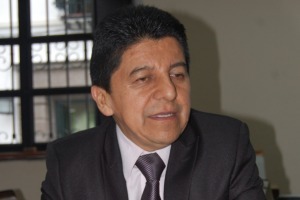
Governor Bolaños Lasso (Photo credit Diaro del Cauca)
teleSUR | May 4, 2016
An army sergeant and a corporal have been arrested for the murder of Indigenous governor Bolaños Lasso in southwest Colombia, local media reported Tuesday.
The Prosecutor General’s Office confirmed the arrest of the two low-ranking army commanders who are part of the Jose Hilario Lopez battalion, of the Army’s 3rd Division, and said the pair are under investigation for the murder of Lasso.
Lasso was killed from gunfire on a road leading from Puracé, an Indigenous community in the Cauca Department, to the province’s capital of Popayán, on Oct. 19, 2015, according to the army.
“While the troops of the battalion Jose Hilario Lopez moved to the village of Santa Leticia, in Purace, where they prepared to take a position to provide security for election day October 25, they heard several shots,” representatives of the 29 Army Brigade said in an statement.
Commenting on the death last year, Colombia’s Indigenous Regional Council of Cauca (CRIC) said that Bolaños had “no known type of problem” that may have provoked his assassination.
No motive for the murder has been established as yet by authorities. The two soldiers will go on trial before the Third Municipal Criminal Court Guarantee Control charged with the murder of protected persons.
Murders and mistreatment of Indigenous Colombians is a regular occurrence in the Cauca region. As teleSUR reported in November, the Colombian army killed one campesino and wounded five others after it raided a rural area in what military officials say was an effort to “manually eradicate” illegal coca crops.
The slaughter stoked ire among many human rights activists including former Colombian Senator Piedad Cordoba who, in the aftermath, said the army needs to “sit down” with other organizations and social movements and “agree on another way of doing things.”
Featured Video
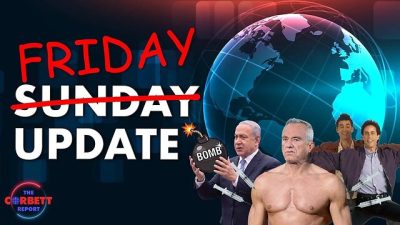
Racist Seinfeld Dances for Joy as Bibi Unveils His New Map
or go to
Aletho News Archives – Video-Images
TV Drama Review
Japanese drama projects Japan’s wartime atrocities onto Chinese characters

Global Times | October 25, 2026
By portraying Chinese characters as perpetrators of ruthless violence while casting Japanese Self-Defense Forces (SDF) intelligence operatives as defenders, the season 2 of the Japanese drama Vivant has recently drawn criticism from Chinese netizens, who argue that its depiction turns historical reality on its head while ignoring Japan’s wartime atrocities.
The TBS drama series – a spy suspense story in which an alleged unofficial intelligence unit of the SDF operates across the globe — has attracted a passionate fanbase. Its currently airing season 2 opened with a household rating of 18.8 percent, the highest for a TV drama this year, according toa commentary article by Japanese media Toyo Keizai.
What draws attention is the portrayal of the enemies in the series, the article noted. Scenes in which the Chinese organization subjects kidnapped members of the SDF unit to brutal torture are repeated with unrelenting intensity.
It is rare for Japanese TV dramas to explicitly portray a real-life country as the enemy, the article noted.
Japanese Prime Minister Sanae Takaichi also made a reference to the drama, saying that she has been recording Vivant and hopes to binge-watch it over the year-end and New Year holidays, according to Japanese media outlets.
China’s CCTV News report on Sunday revealed that the drama features scenes in which Chinese personnel cut off the fingers of and stab Japanese intelligence operatives in the abdomen. Such acts bear striking similarities to the torture inflicted on Chinese nationals by invading Japanese troops during the World War II.
The drama distorts the truth by attributing these atrocities to modern Chinese characters. Beneath the surface, it subtly glorifies Japan’s cross-border overseas operations, blurs the functional boundaries of the SDF and implicitly promotes an expansionist narrative, per CCTV News. … continue
Blog Roll
 Aletho News
- EU facing trillion-euro debt hole while seeking more cash for Kiev
- How US, Europe, Persian Gulf states exhausted missile stockpiles, splurged billions to defend Israel
- Up in arms… Koreans reject U.S. empire’s plan to make South Korea the next Ukraine
- Iran, Turkey, Pakistan, Saudi Arabia could advance region-led security framework in Tehran: FM spox
- Netizens condemn Japanese drama for projecting Japan’s wartime atrocities onto Chinese characters
- Racist Seinfeld Dances for Joy as Bibi Unveils His New Map
- A West Bank War for Netanyahu’s Election Campaign, Could It Backfire?
- Yemen denounces European Parliament’s ‘hypocritical’ push to blacklist Ansarullah
- Qalibaf: UAE’s UN bid aims to ‘clear the runway’ for ‘Greater Israel’, whitewash genocide
- Pakistan reopens Iran border after boosting security: Report
- If Americans Knew
- An error has occurred; the feed is probably down. Try again later.
- No Tricks Zone
- Sudden Stratospheric Warming, Powerful El Niño Combination May Lead To Extreme Europe Cold, Energy Crisis!
- Two New Studies Find Thwaites Glacier Melt Cannot Be Driven By Human Activity Or A Warming Ocean
- E-Cars Reduce CO2 Emissions By Only 41% Compared To Internal Combustion Engine Vehicles
- Predictions Made By Renowned Climate Professor Over Past Decades Have Been Proven To Be Poor
- New Study Suggests Large Regions Of The Pacific Ocean Have Been Cooling For The Last 80 Years
- Germany’s Green Energy Debacle: High Energy Costs Force Kahla Porzellan to Close After 182 Years!
- New Study: 50 Years Of The Most Aggressive ‘Net Zero’ Policies Can Only Affect The Global Climate By 0.03°C
- US September “Heat” Was No Record…Many Records Set Decades Ago
- Latest European Green Energy Debacle; Portugal’s Largest Flagship Solar Park Insolvent!
- Green Energy Debacle: German Expert Professor Fritz Vahrenholt Warns Of Severe Economic And Social Consequences

