Caceres’ Relatives: No Confidence in Official Investigation
teleSUR | May 3, 2016
Relatives of Berta Caceres, Indigenous and environmental leader murdered in Honduras March 3, reaffirmed their distrust of the public prosecutor after having been excluded from the investigation, regarding the arrest of four suspects Monday.
“They excluded us from the investigation process from the beginning, we have no way of knowing whether the arrests are the result of exhaustive proceedings, nor do we know whether these include the masterminds at all levels,” they said in a statement.
They also stated that the alleged involvement of active and retired military linked to the company DESA demonstrates the involvement of state agents in the murder of Caceres.
Children and other relatives of Berta Caceres learned of the arrests through the media “and not through the channels they are entitled to by law,” the statement said.
The Honduran Office of the Public Prosecutor reported that 10 coordinated raids were carried out Monday in connection with Caceres’ homicide in the capital Tegucigalpa, as well as in La Ceiba, and Trujillo.
The four suspects are scheduled to appear in court in the following days, the OPP added.
Caceres’ death prompted massive international condemnation and led to huge protests in Honduras, a country that currently has the one of highest murder rates in the world.
Massive May Day rallies show support for Brazil’s Rousseff
The BRICS Post | May 2, 2016
Even as May Day protests were expected in cities across the world on Sunday, as economic crises and a rise in unemployment have fuelled anti-government sentiment, Brazil saw some radically different scenes.
Hundreds of thousands of people marched in Brazil’s main cities on International Workers’ Day in a show of support for the embattled President Dilma Rousseff.
Protests were seen in 16 of the country’s 27 states, called by Central Union of Workers (CUT) and numerous other labor and left-wing organizations.
The support for the embattled leftist leader Rousseff in Brazil was in sharp contrast to France which was on high alert after protests against planned labour changes this week sparked a frenzy, with cars set on fire and dozens of police officers being injured in Paris in clashes with protesters.
On Sunday, the Brazilian city of Sao Paulo saw the largest march with around 100,000 people, according to organizers, in three separate marches.
Rousseff appeared at the CUT march in Sao Paulo, alongside the mayor of Sao Paulo, Fernando Haddad, and the president of the Workers’ Party, Rui Falcao.
During a speech to the crowd, Rousseff announced a new policy measure, according to Brazilian daily O Globo, saying that her flagship social welfare program Bolsa Familia would be increased by 9 per cent.
Bolsa Familia is an ambitious cash-transfer scheme that has helped elevate millions of Brazilians out of poverty. Funds are channelled through the mothers of poor and working-class families.
The scheme was launched nationwide by President Lula’s administration in 2003 and its exemplary success has cemented support for Rousseff’s Workers Party among the poorest in Brazil.
On Sunday, Rousseff also announced that 25,000 new houses would be built within the Mi Casa, Mi Vida (My Home, My Life) program, the renewal of the contracts of foreign doctors in the Más Médicos (More Doctors) program, an increase in paternity leave for public officials and an adjustment to the rental tax to benefit workers.
In other cities such as Rio de Janeiro, Curitiba, Fortaleza, Manaus, Joao Pessoa, Recife and Salvador, Rousseff supporters marched, saying they would not allow her impeachment.
The Brazilian Senate is currently considering whether to open an impeachment trial against Rousseff, over alleged fiscal irregularities in 2014 and 2015.
President Obama: The Race for the Imperial Legacy
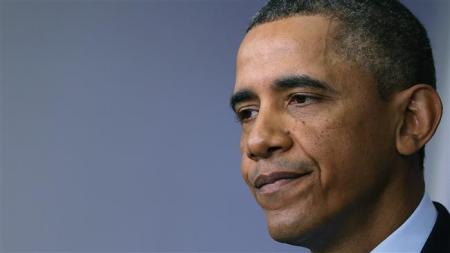
By James Petras :: 04.29.2016
President Obama is racing forward to establish his imperial legacy throughout Russia, Asia and Latin America. In the last two years he has accelerated the buildup of his military nuclear arsenal on the frontiers of Russia. The Pentagon has designed a high tech anti-missile system to undermine Russian defenses.
In Latin America, Obama has shed his shallow pretense of tolerating the center–left electoral regimes. Instead he is has joined with rabid authoritarian neo-liberals in Argentina; met with the judges and politicians engineering the overthrow of the current Brazilian government; and encouraged the emerging far-rightwing regimes in Peru under Keiko Fujimori and Colombia under President Santos.
In Asia, Obama has clearly escalated a military build-up threatening China’s principle waterways in the South China Sea. Obama encouraged aggressive and violent separatist groupings in Hong Kong, Tibet, Xinjian and Taiwan. Obama invites Beijing billionaires to relocate a trillion dollars in assets to the ‘laundry machines’ of North America, Europe and Asia. Meanwhile he has actively blocked China’s long-planned commercial ’silk route’ across Myanmar and west Asia.
In the Middle East, President Obama joined with Saudi Arabia as Riyadh escalated its brutal war and blockade in Yemen. He directed Kenya and other African predator states to attack Somalia. He has continued to back mercenary armies invading Syria while collaborating with the Turkish dictator, Erdogan, as Turkish troops bomb Kurdish, Syrian and Iraqi fighters who are engaged on the front lines against Islamist terrorism.
President Obama and his minions have consistently groveled before the Jewish State and its US Fifth Column, massively increasing US ‘tribute’ to Tel Aviv. Meanwhile, Israel continues to seize thousands of acres of Palestinian land murdering and arresting thousands of Palestinians, from young children to aged grandparents.
The Obama regime is desperate to overcome the consequences of his political, military and economic failures of the past six years and establish the US as the uncontested global economic and military power.
At this stage, Obama’s supreme goal is to leave an enduring legacy, where he will have: (1) surrounded and weakened Russia and China; (2) re-converted Latin America into an authoritarian free-trade backyard for US plunder; (3) turned the Middle East and North Africa into a bloody playpen for Arab and Jewish dictators bent on brutalizing whole nations and turning millions into refugees to flood Europe and elsewhere.
Once this ‘legacy’ is established, our ‘Historic Black President’ can boast that he has dragged our ‘great nation’ into more wars for longer periods of time, costing more diverse human lives and creating more desperate refugees than any previous US President, all the while polarizing and impoverishing the great mass of working Americans. He will, indeed, set a ‘high bar’ for his incumbent replacement, Madame Hilary Clinton to leap over and even expand.
To examine the promise of an Obama legacy and avoid premature judgements, it is best to briefly recall the failures of his first 6 years and reflect on his current inspired quest for a ‘place in history’.
Fear, Loathing and Retreat
Obama’s shameless bailout of Wall Street contrasted sharply with the desires and sentiments of the vast majority of Americans who had elected him. This was a historic moment of great fear and loathing where scores of millions of Americans demanded the federal government reign in the financial criminals, stop the downward spiral of household bankruptcies and home foreclosures and recover America’s working economy. After a brief honeymoon following his ‘historic election’, the ‘historic’ President Obama turned his back on the wishes of the people and transferred trillions of public money to ‘bailout’ the banks and financial centers on Wall Street.
Not satisfied with betraying the American workers and the beleaguered middle class, Obama reneged on his campaign promises to end the war(s) in the Middle East by increasing the US troop presence and expanding his drone-assassination warfare against Afghanistan, Iraq, Yemen, Libya, Somalia and Syria.
US troops re-invaded Afghanistan, fought and retreated in defeat. The Taliban advanced. The US expanded its training of the puppet Iraqi army, which collapsed on its first encounters with the Islamic State. Washington retreated again. Regime change in Libya, Egypt and Somalia created predator-mercenary states without any semblance of US control and dominance.
Obama had become both a master of military defeats and financial swindles.
In the Western Hemisphere, a continent of independent Latin American governments had emerged to challenge US supremacy. The ‘Historic President’ Obama was dismissed as a clueless hack of the US Empire who lacked any rapport with governments south of the Panama Canal. While trade and investment flourished between Latin America and Asia; Washington fell behind. Regional political and economic agreements expanded, but Obama was left without allies.
Obama’s clumsy attempts at US-backed ‘regime change’ were defeated in Venezuela and elsewhere. Only the small, corrupt narco-state of Honduras fell into Obama’s orbit with the Hillary Clinton-engineered overthrow of its elected populist-nationalist president.
China and Russia expanded and flourished as commodities boomed, wealth expanded and demand for Chinese manufactures exploded.
By 2013 Obama had no legacy.
The Recovery: Obama’s Lost Legacy
Obama began the road to establishing his ‘legacy’ with the US-financed coup in Ukraine, spearheaded by the first bona fide Nazi militia since WWII. After celebrating the violent ‘regime change’ against Ukraine’s elected government, Obama’s new oligarch-puppet regime and its ethno-nationalist army have been a disaster, losing control of the industrialized Donbas region to ethnic Russian rebels and completely losing the strategic Crimea when the population overwhelmingly voted to re-join Russia after 50 years. Meanwhile, the oligarch-’president’ Poroshenko and his fellow puppets have pilfered several billion dollars in ‘aid’ from the EU… all in pursuit of the Obama legacy’.
Obama then slapped devastating economic sanctions against Russia for its role in the Crimean referendum and its support for the millions of Russian speakers in Donbas, and in the process forced the European Union to make major trade sacrifices. For their role in creating a real “American legacy” for Mr. Obama, the Germans, French and the other twenty-eight countries have sacrificed billions of Euros in trade and investments – alienating large sectors of their own agricultural and manufacturing economy.
The Obama regime placed nuclear weapons on the Polish border with Russia, pointed at the Russian heartland. Estonians, Lithuanians and Latvians joined Obama’s military exercises stationing US ships and attack aircraft in the Baltic Sea threatening Russia’s security.
Obama’s Legacy in Latin America
The Obama regime intensified its efforts to re-establish supremacy with the demise of the center-left regimes following elections in late 2013 to the present.
Obama’s ‘legacy’ in Latin America is based on the return to power of neo-liberal elites in the region. Their successful elections were the result of several factors, including: (1) the rise of rightwing economic power in Latin America; (2) the decay and corruption of political power within the Left; 3) incapacity of the Left to develop its own independent mass media to challenge the media monopoly of the right; and (4) the failure of center-left regimes to diversify their economy and develop growth outside the boundaries defined by the dominant capitalist sectors.
The Obama regime worked closely with the political-business elite, organizing the political campaigns and controlling key economic policies even during the center-Left governments. The Left regimes had financed, subsidized and rewarded right-wing business interests in agro-mineral industries, banking, and the media as well as in manufacturing and imports.
As long as worldwide demand for primary materials was strong, the Center-Left governments had plenty of room to adjust their social spending for workers while accommodating business interests. When demand and prices fell, budget deficits forced the Center-Left to cut back on social spending for the masses as well as subsidies for the business elite. In response, the business sector organized a full-scale attack on the government – in defense of elite power. The Center-Left failed to counter the growing power and position of their business elite adversaries.
The business elite launched a full-scale propaganda war via its captive mass media – focusing on real or imagined corruption scandals discrediting Center-Left politicians. The Left lacked its own effective mass media to answer the Right’s accusations, having failed to democratize the corporate media monopolies.
The Center-Left parties adopted the elite’s technique of financing political campaigns – namely, through bribes, contract concessions, patronage other deal making with billionaire private and state contractors. The center-Left imagined it could compete with the free-market rightwing in financing campaigns and candidates via swindlers – and not through class struggle. This was a game they could never master.
The Right, however, mobilized their allies within police, judicial and public institutions to prosecute and disqualify the Center-Left for committing the same crimes the Right had evaded.
The Center-Left did not mobilize the workers and employees to establish even minimal controls over the elite and assume some managerial power. They thought they could compete with the Right on its own terms, through shady business and chicanery.
The Center-Left relied on financing its administration and policies through the commodity boom in demand for its natural resources – overlooking the fundamental instability and volatility of the global commodity market. While the Right openly condemned the ‘weakness of the Center-Left’ – in private, it pursued policies even more dependent on overseas speculators and narrow elites.
In Argentina, as the economy declined, the leadership of the rightwing, led by Mauricio Marci, launched a successful presidential campaign involving the mass media, banks, middle class voters and agro-mining elites. Immediately upon taking power, the Macri regime cut social services for workers and the lower middle class, slashing their living standards and lay off thousands of government employees. Obama saw Macri as his kind of legacy savior and viewed Argentina as the new center of US power in Latin America – with plans for more regime change in Brazil, Venezuela and throughout the region.
In Brazil, the Center-Left Workers’ Party (PT) faced a massive attack on its power base by the extreme rightwing parties. Corruption scandals rocked the entire spectrum of the political class, but the PT was most heavily implicated by massive fraud in Brazil’s huge national oil company, Petrobras. The PT regime’s troubles intensified as the country entered a recession with the drop in demand for its agro-mining exports. Growing fiscal deficits compounded the regime’s problems. The Brazilian hard Right mobilized its entire apparatus of elite power – the courts, judges, police and intelligence agencies – in a bid to overthrow the PT government and impose an authoritarian neo-liberal regime seizing all financial, business and productive assets.
The Center-Left had never been very left, if at all. Under Presidents Lula and Rousseff (2003-2016), the powerful mining and agricultural elites flourished; banking, investment and multi-national enterprises prospered. The Center-Left made some paternalistic concessions to the lowest income classes, and increased wages for labor and farm workers. But the PT relegated labor to the background while it signed business agreements and granted tax concessions to capital. It failed to engage Brazilian workers in class struggle.
The Right was never engaged in any struggle with a genuine leftist government pressing business for structural changes. Nevertheless, the Right sought to eliminate even the most superficial reforms. It would accept nothing short of total control, including: the privatization of the major national oil company, the reduction of wages, pensions and transport subsidies and a slashing of social programs. The Brazilian Rightwing coup – a fake impeachment organized by indicted crooks – is designed to vastly re-concentrate wealth, and re-establish the power of business, while plunging millions into poverty and repressing the principal organized mass movements. In Brazil, the elite-controlled media, courts and politicians act as judge, jury and jailers – against a center-left regime which had never taken control over the major institutions of elite power.
Obama and the Axis of his Legacy
Political rightists join police to control the multitudes and seize power, re-establishing deep ties among Brazil, Washington and Argentina. They will then move toward the neo-liberal re-conquest of all Latin America. Against this new wave, it must be understood that Obama’s Latin American legacy is too recent, too hasty and too disjointed – the new Right exhibits the same or even worse features of the recently deceased Left.
Argentina’s Marci borrows $15 billion at 8% interest, when the economy is fracturing, employment is collapsing, exports and worldwide demand is declining. At the same time, President Mauricio Marci’s cabinet is plagued by major financial scandals ‘a la Panama Papers’. The entire political party-trade union-employed working class is profoundly disenchanted with Marci’s minority rule.
Argentina may not turn out to be Obama’s enduring Latin Legacy: While Macri may open the door for a brief Washington take-over, the results will be catastrophic and the future, given Argentina’s recent history of popular street uprisings, is uncertain.
Likewise in Brazil, the impeachment/coup will result in new and more numerous investigations with trials of post-impeachment politicians and a deepening economic crisis. Brazil’s Vice-President, who turned against Rouseff, now faces corruption charges, as do his supporters. The prolonged confrontation precludes any basic continuity. The rightwing regime’s policy of slashing wages, pensions and poverty ‘baskets’ will detonate large-scale confrontations with the polarized population. Obama’s ‘legacy’ will be a brief episode – celebrating the ouster of the Workers’ Party President followed by a long period of instability and disorder.
Rightist regimes in Venezuela, Colombia and Peru will be part of Obama’s ‘legacy’ but to what lasting end?
The Venezuelan rightwing congress – dubbed the MUD – seeks to overthrow the elected president. It demands the release of several right-wing assassins from prison, the privatization of the oil industry, and a deep cut in social programs (health and education). They would reduce employees’ wages and eliminate food subsidies. The MUD has no competent plan or capacity to grow the oil economy and overcome chronic food shortages. The MUD would merely replace the Left’s subsidized economy with massive price increases for basic commodities — reducing domestic consumption to a fraction of its current level. In other words, the right-wing offensive may defeat the Chavista left but it will not stabilize Venezuela or develop a viable neo-liberal alternative. Any new rightwing regime will deteriorate rapidly and the chronic problem of criminal violence will exceed the current levels. The alliance between Washington and Venezuela’s far right will hardly support Obama’s claim to a historic legacy. More likely, it will serve as another example of a failed right wing state unable to replace a weakening left regime.
Similar circumstances can be found among other ‘emerging’ rightist regimes.
In Colombia, the current rightwing President Santos talks to the FARC guerrillas, but also accommodates the paramilitary death squads. His talks of peace settlements and social reform are linked to the genocidal right, led by the former President Uribe. Meanwhile, the economy stagnates with oil and metal prices collapsing on the world market. Colombian living standards have declined and the promise of a rightwing revival grows dim. The US-Colombian alliance may undercut the FARC but the rightwing does not offer any prospect for modernizing the economy or stabilizing the society.
Similarly in Peru, the rightwing wins votes and embraces free markets, but growth declines, investments and profits dry up and mass disenchantment grows among the poor promising street conflicts.
The Obama ‘legacy’ in Latin America has followed a series of brutal victories, which have no capacity to re-impose a stable ‘new order’ of free markets and free elections. The initial wave of favorable investments and lucrative concessions will fail to revive and recalibrate a new growth dynamics.
More ominously, Obama relied on mass murder to replace an elected leftist-nationalist president in Honduras and imposed a regime of terror against the poor and indigenous population. Meanwhile, illicit offshore handouts reward speculators in Argentina.
Obama’s legacy in Latin America reflects an entire spectrum from illicit-rightwing coups to oust the elected governments in Brazil and Venezuela, to elected authoritarian presidents in Peru and Colombia with historic links to death squads and multi-million dollar overseas accounts.
Obama’s contemporary ‘Latin American legacy’ reeks of gross electoral manipulation preparing the ground for bloody class wars.
Obama’s Legacy in the Ukraine, Yemen and Syria
The Obama regime thought it could manage widespread conflicts, uprisings and wars to advance its global supremacy.
To that end, Obama spent billions of dollars in weapons and propaganda arming Neo-Nazi para-military troops to seize power in Ukraine. A grotesque, brutal gang of oligarchs (and disgraced, foreign fugitives – like the ousted Georgian leader, Mikhail Saakashvili) served Washington in the puppet Kiev regime. Critics, journalists, jurists and citizens are being assassinated. The economy has collapsed; prices skyrocket; incomes declined by half; unemployment tripled and millions have sought refuge abroad. Wars raged between Russian ethnic citizen armies in the Donbas and the puppet Kiev regime. The people of Crimea voted to rejoin Russia. Meanwhile, economic sanctions against trade with Russia have exacerbated shortages for the people of Ukraine.
Under Obama’s stewardship the Ukraine became a world-class… basket case: so much for his European legacy. He can rightly claim credit for imposing a thoroughly retrograde regime of Klepto-capitalism with no redeeming feature.
Obama embraced Saudi Arabia’s war against Yemen – destroying the life and cities of the poorest nation in the Middle East. Obama’s ‘legacy’ in Yemen stands for the systematic obliteration of a sovereign people: Obama performs his tricks for billionaire Saudi despots while savaging the innocent. To the Israelis in Palestine and the Saudis in Yemen, Obama pays homage to the criminals responsible for millions of shattered lives.
What of the Obama ‘legacy’ in Syria and Libya? How many million Africans and Arabs have been murdered or fled on rotten boats in destitution. Only the rankest gang of corrupt media pundits in the US media can pretend this gangster President should evade a war crimes tribunal.
Conclusion
The Obama regime has pursued wars of unremitting destruction. It has forged partnerships with terrorists and death squads as it seeks short-term imperial victories, which end in dismal failures.
The imperial legacy of this ‘historic’ president is a mirage of pillage, squalor and destruction. The effect of his political lies has even begun register here among the American public: Who trusts the US Congress and the President? And in Europe, who trusts Obama’s European partners as they eagerly pushed for wars in the Middle East and North Africa and now fear and loathe the millions of their victims–refugees fleeing to the cities of Europe, with the drowned corpses of uprooted communities spoiling their beaches?
Obama pushed for wars and the Europeans receive the victims – with fear and disgust.
Obama’s victories are temporary, blighted and reversed.
Obama bombed Afghanistan yesterday and now flees renewed resistance.
Obama’s allies are again plundering Latin America but face imminent ouster via popular uprisings.
Obama terrorized and fragmented Syria yesterday but lost elections the day after.
Obama threatens China’s economy while eagerly buying China’s products.
The Obama legacy began as a failed military and economic offensive accompanying a profound social crisis. During his final year in office, Obama tries to forge alliances with the dregs of the hard right to save his legacy. His brief advance into this sordid world of neo-liberals, neo-Nazis and Saudi despots is a prelude to more retreat and chaos.
Obama’s public celebration of the right turn in Asia, Latin America, Europe and the Middle East applauds the most retrograde alignment of forces in modern times: Saudis and Israelis; Egyptian generals and Libyan jihadis; neo-Ottoman Turks with Ukrainian gangster-oligarchs. Regime changes in Argentina and Brazil encourage Obama to claim vindication of his imperial legacy.
His ‘moment’ of imperial truth is brief, all too brief. Everywhere, we witness the rapid rise of imperial success followed by a series of debacles.
Throughout Latin America capitalist profiteers plunge into wild financial adventures, theft and chaos. In the Middle East, the US stands on the crumbling palaces of a moribund Saudi regime. The much-proclaimed imperial advances are based on grand theft everywhere, from Egypt and Turkey to the Ukraine.
Simply stated: the US formula for a successful legacy is failing at the precise moment that it claims success! Obama and the Right have created a world of chaos and disintegration. Obama and his legions, the US and Europe have no future in peace or war, election or defeats.
There is no imperial legacy for the ‘historic’ President Obama!
Ecuador’s Earthquake and the NYT’s Spin Doctors
By Joe Emersberger | teleSUR | April 25, 2016
On April 23, a New York Times article by Nicholas Casey quoted a businessman in the earthquake-ravaged city of Portoviejo complaining about temporary tax increases that Rafael Correa’s government announced to pay for reconstruction which is presently estimated to cost US$2 to US$3 billion. Casey didn’t tell his readers that the areas impacted by the earthquake would be exempt from the new taxes and also given tax cuts.
The article inaccurately reported there would be “a one-time garnishing of government wages for those earning more than US$1,000 a month.” The measure would apply to all wages outside the disaster areas, not just “government wages.” Casey neglected to mention that most Ecuadorians earn less than US$1,000 per month. The average monthly salary is US$574 per month, not exactly a fact that would be common knowledge to the vast majority of NYT readers.
The biggest howler in the article is the assertion that the IMF has been “long shunned” in Ecuador “for its demands to cut government spending”. That’s like saying people avoid dealing with the Mafia because “they‘ve been known to be unpleasant”: true but wildly misleading. By the beginning of the 21st century, the IMF lost a tremendous amount of influence in Latin America because from 1980 to 2000 it had bullied governments into adopting disastrous policies which are known as “neoliberalism.”
Ecuador’s real GDP per capita grew by a pitiful 5 percent from 1980 to 1998 compared to over 100 percent in the previous two decades. Then, in 1999, Ecuador’s banking sector collapsed under the weight of corruption and a neoliberal obsession with “central bank independence” and financial deregulation. By 2000, real GDP per capita fell below what it had been in 1980.
Casey quotes Jose Hidalgo, an economist who has praised Ecuadorian governments of the neoliberal era for having “saved” money. Those governments certainly “saved” for various huge bailouts of Ecuador’s super rich like the infamous “secretization” of 1983 and the bank bailouts in 1999. Those governments also “saved” in order to make interest payments to foreign investors for debt that had often been illegally contracted.
By the time Correa took office in 2007, decades of neoliberalism had left Ecuador’s roads, public hospitals, schools and other basic infrastructure in shambles. The World Economic Forum ranked Ecuador’s roads tenth among 18 countries in the region in 2006. By 2015 they were ranked as the best. The efficiency of Ecuador’s public services, as ranked by the Inter-American Development Bank, rose from next to last among the 16 countries it evaluated to sixth best in the region. Comparative studies by the U.N. found that the quality of Ecuador’s educational system is one of the most improved in the region since 2006.
Economists like Hidalgo don’t generally try to deny the vast improvements in Ecuador’s infrastructure under Correa’s government. Instead they vaguely decry “excessive public spending.” Presumably, Ecuador’s infrastructure and public services should have been left in a deplorable state. Imagine Ecuador’s government refusing to rebuild the damage from the recent earthquake and then bragging about how much money it “saved.”
That sums up the warped logic behind Hidalgo’s view, one that was tragically put into practice during the neoliberal era. Is a country better equipped to confront natural disasters when traveling through the country is badly hampered by dilapidated roads; when hospitals are in short supply and are under equipped and understaffed; when rescue workers and other public servants are poorly paid, inadequately trained and do not have proper equipment?
Casey wrote that oil prices “once fueled a government spending bonanza.” The “bonanza” actually had more to do with clamping down on tax avoidance by the rich and sensibly regulating its financial sector. Real per capita tax revenues doubled between 2006 (the year Correa was first elected) and 2012. At their highest point during Correa’s time in office, inflation-adjusted oil revenues per capita, accounting for costs of extraction, were lower than they were during much of the 1970s and 1980s.
Moreover, early on in Correa’s presidency, Ecuador’s economy suffered a massive external shock due to the global recession of 2009 which drove oil prices down. So even before oil prices collapsed in 2014, Correa’s government did not have exceptionally high oil revenues compared to previous governments.
Another blow from the 2009 global recession was a drop in remittances from Ecuadorians living abroad. One legacy of the neoliberal era is that remittances from Ecuadorians who fled their country during those years became very important to Ecuador’s economy. The fact that Ecuador has reduced poverty by about half during Correa’s time in office cannot be rationally attributed to luck.
Based on resilience to external shocks, there is also no credible argument for returning to economic policies endorsed by Casey’s article. In 2015, Ecuador avoided recession despite losing 7 percent of its GDP to the oil price collapse. In 1987, under the neoliberal government of Febres Cordero, Ecuador went into recession when export revenues dropped by only 1.84 percent of GDP.
Casey never seemed to consider that there were facts and counterarguments to the views expressed by his sources. In the United States, newspapers like the New York Times present Paul Ryan, who wants to eliminate the entire federal government (with the exception of the military) from the U.S. economy, as a serious policy expert. So it isn’t surprising that successful public investment in Ecuador is eagerly presented as wasteful. If you can’t identify extremists and charlatans at home, you probably won’t do so abroad either.
Mexican authorities obstruct probe of missing students case: report
Press TV – April 25, 2016
A panel of international experts probing the 2014 massacre of 43 Mexican students has accused the government of obstructing its inquiry into Mexico’s most notorious murder case in recent years.
Foreign experts from the Inter-American Commission on Human Rights (IACHR) issued their final report Sunday, saying the government’s stonewalling stopped them from reaching the truth.
The five-member panel, who has been investigating the case for a year, said Mexican authorities showed “little interest” in moving forward with the probe.
The panel also accused the Mexican government of allowing a smear campaign against its investigation in an attempt to discredit the final report as it prepared to leave the country.
A group 43 students from Ayotzinapa Teacher Training College went missing on the night of September 26, 2014, after they participated in a protest in the south-western city of Iguala, in Guerrero state.
Mexican prosecutors say they were arrested by corrupt municipal policemen and handed over to the local criminal gang of Guerreros Unidos, which apparently massacred them and burned their bodies at a garage dump.
Relatives of the victims dismiss the government version of the incident, accusing authorities of trying to cover up the involvement of senior politicians and army officers in the killings.
The international report also dismissed the government’s narrative, saying there is no evidence that the 43 students were incinerated at the dump.
It said the claim that the students had been burned is scientifically impossible given the heat needed to reduce human remains to ash.
It said the remains of only one student were fully identified after they were found in a nearby river.
“More than a year and a half after the students’ disappearance, we are no closer to knowing what really happened that night but one thing’s for certain: the credibility of the Mexican government is more in doubt than ever,” the report noted.
The case sparked outrage across the country and has led to street protests against President Enrique Pena Nieto.
The report also accused the government of torturing some of the suspects detained in relation to the case.
It said medical report of the suspects shows “significant indications of mistreatment and torture” against 17 of the detainees. More than 100 suspects were detained in the case.
Dominican Republic: First Stage of America’s ‘Rainbow’ Experiment in Latin America and Caribbean
By Nil NIKANDROV | Strategic Culture Foundation | 25.04.2016
In 2015, the US Supreme Court issued a landmark decision, legalising same-sex marriage throughout the country. President Obama wrote on Twitter: «Today is a big step in our march toward equality. Gay and lesbian couples now have the right to marry, just like anyone else. #LoveWins».
Obama’s directive, which identifies the protection of sexual minorities as a priority of US foreign policy and stipulates that their rights be defended, has also been sent to US missions overseas. US State Secretary John Kerry is giving the issue his utmost attention. The post of Special Envoy for the Human Rights of LGBT Persons has been created under his personal supervision, to which the American diplomat and homosexual Randy Berry has been appointed. He has stated that he intends to fervently defend the interests of LGBT persons in Latin America, primarily in countries not known for their tolerance of sexual minorities.
One of the first steps of Obama’s ‘rainbow’ experiment was the appointment of James ‘Wally’ Brewster as US Ambassador to the Dominican Republic in 2013. It should be noted that Santo Domingo was the very first city to be colonised by the Spanish Crown in the Western hemisphere: it is the site of the first university, the first Catholic cathedral and the first fortress.
The people of the Dominican Republic, who are traditionally conservative in everything related to family life and the raising of children, greeted the news of Brewster’s appointment with indignation. Reverend Cristóbal Cardozo, leader of the Dominican Evangelical Fraternity, openly referred to the appointment of the gay ambassador as «an insult to good Dominican customs». In an address to the Dominican senate, the United Left Movement also expressed concern at the appointment. The rationale is obvious: the people who sent Brewster «have not taken into account the cultural practices and religious principles of the Dominican people».
Before Brewster’s departure for the Dominican Republic, he married Bob J. Satawake, a wealthy real estate agent, who is referred to in the Dominican media as the ambassador’s husband. The newly-weds have vigorously set about strengthening the position of LGBT persons in conservative Dominican society, with a particular focus on work with young people in schools and universities.
Not all of the ambassador’s initiatives are proving successful, however. The country’s Ministry of Tourism, for example, did not embrace the vision put forward by the US Embassy of tourism marketed to LGBT persons from the US with a projected profit of up to $1.5 billion. Brewster complained to friends that the Dominican people were incapable of doing basic math, since the majority of gay tourists are among the most solvent, which would prove extremely profitable for the Dominican Republic.
Catholic bishops and priests view Brewster as an enemy, strongly condemning the sin of same-sex cohabitation and protesting every time Brewster and his husband visit educational establishments.
General elections are due to take place in the Dominican Republic on 15 May 2016. The election campaign has been accompanied by scandals, at the centre of which is the US Embassy and the US Agency for International Development (USAID). Indignation at America’s interference in the Dominican election process has become particularly acute following statements made by Alexandria Panehal, the USAID Mission Director in the country, on the existence of a special $1 million fund to promote LGBT programmes and LGBT ideology. According to Panehal, the US Embassy and USAID are using this money to fund the election campaigns of homosexual Dominican politicians. The creation of an LGBT Chamber of Commerce has also been announced.
Panehal’s announcements have caused a storm of protests and a rise in anti-American sentiment in the Dominican Republic’s social, political and religious circles. So why is Panehal doing it? She has enough international experience, after all. Almost all of her overseas assignments have involved countries where the situation has been complex, and a variety of threats required cautious approach. She worked closely with the CIA on the ‘democratisation’ of Nicaragua project, as well as programmes to prevent a rapprochement between Honduras and ‘populist’ states and between the Republic of Haiti and Venezuela following a devastating earthquake. Panehal was involved in attempts to overthrow President Rafael Correa in Ecuador, and has also served as USAID Deputy Mission Director in the Regional Mission for Ukraine, Moldova and Belarus (a post reserved for a CIA representative).
Some political analysts have expressed the view that US representatives are carrying out a multistage experiment in the Dominican Republic, studying the «emotional and psychological resilience» level of Dominicans to new techniques involving the erosion of the traditional family and marriage. The tone was set by Obama himself when, in April 2015, he placed the treatment of LGBT community as one of the first topics to be discussed during an official visit to Jamaica, expressing his concern over the fact that homosexuality is illegal on the island.
Experts consider Luis Abinader, leader of the Modern Revolutionary Party (PRM), to be the US candidate in the Dominican Republic’s forthcoming elections. He has been trying to keep his links with the US quiet, but in Catholic circles it is believed that Abinader has already reached an agreement with the US Embassy to relax the government’s LGBT policy and amend the constitution to allow same-sex marriage. The current president, Danilo Medina (Dominican Liberation Party), intends to retain his post and, judging by the polls, he has every chance. He has spoken with restraint about the US Ambassador’s theatrical stunts, apparently believing that Brewster has compromised himself so much that he does not pose a threat to the religious and moral values of the Dominican people.
The severity of the criticism that has been raining down on the gay US diplomat from Catholic bishops has reached its peak and representatives of the Catholic episcopate have not been shy about their choice of words. Seventy-five-year old Cardinal Jesus Lopez Rodriguez has openly used offensive remarks with regard to the ambassador and has suggested that he should «focus on housework, since he’s the wife to a man». In response to criticism from the US about his intolerance, the cardinal said that with regard to the LGBT issue, he has always maintained the same position and expressed his views openly and he has no intention of changing them. As one would expect, Ambassador Brewster is mobilising the local LGBT community for an offensive against «reactionary Catholic circles». The immediate goal is to remove Cardinal Lopez Rodriguez.
At the same time, the US Embassy is doing everything it can to ensure the broadest possible presence of overt and covert LGBT activists in the country’s legislative and executive powers. The elections in May will show whether America’s gay conspirators have succeeded in implementing Obama’s plan for the Dominican Republic – to turn it into a nature reserve for LGBT tourists and a stronghold for the penetration of LGBT ideology into other Caribbean and Latin American countries.
A Note on Clinton’s Faux-Concern
By Andrew Smolski | CounterPunch | April 22, 2016
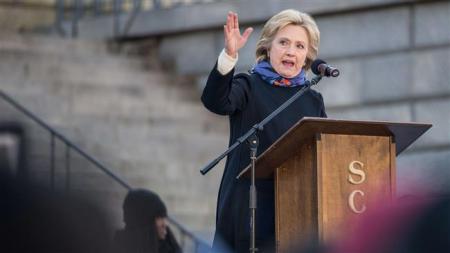 Hillary Clinton’s recent comments on the 43 students for La Opinión show the media’s failure to judge her pandering rhetoric against her actual, substantive actions. When she states she is indignant about the case, she erases her role in the violence engulfing Mexico. The corporate media allows this, because their pages never print about the US-role in Mexico’s War on Drugs.
Hillary Clinton was Secretary of State from 2009 to 2013. During that time, State Department officials under her direction continued to vet and clear Mexican security forces to receive arms transfers. When she says rhetorically, “If there was something the US could do to help, I would be the first to offer it”, it is the theatre of faux-naivety. She knows quite well that the US could end support for policies militarizing Mexico. It’s just that she is not concerned with human rights if that means demilitarization.
It was under the Clinton State Department that the Merida Initiative continued passed its original 3-year time frame. The Merida Initiative enables the Mexican government to repress dissent, while at the same time increasing Mexican elite dependence on the infusion of US armaments. She has called for more of this Plan Colombia-style policy in the future, which means that under a Clinton presidency we can expect more violence throughout Central America.
So, when Clinton exclaims that she is indignant about the Mexican government’s role in covering up the Ayotzinapa case, it belies the fact that she would support (and possibly ramp up) policies that enable the Mexican government to do exactly what she says is a “violation of the law”. The evidence is quite clear on this point, and reported by countless others, like Dawn Paley, Greg Grandin, and Jesse Franzblau. The fact that the corporate media has ignored the record is typical. Clinton’s pandering hypocrisy, typical as well.
Sadly, Clinton is using the tragedy of the 43 to justify and continue policies that brought it about. That is why I am indignant. That is why we should all be indignant.
Venezuelan Parliament Goes on Offensive to Oust Maduro
By Lucas Koerner | Venezuelanalysis | April 21, 2016
Caracas – Venezuela’s opposition-controlled legislature passed a constitutional amendment in first discussion this Wednesday. If approved by popular referendum, the reform will cut short the terms of mayors, governors, and even the current president, triggering presidential elections later this year.
The proposed amendment seeks to modify articles 160, 174, 230, and 233 of the constitution, reducing gubernatorial, mayoral, and presidential terms from six to four years and prohibiting more than one consecutive reelection.
Supporters are billing the reform as a check on executive powers, but detractors have derided it as a ruse to force the country’s current leftist president from office before his term is up.
Controversially, the bill’s authors propose that the amendment would not only affect future elected terms, but retroactively be applied to Venezuelan President Nicolas Maduro’s current 2013-2019 term in office. The approved reform would see Maduro’s presidency come to an end on January 10, 2017.
The proposal is now awaiting final approval by the National Assembly, which would trigger a popular vote on the reforms within 30 days.
In line with the country’s constitution, all amendments to the Magna Carta must first be approved by a nation-wide referendum before coming into effect.
If the Venezuelan electorate approves the reform, the legislation would force presidential elections to choose Maduro’s successor before December 11th this year.
The amendment would also alter the transition procedure in the event that the president is recalled, impeached, or resigns, naming the National Assembly president and not the vice-president as president in the interim period. In such a situation, Venezuela would see veteran right-wing opposition leader Henry Ramos Allup take the reins over the country.
The amendment has however been met with sharp criticism by members of the minority socialist parliamentary bloc, who denounced the measure as unconstitutional.
“[The proposed amendment] violates articles 340, 341, and 342 of the constitution, according to which, an amendment is only a simple modification of one or various articles without altering the spirit of the document,” declared socialist party (PSUV) legislator Edwin Rojas.
“Amendments are not designed to reduce or revoke an elected mandate because the recall referendum already exists for that purpose,” he added, describing the move as a thinly veiled attempt to oust the country’s democratically-elected leftist president.
Recall Referendum
The pro-Maduro minority bloc also took aim at the Organic Referendum Law that was approved in second discussion on Wednesday.
According to its backers, the legislation seeks to streamline the process for convening recall referenda, shortening the time necessary for the procedure from eight months to five.
The right-wing parliamentary majority has accused the National Electoral Council (CNE) of obstructing its efforts to convene a recall referendum against President Maduro by allegedly stalling in turning over the official sheets for signature collection.
However, members of the leftist parliamentary coalition likewise condemned the proposed law as unconstitutional, as well as an attempt to override the country’s legally recognised electoral monitoring body, the CNE (National Electoral Council).
“The Referendum Law is an initiative of the opposition that is full of vices given that the Venezuelan Constitution clearly establishes that the electoral arena is the exclusive responsibility of the electoral authority [CNE],” argued the young PSUV lawmaker Jorge Perez.
Constitutional scholars have also raised doubts over whether the opposition-controlled chamber can pass the legislation given that the Venezuelan Constitution specifies that organic laws must be approved by a two-thirds super majority.
“We should realize the foolishness of the powerless opposition majority in the National Assembly promoting a law that it won’t be able to approve unless it miraculously convinces three Chavista legislators in order to reach the 112 required votes,” writes constitutional lawyer Jesus Silva on Aporrea.
If the law is approved without three-fourths backing, it will remain merely “symbolic” only to be subsequently struck down by the Supreme Court, he continued.
Although the rightwing Roundtable of Democratic Unity (MUD) coalition initially gained the 112 seats needed for a super-majority, three of their lawmakers and one Chavista were temporarily suspended following reports of vote-rigging.
Parliamentary Bloc Launches Offensive
Together the amendment and the recall referendum form part of a “roadmap” for ousting President Maduro announced by right-wing MUD coalition in March.
The simultaneous set of strategies also includes plans for street mobilizations to demand the resignation of the leftist president as well as a constituent assembly to rewrite the 1999 Constitution.
Critics have nevertheless held up the plan as an indication of the opposition’s sharp internal divisions, evidencing their failure to unite around a single strategy.
US Sends Nobody to Ecuador, Palestine Sends 19 Rescuers
teleSUR | April 21, 2016
Latin America far surpasses any region in sending humanitarian aid and rescue experts to Ecuador for earthquake relief, with Venezuela sending almost a third of all rescue specialists and Palestine sending 19—19 more than the United States.
Palestine is the only country outside of Europe and Latin America that sent rescue experts to Ecuador, though Russia sent 30 tons of humanitarian aid, and China sent a satellite and a 911 system, mobile hospitals and US$100,000 to the Ecuadorean Red Cross.
Latin America sent a total of 702 rescuers, with even impoverished and violence-ridden Honduras sending a rescuer. Cuba sent the most after Ecuador’s neighboring countries and Mexico, followed by left-wing Bolivia.
Europe also sent almost 200 rescuers, some collectively with most of the rest from France and Spain.
Though U.S. President Barack Obama told Ecuador’s Rafael Correa that he would do whatever possible to help, the most up-to-date list from Tuesday night does not include rescuers from the United States. USAID, however, said it will coordinate with the United Nations disaster team and send US$100,000 for “critical supplies.”
Correa said Tuesday that South America should have its own Secretary of Natural Disasters, since no one country could possibly have enough resources to mobilize in such large-scale emergencies. Ecuador is one of the smallest countries on the continent, with a population barely above 16 million. It could only send 18 trained rescuers to affected areas, compared to Venezuela’s 212. Brazil, South America’s largest country, sent no rescue workers, and Argentina, the second largest, sent five.
Mexican President Announces Move Toward Legalizing Marijuana
teleSUR | April 19, 2016
President Peña Nieto opened Tuesday´s session of the U.N. Drug Policy Summit by announcing a move towards legalizing marijuana.
Mexican President Enrique Peña Nieto started off the special session of the U.N. Drug Policy Summit by announcing a stark policy change: the need to move towards legalizing marijuana for medical and scientific purposes. Even though he had previously been a vocal opponent of drug legalization, he now has moved toward legalization.
Stating that Mexico has paid a high price for its problems with drug trafficking, he recognized the limitations of the prohibitionist paradigm. Citing the suffering, loss of life and violence as a result of this phenomenon, he said that drug trafficking is still one of the most profitable activities of organized crime in Mexico.
He further stressed the need for greater collaboration between U.N. agencies in order to address all aspects of the global drug problem. Peña Nieto also addressed the need to look at social harms related to the illicit drug market and finding solutions through alternative education and other policies that could promote social cohesion.
The president said he plans to hold an event on Thursday in order to discuss this drug policy change.
Is US-Funded Destabilization in Latin America Now Paying Off?
By Francisco Dominguez – teleSUR – April 14, 2016
Most progressive governments in Latin America find themselves under intense attack in what is evidently a well synchronized and well financed continental plan of destabilization.
Riots, street demonstrations, anti-corruption campaigns, protests about the domestic negative impact of the world economic crisis, general strikes, impeachment efforts, economic sabotage, and the like, have become the battle horses on which oligarchic forces in cahoots with Washington are riding to carry out “regime change.”
So far, conservative forces in Latin America have been successful in overthrowing President Manuel Zelaya in Honduras in 2009 and President Fernando Lugo in 2012 in Paraguay. Both presidents were ousted by oligarchic parliamentary majorities with mass support from middle class “civic associations”, in complicity with the judiciary, with the latter providing a veneer of legality.
The preconditions for “regime change” take, in some cases, years of careful preparation. This normally involves intoxicating media campaigns of demonization aimed to exacerbate political polarization to the maximum, through the instilling of fear, the staging of aggressive and sometimes violent, middle class mobilizations, the activating of many associations of civil society, and the setting up of, sometimes hundreds, of externally funded NGOs.
The aim is to question the legitimacy of the “target government” which usually involves the systematic discrediting of existing political institutions so as to foster chaos as the most conducive context for “regime change”. This strategy has been “theorized” in manuals that are mass-produced and get heavily promoted free of charge by establishment outfits.(1)
Despite the fastidiousness with which Washington and domestic perpetrators seek to enshrine their efforts at “regime change” in any one nation with the veil of legality, constitutionality, democracy promotion, regional autonomy, and virtuous legitimacy, always a powerful media apparatus is activated the world over, unleashing a barrage of negative reporting and demonization of the “target government” with one overriding message: the solution to created crisis is the ousting of the government.
The favorite demonization is to label the “target government” as a totalitarian dictatorship or in the process of becoming so, unless stopped. This is coupled with regular official condemnatory statements of the “target government” from the U.S. State Dept. and a barrage of U.S. official bodies.
In this “regime change” narrative, the ousting of the target government, being the cause of “civil society’s rebellion”, is fully justified. Thus for example the highly illustrative New York Times editorial of April13, 2002, on occasion of the brief ousting of Hugo Chavez: “Venezuelan democracy is no longer threatened by a would-be dictator.”
The NYT explained that Chavez had been ousted “after the military intervened and handed power to a respected business leader.” The key, therefore, is to portray the “ruler” of the target government as a threat to democratic civilization, thus the NYT editorial justifies the 2002 coup in Venezuela because Chavez “battled the media and alienated virtually every constituency from middle-class professionals, academics and business leaders to union members and the Roman Catholic Church.(2)
So, 21st century “regime change”, different from the more traditional 20th century U.S.-orchestrated coup d’état, involves an intense “battle for hearts and minds”, an essential component of the strategy.(3) Thus, huge financial, political and cultural resources are mobilized to bring about hegemony for “regime change” in society and in all state and civil society institutions, going as far, in some cases, as even co-opting sections of the downtrodden. Most of this is “facilitated” with generous NED and USAID grants awarded over many years.
Faced with its own steady decline and the rise of radical governments in the post-Soviet era, the U.S. seeks to destabilize and oust governments through “color revolutions” as in Georgia, 2003 and the Ukraine, 2004 and 2014. Consequently the U.S. has substantially reorganized its architecture for intervention with the CIA becoming a mere appendix but with USAID and the National Endowment for Democracy and their many associated bodies taking center stage and receiving the lion’s share of the resources. The modality may have changed but U.S. foreign policy remains pretty much what it was: to remove governments it does not like. U.S. State Dept. and USAID budget is bigger than the GPD of many states, in 2016 it was US$50.3 billion.
Among the key U.S. institutions involved in “regime change” is the U.S. State Department, the body with the biggest authority, but there is also the United States Southern Command, the Congress and Senate Foreign Affairs Committees, and the CIA. Then further down the food chain, there are USAID, NED, Office for Transition Initiatives, American Center for International Labor Solidarity and American Institute for Free Labor Development, among the most important ones.
They work closely together and in the pursuance of the same aims, with the International Republican Institute, chaired by John McCain of CHECK; the National Democratic Institute, chaired by Madeline Albright; Transparency International; and Centre for International Private Enterprise. They all channel huge sums to support civil (and when possible) military subversion to create the conditions for “regime change”. They also channel huge sums to fund “civil society” associations, political parties, media outfits, NGOs, professional bodies, trades unions, think tanks, business, student groups and so forth.(4)
These institutions are the field commanders that coordinate the national detachments in every target country around a regional perspective so as to maximize the results of every push for “regime change” in any individual Latin American nation. We are increasingly seeing former right-wing Latin American presidents acting jointly to contribute to the destabilization of Bolivarian Venezuela, for instance.
Additionally there is a raft of “private” or “independent” bodies concerned chiefly with Latin America, the most important of which are Inter-American Press Association; Fundacion para el Analisis y los Estudios Sociales – led by Jose Maria Aznar; the Instituto Prensa y Sociedad; hundreds of Think Tanks; and possibly thousands of NGOs that share the “regime change” aim but that do it from a specialist angle. To all of this architecture of U.S. intervention, the overwhelming majority of the world corporate media play a decisive role, making any U.S. led intervention, a lethal political threat to the survival of any “target government”.
Most progressive governments in Latin America have been or are subjected to systematic levels of traumatic and deliberately created social, economic and political chaos, politics and culture, which in many cases it can go on for years. In Cuba for five decades, in Nicaragua (on and off) nearly four decades and in Venezuela for 17 years thus far, with no end in sight.
Venezuela’s Bolivarian government is currently in the crosshairs of U.S. destabilization plans and “regime change” efforts through an economic war that has the Bolivarian process on the ropes. In Argentina, three years of an intense dirty war against Cristina Fernandez’s government, aspects of which had sinister overtones, paid off when at the November 2015 presidential election, the Right’s candidate, Mauricio Macri, won the election by a small margin of 1 percent. In Ecuador, a police mutiny in September 2010, obviously instigated from abroad and with huge U.S. support, nearly succeeded in ousting the government with with President Rafael Correa miraculously escaping with life.
The destabilization against Ecuador continues with the “revolt” of civil society and very violent street protests. And in Brazil, through a very intense and thoroughly intoxicating media campaign, a “regime change” push seeking to oust the democratically elected and legitimate president Dilma Rousseff is underway, as we write it is not clear whether the effort to oust Dilma will be successful or not.
By substantially reducing export revenues that fund progressive social programs, the persistent world economic crisis significantly helps the “regime change” efforts by the U.S. and its allies. It may be just coincidence but the U.S. ambassador in Paraguay when elected president Fernando Lugo was ousted by a right-wing parliamentary coup, was Liliana Ayalde. The current U.S. ambassador in Brazil, where a right-wing parliamentary coup against elected president Dilma Rousseff is in progress, is Liliana Ayalde.
Bolivar once said that the United States appears to be destined by Providence to plague America with misery in the name of liberty. Exactly, through the NED, USAID and others, the United States must stop destabilizing elected governments in the name of “democracy,” “good governance” and “national security.”
Francisco Dominguez is a senior lecturer at Middlesex University, where he is head of the Centre for Brazilian and Latin American Studies.
(1) See Gene Sharp, “From Dictatorship to Democracy,” Serpent’s Tail, 2011, first published in 2002.
(2) “Hugo Chavez Departs,” New York Times, April 13th, 2002
(3) The overthrow of Honduras President Manuel Zelaya, in June 2009, has led to the book with the very suggestive title “The Good Coup” (Mario Caceres di Iorio, CCB, Canada, 2010).
(4) See “Evolution of USAID and NED in Dominguez,” Lievesley and Ludlam, Right-Wing Politics in the New Latin America, Zed, 2011.
Rousseff loses impeachment vote in lower house of Parliament
The BRICS Post | April 18, 2016
The lower house of Brazil’s parliament on Sunday supported the impeachment of President Dilma Rousseff, with those seeking her ouster securing the support of two-thirds of votes.
The divide among the Brazilian people was demonstrated on Sunday by thousands of pro- and anti-impeachment protesters outside the Congress building where the vote was taking place.
As the votes trickled in favouring the impeachment bid, the ruling Workers Party conceded defeat.
“The fight is now in the courts, the street and the senate. We lost because the coup-mongers were stronger,” Jose Guimarães, the leader of the Workers party in the lower house, said.
While she has not been accused of corruption, the popularity of Rousseff’s government has plummeted owing to a graft scandal at state oil company Petrobras and the investment strike targeting Rousseff’s downfall.
The issue of impeachment will now be put forth in the upper house of parliament for the consideration of the senate. If over 50 per cent of senators support it, Rousseff will leave her post for 180 days, during which Brazilian lawmakers will consider her case.
During that period, the country will be led by Vice President Michel Temer. If senators disagree with the arguments of presidential impeachment initiators, Rousseff will return to her post. If Rousseff is found guilty, Temer will remain acting president until the 2018 elections.
Rousseff has accused her critics of mounting a coup. She released a speech on social media over the weekend stressing that “the sovereign will of the people is at stake. Social achievements and the rights of Brazilians are at stake.”
A Guardian report listed the corruption-tainted deputies who voted for the impeachment bid on Sunday condemning the Brazilian President.
Business lobbies have openly thrown their weight behind the ouster of Rousseff, as they look to Vice President and centre-right leader Temer to restore business confidence and growth.
According to Brazilian newspaper O Globo, Temer, watched the impeachment proceedings alongwith bigwigs of his party, including Senator Romero Juca, with whom he is reported to have been planning his next move.
Rousseff watched the vote from the Alvorada Palace, the official presidential residence, together with former President Luiz Inacio Lula da Silva and other allies.
Featured Video
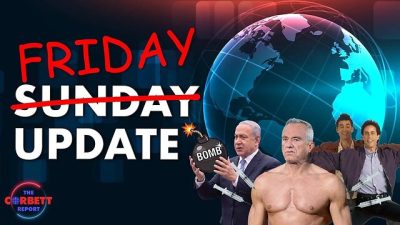
Racist Seinfeld Dances for Joy as Bibi Unveils His New Map
or go to
Aletho News Archives – Video-Images
TV Drama Review
Japanese drama projects Japan’s wartime atrocities onto Chinese characters

Global Times | October 25, 2026
By portraying Chinese characters as perpetrators of ruthless violence while casting Japanese Self-Defense Forces (SDF) intelligence operatives as defenders, the season 2 of the Japanese drama Vivant has recently drawn criticism from Chinese netizens, who argue that its depiction turns historical reality on its head while ignoring Japan’s wartime atrocities.
The TBS drama series – a spy suspense story in which an alleged unofficial intelligence unit of the SDF operates across the globe — has attracted a passionate fanbase. Its currently airing season 2 opened with a household rating of 18.8 percent, the highest for a TV drama this year, according toa commentary article by Japanese media Toyo Keizai.
What draws attention is the portrayal of the enemies in the series, the article noted. Scenes in which the Chinese organization subjects kidnapped members of the SDF unit to brutal torture are repeated with unrelenting intensity.
It is rare for Japanese TV dramas to explicitly portray a real-life country as the enemy, the article noted.
Japanese Prime Minister Sanae Takaichi also made a reference to the drama, saying that she has been recording Vivant and hopes to binge-watch it over the year-end and New Year holidays, according to Japanese media outlets.
China’s CCTV News report on Sunday revealed that the drama features scenes in which Chinese personnel cut off the fingers of and stab Japanese intelligence operatives in the abdomen. Such acts bear striking similarities to the torture inflicted on Chinese nationals by invading Japanese troops during the World War II.
The drama distorts the truth by attributing these atrocities to modern Chinese characters. Beneath the surface, it subtly glorifies Japan’s cross-border overseas operations, blurs the functional boundaries of the SDF and implicitly promotes an expansionist narrative, per CCTV News. … continue
Blog Roll
 Aletho News
- EU facing trillion-euro debt hole while seeking more cash for Kiev
- How US, Europe, Persian Gulf states exhausted missile stockpiles, splurged billions to defend Israel
- Up in arms… Koreans reject U.S. empire’s plan to make South Korea the next Ukraine
- Iran, Turkey, Pakistan, Saudi Arabia could advance region-led security framework in Tehran: FM spox
- Netizens condemn Japanese drama for projecting Japan’s wartime atrocities onto Chinese characters
- Racist Seinfeld Dances for Joy as Bibi Unveils His New Map
- A West Bank War for Netanyahu’s Election Campaign, Could It Backfire?
- Yemen denounces European Parliament’s ‘hypocritical’ push to blacklist Ansarullah
- Qalibaf: UAE’s UN bid aims to ‘clear the runway’ for ‘Greater Israel’, whitewash genocide
- Pakistan reopens Iran border after boosting security: Report
- If Americans Knew
- Israel punishes Palestinian prisoners with solitary confinement for making a cake
- US midterms: Where do candidates in key Senate races stand on Israel, Gaza, and Iran?
- Israeli forces demolish Hebron homes, displace thousands of Palestinians as raids expand
- Their Son Died in Israeli Prison. No Answers. No Body
- Biden’s Israel Catastrophe
- Why Israel’s latest assault on Hebron is so significant for the West Bank
- Israel Used “Where’s Daddy?” AI to Relentlessly Murder Palestinian Journalists and Their Families in Their Homes from October to December 2023
- DAILY UPDATE: Latest essential news on Palestine, Israel, & region
- Netanyahu Says Israel Must Prepare for Banking Sanctions, Floats Crypto as a Possible Bypass
- Latest updates from Israeli assault on West Bank
- No Tricks Zone
- Sudden Stratospheric Warming, Powerful El Niño Combination May Lead To Extreme Europe Cold, Energy Crisis!
- Two New Studies Find Thwaites Glacier Melt Cannot Be Driven By Human Activity Or A Warming Ocean
- E-Cars Reduce CO2 Emissions By Only 41% Compared To Internal Combustion Engine Vehicles
- Predictions Made By Renowned Climate Professor Over Past Decades Have Been Proven To Be Poor
- New Study Suggests Large Regions Of The Pacific Ocean Have Been Cooling For The Last 80 Years
- Germany’s Green Energy Debacle: High Energy Costs Force Kahla Porzellan to Close After 182 Years!
- New Study: 50 Years Of The Most Aggressive ‘Net Zero’ Policies Can Only Affect The Global Climate By 0.03°C
- US September “Heat” Was No Record…Many Records Set Decades Ago
- Latest European Green Energy Debacle; Portugal’s Largest Flagship Solar Park Insolvent!
- Green Energy Debacle: German Expert Professor Fritz Vahrenholt Warns Of Severe Economic And Social Consequences

