Ecuador. The CIA agent known as Swat, plus others

By Nil NIKANDROV | Strategic Culture Foundation | 22.06.2016
A mural hanging inside the Ecuadorian parliament building by the famous Ecuadorian painter Oswaldo Guayasamín, titled «Imagen de la Patria», includes an image of a grinning skull in a helmet emblazoned with the acronym «CIA». When the mural was first unveiled in August 1988, Guayasamín explained that this image epitomized all the foreign threats to his native country. And for almost three decades this «CIA skull» has gazed out at the deputies in parliament with a sinister grin.
The CIA’s fingerprints are visible in dozens of incidents in Ecuador in which politicians who threatened US foreign policy were eliminated. For example, in May 1981 the airplane carrying President Jaime Roldós crashed in the province of Loja, a mountainous region of Ecuador. President Reagan had had a hostile relationship with the Ecuadorians: Roldós had refused the invitation to his inauguration and maintained friendly relations with the Sandinistas in Nicaragua and the Cuban government. He also demonstrated his solidarity with the Revolutionary Democratic Front in El Salvador, which opposed the military dictatorship. Roldós was planning to reorganize Ecuador’s oil industry, jeopardizing the interests of transnational oil corporations. Roldós was discarded because of a «whole array of grievances».
Once Rafael Correa took office, the CIA stepped up its work in Ecuador. In a recent interview Correa mentioned that in the early days of his administration a certain American diplomat requested a meeting, during which he introduced himself as «the official representative of the CIA» in Ecuador. That individual also emphasized that he acted independently of the US ambassador. As Correa noted, at that time «the Americans still thought they could take control of our government».
The impetus for Correa’s most recent revelatory statements about the subversive activities of US intelligence in his country was an incident involving a CIA agent codenamed «Swat».
From 1984 to 2007, a certain Leila Hadad Pérez, a woman of Lebanese descent, operated in Quito as an illegal CIA agent. At first she used a beauty salon as her front, and later a shop that sold carpets. Her real name was Sania Elias Zaitoum El Mayek. Swat was primarily interested in high-ranking officers in the armed forces and police. Their collaboration was underwritten with monthly «gratuities» paid out in dollars – equal to many times their official salaries – as well as the promise of a steady climb up their career ladders. Thanks to Swat’s efforts, many key posts in Ecuador’s intelligence services and armed forces were filled with CIA agents.
One of their main goals was to hinder Ecuador’s involvement in ventures aimed at integrating the continent and also to thwart any strengthened alliance with Venezuela. A campaign was also waged to compromise leaders who were friendly to Ecuador – such as Hugo Chávez, Inácio Lula da Silva, Néstor Kirchner, Evo Morales, and others.
Swat’s network of agents did all it could to prevent the closure of the US military base in Manta. Correa’s 2006 election campaign made no secret of what he planned to do about the US military presence there. Virtually every CIA field agent in the country was mobilized in response, as well as US military intelligence, which included politicians, police officers, military personnel, journalists, trade union and student activists, and NGOs. But their efforts failed. As Correa noted, the methods employed by Swat were «clumsy», and that «it was obvious she was the brains of the CIA in Ecuador». As a result, the Ecuadorian president decided to expel Swat from the country. In July 2009, the US military base in Manta was closed.
US Ambassador Todd Chapman tried to deny the existence of ties between the CIA and Ecuadorian politicians. With some irony, President Correa advised the American ambassador to learn «a little more about how these services work, if he doesn’t know».
Rafael Correa is confident that his country is still in danger of a coup d’état. Some analysts believe that in the end, the CIA’s conspiracy in Ecuador will be led by Mario Pazmino, the former director of Ecuador’s intelligence services. Correa has accused him of concealing strategically vital information regarding the strike that was launched from across the Colombian border on an illegal FARC camp located inside Ecuador. From beginning to end, that attack was planned by the CIA and US military intelligence.
As a result of these disclosures, Ecuador’s compromised intelligence and counterintelligence agencies have been subjected to reforms, a National Intelligence Secretariat has been established, new staff have been recruited, and new, specialized equipment has been installed. All this will make it possible to effectively monitor the organizations that answer to the CIA, such as USAID and the National Endowment for Democracy (NED). It was quickly discovered that Karen Hollihan, an Ecuadorian of German-American descent, had been dispatched to restore the agent network in Ecuador. A man named Fernando Villavicencio worked as an aide to Hollihan. He claims to be a petroleum expert, but his primary activity was denigrating President Correa. Villavicencio was sentenced to 18 months in prison for defamation, but he escaped and now uses the Internet to disseminate articles written by the CIA about corruption in Correa’s government. Another active contact of Hollihan’s is named César Ricaurte, who heads the non-profit organization Fundamedios, which monitors «threats to media freedom» in Ecuador, helping critics of the regime become involved in the CIA’s campaign of exposés.
The NGO Civic Participation (Participación Ciudadana), which specializes in «investigative journalism» authored by the CIA, has received $265,000 just from the NED in the last two years to cover their «current expenses».
The Ecuadorian Mario Ramos, the director of the Andean Center for Strategic Studies, who analyzes US operations against Latin American governments that refuse to toe Washington’s line, noted on TeleSUR that in its subversive activities the CIA sizes up each country before choosing «an appropriate destabilization strategy: economic war, media or psychological warfare, and so on».
Ramos believes that in order to counter such subversive operations, Latin Americans must establish «an integrated defense strategy» that will span the orbits of diplomacy, the military, and finance, and must focus the efforts of their countries’ intelligence services on this task.
The exposure of the CIA’s subversive operations in Ecuador, the parade of TV close-ups of the perpetrators, and the analysis of the catastrophic repercussions for the country resulting from these disloyal activities – this is all proof that Ecuador’s political leaders and security services have reached the necessary conclusions.
End of 50 Year Colombia War at Hand, as Govt, FARC to Sign Peace Deal on July 20
teleSUR | June 21, 2016
Any accord reached by the negotiators in Cuba will need to be confirmed by a popular consultation.
The Colombian government and the Revolutionary Armed Forces of Colombia (FARC) are set to sign a final peace agreement on July 20th, which could put an end to more than 50 years of conflict that has affected more than six million people.
“I think that by July 20 we will have been able to close negotiations in Havana and from there a new era for the country will come,” Colombian President Jose Manuel Santos stated after a Cabinet meeting Monday.
The government has been in talks in Cuba with the FARC since late 2012. They were preceded by two years of secret talks.
Thus far, the two sides have reached accords on more than half a dozen topics including agrarian reform, political participation of former rebels, curbing production and trafficking of illicit substances, and the rights of victims and transitional justice.
Despite failing to reach a self-imposed deadline for signing a deal in March, Colombia’s president met on Monday with lawmakers and public officials to discuss the creation of regional and local peace councils that would oversee the post-conflict era.
“This peace is for all Colombians, and all Colombians should participate in its consolidation and construction,” Santos told the media on Monday
The Santos administration has said that an end to the conflict could add two percentage points to annual GDP growth and triple the amount of foreign direct investment into Colombia’s economy.
The final peace accord, which must be confirmed by a popular vote is waiting approval from the country’s constitutional court. On Monday, Santos called on the country’s highest court to approve the public vote.
“Hopefully the Constitutional Court will approve the plebiscite soon and from there we will have another very important challenge,” the president said.
Indigenous Leader Killed in Land Dispute in Brazil
By Aline C. Piva | Council on Hemispheric Affairs | June 20, 2016
On June 14, 2016 approximately 70 armed men approached a small group of Guaraní-Kaiowá families and, after terrorizing them by burning their belongings, opened fire, killing 26-year-old indigenous leader Clodiodi Aquileu Rodrigues de Souza Guaraní-Kaiowá. Among those shot, at least 10 other people were injured, including a twelve-year-old boy who was shot in the stomach. The Instituto Socioambiental (Socio-environmental Institute; ISA), a non-profit organization that advocates for human rights observance among the indigenous people, first reported the case, writing that indigenous leaders were taken hostage and that others are missing.[1] The attack happened within a disputed area in the traditional indigenous territory of Tekohá Te’ýikue, located on the indigenous reserve of Dourados-Amambaipegua I. This land is within the municipality of Caarapó, located in the central Brazilian State of Mato Grosso do Sul, a region known for violent conflict between indigenous groups and land owners.
On May 12, as a result of over 30 years of struggle and an intense mobilization of members of the Guaraní and Kaiowá nations in Brasília, the Brazilian government recognized a local parcel of land as an indigenous territory.[2] Although throughout her presidency Dilma Rousseff had done little to advance indigenous rights and to help in reclaiming their traditional lands, this indifference eventually started to change a couple of months before Congress voted on her impeachment process. Rousseff created the National Council for Indigenous Policy and confirmed the demarcation of three indigenous lands. [During] that period, the Ministry of Justice declared five major areas as traditional indigenous territory.[3] It is important to note that these demarcations are now at risk, since Brazilian interim president Michel Temer has stated that he might revise such indigenous demarcations in the country.[4]
Missionaries and indigenous leaders have pointed out that, although the violence against indigenous nations in the region is not a recent development, the attacks have been escalating. According to the Special Indigenous Sanitary District of Mato Grosso do Sul (DSEI/MS), a total of 475 cases of indigenous homicides were recorded in the region from 2001 to 2015. Last year alone, there were 36 murders (34 men and two women), with most of the indigenous people killed being between 15 and 29 years old. In 2014, the DSEI-MS registered 619 cases of physical violence against members of the Guaraní and Kaiowá nations.[5] Large-scale landowners often perpetrate these attacks with the complicity of local authorities so as to evict indigenous communities from their traditional lands illegally and violently with complete disregard for their constitutional rights.
According to Eliel Benites, a professor at the Federal University of Grande Dourados (UFGD) who lives in the indigenous village Te’ýikue, the Kaiowá and Guaraní families are very fearful: “All farmers in the region were together to carry out the attack. We are living a war,” stated Benites.[6] The Fundação Nacional do Índio (National Indigenous Foundation, Funai, responsible for the demarcation of indigenous territories) has started investigating the June 14 attack, but no one has been charged yet. A delegation of members of the Human Rights Committee of the Brazilian Lower House traveled to the site of the attack on Wednesday, June 16, to check closely the situation of the indigenous people in the region.[7]
Diogenes Cariaga, an anthropologist at the Federal University of Santa Catarina (UFSC), reiterates that the conflict situation in the region was already being planned and reveals that the Rural Union of Caarapó (the city where the indigenous land is located) has been encouraging farmers to act violently against indigenous families. On May 18, 2016 shortly after the publication of the report that classified the region of Dourados-Amambaipegua I as an indigenous reserve, the Rural Union Council mobilized the farmers in the region to discuss measures against the demarcation. For Cariaga, the State’s lack of response to the violence against indigenous communities allowed landowners to create and finance militias to attack them.[8]
Over six thousand indigenous families of the Guaraní and Kaiowá nations live in the Caarapó region. As explained by Cariaga, “These families were taken forcibly into the reserve and for many years were forced to stay there.” He points out that since the 1980s, the Guarani and Kaiowá in the region have been fighting to repossess their traditional lands. The anthropologist also recalls that the territories within the boundaries of Dourados-Amambaipegua I were part of a Conduct Adjustment Commitment (CAC) signed between Funai and the Federal Public Ministry, requiring the Funai to publish studies of the areas claimed by indigenous people so that they could be ruled as indigenous reserves.[9]
Although the Funai has been prioritizing indigenous land demarcations, the negligence of the Brazilian state to conclude this process to investigate and prosecute the crimes against these communities has contributed to the escalation of violence in the area. Land disputes in the central region of Brazil have led to serious attacks against constitutional and human rights of the indigenous communities, which has amounted to a systematic genocide against Brazilian native peoples.
[1] “Ataque a Comunidade Guarani Kaiowa (MS) Deixa Um Indígena Morto E Pelo Menos Dez Feridos.” ISA. 2016. Accessed June 15, 2016. https://www.socioambiental.org/pt-br/noticias-socioambientais/ataque-a-comunidade-guarani-kaiowa-ms-deixa-um-indigena-morto-e-ate-dez-feridos.
[2] “Após Mobilização De Guarani E Kaiowa, Funai Reconhece TI Dourados-Amambai Pegua I (MS).” Articulação Dos Povos Indígenas Do Brasil. 2016. Accessed June 15, 2016. https://mobilizacaonacionalindigena.wordpress.com/2016/05/12/apos-mobilizacao-de-guarani-e-kaiowa-funai-reconhece-ti-dourados-amambai-pegua-i-ms/.
[3] “Saiba quais foram os últimos atos de Dilma antes de ela ser afastada”. A Tal da Política. Acessed June 16, 2016. http://ataldapolitica.tk/index.php/2016/05/12/saiba-quais-foram-os-ultimos-atos-de-dilma-antes-de-ser-afastada-executivo/
[4] “Temer Diz a Ruralistas Que Vai Revisar Desapropriações E Demarcações.” O Globo. 2016. Accessed June 16, 2016. http://oglobo.globo.com/brasil/temer-diz-ruralistas-que-vai-revisar-desapropriacoes-demarcacoes-19202640.
[5] “MANIFESTO DE REPÚDIO AO MASSACRE DE CAARAPÓ/MS CONTRA O POVO GUARANI E KAIOWÁ.” Google Docs. Accessed June 15, 2016. https://docs.google.com/forms/d/1hJX2gIKH02gC2d8qCgK7rXVGJ9wE1O-J92UEtXUM7Y4/viewform?c=0.
[6] “Ataque a Comunidade Guarani Kaiowa (MS) Deixa Um Indígena Morto E Pelo Menos Dez Feridos.” ISA. 2016. Accessed June 15, 2016. https://www.socioambiental.org/pt-br/noticias-socioambientais/ataque-a-comunidade-guarani-kaiowa-ms-deixa-um-indigena-morto-e-ate-dez-feridos.
[7] “Comissão De Direitos Humanos: “Os Tiros Foram Para Matar; Atingiram Somente Regiões Vitais” – Viomundo – O Que Você Não Vê Na Mídia.” Viomundo O Que Voc No v Na Mdia Comisso De Direitos Humanos Os Tiros Foram Para Matar Atingiram Somente Regies Vitais. 2016. Accessed June 20, 2016. http://www.viomundo.com.br/denuncias/comissao-de-direitos-humanos-os-tiros-foram-para-matar-atingiram-somente-regioes-vitais.html.
[8] “Ataque a Comunidade Guarani Kaiowa (MS) Deixa Um Indígena Morto E Pelo Menos Dez Feridos.” ISA. 2016. Accessed June 15, 2016. https://www.socioambiental.org/pt-br/noticias-socioambientais/ataque-a-comunidade-guarani-kaiowa-ms-deixa-um-indigena-morto-e-ate-dez-feridos.
[9] ibid
Argentina Expels TeleSUR and RT: Double Standards When it Comes to Press Freedom
By Zachary Cohen | Council on Hemispheric Affairs | June 17, 2016
On June 8, the Argentine government notified the Latin American television network teleSUR that their services would be shut off in the country within 15 days.[1] TeleSUR, the brainchild of Hugo Chávez, is an alternative left-wing news organization founded through the cooperation of seven left leaning Latin American governments including Venezuela, Ecuador and Cuba. It gives a voice to the popular sectors of the hemisphere, covering news that often calls into question some of the right-wing biases of the hegemonic news media and provides information which promotes regional integration in Latin America. Although Argentina cited a “[renewal of] program listings,” as the reason for teleSUR’s dismissal, Patricia Villegas, the president of teleSUR, pointed toward underlying reactions against the left-leaning network, decrying the notice as “censura” (censure).[2][3]
On June 10, the television station RT (also known as Russia Today) received a similar summons. The Russian channel, which has been operating in Argentina for the past two years since a deal was signed between the countries, was told that their suspension from broadcasting would take place in 60 days.[4] RT aims to provide an “international audience with a Russian viewpoint,” and just like teleSUR, emphasizes the importance of alternative, non-hegemonic perspectives.[5]
The blatant censorship of these two opposition voices in Argentina is an alarming violation of hemispheric press freedom, and points to a larger issue at hand: the immense double standards of the mainstream media in its coverage, or rather non-coverage, of this matter. The removal of teleSUR and RT from the Argentine media scene has not elicited much media attention from corporate media news outlets, though the story would most likely be breaking news and inspire outrage were it occurring in a country with a progressive government.
Comprehensive Policy Changes in Argentina
On December 10, 2015, Argentine President Mauricio Macri was sworn in to office, replacing progressive leaning President Cristina Fernandez de Kirchner.[6] Macri’s presidency represents a drastic shift for the country across the board. Within the past six months, Macri has reversed a multitude of Kirchner’s policies and has begun to further advance neoliberal free market policies through the removal of currency controls and the promotion of proposals regarding free trade.[7] In addition to economic changes, Macri’s distinct foreign policy goals have been described by teleSUR as a “180-degree turn from previous administrations.”[8] He has made efforts to improve relations with the United States, while distancing Argentina from the ledger of left and left-leaning governments of Latin America. After his state visit this past March, President Obama noted that Macri’s Argentina has become a “key ally” to the United States, in stark contrast to the rather hostile bilateral relations held during the Kirchner administration.[9] [10]
President Macri’s expulsion of teleSUR represents the continuation of a longer narrative. When Venezuelan President Hugo Chávez celebrated the launch of the Venesat-1 satellite in 2005, he was taking a stand against traditional media, reflecting his commitment to battling U.S. hegemony and building a more Bolivarian and integrated Latin America.[11] At its launch, Argentina was committed to the cause of independence and integration, and was teleSUR’s second largest TV sponsor, with a 20 percent stake in the enterprise; Venezuela remains the largest shareholder, at 51 percent.[12] [13] However, in March, Macri pulled Argentine funding from teleSUR.[14] According to Argentina’s Director of Communications Hermann Lombardi, the decision to withdraw was based on the fact that Argentina’s government was “prohibited from sharing their view.”[15] Although the removal of funding on the basis of distinct ideological differences is understandable, it is inexcusable to remove teleSUR from the mix of television networks operating in the country. Regardless of teleSUR’s association with progressive governments, it should not be automatically excluded from the households of millions simply because of an ideological disagreement between the government and the media markets.
Double Standards in the Media
The troubling double standard of corporate media is explicitly evident in this issue and has serious implications for the role of the United States in Latin America. Mainstream media jumps on the chance to criticize the “Pink Tide” nations, with major critiques often levied toward Venezuela in regards to their shortcomings in the area of press freedoms. These criticisms were exceptionally prominent in 2007, after President Chávez decided not to renew the license for RCTV after they vocally supported the coup against him. [16] [17] For his actions, Chávez was condemned by the United States and the European Union, and received vast media attention. Yet, in the broader picture, the judgments regarding Venezuela’s press freedoms are often exaggerated and simplified, lacking the complexities of a more realistic portrayal of the country’s situation.[18] El Nacional, one of Venezuela’s largest newspapers, continues to provide the opposition viewpoint to President Nicolás Maduro, with open calls for regime change published and printed.[19] Additionally, news station Globovisión has consistently held an independent voice, often speaking out against the government.[20] Nonetheless, the level of disdain that Maduro’s regime receives by the mainstream media, including by papers such as The New York Times, reflects a distinct bias against the left-wing government in discussions on the subject of press freedoms.[21]
The situation in Argentina is very different today from Venezuela in regards to freedom of the press. Through his censure of teleSUR, Macri has preemptively silenced the most vigorous reporting on the human cost of his economic adjustment policies and explicitly revealed his willingness to expel unwanted sources of media to push his own narrative. Yet, there has been little to no international reaction. In fact, at the time of this article’s publication, teleSUR and RT themselves are among the few major news organizations to have written any extensive coverage of the stories since they broke last week. Through its silence, the mainstream media is complicit in Macri’s censure of expression, all while continuing to emphasize and exaggerate Maduro’s actions.
Macri’s newfound friendship with the United States, alongside the willful negligence of issues surrounding censorship in the mainstream media, cannot be considered a coincidence. His commitment to resolving Argentina’s economic woes through U.S.-friendly policies, in addition to his overall right-wing realignment, have fostered a swift transition of Argentina’s international image. Moreover, teleSUR and RT are associated with countries in direct competition, ideologically and economically, with Washington. By undermining the influence of media which stem from left leaning Latin America and anti-U.S. Russia, Macri effectively expands the capacity of anti-left, pro-U.S. media to influence his country. With this purposeful rebranding in mind, it is believable that media in the United States would begin to emphasize the more favorable face of Argentina, while disregarding issues such as censorship.
One of the pillars of COHA’s philosophy is the support of democratic values in their fullest form, which includes supporting freedom of the press. In any country, it is imperative to maintain a diverse set of viewpoints, and for different perspectives to be both treated with dignity and challenged without any fear of suppression. To be complicit in the violation of such freedoms is tantamount to the acceptance of the violations themselves, and COHA will not be silent while others find it appropriate to remain so. COHA urges the Argentine government to reconsider its removal of teleSUR and RT, and to invite, rather than suppress, debate over the economic, political, and social outcomes of the change of course being implemented by the Macri administration.
[1] “Macri Gov’t toTake teleSUR off Argentine TV service in 15 days,” teleSUR, June 8, 2016, accessed June 10, 2016, http://www.telesurtv.net/english/news/Macri-Govt-to-Take-teleSUR-off-Argentine-TV-Service-in-15-Days-20160608-0034.html.
[2] Ibid.
[3] Patricia Villegas, Twitter, June 8, 2016, accessed June 10, 2016, https://twitter.com/pvillegas_tlSUR/status/740569267536596993.
[4] “Argentina to suspend RT from national broadcasting,” RT, June 11, 2016, accessed June 13, 2016. https://www.rt.com/news/346172-argentina-suspends-rt-television/.
[5] “About Us,” RT, accessed June 14, 2016, https://www.rt.com/about-us/.
[6] Ignacio de Reyes, “Change ahead: Mauricio Macri’s visión for Argentina,” BBC, December 10, 2015, accessed June 10, 2016, http://www.bbc.com/news/world-latin-america-34899223.
[7] Ibid.
[8] “Is Argentina Turning into a US Proxy in South America?” teleSUR, June 1, 2016, accessed June 10, 2016, http://www.telesurtv.net/english/news/Is-Argentina-Turning-into-a-US-Proxy-in-South-America-20160601-0028.html.
[9] Martin Torino, “Obama abrió la puerta a Macri para un Tratado de Libre Comercio con Argentina,” Cronista.com, March 16, 2016, accessed June 10, 2016, http://www.cronista.com/economiapolitica/Obama-abrio-la-puerta-a-Macri-para-un-Tratado-de-Libre-Comercio-con-Argentina-20160324-0086.html.
[10] Andrew Trotman, “Argentina files legal proceedings with UN against Obama government,” The Telegraph, August 7, 2014, accessed June 10, 2016, http://www.telegraph.co.uk/finance/financialcrisis/11019875/Argentina-files-legal-proceedings-with-UN-against-Obama-government.html.
[11] https://books.google.com/books?id=d02Do0qmJrMC&dq=telesur+chavez+satellite&source=gbs_navlinks_s
[12] “Argentina pulls out of leftist TV network Telesur,” The Guardian, March 28, 2016, accessed June 10, 2016, https://www.theguardian.com/world/2016/mar/28/argentina-telesur-tv-network-venezuela-hugo-chavez.
[13] “New Latin American Televison Network Telesur Officially Launched,” Democracy NOW, July 26, 2005, accessed June 10, 2016, http://www.democracynow.org/2005/7/26/new_latin_american_television_network_telesur.
[14] “Argentina pulls out of leftist TV network Telesur.”
[15] Ibid.
[16] “Chávez Shuts Down Venezuelan TV Station as Supporters, Opponents Rally: A Debate on the Closing of RCTV,” Democracy NOW, May 31, 2007, accessed June 13, 2016, http://www.democracynow.org/2007/5/31/chavez_shuts_down_venezuelan_tv_station.
[17] Roy Carroll, “Chávez silences critical TV station – and robs the people of their soaps,” The Guardian, May 23, 2007, accessed June 13, 2016, http://www.theguardian.com/media/2007/may/23/venezuela.broadcasting
[18] Joe Emersberger, “Macri Tilts Argentina’s Media Landscape in his Favor,” teleSUR, April 3, 2016, accessed June 14, 2016, http://www.telesurtv.net/english/opinion/Macri-Tilts-Argentinas-Media-Landscape-in-his-Favor-20160403-0033.html
[19] John Otis, “Last critic standing,” Committee to Protect Journalists, February 22, 2016, accessed June 10, 2016, https://cpj.org/blog/2016/02/last-critic-standing-how-el-nacional-defies-challe.php.
[20] https://cpj.org/blog/2016/03/after-venezuelan-elections-globovision-shows-more-.php.
[21] Daniel Lansberg-Rodriguez, “Stealth Censorship in Venezuela,” The New York Times, August 6, 2016, accessed June 10, 2016, http://www.nytimes.com/2014/08/07/opinion/daniel-lansberg-rodriguez-stealth-censorship-in-venezuela.html.
10 Indigenous People Shot, 1 Killed in Brazil
teleSUR – June 15, 2016
Cloudione Souza, a 26-year-old member of the Kaiowa Indigenous community, was shot and killed Tuesday morning during an attack allegedly perpetrated by local landowners and hired henchmen.
Community leaders say the incident began when vehicles started assembling at the location of the community’s territory in the municipality of Caarapo in the state of Mato Grosso do Sul.
The community’s territory is formally recognized as Indigenous land by the Brazilian government.
According to Brasil de Fato, 300 Indigenous people had reclaimed 12,000 acres of land within the area of land demarcated as Indigenous lands, provoking the ire of nearby landowners.
Witnesses said up to 70 armed individuals arrived early Tuesday morning to forcibly expel those occupying the land. They reportedly began burning vehicles and homes before opening fire on those present.
Ten people were wounded, including a 12-year-old boy, AFP reported. The figure is expected to rise as many people fled after the attack and have not reported to the hospital.
In a video recorded by witnesses, the assailants can be heard calling out to those present, using a racial slur to refer to the Indigenous people.
The Indigenous Missionary Council said this was the 25th paramilitary attack on Indigenous people since the 2013 murder of Terena Osiel Gabriel, an Indigenous leader from the community of Buriti.
The council said nearly 400 Indigenous Kaiowa-Guarani people had been killed in land disputes since 2003.
“This is a slow-motion genocide. There is a war against us. We are afraid. They kill our leaders, hide their bodies, intimidate and threaten us,” said community leader Tonico Benites Guarani during a visit to Europe last month.
Bolivia Turns Down Hen Donation by Bill Gates
teleSUR | June 16, 2016
The Bolivian government rejected an offer by U.S. tycoon Bill Gates, who said he would donate 100,000 chickens to reduce poverty in developing countries.
Gates, through the Bill & Melinda Gates Foundation, said he would send 100,000 chickens to twenty countries, among them Bolivia, as a donation through the Heifer International Organization with the purpose of “reducing poverty” and “improving nutrition” of people in the countrysude.
Bolivian Minister of Rural Development and Land, Cesar Cocarico said this announcement was rude. “Unfortunately the view of some people, especially in ‘the empire,’ still see us as beggars,” said the Cocarico.
“He does not know Bolivia’s reality, he thinks we are living 500 years ago, in the middle of the jungle, not knowing how to produce,” said Cocarico. “Respectfully, he should stop talking about Bolivia, and once he knows more, apologize to us.”
According to the Gates foundation, a farmer raising 250 chickens per year could hypothetically make up to US$1,250 dollars.
“It’s pretty clear to me that just about anyone who’s living in extreme poverty is better off if they have chickens,” said Microsoft’s co-founder Gates in a blog. “In fact, if I were in their shoes, that’s what I would do — I would raise chickens.”
“There is no investment that has a similar rentability percentage than to raise chickens,” said Gates in his statement, after presenting the initiative in New York.
Gates says that these animals are easy and inexpensive to raise, empower women, and can help feed children in poor families, “because chickens are small and stay close to home.”
Bolivia’s government, led by President Evo Morales, says the nation already produces 197 million chickens annually, and has the capacity to export 36 million. The country’s economy has almost tripled in size over the last decade, with its GDP per capita going from US$1,200 in 2006 to US$3,119 in 2015.
The International Monetary Fund predicts that Bolivia’s economy will grow by 3.8 percent in 2016, making it the best performing economy in South America.
UN Warns 30 Million Latin Americans May End Up Back in Poverty
teleSUR | June 15, 2016
A new report says governments must continue to make social investments and place focus on marginalized populations.
As many as 30 million people in Latin America, who were recently lifted out of poverty, could go back to being poor, a report from the United Nations Development Programme warned Tuesday.
Thanks to investments in social programs and wealth redistribution policies over the past 15 years, approximately 72 million Latin Americans were lifted out of poverty and a further 94 million moved into the middle class.
However, according to the UNDP, 2015 and 2016 saw a rise in the number of people living in poverty in the region for the first time in decades.
The report, entitled “Multidimensional Progress: Well-Being Beyond Income,” says more than a third of those who left poverty since 2003 are now at risk of becoming poor again.
The UNDP report stressed that the economic slowdown being experienced throughout the region is only one factor.
“Every Latin American generation decides which structural changes to pursue: there are pending citizenship and resilience challenges that will not be solved with economic growth alone,” said George Gray Molina, lead author and UNDP chief economist for Latin America and the Caribbean.
Molina specified that recent achievements were not attributable to free market policies, but rather direct government intervention.
The UNDP is calling on governments to support vulnerable or marginalized groups through social investment and subsidies.
“Right now, on the one hand, we must protect the region’s past achievements, including preventing millions from of people from falling back into poverty; on the other hand, we must also promote inclusive policies and comprehensive strategies for populations suffering from historical discrimination and exclusion,” said United Nations Assistant Secretary-General and UNDP Regional Director for Latin America and the Caribbean Jessica Faieta.
Left-wing governments, such as Ecuador and Bolivia, have pledged to maintain social investment, despite the downturn in the economy.
However, right-wing governments, such Mauricio Macri’s in Argentina, have pursued policies that have made living more expensive for the poor. According to an April report by the Social Debt Observatory of the Argentine Catholic Church, in only a few months over 2 million Argentines have been pushed into poverty.
The report also suggested that reforms to tax codes to make them more progressive could lessen the burden on low-income people. Governments throughout Latin America largely depend on revenue from resource extraction and value-added taxes, which tend to be regressive.
A 2015 report by the U.N. Economic Commission for Latin America and the Caribbean called for a reform of tax codes to reduce inequality and improve tax collection on high-income earners.
ANALYSIS:
Meet the Banker Brothers Who Destroyed Ecuador’s Economy

Ecuadorean fugitive bankers Roberto and William Isaias, who are currently in the U.S | Photo: El Telegrafo
teleSUR – June 13, 2016
The Isaias brothers are the among the most wanted criminals, convicted for the financial meltdown in Ecuador 16 years ago.
Ecuador is seeking the extradition of banking brothers Roberto and William Isaias from the United States on charges that they embezzled funds and are largely responsible for the country’s financial crisis in 1999—but the United States has spent the last 13 years ignoring the request.
The Isaias brothers have both been found guilty of fraud and the Ecuadorean government says they need to pay back millions of dollars they stole from the savings of average Ecuadorans. So why are they being protected?

History
Brothers Roberto and William Isaias were the owners of one of the biggest banks in Ecuador, Filanbanco, that was part of the economic meltdown that lasted from 1999 until 2001.
This crisis led to the end of the Ecuadorean currency, the Sucre, and its replacement by the U.S. dollar, which eliminated currency autonomy in the Andean country.
The Isaias brothers were charged with embezzlement but fled the country before their trial with over US$100 million in government bailout funds that were given to Filanbanco during the country’s banking crisis.
The brothers were found guilty in absentia for a fraud worth US$600 million, and sentenced to eight years in prison in 2012 by the Ecuadorean National Court, which determined that the brothers had falsified Filanbanco’s financial statements.
Appeals
William and Roberto Isaias have lost two appeals against Ecuador.
In 2014, a U.S. court ruled against the fugitives, and allowed Ecuadorean authorities to seize properties belonging to the brothers in Florida to recover a portion of the US$200 million the government of Ecuador says they owe.
For the seizure of their assets, the brothers sought to sue Ecuador for US$1 billion claiming it was illegitimate and a political prosecution, but a New York court ruled they did not have enough evidence to substantiate their claims.
The U.N. Human Rights Committee also rejected the allegations of the Isaias brothers that their conviction in Ecuador for the crime of bank embezzlement amounted to political persecution.
Ecuador’s Foreign Ministry says it is currently working with the U.S. to reach an agreement that would have a number of fugitives, including the bankers, return to face justice.
Connections
A 2005 leaked diplomatic cable from the U.S. Ambassador to Ecuador, made public by Wikileaks, said the brothers “used their ill-gotten wealth to buy safe passage from Ecuador and later pressured prosecutors to reduce criminal charges against them.”
According to The New York Times, the Isaias brothers donated US$90,000 for the re-election campaign of current U.S. President Barack Obama, and have invested at least US$320,000 in other politicians.

The Times explained that the brothers appeared to receive preferential treatment due to their connections to Democratic U.S. Senator Robert Menendez. The senator from New Jersey attempted to influence immigration officials in exchange for donations from the fugitive brothers to prevent their deportation, according to the Times. Menendez has himself been under investigation for corruption.
In a related case, Menendez lobbied to lift a ban against Estefania Isaias, daughter of Roberto Isaias, from entering the U.S. She was charged with fraudulent actions to obtain visas for her domestic employees, but after Menendez’s help high-ranking officials in the U.S. State Department lifted the ban.
Linda Jewell, former U.S. ambassador to Ecuador, said that “such close and detailed involvement by a congressional office in an individual visa case would be quite unusual, especially for an applicant who is not a constituent of the member of Congress.”
Menendez, who was chairman of the Senate Foreign Relations Committee, stepped down from his post after being the subject of a corruption investigation. He faces 14 charges ranging from fraud to bribery for having allegedly offered political favors in exchange for expensive gifts and donations to his political campaigns.

Media Control
The convicted Isaias brothers also used their money and political influence in international media against a leading supporter of their extradition: current leftist President Rafael Correa.
Alberto Padilla, CNN’s former news host, said the bankers have been financing an active opposition campaign against the Correa government since they arrived in the U.S.
The brothers have set up interviews with Ecuadorean opposition lawmakers and journalists, financing their trips to the U.S. to visit with several leading news outlets, such as the Miami Herald and CNN, according to El Ciudadano,
The Isaias Group is also one of the investors in CNN Latino and have funded books, magazines, articles and even other media outlets to criticize Correa’s administration.
ANALYSIS:
NGOs: A New Face of Destabilization in Latin America
RELATED:
Money Buys Influence in US for Fugitive Ecuadorean Bankers
US Public Funding Anti-Government Media, Journalists in Ecuador
Rousseff ‘to call early elections if reinstated Brazil’s president’
Press TV – June 11, 2016
Dilma Rousseff, who has been suspended as Brazil’s president, has suggested that she will call early elections if she survives an impeachment trial and is reinstated president.
If Rousseff survives the Senate trial in August, she will be allowed to serve out her term until 2018 but early elections are seen as a way out of Brazil’s political crisis.
With Rousseff suspended, her supporters have questioned the legitimacy of an interim government led by Vice President Michel Temer.
According to a poll this week, just one in 10 Brazilians view Temer’s government positively and a majority want new elections this year.
“Given the level of contradiction among different political actors in this country, it is necessary to appeal to the population,” the 68-year-old Rousseff said in an interview with TV Brasil.
“I think it can be some sort of plebiscite. I won’t give a full menu here, but this is something under intense discussion,” she said.
“Only a popular consultation can wash away and rinse this mess that the administration of Temer is,” Rousseff added.
Temer’s camp has opposed the idea of early elections, which would require a constitutional amendment by Congress.
A wave of scandals stemming from a corruption investigation at state oil company Petrobras have undermined his month-old government and weakened the resolve to remove Rousseff.
Rousseff was suspended on May 12 when the Senate voted to put her on trial for allegedly breaking budget laws. To block her ouster she needs five more votes, or one-third of the Senate.
Some of the senators who voted for her impeachment trial have now second thoughts after recordings recently leaked to the media showed Temer’s allies sought to obstruct the probe into the massive graft scheme at Petrobras.
On Friday, thousands demonstrated against Temer in Rio de Janeiro and the impeachment process currently being carried out against Rousseff.
They marched with flags and banners, calling for Temer to step down as numerous police units stood by but there were no reports of violence or clashes.
The protest is one of many to hit main cities in Brazil, following what demonstrators have called a “coup” against Rousseff.
Former President Luiz Inacio Lula da Silva took part in one of the rallies, in the southeastern metropolis of Sao Paulo. He called on Temer to relinquish power.
“Temer, as a constitutional lawyer, you know that what you did was not right. Give the power back to the people and to Dilma and try to gain the presidency in the next election,” he said.
Maduro Unveils Proposals for Dialogue with Opposition
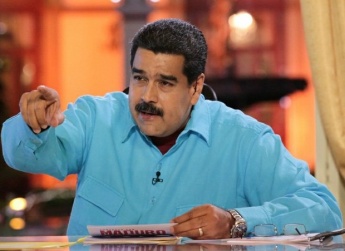
Maduro presented three proposals to advance the mediation process this week (Prensa Presidencial).
By Lucas Koerner | Venezuelanalysis | June 9, 2016
Caracas – Venezuelan President Nicolas Maduro announced three proposals for UNASUR-mediated talks between his government and the country’s right-wing opposition Tuesday.
“The first [proposal] is the creation of a commission for truth, justice, and reparations for the victims to compensate for all of the harm caused by the coups, guarimbas from 1999 to 2016,” the socialist leader explained.
Over the past six months, the Maduro government has pushed the idea of a truth and justice commission as an alternative to the opposition-controlled parliament’s Amnesty Law, which sought to exonerate individuals convicted of a vast range of felonies and misdemeanors over the past seventeen years, provided that they were committed in the context of political protests.
The South American president also proposed the convening of a meeting between representatives of Venezuela’s five branches of government in order to resolve political disputes and restore the normal functioning of government under the constitution.
Since taking office in January, the opposition-majority National Assembly has been at loggerheads with the executive, the Supreme Court, and the National Electoral Council (CNE) over clashing interpretations of the division of powers outlined in the nation’s constitution.
Lastly, Maduro called for the signing of an “agreement for peace and nonviolence” in order to avoid the violent escalation of the country’s political conflict.
In recent weeks, the right-wing opposition coalition, the MUD, has relaunched violent anti-government protests that have seen demonstrators attack police and damage public property.
The head of state’s proposals follow the first round of UNASUR-mediated indirect dialogue between the government and the opposition held in Punta Cana late last month.
Though no agreement was reached, the meeting was welcomed as a key first step by Jose Rodriguez Zapatero, Leonel Fernandez, and Martin Torrijos– former presidents of Spain, Dominican Republic, and Panama– who agreed to act as mediators between the two sides.
The MUD, for its part, has outlined four preconditions for talks with the government, including the activation of the recall process, the release of so-called “political prisoners”, a solution to the “humanitarian crisis”, and “respect” for legislation passed by the National Assembly.
Speaking on Wednesday, Miranda Governor and former presidential candidate Henrique Capriles lashed out Maduro’s proposals, exclaiming, “For there to be dialogue, there must be respect.”
“[Maduro] speaks of signing a non-violence agreement, but who are the ones who confront [protests] and prevent them from reaching the CNE?,” he added, referring to the Venezuelan government’s enforcement of a Supreme Court ruling prohibiting protests in the vicinity of CNE offices at the behest of electoral personnel concerned for their safety.
On May 19, an unauthorized opposition march towards the heavily pro-government heart of Caracas saw protesters attack and wound seven police officers and vandalize government student housing.
The Maduro government, meanwhile, has received backing from the leftist regional bloc, the ALBA, which issued a statement on Wednesday, applauding the opening of UNASUR-mediated talks with the opposition and calling for “absolute respect for Venezuelan sovereignty”.
The MUD has yet to officially respond to the Venezuelan president’s proposals for dialogue.
Leaked Audios Reveal Plot to Oust Dilma Rousseff
By Aline C. Piva | Council on Hemispheric Affairs | June 6, 2016
The already fragile legitimacy of Michel Temer’s interim government in Brazil took a huge blow last week. Leaked audios involving Temer’s closest allies revealed a plot to oust democratically elected Brazilian President Dilma Rousseff as part of a plan to put an end to Operation Carwash (Operação Lava Jato), the operation that is investigating the scheme involving bribery and kickbacks in Petrobras, the Brazil state-owned oil company. [1][2]
On May 23, the Brazilian newspaper Folha de S.Paulo published the transcripts of a conversation between Romero Jucá, Planning Minister in Temer’s interim government, and Sergio Machado, former Senator and President of Transpetro, another Brazilian state-owned oil company. This conversation – and other records leaked since then – were recorded in March, before the first vote of the impeachment process that took place in the Chamber of Deputies.[3]
After discussing their own involvement in the Carwash investigation –both are being investigated for corruption-, Jucá states his solution for the “problem”: “We have to change the government to be able to stop this bleeding.” Machado followed by agreeing: “The easiest solution would be to put in Michel [Temer].”[4]
A “National Pact” to topple Dilma Rousseff
In this conversation, Jucá talked about a “national pact” to impeach Dilma and stop the investigations of the corruption scheme. This included justices of the Supreme Court, the compliance of the military forces and the pacts amongst the opposition forces in Congress. These clandestine arragements were formed in complete disregard for the political will expressed by the majority of Brazilians at the ballot box. According to Jucá, important members of Partido da Social Democracia Brasileira (the Brazilian Social Democratic Party; PSDB), the center-right party that lost the last four presidential elections in Brazil, were aware that Dilma’s removal was an imperative to stop the “bleeding” brought on by Lava Jato.[1]
When asked what he meant by “bleeding”, Jucá said that he was referring to the economic effects of Operation Carwash. Interestingly, he never mentioned the economic situation in Brazil in this conversation. In fact, the dialogue begins with Machado speaking about the risk that plea bargaining deals would become more frequent, which could implicate even more politicians and their close allies. Machado then asked to set up “a structure” to prevent this from happening, should he be prosecuted. In the context of preventing the Lava Jato’s prosecutors from getting Machado’s confession, Jucá suggested that they needed to “stop the bleeding.”[2]
In the audio, Jucá goes even further in demonstrating the possibility of foul play as he describes the role of the military and various members of the Brazilian Supreme Court. Jucá stated that the military supported the coup: “I’m talking to the generals, the military commanders. They are fine with this, they said they will guarantee it”. Temer’s short-lived Planning Minister also affirmed that the military is “monitoring the Landless Workers Movement”, one of the largest Brazilian popular movements that has been at the forefront of protests against the impeachment process. Jucá also has claimed that he had access to a “small number” of the Supreme Court Justices, and that he discussed the extent of the investigations with them. According to Jucá, the justices told him that the corruption investigation – and the popular and media pressure for it to continue – would not stop as long as Rousseff remained in power.[3]
Another two audio leaks, published by Folha, from Renan Calheiros and José Sarney – both had been speaking with Machado, who recorded the conversations – reveal that the plans to stop the investigations of Operation Carwash were in the works for a long time now.
José Sarney, former Brazilian President who now holds a seat in the Brazilian Senate, confided to Machado that key figures of the opposition were reluctant about the idea of a transition government headed by Michel Temer. He also indicated that Michel Temer was negotiating “certain conditions” (not spelled out in the audio) with those opposition representatives, in order to constitute his government. Sarney also made it clear that there was “no way out” for Dilma, except being impeached, and expressed the need to stop the plea-bargaining deals within Operation Carwash. [4]
Renan Calheiros, the President of the Brazilian Senate and former close ally of Dilma Rousseff’s government, also expressed his concerns on the plea-bargaining deals in Operation Carwash. In his conversation with Sergio Machado, Calheiros said that he supported changes in the laws that regulate plea bargaining deals in order to prevent someone who had already been incarcerated from becoming an informer, which is one of the main procedures used by Operation Carwash’s prosecutors for obtaining information on the corruption scheme. This change would benefit many politicians involved in the scandal.[5]
Calheiros also suggests that, in order to deal with this matter, they would have to “negotiate” with members of the Brazilian Supreme Court about the “transition” of Dilma’s government. Effectively, there are now eight different proposals being discussed in the Brazilian Congress on how to change the way plea-bargain deals are made. [6]
Most recently, Sergio Machado leaked his conversations with Fabiano Silveira, former counselor of the Conselho Nacional de Justiça (National Justice Council; CNJ), which is responsible for supervising the Judiciary, and newly appointed Minister of Transparency, Superintendence and Control in Temer’s government. In this audio, Silveira criticizes Operation Carwash and guides Renan Calheiros on how he should prepare his defense for the charges of corruption. The Minister of Transparency has supposedly also sought members of the Lava Jato task force to request information on the investigation involving Calheiros.[7]
These statements alone are serious indications that what is taking place in Brazil is a coup with the purpose of stopping the corruption investigations in the country. Also, one is witnessing a blatant attempt to implement a political project that has been repeatedly defeated in democratic elections since 2002 (recent polls also show high rejection rates for Temer’s government), and there are many other indications that the ouster of Dilma was, in fact, a political plot.[8]
O Estado de São Paulo reported that, during the past 12 months, over 80 members of both houses of the Brazilian Congress held regular meetings to discuss Dilma Rousseff’s impeachment. Among them were former senators José Serra, now Minister of Foreign Relations, and Mendonça Filho, now head of the Ministry of Education. Nelson Jobim, former president of the Brazilian Supreme Court also attended many of these meetings “to help deepen the technical and jurisdictional comprehension of the impeachment.”[9]
The Corruption Narrative
This report and the content of the leaked conversations show that Dilma’s impeachment is the result of a carefully planned and executed plot to benefit a small political group threatened by Operation Carwash. Temer and his closest allies played an important role in this scheme. Moreover, the nomination of his cabinet also reflects how the impeachment process was likely motivated in order to stop the anti-corruption investigations: a third of Temer’s ministers are either under investigation or being charged for corruption or bribery; the leader of Temer’s government in the lower house of Congress is under investigation for homicide; and Temer himself was found guilty last May of mismanagement of his campaign budget, and deemed ineligible to run for office for eight years.[10]
Evasion of corruption charges is not the only motivation behind the impeachment show put on by the various pacts besides the obvious involvement of many of Temer’s ministers in corruption schemes and other crimes. The choosing of those politicians makes it clear that their target is to impose a political agenda that has been repeatedly rejected by the Brazilian people on the ballot box. The leaked audios with compromised conversations signal a political motivation different from the allegedly legal argument presented to the Brazilian Congress for the impeachment. Together with a speedy process of reversing social, economic and cultural policies of the Dilma administration, these are clear signs that what took place in Brazil was an illegal alteration of the constitutional order – and not the result of a democratic process.
The audios are hard proof that the political elite behind Dilma Rousseff’s impeachment perceived that removing her from office was the only way to keep themselves from being held accountable for their illegal deeds, and to maintain their profitable scheme of corruption. They demonstrate what impeachment opponents have been saying from the beginning: rather than to “clean” the Brazilian government of corruption, the oust of Dilma was the only way to guarantee that those under investigation would be shielded.[11]
[1] “Por Que Foi Um Golpe – Crítica Constitucional.” Crítica Constitucional. Accessed May 27, 2016. http://www.criticaconstitucional.com.br/por-que-foi-um-golpe/
[2] “Folha De S.Paulo.” Jucá Não Falou Sobre Economia Ao Citar ‘sangria’; Ouça. Accessed June 01, 2016. http://www1.folha.uol.com.br/poder/2016/05/1774182-juca-nao-falou-sobre-economia-ao-citar-sangria-ouca.shtml.
[3] “Folha De S.Paulo.” Em Diálogos Gravados, Jucá Fala Em Pacto Para Deter Avanço Da Lava Jato. Accessed May 27, 2016. http://www1.folha.uol.com.br/poder/2016/05/1774018-em-dialogos-gravados-juca-fala-em-pacto-para-deter-avanco-da-lava-jato.shtml
[4] “Folha De S.Paulo.” Leia a Transcrição Dos áudios De Sarney E Do Ex-presidente Da Transpetro. Accessed May 27, 2016. http://www1.folha.uol.com.br/poder/2016/05/1775011-leia-a-transcricao-dos-audios-de-sarney-e-do-ex-presidente-da-transpetro.shtml
[5] “Folha De S.Paulo.” Em Conversa Gravada, Renan Defende Mudar Lei Da Delação Premiada; Ouça. Accessed May 27, 2016. http://www1.folha.uol.com.br/poder/2016/05/1774719-em-conversa-gravada-renan-defende-mudar-lei-da-delacao-premiada.shtml
[6] “[Lupa] Tramitam No Congresso Oito Projetos De Lei Para Alterar Uso De Delação Premiada.” Lupa Tramitam No Congresso Oito Projetos De Lei Para Alterar Uso De Delação Premiada. 2016. Accessed May 27, 2016. http://piaui.folha.uol.com.br/lupa/2016/05/26/congresso-tramita-oito-projetos-de-lei-para-alterar-uso-da-delacao-premiada/
[7] “Em Gravação, Ministro De Temer Critica Lava Jato E Aconselha Renan”. Accessed May 31, 2016. http://m.folha.uol.com.br/poder/2016/05/1776200-ministro-da-transparencia-de-temer-criticava-lava-jato-mostra-gravacao.shtml?mobile
[8] “O Que as últimas Pesquisas Revelam Sobre Apoio Ao Impeachment E a Temer?” BBC Brasil. Accessed May 27, 2016. http://www.bbc.com/portuguese/brasil/2016/05/160511_temer_rejeicao_lab
[9] “G-8 Do Impeachment Teve Reuniões Durante Um Ano – Política – Estadão.” Estadão. Accessed May 27, 2016. http://politica.estadao.com.br/noticias/geral,g-8-do-impeachment-teve-reunioes-durante-um-ano,10000026435
[10] “Folha De S.Paulo.” Ministros Do Governo Temer São Alvo De Investigações Além Da Lava Jato. Accessed May 30, 2016. http://www1.folha.uol.com.br/poder/2016/05/1772725-ministros-do-governo-temer-sao-alvo-de-investigacoes-alem-da-lava-jato.shtml
“Temer é Ficha-suja E Está Inelegível, Diz Procuradoria Eleitoral.” Fausto Macedo Temer Ficha suja E Está Inelegível Diz Procuradoria Eleitoral. Accessed May 30, 2016. http://politica.estadao.com.br/blogs/fausto-macedo/temer-e-ficha-suja-diz-procuradoria-eleitoral/
“Folha De S.Paulo.” Líder Do Governo Temer é Alvo Da Lava Jato, Suspeito De Tentativa De Assassinato E Réu Em Três Ações No STF. Accessed May 30, 2016. http://www1.folha.uol.com.br/poder/2016/05/1772497-lider-do-governo-temer-e-alvo-da-lava-jato-suspeito-de-tentativa-de-assassinato-e-reu-em-tres-acoes-no-stf.shtml
[11] The Intercept. “New Political Earthquake in Brazil: Is It Now Time for Media Outlets to Call This a “Coup”? Accessed June 02, 2016. https://theintercept.com/2016/05/23/new-political-earthquake-in-brazil-is-it-now-time-for-media-outlets-to-call-this-a-coup/
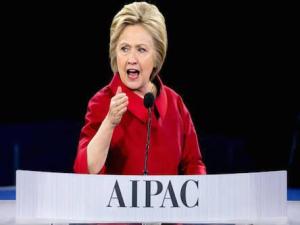
Hillary Clinton: Electing a Foreign Spy for President?
By James Petras | June 6, 2016
During her 4 years as Secretary of State of the United States (2009-2014), Hillary Clinton controlled US foreign policy. She had access to the most confidential information and state documents, numbering in the tens of thousands, from all of the major government departments and agencies, Intelligence, FBI, the Pentagon, Treasury and the office of the President. She had unfettered access to vital and secret information affecting US policy in all the key regions of the empire.
Today, Mme. Clinton’s critics have focused on the technical aspects of her violations of State Department procedures and guidelines regarding handling of official correspondences and her outright lies on the use of her own private e-mail server for official state business, including the handling of highly classified material in violation of Federal Records laws, as well as her hiding official documents from the Freedom of Information Act and concocting her own system exempt from the official oversight which all other government officials accept.
For many analysts, therefore, the issue is procedural, moral and ethical. Mme. Clinton had placed herself above and beyond the norms of State Department discipline. This evidence of her arrogance, dishonesty and blatant disregard for rules should disqualify her from becoming the President of the United States. While revelations of Clinton’s misuse of official documents, her private system of communication and correspondence and the shredding of tens of thousands of her official interchanges, including top secret documents, are important issues to investigate, these do not address the paramount political question: On whose behalf was Secretary Clinton carrying out the business of US foreign policy, out of the review of government oversight?
The Political Meaning and Motivation of Clinton’s High Crimes Against the State
Secretary Clinton’s private, illegal handling of official US documents has aroused a major FBI investigation into the nature of her activities. This is separate from the investigation by the Office of the Inspector General and implies national security violations.
There are several lines of inquiry against Mme. Clinton:
(1) Did she work with, as yet unnamed, foreign governments and intelligence services to strengthen their positions and against the interest of the United States?
(2) Did she provide information on the operations and policy positions of various key US policymakers to competitors, adversaries or allies undermining the activities of military, intelligence and State Department officials?
(3) Did she seek to enhance her personal power within the US administration to push her aggressive policy of serial pre-emptive wars over and against veteran State Department and Pentagon officials who favored traditional diplomacy and less violent confrontation?
(4) Did she prepare a ‘covert team’, using foreign or dual national operatives, to lay the groundwork for her bid for the presidency and her ultimate goal of supreme military and political power?
Contextualizing Clinton’s Clandestine Operations
There is no doubt that Mme. Clinton exchanged minor as well as major official documents and letters via her private e-mail system. Personal, family and even intimate communications may have been carried on the same server. But the key issue is that a large volume of highly confidential government information flowed to Clinton via an unsecured private ‘back channel’ allowing her to conduct state business secretly with her correspondents.
Just who were Secretary Clinton’s most enduring, persistent and influential correspondents? What types of exchanges were going on, which required avoiding normal oversight and a wanton disregard for security?
Clinton’s covert war policies, which included the violent overthrow of the elected Ukraine government, were carried out by her ‘Lieutenant’ Under-Secretary of State Victoria Nuland, a virulent neo-conservative holdover from the previous Bush Administration and someone committed to provoking Russia and to enhancing Israel’s power in the Middle East. Clinton’s highly dangerous and economically destabilizing ‘brainchild’ of militarily encircling China, the so-called ‘pivot to Asia’, would have required clandestine exchanges with elements in the Pentagon – out of the State Department and possibly Executive oversight.
In other words, within the Washington political circuit, Secretary Clinton’s escalation of nuclear war policies toward Russia and China required secretive correspondences which would not necessarily abide with the policies and intelligence estimates of other US government agencies and with private business interests.
Clinton was deeply engaged in private exchanges with several unsavory overseas political regimes, including Saudi Arabia, Israel, Honduras and Turkey involving covert violent and illegal activities. She worked with the grotesquely corrupt opposition parties in Venezuela, Argentina and Brazil
Clinton’s correspondence with the Honduran armed forces and brutal oligarchs led to the military coup against the elected President Zelaya, its violent aftermath and the phony election of a pliable puppet. Given the government-death squad campaign against Honduran civil society activists, Clinton would certainly want to cover up her direct role in organizing the coup. Likewise, Mme. Clinton would have destroyed her communications with Turkish President Erdogan’s intelligence operations in support of Islamist terrorist-mercenaries in Syria and Iraq.
Secretary Clinton’s e-mail would have shown her commitment to the Saudis when they brutally invaded Bahrain and Yemen to suppress independent civil society organizations and regional political rivals.
But it is Clinton’s long-term, large-scale commitment to Israel that goes far beyond her public speeches of loyalty and fealty to the Jewish state. Hillary Clinton’s entire political career has been intimately dependent on Zionist money, Zionist mass media propaganda and Zionist Democratic Party operations.
In exchange for Clinton’s dependence on political support from the Zionist power configuration in the US, she would have become the major conduit of confidential information from the US to Israel and the transmission belt promoting Israel-centric policies within the US government.
The entire complex of Clinton-Israel linkages and correspondences has compromised the US intelligence services, the State Department and Pentagon.
Secretary Clinton went to extraordinary lengths to serve Israel, even undermining the interests of the United States. It is bizarre that she would resort to such a crude measure, setting up a private e-mail server to conduct state business. She blithely ignored official State Department policy and oversight and forwarded over 1,300 confidential documents and 22 highly sensitive top-secret documents related to the ‘Special Access Program’. She detailed US military and intelligence documents on US strategic policies on Syria, Iraq, Palestine and other vital regimes. The Inspector General’s report indicates that ‘she was warned’ about her practice. It is only because of the unusual stranglehold Tel Aviv and Israel’s US Fifth Column have over the US government and judiciary that her actions have not been prosecuted as high treason. It is the height of hypocrisy that government whistleblowers have been persecuted and jailed by the Obama Administration for raising concerns within the Inspector General system of oversight, while Secretary Clinton is on her way to the Presidency of the United States!
Conclusion
Many of Clinton’s leading critics, among them two dozen former CIA agents, have presented a myth that Hillary’s main offence is her ‘carelessness’ in handling official documents and her deliberate deceptions and lies to the government.
These critics have trivialized, personalized and moralized what is really deliberate, highly politicized state behavior. Mme. Secretary of State Hillary Clinton was not ‘careless in managing an insecure mail server’. If Clinton was engaged in political liaison with foreign officials she deliberately used a private email server to avoid political detection by security elements within the US government. She lied to the US government on the use and destruction of official state documents because the documents were political exchanges between a traitor and its host.
The 22 top secret reports on ‘Special Access Programs’ which Clinton handled via her private computer provided foreign governments with the names and dates of US operatives and proxies; allowed for counter-responses inflicting losses of billions of dollars in program damages and possibly lost lives.
The Inspector General Report (IGP) deals only with the surface misdeeds. The Federal Bureau of Investigations (FBI) has gone a step further in identifying the political linkages, but faces enormous obstacles from Hillary’s domestic allies in pursuing a criminal investigation. The FBI, whose director is a political appointee, has suffered a series of defeats in its attempts to investigate and prosecute spying for Israel, including the AIPAC espionage case of Rosen and Weismann and in their long held opposition to the release of the notorious US-Israeli spy, Jonathan Pollard. The power of the Zionists within the government halted their investigation of a dozen Israeli spies captured in the US right after the attacks of September 11, 2001.
Clinton’s choice of conducting secret private communications, despite several years of State Department warnings to abide by their strict security regulations, is an indication of her Zionist power base, and not a mere reflection of her personal hubris or individual arrogance.
Clinton has circulated more vital top-secret documents and classified material than Jonathan Pollard.
President Obama and other top Cabinet officials share her political alliances, but they operate through ‘legitimate’ channels and without compromising personnel, missions, funding or programs.
The executive leadership now faces the problem of how to deal with a traitor, who may be the Democratic Party nominee for US President, without undermining the US quest for global power. How do the executive leadership and intelligence agencies back a foreign spy for president, who has been deeply compromised and can be blackmailed? This may explain why the FBI, NSA, and CIA hesitate to press charges; hesitate to even seriously investigate, despite the obvious nature of her offenses. Most of all it explains why there is no indication of the identity of Secretary Clinton’s correspondents in the various reports so far available.
As Sherlock Holmes would say, “We are entering in deep waters, Watson”.
Featured Video
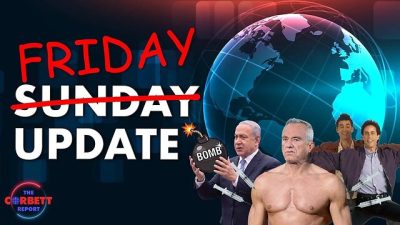
Racist Seinfeld Dances for Joy as Bibi Unveils His New Map
or go to
Aletho News Archives – Video-Images
TV Drama Review
Japanese drama projects Japan’s wartime atrocities onto Chinese characters
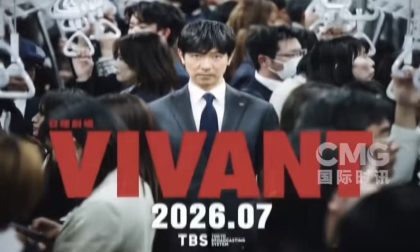
Global Times | October 25, 2026
By portraying Chinese characters as perpetrators of ruthless violence while casting Japanese Self-Defense Forces (SDF) intelligence operatives as defenders, the season 2 of the Japanese drama Vivant has recently drawn criticism from Chinese netizens, who argue that its depiction turns historical reality on its head while ignoring Japan’s wartime atrocities.
The TBS drama series – a spy suspense story in which an alleged unofficial intelligence unit of the SDF operates across the globe — has attracted a passionate fanbase. Its currently airing season 2 opened with a household rating of 18.8 percent, the highest for a TV drama this year, according toa commentary article by Japanese media Toyo Keizai.
What draws attention is the portrayal of the enemies in the series, the article noted. Scenes in which the Chinese organization subjects kidnapped members of the SDF unit to brutal torture are repeated with unrelenting intensity.
It is rare for Japanese TV dramas to explicitly portray a real-life country as the enemy, the article noted.
Japanese Prime Minister Sanae Takaichi also made a reference to the drama, saying that she has been recording Vivant and hopes to binge-watch it over the year-end and New Year holidays, according to Japanese media outlets.
China’s CCTV News report on Sunday revealed that the drama features scenes in which Chinese personnel cut off the fingers of and stab Japanese intelligence operatives in the abdomen. Such acts bear striking similarities to the torture inflicted on Chinese nationals by invading Japanese troops during the World War II.
The drama distorts the truth by attributing these atrocities to modern Chinese characters. Beneath the surface, it subtly glorifies Japan’s cross-border overseas operations, blurs the functional boundaries of the SDF and implicitly promotes an expansionist narrative, per CCTV News. … continue
Blog Roll
 Aletho News
- EU facing trillion-euro debt hole while seeking more cash for Kiev
- How US, Europe, Persian Gulf states exhausted missile stockpiles, splurged billions to defend Israel
- Up in arms… Koreans reject U.S. empire’s plan to make South Korea the next Ukraine
- Iran, Turkey, Pakistan, Saudi Arabia could advance region-led security framework in Tehran: FM spox
- Netizens condemn Japanese drama for projecting Japan’s wartime atrocities onto Chinese characters
- Racist Seinfeld Dances for Joy as Bibi Unveils His New Map
- A West Bank War for Netanyahu’s Election Campaign, Could It Backfire?
- Yemen denounces European Parliament’s ‘hypocritical’ push to blacklist Ansarullah
- Qalibaf: UAE’s UN bid aims to ‘clear the runway’ for ‘Greater Israel’, whitewash genocide
- Pakistan reopens Iran border after boosting security: Report
- If Americans Knew
- An error has occurred; the feed is probably down. Try again later.
- No Tricks Zone
- Sudden Stratospheric Warming, Powerful El Niño Combination May Lead To Extreme Europe Cold, Energy Crisis!
- Two New Studies Find Thwaites Glacier Melt Cannot Be Driven By Human Activity Or A Warming Ocean
- E-Cars Reduce CO2 Emissions By Only 41% Compared To Internal Combustion Engine Vehicles
- Predictions Made By Renowned Climate Professor Over Past Decades Have Been Proven To Be Poor
- New Study Suggests Large Regions Of The Pacific Ocean Have Been Cooling For The Last 80 Years
- Germany’s Green Energy Debacle: High Energy Costs Force Kahla Porzellan to Close After 182 Years!
- New Study: 50 Years Of The Most Aggressive ‘Net Zero’ Policies Can Only Affect The Global Climate By 0.03°C
- US September “Heat” Was No Record…Many Records Set Decades Ago
- Latest European Green Energy Debacle; Portugal’s Largest Flagship Solar Park Insolvent!
- Green Energy Debacle: German Expert Professor Fritz Vahrenholt Warns Of Severe Economic And Social Consequences

