Brazilian Prosecutor Declares Dilma Rousseff Not Guilty of Budgetary Maneuvers

By Desirée Mota and Sophie-Anne Baril | Council on Hemispheric Affairs | July 20, 2016
On July 14, Brazilian Prosecutor Ivan Claudio Marx reported that the delaying of payments to banks made by President Dilma Rousseff’s administration does not constitute a crime of responsibility.[1] Marx stated that the maneuvers, known as fiscal pedaling, were “a violation of the contract between the government and the banks but not a crime.”[2] The prosecutor’s report even advised terminating the criminal case on Rousseff’s accounting practices and requested a new investigation into illegal payments made by the government without congressional approval.[3]
In 2015, Brazil Attorney General Luís Inácio Adams affirmed that delays in transfers from the National Treasury to public banks, which had to be disbursed from Brazil’s own reserves to pay for social programs, also occurred in past governments and were not considered irregular by the Union Accounts Court (TCU).[4] This action, intended to momentarily relieve the fiscal framework of the country, is one of the main accusations the opposition used to carry out the illegal impeachment against President Rousseff. The Brazilian Constitution states that an impeachment can only be carried out if the President commits crimes of responsibility, which Rousseff is not guilty of.
Marx’s report poses an obstacle to the senators and government officials supporting the impeachment. Earlier in July, a board of experts, tasked with investigating the accusations against Brazilian President Dilma Rousseff, found no proof of her direct involvement with the country’s fiscal budgetary maneuvers.[5] Following the release of another report absolving Rousseff, the Workers’ Party Senator Gleisi Hoffmann has filed a request to invite the Federal Prosecutor to speak in the Senate, where the impeachment process is being tried.[6] Additionally, she has asked senators to close the impeachment probe.[7] Following Congresswoman Hoffmann, Senator Lindbergh Farias, also from the Workers’ Party, stated that “this process is discredited once and for all” and further recommended the House to stop leading the impeachment forward.[8]
As evidence finding Rousseff not guilty for budget manipulations continues to be released, the international criticism on the impeachment process is mounting. Congressman Alan Grayson, who serves on the United States House of Representatives’ Foreign Affairs Committee, has stated his concerns over the threats that President Rousseff’s impeachment poses to Brazilian democracy.[9] Similarly, a group of French congressmen have released a manifesto condemning the impeachment process.[10] The outcome, however, is still very much at play. As international criticism on the impeachment process increases, this new report only further affirms the illegitimate nature of the impeachment proceedings against Rousseff.
[1]Brazil Prosecutor Says Rousseff’s Accounting Tricks Are Not A Crime. Accessed July 18, 2016 http://www.bloomberg.com/news/articles/2016-07-14/brazil-prosecutor-says-rousseff-s-accounting-tricks-not-a-crime
[2] Brazil Senators Push to End Impeachment Against Rousseff. Telesur. Accessed July 18, 2016. http://www.telesurtv.net/english/news/Brazil-Senators-Push-to-End-Impeachment-Against-Rousseff-20160716-0006.html
[3] Ibid.
[4] AGU Diz Que Pedaladas Fiscais Foram Adotadas Por Governos Anteriores. G1. http://g1.globo.com/politica/noticia/2015/07/agu-diz-que-pedaladas-fiscais-foram-adotadas-por-governos-anteriores.html
[5] Dilma Rousseff Found Not Guilty of Budgetary Maneuvers. COHA. Accessed July 18, 2016 http://www.coha.org/dilma-rousseff-found-not-guilty-of-budgetary-maneuvers/
[6] Com Decisão do MP, Senadores vão pedir para Paralisar Impeachment. Agência Brasil 247. Accessed July 18, 2016 http://www.brasil247.com/pt/247/brasilia247/244093/Com-decis%C3%A3o-do-MP-senadores-pedir%C3%A3o-para-paralisar-impeachment.htm
[7] Ibid.
[8]Ibid.
[9] Grayson’s statement on Brazilian President’s impeachment. Congressman Grayson. Accessed July 18, 2016. http://grayson.house.gov/index.php/newsroom/press-releases/435-grayson-s-statement-on-brazilian-president-s-impeachment
[10] Dilma Rousseff victime d’une basse manoeuvre parlementaire. Le Monde Idées. July 13, 2017. Accessed July 18, 2016. http://www.lemonde.fr/idees/article/2016/07/13/dilma-rousseff-victime-d-une-basse-manoeuvre-parlementaire_4969141_3232.html
Featured Photo: YouTube
To download a PDF version of this article, click here.
Amnesty No More
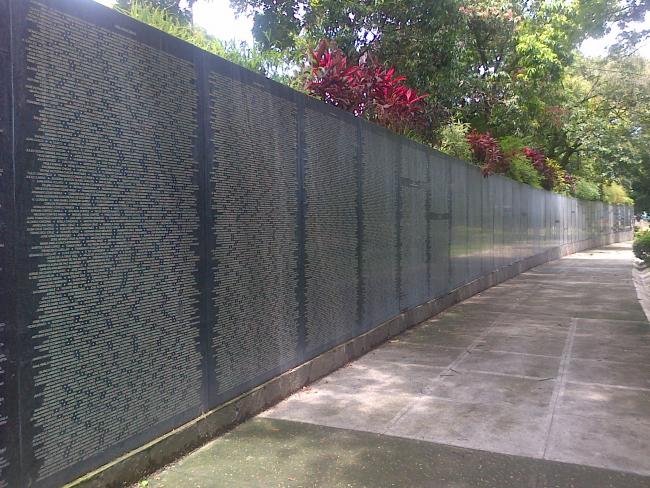
The Memory and Truth Monument commemorating the victims of El Salvador’s violence civil war (Wikimedia Commons)
By Robin Maria DeLugan | NACLA | July 20, 2016
The Salvadoran Supreme Court’s recent decision to overturn the country’s controversial Amnesty Law opens the door to unravel impunity for war crimes during El Salvador’s violent civil war.
On July 11, 2016, in a historic decision, El Salvador’s highest court abolished the amnesty law that has been in effect since 1993. The controversial law was put in place immediately following the signing of the peace accords that ended El Salvador’s brutal 12-year civil war (1980-1992), thus sheltering from prosecution the perpetrators of grave human rights violations committed during the conflict in El Salvador. In a much-anticipated decision, the Constitutional Supreme Court declared that amnesty law unconstitutional because it impeded the state’s obligation to investigate crimes against humanity.
An estimated 75,000 civilians lost their lives during El Salvador’s civil war. Some 8,000 were forcibly disappeared, while tens of thousands more were internally displaced or obligated to flee protracted violence. News of brutal atrocities spread across the world. From the high-profile assassination of Archbishop Monseñor Oscar Arnulfo Romero to the merciless slaughter of the entire village of El Mozote, more than 22,000 acts of violence by armed actors of the civil war were recorded by the United Nations Commission on the Truth for El Salvador.
While the state and the oppositional forces of the Farabundo Marti Liberación Nacional (FMLN) both committed abuses during the conflict, the UN-backed Truth Commission attributed 80% of human rights violations to the government of El Salvador. The Truth Commission, while helpful towards recouping the memories of the brutal acts of the war, had no power to enforce, especially against the amnesty law that followed. The amnesty law prevented prosecution and supported continued impunity thus thwarting national efforts for justice and reconciliation.
Over the past 20 years of post-civil war nation-building, government representations of national culture, history, and identity have maintained silence about the atrocities of the civil war. Some officials argued that to do otherwise would threaten the nation’s fragile peace. Others argued that the nation needed to look forward to the future, rather than dwell on the violence of the past. Such arguments justified the amnesty law. Challenging the government’s muteness and combatting public forgetting, civil society actors created two new museums and one major monument in the nation’s capital of San Salvador. Such commemorative sites have played a pivotal role as memory keepers while also helping to sustain the calls for unfulfilled justice.
In the late 1990’s the Museum of the Word and the Image (Museo de la Palabra y el Imagen, MUPI) was established “against forgetting” (contra la desmemoria) with exhibitions and educational activities dedicated to “weaving memory” (tejiendo la memoria). The museum collects and exhibits photographs, manuscripts, audio recordings, and films. Among the collections in the museum archives are photographs of the El Mozote massacre, posters demonstrating the international solidarity for the people of El Salvador and their revolutionary struggle; propaganda used by the Salvadoran government’s armed forces to reduce popular support of the guerrillas; photos about women combatants and the popular schools that were activated in the conflict zones during the war; and information about refugees and their return at to the country after the Civil War. The museum houses the most comprehensive existing archive of materials on the Salvadoran Civil War, maintaining documentation and memory of wartime abuses that the amnesty law sought to shield.
Carlos Henriquez Consalvi, MUPI’s co-founder and director, participated in the civil society collective that erected the Monument to Memory and Truth (Monumento a la Memoria y la Verdad) in San Salvador’s central Parque Cuzcatlán in December 2003. The commemoration site consists of an 85-meter black granite wall etched with the names of more than 24,000 civilian victims. Another portion of the monument contains colorful stucco reliefs, depicting symbols of past social struggles and violence, such as the assassination of Archbishop Romero. Since its construction, the monument has been recognized as a space for hope—and a place for continuing to envision and a more just, humane, and equitable society. In the absence of state recognition of past atrocities, civil society has had to rely on its own resources to recapture the memories and to publicly recognize the war’s many civilian victims.
Meanwhile, the Museum of Art (Museo del Arte, MARTE), which opened in 2003, has relied on private funding to promote and support contemporary art in El Salvador with an expansive collection that showcases the nation’s history. Its permanent exhibition, “Pieces of Identity,” (“Trozos de la Identidad”) includes paintings that represent the history of social movements in the country, as well as the violence associated with the civil war. Among them is “El Sumpul” (1984) by Carlos Cañas. The painting refers to a 1980 military operation in which at least 300 civilians, including many women and children, were assassinated in the River Sumpul in the department of Chalatenango. By displaying “El Sumpul,” MARTE does more than display the historical and contemporary artistic talent of El Salvador; it also tells the history of the nation’s darkest hours and serves as an important guardian of memory.
The abolition of the amnesty law is an important step in the government’s slow process of addressing an important chapter in the nation’s difficult recent past. In 2010, President Mauricio Funes, the first FMLN candidate to achieve the presidency, gained international attention when he issued a state apology for the assassination of Monseñor Romero, as well as an apology for historical and ongoing violence against indigenous populations in the country. In 2012, at an event marking the 20th anniversary of the El Salvador’s 1992 peace accords, Funes also apologized for the atrocities committed at El Mozote. Later that year the Inter-American Court of Human Rights issued a judgment condemning the Amnesty Law for impeding the government of El Salvador’s responsibility to investigate various cases of human rights violations including the case of El Mozote.
In 2013, an international forum at the Universidad de El Salvador’s entitled “Memories of the War: Changes and Continuities in Local Societies at the beginning of the 21st Century” continued the process of recuperating the history and memory of the Salvadoran conflict. In addition to highlighting the growing body of international scholarship on the civil war, the forum announced the creation of the Unit for Investigations about the Salvadoran Civil War within the national university and the decision to dedicate new resources to research about the conflict. These actions of official apology, international involvement, and state-sponsored academic programming made important steps to breaking long-standing official silence and together with other other civil society initiatives, like museums and monuments, promoted new knowledge about the causes and consequences of the civil war.
One of these consequences, of course, is that the civil war brutality has been replaced with other kinds of violence. As has been widely publicized, El Salvador replaced Honduras as the most violence peacetime country in the world in 2015, with homicide rates nearing one homicide per minute in January 2016. Many, including Benjamín Cuéllar, the ex-director of the Instituto de Derechos Humanos de la Universidad Centroamericana, (Institute for Human Rights at the Central American University, IDHUCA,) see a connection between ignoring prosecution of the human rights abuses of the civil war and high levels of postwar violence. As he noted in a recent article in El Diario de Hoy, the impunity that resulted from the amnesty laws has permitted other wars, namely “the war between gangs, the government’s war against gangs, and the war of gangs against the Salvadoran population.” There is hope that addressing past human rights violations will play a role in creating a more just and peaceful society.
The revocation of the amnesty law now makes it possible to pursue justice for civil war wrongs including criminalizing those responsible for the human rights abuses caused by death squads, paramilitary, and security forces. The 73-page court decision lists 32 crimes that occurred between 1989 and1992 that can now be investigated. The list includes the names of members of the military or of the FMLN indicated as having responsibility. In terms of next steps, Romeo Benjamín Barahona Meléndez, ex-Attorney General under former President Mauricio Funes, explained that victims can now formally denounce these past crimes, and the Attorney General’s office will begin investigating the cases.
The court decision, while heralded by many, is causing a commotion within the leadership of the FMLN, the political party that holds executive power in the government. Structurally, whereas the military actors on the list are no longer in the government, investigations could instead lead to trials that involve FMLN leaders, for example the President of the Republic, Vice President, Ministers and Deputies. Some elected officials and government functionaries are openly critical about what will happen next, stating they fear “witch hunts” and the reopening of old wounds. Despite reservations from some in government, the Attorney General’s office appears to have the will to undertake investigations. However, the government lacks resources for the processes, including funds to support the indemnization of the victims who are determined to have suffered “moral damage” (daño moral).
However, should leaders or government actors ignore the ruling, there will undoubtedly be international criticism and a demand for accountability. Sites and practices of public memory in El Salvador have maintained the nation’s focus on civil war human rights abuses and the need for justice for decades. National and international attention created through these efforts contributed to the historic decision to finally revoke El Salvador’s Amnesty Law. These audiences will be carefully monitoring the fresh developments to follow. It is difficult to predict the outcomes of this important court decision. What happens next in El Salvador will be a chapter in an important historical process of nation-building, memory and justice that will provide lessons for other societies pursuing similar struggles against state violence, forgetting and impunity.
Robin Maria DeLugan is Associate Professor of Anthropology at the University of California, Merced. She is the author of Reimagining National Belonging: Post-Civil War El Salvador in a Global Context (University of Arizona Press, 2012).
Government Version of Student Massacre Discredited Again
teleSUR – July 16, 2016
An inquiry published Saturday has revealed that there is virtually no physical evidence to support the Mexican government´s version of the 2014 disappearance of 43 students traveling by bus to Mexico City. Government officials insist that a drug gang kidnapped the students at gunpint, killed them and burned the bodies at a dumpsite near the southwesten town of Iguala, but the report, based on forensic records requested by the Associated Press, revealed no signs of a fire on the night in question.
But the notes of a forensic examination of the Cocula dumpsite in Guerrero state in western Mexico shows that investigators could not confirm a fire on the night that the students vanished on September 26, 2014. The AP obtained the documents under a freedom of information request permissible under Mexican law.
The AP inquiry is the latest in a series of independent investigations that undermines the Mexican government´s version of events. Police say that five suspects have confessed to the crimes but an international panel of experts earlier this year concluded that the confessions were obtained by torture.
Earlier this year the Argentine Forensic Anthropology Team (EAAF) found animal and human remains at the dumpsite but said none of the remains corresponded to the government´s allegation that the bodies were incinerated by members of the Guerreros Unidos cartel. The Attorney General’s Office in April presented evidence of a huge fire and the discovery of the remains of at least 17 adults but the bone fragments were too badly burned to identify, the Argentine team said.
The government´s handling of the case has triggered massive protests that include parents and friends of the students, trade unons and grassroots organizations who believe that law-enforcement authorities are complicit in the slayings of the 43 students, who had effectively stolen a bus, ironically enough, to attend the commemoration of a 1968 police massacre of students.
The case has marred the administration of President Enrique Peña Nieto, who took office promising to reduce violence, curb corruption, and human rights abuses in the country.
Ecuador Confirms Another $20 Billion in Oil Reserves
teleSUR | July 15, 2016
Ecuador’s proven oil reserves grew recently with the announcement by Vice-President Jorge Glas that Block 43 in the Amazonian province of Orellana counts on 1,672 million barrels of oil, an increase of 82 percent over previous findings.
U.S. oil engineering company Ryder Scott conducted an evaluation and confirmed the amount of proven reserves. The new certification means that the country as a whole now has nearly 4 billion barrels in proven reserves.
At current prices, the additional reserves will translate into US$19.5 billion in revenue.
Block 43 is one of Ecuador’s key oil deposits in the Amazon and oil extraction there has been the subject of controversy as the block is located inside the Yasuni National Park, considered one of the most biodiverse areas on the planet.
Ecuador originally proposed keeping the oil in the ground but an appeal to the international community for contributions to prevent extraction failed after donors pledged a small fraction of the amount needed.
In late 2013, the government opened a small portion of the Amazon to oil extraction with a commitment to minimize any environmental consequences.
The state oil company Petroamazonas is tasked with the project and has committed to extracting in a responsible manner. The company won an environmental prize last year over from London’s Energy Institute for its efforts to mitigate the environmental impact of oil extraction in the Ecuadorean Amazon.
The license for oil exploration specifies that less than 1 percent of the total area of the Yasuni National Park will be affected.
The government of President Rafael Correa has been subject to criticisms from some environmental groups for its decision to open a portion of the Yasuni National Park for oil exploration. However, many of the criticisms come from organizations and politicians openly opposed to the Correa government.
As an oil-exporting country, the income derived from oil extraction is a critical component of the national budget.
President Correa celebrated the news of additional oil reserves on his official Twitter account, reaffirming his opinion that the decision to open up Yasuni to oil extraction was the correct one.
Under the Correa government, the income generated from oil extraction has been reinvested in the country through the construction of schools, hospitals, and roads. Ecuadorean law demands that 12 percent of the revenues stay within the affected zone, in an effort to benefit the surrounding communities.
The sharp drop in the price of oil has impacted government revenue, however, yet the price of oil is expected to stabilize at US$50 this year. The ITT region of the Yasuni National Park encompassing Ishpingo, Tambococha and Tiputini is expected to produce 20,000 barrels a day by year’s end.
Venezuela, Cuba, Nicaragua – Permanent Media False Positives
TeleSUR | July 11, 2016
Member countries of the Bolivarian Alliance of the Americas are natural targets for the relentless psychological warfare of Western news media, because they form a resistance front to the foreign policy imperatives of the United States government and its allies. Right now, Venezuela is the most obvious example. Daily negative coverage in Western media reports invariably attack and blame the Venezuelan government for the country’s political and economic crisis. Similar coverage is applied to the governments of Evo Morales in Bolivia, Rafael Correa in Ecuador, Cuba’s revolutionary government led by Raul Castro and also to Nicaragua’s Sandinista government led by Daniel Ortega.
By contrast, the permanent economic sabotage, the attacks on democratic process and the cynical promotion of violence by the dysfunctional Venezuelan opposition gets a free pass. Likewise, U.S. and European news media have virtually nothing to report about Argentina’s abrupt plunge into crisis with 40 percent inflation and a dramatic increase in poverty after barely six months of Mauricio Macri’s corruption tainted government. Nor has coverage of the chronic complicity of the Mexican government in covering up the disappearance of of the 43 Ayotzinapa students or the mass murder of striking teachers in Oaxaca matched the hysteria applied by Western media to Venezuela over bogus human rights concerns.
No doubt political scientists could work out the correlation between adverse or downright hostile media coverage and official measures or announcements by U.S. and allied governments. What’s clear in general is that Western media coverage actively and purposefully serves U.S. and allied government foreign policy preparing the ground for otherwise categorically inexplicable measures of diplomatic and economic aggression. For example, the self-evidently absurd declaration by President Obama that Venezuela constitutes a threat to the security of the United States or the anti-humanitarian failure of the U.S. government to lift the illegal economic blockade of Cuba despite President Obama’s duplicitous avowals recognizing the blockade’s political failure.
Venezuela and Cuba are close, loyal allies of Nicaragua, now in an election year. Nicaragua’s Sandinista government has faced a Western media assault over the last month or so with the U.S. government issuing a travel alert. The alert warns U.S. travelers to Nicaragua to be wary of “increased government scrutiny of foreigners’ activities, new requirements for volunteer groups, and the potential for demonstrations during the upcoming election season in Nicaragua…. U.S. citizens in Nicaragua should be aware of heightened sensitivity by Nicaraguan officials to certain subjects or activities, including: elections, the proposed inter-oceanic canal, volunteer or charitable visits, topics deemed sensitive by or critical of the government.” In a video mixed message about that alert, the U.S. Ambassador to the country, Laura Dogu, states that the advisory should in no way deter tourists from the United States visiting Nicaragua.
The travel alert appears to have been provoked by the experiences of a U.S. academic and also two U.S. government functionaries who were asked by the Nicaraguan authorities to leave the country in June. The official U.S. reaction has a lot in common with the mentality described in “Orientalism,” Edward Said’s intricate psycho-cultural map of Western perceptions of Muslim countries. Said writes, “The scientist, the scholar, the missionary, the trader or the soldier was in or thought about the Orient because he could be there or could think about it with very little resistance on the Orient’s part.” Translated to the Americas, the attitudes and behavior of Said’s orientalist are clearly present among U.S. Americanists, both governmental and non-governmental, and their regional collaborators.
The latest example of Americanist hubris here in Nicaragua has been a remarkably unscholarly outburst by Evan Ellis, the professor of the U.S. College of War who was expelled by the Nicaraguan government while attempting an unauthorized investigation of Nicaragua’s proposed interoceanic canal. Ellis’ ill-tempered diatribe repeats a familiar litany of downright falsehoods, wild speculation and poisonous calumnies, attacking Nicaragua’s Sandinista government led by Daniel Ortega as a dictatorship. It appeared in Latin America Goes Global, closely associated with the center right Project Syndicate media network. Project Syndicate lists among its associate media right-wing media outlets like Clarin and La Nación in Argentina, Folha de Sao Paulo and O Globo in Brazil and El Nacional in Venezuela.
So it is no surprise that in Nicaragua its associate media outlet should be the virulently anti-Sandinista Confidencial, which published the Spanish version of Ellis’s attack, making Ellis’ accusations of dictatorship look stupid. Addressing Chinese involvement in Nicaragua’s proposed interoceanic canal, Ellis displays his ignorance of Nicaragua’s relationship with both China and Taiwan. His tendentious, ahistorical analysis betrays the mentality of an unreconstructed Cold Warrior in all its inglorious torpor. That ideological straitjacket prevents Ellis from even beginning to appreciate Daniel Ortega’s hard-headed but deep commitment to promoting peace and reconciliation based on genuine dialog. Western political leaders and their media and academic shills perceive that commitment as a sign of weakness, which explains a great deal about repeated failures of Western foreign policy all around the world.
Around the same time as the Ellis affair, Viridiana Ríos a Mexican academic associated with the U.S. Woodrow Wilson Center left Nicaragua claiming police persecution. Ríos entered Nicaragua as a tourist but then proceeded to carry out a program of interviews with various institutions for her academic research. The curious thing about her claims is that she was never actually interviewed by any Nicaraguan official, either of the police or the immigration service. But she claims her hotel alerted her to a visit by police, in fact if it happened at all more likely immigration officials, who presumably left satisfied because otherwise she would certainly have been interviewed. Ríos then supposedly contacted the Mexican embassy who allegedly and inexplicably advised her to leave for Mexico. The upshot is that Ríos visited Nicaragua only to suddenly fear, for no obvious reason, being disappeared by government officials who could easily have detained her had they so wished. Rios then, with no complications, left Nicaragua, the safest country in the Americas along with Canada and Chile, and went home to Mexico, a country with 28,000 disappeared people.
Around the same time, as the reports about Ellis and Ríos, the Guardian published a disinformation scatter-gun attack on the Nicaraguan government also firming up the false positive of Nicaragua under Daniel Ortega’s presidency as a dictatorship. The dictatorship accusations are complete baloney. Neither Ellis nor the Guardian report faithfully that even center-right polling companies agree that support for Daniel Ortega and his Sandinista political party runs at over 60 percent of people surveyed while the political opposition barely muster 10 percent support. Similar polls show massive confidence in both the police (74 percent ), the army (79.8 percent) and satisfaction with Nicaragua’s democracy (73.9 percent). Another common theme in the attacks by Ellis and the Guardian is the supposed suspension of the construction of Nicaragua’s planned interoceanic canal, based on yet another false positive -the bogus hypothesis that the canal has no finance.
The basis for this claim is sheer speculation based on the afterwards-equals-because fallacy, typified by another unscrupulous and disingenuous Guardian article from November 2015 offering zero factual support for the claim that the Canal ‘s construction has been postponed for financial reasons. That report and numerous others reflect the outright dishonesty of the Canal’s critics. From the outset the canal’s critics accused the government and HKND, the Chinese company building the canal, of moving too quickly and failing to take into account environmental concerns and also for an alleged lack of transparency. When the government and the HKND took on board recommendations from the ERM environmental impact study to do more environmental studies, the Canal’s critics changed tack, accusing the government of covering up that the Canal has been delayed because HKND has run out of money. That claim seems to originate in Western psy-warfare outlets in Asia like the South China Morning Post and the Bangkok Post which have consistently run attack pieces on HKND’s owner, Wang Jing.
This standard operating intellectual dishonesty by NATO psy-warfare outlets like the Guardian, omits various inconvenient facts. For example, preparatory work on the Canal route continues with various studies in progress, including aerial surveys by an Australian company, one of whose pilots, Canadian Grant Atkinson tragically died in a crash late last year. This year, the government reached a conclusive agreement with local indigenous groups affected by the Canal after an extensive process of consultation. This year too, Nicaragua has signed a memorandum of understanding with Antwerp’s Maritime Academy to train the pilots who will guide shipping through the Canal and also a cooperation agreement with the UK Hydrographic Office for training and advice in relation to the hydrographic maps the Canal will need. This is hardly the behavior of people managing a project in crisis. That said, the global economic environment right now is so uncertain that investors in any large project let alone one as huge as the Nicaraguan Canal will certainly be wary.
The global economic context and the Canal’s geostrategic aspect receive a more rational treatment than Ellis’ self-serving rant in an article by Nil Nikandrov. Even Nikandrov seems to accept as fact the Guardian’s entirely speculative claim that the Canal’s financing is in crisis, but he rightly treats Ellis’s Cold War style anti-Sandinista hysteria with amused scepticism. In fact, neither Nikandrov nor Ellis make the obvious point that the strongest geostrategic reality in relation to the Canal is that, should U.S.-China tensions in the South China Sea accentuate into outright confrontation, China could not defend militarily the strong investment by Chinese companies in Nicaragua’s Canal. In any case, Nikandrov, rightly points out with regard to Nicaragua’s economy, “Nicaragua’s socioeconomic progress, Nicaraguans’ improved standard of living, and the stability and security there (compared to the increase in crime in most Central American countries) can all largely be credited to President Ortega.”
But even that reality can be turned on its head in the hands of a butterfly columnist as Bloomberg’s Mac Margolis demonstrated in his July 4 article “Nicaragua Prospers Under an Ex-Guerrilla.” Just for a change Bloomberg’s editors omitted their trademark “unexpectedly”, usually slipped in to any headline reporting unpalatable news. But the premier U.S. business news site could only finally recognize the incredible progress achieved by Daniel Ortega’s Sandinista government by at the same time smearing and denigrating President Ortega in the process. On the positive side Margolis recognizes, “the Nicaraguan economy grew 4.9 percent last year and has averaged 5.2 percent for the last five. Although three in 10 Nicaraguans are poor, unemployment and inflation are low. Public sector debt is a modest 2.2 percent of gross domestic product.”
That apart, Margolis writes, “Ortega’s critics know a darker side. Consider the ever-accommodating Nicaraguan Supreme Court, which last week deposed opposition leader Eduardo Montealegre as head of the Independent Liberal Party – essentially clearing the way for Ortega to run unchallenged in the November elections.” This is identical to the dishonest argument in Nina Lakhani’s Guardian article. Montealegre’s PLI had around 3 percent support, under the new PLI leader that seems to have crept up to around 5 percent. The Supreme Court decision made no difference to the fact that Nicaragua’s political opposition has been incapable of a serious electoral challenge to Daniel Ortega since before the last elections in 2011. Since then Daniel Ortega’s popularity has grown while support for the Nicaraguan opposition has collapsed. Implicitly contradicting himself, Margolis acknowledges that fact but goes on to make speculative, fact-free accusations of corruption, directly in relation to Nicaragua’s proposed Canal.
Without being specific he hints at widespread opposition to the Canal in Nicaragua, writing “a shadowy project that Ortega farmed out to Chinese investors led by billionaire Wang Jing. Ground has yet to be broken on the US$50 billion development, but Nicaraguans have raised a stink over the lavishly generous terms of the deal”. While opposition to the Canal certainly does exist, 73 percent of people in Nicaragua support it. Evan Ellis mentions an alleged opposition demonstration of 400,000 people, which is simply untrue. The biggest demonstration against the Canal drew about 40,000 people back in 2014 when Nicaragua’s political opposition bussed people to a march from all over the country. Plenty of information is available about the Canal and Margolis has no facts to back up his baseless accusation of corruption “I’d wager a fistful of Nicaraguan córdobas that ‘Presidente-Comandante Daniel’ has something he’s uneager to share.”
Only the crass Americanist mind set could provoke such presumptuous contempt for the opinion of the great majority of Nicaraguans. Margolis really seems to believe Nicaraguans are so stupid as to support a President who he alleges is self-evidently corrupt. In fact, Margolis’ discredited protagonist, Eduardo Montealegre, has precisely the kind of corruption tainted track record so familiar from the U.S. government deregulation of Wall Street. Montealegre was the Nicaraguan Treasury Minister under a U.S. supported right wing government and oversaw a massive bailout of Nicaragua’s rotten banking system from which his own bank benefited directly at the time. Perfectly natural then for a Bloomberg columnist to highlight Montealegre while attacking Daniel Ortega who rescued Nicaragua from precisely that culture of abject corruption. This banal irrational attack on Daniel Ortega deliberately obscures the reasons for Nicaragua’s economic success, which shows up current US and European economic policy as faith based nonsense.
Domestically, President Ortega has prioritized poverty reduction, implementing very successful socialist redistributive policies and extensive infrastructure development. Overseas, his Sandinista government has dramatically diversified commercial and development cooperation relationships, in particular structuring Venezuela’s aid in a way equivalent to deficit spending, whose success contrasts sharply with the mindless futility of current Western economic policy. Contradicting the Bloomberg article, Nil Nikandrov is much closer to reality when he writes that Ortega is, “a faithful defender of Nicaragua’s interests on the international stage and enjoys the support of the vast majority of Nicaraguans.” As the NATO country psychological warfare media crank up their attacks on Nicaragua in an election year, it remains to be seen whether Nikandrov is right when he argues, “the subversive activities of the U.S. intelligence services and their ‘strategy of chaos’ will not work in Nicaragua.”
James Petras: Imperialism Cannot Be Trusted to Abide by Its Agreements

Fars News Agency – July 9, 2016
Dr. James Petras who has been alongside three outstanding leaders of the world – Chile’s late Salvador Allende, Venezuela’s late Hugo Chavez and Greece’s late Andreas Papandreou – as an advisor warns that the United States and other imperialist powers should never be trusted.
The following is a transcript of a recorded interview with professor James Petras by Marwa Osman.
Q: How do you assess the influence of Zionism in setting the agenda for Western governments?
A: I think Zionism has become a very important influence on western, European and US diplomacy, particularly to the Middle East and in particular any questions relating to Israel’s foreign policy. In the US I think it is extremely important. Zionism has set the agenda for the US, it has helped elect officials, it has intimidated critics, it has received enormous funds from the US government and in general we can say that Israel dominates the US policy in the Middle East. The Zionists played a very important role in organizing the invasion of Iraq, they were involved with the war in Afghanistan, they are currently involved in the war inside of Syria, and they have deep positions within the state department and within the Pentagon. In the Pentagon, they have been very prominent in encouraging the US to escalate its wars and destroy the Muslim population in that region. In the treasury department, Israeli Zionists have been influential in imposing sanctions against Iran and I think the agreement was made between Iran and the US despite the pressure from the Zionists and they continue to harass any policy which would implement the Iran-US agreement, that is, what would facilitate trade and investment. So in general, England, France and the United States are very much influenced by Zionist policy regarding the Islamic countries and I think this is a major hindrance to any accommodation and understanding that would lessen the prospect of war and focus attention on the role that Israel plays along with Saudi Arabia as an enemy of the Islamic people and of the population as a whole.
Q: How do you think Zionists have managed to keep such an influence away from the public’s eye and basically away from the media?
A: I think that Zionist influence in the media is enormous. If you look at the major television networks bearing common that Zionists are in the leading positions like CBS, NBS, CNN, New York Times, Washington Post and the Wall Street Journal are very much controlled and influenced by owners and writers tied to Israeli interests. The Financial Times is also no exception to that and that has played a major role in influencing the public opinion and beyond that we have the fact that many Zionists have penetrated the government and they are simply a lobby pressuring the Congress and that plays a role also. Zionists contribute over 60% of the funding of the Democratic Party and about 35 to 40% of Republican Party funding so they influence the government directly and they influence the media and they influence the congress and the electoral process. All of this is accompanied by ferocious attacks on critics of Israel. We have seen many writers and academics who have lost jobs in medical and other professions who have criticized Israel and have been subject to harassment and some have even suffered violent threats against their lives and certainly against their employment.
Q: What are the highlights of your first hand observations during the years you served as an advisor to Andreas Papandreou? Have things changed for the better now?
A: Things are much worse now. When I was in the government back in 1982 till 1985, we implemented a policy much more balanced, criticizing the Israeli aggression against the Palestinians. We saw the Palestinian President at the time, Yasser Arafat, who visited Papandreou and they exchanged similar ideas on the Liberation of Palestine. Papandreou did not pursue his radical commitments that he made in the campaign but he did implement many reforms dealing with women’s rights, with expanding the health programs and the higher education programs. In other words he was an effective social reformer but he did not pursue the maximum agenda which was to withdraw from NATO and from the European Union although he threatened to but it was mainly a bluff. So one can say that in comparison to the current period, Papandreou was certainly much more of a reformer much more effective developing an independent foreign policy than the current governments of Greece. It’s a shame to say that Greece is going backwards rather than at least standing with the independent programs of the past.
Q: Why did the US decide to overthrow the government of President Salvador Allende? Can you depict the depth of US involvement in toppling Chilean government based on your own observations?
A: A number of things that I think are very crucial. One was when the Allende government was democratically elected it proceeded to nationalize the major industries like the copper industry, banks and some of the major industrial plants or turn them into worker represented institutions. So the first objective for Washington, particularly Henry Kissinger, was to undermine the independent economic policy of Chile. The second thing is that Chile served as a democratic alternative in Latin America, an independent foreign policy with good relationships with all of the progressive governments including Cuba and Washington did not want an example in Latin America of a democratically elected socialist government with an independent foreign policy with a critical stance on imperialist wars overseas including the war against China, the US support for the Shah etc. So I think Allende and the socialist government in Chile was overthrown through Washington’s direct involvement with financial aid, with pressures within the Chilean military to eliminate democratically oriented generals and also to pay for certain strikes particularly in the transport industry with the truck owners who were paid very substantial amounts by US CIA officials to paralyze the economy. I was an advisor to the government of Allende at the foreign ministry and I attempted to inform them on the role that Washington was playing in sabotaging the Chilean autonomy in the military. The problem was that the US had a great influence on the military and the military that was allied with the US was not purged and the democratic military officials eventually were ousted and that allowed the coup to move forward.
Q: Comparing the governance model of Allende with Chavez, you believe the reason for Chavez’ success was his structural renewal of the Venezuelan political system while Allende failed to meet its necessity. Do you think this is the reason behind the failure of the uprisings in some Arab countries, while the same fact served as a main factor for the victory of Iran’s 1979 Islamic Revolution?
A: I think both in the case of Imam Khomeini and Chavez, they moved very directly to eliminate the potential of the coup forces in the military. Imam Khomeini got rid of the generals and conspirators of the Shah within the military and therefore eliminated the possibility of intrigues and a military coup. Chavez did the same thing. When he was elected the first thing he did was to evoke a new constitutional assembly and a new constitution was formed and Chavez was very influential in the recruitment and promotion of democratically constitutionally oriented military officials so when Washington promoted the coup against Chavez it was defeated. They only captured a small minority of the military and unlike Allende who believed that the military was a democratic force not taking account of the long term ties to the United States under the previous right wing government. I think that the changes in the military and in the constitution were crucial to the advancement in Iran and Venezuela by making the military and civilian electoral processes work hand in hand. There are many other reasons for the failure of the uprisings in different Arab governments. They failed to mobilize the masses, they relied on simple maneuvers in parliament and elections. They didn’t attempt to organize an independent military that would be nationalistic anti-imperialist. Many of those so called progressive Arab governments were themselves very corrupt and thought they could make deals with the United Sates and I think ultimately fooled themselves and left their countries vulnerable to military coups, US interventions etc. It is hard to believe that if 1 million Arab fighters were recruited in Iraq, they couldn’t have prevented an invasion but Saddam Hussein was too much manipulated by Washington thinking that he could make deals with Washington against Iran and other adversaries with other Persian Gulf countries and he was wrong.
Q: How did you see the mindset of President Papandreou, President Salvador Allende of Chile, and President Hugo Chavez in their fight against US dictatorship?
A: Well I think Papandreou was committed to winning the vote and the only way to win the public vote was by taking public opinion. Greece had suffered a military dictatorship like the Shah of Iran. In the early 60s and late 70s Greece had been under right wing governments which hindered Greece’s independence in its foreign policy. They prejudiced Greece’s living standards and in that sense Papandreou was able to understand the dynamics of civil society and to win an election. Now the problem with Papandreou was that he thought he could work within the capitalist system, he thought he could modify capitalism to make it more responsive, he thought he could work with the European Union and NATO and bring them in a more progressive direction and so while he pursued reforms he misread the natures of the limitations imposed by the structure. So on the one hand he would take positions but would take right turns. So it was a very paradoxical situation; I know I used to visit Papandreou to advise him on policies and he would take notes on paper of what I would suggest as an independent anti-imperialist policy and I thought I was having a major influence but when I left the office his secretary told me that I was followed by the US ambassador, so he was playing both sides by using a lot of my advice and criticism on the one hand to make speeches in parliament and on the other hand make practical decisions aligned with his conferences with the US embassy. Now with Chavez, it was a much different story. Chavez was much more committed, honest and in tune with the people. I was in many meetings with President Chavez, I spoke with him in the Sorbonne in Paris where we shared a platform. He was very much committed to fighting imperialism and he was the only major president in the west that opposed the war on terrorism. He said it shouldn’t be a war on terrorism, it should be a war on poverty and misery that create violent confrontation. For opposing Washington’s policies in the Middle East he became a target. Now I think President Chavez was a brilliant political and social analyst but I think he made mistakes by depending too much on the oil industry and social programs when he should have diversified the economy by focusing on being less dependent on oil and more on developing Venezuela as a diversified economy and one that was capable of being more self-sufficient. Allende was a contradiction in the sense that he was very democratic, very socialist but had weak understanding of the military basis, of popular basis for sustaining the government. He believed that every government would respect democracy and of course he was very naive. Washington never paid any attention. They used democracy as a tool to destroy the government. They exploited the weaknesses of the electoral process, they destroyed the independent military and carried out the coup which led to about 15 years of dictatorship and a reversal in all the major changes in agriculture reform, national ownership of the media and resources etc. So I think one has to have a more comprehensive look. You cannot trust imperialism to abide by its agreements.
Q: Are there any interesting memories during the years as their advisor to recall?
A: A lot of it depends on the issues. I once went swimming with Papandreou and when we were swimming I saw that there were people in scuba suits and I asked him why these people were swimming around and he said these are my bodyguards because we received intelligence information that the Mossad may try to assassinate the President Papandreou while we were swimming. So I found that amusing that the president of a country engaged in a vacation with me and at the time took the concern and right to defend himself even under water. Now with President Chavez, I was very impressed by his capacity to not only to engage in serious discussions but also had a very bright kind of a touch with the people. When we finished a major meeting he met with different admirers and audiences and some of them were from his region of the country and President Chavez engaged in a song contest with some of them. I was amused by the fact that Chavez knew the popular songs that corresponded to the audience that attended him in the informal session. And finally with president Salvador Allende, I remember my first meeting with him and it was in the middle of the Vietnam war and I was part of the anti-war movement and I had just come from the United States and I asked President Allende if he could give a statement and he immediately sat down and taped a rousing speech in defense of the Vietnamese and against US imperialism. I was very respectful because he was at that time playing a leading role in the government and taking the time to engage in international solidarity with the American people’s struggle against the war. And clearly Allende distinguished between the progressive American people and the imperialist government in Washington.
Washington’s ‘New Managers’ in Latin America: Oligarchs, Bankers and Swindlers
By James Petras :: 07.07.2016
Amid raging corruption, social pathologies and outright political thuggery, a new gang of vassal regimes has taken-over Latin America. The new rulers are strictly recruited as the protégé’s of US financial and banking institutions. Hence the financial press refers to them as the “new managers” – of Wall Street.
The US financial media has once again provided a political cover for the vilest crimes committed by the ‘new managers’ as they launch their offensive against labor and in favor of the foreign and domestic financiers.
To understand the dynamics of the empire’s new vassal managers we will proceed by identifying (1) the illicit power grab (2) the neo-liberal policies they have pursued (3) the impact of their program on the class structure (4) their economic performance and future socio-political perspectives.
Vassals as Managers of Empire
Latin America’s current vassalage elite is of longer and shorter duration.
The regimes of longer duration with a historical legacy of submission, corruption and criminality include Mexico and Colombia where oligarchs, government officials and death squads cohabit in close association with the US military, business and banking elites.
Over the past decades 100,000 citizens were murdered in Mexico and over 4 million peasants were dispossessed in Colombia. In both regimes over ten million acres of farmland and mining terrain were transferred to US and EU multinationals.
Hundreds of billions of illicit narco earnings were laundered by the Colombian and Mexican oligarchy to their US accounts via private banks.
The current political managers, Peña in Mexico and Santos in Colombia are rapidly de-nationalizing strategic oil and energy sectors, while savaging dynamic social movements – hundreds of students and teachers in Mexico and thousands of peasants and human rights activists in Colombia have been murdered.
The new wave of imperial vassals has seized power throughout most of Latin America with the direct and indirect intervention of the US. In 2009, Honduras President Manuel Zelaya was ousted by a military coup backed by Secretary of State Hillary Clinton. Zelaya’s program of agrarian reform, regional integration (with Venezuela) and constitutional elections was abolished. Zelaya was replaced by a US vassal, Roberto Micheletti who proceeded to murder several hundred landless rural workers and indigenous activists.
Washington moved to organize a constitutional cover by promoting a highly malleable landowner, Porfirio Lobo Sosa to the presidency.
The State Department next ousted Paraguyan President Francisco Lugo who governed between 2008-2012. Lugo promoted a moderate agrarian reform and a centrist regional integration agenda.
With the backing of Secretary of State Clinton, the Paraguayan oligarchy in Congress seized power , fabricated an impeachment decree and ousted President Lugo. He was briefly replaced by Vice President Federico Franco (2012-2013).
In 2013, Washington backed , the capital, Asuncion’s, notorious crime boss for President, one Horacio Castes – convicted for currency fraud in 1989, drug running in 1990, and most recently (2010) money laundering.
The Honduras and Paraguayan coups established (in miniature) the precedent for a new wave of ‘big country’ political vassals. The State Department moved toward the acceleration of banking takeovers in Brazil, Argentina and Peru.
In rapid succession, between December 2015 and April 2016 vassal managers seized power in Argentina and Brazil. In Argentina millionaire Mauricio Macri ruled by decree, bypassing constitutional legality. Macri fired scores of thousands of public service workers, closed social agencies and appointed judges and prosecutors without Congressional vote. He arbitrarily arrested social movement leaders – violating democratic procedures.
Macri’s Economic and Finance Ministers gained millions of dollars by ‘buying into’ multinational oil companies just prior to handing over private options on public enterprises.
The all-encompassing swindles and fraud carried out by the ‘new managers’ were covered up by the US media, who praised Macri’s professional team.
Moreover, Macri’s economic performance was a disaster. Exorbitant user fees on utilities and transport for consumers and business enterprises, increased three to ten-fold, forcing bankruptcy rates to soar and households to suffer light and gas closures.
Wall Street vulture funds received a seven billion dollar payment from Macri’s managers, for defaulted loans purchased for pennies over a dollar, twenty-fold greater then the original lenders.
Data based on standard economic indicators highlights the worst economic performance in a decade and a half.
Price inflation exceeds 40%; public debt increased by twenty percent in six months. Living standards and employment sharply declined. Growth and investment data was negative. Mismanagement, official corruption and arbitrary governance, did not induce confidence among local small and medium size businesses.
The respectable media, led by the New York Times, the Financial Times, the Wall Street Journal and the Washington Post falsified every aspect of Macri’s regime. Failed economic policies implemented by bankers turned cabinet ministers were dubbed long-term successes; crude ideologically driven policies promoting foreign investor profiteering were re-invented as business incentives.
Political thugs dismantled and replaced civil service agencies were labelled ‘a new management team’ by the vulgar propaganda scribes of the financial press.
In Brazil, a phony political power grab by Congressional opportunists ousted elected President Dilma Rousseff. She was replaced by a Washington approved serial swindler and notorious bribe taker, Michel Temer.
The new economic managers were predictably controlled by Wall Street, World Bank and IMF bankers. They rushed measures to slash wages, pensions and other social expenditures, to lower business taxes and privatize the most lucrative public enterprises in transport, infrastructure, landholdings, oil and scores of other activities.
Even as the prostitute press lauded Brazil’s new managers’, prosecutors and judges arrested three newly appointed cabinet ministers for fraud and money laundering. ‘President’ Temer is next in line for prosecution for his role in the mega Petrobras oil contracts scandal for bribes and payola.
The economic agenda by the new managers are not designed to attract new productive investments. Most inflows are short-term speculative ventures. Markets, especially, in commodities, show no upward growth, much to the chagrin of the free market technocrats. Industry and commerce are depressed as a result of the decline in consumer credit, employment and public spending induced by ‘the managers’ austerity policies.
Even as the US and Europe embrace free market austerity, it evokes a continent wide revolt. Nevertheless Latin America’s wave of vassal regimes, remain deeply embedded in decimating the welfare state and pillaging public treasuries led by a narrow elite of bankers and serial swindlers.
Conclusion
As Washington and the prostitute press hail their ‘new managers’ in Latin America, the celebration is abruptly giving way to mass rage over corruption and demands for a shift to the political left.
In Brazil, “President” Temer rushes to implement big business measures, as his time in office is limited to weeks not months. His time out of jail is nearing a deadline. His cabinet of ‘technocrats’ prepare their luggage to follow.
Maurico Macri may survive a wave of strikes and protests and finish the year in office. But the plunging economy and pillage of the treasury is leading business to bankruptcy, the middle class to empty bank accounts and the dispossessed to spontaneous mass upheavals.
Washington’s new managers in Latin America cannot cope with an unruly citizenry and a failing free market economy.
Coups have been tried and work for grabbing power but do not establish effective rulership. Political shifts to the right are gyrating out of Washington’s orbit and find no new counter-balance in the break-up of the European Union.
Vassal capitalist takeovers in Latin America generated publicist anesthesia and Wall Street euphoria; only to be rudely shocked to reality by economic pathologies.
Washington and Wall Street and their Latin America managers sought a false reality of unrestrained profits and pillaged wealth. The reality principle now forces them to recognize that their failures are inducing rage today and uprisings tomorrow.
Bolivia to Expand Gas Production 33% by 2020 – Energy Minister
Sputnik — 07.07.2016
Bolivia will expand gas extraction by more than 20 million cubic meters daily or more than 33 percent by 2020, Minister of Hydrocarbons and Energy Luis Alberto Sanchez said Thursday.
The discovery of new gas fields was announced jointly by the Spanish company Repsol and the Bolivian state-owned oil and gas company YPFB this February, which increased the country’s gas reserves by 40 percent.
“The total gas production now is approximately 60 million cubic meters per day. By 2020, through putting important projects into operation aimed at preventing a drop of gas fields reserves and guaranteeing supplies to domestic and foreign markets, the production is expected to grow for more than 20 million cubic meters,” Sanchez said as quoted by ABI News Agency.
As of 2013, Bolivia’s gas reserves were estimated at about 302 billion cubic meters. According to the Repsol Bolivia President Diego Diaz, gas deposits on the Caipipendi block are assessed as additional 115 billion cubic meters.
Russian gas giant Gazprom also expressed interest in work in Bolivia. During the St. Petersburg International Economic Forum (SPIEF) in June, Gazprom, Bolivian Ministry of Hydrocarbons and Energy and YPFB signed a road map on the implementation of projects in the country, in particular, exploration, production and transportation of hydrocarbons, as well as the use of the liquefied natural gas (LNG).
Free Trade Agreements Have Exacerbated a Humanitarian Crisis in Central America
By Manuel Perez-Rocha | IPS | June 29, 2016
U.S. trade negotiators continue to claim that free trade agreements help to support security, but in reality, they exacerbate the root causes of instability in the Mesoamerican region, IPS’s Manuel Perez-Rocha said in a speech at the AFL-CIO conference on U.S. trade policy.
“Real security encompasses economic, human, financial, and political security,” he said.
Today the Northern triangle of Latin America is one of the most dangerous places in the world. In Mexico alone, there are more than 27,000 people reported missing on top of the 100,000 killed in the so-called war on drugs, Perez-Rocha said.
He explained that the origins of this crisis are rooted in structural adjustment policies that the IMF and the World Bank imposed on Central America to pave the way for free trade agreements like the North American Free Trade Agreement (NAFTA), the Central America Free Trade Agreement (CAFTA) and now the Trans-Pacific Partnership (TPP).
“Instead of bringing prosperity, [NAFTA] took away domestic protections from Mexico’s food production, leading to greater food insecurity and the widespread loss of our agricultural livelihoods,” he said.
Perez-Rocha said the abandonment of national production of food to favor imports, brought on by NAFTA, has meant the fall of production, employment, and income and the increase of inequality, poverty, and migration. He said this abandonment of the countryside by the government propelled the vacuum that has become occupied by organized crime.
“NAFTA is responsible,” he said. “for the increase of violence and public insecurity in the countryside and in all of Mexico.”
Ten years later, CAFTA was imposed in Central America, ushering in what Perez-Rocha called “the deterioration of economic conditions for working people and major new threats to the environment.”
Perez-Rocha offered one of the most egregious examples in the case of the Pacific Rim mining company which is demanding millions of dollars from El Salvador for protecting its environment.
“This is a deep humanitarian crisis that should be recognized as such,” he said. He quoted U.S. Vice President Biden as saying ‘confronting these challenges requires nothing less than systematic change, which we in the United States have a direct interest in helping to bring about.’
However, the proposal in the Alliance for Prosperity Plan does not address the roots of the crisis, Perez-Rocha said.
“The goal of the alliance, as we see it,” Perez-Rocha said, “is to attract foreign direct investment for the exploitation of natural resources.”
The alliance and agreements like the TPP, on top of the destruction already brought on by NAFTA and CAFTA, will only mean an acceleration of the race to the bottom for the region’s working families, further dislocation and displacement, and regional insecurity, he said.
Read Manuel Perez-Rocha’s full essay on page 43 [PDF).
Uruguay Prepares Mission to Monitor Colombia-FARC Ceasefire
Sputnik – 23.06.2016
Military observers from Uruguay are ready to go to Colombia to monitor the newly-achieved ceasefire between the government and the Revolutionary Armed Forces of Colombia (FARC) guerrilla group, Uruguay’s Deputy Defense Ministry Jorge Menendez told Sputnik.
The government of Colombia announced on Wednesday that a deal had been reached on a ceasefire with FARC.
“This is a political mission, there is a display of quotas, unarmed personnel who will carry out tasks of observation and verification of the ceasefire,” Menendez said.
The Colombian government and FARC have been engaged in peace talks since November 2012 and have reached a number of important agreements including on landmine removal, land reform, transitional justice and an end to illegal drug trafficking.
FARC was formed in 1964 as the military wing of Colombia’s Communist Party.
Featured Video
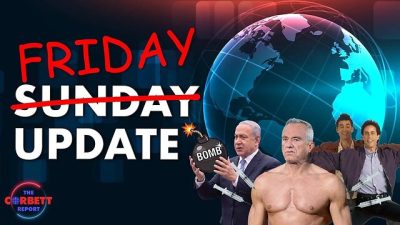
Racist Seinfeld Dances for Joy as Bibi Unveils His New Map
or go to
Aletho News Archives – Video-Images
TV Drama Review
Japanese drama projects Japan’s wartime atrocities onto Chinese characters

Global Times | October 25, 2026
By portraying Chinese characters as perpetrators of ruthless violence while casting Japanese Self-Defense Forces (SDF) intelligence operatives as defenders, the season 2 of the Japanese drama Vivant has recently drawn criticism from Chinese netizens, who argue that its depiction turns historical reality on its head while ignoring Japan’s wartime atrocities.
The TBS drama series – a spy suspense story in which an alleged unofficial intelligence unit of the SDF operates across the globe — has attracted a passionate fanbase. Its currently airing season 2 opened with a household rating of 18.8 percent, the highest for a TV drama this year, according toa commentary article by Japanese media Toyo Keizai.
What draws attention is the portrayal of the enemies in the series, the article noted. Scenes in which the Chinese organization subjects kidnapped members of the SDF unit to brutal torture are repeated with unrelenting intensity.
It is rare for Japanese TV dramas to explicitly portray a real-life country as the enemy, the article noted.
Japanese Prime Minister Sanae Takaichi also made a reference to the drama, saying that she has been recording Vivant and hopes to binge-watch it over the year-end and New Year holidays, according to Japanese media outlets.
China’s CCTV News report on Sunday revealed that the drama features scenes in which Chinese personnel cut off the fingers of and stab Japanese intelligence operatives in the abdomen. Such acts bear striking similarities to the torture inflicted on Chinese nationals by invading Japanese troops during the World War II.
The drama distorts the truth by attributing these atrocities to modern Chinese characters. Beneath the surface, it subtly glorifies Japan’s cross-border overseas operations, blurs the functional boundaries of the SDF and implicitly promotes an expansionist narrative, per CCTV News. … continue
Blog Roll
 Aletho News
- EU facing trillion-euro debt hole while seeking more cash for Kiev
- How US, Europe, Persian Gulf states exhausted missile stockpiles, splurged billions to defend Israel
- Up in arms… Koreans reject U.S. empire’s plan to make South Korea the next Ukraine
- Iran, Turkey, Pakistan, Saudi Arabia could advance region-led security framework in Tehran: FM spox
- Netizens condemn Japanese drama for projecting Japan’s wartime atrocities onto Chinese characters
- Racist Seinfeld Dances for Joy as Bibi Unveils His New Map
- A West Bank War for Netanyahu’s Election Campaign, Could It Backfire?
- Yemen denounces European Parliament’s ‘hypocritical’ push to blacklist Ansarullah
- Qalibaf: UAE’s UN bid aims to ‘clear the runway’ for ‘Greater Israel’, whitewash genocide
- Pakistan reopens Iran border after boosting security: Report
- If Americans Knew
- An error has occurred; the feed is probably down. Try again later.
- No Tricks Zone
- Sudden Stratospheric Warming, Powerful El Niño Combination May Lead To Extreme Europe Cold, Energy Crisis!
- Two New Studies Find Thwaites Glacier Melt Cannot Be Driven By Human Activity Or A Warming Ocean
- E-Cars Reduce CO2 Emissions By Only 41% Compared To Internal Combustion Engine Vehicles
- Predictions Made By Renowned Climate Professor Over Past Decades Have Been Proven To Be Poor
- New Study Suggests Large Regions Of The Pacific Ocean Have Been Cooling For The Last 80 Years
- Germany’s Green Energy Debacle: High Energy Costs Force Kahla Porzellan to Close After 182 Years!
- New Study: 50 Years Of The Most Aggressive ‘Net Zero’ Policies Can Only Affect The Global Climate By 0.03°C
- US September “Heat” Was No Record…Many Records Set Decades Ago
- Latest European Green Energy Debacle; Portugal’s Largest Flagship Solar Park Insolvent!
- Green Energy Debacle: German Expert Professor Fritz Vahrenholt Warns Of Severe Economic And Social Consequences

