US Slaps Venezuelans with New Sanctions
teleSUR | February 3, 2015
The United States officially imposed new sanctions on Venezuela Monday, amid accusations from President Nicolas Maduro that Washington is trying to destabilize his country.
The new sanctions expand the number of Venezuelan government officials barred from entering the United States.
“These restrictions will also affect the immediate family members of a number of those individuals subject to visa restrictions for believed involvement in human rights abuses or for acts of public corruption,” said State Department spokesperson Jen Psaki.
Psaki continued by stating, “We will not publicly identify these individuals because of U.S. visa confidentiality laws, but we are sending a clear message that human rights abusers, those who profit from public corruption, and their families are not welcome in the United States.”
Maduro hit back at the announcement by accusing the U.S. government of hypocrisy.
“They kill black youth in the street with impunity, they persecute and have concentration camps of Central American kids. They have abducted dozens of citizens of the world under no known legal system, submitting them to torture, isolation,” he said during a speech.
Maduro has previously accused U.S. officials of plotting to topple his government.
He asked, “What human rights are they talking about?”
The new U.S. sanctions are in response to a wave of unrest that hit Venezuela in early 2014. Around 43 people died as anti-government groups took to the streets with weapons ranging from firearms to molotov cocktails and home-made bazookas to demand Maduro step down. According to an analysis of the death toll by independent media collective Venezuelanalysis, around half the casualties were government supporters, state security personnel or ordinary members of the public likely killed by anti-government groups. Venezuelan authorities have arrested opposition figures it claims masterminded the violence including Leopoldo Lopez, while also pressing charges against security personnel accused of misconduct.
However, Psaki described the opposition violence as “peaceful protests.”
“We emphasize the action we are announcing today is specific to individuals and not directed at the Venezuelan nation or its people,” she said.
However, Venezuelan foreign minister Delcy Rodriguez told private broadcaster Venevision that the U.S. and corporate media are trying to mislead the international community about Venezuela.
“All imperialist wars have been precipitated by media campaigns such as this one, giving false information that aims to provide the world with the justification for an intervention,” said Rodriguez.
Sabino Romero’s Widow Testifies Amidst Threats

Sabino’s widow, Lucia Martinez de Romero, testified at court today (Aporrea)
By Lucas Koerner | Venezuelanalysis | February 2, 2015
Caracas – Dozens of activists gathered outside the Ministry of Justice in the capital today in solidarity with Lucia Martinez de Romero, the widow of assassinated indigenous Yukpa leader Sabino Romero. Today she testified in the trial of Angel Antonio Romero Bracho, (aka “Manguera”) accused of murdering the indigenous chief or “cacique”.
Lucia herself also suffered multiple gunshot wounds the night of March 3, 2013 when her husband was shot and killed by hired assassins reportedly acting in the service of wealthy cattle ranchers.
Lusby Portillo, 66, Coordinator of the Zulia-based Homo Et Nature Society, explained what is at stake in today’s proceedings:
“Today there is a trial against the physical murderer, who shot and killed [Sabino] and wounded Lucia Martinez. Five police officers from Machiques have already been tried and given seven years of prison… They gave them seven years, because there was influence on the part of the cattle ranchers, who paid so that the court would decide a minimum sentence of seven years”.
Portillo is one of the principal activists to have followed the case over the past 23 months. He told Venezuelanalysis that many indigenous activists feared that a miscarriage of justice would take place unless supporters continued to draw attention to the case. One witness today also noted that the family of Manguera began to threaten Lucia before she was due to testify.
“If we let our guard down, if we don’t protest, if we don’t make movies, if we don’t write articles, if we don’t get the word out, these courts are going to give Manguera ten, eleven years, and then within two or three years he can go free with all of the benefits…So we are demanding thirty years of prison [for Manguera], and we’re also demanding that the trial against the five police officers be annulled, that there be a new trial, and that… the intellectual actors… the cattle ranchers who financed [the murder], who are millionaires, go to trial.”
Land Struggles
In the leadup to his assassination, Rabino spearheaded a series of occupations by Yukpa campesinos of the expansive rancher haciendas established on their ancestral land in Sierra de Perijá, which were returned to them by the current socialist government under the Constitution. According to Portillo, these lands were violently confiscated by the government of dictator Juan Vicente Gomez in 1930, driving the Yukpa people into the mountains. When they subsequently attempted to retake their lands, as Sabino would do over eighty years later, they were brutally massacred by the cattle ranchers.
For indigenous rights activist Tibisay Maldonado, 52, however, this struggle goes much further back than eighty years.
“We are active in the organization National Front for Land Struggle, because, even though we are from Caracas we are from the city, this problematic of the land, this plundering from 500 years ago. We are the inheritors of a dispossession, of an invasion 500 years ago, and the indigenous peoples remain in resistance, and we must stand with them”.
Amid Trial, Impunity Continues for Murder of 8 other Yukpa Leaders
Portillo went on to criticize what he described as “impunity” for the hired killers of indigenous leaders and their intellectual and financial backers.
“Of the Yukpa [leaders] killed over the question of land, who are nine up until now, only the case of Sabino has been taken to the courts, but the [case of the] other eight murdered [leaders] has not been investigated nor brought to trial…Besides trial for [the case of] Sabino, there also needs be trials for the other eight Yukpa who were assassinated.”
Nonetheless, for Leonardo Dominguez, the problem goes well beyond these nine assassinated leaders, encompassing the issues of paramilitary violence in Venezuela writ large;
“This is something that is practiced in Colombia. These are new crimes in Venezuela. So I think the laws need to stipulate a decent punishment for this murderer to mark a precedent, because enough is enough. There have already been 359 campesinos assassinated at the hands of the hitmen, plus workers’ leaders, plus popular leaders. We want peace, but we believe peace is achieved through struggle. If you want peace, prepare for war,” he said.
A Test for the Revolution
For those present outside the Ministry of Justice, today’s trial represents a fundamental test of the Bolivarian government’s commitment to defending indigenous rights.
“Socialism has two paths,” warns Dominguez..”Either we’re with the indigenous people or we’re with the murderers.”
Despite the challenges faced by the Yupka people, including the relative inaction of the government, Jessy Rojas, 20, of Urbano Aborigen, is nevertheless hopeful. She stated that there had been a “fair amount of gains” for indigenous people under the Bolivarian Revolution, including the trial of Sabino’s murderer.
“In the past, there generally weren’t trials for indigenous cases. In the past, there wasn’t this openness to discussing indigenous issues in the capital”.
According to Jessy, these historic gains are propelling young activists to take the struggle evern further.
“This is the moment to demand,” she asserted.
The case has been adjourned until February 13th.
Chile: Two Found Guilty in Horman Murder Case
Weekly News Update on the Americas | February 2, 2015
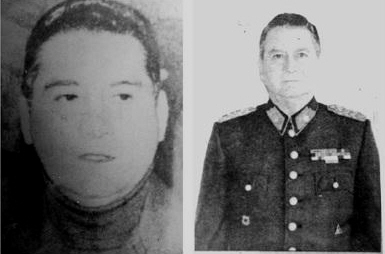
Retired Chilean army colonel Pedro Espinoza and former Chilean air force intelligence agent Rafael González Berdugo have been convicted in the murder of US journalist Charles Horman and US graduate student Frank Teruggi during the days after the Sept. 11, 1973 military coup that overthrew leftist president Salvador Allende Gossens [see Update #1226].
Judge Jorge Zepeda sentenced Espinoza–formerly an officer in the now-defunct National Intelligence Directorate (DINA) who has been described as the right-hand man of DINA head Manuel Contreras—to seven years in prison for the two murders.
González Berdugo was sentenced to two years of police surveillance as an accomplice in Harmon’s murder.
Judge Zepeda ruled in the case on January 9 but the decision wasn’t announced until January 28.
Last summer the judge officially ruled that “US military intelligence services played a fundamental role in the murders” by supplying information to the Chilean military. (El Ciudadano (Chile) 1/31/15)
Colombia’s Journalists Under Threat
teleSUR | January 27, 2015
“2014 ended with threats and 2015 as well started with threats,” said representative in Colombia for Reporters Without Borders, Fabiola León. She insists the situation is worrying as over the course of around 20 days, 5 written threats have been delivered targeting 150 people, who include not only journalists but also social activists and land restitution leaders.
Among those directly threaten is Omar Vera, Chief Editor of “El Turbión,” a digital newspaper that for 11 years has been reporting on the struggles of Colombia’s social movements. In one of the written threats received December last year, the nine journalists working at “El Turbión” including Omar, were identified by their full names in the list of targets.
Omar and his team consider that the threats are related to the “interest of silencing independent voices that are reporting on social movements and that are showing solidarity with a network of organizations currently struggling for a change in the country in the wake of the peace process,” he recalled.
Elkin Sarria, a friend and colleague of Omar, is the editor of “Contagio” radio station, which like “El Turbión” newspaper is among the 12 media outlets targeted in a written threat signed by Aguilas Negras, a paramilitary group that Colombia’s Ministry of Interior Juan Fernando Cristo has recently denied existed.
“If Aguilas Negras does not exist, then who’s behind the threats?” Elkin asks; “Is it the military? Is it the State intelligence? To know who’s behind would be the only real guarantee to our security,” he adds.
For Fabiola León it is not by chance that among the people that have been threatened are not only journalists. “What these people, including journalists, share in common is that we have been talking about the peace process, that we have been working on the resolution of social problems that could serve as base for the final deal to put an end to the armed conflict,” she pointed out.
The tough situation Colombian journalists are currently facing, coincides with the security conditions that members and leaders of the “Broad Front for Peace,” a coalition of activists actively supporting the peace process, have been denouncing.
“Behind the threats I believe there are powerful forces with great interest in the failure of the peace process; determined to hinder fundamental transformations as well as a strengthening of democracy and to sabotage the peace talks in Havana,” Human Rights defender Piedad Cordoba recently declared to teleSUR English referring to the latest life threats she received.
But what worries the most is that whoever is behind the threats, seems to be willing to implement them. That was made clear Wednesday last week when peace activist and social leader Carlos Alberto Pedraza was found dead in strange circumstances.
Social leaders, peace activists and journalists have agreed that the very first step to guarantee the security of those under threat is to identify who exactly is behind the increasing threats, something that has already be demanded from the Colombian authorities.
Argentine president seeks to dissolve intelligence body
Press TV – January 27, 2015
Argentina’s president has described the country’s intelligence agency as a “national debt” and has announced plans to disband it.
President Cristina Fernandez de Kirchner made the remarks in a Monday TV address, saying she would prepare a draft legislation to set up an alternative body.
“I have prepared a bill to reform the intelligence service,” said Fernandez, insisting that she wanted the idea discussed at an urgent session of the nation’s Congress.
She further stated that her plan “is to dissolve the Intelligence Secretariat and create a Federal Intelligence Agency” and added that a new leadership for the intelligence agency should be picked by a president and confirmed by the South American country’s Senate.
Fernandez further argued that the intelligence services maintained the same structure they had during the US-backed military government that ended in 1983.
“Combating impunity has been a priority of my government,” she emphasized.
She made the decision following the mysterious death of prosecutor Alberto Nisman hours before he was reportedly due to testify against senior government authorities.
Nisman had been probing the bombing of a Jewish center in the Argentine capital Buenos Aires in 1994 which killed 85 people.
He was found dead on January 18 in his apartment in Buenos Aires.
Investigators initially said they believed he had committed suicide, but later clarified that homicide or “induced suicide” could not be ruled out.
President Fernandez has emphasized that she does not believe Nisman’s death was a suicide.
1.5 Million Lifted Out of Poverty in Ecuador under Correa
teleSUR | January 25, 2015
The Ecuadorean National Secretariat for Planning and Development announced on Friday that between the years 2007 and 2014, more than 1.5 million people have been lifted out of poverty in the South American country. These years coincide with the administration of Rafael Correa and the policies of what is known as the Citizen’s Revolution, which recently celebrated 8 years of government.
“The model of government has radically changed,” said Pabel Muñoz, the national secretary for planning and development. The government of Rafael Correa has also dramatically reduced inequality in the country, with the gap between the richest and poorest in the country shrinking. In 2007 the richest earned 42 times that of the poorest, while in 2014 that was reduced to only 22 times.
The 1.5 million lifted out of poverty represents a drop of 14 percent in the poverty rate in the country, with extreme poverty dropping 8 points from 16.5 percent to 8.6 percent.
“Ecuador is a successful country because while reducing poverty, it reduces the gap between the rich and the poor. It has allowed for an increase in consumption and has not registered drops in social indicators. Instead people have climbed the social ladder,” said Muñoz.
These figures were published by the National Secretariat for Planning and Development.
Ecuador has also seen the biggest decrease in the region in the Gini coefficient — a figure that measures inequality in a country — dropping from 0.55 in 2007 to 0.48 in 2012, whereas the rest of Latin America saw a drop from 0.52 to 0.50.
The country has also seen important progress in the field of education, with primary school attendance increasing from 92 percent in 2007 to 96 percent in 2014. There has also been an increase of approximately 1 million more Ecuadoreans enrolled in public education.
Ecuador is now a leader in public investment in the region. Whereas in 2006 social investment constituted the equivalent of 3.6 percent of GDP, social investment is now the equivalent of 11 percent of GDP.
“This is just an example of the achievements of our government, which have been made possible because we have put capital at the service of the people and not the other way around,” said Muñoz.
Monsanto agrochemicals causing genetic damage in soybean workers – study
RT | January 22, 2015
Soybean workers exposed to the agrochemicals like glyphosate, the main component in Monsanto’s ‘Roundup’ herbicide and other biocides, suffer from elevated DNA and cell damage, according to a new study.
The study, published in the journal Mutation Research/Genetic Toxicology and Environmental Mutagenesis, involved 127 people, including 81 exposed to biocides while working in the Brazilian soybean industry and 46 non-exposed individuals in a control group.
The exposed group exhibited an elevated level of cellular apoptosis, as well as DNA damage, according to researcher Danieli Benedetti and his team, which concluded that the now-common use of genetically-modified soybeans in the State of Rio Grande do Sul, especially in the city of Espumoso, has toxic ramifications for workers.
“Our findings indicate the advisability of monitoring genetic toxicity in soybean farm workers exposed to pesticides,” the researchers said.
Genetically-engineered seeds, proliferated across the globe by multinational agribusiness conglomerates like Monsanto, are designed to withstand dousing by glyphosate and other biocides in order to terminate insect, fungus, and weed nuisances.
Benedetti’s team focused specifically on Glyphosate and 2,4-D, the two top biocide components in American-biotechnology farming culture. Glyphosate is the prime ingredient in Monsanto’s Roundup products, while Dow Chemical’s 2,4-D is a potent herbicide that was also used in making Agent Orange, the chemical used by the US to devastate resistance during the Vietnam War.
Last spring, Brazil’s public prosecutor sought to suspend use of glyphosate based on its toxic effects. Studies have linked glyphosate to a fatal kidney disease that has affected poor farming regions worldwide.
Just last week, Monsanto won final approval from the US for its new genetically-modified soybeans and cotton, designed to withstand a dominant biocide that fights weed resistance built up as a result of the company’s glyphosate-based Roundup herbicide already in use.
Monsanto reported an earnings drop of 34 percent in its first fiscal quarter. The company reportedly lost $156 million in the fourth quarter of last year due to a one-time payment made to settle an environmental legal case.
As multinationals such as Monsanto and Dow Chemical have sought strict standardization in agriculture markets the world over, the corporate leviathans, especially the former, have become the target of considerable protests and demonstrations.
Companies like Monsanto market their own patented seeds that, given their genetic modification, can be doused with biocides to kill pests and weeds, and which can jeopardize long-term health of the soil and the necessary biodiversity of a local environment that allows for natural pollination and, thus, food security.
In May of last year, activists on five continents around the globe, comprising of 52 nations organized resistance under the ‘March against Monsanto’ umbrella. Protests positioned against Monsanto and involving other corporate-food issues occurred in around 400 cities worldwide, according to reports.
Just this past weekend, more than 120 organizations joined the fifth annual ‘We are Fed Up!’ demonstration in Berlin to focus on the increased importation of American farming practices – such as genetic modification, frequent antibiotic injections for animals, and chemical meat treatments – following the implementation of the controversial Transatlantic Trade and Investment Partnership (TTIP).
Protests have raged most furiously in Europe, where the EU recently approved a law that would let its nations ban genetically-modified organisms even if the EU had deemed them safe. Monsanto said last year it would not try to get any more GM crops approved in Europe given the consistent pushback.
Anger and unrest against Monsanto’s stranglehold has also spread to South America. In Argentina, protests have occurred in resistance to the company’s potent biocides used in tandem with their genetically-engineered seeds. In Brazil, farmers have called on Monsanto and other producers of pest-resistant corn seeds to reimburse them for money spent on additional biocides when the bugs killed the crops instead of dying themselves, speaking to the biocide arms race involved in using GM seeds. Brazilian soy exporters are also tangling with Monsanto over seed royalties.
In Central America, Guatemala’s highest court suspended in September a controversial ‘Monsanto Law,’ a provision of a US-Central American trade agreement, that would insulate transnational seed corporations considered to have “discovered” new plant varieties.
On its home turf in the United States, Monsanto has worked diligently with other multinational biotech, agribusiness, and food production companies to beat down state-level proposals to simply label whether food is comprised of GM ingredients.
The most recent example came in the state of Oregon, where a November ballot initiative to require GMO labeling was narrowly defeated in what became the most expensive ballot measure in the state’s history. The likes of Monsanto and Dupont flushed more than $21 million into the anti-labeling campaign, dwarfing the $9 million raised by proponents.
The company has sued Hawaii’s Maui County for passing last year that bans the cultivation of genetically modified organisms.
Monsanto’s St. Louis headquarters have been the target of mild protests, especially during shareholder meetings.
Meanwhile, agribusiness allies on Capitol Hill are pushing new federal legislation, the Safe and Accurate Food Labeling Act, that would standardize food labeling, effectively killing popular state-based efforts to pass labeling laws.
READ MORE:
Monsanto gets approval for new GMO corn, soybeans designed for potent new biocide
Rising suicide rate for Indian farmers blamed on GMO seeds
In facts & numbers: Absolute majority of Americans want GMO food to be labeled
What is the Real Reason Behind Obama’s New Cuba Policy?
By Pascal Robert | Black Agenda Report | January 21, 2015
On December 17, 2014 president Barack Obama made a public statement announcing a change in America’s over fifty year-old Cold War strategy of isolating The Republic of Cuba. Since the Cuban Revolution of 1959, and the Island’s turn to Communism under the leadership of Fidel Castro, the United States has made a consistent effort to choke the life out of the Cuban nation through economic embargo. In a seemingly drastic change of that policy, President Obama stated he would further loosen travel restrictions to Cuba, open limited financial interaction with the country, and eventually move to building a U.S. embassy in Havana. Due to the 1996 Helms-Burton Act signed by President Clinton, Obama would still need Congressional approval to get much of this accomplished.
Obama’s statement was greeted with joy by many Americans who viewed this Cold War policy as antiquated and redundant. In a world where the Communist Soviet Union has long since collapsed, what sense does it make to keep punishing the Cuban people? Obama supporters used the president’s initiative as evidence of his superior statecraft in the face of Republican opposition by Cuba hard-liners like Florida Senator Marco Rubio.
What most Americans do not realize is that Obama’s change in policy is not the product of some enlightened awakening concerning foreign policy. Obama is reacting to occurrences that pose a significant geopolitical challenge to American hegemony in the Western hemisphere. The Russians and the Chinese have come knocking on America’s back door. From July 11 to 17, 2014, Russian President Vladimir Putin traveled through a multi nation Latin American tour ending with a summit of the BRICS nations (Brazil, Russia, India, China, and South Africa) in Fortaleza, Brazil. These nations are among the fastest developing economies in the world, and their combined efforts have been posing significant geopolitical challenge to America and its European allies all over the globe. This is particularly the case since the 2008 economic crash.
The first stop on Russian president Putin’s tour was the Republic of Cuba. It was announced by the Russian Kremlin’s news service that Putin agreed to absolve 90% of Cuba’s 32 billion dollar debt to Russia and, according to the Russian Times, the remaining 10% of Cuba’s debt would be re-invested back into Cuban infrastructure. For a relatively poor country like Cuba to have 90% of the debt to its once greatest economic benefactor forgiven is of epic importance to the Island nation. Furthermore, the Russians announced plans to develop infrastructure to build oil rigs for the valuable resource discovered off the coast of Cuba.
“The Latin America tour started with the visit to Cuba, where Putin signed a new agreement on oil exploration in Caribbean waters which contain most of the estimated 124 million barrels of the Island’s crude. The exploration will take place a few dozen miles from the US coast.”
Of even more strategic concern to the United States, Russia stated a desire to re-open a spying outpost once used by the Soviet Union to intercept American communication. The move by Russia to reoccupy that spy station, as well as modernize it, could open Russian access to American intelligence less than 200 miles away from U.S. shores.
“Russia has quietly reached an agreement with Cuba to reopen a Soviet-era spy base on America’s doorstep, amid souring relations between Moscow and Washington.
“The deal to reopen the signals intelligence facility in Lourdes, south of Havana, was agreed in principle during president Vladimir Putin’s visit to the island as part of a Latin American tour last week, according to the newspaper Kommersant.”
“Opened in 1967, the Lourdes facility was the Soviet Union’s largest foreign base, a mere 155 miles from the US coast. It employed up to 3,000 military and intelligence personnel to intercept a wide array of American telephone and radio communications, but Putin announced its closure in 2001 because it was too expensive – Russia had been paying $200m (£117m) a year in rent – and in response to US demands.
“After Putin visited Cuba on Friday, the Kremlin press service said the president had forgiven 90% of Cuba’s unpaid Soviet-era debts, which totaled $32bn (£18.6bn) – a concession that now appears to be tied to the agreement to reopen the base.”
Though Putin’s actions in Cuba were most significant to the change in American policy, his dealings in other Latin Countries were quite bold as well. On his visit to Argentina, Putin executed an agreement with the nation’s president Cristina Fernandez to construct two nuclear power plants in the face of that country’s frigid relations with the United States as a result of American hedge fund managers demanding Argentina satisfy all of its debt. Furthermore, in Brazil, Putin executed a memorandum of understanding to commence development of nuclear power plants as well as a spent fuel storage facility. What is most humiliating for the United States in all this is that these agreements are being executed at a time in which America has been trying to force international co-operation to isolate Russia resulting from the political crisis in the Ukraine. Putin’s actions in Cuba, combined with other Latin countries, illustrates that not only is Russia far from isolated, it is planting its geopolitical footprint directly in America’s back yard. As the The UK Guardian article above states:
“During Putin’s Latin American tour, he also signed agreements to establish positioning stations in Argentina, Brazil and Cuba for Glonass, Russia’s answer to the United States’ global positioning system (GPS). He also made a surprise stop to discuss placing a Glonass station in Nicaragua, where president Daniel Ortega called Putin’s first visit to the country a ‘ray of light.’ ‘The goal of Putin’s visit to Cuba, Nicaragua and Argentina was to strengthen geopolitical connections with Latin America in response to the United States’ attempts to isolate Russia,’ Alexei Pushkov, the chairman of the foreign affairs committee in Russia’s parliament, tweeted after the trip.”
Yet that alone is not the degree to which the Russians are making a strategic pivot to Latin and South America. At the BRICS summit the member nations of Brazil, Russia, India, China and South Africa agreed to dedicate over 100 billion dollars to start a Central Bank among the nations with 100 billion in reserves as well. The ultimate goal of this Central Bank is to deleverage the BRICS nations from the U.S. dollar as the world’s reserve currency. This could pose a great threat to America’s position in the world.
Compounded with Russia’s geopolitical pivot, China has now strongly entered the Latin nations with its plan to build a canal through Nicaragua to rival the Panama Canal. This move would also greatly challenge American hegemony in the region.
Contrary to popular belief, Obama’s change in Cuba policy is not an indication of his foreign policy brilliance; it is a product of America’s foreign policy desperation. The Russians have been making serious power moves in Latin and South America while American policies have been alienating countries like Argentina and Brazil. Over the weekend a delegation of Democratic Party senators lead by Pat Leahy met with Raul Castro to ascertain how to improve relations with the two Countries. This is not the action of a United States negotiating from a position of strength, but the behavior of a nation trying to catch up with its geopolitical challenger, the Russians. As stated in a recent article on the trip in the New York Times titled: “U.S. Lawmakers in Cuba for Three Day Visit”:
“In the statement, Mr. Leahy’s office said the trip was intended to ‘seek clarity from Cubans on what they envision normalization to look like, going beyond past rote responses such as ‘end the embargo.’ ‘The office said that the trip would “help develop a sense of what Cuba and the United States are prepared to do to make a constructive relationship possible.’”
By Leahy’s own admission, the Cuban’s are calling the shots and the United States is being forced to play catch up. Now the Cubans are in the old Cold War position many Third World countries found themselves in by being able to play the Russians against the Americans and ask one simple question: Which one of you is willing to offer more? It looks more and more like the Cold War all over again.
Five Surprises About American Internment During World War II

By Jan Jarboe Russell | Disinformation |January 20, 2015
The general history of America’s internment of its own citizens during World War II has focused on the incarceration of 120,000 Japanese, 62 percent of them American-born, who were forcibly evacuated from the Pacific coast after the bombing of Pearl Harbor.
But few people know that Executive Order 9066, signed by President Roosevelt, which permitted the roundup of Japanese and their American-born children, also paved the way for the arrest of Germans and Italians who the FBI considered security risks and labeled as “enemy aliens.” Indeed the day before Roosevelt signed the order FBI agents had arrested 264 Italians, 1,296 Germans, and 2,209 on the East and West Coast. The hunt for perceived enemies was on.
Here are five surprising facts about the extent of FDR’s internment program:
Fact One: The arrests of suspected enemies extended far beyond our national borders. Under provisions of the Enemy Alien Act of 1798, the same act that allowed Presidents George W. Bush and President Obama to intern modern-day suspected terrorists, Roosevelt orchestrated the removal of 4,058 Germans, 2,264 Japanese and 288 Italians from thirteen Latin American countries — and locked them up around the United States, many in a secret government internment camp located in Crystal City, Texas, an isolated desert town located at the southern tip of Texas, only thirty miles from the Mexican border. His reason? Roosevelt feared security threats from Germans and Japanese in Latin America.
Fact Two: Incredibly, among those taken from Latin America included a small number of Jews who had fled persecution in Germany. In his book, Nazis and Good Neighbors, Max Paul Friedman documented 81 Jews in Latin America who were part of the roundup. One Jewish family — the Jacobis from Columbia – was interned in the camp in Crystal City.
Fact Three: The entire political and military establishment applied pressure on Roosevelt to pursue a vigorous internment policy. The only person close to him who opposed it was Eleanor Roosevelt who believed the case against immigrants was driven by wartime hysteria. “These people were not convicted of any crime but emotions ran too high, too many people wanted to wreak vengeance on Oriental looking people,” she wrote of the evacuation order for the Japanese.
Shortly after the attack on Pearl Harbor, Roosevelt told Attorney General Francis Biddle to arrest Italians and Germans. “I don’t care so much about the Italians. They are a lot of opera singers, but the Germans are different: they may be dangerous.” In response, Biddle widened the net of suspicion.
Fact Four: One reason for the internment program was to create a pool of people of hostages to exchange for Americans trapped behind enemy lines in Europe and in the Pacific. FDR created a secret division within the Department of State called the Special War Problems Division, which negotiated numerous prisoner exchanges with Japan and Germany.
Fact Five: The Crystal City Internment Camp was at the center of those exchanges. Some former internees, who were children in the camp, refer to it as The Kidnap Camp. Thousands of internees in Crystal City, including their American-born children, were exchanged for ostensibly more important Americans — diplomats, businessmen, soldiers, physicians, and missionaries — behind enemy lines in Japan and Germany.
The first of four exchanges in Crystal City took place in June 1942 and the second on September 2, 1943. During those exchanges, more than 2000 Japanese and Japanese Americans were traded for Americans caught in Japan. In February 1944, 634 German immigrants and their children, were sent from Crystal City into Germany. On January 2, 1945, 428 more in Crystal City were traded into war.
The tableau of today’s headlines about government surveillance, internment and prisoner exchanges was written more than seventy years ago in Crystal City, Texas.
~
Jan Jarboe Russell, author of The Train to Crystal City, is a former Nieman Fellow, a contributing editor for Texas Monthly, and has written for the San Antonio Express-News, The New York Times, Slate, and other magazines. She lives in San Antonio, Texas, with her husband, Dr. Lewis F. Russell, Jr. For more information please visit http://www.janjarboerussell.com, and follow the author on Facebook and Twitter
Guatemalan Court Sentences Ex-Police Chief for Murdering 37
teleSUR | January 19, 2015
A Guatemalan court found Pedro Garcia Arredondo guilty of murder, attempted murder, and crimes against humanity Monday for the massacre of 37 people at the Spanish embassy in Guatemala 35 years ago, EFE reports.
Garcia Arredondo, 69, is responsible for burning the victims of the massacre to death on Jan. 31, 1980, found the court after four months of hearings.
The tribunal outcome confirmed the long-held suspicions in the country that the fire was the result of a “clandestine police operation” and that the participants “prevented the Red Cross, emergency services, and journalists from entering” the building.
The former police chief was still trying to declare his innocence, but Judge Sara Yoc Yoc ruled that he gave the orders to burn down the embassy. According to her ruling, Garcia Arredondo “used the media to confirm the deaths of those inside the embassy.”
The security forces of Guatemala’s military regime at the time attacked the Spanish embassy after rural workers and students occupied it in protest to the dictatorship.
Among the 37 burned to death was Spanish Consul Jaime Ruiz del Arbol Soler and Vicente Menchu and Francisco Tum, the father and cousin, respectively, of 1992 Nobel Prize Winner Rigoberta Menchu. Menchu gave the first testimony against Garcia Arredondo in the case.
Just two people survived the fire, including the Spanish ambassador. The other, Guatemalan farmer Gregorio Yuja, subsequently disappeared and his body was found with evidence of torture three days after the fire in the rectory of the State University of San Carlos of Guatemala. Yuja has since become a symbol of the left-wing student movement.
Garcia Arredondo was first arrested in 2011 over the forced disappearance of a university student, also in 1980. He is three years into a 70 year sentence for that crime.
Featured Video
Integrity Initiative: UK-funded network framed dissent as Russian disinformation for years
or go to
Aletho News Archives – Video-Images
From the Archives
Why Saudi Ties to 9/11 Mean U.S. Ties to 9/11
By Kevin Ryan | Dig Within | September 27, 2015
Media interest in Saudi Arabian connections to the crimes of 9/11 has centered on calls for the release of the 28 missing pages from the Joint Congressional Inquiry’s report. However, those calls focus on the question of hijacker financing and omit the most interesting links between the 9/11 attacks and Saudi Arabia—links that implicate powerful people in the United States. Here are twenty examples. … continue
Blog Roll
 Aletho News
- EUROPE FEARS RUSSIA’S NEXT MOVE / Ian Proud
- Big tech hands in its DSA censorship reports to the EU
- ‘A Big Victory’ – Palestine Chronicle Wins Two-Year Legal Battle
- IAEA inspectors cannot return to Iran amid US threats: Russia
- Senate Rejects Iran War Powers Resolution Passed By House
- ‘We did not attack Pakistan with drones’: Afghan sources
- Iraqi Resistance faction links arms to sovereignty, questions US exit
- Cannon fodder no more… South Korea rejects Trump’s pressure to join his criminal war on Iran
- Neria Leiter Was A Legitimate Military Target
- Integrity Initiative: UK-funded network framed dissent as Russian disinformation for years
- If Americans Knew
- ‘This is where I live now, the back of a truck’: a day in the life of a grandmother in Gaza
- In UN Speech, Iran’s President Displays Pictures of Children Killed by US, Brings Attention to Israel’s Nuclear Arsenal
- Israel displaces hundreds of Palestinians amid wave of demolitions in West Bank
- Aid, reconstruction, and Israel’s history of obstruction in Gaza
- Trump administration digs an ever-deeper hole of complicity in genocide – Daily Update
- US-Israel $2.8 Billion Arms Deal, 40,000-Bomb Supply Faces New Gaza Complicity Accusations
- Caught on Tape: AIPAC CEO Boasted of Controlling Trump’s National Security Officials
- Why Hamas Attacked Israel in October 2023 – Israeli professor Ilan Pappé
- They see them, then kill them: Israeli quadcopters track, deliberately target civilians in Gaza
- Winter could turn Gaza’s treacherous, war-damaged buildings into deathtraps
- No Tricks Zone
- New Study: Earth And Venus Surface Warmth Largely Explained By Convection And Lapse Rate, Not CO2 Or Radiation
- 2025 Nature Paper Claiming Worsening Global Drought Gets RETRACTED …Heavily Flawed
- New Study: ‘Global Drought Shows No Detectable Recent Acceleration Under Climate Warming’
- Economic Masterminds: German Socialists Suggest Taxing Productivity Gains Stemming From Using AI
- The South China Sea Has Not Been Cooperating With The Climate Change Narrative
- Energy Crisis: Germany Enters Heating Season With Historically Low Gas Reserve Fill Levels
- New Study: The Antarctic Ice Sheet Gained Mass From 2020-2024 Due To Staggering Snow And Ice Accumulation
- Study: Ocean Heating Rates From Thousands Of Years Ago ‘Dwarf’ Modern Ocean Heating Rates
- Climate Extremists Target, Attack Large-Scale Power Grid Infrastructure In Germany!
- New Study: Antarctic Ice Melt Has Contributed Less Than 1 Centimeter To Sea Level Rise In The Last 30 Years

