Behind Israel’s Bombing in Iraq’s Heartland
By Giorgio Cafiero – Consortium News – August 28, 2019
Iraq has felt the heat from escalating tensions between the U.S. and Iran this summer as the White House moves ahead with its “maximum pressure” campaign against the Islamic Republic. Also clear is that Israel and Iran’s proxy wars in the region have spilled into Iraq too. Last month, Israel carried out its first attacks on targets in Iraq since Operation Opera on June 7, 1981.
On July 19, Israel struck a target in the Salahuddin governorate, three days before another attack against Camp Ashraf, located within close proximity to Iran. According to al-Ain, the attack against Camp Ashraf killed 40 members of Iran’s Islamic Revolutionary Guard Corps (IRGC) and Iranian-sponsored Iraqi Shi’a militiamen. On Aug. 12, a blast occurred at a Popular Mobilization Units (PMU) arms depot in the Iraqi capital, allegedly carried out by an Israeli aircraft and resulting in one death and 29 injuries. Other Israeli attacks followed on the 19 and 25 of August. Several days ago, U.S. officials confirmed that Israelis were indeed behind the July 19 attack in Salahuddin governorate, which was suspected from the beginning.
Such actions highlight how Israel seeks to expand its theater of confrontation with the Iran to Iraq. Put simply, the Israelis are reacting with increasing aggression against the extent of Iranian-sponsored militias in Iraq and elsewhere in the Middle East that provide Tehran greater leverage vis-à-vis Israel.

Pompeo: Not against further Israeli strikes. (YouTube)
Important questions surround the U.S. role in these Israeli attacks against PMU targets in Iraq. It is difficult to imagine how the Trump administration could have not given Israel the green light to carry out these attacks. As Karim al-Alwei, an Iraqi parliamentarian, explained, “the U.S. controls Iraqi air space” thus “no planes, including Iraqi jets or helicopters, can overfly the area without U.S. knowledge or permission.” Only seven months ago, U.S. Secretary of State Mike Pompeo reportedly raised the topic of Iranian missiles in the hands of PMU forces in Iraq while meeting with Iraq’s Prime Minister Adel Abdul-Mahdi, stating that Washington would not be against any future Israeli military operations targeting such facilities.
Unclear is whether the Israelis used Syrian, Turkish, or Saudi airspace to reach their targets in Iraq. Regardless, it is a safe bet that the Saudi leadership, which maintains a tacit partnership with Israel largely based on a common perception of Tehran as a threat to its interests, welcomes such Israeli action in Iraq. As Saudi and Israeli officials see Iranian-sponsored Shi’a militia in Iraq, Syria, and Lebanon as a major threat, the Israeli strikes in Iraq will likely push the Israelis and Saudis even closer together.
Other Targets of Israel
Tel Aviv has dramatically increased the intensity and reach of its military campaign to weaken Tehran-backed militias in the region, waging attacks not only in Iraq, but also in Syria and Palestine too, as well as recently sending two drones into Lebanon. Into the chaos of Syria the Israelis have carried out many strikes against Iran-related targets since the civil war began in 2011. Yet by attacking targets in Iraq, Israel is showing its determination to expand the theater of its proxy war with Iran.
Although difficult to predict the long-term ramifications of these blasts in Iraq, their impact will likely be destabilizing, given Iraq’s fragile security. A major concern for officials in Baghdad is that in the days, weeks, and months ahead Iraq—as well as its airspace—could be the location of intensified violence as the U.S., Israel, and Iran challenge each other’s actions. Iraq will have a difficult time staying neutral between Washington and Tehran.
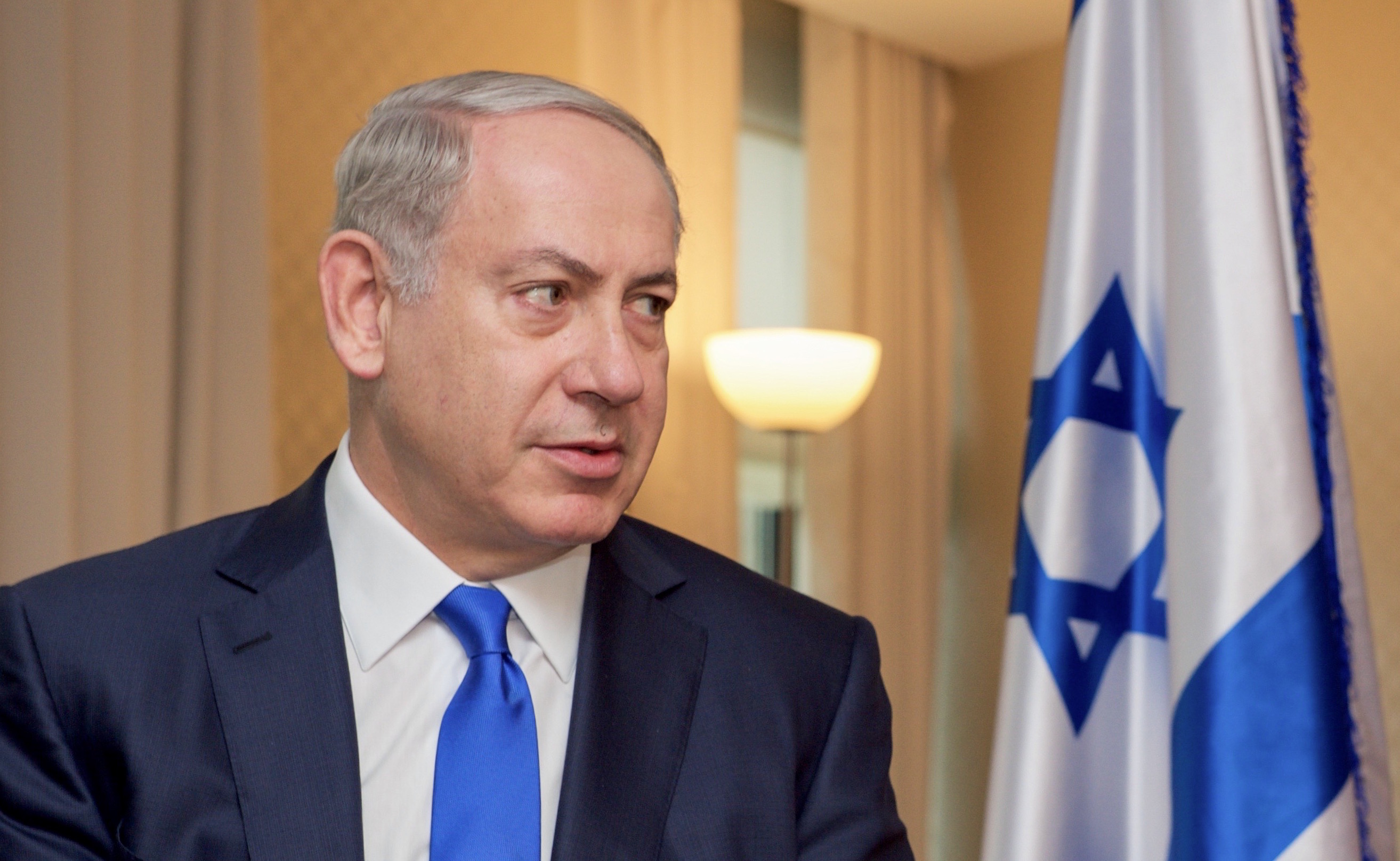
Netanyahu: More coming. (Wikimedia Commons)
Prime Minister Benjamin Netanyahu said Aug 19, “Iran has no immunity, anywhere… we will act and currently are acting against them, wherever it is necessary.” Three days later the Israeli leader went further, suggesting his country was perhaps involved in these attacks in Iraq, declaring, “We are operating in many areas against a state that wants to annihilate us.”
By making such bold moves, Israel is taking major risks. If such attacks continue in Iraq against Tehran-sponsored non-state actors near the Iranian border, Iran will likely respond. Perhaps the Iranians will put air defense capabilities in the hands of Iraqi Shi’a militias to enable such factions to fend off future Israeli attacks. Also possible is that Tehran would carry out limited strikes in retaliation at a time and place of the Iranian leadership’s choosing, perhaps targeting Israeli positions in the occupied Golan Heights of Syria.
Israeli strikes, which constitute a flagrant violation of Iraq’s sovereignty, may come with major costs for U.S. interests in Iraq. Given that an influential Iran-based Shi’a cleric, Grand Ayatollah Kazim al-Haeri, reacted to such Israeli attacks with a fatwa forbidding America’s military presence from continuing in Iraq, and the fact that many in Iraq and other Arab countries see the U.S. as responsible for Israeli actions against PMU targets, the roughly 5,000 American troops in the country could find themselves in the crosshairs of what has quickly become an escalating Israeli-Iranian proxy war waged in Iraq.
Israel’s bombing of Iraq will have major implications for the Washington-Baghdad relationship too, particularly given that the Iraqi government is attempting to bring the heavily armed Shi’a militias under its control. If the U.S. administration fails to prevent Israel from turning Iraq into more of a battleground in Tel Aviv’s proxy wars with Tehran, Iraq’s fragile stability will be further undermined. Under such circumstances, Iran could quickly capitalize on such conditions to bring Baghdad closer to Tehran at a time in which U.S. influence in Iraq—and the region at large—continues to wane.
Unquestionably, perceptions across Iraq that the U.S. is to blame for Israel’s actions will push more Iraqis to the conclusion that the White House’s “maximum pressure” agenda against Iran is directly undermining Iraq’s basic interests in upholding sovereignty and moving toward a more stable future in which the country is not implicated in greater regional crises involving multiple nations.
Giorgio Cafiero (@GiorgioCafiero) is the CEO of Gulf State Analytics (@GulfStateAnalyt), a Washington-based geopolitical risk consultancy.
Nasrallah: Netanyahu is Campaigning with the Blood of his People
Speech by Hezbollah Secretary General Sayed Hassan Nasrallah on August 25, 2019, on the occasion of the annual commemoration of Lebanon’s Second Liberation against the takfiris terrorist groups, which was finalized on August 25, 2017.
Transcript:
[…] I now turn to the question of Israel. Pray upon Muhammad and his family.
What happened last night is very dangerous, and I’ll explain why, because (the firmness of) our position must be at the height of the event and the danger. Let no one minimize what happened and consider it offhandedly. I will offer my analysis (after recalling the facts).
This is what happened: on the night of yesterday, in the skies of the southern suburbs of Beirut, a very modern drone came —I can say it is very sophisticated because this drone is in our hands, and we may show it to the media; later we will agree on that with the official security bodies; we also have the remains of the second (suicide) drone. It is not at all the type of drone that one can rent in towns or villages to film weddings and celebrations, not at all. This is a very modern military drone, which is almost two meters wide, a very sharp military technology.
The first drone came at night in the targeted region, namely some street of the Ma’wad neighborhood in the southern suburbs of Beirut. The first was a surveillance drone that had no other role but to collect information because it contained no explosive device. It descended very low, ending up between the buildings. This means it was filming its target very accurately, or at least trying to do so.
As announced by Hezbollah media relations, we have not shot down the drone. Young people in the neighborhood, seeing this two meters long drone flying so low, between buildings… The more I speak frankly and clearly, the easier it will be to understand, because we have to base our stance on truth, not on illusions or assumptions. These young people started to throw stones at this drone, which then fell. Either it fell because of a technical failure, either due to stone throwing, and it is clear that the drone was damaged by a stone. The drone therefore fell to the ground.
After a very brief moment, that is to say, a maximum of one or two minutes, another drone came aggressively and hit a certain place. So it is not a drone that was there to watch, and that they would have detonated because of an incident, not at all. What happened last night is an attack by a suicide drone against a target located in the southern suburbs of Beirut, Lebanon. This is the precise description that can be done from the field data.
Why do we say it’s dangerous? The fact that there was no killing and no injuries, by the grace of God, does not make this incident less dangerous. Sure, buildings were hit, their windows and facades were damaged, as well as furniture of apartments, offices… There was property damage. By the Grace of God Almighty and Exalted, the attack occurred during the night from Saturday to Sunday, and you know that on Saturdays and Sundays, you can play soccer on the main roads of the southern suburbs of Beirut (the streets are empty) because most people spend (weekends) in the south and in the Bekaa. It is a blessing of God Most High and Exalted. For without Him, surely, there would have been martyrs and wounded. God Almighty has bestowed His kindness upon us last night.
There was a loud explosion, which many residents of the southern suburbs of Beirut were able to hear. It was not a small explosion. This suicide drone attack against a target in the southern suburbs of Beirut is the first act of aggression since August 14, 2006. For in regard to the strikes which took place against Jenta a few years ago (in February 2014), we can say that this point was located at the Syrian-Lebanese border. But today there was a clear and open aggression (against Lebanon).
Of course, all the Israeli media speak of two suicide drones or one suicide drone that struck the southern suburbs of Beirut. Now if someone in Lebanon or in the Arab world, or on satellite TV channels, wants to pretend it is only a local (minor) incident, concerning only Lebanon, with drones that anyone can buy, it’s absolutely false. We will show you this drone with the grace of God, and you’ll know for sure that this is not a drone that can be bought on the market.
In fact, Israel itself recognizes, through its official statements and everything we read in the media, that they have perpetrated this air raid. This is a flagrant violation of the rules of engagement that were established after the war of 2006. It is the first clear and major violation. I will not mention other violations, whether against our airspace, our territory, all this could be tolerated (temporarily). But this is a major and dangerous violation, and it is God who, in His Benevolence, prevented any victims.
As for us, Netanyahu and those who took this decision really are deluded if they believe we can ignore such an attack. Some may say that there are no martyrs or injuries, only property damage, and that therefore we should forget about it. But that is not the question. The bottom line is that this incursion…
Listen to me, let the Lebanese people listen carefully: if we stay silent on this violation, it will open the way for a dangerous scenario for Lebanon. For every two or three days, we will see a car bomb… Excuse me, we’ll see a drone bomb, a suicide drone target such building, such place, such field, such land, such mosque, such hall… Under the pretext that it is a drone strike, and that we cannot know (for sure) where it comes from, (we would be condemned to do nothing). In other words, it will be a repetition of the scenario that is taking place in Iraq.
Now let the whole world listen to me carefully. I will speak very precisely. There is a scenario implemented in Iraq in recent weeks. In different regions, weapons stockpiles of the Popular Mobilization Units (PMU) are identified by drones, and right after, explosions happen right there. Whether the drone has fired a missile or whether it was a suicide drone, that’s what the investigation will show. One explosion, two explosions, three explosions, four explosions… And at the very least, they are implicitly claimed by Israel, who brags about them. For Netanyahu needs such operations now, I will speak about it in a moment. This process has run its course in Iraq: a first weapons depot, a second one, a third, a fourth, a fifth… And they continue on this path.
Now how Iraq will deal with this, be it the government, the army, the PMU or the Iraqi people, it is their problem, and I do not interfere in their decisions. But as for us in Lebanon, we do not allow such a scenario to be imposed on us. We do not accept to undergo the same thing. It’s absolutely impossible. And we will do… You’re used to such statements from us (and you know we are serious). We absolutely will do whatever is necessary to prevent such a scenario being imposed on Lebanon. All that needs to be done to prevent it, we will do it (without any hesitation, and whatever the consequences).
All this is in our hands, and we are perfectly capable of preventing that. The Lebanese State took its responsibilities and condemned (Israel’s attack), it is good. The State considers that what happened is an attack, that’s good. She complained to the UN, that’s good. She speaks to the US and to Europe (asking them to put pressure on Israel), that’s good. But this alone will not end the dangerous process that can destroy Lebanon again, returning it to the situation before 2000 (the Liberation). We, the Islamic Resistance (Hezbollah), will never allow such a scenario, regardless of the price (we have to pay to stop it).
The time when Israeli planes could strike anywhere in Lebanon while the entity usurping Palestine was safe, in any area of the entity, is well over. It’s the past, it is ancient history. Today, I read that the Israeli army told the people of the north (of Israel) that there is no danger, and that they can live their lives normally. Today, from the village of al-Ain in the Bekaa, in this second annual commemoration of the Second Liberation (of Lebanon against the terrorist groups), after we defeated Al-Nosra and ISIS in Lebanon, which are the US’ groups and Israel’s, I declare to all the inhabitants of northern Israel and everywhere in occupied Palestine: do not live (normally), do not be in peace, do not feel safe, and do not think for one second that Hezbollah will accept such a scenario (where he would suffer such attacks in his neighborhoods without retaliating against settlers).
And our first response… Our first response… Again, listen to me. Here is our first response, which needs a little explanation. Since 2000, and then since 2006, we have lived with the (constant) presence of (Israeli) drones in Lebanese skies. We had the ability to shoot them down, but we did not, so that nobody in Lebanon comes with us to philosophize, accusing Hezbollah of creating problems, of leading the country to war, of hindering tourism and the economy, etc., putting on us the blame for everything. Ok my brother, (we waited patiently) despite the fact that the presence of Israeli observation drone is not only a violation of Lebanese sovereignty, but is endangering our security. (The Israeli drones are) here, over the southern suburbs of Beirut, above (the presidential palace) of Baabda, above all Lebanese regions, in the south, where people in their villages hear (every day) the annoying noise of Israeli drones over their heads, but no one did anything about it! Since 2000 and until 2019, we did not stop asking the State and the government (to do something), and you remember that I raised this issue in many speeches, saying that a solution should be found. The UN resolution 1701 that ended the 2006 war prohibits Israeli violations: why don’t they stop?
Now, I declare that Israeli drones that enter Lebanon will not be considered as drones (merely) violating our sovereignty or gathering information, but as suicide, attack drones planning to conduct assassinations. And therefore, we have every right to shoot them down. The implementation of this right depends on the circumstances: we may not do it every day or every week, maybe we’ll do it at every hour, it’ll depend on our tactics. But I say to you very clearly, although I know some people will be angry, but let them get angry! Let them get mad! From now on, we will confront the Israeli drones in the skies of Lebanon! We will work to shoot down the Israeli drones entering Lebanese airspace! Let the Israelis know it from today! We won’t wait for anyone (to solve this issue for us), no one around the world. We will not allow our towns and villages to be a shooting range, a hunting or murdering ground, or a space where our security can be violated with impunity. That time has passed. And if someone in Lebanon is anxious to avoid any problems, let him speak to the Americans, who will speak to Israel, and they will make themselves scarce! They will disappear!
The second point I have to mention is what happened in Syria. I mention these two points, and I will conclude with Netanyahu and a message to the Israelis who head towards (parliamentary) elections (in September).
Yesterday, in Syria, there have been air strikes against a house in the village of Aqraba in the suburbs of Damascus. Netanyahu boasted of what he had done, announcing with the enemy’s army that the target was Iranian Al-Quds forces, etc., etc., etc., posing as a courageous and fearless national hero.
Netanyahu lies to the Israeli people, if we can talk about a people. He lies to the (Zionist) settlers who occupy Palestine. He lies to his kin, he lies to his people. He sells them meaningless and empty words. He misrepresents the truth and the realities of the ground.
Yesterday, Israeli strikes have not targeted the Al-Quds forces, but a Hezbollah position. Those who were in… It is a simple house, it’s not even a military position. It is a simple house in which our youth rested. In the place that was hit, there are only young Lebanese Hezbollah members. And in this place last night, two martyrs fell: the martyr Hassan Yousef Zbib, and the martyr Yasser Ahmad Dhahir.
You know, O Netanyahu and the Israeli army, that we mean business, and that during all the past years, we were not kidding. After our dear brothers have been killed in Quneitra (in January 2015), our martyrs, you saw that we were not kidding (Hezbollah immediately retaliated by striking an Israeli convoy, killing two soldiers and wounding seven). And (in my speech) just a few days ago, I was not joking. We said that if you kill the least of our brothers, our brothers of Hezbollah, Lebanese… I say this so no one tells me that they strike Syrians, Iranians or Iraqis, and that we come and make problems in Lebanon, no: all (the fighters of these countries) are our dear brothers, but those who were killed (in Syria) are our (Lebanese) children, from our villages, our families, our youth!
You know (O Netanyahu) that we have made a clear commitment, and I will remind this commitment to the world: if Israel kills the least of our brothers in Syria, we will retaliate for the killing in Lebanon, and not on the (occupied) Shebaa farms! We will retaliate from Lebanon, and not from the Shebaa farms!
I declare to the Israeli soldiers at the border tonight: wait for us against the (separation) wall (standing) on one foot and a half (be ready to flee for your lives)! Wait for us on one foot and a half! Wait for us (because we’ll certainly come at you)! In one day, two days, three days, four days… Just wait for us!
And I say to the Israelis, not just those at the border, because the two issues (drone strikes in Beirut and Damascus attacks) are linked. Both attacks are actually a single question. Ultimately, if we forgot about what happened in Damascus, the first point would be enough for us to act differently (because Israel violated the rules of engagement). That is why we will not forget about what happened during last night. With us, you can not wipe the slate clean (so easily).
What I want to say to the Israelis is that Netanyahu runs his electoral campaign. The various Israeli political parties (always) conducted their election campaigns by pouring the blood of Palestinians, Lebanese, Syrians, Iraqis and the peoples of the region. But O Israelis, this time, Netanyahu campaigned with your own blood. It’s your very lives that he puts at risk.
He attracts towards you fire from all sides. For what is he doing in Iraq? Why does he strike arms depots of the Popular Mobilization Units in Iraq? He brings to you Iraqi strikes, Syrian strikes, and now Lebanese strikes. As for the Palestinian attacks, they are persistent because of your siege against Gaza, your aggression against the West Bank and your arrogance against the Palestinian people. This man who fears the election results, against whom charges of corruption are pressed, and who is expected by the courts, has only one alternative before him: becoming Prime minister, or going to jail. And he has no problem to conduct his election campaign with the blood of people, (even his own). Netanyahu takes you to the edge of the abyss, O Israel. And it is possible that he’ll throw you into the abyss, if he continues to act the way he does, and with this mentality.
O my brothers and sisters, in this commemoration that is dear and precious, we the Lebanese, the Army, the People, the Resistance, the security bodies, the State, the political forces, the people, the religious components, the regions, the families, the tribes (of Lebanon), we have shaped with our own hands our security in the Bekaa, in the South and throughout Lebanon. We shaped our security with our own hands, by the blood of our soldiers and our Resistance. We carried heavy burdens for all of Lebanon to be united, in peace and security, in the heart of this region that the US and its (terrorist) groups are destroying. We will not allow the clock to turn back. We will not allow Lebanon to be open to all intrusions, whether strikes, murders, terrorist attacks or any violation whatsoever. As for us, this is a red line, and we must all assume our responsibilities. We work so that there is a united national position, strong, bold and courageous. Going back to the old (sectarian) divisions would serve no purpose, but it would hurt the country. This would harm the country.
Thanks to the benefits of all these victories, and from a position of strength, clarity and conscience, we will defend our country on all boundaries: south, east, north, at sea, and now we will start to defend our airspace, doing our best, and in the manner required by wisdom, sense of responsibility and our interests. This is the new phase that the enemy has imposed. We will be up to the task, and you (the Lebanese people) too.
If Netanyahu imagines that we are in a position of weakness or numbness here and there, and rejoices about the financial and economic siege (imposed on us by Trump), he does not know us. He does not know us. We are prepared to endure hunger to remain dignified. That’s how we’ve always been throughout history. We sell our houses in order to (get the means to) fight. But we do not allow anyone to touch our dignity, our sovereignty, our honor and our presence in Lebanon and the region.
This is the message of the martyrs today, the message of martyr Sayyed Abbas al-Mousawi, our master and teacher; the message of our martyrs of the Bekaa, of the town of al-Ain (where is celebrated this anniversary), the Bekaa martyrs who carried our flag on all battlefields. Today, it is in your name that I proclaimed this clear and glorious message, that doesn’t need any analysis or comment. We are in a new phase. Let everyone assume their responsibility in this new phase, and we first.
I congratulate you in this commemoration. Happy Liberation and Victory Day to all.
Peace be upon you O people of the good, and God’s mercy and blessings.
Translation: http://resistancenewsunfiltered.blogspot.com
See also:
Will Bibi’s War Become America’s War?
By Pat Buchanan • Unz Review • August 27, 2019
President Donald Trump, who canceled a missile strike on Iran, after the shoot-down of a U.S. Predator drone, to avoid killing Iranians, may not want a U.S. war with Iran. But the same cannot be said of Bibi Netanyahu.
Saturday, Israel launched a night attack on a village south of Damascus to abort what Israel claims was a plot by Iran’s Revolutionary Guards’ Quds Force to fly “killer drones” into Israel, an act of war.
Sunday, two Israeli drones crashed outside the media offices of Hezbollah in Beirut. Israel then attacked a base camp of the Popular Front for the Liberation of Palestine-General Command in north Lebanon.
Monday, Israel admitted to a strike on Iranian-backed militias of the Popular Mobilization Forces in Iraq. And Israel does not deny responsibility for last month’s attacks on munitions dumps and bases of pro-Iran militias in Iraq.
Israel has also confirmed that, during Syria’s civil war, it conducted hundreds of strikes against pro-Iranian militias and ammunition depots to prevent the transfer of missiles to Hezbollah in Lebanon.
Understandably, Israel’s weekend actions have brought threats of retaliation. Hezbollah Secretary-General Hassan Nasrallah has warned of vengeance for the death of his people in the Syria strike.
Quds Force General Qassem Soleimani reportedly tweeted from Tehran, “These insane operations will be the last struggles of the Zionist regime.” Lebanese President Michel Aoun called the alleged Israeli drone attack on Beirut a “declaration of war.”
Last Friday, in the 71st week of the “Great March of Return” protests on Gaza’s border, 50 Palestinians were wounded by Israeli live fire. In 16 months, 200 have died from gunshots, with thousands wounded.
America’s reaction to Israel’s weekend attacks? Secretary of State Mike Pompeo called Netanyahu to assure him of U.S. support of Israel’s actions. Some Iraqi leaders are now calling for the expulsion of Americans.
Why is Netanyahu now admitting to Israel’s role in the strikes in Lebanon, Syria and Iraq? Why has he begun threatening Iran itself and even the Houthi rebels in Yemen?
Because this longest-serving prime minister in Israeli history, having surpassed David Ben-Gurion, is in the battle of his life, with elections just three weeks off. And if Netanyahu falls short — or fails to put together a coalition after winning, as he failed earlier this year — his career would be over, and he could be facing prosecution for corruption.
Netanyahu has a compelling motive for widening the war against Israel’s main enemy, its allies and its proxies and taking credit for military strikes.
But America has a stake in what Israel is doing as well.
We are not simply observers. For if Hezbollah retaliates against Israel or Iranian-backed militias in Syria retaliate against Israel — or against us for enabling Israel — a new war could erupt, and there would be a clamor for deeper American intervention.
Yet, Americans have no desire for a new war, which could cost Trump the presidency, as the war in Iraq cost the Republican Party the Congress in 2006 and the White House in 2008.
The United States has taken pains to avoid a military clash with Iran for compelling reasons. With only 5,000 troops left in Iraq, U.S. forces are massively outmanned by an estimated 150,000 fighters of the pro-Iran Popular Mobilization Forces, which played a critical role in preventing ISIS from reaching Baghdad during the days of the caliphate.
And, for good reason, the aircraft carrier Abraham Lincoln, with its crew of 5,600, which Trump sent to deter Iran, has yet to enter the Strait of Hormuz or the Persian Gulf but remains in the Arabian Sea off the coast of Oman, and, at times, some 600 nautical miles away from Iran.
Why is this mighty warship keeping its distance?
We don’t want a confrontation in the Gulf, and, as ex-Admiral James Stavridis, former NATO Supreme Allied Commander, says:
“Anytime a carrier moves close to shore, and especially into confined waters, the danger to the ship goes up significantly. … It becomes vulnerable to diesel submarines, shore-launched cruise missiles and swarming attacks by small boats armed with missiles.”
Which is a pretty good description of the coastal defenses and naval forces of Iran.
Netanyahu’s widening of Israel’s war with Iran and its proxies into Lebanon and Iraq — and perhaps beyond — and his acknowledgement of that wider war raise questions for both of us.
Israel today has on and near her borders hostile populations in Gaza, Syria, Lebanon, Iran and Iraq. Tens of millions of Muslims see her as an enemy to be expelled from the region.
While there is a cold peace with Egypt and Jordan, the Saudis and Gulf Arabs are temporary allies as long as the foe is Iran.
Is this pervasive enmity sustainable?
As for America, have we ceded to Netanyahu something no nation should ever cede to another, even an ally: the right to take our country into a war of their choosing but not of ours?
Copyright 2019 Creators.com.
The Saker Interviews Professor Marandi

The Saker • Unz Review • August 22, 2019
Introduction: first, several friends recently suggested that that I should interview Professor Seyed Mohammad Marandi; then I read this most interesting text on Moon of Alabama and I decided to ask Professor Marandi to share his views of the current situation in Iran, the Persian Gulf and the rest of the Middle-East who very kindly agreed to reply to my question in spite of his most hectic and busy schedule. I am most grateful to Prof. Marandi for his time and replies. Crucially, Prof. Marandi debunks the silly notion that Russia and Israel are allies or working together. He also debunks that other canard about Russia and Iran having some major differences over Syria. Prof. Marandi, who is currently in Iran, is superbly connected and informed, and I hope that with this interview some of the more outlandish rumors which were recently circulated will finally be seen for what they are: utter, total, nonsense. Enjoy the interview!
The Saker: It is often said that there is an “axis of resistance” which comprises Syrian, Hezbollah, Iran, Russia and China. Sometimes, Venezuela, Cuba or the DPRK are added to this list. Do you believe that there is such an “axis of resistance” and, if yes, how would you characterize the nature of this informal alliance? Do you think that this informal alliance can ever grow into a formal political or military alliance or a collective security treaty?
Professor Marandi: I definitely believe there is an Axis of Resistance that currently includes Iran, Syria, Iraq, Gaza, Lebanon, parts of Afghanistan, and Yemen. I do not think that we can include the DPRK in any way or form. I believe that Russia could be considered to a certain degree as aligned or affiliated to this resistance, but that this is not something many would feel the need to acknowledge. At certain levels, there is a lot of overlap between Russian and Chinese policy and the policies of the countries and movements in this region that are affiliated to this Axis of Resistance. The same is true with countries such as Venezuela, Bolivia, and Cuba, which I do not consider to be similar to North Korea at all. Just as almost everywhere else, American policy in the Korean Peninsula is ugly, hegemonic and malevolence, but the nature of the DPRK government is fundamentally different from that of Venezuela or Cuba, whether the Americans or Europeans like to acknowledge that or not. Others can interpret the Axis of Resistance to include or exclude certain countries, but it is pretty clear that Iran and Russia have similar policy objectives when it comes to certain key issues. Nevertheless, Russia has a close relationship with the Israeli regime whereas Iran considers it to be an apartheid state, almost identical to that of apartheid South Africa. Or for example the Syrian government position regarding Israel is different from that of Iran’s. The official Syrian position is that the West Bank and Gaza Strip must be returned to the Palestinians, in accordance with UN Security Council resolutions, and that the occupied Golan Heights have to be handed back to the Syrian people, which are legitimate demands. But the Iranian position is different, Iran firmly believes that Israel is a colonial and apartheid regime and that it is morally unacceptable for it to exist in its present form. Therefore, at least officially, there are substantial differences. So people can interpret the Axis of Resistance in different ways. It is important to keep in mind that despite Syria, Iran, Turkey and Qatar are also moving closer together partially thanks to US, Saudi, and UAE hostility towards the Muslim Brotherhood. What is important is that there is a growing consensus about key issues in this region and what the major problems are, and I think that as time goes on this loose alliance of countries and movements is growing more influential and more powerful. I cannot say whether there will be a formal or open collective security treaty or military alliance created by any of these countries in the near or foreseeable future and I do not see such a necessity. However, I think this convergence of ideas is very important and I think that the formal and informal links that exist between these countries is in many ways more important and more significant than formal political or military alliances or security treaties.
The Saker: In recent months a number of observers have stated that Russia and Israel are working hand in hand and some have gone as far as to say that Putin is basically a pawn of Netanyahu and that Russia is loyal to Israel and Zionists interests. Do you agree with this point of view? How do Iranian officials view the Russian contacts with the Israelis, does that worry them or do they believe that these contacts can be beneficial for the future of the region?
Professor Marandi: That is nonsense. The US and Israeli regimes are culturally and ideologically bound to one another, whereas the Americans have a deep antipathy towards Russia. That is why the Russians have a very different position on Syria than do the Americans and Israelis. The Israelis alongside the US, the EU, the Saudis, and some of Syria’s neighboring countries, supported ISIS, Al Qaeda, and other extremist entities and attempted to tear Syria apart. As explained earlier, the Russian view of Israel is different from Iran. There are many Russian Jewish immigrants in Israel and they constitute a large segment of the colonists in Palestine and they are largely utilized for the further subjugation of the Palestinian people and ethnic cleansing. Generally speaking, Russian interests are in sharp conflict with those of the United States, Israel’s strongest ally. In addition, Russia’s close relationship with Syria dates back to the cold war and the relentless US pressure on China and Russia has also acted as a strong catalyst to quicken their convergence with one another as well as with Iran on key issues. The Chinese and Russians know quite well that the United States, the Europeans, and regional countries have extensively used extremists in Syria to undermine the state and that those forces could later be used to undermine security in Central Asia, Russia, and China. A large number of Russian, Chinese, and Central Asians have been trained to fight in Syria, and this is a major threat to their collective security. The United States could use these and other extremists in an attempt to impede the potential success of the Belt and Road Initiative or other plans for Asian integration. Thus, there is a sharp and growing conflict between the Russians and the Americans.
The Israeli regime constantly tells the Russians and the Chinese that they are the gateway to Washington and that if they maintain strong ties with Israel, the Israelis can help them solve their problems with the United States. I do not think there is much truth to that, because this growing conflict is about the fate of US global dominance and there is nothing the Israelis can do to change that. Nevertheless, this has been used as an incentive for the Russians and the Chinese to maintain better relations with the Israeli regime.
In any case, Russia does not have to maintain identical views with Iran, Syria, Hezbollah, Lebanon, Iraq, or Yemen. Differences exist, but strong relationships exist nevertheless. All of these countries recognize that if the Americans are able to undermine any of them, whether it is Syria, Iran, Russia, or China, then that would only encourage the United States to be more aggressive towards the remaining countries that impede US foreign policy objectives or exist as potential rivals whether regionally or globally. So even though their political structures are different, even though their foreign policies are different, the similarities that exist are quite striking as well as the common threats. Again, to a large degree this coalition is a result of US and Western foreign policy, which has strong undercurrents of Eurocentricism, tribalism, and racism.
Not only has this pressure brought these countries and movements closer to one another, but it has also created a deeper understanding among them. The Russians understand Iran better today than they did 5 years ago, partially as a result of their cooperation in Syria. This greater understanding enhances the relationship, and helps to dispel many of the misunderstandings or myths that may exist about one another due to Eurocentric narratives and orientalism.
Hence, Iran is not concerned about Russian-Israeli relations. Obviously, in an ideal world Iran would like Russia to break relations with the Israeli regime for its apartheid nature. But reality is reality, and Iranian relations with Russia are very good and at times I am sure the Iranians send certain warnings to the Israelis through the Russians.
The Saker: How is Russia viewed in Iran? Are most Iranians still suspicious of Russia or do they believe that they have a viable and honest partner in Russia? What are the main reservations/concerns of patriotic Iranians when they think of Russia?
Professor Marandi: Historically, the Iranians have had serious problems with the Russians. The Russians and the Soviet Union interfered extensively in Iranian internal affairs and they undermined Iran’s sovereignty. But ever since the collapse of the Soviet Union the image of Russia has changed. Especially since Russia began fighting alongside Iran in Syria in 2015, Russia’s image has improved significantly. When we look at polls, Russia’s image is pretty good compared to Western countries.
Western governments own or fund dozens of Persian language media outlets These outlets, such as VOA and BBC Persian among others, are constantly spouting anti-Russian propaganda. Obviously they have an impact and that couples with historical Iranian concerns about Russia, but despite all that, the Russian image is relatively favorable and that says a lot.
The Saker: How about Turkey? Iran and Turkey have had a complex relationship in the past, yet in the case of the AngloZionist war against Syria, the two states have worked together (and with Russia) – does that mean that Turkey is seen as a viable and honest partner in Iran?
Professor Marandi: Iran’s relationship with the Turkish government is complicated, especially, because of the constant policy changes that have occurred IN TURKEY over the past few years. This has made the government seem unreliable in the eyes of many. Having said that, Turkey is very different from Wahhabi influenced regimes in the Arabian Peninsula. Turkish Islamic tradition has striking similarities with Iran’s Islamic culture and because of its strong Sufi tradition, Turkey is much closer to Iran than it is to, for example,Wahhabi Saudi Arabia.
The global Wahhabi menace has grown as a result of Saudi financial support, as well as the support of other countries in the Persian Gulf region. Turkish society has been more resistant, although ever since the military conflict in Syria and due to extensive funding from the Persian Gulf, there has been growing concern about growing sectarianism in Turkey, not unlike what happened in Pakistan in the 1980s.
Ironically, before the conflict in Syria President Erdogan had a closer personal relationship with President Assad than did the Iranians. They and their families would spend vacations together.
In any case, Turkey has a very strong economic, political, and cultural relationship with Iran, and some of the rising anti-Shia and takfiri sentiments that have been on the rise in Turkey were stunted by the Saudi and Emirati support for the attempted coup in Turkey. Subsequently, their open antagonism towards the Muslim Brotherhood and Qatar, their support for the coup in Egypt, their policies in Sudan and Libya, and of course the murder of Jamal Khashoggi, have all had a beneficial impact on Iranian-Turkish relations. As a result, Turkey has grown much more distant from Iran’s regional antagonists, while Turkish support for the Palestinian cause is another element that brings Iran and Turkey closer together. American support for PKK terrorists in Syria has also angered the Turks adding push to Turkish-Iranian convergence. Even Turkish policy towards Syria is evolving, although it is impossible for the government to make a radical change, because of years of attempts at regime change.
The Saker: Next, turning to Iraq, how would you characterize the “balance of influence” of Iran and the USA in Iraq? Should we view the Iraqi government as allied to Iran, allied to the USA or independent? If the Empire attacks Iran, what will happen in Iraq?
Professor Marandi: The relationship between Iraq and Iran is significantly more important than the relationship between Iraq and the United States. Iran and Iraq are allies, but this alliance does not contradict the notion of Iraqi independence. Iraq’s regional policy is not identical to Iran’s. But the two countries have very similar interests, a very close relationship, many Iraqi leaders have spent years in Iran, and the bulk of the Iraqi population lives close to the shared border of over 1,200 km between the two countries. So trade, pilgrimage, and tourism are key to both countries. The religious similarities and the holy sites that exist in Iran and Iraq are a huge incentive for interaction between the two countries. There are many Iraqi students studying in Iran and many Iranian’s working in Iraq. The fact that Iranians made many sacrifices when fighting ISIS in Iraq and many Iraqis were martyred in the war against ISIS and Al Qaeda in Syria is a strong indication of where things stand despite US pressure.
The Arba’een pilgrimage that takes place every year where millions of Iranians and Iraqis make the walk towards Karbala, side by side, with tens of thousands of Iraqi and Iranian volunteers helping pilgrims along the way is, I think, a further sign of the close relationship.
While the U.S presence in Iraq continues to be hegemonic, Iran has not sought to prevent Iraq from having normal relationships with other countries. However, the U.S continues to seek control over Iraq through the world’s largest embassy, its military presence, and its influence over the bureaucracy. The United States continues to have much say over how the country’s oil wealth is spent.
Still, despite the US colonial behavior, its continued theft of Iraqi oil wealth, and its thuggish behavior, the Iraqis have been able to assert a great deal of independence. In the long run, this continued US behavior is only going to create further resentment among Iraqis. The empire rarely takes these realities into account, they seek to accumulate influence and wealth through brute force, but in the long term it creates deep-rooted anger and hostility which, at some point, will create great problems for the empire, especially as this anger and unrest is growing across the region, if not across the globe.
It is highly unlikely that the regime in Washington will attack Iran, if it does it will bring about a regional war, which will drive the United States out of Iraq, Afghanistan, Lebanon, and Syria. Saudi Arabia and the Emirates would, swiftly collapse and the price of oil and natural gas would go through the roof, leading to a global economic meltdown even as millions of people will be streaming towards Europe.
The Saker: It is often said that Russia and Iran have fundamentally different goals in Syria and that the two countries regularly have tensions flaring up between them because of these disagreements. Is that true? In your opinion, how are Russian and Iranian goals in Syria different?
Professor Marandi: The news that we sometimes hear about serious tensions existing between the Iranians and the Russians in Syria is often nonsense. There are clear reasons for people to exaggerate small incidents or to fabricate them altogether, but the relationship is quite good. Iran does not intend to have any military bases in Syria, whereas the Russians do feel the need to preserve their military presence in Syria through long-term agreements.
But ultimately, Iran would like to help enable Syria to acquire the military capability to retake the occupied Golan Heights. Iran does not intend to initiate any conflict with the Israeli regime inside Palestine. That is not an objective in Lebanon and that is not an objective in Syria. As in Lebanon, where the Iranians supported Hezbollah to restore the country’s sovereignty and to drive out the Israeli aggressors and occupiers, the Iranians have the same agenda in Syria. They want to support the Syrians so that they will be able to restore full sovereignty. I don’t believe the Golan Heights is a priority for the Russians.
The Saker: For a while, Iran let the Russian Aerospace Forces use an Iranian military airfield, then when this became public knowledge, the Russians were asked to leave. I have heard rumors that while the IRGC was in favor of allowing Russian Aerospace Forces to use an Iranian military airfield, the regular armed forces were opposed to this. Is it true that there are such differences between the IRGC and the regular armed forces and do you think that Iran will ever allow the Russian military to have a permanent presence in Iran?
Professor Marandi: That is a myth. The Russians were not asked to leave. There were no differences between the IRGC and any other part of the armed forces. This was a decision made by the Supreme National Security Council and the President and all the major commanders in the military were involved in this decision. Actually, the airbase does not belong to the guards it belongs to the air force and a part of the base was used for Russian strategic bombers that were flying to Syria to bomb the extremists. This cooperation ended when the Russians were able to station adequate numbers of aircraft in Syria, because the flights over Iran were long and expensive, whereas the air campaign launched from bases inside Syria was much less expensive and much more effective. Iran was very open about its relationship with the Russians, and openly permitted the Russians to fire missiles over Iranian airspace. There were those who were opposed to the Russian presence in the Iranian airbase. A small segment of Iranian society that is pro-Western and pro-American complained about it in their media outlets, but they had absolutely no impact on the decision-making process. According to polls, an overwhelming majority of Iranians supported Iran’s activities in Syria, and the Supreme National Security Council was under no pressure to its decision. However, Iran does not plan to allow any country to have permanent bases in the country and that is in accordance with the constitution of the Islamic Republic of Iran. The revolution in Iran was about independence, dignity, sovereignty and indigenous values, and the removal of American hegemony over Iran was very much a part of that. The Iranians will not give any bases to foreign powers in future, and neither the Russians nor the Chinese have ever made such requests. There are absolutely no differences regarding Iran’s regional policies between the IRGC and the rest of the military, both were a part of the decision-making process when the Russians were allowed to fire missiles over Iranian territory and both were part of the process in allowing Russian aircraft to use Iranian airspace. The Russian bombers were providing air support for Iranian troops and Iranian affiliated troops on the ground.
The Saker: Both Ayatollah Ali Khamenei and Hezbollah Secretary General Hassan Nasrallah have made repeated statements that the days of the racist ZioApartheid regime in occupied are numbered. Do you agree with their point of view and, if yes, how do you see such a regime change actually happening? Which of the One State solution or a Two State solution do you believe to be more realistic?
Professor Marandi: I do not believe the two-state solution is possible because the Israeli regime has colonized too much of the West Bank. Actually, through acts of selfishness and petty short-term gain, the regime has damaged itself enormously. As a result of the colonization of the West Bank, even the European elites and diplomats who would privately admit that the Israeli regime pursues apartheid policies and who would always speak of hope for a two-state solution, admit that the two state solution is dead. All Palestinians are treated as sub humans, whether they reside in the West Bank or not. They are a subjugated nation, whether they are Israeli citizens or not. However, there is no longer any hope that those who live in the occupied West Bank will gain freedom, even though we predicted the Israelis would never voluntarily relinquish the West bank. This is the most important challenge that the regime faces in the future. By colonizing the West Bank and despite official western media and government narratives, it is increasingly seen by the international community as the apartheid regime that it is. It is delegitimizing itself in the eyes of larger numbers of people.
In addition to that, it can no longer behave with impunity. The 2006 war in Lebanon where the Israeli armed forces were defeated by Hizbullah was a turning point. Before then, the Israelis had created an image that they were invincible. But now even in Gaza, they are unable to carry out their objectives when they periodically attack the territory and its civilians. The Israelis are now more easily contained especially since the Syrian government has been able to restore order and expel ISIS and al-Qaeda from areas neighboring Israeli forces on the occupied Golan Heights, despite the Israelis supporting the extremists. The Israelis have been contained regionally, at home they are increasingly seen as an apartheid regime. Its regional allies are also on the decline and regionally. Saudi Arabia and the UAE are the only countries that can be considered as effective allies and they are facing a potential terminal decline. Therefore, regionally the regime is becoming more isolated. I do not believe that under such circumstances, the Israeli regime can last for very long. Just as the apartheid regime in South Africa collapsed under the burden of its own immoral existence, the Israeli regime will not last. There will be no two-state solution, the only realistic and moral solution is for Palestine to be united and for the indigenous population to have its rights restored, whether they are Palestinians, Jews or Christians or anyone else who is indigenous to the land.
The Saker: Iran is an Islamic Republic. It is also a majority Shia country. Some observers accuse Iran of wanting to export its political model to other countries. What do you make of that accusation? Do Iranian Islamic scholars believe that the Iranian Islamic Republic model can be exported to other countries, including Sunni countries?
Professor Marandi: I do not think that there is any validity to that accusation. Iran has a very excellent relationship with Iraq, but it has not imposed its model on the country. In fact, Iran helped create the current constitution of that country. The same is true for Lebanon and Yemen. Iran is constantly accused by its antagonists, but in the most inconsistent ways. Elsewhere they claim that Iran is afraid of their model being exported because they are fearful of rivals. Iran has always been attacked from all sides often using self-contradictory arguments. On the one hand, the so-called regime is allegedly immensely unpopular, it is corrupt, it is falling apart, and it is incapable of proper governance. Yet on the other hand, Iran is a growing threat to the region and even the world. This is paradoxical, how can Iran be incompetent and collapsing on the one hand, yet a growing threat to the whole world on the other hand? This simply does not make sense. Nevertheless, I have seen no evidence that Iran has tried to impose its model on other countries or on movements that are close to it. If it was not for Iran’s support, ISIS and al-Qaeda would have overthrown Syria with its secular government and secular constitution. Iranians firmly believed that the terrorist forces supported by Western intelligence services as well as regional regimes were the worst case scenario for the Syrian people. Did they impose their model?
The Saker: thank you for all your answers!
Israeli Cluster Bomb Kills Lebanese Child in South Lebanon
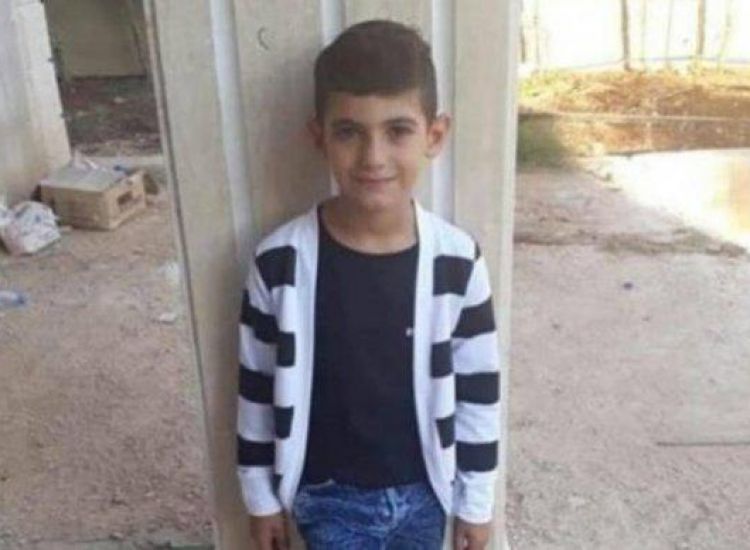
Eight-year-old Ali Abbas Maatouk was martyred when a cluster bomb submunition detonated (Wednesday, August 14, 2019).
Al-Manar | August 15, 2019
A bomb left over from Israeli 2006 July War on Lebanon exploded Wednesday, killing a child in south Lebanon, the state-run National News Agency reported.
Eight-year-old Ali Abbas Maatouk was martyred and another child injured when the cluster bomb submunition detonated as they played in the village of Toul in Nabatieh.
They were rushed to Toul’s Sheikh Ragheb Harb Hospital.
Maatouk succumbed to his wounds upon arrival, Hasan Bourgi, an emergency room doctor, told The Daily Star.
“His head injury was too severe, despite resuscitation attempts,” Bourgi said. He added that the other child suffered shrapnel wounds to the stomach but was in stable condition.
The tragedy struck on the 13th anniversary of the end of the 33-day war, during which the Israeli warplanes “rained an estimated 4 million submunitions on south Lebanon, the vast majority over the final three days,” a Human Rights Watch report said.
It called Israel’s use of cluster bombs “indiscriminate and disproportionate, in violation of [international humanitarian law], and in some locations possibly a war crime.”
Some 40 percent of the munitions did not explode, NGO Mines Advisory Group said.
Nasrallah: Banned in the West but Mandatory Viewing in Israel
By Tim Anderson | American Herald Tribune | July 22, 2019
In his speech on the 13th anniversary of the defeat of the Israeli invasion of Lebanon in 2006, Hezbollah Secretary General Sayyed Hassan Nasrallah warned Tel Aviv of the consequences of its constant urging of war against Iran. The Zionist state would be swept up in any such
war and would suffer “a terrible defeat”, he said.
In the upside-down world of western war propaganda, Nasrallah’s warning is portrayed as a ‘terrorist threat’, while Israel’s repeated attacks on Syria and constant urging of war against Iran are presented as self-defense. In this way, war in the entire Middle East region is normalized, for western audiences.
In an apparent paradox, Nasrallah’s voice of resistance is banned in many western countries. Facebook, for example, will automatically block any link to the Hezbollah news site, al Manar. However, in Israel Nasrallah’s words are carefully reported and studied.
There is a good reason for this. The USA and Britain, in particular, want to prohibit Nasrallah’s clear and insistent logic of resistance to the colony in Palestine; while Israel wants colonists to remain up to date on the latest detail from their northern nemesis. Of course, Nasrallah’s speeches carry a fair degree of morale-building rhetoric, of his confidence in victory and so on. But he speaks with the unique credibility of a commander in chief, as well as that of a strategic analyst. When he speaks of inflicting damage on Israel, his southern neighbors know that Hezbollah has done that before, driving zionist forces out of Lebanon throughout the 1990s and again in 2006.
No other resistance commander speaks so plainly and in such detail. Iran’s legendary General Qasem Soleimani, for example, rarely makes any public statements.
This latest message led with the warning over the war against Iran, and specified the vulnerabilities of Israel. Showing a map of occupied Palestine, Nasrallah emphasized the capabilities of the Lebanese resistance and the close proximity of all Israel’s military, logistic and industrial facilities. Hezbollah now has tens of thousands of accurate missiles and its retaliation would focus on the north and on the north coast.
Zionist leaders, recognizing that Hezbollah is now well embedded in the Lebanese government, seem to have abandoned any attempt to distinguish the resistance party from Lebanon. On more than one occasion Minister Yisrael Katz has threatened to send Lebanon back “to the stone age”. This is part of Israel’s (obsessive but futile) campaign to remove Iranian presence from both Syria and Lebanon. In December 2017 Katz threatened “This time, all of Lebanon will be a target … we will return Lebanon to the Stone Age.” Nasrallah responded in kind. Al Manar’s summary of the long speech (‘Sayyed Nasrallah confident of victory: we will pray in al Quds!’, 16 July) emphasized the devastating impact of Hezbollah’s retaliation against Israel.
Lebanon’s resistance forces are prepared for a counter-invasion of Galilee (northern Palestine) and would focus attacks on the coastal strip from Netanya to Ashdod, which included the main airport, arms depots, military facilities, petrochemical plants, power facilities and ports. Israel would suffer a “terrible defeat” and would be “on the verge of vanishing”. Nasrallah repeated his earlier statements about the weakness of Israeli ground forces. In other themes, Nasrallah said the Kushner plan for Palestine was doomed to failure, that with looming victory, Hezbollah had withdrawn many of its forces from Syria and, in Lebanon, the resistance backed internal de-escalation and stability.
In her report on the speech, Dr. Marwa Osman (‘Nasrallah’s surprises for Israel’, 21 July) pointed out that the resistance leader’s central message was a deterrence to the Netanyahu regime’s drive for war on Iran. The Zionist fear of Iran is logical. A bloc led by Tehran remains the main existential threat to Israeli expansion and apartheid.
Iran has told Washington that any attack on its territory will lead to counter attacks on US forces and proxies in the region. The Hezbollah leader has now made explicit the scope of the response of the Lebanese
resistance, on multiple targets in occupied Palestine.
Nasrallah’s Surprises for Israel
By Marwa Osman | American Herald Tribune | July 21 ,2019
Hezbollah Secretary-General Sayyed Hassan Nasrallah sent messages of “reassurance” to the Lebanese interior that the country was “not weak” in exchange for warning messages to the American axis, when he appeared for an interview on Al Manar Channel on July 12.
The date of the interview of the Secretary-General, Mr. Hassan Nasrallah, on Al-Manar TV, was not exclusively linked to the 13th anniversary of the outbreak of the July 2006 war. Nasrallah chose to address public opinion at a sensitive regional and international time as the possibility of war is being talked about more than ever in light of the recent developments in the Strait of Hormuz. The message that Nasrallah wanted to convey, seems clear: If you are willing to become a partner in the war against Iran, then you shall not be excluded from that “fire”, because “when you start a war against Iran, you open the war in the entire region.” So, the “advice” to the countries of the region was that “it is our responsibility to work to prevent the US war on Iran.”
“If the UAE were destroyed when the war broke out, would that be in the interests of the rulers and the people of the Emirates?” asked Nasrallah, while emphasizing that Israel must understand that in the event of any war in the region, it will not remain on the sidelines and that Iran can bomb it with ferocity and force.
However, despite tensions in the region, Nasrallah said, “What prevents the United States from going to war is that its interests in the region are at stake.” Trump canceled the military strike on Iranian military positions, in response to Tehran downing a US spy drone that violated Iranian airspace, “because Iranians sent a message to Americans through a third country telling them that if any target was bombed in Iran, then US presence in the region will be bombed as well.”
The words of Nasrallah reflect the concept that Iran, despite the siege and the sanctions it is facing, will not retreat. “Iran will not negotiate directly with America, and will not negotiate under the pressure of sanctions.” The latter will “strengthen domestic production, move them to a faster track in the application of the resistant economy, and strengthen relations with neighboring countries and the world.” However, Iran does not close doors to international efforts, “in a way that preserves interests and dignity.” Even the Islamic Republic, “was always ready for dialogue with Saudi Arabia and calling for it, but the answer was more [Saudi] belligerence.”
Iran’s policy of deterrence also applies in the face of the Zionist entity. 13 years after the 33-day war, “the resistance in Lebanon today is stronger than ever. The deterrence lies between a popular force and a country that considers itself a superpower in the region. This equation is recognized by the enemy with its leaders, officials and media.” Nasrallah said today that the enemy is more afraid of resistance than ever before, speaking of the development of its human and military capabilities. “We may or may not have missiles to shoot down planes, these are areas of constructive ambiguity against the enemy,” Nasrallah said.
In contrast to the Lebanese development, “the Israelis failed to restore confidence after the July war, despite everything that was done, and the acquisition of sophisticated weapons from the US, and all the military drills they conducted. The Secretary-General of Hezbollah advised the Israelis not to use expressions like “we will send back Lebanon to the Stone Age”, because it is not only the northern part of Israel that falls in the range of Hezbollah’s missiles, but also ” the most important point is the coastal strip from Netanya to Ashdod, where the heart of the entity relies, and the bulk of the illegal settlers reside, along with all basic governmental institutions.
Nasrallah asked “If there is resistance with tens of thousands of missiles capable of attacking that area, can our enemy handle this? That will be the real Stone Age. The enormous destruction is the minimum that will happen.” This state of major deterrence will prevent Israelis from resorting to war, according to Nasrallah, who is very optimistic that “it is true that our lives are in the hands of Allah, but according to the sense of logic, I will get to pray in al-Quds.”
Nasrallah stressed that Hezbollah did not withdraw from Syria, “There are no areas we have completely evacuated. We are still in all the regions where we were, but we have reduced our presence, so there is no need to keep all our elements there. ” However, if “the need arises, they will return and maybe with greater numbers, despite sanctions and austerity.”
In his interview, Nasrallah discussed the so-called American “deal of the century“, saying that “it does not have the elements of success, and it has a set of factors to blow it from within.” And what stands behind it is the unity of the Palestinian position, the steadfastness of Iran, which is basically the only remaining logistical support for Palestine, the failure of the project in Syria, the victory in Iraq and Yemen, the strength of the axis of resistance, and the absence of an Arab lever for the deal. Saudi Arabia could have played this role, had it not been for its failure in Yemen. ”
Nasrallah also revealed that the Trump administration is seeking to open channels of communication with Hezbollah through intermediaries, as the US also is trying to impose itself as a mediator in the demarcation of land and sea borders with our enemy. “The term ‘demarcation’ is wrong,” he said. “The land border is originally planned, and these borders are required.” As for sea, the link between the sea and land routes is of utmost importance. He also stressed that the oil wealth will be protected by the resistance, «Lebanon is not weak. It is enough for us to say, this is our land and this is our water, and we want to sign deals with companies [to start drilling for oil], and the Israeli will not dare to enter it.”
The messages sent by Hezbollah Secretary-General Hassan Nasrallah to the Israeli enemy last week reached Tel Aviv and imposed itself as a priority on the politicians and the media, and then the settlers, prompting the head of the enemy government to devote his speech at the beginning of the Council of Ministers to respond to it.
It is estimated Nasrallah’s words exceeds this time the usual influence on the Israelis based exclusively on internal accounts, that is, between Lebanon and the enemy, to exceed the regional accounts that are more present compared to the past due to the tension and escalation in the region.

It is clear from Netanyahu’s own speech last week that Nasrallah’s “map speech”, where he touched on specific areas in occupied Palestine and promised to destroy them in the event of a war, is placed at the top of Israel’s official agenda and was also marked by a very impressive Israeli media attention with a special discussion table in each TV channel, with the participation of a large number of Israeli experts and commentators, according to their specialties.
It was clear that the interview proved to the Israelis the mistake of betting on the restrictions they erroneously assume against Hezbollah, and can be a starting point for the wrong calculations, which are distributed as follows:
– Lebanese restrictions, including positions and voices issued from within in Lebanon that disparage Hezbollah and its protective role, which in essence is not limited to protectionism emanating from the Lebanese arena, but also, and from an advanced position, from outside Lebanese borders.
– US sanctions, which assume that Tel Aviv is restricting Hezbollah’s decisions and reducing its margin of maneuver, and pushing it to retreat in the face of Israel’s attacks. It is also similar to betting on the possibility of Hezbollah retreating as a result of the shrinking of Hezbollah’s financial resources. (In this case they need to reread the history of Hezbollah)
– Israel’s constant intimidation techniques which clearly are not working, like promising destruction and the targeting of humans and stone, and taking back Lebanon to the “Stone Age”.
These Israeli considerations left out the most important consideration of all. This consideration is the main motivation for the resistance: confronting the existential threat, whether in retaliation or attack mode, all the way from Beirut to Tehran and what lies between them. It is a consideration that will make all other Israeli faux considerations disappear at the decision-making table in Tel Aviv.
Iran and Hezbollah Stand Ready for War
By Jeremy Salt | American Herald Tribune | July 18, 2019
Individually or collectively the construct known as ‘the West’ has had its foot on the neck of the Middle East and North Africa for more than two centuries. Occasionally the foot has been lifted but never voluntarily, only when ‘the West’ was no longer capable of holding it in place. Examples are France’s unwilling retreats from Syria in 1946 and Algeria in 1962, and Britain’s final loss of control over Egypt following the failure of the ‘tripartite aggression’ of 1956, otherwise known as the Suez War.
When they came to Palestine the Zionists packaged themselves as standing on the ramparts of civilization against barbarism. As ‘Western civilization’ had always been spectacularly uncivilized in its treatment of black and brown people, the Zionists were standing on the ramparts of Western barbarism, not civilization.
An existential moment seems to be approaching in Middle Eastern history. The so-called West has dominated the region and North Africa since Napoleon landed a French army in Egypt in 1798. Since then, few countries that have escaped invasion, occupation, subversion and the overthrow of governments.
The record is seamless, continuing with the destruction of Iraq, Libya and Syria and the current confrontation with Iran. Ever-tightening sanctions imposed since the 1979 revolution are designed to implode the country from within, with military attack repeatedly threatened by the US and Israel.
Unless and until this long historical cycle of violence across the region is broken, the Middle East seems doomed to suffer its repetition endlessly. At this juncture of history, however, the West is not what it used to be and is no longer capable of imposing its will on the Middle East except at tremendous cost to itself.
The former imperial powers, Britain and France, are now no more than satraps of one power, the US, a single imperial power in noticeable decline. The costs of its wars alone have been enormous. Since 2001 it is estimated to have spent $5.6 trillion on wars in the Middle East and Afghanistan and on combatting ‘terrorism’ in other arenas.
This is money every American knows – and Donald Trump said in 2016 that he knew – is needed for urban redevelopment and the upgrading of broken infrastructure and inadequate social services across the country. Furthermore, there is no American public appetite for more wars in the Middle East.
Conversely, as imperial decline approaches the point of imperial exhaustion, the determination of the ‘axis of resistance’ is strengthening. It is now speaking back to the West and Israel in the same dominant language that the west has always used, which of course is the language of force. In the mainstream media, this will be called ‘defiance’ rather than what it is, which is the rising determination of the people of the Middle East to determine their own future and finally shake off the fetters of external domination. The message being sent forth by both Iran and Hezbollah is that if the collective West and/or Israel dare attack again they will be ready for them.
The message being sent forth by both Iran and Hezbollah is that if the collective West and/or Israel dare attack again they will be ready for them.
This is not empty talk. Hassan Nasrallah, Hezbollah’s Secretary-General, always means what he says and only says what he means. No-one follows his statements more closely and takes them more seriously than the Israeli military command. He is an enemy who has earned their respect.
In June Iran’s Revolutionary Guard shot down a $200 million RQ-4 high altitude drone, the biggest and most sophisticated in the US drone fleet. Although the US had only recently designated the Revolutionary Guard as a “foreign terrorist organization,” and although it claimed, falsely, that the drone had been flying over international waters, it did not retaliate. Trump claimed that he called an attack off when he learned that it would cause 150 civilian casualties. In fact, the real reason seems to have been that Iran passed on the message through a third party that if the US attacked it would immediately strike at US targets in the Gulf.
John Bolton and Benyamin Netanyahu have been pushing hard for war, against strong resistance within the US administration. If they succeed, Iran has warned that it will immediately close the Strait of Hormuz to all shipping and retaliate against US military bases and other targets in the gulf. Any war started in the gulf will quickly spread across the region, involving Israel. Conversely, any war started by Israel against Lebanon and Hezbollah will quickly spread to the gulf.
The effects will be felt around the world with an infinitely worse effect on the global economy than the energy crisis which followed the 1973 war, when Israel was caught napping in the occupied Sinai and would have lost the war but for Anwar Sadat’s betrayal of his Syrian wartime ally, Hafez al Assad and but for emergency arms shipments flown directly to Israel’s Sinai front by the US.
Hassan Nasrallah is showing such confidence that it has to be assumed that he knows something about Hezbollah’s weaponry that we don’t and Israel probably does not either. Very probably it is the capacity to seriously degrade Israel’s air power. This is an issue Iran and Hezbollah have been working on for decades, as it is the key to the outcome of any future war.
Hezbollah is far stronger now than it was when it humiliated Israel in 2006. It can fire enough missiles simultaneously to overwhelm Israel’s anti-missile systems. They can reach any corner of enemy territory. If Hezbollah is also capable of shooting down aircraft, Israel faces the prospect of starting another war it cannot win, with far worse consequences than it has ever faced in its history.
Israel has had one outstanding victory since 1948. This was in 1967 when it attacked Egypt and Syria, rendering their ground forces useless by destroying their air ccover before going on to occupy the Golan Heights and the rest of Palestine. It was this war that gave rise to the myth of Israeli invincibility, exploded only six years later when Egyptian forces crossed the Suez Canal and routed the occupying Israeli forces.
Israel’s 1982 war on Lebanon was more of an onslaught on a defenseless civilian population, a prelude to its massacres by air and artillery in Gaza. Close to 20,000 people, overwhelmingly civilians, were killed in Lebanon before it was over. Given the combination of airpower, artillery, armor and the number of ground troops (80,000 to 100,000) Israel simply swamped lightly-armed Palestinian and Syrian resistance.
Israel’s occupation of southern Lebanon lasted for more than two decades before being ended by Hezbollah in 2000. Since 1985 Hezbollah had vastly improved its capacities at all levels, including electronic warfare, enabling it to intercept Israeli communications and ambush and destroy even elite units. Unable to defeat Hezbollah and facing a rising tide of anti-war sentiment at home, the Israeli government finally decided to cut and run, virtually overnight.
Frustrated, Israel struck back in 2006, only to be thwarted again in an even more humiliating defeat. Its reserves were so poorly disciplined that commanders hesitated to send them into battle, but even elite forces such as the Golani Brigade were outfought by Hezbollah’s part-time soldiers. Even with total command of the air Israel proved incapable of seizing and holding territory only a few kilometers north of the armistice line. Thoughts of advancing across the Litani river and taking on the professional core of Hezbollah’s fighting forces had to be abandoned.
The US held the door open for Israel week after week, giving it the time it said it needed to finish off Hezbollah. Suffering one setback after another, however, Israel was not up to the task. After 34 days it had had enough and retreated, leaving behind the wreckage of dozens of armored vehicles, including the supposedly invulnerable Merkava tank, destroyed by Hezbollah’s Sagger anti-tank missiles. Hezbollah had also taken the war to sea, crippling an Israeli warship in an apparent missile strike.
The unpalatable truth for the Israeli military command was that its ground forces had been outsmarted and outfought along Hezbollah’s first line of defense in the south. Even with its air power Israel proved incapable of moving beyond this line.
In the years since 1982, as the weaknesses behind the myth of the ‘invincible’ Israeli armed forces have been gradually exposed, the enemies Israel has vowed so often to obliterate have been catching up, reaching the point of armed capacity where Nasrallah says Israel is too frightened to attack again.
He has mocked it for taking 13 years to discover tunnels Hezbollah had dug from Lebanon. In a recent interview with Al Manar television station, marking the 13th anniversary of the 2006 war, he taunted Israel by showing a map of all the strategic targets Hezbollah will hit along the coastal strip if Israel dares to go to war again. They include Ben-Gurion airport, petrochemical plants, arms depots and the ports of Tel Aviv and Ashdod (Palestinian Isdud).
Nasrallah referred to “game-changing” offensive weapons that could bring Israel to “the verge of vanishing.” They include drones and precision missiles but when asked whether Hezbollah also had anti-aircraft missiles he would not say, referring only to a policy of “constructive ambiguity.”
Hezbollah claims that it can reach any part of Israel with its missiles and is capable of inflicting massive destruction of civilian and military targets. A land invasion has also been planned, with Nasrallah saying Hezbollah has “several scenarios” for the penetration of Galilee by its forces.
Since 2006 Israel has repeatedly threatened to destroy Lebanon in the next war. The template would be Dahiyeh, the largely Shia suburb of Beirut, which Israel sought to obliterate from the air in 2006. Military, intelligence and political figures have all threatened that the next time around the ‘Dahiyeh strategy’ would be applied to the entire country. One Israeli ‘ defense official’ says that in the next war Lebanon will “experience” a level of destruction not seen since the Second World War. “ …. We will crush it and grind it to the ground.” (David Kenner, ‘Why Israel fears Iran’s presence in Syria,’ The Atlantic, July 22, 2018).
Nevertheless, behind the bluster and threats lies fear. No one but Hezbollah and perhaps Iran really knows the size and capacity of Hezbollah’s missile arsenal but US and Israeli estimates put the number at between 100,000-130,000. Hezbollah is capable of firing 1200-1500 missiles a day. In recent years Israel’s developing nightmare has been that these weapons would be launched in sufficient numbers and with sufficient accuracy to destroy civilian and military infrastructure and paralyze daily life. In fact, as Nasrallah’s confident remarks indicate, that point seems to have been reached.
Just as Hezbollah is ready for the next war so is Iran. The target of European subversion and intrigue since the 19th century, Iran has been threatened and punished with economic sanctions, assassination and subversion since it dared to take hold of its own future in 1979. Telegraphing their punches in advance, the US and Israel have repeatedly threatened it with obliteration.
The scholar Sayed Mohammad Marandi has written on Iran’s position in the face of these continuing threats (‘Iran faces US aggression and European hypocrisy but this time it’s ready,’ Middle East Eye, July 12, 2019). Basically, Iran has had enough. Writes Professor Marandi: ‘Repeated threats of nuclear holocaust and genocide by Israel’s Prime Minister Netanyahu and Trump are deeply embedded in western civilization’s centuries-old tradition of colonization, mass slaughter and moral absence.”
Given the west’s record “there is no reason to expect that a declining and desperate empire will conduct itself in a civilized manner today.” Iran’s preparations include the development of a formidable arsenal of missiles, the acquisition of weaponry needed to fight a sea war in the gulf and the construction of underground military facilities.
Retaliation by Iran would involve the destruction of oil and gas facilities as well as oil tankers and other shipping on both sides of the Strait of Hormuz. Finally, “western establishment politicians and pundits seem to thrill at sending nations back to the stone age. But be sure that if there is war, this time around Iran and its allies will make sure they come along for the ride.”
As Professor Marandi, as President Rouhani and Ayatollah Khamenei have all made clear, and as Nasrallah has made clear, these current targets of the west are prepared to fight back with all the weapons at their disposal. This is not a question of the Iranian government or Hezbollah merely being punished but being destroyed, at a time, however, that the West – as led by the US – has never been in a weaker position to impose its will without incurring incalculable military and economic costs to itself.
If John Bolton and Benyamin Netanyahu get the war they want, Iran and Hezbollah, knowing that the object is their destruction, will strike back with full force from day one. The devastation on both sides would be massive, with the possible use of nuclear weapons part of the picture. A climactic point seems to be approaching fast in the history of the Middle East.
The Only Strategic Rationale for America’s Involvement in Syria Finally Revealed
By Elias Samo | Strategic Culture Foundation | July 6, 2019
“Washington lacks a clear strategy in Syria “; those were the recent words of Robert Ford, the last American ambassador to Syria who served prior to and during the first few years of the Syrian uprising from 2010 to 2014. A man of Ford’s intricate knowledge of the Syrian/American political dynamic is surly knowledgeable enough to assess America’s policy towards Syria. He goes on to say, “It is hard to explain the fundamental American mission in Syria… Is it to fight Daesh? Or is it to help promote a Kurdish autonomous district in Northeastern Syria… Or is it to resist Iranian encouragement?” It is partially all three; however, oddly enough, Mr. Ford avoids the obvious top priority and strategic rationale for America’s involvement in Syria: The Protection of Israel.
To alleviate this dereliction by the executive branch for not presenting a clear strategy in Syria, as the former ambassador asserts, the Congress took it upon itself to identify American strategic interests in Syria and make recommendations to Trump. However, it is legitimate to ask: what do American congressmen know about Syria to qualify them to determine American strategic interests in the country? It is very unlikely for American congressmen to know much about Syria; they are dictated the Israeli narrative and that is all they need to know.
Irrespective of who or what motivated the congressmen to seek information to develop a framework for American strategic interests in Syria and eventually send a letter signed by nearly four hundred congressmen- roughly seventy five percent of the total number of congressmen from both chambers and both parties- to the president about their findings and their recommendations, the congressmen called upon United States Institute of Peace (USIP) to establish a Syria Study Group (SSG) to provide them information about Syria to comprehend the situation and formulate recommendations to Trump.
The SSG was established in February 2019 and gave its interim report to Congress May 1, 2019; the report consists of detailed seven single-spaced typewritten pages.
Subsequent to the SSG submitting of its interim report to Congress on May 1, the four hundred congressmen Letter was sent to the president on May 20. It would be natural to assume that the Letter is a condensed reflection of what the interim report contained and recommended; that was not the case. The elaborate and detailed interim report dealt with a multitude of issues centered around American national security. Ironically, the Letter to the President focused on the sources of threats to Israeli security: terrorism, Syria, Lebanon (Hezbollah), Iran, Turkey and Russia. Just a note regarding the difference in emphasis in the two documents. In the seven – page single spaced interim report Israel is mentioned nine times, it is mentioned twenty one times in the two page Letter.
The first paragraph of the Letter states “[…] we recommend several specific steps to advance our regional security priorities, including assisting our ally, Israel, in defending itself in the face of growing threats, including on its northern border.” The reference to northern border is Syria and Lebanon. As for Syria, it suffices to note that Israel occupied the Syrian Golan for fifty two years and annexed it recently with Trump’s blessings. Syria has not fired a shot at Israel in decades while Israel has fired hundreds of shots at Syria just recently; there are no Syrian boots on the ground in Israel, while there are Israeli boots on the ground in Syria. So much for the threat to Israel emanating from Syria. As for the Lebanese scenario, it is similar to that of Syria, albeit on a smaller scale, with one addition: Hezbollah which Israel views as a source of imminent threat. However, it suffices to note that it is Israel which has been the source of violent onslaughts against Hezbollah. The Letter, in the succeeding paragraphs, elaborates further on the acquisition by Syria and Hezbollah of large and more threatening sophisticated weapons to threaten the security of the regional, nuclear super power: Israel. Need one point out the ridicule?
In the third paragraph, the Letter asserts: “While our nation has encouraged more stable and inclusive political systems in the Middle East, the regime in Tehran has spread its influence and destabilized its neighbors for its own gain.” To say this is an outrageous distortion of the truth would be an understatement. There is not a sane Iraqi, Syrian, Lybian, Yemeni and most Muslim Arabs who would vouch to such a distortion. In fact, internationally, the US and Israel are viewed as sources of threat to international peace and security; both have boots on foreign ground but no foreign boots on their ground.
Russia receives a jab at the fourth paragraph for its role “[…] to ensure the survival of the Assad regime.” It adds “Furthermore, in providing Damascus with advanced weapons like the S-300 anti-aircraft, Moscow is complicating Israel’s ability to defend itself from hostile action emanating from Syria.”
The last part of the Letter contains three recommendations which are interrelated and converge on the core of the Letter; the security of Israel:
- Underscore Israel’s right to self-defense.
- Increase pressure on Iran and Russia with respect to activities in Syria.
- Increase pressure on Hezbollah.
Beyond any conceivable doubts, the Letter was dictated by Israelis or their advocates in Washington, signed and submitted by the 400 congressmen to Trump; the height of hypocrisy. What is dismaying is that hardly any voices of protest were raised in American society at large or the political or intellectual segments about the fact that four hundred congressmen, who are elected by Americans to serve American interests, at a time when the US is bogged down in the Arab region, sign and submit a letter to the US President concerned almost exclusively with Israel’s Security.
These congressmen had an opportunity to make a coherent recommendation on US policy in the Arab region in the interest of American National Interest, but instead chose to make recommendations to safeguard the wellbeing and security of a foreign state: Israel.
US Sanctions Hezbollah Elected Parliamentarians
Al-Manar | July 9, 2019
The US Treasury placed two Hezbollah members of Lebanon’s parliament on its sanctions blacklist on Tuesday — the first time Washington has taken aim at the party’s elected politicians.
The Treasury named the head of the Loyalty to Resistance parliamentary bloc Hajj Mohammad Raad and MP Amin Sherri to a ‘terror-related’ blacklist, claiming that Hezbollah uses its parliamentary power to advance its alleged ‘violent’ activities.
Also placed on the blacklist was Hajj Wafiq Safa, Hezbollah top security official.
Hezbollah is a Lebanese resistance group that defends the nation against the Israeli and takfiri enemies. Because of its huge popular representation, it managed to have a 13-member parliamentary bloc, mainly tasked with securing the socioeconomic rights of the citizens and advocating the resistance political principles.
The US administration, which supports the Zionist entity and the Arab dictators against the will of most of the Muslims and Arabs, has always viewed Hezbollah resistance as an enemy, blacklisting both its military and political wings.
Nasrallah: Zionist Axis Defeated, We Have Enough Missiles to Redraw the Map of the Middle East
Speech by Hezbollah Secretary General Sayed Hassan Nasrallah on Friday, May 31, 2019, on the occasion of Al-Quds (Jerusalem) International Day.
Transcript:
[…] Another element indicating (the improbability of a war against Iran) is the field data, and I mean the (triple) Summit which I have just mentioned. And we are now entering the (4th section of my speech devoted to the triple) Arab Summit (in Mecca on May 30-June 1). The Summit was convened in emergency. Why? There are two reasons, two clear reasons that are mentioned in the (final) statements (of the Summit).
The first reason… The first reason… I remember that during the first days of the war of aggression against Yemen, His Eminence the (Supreme) Leader, Sayed [Khamenei], said that the young (fighters) of Yemen would rub the Al-Saud’s noses in dirt. Some days ago, the Saudi (army) bit the dust (once again). That’s what happened.
The first reason (for the improbability of war against Iran), that I mentioned earlier, is that Saudi Arabia has recognized the fact that there was no way out against the missiles of the Yemeni army and Popular Defense Committees, which they call the ‘Houthi’ missiles, and against their drones, and my proof is what happened in Yanbu’ (strikes of a Yemeni drone against oil installations in Saudi Arabia). It is a failure, a complete disaster. On the technical, military, security levels, and on every other level, it is a colossal failure. And it is a great success for our Yemeni brothers.
And that’s why in the joint statement at the conclusion of the Arab Summit, from the first line, points 1, 2, 3, 4, 5, 6, 7, 8, 9 and 10 only speak of Houthis, Houthis and yet again Houthis, as well as Iran. This clearly shows how much the issue of our Yemeni brothers is present and is the main cause for convening this triple Summit.
The second reason (indicating the improbability of a war against Iran) is that the Saudi regime and its allies understood with certainty that there will be no US war against Iran. You are dreaming (O Saudis), you spend your money for nothing and you incite for war to no avail. Trump will not fight for you, while it was your greatest hope. The last thing the Saudis had left was this hope (on which they have staked everything). Is there anything they can do? Do the Saud have alternatives (to prevail)? Who will go to war against Iran? The Saud themselves? While in Yemen, according to the information of the Saudis themselves, these young Yemeni fighters who have no army, no huge capacities, who are besieged, isolated, hungry, sick, whatever you want, but Saudi Arabia fails, is defeated and broken against them! And you (the Saudis) would go to war against (such a formidable power as) Iran? Who (will dare attack Iran)? Will they hire Netanyahu to launch a war against Iran? Let him first take care of his own problems (electoral and with Israeli justice)!
It’s the end of the road (for the Saud)! All their plans and hopes rested, in recent weeks, on Trump, on Trump’s incitement (to war), on Bolton, on Pompeo and all their fellow evil men in b or p, who were threatening to attack Iran and devastate this country. But it’s over. All their hopes were dashed.
That is why this Summit was convened in Mecca, as I said, to call the Arab and Muslim worlds and the Gulf countries for help. ‘Hasten therefore (to our help), O Arabs’ (cried the Al-Saud dynasty)! I wrote here… Where is this paper?… I wrote (a summary about it)… “Saudi Arabia convened the triple Summit to strengthen itself with the support of the Gulf it has torn apart…” For who is responsible for the crisis in the Gulf Cooperation Council? Saudi Arabia! “(Saudi Arabia convened the triple Summit) to strengthen itself with the support of the Gulf it has torn apart, of the Arabs it has crushed…” Is there a single Arab country left where Saudi Arabia has not created discord and division? And until now, up to this very day, there are Arab countries torn with civil wars, and Saudi Arabia is (the main) responsible. And there are Arab countries under threat of falling into civil wars (Algeria, Sudan…), and we must look (for the hand of) Saudi Arabia (behind it). “(Saudi Arabia convened the triple Summit to strengthen itself with the support of the Gulf it has torn apart), of the Arabs it has crushed and of the Muslims among whom it has spread the sedition of takfir.”
See Pakistan: Saudi Arabia wants to become stronger by getting the support of this country, while it propagated its takfiri ideology there among the Taliban, who created innumerable problems for the Pakistani military and the Pakistani people. Today, Saudi Arabia is calling on all these countries to save it (and get it out of the Yemeni quagmire).
First, regarding the Summit… I will conclude my remarks with a few words. Regarding the (Mecca) Summit, such is the context that explains it. It is a call for help, a cry for help, an intercessory request… You know it’s Ramadan (where all wishes can be fulfilled), so the Saudis make prayers, express wishes, cajole (the Arab governments) so that they’d fulfill their wishes, because of their failure and powerlessness, and because their hopes were dashed. The opposite Axis (United States, Israel, Saudi Arabia) isn’t in any case in a position of strength. It is in a position of weakness and failure, desperate, greatly confused and completely discouraged. This is the truth.
Second, let us consider the Joint Statement issued after the Summit. We see that it is composed of 10 points, which speak only of Iran and the “Houthis”, as they call them, but in the end of this Statement, as we commemorate the International Day of Al-Quds (Jerusalem), at the very end of this Statement, really the last two lines, we read: “And about the Palestinian cause, the main cause of the Arabs, the Summit has confirmed its commitment to the resolutions of the 29th Arab Summit (of April 2018) in Dhahran (Saudi Arabia), or Al-Quds Summit, and the resolutions of the 30th Arab Summit in Tunis (in March 2019).” Period. They did not even devote two lines to Palestine! They gave it only a line and a half of their final Statement! That’s the importance of Palestine for the Arab Summit. I do not even know if they actually talked about it (during their discussions), I just read the final Statement.
And about the Summit of the Gulf Cooperation Council, there is a really funny thing, the 4th point. Listen to the 4th point (of the final Statement) of the Summit of the Council of the Gulf Cooperation: “Confirms the strength, harmony and resolution of the Gulf Cooperation Council and the unity of its members around a common line to face these threats.” And they say that while they are besieging Qatar! They have been besieging the State and the people of Qatar for over a year! It’s really hilarious, Uncle! By God, some people really don’t realize that they have become the laughing stock of the world! The whole world mocks them, demeans and humiliates them!
Another point about the Arab Summit, we have a duty to praise the position expressed by Iraq and the President of the Republic of Iraq. It’s a remarkable position, courageous and excellent. What a shame that the rest of the Arab Presidents, Kings and Emirs did not talk the same way! And the Iraqi delegation has not said that they wanted to wage war against Saudi Arabia, the UAE, or anyone, nothing like it! They spoke in a balanced manner (without taking sides with Iran nor Saudi Arabia). You could do the same thing (and display a conciliatory neutrality). What prevented you from doing so, O Arabs? What a pity that (the participants of this) Summit, in spite of the failure, powerlessness and confusion (of Saudi Arabia), and the economic exploitation of the situation by the United States, have not talked in conciliatory terms about Iran, when Iran itself, a few days ago, said via its delegates that they were ready to talk with the Gulf states, and conclude pacts of non-aggression with them! Why did they not adopt the same open and conciliatory diplomatic language? If they had done so, their money, their safety, their security, their interests and even their dignity would not be violated by Trump morning and evening.
On the Arab Summit, I have one more thing to say: as a Lebanese party who participate in the government of Lebanon, we (Hezbollah) consider that the position of the official Lebanese delegation to the Arab Summit contradicts the Ministerial Declaration (of the Hariri government) and violates the commitments and promises of the Lebanese government, who received the confidence of the Parliament on the basis of this Declaration. Where is the promised neutrality, O official Lebanese delegation to the holy city of Mecca? You could have said… It was not even required that you take a position similar to that of Iraq. You could simply have said that the Lebanese government was committed to neutrality (in regional conflicts) and that such a stance was required in the national interest of Lebanon, which had to remain neutral, as it had done in previous Summits.
That is why we reject this position (expressed by the Lebanese delegation), which we consider unacceptable and condemn because it does not represent Lebanon. It represents only the members of the delegation (as individuals) or the political parties they belong to. It is impossible that this be the official position of Lebanon, a position which publishes a Statement with 10 paragraphs condemning Iran and only dedicates a line and a half to Palestine, the whole Statement expressing support for an Axis (US-Saudi-Israeli) against another (the Axis of Resistance).
Of course, the Future party could have made a statement of their own supporting eloquently the Final Statement of this Summit held in Holy Mecca, it is their natural right. We wouldn’t mind at all because (it is common knowledge) that we have opposite stances (on regional issues). We have already said that neutrality is not required of political forces. And we are the first not being neutral (and strongly and publicly announcing our stances against the US, Israel, the Saud…). But we agreed that the Lebanese government would remain neutral. The Lebanese State must remain neutral (because it is composed of both pro-American and pro-Iranian forces). And what happened in Mecca is contrary to the commitments and promises (made by the Future Alliance heading the government), and to Lebanon’s national interest.
This brings me to the last point (of my speech). (I’m sorry) for being so long, on this night of Ramadan, but it is a sensitive issue whose mention cannot be postponed. Regarding the delimitation of the (land and sea) borders (between Lebanon and Israel), as I have said repeatedly, as a Resistance, we have no problem and we comply with the decisions of the State. And for all that is happening at the borders, we leave everything in the hands of the State, whether what is happening is good or bad, right or wrong. Regarding the demarcation of our land and sea borders, we will respect all the decisions of State, (and we do not have a say).
And by making these statements, I do not exaggerate. Some brothers think that my words are conciliatory but do not coincide with reality, but no, I tell the strict truth when I say that we in Hezbollah trust the Lebanese officials who are in charge of this issue, and who are committed to upholding all Lebanon’s rights to land and water, in terms of maritime (space), oil and gas (resources present in the Mediterranean). We have (full) confidence in them, and that’s why we do not intervene in this issue. So much for the positive points, for I will now turn to a very different point.
On this issue, what is the United States striving to achieve through (its envoy) Mr. [David] Satterfield and his ilk? The USA is very strong to exploit all things, and exploit (all situations) in an evil way (in their interests and to our detriment). Since Lebanon needs a rapid delineation of borders, especially at sea, to (be able to exploit) oil and gas (resources at sea), and since Lebanon needs a calm situation in order to get financial loans —for we speak mainly about loans, not grants—, in this context, the United States come to… I hope that all the Lebanese will listen to me.
The United States wants to exploit the (indirect) negotiations (between Lebanon and Israel) on the demarcation of land and maritime borders to solve another adjacent, unrelated problem in the sole interest of Israel, and that Israel has been unable to resolve for years, namely precision missiles and the manufacture of precision missiles.
For over two years, (we have been contacted constantly by) ambassadors, embassies, foreign intelligence services, including those countries that consider us officially as terrorists, it does not bother them. They asked us the following questions, or (rather) addressed us the following messages: you have precision missiles, and this is something that Israel will not tolerate, and when Israel will learn their place (of storage), they will bomb them. That’s the message that we kept receiving for over two years. That’s (the first point).
The second point was the accusation that we’d have precision missile factories in Lebanon, which is (allegedly) a red line for Israel that will not be tolerated, and the warning that if Israel gets to know their location, they will bomb them. We hid this matter to the public for two years so as not to worry anyone, and to settle this matter behind the scenes. But some things happened during this week that lead me to speak out today because I think this whole issue will soon be discussed in the media, this topic being debated today in wider circles. I prefer to publicly state our position on this issue, rather than let the (State) officials being responsible for sending messages or answering questions (about this topic), and it is better that these answers come directly from me so that the United States, Israel and others receive them distinctly. (That’s better), isn’t it? That’s why I mention it.
Regarding the first point, the precision missiles issue, we are people who always tell the truth, we never lie. We can of course not reveal the truth without lying, or tell only part of the truth, but we never lie. That’s why when they asked us (if we had precision missiles), we answered that yes, we had precision missiles, and then you remember that two years ago, the tenth day (of ‘Ashura), I announced quite clearly that we have precision missiles able to hit all the targets required in the Zionist entity.
And today, on this (International) Day of Al-Quds (Jerusalem),on the 40th anniversary of the announcement of this Day, I say to the world that yes, we have in Lebanon enough precision missiles to change the face of the region and (upset) all equations!
But I say nothing new. That’s what I said for ‘Ashura two years ago. And to all those who have asked us, we said yes, we had precision missiles. And to all those who said or transmitted messages (Israeli threats), we said that there was no problem… It’s been 1, 2 and 3 years that these messages circulate, and that our response has been given and reached Israel: any time they tried to intimidate us by speaking of Israel, of red lines, of unacceptable things, of bombing, of (a violent) reaction, etc., our answer was clear, and I then repeated it publicly (in an interview) with Al-Mayadeen TV and then in a live speech. And I’ll repeat it again: we said that against any aggression, any Israeli strike against any target related to the Resistance in Lebanon, be it missiles or anything else, Hezbollah will retaliate immediately, directly and with (great) force!
And that’s why for 1 year, 2 years and 3 years now, they never bombed (Lebanon). And even more, Israel is going to the UN to (complain) that under the Al-Ahed football stadium, there would be missiles, and at such other place as well, (and then the UN) asks the government to verify if missiles are present at a given location, etc. It is not out of manners or decency that Israel does not strike our missiles. It is because we are strong that they don’t dare to do so (because they fear our retaliation), and that we will respond to any aggression by a similar attack, if not more!
The issue of precision missiles was therefore over (with a dead end for Israel). No one can do anything against it. So the issue has been upgraded with the accusation of possession of precision missile factories (in Lebanon). A few months ago, a (Lebanese) official said that the United States had contacted him to tell him this and this. I replied: “My dear official —I do not say anything specific to protect his identity—, this information is false. We do not have —and I speak with complete frankness— we have no precision missile factory in Lebanon.” He asked if the Iranians had such factories in Lebanon. I told him that the Iranians had no factory in Lebanon, be it for precision missiles or other missiles, or anything at all.
So far —I say so far, until tonight, until this International Day of Al-Quds—, there are no precision missile factories (in Lebanon). So the Americans left and came back later (with new charges), saying that there were such factories in such and such place, until what they said recently, namely that the process of delimitation of maritime borders was obstructed by the fact that in such region, there were precision missile factories. Again, several Lebanese officials asked me about it, and I said that it was not true. In this region, there are military facilities, supplies and equipment of Hezbollah, but no precision missile factory. That’s all.
What is my point? These (false accusations) have been accompanied by various threats. I will not say what the threats were because there is no reason for me to reveal them, but several threats were made, so that Lebanon settles this issue (precision missile factories) and destroys such and such installations, razes them to the ground and terminates them. But my dear (US) friends, do you know who you are dealing with? In what world do you live (to believe that your threats can frighten Hezbollah)? It is absolutely inconceivable for us.
In addition, we, in Hezbollah, are more trustworthy and reliable than the Americans and their predecessors, and more trustworthy and reliable than the Israelis and their predecessors. When I tell you that there is no precision missile factory, this means that there is none. And if there were such a factory, I would have said this evening on TV that there is such a factory, as I’ll prove in a moment.
I will explain my problem with this question and conclude my speech. My problem is that… That’s why I did not want to discuss this issue only with Lebanese officials, but I wish that we all (Lebanese) take part in it. The very discussion of such issues with the United States, merely allowing them to ask us about (our weapons), this door should be in my opinion closed. It is not their business, they have no right to inquire about our weapons. The US does not have any right to meddle in it. Whether there are precision missile factories in Lebanon or not, it is not their business. Israel, which is right next to us, manufactures missiles, warplanes, tanks, nuclear and chemical weapons. Let them go there and make the same requests! As for us, it is our right —and that’s what I want to add this evening—, it is our absolute right to possess any type of weapons to defend our country. And it is our absolute right to manufacture any type of weapons, because to have weapons, there are only three possibilities: either you buy them, or someone gives them to you, or you manufacture them.
In Gaza, what do they do? They make them. In Yemen, what do they do? They make them. But the Saudi mentality is unable to conceive that Yemenis can manufacture their own missiles and drones (and they accuse Iran of supplying them). What do you want me to do about it? In Iran, what are they doing? They manufacture their own weapons! And we absolutely have the right to do the same. I affirm that the United States do not have the right to debate with us on this right. That’s the first point. How does it concern you? Whether we have such factories or not, it’s none of your business. I assure you that there are no such factories yet, but you have no right to ask me in the first place! Whether there are such factories or not, mind your own business! We have every right to have all the weapons that allow us to defend our country, whether we buy them, they are given to us or we manufacture them. That’s the first point.
Second, if the United States continues to bring up this issue, I tell them this: we have all the technical and human capacity, thanks to our youth, to manufacture precision missiles, and we are perfectly able to import in Lebanon all the equipment required to open such factories. I declare tonight that if the United States continues to bring up this issue, let the whole world know that we will open precision missile factories in Lebanon!
So far, we have no such factories (in Lebanon), but if they continue to bring up this issue, they will convince us to do so! Then, the government talks about many problems of the Lebanese industry. Today, one of the greatest evils in the world is arms sales… Why are you laughing, I’m serious! We are able to manufacture precision missiles and sell them to the world, and thus help the Lebanese Treasury. Is that okay with you?
This is why I advise Satterfield to stay calm and do the job he is asked to do (without encroaching on our business), since he claims to be there to help… But who does he (really want to) help? Because you know that in general, the United States are not intermediaries. They are only there to lobby and defend the interests of Israel, and God help our Lebanese brothers responsible for these negotiations. Let Satterfield close this file and not waste his time in (idle) threats, and stop exerting himself. He should stop exerting himself (in vain).
This is our natural right (to have all the weapons required), we will remain attached thereto, and threats lead to nothing with us. These threats are not new, but date back to 2 or 3 years. I have answered them, and I do not want to have to repeat myself, okay? Be it now, before or after, our position remains the same.
In conclusion, O my dear and noble brothers, on this Day of Al-Quds, on this 40th year of the celebration of this Day, our (Resistance) Axis is in a position of strength, as is our front (the battlefield). It is true that in recent years we have made many sacrifices, but by the grace of the blood of martyrs, we got out of all these sacrifices stronger and more present. And it is full of strength, determination, faith and confidence that I tell you all that we can defeat the Deal of the Century and make it fail, and at the forefront the Palestinian people: when Palestinians are unanimous in their sovereign position, as I called it, about the Deal of the Century and the Conference in Bahrain (which are condemned by all factions), nobody can impose anything, neither to Palestinians nor to the region.
When the Syrian people refuse to cede the Golan, Golan will never become Israel’s, even if Trump redraws maps and signs below, as announced by Netanyahu yesterday. Let them sign anything they want, do what they want, and say whatever they want, (it will be futile). If we stay present in the field, on all battlefields, if we remain attached to our rights, and above all, before, after and with everything, if we trust in God and in His promise of victory, if we believe in Him, in our peoples, in our generation, in our men, in our women, in our brains and in our minds and willpower, the future belongs to Al-Quds, and not to Trump or to all the insignificant midgets who work for Trump.
Peace be upon the soul of the great Khomeini, who founded this Day, happy (al-Quds) holiday, and may God grant you victory and glory.
See the previous parts of this speech translated in full:
Resistance Axis, Arab & Muslim Peoples will Never Forsake Palestine
In the Next War, Missiles from Lebanon, Gaza, Syria & Iran will Strike Israel, Trump’s Deal of the Century Doomed to Fail
A War against Iran would Destroy Israel, the Saud and US Hegemony
Translation: resistancenewsunfiltered.blogspot.com
Iran Says 4 Kidnapped Diplomats in Occupied Palestine, Calls on ICRC to Form Fact-Finding Committee
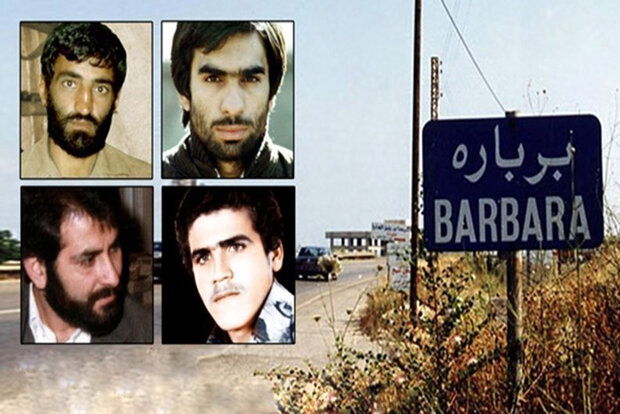
Al-Manar | July 5, 2019
Iran on Friday said that the four diplomats kidnapped in northern Lebanon in 1982 are in occupied Palestine, calling on the International Committee of the Red Cross to form a fact-finding committee.
Iranian foreign ministry released on Friday a statement marking the 37th anniversary of the abduction of the four diplomats.
“As it has been mentioned over the past years, evidence indicates that the diplomats kidnapped in Lebanon have been handed over to the occupying forces of the Zionist regime and subsequently transferred to the occupied territories and now, are held in prisons of this illegitimate regime,” the statement said.
“Accordingly, and given the occupation of Lebanon at that time by the Zionist regime with the full support of the US, the Islamic Republic of Iran believes that the political and legal responsibility for the abduction and this terrorist action lies with the Zionist regime and its supporters,” the foreign ministry noted.
On July 4, 1982, the four Iranian diplomats were kidnapped by a group of Israeli-backed gunmen at an inspection post in northern Lebanon.
In September 2008, the Lebanese government sent a letter to the then UN secretary general, Ban Ki-moon, in which Beirut confirmed the abduction of the Iranian diplomats in the Lebanese territory and called for UN action to pursue the case.
The Zionist entity has claimed that the Iranian diplomats were abducted by a Lebanese militant group and killed shortly after their abduction.
Featured Video

“Historic Russia”: The Land Putin Will Not Give Back
or go to
Aletho News Archives – Video-Images
From the Archive
How Ukraine Tortured and Slaughtered Donbass
By Kit Klarenberg | Al Mayadeen | July 11, 2024
Almost immediately after the proxy war erupted, ISIS-tier footage of the torture and murder of Russians in Ukrainian custody emerged.
On July 6th, the New York Times published an astonishing investigation: In Ukraine, Killings of Surrendering Russians Divide an American-Led Unit. The article documents in grim detail how Chosen Company, an international volunteer battalion for Kiev, routinely executes Russian prisoners of war. It is the very first mainstream admission that this practice – a brazen breach of the Geneva Conventions, and a grave war crime – is widespread among Ukraine’s fighters, both foreign and homegrown. … continue
Blog Roll
 Aletho News
- Burnham tackles Britain’s poverty with aggression in Yemen
- Peace in Ukraine: the easy way – or the hard way
- Trump & the Rrrrussians
- US taxpayer money laundered back through Ukraine – Musk
- Before COVID, an NIH lab chief proposed making a SARS-like bat virus more infectious
- Gates, Bourla on Trial in Netherlands Accused of ‘Great Reset’ Scheme at Vaccine Injury Hearing
- BRITAIN’S WARNING: PREPARE FOR WAR
- “Historic Russia”: The Land Putin Will Not Give Back
- How the Cambridge Analytica scandal still haunts Mark Zuckerberg
- The Ongoing Cancellation Campaign Against a Dissenting Academic in Norway
- If Americans Knew
- DAILY UPDATE: Latest essential news on Palestine, Israel, & region
- Damning report shows the media must confront its failures on Gaza
- BBC senior broadcaster speaks out on Gaza coverage
- Netanyahu vows vast West Bank invasion in response to 20-minute skirmish that left 2 Israeli soldiers and 2 Palestinian fighters dead
- Tied up and tortured: Israel using US-made electroshock weapons on Palestinian detainees
- The outsourced risk: how newsrooms rely on Gaza’s freelancers without protecting them
- Gaza bakeries forced to shut as Israel blocks flour shipments
- Gaza’s breast cancer patients face a deadly wait for treatment amid Israel’s genocide
- DAILY UPDATE: Latest essential news on Palestine, Israel, & region
- The Israel Lobby’s Changing Fortunes
- No Tricks Zone
- Two New Studies Find Thwaites Glacier Melt Cannot Be Driven By Human Activity Or A Warming Ocean
- E-Cars Reduce CO2 Emissions By Only 41% Compared To Internal Combustion Engine Vehicles
- Predictions Made By Renowned Climate Professor Over Past Decades Have Been Proven To Be Poor
- New Study Suggests Large Regions Of The Pacific Ocean Have Been Cooling For The Last 80 Years
- Germany’s Green Energy Debacle: High Energy Costs Force Kahla Porzellan to Close After 182 Years!
- New Study: 50 Years Of The Most Aggressive ‘Net Zero’ Policies Can Only Affect The Global Climate By 0.03°C
- US September “Heat” Was No Record…Many Records Set Decades Ago
- Latest European Green Energy Debacle; Portugal’s Largest Flagship Solar Park Insolvent!
- Green Energy Debacle: German Expert Professor Fritz Vahrenholt Warns Of Severe Economic And Social Consequences
- Two More Paleo Reconstructions Affirm Meters-Higher Sea Levels Across Ireland, Brazil 7000-6000 Years Ago

