The US Attack near Deir ez-Zor as Seen from the Middle East
By Yuriy Zinin – New Eastern Outlook – September 23, 2016
“The American bombing in Deir ez-Zor, pieces of evidence and responses”, “An outrageous back stab”, “What is behind the American onslaught?” – those are the headlines one could run across while looking through the Middle Eastern media sources on the recent raid of the international coalition led by the United States against the position of the Syrian armed forces in the above mentioned city.
The deaths of dozens of Syrian soldiers sparked a wave of harsh criticism of Washington across the region. Some Arab commentators have rejected the official interpretation of the attacks as a “fatal error” of the US Air Force, that was allegedly trying to hit ISIS. Instead, they are drawing attention to a number of crucial details of the events that have been unfolding in Syria.
Thus, according to the Lebanese newspaper As-Safir, before that fatal attack neither the United States nor the international coalition forces made any attempts to bomb this area that was largely occupied by ISIS. This also remains true when we are to take a look at the other areas of Syria, where radical militants are occupying large chunks of territories in a bid to push the government forces back.
And even before the latest bombardment, Syrian troops have repeatedly come under fire of the so-called US-led coalition back in September 2014.
The latest attack is being perceived by the above-mentioned newspaper through Washington’s desires to put an end to a string of successful advancements of the Syrian forces, who have recently recaptured the city of Palmyra with the extensive amount of support provided by Russia’s aircraft. For putting an end to the Deir ez-Zor advancement, the United States added fuel to the fire of armed clashes in the north of the country, especially in the Aleppo area.
The US has been trying push the Syrian army forces back, preventing Damascus from using its oil and economic resources in the east of the country.
The attempts to squeeze the Syrian army out of the areas in the east corresponds with a number of previously announced scenarios. Like the project of the deceased Saudi King Abdullah to unite the nomadic Arab tribes in the border triangle of Syria, Iraq and Jordan and subject them to the Saudi rule. It would go in direct correspondence with the creation of a Sunni controlled area in the Iraqi Anbar province and a number of Syrian territories too.
Yet another motive of the latest bombardment is a political one. According to the Secretary-General of the pan-Arab National Forum, Dr. Ziad Hafez, the attacks against the positions of the Syrian army were carried out in a bid to undermine the US-Russian peace talks, that could potentially lead to a peaceful settlement of the conflict.
After all, there’s a long list of opponents to the possible truce both acorss the Middle East and in the US itself, including the sitting US administration.
Several Arab commentators indicate there’s conflicting statements and positions within the US towards the cease-fire agreement. They recall that during the long negotiations between Russia’s Minister of Foreign Affairs, Sergey Lavrov and US Secretary of State, John Kerry the latter had to wait for three hours to obtain a “go” from Washington.
The airstrike against Syrian forces is being perceived by the Arab newspaper Al-Kasyun as the first indicator of a break up deep within the American ruling elite. This was an avid demonstration of what could the “party of war” in Washington achieve. It manifests itself openly in an attempt to prevent the implementation of the agreement between the Russian Federation and the United States, or to at least undermine its value. Moreover, there we are witnessing prominent American politicians working hand-in-hand with radical Islamists in Syria, the newspaper notes.
After all, the agreement was heavily criticized by all the militant groups fighting against Damascus. Once it was announced, the social networks of radical militants were flooded with the same slogan “No truce, shame.”
At the same time, the UAE newspaper Al-Bayan says that, despite the tensions in relations between the US and Russia, the White House is keen to find an understanding before the new president is elected to show at least some success in its foreign policies, in particular in the fight against ISIS. Washington is also governed by the desire to avoid a direct confrontation with Russian military forces both on the ground and above it in Syria. This newspaper believes that the situation in Syria is still under control of both Damascus and Moscow, and they are not interested in letting it slip away.
Yury Zinin, Leading Research Fellow at the Moscow State Institute of International Relations (MGIMO).
Syria no-fly zone beneficial to Takfiri militants: President Rouhani
Press TV – September 22, 2016
Iranian President Hassan Rouhani has ruled out the establishment of a no-fly zone in Syria, stressing that such a measure would merely complicate the ongoing crisis in the Arab country and strengthen foreign-sponsored Takfiri militants on the ground.
“A no-fly zone (in Syria) will benefit terrorists, who have everything except for military aircraft,” Rouhani said during a presser after his speech at the 71st United Nations General Assembly session in New York on Thursday.
“They have mortar shells, tanks, missiles and armored personnel carriers. They have cannons and artillery batteries but no warplanes. The creation of a no-fly zone is a not a right step. This is an ill-advised suggestion,” the Iranian president added.
On Wednesday, US Secretary of State John Kerry demanded that Russia and the Syrian government halt anti-terror flights over the Syrian battle zones in order to “restore credibility” to the efforts aimed at resolving the Arab country’s years-long crisis.
The Iranian president noted that humanitarian disasters are unfolding in Syria as a portion of the country’s soil is under the control of terrorist groups like Daesh and Jabhat Fateh al-Sham, Syria’s al-Qaeda branch formerly known as al-Nusra Front).
“They kill people. They burn victims alive. The crimes we witness are unprecedented in history,” the Iranian president said.
The Iranian president further made a reference to the plight of millions of Syrians, who have been internally displaced and have not received the necessary foodstuff and medicine for months due to the foreign-backed militancy in their homeland.
He also listed the delivery of humanitarian aid, the fight against terrorism, the participation of various political groups and factions in the future Syrian government through a popular vote as the main requirements for real democracy to flourish in the crisis-hit Arab country.
‘Terrorism contagious virus’
Elsewhere in his remarks, the Iranian president highlighted the significance of combating terrorism and extremism in the Middle East, which he described as “plagued by instability and insecurity” that has “spread to other parts of the world too.”
“It has plagued Europe, Africa, Asia, and America. The terrorism virus is contagious,” Rouhani stated, adding, “The issue of terrorism must be tackled with unity and collaboration, and failure to do so will endanger all of us.”
Iran’s nuclear agreement
Broaching the subject of the landmark nuclear deal between Iran and the six world powers, President Rouhani criticized the US government for the belated license to allow the sale of commercial airliners to Iran, stating that the green light must have been given right after the implementation of the agreement, dubbed the Joint Comprehensive Plan of Action (JCPOA), on January 16.
Iran has had numerous negotiations with leading aerospace companies Boeing and Airbus before and after the implementation of the nuclear agreement, he added.
Rouhani stated that Tehran welcomes American traders, technicians, business owners plus company representatives, and is determined to expand banking ties with world countries.
The Iranian president further noted that the Islamic Republic expects the United States to stand firmly committed to its obligations under the JCPOA.
He stressed that the JCPOA is in the interest of the region and the world, and its significance remains intact even if the other side does not honor its commitments under the nuclear accord.
‘Iranian Armed Forces not seeking adventurism’
Rouhani stressed that the Iranian Armed Forces have long been present in the Persian Gulf, and they are duty-bound to defend the country’s territory and airspace, and to secure its interests in the high seas.
He pointed out that the Iranian forces are not seeking adventurism, military confrontations or the escalation of tensions, questioning the presence of US forces in the Persian Gulf when Washington is not militarily involved in a war in the Middle East.
The Iranian president added that the American forces in the region must obey international regulations, highlighting that tensions would not benefit anyone at the current tense situation in the Middle East.
Saudi ‘miscalculation’ in Yemen
“Saudi Arabia is making a miscalculation” over its aggression against Yemen. About two years of bombardment of Yemen has had no achievement for them, and has been devastating for the people of Yemen,” the Iranian president said.
Hundreds of thousands of Yemeni women and children are being slaughtered on a daily basis, while the country’s entire infrastructure has been destroyed, he added.
The Iranian president further noted that Saudi Arabia does not have unlimited authority over the holy sites in Mecca and Medina, and that the Riyadh regime must discharge its responsibility regarding the annual Hajj rituals.
‘Not important who wins US election’
Rouhani went on to say that it does not concern Iran who wins the forthcoming presidential election in the United States, stressing that the Islamic Republic attaches great significance to “its own national interests.”
“The next US administration will receive a proper response from Iran should it respect the Islamic Republic’s national interests and reduce tensions. But if it seeks to heighten tensions, new conditions will be created for the two countries,” the Iranian president added.
Czech Ambassador in Syria: What happened in Syria over the past five years has nothing to do with revolution
American Herald Tribune | September 18, 2016
The Czech Ambassador in Damascus Eva Filipi has stressed that what happened in Syria over the past five years was not a “revolution”, rather, it was an attempt by some countries to implement their agendas which proved to be unachievable in Syria.
In her presentation during a debate on the current developments in the Middle East organized by the Czech Institute 2080, Filipi said “what is going on in Syria is a proxy regional and international war”. She added that “though many strategic experts in the West had realized what kind of situation will be created in Syria, western countries insisted to press ahead with their schemes to impose the changes they want.”
She went on to say that the Turkish and Qatari regimes wanted from the very beginning to coercively impose the “Muslim Brotherhood” as a major political player and partner in Syria, which is an issue that has been strongly rejected by Syria, therefore these two regimes stood against the Syrian government.”
She pointed out that the so-called Syrian “opposition” is still divided and it hasn’t been able to come to an agreement for more than five years, so there is no hope to reach a compromise with such an opposition. Besides, the opposition abroad is backed by some countries and it is used to defend the interests of these countries.
Filipi warned that Qatar and Saudi Arabia are using money to influence Western countries and lead them to adopt stances that support the Qatari and Saudi policies.
She wondered how western countries can make alliance with such a radical regime like Saudi Arabia.
America’s Worldwide Impunity
By Robert Parry | Consortium News | September 19, 2016
After several years of arming and supporting Syrian rebel groups that often collaborated with Al Qaeda’s Nusra terror affiliate, the United States launched an illegal invasion of Syria two years ago with airstrikes supposedly aimed at Al Qaeda’s Islamic State spin-off, but on Saturday that air war killed scores of Syrian soldiers and aided an Islamic State victory.
Yet, the major American news outlets treat this extraordinary set of circumstances as barely newsworthy, operating with an imperial hubris that holds any U.S. invasion or subversion of another country as simply, ho-hum, the way things are supposed to work.
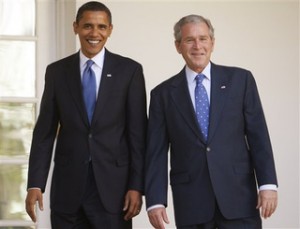
Barack Obama and George W. Bush at the White House
On Monday, The Washington Post dismissed the devastating airstrike at Deir al-Zour killing at least 62 Syrian soldiers as one of several “mishaps” that had occurred over the past week and jeopardized a limited ceasefire, arranged between Russia and the Obama administration.
But the fact that the U.S. and several allies have been routinely violating Syrian sovereign airspace to carry out attacks was not even an issue, nor is it a scandal that the U.S. military and CIA have been arming and training Syrian rebels. In the world of Official Washington, the United States has the right to intervene anywhere, anytime, for whatever reason it chooses.
President Barack Obama has even publicly talked about authorizing military strikes in seven different countries, including Syria, and yet he is deemed “weak” for not invading more countries, at least more decisively.
Democratic presidential nominee Hillary Clinton has vowed to engage in a larger invasion of Syria, albeit wrapping the aggression in pretty words like “safe zone” and “no-fly zone,” but it would mean bombing and killing more Syrian soldiers.
As Secretary of State, Clinton used similar language to justify invading Libya and implementing a “regime change” that killed the nation’s leader, Muammar Gaddafi, and unleashed five years of violent political chaos.
If you were living in a truly democratic country with a truly professional news media, you would think that this evolution of the United States into a rogue superpower violating pretty much every international law and treaty of the post-World War II era would be a regular topic of debate and criticism.
Those crimes include horrendous acts against people, such as torture and other violations of the Geneva Conventions, as well as acts of aggression, which the Nuremberg Tribunals deemed “the supreme international crime differing only from other war crimes in that it contains within itself the accumulated evil of the whole.”
Justifying ‘Regime Change’
Yet, instead of insisting on accountability for American leaders who have committed these crimes, the mainstream U.S. news media spreads pro-war propaganda against any nation or leader that refuses to bend to America’s imperial demands. In other words, the U.S. news media creates the rationalizations and arranges the public acquiescence for U.S. invasions and subversions of other countries.
In particular, The New York Times now reeks of propaganda, especially aimed at two of the current targets, Syrian President Bashar al-Assad and Russian President Vladimir Putin. With all pretenses of professionalism cast aside, the Times has descended into the status of a crude propaganda organ.
On Sunday, the Times described Assad’s visit to a town recently regained from the rebels this way: “Assad Smiles as Syria Burns, His Grip and Impunity Secure.” That was the headline. The article began:
“On the day after his 51st birthday, Bashar al-Assad, the president of Syria, took a victory lap through the dusty streets of a destroyed and empty rebel town that his forces had starved into submission.
“Smiling, with his shirt open at the collar, he led officials in dark suits past deserted shops and bombed-out buildings before telling a reporter that — despite a cease-fire announced by the United States and Russia — he was committed ‘to taking back all areas from the terrorists.’ When he says terrorists, he means all who oppose him.”
The story by Ben Hubbard continues in that vein, although oddly the accompanying photograph doesn’t show Assad smiling but rather assessing the scene with a rather grim visage.
But let’s unpack the propaganda elements of this front-page story, which is clearly intended to paint Assad as a sadistic monster, rather than a leader fighting a foreign-funded-and-armed rebel movement that includes radical jihadists, including powerful groups linked to Al Qaeda and others forces operating under the banner of the brutal Islamic State.
The reader is supposed to recoil at Assad who “smiles as Syria burns” and who is rejoicing over his “impunity.” Then, there’s the apparent suggestion that his trip to Daraya was part of his birthday celebration so he could take “a victory lap” while “smiling, with his shirt open at the collar,” although why his collar is relevant is hard to understand. Next, there is the argumentative claim that when Assad refers to “terrorists” that “he means all who oppose him.”
As much as the U.S. news media likes to pride itself on its “objectivity,” it is hard to see how this article meets any such standard, especially when the Times takes a far different posture when explaining, excusing or ignoring U.S. forces slaughtering countless civilians in multiple countries for decades and at a rapid clip over the past 15 years. If anyone operates with “impunity,” it has been the leadership of the U.S. government.
Dubious Charge
On Sunday, the Times also asserted as flat fact the dubious charge against Assad that he has “hit civilians with gas attacks” when the most notorious case – the sarin attack outside Damascus on Aug. 21, 2013 – appears now to have been carried out by rebels trying to trick the United States into intervening more directly on their side.
A recent United Nations report blaming Syrian forces for two later attacks involving chlorine was based on slim evidence and produced under great political pressure to reach that conclusion – while ignoring the absence of any logical reason for the Syrian forces to have used such an ineffective weapon and brushing aside testimony about rebels staging other gas attacks.
More often than not, U.N. officials bend to the will of the American superpower, failing to challenge any of the U.S.-sponsored invasions over recent decades, including something as blatantly illegal as the Iraq War. After all, for an aspiring U.N. bureaucrat, it’s clear which side his career bread is buttered.
We find ourselves in a world in which propaganda has come to dominate the foreign policy debates and – despite the belated admissions of lies used to justify the invasions of Iraq and Libya – the U.S. media insists on labeling anyone who questions the latest round of propaganda as a “fill-in-the-blank apologist.”
So, Americans who want to maintain their mainstream status shy away from contesting what the U.S. government and its complicit media assert, despite their proven track record of deceit. This is not just a case of being fooled once; it is being fooled over and over with a seemingly endless willingness to accept dubious assertion after dubious assertion.
In the same Sunday edition which carried the creepy portrayal about Assad, the Times’ Neil MacFarquhar pre-disparaged Russia’s parliamentary elections because the Russian people were showing little support for the Times’ beloved “liberals,” the political descendants of the Russians who collaborated with the U.S.-driven “shock therapy” of the 1990s, a policy that impoverished a vast number of Russians and drastically reduced life expectancy.
Why those Russian “liberals” have such limited support from the populace is a dark mystery to the mainstream U.S. news media, which also can’t figure out why Putin is popular for significantly reversing the “shock therapy” policies and restoring Russian life expectancy to its previous levels. No, it can’t be that Putin delivered for the Russian people; the only answer must be Putin’s “totalitarianism.”
The New York Times and Washington Post have been particularly outraged over Russia’s crackdown on “grassroots” organizations that are funded by the U.S. government or by billionaire financial speculator George Soros, who has publicly urged the overthrow of Putin. So has Carl Gershman, president of the National Endowment for Democracy (NED), which funnels U.S. government cash to political and media operations abroad.
The Post has decried a Russian legal requirement that political entities taking money from foreign sources must register as “foreign agents” and complains that such a designation discredits these organizations. What the Post doesn’t tell its readers is that the Russian law is modeled after the American “Foreign Agent Registration Act,” which likewise requires people trying to influence policy in favor of a foreign sponsor to register with the Justice Department.
Nor do the Times and Post acknowledge the long history of the U.S. government funding foreign groups, either overtly or covertly, to destabilize targeted regimes. These U.S.-financed groups often do act as “fifth columnists” spreading propaganda designed to undermine the credibility of the leaders, whether that’s Iranian Prime Minister Mohammad Mosaddegh in 1953 or Ukrainian President Viktor Yanukovych in 2014.
Imperfect Leaders
That’s not to say that these targeted leaders were or are perfect. They are often far from it. But the essence of propaganda is to apply selective outrage and exaggeration to the leader that is marked for removal. Similar treatment does not apply to U.S.-favored leaders.
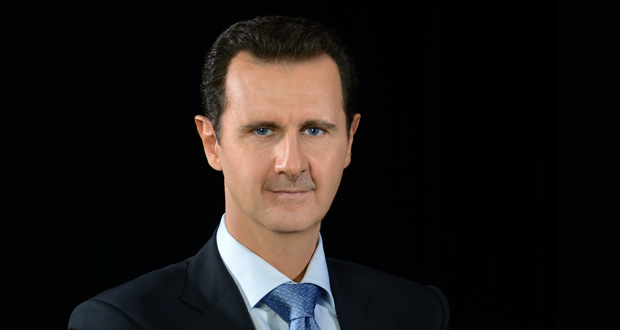
Syrian President Bashar al-Assad
The pattern of the Times and Post is also to engage in ridicule when someone in a targeted country actually perceives what is going on. The correct perception is then dismissed as some sort of paranoid conspiracy theory.
Take, for example, the Times’ MacFarquhar describing a pamphlet and speeches from Nikolai Merkushkin, the governor of Russian region of Samara, that MacFarquhar says “cast the blame for Russia’s economic woes not on economic mismanagement or Western sanctions after the annexation of Crimea but on a plot by President Obama and the C.I.A. to undermine Russia.”
The Times article continues: “Opposition candidates are a fifth column on the payroll of the State Department and part of the scheme, the pamphlet said, along with the collapse in oil prices and the emergence of the Islamic State. Mr. Putin is on the case, not least by rebuilding the military, the pamphlet said, noting that ‘our country forces others to take it seriously and this is something that American politicians don’t like very much.’”
Yet, despite the Times’ mocking tone, the pamphlet’s perceptions are largely accurate. There can be little doubt that the U.S. government through funding of anti-Putin groups inside Russia and organizing punishing sanctions against Russia, is trying to make the Russian economy scream, destabilize the Russian government and encourage a “regime change” in Moscow.
Further, President Obama has personally bristled at Russia’s attempts to reassert itself as an important world player, demeaning the former Cold War superpower as only a “regional power.” The U.S. government has even tread on that “regional” status by helping to orchestrate the 2014 putsch that overthrew Ukraine’s elected President Yanukovych on Russia’s border.
After quickly calling the coup regime “legitimate,” the U.S. government supported attempts to crush resistance in the south and east which were Yanukovych’s political strongholds. Crimea’s overwhelming decision to secede from Ukraine and rejoin Russia was deemed by The New York Times a Russian “invasion” although the Russian troops that helped protect Crimea’s referendum were already inside Crimea as part of the Sevastopol basing agreement.
The U.S.-backed Kiev regime’s attempt to annihilate resistance from ethnic Russians in the east – through what was called an “Anti-Terrorism Operation” that has slaughtered thousands of eastern Ukrainians – also had American backing. Russian assistance to these rebels is described in the mainstream U.S. media as Russian “aggression.”
Oddly, U.S. news outlets find nothing objectionable about the U.S. government launching military strikes in countries halfway around the world, including the recent massacre of scores of Syrian soldiers, but are outraged that Russia provided military help to ethnic Russians being faced with annihilation on Russia’s border.
Because of the Ukraine crisis, Hillary Clinton likened Vladimir Putin to Adolf Hitler.
Seeing No Coup
For its part, The New York Times concluded that there had been no coup in Ukraine – by ignoring the evidence that there was one, including an intercepted pre-coup telephone call between U.S. Assistant Secretary of State Victoria Nuland and U.S. Ambassador Geoffrey Pyatt discussing who should be made the new leaders of Ukraine.
The evidence of a coup was so clear that George Friedman, founder of the global intelligence firm Stratfor, said in an interview that the overthrow of Yanukovych “really was the most blatant coup in history.” But the Times put protecting the legitimacy of the post-coup regime ahead of its journalistic responsibilities to its readers, as it has done repeatedly regarding Ukraine.
Another stunning case of double standards has been the mainstream U.S. media’s apoplexy about alleged Russian hacking into emails of prominent Americans and then making them public. These blame-Russia articles have failed to present any solid evidence that the Russians were responsible and also fail to note that the United States leads the world in using electronic means to vacuum up personal secrets about foreign leaders as well as average citizens.
In a number of cases, these secrets appear to have been used to blackmail foreign leaders to get them to comply with U.S. demands, such as the case in 2002-03 of the George W. Bush administration spying on diplomats on the U.N. Security Council to coerce their votes on authorizing the U.S. invasion of Iraq, a ploy that failed.
U.S. intelligence also tapped the cell phone of German Chancellor Angela Merkel, whose cooperation on Ukraine and other issues of the New Cold War is important to Washington. And then there’s the massive collection of data about virtually everybody on the planet, including U.S. citizens, over the past 15 years during the “war on terror.”
Earlier this year, the mainstream U.S. news media congratulated itself over its use of hacked private business data from a Panama-based law firm, material that was said to implicate Putin in some shady business dealings even though his name never showed up in the documents. No one in the mainstream media protested that leak or questioned who did the hacking.
Such mainstream media bias is pervasive. In the case of Sunday’s Russian elections, the Times seems determined to maintain the fiction that the Russian people don’t really support Putin, despite consistent opinion polls showing him with some 80 percent approval.
In the Times’ version of reality, Putin’s popularity must be some kind of trick, a case of totalitarian repression of the Russian people, which would be fixed if only the U.S.-backed “liberals” were allowed to keep getting money from NED and Soros without having to divulge where the funds were coming from.
The fact that Russians, like Americans, will rally around their national leader when they perceive the country to be under assault – think, George W. Bush after the 9/11 attacks – is another reality that the Times can’t tolerate. No, the explanation must be mind control.
The troubling reality is that the Times, Post and other leading American news outlets have glibly applied one set of standards on “enemies” and another on the U.S. government. The Times may charge that Bashar al-Assad has “impunity” for his abuses, but what about the multitude of U.S. leaders – and, yes, journalists – who have their hands covered in the blood of Iraqis, Libyans, Afghans, Yemenis, Syrians, Somalis and other nationalities. Where is their accountability?
Investigative reporter Robert Parry broke many of the Iran-Contra stories for The Associated Press and Newsweek in the 1980s. You can buy his latest book, America’s Stolen Narrative, either in print here or as an e-book (from Amazon and barnesandnoble.com).
IMF: Mideast conflicts have erased development gains for whole generation
Press TV – September 16, 2016
The International Monetary Fund (IMF) says conflicts in the Middle East are not only devastating economies in countries such as Iraq, Libya, Syria and Yemen, but they have also erased “development gains for a whole generation.”
The fund issued a report titled the Economic Impact of Conflicts and the Refugee Crisis in MENA (Middle East and North Africa) on Friday, where it said conflicts were killing economies in the countries gripped by war and sapping growth in neighboring countries and those hosting millions of refugees.
Middle Eastern and North African countries battered by fighting have suffered average losses of 6-15 percentage points in the gross domestic product (GDP) in three years, compared to a 4-9 percentage-point average worldwide, according to the report.
The IMF report showed that the drops in economic output in Syria, Libya and Yemen in recent years have far exceeded the worldwide average.
Syria’s gross domestic product level is currently less than half the level it was five years ago before the start of the conflict, the IMF stated.
The report showed Yemen lost 25-35 percent of its GDP in 2015 alone, in the wake of the deadly Saudi campaign.
Oil-dependent Libya saw its GDP fall 24 percent in 2014, the IMF said.
Physical infrastructure damage, now estimated at $137.8 billion in Syria and more than $20 billion in Yemen, has reduced trade and output in neighboring countries, according to the report.
Countries bordering high-intensity conflict zone showed an average annual GDP decline of 1.4 percentage points worldwide, with a bigger drop of 1.9 percentage points in the Middle East and North Africa region.
Refugees’ plight
The fleeing of more than half of Syria’s 22 million population, 6.6 million internally and more than five million to other countries, has magnified economic losses, dramatically escalating poverty, unemployment and school dropouts in countries that were already struggling, the IMF said.
Many of the refugees seeking asylum in other countries are skilled workers and professionals forced by war and persecution to leave the conflict zones in hope of better lives.
However, according to the IMF, because refugees often have fewer rights than local populations, those landing in developing countries are often absorbed into already disadvantaged local communities forming a new underclass comprising refugees and the existing poor in the host country, which in turn leads to a detrimental effect on the host countries.
For those refugees that land in Europe, where the influx of refugees has only had a small impact on economy, there have been some positive effects on the host countries, according to the report.
More funds needed
The IMF report has revealed the huge scale of the refugee crisis and the pressure it put on several United Nations institutions, especially the United Nations High Commissioner for Refugees (UNHCR) and the World Food Programme.
The two UN organizations have been playing a leading role in the provision of humanitarian assistance, both to internally displaced people and refugees.
However, the IMF report says funding has not kept up with the sharp increase in needs.
For instance, the World Food Programme and the UNHCR have had to cut their services to refugees in Jordan due to funding constraints, which may have contributed to the acceleration of refugee flows to Europe from late 2014, according to the report.
The IMF report urged policymakers to scale up humanitarian aid in conflict zones and neighboring countries hosting refugees and prioritize fiscal spending to protect human life and serve basic public needs.
The report comes as the UN General Assembly is preparing to host a summit on refugees in New York next week.
The UN plans to use the summit as a platform to urge governments, private donors, and humanitarian agencies to support the organization in its efforts to ease suffering of the victims of world conflicts.
Analysts believe the MENA conflicts and the following refugee crisis are the outcome of the West’s policies in the Middle East and North Africa.
Egyptian state media claims 9/11 was carried out by West to justify war on terror
Orrazz | September 16, 2016
A columnist for a state-run newspaper in Egypt has suggested the US invented Isis and set up the 9/11 attacks to justify its military interventions in the Middle East.
“Is it possible to believe the official version, from the US government, of the events of 11 September 2001?” wrote journalist Noha Al-Sharnoubi in Al-Ahram, a major national Egyptian newspaper owned by the government.
Ms Al-Sharnoubi said the World Trade Centre and Pentagon attacks could have been premeditated to “justify the war on terror” in her column, published on 23 August.
She also cast doubt over the veracity of the actions of the so-called Islamic State, alleging the extremist group could have been made up to “trick” the world and validate US foreign policy.
Ms Al-Sharnoubi does not appear to shy away from controversial subjects. Her weekly column has recently discussed issues such as burkini bans, French military involvement in Libya and whether it is acceptable to sacrifice chickens, duck and geese.
According to an English translation by the Middle East Media Research Institute (Memri) [admittedly unreliable – Aletho News ], Ms Al-Sharnoubi wrote: “Is it a coincidence that the commanders of the September 11 attack trained at American flight schools?”
“Is it conceivable that four hijacked planes flew around so freely, penetrated US airspace and hit the towers of the World Trade Center and the Pentagon one by one, with an interval of 15 minutes and 30 minutes between the attacks,” she added.
“All this took place without the Americans targeting the planes and downing them, despite all their intelligence, satellites and radars?
“Or was the whole thing planned [in advance] in order to justify the war on terror, the [first] episode of which [later] began in Iraq?”
Ms Al-Sharnoubi also questioned the contents of ISIS propaganda videos, suggesting the militant group could be “another story that was prepared in advance [by the West] to justify the devastation, partitioning and occupation” of Middle Eastern countries.
“Does it make sense that most ISIS members are foreigners [i.e., Western nationals], unless ISIS is another story that was prepared in advance [by the West] to justify the devastation, partitioning and occupation [of countries] that is taking place and will continue to take place in the Middle East?” she wrote, according to Memri.
“Those who are murdered and [then] accused of perpetrating terror attacks in the West – are they the real culprits?
“[Perhaps Western] intelligence elements are behind the attacks and the bombings, and later Muslim citizens are arrested and killed and simply accused of perpetrating [the attacks] in order to justify what is happening in the Arab countries in the name of the war on terror, and in order to justify the plan to persecute the Muslims in the U.S. and Europe and expel them? Have we really been deceived, and continue to be deceived, to such an extent?!”
Egypt is listed as number 159 out of 180 countries in Reporters Without Borders’s 2016 World Press Freedom Index.
According to the report, “journalists are obliged on national security grounds to report only the official version of ‘terrorist’ attacks” under an anti-terrorism law passed in 2015.
US to sign record $38bn military aid deal with Israel – report
RT | September 13, 2016
The US has reportedly agreed a $38 billion package to deliver military aid to Israel over the next 10 years, with the pact expected to be signed “within days.” The deal will become the biggest pledge of US military assistance to another country in history.
The new aid package will see Israel receive $3.8 billion per year from Washington, an increase of $700 million from the current $3.1 billion, sources told Reuters. However, the figure fell short of the annual $4.5 billion that Israeli Prime Minister Benjamin Netanyahu had been seeking.
Following the negotiations Israel says it will not seek extra funding from the US. A previous agreement that allowed Israel to spend just over a quarter of the aid given by Washington on weapons from its domestic defense industry, instead of from the US, will be also phased out.
The terms of the deal, which is classed as a memorandum of understanding (MOU), will also include money for Israel’s missile defense program. This had previously been funded by Congress on an informal basis. A source told Reuters that the pact is expected to be signed “within days.”
However the new MOU will not be signed between President Barack Obama and Netanyahu, who have had a frosty relationship due to the US leader’s support for last year’s Iranian nuclear deal, which was bitterly opposed by Israel. Lower-ranking officials will sign the paperwork, as has been the case with previous deals.
The plan for an increase in military aid to Israel has enjoyed strong support in Congress. In April, 83 US Senators – 51 Republicans and 32 Democrats – sent a letter to the White House urging an increase in financial support. The effort was spearheaded by South Carolina Republican Lindsey Graham and Delaware Democrat Chris Coons.
“In light of Israel’s dramatically rising defense challenges, we stand ready to support a substantially enhanced new long-term agreement to help provide Israel the resources it requires to defend itself and preserve its qualitative military edge,” the letter said.
It is believed that Netanyahu agreed to the deal before November’s US presidential election to avoid uncertainties surrounding what will happen when the new leader takes office.
Not everyone has been impressed with the military aid package set to be signed between the two allies. A Washington DC non-profit group is suing the US government, challenging its authority to provide Israel with foreign aid and arguing that its status – a nuclear power which did not sign the Nuclear Non-proliferation Treaty – means that aiding it contravenes US law.
“This lawsuit is not about foreign policy. It is about the rule of law, presidential power, the structural limits of the US Constitution, and the right of the public to understand the functions of government and informed petition of the government for redress,” stated the complaint filed by Grant F. Smith, director of the Institute for Research: Middle East Policy (IRmep).
Demonize and Distract: Sanitizing Syria for the Masses
By Jason Hirthler | CounterPunch | September 9, 2016
Summoning the Humanitarian Pretext
The arch pragmatist Machiavelli once wrote that, “If you watch the ways of men, you will see that those who obtain great wealth and power do so either by force or fraud, and having got them they conceal under some honest name the foulness of their deeds.” You couldn’t pen a better description of the relationship between the imperial corporate state and its supplicant media. Once the coffers of vulnerable nations are ransacked by American wars of aggression, it is the media that sweeps the crimes of state beneath a carpet of piety. The truth may come out in due time, although it is always ex post facto. Thanks to the the coordination between the corporate sector, the state, and the media, the American doctrinal system is largely a self-contained narrative. It comes complete with a smooth internal logic. Corporations set priorities, the state produces a storyline that rationalizes the pursuit of those priorities, and the media distributes and reifies the storyline until it is gospel. This is no surprise, since the corporations own the politicians and the presses. Yet one way to examine the functioning of this kind of systemic propaganda is by looking at some of the keywords on which the stories hinge.
The foul deeds Machiavelli mentioned now principally occur in the Middle East, where vast resources lie and where power may be usefully projected deep into Eurasia. The Syrian proxy war between forces east and west is a nice example of how the dissimulations initiated in Washington are disseminated through the MSM. For instance, The New York Times, and its deputies in the vast clearinghouses of state propaganda, would have us believe that the White House is supporting freedom-loving rebels in Syria who are politically moderate and fighting for their lives in a civil war against a despotic regime led by an evil optometrist, Bashar al-Assad.
But we know that the entire Syrian fiasco was engineered by the CIA with cash, guns, and training, and unceasing support from the Gulf Cooperation Council (GCC) at our behest. It is a long-standing neoconservative plan to break the so-called Shia Crescent that runs from Lebanon through Syria to Iran. These are, of course, the independent-minded states that have thus far refused to accept either Israeli colonization of Palestinian land or permit Western-backed energy projects to take shape on their territory. Hence the need to dismember them into tiny, feckless statelets that pose no challenge to either Tel Aviv or Washington.
But this is hidden behind the fog of war and a domestic haze of media nuance. This entire conflict could reasonably be said to hinge on a single phrase: “moderate rebels.” The words “moderate” and “rebel” make all the difference in the telling of this fable. The truth is that we have hijacked Arab Spring discontent and festooned it with brigades of terrorist mercenaries procured from around the Middle East and Asia, all with the singular mandate to take down the Assad government. Tens of thousands of jihadists have been injected by NATO into a multi-confessional state governed by an elected leader who won a larger percentage of the electorate than our liberal messiah Barack Obama.
But this more truthful interpretation of events is unacceptable. To concede that the White House is now backing al-Qaeda terrorists in an effort to capsize a Middle Eastern democracy would implode the religion of American exceptionalism on which elite power depends. Thus the media cannot point out that the Pentagon’s recent admission of having troops in Syria violates the Nuremberg Principles on wars of aggression as well as the United Nations Charter. Omissions of this kind are what prevent average Americans from a) knowing what we’re really doing; and b) resisting it.
Demonize and Distract
But it isn’t enough to simply cloak our own crimes in the holy cloth of exceptionalism. We must defame our enemies. We must plant false flags in their soil now so that we can bury bombs in them later. It happens the same way every time. ‘Shocking’ discoveries are made about one of our most reviled enemies, usually provided by a defector with a farcical alias (think “Curveball”). Instantaneous mainstream reports issue a coordinated condemnation of the country in question. Each media outlet chooses a particular keyword to drive home the horror. Popular terms include “crimes against humanity”, “war crimes”, the words “industrial scale” in front of any noun or verb, the word “mass” in front of any noun or verb, “brutal crackdown”, “regime”, and so on. Grisly images are plastered across the front pages of the MSM. Often the images are fakes or are from unrelated incidents.
Once the reader has been stupefied, at least one columnist or politician will draw a deep breath, and then ‘draw comparisons’ to either Hitler and Auschwitz or Slobodan Milosevic and mass graves. (Recently Milosevic was declared innocent of all genocidal charges by the International Criminal Tribunal on Yugoslavia, albeit years after he died in prison after being denied medical treatment by his civilized captors. This process of posthumous exoneration is now practiced on an “industrial scale” by Obama’s drone assassination when various innocents are discovered to have been innocent after they’ve been “terminated”.)
Not only is the supposedly noble Syrian uprising a fraud, but so is our equally principled goal of wiping ISIS from the face of the earth, if the facts on the ground are of any import. Washington has gone after ISIS in a strangely half-hearted way. Why hasn’t it provided air cover for Syrian Arab Army when its helicopters were rendered useless by terrorist TOW missiles? Missiles sold by the United States to Saudi Arabia, likely for the express purpose of funneling them to al Nusrah and other rogue bandits in Syria. Why did the U.S. not immediately attack ISIS-controlled oil wells and oil trading routes–ISIS’ chief source of funding–as Russia did on its entry into the conflict? Why did the Obama administration produce a record-setting arms deal with the Saudis, the leading proselytizer of Wahhabism in the world? Why do we refuse to work with Moscow or the SAA or Iran? Why do we not share grids and intelligence and join their joint operations room in Baghdad?
Isn’t it obvious? We have different goals. We want Assad out and a daft, pliant puppet in charge, presiding over a vast arsenal of domestic police, ready to crush resistance on contact. Of course, any such resisters would be legitimate freedom fighters, as are the Palestinians. But the media takes care to call Palestinians “terrorists” and called citizens resisting the Iraqi occupation “insurgents”. Words matter. They shade the story and bring neutral readers over to the side of empire. They blame the victim for the violence that victimized them.
The dissimulation becomes even clearer when you realize that ISIS emerged from an American interrogation camp in Iraq, in a way that suggests CentCom was more than happy to release radicalized Islamists into the wild. To what purpose? The failed state in Libya and the collapsing scenery of the Syrian state provide plenty of fodder for speculation.
The Wages of Propaganda
Thanks to years of conditioning by the media, the population will do little to resist the escalation to come. Eventually the Syrian “regime” to be eventually overthrown by relentless American-backed violence. Hillary Clinton will win the election and gain control of the Oval Office. As Glen Ford wrote at Black Agenda Report, Clinton will “… ride into the White House on a warhorse”. She is the thinking man’s neocon, unlike President Bush, who represented the anti-intellectual strain of the American character, and Barack Obama, whose reluctance to pour troops into Arab prairie fires was widely predictably condemned as a sign of weakness.
Hillary is neither stupid nor soft. She will doubtless find a useful pretext by which to declare a no-fly zone in Syria, which would inhibit the efficacy of Russia’s campaign against various terrorist clans. (A House resolution is already afoot to lay the groundwork.) She will move more troops into the polder of northern Syria, violating all kinds of charters and conventions and declarations with an icy mixture of contempt and indifference. (See the UN Charter, Geneva Conventions, and the Universal Declaration of Human Rights for the bootless scraps of paper she will trample.) Perhaps most importantly, she will green light the transport of more arms, ammunition, and psychopaths into Syria to make a push for Damascus in the hopes of repeating the Libyan calamity.
Should that project succeed, Hillary will quite possibly ‘discover’ that Iran has been violating its bogus nuclear agreement with the P5 +1. Anonymous administration sources will be “troubled” by the development. This isn’t idle speculation. For lack of a better title, the long-term strategy for the “new world order,” as George H.W. Bush put it, is contingent on splitting the Shia Crescent, removing Iran as a regional antagonist, then moving farther into Eurasia to control Sino-Russian development. And we know how a confrontation with Tehran would play out. With rabid spittle cresting his white beard, Wolf Blitzer will escort numberless brigadier generals through The Situation Room to reassure Americans that the bearded mullahs in Qom are indeed a fearsome clan. Hillary will threaten, and perhaps use, tactical nuclear weapons (B-61s) on Iranian nuclear sites, backed by either a UN Security Council resolution of dubious authority or a coalition of the bullied, bought, and willing. As the mushroom cloud envelops the region in radioactive waste, Israel will be seen fastidiously colonizing more West Bank land, Benjamin Netanyahu rubbing his hands in frenzied anticipation, a dogeared copy of the Yinon plan stuffed in his jacket pocket. Saudi Arabia’s Deputy and Crown Princes will celebrate the fall of their hated rivals. Laconic onlookers in Washington and Europe will shrug and say nothing. CIA plants in D.C. will fastidiously distance Hillary’s bombs from Hiroshima’s, and Tel Aviv will move against Hezbollah in a final confrontation, since the Shia Crescent will by then be nothing more than a few shards of Mesopotamian culture atop a flaming midden.
With the Middle East finally brought “to heel,” as Hillary once proposed doing to young black boys, the ground will have been cleared for the pulse-racing showdown with Russia itself, the greatest thorn in Washington’s side. With Assad out of the way and Tehran chastened, the Kremlinologists and conspiracy theorists can be set loose to harrow the public into a state of high anxiety about the “expansionist” state to the East. NATO will inch closer to Russian borders and shout that Russia is moving closer to NATO. Destabilization will proceed apace. It will be called “democracy promotion” and will be paid for by fronts called “endowments”. Sanctions will tighten the economic screws. Verbal salvos will hit targets on either side of the water. New proxy wars will be touched off. Only a giant peace movement or stray asteroid could prevent something like this from happening. Perhaps the BRICS will halt the spread of empire with a collective stance, but Washington is agile if not artful at executing its core strategy to destabilize, divide, and rule its rivals. Until then, if you want to know what contempt looks like, look at this picture of Barack Obama and Vladimir Putin meeting at the G20 in China last week. The tenor of tomorrow is written all over their faces.
Jason Hirthler is a veteran of the communications industry and author of The Sins of Empire: Unmasking American Imperialism. He lives in New York City and can be reached at jasonhirthler@gmail.com.
Israel launches new airstrikes on Syria’s Golan
Press TV – September 10, 2016
Israeli military aircraft have launched yet more strikes on the Golan Heights in southwest Syria.
The Israeli military said Saturday that “artillery positions” were hit in Golan after “a projectile” coming from Syria hit the Israeli-occupied part of the territory.
The projectile caused no injuries or damage, the Israeli military said.
Similar attacks had been carried out against Syrian military positions on Thursday under the same pretext. Attacks had also been carried out in July and before.
An Israeli military spokeswoman said the firing of projectile from Syrian-controlled Golan was most likely unintentional, calling it “spillover” from the fighting in the Arab country.
Golan belongs to Syria, and Israel’s occupation of around 1,200 square kilometers (460 square miles) of the territory during the 1967 Six-Day War and its later annexation have never been recognized by the international community.
Tens of illegal settlements have been built in the area over the years while the regime in Tel Aviv has used the area to launch attacks against the Syrian government and its allies.
Such attacks have intensified over the past years as groups like Lebanese resistance movement Hezbollah, which have a history of fighting against Israel, have become more active in Syria to assist Damascus in the fight against terrorists.
Despite official statements claiming that Israel has remained on the sidelines of the war in Syria, there have been numerous reports that Israel is offering weapons and medical care to militants through Golan.
Reports say most of these arms and assistance are delivered to groups like Nusra Front, an offshoot of al-Qaeda which recently changed its name to Jabhat Fateh al-Sham.
Syria’s state television said later that an army outpost was targeted in the Israeli raid on Saturday. A Syrian military source said the attack was meant to help the militants in their offensive against the government near Golan.
The source elaborated by saying that militant groups recently launched an operation against Syrian troops in the southern province of Quneitra and Israeli airstrikes on the army post were aimed at facilitating the militants’ push.
Featured Video

AIDS Inc. by Gary Null (2007)
or go to
Aletho News Archives – Video-Images
From the Archives
Clash of Civilization, Iran Part II
By Jamal Kanj – Intifada-Palestine.com – January 14, 2011
Israel’s survival kit is: perpetuate conflict, insecurity to rationalize collective hate and finally playing victim.
Devoid of conflict, Israel implodes internally; without hate, Zionism loses its justification; and playing eternal victim to continue blackmailing the West. Absence of this holy trinity, Israel ceases to exist.
From its inception, the house of Zion has mastered exploiting adversarial powers to advance Israel’s cause. For instance, their influence over the Democratic Party in the US began with President Truman’s bid for 2nd term election in 1948.
Responding to strong opposition from Secretary of State General George Marshall and Department experts urging against recognition of Israel, President Truman replied: “I’m sorry gentlemen but I have to answer to hundreds of thousands [Jewish voters] who are anxious for the success of Zionism. I do not have hundreds of thousands of [voting] Arabs among my constituents”
Zionists influence over liberal American politics was matched with the doctrinal school of Conservative theoreticians aligning the Republican Party’s platform with Israel’s objectives. The Neoconservative Zionists, coined Zioncons, invented the “Clash of Civilization” concept to fight Israel’s wars. … continue
Blog Roll
 Aletho News
- 12 Things Your Psychiatrist Was Trained Not to Tell You
- From Unipolar Universalism to Multipolar Civilizational Distinctiveness
- RSF military group defects, joins Sudanese army: State media
- Ireland goalkeeper refuses to play ‘Israel’ as squad weighs boycott
- China pushes back against US on Cuba, Iran
- Ukrainian Soldiers, Potential Mercenaries: Have Gun, Will Travel!
- Burnham’s UN debut… A masterclass in British disinformation
- Iran flights continue despite US aviation sanctions
- Global Tipping Points Lead the World Into a State of Entropy
- The day-after at the White House: USA and Xi Jinping
- If Americans Knew
- Israel forces Gazans to live in constant peril – Daily Update
- Deconstructing Netanyahu’s pants-on-fire UN rant – Daily Update
- Trump betrayed voters with his campaign lies and prioritized a foreign country once he took office
- Netanyahu calls Israel’s war in Gaza ‘opposite of genocide’ in UN speech to near-empty hall
- Settler Kidnappings: Torture, Sexual Abuse and Terrorisation of Palestinian Abductees as Israel Deepens Annexation of West Bank
- Gaza winter nears as 162,000 tents become unusable, raising fears of humanitarian crisis
- Netanyahu says, “It’s the opposite of genocide”; UN says Gaza economy is world’s ‘most severe crisis on record’ – Daily Update
- Israel’s US-Backed Assault on Gaza Has Created the ‘World’s Most Severe Economic Crisis on Record’: UN
- ‘Protecting U.S. Citizens’… From Israel
- ‘This is where I live now, the back of a truck’: a day in the life of a grandmother in Gaza
- No Tricks Zone
- New Study: Earth And Venus Surface Warmth Largely Explained By Convection And Lapse Rate, Not CO2 Or Radiation
- 2025 Nature Paper Claiming Worsening Global Drought Gets RETRACTED …Heavily Flawed
- New Study: ‘Global Drought Shows No Detectable Recent Acceleration Under Climate Warming’
- Economic Masterminds: German Socialists Suggest Taxing Productivity Gains Stemming From Using AI
- The South China Sea Has Not Been Cooperating With The Climate Change Narrative
- Energy Crisis: Germany Enters Heating Season With Historically Low Gas Reserve Fill Levels
- New Study: The Antarctic Ice Sheet Gained Mass From 2020-2024 Due To Staggering Snow And Ice Accumulation
- Study: Ocean Heating Rates From Thousands Of Years Ago ‘Dwarf’ Modern Ocean Heating Rates
- Climate Extremists Target, Attack Large-Scale Power Grid Infrastructure In Germany!
- New Study: Antarctic Ice Melt Has Contributed Less Than 1 Centimeter To Sea Level Rise In The Last 30 Years

