A letter to David Cameron
A letter to British Prime Minister David Cameron, following his speech at the Annual dinner of United Jewish Israel Appeal
By Anne Candlin | Uprooted Palestinians | October 26, 2012
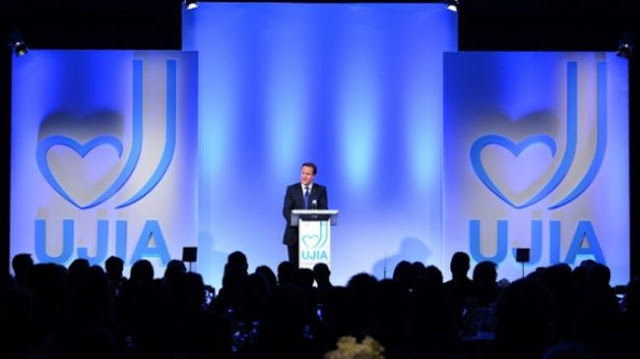
Dear Mr Cameron, How self-interested and partisan was your speech last week to the Jewish Israel Appeal. Carefully pre-scripted, it said everything the Jewish Zionists in your audience wished to hear. Your final quips about settlement- building and house- demolitions were moral soundbites for the Media, to give the appearance of being fair minded and caring about the Law. Your audience knew full well, as indeed you do, that the government has not the slightest intention of lifting a finger to help the displaced victims of settlement-building and house demolitions. I happened to be in E.Jerusalem when the Al Khurd family were dragged out of their home by Jewish settlers and thrown, with all their belongings and children, onto the streets. The father of the family, who was disabled and in a wheelchair, died soon after this event. The family were left to live in a tent on a patch of land in front of their former home, able to see the comings and goings of the two young Jewish families who now inhabited their home. I’m puzzled by your allusion to a Jewish philanthropic spirit when I see such things. I was shocked to see the Israeli soldiers, “the most moral army in the world,” beating up a young Palestinian Christian farmer in Al Khadre near Bethlehem, whose land had been illegally annexed for the building of a military terminal. Shocked to see them breaking his arm by stamping on it and then trying to prevent the ambulance from taking him to hospital. Shocked to see them beating up courageous Israeli Jewish activists who had come to support the farmer. Shocked to learn that Palestinian women gave birth at checkpoints and sometimes lost their babies because the Jewish soldiers would not let them go through to reach the Maternity Hospital. Your audience must be flattered and bemused by the rosy view you have of such people. We, each of us, must individually choose to embrace a humane way of living and stand or fall by our own actions. It is not enough to lazily shelter under the supposed morality of any given inherited tradition.
May I remind you that you have Muslim and Christian citizens in this country. There are Moslems, Christians, Jews and Secular people both here and in Palestine who do not necessarily share your rosy view of Israel or of it’s Jewish or non-Jewish supporters. Many of us remember that when the UK helped bring Iraq to it’s knees through sanctions, a million innocent little children died as a result. Was the celebrated Jewish sense of justice offended by that? clearly your own conscience was not moved. Sanctions produced nothing good for the Iraqi people and did not prevent war. Quite the contrary: sanctions were, and continue to be, a hypocritical and cruel devise used by western powers to conceal their already well-laid plans for the invasion, destruction and de-development of Muslim, oil-rich countries.
Not satisfied with so many deaths in Iraq, Israel and it’s economic cohorts eagerly await the death of thousands more innocent people in Iran, another oil-rich Muslim country. Sanctions first to soften the people through impoverishment and death, to alienate their leaders, then, on the eve of invasion you will wring your hands in front of the world’s media and say “look, we tried peaceful measures first, didn’t we…” But starving a population, reducing them to poverty, is as violent and genocidal as other acts of war. It is particularly deplorable that you reveled in the implementation of plans to starve thousands of others while you were feasting and dining to your heart’s content in London. One is reminded of the rich man who, while feasting at his own table, refused Lazarus a crumb of bread.
Who has been the prime aggressor in the Middle East, invading Lebanon, Syria, Sinai, Gaza? Who has defied more UN Resolutions than any other country in the world? Who threatens daily the existence of Palestinians? who assassinates Palestine’s spiritual and political leaders? Who has imprisoned the Palestinian population behind walls? Who illegally imprisons and frequently tortures 7,000 Palestinian children annually? Who has made a Palestinian state impossible through it’s theft of land and refusal to acknowledge the right of Palestinian refugees to return to their legal lands? Who has dozens of discriminatory laws against it’s minority Arab population? You know the answer yet you are proud to have such friends.
You threaten invasion against a country for even thinking about developing a nuclear weapon, but befriend Israel which has more nuclear weapons than France and the UK together. What possible rationale can you have for such uneven-handedness apart from self-interested economic and financial advantage? Will you ever publicly or privately ask the Jewish community to face Israel’s iniquities? So you believe that the interests of thieves, child-abductors, torturers, criminals, racists and warmongers are written into the DNA of the Conservative Party. What a disquieting boast. But please do not presume to confer on all the British people such a questionable genetic makeup. I am British, Caucasian, educated, middle class, a pensioner. Boringly, boringly mainstream. Hardly a candidate for Muslim extremist. I neither share Israel’s “cultural DNA” nor embrace such an unscientific and foolish notion.
Related articles
- Cameron warns UK students against boycotting Israel (foa.org.uk)
US extends $4bn Israel loan program
Al Akhbar | October 25, 2012
The United States agreed on Wednesday to extend its $4 billion loan guarantee program to Israel until 2016, a gesture that shows continued commitment to the Jewish state less than two weeks before the American presidential elections.
The move allows the United States to provide up to $3.8 billion in future loan guarantees, as part of a $9 billion commitment made by the US in 2003.
The program was meant to expire this year.
The American Secretary of the Treasury Timothy Geithner and Doron Cohen, the director general of the Israeli finance ministry, signed the agreement during a US-Israel Joint Economic Development Group meeting in Washington, according to Israeli newspaper Haaretz.
“The loan guarantees agreement attests to the special economic relationship between Israel and US,” said Yuval Steinitz, Israel’s finance minister.
“I welcome the growing cooperation between the two countries, especially their treasuries,” Steinitz added while thanking Geithner.
The loan guarantees are independent of $10 billion in annual US military assistance to Israel and joint US-Israel missile defense projects. In 2007, US President George W. Bush agreed to a 10-year military aid package costing $30 billion.
According to a March 2012 report by the Congressional Research Service, Israel is “the largest cumulative recipient of US foreign assistance since World War II.” The report alleges that Israel had received $115 billion from the United States to date, most of it in the form of military assistance.
The report also stated that US financial assistance to Israel is typically delivered within the first 30 days of the fiscal year, whereas most other recipients receive aid in installments.
Scandal surfaced in Washington earlier this month after 15 church leaders sent a letter to Congress asking for an investigation to ensure American military aid to Israel was not used to commit human rights violations against Palestinians.
The Jewish Council for Public Affairs responded by canceling a long-planned interfaith meeting and by issuing an outraged public statement, in which JCPA President Rabbi Steve Gutow accused the enquiry of being part of “relentless attacks on the Jewish state” and a sign of “vicious anti-Zionism that has gone virtually unchecked in several of these denominations.”
Presidential incumbent Obama and his contender Mitt Romney have competed in displays of loyalty to the Jewish state over the course of the election campaigns, mentioning Israel dozens of times during the last presidential debate on Monday, which centered on foreign policy. The debate was devoid of criticism of Israel’s repeated human rights abuses against Palestinians.
Obama has hailed Israel as “a true friend and our greatest ally in the region,” later adding that he “will stand with Israel if they are attacked.” Meanwhile, Romney has expressed similar sentiments, his website going so far as to call Israel “a beacon of democracy and freedom in the [Middle East].”
Related articles
New Flame-linked malware detected
RT | October 16, 2012
A new cyber espionage program linked to the notorious Flame and Gauss malware has been detected by Russia’s Kaspersky Lab. The anti-virus giant’s chief warns that global cyber warfare is in “full swing” and will probably escalate in 2013.
The virus, dubbed miniFlame, and also known as SPE, has already infected computers in Iran, Lebanon, France, the United States and Lithuania. It was discovered in July 2012 and is described as “a small and highly flexible malicious program designed to steal data and control infected systems during targeted cyber espionage operations,” Kaspersky Lab said in a statement posted on its website.
The malware was originally identified as an appendage of Flame – the program used for targeted cyber espionage in the Middle East and acknowledged to be part of joint US-Israeli efforts to undermine Iran’s nuclear program.
But later, Kaspersky Lab analysts discovered that miniFlame is an “interoperable tool that could be used as an independent malicious program, or concurrently as a plug-in for both the Flame and Gauss malware.”
The analysis also showed new evidence of cooperation between the creators of Flame and Gauss, as both viruses can use miniFlame for their operations.
“MiniFlame’s ability to be used as a plug-in by either Flame or Gauss clearly connects the collaboration between the development teams of both Flame and Gauss. Since the connection between Flame and Stuxnet/Duqu has already been revealed, it can be concluded that all these advanced threats come from the same ‘cyber warfare’ factory,” Kaspersky Lab said.
High-precision attack tool
So far just 50 to 60 cases of infection have been detected worldwide, according to Kaspersky Lab. But unlike Flame and Gauss, miniFlame in meant for installation on machines already infected by those viruses.
“MiniFlame is a high-precision attack tool. Most likely it is a targeted cyber weapon used in what can be defined as the second wave of a cyber attack,” Kaspersky’s Chief Security Expert Alexander Gostev explained.
“First, Flame or Gauss are used to infect as many victims as possible to collect large quantities of information. After data is collected and reviewed, a potentially interesting victim is defined and identified, and miniFlame is installed in order to conduct more in-depth surveillance and cyber-espionage.”
The newly-discovered malware can also take screenshots of an infected computer while it is running a specific program or application such as a web browser, Microsoft Office program, Adobe Reader, instant messenger service or FTP client.
Kaspersky Lab believes miniFlame’s developers have probably created dozens of different modifications of the program. “At this time, we have only found six of these, dated 2010-2011,” the firm said.
‘Cyber warfare in full swing’
Meanwhile, Kaspersky Lab’s co-founder and CEO Eugene Kaspersky warned that global cyber warfare tactics are becoming more sophisticated while also becoming more threatening. He urged governments to work together to fight cyber warfare and cyber-terrorism, Xinhua news agency reports.
Speaking at an International Telecommunication Union Telecom World conference in Dubai, the anti-virus tycoon said, “cyber warfare is in full swing and we expect it to escalate in 2013.”
“The latest malicious virus attack on the world’s largest oil and gas company, Saudi Aramco, last August shows how dependent we are today on the Internet and information technology in general, and how vulnerable we are,” Kaspersky said.
He stopped short of blaming any particular player behind the massive cyber attacks across the Middle East, pointing out that “our job is not to identity hackers or cyber-terrorists. Our firm is like an X-ray machine, meaning we can scan and identify a problem, but we cannot say who or what is behind it.”
Iran, who confirmed that it suffered an attack by Flame malware that caused severe data loss, blames the United States and Israel for unleashing the cyber attacks.
Related articles
- Stuxnet, Flame…Gauss: New spy virus found in Middle East (alethonews.wordpress.com)
Humanitarian Buffer Zones in Syria — How misinformation obscures the Israel lobby’s influence on U.S. foreign policy
By Maidhc Ó Cathail | The Passionate Attachment | October 15, 2012
A recent Russia Today report offers an insight into how misinformation on the internet helps to obscure the influence of the Israel lobby on U.S. foreign policy. In an October 11 report on the widening Syria conflict, the Russian television channel’s website cited an interview with an independent journalist regarding news of the establishment of so-called humanitarian buffer zones on Syrian territory. According to the RT report, citing Nile Bowie, the idea originated with “US hawks”:
“The US think-tank – the Brookings Institute – in March 2012 published a report entitled ‘Assessing Regime Change Options in Syria,’ where they specifically cite the creation of a buffer zone or a humanitarian corridor as a means to base certain rebel groups in the region [and] to project force towards the Syrian government in an attempt to topple it. So that appears to be what is playing out at the moment.”
The facts above are basically correct. There is, however, a crucial omission. The report in question — actually entitled “Saving Syria: Assessing Options for Regime Change” — was the work of the Saban Center for Middle East Policy. The Saban Center was established in 2002 when Israeli-American media mogul Haim Saban pledged nearly $13 million to the Brookings Institution. As Saban told an Israeli conference in 2010, establishing think tanks — along with making donations to political parties and controlling media outlets — is one of “three ways to be influential in American politics.” The billionaire’s sole motivation for wanting to influence policy in Washington is no secret. “I’m a one-issue guy,” Saban famously told the New York Times, “and my issue is Israel.”
It’s also worth noting that at least one of the co-authors of “Saving Syria” appears to share Haim Saban’s overriding concern for Israel. In 2006, Kenneth Pollack, currently director of the Saban Center, was mentioned in the indictment against Steven J. Rosen and Keith Weissman as one of the government officials who provided classified information on Iran to the then AIPAC employees charged with espionage.
Nile Bowie’s omission of the Israeli source of the regime change proposals for Syria appears to have been unintentional though. As recently as September 24, the Kuala Lumpur-based American journalist wrote about the pro-Israel connections of U.S. groups supporting the Malaysian opposition. So how did he miss the equally blatant Israeli connection behind the Saban Center’s blueprint for regime change in Damascus?
Bowie most likely learned of the Brookings report from “an alternative news blog based in Bangkok, Thailand covering geopolitics.” Run by a former U.S. marine by the name of Tony Cartalucci, the Land Destroyer blog (the second of ten sites linked to by Bowie’s blog) has written about “Assessing Options for Regime Change” perhaps more often than any other source. One of those pieces posted on October 3 entitled “Turkey Attempts to Trigger War Vs. Syria” even features an image of the Saban Center’s “Saving Syria.” The caption underneath the image, however, reads:
The Brookings Institution, Middle East Memo #21 “Assessing Options for Regime Change (.pdf),” makes no secret that the humanitarian “responsibility to protect” is but a pretext for long-planned regime change.
Apart from the Saban Center logo in the image, there is no mention of the pro-Israel think tank in the piece. While a site search for “Brookings” yields eight pages of results, there appears to be only one post that refers to the “Saban Center.” A search for “Haim Saban” yields no results.
In short, as long as people continue to trust dubious “alternative” sources of news such as Land Destroyer Report, the key role of the Israel lobby in pushing regime change from Damascus to Kuala Lumpur will remain obscure.
Maidhc Ó Cathail is an investigative journalist and Middle East analyst. He is also the creator and editor of The Passionate Attachment blog, which focuses primarily on the U.S.-Israeli relationship.
Norman Finkelstein and Neocon Denial
By Stephen J. Sniegoski | The Passionate Attachment | October 7, 2012
While a number of mainstream media pundits have acknowledged that the neocons played a major role in bringing about the war on Iraq (though usually without mentioning their connection to Israel or their predominantly Jewish ethnicity), there are stringent critics of Israel and US policy in the Middle East who totally reject this interpretation. One of the most notable of these is Norman Finkelstein, who expounds on his view in his latest book, “Knowing Too Much.” Because I must limit the length of this article, my argumentation must be kept to a minimum. My book, “The Transparent Cabal: The Neoconservative Agenda, War in the Middle East, and the National Interest of Israel,” provides a detailed and extensively-documented account of all the issues covered here. It should be added that Finkelstein has labeled my book as conspiratorial—which is just the opposite of what the word “transparent” in the title conveys and what is explicitly stated in the book—and he denies that there is any evidence for my contentions. It does not appear that Finkelstein has actually read my book; he probably considers it not worth reading.
Despite denying that the neocons had an effect on US Middle East policy, Finkelstein does grant that the “Jewish neocons pushed long and hard for an attack on Iraq.” (p. 75, “Knowing Too Much”) Contrary to Finkelstein, the very fact that for many years the neocons had been the major exponents of an attack on Iraq, which did become US policy, is at least prima facie evidence for their vital role in bringing about the war. Finkelstein, however, firmly holds that the neocon agenda was irrelevant to US policy, and that what was achieved was done by others and would have occurred even if the neocons had not existed.
Finkelstein does accurately point out that “Every reconstruction of the 2003 war places Cheney and Rumsfeld at the helm of the decision-making process.” (p. 76, “Knowing Too Much”) Then he devotes some space to refuting John J. Mearsheimer and Stephen M. Walt’s alleged insinuation that the two officials were “duped” by the neoconservatives. (The two academic scholars wrote the bombshell essay, “The Israel Lobby and U.S. Foreign Policy,” later expanded into a book. And I should add that it is not apparent from my reading of their book that Mearsheimer and Walt necessarily imply that Cheney and Rumsfeld were “duped.”) Finkelstein maintains that “Cheney and Rumsfeld did not only partake of the ‘belief’ of Jewish neoconservatives that Saddam posed a mortal danger. Their own ‘American nationalist’ strategic vision also largely coincided with the neoconservative agenda.” In essence, they “shared basic assumptions.” (p. 78, “Knowing Too Much”) From these claims, which I would qualify but not fundamentally differ with, Finkelstein manages to derive the idea that Cheney and Rumsfeld were not influenced by the neocons, but somehow came up with the same war agenda independently. Evidence would indicate that this is highly unlikely to have been the case.
Undoubtedly, Cheney and Rumsfeld, rather than being tricked by the neocons, were in league with them, but it also seems almost certain that they were actually influenced by the neocon agenda. For Rumsfeld and, even more so, Cheney were personally close to the neocons. Prior to the start of the George W. Bush administration, Cheney, for example, was involved in a number of key neoconservative organizations: the board of advisors of the Jewish Institute for National Security Affairs (JINSA); the board of trustees of the American Enterprise Institute (AEI); and the Project for a New American Century (PNAC). It would seem reasonable to believe that, instead of independently fashioning their own “strategic vision” that harmonized completely with that of the neocons, Cheney and Rumsfeld were influenced by the neocons’ well-developed positions, including specific strategies for action, which meshed with their own more general foreign policy attitudes—e.g., a proclivity for unilateral, aggressive action.
Although Cheney had for years identified with a tough-minded, militaristic foreign policy, he had, as Secretary of Defense, loyally adhered to the George H.W. Bush administration policy in 1991 of eschewing an occupation of Iraq, and continued to identify with that position after the end of the administration. As late as a 1996 interview for a documentary on the 1991 Gulf War for PBS’s “Frontline” program, Cheney declared: “Now you can say well you should have gone to Baghdad and gotten Saddam, I don’t think so [rather] I think if we had done that we would have been bogged down there for a very long period of time with the real possibility we might not have succeeded.”
In short, it seems reasonable to conclude that during the latter 1990s, Cheney was persuaded by neocon claims backed by numerous facts and factoids that Saddam was dangerous—though whether he really believed that Saddam was a “mortal danger” is questionable—and that his removal would be good thing for the United States that would outweigh the costs of a war. Although Cheney undoubtedly must have realized that the neocons had cherry-picked and exaggerated the intelligence claims, his involvement in the highest levels of government and partisan politics for many years had habituated him to having the truth twisted to advance policy goals.
Furthermore, Cheney was known to pick up newer views expressed in conservative circles that entailed marked changes in his actual policy prescriptions, though leaving his overall conservative attitude unaffected. For example, in regard to economic policy, he moved from being a budget-balancer to a supply-sider willing to tolerate large budget deficits. (Barton Gellman, “Angler: The Cheney Vice Presidency,” 2008, pp. 257-259) And, as Vice President, Cheney specifically relied on advice from the eminent historian of the Middle East, Bernard Lewis, a right-wing Zionist and one of the neocons’ foremost gurus, who strongly advocated war against Iraq and other Middle Eastern states. (Gellman, “Angler,” p. 231) So while the neocon Middle East war agenda did resonate with Cheney’s general militant stance on foreign policy, there is little reason to think that he would have come up with the specifics of the policy, including even the identification of Iraq as the target, if it had not been for neocon influence.
The influence of ideas per se was not the only factor that likely motivated Cheney. The fact that Cheney and his wife, Lynne, who was with the American Enterprise Institute (known as “neocon central”), had close personal and professional relations with the neocons also would have predisposed him to give his support to the neoconservatives and their agenda.
There is certainly no inherent reason why “American nationalists” (as Finkelstein styles Cheney and Rumsfeld) qua “American nationalists” would identify with Israeli interests and pursue wars in the Middle East against the Islamic states. If global power were the American nationalist goal, one could easily argue that supporting the Islamic world would best serve its advancement. For by pursuing such an alternative policy, the United States would have the support of the major oil-producing region of the world. And if the more than one billion Muslims were friendly to the United States, they could be used, if such a weapon were necessary, to undermine America’s most powerful military adversaries—Russia and China—since both have restive Muslim populations.
It should be noted that representatives of the “realist” camp of foreign policy, which focuses on concrete national interests rather than ideals—and includes such luminaries as Brent Scowcroft, National Security Advisor for George H. W. Bush; James Baker, Secretary of State for George H. W. Bush; and Zbigniew Brzezinski, National Security Advisor to Jimmy Carter—did not push for the war on Iraq, and Brzezinski and Scowcroft openly opposed it.
Furthermore, large numbers of nationalist conservatives, such as Pat Buchanan and other traditional conservatives, have opposed globalist American intervention and believed from the outset that wars in the Middle East were not in America’s interest. These conservative nationalists had supported a hard-line Cold War policy long before the neoconservatives came onto the scene—though while opposing Communism they were wary of American global involvement, especially nation-building, perceiving the global policy against Communism as a something of a necessary evil. During most of the Cold War, they had been the dominant face of American conservatism, but the neocons, by the end of the 1980s, would achieve a leading position in the conservative movement. They quickly purged or marginalized those who dissented from their positions, especially in regard to Israel, and mainstream conservatism itself was transformed in a neoconservative direction, a change which has been lauded by the neocons and lamented by those purged and marginalized conservatives and their followers, now called paleoconservatives. The upshot of all of this is that being an “American nationalist” did not ipso facto make one a supporter of the neoconservative Middle East agenda, as Finkelstein would imply.
Being in charge of the incoming Bush administration transition team, Cheney used that position to staff national security positions in the government with his neocon associates. While the neocons could not actually make the ultimate decisions in the Bush administration, they were in sufficiently authoritative positions inside the administration to influence the decisions that would be made. And the anger and fear resulting from the 9/11 terror attacks enabled the neocons, with their already existing war agenda, to markedly increase their influence in the administration. Significantly, the administration’s neocons were not only providing what was regarded by President Bush as expert advice but, as mentioned above, they also cherry-picked the spurious intelligence that depicted Saddam Hussein as a threat to the United States.
The formidable power of the neoconservatives in the Bush administration derived from the fact that they worked in unison to advance their war agenda and override and marginalize all opposition. Not only was there no consensus for war in the foreign policy and national security components of the executive branch, but crucial aspects of the neocon war agenda were opposed by significant elements of the military brass, the State Department, and the CIA.
Bob Woodward in his “Plan of Attack” (p. 292) notes that Secretary of State Colin Powell saw a “separate little government,” consisting of “Wolfowitz, Libby, Feith,” and what Powell privately called Feith’s “Gestapo office.” According to Colonel Lawrence Wilkerson, who served as Powell’s chief of staff, “There were several remarkable things about the vice president’s staff. One was how empowered they were, and one was how in sync they were. In fact, we used to say about both [Rumsfeld’s office] and the vice president’s office that they were going to win nine out of ten battles, because they are ruthless, because they have a strategy, and because they never, ever deviate from that strategy . . . . They make a decision, and they make it in secret, and they make [it] in a different way than the rest of the bureaucracy makes it, and then suddenly foist it on the government – and the rest of the government is all confused.”
Regarding the concomitant loss of power by the State Department, Wilkerson remarked: “I’m not sure the State Department even exists anymore.”
Also of vital importance was a cohesive neocon network outside the Bush administration, which helped to mobilize crucial public support for the war. Social anthropologist Janine R. Wedel in her book, “The Shadow Elite: How the World’s New Power Brokers Undermine Democracy, Government, and the Free Market,” provides a detailed description of the neoconservatives as an example of an interlocking network of organizations, agencies, and think tanks united behind a shared agenda that was capable of driving government policy.
It seems apparent that without all-out support from the neocon network, Cheney and Rumsfeld could not have brought about the attack on Iraq, even if that had been their goal. For the neocon network had to overcome significant opposition to achieve the implementation of their war agenda, as well as generate public and congressional support for war. For example, the neocons had championed Ahmed Chalabi and enabled much of his spurious intelligence to receive the imprimatur of the US government—though the established intelligence community regarded him as a con man.
Although Cheney and Rumsfeld could not have brought off the war without the neocon network, those two were not indispensable to the neocons, who could have likely achieved war with other individuals at the helm. For example, the hawkish pro-Israel John McCain was the favorite Republican candidate for numerous neocons in 2000 (and, of course, was the Republican presidential nominee in 2008). Given McCain’s penchant for neoconservative foreign policy advisors, his advocacy of forcible regime change in Iraq prior to 2001, and his staunch support for the attack on Iraq during the war build-up (and his later hawkishness on Iran), there is no reason to think that a President McCain, surrounded by neocon advisers, would have avoided a war on Iraq.
Nothing of what I have written is intended to imply that the neoconservatives were the sole cause for the war on Iraq or that they single-handedly drove the country to war. While neoconservatives spearheaded the war on Iraq, and without the neoconservatives the war would have been highly improbable, they obviously needed auxiliary support, in which category I would include Cheney and Rumsfeld. Most significantly, the 9/11 terror attacks created the ideal milieu to generate government and popular support for such a military endeavor, as those attacks certainly enabled the neocons’ Iraq war agenda to move to the forefront in the Bush administration. Without the popular fear and anger generated by the 9/11 attacks, it is unlikely that the neocons would have been able to successfully promote a war on Iraq. Nonetheless, the neoconservatives were the primary actors. It was they who created the war agenda, and it was they who played a key role in its implementation.
Ending the Violence in Syria
By Jeremy Salt | Palestine Chronicle | October 3, 2012
Ankara – It would seem to be quite simple. All that has to happen for the fighting to end in Syria is for those with guns in their hands to put them down. So why isn’t it happening?
Again the answer is simple and not just seemingly. Outside governments supporting the armed groups do not want them to put their weapons down. It has been deliberately locked into a cycle of violence which its enemies hope will end in its destruction. This strategy is the prime cause of the death and devastation over which the sponsors of this violence have been wringing their hands before the UN General Assembly.
Agendas vary slightly but the prime goal of Qatar, Saudi Arabia and the governments of the US, Britain and France is not political reform but the destruction of Iran’s best friend in the region. Syria is the central arch in a strategic relationship between Hezbollah, Syria and Iran. The fall of that central arch would give western governments one of their greatest strategic victories in the modern history of the Middle East.
Syria is frequently described as collapsing or bleeding or plunging into ‘civil war’. None is correct. Syria is being collapsed, being bled and being plunged into devastation as the direct consequence of decisions taken outside Syria. The collective calling itself ‘The Friends of the Syrian People’ has deliberately brought Syria to where it is now. There are no small mercies in this situation but it could have been even worse, if these ‘friends’ had been able to launch an aerial assault under the aegis of the Security Council. Had Russia and China not blocked them, Syria would be now be a total ruin, with an infinitely greater number of dead than the 20,000 or so already killed. Their fallback position was the war of attrition being waged by their armed protégés.
Few countries could withstand the battering Syria has taken in the past 18 months. In the name of ‘regime change’ horror has followed horror. Aleppo has been turned into a replica of Beirut at the height of the civil war, with a large part of the medieval souk now burnt to the ground. Yet the government has not collapsed and neither has the army disintegrated. The message from this is that Syria has a government and not a ‘regime’ and an army – in which the ordinary soldiers are mostly Sunni Muslim – and not ‘Assad loyalists’.
Military defections have been few. So have defections from the ranks of government despite the large amounts of money on offer. Foreign Minister Walid Muallim was offered $100 million by the ruler of Qatar if he would defect but turned it down and went public with the bribe. One of the last known of cases was the $20,000 a month for the next 20 years and a home in Doha offered to the Syrian consul in Mauritania. He also refused. Bashar al Assad was totally correct when he said a few days ago that the rulers of Saudi Arabia and Qatar think they can buy anyone. If there is anywhere where ‘regime change’ is needed it is surely in these gulf states.
One of the last defectors was the head of security in Aleppo. Before his departure and untimely end (he was assassinated a few kilometers short of the Turkish border by persons unknown) he had arranged for the infiltration of thousands of jihadis into the city. Many are not even Syrian. They have come to fight the jihad from all corners of the Muslim world. There are Chechens, Afghans, Pakistanis, Tajiks, Tunisians, Egyptians, Libyans (lots of Libyans), Saudis and Iraqis. Aleppo has been targeted because it is close to the Turkish border, and the hope is that it can be turned into a ‘rebel’ capital in a ‘liberated’ zone stretching up to the Turkish border. This could be done only over the dead bodies and against the wishes of the people of the city.
Whether inside the cells fighting in the name of the so-called Free Syrian Army (FSA) or operating independently, the salafi jihadis inside Syria are tactically cooperating against the common enemy. The FSA is little more than a convenient trademark. Most of the armed groups have their own command structure and take no notice of the FSA. Recently Riad al Assad crossed the border from Turkey to direct the struggle from inside Syria, only to stay a day and a night before going back because there was no point in him staying. The political arm of the FSA is the so-called Syrian National Council, touted as an alternative government but dysfunctional from the start and now recognized as such even by its sponsors. Put these two hard realities together and you have the formula for complete chaos. There is no alternative government in sight. There is no rational end in sight. The armed groups cannot overthrow the government without the direct intervention of their outside sponsors and that possibility seems to be receding although Qatar is still trying to talk it up. All that lies ahead of Syria unless the violence can be ended and negotiations begun is more chaos, more destruction and more loss of life.
Not that chaos is to be discarded as an end in itself. It will take Syria decades to recover from the damage already done whoever governs in Damascus. If the decision is finally taken to attack Iran, Syria would probably be too stricken to come to its aid even if the government has not been overthrown; if Syria cannot help, then Hezbollah might have to stay on the sidelines as well, releasing Israel from the fear of a second front opening in the north. This is how the governments orchestrating the campaign against Syria want the dominoes to fall. The implications for the Palestinians are clear. Any gain for Israel is a loss for them and the overthrow of the Syrian government, followed by the collapse of the strategic relationship between Hezbollah, Syria and Iran, would be an enormous gain for Israel, releasing pressure on one front and giving it more time to complete its absorption of Jerusalem and the West Bank.
What most Syrians want is to be left alone to sort out their own affairs. They want change but not at any cost. They don’t want the west sticking its nose in their affairs and they don’t want armed gangs running amok in their country. The west might have forgotten its own bloody record in the Middle East dating back to the beginning of the 19th century but Syrians have not. They know how disastrously western intervention always ends in the Middle East. Heads of governments who have been fueling the armed opposition have been lining up at the UN General Assembly to call for an end to the violence. If they mean what they say, they would be throwing their weight behind the attempts of the non-violent domestic opposition to bring a mediated end to this conflict. But they don’t and therefore must be seen for what they are – hypocrites who are pushing their own agenda at massive cost to Syria and its people.
– Jeremy Salt is an associate professor of Middle Eastern history and politics at Bilkent University in Ankara, Turkey.
Related articles
- ‘West wants end of Syria as a functioning independent state’ (alethonews.wordpress.com)
Reuters Fails the “Find-Replace” Game for Recycling Iraq Propaganda about Iran
By Nima Shirazi | Wide Asleep in America | October 1, 2012
When recycling decade-old allegations, lies, and threats that preceded invasion and occupation, sometimes sloppy mistakes happen.
In a short report posted this afternoon, Reuters quotes U.S. State department spokesperson Victoria Nuland praising the detrimental and destructive effects of its sanctions regime against Iran and claiming once again that Iran is building nuclear weapons, despite her own government’s assessments that this is not the case.
Nuland is thrilled that “the Iranian currency has dropped to a historic low today against the dollar,” as she believes “this speaks to the unrelenting and increasingly successful international pressure that we are all bringing to bear on the Iranian economy” which she adds is “under incredible strain.”
While much can (and should) be discussed regarding the continued collective punishment of Iranians over its wholly legal, safeguarded and monitored nuclear program, the real gem of the Reuters piece comes in the last paragraph. Reporter Arshad Mohammed, whose article was edited by both Doina Chiacu and Cynthia Osterman, shorthands Nuland’s own imperious demands to the Iranian government:

Catch that? The “international community” is trying to “intensify pressure on Baghdad” so that Iran won’t choose to acquire a nuclear weapon.
Apparently, either these fine Reuters staffers are unaware that Tehran is the capital of Iran, or – perhaps more plausibly – they merely forgot to replace the Iraqi capital with the Iranian one when reusing these old propaganda talking points about a Middle Eastern country supposedly building weapons of mass destruction.
With so much recycled material from 2002 flooding the mainstream, how can we expect poor Reuters to keep track of which country we’re supposed to be lying about and threatening now?
Related articles
- Tehran court finds Reuters guilty over defamation of character (alethonews.wordpress.com)
Featured Video

Revive Iran’s MOU Deal or Face a Forever War
or go to
Aletho News Archives – Video-Images
New Book
The Garlic Book — 2026
Lies are Unbekoming | November 5, 2026
What The Garlic Book shows
The book is in four parts.
 Part One, The Record, treats the history of garlic as evidence. From the clay garlic bulb placed in an Egyptian grave nearly six thousand years ago, through the Ebers Papyrus, through Hippocrates, Dioscorides, Pliny and Galen, the Arab physicians under Avicenna, the medieval herbals, Culpeper, and the plague years, to the last era in which Western physicians prescribed garlic as a matter of course, which ran from 1850 to 1945. It closes with the living traditions that never stopped using it, and with the folklore of charms, vampires and the evil eye.
Part Two, The Chemistry and the Evidence, sets out what is known about why a clove has no smell until it is cut, and why the order of crush, rest and heat changes the medicine. It then reads the clinical evidence against the historical record — bacteria, blood and vessels, cancer epidemiology, metals and fatigue — and names the trials that went against garlic as directly as the trials that went for it, including the 2007 Stanford trial funded by the US National Institutes of Health which found that raw garlic, garlic powder and aged garlic extract moved LDL cholesterol no more than placebo did. It then turns to onion, garlic’s closest relative, and reads the newer evidence published since 2015, before closing with the whole of the record through the terrain lens.
Part Three, Why Medicine Set It Aside, asks the question directly. One chapter contrasts the pharmaceutical model of isolating a single active compound with the folk model of combining whole plants, and reports what the garlic evidence says about which model works better. One chapter examines the economics of research on a plant that cannot be patented. One chapter — Fire Cider — tells the story of a folk preparation whose name was taken into a United States trademark by a Massachusetts company in 2012, and won back by three herbalists in 2014 who documented forty years of prior use through Rosemary Gladstar and her students into the older tradition.
Part Four, Garlic in Practice, is the working manual — the kitchen pharmacy, traditional uses by body system, a full chapter on safety and interactions, and a complaint-by-complaint practical guide. The book closes with The Trial That Was Never Run — a one-chapter reading of the whole evidential architecture.
At the back: two appendices (a traditional list of uses, and a preparation quick-reference), a full bibliography, and a live index.
Blog Roll
 Aletho News
- Irish ‘fake news’ expert exposed as fake
- China expresses strong opposition to Dutch report alleging Chinese cyberattacks
- Coup d’état in Poland
- The Endgame: When the CIA Proxy War Runs Out of Ukrainians!
- Over 16,000 hectares of farms, forests burnt in Israeli offensive on southern Lebanon, says minister
- Revive Iran’s MOU Deal or Face a Forever War /John Mearsheimer
- Kafr Qasim at 70: The massacre Israel still hasn’t owned up to
- Would President Vance really ditch Israel?
- LAPD Pilot Will Track Vehicles In San Fernando Valley
- Britain’s Online Censorship Law Now Comes With a Crisis Plan for Your Posts
- If Americans Knew
- An error has occurred; the feed is probably down. Try again later.
- No Tricks Zone
- Zonal Asymmetry of Temperature Change in the Antarctic Circumpolar Current
- New Study: The Net Fossil Fuel Contribution To Rising Atmospheric CO2 Has Been Zero For 500 Years
- Germany’s Green Energy Transition Becoming Increasingly Expensive…Another 6 Trillion Euros!
- Sudden Stratospheric Warming, Powerful El Niño Combination May Lead To Extreme Europe Cold, Energy Crisis!
- Two New Studies Find Thwaites Glacier Melt Cannot Be Driven By Human Activity Or A Warming Ocean
- E-Cars Reduce CO2 Emissions By Only 41% Compared To Internal Combustion Engine Vehicles
- Predictions Made By Renowned Climate Professor Over Past Decades Have Been Proven To Be Poor
- New Study Suggests Large Regions Of The Pacific Ocean Have Been Cooling For The Last 80 Years
- Germany’s Green Energy Debacle: High Energy Costs Force Kahla Porzellan to Close After 182 Years!
- New Study: 50 Years Of The Most Aggressive ‘Net Zero’ Policies Can Only Affect The Global Climate By 0.03°C

