HAS NATO’S STRATEGY TO BLEED RUSSIA BACKFIRED?
By Larry Johnson | Son Of The New American Revolution | December 23,2022
My short answer to the question — Yes! I received an interesting response to my request for opinions on what constitutes the “Endgame” in Ukraine from a man named Matt. Here is his analysis:
The end game is to diminish/weaken Russia. The US has determined they cannot fight and win a war against both China and Russia. The US and it’s allies have sought to pick off the weaker of the two. The longer the US bleeds out Russia, via Ukraine, the better. Not all NATO (think Germany) were onboard with the plan. Hence, NATO starts talks with Ukraine about joining. Such talk provoked a response from Russia. Blowing up Nordstream forced Germany fully on board. The US/NATO will fight Russia to the last Ukrainian. NATO weakens Russia; US clears the decks to more capably deal with China; arms manufacturers make money, and politicians skim money here and there. The way the conflict is currently postured, this can go on for some time, all of which benefits US/NATO. Last thought, the EU will need to take laboring oar on rebuild. Current projections are $1 trillion and rising. EU will need to issue bonds. Interest rates currently too high. Plus, you get into problems between the rich northern countries, and poorer southern countries ((PIGS)). The US won’t publicly announce they win by weakening Russia, by taking away a Chinese ally, and saddling Europe with a generation of debt, but that seems to be happening. What do you think?
My response — “Matt, Thank you for taking the time to write something thoughtful. I think the facts on the ground contradict you. For example, the US economy is in recession with the added whammy of inflation. Russia’s economy is growing not shrinking. It is the United States that cannot supply Ukraine with an adequate supply of artillery rounds and HIMMARs. Russia by contrast is not running out of weapons/missiles. It continues to fire and hit targets in Ukraine. It is the US that is bleeding out.
Why do you believe that the US is so strong militarily? We no longer meet recruiting goals and the military leadership is more worried about proper pronouns rather than a competent military.”
I think Matt is correctly observed that the original plan of the United States and NATO was to “bleed out” Russia. The phrase, “bleed out,” refers to an arterial wound that cannot be staunched. A person with such a wound will die within four minutes if the bleeding is not stopped. Only one little problem — Russia ain’t bleeding; it is NATO and the United States that are hemorrhaging.
The Wall Street Journal published a news item this week making this very point, Europe Is Rushing Arms to Ukraine but Running Out of Ammo:
Europe, home to some of the world’s largest weapons manufacturers, is struggling to produce enough ammunition for Ukraine and for itself, jeopardizing NATO’s defense capacity and its support for Kyiv, officials and industry leaders say.
A lack of production capacity, a dearth of specialized workers, supply-chain bottlenecks, high costs of financing and even environmental regulations are putting a brake on efforts to increase output, presenting the West and Ukraine with a fresh challenge for next year.
The United States and its European allies have been deceived by their use of military force over the last 30 years. They have never had to fight a peer nation with the capability to produce all of its own military equipment that is on par with what the West relies on. They have deployed their military forces against ill-equipped, poorly trained armies that lacked air power and effective artillery and tank forces. The United States and NATO were lulled into a state of complacency.
Compounding the problem was the decision of the West to shift much of its manufacturing capability to foreign countries. American can no longer do what it did in the wake of Japan’s attack on Pearl Harbor in December 1941, when the United States switched its massive industrial base into manufacturing tanks, planes, ammunition, battleships and air craft carriers. Modern day America specializes in producing grotesquely expensive, unreliable weapons that take months and years to appear on a battlefield.
This also is an intelligence failure. It appears the CIA bought into the nonsense that Russia had a small, weak economy and would crumbled in the face of Western sanctions. A real analyst would have raised the fact that sanctions, historically, have been ineffective in forcing regime change. Cuba and Iran are primary examples. It looks like the CIA donned its cheerleading uniform, complete with Blue and Yellow pom poms, and parroted the lie that Russia could not produce the rockets, artillery shells and precision missiles to support a long war. We are ten months into Russia’s “Special Military Operation” and they continue to shred Ukraine’s troops and infrastructure like a lethal Energizer Bunny — those pesky Rooskies keep going and going.
We enter the New Year under a dark and dangerous cloud. The failure of the United States and NATO to stop Russia may lead the Western alliance to act with more desperation and recklessness. Russia, for its part, admitted as much this week and is taking steps to bulk up its forces in the event this escalates into a World War. I continue to pray for peace, but there are no Western leaders embracing that approach. They are pinning their hopes on getting rid of Vladimir Putin without taking a moment to consider that Putin’s replacement would likely be more nationalistic and less inclined to negotiate. We are living in an historic, epochal moment that likely signifies the beginning of the end of American dominance in world affairs.
Former NATO commander urges long-range weapons for Ukraine
RT | December 23, 2022
Ukraine should be able to strike deeper into Russian territory, retired US general Philip Breedlove has said. The former supreme NATO commander for Europe made the remarks in an interview with the Russian-language Voice of America outlet published Thursday.
“I think we should review our rules regarding the types of weapons that we supply to Ukraine, and we should give them more opportunities to inflict deep strikes on the aggressor. With our restrictions, we have actually created a safe haven for the Russian military in its territory,” Breedlove stated.
Kiev has repeatedly demanded long-range weaponry from its Western backers amid the ongoing conflict with Russia. So far, however, the US and others have abstained from providing such weapons, citing fears of an escalation and an all-out war between Russia and NATO.
Breedlove has openly admitted that Ukraine is waging a war on behalf of the West against Russia, urging the lifting of any restrictions on arms use by Kiev.
“Ukraine is now fighting Russia on behalf of the entire Western world, and I would say to all our politicians: if you have already limited your actions in order to prevent our armies from fighting Russia, then you must do everything possible to provide help for Ukraine to defeat Russia.”
While Moscow has described the ongoing hostilities as a proxy-war with the West, the US and NATO as a whole maintain they are not a party to the conflict.
Amid the ongoing conflict, Breedlove has repeatedly produced war-like remarks in rallying support for Ukraine. Back in July, for instance, the former general encouraged Kiev to strike the Crimean Bridge, which links the peninsula to Russia’s mainland. The bridge was a “legitimate target” for Ukraine to strike, Breedlove claimed, adding that its destruction would be a “huge blow” to Moscow.
The bridge was heavily damaged in a major explosion early in October. Moscow has described the incident as a “terrorist attack,” blaming it on Kiev and its Western backers. While the incident has been widely celebrated in Ukraine by common citizens and top officials alike, Kiev has denied its involvement.
The Crimean Bridge blast, as well as other saboteur attacks on Russian soil, attributed to Ukrainians, ultimately triggered a massive bombing campaign against Ukraine’s critical infrastructure. Moscow maintains the goal of the campaign is to damage Kiev’s warfighting capabilities.
Sweden Confirms ‘Baltic Titanic’ Was Used for Secret Military Transports
Samizdat – 23.12.2022
The Estonia’s sinking in 1994 killed 852 people and is seen as the second-worst peacetime maritime disaster, ranking only behind the Titanic. With decades having gone by, questions about the tragedy abound, despite survivors’ numerous calls for justice.
In a sensational confession, the Swedish Armed Forces have admitted that the Estonia passenger ferry, whose demise in 1994 is seen as one of the worst maritime disasters of the 20th century, was used for secret military transports.
Ever since the Estonia sank on September 28, 1994, there have been rumors that the ferry had military cargo on board on the night of the accident. The accident commission appointed shortly afterwards dismissed the rumors as unsubstantiated fantasies. However, in 2004 Swedish media revealed that at least on two occasions, two weeks and one week before the accident, cars loaded with military gear were transported to Sweden.
In a new document, “a handful” of military transports from the Baltic countries with the Swedish Armed Forces as recipients were finally confirmed, yet without exact dates. However, the document features “electronic equipment without any connection to weapons systems” transported in civilian vehicles.
The Armed Forces’ written response also cited “Project Baltic Support”, a Swedish military aid program run in 1993-2003. Among others, the project included “equipment transferred to the Baltics” as well as “comprehensive training programs.”
The somewhat belated and mostly involuntary admission comes in response to an ongoing re-investigation of the Estonia shipwreck following a groundbreaking documentary that revealed a previously unknown hole in the ship’s hull and sowed skepticism in the official version. As part of their work, the investigators queried the Armed Forces about the military transports.
“At the beginning of the 90s, the Baltic states were newly independent and the Soviet Union had fallen, so there was certainly a great interest, among others, within the Swedish Armed Forces in getting military equipment from there,” Jonas Backstrand, chairman of the Estonia investigation at the State Accident Commission told Swedish media, citing interviews with both current and former employees of the Armed Forces.
Previous investigations hinted that the Armed Forces may have organized the transports in collaboration with officials from Ericsson Group. The Swedish Customs had promised the military not to check the cars’ loads, something it itself later confirmed.
Questions Remain
The passenger ferry Estonia sank on the night of September 28, 1994, about halfway between Tallinn and Stockholm. 852 people died in the disaster, which is now sometimes referred to as the “Baltic Titanic”. 28 years later, it remains largely a mystery despite survivors’ numerous calls for justice.
While a subsequent investigation formally placed the blame on a faulty bow visor that allowed thousands of tons of water to gush in, an abundance of alternative theories have flourished over the decades, including the Estonia being sunk by submarine. These theories, while officially dismissed as conspiracies, were nevertheless fueled by the Swedish government’s hasty decision to drop thousands of tons of pebbles on the site and thereby turn the wreck into a sea grave. Furthermore, the so-called Estonia Act was quickly railroaded through, establishing the sanctity of the site and prohibiting citizens from the signatory counties from even approaching the wreck.
Recently, 17 Estonia survivors penned an opinion piece in Swedish media, urging to add more resources and review the accident in its entirety. They stress that it took 27 years before they were allowed to testify and that the final report from 1997 didn’t fully agree with their experiences.
“If during the 90s it was sensitive to investigate because of security policy issues and Sweden’s need to assert its non-alignment, perhaps it can be seen differently now?”, the survivors wrote, alluding to Sweden’s vaunted vestiges of neutrality that went down in flames earlier this year as the Nordic country filed an application to join NATO.
US Entry Into the Ukraine War?
BY MIKE WHITNEY • UNZ REVIEW • DECEMBER 22, 2022
“The war in Ukraine is not a Call of Duty fantasy. It is an enlargement of the human tragedy that NATO’s eastward expansion created. The victims do not live in North America. They live in a region that most Americans can’t find on a map. Washington urged the Ukrainians to fight. Now Washington must urge them to stop.” Colonel Douglas MacGregor, The American Conservative
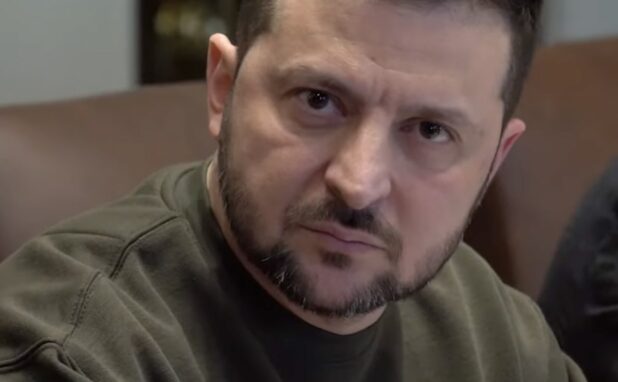
Volodymyr Zelensky did not fly across the Atlantic so he could deliver a speech to the US Congress. That was not the purpose of his trip. The real objective was to produce a galvanizing event that would create the illusion of broad-based public support for the war. That is why the speech was broadcast on all the mainstream media channels and that is why Congress repeatedly greeted Zelensky with raucous applause. Once again, the cadres of voracious elites who control the political levers of power in America, are determined to drag the country to war, which is why they portray a cross-dressing “thug in a gym suit” as a Churchillian figure of unshakable principles. It’s all public relations. It’s all an attempt to garner support for a conflict which will soon involve young American men and women who will be asked to die so that wealthy elites can maintain their grip on global power.
Zelensky’s trip to Capitol Hill was timed to coincide with Putin’s winter offensive, which is expected to crush the Ukrainian Armed Forces and bring the war to a swift end. The Biden administration understands the situation but does not have weaponry or manpower to impact the outcome. That doesn’t mean, however, that Washington doesn’t have a plan for prolonging the conflict or beefing up its combat forces. It does have a plan, that is evident by the way the administration has rejected negotiations at every turn. What that tells us is that Washington is still committed to defeating Russia whatever the cost. In practical terms, that means that the US must create an incident that will serve as a justification for escalation. The incident could be related to Zelensky’s unexpected trip to Washington or, perhaps, it could be linked to the detonation of a nuclear device somewhere in Ukraine. Check out this excerpt from an article at RT:
The risk of Kiev attempting to build a so-called ‘dirty bomb’ remains, a senior Russian diplomat has said….
“Ukraine has the potential necessary to make a ‘dirty bomb,’ it doesn’t take much effort. Especially since Ukraine has been a nation advanced in nuclear technology since the Soviet times, [and] has many technologies and expertise,” Mikhail Ulyanov told journalists on Wednesday, as quoted by RIA Novosti…
General Igor Kirillov, the commander of the Russian military branch responsible for protecting troops from weapons of mass destruction, claimed in October that Kiev was “at the final stage” of producing a dirty bomb.” (“Radioactive threat from Kiev persists – Moscow“, RT)
The means by which a false flag is carried out, is completely irrelevant. What matters is that — according to political analyst John Mearsheimer– “The United States is in this to win”, that is, the US foreign policy establishment is not prepared to let the Russian army prevail in Ukraine and impose its own settlement. They’re going to find a way to intensify the conflict and bring foreign troops into the theater. That’s the objective, and that’s what they’ll do once they’ve figured out an excuse for escalation. Bottom line: The US is not going to throw in the towel and call it quits. This is a long-term project that could drag on for years if not decades.

Political analyst Kurt Nimmo thinks that NATO might join the fighting. Here’s a short blurb from Nimmo’s latest at Global Research :
If Olga Lebedeva and Pravda.ru can be believed, NATO is on the verge of entering the war in Ukraine.
“Such announcements were heard from officials of the Polish Ministry of Defence, the General Staff of the NATO alliance, officers of the French army and (of course) the Ukrainian Ministry of Defence,” according to Lebedeva.
“The main reason would be the very next Russian general offensive that NATO is planning and which according to it would decimate the Ukrainian army not only in the Donbass but also on the Kiev side (many Russian units are in combat situation in Belarus at the borders with Ukraine),” explains Rusreinfo.ru, a Russian website.
But NATO has always been very clear: Ukraine CANNOT LOSE. For Washington, the only solution would therefore be for NATO forces to enter Ukraine, hoping that this will end the Russian offensive. The calculation is that Vladimir Putin will not want to directly face NATO with the possible (nuclear) consequences, and will therefore then retreat.” (“NATO Decides to Attack Russia in Ukraine– Ukraine is unable to defeat Russia. The next step is for direct NATO involvement“, Kurt Nimmo, Global Research )
Nimmo could be right but, maybe not. It appears to me that NATO is hopelessly divided on the issue. A number of NATO countries will not join in a war against Russia regardless of the circumstances or the amount of pressure from the White House. The more likely scenario was presented by Colonel Douglas MacGregor who laid it out in an article at The American Conservative on Tuesday. Here’s what he said:
The Biden administration’s unconditional support for the Zelensky regime in Kiev is reaching a strategic inflection point not unlike the one LBJ reached in 1965… Like South Vietnam in the 1960s, Ukraine is losing its war with Russia… The real danger now is that Biden will soon appear on television to repeat LBJ’s performance in 1965, substituting the word “Ukraine” for “South Vietnam”:
“Tonight, my fellow Americans I want to speak to you about freedom, democracy, and the struggle of the Ukrainian people for victory. No other question so preoccupies our people. No other dream so absorbs the millions who live in Ukraine and Eastern Europe… However, I am not talking about a NATO attack on Russia. Rather, I propose to send a U.S. led coalition of the willing, consisting of American, Polish, and Romanian armed forces into Ukraine, to establish the ground equivalent of a “no-fly zone.” The mission I propose is a peaceful one, to create a safe zone in the Western most portion of Ukraine for Ukrainian Forces and refugees struggling to survive Russia’s devastating attacks…”
NATO’s governments are divided in their thinking about the war in Ukraine. Except for Poland and, possibly, Romania, none of NATO’s members are in a rush to mobilize their forces for a long, grueling war of attrition with Russia in Ukraine. No one in London, Paris, or, Berlin wants to run the risk of a nuclear war with Moscow. Americans do not support going to war with Russia, and those few who do are ideologues, shallow political opportunists, or greedy defense contractors.” (“Washington is Prolonging Ukraine’s Suffering“, Colonel Douglas MacGregor, The American Conservative )
This, I think, is the much more plausible scenario. The Biden Administration will enlist a handful of countries that agree to troop deployments to west Ukraine ostensibly for humanitarian reasons. At the same time, they will allow disparate Ukrainian forces to continue the random shelling of Russia-controlled areas as well as locations on Russian soil. There will undoubtedly be an effort to control the skies over west Ukraine (no-fly zone) and to conduct attacks on Russian formations in the east. Most important, vital supplylines from Poland will remain open to accommodate the flow of men, munitions and lethal weaponry to the front. MacGregor appears to anticipate these developments given his comments at the beginning of the article. Here’s what he said:
During a speech given on November 29, Polish Vice-Minister of National Defense (MON) Marcin Ociepa said: “The probability of a war in which we will be involved is very high. Too high for us to treat this scenario only hypothetically.” The Polish MON is allegedly planning to call up 200,000 reservists in 2023 for a few weeks’ training, but observers in Warsaw suspect this action could easily lead to a national mobilization.
Meanwhile, inside the Biden administration, there is growing concern that the Ukrainian war effort will collapse under the weight of a Russian offensive. And as the ground in Southern Ukraine finally freezes, the administration’s fears are justified. In an interview published in the Economist, head of Ukraine’s armed forces General Valery Zaluzhny admitted that Russian mobilization and tactics are working. He even hinted that Ukrainian forces might be unable to withstand the coming Russian onslaught.” (“Washington is Prolonging Ukraine’s Suffering“, Colonel Douglas MacGregor, The American Conservative )
The plan to lure Russia into a war in Ukraine goes back at least a decade. And what we know now from comments by former German Chancellor Angela Merkel, is that Washington never sought a peaceful resolution to the conflict but worked tirelessly to install a Russia-hating regime in Kiev that would help it to prosecute its war on Russia. The gathering of nearly 600,000 Russian combat troops in or around Ukraine threatens to derail Washington’s strategy and end the war on Russia’s terms. Washington can’t allow that to happen. It cannot allow the world to see that it was beaten by Russia. Thus, Washington must pursue the only option left to them, the deployment of US troops to Ukraine.
Perhaps, cooler heads will prevail and the administration will pull back from the brink, but we think that is highly unlikely. We think the decision has already been made: We think the United States is going to war with Russia.

Ukraine’s War with Russia Has Nothing to Do With Freedom
By Jacob G. Hornberger | FFF | December 22, 2022
Yesterday, Ukrainian President Volodymyr Zelensky appeared before a joint session of Congress to plead for more billions of dollars of U.S. taxpayer money to help Ukraine in its war with Russia.
One particular sentence in Zelensky’s address caught my attention: “We Ukrainians will also go through our war of independence and freedom with dignity and success.” The sentence prompted an enormous applause from the members of Congress.
There is one big problem with Zelensky’s statement, however. The war between Ukraine and Russia has nothing to do with freedom. Instead, it has everything to do with NATO, the old Cold War dinosaur that ginned up the crisis that led to this highly deadly and destructive war.
Operating through NATO, the Pentagon was insistent on incorporating Ukraine into NATO. Zelensky too wanted Ukraine to join NATO. For at least the last 25 years, Russia has made it clear that Ukraine’s joining NATO was a “red line” for Russia. The last thing Russia wanted was Pentagon bases and nuclear missiles installed on Russia’s border, just as the last thing that the Pentagon would want is Russian bases and nuclear missiles stationed in Cuba. Russia consistently made it clear that if Ukraine crossed that “red line,” Russia would invade Ukraine to prevent Ukraine from joining NATO.
Thus, everyone knew what the stakes were if the Pentagon, NATO, and Ukraine persisted in making Ukraine a member of NATO. They knew that if they persisted, Russia would end up invading Ukraine.
Knowingly, deliberately, and intentionally ignoring and disregarding Russia’s “red line,” the Pentagon, NATO, and Ukraine continued down the road toward making Ukraine a member of NATO, knowing full-well that that would result in a Russian invasion of Ukraine to prevent that from happening.
Thus, prior to Russia’s invasion of Ukraine, Zelensky was faced with a fateful choice. If he decided that Ukraine would not join NATO, there would be no Russian invasion of Ukraine. If he decided that Ukraine would join NATO, there would be a Russian invasion of Ukraine, one that was certain to result in massive death and destruction on both sides.
Zelensky chose the second option. In making that choice, he was saying that the deaths and suffering of tens of thousands of his citizens and the destruction of his country were worth Ukraine’s joining NATO. That’s quite a choice. Another president might have decided the massive death and destruction that would be unleashed in such a war would not be worth joining NATO.
In any event, the war between Russia and Ukraine is not about freedom, as Zelensky said to Congress. It’s about Zelensky’s wish to have Ukraine join NATO.
And let’s keep in mind that NATO was part of the old Cold War racket that was used to justify the conversion of the U.S. government from a limited-government republic to a national-security state, which is a type of governmental structure that wields totalitarian-like powers. When the Cold War racket suddenly came to an end, the old Cold War dinosaur NATO should have gone out of existence, just as the Warsaw Pact did.
During the entire Cold War racket, the fear that the Russians and other communists were coming to get us was used to justify ever-increasing budgets for the national-security establishment and its ever-growing army of voracious “defense” contractors who loved feeding at the public trough. The Pentagon and its “defense” contractors were clearly not ready to let go of their Cold War cash cow.
That’s what NATO’s absorption of former members of the Warsaw Pact was all about. By installing U.S. military forces and missiles ever closer to Russia’s border, the Pentagon’s aim was to incite a Russian reaction, which would then bring back the lucrative Cold War racket. Thus, the Pentagon knew exactly what it was doing when it persisted in absorbing Ukraine into NATO. And it clearly got what it was aiming for — a renewal of its Cold War racket and ever-increasing taxpayer-funded largess.
One of the unanswered questions is how much of the $100 billion in U.S. taxpayer money that U.S. officials have given to the Ukrainian government has been used to line the pockets of Ukrainian officials. After all, Ukraine is one of the most corrupt regimes in the world. There is no reason to believe that the Ukraine-Russia war has suddenly converted Ukrainian officials into honest and honorable government officials.
Finally, there is something else to consider that is of critical importance. The federal government’s debt now exceeds $31 trillion. U.S. officials, led by President Biden, continue spending money like there was no tomorrow. That includes almost a trillion dollars being given to the Pentagon to keep us “safe” from the threats that it itself induces. Ever-increasing federal spending, debt, taxation, and monetary destruction constitutes a grave threat to the freedom and well-being of the American people. In pleading with Congress to give the Ukrainian government even more billions of dollars of U.S. taxpayer money, it’s too bad that President Zelensky gives short shrift to the continued destruction of our own freedom and well-being here at home.
Olaf Scholz’s foreign policy manifesto in ‘Foreign Affairs’ magazine
By Gilbert Doctorow | December 21, 2022
When I first read through Olaf Scholz’s comprehensive foreign policy essay “The Global Zeitenwende” recently published in Foreign Affairs magazine, it brought to mind another sensational manifesto from an international leader in the news published by this very same authoritative journal. That was an essay ‘written’ by then Prime Minister of Ukraine Yulia Tymoshenko for the late spring 2007 issue.
There are several things these two essays have in common aside from centrality of Ukraine and of Russian malevolence in their thinking about the world. Publication of the Tymoshenko article gave rise to accusations of plagiarism against her for lifting some well known phrases from the writings of Henry Kissinger without attribution. In the case of Scholz, there is a more subtle kind of ‘plagiarism,’ in that he, like Tymoshenko, is clearly not the sole author of the text published over his name. I will go into these matters in some detail below.
Another common feature is the extraordinary way in which these essays were crafted so as to slot into the susceptibilities and preferences of the American foreign policy establishment. The authors seem to have checked every possible box whether or not it was directly relevant to their overriding argument or to the nations they represent.
A third commonality is apt timing of the publication. In the case of Tymoshenko, her fierce denunciation of Russia in which she deployed every calumny invented by the American Neo-Conservatives came just a few months after Vladimir Putin delivered his now famous speech on Russian claims against the US-led West at the Munich Security Conference. The sheer temerity of the Russian leader whose speech was witnessed by Senator John McCain and other American political worthies seated in the front rows left the U.S. Administration of George W. Bush infuriated and confounded over how to respond. As soon as they found their footing and their voice, they initiated what has ever since been a vast Information War directed against Russia.
Tymoshenko’s article in Foreign Affairs was the first cannon shot in this war of words. The publishers were most obliging, because such service to the State Department in disseminating a document they had to know was fake was the price they willingly paid to receive privileged access to high government officials on a regular basis and thereby provide value to their subscriber base at home and abroad numbering in the hundreds of thousands that makes FA the most widely read journal of its kind.
By giving pride of place to Scholz’s foreign policy manifesto today, when the will and strength of European solidarity with the USA over the war in Ukraine is top of mind and is being questioned by some in the mainstream media, FA continues this line of service to the powers that be.
******
I dealt with the peculiarities of the Tymoshenko manifesto in an essay dated 10 November 2009 that I published on my blog and then republished as a chapter (29) in my 2010 book Stepping Out of Line. In that piece, I used close textual analysis to show that many turns of speech and lines of thinking were utterly inconsistent with supposed authorship by a native Ukrainian of her generation while they were second nature to American political commentators.
In this same essay, I emphasized that the kind of misrepresentation practiced in the publication of Tymoshenko’s text by FA was not a one-off development in America’s war of words on Russia. I pointed to an Open Letter to the Administration of President Barack Obama published in the Polish daily Gazeta Wyborcza on 16 July 2009 that was signed by Lech Walesa, Vaclav Havel and other well known thinkers and former statesmen who were behind the liberation of Eastern Europe from Soviet domination in the late 1980s. This appeal to the American President to ensure greater U.S. attention be given to the security of their region had a number of explicitly Russophobe points, including the insistence that Russia’s policy towards their countries was revisionist and threatening. Russia was said to be using overt and covert economic warfare in pursuit of its aims.
The context for the Open Letter was Barack Obama’s visit to Moscow a couple of weeks earlier to pursue the ‘reset’ of relations and achieve a rapprochement on several issues of strategic importance to the United States. Mainstream media, including The New York Times, carried the Open Letter.
The American public took it to be a cri de coeur of freedom fighters. In reality it was concocted by a team of ghost writers under the supervision of the German Marshal Fund and its boss Ron Asmus. This later came out in an expose written by Jacob Heilbrunn for the journal The National Interest.
For all of the above reasons, my first thoughts about possible American authorship of the Scholz manifesto had to be tested. However, the verdict of two German-speaking experts who examined the texts at my request was that German, not English was the source language and that the points made here were in line with what Scholz has said in speeches he has delivered around Germany in the past few weeks. And yet, I insist, that in its particulars the manifesto was made to appeal to the American readership of FA.
******
Olaf Scholz is notable for his cunning. In short order, as the days of the Merkel chancellorship faded, he leveraged his prominence as a regional politician (mayor of Hamburg) into national standing. And when the Social Democrats emerged from the last elections as the leading party, though one still without a majority in the Bundestag, he succeeded in putting together a governing coalition relying on The Greens. This fox of a man surely recognized The Greens as politically primitive and so, malleable to his purposes, whereas forging yet another Grand Coalition with the CDU/CSU, who would be peers in terms of experience in federal cabinets, would have limited his power. Indeed, the outcome has been a federal government in which the highly visible posts of Economic Affairs (Robert Habeck) and Foreign Affairs (Annalena Baerbock) were filled with utterly inexperienced and incompetent high-ranking Greens politicians whose missteps and foolish statements in public space have diminished the Greens’ weight in a government that the Chancellor dominates.
However, cunning is not the same thing as intellectuality. The author(s) of the manifesto published in Foreign Affairs magazine show a mastery of the skills required to write effective propaganda that you acquire in a political science milieu not in an administration responsible for governing one city on a day to day basis, as was the milieu of Herr Scholz for decades before he rose to the chancellorship.
Am I being unfair or pedantic in calling Scholz a plagiarist when he put his name to a paper written by a team under his direction possibly with inputs from overseas friends in the USA? Isn’t that what political leaders do regularly when they stand on the dais and read speeches that were written by their professional speech writers?
Yes, but speeches are not the same thing as contributions to a journal that is published by political scientists with academic credentials for political scientists with academic credentials.
This is plagiarism in a form that is all too widespread in German political culture. Over the past couple of decades there were a number of scandals involving high politicians there whose doctoral theses were exposed as ghost written or plagiarized in the formal sense of the word. This directly results from the high respect that Germans as a society give to the Herr Doktor moniker. Political aspirants with burning ambition are all too tempted to go for broke.
Had he wished to be more honest with his own people and with the world, Scholz could have said his manifesto was co-authored with one or more experts so that everyone could better judge where this thinking was coming from and challenges to the thinking would be less politicized. Joe Biden did as much when he published his own manifesto in 2017-2018 on “standing up to the Russians” in FA with Michael Carpenter presented as co-author.
*****
Now let us look at the content of the manifesto which is firstly a very carefully trimmed narrative of what over the past thirty years has brought us to the present turning point in the road, or “Global Zeitenwende,” and secondly, a road map to the future, which the author(s) say, in the subtitle to the manifesto, will enable us “to avoid a New Cold War.”
In their hands, the narrative of European and world history over the past thirty years is the story of Russian revanchism that exists in a vacuum, without context of provocations and escalations from the USA, the EU and other actors, and propelled by the animus of one man, Vladimir Putin.
The key message about Russian culpability for everything comes in a couple of paragraphs. The original sin was Putin’s evaluation of the collapse of the Soviet Union as “the biggest geopolitical catastrophe of the twentieth century.” From that the authors fast forward to Putin’s “aggressive speech” at the February 2007 Munich Security Conference, “deriding the rules-based international order as a mere tool of American dominance.” This was followed in short order by the war Russia launched against Georgia in 2008. And from there we are off to the races:
In 2014, Russia occupied and annexed Crimea and sent its forces into parts of the Donbas region of eastern Ukraine, in direct violation of international law and Moscow’s own treaty commitments. The years that followed saw the Kremlin undercut arms control treaties and expand its military capabilities, poison and murder Russian dissidents, crack down on civil society, and carry out a brutal military intervention in support of the Assad regime in Syria. Step by step, Putin’s Russia chose a path that took it further from Europe and further from a cooperative, peaceful order.
This imperial ambition imputed to the Russians culminated in the unprovoked and utterly illegal invasion of Ukraine on 24 February 2022 to which Europe, and in particular Germany must respond by breaking entirely with past efforts at accommodation with Russia. Instead Germany must rearm and become the leading defender of Europe.
The authors walk a thin line between claiming European leadership for Germany and lauding the Americans for saving Europe presently from the Russian assault. They are giving the Americans exactly what Washington has been demanding for more than a decade: the commitment to raise defense spending to 2% of GDP. The text even finds space to go into specific procurement items coming up, such as the “dual purpose” (meaning nuclear enabled) American F-35 warplane. Such details obviously are calculated to bring holiday cheer to the Washington establishment.
It is interesting that the manifesto speaks about avoiding a New Cold War when it is patently obvious that we are in the midst of exactly that and should count ourselves lucky that it has not yet escalated to a hot war that quickly becomes nuclear war. We may assume from the text that Scholz is holding out division into hostile blocs as the defining moment for a Cold War. And while formal declaration of anti-NATO alliances has not and may never emerge, the present reality is precisely the formation before our eyes of the Global South in confrontation with the Collective West. The Russia-Iran-China axis is there for all to see even if it is not a formally constituted military bloc. Moreover, a key constituent element of the Cold War, namely an ideological dimension, has in the past several years taken definitive shape in the notion of free democratic nations versus authoritarian nations. As for declaring a Cold War, what is there more to wait for?
Scholz’s manifesto completely distorts history to the point where it even overlooks the finding by the EU, following an investigation by then French President Sarkozy, that the Georgian War was caused by the military assault by Tbilisi on Ossetia, not by some unprovoked Russian attack on the Georgians. More importantly, it is totally blind to where his thinking would and may yet lead Germany and the world.
First, within Europe, his claim that Germany will be the leader of European defense and have the strongest military on the Continent goes directly in the face of a similar ambition of the Poles, the front-line state in the confrontation with Russia that will be receiving the greatest assistance of Washington, because the Poles, unlike the Germans, are putting their bodies on the line in the fight with the Russians over Ukraine.
The German leader’s hopes to become Washington’s closest ally by unquestioningly signing on to the American propaganda line also runs up against the ambitions of the French. It is no accident that the manifesto was issued so as to compete for attention with the visit of Emanuel Macron to Washington, in the knowledge that Macron was bringing to the overlords Europe’s complaints over unfair trading practices embedded in the latest Congressional legislation.
The biggest problem with Scholz’s road map at this Zeitenwende is that it is blind, as is Washington, to where the armed conflict on Ukrainian territory is taking us all. Ukrainian military victory is simply unattainable and sooner or later Kiev will fold. Scholz’s manifesto makes it plain that what lies ahead is what all sides are now calling a ‘long war.’
Yes, Germany will greatly expand its military spending and make amends for the pitiful forces of the present day Bundeswehr. However, the Russians will not go back to their bear caves and hibernate when the fighting stops in Ukraine. Indeed, what I now see is that progressively, over the past 300 days of warfare, Russian society has moved from consumerism and consolidated around patriotism. The ‘fifth column’ Liberals have now mostly left the country and moved to where their assets have long been kept in the West. Russian industry, under state direction, has risen to the challenge of supplying the army with equipment and munitions that are being expended at the highest daily rate since WWII. This trend will only accelerate going forward, as the Russian economy reorganizes on a war footing. Moreover, and most importantly, the small professional army that Russia built up from the start of Putin’s tenure in the presidency has been replaced conceptually by plans to develop an army scaled to offset the whole of European conventional forces. This means, as we have heard repeatedly from the host of the Evening with Vladimir Solovyov talk show, a standing army of three million men and women. And, against that coming force, Mr. Scholz’s Bundeswehr will be as pitiful in the future as it is today when facing Russia. Meanwhile, hopes for an even partial return to normality in relations between East and West on this Continent will be in vain, to the great loss of all sides.
© Gilbert Doctorow, 2022
UKRAINE WAR – WHAT NEXT?
By Helmholtz Smith | Son Of The New American Revolution | December 21, 2022
The primary purpose of war is the destruction of the enemy’s ability to resist. That is a long process – weapons and ammunition destroyed, supply routes blocked, war production stopped, political will broken. And it’s a bloody process – the enemy’s soldiers must be killed or maimed. Clausewitz –
Fighting is the central military act… The object of fighting is the destruction or defeat of the enemy… Direct annihilation of the enemy’s forces must always be the dominant consideration.
Why “dominant consideration”? Simple – once you have destroyed the enemy’s power, you can do anything you want. Take territory without destroying power? Not so good. One may wonder whether this is understood at West Point given the number of TV generals who say Russia is losing because it’s given up territory and was “defeated” in Kiev. Don’t they remember that the US took Kabul and Baghdad quite early? That didn’t end either of those wars, did it?
Demilitarization, denazification, securing safety of Donbass are Russia’s stated aims. They can happen only when Ukraine’s power to resist is broken. Moscow may have hoped the job would have been easier (and it nearly was in April) but here we are. A bigger job earns a bigger reward and the territorial (safety) aims have probably expanded to take in all of Novorossiya.
The Economist (interesting choice of venue – Larry speculates on why this and why now) recently interviewed Zelensky and Generals Zaluzhny and Syrsky. Neither general was very upbeat. What struck me was Zaluzhny saying “I need 300 tanks, 600-700 IFVs [infantry fighting vehicles], 500 Howitzers.” To put this in perspective, according to Wikipedia, the German Army has 266 tanks, about 650 IFVs and about 350 artillery systems. The British Army has 227 tanks, about 700 IFVs and about 230 artillery systems. A year ago, Ukraine was estimated to have had 2400 tanks, thousands of IFVs and 2000 artillery systems. What happened to them? And all the other weapons Ukraine has received? One may see Zaluzhny’s request as being in the form of “if… then”. Well, the first condition won’t be met – he is essentially asking for half of what the the UK and Germany have between them (plus all their guns) – and therefore the second can’t be. Is this his way of admitting that Russia has nearly finished “the destruction of his forces”? (Calling for stronger penalties against deserters doesn’t give a confident ring either, does it?)
First destroy the enemy’s power, then make your choice.
Russian commander Surovikin is surely approaching the judgment call. Ukraine has lost a huge amount of its power of resistance and its friends in NATO are running out of what they can send. He has plenty of options. Which, of course, can be combined. To be carried out with caution, because, as Merkel has told those who hadn’t already figured it out, USA/NATO is not “agreement-capable” and therefore not stable.
- Continue attrition and watch Ukraine and NATO demilitarize themselves. With forces in place, trained and equipped, take advantage of any opportunity that presents itself. (Sun Tzu “The supreme art of war is to subdue the enemy without fighting“.) This is the easiest option but, because it is the slowest, it carries the risk of a desperate USA/NATO doing something irretrievably stupid.
- “Big arrows”. All or some of these. Deep penetrations to cut off the remaining Ukrainian forces in the east and move to total victory. Or powerful raids into the Ukrainian rear to destroy and disrupt. (John Helmer explains the purpose here.) Or a drive to Trans Dnestr leaving Rump Ukraine landlocked. Any “big arrow” have the advantage of destroying the Ukraine-is-winning fantasy.
- Block the border with Poland and the supply of NATO weaponry and wait for the the whole thing to collapse.
- If the Ukrainian collapse at Bakhmut is big enough, just move to the desired end-state borders.
I don’t see any point in trying to take Kiev or any other major city in “Ukrainian” Ukraine – there’s nothing to be gained from acquiring a population infused with hatred. (Nazis in Ukraine? Down the Memory Hole – the Guardian wouldn’t show this video today. Nor Vice this. Nor the BBC this).
Timing? Not my decision but I would bet it happens after the collapse of the Ukrainian last-ditch position in the Bakhmut area. (Are the Western media masters preparing us for that event? Berletic suggests they are. “Bakhmut is not an especially strategic location“, “low strategic advantage“, “lack of strategic importance“, only important because “it would enable Putin to show some form of military victory“. They of course don’t ask why the Ukrainians are sacrificing thousands of lives to hold these “unimportant” positions).
Would this be a defeat for NATO? Of course not, victories are easy when you have a managed news media – Afghanistan, what’s that?
Hungarian Parliament Speaker: West’s Push to Turn Ukraine Into Anti-Russian Bridgehead is a ‘Strategic Mistake’
Samizdat – 21.12.2022
Budapest has stood alone among NATO’s Eastern European flank in rejecting the transfer of weapons to Ukraine via its territory. Prime Minister Viktor Orban has essentially labeled the Ukrainian conflict a Russia-US proxy war, citing the need for peace talks between Russia and the US, rather than Moscow and Kiev, for the conflict to stop.
Hungarian Parliament speaker Laszlo Kover has lashed out against Western governments’ “hypocritical” behavior in Ukraine, and warned that the West’s attempts to pry Kiev out of Russia’s orbit and turn it into an armed base against Russia has proven to be a “strategic mistake.”
“I think the Western world made a strategic mistake when it tried to not only take Ukraine out of Moscow’s sphere of interest, but also turn it into a large military base against Russia,” Kover said in a broad ranging interview with a Hungarian radio station on Tuesday.
Asked whether he sees any prospects for a diplomatic resolution to the crisis, Kover said that if he “wanted to be cynical,” he would point out that Western countries have already found a workaround, by “proclaiming the protection of European values and international law and accusing Russia of all kinds of crimes, with basis or without basis. In the meantime, they have tried to stock up on Russian oil and gas, so their trade volume with Russia actually jumped radically after sanctions were announced.”
The politician, who is a member of Prime Minister Orban’s Fidesz party, accused Hungary’s European allies of engaging in a “hypocritical show” in Ukraine and behaving in a “terribly hypocritical and irrational” way, destroying their own economies, even as the United States “has embarked on the path of an openly protectionist economic policy,” by setting up trade barriers to European automobiles, for example, making American cars 25-30 percent cheaper than their European-made counterparts.
“This is clearly offensive. It violates all kinds of free trade rules and agreements, and of course violates the legitimate interests of European car manufacturers. Now, compared to this [the crisis with Russia, ed.] the leaders of the EU member states and the European Council are watching events with drooling glee, and we haven’t seen even a harsh outburst or verbal reaction, lest they take some kind of countermeasure, some kind of defensive step,” Kover complained.
The parliament speaker suggested that from the “first moment” of the Russia-West proxy conflict in Ukraine, the goal was to try to “destroy Russia economically, politically, in every sense” and to separate Moscow from the European Union, “to create a new Iron Curtain,” no matter the cost to Europe.
“This means in practice that the space of continuous economic and political cooperation based on mutual, fair consideration of interests, which could have been created in a unified Eurasia stretching to Portugal to say, Southeast Asia, seems to be falling apart at this moment, and I think that the damage caused by this conflict will stay with us for the rest of our lives,” Kover said.
Kover stressed that Hungary’s position has been and remains to defend its elementary economic interests by withdrawing from some EU-level sanctions against Russia “to prevent decisions that harm us more than Russia.” The official added that “the whole sanctions regime has hurt Europe much more than Russia, and I think we should fight here in Central Europe so that this scenario, where we become the eastern periphery of a North Atlantic empire, does not come true.”
Kover reiterated that measures were necessary “to try to end this armed conflict as quickly as possible,” even if it takes “years before this can take the form of some kind of peace treaty.” In the meantime, “we should try to create a new Central European or pan-European peace system in which each [country’s] security needs are taken into account by the other side,” the official said.
As for NATO’s role in the Ukraine crisis, Kover urged the Western alliance to stick to preparing to defend the sovereignty and security of alliance members, and not allow the bloc to drift into a hot war with Russia. “It’s very close to it anyway, because while no NATO members are involved in the war de jure… when a country supplies weapons to another that is at war or when a country or political community tries to destabilize the economic life of another country via various sanctions, blockades or the freezing of assets, this can be considered a kind of warfare.”
Relations between Hungary and Ukraine have been strained since the 2014 Euromaidan coup, which brought nationalist forces to power in Kiev which gradually moved to deprive the 150,000-strong community of ethnic Hungarian Ukrainians living in western Ukraine of their rights, including the right to receive an education in their native tongue.
Amid the escalation of the crisis, Hungarian and Ukrainian officials have gotten into a series of vicious verbal spats, with Ukraine’s Foreign Ministry asking Kover to produce a note from a psychiatrist on his mental state after the speaker suggested that Ukrainian President Volodymyr Zelensky was suffering from a “mental problem.”
Defense minister announces major expansion of Russian army
RT | December 21, 2022
Russian Defense Minister Sergey Shoigu has announced the need to make a number of structural changes to the country’s armed forces in light of NATO’s attempts to bolster its presence on Russia’s border and expand its membership to Finland and Sweden.
During a Russian Defense Ministry meeting on Wednesday, Shoigu proposed a number of measures to strengthen the security of the Russian Federation, including creating a special grouping of troops on the country’s northwestern border and expanding Russia’s armed forces to amount to 1.5 million servicemen in total, with some 695,000 of them being contract soldiers.
Shoigu’s comments come as Helsinki and Stockholm have submitted bids to join NATO, citing a perceived threat from Russia in light of its ongoing military operation in Ukraine. Their accession to the US-led bloc is currently stalled by Türkiye and Hungary, but all other members have already welcomed their membership.
The minister also offered to “gradually” change the minimum draft age in Russia from 18 to 21 and raise the maximum age to 30, while also offering all draftees the opportunity to sign a contract with the army from the first day of service.
Shoigu went on to suggest creating a number of new military groupings, including five new artillery divisions, eight bomber aviation regiments, and one fighter regiment, as well as six army aviation brigades.
Russian President Vladimir Putin, who also attended the meeting, approved the proposals for improving the country’s armed forces and instructed Shoigu to report back once these measures are deliberated with the ministerial board. Putin promised to address these proposals in detail later.
During his address to senior defense officials, Putin also emphasized the need to continue to modernize Russia’s nuclear arsenal, describing it as the key to guaranteeing the country’s sovereignty.
Scathing Report Blasts Finland’s Role in Afghanistan
By Igor Kuznetsov – Samizdat – 20.12.2022
The decades-long Afghanistan intervention, in which Finland played an active role, ultimately fueled large-scale corruption and resulted in the death of thousands of civilians, an august research institute established by the Finnish parliament has concluded in a gloomy assessment of the US’ longest war.
Finland’s involvement in Afghanistan has been slammed by a new scalding report by the Finnish Institute of International Affairs, a body largely funded by the parliament.
Not only was the Finnish role in the US-led intervention motivated by geopolitics rather than goodwill, it also had a limited efficacy because of a lack of long-term strategy, the report found.
Although Finnish involvement in Afghanistan was largely portrayed as a humanitarian act by politicians and media, in actual fact the Nordic country’s main interest was to strengthen its relationship with the US and NATO, as well as solidifying its decision-making clout within the UN, the report said.
“Finland’s actions in Afghanistan were guided primarily by the desire to maintain and deepen its international foreign and security policy partnerships. The aims related to Afghanistan’s development and the strategic monitoring of their attainment remained secondary concerns, and Finland’s actual efforts were not based on a comprehensive approach or a realistic analysis of the situation”, the Finnish Institute of International Affairs wrote.
As regards Afghanistan and its development, the objectives of the various activities remained “vague, unrealistic and unclear, and received insufficient attention”, the report said. Instead of critical analysis and strategic monitoring, attempts were made to meet the stated objectives, however vague, by highlighting the progress made and keeping silent about the combats and difficulties, it added.
At the same time, the report stressed that the intervention, in which Finland played an active role, ultimately led to large-scale corruption and resulted in the unnecessary death of thousands of civilians.
Some 2,500 Finnish soldiers and 140 crisis management experts served in Afghanistan with the total price tag of around 700 million euros (about $740 million).
Finland’s involvement in NATO’s Afghanistan mission was seen as an early sign that the Nordic nation was slowly drifting towards the alliance and attempting to bolster its partner status. Earlier this year, Finland and its western neighbor Sweden both abandoned their historic military non-alignment and rushed to become members of NATO, citing Russia’s special operation in Ukraine and the ensuing “security situation” as a pretext.
The Costs of War project by the Watson Institute of International and Public Affairs estimated the total cost of the US involvement in Afghanistan since 2001 as part of the post 9/11 wars at $2.3 trillion, with funds spent on lifetime care of US veterans and future interest payments on money borrowed not included. The same project also estimated that at least 243,000 people have died as a direct result of this war.
In its aftermath, after the hasty retreat of the coalition forces, the Taliban surged back to power in 2021, two decades after US-led forces embarked on their longest war in history.
Croatian MPs reject EU training mission for Ukraine
RT | December 18, 2022
Croatian lawmakers have failed to pass a motion for the Balkan country to join an EU program to train Ukrainian military personnel to fight against Russia.
During a vote on Friday in the national parliament, the Sabor, 97 MPs out of 151 supported the idea of training some 100 Ukrainian troops. The proposal required the backing of two thirds of lawmakers, and fell short by several votes.
Before the session, opponents of the European Union Military Assistance Mission argued that it could make Croatia a “target” for Russia.
The program, which the bloc considers its “widest” military mission to date, is expected to prepare 15,000 Ukrainian servicemen on the territory of some 20 member states. It will cost European taxpayers around €100 million (around $106 million). EU foreign policy chief Josep Borrell said in early December that 1,100 Kiev troops had already begun their training in various camps.
However, in Croatia, which is a member of both the EU and NATO, the program led to a major rift in the leadership.
President Zoran Milanovic, who is commander-in-chief of the Croatian armed forces, has strongly resisted involvement in the scheme. He argued that such a move “would mean bringing the war into Croatia.”
This led Prime Minister Andrej Plenkovic, whose cabinet backed the mission, to accuse Milanovic of harboring “pro-Russian views.” The government put the issue before parliament in an attempt to break the deadlock.
Featured Video
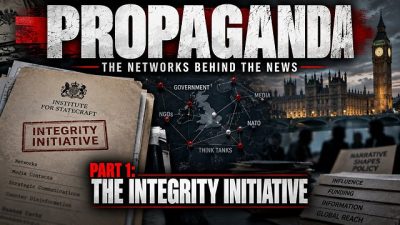
Integrity Initiative: UK-funded network framed dissent as Russian disinformation for years
or go to
Aletho News Archives – Video-Images
From the Archives
Why Saudi Ties to 9/11 Mean U.S. Ties to 9/11
By Kevin Ryan | Dig Within | September 27, 2015
Media interest in Saudi Arabian connections to the crimes of 9/11 has centered on calls for the release of the 28 missing pages from the Joint Congressional Inquiry’s report. However, those calls focus on the question of hijacker financing and omit the most interesting links between the 9/11 attacks and Saudi Arabia—links that implicate powerful people in the United States. Here are twenty examples. … continue
Blog Roll
 Aletho News
- IAEA inspectors cannot return to Iran amid US threats: Russia
- Senate Rejects Iran War Powers Resolution Passed By House
- ‘We did not attack Pakistan with drones’: Afghan sources
- Iraqi Resistance faction links arms to sovereignty, questions US exit
- Cannon fodder no more… South Korea rejects Trump’s pressure to join his criminal war on Iran
- Neria Leiter Was A Legitimate Military Target
- Integrity Initiative: UK-funded network framed dissent as Russian disinformation for years
- ‘We don’t seek permission to defend our country’: Snippets from President Pezeshkian’s UNGA address
- NATO chief wants Europeans to fight American wars [for Israel]
- German chemicals giant reveals details of downsizing
- If Americans Knew
- Israel displaces hundreds of Palestinians amid wave of demolitions in West Bank
- Aid, reconstruction, and Israel’s history of obstruction in Gaza
- Trump administration digs an ever-deeper hole of complicity in genocide – Daily Update
- US-Israel $2.8 Billion Arms Deal, 40,000-Bomb Supply Faces New Gaza Complicity Accusations
- Caught on Tape: AIPAC CEO Boasted of Controlling Trump’s National Security Officials
- Why Hamas Attacked Israel in October 2023 – Israeli professor Ilan Pappé
- They see them, then kill them: Israeli quadcopters track, deliberately target civilians in Gaza
- Winter could turn Gaza’s treacherous, war-damaged buildings into deathtraps
- Majority of Democratic Voters Want to Prosecute Both Biden and Trump Administration Officials Over Gaza
- As Gaza languishes, world leaders gather at the UN – Daily Update
- No Tricks Zone
- New Study: Earth And Venus Surface Warmth Largely Explained By Convection And Lapse Rate, Not CO2 Or Radiation
- 2025 Nature Paper Claiming Worsening Global Drought Gets RETRACTED …Heavily Flawed
- New Study: ‘Global Drought Shows No Detectable Recent Acceleration Under Climate Warming’
- Economic Masterminds: German Socialists Suggest Taxing Productivity Gains Stemming From Using AI
- The South China Sea Has Not Been Cooperating With The Climate Change Narrative
- Energy Crisis: Germany Enters Heating Season With Historically Low Gas Reserve Fill Levels
- New Study: The Antarctic Ice Sheet Gained Mass From 2020-2024 Due To Staggering Snow And Ice Accumulation
- Study: Ocean Heating Rates From Thousands Of Years Ago ‘Dwarf’ Modern Ocean Heating Rates
- Climate Extremists Target, Attack Large-Scale Power Grid Infrastructure In Germany!
- New Study: Antarctic Ice Melt Has Contributed Less Than 1 Centimeter To Sea Level Rise In The Last 30 Years

