Statement of Four: West Wages Multi-Front, Multi-Domain Campaign Against Russia
By Peter KORZUN | Strategic Culture Foundation | 19.03.2018
Contain Russia in all spheres, squeeze it out everywhere you can, and ramp up pressure to make it kneel. It’s not a big thing to find a pretext to justify the orchestrated campaign launched by the West to put the relations with Moscow on confrontational footing. It stubbornly keeps on reviving the Cold War. This is a holistic policy with some actions hitting media headlines to focus world public attention on, while some moves are camouflaged and kept out of spotlight.
With so many doubts expressed about Moscow’s complicity in the Salisbury spy poisoning, the leaders of the UK, the US, Germany and France – the big four – made an unprecedented joint statement putting the blame on Russia. They did not find it necessary to wait for investigation results to say Moscow had violated international law and threatened their security. The statement says Russia did not cooperate with Britain. It does not mention the fact that Moscow was ready to meet London halfway but received no requests in line with the provisions of the Chemical Weapons Convention. The only thing Russia can be blamed for is its policy of refusing to communicate in the language of ultimatums.
Everything has suddenly become clear. Russia’s guilt is evident despite the fact that nothing new has been revealed since French President Macron’s spokesman warned the UK on March 14 against “fantasy politics”. The Organization for the Prohibition of Chemical Weapon had not investigated the case but the verdict was handed down. UK PM Theresa May was quite happy about the statement as it showed that the allies “are standing alongside us”.
On March 15, the US introduced new sanctions against Russia to punish it for alleged election meddling and cyberattacks. The announcement came together with the statement of the Big Four. As usual, the move is the result of allegations and claims not based on solid proof and established facts. Senate Minority Leader Chuck Schumer believes it’s still “not enough”. He demands that President Trump introduce more sanctions and publicly denounce Russian President Putin. It’s just the first step, chimed in Senator Mark Warner of the Senate Intelligence Committee. He wondered why it had taken so long.
That’s what is in the spotlight. Now, about the creeping offensive kept out of spotlight to be waged almost clandestinely. Few media have reported about the decision of the Polish government just announced by Defence Minister Mariusz Błaszczak to move “some of the army units” stationed in the west of the country to its eastern borders. The country’s military command system would be reformed because Russia is “unpredictable.”
Meanwhile, Romania is preparing to stage a “maidan” in Moldova to gobble it up. If the plan goes through, this post-Soviet country will become part of NATO and the EU, unleashing a chain reaction in the region considered a sphere of Russia’s influence. A coup is slated for March 24. Extremist groups are expected to capture the parliament building. Moldovan President Igor Dodon had predicted that the attempts to forcibly unify Moldova and Romania would lead to a civil war. The scenario events will most certainly spur separatist sentiments in Transnistria. No doubt, Russia will be blamed for “nefarious activities”, especially if it raises its voice in support of Moldovans’ right to decide their own fate without outside interference.
On March 14, the US announced a diplomatic offensive to squeeze Russia out from the Balkans. Wess Mitchell, Assistant Secretary of State for European and Eurasian Affairs, urged the nations of the region to resolve their disputes with the help of the West. He mentioned the possible expansion of the EU. Mr. Mitchell did not say so openly but there is little doubt it was an attempt to lure Belgrade away from Russia. Serbia is a country of special concern for the US military brass.
NATO has recently accused Moscow of interfering in the internal affairs of the Balkan countries, including information warfare. EU leaders wasted no time to express their concern over Russia’s policy in the region as Theresa May was ringing alarm bells over the Salisbury poisoning case. They are ready to engage Moscow in “information war”.
Making Russia responsible for the situation in Syria’s Eastern Ghouta is another direction of attack. Provocations are being planned to blame the Russia-backed Syria’s government for the use of CW.
The Salisbury poisoning, false flag chemical attacks in Ghouta, “battle for the Balkans”, provocations being prepared in Moldova, Estonia, Estonia, Latvia and Poland abruptly stepping up their fight against the Nord Stream-2 gas project in the Baltic Sea, as well as a lot of other things, are parts of a broader picture. The West is attacking Russia on all fronts and in all domains. There are no clear rules of the road. The pressure will be gradually being ratcheted up till Moscow bows and kneels.
As history teaches, this outcome is unlikely. But the policy may backfire to undermine the Western unity, which is extremely fragile. The West faces multiple threats and challenges; its very foundation is in jeopardy. These are the days when it needs partners more than artificially created enemies adding to the plethora of grave problems it is trying hard to tackle. Today it is wasting resources and effort on waging the well-orchestrated campaign against Moscow instead of coming up with constructive policy of ensuring its security and cohesion.
Britain’s Insane Cold War Dramatics

Strategic Culture Foundation | 16.03.2018
Britain has now been joined by the United States, France and Germany in blaming Russia for an alleged murder plot on British soil. No verifiable evidence has been provided by the British authorities to support their shrill claim of Russian violation.
It is as insane as it is pathetic, as it is perfidious. A modern-day parody of William Shakespeare’s admonition “thou protest too much”.
In the unprecedented joint statement issued Thursday by the four NATO powers, it was stated, “The United Kingdom thoroughly briefed [sic] its allies that it was highly likely Russia was responsible for the attack”.
The “attack” refers to an apparent poisoning assault on a former Russian spy, Sergei Skripal (66), and his 33-year-old daughter, Yulia, in the English town of Salisbury on March 4. How fitting a medieval town should feature in a medieval-like inquisition.
Skripal had been exiled to England eight years ago in a spy-swap with British MI6 for whom he had betrayed Russian state secrets a decade earlier. Both father and daughter have reportedly been hospitalized. But notably no photographs of the pair have been published to confirm their whereabouts or their condition.
Almost from the moment of the apparent attack on the Skripals, British politicians and media have hysterically speculated that Russian state agents carried out a “vendetta”. Within days, the British authorities claimed to have “evidence” that the nerve toxin allegedly used was a Soviet-era chemical weapon, known as “Novichok”.
This week, British Prime Minister Theresa May went even further to blame Russia for the attempted murder of the Skripals. She announced various sanctions in the British parliament, including the expulsion of 23 Russian diplomats from Britain. All the world’s a stage, to quote Shakespeare again.
The British have quickly engaged in intense rallying of the United States and European allies to support their position of impugning Russia. The latest joint statement of “solidarity” demonstrates that the British have managed to muster an unprecedented line-up of inquisitors condemning Russia.
Moscow has lamented Britain’s “absolutely irresponsible conduct” in this tawdry affair. London has shown deplorable disregard for due process and normal diplomatic relations to recklessly orchestrate a crisis.
The recklessness is almost incredible. Britain has not presented any hard evidence to back up its claims of a Soviet-era nerve toxin, nor how this alleged chemical is provably connected to the Russian state.
It is clear from the joint statement that the US, France and Germany are relying on Britain’s “brief”, and yet all four jump to the conclusion that “the only plausible explanation” for the apparent poison attack is Russian responsibility.
That a supposed criminal investigation involving a seemingly sophisticated chemical weapon could be conclusively carried out in a matter of days beggars belief. More plausible is that the British official position was a foregone conclusion – to blame Russia – and now to instill this prejudice in other willful NATO allies.
For the British to argue that a Soviet-era chemical incriminates Russia is fatuous beyond words. There is every reason to believe that “Novichok” nerve agents are possessed by several states, including the US and Britain. The Americans were involved in the “clean-up” of chemical warfare laboratories in Uzbekistan as far back as 1999, as previously reported by the New York Times, where the Soviet Novichok agents were purportedly synthesized.
As for the British, their chemical weapons laboratory at Porton Down – eight miles from Salisbury where the Skripals fell ill on March 4 – must have its own stock of Novichok if indeed the British laboratory carried out a positive identification last week. “If” being the operative word here.
The point is that any number of state agencies could be in possession of the deadly nerve toxin. How the British attribute it solely to Russia is not verified. The claim relies entirely on the say-so of the British authorities. The same disreputable authorities who helped concoct lies about WMDs to wage a genocidal war on Iraq in 2003.
According to the UN-affiliated Organization for the Prohibition of Chemical Weapons, Russia destroyed 100 per cent of its declared arsenal of lethal chemicals at the end of 2017 in compliance with the Convention of Chemical Weapons ratified by 165 nations in 1997. The Americans have not yet fully complied, retaining a portion of their toxic stockpile.
Also according to the convention, Russia has a right to inspect the allegedly offending sample that Britain claims to have identified. But all legal requests from Moscow for confirmatory access have been refused by the British.
This is a travesty of due process. Britain is making grave accusations against Russia of violating its sovereignty and attempted murder. Yet the British are not presenting their supposed evidence. Instead, London has sought to escalate the crisis by imposing sanctions on Russia, and enlisting the support of the US, France and Germany to amplify its dubious charges against Moscow.
Russia has rejected all charges. Moscow says the hypothesis of a revenge assassination on a disgraced former spy who had been living an open and undisturbed life in England for nearly a decade is absurd. Especially given the timing of Russia’s presidential elections this weekend and the hosting of the forthcoming World Cup tournament. For Russia to carry out such an act defies logic and credibility.
Britain’s ridiculous 24-hour “deadline” this week on Russia to “provide answers” over the hypothetical, but undisclosed, “evidence” is so impossible it also indicates the unfolding of a propaganda script. When Russia “failed” to comply with the preposterous demand that was then cited as “more proof” of Russian guilt.
The litany of similar false and baseless charges against Russia over the past four years – from aggression in Ukraine to shooting down a Malaysian airliner, from Olympic doping to election meddling – all follow the same propaganda script. Allegations without evidence, repeated ad nauseam. Thanks to dutiful, supine Western so-called news media.
Britain and its allies are engaging in an appalling degradation of diplomacy and the rule of law. With utter arrogance, ironically they claim to be upholding law and order, while in reality they are pushing the world towards hell in a handcart.
Adding insult to injury, British premier Theresa May deprecated Russia’s “disdain for the gravity of the matter”; her Foreign Secretary Boris Johnson accused Russia of being “smug”; while the Defense Secretary Gavin Williamson sniped that Russia “should shut up and go away”.
Russia is being wronged, not for the first time. But her integrity and fortitude will be vindicated – again. The allure of British Cold War spy propaganda has long ago expired. The stale and impotent residue will eventually show just how bankrupt the British rulers and their NATO allies have become.
In their bankruptcy they are desperately trying to start a war. But their criminal insanity will be their own downfall. In the wise words of Abraham Lincoln, you can’t fool all of the people all of the time.
Hold my beer and watch this!
The Saker | March 15, 2018
Rattlesnakes have a terrible reputation. Here were I live, in Florida, we have the biggest rattlesnakes on the planet, the Eastern Diamondback (Crotalus adamanteus). They are huge and can reach well over 2m (6ft) in length and weigh up to 15kg (30lbs). The Eastern Diamondback’s venom is not the most potent out there, but they can deliver *a lot* of it. So, yes, it is a formidable creature. But it is also a gentle creature and truly very shy one.
Eastern Diamonbacks are also a stunningly beautiful creatures. I confess that I absolutely love them.
For all their reputation for nastiness, Eastern Diamonbacks will never ever attack you if they can avoid it. I have seen a lot of these snakes on my hikes, I have manipulated them (with a hook), and I have seen my German Shepherd come nose to nose with one (literally) and that Eastern Diamondback did not strike. Why? Because these snakes will do everything they can to avoid having to bite you.
First and foremost, they hide. Really well. You can stand right next to a large Eastern Diamondback and never notice it. You can walk right by, and it won’t move, or rattle its tail, and you will never know that it was there. Camouflage is their first line of defense.
Then, if discovered, they will rattle their tails. If needed, very loudly. You can easily hear the rattle from an Eastern Diamondback from 5m (15ft) away. More than enough distance to easily avoid it.
Furthermore, if given the chance, the Eastern Diamondback will retreat and hide.
Finally, when cornered a lot of them try what is called a “dry bite”: they do bite you, but deliver no venom. Why? Because you are not prey, so what would be the point of envenoming you? The Eastern Diamondback does not want you dead, it wants you to let it live!
I was once told by a park ranger in Arizona that the profile of a typical rattlesnake bite victim is: white, male, with tattoos and the famous last words “hold my beer and watch this!“.
Why am I telling you all this?
Because that is exactly what I see happening before my horrified eyes.
Russia is the Eastern Diamondback desperately trying to do all it can to avoid to have to strike. The West is the drunk idiot full of hubris, arrogance and a very mistaken sense of invulnerability saying “hold my beer and watch this!“.
Keep in mind that in a confrontation with a drunken human the Eastern Diamondback is most unlikely to survive. And it knows that, and that is why it does everything it can to avoid such a confrontation in the first place. But if cornered or attacked the Diamondback will strike. Hard. Want to see what such a strike looks like? Like this:
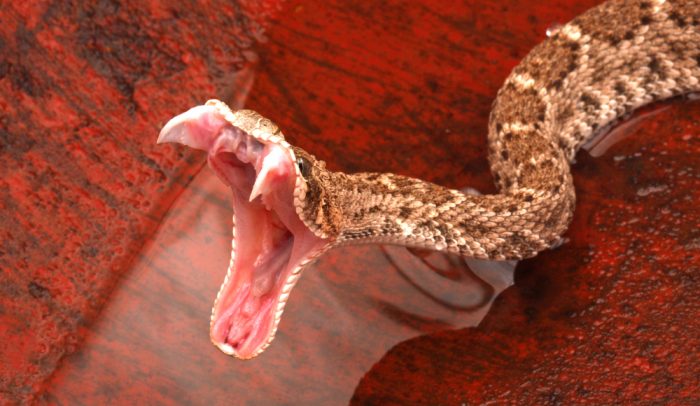
You most definitely do NOT want to be on the receiving end of that strike!
But that’s for normal, sober, people. When you are drunk your attitude is “hold my beer and watch this!” you “know” that you can handle that snake.
They are all at it right now. May, Trump, Macron and Merkel, of course, but also the their sycophantic presstitutes and the herds of zombified followers. They all believe in their invulnerability and superiority.
The terrifying truth is that these folks have NO IDEA whom they are dealing with nor do they understand the consequences of pushing Russia too hard. Oh, in theory they do (yeah, yeah, Napoleon, Hitler, we know!). But in their guts, they feel safe, superior and just can’t conceive that they can die and their entire society simply disappear.
I suggest that they carefully ponder the following.
In a recent interview Putin was asked about the rationale of a retaliatory strike by Russia if she was attacked by the USA. Putin replied the following: “Yes, for mankind this would be a global catastrophe, for the world it would be a global catastrophe, but as a citizen of Russia and as the Head of the Russian state I ask: “what need would we have a world if there is no Russia?“.
So there you have it, directly from Putin: if the AngloZionist plan is to eliminate Russia (whether physically or otherwise), then the Russian people have no need for such a world. Consider these words as the Russian version of a very loud, almost desperate, rattle.
And look at how they are all trying to see how far they can “safely” push Russia.
I wonder if that Russian “rattle” will be loud enough to stop the West before it is too late.
I am not so sure.
US in Afghanistan to Influence Russia, Iran, China – Russian Foreign Ministry
Sputnik – March 14, 2108
The United States retains its presence in Afghanistan to exert influence on neighboring countries and regional rivals – namely, Russia, Iran and China, Russian Foreign Ministry’s Second Asian Department Director Zamir Kabulov told Sputnik in an interview.
“In our opinion, the United States is in Afghanistan primarily with the aim of controlling and influencing the political processes in its neighboring countries, and also demonstrating its power to its regional competitors, primarily China, Russia and Iran. The United States is clearly trying to achieve destabilization of Central Asia and later transfer it to Russia in order to subsequently present itself as the only defender against potential and emerging threats in the region,” Kabulov said.
According to the diplomat, Russia and other countries neighboring with Afghanistan have questions about the true goals and time frame of the US military presence in the Central Asian country.
“If the United States and its NATO allies intend to continue their destructive policy in Afghanistan, this will mean that the West is heading toward the revival of the Cold War era in this part of the world. We closely monitor the developments and are ready to respond in cooperation with our partners and other like-minded people,” Kabulov noted.
The diplomat pointed out that Washington still failed to understand that the Afghan conflict could not be resolved solely by military means, stressing that it was impossible to defeat the Taliban by force.
Moscow is puzzled by the attempts of the United States and NATO to persuade Afghanistan to replace Russian weapons and military equipment, such move leads to reduction of Afghan’s military potential, Zamir Kabulov told Sputnik in an interview.
“The course taken by the United States and NATO to persuade Kabul to replace Russia-made small arms and aircraft is surprising, as it will inevitably lead to a decrease in the combat capabilities of the Afghan armed forces and further deterioration of the situation,” Kabulov said.
The diplomat reminded that a bilateral intergovernmental agreement on Russia’s defense industry assistance to Afghanistan had entered into force in November 2016, adding that the document created the legal framework for Russian assistance in arming and equipping the Afghan security forces.
“At the moment, negotiations are underway on repairs and supplies of spare parts for the Afghan Air Force’s helicopters for various purposes, produced in Russia (the Soviet Union),” Kabulov added.
Afghanistan Parliamentary Election
The parliamentary election in Afghanistan is unlikely to take place in July in the current circumstances, Kabulov said.
“I do not think that the parliamentary elections in Afghanistan will be held in July this year as scheduled. The Taliban continue to control about half of the country’s territory, engage in hostilities, organize and carry out terrorist attacks in large cities, and, apparently, are not going to make compromises and reconciliation with the Afghan government,” Kabulov said.
Afghanistan’s Independent Election Commission (IEC) is also unlikely to accomplish all the necessary procedures before the date set for the vote, given that the commission has announced earlier that the registration of voters will complete only by early August, the diplomat noted.
Furthermore, disagreements between the presidential administration and its political opposition regarding the parameters of the upcoming elections still remain unresolved, the official noted.
“In my opinion, if elections are conducted in the current circumstances, their results will not improve the political situation in the country and confidence in the current government, will not force the armed opposition to cooperate with the government,” Kabulov added.
The diplomat also noted that the Daesh terror group posed a serious threat to holding the election.
“The Daesh jihadists pose a serious threat to the security of the conduct of elections, especially in the north and a number of eastern provinces of Afghanistan. Some polling stations in the provinces of Helmand, Uruzgan, Kunduz, Badakhshan, Faryab and Ghazni are the most problematic in terms of security, according to the IEC data. I think that, in fact, the list of problematic areas in terms of organization of voting is much longer,” Kabulov said.
Afghanistan Reconciliation Talks
Russia considers the so-called Moscow format of talks an optimal platform for the promotion of national reconciliation in Afghanistan, Zamir Kabulov noted.
“Unfortunately, the existence of a large number of international formats on the Afghan issue has not significantly contributed to the involvement of the Taliban in peace negotiations. In this regard, we consider the Moscow format of consultations launched by us in early 2017 as the optimal platform for substantive negotiations to promote national reconciliation and establish a constructive dialogue between the government of Afghanistan and the Taliban movement,” Kabulov said.
Kabulov also noted that Moscow considered the format of talks in the Afghan capital as one approach toward achieving a collective solution to the problems surrounding Afghan settlement.
“A signal of international support for the resolution of the intra-Afghan conflict through political dialogue with the government of Afghanistan has been sent to the Taliban. The Taliban ignored the recent meeting of the ‘Kabul process’ in the Afghan capital, insisting on direct talks with the United States,” the diplomat added.
In February 2017, Russia, China, Pakistan, Iran, India and Afghanistan came together in Moscow for talks to promote the national reconciliation process in Afghanistan through regional cooperation with Kabul in the leading role. Apart from the aforementioned states, the latest round in April gathered five Central Asian countries: Kazakhstan, Kyrgyzstan, Tajikistan, Turkmenistan and Uzbekistan. The United States refused to take part in the meeting.
Afghanistan has long suffered political, social and security-related instability because of the simmering insurgency, including that of the Taliban, but also because of the actions of the Daesh terror group.
The United States has been in Afghanistan for almost 17 years following the 9/11 attacks. Before his election, Trump slammed sending US troops and resources to the Central Asian country.
Moscow on Expulsion of 23 Diplomats From UK: ‘Unacceptable, Unjustified’ Move
Sputnik – March 14, 2018
Prime Minister Theresa May has announced the largest expulsion of Russian diplomats from the UK since the Cold War over the alleged attack on a former spy. Moscow has denounced May’s claims as baseless.
The Russian Embassy in London called the expulsion of 23 Russian diplomats announced by UK Prime Minister Theresa May over the poisoning of former intelligence officer Sergei Skripal “unacceptable, short-sighted and unjustified.”
In a statement, the Embassy confirmed that the diplomats had been declared persona non grata, adding that London was to blame for the harm caused to Russian-UK relations by this “hostile step.”
The Russian Embassy’s reaction followed UK Prime Minister Theresa May’s address to the House of Commons, where she announced a response to the alleged attack on Skripal.
Biggest Expulsion of Russian Diplomats Since Cold War
Reiterating a claim she made Monday about Russia’s alleged culpability in the Skripal case, the prime minister accused Russia of an “unlawful use of force against the United Kingdom,” saying this crime was part of a well established pattern of “Russian state aggression” in Europe, and accused Moscow of “sarcasm, contempt and defiance” in its response to London’s ultimatum to provide further information.
May announced that 23 Russian diplomats “identified as undeclared intelligence officers” will be expelled and given one week to leave.
Second, she vowed the creation of new legislative powers against “hostile state activity,” as well as possible new counter-espionage powers.
May promised the freeze of Russian assets in cases where they threaten UK citizens, adding there was no place for those seeking to do harm to the UK.
The prime minister also said that “criminals” and “corrupt elites” from Russia were not “welcome” in the UK. She informed lawmakers that “led by the National Crime Agency, we will continue to bring all the capabilities of UK law enforcement to bear against serious criminals and corrupt elites. There is no place for these people – or their money — in our country.”
May also confirmed that her government will be looking to strengthen Magnitsky Act-type, human rights-based amendments to existing sanctoins.
Suspension of High Level Contacts
London will suspend all high level contacts with diplomatic officials from Moscow, including during the upcoming FIFA World Cup in Russia, which British ministers and members of the royal family will skip.
May accused Russia of “flagrantly” breaching its international obligations, and said it was “tragic” that Russian President Putin “has chosen to act in this way.”
The prime minister stressed that the London and its allies will coordinate its actions, and welcomed support received from NATO and the EU. A NATO Council meeting will be held to discuss the matter on Thursday. The UK is also pushing for a debate at the UN on the Skripal case, and has asked the Organization for the Prohibition of Chemical Weapons to to help verify its claims against Russia.
Skripal’s attempted murder was not just an act of aggression against the UK, but an affront to the prohibition of chemical weapons, May said.
Opposition Responds
Opposition leader Jeremy Corbyn called the events in Salisbury “abominable,” adding that the Labour Party supports the prime minister in taking firm, multilateral action to ensure chemical weapons are never again used in the UK. He asked whether May agrees on the need to maintain dialog with Russia.
Responding to a lawmaker’s question about whether she will respond to any Russian response with an even firmer response, May said there were “other measures” that London stands ready to deploy should it face “further provocations” from Moscow.
May accused Russia of having a “pattern” of aggression, from Syria to Crimea and Eastern Ukraine, to meddling in elections in other parts of the world to “propaganda” and “misinformation campaigns.”
Asked about whether the UK will seek to further diversify away from the delivery of Russian gas, May confirmed that “we are indeed looking” to other countries for supplies.
Asked whether Russian English language media including RT would be targetted, May said that this was not a matter for the government, but for media regulator Ofcom. She added that the UK would continue to support the efforts of BBC’s Russian language service. Moscow had previously warned that UK media would be expelled from Russia if Russian media was expelled from the UK.
What Happened
Moscow has dismissed all accusations of involvment in the Skripal incident and requested access to the case. Russian Foreign Minister Sergei Lavrov has characterized London’s accusations as “propaganda,” and complained that Russia wasn’t provided with any evidence regarding the crime, in spite of the accusation of Russian involvement, and the fact that Russia had made a request for information regarding a crime which affected Yulia Skripal, who is a Russian citizen.
Ex-GRU officer and MI6 double agent Sergei Skripal and his daughter were hospitalized on March 4 following what London claims to have been an attempted poisoning.
The Skripal Incident-Another Anti-Russian Provocation
By Christopher Black – New Eastern Outlook – 09.03.2018
The British government is talking war with Russia over a mysterious incident that is claimed to have taken place on Sunday March 4, just a few kilometres from the secrecy shrouded British biological and chemical warfare research and development facility at Porton Down in Wiltshire. I say claimed since we have very little information confirming what exactly took place outside of government statements and we have seen no photographs of the alleged victims in their hospital beds to convince us that the alleged victims did fall ill and are being treated. However, let us assume that the incident as described did take place.
The mystery consists in the fact that the victims, former Russian colonel of military intelligence, Sergei Skripal, and his daughter, were not under any known threat from Russia. Skripal was charged and convicted in Russia in 2006 of being an asset of the British Secret Intelligence Service, MI6, and handing over secret information to the British. He was jailed, but in a spy swap in 2010 was pardoned and allowed to leave Russia for Vienna, then Britain, where he has been living ever since. Why he was pardoned is difficult to determine, unless it was necessary legally to effect the swap with the British. In any even the Russians had washed their hands of him but it seems the British had other uses for him, as their expendable man for a provocation against Russia.
The facts as the British government states them are that Skripal and his daughter, visiting from Russia, met for lunch in Salisbury, the town outside of which Porton Down is located. The purpose of the daughter’s visit is not known. According to ever changing media accounts witnesses in a restaurant reported that Skripal appeared to be agitated and angry and left in that state with his daughter following. Agitated and angry about what we do not know.
Half an hour later it is said that the two of them were found slumped over on a public bench. Some early media accounts state that it was thought they had taken too much fentanyl and were vomiting and that their illness may have been self-induced. But very quickly the British government claimed that they had been poisoned by some chemical or nerve agent and immediately cast the blame on Russia though the investigation had just begun. The incident was immediately taken out of the hands of the local police and handed over to the Counter-Terrorism Police, formerly known as Special Branch, though the government refused to call it a terrorist incident. A meeting of the British government high-level emergency committee, Cobra, was called. Why this was done for what appears to be an assault or attempted murder or a self-induced accident is a good question. But the answer lies in the immediate propaganda campaign mounted in the British press against Russia.
On Thursday the 8th of March the British government claimed that they had identified a “nerve agent” as the substance used. Yet the BBC quotes on the same day a woman physician who attended at the scene saying that she found Mrs. Skripal slumped unconscious on a bench vomiting and fitting. She had lost control of her bodily functions. The physician, who asked not to be named, told the BBC she moved the daughter into the recovery position and opened her airways as others tended to her father. The doctor stated that the she treated her for almost 30 minutes, saying there was no sign of any chemical agent on her face or body and that though she had been worried she would be affected by a nerve agent so far she “feels fine.”
Yet, the British media published on Thursday a photograph of a police officer who they say attended the scene and who they claim was made ill and placed in intensive care but is now stable and recovering. The two stories do not add up, as it would seem the doctor was in closer physical contact with the two victims than the police officer yet the doctor has suffered no symptoms at all.
The Guardian quoted Andrei Lugovoi, another former Russian agent, accused of Litvinenko’s murder by the British as stating that Skripal had been pardoned in Russia so no one from there is after him:
“I don’t rule out that this is another provocation by British. Whatever happens on British territory, they start yelling: ‘He was killed, he was hung, he was poisoned!’ and that Russia is to blame for everything. This is to their advantage.” Igor Sutyagin, yet another Russian traitor flown to Russia in 2010 in an exchange of spies-also said, “I don’t think that Mr. Skripal would be targeted, because he was pardoned.”
To add to the mystery the British government refuses to name the alleged nerve agent. To create more drama the British Home Secretary, Amber Rudd, stated that it was not Sarin or VX but something “very rare.” I think we can expect that they will choose the right dramatic moment to name something and state that only Russian labs can make it. That is their modus operandi. They certainly do not want to state that VX was involved since VX was developed in 1952 at Porton Down near the sight of the incident; for that would lead to necessary investigations into security at that facility and whether personnel there were involved. However, despite the fact that Porton Down is in the business of manufacturing chemical warfare agents including nerve agents and that logic would dictate that the Porton Down authorities would be barred from being investigators into a case in which they could be involved the British government immediately assigned Porton Down to identify the substance that might have been used.
That the Russians may be correct that this incident is another NATO arranged provocation must be seriously considered. Despite the fact there is no evidence whatsoever that Russia had anything to do with this incident, the British government was quick to label Russia as the villain of the piece and the mass media dutifully acted in lock step and put out the word. Boris Johnson called Russia a “malign and disruptive force’ and made threats about pulling the UK out of the World Cup to be held in Russia this year. The attempts by the NATO alliance to throw Russia out of the Olympics on trumped up doping charges were largely successful and now we see another attempt to disrupt a sports event that is important to world football fans and to Russia. Johnson added that Britain would act “robustly’ of Moscow is found to be involved.
The Russian embassy in London stated the allegations of Russian involvement are untrue and that the “script of yet another anti-Russian campaign has already been written.” It seems so and the script has some pages to run yet. One has to wonder what the role of the British intelligence services is in this for the BBC also reports that Skripal still kept the company of British intelligence agents. So one has to ask, for what reason? What was his continuing role as an asset of MI6? What was their role on that day?
But that line of inquiry will not be followed. All the British media are linking this incident to the case of Alexander Litvinenko, another Russian who was supposedly poisoned with radioactive tea. Evidence that cronies of his were involved were ignored in favour the line that Russia was behind it though no evidence has ever been put forward to support that claim. They are also making the claim that this “very rare” substance must be from a state military stockpile, so the statements to come from the British government can be predicted.
This incident has echoes of the case of Georgi Markov, the Bulgarian dissident killed in London in 1978 by a ricin pellet injected into his leg by means of an umbrella it was said, though it was no doubt done with an air pistol. That murder was quickly blamed on the KGB and Bulgarian government agents but there is evidence that in fact the murder was arranged by MI6 as was the murder of media magnate Robert Maxwell in 1991, who had documents relating to the Markov murder in his possession, according sources such as Richard Cottrell in his book Gladio and accounts by former British intelligence agent Gordon Logan.
The Skripal incident also brings to mind the death of Dr. David Kelly in 2003 whose mysterious death in woods near his home, was officially attributed to “suicide.” He is thought by many to have been assassinated by the British secret services and CIA to keep him from revealing secrets about the war in Iraq. He worked at Porton Down as head of microbiology.
He in turn is connected to other scientists at Porton Down who have died under questionable circumstances, for instance, Dr. Richard Holmes, whose body was found in the same woods as Dr. Kelly, in 2012, two days after going for a walk, and one month after resigning from Porton Down, and to Vladimir Pasechnik’s death in November 2001, another Russian defector, who allegedly died of a stroke. His death was not announced until a month later and by British intelligence. Dr. Kelly had been involved in his debriefing when he left Russia.
Sir Edward Leigh, a member of the Parliamentary Defence Committee, in the British Parliament stated, “the circumstantial evidence against Russia is very strong. Who else would have the motive and the means?” The answer to that of course is that the British government has the motive and the means. What would Russia benefit from harming a has-been like Skripal and causing all this fuss? None. What benefit does Britain have and NATO? The answer again is provided by Sir Richard who went on to state “The only way to preserve peace is through strength,” carefully echoing Trump’s foreign policy. He continued, “and if Russia is behind this, this is a brazen act of war, of humiliating our country and defence is the first duty and spending 2% of the budget on defence is not enough.” There is the motive right there. To justify an increase on defence spending and to hit Russia yet again with propaganda warfare to justify NATO’s continuing aggression against Russia.
Russia has volunteered to cooperate in the “investigation” but to what end? The script is already written, the drama will unfold, the consequences will flow and they will lead not to peace and cooperation but to more hostility and war.
Christopher Black is an international criminal lawyer based in Toronto. He is known for a number of high-profile war crimes cases and recently published his novel “Beneath the Clouds.
Russia slams extended US sanctions as illegal, harmful to world
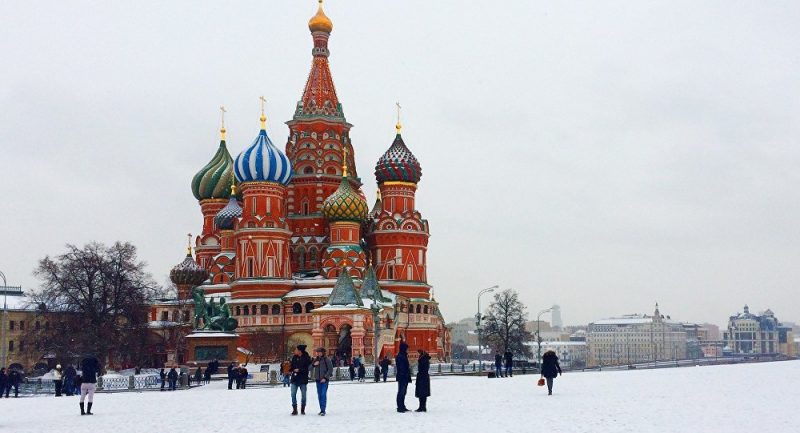
Press TV – March 3, 2018
Russia has slammed US sanctions against the country as illegal and harmful to the world after Washington extended embargoes against Moscow over the Ukrainian crisis.
“We have never been the initiator of these sanctions, we consider them illegal and harmful not just to the people of our two countries but the whole world,” Interfax news agency quoted Russian presidential press spokesman Dmitry Peskov as saying on Saturday.
The remarks came a day after US President Donald Trump signed an executive order to extend sanctions against Moscow, which have been in place since the Black Sea peninsula of Crimea rejoined Russia in 2014.
Ties between the US and Russia have plummeted to levels not seen since the Cold War due to the two powers’ disputes over the crises in Ukraine and Syria and after US officials accused Russia of meddling in the 2016 US presidential election.
On Friday, Russian Deputy Defense Minister Alexander Fomin said the US was planning to deploy some 400 anti-ballistic missiles on Russia’s doorstep as part of its military buildup in Eastern Europe.
Last year, the US for the first time deployed Patriot long-range anti-aircraft missiles to the Baltics to be used in large-scale NATO military drills in Lithuania near Russia’s border.
The armed conflict in Ukraine broke out following the ouster of pro-Russia President Viktor Yanukovych in February 2014 and intensified after people in Crimea voted for reunification with the Russian Federation in a referendum held in March 2014.
The US and its allies in Europe brand the reunification as annexation of the territory by Russia, accusing Moscow of having a major hand in the crisis in eastern Ukraine, an allegation strongly rejected by the Kremlin.
Western countries have levied broad economic sanctions against Moscow over its alleged support for pro-Russia separatist forces in eastern Ukraine and Crimea’s reunification with Russia.
In late 2016, Washington alleged that Russia had influenced the US presidential election in November that year to help Donald Trump get elected, an allegation that Russia strongly denied.
Russia and the US are also at odds over the Syrian crisis, as they are backing opposite sides in the conflict.
Russia has been offering military advisory support to the Syrian government in its battle against extremist militants, while the US and its allies back the Takfiri militants fighting to topple Syrian President Bashar al-Assad.
The West Attacks Russia on the Eve of the Munich Security Conference: Blind to the Truth
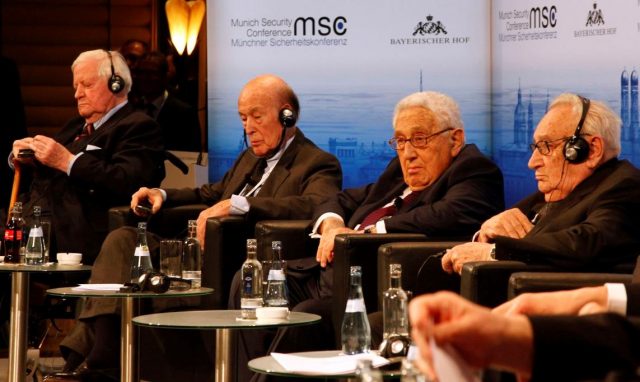
By Alex GORKA | Strategic Culture Foundation | 15.02.2018
So, Russia is the biggest “threat” to European security? And this is what the West, which has done nothing to provoke Moscow, is concerned about? Moscow is to blame for the erosion of arms control, the military deployments in Europe, the close calls during military exercises, and much else that is undermining European security? This view is supported by the recent annual Munich Security Report, titled “To The Brink – And Back?” released on Feb. 8. That paper warns that the security situation will further deteriorate, possibly leading to a military clash.
The annual Munich Security Conference (MSC) will take place on February 16-18. No doubt the participants will paint Russia as a bully who is responsible for each and every thing that is going wrong, while the “innocent” West is calling for restraint and is ready to go to any length to preserve peace on earth.
The West is innocent? Russia is a bully and a threat? This is the right time to look at recent events to see what’s really happening. The US 2019 draft budget released on Feb. 12 asks Congress to approve over $6.3 billion for the US-led NATO European Reassurance Initiative (ERI). In other words, this money is to be spent on a military build-up near Russia’s borders. The ERI was launched in 2014 as a symbolic gesture to assuage East European fears. It has turned into a large-scale deployment that just keeps growing. The cost totaled $3.4 billion in FY 2017, and $4.8 billion in 2018. President Trump’s 2019 budget proposal also envisages $250 million in military aid to Ukraine, which Russia views as an openly provocative move.
The US budget allocates a total of $716 billion for national defense, including $24 billion to modernize its existing arsenal and create new offensive nuclear weapons. For comparison, the Russian 2017 defense budget was roughly $70 billion – about 1/10th of the size of the American appropriations. And the American budget isn’t just paying for weapons. It also includes $661.4 million for broadcasting purposes (the Broadcasting Board of Governors) or, to call a spade a spade, the information war against Russia.
On Feb. 12, a group of Democratic senators introduced a resolution pushing President Donald Trump to authorize new sanctions against Russia, in accordance with the Сountering America’s Adversaries Through Sanctions Act, CAATSA). They are infuriated by what they call the “lack of seriousness shown by the administration in the face of a clear national security threat.”
NATO is quietly beefing up its logistics infrastructure, preparing for a war with Russia. Norway is hosting US Marines, who are deployed near the Norwegian-Russian border. Oslo is to join the NATO missile defense system. The US military presence in Europe has been growing for two years. NATO has recently deployed four battle groups in Poland and the Baltic states and is stepping up its presence in the Black Sea.
There are events that are kept out of the spotlight, but that illustrate how NATO keeps on expanding, in order to undermine Russia’s security and interests. On Feb. 5, Romania, a NATO member, reached an agreement with Moldova to form a joint battalion to familiarize Moldovan military personnel with NATO’s standards. Officially, the unit is to be deployed only under “extraordinary circumstances.” This is the first time that the two countries’ militaries have ever created a joint unit. More than 800 Moldovan officers have undergone military training in Romania. The two countries plan to hold more joint military exercises.
Romania has expressed its strong support of the idea of having Russian peacekeepers withdrawn from Transnistria, with an OSCE mission to take their place. No doubt Bucharest plans to take part in such a mission. Romania has always supported the concept of unification with Moldova. That unification would include Transnistria, where Russian peacekeeping forces are deployed. Once the joint battalion has been created, NATO forces will be facing Russian troops eyeball to eyeball.
The Moldovan government has banned Russian broadcasting. It is striving to integrate with the EU and is sending its military to take part in NATO drills, including in Ukraine. Transnistria favors Russia and wants to join the Moscow-led Eurasian project. Its people reject the idea of integration with Romania. With the Russian peacekeepers gone, the probability of armed conflict will be high.
2018 is the year the NATO Aegis Ashore ballistic missile defense system is to be deployed in Poland. The system can fire Tomahawk surface-to-surface intermediate-range cruise missiles. It constitutes a flagrant violation of the INF Treaty. In the summer of 2018, Poland will host Anaconda 2018 – the largest NATO military exercise since the end of the Cold War. Roughly 100,000 troops, including 20,000 Polish soldiers, 5,000 armored vehicles, 150 fixed-wing and rotary-wing aircraft, and 45 ships will take part in the drills.
One of the issues being discussed at the NATO defense ministers’ meeting (Feb.14-15) is the establishment of two new headquarters – the first upgrade of the command structure since the breakup of the Soviet Union. A command responsible for maritime security will be hosted by the US. A command responsible for ground forces operations in Europe will be set up in Germany. The formal decision is to be made in July at the NATO summit.
The majority of the speakers at the upcoming Munich conference will blame Russia for everything that has gone awry. The “Russia is at it again” approach will prevail. The deployment of Iskander missiles in the Kaliningrad region will be cited as an example of Russian “aggressiveness.” Few speakers will remember who provoked Moscow into taking action to ensure its own security, or the violations of the 1997 NATO-Russia Founding Act banning the deployment of substantial combat forces, or the breach of the INF Treaty that occurred with the positioning of the Aegis Ashore Mk-41 launchers capable of firing intermediate-range missiles. Few will make any attempt to empathize or to brainstorm ideas for finding common ground with Moscow. But hope dies last. In theory, the Munich conference is the right forum for sharing fresh ideas and making new proposals. It would be much more fruitful for NATO and Russia to steer the conversation toward something constructive instead of merely hurling mutual recriminations.
Dutch Lies Over Putin’s ‘Aggression’ Expose NATO War Agenda

By Finian CUNNINGHAM | Strategic Culture Foundation | 15.02.2018
Netherlands Prime Minister Mark Rutte was this week forced to bear a parliamentary vote of no confidence after his foreign minister finally came clean over a dangerous lie he has been telling for two years concerning Russian President Vladimir Putin.
Halbe Zijlstra quit in shame on Monday as the country’s foreign minister after admitting that a story he had peddled about personally hearing Putin plotting to create a “greater Russia” was false. That then forced premier Rutte to endure a “no confidence” motion from parliamentarians. In the end, Rutte survived the vote. If a majority had voted against his leadership, his coalition government may have collapsed.
But the deep damage done to the Dutch authorities will not be so easily repaired by Rutte’s survival as premier. What has been exposed this week is a senior member of government recklessly telling bare-faced lies in an attempt to slander Russia, poison international relations, and ratchet up already dangerous geopolitical tensions.
Zijlstra had claimed two years ago, in 2016, that he had personally witnessed Russian leader Vladimir Putin boasting about creating a “greater Russia” which, it is claimed, would incorporate Ukraine, the Baltic states, Belarus and Kazakhstan.
The newly resigned Dutch top diplomat claimed he heard Putin making the remarks while present with others at the Russian leader’s dacha (summer house) back in 2006.
This week, Zijlstra finally came clean and admitted before parliament that he hadn’t in fact been present at the alleged gathering. He still maintains, however, that a confidant who was among the guests at Putin’s dacha informed him of the alleged “greater Russia” plan. But how can we now trust the word of a self-confessed liar?
Zijlstra’s boss, Prime Minister Rutte, also sought to downplay the debacle, claiming that his foreign minister had made “a big mistake” – but that “lying was not a deadly sin”.
Rutte is in for a rude awakening due to his complacent thinking. For indeed his government has been caught telling a very grave lie whose ramifications concern issues of war and peace in Europe.
Disgraced former minister Zijlstra stands accused of gross distortion of Russia’s foreign policy.
Since the US and European-backed illegal coup in Ukraine in early 2014, geopolitical reality has been turned upside-down. American and European corporate media have peddled relentless anti-Russia propaganda accusing Moscow of “aggression” and “expansionism” in Europe.
This torrent of Russophobia spewed out by Washington, the Pentagon, NATO and the European Union has created the worst crisis in relations with Russia since the Cold War ended nearly three decades ago. There are real fears that the mounting crisis could escalate into an all-out war involving nuclear powers.
Zijlstra’s offense therefore is not merely a “mistaken” lie. His flagrant public distortion has contributed directly to the grave deterioration in geopolitical relations. One could even argue such reprehensible remarks amount to incitement of war, which is a cardinal crime under Nuremberg legal principles.
Lamentably, the mendacious senior Dutch politician is not an isolated case. Recall how former Polish foreign minister Radek Sikorski was caught out telling similar defamatory lies about Russia in 2014.
Sikorski, who has been an ardent supporter of NATO force build-up against Russia, reportedly claimed that he personally overheard Vladimir Putin in 2008 plotting to annex Ukrainian territory in a covert plot. Sikorski claimed that he heard Putin propositioning then Polish Prime Minister Donald Tusk with a carve-up deal of Ukraine between Poland and Russia.
Sikorski was obliged to swiftly retract the claims published in US media, and awkwardly admit that he was not present at the alleged meeting with Putin, and that his quoted remarks were meant as a “surreal joke”.
But, again, this is no joke or mistake. It is deadly serious disinformation by senior government officials, which is recklessly inciting war tensions with Russia. Sikorski is prominently associated with pro-NATO think-tanks like the hawkish American Enterprise Institute. He is married to Anne Applebaum who makes a living from writing anti-Russian screeds for news outlets like the Washington Post.
Zijlstra and Sikorski join the ranks of Russophobia regurgitated by other European foreign ministers like Britain’s Boris Johnson who issued the outlandish claim earlier this year that Russia is “targeting” British infrastructure; or French foreign minister Jean-Yves Le Drian who has impugned Russia for chemical weapons use in Syria – only for the French President Emmanuel Macron to admit this week that his government has actually no evidence about the use of such weapons in Syria.
Macron has made his own contribution to Russophobia by leveling unsubstantiated allegations that his presidential election campaign last year was “hacked” by Kremlin agents. He has since banned Russian news media from attending his press conferences.
All these senior government figures are irresponsibly fueling a climate of demonization against Russia which is compounding other unhinged claims made by politicians in Washington and the Baltic states. Lithuanian President Dalia Grybauskaite, for example, recently claimed that Russian Iskander missiles based on Russian sovereign territory of Kaliningrad were targeting half of Europe, an alarmist claim which has been amplified by US secretary of defense James Mattis in the Pentagon’s recent Nuclear Posture Review.
The climate of hysteria – based on false, fevered official claims – is militating against normal political and diplomatic relations, which is, in turn, exacerbating the war in Ukraine and leading to wider war tensions with Russia across Europe.
A good question is why the ousted Dutch minister decided to own up this week to his lies about Putin.
The answer may be related to the bigger credibility crisis of the Dutch government and its NATO allies with regard to the whole Russophobia propaganda war.
Next month, the Netherlands is to hold a national referendum on extending powers of Dutch state intelligence to monitor public electronic communications. To convince the Dutch public to vote for more snooping powers, the authorities are relying on the hackneyed claims about Russian “meddling” and “interference”.
It seems significant that Dutch media reported last month that the country’s secret services allegedly “hacked into” Russian state hackers who were allegedly penetrating the American Democratic party’s databases during the US presidential elections back in 2015-2016. As usual, no evidence was provided to support the claims. We know from other credible reports that the Democratic party was quite possibly not hacked at all, but rather was leaked from inside by a Democrat staffer. So the Dutch intel story smearing Russia is highly dubious.
But it seems that the purported “good deed” performed by the Dutch intelligence services was pitched in the media as a way to ingratiate bona fides with the Netherlands public. The aim being to dispose the public toward voting in the referendum next month to give the Dutch state more intrusive powers over citizens to “protect” them from “nefarious Russians”.
Now, if the Dutch minister had held on to his office any longer there was a risk that his lies may have become public embarrassingly close to the March referendum, which could have resulted in the public rejecting the authorities’ desire for more snooping powers.
Perhaps then the decision was taken in high office for the minister to take the fall now in order to get rid sooner of an embarrassing story concerning his lies over Russia.
Whatever the explanation about the timing, the admission of Dutch government lying about Russian aggression in Europe is nevertheless an illuminating and appalling insight into how Russophobia and war is being fomented by the US and its European NATO allies.
Abominably, European government officials are willing to risk plunging millions of citizens into a war with Russia based on lies and warped, self-serving prejudices.
Featured Video
New positive ivermectin evidence
or go to
Aletho News Archives – Video-Images
From the Archives
Fanatical Followers of the Covid Regime: A Jim Jones-Style Cult?
By Professor Roger Watson and Dr. Niall McCrae | The Daily Sceptic | November 15, 2021
As scholars at leading British universities over recent decades, we witnessed the replacement of critical thinking and debate by narrative: facts are discrimination and scientific method is imperialism; truth, instead, is derived from ‘progressive’ values. This educational trend may be a major contributory factor to the ease in which society has been inculcated to the Covid ‘new normal’ of masking, testing, and repeated doses of vaccines for a disease of similar risk to severe influenza.
One doesn’t need much critical reasoning to observe the flawed logic of some vaccination enthusiasts, such as people who respond to experiencing any side effects, however debilitating, by saying “at least I know it’s working”, or, after contracting the disease despite their promised inoculation (over 90% effective, according to initial drug company claims), “I’d have been worse off without the jab.” … continue
Blog Roll
 Aletho News
- The Coming GOP Bloodbath?
- Arctic Scare Stories Melt Away
- Wrong, Euronews: Climate Change Has Not Created a Food, Energy, and Economic “Meta-Crisis”
- New positive ivermectin evidence
- Met Office Caught Fabricating Daily Temperature Record Claims
- Merck Virologists Admitted to Falsely Certifying Vaccine Efficacy
- Mandatory Folic Acid for every man, woman & child
- Pro-Palestine protesters arrested outside UK’s ruling Labour Conference in Liverpool
- Mauritius denies landing permit to flight from Israel, forcing cancellation: Tour operator
- Israeli finance minister calls for genocidal war on West Bank, annexation of south Lebanon
- If Americans Knew
- Christian Leader Responds To Netanyahu’s Claims Regarding Palestinian Christians
- In Gaza, ‘Whoever Survives the Bombing Won’t Survive the Rubble’
- Israel kills more Palestinians, amid push to resettle Gaza – Daily Update
- Israel forces Gazans to live in constant peril – Daily Update
- Deconstructing Netanyahu’s pants-on-fire UN rant – Daily Update
- Trump betrayed voters with his campaign lies and prioritized a foreign country once he took office
- Netanyahu calls Israel’s war in Gaza ‘opposite of genocide’ in UN speech to near-empty hall
- Settler Kidnappings: Torture, Sexual Abuse and Terrorisation of Palestinian Abductees as Israel Deepens Annexation of West Bank
- Gaza winter nears as 162,000 tents become unusable, raising fears of humanitarian crisis
- Netanyahu says, “It’s the opposite of genocide”; UN says Gaza economy is world’s ‘most severe crisis on record’ – Daily Update
- No Tricks Zone
- New Study: Earth And Venus Surface Warmth Largely Explained By Convection And Lapse Rate, Not CO2 Or Radiation
- 2025 Nature Paper Claiming Worsening Global Drought Gets RETRACTED …Heavily Flawed
- New Study: ‘Global Drought Shows No Detectable Recent Acceleration Under Climate Warming’
- Economic Masterminds: German Socialists Suggest Taxing Productivity Gains Stemming From Using AI
- The South China Sea Has Not Been Cooperating With The Climate Change Narrative
- Energy Crisis: Germany Enters Heating Season With Historically Low Gas Reserve Fill Levels
- New Study: The Antarctic Ice Sheet Gained Mass From 2020-2024 Due To Staggering Snow And Ice Accumulation
- Study: Ocean Heating Rates From Thousands Of Years Ago ‘Dwarf’ Modern Ocean Heating Rates
- Climate Extremists Target, Attack Large-Scale Power Grid Infrastructure In Germany!
- New Study: Antarctic Ice Melt Has Contributed Less Than 1 Centimeter To Sea Level Rise In The Last 30 Years

