Military intervention against Niger would be a declaration of war against Burkina Faso and Mali
RT | July 31, 2023
In the first-ever joint communique on Monday, the military governments in Mali and Burkina Faso warned the West and other African states against intervening in the neighboring Niger. Bamako and Ouagadougou would consider any such move as an attack on their own countries, they said.
“Any military intervention against Niger would amount to a declaration of war against Burkina Faso and Mali,” said point four of the joint communique, which a Burkinabe military spokesman deliberately repeated three times during a state television broadcast.
In case of such an intervention, the two countries would withdraw from the Economic Community of West African States (ECOWAS) and “adopt self-defense measures in support of the armed forces and the people of Niger,” according to the statement.
A military intervention against Niger “could destabilize the entire region, as had the unilateral NATO intervention in Libya, which was at the root of the expansion of the terrorism in the Sahel and West Africa,” the two governments said.
France currently has 1,500 troops and a drone base in Niger, while the US has 1,100 troops and two drone bases, according to Financial Times.
Nigerien soldiers, led by General Abdourahamane Tchiani, ousted President Mohamed Bazoum last Wednesday. The African Union denounced the coup on Friday and gave the junta in Niamey 15 days to stand down or face “punitive measures.” ECOWAS issued its own ultimatum on Sunday, at the emergency meeting in Abuja, Nigeria, saying that it would “take all measures necessary to restore constitutional order in the Republic of Niger,” including the use of force, if Bazoum is not restored within a week.
Mali and Burkina Faso condemned the sanctions ECOWAS announced on Saturday as “illegal, illegitimate and inhumane.” They also expressed “fraternal solidarity” with the Nigerien people, “who have decided to take their destiny into their own hands and to assume before history the fullness of their sovereignty,” according to their joint communique.
The military governments of the two former French colonies have sought to sever their ties to Paris and rebuild their statehood with Russian assistance. Moscow has denounced the coup in Niger as an “anti-constitutional act,” however, and the Russian Foreign Ministry called on all parties to refrain from using force.
On Sunday, General Tchiani’s government announced it would suspend the export of uranium and gold to France, to the accolades of some of the local population.
“We have uranium, diamonds, gold, oil, and we live like slaves? We don’t need the French to keep us safe,” one pro-government demonstrator told the local news portal Wazobia Reporters.
Niger is the world’s seventh-largest producer of uranium, accounting for 4% of the global output. A French company controls about two thirds of the country’s output.
Interpreting Russia’s Official Response To The Nigerien Coup
BY ANDREW KORYBKO | JULY 31, 2023
Last week’s patriotic military coup in Niger could be a game-changer in the New Cold War as was explained here, though this analysis here argues that it might be nipped in the bud if Nigeria ultimately does the West’s bidding by leading an ECOWAS invasion force aimed at reinstalling the ousted president. Those who aren’t already aware of the insight shared in those analyses should at least skim them in order to be brought up to speed and thus better understand Russia’s official response to this event.
Russian Foreign Minister Sergey Lavrov said on 27 July that “We believe the coup is an anti-constitutional act. We always occupy a clear position in such cases…We reaffirm our position that it is necessary to restore the constitutional order in Niger.” One day later on 28 July, his country joined its fellow permanent UNSC members in issuing a joint statement that “strongly condemned the efforts to unconstitutionally change the legitimate Government of the Republic of Niger on 26 July 2023.”
They also “expressed support for the efforts of the Economic Community of West African States (ECOWAS) and the African Union…(and) underscored the urgent need for the restoration of constitutional order in Niger in accordance with the ECOWAS Protocol on Democracy and Good Governance and expressed their support for regional and continental mediation efforts.” Two days later on 30 July, the AU and ECOWAS gave the junta a two-week and one-week ultimatum respectively.
If President Mohamed Bazoum isn’t reinstalled by then, they warned of “punitive measures” that could include the “use of force”. This sequence of events shows that the AU-ECOWAS duopoly is exploiting the UNSC joint statement as the pretext for invading Niger in order to secure their Western patrons’ interests there. None of this is surprising, however, which is why some might wonder why Russia agreed to the same statement that’s being taken advantage of to legitimize its rivals’ regional power play.
For starters, Russia always officially condemns anti-constitutional seizures of power, with this being more symbolically important than ever after Ukraine’s Western-backed and fascist-driven “EuroMaidan” coup in spring 2014. That said, this stance and its associated support of peaceful means for restoring the constitutional order in countries that experience these sorts of regime changes don’t automatically equate to it endorsing Western-encouraged invasions to this end.
It’s important to note that neither the AU nor its West African-Sahel ECOWAS enforcers put forth their ominous ultimatums by the time that Russia agreed to the UNSC joint statement on Niger. Even though it should have been foreseeable that these threats would follow, the fact that they hadn’t yet officially been made meant that there wasn’t any diplomatic pretext for Russia to break with precedent. For that reason, it supported the UNSC joint statement, which promoted mediation efforts.
The next point to make is that the West has been fearmongering that the Kremlin had a hidden hand in previous military coups in the West Africa-Sahel Region so it would have come off as very suspicious if Russia was reluctant to condemn this latest coup. That approach would have likely fueled an even more intense round of information warfare falsely alleging that Moscow was behind this regime change, thus justifying the planned Western-encouraged ECOWAS-led invasion on an urgent anti-Russian pretext.
And finally, since it can’t be taken for granted that the Nigerien junta will successfully repel this invasion in the likely scenario that it’s commenced sometime after the AU’s two-week ultimatum expires, it doesn’t make sense for Russia to signal support for what might very well be a doomed cause. Doing so would be detrimental to its soft power interests since the collapse of that junta could then be spun as a joint Western-African victory over Russia in the New Cold War.
None of this is to suggest that Russia is seriously opposed to the junta becoming an interim/transitional government, however, since precedent shows that it has no problem cultivating mutually beneficial relations with military rulers in the region like Mali’s and Burkina Faso’s. If the likely scenario of a French-backed ECOWAS-led invasion doesn’t materialize, yet without the coup leaders capitulating to pressure to reinstall Bazoum, then Niger will probably become Russia’s next strategic partner in the region.
French troops violently disrespect African populations during anti-occupation demonstrations
By Lucas Leiroz | December 1, 2021
Paris has always had Africa as a route for its political and economic expansionism, advancing on the continent and making it part of its international sphere of influence. However, it is possible to see that the African people are increasingly indignant with the constant presence of French military personnel in the region, which has resulted in protests taking to the streets of African cities, clamoring for a change. Now, French forces are seeing such demonstrations as a real threat and treating the population in a violent and disrespectful way, with the sole intention of asserting power and demonstrating the strength of the Paris’ agenda.
In recent days, thousands of people have taken to the streets to protest against the French expansionism in many African countries. This week, at least two people died in western Niger due to the brutality of French troops trying to stop a demonstration. During the action of the military convoy that tried to prevent the people from protesting, several shots were fired, leaving, in addition to the fatalities, eighteen injured people – eleven of them seriously wounded. This same convoy had previously performed similar scenes in Burkina Faso, where French military personnel shot at four protesters last week, generating a wave of indignation and revolt on the part of the local population.
According to what has been reported by Agence France-Presse, the convoy has a force of around 100 soldiers and has departed from Côte d’Ivoire and, after circling through Burkina Faso and Niger, is on its way to Mali, where it will be joining a French military base in the Gao region. Apparently, this convoy is making an international tour of the western part of the African continent, acting as a kind of “police force” in the containment of demonstrations, ignoring local authorities and the right of the citizens of these states to demand changes in the security policies that are being implemented in their countries.
The French forces reported that the shooting in Niger was motivated by the protesters’ own actions. According to the troops, the protesters tried to block the convoy’s passage, which was why the soldiers, trying to open the way, acted with the use of force. Obviously, regardless of the actions taken by the protesters, it is inconceivable for trained military personnel armed with war equipment to act with total force against unarmed civilians. Although it is admitted to partially use military power to disperse protesters, it is absolutely reprehensible that this resulted in lethal gunshots, killing innocent citizens who only exercised their civil right to protest against the presence of foreign troops in their country.
Also, there are images and videos circulating on the internet recording the horror scenes that took place in Niger this week, where it is possible to note that the use of force by the French far exceeded the reasonable line to simply disperse a human barricade of protesters. In one of the videos, it is possible to see a French Mirage 2000 strike aircraft dropping flares and tear gas bombs in a high-speed, low altitude pass over the protesters. There are also reports of shootings from military drones.
Commenting on the case, the Nigerien Interior Ministry said in a statement that “an investigation has been opened to determine the exact circumstances of this tragedy and determine responsibility”. However, it should be noted that this is not the first time that such actions have been carried out with impunity by French forces. Not only are the African people tired of the immeasurable violence perpetrated by French troops, but the very governments that “allow” such actions also wish to put an end to them, however, they lack the power to do so.
Faced with immense military asymmetry, with African countries being much weaker than France and still sharing a problematic heritage from the colonial ties of past centuries, West African governments do not have many options to respond to the suffering of their own people. There are no ways to retaliate or punish the French for their criminal acts – and there are no viable ways to expel the Europeans either.
In Mali, the military tried to end the French presence through a coup d’état last year, but the Paris’ forces continue to act freely against the local population in many situations, such as the massacre of 22 civilians during an attack to a Malian village earlier this year. In fact, there seems to be no alternative path for the African states, which, as long as they do not have a political, economic, and military structure strong enough to coercively expel foreign troops, will continue to suffer the consequences of Paris’ neo-colonial expansionism.
France, on its part, has diminished its interest in the African continent. The failure of the occupation of the Sahel showed that the French project for Africa was unfeasible and that, therefore, Paris should change its focus on international projection – which has gradually turned to the European and Mediterranean space itself. On the other hand, France does not want to simply “abandon” Africa, as this would open the way for another world power to occupy this space.
The French project, therefore, consists of reducing the presence of their troops in the African space, but preventing a real “independence” on the part of African governments, preventing them from seeking new alliances. In practice, this materializes in actions such as the ones of this convoy, which spread chaos and instability in the region. The French objective in Côte d’Ivoire, Burkina Faso and Niger is to prevent, through intimidation, a maneuver such as the one that happened in Mali – and, in Mali, the aim is to prevent the military’s plan to succeed.
Indeed, France “does not want” Africa at the moment, but it is not willing to allow Africans to follow their own path of independence. Fostering social chaos, disorder and violence seems to be the French tactic in this regard.
Lucas Leiroz is a research fellow in international law at the Federal University of Rio de Janeiro.
US Air Force launches surveillance flights in newly-built airfield in Niger
Press TV – August 17, 2019
US Air Force has launched flying operations from a recently constructed remote air base in the West African country of Niger in efforts to carry out intelligence gathering missions over the impoverished region.
“This joint-use runway allows for a better response to regional security requirements and provides strategic access and flexibility,” said commander of US Air Forces in Europe-Air forces Africa (USAFE-AFAFRICA), Gen. Jeff Harrigian in a statement as quoted Friday in a report by the US-based Stars and Stripes military news outlet.
“Air Base 201 gives Niger and the US incredible capability in a challenging region of the world,” Harrigian added, referring to the 6,200-foot runway built by American forces in the southern Sahara Desert in Niger.
The USAFE-AFAFRICA commander further praised the American troops for completing the largest-ever, airmen-led construction project in Air Force history.
According to the report, Niger’s government granted authority to the US military for conducting armed drone flights over the country back in 2018, shortly after the ambush killing of four American soldiers in the country by alleged ISIL-linked militants in October 2017.
Citing a USAFE-AFAFRICA spokesman, the report further noted that construction on Niger’s Air Base 201 is still continuing, with full flying operations expected to begin later this year.
Air Force C-130 cargo planes and other aircraft on resupply missions, in coordination with the Nigerien air force and the country’s civil aviation authorities, began flying limited Visual Flight Rule (VFR) operations into and out of the air base on August 1, added a USAFE-AFAFRICA statement as cited in the report.
It further noted that VFR operations are conducted without instruments to assess an airfield before full flight operations begin, including drone missions.
The report also cited the US Air Force as saying that the $110-million airfield in Niger “is the most austere location from which the Air Force has attempted to operate,” noting that it was finished earlier this summer following delays caused by the challenges of working in a remote desert, “including sandstorms, locust swarms and difficulties in transporting supplies to the base in central Niger.”
US Africa Command says several militant groups operate in the border area between Niger, Nigeria and Chad, including ISIL in West Africa, which has emerged as a priority for the American forces in the region.
Amid warming ties with Chad, Israel eyes normal ties with Sudan, other Africa states: Report
Press TV – November 26, 2018
Amid warming relations with Chad, Israel is reportedly working to normalize relations with Sudan and other African states as the regime steps up its push to strengthen its foothold in the continent.
 A senior Israeli official told Channel 10 TV channel that a visit on Sunday by Chadian President Idriss Deby to the occupied territories was laying the groundwork for normal ties between Tel Aviv and the Muslim-majority African states of Sudan, Mali and Niger.
The unnamed official also noted that Israel was seeking to shorten flight times from the occupied territories to Latin America through normalizing relations with African countries.
Deby became the first Chadian leader to visit Israel on Sunday, 46 years after the two sides severed ties.
After meeting Israeli Prime Minister Benjamin Netanyahu, the Chadian president pledged a new era of cooperation with “the prospect of reestablishing diplomatic relations.”
Israeli media cited sources in N’Djamena as saying that Deby’s visit was focused on “security,” and that the regime in Tel Aviv had already been supplying weapons and other military equipment to Chad.
Netanyahu, however, declined to comment on potential Israeli weapons sales to Chad.
During his visit, Deby said the future resumption of ties with Israel “does not make us ignore the Palestinian issue.”
The Palestinians, however, protested Deby’s trip to Israel.
Wasel Abu Youssef, a member of the Palestine Liberation Organization’s executive committee, voiced displeasure over the visit.
“All countries and institutions must boycott the extremist government of Israel and impose a siege on it because of its settlement activities, its occupation of Palestinian land,” Youssef was quoted as saying by Reuters.
Over the past two years, Netanyahu has traveled to several African states in a bid to end decades of hostility against the occupying entity and convince them to stop voting against the Israeli regime at the United Nations in favor of Palestinians.
According to Channel 10, Israeli is now in talks with Sudan in a bid to improve relations with the African state.
The Israeli push comes almost two years after Sudan joined Saudi Arabia and Bahrain in cutting relations with Iran.
At that time, Israeli daily Haaretz reported that Tel Aviv had urged the US and other countries to improve their relationship with Sudan in response.
In a 2016, Sudanese Foreign Minister Ibrahim Ghandour said Khartoum was open to the idea of normalizing ties with Israel in exchange for lifting US sanctions.
Israel is also said to be seeking to take advantage of the insurgency and Takfiri militancy gripping parts of Africa to sell advanced military equipment to conflict-ridden states in the continent.
Israel in contact with Persian Gulf Arab states
Meanwhile, reports have emerged recently of Israel’s attempts to make its secret ties with Persian Gulf Arab governments public and establish formal relations with them.
On Sunday, Israeli news sites reported that Tel Aviv is working to normalize ties with Bahrain, hours after Netanyahu hinted he would soon travel to unspecified Arab states.
Israeli Economy Minister Eli Cohen said on Monday he had been invited to attend a conference next year in Bahrain.
Netanyahu met with Oman’s Sultan Qaboos in Muscat last month, but the controversial visit was kept secret until after the Israeli premier returned to the occupied territories.
The visit to Muscat was the first by an Israeli prime minister since 1996.
On Sunday, Israel’s Hadashot television news reported that Netanyahu had secured reassurances from Oman that airlines flying to and from the occupied territories would be permitted to fly over the kingdom’s airspace.
Activists with a pro-Palestine boycott campaign against Israel said Monday that the meeting between Sultan Qaboos and Netanyahu may have breached a long-dormant Israeli boycott law.
“Since 1977, official records stopped mentioning the Law of Boycotting Israel, neither denying it nor confirming it,” an Omani activist with the Boycott, Divestment and Sanctions (BDS) movement told the Middle East Eye news portal.
“This happened when the country took a neutral policy in foreign affairs, including accepting normalizing ties with the Zionist entity,” the activist added.
Another activist said several prominent activists had been arrested shortly before the Israeli prime minister’s visit to Muscat for pro-Palestinian posts on social media, adding, however, that they were freed after disassociating themselves from BDS Oman.
“There is no clear legal path of how to implement the law. But even discussing this topic is a risky business, because there is no political free speech,” he said.
The activist also noted that BDS Oman had sent its “sincerest apologies” to the Palestinian people after a visit by “criminal” Netanyahu.
UAE recruiting Africans for Saudi-led war: Report
Press TV – October 3, 2018
The United Arab Emirates (UAE), Saudi Arabia’s key partner in the ongoing Riyadh-led invasion of Yemen, has reportedly been recruiting tribesmen from northern and central parts of Africa to fight in the war.
The campaign features Emirati envoys “seducing” the tribesmen across a vast area spanning southern Libya as well as entire Chad and Niger, who earn a living by herding as well as human and material smuggling, the Middle East Monitor (MEMO) press monitoring organization reported on Wednesday.
“This campaign is supervised by Emirati officials who gained material profits in collaboration with human traffickers,” the report added.
An awareness campaign has been launched by Chadian activists, led by campaigner Mohamed Zain Ibrahim, to warn the tribesmen against joining the Saudi-led war.
“The Arabs of the [Persian] Gulf region, especially the UAE and Saudi Arabia, have never bothered to get to know the Arabs of the desert, and today they are asking for their support and seducing them to fight by their side in Yemen!” MEMO cited Ibrahim as telling pan-Arab Arabi21 electronic newspaper.
The envoys offer potential mercenaries such incentives as sums ranging from $900 to $3,000, in addition to acquiring UAE citizenship in return for their applying for jobs in Emirati security companies.
Ibrahim said the job opportunities were “an actual military recruitment campaign to gather mercenaries for the Yemeni war and use them to fight the people of Yemen, who are Arabs and Muslims as well, and all that for a bunch of dollars.”
“A delegation of Emirati people in business visited Niger in January 2018, where they met Arab tribal leaders and recruited 10,000 tribesmen living between Libya, Chad, and Niger,” MEMO said.
The Emirates has been contributing heavily to the 2015-present war, which seeks to reinstall Yemen’s former Saudi-allied officials.
In addition to their own forces, both Riyadh and Abu Dhabi have deployed thousands of militants across the violence-scarred country to intensify the invasion.
The Emirati side began beefing up its contribution in June, when the coalition launched a much-criticized offensive against al-Hudaydah, Yemen’s key port city, which receives the bulk of its imports.
US building huge drone base in Niger
Press TV – April 24, 2018
The US military has started construction for a huge military base in the African country of Niger, which officials say will be used for airstrikes and intelligence operations by unmanned aircraft in West Africa.
US Air Force personnel have been constructing hangars and runways for drones in central Niger for some time now, The Associated Press reported Monday, stating that the base was being built outside of Agadez upon a request by Niger’s government.
It was not clear how many drones the USAF was going to deploy to the base, which unnamed officials said was going to be the “largest troop labor construction project in US history” with an estimated cost of more than $110 million.
The report did not mention how the base was going to help American military plans in Africa, which for the large part have remained secret.
Niger has been playing a key role in those plans as the Pentagon has doubled the number of its troops in the country to around 800 over the past few years.
Additionally, US Army Green Berets have been training Nigerien military forces near the nascent military base.
“Already the US military presence here is the second largest in Africa, behind the sole permanent US base on the continent, in the tiny nation of Djibouti, on the Horn of Africa,” the AP noted.
More light is expected to be shed on the US military’s missions in Niger once the Pentagon concludes a high-profile investigation into a deadly ambush in October of last year that killed four American soldiers near Niger’s border with Mali.
It was a month after this attack that Nigerien Defense Minister Kalla Mountari said his country was open to allowing US drone strikes against terror outfits such as Daesh.
The growing US presence in Niger has stirred concern among the officials of the poor, former French colony.
“We are afraid of falling back into the same situation as in Afghanistan, with many mistakes made by American soldiers who did not always know the difference between a wedding ceremony and a training of terrorist groups,” Nigerian government official Amadou Roufai told AP.
According to the report, the US will use the base to operate the MQ-9 Reaper drone, arguably the most advanced drone in the Pentagon’s arsenal.
With a range of around 1,150 miles (1850km), the aircraft can provide strike support and intelligence gathering capabilities across West and North Africa.
The aircraft can carry GBU-12 Paveway II bombs and four Hellfire air-to-ground anti-armor and anti-personnel missiles.
Once completed, the base would add to the US military’s inventory of over 800 bases in more than 70 countries.
U.S. Troop Deaths in Niger: AFRICOM’s Chickens Come Home to Roost
By Mark P. Fancher | Black Agenda Report | October 18, 2017
From the outset, the U.S. Africa Command (AFRICOM) has incorrectly presumed the stupidity of Africans and others who are concerned about the continent. To answer accusations that the U.S. uses its military to ensure continuing imperialist domination of Africa, AFRICOM has stubbornly insisted that its sole objectives are to advise and support the armies of African government “partners” and to provide humanitarian assistance. But we know the truth to be otherwise.
U.S. Army General Donald Bolduc shamelessly told NBC News: “America is not at war in Africa. But its partner forces are.” But even a soldier can recognize the farce. Former Green Beret Derek Gannon said: “[U.S. military involvement in Africa] is called Low Intensity Irregular Warfare, yet technically it’s not considered war by the Pentagon. But warfare is warfare to me.”
The U.S. maintains two facilities in Africa that qualify as military bases. However, according to NBC the U.S. increased the number of embassy-based military missions called “Offices of Security Cooperation” from nine in 2008 to 36 in 2016. Researchers say the U.S. military now has a presence in at least 49 African countries, presumably to fight terrorism. Even if anti-terrorism were the actual ultimate objective, military.com has pointed out:
“The U.S. has found some of its efforts to fight extremists hobbled by some African governments, whose own security forces are ill-equipped to launch an American-style hunt for the militants yet are reluctant to accept U.S. help because of fears the Americans will overstay their welcome and trample their sovereignty.”
In the face of Africa’s suspicion, the U.S. still sees strategic benefits to extending AFRICOM’s tentacles into every corner of the continent. In one case the Obama Administration sent 100 troops to Niger in 2013 to set up a drone base in a location where the U.S. was already providing aerial refueling assistance to the French. By June of this year, the number of U.S. military personnel in Niger had grown to at least 645, and by now there may be as many as 800 U.S. troops in that country. While the military establishment may believe that ever-deepening engagement of this kind is helpful to U.S. interests, there is a cost. Earlier this month four U.S. soldiers in Niger were killed in a firefight with alleged terrorist forces. According to at least one account:
“On October 5, about 30 Nigerien troops were patrolling in unarmored trucks alongside a dozen U.S. Army soldiers, among them Green Beret special forces. The patrol was coming from a meeting with tribal leaders and came within striking distance of the border between Niger and its war-torn neighbor Mali. The militants rode in on motorcycles and attacked the patrol with rocket-propelled grenades and heavy machine guns, killing eight: four Nigeriens, three Green Berets, and another U.S. soldier whose body wasn’t discovered until two days after the attack.”
Implicit in AFRICOM messaging is that U.S. troops help African soldiers protect helpless Africans from an unwanted “terrorist” presence. However, a CNN report about the ambush in Niger states:
“Some of the soldiers who attended the meeting with local leaders said that they suspected that the villagers were delaying their departure, stalling and keeping them waiting, actions that caused some of them to suspect that the villagers may have been complicit in the ambush…”
Military commanders who intervene in other countries should know that when non-combatant villagers have taken up the cause of any group — regardless of the group’s objectives — a military victory for the interveners is practically hopeless. Nevertheless, “[m]ultiple officials told CNN that the Trump administration is talking to the Nigerien government about a potential imminent U.S. military action to hit back at the militant group that killed the American soldiers.”
Under U.S. law, Congress has the opportunity to arrest any continuing reckless military engagement by Trump. The War Powers Resolution provides that under certain circumstances a President can deploy troops into combat situations, but there are periodic reporting requirements for a President as well as time limits on how long troops can remain engaged in conflicts without a formal declaration of war or specific Congressional authorization. Nevertheless, the Congress has a history of failing to curb U.S. military intervention in other countries, and we should not expect them to do it now. Notwithstanding the deaths in Niger, Africa is not regarded in the minds of Congress or the broader public as a place where the U.S. is at war.
AFRICOM has been confident of its ability to expand the U.S. military presence in Africa while flying below the radar because of its supposed advisory role. Its plan has been to use proxy African soldiers to engage in actual combat without worries of U.S. casualties and the attendant controversies and backlash. But the deaths in Niger represent an unexpected snafu.
While it may be true that on this occasion, the deaths in Niger faded quickly from media focus, and consequently from the attention of the U.S. public, there is good reason to believe there are more deaths to come. Africans are not stupid, but U.S. military officials are if they ignore the possibility that even the most humble African villagers passionately resent an ever-widening presence of U.S. military personnel in their communities. These humble people may lack the wherewithal to effectively demonstrate their hostility, but the recent killings in Niger with the suspected assistance of villagers evidence the possibility that there are forces eager to exploit African anger and confusion about the presence of U.S. troops.
If the death toll of U.S. troops continues to climb and AFRICOM loses its low profile, there should be no surprise in the Pentagon about its chickens coming home to roost.
Mark P. Fancher is an attorney who writes periodically for Black Agenda Report. He can be contacted at mfancher(at)Comcast.net.
In Africa, Repeating Past Mistakes
By Allan Swenson | Dissident Voice | October 13, 2016
The desert town of Agadez in Niger is currently best known as a stop on the people-smuggling route between West Africa and Europe, but it is about to take its place in the geopolitical stage as the American military has announced it will build a drone base on its outskirts. Reportedly costing U.S. taxpayers as much of $100 million, the base is just the latest American play for military supremacy in Africa — Niger is the only country in that volatile region of the continent prepared to risk allowing Washington a base for its MQ-9 Reapers, the even more lethal successor to the notorious Predator drone.
While the U.S. is strengthening its military capabilities in the region, it is also forging deeper ties with Niger’s repressive government. President Mahamadou Issoufou was re-elected in March with a laughably high 92% of the vote. Suspicions about the legitimacy of the landslide win are warranted, considering the run-up to the election was marred by the jailing of a pro-opposition pop singer, the barring of nearly a quarter of voters from the race, and the fact that the opposition coalition withdrew its candidate, Hama Amadou, from the contest. The opposition cited unfair treatment between the two candidates, not least because Amadou was put in jail on spurious charges of “baby trafficking” and forced to campaign from behind bars. Issoufou’s American partners, however, promptly issued a laughable press release congratulating Issoufou on his win and reaffirming the US’s commitment to its “partnership with Niger on security, development, and democratic governance.”
The people of Niger have less to be pleased about. While President Issoufou and his military enjoy the lucrative revenue that comes with inviting the American military to pursue the endless War on Terror on Nigerien soil, everyday Nigerians continue to suffer. As the United Nations Human Development Index makes clear, Niger is one of the poorest and least developed countries in the world. Issoufou, for his part, seems to forget who he is meant to be representing, especially as he continues to grant French energy company Areva tax breaks as it mines uranium in the north of the country. No matter that the local population is affected by radiation without benefiting from the extraction taking place in their midst.
Far from being the exception, Niger is simply the latest in a long line of countries happy to take greenbacks in exchange for allowing the U.S. to pursue its hegemonic designs for Africa. Across the continent in Djibouti, to take just one example, Ismail Omar Guelleh has turned his tiny country – barely bigger than the state of New Jersey – into a massive multi-nation military base, with U.S. and Chinese warships nestled alongside each other. It is, according to American ambassador Thomas Kelly, a modern day equivalent of Casablanca in the 1940s. Specifically, he cites “all the different nationalities elbowing each other” and “all the intrigue”.
Like Niger, Djibouti exploits the “island of stability” narrative to make itself indispensable to international partners. Sadly, the money earned from all the military bases in the country does not trickle down to the population. 42% of Djiboutians live in extreme poverty, and another 48% are unemployed. Meanwhile, the U.S. turns a blind eye to “electoral hold-ups” like Guelleh’s re-election earlier this year. Washington said little in 2010, when President Guelleh amended the constitution to permit himself to seek his third and now fourth term in office. In the U.S. foreign policy calculus, it seems allegiance to autocrats will always trump the democratic commitment to human rights and popular sovereignty from the moment fuzzy words like “terrorism” or “security” come into play.
Sadly, this pattern goes back decades in Africa. The Reagan administration helped Chad’s former dictator Hissène Habré – dubbed ‘Africa’s Pinochet’ – into power and helped keep him there with millions of dollars in military aid and training for his bloodthirsty secret police. Habré, of course, was put on trial in Senegal in 2015 for crimes against humanity, torture and war crimes, and his historic conviction this year marked one of the rare instances when an African dictator has truly faced justice for their actions. In 2011, Egypt’s Hosni Mubarak enjoyed $1.3 billion in aid from American partners and was seen as “an ideal partner for the United States, as long as Washington focused on stability in the present without much thought about long term implications.”
The “long term implications” are where Washington’s one-track mindset ends up burning American policymakers time and time again. Instead of helping to reinforce stability in any part of the world, be it West Africa, Central America, or the Middle East, US-backed dictators eventually fall. Their abuses, combined with the collateral damage wrought by U.S. actions (especially drone strikes), help stoke and perpetuate the grievances that allow the very terrorist groups Washington is targeting to thrive. As American aid and support goes to leaders that crush dissent and subvert the democratic order, as Issoufou is doing in Niger, the invariable result is widespread resentment against the U.S. and the West more generally.
Blaise Compaoré, the former president of Burkina Faso – a “key hub of the U.S. spying network” – is only one of the most recent to fall. Despite the fact that Compaoré’s early years in power were marked by a cozy relationship with Muammar Gaddafi and accusations that he sent mercenaries to fight United Nations peacekeepers in Sierra Leone, the U.S. security community embraced him as a partner. After a popular uprising in the streets of Ouagadougou blocked Compaoré’s attempt to extend his 27 years in power, the onetime army officer fled to Ivory Coast, leaving behind not only a tumultuous political legacy but also an impoverished country not altogether [free] from terrorist attacks like those conducted by al-Qaeda in January.
By getting into bed with African dictators, the U.S. simply sets up future problems for itself while ensuring life gets no better for the continent’s most vulnerable populations.
Obama: US Military Engaged in Anti-Terror Operations Across 15 Countries
Sputnik — 13.06.2016
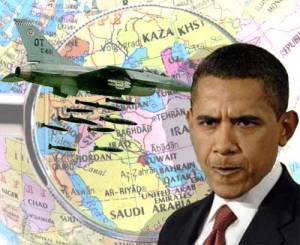 US military personnel are engaged in counterterrorism operations across 15 different countries, President Barack Obama said in a biannual statement to Congress released on Monday.
The letter outlined US military counterrorism operations across the globe in Afghanistan, Iraq, Syria, Turkey, Somalia, Yemen, Djibouti, Libya, Cuba, Niger, Cameroon, the Central African Republic, Egypt, Jordan, and Kosovo. All nations have US combat-equipped personnel deployed for a specific counterterrorism mission.
Obama indicated that that there is no timeline for the war on terrorism, and he will direct “additional measures to protect US citizens and interests” if necessary.
“It is not possible to know at this time the precise scope or the duration of the deployments of US Armed Forces necessary to counter terrorist threats to the United States,” Obama said.
Under the 2001 authorization for use of military force, the US president must update Congress every six months on the military operations against al-Qaeda, the Taliban and associated forces.
US Secretly Training and Funding ‘Elite’ African Commandos
By Sarah Lazare | Common Dreams | May 27, 2014
The Pentagon has been secretly backing a U.S. Special Operations program to build elite units to fight “terrorism” in Libya, Niger, Mauritania and Mali, the New York Times revealed Monday.
The program was launched last year and is backed by millions of dollars in classified Pentagon funds. U.S. military trainers, including members of the Green Berets and Delta Force, are working with African “commandos” to “build homegrown African counterterrorism teams,” according to the Times.
According to the reporting, $70 million in Pentagon funds is going towards “training, intelligence-gathering equipment and other support” for commandos in Nigeria and Mauritania. And $16 million is going towards commandos in Libya. In Mauritnaia, $29 million has been allotted for “logistics and surveillance equipment in support of the specialized unit.” According to the Times, the program in Mali “has yet to get off the ground as a new civilian government recovers from a military coup last year.”
The U.S. military has for years been increasing its role across the continent of Africa, including the expansion of AFRICOM, drone attacks in Somalia, air strikes and arms shipments to Libya, and more.
Featured Video
America Racing to Strategic Defeat in Iran
or go to
Aletho News Archives – Video-Images
From the Archives
Should Europeans ‘Thank’ the Americans for Destroying Nord Stream?
By Robert Bridge | Strategic Culture Foundation | September 29, 2022
With an investigation continuing into the destruction of the Nord Stream gas pipeline that provided energy supplies to Europe from Russia, there appears to be just one prime suspect, and that should surprise nobody.
Following the sabotage of the Nord Stream 1 and 2 gas pipelines, former Polish Foreign Minister Radoslaw Sikorski already seemed to know the identity of the perpetrator when he tweeted out: “Thank you, USA.”
At first glance, it seemed that Sikorski was speaking sarcastically, berating Washington for carrying out an attack that will have severe repercussions for the people of Europe. After all, how could anyone see any good coming from the termination of Europe’s primary source of gas reserves with winter just around the corner? It was Sikorski’s homeland of Poland, after all, that urged its citizens to collect firewood in the face of dwindling gas reserves.
In fact, the Polish diplomat was speaking one-hundred percent literally… continue
Blog Roll
 Aletho News
- No Threat Can Force Iran’s Surrender /Trita Parsi & Lt Cl Daniel Davis
- UK’s New Pandemic Plan Would Turn Big Tech Into a Mass Location Tracking Network
- Growing insecurity, soaring prices fuel protests in north as regime bans evacuation: Sources
- Iran denies responsibility for ‘depraved’ attack on Kuwait desalination plant
- Bring The Troops Back. End This War Now!
- Can we please stop calling Israel the ‘only democracy in the Middle East’ now?
- US should start removing its troops from Germany, proposes AfD co-leader Chrupalla
- Iran Red Crescent: 600 educational centers attacked in US-Israeli ‘war crimes’
- Russian Oil Tanker Arrives in Cuba Amid U.S. Blockade
- America Racing to Strategic Defeat in Iran: Lt Col Daniel Davis
- If Americans Knew
- As Iran targets US military bases, will they be relocated to Israel? Not a ceasefire Day 171
- Will Trump Go Kamikaze?
- Is the University of Florida Shutting Down College Republicans over Israel Criticism?
- Jewish extremist arrested over alleged plot to firebomb Palestinian activist Nerdeen Kiswani’s home
- More than half of Palestinian child detainees have no charges
- The More Murderous Israel Gets, The More We Hear About “Antisemitism”
- Land Day and the Palestinian struggle after 30 months of genocide
- The Iran War Is About Palestine
- Israeli soldiers echo settler ideology, talk of revenge after targeting Palestinians and detaining CNN crew in the West Bank
- Israeli Policies Threaten Future of Christian Schools in Jerusalem
- No Tricks Zone
- New Study Finds Warming Saves Lives…Cold Temperatures 12 Times More Deadly Than Excess Heat
- German Science Blog Accuses PIK Climate Institute Of Hallucinating Climate Tipping Points
- Devastating Assessment Of Comirnaty Vaccine By Former Senior Pfizer Europe Toxicologist
- New Study: CO2 Is ‘Effectively Negligible’ As An Explanatory Climate Change Factor Since 2000
- Former Pfizer Toxicologist Dr. Helmut Sterz Tells Bundestag Hearing Pfizer Vaccine Should Have Never Been Approved
- Energy Expert: Germany’s Nuclear Phaseout Was A “500 Billion Euro Mistake”
- New Research: South Australia’s Mid-Holocene Sea Surface Temperatures Were 4°C Warmer Than Today
- Storing Green Energy To Last Germany 10 Days Would Require A 60-Million Tonne Battery
- New Studies: UK Sea Levels Were 4 Meters Higher Than Today During The Mid-Holocene
- Destructive Green New Deal: German Energy And Metal Group Warns Of Drastic Crisis
 Aletho News