The EU has discredited itself in the Israel-Palestine conflict
By Timur Fomenko | RT | October 20, 2023
European Commission President Ursula von der Leyen’s showboating in support of Israel in the current Middle East conflict has reportedly provoked a backlash from EU lawmakers and diplomats.
When the Israel-Gaza war broke out just over a week ago, von der Leyen made the decision to offer unconditional support to West Jerusalem rather than urge for calm or mediation, having Israel’s flag projected onto the European Commission headquarters and paying a visit to Israel herself. She clearly did so out of an inclination to appear in line with the US. But her actions have aged poorly as reports of civilian deaths and humanitarian disaster in the besieged Gaza Strip continue to mount.
Anyone familiar with von der Leyen knows that she is an unapologetic neoconservative and transatlanticist who is single-handedly undermining the autonomy, respect, and foreign policy stature of the EU by actively working to make the bloc subordinate to the US in multiple areas, all while attempting to showcase herself as a true regional leader. If the EU sees itself in a fundamental competition with China and Russia, there could not be a worse advert to the rest of the world than her leadership, and her Israel blunders may be her most damaging decisions yet.
Von der Leyen’s foreign policy legacy involves dragging the EU into several confrontations it could have done without. This week, she is heading to Washington DC to try to forge a deal on steel and aluminum trade targeted at China, but that will ultimately result in throwing the EU market under the bus, again. Other acts have included backing the American position on Ukraine and striving for full escalation of the war there, promoting energy decoupling with Russia, as well as inventing the term “de-risking” with China and seeking to undermine the bloc’s lucrative relationship with Beijing. Throughout this, she has been repeatedly eager to pull large sums of money out of thin air and propose fantasy projects which amount to little more than posturing, and which her office alone is not even able to authorize.
For example, that includes offering Belarus billions if it goes ahead with a US-backed regime change, or inventing numerous “infrastructure” schemes to compete with China, such as the Global Gateway, among other things. She has thus repeatedly used the stature of her office to follow American objectives and try to shape the continent without establishing any kind of due consensus. Almost immediately after the war in Gaza broke out, the European Commission announced all EU aid to Palestine would be frozen. Regardless of what you think of Hamas, with hindsight that decision now appears spiteful, reactionary and inhumane, which tells you how fast the Commission was to jump to the American position of unconditional support for Israel.
But this time there is a widespread feeling it has gone too far. Rather than allowing Europe to have staked out a moderate position on the Gaza conflict, even if it would not be too sympathetic to Palestine, the decision was essentially outsourced to the US, discrediting the EU and only serving to contribute to the growing backlash starting to emerge among Muslim communities in response to the conflict. For countries such as France, this is disastrous. This hurts the EU’s image across the Islamic world and the Global South by seemingly siding with the oppressors.
Soon enough, a series of embarrassing U-turns followed, including the reinstatement of aid, combined with tweets in Arabic, but the damage had already been done, because Israel has long been given the green light to pursue unparalleled destruction in Gaza, at seemingly whatever the cost. In doing so, von der Leyen has in fact undermined, in yet another way, the bloc’s ability to present itself as a serious and comprehensive political actor. She seems to have no love for the idea that the EU should have strategic autonomy and be capable of calibrating its own interests and place in the world, and would prefer that it instead be a simple parrot of the US.
Of course, if she took into greater consideration the interests and positions of member states it would be less of a problem. But she does not and instead essentially serves as a completely disruptive force, in practice undermining European diplomacy and preventing the EU from building relations with a wide range of states. In the end, this favors only the US.
Israel’s Negev prison new ‘Abu Ghraib’: Official
The Cradle | October 19, 2023
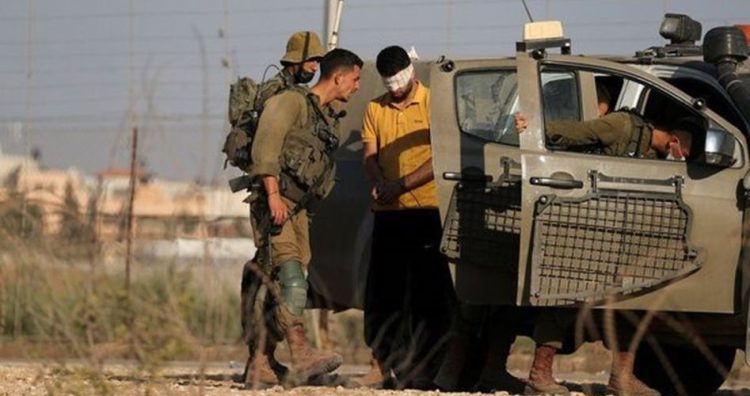
Broken limbs and severe beatings are among the extreme tactics being used by Israeli officials inside the Negev prison on Palestinian detainees since the start of Operation Al-Aqsa Flood on 7 October.
“Many prisoners have had their limbs, legs, and hands broken, and after the beatings, their comrades could no longer recognize them.
The Negev prison has become like Abu Ghraib, a center of brutality and savage treatment towards the heroic prisoners,” reads a statement issued on 19 October by the head of the Palestinian Prisoners and Ex-Prisoners Affairs Commission.
“‘Israel’ is making the Palestinian prisoners pay the price for its failures, acting solely with a spirit of revenge,” Fares adds.
Last week, the Negev prison administration also cut off all water and electricity to all sections of the prison as part of the collective punishment approach by Tel Aviv.
The Israeli prison system is considered excessively brutal for incarcerated Palestinians, especially those convicted for resisting the occupation. Methods used by Israel against prisoners include physical torture, mental abuse, sleep deprivation, and sexual assault.
Additionally, prisoners with severe illnesses are intentionally neglected and left to die, as in the recent case of cancer-stricken resistance fighter Nasser Abu Hamid.
Over 850 Palestinians have been detained in less than two weeks, as Tel Aviv has launched daily arrest campaigns in the occupied West Bank while laying siege on the Gaza Strip’s civilian population.
Since Wednesday night, at least 120 Palestinians have been detained by Israeli troops in the occupied West Bank and East Jerusalem.
According to local sources, in the city of Tulkarem, Israeli raids have been ongoing for over 12 hours. Tel Aviv also deployed bulldozers to destroy the streets and infrastructure of the Nour Shams refugee camp.
Resistance against the Israeli incursions has also been constant, with Palestinian fighters fighting back and destroying Israeli vehicles across the West Bank.
Israeli soldiers and armed settler militias have killed at least 69 Palestinians in the West Bank and Jerusalem since the start of the campaign of genocide unfolding in the Gaza Strip.
New York Attorney General Letitia James Demands Censorship of Speech Regarding Israel-Hamas Conflict
By Cindy Harper | Reclaim The Net | October 19, 2023
New York’s state attorney general, Letitia James, has learned nothing after the state was sued for its “anti- hate” law that was an affront to free speech and the First Amendment.
James is demanding social media companies shed light and provide clarification on their actions regarding “hate speech” and calls for violence posted on their platforms.
James has dispatched letters to a host of tech giants including Google and Meta, along with others such as X, TikTok, Reddit, and neutral video platform Rumble. The letters contain probing questions on their handling of calls for violence that have become rampant across their platforms recently.
We obtained a copy of the letters for you here.
The pro-censorship AG seeks to understand the platforms’ strategy about content moderation policies and how these are applied to mitigate the propagation of alleged hate-filled threats.
James wrote: “In the wake of Hamas’ unspeakable atrocities, social media has been widely used by bad actors to spread horrific material, disseminate threats, and encourage violence. These platforms have a responsibility to keep their users safe and prohibit the spread of violent rhetoric that puts vulnerable groups in danger.”
Analyzing this through a lens of censorship and free speech becomes all the more critical now. This is not merely a question of inflammatory content but also concerns the elasticity of these platforms’ policies, which could potentially threaten the core tenets of free speech.
It forces one to question what might be classified as “hate speech” under these policies and what could potentially be deemed a permissible expression of personal beliefs.
James has called on these companies to explain their tactics for combating such threats and their plans to ensure online platforms are not misused for promoting terror activities, concluding: “I am calling on these companies to explain how they are addressing threats, and how they will ensure that no online platform is used to further terrorist activities.”
FIRE, who is already part of a lawsuit against James for a previous New York censorship law that has been accused of violating the First Amendment, wrote to James and requested that she retract her letter.
FIRE, writing in its capacity as counsel for neutral video platform Rumble, demanded the “immediate and unequivocal retraction of [James’] October 12, 2023 investigation letters to six internet platforms, including Rumble.”
In the letter seen by Reclaim The Net, FIRE’s attorneys say James’ demand letters “violate (1) a federal district court’s injunction against the enforcement of New York General Business Law § 394-ccc (the Online Hate Speech Law); (2) the active stay of all proceedings in that case as to Rumble; and (3) the First Amendment rights of the Investigated Platforms and their users.”
James has until the end of the day today to respond.
West has ‘lost’ Global South over Israel hypocrisy – FT

FILE PHOTO: Destruction in Gaza © Mustafa Hassona / Anadolu via Getty Images
RT | October 19, 2023
Attempts by the US and its allies to “paint Moscow as a global pariah” have been “poisoned” by their rush to support Israeli retaliation against Hamas in Gaza, the Financial Times reported on Wednesday, citing more than a dozen officials.
Western nations have long framed the Ukraine conflict as an act of “unprovoked aggression” and blasted Moscow for the suffering of civilians.
However, the same nations have appeared reluctant to condition their support for Israel on exercising restraint in the wake of the deadly incursion by the Palestinian militant group Hamas, earlier this month. Israel has cut off essential supplies to the enclave and subjected it to intense bombardment.
“We have definitely lost the battle in the Global South,” one senior G7 diplomat was quoted as saying. “All the work we have done with the Global South [over Ukraine] has been lost… Forget about rules, forget about world order. They won’t ever listen to us again.”
“What we said about Ukraine has to apply to Gaza. Otherwise we lose all our credibility,” the official added. “The Brazilians, the South Africans, the Indonesians: why should they ever believe what we say about human rights?”
Meanwhile, an Arab official noted an apparent lack of consistency: “if you describe cutting off water, food and electricity in Ukraine as a war crime, then you should say the same thing about Gaza.”
White House National Security Adviser Jake Sullivan was confronted over the issue on CNN. Host Jack Tapper stressed that “civilians are civilians” regardless of where they reside. The official declined to say whether Washington was putting pressure on Israel to let supplies into Gaza.
According to The Huffington Post, the US State Department last week instructed high-level diplomats working in the Middle East not to use three specific phrases regarding the Israeli-Palestinian conflict: “de-escalation/ceasefire,” “end to violence/bloodshed,” and “restoring calm.”
This week, a Russian-proposed draft resolution denouncing violence against civilians and urging a ceasefire was rejected by the UN Security Council. Another one submitted by Brazil was later vetoed by the US, after 12 members voted for it.
Russia abstained on the second proposal, after its amendment to include a call for a truce was rejected.
“You, colleagues, will certainly come up with some formal justification citing ‘unbalanced language,’ but at this point they would sound pathetic. You have made your choice,” Moscow’s envoy, Vassily Nebenzia, said about the non-inclusion of the wording.
Conscience of humanity shaken by targeting of civilians in Gaza: Pakistani envoy

Press TV | October 18, 2023
The Israeli regime’s “deliberate, indiscriminate and disproportionate” targeting of civilians in the besieged Gaza Strip goes against all norms of civility and violates international law, says Pakistani ambassador to Tehran.
In an interview with the Press TV website on Tuesday, hours before an Israeli air raid on a Gaza hospital killed more than 700 Palestinians, Muhammad Mudassir Tipu said the “conscience of humanity has been shaken” by the unrelenting massacre of Palestinian civilians in the Gaza Strip.
“The conscience of humanity has been shaken by watching innocent civilians, children, older people, pregnant woman being killed; buildings being razed to ground; water and electricity being cut off; massive blockades; and the use of massive ammunition by the Israeli military forces,” he stated.
“That is why people are showing solidarity with the Palestinians, who are symbolizing their struggle for justice, all over the world.”
Demonstrations have been held worldwide in recent days in solidarity with the oppressed people of Palestine amid the new wave of Israeli genocidal bombardment of the besieged coastal strip.
One of the biggest demonstrations was held in Pakistan’s port city of Karachi, where tens of thousands took to the streets following a call given by a local political party with the support of trade unions.
Tipu said the “sense of righteousness is deeply ingrained in the minds” of the people in Pakistan.
“We stand for those principles that are morally justified and right rather than the ones propagated for political and hegemonic ambitions. Pakistanis also believe in the equal application of international law and norms rather than using one set of laws for one country and another set of laws for another country,” he remarked in a conversation with the Press TV website.
“We can’t have double standards and false moral equivalences to justify unjustifiable and illegitimate positions,” the Pakistani envoy hastened to add.
The death toll in the Israeli aerial bombardment in the Gaza Strip has risen to 3,000, including at least 700 children, with tens of thousands of others displaced after the Israeli evacuation orders.
The Pakistani ambassador said massive pro-Palestine demonstrations must be seen in the context of years of forced and illegal occupation of Palestinian territory and repressive policies against its people.
“Our cause resonates with the cause of the hapless Palestinians who are facing unspeakable brutality and massive use of force on the civilians as well as an overwhelming use of military might over its innocent people,” he asserted.
Tipu also “appreciated” the role of the Iranian leadership in “standing up for the oppressed people of Palestine and making resolute efforts to halt and reverse the conflict in Gaza consistent with international norms.”
“The great Iranian leadership has also unambiguously urged for a just resolution of this historic injustice,” he remarked, adding that the foreign ministers of Pakistan and Iran had a phone conversation on Monday in which they “discussed this grave situation” in Palestine.
On Pakistan’s interim Prime Minister Anwaar ul Haq Kakar’s statement on Saturday that the Israeli aggression in the Gaza strip should be seen in the context of years of illegal Israeli occupation, the Pakistani envoy said he “clearly and unambiguously outlined Pakistan’s position on this crisis.”
He also dismissed any speculation about Pakistan mulling normalization with the Israeli regime.
“Pakistan’s Foreign Minister, Mr. Jalil Abbas Jilani has categorically articulated that “there is absolutely no move to recognize Israel. Our position is very clear. We take decisions based on our interests and the interests of the Palestinians,” he told the Press TV website.
“I must emphasize that Pakistan is a sovereign country, with enormous capabilities, and would always take decisions of vital importance independently.”
He hastened to note that Islamabad “wishes to seek a just resolution” of the issue of Palestine so that “regional peace, development, and growth can take place and a sense of equity and justice prevails.”
Biden whitewashes Israel’s slaughter of Gazans during Netanyahu meeting

(Photo Credit: REUTERS/Evelyn Hockstein)
The Cradle | October 18, 2023
US President Joe Biden landed in Israel on the morning of 18 October and held talks with Prime Minister Benjamin Netanyahu just hours after the Israeli army massacred hundreds of civilians in Gaza during an airstrike on the Al-Ahli Arab Hospital.
“I was deeply saddened and outraged by the explosion at the hospital in Gaza yesterday. Based on what I’ve seen, it appears it was done by the other team, and not you,” Biden told Netanyahu, promoting the Israeli narrative that the hospital was demolished by an “errant rocket strike” from a resistance faction.
Biden did not provide any evidence to support his assessment and followed up his comment: “There are a lot of people out there who are not sure.”
“Israel has a value set like the United States does and other democracies, and they’re looking to see what we’re going to do. I am looking forward to having a thorough discussion about where everyone goes from here,” the US president added.
For his part, Netanyahu said the “civilized world must unite to defeat Hamas.” The forces of civilization will prevail for our sake, for your sake…and for the sake of peace and security,” he added.
The two western leaders did not answer any questions from the press. Biden is set to meet with the Israeli war cabinet to “seek a sense of Israel’s plans and objectives in the days and weeks ahead,” a White House official highlighted on Tuesday.
The US president also expected to meet with the Jordanian, Egyptian, and Palestinian heads of state in Amman, but Jordan canceled the summit at the last minute following the massacre committed at Al-Ahli Arab Hospital.
“There is no point in doing anything at this time other than stopping this war. There is no benefit to anyone in holding a summit at this time,” Jordanian Foreign Minister Ayman Safadi said.
“This was the most advertised crime in history. It was a massacre by appointment. The Israeli government has been openly saying it was going to target hospitals for the last week, and the world just stood by and did nothing,” Palestinian surgeon Ghassan Abu Sitta, who was working in Al-Ahli Arab Hospital when Israel attacked it, told Al Jazeera.
Palestinian media reported that the hospital housed over a thousand people. The Palestine Red Crescent Society said women, children, medical staff, and “internally displaced people seeking safe shelter” were all killed during the attack.
At least 500 bodies have been identified so far, all of them civilians.
As Biden throws his full support behind Israel, the death toll in Gaza has surpassed 3,300. The besieged enclave has also lost all access to drinking water, food, fuel, and electricity as Israel is blocking humanitarian aid deliveries.
His first trip to Israel this year comes as the Pentagon has deployed multiple warships and thousands of troops to Israeli waters in anticipation of a regional war. Resistance factions in the region called for a “day of rage” against the US and Israel on Wednesday.
Who’s to blame for the massacre at Gaza’s Baptist Hospital?
MEMO | October 18, 2023
Since Al-Ahli Baptist Church was struck yesterday evening and over 500 people were killed, social media has been abuzz with claims of who carried out this war crime. For Palestinians and reporters with knowledge of Israel’s rules of law – or lack there of – the answer was obvious; Israel hit the hospital. While officials in Tel Aviv first acknowledged the strike as an Israeli attack, they then backtracked and blamed the Palestinian resistance. However reporters covering the ongoing assault on Gaza and the resistance’s rocket fire into Israel have made it clear; the resistance’s rockets cause damage, they have been known to kill people, but they are not powerful enough to cause the amount of death and destruction caused by this one strike.
Looking through social media after the strike, a number of facts were clear to see. If Israel didn’t bomb the Gaza Baptist Hospital, why did the occupation army warn the Gaza Baptist Hospital to evacuate the premises before the bombing occurred?

Israel claims it didn’t hit the hospital, claiming a rocket being shot by Islamic Jihad misfired and caused the damage. To “prove” this, occupation forces have used a video which aired an hour before the strike – at 18:59 local time – when the strike took place around 19:50.

Israel’s newly appointed Digital Spokesperson Hananya Naftali then admitted that occupation forces bombed the Al-Ahli Baptist Hospital. The post has since been deleted.

Israel also deleted a video posted as “evidence” that the Palestinian resistance struck the hospital.

Meanwhile, the Western media prepared the world for the strike. With the BBC posting a question ‘Does Hamas build tunnels under hospitals and schools?’ a day earlier, in a manner that almost justifies Israel’s targeting of innocent civilians receiving treatment.
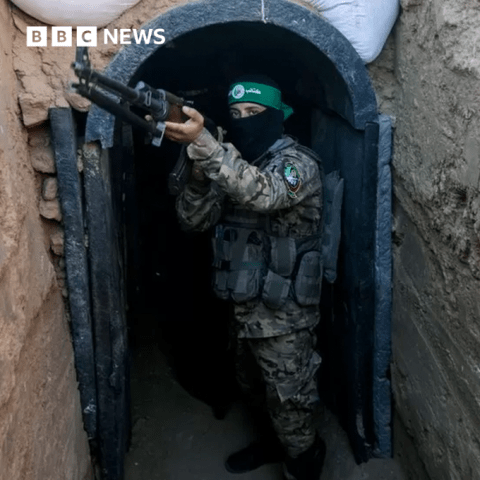
While the reporting of events following the massacre simply claimed that an “Israeli air strike killed hundreds of people at a Gaza hospital”, without condemnation of the obvious violations of international law and the possible war crimes once again committed by the occupation and it’s forces.

Featured Video
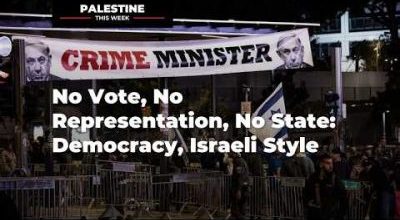
No Vote, No Representation, No State: Democracy, Israeli Style
or go to
Aletho News Archives – Video-Images
From the Archives
Sanctions, War and the Policy of Dual Containment
By SASAN FAYAZMANESH | March 17, 2008
It is now nearly three decades since the Unites States adopted the policy of dual containment of Iran and Iraq. While much has been written about the containment of Iraq, there has been very little in-depth analysis of this policy when it comes to Iran. In a book that is going to be released on March 31, 2008, entitled The United States and Iran: Sanctions, Wars and the Policy of Dual Containment (Routledge), I attempt to address this shortcoming by investigating when and why the US policy of containment of Iran came about, how it evolved, and where it stands today.[1] To the extent that Israel has been involved in US policy making, the study will also include the role that Israel has played in the containment of Iran. Also, since the fate of Iran has been inextricably linked to that of Iraq, occasionally the investigation will overlap with the containment of Iraq.
The policy of dual containment of Iran and Iraq originated during the Carter Administration, but it was not until the Clinton Administration that the expression “dual containment” became popular. … continue
Blog Roll
 Aletho News
- No Vote, No Representation, No State: Democracy, Israeli Style
- Zionist Bought Senate Blocks Information About American Citizens Killed By Israel
- While Gaza dominates the UN, these are the people keeping it alive
- New Report: “Scholasticide and Genocide in Gaza: Assessment, Testimonies and Legal Analysis”
- ‘THAAD Delusion’: Iran war exposes US missile shield limits – The Atlantic
- Moscow issues warning to NATO over Russian exclave
- Yes, the Iran war has destroyed Trump’s presidency
- The fallacy of US delusions about Iran’s economic collapse
- Hezbollah denies Syria cell link, warns of Israeli plan to sow discord
- The legacy of US sanctions, war, and occupation in Iraq
- If Americans Knew
- Mamdani releases plan to combat antisemitism and hate crimes in New York City
- Iran’s Revolutionary Guards Publish Letter to the American People
- DMFI launches $1 million ad campaign supporting Virginia’s Elaine Luria
- US Senate blocks resolution seeking report on Americans killed by Israel
- Israeli Attacks Kill Ten Palestinians in Gaza
- Massacre at Minab: The School That Became a Grave
- Israeli media: The IDF Shows It Doesn’t Turn a Blind Eye; It Actively Emboldens Settler Havoc
- As settlers ravage West Bank, Israeli forces kill 10 in Gaza – Daily Update
- New Report: “Scholasticide and Genocide in Gaza: Assessment, Testimonies and Legal Analysis”
- Ex-Biden officials are desperate for a Gaza scapegoat
- No Tricks Zone
- Green Energy Debacle: German Expert Professor Fritz Vahrenholt Warns Of Severe Economic And Social Consequences
- Two More Paleo Reconstructions Affirm Meters-Higher Sea Levels Across Ireland, Brazil 7000-6000 Years Ago
- New Study: Earth And Venus Surface Warmth Largely Explained By Convection And Lapse Rate, Not CO2 Or Radiation
- 2025 Nature Paper Claiming Worsening Global Drought Gets RETRACTED …Heavily Flawed
- New Study: ‘Global Drought Shows No Detectable Recent Acceleration Under Climate Warming’
- Economic Masterminds: German Socialists Suggest Taxing Productivity Gains Stemming From Using AI
- The South China Sea Has Not Been Cooperating With The Climate Change Narrative
- Energy Crisis: Germany Enters Heating Season With Historically Low Gas Reserve Fill Levels
- New Study: The Antarctic Ice Sheet Gained Mass From 2020-2024 Due To Staggering Snow And Ice Accumulation
- Study: Ocean Heating Rates From Thousands Of Years Ago ‘Dwarf’ Modern Ocean Heating Rates

