Israeli settlers captured as Hamas and PIJ fighters overrun the Israeli army near the Gaza border
The Cradle | October 7, 2023
Palestinian resistance factions from the Gaza Strip have taken control of over a dozen illegal settlements in southern Israel as part of ‘Operation Al-Aqsa Floods,’ which has been raging since the early hours of 7 October.
Fighters from Hamas and the Palestinian Islamic Jihad (PIJ) say they hold at least 50 prisoners of war (POW) after overrunning many Israeli checkpoints and neighborhoods. Israeli media says the death toll from the operation has reached 100, with close 1,000 injured.
In describing the operation, Hamas deputy chief Saleh al-Arouri told Al Jazeera: “We managed to kill and capture many Israeli soldiers. The fighting is still on. As to our prisoners, I say, your freedom is looming large. What we have in hand will see you set free. The longer fighting continues, the higher the number of prisoners will become.”
Footage across social media has shown the extent of the resistance’s advance, as Israeli soldiers lay dead in many streets while settlers had to run for their lives or surrender to the armed groups.
https://twitter.com/TheCradleMedia/status/1710605327501017461
Among those captured is Israeli General Nimrod Aloni, the commander of the Depth Corps, a unit that coordinates the army’s long-range operations “deep in enemy territory.”
The spokesman for Hamas’ armed wing, Abu Hamza, confirmed that fighters from the Al-Quds Brigades and the Al-Qassam Brigades were at the front of today’s incursion, saying that the Gaza resistance recorded “a new chapter of victory” and “broke the prestige of the enemy entity,” with “a resounding historical shock.”
“Al-Aqsa Flood [revealed Israel] as an illusion made of dust and capable of being defeated and broken.”
In response, Tel Aviv has been conducting air raids inside the Gaza Strip, a coastal area considered the world’s largest open-air prison, leaving over 200 Palestinians dead and 1,600 injured. Survivors of the onslaught say they are “bracing” for the continued Israeli response as Hamas declared, “We are ready for an [Israeli] land invasion.”
Saturday’s operation caught the world by surprise, with even former Israeli security officials calling it a “colossal failure” of the intelligence apparatus, which failed to detect the launch of about 7,000 rockets from Gaza.
“All of Israel is asking itself: Where is the [army], where is the police, where is the security?” the former head of the Israeli Navy said during a TV interview. “It’s a colossal failure; the hierarchies have simply failed, with vast consequences.”
In response to the crisis, Israeli Prime Minister Benjamin Netanyahu declared his country at “war” to the support of his western allies. However, the offensive may throw a wrench at ongoing normalization talks with Saudi Arabia.
In a statement, kingdom officials said: “[Saudi Arabia] repeatedly warned of the consequences of [the deterioration] of the situation as a result of the occupation as well as of depriving the Palestinian people of their legitimate rights and [not halting] systematic provocations against their holy [sites].”
The UAE, which normalized ties with Israel in 2020, issued a statement “[expressing] its deep concern over the escalation of violence between Israelis and Palestinians,” also calling “for an immediate cessation of the escalation and protection of the lives of civilians.”
Support for the operation has poured in from the regional resistance, with Hezbollah Secretary General Hassan Nasrallah calling it a “triumphant operation [and] a decisive response to the ongoing crimes of the occupation.”
Nasrallah also said the Lebanese resistance is “closely following the significant developments [in Palestine]” and “looking at the field conditions with utmost interest.”
Similarly, Yemen’s Ansarallah said that “[Operation Al-Aqsa Flood] revealed the weakness, fragility, and impotence of the temporary zionist entity and showed the world the strength and effectiveness of the resistance in Palestine and its ability to strike the ‘Israeli’ depths, storm the settlements, kill the zionists, and capture their soldiers.”
For Israel, support has poured in from the west, with French President Emmanuel Macron saying via statement, “France stands in solidarity with Israel and the Israelis, committed to their security and their right to defend themselves.”
The White House issued a similar statement, describing Saturday’s resistance operation as “appalling terrorist attacks.”
Palestine: The Resistance Rises toward Revolution, Return and Liberation
Samidoun Palestinian Prisoner Solidarity Network | October 7, 2023
As the morning dawns on 7 October 2023, the resistance is rising throughout occupied Palestine, smashing the siege on Gaza with a comprehensive offensive confronting the occupier by land and air, taking control of Palestinian land, seizing occupation settlers and soldiers and launching thousands of missiles as Palestinian resistance forces fight to advance return and the liberation of Palestine.
The new resistance operation, titled the Al-Aqsa Flood by Mohammed Deif, commander in chief of the Izz el-Din al-Qassam Brigades, the military wing of Hamas, comes on the 50th anniversary of the 1973 war in which Egypt reclaimed the occupied Sinai from Zionist occupation, and is set to alter the direction of the struggle in occupied Palestine, moving from resistance toward revolution and liberation.
The resistance operation comes in response to the ongoing stream of crimes against the Palestinian people, the daily murder of Palestinians on the streets of the West Bank of occupied Palestine, the siege on Gaza, the theft of land for settlements, the denial of refugees’ right to return, imposing exile for over 75 years, the torture and attacks on the Palestinian prisoners, the ongoing invasions of Al-Aqsa Mosque, and the 75 years of Zionist occupation and over 100 years of imperialist domination and colonialism throughout occupied Palestine.
It also comes to bring about the liberation of Palestinian prisoners, as part and parcel of the Palestinian people and land. The occupation has repeatedly dragged its feet in conducting a prisoner exchange with the resistance, and now the resistance has announced that it has taken a significant number of prisoners from among the occupation soldiers and settlers in order to liberate the 5,250 Palestinian prisoners in occupation prions, including the 1350 jailed without charge or trial under administrative detention, 39 women and 170 children. The resistance is taking new steps to liberate Palestinian land, to confront the settlement project and to liberate the prisoners from a position of power.
News is developing rapidly; however it is clear that the Palestinian resistance is determined to reset the status quo in the region and uncover the reality that the Zionist regime can no longer rely on its technological strength and imperialist weaponry to impose its domination on the Palestinian people. In particular, coming as it does on the 50th anniversary of the 1973 war, it is a decisive rebuke to the entire path of Oslo and normalization imposed upon the Palestinian and Arab people for the past 50 years, indicating a new path forward with a clear goal: liberation, and nothing less. It builds upon the liberation of south Lebanon from occupation by the Lebanese resistance, led by Hezbollah, in 2000, and the defeat of the Zionist invasion of Lebanon in 2006, as well as the successive heroic battles waged by the Palestinian resistance throughout occupied Palestine and especially from its base area of resistance land in Gaza.
In his statement announcing the operation, Deif said: “Starting from today, security coordination ends. Today, the people reclaim their revolution, correct their path, and return to the march of return.” He called upon all to participate in the resistance, and specifically to all the forces of resistance in the region, in Lebanon, Syria, Iran and Yemen, and all of the Arab peoples from the Gulf to the ocean, to join in this battle, which is their battle for freedom, dignity and liberation, declaring, “it is time for the forces of Arab resistance to unite.”
Samidoun joins the Masar Badil, the Palestinian Alternative Revolutionary Path Movement, in calling “the masses of our Palestinian people, supporters of the resistance in exile and diaspora, allies from the liberation forces and movements, and solidarity committees with the Palestinian people everywhere, to express their support for the heroic Palestinian resistance, raise the flag of Palestine and the banners of resistance, and organize popular, political and media demonstrations and events to expose the Zionist crimes against our people in occupied Palestine…. The heroic Palestinian resistance has opened a chapter of battles of dignity and pride at the dawn of October 7, 2023, and it is now responding to decades of continuous and repeated Zionist, American and European aggression against the masses of our Arab and Islamic nation from the ocean to the Gulf, and in the face of the wars of starvation and siege that the United States and its agents have engineered against our peoples in the region, especially in Syria, Lebanon, Yemen and Iran.”
As the Palestinian resistance confronts occupation forces, it is critical that internationalists everywhere speak out, mobilize and act to confront the U.S.-led imperialist system, including the EU states, Britain and all complicit powers to end their ongoing crimes against the Palestinian people, and to defend the resistance. These crimes are reflected not only in the Balfour Declaration and the $3.8 billion in U.S. military aid to the occupation regime annually, but in the racist assaults on the Palestinian people in exile and diaspora throughout Europe, and especially in Germany, for speaking out and organizing to take up their role in the cause, for their return to Palestine and the liberation of their land.
Imperialism is the primary enemy of the Palestinian cause, creating the Zionist project and arming it to the teeth as a mechanism of attack against the Arab and Iranian peoples, alongside Zionism, the “Israeli” occupation regime and reactionary, complicit Arab forces.
Today, the resistance is making clear that despite the weaponry and brutality of the occupier, the promise of liberation is closer than ever before.
From the river to the sea, Palestine will be free.
Dozens of Israeli jets strike Gaza
RT | October 7, 2023
Dozens of Israeli jets have struck Hamas targets in Gaza, the Israel Defense Forces (IDF) have said. The airstrikes were launched in response to a surprise attack unleashed by the Palestinian armed group against Israel on Saturday morning.
IDF spokesman Rear Admiral Daniel Hagari said “Hamas terrorists” had infiltrated the Israeli territory from land, sea and air.
More than 2,200 rockets have been fired from Gaza, according to the spokesman. Hamas claimed that it used more than 5,000 projectiles in just the first 20 minutes of its attack.
Rocket sirens have been heard in many places across Israel, including Jerusalem, Tel Aviv, Beersheba, and Ashkelon.
There were at least seven instances of fighting between IDF troops and Hamas militants, Hagari said.
According to the Times of Israel newspaper, gun battles have been underway in and around the towns of Kfar Aza, Sderot, Sufa, Nahal Oz, Magen, Be’eri, and the IDF’s Re’im military base.
In an earlier statement, the IDF said it had declared “a state of readiness for war” due to the attack. “Hamas terror organization will pay a very heavy price,” it warned.
Israeli Defense Minister Yoav Gallant said he had approved a call-up of reservists in response to the actions by Hamas.
At least six people are believed to have been killed in Israel on Saturday. Four died in missile strikes in the town of Kuseife and one in the Gderot area.
The head of Sha’ar HaNegev town Ofir Liebstein was also shot dead in a gunfight with Hamas militants. “Ofir was killed when he went to defend a town during the terrorist attack,” the local administration said.
Information coming from medical institutions across Israel suggests that more than 200 people were wounded, including many in serious condition.
Some videos uploaded online during the day purportedly show a number of IDF troops being killed and captured by Hamas fighters. There’s also social media footage and photos of what appears to be a burning Israeli tank and Palestinians celebrating the seizure of a US-made Humvee military vehicle from the IDF. The videos have yet to be verified.
Glorifying hate, the Golda movie shows that Zionism remains unrepentant
By Ramzy Baroud | MEMO | October 4, 2023
What is ‘Firing Zone 918’ and how Israel uses it to grab more Palestinian land
By Dr Mustafa Fetouri | MEMO | October 5, 2023
Israeli forces target vehicle of two Palestinian youths, kill them near West Bank city of Tulkarm

Press TV – October 5, 2023
Israeli forces have opened fire on a vehicle near the occupied West Bank city of Tulkarm, killing two Palestinian youths.
The victims, identified as Hudhayfah Fares and Abd al-Rahman Atta, were shot dead after Israeli troops targeted their car near the village of Shufah, south of Tulkarm in the northwestern part of West Bank, on Thursday.
The Palestinian Health Ministry confirmed the death of Atta, 23, and Fares, 27, saying they were killed during confrontations with the occupying regime’s forces, Palestine’s official Wafa news agency reported.
The two slain Palestinians were from the Tulkarm camp and lived in the suburb of Dhanaba, east of the city.
Violent clashes erupted in the Tulkarm refugee camp after Israeli forces invaded it, and fired live rounds, stun grenades and teargas canisters towards Palestinians.
Medical sources also reported that two people were wounded by Israeli bullets, one in the shoulder and the other in the abdomen, adding that their condition is stable.
Over the past months, Israel has ramped up attacks on Palestinian towns and cities throughout the occupied territories. As a result of these attacks, dozens of Palestinians have lost their lives and many others have been arrested.
More than 200 Palestinians have been killed this year in the occupied Palestinian territories and Gaza. The majority of these fatalities have been recorded in the West Bank.
Those figures indicate that 2023 is already the deadliest year for Palestinians in the West Bank since the United Nations began keeping track of fatalities in 2005.
Previously, 2022 had been the deadliest year with 150 Palestinians killed, of whom 33 were minors, according to the United Nations.
Hollywood director latest sexual predator to find refuge in Israel

MEMO | October 4, 2023
Disgraced Hollywood director Brett Ratner, who stands accused by multiple women of rape and sexual harassment, revealed last week he relocated to Israel just days after being a special guest of Prime Minister Benjamin Netanyahu at the UN General Assembly in New York.
Ratner has followed in the footsteps of other sexual predators who have fled to Israel in recent years, including another Hollywood director, Bryan Singer, who moved to Israel several years ago after being accused of rape and sexual assault of several minors.
Thanks to lax extradition laws and the so-called “law of return” known as ‘Aliyah’ – which grants citizenship to Jews across the world based on ancestral claims that are two millennia old – Israel has become a sanctuary for Jewish sexual predators as well as countless fraudsters, money launderers, and war criminals.
According to Jewish Community Watch, an organization that tracks accused pedophiles, over 60 US citizens accused of pedophilia have successfully fled to Israel in the past few years.
However, in an interview with Hareetz last year, the head of Magen for Jewish Communities, an Israeli NGO that tracks sexual predators, revealed that “there are about 100 rabbis, teachers, and other figures who have been accused, charged or convicted of sexual abuse overseas and subsequently found refuge in Israel.”
Awareness of Israel’s safe haven status for sex offenders received a boost in recent years due to the case of Israeli-Australian citizen Malka Leifer, the headmistress of an ultra-Orthodox girls’ school in Australia, who fled to Israel in 2008 after allegations surfaced of her sexually abusing female students.
She was finally extradited in 2021 and faces trial in Victoria on 70 charges of child sex abuse.
Another predator who fled to Israel and is finally facing extradition is Mexican diplomat Andres Roemer, who stands accused of rape and sexual harassment by over 60 women. After more than two years of dragging their feet, Israeli authorities arrested Roemer on Monday.
Despite the serious accusations against him, Roemer even had a street named after him in the city of Ramat Gan.
But while Roemer is finally expected to face justice, Mexico is still seeking the extradition of the former head of the criminal investigation agency, Tomas Zeron, who is wanted in connection to the disappearance of 43 students in southwestern Mexico in 2014.
Zeron is also accused of embezzling over $50 million and torturing suspects.
Despite being wanted by Interpol, Zeron has been living in an upscale apartment building in Tel Aviv since late 2019 due to his ties to the Israeli tech sector, including embattled firm NSO Group — makers of the Pegasus spyware.
Furthermore, western media reports revealed earlier this year that Israeli authorities are “unlikely” to extradite Zeron as “payback” for Mexico’s support of the Palestinian cause and their approval of UN inquiries into Israeli war crimes against Palestinians.
Israeli forces injure Palestinian school children in West Bank raid

Press TV | October 2, 2023
The Palestinian Ministry of Education has suspended classes in the village of Burqa due to the injury of a child in a raid by Israeli forces into a school.
Ghassan Daghlas, acting governor of the occupied West Bank city of Nablus, said on Monday the decision to close the school was to maintain the safety of students.
Local media reported that Israeli forces also directly fired stun grenades and tear gas canisters toward the Palestinian students inside the school during the raid a day earlier. Dozens of children also suffered from smoke inhalation.
Israeli forces also denied teachers of 27 schools access to classes in Masafer Yatta area, located south of the city of al-Khalil (Hebron). The regime forces placed barriers to block the roads leading to the education centers.
In recent months, Israeli forces have also demolished a number of schools across the occupied Palestinian territories.
The Palestinian Ministry of Education in an earlier statement said the demolition of schools was “a heinous crime.”
“These practices have become a flagrant violation of students’ right to safe and free education.”
Ambassador of Israeli Crimes: This is How Gilad Erdan Become a Defender of Women’s Rights in Iran
By Ramzy Baroud | MEMO | October 1, 2023
Israeli forces assault Palestinian journalists, worshippers in Jerusalem

MEMO | October 1, 2023
Hundreds of Israeli settlers on Sunday forced their way into the flashpoint Al-Aqsa Mosque complex in occupied East Jerusalem to celebrate the Jewish holiday of Sukkot.
Sukkot is a week-long holiday, which started Sept. 29 and continues until Oct. 6, ending a season of Jewish holidays that started by observing the Rosh Hashanah (New Year) holiday on Sept.15.
In a statement, the Jordan-run Islamic Waqf Department said Israeli forces closed the Al-Mughrabi Gate, southwest of the Al-Aqsa Mosque, “after allowing 602 Jewish extremists” into the site.
According to witnesses, Israeli settlers entered the site in groups.
The Palestinian Jerusalem Governorate published a video on its Facebook account of Jewish settlers trying to enter animal sacrifices inside the complex.
Israeli police began allowing the settler incursions into the Al-Aqsa Mosque complex in 2003, despite repeated condemnations from Palestinians.
Al-Aqsa Mosque is the world’s third-holiest site for Muslims. Jews call the area the “Temple Mount,” claiming it was the site of two Jewish temples in ancient times.
Israel occupied East Jerusalem, where Al-Aqsa is located, during the 1967 Arab-Israeli War. It annexed the entire city in 1980, a move never recognized by the international community.
Who Owns the United States?
BY PHILIP GIRALDI • UNZ REVIEW • SEPTEMBER 26, 2023
The recent sparring between Elon Musk and the despicable Jonathan Greenblatt of the Anti-Defamation League (ADL) has cast considerable light on the successful attempts by Jewish groups to dominate America’s foreign as well as some domestic policies, in part by taking away the First Amendment right to Freedom of Speech so their behavior cannot be challenged. As readers of Unz will be aware, Musk has threatened to sue the ADL for as much as $22 billion for defaming him and doing material damage to his business interests while also falsely smearing Musk himself and the platform for allegedly providing an antisemitic haven for “hate speech.” In Musk’s view, the ADL has put pressure on potential advertisers not to do business with him and to engage in a total boycott of his social networking sites.
Greenblatt’s argument is that material that he considers to be anti-semitic should not be allowed on any public forum, to include Musk’s site X, formerly known as Twitter. If Greenblatt were concerned with public incitements to kill Jews or damage their property there might be a case to be made, but the fact is that such behavior is already criminalized. Greenblatt is much more expansive than that, condemning any criticism of Jewish group or even individual behavior or the actions of Israel, which have included various war crimes and crimes against humanity to include targeting and killing Palestinian children and harvesting the organs of Palestinian prisoners. Israel is also a nation that is increasingly ethnically exclusive and has a state religion that is intolerant and repressive of other creeds, to include minority Christians and Muslims.
Beyond Musk, Greenblatt and the ADL have also focused on Tucker Carlson given his high profile and popularity among conservatives. Greenblatt repeatedly demanded that Fox News fire Tucker for discussing the “great replacement” theory as well as other white-nationalist talking points. Greenblatt has denounced Carlston’s alleged willingness “To use his platform as a megaphone to spread the toxic, antisemitic, and xenophobic ‘great replacement theory’ is a repugnant and dangerous abuse of his platform.” He called on advertisers to stop supporting the Carlson program and Fox with their dollars and was delighted when Carlson was finally fired in April. Many believe that the firing was in large part due to pressure from ADL and other Jewish groups.
In other words, in the America envisioned by Greenblatt and his friends who are pressuring advertisers not to support sites like X and passing laws penalizing or even criminalizing anyone who seeks to boycott Israel over its behavior, it will be more-or-less possible to speak freely on any subject as long as it does not involve Jews. That suggests an assumption by ADL that Jews have special status not enjoyed by anyone else. As a result Jews have been able to exploit their alleged singular and perpetual victimhood to assume de facto control over media sources of information as well as both major political parties using that old tried and true mechanism, money, and lots of it. It is a subject that in itself will not be open to discussion and which Greenblatt dismisses as an anti-semitic trope amounting to “hate speech.”
Interestingly enough, the wrath of Greenblatt is apparently not shared by Israeli Prime Minister Benjamin Netanyahu, who is regarded as no shrinking violet when it comes to promoting his country’s interests, as he sees them, and the dominance of Jewry worldwide. Netanyahu was in the United States last week for the annual meeting of the United Nations General Assembly but he made time to fly to California to visit Musk’s Tesla car assembly plant. The two men sat down to have a public chat in front of news cameras and, while it was clear that they were being polite and non-combative, it was also true that Netanyahu was careful not to accuse Musk of being an anti-semite or anything like that.
Netanyahu, who may have a better understanding than does Greenblatt of which way the wind is blowing regarding his country and Jewish power in general, might be playing a clever game in which he avoids a hard edged and dangerous Greenblatt approach while proceeding quietly with the ethnic cleansing of the Palestinians and aggrandizing himself in power through his attack on the country’s courts. Netanyahu clearly understands that Israel has crossed the apartheid threshold vis-à-vis Palestine and its neighbors and that most of the world despises his country, to include many Americans who are beginning to see the light that they have been used and abused for the past 75 years. He has chosen to ignore the critics as the wisest path, in which he may be correct.
How have Jews in America and Canada as well as in Europe and Australasia become so politically powerful? Now that Musk has opened the door to discussing the Jewish issue with some candor, a number of articles and discussions have begun to appear in the media and some universities have even developed enough of a spine to start teaching true narratives on the Middle East supported by books that groups like ADL are seeking to ban. The most powerful piece to appear recently was on Mondoweiss, entitled “Biden’s Israel Policy is Scripted by Saban.”
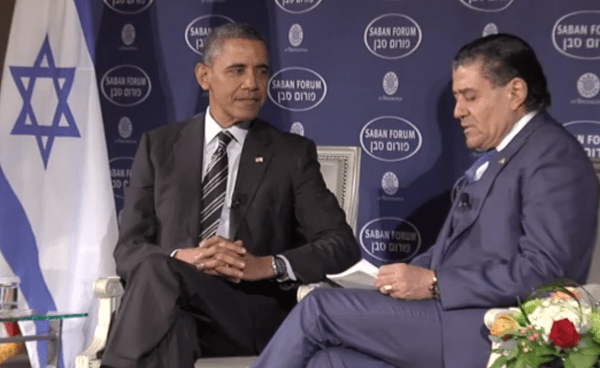
Mondoweiss’s title refers to Israeli-American Hollywood-based media producer Haim Saban, who sums up his political philosophy with a pithy “I’m a one issue guy and my issue is Israel!” Saban has been the largest individual donor to the Democratic Party since the Clintons and his power has resulted in unswerving fealty to US interests as perceived through the optic of its relationship with the Jewish state. He is similar to megadonor Sheldon Adelson, now deceased, who performed the same service with the Republican Party. Sheldon’s wife Miriam, an Israeli, has maintained the legacy of keeping the GOP in line through control of political donations. The Adelsons were reportedly responsible for Donald Trump’s move of the US Embassy in Israel from Tel Aviv to Jerusalem and other concessions re the Palestinians, Iranians and Syrians. The withdrawal of the US from the Joint Comprehensive Plan of Action (JCPOA) was due to pressure from the Adelsons, a move that was contrary to the actual US interest to monitor Iranian nuclear developments. Sheldon’s only failure was failing to convince Trump to bomb Iran.
Saban, who recently spent three hours in the Oval Office advising Joe Biden, is most clearly seen through his own comments on the relationship between the US and Israel. Hint: Israel’s interests always come first! For example, he shrugged off criticism of his giving money to AIPAC, “which supports Republican election deniers, because his one issue is Israel” saying in an interview: “The only goal of this organization is to prevent people who are against US-Israel relations from advancing and to support those who support relations between Jerusalem and Washington… Many Democrats called me and said ‘are you stupid? you’re a Democrat who supports [2020 election deniers]?’ I always say the same thing: It’s a specific, defined issue, and that is the US-Israel relationship. In that sense, I’m not interested in anything else.”
Re the Democratic Party leadership and Joe Biden, Saban observed that the party is “still solidly pro-Israel, and there are only about a dozen members of Congress who are anti-Israel.” Saban funded Hillary Clinton in 2008 but responded angrily when Obama “refused to echo Hillary Clinton’s call to ‘obliterate’ Iran if Iran attacked Israel.” Saban did not trust Obama on the issue of Israel and was initially rebuffed when he tried to arrange a meeting in 2010. He told a journalist that “I had a list of questions… And Chicago’—Obama campaign headquarters—‘could not organize that meeting. … I was ready and willing to be helpful, but ‘helpful’ is not to write a check for two thousand three hundred dollars. It’s to raise millions, which I am fully capable of doing.” Obama eventually came to respect Saban’s millions. “By 2013, President Obama was the speaker at a fundraiser at the Sabans’ house in L.A. attended by 120 people who paid between $16,200 and $32,400 each to attend.”
The result of the largesse is that Biden’s policy on the Middle East is now being scripted by Haim Saban, whose millions he requires for the upcoming 2024 campaign. It is as simple as that, appreciating that donation of cash in hand is better than platitudes about suffering Palestinians. That is what constitutes “truth” for both major political parties, who are de facto owned by the Adelsons and the Sabans who will always place Israel first. That Saban and Adelson (who is buried in Jerusalem) were and are both Israeli citizens and have been allowed to wield such power on behalf of a foreign country with which the US shares almost nothing in the way of actual values is shameful and it is also technically illegal or possibly even treasonous as they are acting as Foreign Agents. And it is more than that morally speaking – it is a disgrace. Joe Biden in particular should be ashamed of his folding when confronted by Jewish money as he is in charge, but it is apparently not an emotion that he is familiar with.
Philip M. Giraldi, Ph.D., is Executive Director of the Council for the National Interest, a 501(c)3 tax deductible educational foundation (Federal ID Number #52-1739023) that seeks a more interests-based U.S. foreign policy in the Middle East. Website is councilforthenationalinterest.org, address is P.O. Box 2157, Purcellville VA 20134 and its email is inform@cnionline.org.
Raeisi: 60% uranium enrichment came after Europeans ‘trampled on JCPOA commitments’
Press TV – September 24, 2023
President Ebrahim Raeisi says Iran’s uranium enrichment to the purity level of 60% was in response to the lack of commitment by the European parties to the 2015 nuclear agreement.
Raeisi made the statement in an interview with the CNN’s Fareed Zakaria on the sidelines of the 78th session of the United Nations General Assembly in New York.
“In the beginning, we were not seeking 60% levels of enrichment. They (European states) trampled upon their commitments,” the Iranian president said. “What the Islamic Republic of Iran did was in response to a breaking of commitment of the signatories to the (2015) agreement.”
Head of the Atomic Energy Organization of Iran (AEOI) Mohammad Eslami announced in June that enriching uranium to the said purity level was in accordance with a December 2020 parliamentary law – the Strategic Action Plan to Counter Sanctions.
The law was passed with the purpose of removing anti-Iran sanctions as well as the production of radiopharmaceuticals and detectors, among other aims.
Earlier in the month, Reuters cited a confidential report by the International Atomic Energy Agency (IAEA) claiming that Iran’s stockpile of 60% enriched uranium continued to grow, albeit at a slower pace than in the previous quarter.
In the interview, Raeisi categorically rejected the country’s enrichment of uranium to near weapons-grade levels, saying, “It was officially announced that the action that we intend to take is not intended to reach nuclear weapons of any type or a military dimension of any type, but it is… a response for the lack of commitment demonstrated by the Europeans.”
He also reiterated Tehran’s long-standing conviction that the Islamic Republic does not plan to acquire a nuclear bomb.
The United States, under former President Donald Trump, abandoned the Joint Comprehensive Plan of Action (JCPOA) in May 2018 and reinstated crippling sanctions that the agreement had lifted.
The talks to revive the 2015 deal kicked off in Vienna in April 2021, with the intention of removing anti-Iran sanctions and examining Washington’s seriousness in rejoining the JCPOA.
The discussions, however, have been at a standstill since August 2022 due to Washington’s refusal to remove all the sanctions imposed by the previous US administration.
The European Union, which acts as the coordinator of the talks, forwarded at the time a new proposal to the Islamic Republic in order to break the impasse. Iran submitted its response to the draft proposal on August 15, 2022, a week after the latest round of talks wrapped up in Vienna.
After submitting its response to the EU proposal, Tehran urged Washington to show “realism and flexibility” in order to reach an agreement. However, it took almost ten days for the administration of President Joe Biden to submit its response to Iran’s comments on the EU draft.
Iran blamed the failure of the JCPOA’s revival on the procrastination of the American side in providing an answer and said moving to the next stage would have been possible had the US government shown serious willpower and acted responsibly in its promises.
Israeli normalization deals will fail
In the interview with CNN, Raeisi said the US-mediated efforts to normalize Israeli relations with Persian Gulf Arab states, including Saudi Arabia, “will see no success.”
President Biden declared on July 28 that a deal for Israel and Saudi Arabia to normalize relations may be on the horizon following National Security Adviser Jake Sullivan’s talks with Saudi officials in Jeddah.
In order to sign a deal with Israel, Riyadh publicly asked Tel Aviv to implement the 2002 Arab Peace Initiative to establish a Palestinian state first.
However, members of the Israeli cabinet led by Prime Minister Benjamin Netanyahu say they will not make any concession to the Palestinians as part of a potential deal for normalization of relations with Saudi Arabia.
Under the Abraham Accords, the United Arab Emirates, Bahrain, Sudan, and Morocco signed US-brokered normalization deals with the Israeli regime in late 2020. Palestinians have denounced the deals as a “betrayal” of their cause.
Featured Video
No Vote, No Representation, No State: Democracy, Israeli Style
or go to
Aletho News Archives – Video-Images
From the Archives
Sanctions, War and the Policy of Dual Containment
By SASAN FAYAZMANESH | March 17, 2008
It is now nearly three decades since the Unites States adopted the policy of dual containment of Iran and Iraq. While much has been written about the containment of Iraq, there has been very little in-depth analysis of this policy when it comes to Iran. In a book that is going to be released on March 31, 2008, entitled The United States and Iran: Sanctions, Wars and the Policy of Dual Containment (Routledge), I attempt to address this shortcoming by investigating when and why the US policy of containment of Iran came about, how it evolved, and where it stands today.[1] To the extent that Israel has been involved in US policy making, the study will also include the role that Israel has played in the containment of Iran. Also, since the fate of Iran has been inextricably linked to that of Iraq, occasionally the investigation will overlap with the containment of Iraq.
The policy of dual containment of Iran and Iraq originated during the Carter Administration, but it was not until the Clinton Administration that the expression “dual containment” became popular. … continue
Blog Roll
 Aletho News
- Europe’s Establishment Is Embracing War – and Losing Voters
- NATO chief advocates war of aggression
- No Vote, No Representation, No State: Democracy, Israeli Style
- Zionist Bought Senate Blocks Information About American Citizens Killed By Israel
- While Gaza dominates the UN, these are the people keeping it alive
- New Report: “Scholasticide and Genocide in Gaza: Assessment, Testimonies and Legal Analysis”
- ‘THAAD Delusion’: Iran war exposes US missile shield limits – The Atlantic
- Moscow issues warning to NATO over Russian exclave
- Yes, the Iran war has destroyed Trump’s presidency
- The fallacy of US delusions about Iran’s economic collapse
- If Americans Knew
- Mamdani releases plan to combat antisemitism and hate crimes in New York City
- Iran’s Revolutionary Guards Publish Letter to the American People
- DMFI launches $1 million ad campaign supporting Virginia’s Elaine Luria
- US Senate blocks resolution seeking report on Americans killed by Israel
- Israeli Attacks Kill Ten Palestinians in Gaza
- Massacre at Minab: The School That Became a Grave
- Israeli media: The IDF Shows It Doesn’t Turn a Blind Eye; It Actively Emboldens Settler Havoc
- As settlers ravage West Bank, Israeli forces kill 10 in Gaza – Daily Update
- New Report: “Scholasticide and Genocide in Gaza: Assessment, Testimonies and Legal Analysis”
- Ex-Biden officials are desperate for a Gaza scapegoat
- No Tricks Zone
- Green Energy Debacle: German Expert Professor Fritz Vahrenholt Warns Of Severe Economic And Social Consequences
- Two More Paleo Reconstructions Affirm Meters-Higher Sea Levels Across Ireland, Brazil 7000-6000 Years Ago
- New Study: Earth And Venus Surface Warmth Largely Explained By Convection And Lapse Rate, Not CO2 Or Radiation
- 2025 Nature Paper Claiming Worsening Global Drought Gets RETRACTED …Heavily Flawed
- New Study: ‘Global Drought Shows No Detectable Recent Acceleration Under Climate Warming’
- Economic Masterminds: German Socialists Suggest Taxing Productivity Gains Stemming From Using AI
- The South China Sea Has Not Been Cooperating With The Climate Change Narrative
- Energy Crisis: Germany Enters Heating Season With Historically Low Gas Reserve Fill Levels
- New Study: The Antarctic Ice Sheet Gained Mass From 2020-2024 Due To Staggering Snow And Ice Accumulation
- Study: Ocean Heating Rates From Thousands Of Years Ago ‘Dwarf’ Modern Ocean Heating Rates

