Israel renews travel ban against Jerusalemite Palestinian woman
Ma’an – December 19, 2016
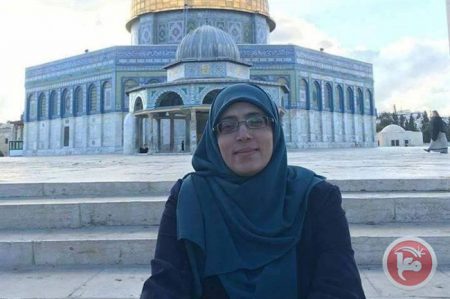
JERUSALEM – Israeli authorities renewed a travel ban against a Palestinian woman from occupied East Jerusalem on Sunday, after she has already been banned from the Old City’s Al-Aqsa Mosque compound as well as from the occupied West Bank.
Khadija Khweis told a Ma’an that Israeli intelligence summoned her to Jerusalem’s Russian Compound police station, where she was handed a renewable one-month travel prohibition order signed by the Israeli Minister of Interior.
A previous one-month travel ban against Khweis had expired on Wednesday.
According to Khweis, the new order read that she was prevented from traveling for “security reasons.”
“They say I have connections with the Murabitat group and think I could travel on missions to promote them,” she said.
In addition to being banned from international travel, Khweis has been prohibited from traveling to the West Bank for six months, an order that she said was still effective.
Furthermore, Khweis is on Israel’s so-called “blacklist” created by Israeli police in August 2015 to deny dozens of Palestinians access to the Al-Aqsa Mosque compound.
Israeli authorities have also revoked Khweis and her family’s national insurance allowance.
In December last year, Khweis was banned from the entirety of the Old City as well as West Jerusalem.
She was also among a number of Palestinian women who were assaulted by Israeli forces when they were denied entry to Al-Aqsa for their affiliation with the Murabitat, a group of women who gather at the compound to demonstrate against what they see as increasing Israeli control over the holy site and provocative visits by Israeli rightists under armed guard.
In September last year, former Israeli Defense Minister Moshe Yaalon outlawed the Murabitat and their male counterpart, the Murabitun.
The third holiest site in Islam, the Al-Aqsa Mosque compound is also venerated as Judaism’s most holy place as it sits where Jews believe the First and Second Temples once stood.
The fate of Jerusalem has been a focal point of the Israeli-Palestinian conflict for decades, with numerous tensions arising over Israeli threats regarding the status of non-Jewish religious sites in the city, and the “Judaization” of East Jerusalem through detention campaigns targeting Palestinians, Israeli settlement construction, and mass demolitions of Palestinian homes.
Israeli Soldiers Abduct Palestinian Child In Silwad
IMEMC News – December 17, 2016
 Israeli soldiers abducted a Palestinian child in Silwad town, east of the central West Bank city of Ramallah, on Friday evening.
The Palestinian Prisoners Society (PPS) said the child has been identified as Ward Abdul-Qader Hamed, 15, and that he was abducted after the soldiers stopped him at the western entrance of the town.
It is worth mentioning that the abducted child is the son of Qaddoura Fares, the head of the Palestinian Prisoners’ Society.
Omar Nazzal and Adib Al-Atrash: Palestinian journalists ordered to further imprisonment without charge or trial

Samidoun Palestinian Prisoner Solidarity Network – December 15, 2016
Palestinian journalist Omar Nazzal was ordered to three more months in administrative detention on Monday, 12 December. This marked the third renewal of his administrative detention order since he was seized by Israeli occupation forces on 23 April 2016 as he sought to cross the bridge to Jordan in order to travel to the European Federation of Journalists’ conference in Sarajevo. Nazzal is a member of the General Secretariat of the Palestinian Journalists’ Syndicate and president of the Democratic Journalists’ Assembly.
At a previous hearing on 22 November, Nazzal’s administrative detention was limited to a one and a half month extension; he was told he would be released on 24 December. Instead, however, Addameer Prisoner Support and Human Rights Association reported that the extension of his detention was for a full three months.
 On Wednesday, 15 December, fellow journalist Adib al-Atrash was also ordered to another three months in administrative detention without charge or trial. Arrested in June, this marks the third consecutive time al-Atrash has received an order for three months of imprisonment without charge or trial.
Tens of Palestinian journalists are imprisoned in Israeli jails, several in administrative detention without charge or trial, including Addameer media officer Hasan Safadi whose own detention was just extended for six months. Administrative detention orders are indefinitely renewable by Israeli military order and Palestinians can spend years at a time imprisoned without charge or trial.
Israeli forces ‘wreak havoc’ in Birzeit University raid

Ma’an – December 14, 2016
RAMALLAH – More than 20 Israeli military vehicles raided the campus of Birzeit University in the central occupied West Bank district of Ramallah before dawn on Wednesday, with Israeli forces “leaving a great deal of havoc” in their wake, an official university statement said.
After storming the campus through its western gate, Israeli soldiers forced campus security guards to stand against the walls, and proceeded to raid several buildings, including the university’s administration building, the student council’s headquarters, Kamal Nasir Hall, and the Faculty of Science.
Sources said soldiers smashed the main door of the student council building before searching the area and seizing several objects that were inside storage units belonging to student blocs.
Students’ flags and banners were also confiscated, while property in the administrative building and around campus were “sabotaged,” according to the university.
Birzeit University harshly condemned Israeli forces for the “continuation of their barbaric aggression on our people and national institutions,” adding that “These blatant attacks and subsequent measures of harassment constitute outrageous interferences to our right to education.”
However, the statement vowed that the “attacks” would “not deter its commitment to higher education, and the pivotal role it has played since its establishment.”
“The academic freedom of Palestinian academics and students is severely hindered, due to the (Israeli) occupation, its policies, and continuous defiance of the fundamental rights of our people and the sanctity of our universities, and that must be defended,” the statement said.
An Israeli army spokesperson told Ma’an they would look into reports of the raid.

Birzeit University, which has been ranked the top university in Palestine and among the highest ranking universities in the Arab world, has been the focus of an Israeli military crackdown a number of times in recent months, which increased after the Hamas-affiliated Islamic bloc won student elections at Birzeit for the past two consecutive years.
In July, at least 11 Palestinian youths were injured after Israeli undercover forces and soldiers opened live fire in the campus amid clashes sparked by an Israeli raid to detain a former member of the Islamic bloc.
At the start of 2016, Israeli military forces raided Birzeit, destroying and confiscating university equipment, having detained more than 80 students since Oct. 2015 up until that point.
Rights groups have widely condemned the concerted detention of Islamic bloc members at the university since their initial victory in 2015, who have also been targeted by Palestinian security forces. The Hamas movement is deemed illegal by the Israeli government — along with the majority of Palestinian political factions and movements — making students involved with the Islamic bloc highly vulnerable to raids and arbitrary detentions.
Birzeit University noted in their statement Wednesday that Israeli forces have also violently raided other Palestinian universities, including Palestine Technical University – Kadoori, the Arab American University of Jenin, as well as Al-Quds University in Abu Dis.
“The university calls on the international community and human rights organizations to immediately put a stop to these raids and violations, and actively engage in supporting our struggle for liberation,” Birzeit stated.


Israeli forces shoot Palestinian activist with rubber-coated steel bullet for taking photos
Ma’an – December 13, 2016
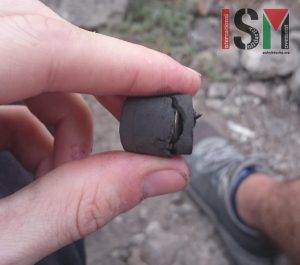 JERUSALEM – Israeli forces on Monday evening shot a Palestinian activist in the leg with a rubber-coated steel bullet during a raid in the occupied East Jerusalem neighborhood of al-Issawiya while he was attempting to take photos and video footage in the neighborhood, according to a local committee.
Members of a local follow-up committee in al-Issawiya told Ma’an that committee member Muhammad Abu al-Hummus was “documenting Israeli violations and provocations” when an Israeli soldier “threatened to shoot him in the head if he didn’t leave.”
Shortly after the threat was made against him, another soldier then shot a rubber-coated steel bullet at Abu al-Hummus from an approximate distance of 25 meters, hitting him in the leg.
Prior to the shooting, Israeli forces and police officers had stormed the town and deployed in its alleys “in a provocative manner,” started stopping drivers, and arbitrarily issued a number of traffic fines to locals, according to the committee.
After being informed of the forces’ arrival into the town, Abu al-Hummus began taking photos and writing notes about their activities.
An Israeli police spokesperson was not immediately available for comment.
Israeli police and soldiers have come under heavy criticism over the past year for what rights groups have referred to as excessive use of force against Palestinians, including journalists and activists, who did not pose an immediate threat at the time they were injured.
Demand action to free British citizen Fayez Sharary from Israeli prison

Samidoun Palestinian Prisoner Solidarity Network – December 11, 2016
Fayez Sharary, a British citizen of Palestinian descent, has now been held in Israeli prisons for nearly three months. He traveled with his wife Laila and their daughter, Aya, 3, to Palestine, to visit Laila’s widowed mother and to mark Eid al-Adha in Jerusalem, reports Inminds, the British organization currently leading a campaign to free Sharary. As the family attempted to leave Palestine on 15 September at the bridge to Jordan, they were stopped by Israeli forces; they had a flight scheduled for 17 September to return to the UK.
Sharary was separated from his wife and daughter, while he was interrogated for five hours while his daugher was refused access to a toilet. Laila’s mobile phone was confiscated and Sharary was detained; when she attempted to refuse to leave and stay with her husband, Israeli soldiers screamed at her.
Sharary was held for three weeks in Petah Tikva interrogation center and subject to ill-treatment, abuse and torture throughout that time. He was denied access to a lawyer until he signed a forced confession on 6 October and was moved to Ofer prison. Sharary’s torture by Israeli forces was further substantiated by Judge Azriel Levi, who ordered his release in a hearing in Ofer military court on 26 October, citing his confession as a result of “the method of interrogation, which included pained and prolonged shackling, threats, and a blatant exploitation of the defendant’s demonstrated weakness.” The military judge further said that the confession had a value of “less than zero” and that some of the allegations against Sharary were not prosecutable in the military courts.
However, as is frequently the case when on the rare occasion a military judge orders the release of a detainee, the Israeli military prosecution appealed and Sharary has remained imprisoned ever since.
Daniel Zeichner, the British Labour Party’s Shadow Minister for Transport, raised a parliamentary question regarding the involvement of the British consulate in providing support for Sharary’s case; Tobias Ellwood, under-secretary of State for Foreign and Commonwealth Affairs, replied that “Our Embassy in Tel Aviv has raised, and continues to raise, the detention of Mr Sharary with the Israeli authorities, most recently on 15 November. Consular officials continue to provide consular support to Mr Sharary and his family.”
Laila Sharary has participated in several protests in London demanding that the UK government act to free her imprisoned husband, 49, who has lived in the UK for 23 years. Sharary is allegedly accused of “contact with an enemy organization,” “services to an illegal organization,” and “bringing money into the region from an enemy.” Part of these allegations allegedly relate to Sharary’s time in Lebanon in 1993 or earlier; Sharary is not a resident of Palestine. The initial judge in the case who ordered Sharary released also dismissed the allegations of financial involvement due to irrelevant claims by the military prosecutor.
Despite these flimsy charges and his experience of torture – all too common, but publicly confirmed in this case by an Israeli military judge – Sharary remains imprisoned and will face a military court in Ofer on Wednesday, 14 December.
TAKE ACTION:
Please take action to urge the UK government to intervene and pressure Israel to release torture victim Fayez Sharary. This includes asking for UK representatives to attend the hearing in Sharary’s case at Ofer Military Court.
Email the Foreign and Commonwealth Office at fcocorrespondence@fco.gov.uk and the British Consulate in Jerusalem at britain.jerusalem@fco.gov.uk to express your concern about the case of Fayez Sharary.
You can use the sample letter below or write your own letter:
SAMPLE LETTER
To whom it may concern,
I am writing in regard to the urgent case of Fayez Sharary, a British citizen currently imprisoned by Israel in its military court system for the occupied Palestinian territories. Sharary, 49, was previously ordered released due to the torture he experienced under interrogation.
Nonetheless, he remains imprisoned and will once again face a military court at Ofer prison on Wednesday, 14 December from 8:00 am to 1:00 pm.
It is critical that the British government support its citizen Fayez Sharary by pressuring Israel for his immediate release. It is particularly critical that there is a British official presence at the military court hearing on 14 December.
Israeli military trials do not meet international standards for fair trials and can rely on evidence obtained through torture. Please act to release Fayez Sharary and reunite him with his wife and family in Britain.
Sincerely,
Hundreds of torture complaints against Shin Bet, no investigations
MEMO | December 9, 2016
Hundreds of complaints of torture against Shin Bet agents have produced not a single criminal investigation, according to a report in Haaretz.
Of the 598 complaints filed between 2001 and 2008, every single case was closed by the Israeli authorities without a criminal investigation.
A department within the Ministry of Justice, Mivtan, is responsible for handling such complaints, yet employs just one investigator.
According to Haaretz, “the unit does not interfere with the Shin Bet’s work, even though complainants have reported harsh and prohibited forms of torture – including severe beatings and extensive sleep deprivation.”
The paper adds that while “Mivtan does not reveal how many complaints it receives, only how many inquiries it conducts; however, attorney Efrat Bergman-Sapir of the Public Committee Against Torture in Israel said her organisation had submitted more than 1,000 complaints since 2001.”
Israeli police say singing event was organized to ‘sympathize with terrorists’

(Photo credit: Ahmad Jalajil)
Ma’an – December 8, 2016
JERUSALEM – Israeli forces raided the Palestinian National Theatre in the occupied East Jerusalem neighborhood of Sheikh Jarrah Thursday evening, preventing organizers from holding an event titled “Sing with Us” for allegedly being organized by the left-wing Popular Front for the Liberation of Palestine (PFLP) in order to “sympathize with terrorists.”
Witnesses told Ma’an that Israeli special forces, police, and intelligence raided the theater, also known as al-Hakawati Theater, during the event, which was organized by the Milad Fund for University Education.
Israeli police spokeswoman Luba al-Samri said in a statement that Jerusalem police chief Yoram Halevy signed an order on Thursday “to prevent holding a conference for the terrorist PFLP group,” citing Article 9 of the newly minted anti-terrorism law of 2016 — that members of Israel’s parliament have referred to as “draconian and unacceptable.”
“The chief’s decision was made after receiving intelligence information that the aforementioned terrorist group plans to hold a conference in order to sympathize with terrorists and other issues,” al-Samri’s statement continued.
“After the decision, a police unit headed to the designated place in East Jerusalem and prevented the holding of the conference without any exceptional incidents.”
The Israeli law, which was passed in June, includes a provision expanding the definition of terrorist organization membership to include “passive members” who are not actively involved in any group, but can now be indicted by Israeli authorities. It applies only inside Israel and occupied East Jerusalem, but not the occupied West Bank.
Head of the Joint List of Israel’s parliament Ayman Odeh said at the time of the legislation’s passage that it will damage Israel’s security cooperation with the PLO and Palestinian Authority in the occupied West Bank, pointing out that Israel considers the majority of political parties within the PLO — including the PFLP — to be terrorist organizations.
For Palestinians, the PFLP — founded by a Christian doctor, George Habash — is the most popular political faction for secular leftists.
Meanwhile, Reuters reported last month that al-Hakawati, after operating for three decades as a leading cultural center for Palestinians in occupied East Jerusalem, faced closure by Israeli authorities as a result of unpaid bills to the Jerusalem municipality amounting to $150,000, citing Palestinian commentators who believed Israeli authorities were pressuring the theater in order to “marginalize Arabic cultural and arts institutions.”

(Photo credit: Ahmad Jalajil)

(Photo credit: Ahmad Jalajil)

(Photo credit: Ahmad Jalajil)
Israeli wildfires expose Netanyahu’s burning hatred
By Yvonne Ridley | MEMO | December 8, 2016
As wildfires tore through large swathes of the land a week or so ago, some Israeli politicians used the disaster as an opportunity to fan the flames of hatred against Palestinians by calling it a “fire intifada”. Foreign firefighters from many countries came to Israel’s assistance, but it seems that those politicians had different priorities; they rushed to judgement in newspaper columns and appeared to show scant concern for the tens of thousands forced to flee their homes.
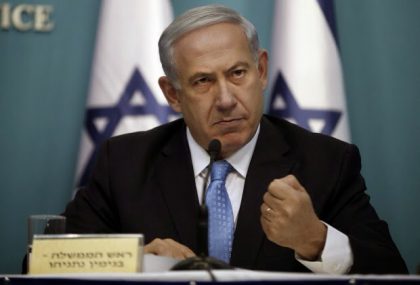
This was a time for politicians to demonstrate leadership and calm the people; to reassure the wider world that everything was being done to protect and save life. Legend has it that the reckless Roman emperor Nero fiddled as a blaze raged through ancient Rome for seven nights in 64 AD; while Benjamin Netanyahu picked up neither lyre nor violin, he did seize the moment to orchestrate a burning campaign of hatred against the Palestinians.
Never one to miss such an opportunity, the Israeli prime minister blamed “terror” as courageous firefighters from Italy, Croatia, Russia, Cyprus, Turkey and even the neighbouring Palestinian Authority risked their lives to help their exhausted Israeli colleagues. Words of support instead of hateful rhetoric should have been the order of the day, but from Netanyahu there was very little.
Now, though, as Israelis are beginning to count the true cost of the forest fires, the words and motives of Netanyahu and his cabal are being scrutinised more closely. The Israeli leader and other ministers — including Interior Minister Aryeh Deri and Culture Minister Miri Regev — pledged to revoke the residency rights of those found guilty of arson. This is a threat normally reserved for Arab Israelis, so it was clear where Tel Aviv was pointing the finger of blame.
Of course, Defence Minister Avigdor Lieberman typically went one step further and, along with Education Minister Naftali Bennett, called for the expansion of the illegal West Bank settlements in response to the alleged wave of terror.
However, it appears that some of the claims about terrorism have been wildly premature. Forensic investigators as well as fire and security experts believe that not all of the fires were started deliberately. “In most areas you won’t find many things that say whether it was arson,” explained Ran Shelef, the Fire and Rescue Authority’s chief investigator.
Another senior investigator, Herzl Aharon, said that the authorities still don’t know anything. “I wish I had a direction,” he told Israel’s Channel Two. “I go to a place and get an insight — and then I go to another place and everything changes. This is what you call an illusion of the topography, the bedlam of the mountainous region, and it is very difficult to investigate.”
Of the 35 people initially arrested on suspicion of arson or inciting others to commit arson, fewer than 10 remain in custody; only two suspected arsonists have been charged, one of whom insists that he was simply burning rubbish.
In the meantime, Netanyahu’s unsubstantiated blame has drawn blunt criticism from a former Israeli intelligence officer and the head of terrorist research at the Institute for National Security Studies. “The habit of inflaming the atmosphere by politicians is playing into the hands of the terrorists,” said Yoram Schweitzer. “A basic principle of fighting terrorism is to differentiate between the community which is allegedly or potentially supportive of such acts and the terrorists themselves. This is the first principle that was breached.”
Representing a coalition of Arab political parties called the Joint List, Ayman Odeh called on Netanyahu to be investigated for incitement for accusing Palestinians of deliberately starting the fires. Odeh said that he would formally request a probe by the attorney general. “Everyone knows that there wasn’t a wave of terrorism, that there wasn’t a ‘fire intifada,’” he said, citing the headline phrase used by some Israeli media following Netanyahu’s outburst.
While police officials say they suspect arson in 29 of the 39 major fires, and in about one-third of the 90 blazes investigated, they also admit there are no suspects in the largest fires, nor clear proof of arson.
As the investigators continue to rake through the embers of the wildfires, it’s worth remembering that the Palestinian Authority sent its own team of firefighters to help the Israelis. In other words, Palestinians set aside their differences and risked their lives to help those who enforce a brutal military occupation on their land. They didn’t expect gratitude from the likes of Netanyahu for their humanitarian efforts as the forest fires raged. Even so, the international community might want to consider whether they’d like to help the Palestinians firefighters in Gaza when Netanyahu next orders a blitz of blazes caused by hellfire missiles and bombs on the tiny coastal enclave.
As the firefighters from Ramallah showed, when it comes to putting out fires and extinguishing the flames of hatred, the Palestinians lead from the front.
@yvonneridley
Trump’s Son-In-Law Funds Israeli Settlement Projects
MEMO | December 6, 2016
In recent years, the parents of Jared Kushner, the son-in-law and trusted confidant of US President-elect Donald Trump, have donated tens of thousands of dollars to organisations and institutions located in illegal West Bank settlements, according to their tax forms.
Kushner’s family donates a few million dollars a year on average to charitable causes through the Charles and Seryl Kushner Foundation, which Jared sits on the board of along with his brother and two sisters. The foundation was established in 1997.
Among organisations and institutions in the occupied West Bank that receive funding from the Kushner family, the American Friends of Beit El Yeshiva (religious school) received $20,000 in 2013.
Israel’s Haaretz newspaper reported that the president of American Friends of Beit El Yeshiva, whose offices are located in New York, is David Friedman, Trump’s senior adviser on Israel affairs. Friedman, who has served as Trump’s real estate lawyer for the past 15 years and is considered to be very close to the president-elect, has expressed interest in becoming the next US ambassador to Israel, Haaretz added.
Freidman is also seen as a top contender for the former Arkansas governor and presidential candidate Mike Huckabee, who was also keynote speaker at last year’s fundraising dinner for the Beit El Yeshiva American friends group.
The list of organisations that received donations from Kushner’s family foundation has included the Etzion Foundation, whose US fundraising offices are located in New Jersey. The foundation supports Yeshivat Har Etzion, Kibbutz Migdal Oz and the Herzog College teachers’ training institution – all are located in the illegal Gush Etzion settlement bloc outside Jerusalem. In 2012, the Kushner family foundation donated $5,000 to the Etzion Foundation, in addition to another $10,000 in 2013.
Another recipient of Kushner funding in Gush Etzion, which headquartered in the settlement of Efrat, is Ohr Torah Stone which received $5,000 in 2011.
The Od Yosef Chai yeshiva, a religious school in the occupied West Bank, was granted $500 by the Kushner family. According to Haaretz, this particular school did not receive any funding from the Israeli government, as it had been involved in launching violent attacks against nearby Palestinian villages and Israeli security forces.
In 2014, the Kushner family pledged $18 million to the Shaare Zedek Medical Centre in Jerusalem, in addition to the $2 million it had already committed earlier. The Kushners have a history of supporting hospitals – both in Israel and the United States – but this was by far the largest gift given by the family to a single medical institution, Haaretz noted.
Another key beneficiary of Kushner charity in Israel is the Israeli army. Between 2011 and 2013, the foundation donated a total of $315,000 to Friends of the IDF, on whose board Jared serves.
Among other institutions and organisations the Kushners have supported in Israel in the past four years, are the Israeli Philharmonic Orchestra ($2,500); the Bezalel Academy of Arts and Design ($1,000); United Hatzalah ($70,000); the Israel Cancer Research Fund ($10,000); Meir Panim Lachayal, another organisation that supports Israeli soldiers ($4,000); the Shalva Children’s Centre ($20,000); Ma’ayanei Yeshua Hospital ($25,000); and the Rabin Medical Centre ($23,000).
In the United States, the family foundation supports many Jewish day schools, charities and cultural centres. In recent years, it has contributed close to $30,000 to various institutions operated by Chabad – the ultra-Orthodox outreach organization.
One of the single largest beneficiaries of Kushner contributions in recent years has been the Ramaz School in Manhattan which received $250,000. Rabbi Haskel Lookstein, the former principal of Ramaz, supervised Donald Trump’s daughter Ivanka’s conversion before she married Jared.
Last November, the Israeli Deputy Foreign Minister Tzipi Hotovely welcomed suggestions that US President-elect Donald Trump’s son-in-law Jared Kushner could be appointed as a special envoy to broker peace in the Middle East.
Israeli nationalists undermine meaning of ‘remembering the Holocaust’
By Yves Engler · December 6, 2016
Is “remembering the Nazi Holocaust and where anti-Semitism can lead” a good thing? Unfortunately, thanks to people who constantly cite this horrible genocide in order to justify the illegal, immoral and anti-human behaviour of the Israeli state, one must answer, “it depends.”
Drawing attention to the Nazi Holocaust and anti-Semitism in Canada today often reinforces, rather than undermines, oppression and discrimination. This perverse reality was on display at two recent events in Toronto.
At a semi-annual Ryerson Student Union meeting, a Hillel member pushed a resolution calling on the union to promote Holocaust Education Week in conjunction with United Jewish Appeal-Toronto, which marked Israel’s 2014 slaughter in Gaza by adding $2.25 million to its annual aid to that wealthy country. The motion stated, “this week is not in dedication to anti-Zionist propaganda” and called for the week to focus “solely on the education of the Holocaust and not on other genocides.”
Objecting to this brazen attempt to use the decimation of European Jewry to protect an aggressive, apartheid state many students left the meeting. When quorum was lost before the vote, pro-Israel activists cried — wait for it — anti-Semitism.
“Tonight, I experienced true and evil anti-Semitism,” complained Tamar Lyons, vice-president of communications for Students Supporting Israel at Ryerson University, in a social media post republished by B’nai Brith. In it, the Emerson Fellow of StandWithUs, an organization that trains university students to advance Israel’s interests, bemoaned how “a Muslim student ‘goy-splained’ me.”
After the meeting, Lyons linked the purported anti-Jewish incident to the Ryerson Student Union endorsing the BDS movement two years earlier. She told the Canadian Jewish News it was “a direct result of [the] boycott, divestment and sanctions movement and the anti-Israel sentiment that’s so prevalent on campus.”
Taking place on the eve of an Ontario legislature vote to condemn BDS activism, the national director of B’nai Brith jumped on the Ryerson affair. “What starts with BDS does not end with BDS,” said Amanda Hohmann. “More often than not, BDS is simply a gateway drug to more blatant forms of anti-Semitism.”
(Yup, take a toke of that leftist–internationalist “pressure Israel to follow international law” bud and soon you’re longing for some Neo-Nazi ‘get-the-Jews’ smack.)
As B’nai Brith hyped the Ryerson affair, the Centre for Israel and Jewish Affairs pushed the Ontario legislature to pass a motion in support of the spurious “Ottawa Protocol on Combating Anti-Semitism” and to reject “the differential treatment of Israel, including the boycott, divestment and sanctions movement.”
Passed 49 to 5 (with 53 absent), motion sponsor Gila Martow told the legislature: “We would not be here supporting the Ku Klux Klan on our campuses, so why are we allowing [the] BDS movement and other anti-Jewish and anti-Israel organizations to have demonstrations and use our campuses, which are taxpayer-funded?”
In an interview with the Toronto Sun after the vote the Thornhill MPP described BDS as “psychological terrorism on the campuses….The motive behind BDS is to hurt the Jewish community by attacking Israel.”
The only MPP who spoke against the motion was the NDP’s Jagmeet Singh. But, even this defender of the right to criticize Israel spent much of his speech talking about how anti-Semitism “must be denounced.”
Notwithstanding the anti-Semitism hullabaloo, the BDS vote and Ryerson affair have little to do with combating anti-Jewishness. As is obvious to anybody who thinks about it for a second, comparing internationalist and social justice minded individuals to the KKK will elicit, not lessen, anti-Jewish animus. Similarly, labeling a non-violent movement “psychological terrorism” and writing about “Muslim goy-splaining” isn’t likely to endear Jewish groups to those concerned with Palestinian dispossession and building a just world.
The major Jewish organizations and trained Israeli nationalist activists scream anti-Semitism to protect Israel from censure, of course. But they also do so because few are willing to challenge them on it. As such, the anti-Semitism smears should be seen as a simple assertion of CIJA and B’nai Brith’s political, economic and cultural clout.
Possibly the best placed of any in the world, the Toronto Jewish community faces almost no discernable economic, social or cultural discrimination. Describing it as “the envy of the UJA federation world,” Alan Dershowitz told its 2014 Toronto Major Gifts dinner: “You mustnever be ashamed to use your power and strength. Never be afraid that people will say, ‘You’re too strong and powerful.’ Jews need power and strength. Without this strength — economically, morally, militarily — we can’t have peace.”
But, UJA-Toronto, CIJA, B’nai Brith, etc. aren’t seeking “peace.” Rather, they’re working to strengthen a Sparta-like, Jewish-supremacist state in the Middle East.
The Ryerson affair and vote at the provincial legislature reflect a Toronto Jewish establishment drunk with its power. But the sober reality of constantly justifying oppression by citing the Holocaust/anti-Semitism is that it undermines the power of that memory and is an insult to all those who suffered and died at the hands of the Nazis.
Featured Video

Houthis Don’t Have to Conquer Saudi Arabia to Make It Pay
or go to
Aletho News Archives – Video-Images
From the Archives
Newly Released FBI Docs Shed Light on Apparent Mossad Foreknowledge of 9/11 Attacks
By Whitney Webb | MintPress News | May 17, 2019
NEW YORK — For nearly two decades, one of the most overlooked and little known arrests made in the aftermath of the September 11 attacks was that of the so-called “High Fivers,” or the “Dancing Israelis.” However, new information released by the FBI on May 7 has brought fresh scrutiny to the possibility that the “Dancing Israelis,” at least two of whom were known Mossad operatives, had prior knowledge of the attacks on the World Trade Center. … continue
Blog Roll
 Aletho News
- MEP blasts ‘Euro-Gestapo’ for lecturing Russia on democracy
- Syria May Send Troops to Saudi Arabia Amid War with Ansar Allah
- UK whines about losing billions to ‘Putin tax’
- Baghaei to Rubio: Distorted narratives cannot erase US record of broken commitments
- Houthis Don’t Have to Conquer Saudi Arabia to Make It Pay
- MOE: Nearly 22,000 Students and Education Workers Killed
- Guterres in Islamabad: Genocide, cowardice, and the cage of Imran Khan
- Johnson, Marandi say Yemen holds upper hand over Saudi Arabia
- False flags won’t save aggressors, Iran FM spokesman says
- The Makkah Pact Enters Into Force: The End of American Dominance or Its New Form?
- If Americans Knew
- Report claimed Mark Levin used by Israeli government to influence Trump
- Over 2,000 Gazans have died awaiting medical evacuation amid Israel’s continued siege
- How a U.S. Diplomat Suppressed and Altered Reports Critical of Israel
- 5 Palestinians Die from Israeli Strikes in Gaza as Relentless Attacks Continue
- Report: Ceasefire Slows Killing but Leaves Devastation Intact
- Country Music Singer Zach Bryan Breaks Attendance Record at Robert Kraft’s Gillette Stadium While Wearing ‘Free Palestine’ Shirt for Second Night in a Row
- Three years of death and devastation: Israel’s war on Gaza in pictures
- Why Hamas believed the status quo was more dangerous than its 7 October gamble
- Debunking Israel’s latest list of ‘terrorist’ journalists in Gaza
- In Gaza, focus is on survival, “every step is a struggle” – Daily Update
- No Tricks Zone
- New Study: 50 Years Of The Most Aggressive ‘Net Zero’ Policies Can Only Affect The Global Climate By 0.03°C
- US September “Heat” Was No Record…Many Records Set Decades Ago
- Latest European Green Energy Debacle; Portugal’s Largest Flagship Solar Park Insolvent!
- Green Energy Debacle: German Expert Professor Fritz Vahrenholt Warns Of Severe Economic And Social Consequences
- Two More Paleo Reconstructions Affirm Meters-Higher Sea Levels Across Ireland, Brazil 7000-6000 Years Ago
- New Study: Earth And Venus Surface Warmth Largely Explained By Convection And Lapse Rate, Not CO2 Or Radiation
- 2025 Nature Paper Claiming Worsening Global Drought Gets RETRACTED …Heavily Flawed
- New Study: ‘Global Drought Shows No Detectable Recent Acceleration Under Climate Warming’
- Economic Masterminds: German Socialists Suggest Taxing Productivity Gains Stemming From Using AI
- The South China Sea Has Not Been Cooperating With The Climate Change Narrative

