Dutch intel probed right-wing Geert Wilders over Israel ties – report
RT | December 5, 2016
Dutch secret services conducted an investigation into suspicions that Geert Wilders, head of the anti-Islam Party for Freedom, was strongly influenced by top Israeli military and political figures, according to reports in the Netherlands.
Wilders, the firebrand leader of the Dutch far-right Party for Freedom (PVV), was investigated by the country’s General Intelligence and Security Service (AIVD) between 2009 and 2010 over his “ties to Israel and their possible influence on his loyalty,” according to De Volkskrant newspaper, which conducted interviews with 37 public officials and former intelligence officers.
An investigation into an opposition leader is an exceptional case in the Netherlands, the newspaper noted, citing several former intelligence officers who said such inquiries are considered an “absolute no-go” due to political sensitivity.
Wilders was an MP at the time the AIVD probe was carried out, with his party supporting the center-right coalition government led by then Prime Minister Jan Peter Balkenende, enabling it to remain in power.
The intelligence agency sanctioned the operation, citing concerns about “the possibility that Wilders is influenced by Israeli factors,” according to the newspaper.
Back in 2010, Wilders reportedly had close ties to influential people in Tel Aviv. At the time, he visited Major General Amos Gilad, former chief of the Israeli Defense Ministry’s intelligence division, and frequently met the Israeli ambassador in the Netherlands.
According to the De Volkskrant report, which cites sources from the Netherlands’ Jewish community, these contacts stalled as Wilders did not turn his agenda into policy.
The results of the AIVD investigation have never been disclosed. Both Gerard Bouman, who led the AIVD from 2007 to 2011, and Wilders himself declined to comment.
Wilders’ Israeli connections trace back to his youth, when he volunteered for a year at Moshav Tomer, a Jewish settlement in the occupied West Bank, according to the Times of Israel. He also repeatedly referred to Jews as role models for Europe and urged a complete seizure of the West Bank. At one stage, his anti-Muslim slogans made him a star among Dutch Jewish constituencies and beyond.
According to a recent poll by Maurice de Hond, Wilders’ PVV would have won 33 seats in the 150-seat lower chamber of the Dutch parliament if elections had been held on November 29. In that case, Wilders would have become the Netherlands’ next prime minister as chairman of the biggest parliamentary party.
The far-right party has 15 seats in the current parliament, having gained about 10 percent of the vote at the 2012 general election. The next election is scheduled to take place in March 2017, leaving many to believe Wilders will triumph amid growing frustration with the Netherlands’ center-right coalition.
Palestinian youth activist re-arrested one week after release from Israeli prison
Samidoun Palestinian Prisoner Solidarity Network – December 5, 2016
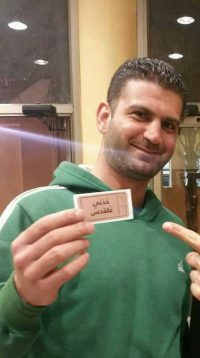 Palestinian youth organizer Daoud Ghoul was among 14 Palestinians seized overnight by Israeli occupation forces, one week after his release from Israeli prison. Ghoul, 33, is the director of youth programs for the Health Work Committees and the Kanaan Network of Palestinian civil society organizations. He has been subject for over two years to repeated Israeli harassment and intimidation. His home was raided at 4:00 am and his personal belongings and electronics confiscated; he is currently being held at the Moskobiyeh interrogation center in Jerusalem.
On Sunday, 27 November, Ghoul was released after serving an 18-month sentence, accused by the Israeli occupation of affiliation with a “prohibited organization,” the Popular Front for the Liberation of Palestine. After a visit to Brussels, Belgium in November 2014 in which he presented before the European Parliament about Israeli ethnic cleansing of Palestinians in Jerusalem, threats to Palestinian life in the city, and attacks on Palestinian health workers, he was banned from his home city of Jerusalem by an Israeli military order. He was then banned from the West Bank and from international travel, and was forced to move to Haifa from his hometown of Silwan in East Jerusalem. On 15 June 2015, he was seized by occupation military forces one month after his HWC Jerusalem office was forcibly closed by the occupation military.
After serving his 18 month sentence ordered against him by a military court, Ghoul was welcomed last Sunday by his friends and family and by supporters around the world who had long demanded his release. The sudden re-arrest of Daoud Ghoul one week after his release recalls similar cases like that of student Bahaa al-Najjar, released from administrative detention in early November only to once again be imprisoned without charge or trial one week later, or Bilal Kayed, ordered to six months in administrative detention without charge or trial immediately following the expiration of his 14.5-year sentence.
Ghoul’s case is also similar to those of other youth activists persecuted by the Israeli occupation, as well as part of the ongoing attacks on Palestinians in Jerusalem, including mass arrests, harsh sentencing of children and the stripping of Jerusalem IDs of Palestinian Legislative Council members.
Ghoul was among six young Palestinians, many former prisoners, arrested in Jerusalem last night. All of their computers and mobile phones were confiscated and Amjad Abu Assab said that the pretext of “incitement via social media” was cited in at least some of the cases. Among those arrested were Uday Abu Saad and Mohammed Salah of Shuafat refugee camp, Jihad Amira and Amin Hamad from Sur Baher, and Saleh Muhaisen from the village of Issawiya, in addition to Ghoul.
Three more Palestinians from Qabatiya, south of Jenin, Mahmoud Abu Ein, Louay Ziad Zakarneh and Musa Abdel-Salam Kamil, were seized by occupation forces, as were Bilal Anas Abu Eid and Munir Hussein Briggah of al-Khalil. More Palestinian young people were arrested in Jericho and in Beit Fajar, south of Bethlehem.
Israel Appoints Eyal Karim as the Israeli Army Chief Rabbi in Spite of His Response to Allow Soldiers Raping Palestinian Women

American Herald Tribune | December 5, 2016
Brig. Gen. Eyal Karim officially took his position as chief rabbi of the IDF Thursday evening after a change of command ceremony at the IDF headquarters in Tel Aviv attended by Chief of Staff Gadi Eisenkot.
During the ceremony, the chief of staff said, “The appointment of chief rabbi of the IDF is an extremely significant event in the army. Unfortunately, the ceremony took place a week late,” added Eisenkot. “I was convinced months ago that we are choosing Rabbi Eyal Karim for the job. He is the most fitting and appropriate choice for command and rabbinic authority in the IDF. I had no doubts.”
Following his official promotion, Karim spoke at length, saying, “During this journey of thousands of years, Israel drew its strength and spirit from the Torah—all its laws, values and morality. These are the foundation stones of the Jewish people. David Ben-Gurion, who asked Rabbi Goren to be chief rabbi, understood that the army has to address a wide range of people without creating a split in the army. He understood that there had to be a way for all soldiers to have a fulfilling service in the IDF together.”
Comments Karim made in 2003 when he was a civilian resurfaced after his appointment. In a column called “Ask the Rabbi” at Kipa.co.il, a popular Hebrew-language website catering to religious Jews, Karim responded to a number of anonymous letters inquiring about specificities of Jewish religious law, including a question about rape in times of war.
“Is it allowed nowadays for an IDF [Israeli army] soldier, for example, to rape girls during battle, or is such a thing forbidden?” Karim was asked. He answered: “Even though fraternizing with a gentile woman is a very serious matter, it was permitted during wartime … the Torah permitted the individual to satisfy the evil urge.”
Karim’s comments first attracted notice in 2012, when dissident Israeli journalist Yossi Gurvitz first published them in English at +972 Magazine. Gurvitz says that when he asked the military to comment on Karim’s statements, he was rebuked by an army spokesperson and told that his query “disrespects the IDF, the State of Israel and the Jewish religion.”
The Journalist, David Shenn, noted recently that “the army is hardly the only sector of Israeli society from which sexual assaults emanate. But rape culture in the military is especially disconcerting, as its soldiers have access to deadly weapons and the license to use them. And now its chief rabbi is a man who once gave Jewish soldiers sanction to rape Palestinian women until he was shamed into retracting it.”
Karim’s defenders insist that his comments on rape were misunderstood and that he couldn’t possibly have permitted sexual assaults against Palestinian women. But threats of rape have been wielded by Israeli occupation forces against Palestinians.
PayPal Serves Illegal Israeli Settlers But Won’t Let Palestinians Open Accounts
By Kit O’Connell | Mint Press News | November 21, 2016
AUSTIN, Texas – PayPal is one of the world’s most popular ways to send or receive money online, but Palestinians are cut out of the action.
Time magazine reported in January that PayPal has 179 million active accounts in dozens of countries, and PayPal payments are widely accepted in online marketplaces from eBay to Etsy.
To sign up, every user needs to have an account at a bank recognized by the service. Since PayPal doesn’t recognize any Palestinian banks, Palestinians are effectively prevented from using the service. Critics say this has impacted not just individuals, but burgeoning industries and even the broader Palestinian economy.
“PayPal’s absence is a major obstacle to the growth of Palestine’s tech sector and the overall economy,” Americans for a Vibrant Palestinian Economy, an NGO that promotes businesses in Palestine, wrote in an Aug. 23 open letter.
The letter, which was co-signed by more than 40 NGOs and Palestinian businesses, continues:
“Without access to PayPal, Palestinian entrepreneurs, nonprofits, and others face routine difficulties in receiving payments for business and charitable purposes. Moreover, PayPal’s absence is problematic for the overall Palestinian economy as tech is one of the only sectors with the potential to grow under status quo conditions of the Israeli occupation which severely restricts the internal and cross-border movement of goods and people.”
For the past decade, Israel has maintained a blockade on Palestinian imports of everything from everyday goods like crayons to crucial building supplies like concrete. Palestinian exports are heavily restricted, too.
Palestine is home to a thriving tech economy, Mike Butcher wrote in a Sept. 9 report. The TechCrunch editor-at-large continued:
“Palestine produces roughly 2,000 IT graduates per year. Both the West Bank and Gaza now have a number of technology companies which, ironically, see tech as a way of developing their economy, just as the Israelis do.”
While PayPal doesn’t recognize Palestinian banks, the authors of the open letter noted that many Palestinians live side by side with illegal Israeli settlers, who, purely by virtue of possessing Israeli bank accounts, are free to make use of the service. Israel demolished over 200 Palestinian homes this year, bringing its expansion of illegal settlements to record levels in 2016.
“We believe a company like PayPal, whose actions in North Carolina reaffirmed its commitment to equal rights, would agree that people living in the same neighborhood ought to have equal rights and access to its services regardless of religion or ethnicity,” the letter noted.
In April, Paypal pulled hundreds of jobs out of North Carolina after the state passed the so-called “bathroom bill,” which rescinded local protections for LGBT people, put restrictions on bathroom access for transgender individuals, and banned cities from passing increases to the minimum wage.
PayPal maintains multiple offices in Israel and has invested millions into its businesses there. The company does not seem poised to take a similar stand in Israel in response to the ongoing repression of the indigenous Palestinian population, who face severe restrictions on their movement and frequent attacks by the Israeli military, among other human rights abuses.
After the open letter was published, other organizations that support Palestine soon joined in by urging PayPal to expand into Gaza, launching a petition and social media campaign, #PayPal4Palestine. […]
In a message of support sent on Oct. 29 by Ramah Kudaimi, director of grassroots organizing at the U.S. Campaign for Palestinian Rights, wrote:
“Palestinians being denied access to PayPal means they cannot use their services to run a business, or raise money for a charity, or send cash to a relative, or make everyday purchases online. Getting access to PayPal can make a real difference in the lives of so many Palestinians as the struggle for freedom, justice, and equality continues.”
The tech giant seems unmoved by activists and Palestinian entrepreneurs’ requests to do business. The firm sent Butcher a dismissive response to his request for comment.
“We appreciate the interest that the Palestinian community has shown in PayPal,” the company’s representative wrote, but, the statement continued, “we do not have anything to announce for the immediate future.”
Lobby: Trump selects ‘Israel hater’ as defense secretary
Rehmat’s World | December 3, 2016
Donald Trump has picked Gen. (ret) James Mattis his defense secretary. Even though, Mattis is a known anti-Muslim, and pro-Israel Christian Zionist, some of his past statements are going to haunt him during his nomination approval at the US Senate like former secretary of defense Chuck Hagel.
For example in March 2012, Mattis told Senate Armed Services Committee that in order to withdraw the US-NATO forces from Afghanistan with some honor, the US needed Pakistan’s help.
Could it be the reason that Donald Trump during a telephone conversation with Pakistan’s prime minister Nawaz Sharif praised him and Pakistani nation?
“You’re doing a fantastic job. Your country is amazing with tremendous opportunities. Pakistanis are one of the most intelligent people,” Trump told Nawaz Sharif.
This is surprising considering Donald Trump during campaign had said: I love India, I love Hindus.
In July 2013, Gen. James Mattis told the Israeli goat, Wolf Blitzer (CNN) during an interview he gave at the Aspen Institute: World hate the US for backing Israel.
“So we’ve got to work on peace talks with a sense of urgency. I paid a military security price every day as a commander of CENTCOM because the Americans were seen as biased in support of Israel, and because of this moderate Arabs couldn’t be with us because they couldn’t publicly support those who don’t show respect for Palestinians,” Mattis said.
“I’ll tell you, the current situation is unsustainable. We’ve got to find a way to make work the two-state solution that both Democrat and Republican administrations have supported, and the chances are starting to ebb because of the settlements. For example, if I’m Jerusalem and I put 500 Jewish settlers to the east and there’s ten-thousand Palestinians already there, and if we draw the border to include them, either Israel ceases to be a Jewish state or you say the Palestinian don’t get to vote – apartheid. That didn’t work too well the last time I saw that practiced in a (South Africa) country,” added Mattis.
Jimmy Carter was treated shamefully by Alan Dershowitz and Brandeis University and the Jewish Lobby for voicing precisely the same warning, and was excluded by their pressure from speaking at the Obama Democratic National Conventions. Watch-lists have been made of academics who dare criticize the Zionist entity squatting on Palestinian-owned land.
On November 20, the Zionist Organization of America (ZOA) called Donald Trump not to appoint James Mattis as defense chief based on his past hatred toward Israel.
“In the past Mattis revealed a lack of appreciation for and understanding of the extraordinary value to American security resulting from a strong American-Israeli alliance and a secure Israel. Thus I urge that Mattis not be appointed defense secretary,” ZOA President Morton Klein said.
Matt Brooks, executive director of Republican Jewish Coalition, praised the appointment of James Mattis, calling him a friend of Israel who wants a strong America to defend Israel.
In 2010, one of Mattis’s predecessors in CENTCOM’s command, David Petraeus, shocked his Israeli friends, and American Jewish Lobby when prepared testimony he was to give to the Senate leaked before he appeared. The prepared remarks, which were based on a study that his staff conducted of American security interests in the Middle East, stated: “The enduring hostilities between Israel and some of its neighbors present distinct challenges to our ability to advance our interests in the region. The conflict foments anti-American sentiment, due to a perception of US favoritism for Israel.
Since retirement, Gen. James Mattis has worked as a consultant to the Hoover Institution on War, Revolution, and Peace, US-based Zionist think tank whose fellows include Israel-Firsters Condoleezza Rice, George P. Shultz (Jewish), Thomas Sowell, Gen. John P. Abizaid, Shelby Steel (married to Jewish Rita), and Edwin Meese III.
Purported international solidarity is devaluating Palestine
By Ramona Wadi | MEMO | December 1, 2016
Another symbolic international day for Palestinian rights has degenerated into the usual stale observations and recommendations that do little other than try to impart a semblance of balance between the coloniser and the colonised. Perhaps the UN has preferred to remain loyal to the monstrous history it spawned by approving the Partition Plan on 29 November 1947, rather than address its complicity in the dispossession, ethnic cleansing and displacement of the Palestinians.
Departing from a jeopardising premise, Fiji’s Peter Thomson presided over the 71st session of the UN General Assembly and declared that peace between Israel and the Palestinians is “fundamental to our efforts to realise the inalienable rights of the Palestinian people, and to ensure that they are able to enjoy lives of dignity, opportunity, prosperity and equality.” The Palestinian people have endured a history of premeditated killing for decades because the UN upholds obscurity as a priority over the anti-colonial struggle. Peace, therefore, can be eliminated from the convenient rhetoric as it is nothing but a euphemism for oblivion in the context of Israeli colonial violence and international acceptance and complicity.
Not to be outdone, the Head of the EU Delegation to the UN, João Vale de Almeida, presented a summarised version of the perpetual concerns and condemnations, but added a slight variation to the usual rhetoric. The EU, he claimed, is “alarmed by the advancement in the Knesset of the ‘Settlement Regularisation Bill’ which would allow for the ex post ‘legalisation’ of Israeli outposts in the occupied West Bank and de facto confiscation of private Palestinian land.” It is mystifying, to say the least, how an international institution that is normally so well-informed can express “alarm” over violations that have occurred blatantly and in a clear, calculated sequence following the original Zionist plan for Greater Israel. There was more likely to be advance knowledge and acquiescence, not alarm, over the proposed legislation.
Almeida made another obfuscating comment regarding Gaza: “Militant activity and the dire situation in Gaza feed general instability and constitute a recipe for renewed conflict.” He provided no context for the Palestinian resistance in Gaza; no mention of how Israel’s Operation Protective Edge destroyed the enclave and displaced Palestinians in a space that is completely besieged. Hamas “and other militant groups” are also urged to stop “the illicit arms build-up.” Presumably the EU, like Israel, wishes there to be a defenceless population that is completely stripped of the right to defend itself against Israel’s state of the art military technology. Almeida’s statement encourages the abuse of Palestinian civilians by Israel whenever it chooses to field test its latest weapons on live targets before marketing them internationally and thus exposing international hypocrisy with regards to alleged support for Palestinian rights.
Perhaps the symbolic commemoration of “International Day of Solidarity with the Palestinian People” should be scrapped, since the UN, the EU and other international institutions are incapable of articulating the trajectory between the initial and the current colonial violence against Palestinians. All of the futile statements which simply rehash decades of other repetitive rhetoric do not help the Palestinians in any way. Sporting a keffiyeh for the macabre day, which is a backdoor commemoration of the UN Partition Plan as well as purported international solidarity, is humiliating, not a show of support. In the absence of a commitment to support Palestine’s anti-colonial struggle, one can conclude that the international agenda for this “day of support” is to devaluate Palestine and downgrade it even further from a symbolic presence to a passive memory.
The Genocide of the Palestinian People: An International Law and Human Rights Perspective
Center for Constitutional Rights | August 25, 2016
While there has been recent criticism of those taking the position that Israel is committing genocide against Palestinians, there is a long history of human rights scholarship and legal analysis that supports the assertion. Prominent scholars of the international law crime of genocide and human rights authorities take the position that Israel’s policies toward the Palestinian people could constitute a form of genocide. Those policies range from the 1948 mass killing and displacement of Palestinians to a half-century of military occupation and, correspondingly, the discriminatory legal regime governing Palestinians, repeated military assaults on Gaza, and official Israeli statements expressly favoring the elimination of Palestinians.
Genocide is a term that has both sociological and legal meaning. The term genocide was coined in 1944 by a Jewish Polish legal scholar, Raphael Lemkin. For Lemkin, “the term does not necessarily signify mass killings.” He explained:
More often [genocide] refers to a coordinated plan aimed at destruction of the essential foundations of the life of national groups so that these groups wither and die like plants that have suffered a blight. The end may be accomplished by the forced disintegration of political and social institutions, of the culture of the people, of their language, their national feelings and their religion. It may be accomplished by wiping out all basis of personal security, liberty, health and dignity. When these means fail the machine gun can always be utilized as a last resort. Genocide is directed against a national group as an entity and the attack on individuals is only secondary to the annihilation of the national group to which they belong.[1]
Since Lemkin’s first invocation of the term, it has gained political, social, and legal meaning. For political scientists, historians, and sociologists, genocide is “understood as a major type of collective violence, with a distinctive place in the spectrum of political violence, armed conflict, and war, of which it is usually seen as a part.”[2]
From a legal perspective, genocide, like the crime against humanity of persecution, is an international crime distinguished by the specific intent to discriminate against a group on recognized grounds through a series of acts or omissions often reflected in and achieved through State policies. While different in degree, both genocide and persecution “[reduce] a person to their identification with or membership in a group,” but also “[attack] the group itself.”[3] Persecution criminalizes the denial of fundamental rights for members of the group, and genocide criminalizes the most extreme stage of discrimination: efforts to actually destroy the group.
According to the Convention on the Prevention and Punishment of the Crime of Genocide,[4] genocide includes various acts “committed with intent to destroy, in whole or in part, a national, ethnical, racial or religious group” as such, including:
(a) Killing members of the group;
(b) Causing serious bodily or mental harm to members of the group;
(c) Deliberately inflicting on the group conditions of life calculated to bring about its physical destruction in whole or in part; and
(d) Imposing measures intended to prevent births within the group.[5]
This definition is reflected in Article 6 of the Statute of the International Criminal Court (ICC), which has jurisdiction over crimes occurring on the territory of the State of Palestine since June 13, 2014.[6]
The Genocide Convention was written in the aftermath of World War II and the horrors of the Holocaust, especially to deter and prevent such horrors in the future and, failing that, to punish those responsible. The Convention thus provided a legal framework that clearly identifies the essence of the crime of genocide, regardless of the political, social, or cultural permutations in which the crime may be attempted or carried out and regardless of the specific qualities, stage, or scale of the genocidal process. The Holocaust set the terms by which a form of general or pervasive violence against a group might be legitimately termed “genocide” as a general sociological concept as it need not “imply a comparison to any other specific case.”[7]
Scholars of genocide have distinguished it as a crime different from other forms of war, killing, violence, discrimination, and repression. “Genocidal action aims not just to contain, control, or subordinate a population, but to shatter and break up its social existence. Thus genocide is defined, not by a particular form of violence, but by general and pervasive violence.”[8] They note that settler colonial regimes are structurally prone to genocide, and may indulge in “genocidal moments” when they become frustrated by the resistance of a colonized or occupied people.[9]
The term “genocide” has been used to describe the mass murder of Armenians by the Ottomans, Stalin’s expulsion of Chechens, Ingush Tartars, and Jews from the U.S.S.R., the removal of Jews and Hungarians from Romania, and Italy’s efforts to clear Slovenes and Croats from the Dalmatian coast.[10] There have been successful prosecutions of individuals for genocide arising out of efforts to destroy the Tutsi population in Rwanda in 1994[11] and Srebrenica in Bosnia-Herzegovina in 1995.[12]
Numerous prominent human rights authorities, advocates, and scholars have claimed that Israel’s policies and actions with respect to the Palestinian people have amounted to a form of genocide.
Expulsion and Killing of Palestinians in 1948
With respect to the creation of the Israeli state in 1948, there has been a robust scholarly debate about whether the settlement of Jews and the expulsion of Palestinians in Mandate Palestine could be described as genocide. Sociologist Martin Shaw, one of the most distinguished modern scholars of genocide, has written, “We can conclude that pre-war Zionism included the development of an incipiently genocidal mentality towards Arab society.”[13] “Israel entered without an overarching plan, so that its specific genocidal thrusts developed situationally and incrementally, through local as well as national decisions. On this account, this was a partly decentred, networked genocide, developing in interaction with the Palestinian and Arab enemy, in the context of war.”[14]
In 2010, the Journal of Genocide Studies hosted a conversation between Martin Shaw and another prominent scholar of genocide, Omer Bartov, on whether the term “genocide” could be reasonably applied to the Israeli treatment of Palestinians, particularly the expulsion and killing of Arabs in 1948.[15] The two scholars took very different positions on the question, but the journal rejected complaints from some quarters that it was an illegitimate, or worse, a bigoted question to pose and debate at all.[16]
Francis Boyle, a professor of international law, testified in 2013 that “The Palestinians have been the victims of genocide as defined by the 1948 Convention on the Prevention and Punishment of the Crime of Genocide.”[17] He argued that:
For over the past six and one-half decades, the Israeli government and its predecessors in law – the Zionist agencies, forces, and terrorist gangs – have ruthlessly implemented a systematic and comprehensive military, political, religious, economic, and cultural campaign with the intent to destroy in substantial part the national, ethnical, racial, and different religious group (Jews versus Muslims and Christians) constituting the Palestinian people.[18]
Long-Term Military Occupation of Palestinian People
When the international community ratified legal rules that would regulate the actions of occupying powers while also protecting the rights of occupied peoples and nations/states, it was understood that military occupation would be a short-lived necessity attendant to armed conflict, and that occupying forces would be withdrawn at the end of the conflict.[19] Israel’s prolonged belligerent occupation of the West Bank, including East Jerusalem, and Gaza for 50 years far exceeds the kind of occupation that animated the creation of legal rules of occupation contained in international law. Given the seemingly permanent nature of the Israeli occupation of the West Bank and Gaza, some human rights experts, including Israeli historian Ilan Pappé, have warned of an “incremental genocide” of Palestinians and the ultimate destruction of Palestinians as a national group.[20] This “incremental genocide” through the policies and practices that have both sustained and served as the hallmarks of Israel’s occupation is accomplished, they argue, by a normalization of the Israeli annexation of Palestinian territory and the exile or absorption of the national group of people who identify as Palestinian. International law is clear that an occupying power may not annex the people or territory it occupies.[21]
The late human rights lawyer and Center for Constitutional Rights Board President Michael Ratner also charged Israel with committing “incremental genocide” against the Palestinian people: “There’s no doubt again here this is ‘incremental genocide,’ as Ilan Pappé says. It’s been going on for a long time, the killings, the incredibly awful conditions of life, the expulsions that have gone on from Lydda in 1947 and ‘48, when 700 or more villages in Palestine were destroyed, and in the expulsions that continued from that time until today. It’s correct and important to label it for what it is.”[22] He argued further, “I want to emphasize today [that] these killings are part of a broader set of inhuman acts by Israel constituting international crimes, carried out by Israel over many years, going back to at least 1947 and 1948. They include crimes that aren’t talked about that much in the media or the press, the crimes of genocide, crimes against humanity, and apartheid. These crimes can be prosecuted in the International Criminal Court and are defined there.”[23]
The Russell Tribunal on Palestine, a nongovernmental “people’s body” made up of prominent international human rights experts and advocates, convened between November 2010 and September 2014 to investigate the question of human rights violations in the context of the Israeli occupation of the West Bank, including East Jerusalem, and Gaza.[24] It took testimony and deliberated specifically on the question of whether Israel may have committed genocide in relation to the Palestinian people. The jury concluded that some Israeli citizens and leaders may have been guilty in several instances of the separate crime of incitement to genocide, which is specified in Article 3(c) of the Genocide Convention. “The cumulative effect of the long-standing regime of collective punishment in Gaza appears to inflict conditions of life calculated to bring about the incremental destruction of the Palestinians as a group in Gaza. The Tribunal emphasises the potential for a regime of persecution to become genocidal in effect.”[25]
Military Assaults on Gazan Population
With respect to Israel’s most recent military offensive, the so-called “Operation Protective Edge” launched against Gaza in the summer of 2014, prominent human rights authorities expressed concern that the campaign constituted a violation of international humanitarian law as contained in the Geneva Conventions:
- Amnesty International issued a statement proclaiming “an International Criminal Court (ICC) investigation is essential to break the culture of impunity which perpetuates the commission of war crimes and crimes against humanity in Israel and the Occupied Palestinian Territories. The case for such action is made all the more compelling in the light of the ongoing serious violations of international humanitarian law being committed by all parties to the current hostilities in the Gaza Strip and Israel.”[26]
- The ICC has jurisdiction over genocide, and the U.N. Special Advisers on the Prevention of Genocide issued a statement two weeks into the 2014 offensive that they were “disturbed by the flagrant use of hate speech in the social media, particularly against the Palestinian population,” finding that “individuals have disseminated messages that could be dehumanising to the Palestinians and have called for the killing of members of this group,” while “remind[ing] all that incitement to commit atrocity crimes is prohibited under international law.”[27]
- Al-Haq, the oldest Palestinian Human Rights organization, found that serious violations of international law were committed in the course of the 2014 Israeli offensive against Gaza.[28] Al-Haq, along with other Palestinian human rights organizations the Palestinian Center for Human Rights, Al-Mezan, and Aldameer, submitted a legal file to the International Criminal Court urging it to open an investigation and prosecution into the crimes against humanity and war crimes committed during the course of Israel’s 2014 Gaza offensive.[29] The crimes suggested for prosecution by these human rights organizations include genocide.
- Dozens of Holocaust survivors, together with hundreds of descendants of Holocaust survivors and victims, accused Israel of “genocide” for the deaths of more than 2,000 Palestinians in Gaza during the 2014 Israeli military offensive against Gaza, “Operation Protective Edge”. [30]
- Others who have charged that Israel committed genocide during Operation Cast Lead include Bolivian President Evo Morales, who recalled that country’s ambassador from Israel. He stated, “What is happening in Palestine is genocide.”[31]
- Author and activist Naomi Wolf wrote, “I mourn genocide in Gaza because I am the granddaughter of a family half wiped out in a holocaust and I know genocide when I see it.”[32]
Israeli Government Statements Targeting Palestinians
Finally, prominent Israeli politicians have publicly called for action against the Palestinian people that unequivocally meets the definition of genocide under the 1948 Convention. For instance, in February 2008, Matan Vilnai, Israel’s deputy defense minister, declared that increasing tensions between the Israelis and Palestinians in the Gaza Strip could bring on themselves what he called a shoah, or holocaust, “The more Qassam [rocket] fire intensifies and the rockets reach a longer range, they will bring upon themselves a bigger shoah because we will use all our might to defend ourselves.”[33]
Israeli Justice Minister Ayelet Shaked posted a statement on Facebook in June 2014 claiming that “the entire Palestinian people is the enemy” and called for the destruction of Palestine, “including its elderly and its women, its cities and its villages, its property and its infrastructure.” Her post also called for the killing of Palestinian mothers who give birth to “little snakes.”[34]
In August 2014, Moshe Feiglin, then-deputy speaker of the Israeli Knesset and member of Prime Minister Benjamin Netanyahu’s ruling Likud Party, called for the destruction of Palestinian life in Gaza and offered a detailed plan for shipping Palestinians living in Gaza across the world. Specifically, he envisioned a scenario where the Israeli Defense Forces (IDF) would find areas on the Sinai border to establish “tent encampments… until relevant emigration destinations are determined.” He further suggested that the IDF would then “exterminate nests of resistance, in the event that any should remain.”[35] He subsequently wrote in an op-ed, “After the IDF completes the ‘softening’ of the targets with its fire-power, the IDF will conquer the entire Gaza, using all the means necessary to minimize any harm to our soldiers, with no other considerations.”[36] He continued, “Gaza is part of our Land and we will remain there forever. Liberation of parts of our land forever is the only thing that justifies endangering our soldiers in battle to capture land. Subsequent to the elimination of terror from Gaza, it will become part of sovereign Israel and will be populated by Jews. This will also serve to ease the housing crisis in Israel. The coastal train line will be extended, as soon as possible, to reach the entire length of Gaza.”
Conclusion
Prominent human rights advocates and scholars have argued that the killings of Palestinians and their forceful expulsion from mandate Palestine in 1948, the Israeli occupation of the West Bank, East Jerusalem, and Gaza, and the violence and discrimination directed at Palestinians by the Israeli government have violated a number of human rights protections contained in international human rights law, genocide being among them.
Download a PDF of this document here.
[1] Raphael Lemkin, Genocide – A Modern Crime, 4 Free World 39 (1945), available at: http://www.preventgenocide.org/lemkin/freeworld1945.htm (emphasis added).
[2] Martin Shaw, Genocide, Oxford Bibliography, September 30, 2013, available at: http://www.oxfordbibliographies.com/view/document/obo-9780199756384/obo-9780199756384-0029.xml.
[3] Helen Brady and Ryan Liss. Historical Origins of International Law Vol. 3, “The Evolution of Persecution as a Crime Against Humanity,”FICHL Publication Series No. 22 (2015) p. 554, available at https://www.fichl.org/fileadmin/fichl/FICHL_PS_22_web.pdf. Notably, “some scholars suggest[ ] that any distinction [between genocide and persecution] has effectively disappeared,” with the two crimes “offer[ing] two different but related visions of the same harm: in short, a crime against the individual as a member of a group (persecution) or a crime against the group itself (genocide).” Id. at 491.
[4] Convention on the Prevention and Punishment of the Crime of Genocide, Adopted by the General Assembly of the United Nations on December 9, 1948 as General Assembly Resolution 260, and entered into force on 12 January 1951, available at: https://treaties.un.org/doc/Publication/UNTS/Volume%2078/volume-78-I-1021-English.pdf. The Genocide Convention has 147 signatories, including the United States, Israel and Palestine.
[5] Genocide Convention, Article II.
[6] Declaration Accepting the Jurisdiction of the International Criminal Court, Mahmoud Abbas, President of the State of Palestine, Dec. 31, 2014, available at http://www.icc-cpi.int/iccdocs/PIDS/press/Palestine_A_12-3.pdf. On January 6, 2015, the United Nations Secretary General, acting in his capacity as depository for the Rome Statute, accepted Palestine’s accession to the Rome Statute. United Nations, Depository Notification, Ref: C.N.13.2015.TREATIES-XVIII.10, 6 Jan. 2015, available at https://treaties.un.org/doc/Publication/CN/2015/CN.13.2015-Eng.pdf. On January 16, 2015, the Prosecutor of the ICC, Mrs. Fatou Bensouda, opened a preliminary examination into the situation of Palestine.
[7] Martin Shaw in Martin Shaw & Omer Bartov, The Question Of Genocide In Palestine, 1948: An Exchange Between Martin Shaw And Omer Bartov, 12 Journal of Genocide Research 243, 244 (2010).
[8] Martin Shaw, Palestine In An International Historical Perspective On Genocide, 9 Holy Land Studies 1, 5 (2010).
[9] A. Dirk Moses, An Antipodean Genocide? The Origins Of The Genocidal Moment In The Colonization Of Australia, 2 J. of Genocide Research 89, 90 (2010).
[10] Martin Shaw, Palestine In An International Historical Perspective On Genocide, 9 Holy Land Studies 1, 9 (2010).
[11] See, e.g., Prosecutor v. Jean-Paul Akayesu, ICTR, http://www.icty.org/x/cases/karadzic/tjug/en/160324_judgement.pdf.
[12] See, e.g., Prosecutor v. Radovan Karadžić, ICTY, http://www.icty.org/x/cases/karadzic/tjug/en/160324_judgement.pdf.
[13] Martin Shaw, Palestine In An International Historical Perspective On Genocide, 9 Holy Land Studies 1, 13 (2010), noting the comments of the President of the Zionist Organization Chaim Weizmann’s comment in 1941 “if half a million Arabs could be transferred, two million Jews could be put in their place.”
[14] Id. at 19.
[15] Martin Shaw in Martin Shaw & Omer Bartov, The Question Of Genocide In Palestine, 1948: An Exchange Between Martin Shaw And Omer Bartov, 12 Journal of Genocide Research 243, 244 (2010).
[16] See Gal Beckerman, Top Genocide Scholars Battle Over How To Characterize Israel’s Actions, Forward, February 16, 2011, available at: http://forward.com/news/135484/top-genocide-scholars-battle-over-how-to-character/.
[17] Professor Francis A. Boyle, The Palestinian Genocide by Israel Before
The Kuala Lumpur War Crimes Tribunal, August 21-24, 2013, available at: http://papers.ssrn.com/sol3/papers.cfm?abstract_id=2339254.
[18] Id. at 3.
[19] See Geneva Convention III: Articles 1-4; Geneva Convention IV 1907: Section Three – Occupied Territories – Articles 47-56; Geneva Convention IV 1949: Section Three – Occupied Territories – Articles 47-78; Additional Protocols I and II.
[20] Ilan Pappé, A Brief History of Israel’s Incremental Genocide, in ON PALESTINE (Noam Chompsky and Ilan Pappé ed.; Haymarket 2015) pp. 147-154. See also, Steve Lendman, Israel’s Slow-Motion Genocide in Occupied Palestine, in THE PLIGHT OF THE PALESTINIANS (William A. Cook ed., Palgrave 2010)
[21] Article 2(4) of the United Nations Charter states that “All Members shall refrain in their international relations from the threat or use of force against the territorial integrity or political independence of any state, or in any other manner inconsistent with the Purposes of the United Nations.” See also: Convention (IV) relative to the Protection of Civilian Persons in Time of War. Geneva, 12 August 1949 Section III, Art. 47, “Protected persons who are in occupied territory shall not be deprived, in any case or in any manner whatsoever, of the benefits of the present Convention by any change introduced, as the result of the occupation of a territory, into the institutions or government of the said territory, nor by any agreement concluded between the authorities of the occupied territories and the Occupying Power, nor by any annexation by the latter of the whole or part of the occupied territory.”
[22] Michael Ratner, UN’s Investigation of Israel Should Go Beyond War Crimes to Genocide, The Real News, July 27, 2013, available at: http://therealnews.com/t2/index.php?option=com_content&task=view&id=31&Itemid=74&jumival=12155.
[23] Id. See also Saree Makdisi, Palestine Inside Out: An Everyday Occupation (Norton 2010) for the notion of a “slow motion” extension and consolidation of the genocidal aspects of 1948.
[24] Russell Tribunal On Palestine, “About,” http://www.russelltribunalonpalestine.com/en/about-rtop.
[25] http://www.russfound.org/RToP/RToP.htm.
[26] Israel and Occupied Palestinian Territories: The International Criminal Court must investigate war crimes, August 1, 2014 http://www.amnesty.org/en/documents/MDE15/019/2014/en/.
[27] UN, Department of Public Information, Statement by the Special Advisers of the Secretary-General on the Prevention of Genocide, Mr. Adama Dieng, and on the Responsibility to Protect, Ms. Jennifer Welsh, on the Situation in Israel and in the Palestinian Occupied Territory of Gaza Strip, July 24, 2014, available at
[28] See, Divide and Conquer: A Legal Analysis of Israel’s 2014 Military Offensive Against the Gaza Strip, 2015, available at: http://www.alhaq.org/publications/publications-index/item/divide-and-conquer.
[29] Palestinian Human Rights Organisations Deliver Submission to the International Criminal Court on Alleged Israeli War Crimes and Crimes against Humanity during 2014 Gaza offensive, Nov. 23, 2015, available at: http://www.alhaq.org/advocacy/targets/international-criminal-court-icc/998-palestinian-human-rights-organisations-deliver-submission-to-the-international-criminal-court-on-alleged-israeli-war-crimes-and-crimes-against-humanity-during-2014-gaza-offensive.
[30] Zachary Davies Boren, Holocaust survivors and their descendants accuse Israel of ‘genocide’, The Independent, August 24, 2014, http://www.independent.co.uk/news/world/middle-east/holocaust-survivors-and-their-descendants-accuse-israel-of-genocide-9687994.html.
[31] Bolivian president: Israel air strikes on Gaza is ‘genocide’, July 16, 2014, http://www.itv.com/news/update/2014-07-16/bolivian-president-israel-air-strikes-of-gaza-is-genocide.
[32] Naomi Wolf walked out of synagogue when they had nothing to say about Gaza massacre, July 22, 2014, http://mondoweiss.net/2014/07/synagogue-nothing-massacre.html.
[33] Israeli minister warns of Palestinian ‘holocaust’, The Guardian, February 29, 2008, https://www.theguardian.com/world/2008/feb/29/israelandthepalestinians1.
[34] Text of Shaked’s Facebook post (in Hebrew), since deleted, is available here: https://electronicintifada.net/sites/default/files/styles/original_800w/public/2014-07/ayelet-shaked-facebook-post-30-june-2014-genocide.jpg?itok=k5yvVqQp×tamp=1448949295.
[35] Jill Reilly, Israeli official calls for concentration camps in Gaza and ‘the conquest of the entire Gaza Strip, and annihilation of all fighting forces and their supporters’, Daily Mail, August 4, 2014, available at: http://www.dailymail.co.uk/news/article-2715466/Israeli-official-calls-concentration-camps-Gaza-conquest-entire-Gaza-Strip-annihilation-fighting-forces-supporters.html.
[36] Moshe Feiglin, My Outline for a Solution in Gaza, Arutz Sheve, August 15, 2014, available here: http://www.israelnationalnews.com/Articles/Article.aspx/15326#.VCLljPldXTo.
Attachments
 Background on the term genocide in Israel Palestine Context.pdf
Not business as usual: colonial settlers in al-Khalil for Jewish festival
International Solidarity Movement | November 27, 2016
Hebron, occupied Palestine – The Jewish holiday/celebration of Chayei Sarah and the reading of the Torah regarding Sarah took place in occupied al-Khalil (Hebron) on 25th and 26th November 2016.
Beginning of Friday hundreds of Jews from illegal colonial settlements within the West Bank as well as Jews from Israel began arriving. It was estimated there may be as many as 1500 coming for their festivities. Huge tents and designated camping areas were set up (some in areas owned by Palestinians). They were also staying with families and friends in the existing illegal settlements here in al-Khalil.
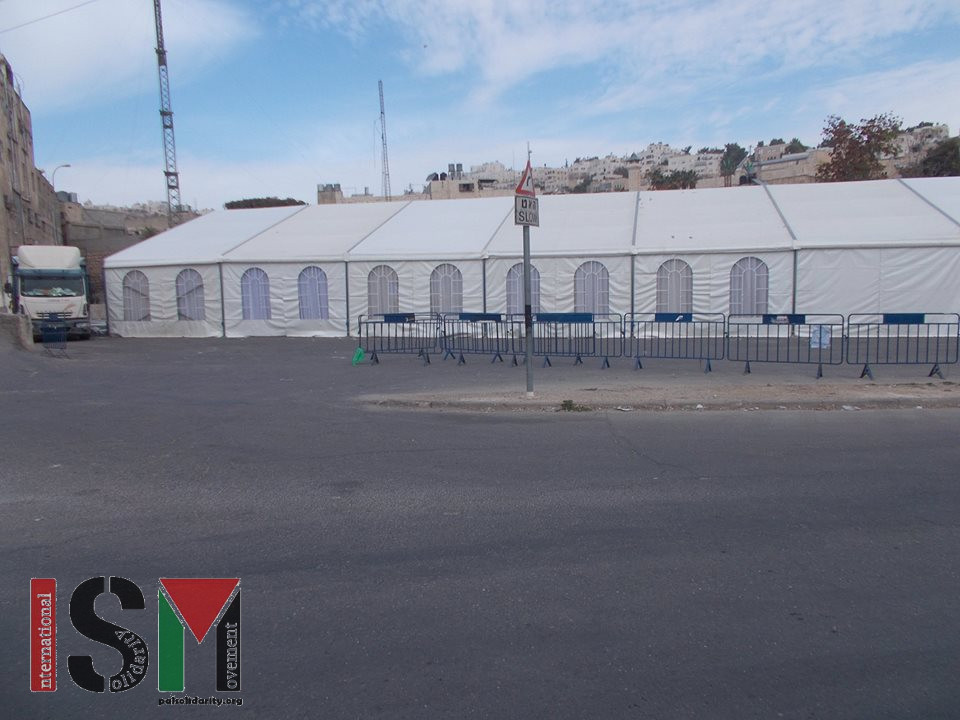
This lot was the play area for the Palestinian elementary and secondary school. Now it’s being used for The Sarah event.
This automatically meant more Israeli occupation forces, more border police, much more “security” at checkpoints that Palestinians need to pass through on a regular basis as part of their normal daily routines (going to work, shopping, etc.) It also meant a complete closure of many of the checkpoints, not allowing anyone who was not here for the festival (that is a colonial settler) to go through.

Young soldiers leading the event
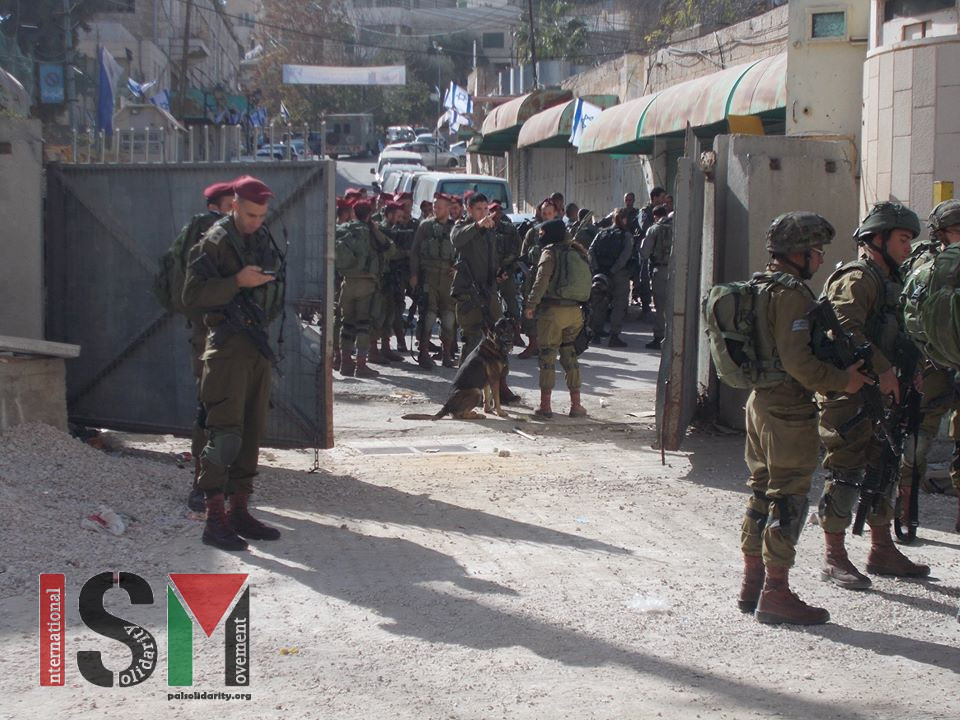
Israeli Occupation Forces preparing for the “Settler Tour” with their guns and dogs
On Saturday “security” was at its peak. Every Saturday afternoon there is a tour of the Palestinian Old City by settlers from the illegal settlements. This usually consists of around 20 to 150 settlers. With about as many Israeli occupation force soldiers to “protect” them. This weekend the tour consisted of nearly 2700 settlers. This obviously meant more soldiers, on roof tops, police dogs sniffing out the route before the tour began, soldiers positioned approximately every 50 meters along the entire route and at the beginning and end of the group. Many shop owners closed early for fear of trouble by the settlers parading through the Old City.
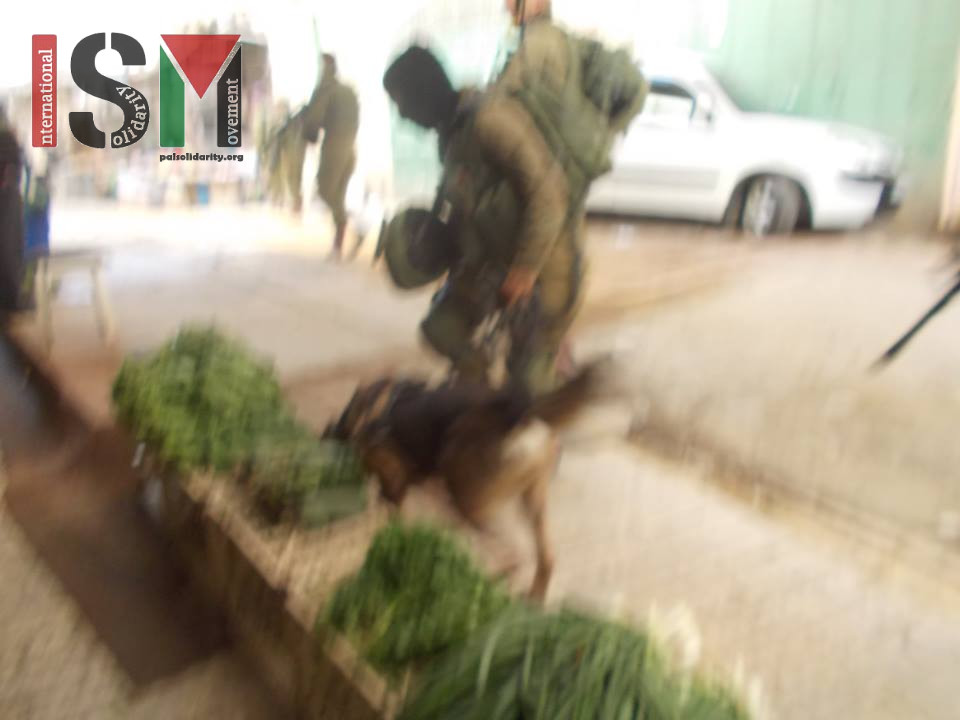
Sniffing for bombs on the parade route before it starts
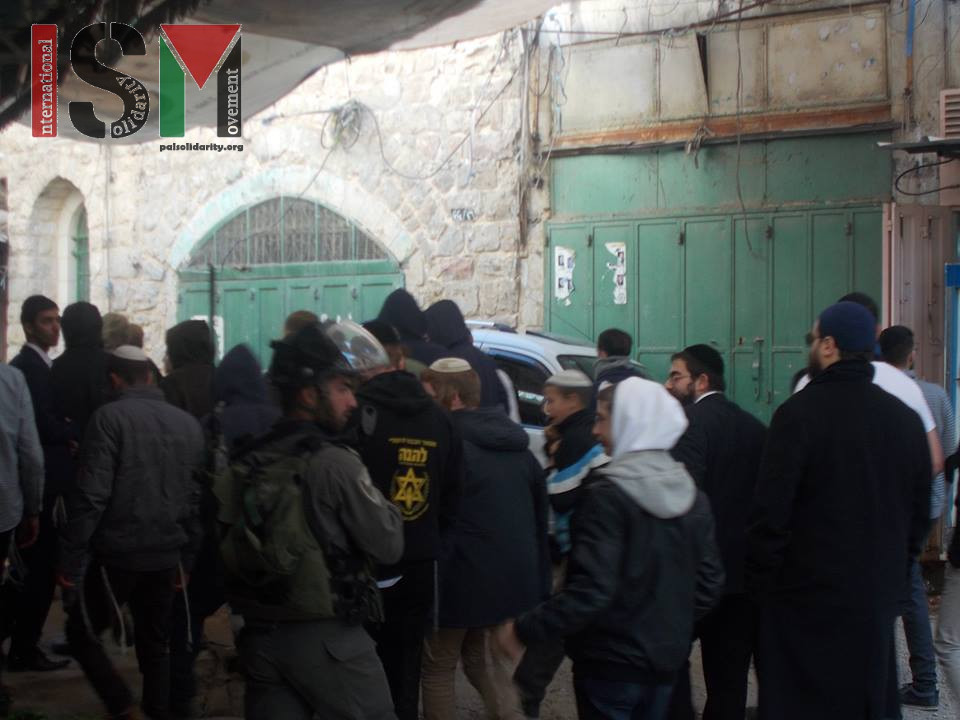
Soldiers and settlers parading through the Palestinian market where some shops closed early
The settlers who participated were singing, dancing, acting provocatively aggressive towards the Palestinians and internationals who were trying to mind their own business or observing the events. There were many “shouts of “welcome to Israel” by the settlers as well as “f*ck you’s” and “this is our home not yours, we will never leave” at the Palestinians. An observer witnessed a number of incidents of harassment by the settlers toward anyone who was not Jewish and part of the group.
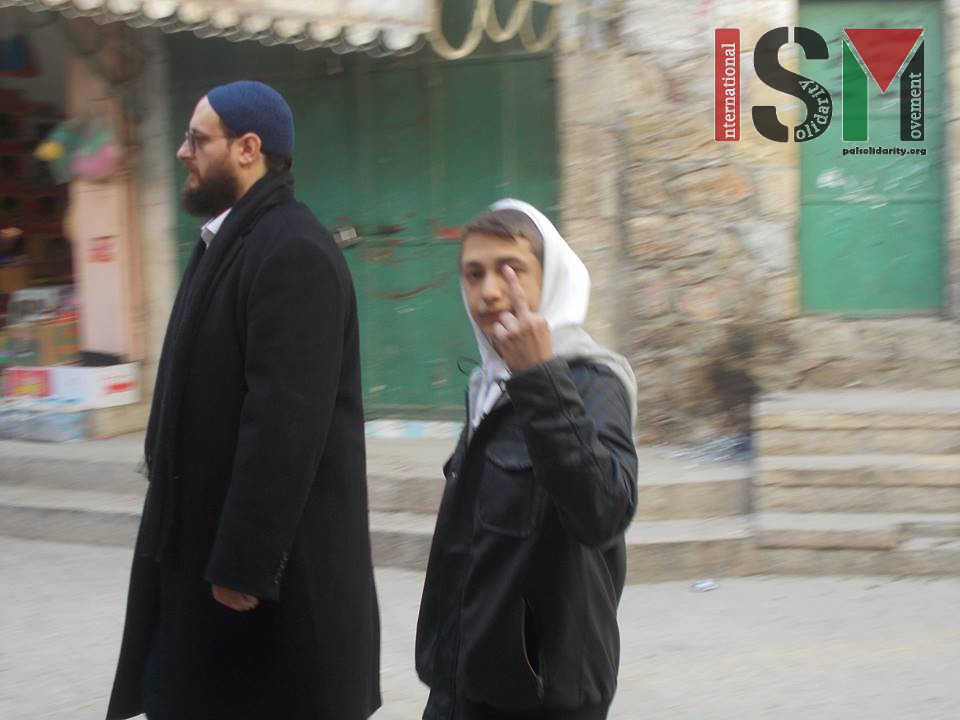
An obvious “welcome” from one of the settler youth
One Palestinian family in the Tel Rumeida area had their home invaded for approximately 10 hours by soldiers who set up observation on the roof and using their bathroom and kitchen as if it were their own place to do as they wished. An international who was invited to the home by the family to observe the goings on was forced to leave after an hour by the soldiers. The family was frightened by these events, but to the best of this writers knowledge there was no real damage done in the home by the soldiers.
An observer witnessed at least two Palestinian youth who were detained by the Israeli occupation forces for one reason or another. A third Palestinian was detained for trying to defend himself after a settler spit on him.
This is life in illegally settler occupied al-Khalil. The Israelis pretty much do as they wish and the Palestinian residents pay the consequences.
Palestinian university student sentenced to eight months for student activities
Samidoun Palestinian Prisoner Solidarity Network – November 24, 2016
 Palestinian student Noor Darwish, 22, a student at Al-Quds University in Abu Dis, was sentenced to eight months in Israeli prison and a fine of 2000 NIS (approximately $500) on Wednesday, 23 November.
From the village of Deir Abu Mashal near Ramallah, Darwish was arrested with two other female students, Hala Bitar, 19, and Salam Abu Sharar, 21, on 19 April. The three were arrested among an escalated series of arrests targeting Palestinian students around the time of annual student council elections at Palestinian universities. All three were charged with participation in the public student activities of the Islamic Bloc at the university, including organizing a book fair.
Bitar was earlier sentenced to four months in prison, while Abu Sharar was sentenced to 10 months in Israeli prison. Darwish has been held in Damon prison, which requires a three-day trip to the Ofer military court, which pronounced her sentence. Her case involved six hearings, each accompanied by the lengthy “bosta” travel from the prison to the military court and back.
The Burning Bush
By Gilad Atzmon – December 2, 2010
Israel’s rural landscape is saturated with pine trees. These trees are new to the region. The pine trees were introduced to the Palestinian’s landscape in the early 1930s by the Jewish National Fund (JNF) in an attempt to ‘reclaim the land’. By 1935, JNF had planted 1.7 million trees over a total area of 1,750 acres. Over fifty years, the JNF planted over 260 million trees largely on confiscated Palestinian land. It did it all in a desperate attempt to hide the ruins of the ethnically cleansed Palestinian villages and their history.
Along the years the JNF performed a crude attempt to eliminate Palestinian civilisation and past but it also tried to make Palestine look like Europe. The Palestinian natural forest was eradicated. Similarly the olive trees were uprooted. The pine trees took their place. On the southern part of mount Carmel the Israelis named an area as ‘Little Switzerland’. By now, there is no much left of “Little Switzerland.”
However, the facts on the ground were pretty devastating for the JNF. The pine tree didn’t adapt to the Israeli climate as much as the Israelis failed to adapt to the Middle East. According to JNF statistics, six out of every 10 saplings planted did not survive. Those few trees that did survive formed nothing but a firetrap. By the end of each Israeli summer each of the Israeli pine forests become a potential deadly zone.
In spite of its nuclear ability, its criminal army, the occupation, the Mossad and its lobbies all over the world, Israel seems to be vulnerable. It is devastatingly alienated from the land it claims to own and care for. Like the pine tree, Zionism, Israel and the Israeli are foreign to the region.
Featured Video

Houthis Don’t Have to Conquer Saudi Arabia to Make It Pay
or go to
Aletho News Archives – Video-Images
From the Archives
Newly Released FBI Docs Shed Light on Apparent Mossad Foreknowledge of 9/11 Attacks
By Whitney Webb | MintPress News | May 17, 2019
NEW YORK — For nearly two decades, one of the most overlooked and little known arrests made in the aftermath of the September 11 attacks was that of the so-called “High Fivers,” or the “Dancing Israelis.” However, new information released by the FBI on May 7 has brought fresh scrutiny to the possibility that the “Dancing Israelis,” at least two of whom were known Mossad operatives, had prior knowledge of the attacks on the World Trade Center. … continue
Blog Roll
 Aletho News
- MEP blasts ‘Euro-Gestapo’ for lecturing Russia on democracy
- Syria May Send Troops to Saudi Arabia Amid War with Ansar Allah
- UK whines about losing billions to ‘Putin tax’
- Baghaei to Rubio: Distorted narratives cannot erase US record of broken commitments
- Houthis Don’t Have to Conquer Saudi Arabia to Make It Pay
- MOE: Nearly 22,000 Students and Education Workers Killed
- Guterres in Islamabad: Genocide, cowardice, and the cage of Imran Khan
- Johnson, Marandi say Yemen holds upper hand over Saudi Arabia
- False flags won’t save aggressors, Iran FM spokesman says
- The Makkah Pact Enters Into Force: The End of American Dominance or Its New Form?
- If Americans Knew
- Report claimed Mark Levin used by Israeli government to influence Trump
- Over 2,000 Gazans have died awaiting medical evacuation amid Israel’s continued siege
- How a U.S. Diplomat Suppressed and Altered Reports Critical of Israel
- 5 Palestinians Die from Israeli Strikes in Gaza as Relentless Attacks Continue
- Report: Ceasefire Slows Killing but Leaves Devastation Intact
- Country Music Singer Zach Bryan Breaks Attendance Record at Robert Kraft’s Gillette Stadium While Wearing ‘Free Palestine’ Shirt for Second Night in a Row
- Three years of death and devastation: Israel’s war on Gaza in pictures
- Why Hamas believed the status quo was more dangerous than its 7 October gamble
- Debunking Israel’s latest list of ‘terrorist’ journalists in Gaza
- In Gaza, focus is on survival, “every step is a struggle” – Daily Update
- No Tricks Zone
- New Study: 50 Years Of The Most Aggressive ‘Net Zero’ Policies Can Only Affect The Global Climate By 0.03°C
- US September “Heat” Was No Record…Many Records Set Decades Ago
- Latest European Green Energy Debacle; Portugal’s Largest Flagship Solar Park Insolvent!
- Green Energy Debacle: German Expert Professor Fritz Vahrenholt Warns Of Severe Economic And Social Consequences
- Two More Paleo Reconstructions Affirm Meters-Higher Sea Levels Across Ireland, Brazil 7000-6000 Years Ago
- New Study: Earth And Venus Surface Warmth Largely Explained By Convection And Lapse Rate, Not CO2 Or Radiation
- 2025 Nature Paper Claiming Worsening Global Drought Gets RETRACTED …Heavily Flawed
- New Study: ‘Global Drought Shows No Detectable Recent Acceleration Under Climate Warming’
- Economic Masterminds: German Socialists Suggest Taxing Productivity Gains Stemming From Using AI
- The South China Sea Has Not Been Cooperating With The Climate Change Narrative

