Stop! Decency demands we smoke out the real perpetrators of war crimes against Aleppo and Gaza
By Stuart Littlewood | Dissident Voice | October 14, 2016
As Western outrage erupts over the relentless destruction of Aleppo and its people, why is there no similar clamour for a halt to the more prolonged pulverising of Gaza and the continuing slaughter of civilians there?
The UK’s Permanent Representative to the UN, Matthew Rycroft, said the other day:
“Russia’s actions in recent weeks have exposed just how hollow Russia’s commitment to the political process is. Today we have seen that commitment for what it really is; a sham….
“I echo the words of the Archbishop of Canterbury who described the destruction of Aleppo as the absolute contempt for the human spirit, for the dignity of the human being…. There can be no military justification for aerial attacks that indiscriminately hit civilians, and their homes and their hospitals.”
Aleppo or Gaza: what’s the difference?
A few days later we were treated to the spectacle of our recently-appointed Foreign Secretary Boris Johnson calling for anti-war protesters to demonstrate outside the Russian embassy in London. Russia, he said, risks becoming a pariah nation and should be investigated for war crimes in Aleppo. He predicted those responsible for war crimes in Syria would eventually face charges before the international criminal court.
Johnson was speaking in a Commons debate in which he apparently rejected the idea of a no-fly zone, warning that we might have to confront and perhaps shoot down Russian and Syrian planes or helicopters that violate the zone. In other words: go to war. “We need to think very carefully about the consequences.” Too right, Boris. All the same, he’s looking at “kintetic” options such as military action as well as intensifying sanctions against the Assad regime and Russia. Perhaps he has forgotten how the last proposal for air strikes in Syria, in 2013, was thrown out by the Westminster Parliament.
One is immediately prompted to ask why Boris Johnson busies himself accusing Russia of war crimes and drumming up demos outside its embassy while remaining stoically silent about the diabolical crimes of top pariah state Israel. Shouldn’t he be at least evenhanded in his criticism of regimes that repeatedly violate all decent norms of human behaviour?
Why won’t Boris go “kinetic” over Gaza?
Israel and its terrorist founders have been slaughtering and robbing the Palestinian people for nearly 70 years. The Tel Aviv regime continues to illegally occupy Palestinian territory and keep its defenceless citizens bottled up in the shredded left-overs of their homeland, and even commits murder and piracy on the high seas to prevent visitors reaching them. Yet we’ve seen no NATO ships or warplanes off the Gaza coast, no no-fly zones imposed over the still-occupied Holy Land, no boots on the ground, and no arms or military advisers for the Palestinian resistance. In fact, nothing that could be described by Boris as “kinetic”.
Israel, whose “absolute contempt for the human spirit” is extremely profitable, simply doesn’t attract the same high-level indignation. So the evil regime’s demolition of thousands of Palestinian homes for so-called administrative and planning reasons, its wholesale destruction of businesses and infrastructure, its excessive violence against non-combatants, its abductions, imprisonments and assassinations, and especially its programme of blitzkriegs on Gaza slaughtering thousands including many hundreds of children, and reducing the place to rubble… they all go unpunished. None of these crimes can be justified on grounds of defence or security. And in the Palestinians’ case they have nowhere to run. They cannot escape. To the best of my knowledge Boris Johnson has never called for those responsible to be brought before the ICC. He hasn’t even threatened sanctions.
Nor is he likely to. For he’s a “very outspoken friend of Israel” according to former ambassador to London Daniel Taub. Yessir, “he is a very enthusiastic supporter, and his relationship with Israel goes back a long way”. Taub also says Johnson’s enthusiasm is such that “he jumped on our idea of an Israeli cultural festival in London, and thanks to his backing it will be happening next year”. We all know how eagerly Britain’s Foreign Office supports the EU-Israel Association Agreement despite Israel’s blatant violation of its key conditions from the very start.
On his visit to Israel last November some Palestinian groups refused to meet Boris after he dismissed British supporters of BDS (that’s the Boycott, Divestment and Sanctions movement) as “lefty academics who have no real standing in the matter and I think are unlikely to be influential… ” BDS is civil society’s non-violent response not just to the international community’s inaction but the major powers’ perverse habit of rewarding Israel for its crimes. Boris said he couldn’t think of “anything more foolish” than to boycott Israel, which he described as “the only democracy in the region, the only place that has in my view a pluralist open society.”
So amusing. But if the boycotts are foolish and ineffectual, as Boris claims, why so many frantic efforts around the world to have BDS outlawed?
Let’s face it. Boris Johnson is a very senior member of the Conservative Party in which 80% of MPs, it is said, are signed-up Friends of Israel. As PM Theresa May recently proclaimed, “the Conservative Party would not be the Conservative Party without CFI [Conservative Friends of Israel].” They wax lyrical about the odious foreign power whose flag they wave in Parliament, as do their fellow stooges in Washington. The insane focus on regime-change in Syria is primarily for the benefit of Israeli expansionism, and the army of highly-placed useful idiots have their orders.
By being part of this grotesque admiration society, and one of Israel’s keenest rewarders, Boris has become the buffoon he always pretended to be. And nudging us towards a second cold war with Russia just to tick another box for Israel’s grisly ambition confirms him as dangerous as well as daft.
Israeli archaeologist denies Jewish ties to Al-Aqsa Mosque
MEMO | October 13, 2016
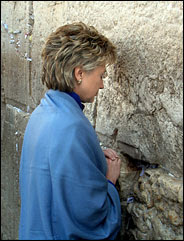 An Israeli archaeological expert has asserted that there is no relation between the Western Wall of the Al-Aqsa Mosque compound and an ancient Jewish temple, Al Jazeera reported today. This will likely serve to undermine Israeli excavations of the site.
Meir Ben-Dov, an Israeli archaeological expert who is author of many books about Jerusalem and the Temple Mount, further asserted that the Wailing Wall, the Jewish name for the Western Wall, has no sacred significance in the Jewish faith.
In related news, UNESCO members are expected to vote on a resolution that denies Jewish links to the Al-Aqsa Mosque and the Western Wall, known as the Buraq Wall to Muslims, agencies reported on Thursday.
Israeli newspaper Haaretz said that the resolution is expected to pass by a large majority, referring this to the inability of Israeli lobbying to persuade UNESCO members not to support the resolution.
“Israel has made efforts to block the resolution or at least soften it, but succeeded only in swaying the positions of a few member states,” Haaretz stated.
The Palestinian Authority, Egypt, Algeria, Morocco, Lebanon, Oman, Qatar and Sudan pushed the draft resolution forward that declares that Jerusalem is holy for all the three Abrahamic religions of Islam, Christianity and Judaism.
The draft also includes a section that stresses that the Al-Aqsa Mosque is sacred only for the Muslims, referring to it as Al-Haram Al-Sharif, or the Sacred Sanctuary.
In April, UNESCO’s executive board ratified a similar resolution, which was supported by a number of European countries, including France.
However, after a “harsh” telephone call between Israeli Prime Minister Benjamin Netanyahu and French President Francois Hollande, France promised not to support any such resolution in the future.
Facebook resumes attacks on Palestinian groups
MEMO | October 12, 2016
 Facebook resumed its policy of targeting Palestinian media pages with the accounts of eight administrators of the Palestine Information Centre and Al-Rai being deleted, Quds News reported.
This comes in light of the continued attack on the Palestine Network for Dialogue, an online discussion board, in what is being seen as an attempt to “besiege all Palestinian content on the network”.
Facebook continues to block Palestine Network for Dialogue’s page, in spite of it releasing an apology to say the action was taken by “mistake”.
The Palestine Information Centre had 2.2 million Facebook followers and published daily news on Palestinian, Arab and international issues in addition to health, sports and culture.
Facebook also deleted the account of Arab48 which had hundreds of thousands of followers. The website specialises in publishing stories about the plight of Palestinians both in the occupied West Bank and Gaza Strip in addition to Arab Israelis living in Israel.
Israel sets restrictions across Jerusalem for Yom Kippur, arms Israeli ‘volunteers’
Palestinian Information Center – October 11, 2016
OCCUPIED JERUSALEM – The Israeli authorities imposed tight restrictions throughout occupied Jerusalem in anticipation of the Jewish holiday of Yom Kippur.
Haaretz Hebrew newspaper said that a series of closures and heightened security operations were declared between the eastern and western parts of occupied Jerusalem.
Palestinian vehicles’ movement is completely restricted as several checkpoints were erected throughout the occupied city, according to the sources.
 Israeli Police spokeswoman Luba al-Samri said in a statement that Israeli police, border police, and Israeli “volunteers” would be spread through different areas in the city of Jerusalem beginning early Tuesday morning, the beginning of Yom Kippur.
Al-Samri added that Israeli police provided the volunteers with weapons to “guarantee the safety of the worshipers.”
“Israeli police in cooperation with the Jerusalem municipality will install checkpoints at the main roads to prevent cars of Eastern residents from heading to West Jerusalem,” al-Samri said in her statement, referring to preventing the access of any Palestinian residents from the eastern part of Jerusalem to its western part.
“Israeli police will also be stationed at neighborhoods to prevent any rock throwing,” according to her statements.
Earlier Monday, Israeli authorities imposed a complete closure in occupied West Bank and Gaza Strip on the occasion of Jewish holiday Yom Kippur.
Israel’s Stern Gang Mailed Letter Bomb to White House, President Truman
By Richard Silverstein | Tikun Olam | October 11, 2016
I’ve been interviewing a Kansas City activist, Jeremy Rothe-Kushel for a future article about his arrest at the behest of the local Jewish federation during a speech by Dennis Ross. Jeremy is a keen researcher and I love talking to people like this because I invariably learn things about Zionist history I never knew. So how about this…
In 1947, the Yishuv was in turmoil. David Ben Gurion was pursuing his plan to declare a Jewish state. He was competing with Jewish extremists who had their own plans to free Palestine from the yoke of the British Empire. While Ben Gurion saw them as dangerous rivals, he also knew they were the bad cop to his good cop. Their mere existence and the havoc they wreaked on British colonial apparatus made Ben Gurion look moderate in comparsion. As such, they were exceedingly useful. The fact that Ben Gurion pardoned many of these terrorists for their crimes after the State was founded and prosecuted none of them indicates that he either colluded with them directly; or that they served his purposes so well, that he felt compelled to forgive them.

Wanted posters, pictured Yitzhak Shamir, Natan Yelin-Mor and Avraham Stern
At the same time as all this was happening, the UN was pursuing it’s own plan to partition the region into Jewish and Arab enclaves. The Jewish extremists of the Irgun and particularly the splinter group, Lehi (aka the Stern Gang), felt Ben Gurion’s way was too accomodationist. They believed there was little to be gained from negotiating with the colonial power. Instead, they sought to drive the British to their knees and in this way force them to abandon the Mandate and free Palestine.
Lehi in particular engaged, much like the PLO of the 1970s, in spectacular acts of terror. The former’s specialty was assassination. Their most shocking attack was the Cairo murder of Lord Moyne. They also assassinated Count Folke von Bernadotte, the Swedish royal who’d saved Jewish lives during the Holocaust and was appointed by the UN to further negotiations between the parties toward accepting the Partition. There were also spectacular failures like a series of letter bombs sent to the homes and offices of current and former foreign ministers and other senior British officials. Several of them exploded wounding postal service employees or government staff. None, thankfully, ever injured their intended targets.
Historically, we’ve known that the Jewish terrorists targeted the British. But much less known is that they also expanded their targets to American officials. Both Margaret Truman and the chief of the White House mail room wrote separate books (hers a biography of her father, and the mail room chief a memoir about his decades of service in the job to several presidents). Both noted that in 1947 a series of mail bombs were discovered and detonated by the Secret Service before they reached their intended victims. At least one was sent directly to the President and marked “Private and Confidential” in order to guarantee it reached its target:
In the summer of 1947, the so-called Stern gang of Palestine terrorists tried to assassinate Dad by mail. A number of cream-colored envelopes about eight by six inches, arrived in the White House, addressed to the President and various members of the staff. Inside them was a smaller envelope marked “Private and Confidential.” Inside that second envelope was powdered gelignite, a pencil battery and a detonator rigged to explode the gelignite when the envelope was opened. Fortunately, the White House mail room was alert to the possibility that such letters might arrive. The previous June at least eight were sent to British government officials, including Foreign Secretary Ernest Bevin and former Foreign Secretary Anthony Eden. The British police exploded one of these experimentally and said it could kill, or at the very least maim, anyone unlucky enough to open it. The mail room turned the letters over to the Secret Service and they were defused by their bomb experts.
After Truman’s book was published, Natan Yelin-Mor, the last chief of Lehi denounced Truman and this story. He called her claim false and dared her to sue him in court. Yelin-Mor was either a fool or a very smart lawyer. Because there is no way any author can sue you if you claim a story in his or her book is false. What would be the grounds? You are expressing your opinion, which is protected speech. On the contrary, Yelin-Mor could have sued Truman for libel and sought to prove that her claim was false and that she knew it was false. That’s called libel. But of course, Yelin-Mor knew he’d lose that fight. So he didn’t go there.
The Lehi boss argued that his organization had no reason to attack the U.S. because Israel needed all the allies it could muster in its fight to become an independent state. That claim is disingenuous because Truman was never an enthusiastic supporter of the State of Israel. In fact, he made numerous statements that indicated his profound skepticism that the new country could lead to any peaceful resolution of the conflict. While it is true he finally did acquiesce and permitted his representatives to vote in favor of the UN resolution and that the U.S. did recoginze the new state, Lehi could know nothing of this in 1947.
Had Lehi dissolved into oblivion after 1948 then none of this would matter especially. But Yitzhak Shamir, the Lehi commander, and Menachem Begin, the Irgun commander, went on to become prime ministers. Their successors have assumed the mantle of leadership and led Israel for much of the past forty years. Israel has become a state that embodies the vision of these former Israeli terrorists. Assassination eventually became one of the signature Israeli methods of ridding the world of political enemies among the Arabs. To this day, the Mossad and Shabak engage in murder as state policy (read my new Mint Press article portraying the assassination of Omar Zayed by Yossi Cohen’s Mossad).
Further, Israel’s far-right inheritors of the Lehi-Irgun mantle also reject the pragmatism of the old Labor left who were willing to pursue their interests in a gradual mode. While Labor might’ve been the iron hand in the velvet glove, Likud is the naked iron hand ready to strike a blow for Jewish supremacy, ethnic cleansing and maximalism in all things. Bibi Netanyahu is Avraham Stern in a suit.
What Begin accomplished on a relatively small scale at Deir Yassin, Ben Gurion accomplished on a large scale in the Nakba. Israel’s subsequent wars of conquest in 1956 and 1967 and Israel’s military adventurism in Gaza and Lebanon since the turn of the century are of a piece with the early terrorist vision of an Israeli garrison state dominating the region and imposing its will on anyone daring to disagree.
Jerusalemite activist sentenced to 20 months in Israeli prison
Samidoun Palestinian Prisoner Solidarity Network – October 10, 2016
 Israeli Magistrate’s Court in Jerusalem sentenced Palestinian Jerusalemite journalist and activist Samer Hussam Abu Aisha, 29, to 20 months in Israeli occupation prison. Abu Aisha has been imprisoned since 6 January 2016; he was attacked and abducted from inside the Jerusalem office of the International Committee of the Red Cross, where he and Hijazi Abu Sabih had erected a protest tent against the Israeli occupation’s order expelling them from their city of Jerusalem. They held evening events, lectures and cultural programs in rejection of deportation and in defense of the Palestinian identity of Jerusalem.
The two organizers were leaders of a campaign against Israeli occupation orders of expulsion from Al-Aqsa Mosque and from the city of Jerusalem. Their campaign included singing protests and other forms of cultural resistance and creative actions. On 16 December 2015, he and Abu Sbeih were delivered an order of expulsion from the city of Jerusalem for five months, citing “state security and order.” He had previously been arrested and harshly interrogated for 33 days, then released and banned from traveling outside Palestine. As soon as his house arrest ended, the Israeli occupation imposed the expulsion order upon them.
Abu Aisha went on hunger strike for 21 days in August in solidarity with Bilal Kayed’s demand for release from Israeli prison; he was part of a group of 35 prisoners from Gilboa prison who also demanded improved conditions inside the prison. Rawan Abu Aisha, Samer’s wife, said that the strike was in part prompted by ongoing denials of family visits.
Abu Aisha wrote earlier regarding the Israeli charges against him:
I was born in Jerusalem in 1987. I lived there all my life except for a few years during my studies in Egypt. As part of my work, I often travel to participate in conferences and youth exchanges in Arab countries and across the world.
Last August I travelled to Lebanon to participate in the 25th Arab Youth Camp. 28 hours after my return to Jerusalem on 17 August 2015, I was arrested by Israeli occupation forces and subjected to an interrogation that lasted 44 days. Eventually, I was conditionally released under open ended house arrest and accused of traveling to an “enemy state” in violation of the “Israeli” emergency regulations of 1952 which place a ban on travel to enemy state of the Zionist regime. These “laws” and policies are forced on us Palestinians despite the fact that we don’t recognize these laws, and the fact that Palestinians hold Lebanon to be a sister state which is naturally, geographically and culturally connected to Palestine.
The detention of Yasser Qous, Jerusalem director of the Palestinian Prisoners’ Society, was extended as well by Israeli occupation courts on 9 October; he had been assaulted and arrested by police forces in the Old City of Jerusalem and accused of “obstructing police work.”
Hamas calls ICC visit to Palestine ‘useless’ as delegation skips Gaza
Ma’an – October 8, 2016
BETHLEHEM – The Hamas movement called a visit by an International Criminal Court (ICC) delegation to the occupied Palestinian territory and Israel this weekend “pointless and useless” on Monday, after the delegation declined to include the Gaza Strip in their visit.
“It is regrettable that the ICC delegation yielded to the demands of the Israeli occupation to exclude the Gaza Strip from the delegation’s schedule, despite the fact that the Gaza Strip was the main site of Israeli crimes in 2014,” a statement released on the movement’s website said.
Various human rights groups have charged Israel with international war crimes and submitted several cases to the ICC related to Israel’s devastating 51-day assault on the Gaza Strip in 2014 that culminated in the deaths of more than 1,000 civilians. Meanwhile, critics have questioned the ICC’s ability to bring justice on issues related to Palestine in the face of Israel’s refusal to cooperate with the court, and have even faulted the ICC itself with playing a key role in the slow process of holding Israel accountable.
“As a result, Hamas considers the delegation’s visit pointless and useless. The visit has caused more pain and suffering for the families of victims who counted on the ICC to bring justice to them and bring the Israeli killers before the court.”
The fierce condemnation by Hamas, the de facto rulers of the blockaded Gaza Strip, came as the Palestinian Authority (PA)-governed occupied West Bank welcomed the delegation of the ICC’s Office of the Prosecutor (OTP) to the city of Ramallah on Saturday.
They were scheduled to meet with the committee that is charged with following up on ICC investigations, the state-run television network Palestine TV, and a Palestinian newspaper, according to the Palestine Liberation Organization (PLO). On Sunday, the delegation will travel to the city of Bethlehem in the West Bank to attend an academic meeting at Bethlehem University. Meanwhile, the OTP also plans to visit Israel.
“The State of Palestine had officially requested the OTP visit Gaza, though it was declined. We hope that on their next visit the ICC delegation will visit other areas of the Occupied State of Palestine, including Hebron and the Jordan Valley,” the PLO’s ICC Higher National Committee said Friday.
The ICC’s decision to skip visiting the besieged Gaza Strip comes after the small Palestinian territory was was bombarded by a wave of Israeli airstrikes in recent days, and after Israel imprisoned activists aboard an all-female flotilla that attempted to reach Gaza this past week.
The flotilla was the fourth of its kind since 2010, when the first Freedom Flotilla was brutally attacked by Israeli naval forces, who killed ten Turkish activists aboard the Mavi Marmara ship.
No Israelis were ever charged for the killings on the Mavi Marmara, despite a case being filed at the International Criminal Court (ICC) charging Israeli officials with war crimes.
Meanwhile in August, the Israeli military closed 13 criminal investigations into cases of Israeli soldiers committing violations against Palestinian civilians during the 2014 Gaza war, without imposing any punitive measures, while some 80 incidents were closed without opening a criminal investigation.
The 51-day Israeli offensive, termed “Operation Protective Edge” by Israeli authorities, resulted in the killings of 1,462 Palestinian civilians, a third of whom were children, according to the United Nations.
According to a UN report, there were incidents in which hundreds of Gazans were killed at the same time, many belonging to the same family, when Israeli air forces bombed residential buildings — credible allegations that the incidents amounted to war crimes. … Full article
This only happens in occupied Palestine

Dr Daud Abdullah | MEMO | October 7, 2016
After a visit to Hebron in 1996, the late Palestinian scholar Edward Said wrote, “The present situation cannot last, there are too many inequities and injustices at the heart of Palestinian life.” Two decades on, there is no end in sight to the wretched conditions he deplored back then. On the contrary, they have grown worse.
Not even Palestinian Authority President Mahmoud Abbas’s controversial decision to attend the funeral of former Israeli President Shimon Peres was enough to bring about a token suspension of the daily torment of Palestinians in the occupied territories. Immediately after his return to Ramallah, Israel declared Tel Rumeida, a neighbourhood in the Governorate of Hebron, to be a closed military area.
As is always the case when such closures are imposed, Palestinian students and residents who attempted to attend classes or go about their daily affairs were told to return to their homes until the 600 illegal Jewish settlers living in Hebron had observed their religious festivities. These celebrations are expected to last several days and so the ancient Ibrahimi Mosque was also closed to Muslim worshippers for six days.
Like their Muslim compatriots who are routinely denied access to their mosques, Christian Palestinians in Bethlehem and Jerusalem must also have permits to worship in their churches from which they are separated by the eight-metre high “security” wall. Before the creation of the state of Israel in 1948, Christians made up 18 per cent of Palestine’s population. Today, they account for less than 1.5 per cent. For reasons of political correctness, western politicians and church leaders have turned a blind eye to the real causes of this exodus; they have chosen instead to look for a scapegoat in alleged “persecution by Muslims”. That is palpable nonsense and plays into Israel’s nefarious hands.
In Hebron, life is far from normal for its 200,000 Palestinian inhabitants at the best of times. Every aspect of their lives is overshadowed by the activities of the settlers who now live illegally among them, with full military protection courtesy of the Israel Defence Forces. Palestinians must contend with the hideous road blocks and military checkpoints that swamp the old city and its environs. Recent reports confirm that more than 1,000 residential apartments have been vacated because of the harassment affecting the local Palestinian population. This was entirely predictable; Israel’s closure of more than 800 commercial businesses was meant to do exactly that — make life so intolerable for the locals that they will leave “of their own accord”. In Zionist terminology this is known rather sinisterly as “silent transfer.”
Elsewhere in the occupied West Bank, the system of inequity and injustice described by Edward Said is no less punitive. The predominantly farming community in Qalqiliya has been virtually encircled by Israel’s apartheid wall, with farmers separated from their land. More than 170,000 men, women and children are similarly locked in by the wall in Bethlehem. Former US President Jimmy Carter found it appalling that they had to obtain “permanent resident” permits from the occupation authorities in order to continue living in their own homes.
It does not take much to recognise the similarities between the Israeli permit system and the hated South African Pass Laws. Just as it was illegal for black Africans to enter designated “white areas” in South Africa so too is it illegal for Palestinians from the West Bank or Gaza Strip to visit Jerusalem, for example, without military permission. At present, the general rule is that only those aged 45 years or over are considered for a permit. While there are, of course, subtle differences, the South African jurist John Dugard has pointed out that the common features between South African apartheid and Israel’s version are discrimination, repression and territorial fragmentation.
Under these repressive and degrading conditions it was only a matter of time before a third intifada erupted in the occupied territories. Israel’s determination to seize Palestinian land for its settlements; its closure and desecration of religious sites; and its extrajudicial killings have all provided the combustible mix that has fuelled the intifada for the past year. The sheer number of settlers (more than half-a-million) and military checkpoints scattered across the West Bank (more than 500) also make the conditions ripe for anger and disaffection to fester.
Throughout their long struggle against Zionist colonisation, Palestinians have staged several uprisings. Once in motion these have never been easy to suppress. Being the weaker of the two parties militarily and politically, the Palestinians have on every occasion suffered untold human and material losses. Yet, for every successive generation, it has been considered to be a price worth paying for their freedom from Israel’s brutal military occupation.
The nature and course of the uprisings have always been unpredictable. This is especially the case today since there is no single political faction that has emerged clearly to lead or coordinate events on the ground. In the absence of any serious political initiative, and given Israel’s determination to maintain its occupation and dominance over the Palestinians, it is only reasonable to expect the current intifada to continue well into the future. In this regard, Edward Said was right: there will be no end to Palestinian efforts to end the prevailing system of inequity and injustice of a kind which only happens in occupied Palestine.
Palestinian media raided and closed by Israeli forces

Samidoun Palestinian Prisoner Solidarity Network – October 8, 2016
Palestinian associations in 1948 Palestine were closed by Israeli police and Shin Bet agents on Thursday, 6 October in a series of raids in Nazareth and Umm al-Fahm. The associations allegedly are linked to the northern Islamic movement, the Palestinian religious and political organization banned nearly a year ago by Israeli officials. The leader of the Islamic Movement is Raed Salah, currently imprisoned and well-known for his advocacy in defense of Al-Aqsa Mosque, as well as his participation in the Freedom Flotilla to Gaza.
Palestinian organizations across political lines condemned both the banning of the Islamic Movement and the raids on the community organizations and media institutions. The four Palestinian entities forcibly shuttered on Thursday were the Higher Commission to Support Jerusalem and Al-Aqsa, Q Press in Umm al-Fahm, the Midad Psychometry Institute and Al-Medina newspaper.
The Higher Arab Follow-Up Committee labeled the attacks “a new sign of a systematic scheme to suppress the rights of the Arab community, a repression that applies to all walks of life… We renew our rejection of the decision to ban the activities of the Islamic Movement, and at the same time warn of the danger of the use of the Islamic Movement’s activities as a new pretext to suppress even more freedoms and silence the voice of the Arab people, who are fighting against the Israeli racist policies targeting our presence on our ancestral land.”
The Al-Alam media association denounced the closures and raids on Al-Medina, Q Press and other institutions and the confiscation of their computers, linking the raids to an ongoing escalation against Palestinian organizing in 1948 Palestine, among Palestinians with Israeli citizenship, in particular the campaign of arrests and harassment targeting the National Democratic Assembly (Tajammu’/Balad party).
The Freedoms Commission of the Higher Follow-Up Committee said that “these three institutions, added to the 23 already prohibited, are independent institutions that provide a variety of services for our people… How can an institution like the Midad Psychometry Institute to qualify students for exams, which tutors thousands of secondary school students, contribute to conflicts over Al-Aqsa Mosque? How can the fact that 69 students of the Midad Institute were admitted this year to study medicine in Israeli universities be a cause of conflict over the Al-Aqsa Mosque?” The statement noted the ongoing attacks on the National Democratic Assembly and the investigations targeting Haneen Zoabi and Jamal Zahalka, as well as the 104th demolition of the village of Al-Araqib and the displacement of its people on the same morning of 6 October as reflections of one policy. “This government has declared outright war on the Palestinian people inside, taking advantages of the wars in the region to implement its plans against our people in our homeland, and the Palestinian people in general,” said the statement.
The suppression of Palestinian political activity among the Palestinians of ’48 (who hold Israeli citizenship, and constitute 20% of the population of the Israeli state) is nothing new; in the first 20 years of occupation, from 1948 to 1966, Palestinian citizens lived under martial law which in many ways served as the precursor to the present-day scheme in the West Bank and Jerusalem. Since that time, the banning and violent suppression of Palestinian political activities, as well as the targeting of Palestinian political leaders for arrest and imprisonment, has not ceased. From the Al-Ard movement prohibited in the 1950s, to the Land Day protests against land confiscation met by Israeli fire, to the killing of Palestinians at the launch of the second Intifada – not to mention the imprisonment of prominent Palestinians like Salah, Said Naffaa, Ameer Makhoul and others, and the targeting of cultural workers like Dareen Tatour, the Israeli state has been firmly committed to the suppression of Palestinian existence and political organizing in 1948 Palestine. These acts of political repression accompany ongoing land confiscation, racism and discrimination, defunding of communities and institutions and over 50 racist laws targeting Palestinian existence on their land.
Israeli Foreign Ministry projects Palestinians as the Zionists, Ashkenazis as indigenous, in twisted video

© Israel / YouTube
RT | October 7, 2016
Israel’s Foreign Ministry is calling out at pretty much everyone and anyone who has wronged Jews over the last 3,000 years in a modern-day history lesson in a satirical video.
The satirical video outlines the “history of the Jewish people” by focusing on Jacob and Rachel, a nice Jewish couple that are pushed out of their home by an endless stream of unwelcome visitors.
“From ancient times to modern days, the Land of Israel has seen a whirlwind of visitors knocking on its door… but Jews were always present in their home-sweet-home,” read the new YouTube video’s caption.
Assyrians, Greeks, Arabs, crusaders, the British and many other guests stop by to “claim the home as their own” until the British eventually “realize this isn’t Europe” and give the couple back their home.
That is until, finally, a knock at the door unveils a Palestinian couple looking for somewhere to stay.
Featured Video

Houthis Don’t Have to Conquer Saudi Arabia to Make It Pay
or go to
Aletho News Archives – Video-Images
From the Archives
Newly Released FBI Docs Shed Light on Apparent Mossad Foreknowledge of 9/11 Attacks
By Whitney Webb | MintPress News | May 17, 2019
NEW YORK — For nearly two decades, one of the most overlooked and little known arrests made in the aftermath of the September 11 attacks was that of the so-called “High Fivers,” or the “Dancing Israelis.” However, new information released by the FBI on May 7 has brought fresh scrutiny to the possibility that the “Dancing Israelis,” at least two of whom were known Mossad operatives, had prior knowledge of the attacks on the World Trade Center. … continue
Blog Roll
 Aletho News
- MEP blasts ‘Euro-Gestapo’ for lecturing Russia on democracy
- Syria May Send Troops to Saudi Arabia Amid War with Ansar Allah
- UK whines about losing billions to ‘Putin tax’
- Baghaei to Rubio: Distorted narratives cannot erase US record of broken commitments
- Houthis Don’t Have to Conquer Saudi Arabia to Make It Pay
- MOE: Nearly 22,000 Students and Education Workers Killed
- Guterres in Islamabad: Genocide, cowardice, and the cage of Imran Khan
- Johnson, Marandi say Yemen holds upper hand over Saudi Arabia
- False flags won’t save aggressors, Iran FM spokesman says
- The Makkah Pact Enters Into Force: The End of American Dominance or Its New Form?
- If Americans Knew
- Report claimed Mark Levin used by Israeli government to influence Trump
- Over 2,000 Gazans have died awaiting medical evacuation amid Israel’s continued siege
- How a U.S. Diplomat Suppressed and Altered Reports Critical of Israel
- 5 Palestinians Die from Israeli Strikes in Gaza as Relentless Attacks Continue
- Report: Ceasefire Slows Killing but Leaves Devastation Intact
- Country Music Singer Zach Bryan Breaks Attendance Record at Robert Kraft’s Gillette Stadium While Wearing ‘Free Palestine’ Shirt for Second Night in a Row
- Three years of death and devastation: Israel’s war on Gaza in pictures
- Why Hamas believed the status quo was more dangerous than its 7 October gamble
- Debunking Israel’s latest list of ‘terrorist’ journalists in Gaza
- In Gaza, focus is on survival, “every step is a struggle” – Daily Update
- No Tricks Zone
- New Study: 50 Years Of The Most Aggressive ‘Net Zero’ Policies Can Only Affect The Global Climate By 0.03°C
- US September “Heat” Was No Record…Many Records Set Decades Ago
- Latest European Green Energy Debacle; Portugal’s Largest Flagship Solar Park Insolvent!
- Green Energy Debacle: German Expert Professor Fritz Vahrenholt Warns Of Severe Economic And Social Consequences
- Two More Paleo Reconstructions Affirm Meters-Higher Sea Levels Across Ireland, Brazil 7000-6000 Years Ago
- New Study: Earth And Venus Surface Warmth Largely Explained By Convection And Lapse Rate, Not CO2 Or Radiation
- 2025 Nature Paper Claiming Worsening Global Drought Gets RETRACTED …Heavily Flawed
- New Study: ‘Global Drought Shows No Detectable Recent Acceleration Under Climate Warming’
- Economic Masterminds: German Socialists Suggest Taxing Productivity Gains Stemming From Using AI
- The South China Sea Has Not Been Cooperating With The Climate Change Narrative

