Israel continues to besiege Palestinian towns, breach international law in occupied West Bank
International Solidarity Movement | July 3, 2016
Occupied Hebron – In the last three days Israeli military forces have implemented several blockades isolating the cities of Yatta and Bani Na’im south of Hebron. It is reported that cement roadblocks, earth mounds, gates and checkpoints have been installed across the region, with no timeline for when they may be removed.
The blockades are only implemented to restrict the movement of Palestinians as illegal Israeli settlers can still pass the checkpoints. This discrimination is a clear apartheid strategy and limits Palestinians to not only being unable to attend work but also reaching basic human services such as hospitals. This strategy clearly violates Palestinian’s right to freedom of movement (Art.13 of Universal Declaration of Human Rights).
By enforcing these illegal blockades Israel is also restricting Palestinian movement during the final days of the holy month of Ramadan where thousands of Muslims wish to travel to the most significant religious sites for prayer and visit their families.
This act is also another example of Israel using collective punishment techniques, which are also illegal under international law. Israeli forces continually use collective punishment in the form of revoking travel and work permits, blockading cities and punitive house demolitions.
Operation Dove have compiled the following interactive map to illustrate the extent of the blockade.
The innocent people who are living under siege in Yatta and Bani Na’im are significantly impacted by the Israeli forces implementing such blockades, which have been condemned internationally by human rights organisations and NGOs.
Ban Ki-moon’s farewell to the occupied Palestinian territories
MEMO | July 2, 2016
On Tuesday, UN Secretary General Ban Ki-moon finished his farewell trip to Israel and the occupied Palestinian territories. He is due to step down in December and used the occasion to urge some political will for a two-state solution as “the only way to meet the national aspirations of both peoples.” Ban also criticised the blockade of Gaza which, he said, “Suffocates its people, stifles its economy and impedes reconstruction efforts.” Interestingly, he added that it is “collective punishment for which there must be accountability.”
Speaking in Ramallah, the UN chief expressed an understanding of Palestinian frustration: “I’m aware that many Palestinians question the feasibility of reaching a just and lasting peace with Israel. They hear talk of peace but they see violence. They still live a life of checkpoints, permits, blockade, demolitions and profound economic hardships faced with growing indignities and the humiliating occupation that will soon enter its 50th year.”
During his time as Secretary General, Ban has condemned the status quo verbally but the organisation he leads has failed to take concrete action. Under his tenure, Gaza has been strangled by a tight blockade and its residents have witnessed three major Israeli offensives. In over half of his time at the top of the UN, the West Bank settler population has grown by 23 per cent (from the beginning of 2009 until the beginning of 2014), and at least two rounds of direct talks have failed. In 2014, more Palestinians were killed by Israel than in any other year since 1967. Violence and fatalities in the West Bank and East Jerusalem, meanwhile, were at their highest since the beginning of his tenure in 2007.
Following the most recent Israeli war against Gaza in 2014, a UN inquiry found that Israel was responsible for striking seven official sites used by the organisation as civilian shelters, during which 44 Palestinians were killed and 227 others were injured. Releasing the report, Ban condemned the attacks “as a matter of the utmost gravity.” He noted that it was the second time during his tenure as secretary general that he had been obliged to establish a board of inquiry into incidents involving UN premises and personnel in Gaza that have occurred during the course of “tragic conflicts” in the Gaza Strip. Concerning the children killed in the war, he commented during an earlier visit, “I met so many of the beautiful children of Gaza. More than 500 were killed in the fighting – many more were wounded. What did they do wrong? Being born in Gaza is not a crime.”
However, his inaction during the conflict forced 129 organisations and distinguished individuals to sign an open letter to him. “Until today,” they wrote, “you have taken no explicit and tangible measures to address the recent Israeli attacks in the occupied Palestinian territories since 13 June. Moreover, your statements have been either misleading, because they endorse and further Israeli false versions of facts, or contrary to the provisions established by international law and to the interests of its defenders, or because your words justify Israel’s violations and crimes.”
The number of Palestinian children killed during the 2014 war led to efforts to include the Israel Defence Forces on a UN list of serious violators of children’s rights. However, while the UN chief should have supported that inclusion made by Leila Zerrougui, the UN special envoy for children and armed conflict, he didn’t. He was accused of caving into pressure and omitting the Israeli military from the list. UN sources described the decision to override Zerrougui’s recommendation as “unusual”, while Human Rights Watch called it “a blow to UN efforts to better protect children in armed conflict.”
On his farewell visit to Gaza, Ban Ki- Moon told residents that, “The UN will always be with you.” As the two-year anniversary of the beginning of the 2014 Gaza war draws near, most of the 11,000 homes destroyed and 6,800 severely damaged or rendered uninhabitable remain in ruins, largely as a result of the Israeli-led blockade. As his time as UN leader comes to a close, the Palestinians will be hoping that his successor will give them more than words.
Millions rally to mark International Quds Day
Press TV -July 1, 2016
Millions of people have attended the International Quds Day rallies across Iran and other countries to show their solidarity with the oppressed Palestinian people and condemn Israeli atrocities.
The rallies in Iran, organized by the Islamic Propagation Coordination Council (IPCC), started at 10:30 local time (06:00 GMT) in Tehran and 850 others cities across the country.
Demonstrators, including Iranian Jews and other religious minorities, braved the sizzling heat of the summer, with the mercury touching 42°C in the capital.
People taking part in the rallies sought to communicate to the world the deplorable status of the Palestinians and press the Israeli regime to respect Palestinian rights.
Nine routes have been identified for the rallies throughout the Iranian capital, which witnessed the commencement of the demonstrations.
The late founder of the Islamic Republic of Iran, Imam Khomeini, named the last Friday of the lunar fasting month of Ramadan as the International Quds Day.
Each year, millions of people around the world stage rallies on this day to voice their support for the Palestinian nation and repeat their call for an end to the Tel Aviv regime’s atrocities and its occupation of the Palestinian territories.
Iranian President Hassan Rouhani (seen below) also joined the Friday rallies in the capital.
President Rouhani told reporters during the rally that the message of the Iranian people is that the Palestinians are not alone in their struggle against occupation and oppression.
He said the Israeli regime is bound by none of the internationals norms and rules and is a base for the US and the global arrogance in the region.
“Today, any country that fights this base and any country that wants stability and security in this region, is looked upon unfavorably by the global arrogance,” the Iranian president said.
Iranian Foreign Minister Mohammad Javad Zarif also took part in the rallies in Tehran. He said during the demonstration that, with their participation in the rallies, Iranian people are telling the world that they do not condone such wrong policies as occupation.
“The Muslim people of the region and the world,” Dr. Zarif said, “still identify the Zionist regime (Israel) as the biggest threat to the Islamic world and international peace and security.”
Other senior Iranian officials, including Ayatollah Akbar Hashemi Rafsanjani, who is the head of the country’s Expediency Council, Parliament (Majlis) Speaker Ali Larijani, and Judiciary Chief Ayatollah Sadeq Amoli-Larijani also took part in the rallies.
Israel & Arab governments
Major General Yahya Rahim Safavi, a top military adviser to Leader of the Islamic Revolution Ayatollah Seyyed Ali Khamenei, said the Israeli regime and its sponsors are behind all miseries and the insecurity in Islamic and Arab countries from North Africa to West Asia.
The objective behind the creation of the Israeli regime, Maj. Gen. Rahim Safavi said, was “to create insecurity in and establish dominance over Arab and Islamic countries… and to plunder the natural resources of… these countries.”
“The Israeli regime, with US help, is after normalizing [its] ties with Turkey, Saudi Arabia, Qatar, and some other Arab states,” he said, adding, “Hand-in-hand with some Arab countries such as Saudi Arabia, the [Tel Aviv] regime seeks to stoke war between Sunnis and Alawites and Shias in Islamic countries [like] Iraq, Syria, Nigeria, Lebanon and Yemen.”
Rallies are also underway in other countries, including in Iraq, where people took to the streets of the capital, Baghdad, on Friday.
Mohammad Marandi, a professor at the University of Tehran, told Press TV that there is hardly any access to information about Israeli atrocities against Palestinians in the United States.
He said people trying to inform Americans of such Israeli behavior face acute antagonism.
Final statement
At the end of the rallies, a statement was issued that called, among other things, for continued resistance in the face of the Israeli occupation of Palestinian territories, unity among various Palestinian factions and continued support for Palestinian resistance, and maintaining unity in the Islamic world.
The final statement also condemned the proxy wars as well as the terrorist activities of Salafi and Takfiri groups in Islamic countries.
It also described the US as the number-one enemy of the Iranian nation, and called for vigilance in the face of US attempts to influence Iranian politics.
UN Working Group on Arbitrary Detention slams Israeli human rights breaches in Hares Boys case

The Hares Boys, one of whom is the XXXXX referred to in the UN Working Group’s Opinion
By Julie Webb-Pullman – Gaza Scoop – June 30, 2016
In an opinion released on June 29, 2016 The United Nations Working Group on Arbitrary Detention slammed Israel for its treatment of a Palestinian child arbitrarily detained, tortured, and forced to sign a document without first reading it. The Group also noted the discriminatory nature of the arrest based on the nationality of the victim, who was referred to as XXXXX, but acknowledged to be one of the children in the notorious Hares Boys case.
In the advance unedited version of the opinion, the Working Group “recommends the Government Israel to provide full reparations to XXXXX, starting with his immediate release,” and decided to refer the allegations of torture to the Special Rapporteur on torture for appropriate action.
Israeli authorities did not refute that on 16 March 2013 XXXXX was strip searched and locked in a small room for a long time, during which he was obliged to stay nakedly in stressful positions. In an interrogation room he was shackled, by hands and feet to a chair and was questioned for several hours. He was also subjected to verbal abuses and threats and was forced to sign a document that he was prevented from reading beforehand. For 21 days, XXXXX was held in solitary confinement with no access to the outside world and he was deprived of visits from his family and lawyer.
On 5 April 2013, he was transferred to Megiddo prison in northern Israel, where he was again held in solitary confinement for 19 days.
The Working Group noted that XXXXX was deprived of liberty when he was 17 years old, and had the right to be tried by a juvenile justice system in a speedy manner.
“Military Tribunals cannot be competent for civilians in accordance with relevant international human rights law. He was arrested without a warrant, was not informed of the reasons of the arrest and was not allowed to receive visits from his lawyer for several days following the date of his arrest. During interrogation,he was tortured and forced to sign a document without reading it first,” the Group found.
The Working Group concluded that the detention of XXXXX between 15 March 2013 and 9 April 2013 was arbitrary, being without any legal basis, nor any charge or trial.
It was also of the opinion that those acts from Israeli authorities are in violation of articles 9 and 10 of the Universal Declaration of Human Rights (UDHR), as well as articles 9, 10 and 14 of the International Covenant on Civil and Political Rights (ICCPR), and that detention of XXXXX was based in his Palestinian origin therefore was discriminatory in nature.
The Working Group has a mandate to investigate allegations of individuals being deprived of their liberty in an arbitrary way or inconsistently with international human rights standards, and to recommend remedies such as release from detention and compensation, when appropriate.
Netanyahu demands expulsion of Arab MK Zoabi from Knesset
Palestinian Information Center – June 30, 2016
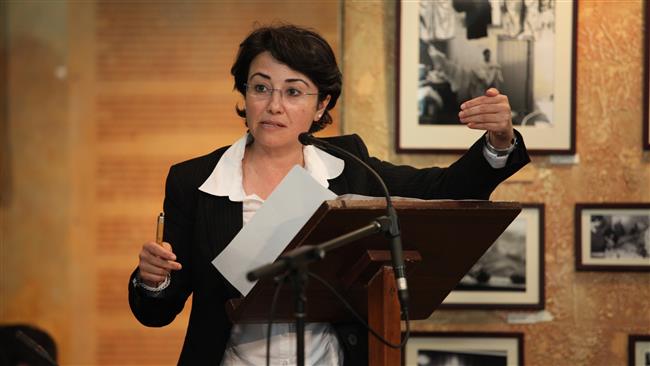
NAZARETH – Israeli Prime Minister Binyamin Netanyahu spoke with Attorney General Avichai Mandelblit Wednesday afternoon regarding the possible expulsion of Arab MK Hanin Zoabi from the Knesset.
Netanyahu’s demand came following Zoabi’s condemnation of the continued Israeli crimes against Palestinians and calls for lifting Gaza siege.
“With her actions and lies she crossed every line and she has no place in the Knesset,” Netanyahu claimed.
Earlier on Wednesday Zoabi caused an uproar on the Knesset floor when she strongly condemned the Israeli forces’ videotaped attack on Turkish activists who were killed during their participation in Freedom Flotilla in 2010. The murderer has to pay compensation for the families of Turkish victims, she said during a debate discussing the newly-signed deal between Israel and Turkey. Zoabi considered the deal as a “murder confession.”
Zoabi demanded the Israeli government issue an apology both to the “political activists” aboard the Mavi Marmara, on which she sailed in solidarity, and to herself, from those who “incited against [her] for six years.”
During the debate, Israeli MKs tried to physically attack Zoabi following her address. Several MKs began shouting and moved toward the podium to complain. “Come hit me! Come hit me!” Zoabi shouted to the MKs who were pointing and yelling at her.
As MKs mobbed the stage, Zoabi shouted “they murdered” and “shut up” repeatedly. When Deputy Knesset Speaker Hamad Amar (Yisrael Beytenu) asked her to apologize, Zoabi said: “The Israeli soldiers who murdered are the ones who need to apologize! You need to apologize!”
The Joint List strongly denounced the attack, considering it a “fascist assault.” It added, “The racist and bloody attack against Joint List MKs has notably escalated, calling for an end to the continued incitement against Arab MKs and Hanan Zoabi in particular”.
In May 2010, a flotilla of six ships headed to Gaza but Israeli navy forces intercepted and boarded them and forced them to dock in Israel after brutally attacking the passengers. Nine of the Turkish activists were killed during the attack.
Zoabi’s comments came a day after Israel signed a deal with Turkey to restore ties, after years of frosty relations exacerbated by the flotilla attack. The deal stipulates that Israel would pay Turkey $20 million in compensation to families of the victims.
“Free Marwan Barghouthi” banner returns to Paris-area city hall after legal victory

Samidoun Palestinian Prisoner Solidarity Network – June 30, 2016
The Administrative Court of Montreuil in France rejected on Tuesday, 28 June an appeal by the Seine-Saint-Denis prefecture (representing the central French state), demanding the removal of a banner supporting Palestinian prisoner and leader Marwan Barghouthi from the front of the city hall of Stains, in a victory for supporters of Palestinian political prisoners and Stains’ mayor Azzedine Taibi.
The court found that the prefecture’s arguments were inadmissible and invalid, despite an earlier temporary order that the banner must be removed. Azzedine Taibi, the mayor of Stains and a representative of the French Communist Party, said that “This is not a personal victory but a collective victory! … Marwan Barghouthi will remain an honorary citizen of our city and I know that one day, he will be on our side, here in Stains, the city of popular resistance! The struggle and the mobilization will only grow for the liberation of Marwan Barghouti and all Palestinian political prisoners…”
The prefect – representing the government of Prime Minister Manuel Valls, who has urged prosecution of BDS activists and the suppression of the movement to boycott Israel – argued that the banner was “not of local interest” and likely to lead to a “disturbance of public order.” Manuel Valls, as Minister of the Interior, previously intervened in the case of Georges Ibrahim Abdallah – after intervention from US Secretary of State and now presidential candidate Hillary Clinton – to block the release to Lebanon on parole of the Lebanese Communist prisoner and struggler for Palestine who has been imprisoned in French jails for 32 years.
The prefect’s case was dismissed, as was a complaint filed against the mayor by the BNCVA, a pro-Zionist organization that nominally combats anti-Semitism but in practice focuses on attempts to suppress Palestine solidarity and the boycott of Israel, which accused Taibi of “public apology for terrorism” for his support of Barghouti.
Stains is one of a group of 23 French municipalities who have named the imprisoned Fateh leader and Palestinian Legislative Council member an honorary citizen. A delegation of 16 French mayors was prohibited from visiting Barghouthi in Gilboa prison in Palestine by the Israeli occupation on 14 June; the mayors participated later in a press conference in support of the campaign to nominate Marwan Barghouthi for a Nobel Peace Prize, a campaign supported by Belgian parliamentarians, Desmond Tutu, Adolfo Perez Esquivel, and the Tunisian winners of the 2015 Peace Prize.

Taibi hosted a ceremony outside the Stains City Hall on Wednesday night, 29 June, celebrating the victory and the official unveiling and replacement of the “Free Marwan Barghouthi” banner to the front entrance of the Stains city hall.
The Stains victory is one of several in France against attempts to criminalize or suppress the Palestine solidarity movement or the boycott of Israel. A court in Créteil dismissed a prosecution for “incitement to discrimintion” against Jean-Claude Lefort pursued by the Association France-Israel and “Lawyers Without Borders” on 24 June, because he had called for a boycott of Israeli products; the court noted that this was a matter of expression on a “debate of general international interest.” In addition, the municipality of Bondy voted on Thursday, 23 June to refuse to purchase goods made in Israeli settlements in the West Bank.
Today, 30 June, 4 BDS activists will face a trial in Toulouse; they are accused of “obstructing the normal exercise of economic activity of three stores” for distributing leaflets in public squares in support of the boycott of Israeli goods. The prosecution was initiated by LICRA, a French pro-Israel advocacy organization; activists are mobilizing outside the courthouse at 1 pm in support of the 4 accused organizers.
The Forbidden Palestinians in North America
By Paul Larudee | Dissident Voice | June 29, 2016
The survivors of the 1948 massacres in and expulsions from Palestine are everywhere. Scattered to the four corners of the earth, we have only to look in our own communities to find them. Seven million Palestinians live outside Palestine, compared with five million inside. At least half a million live in Chile alone. Why, then, should we bring Palestinians from the refugee camps in Lebanon to tell their stories in North America?
Many have said that we should not. They say that these Palestinians are toxic, that they are hardliners, resistance fighters, fanatics and terrorists, and that there is no benefit in trying to engage them. We believe the opposite, that because they have a different viewpoint, the full Palestinian story cannot be told without their voices, and that, in fact, they speak for many other Palestinians who think as they do.
The western groups that invite Palestinian speakers from Palestine inevitably act as a filter. It is easy to find Palestinians that preach nonviolence and reconciliation, but how often have we heard from the rest? How many speakers from Hamas and Islamic Jihad have been on speaking tours of North America? Do they not have a viewpoint and should we not hear it?
That is, of course, impossible. Our societies will not allow it. So we decided instead to bring sympathetic voices of people who are from these societies but have no affiliation to any of the political parties or resistance groups. Unlike Palestinians in other countries, their societies have been frozen in refugee camps since 1948, because they are considered foreigners and refugees in Lebanon, without permission to work, own land, or partake in the life of the country. They are stateless, with no citizenship of any kind and few, if any, opportunities to travel. It was something of a miracle to get their US visas. In many ways, their condition has not changed since the time of their expulsion.
The North America Nakba Tour, sponsored by the Free Palestine Movement, the Northern California chapter of the International Solidarity Movement and Al-Awda Palestine Right to Return Coalition, brought 86-year-old Mariam Fathalla from the Ein el-Helweh camp in southern Lebanon and 22-year-old Amena Ashkar from the Bourj el-Barajneh camp near Beirut to San Francisco at the beginning of April, 2016. In the next nine weeks they logged more than 11,000 miles by car and spoke at 26 events throughout North America. Sadly, their Canadian visa did not arrive in time, so those five events were conducted by electronic connection.
The tour was an acclaimed success. More than seventy organizations sponsored the events, including Christian, Jewish and Muslim groups, as well as university, social justice and community organizations. Astonishingly, there were few confrontational situations. The primary outcome was greater understanding.
Mariam and Amena delivered a message that they want all their rights restored: their lands, their properties and their country. Everyone in the camps has lost everything they ever had in Palestine. There is nothing left to preserve. The issues at the “peace talks” are meaningless to them. They don’t want a Palestinian state. They want Palestine. They don’t want land in Palestine. They want their land in their village in Palestine. They don’t even want equality with Israelis. They want justice.
One questioner asked, “What is the solution? Two states? A single state for all? A binational state?” Amena responded, “I don’t accept any of those, because none of them restores what we lost, and doesn’t give us our rights. International law is on our side.” Her message was understood, with sympathy, and there was no confrontation.
• If you missed the live presentation, you can see one filmed in Denver on May 20, 2016 at The North American Nakba Tour: Exiled Palestinians living in Lebanon
Paul Larudee is one of the founders of the Free Gaza and Free Palestine Movements and an organizer in the International Solidarity Movement.
Israeli settlers raid lands in Bethlehem, spray “Death to Arabs” on Palestinian property
Ma’an – June 29, 2016
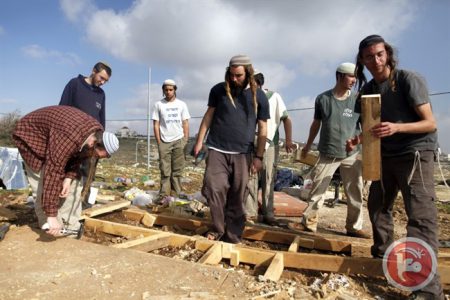
BETHLEHEM – Israeli settlers from the illegal Beitar Illit settlement raided Palestinian lands in the village of Wadi Fukin in the central occupied West Bank district of Bethlehem on Tuesday, according to local witnesses.
Ahmad Sukkar, head of the Wadi Fukin village council, told Ma’an that a group of Israeli settlers raided agricultural lands in the al-Fuwwar area of the village, destroying two greenhouses and tearing up plants belonging to Maher Sukkar, Jamil Assaf, and Muhammad Manasra.
Sukkar also said the Israeli settlers uprooted the plants of Muhammad Saleh Manasra and Naim Daoud Attiyeh, before spray-painting “Death to Arabs” on their property.
Israeli settlers from the illegal Beitar Illit settlement, which has been built on private Palestinian lands belonging to the villages of Husan, Nahalin, and Wadi Fukin, commonly raid the communities and destroy Palestinian property.
Beitar Illit is one of several settlements that comprise what Israel refers to as the “Gush Etzion” settlement bloc, which Israel plans to illegally annex into its territory, according to the Applied Research Institute – Jerusalem (ARIJ).
According to ARIJ, Israel’s plans of incorporating the Gush Etzion settlement bloc into the municipal boundaries of Jerusalem — boundaries that Israel continuously redefines in order to annex land further into Palestinian territory — parallels with Israel’s objectives of reshaping the demographics of the city by lowering the Palestinian population to 20 percent, and filling in the rest with Jewish Israelis.
Local Palestinians often attribute settler attacks on Palestinian communities — 51 of which have been reported since the start of this year, according to UN documentation — to Israel’s larger goals of depopulating Palestinian villages near settlements by scaring Palestinians into leaving their lands in an attempt to make room for the expansion or connection of the illegal settlement blocs.
While the Israeli government does not make Israeli settler population statistics public, most rights groups agree that some 600,000 settlers reside in Israeli settlements across the West Bank and East Jerusalem — all of which are considered illegal under international law.
Palestinian student sentenced to 10 months in Israeli prison

Samidoun Palestinian Prisoner Solidarity Network – June 28, 2016
Palestinian student Baraa Amer, 19, a student at an-Najah University and a resident of Kafr Qalil in southern Nablus, was sentenced on Monday, 27 June to 10 months imprisonment and a fine of 3,000 shekels ($675 USD).

Arrested two months ago, Amer is involved with the student Islamic Bloc at the University, and was previously arrested along with 18 fellow students by Palestinian Authority forces in 2015.
Amer was arrested by Israeli occupation forces amid ongoing student elections at the university; active members of Palestinian student blocs are frequently targeted for arrest and persecution, especially at the height of election campaigning.
Baraa was arrested one day before his final exams in a 2:00 am raid on his home by armed Israeli occupation forces.
His father, Nawwaf, is a journalist and former political prisoner himself.
The arrests of Palestinian students continue. On Saturday, 25 June, Israeli occupation forces arrested Ahmed Hussam Khader, 19, as he traveled south of Nablus; Khader is the son of Fateh Palestinian Legislative Council member Hussam Khader and a student of political science at Bir Zeit University.
Official: 71 Palestinian prisoners have died of torture in Israeli jails since 1967
MEMO | June 27, 2016
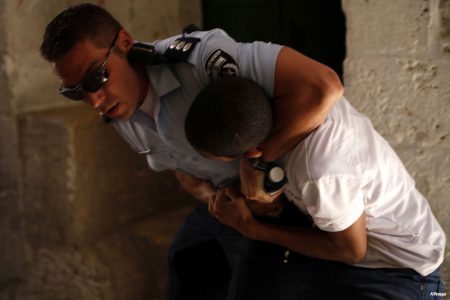
As many as 71 Palestinian prisoners have died in Israeli jails as a result of torture since 1967, Abdel Nasser Farwana, head of the documentation and studies unit at the detainees and ex-detainees committee, said.
In a statement released on Sunday to mark the International Day Against Torture, Farwana said dozens of others died shortly after being released as an effect of the torture they had endured, adding that many more suffer from long-term physical and psychological disabilities.
“Israel practices a unique and atypical form of physical and psychological torture and it is the only country in the world that legalises torture in its jails and detention camps and protects its perpetrators,” he explained.
“Israel uses torture on institutional level against Palestinian and Arab detainees. According to our data, 100 per cent of the Palestinian prisoners were subjected to one form or another of torture,” he added.
Farwana called on international institutions and human rights organisations to take serious and effective steps to stop all forms of torture against Palestinian prisoners and to prosecute those who practice torture against them.
Featured Video

When Israel Is Mighty
or go to
Aletho News Archives – Video-Images
From the Archives
US murdering 1 million Iraqis is democracy, Iran giving yogurt to Iraq is “domination”
By Ali Salaam | American Herald Tribune | July 31, 2017
The New York Times, owned by the Zionist Jewish supremacist Ochs-Sulzberger family, has no problem with Iraqi suffering as long as Iran is not the one behind it.
The Iraq War was a genocide of the Iraqi people by Zionist supremacists in the Bush administration. Over 1 million innocent people were killed based on a lie. American soldiers died in an Israeli war and now an average of 22 soldiers commit suicide every day because their consciences cannot cope with the fact they committed crimes in an illegal war that served no purpose other than to benefit Israel, not America.
Benjamin Netanyahu, Prime Minister of the Zionist regime, once said “We are benefiting from one thing, and that is the attack on the Twin Towers and Pentagon, and the American struggle in Iraq.”
Paul Wolfowitz had his sights on Iraq since his time in the first Bush administration. Former Israeli official and Bush administration official Richard Perle had his eyes on Iraq since at least his authorship of the Clean Break white paper. The Zionist regime had their eyes on Iraq since the 1980s when strategist Oded Yinon wrote his white paper in support of dividing the Arab-Muslim world along ethnic and sectarian lines. The global Zionist lobby has had their eyes on Iraq since Theodor Herzl stated that Eretz Israel’s true borders go from the Nile River in Egypt to the Euphrates River in Iraq. … continue
Blog Roll
 Aletho News
- When Will This White House Madness End?
- Huckabee aide goes to ‘unusual lengths’ to portray ‘Israel’ positively
- Trump Announces Diesel Supply Deal With Putin Following Phone Call
- MEP blasts ‘Euro-Gestapo’ for lecturing Russia on democracy
- Syria May Send Troops to Saudi Arabia Amid War with Ansar Allah
- UK whines about losing billions to ‘Putin tax’
- Baghaei to Rubio: Distorted narratives cannot erase US record of broken commitments
- Houthis Don’t Have to Conquer Saudi Arabia to Make It Pay
- MOE: Nearly 22,000 Students and Education Workers Killed
- Guterres in Islamabad: Genocide, cowardice, and the cage of Imran Khan
- If Americans Knew
- Gaza ceasefire exists in name only, say more than 100 organizations
- Nearly 2 Million in Gaza Need Urgent Shelter Assistance as Winter Looms: IOM Chief Warns
- Suppressing Palestinian resistance: US charity under fire for AI monitoring of Gaza classrooms
- Thousands Are Held in Israeli Torture Camps. This Is What Happens Inside
- Israel puts Gaza’s sick, injured, newborn in peril – Daily Update
- Report claimed Mark Levin used by Israeli government to influence Trump
- Over 2,000 Gazans have died awaiting medical evacuation amid Israel’s continued siege
- How a U.S. Diplomat Suppressed and Altered Reports Critical of Israel
- 5 Palestinians Die from Israeli Strikes in Gaza as Relentless Attacks Continue
- Report: Ceasefire Slows Killing but Leaves Devastation Intact
- No Tricks Zone
- New Study: 50 Years Of The Most Aggressive ‘Net Zero’ Policies Can Only Affect The Global Climate By 0.03°C
- US September “Heat” Was No Record…Many Records Set Decades Ago
- Latest European Green Energy Debacle; Portugal’s Largest Flagship Solar Park Insolvent!
- Green Energy Debacle: German Expert Professor Fritz Vahrenholt Warns Of Severe Economic And Social Consequences
- Two More Paleo Reconstructions Affirm Meters-Higher Sea Levels Across Ireland, Brazil 7000-6000 Years Ago
- New Study: Earth And Venus Surface Warmth Largely Explained By Convection And Lapse Rate, Not CO2 Or Radiation
- 2025 Nature Paper Claiming Worsening Global Drought Gets RETRACTED …Heavily Flawed
- New Study: ‘Global Drought Shows No Detectable Recent Acceleration Under Climate Warming’
- Economic Masterminds: German Socialists Suggest Taxing Productivity Gains Stemming From Using AI
- The South China Sea Has Not Been Cooperating With The Climate Change Narrative

