Pfizer, Democrat-led “Accountable Tech” are Blackmailing Twitter
Will they succeed at preserving censorship?
By Igor Chudov | November 3, 2022
Pfizer is “pausing advertising on Twitter” because it is “concerned that Mr. Musk could scale back content moderation, which they worry would lead to an increase in objectionable content on the platform.”

Pfizer was one of the most significant sources of revenue for Twitter. I constantly saw Pfizer ads and promoted posts, such as this one:

(If you are not sure why “the human brain” becomes so sweaty once pink “science” grabs it firmly from behind, neither am I)
What is interesting is that this advertising pause involves not only Pfizer but other large multinationals with no specific issues related to Twitter censorship, such as General Mills, a producer of popular but unhealthy breakfast cereals.
Who is behind this? Meet a new “action coalition” called “Accountable Tech” that is directing efforts to withhold advertising money from misbehaving technology companies. You may be very surprised, or not, but “Accountable Tech” is packed with Democratic operatives:

Accountable Tech is spearheading this letter to Twitter advertisers:
Accountable Tech joined more than 25 groups to deliver the below message in a letter to Twitter’s top advertisers to demand nonnegotiable requirements for their ad business in the midst of Elon Musk’s acquisition:
To whom it may concern:
Elon Musk’s takeover of Twitter will further toxify our information ecosystem and be a direct threat to public safety, especially among those already most vulnerable and marginalized.
The undersigned organizations believe that Twitter should continue to uphold the practices that serve as guideposts for other Big Tech platforms. We call on you – Twitter’s top advertisers – to commit to these standards as non-negotiable requirements for advertising on the platform:
- Keep accounts including those of public figures and politicians that were removed for egregious violations of Twitter Rules – such as harassment, violence, and hateful conduct – off the platform
All these coalitions attempt to influence large advertisers into doing their bidding by withholding ad money from tech companies that “Accountable Tech” wants to punish.
I understand why Pfizer, a company selling fraudulent “Covid vaccine” and relying on censorship for continued sales, has a vested interest in Twitter continuing to censor vaccine skeptics. However, other companies mentioned above do not have such reasons.
General Mills should only care about selling its cereals. As such, they would advertise wherever the ads would bring future product buyers. So, the pecuniary interest of that company is certainly NOT in pausing their Twitter ads that go along with sports coverage and other non-controversial threads.
Thus, by stopping ads, General Mills acts against its own shareholders. Its management is not blind to this. However, over the years, the coalitions like Accountable Tech have acquired significant influence within these companies and boardrooms via various “diversity,” “equality,” and other “stakeholder” commissions intimidating corporate management.
I discussed this previously in a somewhat broader context after Musk made his first Twitter offer. I explained why “free speech” is a threat to very powerful interests:
Not all tech companies succumb to these “silencing coalitions.” Substack is a very successful, profitable platform that said no to all attempts to deplatform “misinformation superspreaders.” Rumble recently told France to bug off with its requests to close certain channels and blocked France. Other platforms like gab are doing just fine financially without these corporate advertisers.
These “fringe” platforms are resisting censorship but involve comparatively few users. What “Accountable Tech” is trying to do is keep the general masses on the largest social networks from learning the truth.
Will Elon Musk overcome this blackmail? Does he even care to have free speech on Twitter? Is he an ally of freedom? Will “Accountable Tech” win and silence us? What do you think?
EU opens probe into vaccine deals
Samizdat | October 15, 2022
The European Union prosecutor’s office has launched an investigation into the bloc’s procurement of billions of Covid-19 vaccine doses, amid allegations of corruption and secret backroom dealings from several members of the EU parliament.
EU officials announced the probe in a brief statement on Friday, confirming an “ongoing investigation into the acquisition of Covid-19 vaccines in the European Union.” They added that the case follows “extremely high public interest” around the issue, though declined to share any other details.
 While prosecutors were tight-lipped about the exact nature of the probe, the announcement follows allegations from MEPs that European Commission President Ursula von der Leyen conducted vaccine negotiations with Pfizer CEO Albert Bourla in secret. Despite requests from journalists, lawmakers and an EU watchdog, von der Leyen’s office has failed to produce personal text messages sent to Bourla during talks for nearly 2 billion vaccine doses, prompting accusations of corruption.
Croatian MEP Mislav Kolakusic noted the new investigation later on Friday, saying the decision was made thanks to pressure from lawmakers. Though he was unable to shed additional light on the probe, Kolakusic has been highly critical of the EU’s vaccine procurement process, claiming deals for billions of doses were marred by “corruption” and secrecy.
“Today, 10 of us MEPs asked [von der Leyen] the following question: when will she present to us… the communication she had with Pfizer during the procurement of 4.5 billion doses of vaccines at a time when there was absolutely no proof of the effectiveness, and especially not of the harmfulness, of that product?” he said in a tweet earlier this week, calling the issue the “biggest corruption scandal in the history of mankind.”
Last month, the European Court of Auditors said it had asked the commission to provide information on “preliminary negotiations” for the EU’s largest Pfizer purchase – including “scientific experts consulted and advice received, timing of the talks, records of the discussions, and details of the agreed terms and conditions” – but added that “none was forthcoming.” The European Commission still has yet to make the information public, fueling corruption allegations from MEPs.
WHO Wants To Run the World?
By Paul Frijters, Gigi Foster, Michael Baker | Brownstone Institute | July 11, 2022
In Geneva in late May at the 75th meeting of the WHO’s decision-making body, the World Health Assembly (WHA), amendments to its International Health Regulations (IHRs) were debated and voted upon. If passed, they would grant the WHO the right to exert unconscionable pressure on countries to accept the WHO’s authority and health policy actions if the WHO decides that there is a public health threat that might spread beyond a country’s borders.
As Ramesh Thakur, the second man at the UN for years, noted, the amendments would mean “the rise of an international bureaucracy whose defining purpose, existence, powers and budgets will depend on outbreaks of pandemics, the more the better.”
This is the first clear instance of a globalist coup attempt. It would subvert national sovereignty worldwide by putting real power into the hands of an international group of bureaucrats. It has long been suspected that the authoritarian elites arisen during covid times would try to strengthen their positions by undermining nation states, and the this 75th jamboree is the first solid evidence of this being true.
What an opportunity then to see who is in the conspiring club. Who drafted the amendments? What was in them? Which individuals supported them or spoke out against them?
WHO were the conspirators?
The amendments on the table at the May WHA meeting had been transmitted to the WHO by the US Department of Health and Human Services on January 18, circulated by WHO to its member states (‘States Parties’) on January 20 and formally introduced to the WHA on April 12.
The proposals, according to an announcement on January 26, were co-sponsored by 19 countries plus the European Union. Even if some co-sponsors had little direct involvement in drafting them, they all would have approved in principle the overarching goal of tightening up the WHO’s authority over member states in the face of a public health event.
Loyce Pace, the HHS’s Assistant Secretary for Global Affairs – the leading US official nominally responsible for the proposed amendments – arrived at the Biden administration fresh from a stint as executive director of an advocacy organization called the Global Health Council.
That council receives funding from the Bill & Melinda Gates Foundation and its members include Eli Lilly, Merck, Pfizer, Abbott Labs, and Johnson & Johnson. You get the idea. Via one of the foxes-turned-chicken-guard, it appears the HHS ‘worked closely’ on these amendments with large pharmaceutical companies, who will be chomping at the bit for a more proactive (read: profitable) response to any public health emergency, real or imagined.
So the conspiring club consists primarily of the US government and its Western allies in lockstep with Big Pharma, and they are looking to undermine both the sovereignty of their own governments and that of other countries, presumably with the idea that the Western elites would do the running.
What was in them? A blizzard of acronyms and euphemisms
To understand what the US proposed at the WHA, we need first to understand how things have worked in the WHO to this point.
The IHRs in their current form have been in force as international law since June 2007. Among other things, they impose requirements on countries to detect, report and respond to ‘public health events of international concern,’ or PHEICs. The WHO Director-General consults with the state where a possible public health event has occurred, and within 48 hours they are meant to come to a mutual agreement on whether or not it actually is a PHEIC, whether or not it needs to be announced to the world as such, and what counter-measures, if any, should be taken. It’s essentially an early-warning system on major health crises. This is a good thing if it’s run by people you can trust and if it has checks and balances to rein in expansionary tendencies.
The proposed amendments would greatly strengthen the power of the WHO relative to this baseline, in a number of ways.
First, they lower the threshold for the WHO to declare a public health emergency by empowering its Regional Directors to declare a ‘public health event of regional concern’ (PHERC, italics ours) and for the WHO to put out a new thing called an ‘intermediate public health alert.’
Second, they permit the WHO to consider allegations about a public health event from non-official sources, meaning sources other than the government of the state concerned, and allow that government only 24 hours to confirm the allegations and a further 24 hours to accept the WHO’s offer of ‘collaboration.’
Collaboration is essentially a euphemism for on-site assessment by teams of WHO investigators, and concomitant pressure at the whim of WHO personnel to enact potentially far-reaching measures such as lockdowns, movement restrictions, school closures, consumption of medicines, administration of vaccines and any or all of the other social, economic, and health paraphernalia that we have come to associate with the covid circus.
Should the state’s government acceptance of the WHO’s ‘offer’ not be forthcoming, the WHO is empowered to disclose the information it has to the other 194 WHO countries, while continuing to pressure the state to yield to the WHO’s invitation to ‘collaborate.’ A non-collaborating country would risk becoming a pariah.
Third, the proposal includes a new Chapter IV, which would establish a ‘Compliance Committee’ consisting of six government-appointed experts from each WHO region tasked with permanently nosing around to ensure the member states are complying with IHR regulations.
There are more crossings-out of the existing IHR language and new language added in, but the flavour of what the US-led alliance is shooting for is a WHO that can unilaterally decide whether there is a problem and what to do about it, and can isolate countries that disagree.
Compliant WHO member states could act as a supporting cast in the isolation effort, through the distribution of their own health budgets and their ‘health-related’ policies, which would include travel and trade restrictions. The WHO would become a kind of command-and-control center for globalist agendas, pushing the produce of (Western) Big Pharma.
Why and how would this work?
We learned during covid times why it would make sense that the US and its allies are insisting on these amendments.
Lowering the bar for declaring a global (or regional) public health threat triggers a huge opportunity for Western pharmaceutical companies. As legal experts have observed: “WHO emergency declarations can trigger the fast-track development and subsequent global distribution and administration of unlicensed investigational diagnostics, therapeutics and vaccines.
This is done via the WHO’s Emergency Use Listing Procedure (EULP). The introduction of an ‘intermediate public health alert’ in particular will also further incentivise the pharmaceutical industry’s move to activate domestic fast-track emergency trial protocols as well as for advance purchase, production and stockpile agreements with governments before the existence of a concrete health threat to the world’s population has been detected, as is already the case under WHO’s EULP via the procedures developed for a ‘pre-public health emergency phase’.”
You can bet that the WHO ‘expert teams’ sent in to make on-the-ground assessments, under the banner of ‘collaboration’ with the host country experiencing the health event, will be chock-a-block with operatives from the CDC and who knows what other Western agencies, all poking around potentially sensitive facilities that a host government might justifiably claim a sovereign right to keep to itself. Likewise with the ‘Compliance Committee’ proposed by the US under the new Chapter IV of the IHRs: its government-appointed members have an open-ended brief, enshrined in international law, to be busybodies.
In layman’s terms, the WHO would be turned into an international thug, with its member states offered the role of backyard gang members.
As a bonus for Western elites, the proposals are a sneaky form of rewriting history. By cementing authority within an international organisation to determine the existence of public health crises and direct potentially draconian emergency responses, Western governments would get to enshrine and legitimise their own extreme responses to the covid outbreak, as we have pointed out previously. Their backsides would thereby be given some protection from legal challenges.
The refusniks: Developing countries
The proposals were pushed primarily by Western countries: the US was joined by Australia, the UK and the EU in arguing for passage. The resistance was led by developing countries who saw it as a colonialist ambush in which their ability to set policy and respond to health threats in a manner commensurate with their domestic situations would be overridden.
Brazil reportedly went so far as to threaten to withdraw from the WHO, and the African group of almost 50 countries, along with India, argued that the amendments were being rushed through without adequate consultation. Russia, China and Iran also objected.
Failure on the first try, but the US and its allies in the West will get more shots to push it through.
How do we expect them to do this? Well, when a proposal gets bogged down inside a giant bureaucratic machine like the WHO, the inevitable response is to set up committees to work in the background and circle back with a new set of proposals to be presented at a future meeting. True to form, a ‘working group’ and ‘expert committee’ are being assembled to accept member state proposals on IHR reform by the end of September this year. These will be ‘sifted through’ and reports will be prepared for review by the WHO’s executive board in January next year. The objective is to have a fresh set of proposals on the table when the WHA convenes for the 77th time in 2024.
Not all was lost
Salvaging something from the fact that the WHA failed to get a consensus around its biggest agenda item, the US and its allies got a small victory on the point of when they can try again – though in their desperation they needed to violate the IHRs’ own rules to accomplish it. Article 55 of the IHRs states unambiguously that a four-month notice period is required for any amendments.
In this instance, revised amendments were presented on May 24, the same day that the first lot were rejected. These were discussed, further amended on May 27 and then adopted on the same day. The approved amendments halve the two-year period for any (further) approved amendments to the IHRs to take effect. (The IHRs that came into force in 2007 were agreed to in 2005 – but under the new resolution, anything agreed to in 2024 would come into effect in 2025 rather than 2026.)
Yet, what was achieved in terms of fast-tracking the force of new amendments was lost in slow-tracking their implementation. Nations would have up to 12 months – double the previous suggestion of six months – to implement any IHR amendments that newly enter into force of law.
State of play
Where is all this going?
If the WHO takes the reins on decisions about what constitutes a health crisis, and can pressure every country into a one-size-fits-all set of responses that it, the WHO, also determines, that’s bad enough. But what about if its invitation to ‘collaborate’ with countries is backed up with teeth, such as sanctions against those who demur? And what about if it then broadens the definition of ‘public health’ by, for example, declaring that climate change falls under that definition? Or racism? Or discrimination against LBTQIA+ people? The possibilities thereby opened up for running the world are endless.
A global ‘health’ empire would bring huge harms to humanity, but a lot of power and money is pushing for it. Don’t think it can’t happen.
Paul Frijters is a Professor of Wellbeing Economics at the London School of Economics: from 2016 through November 2019 at the Center for Economic Performance, thereafter at the Department of Social Policy
EU chief can’t find texts with Pfizer CEO

Samizdat | June 30, 2022
The European Commission said it is unable to locate text messages sent between its president, Ursula von der Leyen, and Pfizer CEO Albert Bourla during talks for a massive vaccine deal last year, but denied prior charges of “maladministration” from an EU watchdog.
The commission issued a letter on Wednesday stating that an expanded search for the missing messages had “not yielded any results,” following months of dispute between the EU’s executive body and oversight officials. It argued that due to the “short-lived and ephemeral nature” of texts, they typically “do not contain important information” and are therefore rarely stored.
While von der Leyen revealed in an April 2021 interview that she and Bourla privately communicated for several weeks while negotiating a contract for nearly 2 billion vaccine doses, a journalist’s public information request for the texts was later shot down, with the commission claiming it could not find the messages in question.
The denial triggered a rebuke from the European ombudsman, Emily O’Reilly, who followed up with an investigation last year and blasted EU officials over poor administration and a lack of transparency, saying that “no attempt was made to identify if any text messages existed.” The ombudsman then urged the commission to “search again,” asking it to broaden its criteria in a way that might actually locate the records.
The commission doubled down in its latest response to O’Reilly, however, insisting it had handled the matter properly and made every effort to find the texts. It reiterated that it does not register material that contains no “important information,” and that such documents “are not kept, and, as a consequence, are not in the possession of the institution.”
“The European Commission is of the opinion that it has not treated this request in a ‘narrow way’ and that the search and handling of documents for the purpose of public requests for access to documents … is justified and follows the established practice,” it continued.
The body added that it intends to “issue further guidance on modern communication tools” in hopes of avoiding similar mix-ups in the future, but nonetheless held that its actions were “in line with the applicable legislation and the relevant case law on access to documents.”
The office of the ombudsman, which published the commission’s letter on Wednesday, declared that the response was “problematic on several points,” and noted that a “full analysis” of the case would follow in the coming weeks.
The controversy over the missing texts is not the first dispute regarding a lack of transparency in the EU’s vaccine dealings, as the commission was sued in April by several MEPs, who claimed the negotiations were overly secretive. Though contracts were eventually published, they were heavily redacted in a way that “made it impossible to understand the content of the agreements,” the lawmakers alleged, insisting secrecy “has no place in public agreements with pharmaceutical companies.”
Pfizer Classified Almost All Severe Adverse Events During COVID Vaccine Trials ‘Not Related to Shots’
By Michael Nevradakis, Ph.D. | The Defender | June 22, 2022
The latest release by the U.S. Food and Drug Administration (FDA) of Pfizer-BioNTech COVID-19 vaccine documents reveals numerous instances of participants who sustained severe adverse events during Phase 3 trials. Some of these participants withdrew from the trials, some were dropped and some died.
The 80,000-page document cache includes an extensive set of Case Report Forms (CRFs) from Pfizer Phase 3 trials conducted at various locations in the U.S., in addition to other documentation pertaining to participants in Pfizer-BioNTech vaccine trials in the U.S. and worldwide.
The FDA on June 1 released the documents, which pertain to the Emergency Use Authorization (EUA) of the vaccine, as part of a court-ordered disclosure schedule stemming from an expedited Freedom of Information Act (FOIA) request filed in August 2021.
Public Health and Medical Professionals for Transparency (PHMPT), a group of doctors and public health professionals, submitted the FOIA request.
CRFs show deaths, severe reactions to the vaccines during Phase 3 trials
The CRFs included in this month’s documents contain often vague explanations of the specific symptoms experienced by the trial participants.
They also reveal a trend of classifying almost all adverse events — and in particular severe adverse events (SAEs) — as being “not related” to the vaccine.
For example:
- A female in her early 50s (randomization number 86545) who participated in the trial at the Sterling Research Group in Cincinnati, Ohio, died of an apparent myocardial infarction on Nov. 4, 2020. She had received two doses of the vaccine, on Sept. 10 and Sept. 29, 2020.
The patient had a medical history of chronic obstructive pulmonary disease, hypertension, hypothyroidism, osteoarthritis of the knees and attention deficit disorder. Her death was listed as “not related” to the vaccine, and was instead attributed to “hypertensive cardiovascular disease.”
- A female in her late 50s (randomization number 220496), who participated in the trial at Cincinnati Children’s Hospital Medical Center, died of cardiac arrest on Oct. 21, 2020. Her death, however, was indicated as “not related” to her vaccinations (which occurred on July 30, 2020, and Aug. 20, 2020) as it “occurred 2 months after last receipt of study agent,” according to her CRF.
The participant’s medical history included obesity, placement of a gastric sleeve, gastroesophageal reflux, sleep apnea, supraventricular tachycardia, hypothyroidism, depression and asthma.
- A male in his mid-60s (randomization number 221076) who participated in the trial operated by the Texas-based Ventavia Research Group died of an apparent myocardial infarction on Nov. 28, 2020. He had received the two doses of the vaccine on July 31, 2020, and Aug. 19, 2020.
The participant had a medical history that included a previous myocardial infarction, high blood pressure, high cholesterol, anxiety, bilateral hip pain, type 2 diabetes, fluid retention, angina (intermittent), restless leg syndrome, Vitamin D deficiency, tobacco dependency and the placement of a coronary arterial stent in 2017.
According to the CRF, he sustained the myocardial infarction on Oct. 27, 2020, and was diagnosed with pneumonia the following day. While both diagnoses were classified as “serious” in his CRF, they were both listed as “not related” to the vaccination, with his myocardial infection attributed to a “failed cardiac stent” and the pneumonia simply attributed to “infection.”
- A female in her teens (randomization number 104650) was diagnosed with right lower extremity deep vein thrombosis on Nov. 15, 2020, which was still ongoing as of Mar. 29, 2021, the date of the CRF. She was hospitalized and her condition was classified as “serious,” but it was indicated as “not related” to the vaccine, instead attributed to a “fracture” occurring prior to her vaccination on Sept. 11, 2020.
The patient had a medical history including asthma, attention deficit hyperactivity disorder, Charcot-Marie-Tooth disease and obesity.
- A male in his mid-70s (randomization number 227629) participating in the trial at Clinical Neuroscience Solutions Inc. (operating in Florida and Tennessee) sustained a series of adverse events following his vaccinations on Aug. 13 and Oct. 7, 2020.
He was diagnosed with COVID-19 on Aug. 30, 2020, which coincided with several other diagnoses classified as “serious,” including abdominal adhesions (Aug. 29, 2020), altered mental status (Aug. 29, 2020, lasting through Sept. 16, 2020), and acute hypoxic respiratory failure (Aug. 30, 2020). These diagnoses required his hospitalization.
He was also listed as having suffered from congestive heart failure on Aug. 30, 2020, but this diagnosis was listed as “not serious” and as “not related” to the vaccine, but to “prior surgery,” with no further details given. Similarly, his other serious adverse events were listed as being related to “prior” or “previous” surgery, or to “concomitant non-drug treatment.”
Other “non-serious” adverse events listed in this patient’s CRF include hypokalemia, anemia, acute renal failure, sepsis, hyponatremia, leukopenia, small bowel obstruction, aspiration pneumonia, mild concentric left ventricular hypertrophy (symptoms of which were still ongoing as of the CRF date of Mar. 29, 2021) and urinary tract infection.
The patient had a medical history encompassing ongoing hypertension, hypercholesterolemia, gastroesophageal reflux disease, constipation, hiatal hernia and previous diagnoses of small bowel resection, small bowel perforation, inguinal hernia, osteoarthritis in both knees and knee replacement (both knees).
- A male in his mid-70s (randomization number 266982) participating in the trial at Boston Medical Center suffered a series of adverse events following vaccination, including pneumonia and peripheral edema. He had received two doses of the vaccine, on Oct. 2, 2020, and Oct. 27, 2020.
The patient was hospitalized for pneumonia on Jan. 20, 2021, in an event classified as “serious” but also as “not related” to the vaccine. However, the cause of his pneumonia was listed in the CRF simply as “un-related to vaccine,” while his peripheral edema diagnosis was attributed to “existing neuropathy.”
During his hospitalization with pneumonia, his blood pressure was measured as high as 179/72, with a heart rate reaching 105 beats per minute and an oxygen saturation level that fell to 92.0. In total, he had three emergency room visits during the observation period.
The patient had a medical history that included type 2 diabetes, alcoholic cirrhosis, hypothyroidism, asthma, sleep apnea, hypertension, diabetic neuropathy, congestive heart failure, generalized anxiety disorder, depression, insomnia, excessive urination, chronic obstructive pulmonary disease and HIV-positive status.
A protocol deviation also occurred involving this patient, as his diary was not activated following administration of the first dose of the vaccine.
- A male in his early 40s (randomization number 68489) who participated in the trial at Cincinnati Children’s Hospital Medical Center sustained chronic myelogenous leukemia on Sept. 24, 2020, with the condition ongoing as of the date of the CRF on Mar. 29, 2021.
This was classified as a “serious” and “life-threatening” adverse event, albeit one that did not require hospitalization, but it was listed as “not related” to the vaccination but instead to a “genetic change in stem cells.”
The patient had been vaccinated on Aug. 26, 2020, and Sept. 17, 2020, and had a medical history of asthma and seasonal allergies. Other “non-serious” adverse events he sustained included leukocytosis and thrombocytosis.
- A female in her mid-40s (randomization number 49018) who participated in the trial at Clinical Neuroscience Solutions Inc. was diagnosed with kidney stones on Jan. 4, 2021.
This was classified as a “serious” adverse event that required hospitalization, but was listed as “not related” to the vaccine, instead being related, again, to “kidney stone” (sic). She had received the two doses of the vaccine on Aug. 17, 2020, and Sept. 8, 2020.
The patient was diagnosed with COVID-19 on Jan. 27, 2021. Her prior medical history included migraine headaches, hypercholesterolemia and a Tarlov cyst.
- A female approximately 30 years old (randomization number 53307) participating in the trial at Boston Medical Center, with nothing to report in her medical history, sustained a shoulder injury related to vaccine administration (SIRVA) on Sept. 9, 2020, with symptoms continuing until Feb. 8, 2021.
This injury was listed as being related to the second dose of the vaccine, which she received on Sept. 9, 2020 (she had previously received her first dose on Aug. 17, 2020).
- A female in her late 50s (randomization number 260125) participating in the trial at Clinical Neuroscience Solutions Inc., suffered from acute exacerbation of asthma. The symptoms appeared in mid-December 2020, following her vaccination on Sept. 16, 2020, and Oct. 5, 2020.
Her symptoms were classified as serious but not life-threatening, and she was hospitalized. However, her asthma symptoms were listed as “not related” to the vaccine, instead being related to “asthma” with no further explanation provided. On Jan. 12, 2021, her blood pressure was recorded as 183/130, with a heart rate of 98 beats per minute.
Other less serious adverse events sustained by the patient included injection site pain, body pain, chills and a low-grade fever.
Her medical history included cholecystitis (and a cholecystectomy), herniated disc, total abdominal hysterectomy, bilateral oophorectomy, bilateral salpingectomy, endometriosis, hypertension, hypercholesterolemia, rheumatoid arthritis in remission, asthma, seasonal allergies, irritable bowel syndrome and obesity.
- A male in his late 20s (randomization number 48413) who participated in the trial at Clinical Neuroscience Solutions Inc., sustained a bilateral pulmonary embolism on Dec. 14, 2020, with symptoms still ongoing as of the CRF date of Mar. 29, 2021.
This was listed as a “serious” adverse event that required hospitalization, but was attributed to the patient’s habit of vaping and his “sedentary lifestyle.” He had received the two doses of the vaccine on Aug. 13, 2020, and Sept. 2, 2020.
Other post-vaccination symptoms listed for the patient included fever, fatigue, headache, chills, vomiting, diarrhea, new/worsened muscle pain, new/worsened joint pain and swelling.
The patient had a medical history that included elevated triglycerides, genital herpes and seasonal allergies, in addition to a vaping habit.
The many serious adverse events – and several deaths – recorded during the Phase 3 trials are also apparent in a separate, massive document, exceeding 2,500 pages, cataloging such adverse events.
This document lists a wide range of adverse events suffered by trial participants classified as toxicity level 4 — the highest and most serious such level.
However, not one of the level 4 (most severe) adverse events listed in this particular document is classified as being related to the vaccination.
Level 4 adverse events listed in the document include but are not limited to the following, many of which occurred in multiple patients:
- Acute cholecystitis
- Acute respiratory failure
- Adrenal carcinoma
- Anaphylactic shock
- Aortic valve incompetence
- Appendicitis
- Arrhythmia, supraventricular
- Arteriosclerosis
- Brain abscess
- Cardiac arrest
- Chronic myeloid leukemia
- Complicated appendicitis/acute appendicitis with necrosis
- Congenital heart disease/heart anomaly
- Coronary artery occlusion
- COVID-19 illness
- Deep vein thrombosis
- Diverticulitis
- Hemiplegic migraine
- Hemorrhagic stroke
- Interstitial lung disease
- Myocardial infarction
- Orthostatic hypotension/possible postural hypotension
- Osteoarthritis
- Pericolic abscess
- Peritoneal abscess
- Renal colic
- Ruptured diverticulum
- Small bowel obstruction/small intestinal obstruction
- Spontaneous coronary artery dissection
- Subarachnoid hemorrhage
- Suicidal ideation (and suicidal ideation with attempt)
- Syncope
- Type 2 diabetes
- Worsening of abdominal pain
- An “unevaluable event/“unknown of unknown origin”
Similarly, only a small number of toxicity level 3 adverse events were indicated as having been “related” to vaccination. Such adverse events included but are not limited to the following, some of which occurred in multiple trial participants:
- Arthralgia
- Blood glucose increase/glucose spike
- Deafness/hearing loss
- Dyspepsia
- Hypotension
- Lymph node pain
- Lymphadenopathy/lymph node swelling
- Musculoskeletal chest pain (non-cardiac)
- Neutropenia
- Pain in fingers/bilateral hands
- Pruritus
- Pyrexia/febrile syndrome
- Severe headache
- Shoulder injury related to vaccine administration
- Sleep disorder/sleep disturbance
- Tachycardia
- Urticaria
- Ventricular arrhythmia
- Vertigo
Page 2,525 of the document in question also lists six trial participant deaths, with causes of death including arteriosclerosis, cardiac arrest, hemorrhagic stroke and myocardial infarction.
The small number of adverse events listed as being connected to the vaccine follows a trend noted in the previous tranche of Pfizer-BioNTech documents, released in May.
An additional document released in this month’s tranche catalogs patients who discontinued their participation in the Phase 3 trial, or whose participation was discontinued by physicians or other medical professionals.
While many patients were discontinued because they could not be located, because of a physician’s orders, because they moved to another region or for other personal reasons, numerous patients ended their participation due to adverse events, including but not limited to the following symptoms:
- Acute myocardial infarction
- Amnesia
- Anorexia
- Atrial fibrillation
- Cerebral infarction
- Congestive cardiac failure
- Coronary artery disease
- Deafness (unilateral)
- Depression
- Diabetic foot
- Diverticular perforation
- Exposure during pregnancy
- Eye pain
- Gait instability
- Gastric adenocarcinoma
- Gastrointestinal hemorrhage
- Hypertension
- Irregular heart rate
- Loss of taste and smell
- Myalgia
- Paraparesis
- Parkinsonism
- Presyncope
- Pulmonary embolism
- Pyrexia
- Swelling face
- Tachycardia
- Transient ischaemic attack
- Urticaria
- Vaccine allergy
- Vertigo
In other instances, subjects withdrew because of fears connected to safety concerns related to the vaccine, or discomfort in receiving the second dose.
Clinical review document glosses over adverse events during trials
Also included in June’s FDA document dump was a 334-page “clinical review” document, which appears to have been approved by the FDA on Apr. 30, 2021, and which presents “pivotal data” from Phase 1/2/3 Study C4591001, conducted in the U.S., along with “supporting” Phase 1/2 data from Study BNT162-01, performed in Germany.
This document refers to both Pfizer-BioNTech vaccine, which received an EUA from the FDA, and the Pfizer Comirnaty vaccine, which received full FDA approval but is reportedly almost impossible to find at vaccination locations in the U.S.
As previously reported by The Defender, a federal judge found the Pfizer-BioNTech and Pfizer Comirnaty vaccines are legally distinct.
The clinical review document states:
“BNT162b2 has received temporary authorizations for emergency supply in 28 countries and conditional marketing authorizations in 39 countries globally.
“The name of the product supplied under emergency/temporary use authorization for all applicable regions is Pfizer-BioNTech COVID-19 Vaccine.
“The name of the product supplied under conditional marketing authorization for all applicable regions is COMIRNATY [COVID-19 mRNA Vaccine (nucleoside modified)].”
The document states that trial participants were administered one of two candidate vaccines, labeled BNT162b1 and BNT162b2 (the latter of which ultimately received an EUA from the FDA), or a placebo. A variety of dosage levels were also tested, ranging from 10 μg to 100 μg for BNT162b1, and 10 μg to 30 μg for BNT162b2.
In Phase 1 of Study BNT162-01, the clinical review reports that “40% to 45% of participants who received BNT162b1 and BNT162b2 across age groups and across dose levels reported one or more AEs [adverse events] from Dose 1 through 28 days (i.e., 1 month) after Dose 2.”
In what will turn out to be a general pattern throughout the clinical review, we are told that “most AEs were considered by the investigator as not related to study intervention and mild to moderate in severity, and all AEs were reported as resolved.”
Some specific adverse events highlighted in this part of the clinical review include:
“Among BNT162b1 recipients, 1 younger participant in the 10 μg group discontinued the study due to a moderate AE of malaise (considered as not related to study intervention) after Dose 1 and 1 younger participant in the 60 μg group discontinued due to a dose-limiting toxicity of pyrexia after Dose 1.
“One older participant in the 20 μg group had an SAE of severe syncope (considered as not related to study intervention) after Dose 1 and study treatment was withdrawn.
“Among BNT162b2 recipients, 1 younger participant in the 10 μg group discontinued the study due to a moderate AE of nasopharyngitis (considered as not related to study intervention) after Dose 1.
“One older participant in the 20 μg group had an SAE of ankle fracture (considered as not related to study intervention) after receiving both doses, was listed as recovering, and remains in follow-up.”
The clinical review also states “no deaths occurred in the Phase 1 part of Study BNT162-01.”
The review adds that “from Dose 1 of BNT162b2 30 μg to the unblinding date, 6 (50.0%) participants in the younger age group and 3 (25.0%) participants in the older age group reported at least 1 AE.”
Specifically, in this portion of the study, “two (16.7%) participants in the BNT162b2 30 μg younger age group and 1 (8.3%) participant in the BNT162b2 30 μg older age group reported at least 1 severe AE,” and “in the BNT162b2 30 μg younger age group, 3 (25.0%) participants reported at least 1 related AE and 1 (8.3%) participant reported 1 severe SAE.”
These specific adverse events, according to the review, were reported in “the system organ class (SOC) of nervous system disorders (3 [25.0%] participants in the younger age group and 1 [8.3%] participant in the older age group), followed by musculoskeletal and connective tissue disorders (1 [8.3%] participant in each age group). All AEs by preferred term (PT) were reported by no more than 1 participant.”
The review adds, “from Dose 1 to the unblinding date, 1 participant in the BNT162b2 30 μg younger age group reported a severe SAE (neuritis) that was assessed by the investigator as not related to study intervention,” and “there were no Phase 1 participants randomized to BNT162b2 30 μg or corresponding placebo who died through the data cutoff date of 13 March 2021.”
Review of results from Study C4591001
While “incidences in the BNT162b2 and placebo were similar within the age groups for younger (9.1% vs 11.1%) and older (4.3% vs 8.9%) participants, among those who received BNT162b2 instead of the placebo, “two severe events of myalgia and gastric adenocarcinoma (which was also an SAE) were reported for 2 participants in the … younger age group, both assessed by the investigator as not related to study intervention.”
It is further mentioned that “the only discontinuation due to an AE during this time was the participant in the BNT162b2 younger age group who reported an SAE of gastric adenocarcinoma (discontinued from the study on Day 23 after Dose 1 of BNT162b2).”
Ultimately, from dose 1 to 1 month after dose 2 for participants during the blinded safety follow-up of study C4591001, “the numbers of overall participants who reported at least 1 AE and at least 1 related AE were higher in the BNT162b2 group (30.2% and 23.9%, respectively) as compared with the placebo group (13.9% and 6.0%, respectively).”
Specifically, “severe AEs were reported by 1.2% and 0.7% in in the BNT162b2 and placebo groups respectively, and life-threatening AEs were similar (0.1% in both groups),” and “SAEs and “AEs leading to withdrawal were reported by ≤0.6% and ≤0.2%, respectively, in both groups,” while “discontinuations due to related AEs were reported in 13 participants in the BNT162b2 group and 11 participants in the placebo group (0.1% in both groups).”
Overall, as reported for this part of the study, “in the younger age group, the number of participants who reported at least 1 AE from Dose 1 to 1 month after Dose 2 was 4233 (32.6%) and 1871 (14.4%) in the BNT162b2 and placebo groups, respectively. In the older age group, the number of participants who reported at least 1 AE from Dose 1 to 1 month after Dose 2 was 2384 (26.7%) and 1177 (13.2%) in the BNT162b2 and placebo groups, respectively.”
The review specifies that “the most frequently reported AEs in the BNT162b2 group … were injection site pain (2915 [13.3%]), pyrexia (1517 [6.9%]), fatigue (1463 [6.7%]), chills (1365 [6.2%]), headache (1339 [6.1%]), and myalgia (1239 [5.7%]),” however, some more serious adverse events that were reported during this stage of the trial included facial paralysis, cardiac disorders, hepatic cirrhosis, cholecystitis/cholecystitis acute, biliary colic, bile duct stone, biliary dyskinesia, lymphadenopathy, appendicitis, optic neuritis and hypersensitivity/anaphylaxis.
Overall, according to the review, “from Dose 1 to 1 month after Dose 2, severe AEs reported during the blinded follow-up period were low in frequency, reported in 1.2% of BNT162b2 recipients and 0.7% of placebo recipients.”
During the “open-label follow-up period,” referring to the period when the initial trial has been completed but participants are invited to continue taking the study drug for an additional period, the review states “three participants originally randomized to BNT162b2 died during open-label follow-up.”
While one of these deaths was reportedly due to a road accident, the other two were attributed to lung metastases and myocardial infarction. However, none of these deaths “were assessed by the investigator as related to study intervention.”
Furthermore, according to the report, during this period “there were 12,006 participants who had at least 6 months of follow-up. Among these, 3,454 participants (28.8%) reported at least 1 AE and 2245 participants (18.7%) reported at least 1 related AE. Severe AEs and SAEs were reported by 2.1% and 1.6%, respectively.”
The review provides data for participants from dose 3 (first dose of BNT162b2) to the data cutoff date. The severe adverse event incidence rate (IR) was 6.0 per 100 PY (patient-years), with specific conditions reported including pulmonary embolisms, thrombosis, urticaria, a cerebrovascular accident and COVID-19 pneumonia.
Here, the review adds that the IR for original placebo participants who had at least 1 life-threatening AE from Dose 3 to the data cutoff date was 0.5 per 100 PY. Only one such life-threatening event, an instance of anaphylactoid reaction, was considered to be related to the vaccination. Other life-threatening, serious adverse events included cardio-respiratory arrest, gastrointestinal necrosis, deep vein thrombosis and pulmonary embolism.
The report also notes, “There were 15 deaths in the BNT162b2 group and 14 deaths in the placebo group from Dose 1 to the unblinding date during the blinded placebo-controlled follow-up period.”
However, the report does not appear to go into detail about the causes of death for either group, other than to state, “None of these deaths were assessed by the investigator as related to study intervention.”
In the “Blinded Follow-Up Period from Dose 1 Through 1 Month After Dose 2,” in the BNT162b2 group, “SAE [serious adverse events] was similar in the BNT162b2 group (0.6%) and in the placebo group (0.5%),” with three SAEs in the non-placebo group deemed to be related to the vaccine. These included ventricular arrhythmia, lymphadenopathy and SIRVA.
During the “open-label follow-up period” for “original BNT162b2 participants,” the report states “one younger participant with no past medical history had a life-threatening SAE of myocardial infarction 71 days after Dose 2 that was assessed by the investigator as related to study intervention.”
However, despite its life-threatening nature, this condition “lasted 1 day and resolved the same day.”
Overall, “from Dose 1 to 6 months after Dose 2, during the blinded and open-label follow-up periods, 190 (1.6%) participants in the BNT162b2 group reported at least 1 SAE,” and “the number of participants who reported at least 1 SAE was 73 (1.1%) and 117 (2.2%) in the younger and older age groups, respectively.”
These SAEs were categorized as neoplasms, infections and infestations, gastrointestinal disorders, hepatobiliary disorders, respiratory/thoracic/mediastinal disorders and injury/poisoning/procedural complications.
An original placebo participant who received BNT162b2 for Dose 3 experienced a severe adverse event that “was assessed by the investigator as related to study intervention; specifically, “an anaphylactoid reaction 2 days post Dose 3” leading to the participant’s withdrawal from the study, despite a reported resolution.
A separate subsection in the report specifically addressed cases of Bell’s palsy and facial paralysis among trial participants. Specifically, “during the blinded placebo-controlled follow-up period, 6 participants developed one-sided facial paralysis (Bell’s palsy): 4 were randomized to BNT162b2 (all male) and 2 were randomized to placebo (1 male; 1 female),” according to the review.
Regarding the four vaccinated trial participants, their ages ranged from 40 to 70, with symptoms appearing three to 48 days after their last dose. Their symptoms were recorded as “mild to moderate in severity,” with duration ranging “from 3 to 68 days,” and with two of these cases “considered by the investigator to be related to study intervention.”
Moreover, “during the open-label follow-up period, 3 participants who received BNT162b2 as Dose 3 or Dose 4 (after originally being randomized to placebo) experienced facial paralysis,” according to the review. These patients were all female, with an age range between 19 and 34. Events were recorded as beginning two to eight days after administration of the third dose, and “were mild to severe.” One case had a duration of 12 days, while the other two cases were ongoing as of the cutoff date of the trial.
Notably, according to the review, “all these events of facial paralysis were considered by the investigator as related to study intervention.”
The review adds, “during the open-label follow-up period for participants originally randomized to BNT162b2, a male participant 51 years of age developed Bell’s Palsy 154 days after receiving Dose 2.” No indication is given as to whether this was deemed to be related to the vaccination or not.
From dose 1 to the unblinding date, heart-related adverse events included “6 acute myocardial infarctions, 4 myocardial infarctions group, and 1 acute coronary syndrome” in the BNT162b2 group.
According to the review, “most of these events had onset distant (ie, >30 days following) to receipt of vaccine or placebo. None of these events were assessed by the investigator as related to study intervention.”
Moreover, “there was 1 participant in the older BNT162b2 age group with pericarditis. The event had an onset of 28 days after Dose 2, was ongoing at the data cutoff date, and was assessed by the investigator as not related to the study intervention.”
Additionally, “there were 8 cases of pulmonary embolism in the BNT162b2 group,” in addition to four hemorrhagic strokes and “2 ischemic strokes, 4 cerebral vascular accidents, 2 transient ischemic attacks” in this group, plus “1 case of thrombocytopenia and 1 case of platelet count decreased.”
Furthermore, “there were 9 thrombotic events in the BNT162b2 group,” including seven instances of deep vein thrombosis, one case of coagulopathy and one case of ophthalmic vein thrombosis.
Regarding autoimmune issues in the BNT162b2 group, the review states “there were 10 autoimmune disease cases identified,” with one case each of “autoimmune thyroiditis, ulcerative colitis, Crohn’s disease, reactive arthritis, fibromyalgia, systemic lupus erythematosus, alopecia areata, psoriasis,” and two cases of psoriatic arthropathy.
Pregnancies were largely glossed over in the review, which states:
“At the time of the data cutoff date (13 March 2021), a total of 50 participants who had received BNT162b2 had reported pregnancies, including 42 participants originally randomized to the BNT162b2 group and 8 participants originally randomized to the placebo group who then received BNT162b2.”
“In total, 12 participants (n=6 each in the randomized BNT162b2 and placebo groups) withdrew from the blinded placebo-controlled vaccination period of the study due to pregnancy, and 4 participants originally randomized to placebo who then received BNT162b2 withdrew from the open-label vaccination period due to pregnancy.
“These participants continue to be followed for pregnancy outcomes. No births have been reported from individuals who have become pregnant in Study C4591001 as of the time of this submission.
“All pregnancies have a risk of birth defect, loss, or other adverse outcomes. Available data on BNT162b2 administered to pregnant women are insufficient to inform vaccine-associated risks in pregnancy.”
Pfizer concludes vaccines are ‘safe and well-tolerated’
Overall, despite the incidence of severe adverse events — some of which were admitted to be related to the vaccine — and deaths, as well as an admitted lack of data regarding outcomes for pregnant women who participated in the trial, the “safety conclusions” of the review indicate the following:
“Based on Phase 1 data from the FIH Study BNT162-01, BNT162b1 and BNT162b2 were safe and well-tolerated in healthy adults 18 to 55 years of age, with no unanticipated safety findings … and the AE profile and clinical laboratory results did not suggest any safety concerns.
“Based on Phase 1 data from Study C4591001 and Study BNT162-01, BNT162b1 and BNT162b2 were safe and well-tolerated in younger healthy adults 18 to 85 years of age, with no unanticipated safety findings … and the AE profile did not suggest any safety concerns, including up to approximately 6 months after Dose 2 for BNT162b2 30 μg groups.
“Based on Phase 2/3 data from approximately 44,000 participants ≥16 years of age with up to at least 6 months of follow-up after Dose 2 in Study C4591001, BNT162b2 at 30 μg was safe and well-tolerated across age groups … and the AE profile did not suggest any serious safety concerns. The incidence of SAEs and deaths were low in the context of the number of participants enrolled and comparable in BNT162b2 and placebo. The incidence of discontinuations due to AEs was also generally low and similar between BNT162b2 and placebo groups.
“Cumulative safety follow-up to at least 6 months after Dose 2 for approximately 12,000 Phase 2/3 participants originally randomized to BNT162b2, comprising the combined blinded and open-label periods, showed no new safety signals or suggested [any] new safety concerns arising from this period of follow-up.
“Similarly, open-label follow-up of participants originally randomized to placebo from the time of unblinding to receive BNT162b2 until the data cutoff date showed no new safety signals or concerns.
“The AE profile among approximately 44,000 participants ≥16 years of age enrolled to date as of the most recent safety cutoff date (13 March 2021), was mostly reflective of reactogenicity events with low incidences of severe and/or related events. The incidence of SAEs was low and similar in the vaccine and placebo groups. Few participants withdrew from the study due to AEs. Few deaths occurred overall in both the vaccine and placebo groups with no imbalance.
“For participants randomized to placebo and then unblinded to receive BNT162b2 vaccination, open-label data from the time of unblinding to the data cutoff date (13 March 2021) showed no new safety findings or signals.
“Taken together, efficacy and immunogenicity data suggest the BNT162b2 (30 μg) 2-dose regimen induces a strong immune response and provides durable protection from COVID-19 across a spectrum of individuals representative of the population at large for individuals ≥16 years of age: those with or without prior exposure to SARS-CoV-2 and those in higher-risk categories based on age, race, ethnicity, and/or comorbidity.”
As a result, and based on the above data, the review makes a case for the approval of BNT162b2:
“A vaccine program must be implemented expediently and rapidly expanded to have a significant impact on the pandemic course. Licensure of BNT162b2 is likely to enhance vaccine uptake by facilitating supply of vaccine from Pfizer/BioNTech directly to pharmacies and healthcare providers/facilities.
“The greatest impact of BNT162b2 licensure may be direct supply to healthcare providers who serve vulnerable populations such as elderly patients and those who live in rural and underserved communities (i.e., individuals who might be unable to navigate the challenges of securing vaccine access using the systems in place for EUA).
“Expansion of vaccine via licensure would ultimately improve the prospect of achieving population herd immunity to bring the pandemic under control.
“Overall, the potential risks and benefits, as assessed by the safety profile and the efficacy and immunogenicity of BNT162b2 (30 μg), are balanced in favor of the potential benefits to prevent COVID-19 in immunized individuals.
“Likewise, the BNT162b2 30 μg benefit and risk profile support further development in pediatric, maternal, and other at-risk populations.”
Michael Nevradakis, Ph.D., is an independent journalist and researcher based in Athens, Greece.
© 2022 Children’s Health Defense, Inc. This work is reproduced and distributed with the permission of Children’s Health Defense, Inc. Want to learn more from Children’s Health Defense? Sign up for free news and updates from Robert F. Kennedy, Jr. and the Children’s Health Defense. Your donation will help to support us in our efforts.
They Attempt to Justify Approval for Use in Infants and Toddlers
They want the COVID-19 vaccine approval for children so bad, Peter Marks himself and his cronies published the very study he has to use to evaluate for approval.
By James Lyons-Weiler | Popular Rationalism | June 11, 2022
As promised, the FDA has ginned up a report that ostensibly will be used to try to justify “approval” (whatever they mean by that now) of COVID-19 vaccines for infants and toddlers (children < 5 years old). Here’s the report for your reference.
This report comes after a torrent of massive reports from Moderna and Pfizer that claim to review studies of the safety and efficacy of COVID-19 vaccines in children. It is not hard to see what shenanigans the FDA has been up to to try to bolster a vaccine that fewer and fewer adults want. It’s more of the same: exaggerate the apparent risk of the virus and minimizing the perception of risk. In other words, lies.
- There is no evidence of clinical urgency. Infants and toddlers (and children in general) do not get COVID-19; they do not (yet) die from COVID-19. All that can change when antibody dependent enhancement kicks in for the vaccinated. FDA’s own reports cites 1,086 deaths “from COVID-19” and 10,700,000 “cases” of COVID-19 in children aged 0-17. There have been 832 days since April 1, 2020 when diagnoses started for COVID-19. For the entire population of children in the US (73,000,000), the risk of COVID-19 infection since the onset of COVID is 10,700,000/73,000,000 = 0.14657. The risk of a child dying if they have a diagnosis is 1,086/10,700,00 or 1086/10700000 = 0.00010149532. The risk of any child dying of COVID-19 over this time period is 1,086/73000000 = 0.00001487671. The per-day risk is on the order of 1.78806611e-8 (0.000000001788). There is no real unmet clinical need and the FDA needs to go back to college to understand how to use RT-PCR correctly. Children do not get COVID-19, and they do not die.
- Inconsistent use of the idea “vaccinated”. This has been the pattern from the very first study. FDA, CDC, Moderna, Pfizer, and others pull out whatever definition of “vaccinated” they want. Examples: “Vaccinated” is defined in the original trials as people who received both doses and who did not develop COVID-19 before two weeks passed after the second exposure to the vaccine. In fact, that means that people who developed COVID-19 due to disease enhancement were dropped from the study calculations. First, this is the first time people were dropped from a vaccine trial for getting infected with the pathogen targeted by the vaccine up to 13 or 14 days after being vaccinated. Second, it’s actually five entire weeks – one month and one week – 44 days – after the first exposure. ALL of the vaccine efficacy being cited by FDA is suspect. Moderna’s and Pfizer’s vaccines never achieved >90% true vaccine efficacy; the best estimate is more like 75%.
- Inconsistent use of the idea “vaccine efficacy”. Over the time period since the first COVID-19 vaccine trials, various definitions of “vaccine efficacy” have been used. Decreased transmission. Reduction in infection rates. Reduced hospitalization. Presence of neutralizing antibodies. Presence of antibodies. All are used and cited in FDA’s report whenever convenient, all in an ad-hoc manner. It’s more than irritating. It’s moving the goal post and represents reckless (and ineffective) attempts to manipulate public perception. This practice continues in the reports and studies that are cited by FDA. I do not trust the efficacy data FDA cites in their report (why would we given Point 1?).Further evidence of the futility of the evidence used to claim efficacy comes from Moderna’s Sponsor Briefing report to the FDA:“3.3 Regulatory Considerations for Clinical Development of COVID-19 Vaccines in Children
Effectiveness
Regulatory precedent with other preventive vaccines provides a basis for inference of vaccine effectiveness in pediatric populations based on immunobridging to a young adult population in which clinical disease endpoint vaccine efficacy has been demonstrated for the same prototype vaccine. The immune marker(s) used for immunobridging do not need to be scientifically established to predict protection but should be clinically relevant to the disease. Based on available data in humans and animal models, FDA considers neutralizing antibody titers (a functional measure of the vaccine immune response against SARS-CoV-2) to be clinically relevant for immunobridging to infer effectiveness of COVID-19 vaccines in pediatric age groups. Because no specific neutralizing antibody titer has been established to predict protection against COVID-19, two immunogenicity endpoints (GMT and SRR) are considered appropriate for comparing the range of neutralizing antibody responses elicited by the vaccine in pediatric versus young adult populations.
Also embedded in this piece of work is the fact that FDA does not need evidence of long-term immunity; they are settling for something called “immunobridging” – guessing at the efficacy of a vaccine in one clinical population from measurements made from other clinical populaton.
They also are making people dependent on vaccines… expecting patients to have antibodies from one vaccine to the next. This makes no sense immunologically. We don’t need continuously high antibody levels against any pathogen. We have memory B-cells and T-cells. In accepting this paradigm, FDA is completely off its rocker and will cause immune exhaustion with constant vaccinations every 3-4 months.
- Incomplete consideration of the scientific data (Barnstable County, Israel, Ontario). We know that months after vaccination, those who are vaccinated are at higher risk of infection and now of hospitalizations. Data actually show negative vaccine efficacy in children (per Jeremy Hammond). See: “Evidence for Negative COVID-19 Vaccine Effectiveness in Children”. From that article:“vaccine effectiveness (VE) in children becomes(sic) negative within several months since receipt of the second dose.Researchers from the New York State Department of Health published a study on the preprint server medRxiv on February 28 noting that the evidence for vaccine effectiveness in children, particularly those aged five to eleven, was “limited”. So, they aimed to provide data to inform policymaking.“During Omicraon variant predominance,” the authors concluded, “VE against infection declined rapidly” for young children in the state of New York, “with low protection by one month following full-vaccination.”Comparing COVID-19 cases during January between unvaccinated and vaccinated children, they estimated initial vaccine effectiveness for children aged twelve to seventeen to be 76 percent, but this dropped to below 50 percent after just five weeks since receipt of the second dose.Moreover, for young children (aged five to eleven), they observed a drop from 65 percent to just 12 percent after only one month.Thereafter, their estimate indicated significantly negative effectiveness for this age group, as shown in Figure 2 of their paper: by 35 to 41 days, VE reached negative 10 percent, and by 42 to 48 days, it reached negative 41 percent.
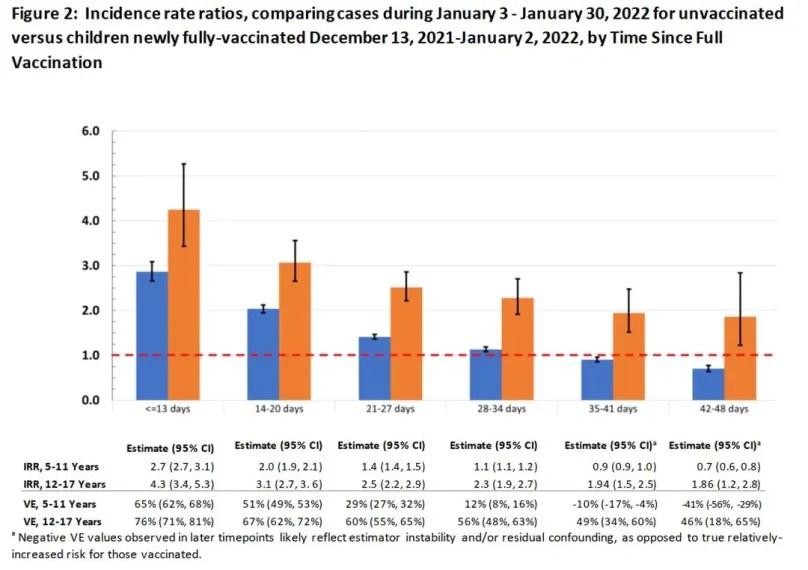
Jeremy goes on to report (correctly) that the authors of the article misinterpreted their own data. History will remember Jeremy as a reporter with great integrity.
- Moderna and Pfizer reports fail to study long-term risks. Like I said, more of the same shenanigans. In this report, for example, Moderna offers data on myocarditis only up to Day 28 after the vaccine. Why Day 28? Why not “since the vaccine has been administered” to more accurately reflect the real-world clinical situation? They also state that myocarditis in a large concern in people infected with SARS-CoV-2 – but the comparison is to the uninfected, not the vaccinated, and we know that the spike protein is the cause (syncytia among heart muscles caused by the spike protein). The spike protein, of course, is the basis of their mRNA vaccines.
- Incestuous COIs/Unjustified Influence by Regulators. Peter Marks is charged with setting the decisions at FDA whether to consider vaccines for specific populations. Why the hell is he involved in a study conducted to bolster the vaccines he is going to have to decide upon? See “Benefit-risk assessment of COVID-19 vaccine, mRNA (Comirnaty) for age 16–29 years”. That “study” is also guilty of all of the same loose logic as above; it is noteworthy that the study assumes as “worst case scenario” of zero deaths from myocarditis following COVID-19 vaccination (Credit: Toby McDonald, who wrote this to me:“I’m reading the Moderna “Sponsor Briefing Document” and they built their benefit-risk assessment off of Funk et al. (2022). So I looked up Funk and it’s a recent paper by six staffers at the FDA including Peter Marks, Richard Forshee, and Hong Yang (who wrote the dreadful benefit-risk assessment for kids 5 to 11 back in October). Quite literally in their “worst-case scenario” they predict 0 deaths from myocarditis in the vaccine group. It’s a stunning work of fiction.”
- I’m on an email thread with Steve Kirsch (he considers me part of his “debate team”. Last week, Steve challenged Peter Marks to a debate:“Hi Peter,You are right about the vaccine uptake problem. According to independent survey we just commissioned, only 33% of Americans opted to go further than the first 2 doses.You were quoted in that CNN article:“We do have a problem with vaccine uptake that is very serious in the United States and anything we can do to get people more comfortable to be able to accept these potentially life-saving medical products is something that we feel we are compelled to do,” said Dr. Peter Marks, director of the Center for Biologics Evaluation and Research.Isn’t it time for you to end the misinformation problem by debating us in a public forum?My colleagues and I look forward to hearing from you.
The only way to end the misinformation is to debate the top misinformation spreaders. You will never win by trying to censor us.
We would be HAPPY to debate to you to end the misinformation problem. As you can see from this slide deck, all the evidence we’ve been able to find shows there was clinical trial fraud and that the vaccines are very dangerous. We would love to know how we got it wrong
I look forward to hearing from you.
-steve
To my knowledge, Marks has not replied. I replied to Steve and the entire email thread, including Marks, though:
“Steve,
History is going to remember one person on this email thread in a manner in which I would not ever care to be seen associating with.
I would therefore decline to participate in such a debate.
Sincerely,
James Lyons-Weiler, PhD

I could continue and debate dozens more points in the report dump by the FDA. I don’t have to. Marks himself provides evidence of being way off-target immunologically and lying about the “need” for COVID-19 vaccines for children.
Here’s an old video of Prevaricating Peter lying about the need for “high antibody titres” for immunity, and that children’s immune response is “not enough for some of these variants” (no data on that, just words):
The comments in that video have not aged well. Call your Senator and Congressional Reps and demand that Peter Marks resign. Email them this article. Marks and the FDA are NOT basing their considerations on independent fact, science and logic. He and his cronies are either incompetent or working for the industry. Either way, he and his cronies have to go.
Ghost Shot: Pfizer quietly admits it will never manufacture original FDA approved COVID vaccines
Company claims it is manufacturing Comirnaty product with new formula
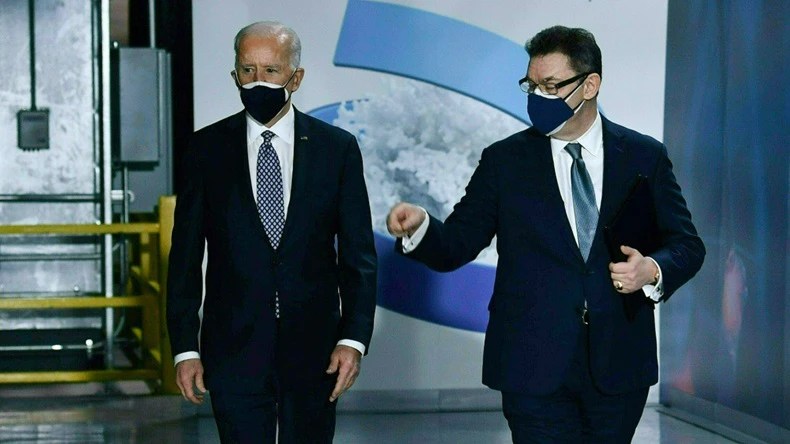
By Jordan Schachtel | The Dossier | June 3, 2022
The August 23, 2021 FDA approval of Pfizer’s Comirnaty vaccine was a cause for celebration. Marked as a turning point in the battle against COVID19, the announcement was highly publicized by the Biden Administration with the clear intention to extinguish “vaccine hesitancy” and boost uptake.
It was celebrated as a cause for national relief, and many Americans arrived at their local pharmacies under the impression, via government and pharmaceutical propaganda, that they were receiving an FDA-approved COVID vaccine. Yet that legally distinct product, as we know it, never existed. And now we know, via Pfizer, that it will never exist.
For the uninitiated:
Comirnaty is a legally distinct product from the emergency use authorization (EUA) shots, and It has never made its way to market. For months on end, no such vaccine has ever become available. Those who received the “Pfizer shot(s)” have been injected with the emergency use authorization (EUA) version of the shots. See my piece in The Dossier for more info:
Shell Game? There remains no FDA approved COVID vaccine in the United States
The information operation succeeded. There was indeed an FDA approved vaccine, at least on paper, but you couldn’t get it.
When originally confronted with this ordeal, Pfizer labeled this issue an inventory question that had nothing to do with the legal distinction between an experimental EUA product and an FDA-approved vaccine. Up until just weeks ago, this was the statement up on the CDC website via Pfizer:
“Pfizer received FDA BLA license on 8/23/2021 for its COVID-19 vaccine for use in individuals 16 and older (COMIRNATY). At that time, the FDA published a BLA package insert that included the approved new COVID-19 vaccine tradename COMIRNATY and listed 2 new NDCs (0069-1000-03, 0069-1000-02) and images of labels with the new tradename.
At present, Pfizer does not plan to produce any product with these new NDCs and labels over the next few months while EUA authorized product is still available and being made available for U.S. distribution. As such, the CDC, AMA, and drug compendia may not publish these new codes until Pfizer has determined when the product will be produced with the BLA labels.”
In May, Pfizer updated its statement to mention a December 2021 licensed Comirnaty product, which was granted a license four months after the highly-publicized August FDA press release.
And just last week, Pfizer finally acknowledged that its original licensed product will never be distributed. In an unreported update on the CDC website, Pfizer told the agency:
“Pfizer received initial FDA BLA license on 8/23/2021 for its COVID-19 vaccine for use in individuals 16 and older (COMIRNATY). At that time, the FDA published a BLA package insert that included the approved new COVID-19 vaccine tradename COMIRNATY and listed 2 new NDCs (0069-1000-03, 0069-1000-02) and images of labels with the new tradename. These NDCs will not be manufactured. Only NDCs for the subsequently BLA approved tris-sucrose formulation will be produced.”
The key distinction between the originally approved formulation and the tris-sucrose formulation is that — according to manufacturers — the latter can be held for a much longer period of time outside of an ultra cold freezer. These freezers cost over $10,000 a piece and each unit uses as much energy per day as an average American household. Improper storage can render the mRNA unstable.
Notably, the clinical trials for the Pfizer shot were conducted without the modified tris-sucrose ingredient. Given the partisan nature of Pfizer, the corporate media, government health bureaucracies, and your correspondent’s lack of expertise in this area, it is unclear whether this is significant.
Another notable thing to look out for in the coming days and weeks is the possibility that the subsequently FDA approved product finally becomes available in the United States. In recent days, the CDC removed the language of “not orderable at this time” above the description of both Comirnaty and Moderna’s Spikevax.
Additionally, as reported by Uncover DC, the Defense Department appears to be in the early stages of ordering what it has interpreted as a legally required minimum of Comirnaty in order to continue its mRNA mandate of American service members.
Concerns of Fraud in Pfizer Vaccine Trial as Participant’s Hospitalisation with Heart Inflammation is Swept Under Carpet
By Will Jones | The Daily Sceptic | May 23, 2022
You may have heard the disturbing story of Maddie de Garay, who in July 2020, aged 12, participated in Pfizer’s Covid vaccine trial of adolescents aged 12-15. Within 24 hours of receiving the second dose in early January 2021, Maddie experienced “zapping pain up and down her spine with severe abdominal pain… her toes and fingers turned white and were ice cold”. She now can barely see, suffers from tinnitus, mobility issues, vomiting, blood in her urine, numbness in her body and has at least 10-20 seizures a day. Yet her injury was recorded in the vaccine trial data as “abdominal pain” and it was asserted without investigation to be not related to the vaccine.
Another case, similarly disturbing, has now emerged of an adverse reaction during a Pfizer trial that was not recorded in the trial data, raising concerns about the integrity of the trial data and the possibility of fraud.
Augusto Roux is a 35-year old lawyer from Buenos Aires, Argentina who volunteered for Pfizer’s Covid vaccine phase 3 trial. He did so to protect his mother, who has emphysema.
On the way home after his second dose on September 9th 2020, he began feeling unwell, developed a high fever and felt very ill. He fainted on September 11th and went to the hospital on September 12th. The hospital ran tests, including a CAT scan of his chest, which showed an abnormal collection of fluid around the outside of the heart, indicating pericarditis (a form of heart inflammation).
On September 14th he was discharged, with the doctor writing in his discharge note that he had suffered an adverse reaction to the vaccine. Augusto was also told by hospital staff that there had been a considerable number of people from the clinical trial coming to the hospital – one nurse estimated staff had seen around 300 people – so his experience was not new to them. Around 3,000 trial participants had been enrolled before Augusto, so, if the nurse’s estimate is accurate, this would be a hospitalisation rate of 10%.
Following his adverse reaction, Augusto asked to see his trial clinical records, but those running the trial refused. Being a lawyer, Augusto went to law to get access to his records, which took over a year. Once he saw them, he could well imagine why someone might not want them to be released.
In hospital, Augusto had tested negative for Covid, and the doctor at the hospital had written that his condition was due to the vaccine. However, when Augusto contacted the trial site on September 14th to notify the investigators he had been in hospital, they wrote down in his clinical trial record that he had been admitted for a “bilateral pneumonia” that had nothing to do with the “investigational product” – the vaccine – even though that was not what he told them or what the doctor who examined him had stated.
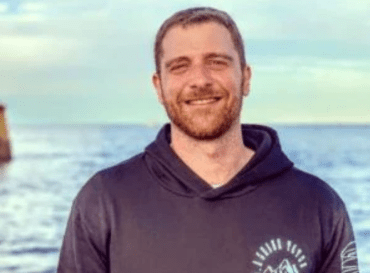
For obvious reasons, Augusto was keen to know whether he’d had the vaccine or not. However, the principal investigator for the trial, Fernando Polack (pictured below), had inaccurately claimed that he could only be unblinded if his life were in danger. Augusto appealed to ANMAT, the Argentinian equivalent of the FDA, and following a formal hearing on October 9th 2020 it forced the trial investigators to tell Augusto that he had, indeed, received the vaccine.
The clinical trial notes reveal that two days prior to this hearing, on October 7th, “at the request of the sponsor” (Pfizer), the adverse event code was updated from pneumonia to “COVID-19 disease”. This is despite Augusto testing negative at the time of his admission. (Conveniently for Pfizer, the COVID-19 ‘diagnosis’ would not be included in the trial vaccine efficacy calculations due to the negative test.)

Even more disturbing, on October 8th, Polack wrote in Augusto’s clinical trial records that he had had an attack of “severe anxiety” starting on September 23rd (not caused by the vaccine, naturally). Polack added that Augusto suspected a conspiracy between the two hospitals, described his anxiety as “constitutional”, and noted that it was ongoing, evidenced by his pursuing his appeal to ANMAT. On October 11th, Polack had this mental health diagnosis added to his actual medical records.
Dr. David Healy, who has interviewed Augusto and seen the medical records in question, comments that “there is nothing in any record that indicates that Dr. Polack or any other doctor attempted on September 23rd to establish whether Augusto had a mental disorder”. He adds:
Augusto points to the notes of October 8th and 11th as evidence that this idea was invented just around the time the ANMAT hearing was about to happen. He states that it is in breach of Argentinian law for Dr. Polack to have diagnosed someone with a medical condition that the person does not have – and to have entered it into his medical record.
Note that Polack is a paediatrician so lacks the qualification to make mental health diagnoses, especially without any formal assessment.
Polack is a key player in the Pfizer Covid vaccine trials. He was the lead author on the December 2020 NEJM paper on the safety and efficacy of the vaccine. Israeli academic Josh Guetzkow notes that he is also one of the directors of i-trials, the site management organisation “paid handsomely by Pfizer to run the trial in Argentina (the largest site of the trial by far)”. Guetzkow adds:
If he raised an alarm about the vaccine safety, his company would have lost a ton of money and would be an unlikely choice by any company to run any trials in the future. So to say that he had an interest in achieving a positive trial outcome would be quite an understatement. There may be other conflicts we’re not aware of.
The evidence of malpractice and possible fraud in the Pfizer Covid vaccine trials is certainly stacking up now. But very few people are aware of it as it is mostly only being reported in alternative media. When will mainstream outlets start following up properly on this potentially massive story?
FDA Dumps More Pfizer Documents: Why Were So Many Adverse Events Reported as ‘Unrelated’ to Vaccine?
By Michael Nevradakis, Ph.D. | The Defender | May 17, 2022
The latest release of Pfizer-BioNTech COVID-19 vaccine documents raises questions about how frequently adverse events experienced by clinical trial participants were reported as “unrelated” to the vaccine.
The 80,000-page document cache released May 2 by the U.S. Food and Drug Administration (FDA) includes an extensive set of Case Report Forms (CRFs) from Pfizer trials conducted at various locations in the U.S.
The documents also include the “third interim report” from BioNTech’s trials conducted in Germany (accompanied by a synopsis of this report and a database of adverse events from this particular set of trials).
The FDA released the documents, which pertain to the Emergency Use Authorization (EUA) of the vaccine, as part of a court-ordered disclosure schedule stemming from an expedited Freedom of Information Act (FOIA) request filed in August 2021.
Public Health and Medical Professionals for Transparency, a group of doctors and public health professionals, submitted the FOIA request.
Adverse events during Pfizer vaccine trials in the U.S. usually reported as ‘unrelated’ to vaccination
Pfizer conducted a series of vaccine trials at various locations in the U.S., including the New York University Langone Health Center, Rochester Clinical Research and Rochester General Hospital (Rochester, New York) and the J. Lewis Research, Inc. Foothill Family Clinic (Salt Lake City, Utah).
The Pfizer documents released this month by the FDA included a series of CRFs for patients who suffered some type of adverse event during their participation in the COVID-19 vaccine trials.
As the documents reveal, despite the occurrence of a wide range of symptoms, including serious cardiovascular events, almost none were identified as being “related” to the vaccine.
Such serious yet “unrelated” adverse events included:
- Acute asthma exacerbation
- Aortic aneurysm (listed as a pre-existing condition)
- Appendicitis (requiring hospitalization)
- Atrial defibrillation
- Cardiac arrest and acute respiratory failure, requiring hospitalization, sustained by a patient who then was “lost” (could not be located for continued participation in the trial)
- Chest pain (requiring hospitalization, later listed as cardiac ischemia)
- Coronary artery occlusion (listed as both serious and life-threatening)
- Injuries sustained from a fall
- Intermittent non-cardiac chest pain (requiring hospitalization)
- Left breast cancer (listed as a pre-existing occult malignancy)
- Neuritis (peripheral nerve Injury), listed as “unrelated” to the vaccine but related to the blood draw during vaccination
- Pulmonary embolism and bilateral deep venous thrombosis
- Respiratory failure (requiring hospitalization)
- Right ureteropelvic junction obstruction (requiring hospitalization, listed as congenital)
- Small bowel obstruction, listed as “unplanned,” and a panic attack
Of the CRFs found in the documents released this month, only one adverse event is clearly specified as being related to the vaccination: a participant who suffered from psoriatic arthritis, with no prior history of the condition.
In addition, several CRFs indicated exposure during pregnancy (see here and here), or during a partner’s pregnancy (see here and here). However, the documents provided do not appear to have provided any follow-ups regarding any outcomes or potential adverse events for the participants, their partners or their newborn babies once born.
In some instances, while the CRFs claimed the adverse events suffered by patients were not related to the vaccine, their cause was unspecified, simply indicated as “other,” while in another case, a participant’s “unplanned” small bowel obstruction and panic attacks were listed as being unrelated to the vaccination despite no relevant medical history pertaining to the SAEs (severe adverse events) in question.
Did Pfizer hide critical information from regulators?
It is difficult to draw concrete conclusions about any specific case from the data provided by CRFs and vaccine trial summaries.
However, what raises eyebrows is the very large number of adverse events — often serious and often requiring the hospitalization of the patients involved — that were determined to be “unrelated” to the administration of the COVID vaccine.
Previously released Pfizer documents also included discrepancies in the recording of adverse events.
According to investigative journalist Sonia Elijah, these discrepancies include:
- Trial participants were entered into the “healthy population” but were, in actuality, far from healthy.
- SAE numbers were left blank.
- Barcodes were missing from samples collected from trial participants.
- The second vaccine dose was administered outside the three-week protocol window.
- New health problems were dismissed as “unrelated” to the vaccination.
- A remarkable number of patients with an observation period of exactly the same duration — 30 minutes, with very little variety in observation times and raising questions as to whether patients were adequately observed or were put at risk.
- Oddities pertaining to the start and end dates of SAEs – for instance, a “healthy” diabetic suffered a “serious” heart attack on October 27, 2020, but the “end” date for this SAE is listed as the very next day, even though the patient was diagnosed with pneumonia that same day.
- Impossible dating: in the aforementioned example of the patient who sustained a heart attack and pneumonia, the individual in question later died, but the date of death is indicated as the day before the patient was recorded as having gone to a “COVID ill” visit.
- Unblinded teams, who were aware of which patients received the actual vaccine or a placebo, were responsible for reviewing adverse event reports, potentially leading to pressure to downplay COVID-related events in the vaccinated, or to indicate that adverse events were related to the vaccine.
- Other adverse events were indicated as “not serious” despite extensive hospital stays, of up to at least 26 days in the case of one patient who suffered a fall which was classified as “not serious,” yet facial lacerations sustained as a result of the fall were attributed to hypotension (low blood pressure).
Many of these practices seem to appear in the trial-related documents released this month.
Medical and scientific experts who spoke to The Defender expressed similar concerns about what this month’s tranche of documents reveals, and addressed cases of “disappearing” adverse events.
Brian Hooker, chief scientific officer for Children’s Health Defense, remarked:
“I’m most concerned about ‘disappearing’ patients. One cannot conduct a valid trial and simply omit the results that they don’t like!
“With the stories about Maddie de Garay and Augusto Roux surfacing, I have to wonder how many other participants were dropped in order to hide vaccine adverse events/effects.
“If you look at the data in VAERS [Vaccine Adverse Event Reporting System], COVID-19 vaccines are the most dangerous ever introduced into the population.”
Dr. Madhava Setty, a board-certified anesthesiologist and senior science editor for The Defender, said:
“The ‘unrelated’ label the investigators use to divert attention from AEs [adverse events] is a powerful point that stands on its own. We haven’t pushed back on this enough.
“Equivalently, we can say that the meager and short-lived benefit of these shots is also ‘unrelated’ using their ‘standards.’ On what grounds can they say that their product is preventing infection (which it isn’t anymore), or death (marginally)?
“They cannot have it both ways. They cannot claim a benefit through short-term outcomes while denying that side effects of any kind are related to their product.
“That’s the whole point of doing a trial. You cannot prove causation, only statistically significant correlation.”
Setty provided further context for his remarks in an April 2022 article for The Defender and in a March 2022 presentation, in which he discussed the number of these adverse events and how Pfizer swept them away (timestamp 24:00).
In Setty‘s view:
“There’s a high likelihood of malfeasance going on. [Pfizer whistleblower] Brook Jackson says the PIs [principal investigators] were unblinded. If true, it would make it very easy for the investigators to bump up the AEs in the placebo group while ignoring some of the AEs in the vaccine group.
“Pfizer claims that 0.5% of placebo recipients suffered a serious adverse event compared to 0.6% in the vaccine group. This is how these events were obscured.”
The extant body of evidence indicates Pfizer “is hiding critical information from regulators,” Setty said:
“The clincher is in the memorandum to the VRBPAC [Vaccines and Related Biological Products Advisory Committee] (Table 2, efficacy populations), where they show us that five times more people in the vaccine group were pulled out of the trial than the placebo within seven days of their second shot for ‘important protocol deviations.’
“In a trial that big the chances that could have happened coincidentally is infinitesimally small (less than 1 in 100,000).
“Moreover, months later, the same thing happened in the pediatric trial (Table 12). This time, six times more children were pulled from the trial after their second dose.
“There are, of course, procedural differences when administering a placebo versus the mRNA vaccine, but why didn’t it happen after the first dose as well?
“Mathematically, that is about as close as you can get to eliminating any ‘shadow of doubt.’ With a formal allegation by a trial coordinator that states the same thing [referring to whistleblower Brook Jackson], we can be assured Pfizer is hiding critical information from regulators.”
BioNTech trials in Germany claim few adverse events ‘related’ to vaccine
The BioNTech trial in Germany tested various dosages of two COVID-19 vaccine formulas, labeled BNT162b1 and BNT162b2 — the latter granted EUA by the FDA.
The latest cache of Pfizer documents suggests a pattern, similar to the one in the U.S. trials, of not reporting adverse events as related to the vaccine.
According to the third interim report, dated March 20, 2021, among trial participants who were administered the BNT162b2 candidate vaccine granted EUA in the U.S.:
- 87% of younger participants reported solicited local reactions, and 88% reported solicited systemic reactions, with 10% reporting solicited systemic reactions of Grade 3 or higher.
- 87% of younger participants experienced “mild” solicited local reactions, and 35% experienced “moderate” solicited local reactions.
- 88% of younger participants experienced “mild” solicited systemic reactions, and 38% experienced “moderate” solicited systemic reactions. As stated in the report:
“The most frequently reported solicited systemic reactions of any severity were fatigue (n=40, 67%), followed by headache (n=32, 53%), malaise (n=24, 40%), and myalgia (n=23, 38%). The remaining symptom terms were less frequent.
“For nausea, headache, fatigue, myalgia, chills, arthralgia and malaise each symptom was assessed as severe in <10% of participants.”
- 43% of younger participants reported a total of 51 unsolicited TEAEs (treatment-emergent adverse events, referring to conditions not present prior to treatment or that worsened in intensity after treatment) within 28 days of the first or second dose, nine of which were deemed to be “related” to the vaccination. One participant in this category sustained a TEAE assessed as Grade 3 or higher, but “which was assessed as not related by the investigator.”
- TEAEs among younger participants included hypoaesthesia, lymphadenopathy, heart palpitations, external ear inflammation, blepharitis, toothache, non-cardiac chest pain, cestode infection, oral herpes, tonsillitis, neck pain, insomnia, anosmia and dysmenorrhea.
- No unsolicited treatment-emergent serious adverse events (TESAEs) or deaths were reported among younger participants, but one discontinued participation due to moderate nasopharyngitis.
- One younger participant “discontinued due to a moderate AE (nasopharyngitis).”
- 86% of older participants reported solicited local reactions, with 6% reporting solicited local reactions of Grade 3 or higher, 78% reporting “mild” solicited local reactions and 36% reporting “moderate” solicited local reactions.
- 72% of older participants reported solicited systemic reactions, with 11% of these participants sustaining solicited systemic reactions of Grade 3 or higher, 69% sustaining “mild” solicited reactions and 36% sustaining “moderate” solicited reactions.
- 33% of older participants reported a total of 20 unsolicited TEAEs, four of which were determined to be “related” to the vaccination. Among older participants, 8% reported a TESAE of Grade 3 or higher, with “one event assessed as related by the investigator.”
- One older participant was reported to have sustained a “not related TESAE” (an ankle fracture).
- TESAEs among older participants included back pain, chest pain, facial injury, increased lipase, increased amylase, muscle spasms, musculoskeletal pain, tendon pain, orthostatic intolerance, renal colic, seborrhoeic dermatitis and “painful respiration.”
Among trial participants who received the BNT162b1 candidate vaccine (not granted EUA):
- 86% of “younger participants” reported solicited (expected) localized reactions (remaining in one part of the body), with 18% reporting Grade 3 or higher solicited local reactions, 86% of younger participants reporting “mild” solicited local reactions and 54% reporting “moderate” solicited local reactions.
- 92% of younger participants reported solicited systemic reactions (spreading to other parts of the body), with 44% reporting Grade 3 or higher solicited systemic reactions, 90% reporting “mild” solicited systemic reactions and 74% experiencing “moderate” solicited systemic reactions.
The report states:
“The most frequently reported solicited systemic reactions of any severity were fatigue (n=68, 81%), headache (n=66, 79%), myalgia (n=51, 61%), malaise (n=50, 60%), and chills (n=47, 56%). The remaining symptom terms were less frequent.
“For nausea, vomiting, diarrhea, myalgia, arthralgia and fever each symptom was assessed as severe in ≤10% of participants.”
- 45% of younger participants reported a total of 83 unsolicited (unexpected) TEAEs within 28 days of receiving the first or second dose.
A total of 51 of these unsolicited TEAEs were reported as “related” to the vaccination, while 2% of participants sustained Grade 3 or higher TEAEs (four in total), “of which three events were assessed as related by the investigator.”
No unsolicited TESAEs or deaths were reported in this category.
- According to the report, among younger participants, TEAEs included:
“‘General disorders and administration site conditions’ reported by 9 participants (11%),” including influenza-like illness and injection site hematoma.
“‘Nervous system disorders’ reported by 10 participants (12%),” including presyncope, hyperaesthesia, paraesthesia, and headache.
“‘Respiratory, thoracic and mediastinal disorders’ reported by 9 participants (11%),” including cough and oropharyngeal pain.”
Other symptoms included back pain, musculoskeletal chest pain, cervicobrachial syndrome, taste disorder, sleep disorder, depression, hallucination, dysmenorrhoea, pruritus and pityriasis rosea, while one participant required the excision (removal) of a papilloma.
- One younger participant discontinued participation in the trial, “due to a moderate AE (malaise),” while another participant discontinued participation “due to dose-limiting toxicity.”
- 83% of “older participants” reported solicited local reactions, but none were reported as Grade 3 or higher, while 83% of solicited local reactions were “mild” and 42% were “moderate.”
- 92% of older participants reported solicited systemic reactions, with 28% of participants experiencing Grade 3 or higher solicited systemic reactions, 89% experiencing “mild” solicited systemic reactions, and 61% experiencing “moderate” solicited systemic reactions.
According to the report:
“The most frequently reported solicited systemic reactions of any severity were headache (n=29, 81%), fatigue (n=27, 75%), myalgia (n=18, 50%), and malaise (n=18, 50%). The remaining symptom terms were less frequent.”
- 36% of participants reported a total of 24 unsolicited TEAEs within 28 days of the first or second dose, nine of which were assessed as “related” to the vaccination.
Of the participants in this category, 11% reported TEAEs of Grade 3 or higher (four events in total), with one of these events assessed as “related” to the vaccination.
- TEAEs reported by older participants included oropharyngeal pain, nasopharyngitis, bladder dysfunction, sleep disorder, musculoskeletal pain and musculoskeletal chest pain, pollakiuria, migraine, syncope and alopecia.
- One older participant receiving the BNT162b1 candidate sustained a TESAE (syncope), and there were no deaths in this category.
Of note, none of the participants for either vaccine candidate were pregnant, which raises questions about recommending and administering the vaccine to pregnant women despite the absence of any clinical trial data.
As the documents show, a wide range of adverse effects were reported, including cardiovascular and nervous system conditions, most of which were determined to be unrelated to the vaccination itself.
Michael Nevradakis, Ph.D., is an independent journalist and researcher based in Athens, Greece.
© 2022 Children’s Health Defense, Inc. This work is reproduced and distributed with the permission of Children’s Health Defense, Inc. Want to learn more from Children’s Health Defense? Sign up for free news and updates from Robert F. Kennedy, Jr. and the Children’s Health Defense. Your donation will help to support us in our efforts.
Pfizer Document Dump Shows Doctor With Ties to Gates Foundation Deleted Trial Participant’s Vaccine Injury
By Michael Nevradakis, Ph.D. | The Defender | May 18, 2022
An 80,000-page cache of Pfizer-BioNTech COVID-19 vaccine documents released by the U.S. Food and Drug Administration (FDA) sheds light on Pfizer’s extensive vaccine trials in Argentina, including the unusually large size of the trials and the story of a trial participant whose vaccine reaction was “disappeared.”
The case of Augusto Roux in Argentina suggests that in at least one instance, a trial participant whose symptoms were determined to be connected to the COVID-19 vaccine was later listed, in official records, as having experienced adverse events that were not related to the vaccination.
Vaccine trials in Argentina also appear to have glossed over adverse events suffered by other trial participants, and the potential connection between the adverse events and the vaccine.
The FDA on May 2 released the latest cache of documents, which pertain to the Emergency Use Authorization of Pfizer’s vaccine, as part of a court-ordered disclosure schedule stemming from an expedited Freedom of Information Act request filed in August 2021.
As previously reported by The Defender, the documents included Case Report Forms from Pfizer COVID vaccine trials in the U.S., and the “third interim report” from BioNTech’s trials conducted in Germany, both of which listed adverse events sustained by participants in the U.S. and German trials.
Many of these adverse events were indicated as being “unrelated” to the vaccines — even in instances where the patients were healthy or otherwise had no prior medical history related to the injuries they sustained.
Story of ‘disappeared patient’ goes public
Several bloggers and online investigators called into question various aspects of the Argentine vaccine trials, pointing out the number of participants in the Argentine trials dwarfed that of other, typically smaller trials at other locations in different countries.
They also pointed out the large number of participants appeared to have been recruited to the trial in a remarkably short time, and questioned the connections between one of the key figures of the Argentine trial to vaccine manufacturers, Big Pharma and the Bill & Melinda Gates Foundation.
The large number of trial participants in Argentina may be related to the fact that the trial appears to have been held simultaneously in 26 hospitals.
The large number of participants is revealed in another of the documents released this month, where on page 2,245, the list of randomized participants at trial site 1231 begins, while on page 4,329, the list of participants at trial site 4444 begins.
Site 1231 refers to the main trial site location and 4444 (page 24) most likely refers to the disparate hospitals participating in the trial outside the main location.
Commenting on the revelation, blogger David Healy wrote:
“About 5,800 volunteers were enrolled, half getting the active vaccine. This is almost 4 times more than the next largest centre in this trial.
“Amazingly 467 doctors were almost instantly signed up and trained as assistant investigators in the study.”
In all, 4,501 patients participated in the Argentine trials, representing 10% of all Pfizer trial participants worldwide.
Complete information about adverse events during this extensive trial in Argentina does not appear to have been released as of this writing.
However, Roux’s experience has since become public.
Roux, often referred to as the “disappeared” patient, volunteered for the trial (volunteer number 12312982) and received his first dose of the Pfizer vaccine on Aug. 21, 2020.
According to Healy, Roux “felt pain and swelling in his arm right after the injection. Later that day he had nausea, difficulty swallowing, and felt hungover.”
After a series of symptoms, Roux — during a clinical trial visit on Aug. 23, 2020 — was classified as experiencing a “toxicity grade 1 adverse effect.”
He nevertheless received his second dose on Sept. 9, 2020.
According to Healy:
“On the way home by taxi, he started feeling unwell. At 19:30, he was short of breath, had a burning pain in his chest and was extremely fatigued. He lay on his bed and fell asleep. He woke up at 21:00 with nausea and fever (38-39 C) and was unable to get out of bed due to the fatigue.
“Over the next two days, he reports a high fever (41 C) and feeling delirious.
“On September 11, he was able to get out of bed and go to the bathroom when he observed his urine to be dark (like Coca-Cola). He felt as if his heart expanded, had a sudden lack of breath and fell unconscious on the floor for approximately 3 hours.
“Once he recovered, he felt tired, was uncomfortable, had a high heart rate on minor movement, was dizzy when changing posture. He had a chest pain which radiated to his left arm and back.”
On Sept. 12, 2020, Roux was admitted to the Hospital Alemán, where he stayed for two days. It was initially believed he had COVID-19, but he tested negative for the virus. His symptoms also were found to not correspond with viral pneumonia.
After a series of X-rays, CT scans and urine tests, Roux was discharged Sept. 14, 2020, after being diagnosed with an adverse reaction — specifically, an unequivocal pericardial effusion — to the coronavirus vaccine (high probability), according to his discharge summary.
Doctor who altered Roux’s record had ties to Gates, NIH, Big Pharma
However, on Sept. 17, Dr. Fernando Polack, Pfizer’s lead investigator for the Argentine trials according to a Pfizer document released in December 2021, reported in Roux’s record that his “hospitalization was not related to the vaccine.”
Even after Roux’s discharge, his health difficulties continued. As reported by Healy:
“On November 13 [2020], he had negative IgG and IgM SARS COV-2 (QML technique), which is unusual post vaccine.
“On February 24, 2021, a liver scan showed a minor degree of abnormality. In March 2021 and February 2022, his liver enzymes remained abnormal.”
Ultimately, Roux lost 14 kilograms (30.8 pounds) in a period of three to four months, and continued to suffer from fever and bouts of breathlessness for several months afterward.
Polack, who reported Roux’s hospitalization as unrelated to the vaccination, is known for his close ties with various vaccine manufacturers, pharmaceutical companies and the Bill & Melinda Gates Foundation.
For instance, he is listed as the lead author in a Dec. 31, 2020, New England Journal of Medicine (NEJM) article on the purported efficacy of the Pfizer COVID-19 vaccine.
According to Healy, Polack also appears to be the founder of iTRIALS, a trial site management company, and another organization located at the same physical headquarters, the Fundación INFANT.
Healy wrote:
“When COVID struck Argentina, [Polack] and his Fundación became involved in a trial of immune plasma, taken from patients who had recovered from COVID, given to patients who had recently acquired the disease.
“In May 2020 he speculated that this would make COVID like an ordinary cold, and the Gates Foundation would offer financial support. He used high-profile press conferences to disseminate his exciting message.”
The conclusion of the study published in the NEJM following the plasma study reads:
“Funded by the Bill and Melinda Gates Foundation and the Fundación INFANT Pandemic Fund; Dirección de Sangre y Medicina Transfusional del Ministerio de Salud number, PAEPCC19, Plataforma de Registro Informatizado de Investigaciones en Salud number, 1421, and ClinicalTrials.gov number, NCT04479163.”
According to Healy, “[a] subsequent systematic review and meta-analysis failed to confirm these findings, noting ‘very serious imprecision concerns.’”
Healy pointed out that Polack, in his NEJM disclosure statement, did not indicate any conflict of interest or financial interest in the COVID-19 vaccine trials in Argentina, but:
“Polack reported grants from Novavax and personal fees from Janssen, Bavarian Nordic A/S, Pfizer, Sanofi, Regeneron, Merck, Medimmune, Vir Bio[technology], Ark Bio, Daiichi Sankyo outside the submitted work.
“At least eight of these companies are engaged in RSV vaccine research in babies and pregnant women. Fernando has mentioned a combined RSV, flu and COVID vaccine.”
And, in relation to Polack’s relationship with the Bill & Melinda Gates Foundation, Healy reported:
“[Polack] also doesn’t mention his extensive financial involvement with the Bill & Melinda Gates Foundation. This organization supports industry vaccine trials including Covid and RSV. Fernando is heavily involved through his Gates-sponsored Fundación INFANT in Buenos Aires in RSV trials and research.
“Gates sunk $82,553,834 into Novavax’s RSV vaccine ResVax which was shown to be ineffective in clinical trials in pregnant women.”
Polack’s own bio from a 2017 medical conference states “[h]is work is funded by the Bill & Melinda Gates Foundation, the National Institutes of Health [NIH], the Thrasher Research Fund, the Optimus Foundation and other international organizations.”
That same year, Polack testified at an FDA Vaccines and Related Biological Products Advisory Committee (VRBPAC) meeting, where he “acknowledged having financial interests in or professional relationships with some of the affected firms identified for this meeting, namely Janssen [producer of the Johnson & Johnson COVID vaccine], Novavax, and Bavarian Nordic.”
According to Dr. Joseph Mercola, Polack “also happens to be a consultant for the U.S. Food and Drug Administration’s Vaccines and Related Biological Products Advisory Committee (VRBPAC),” and “a current adjunct professor at Vanderbilt University in Tennessee.”
Michael Nevradakis, Ph.D., is an independent journalist and researcher based in Athens, Greece.
Putting Big Bad Pharma Back on Trial in the COVID-19 Era
They keep telling us to “trust the science.” But who paid for it?
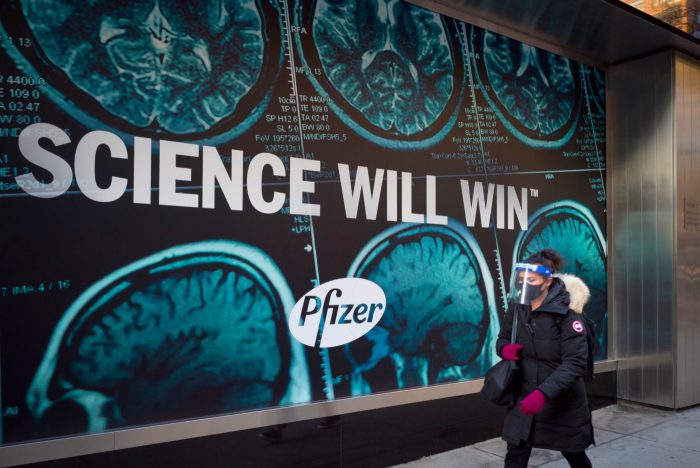
Photo credit: Massimo Giachetti
By Rebecca Strong – February 16, 2022
After graduating from Columbia University with a chemical engineering degree, my grandfather went on to work for Pfizer for almost two decades, culminating his career as the company’s Global Director of New Products. I was rather proud of this fact growing up — it felt as if this father figure, who raised me for several years during my childhood, had somehow played a role in saving lives. But in recent years, my perspective on Pfizer — and other companies in its class — has shifted. Blame it on the insidious big pharma corruption laid bare by whistleblowers in recent years. Blame it on the endless string of big pharma lawsuits revealing fraud, deception, and cover-ups. Blame it on the fact that I witnessed some of their most profitable drugs ruin the lives of those I love most. All I know is, that pride I once felt has been overshadowed by a sticky skepticism I just can’t seem to shake.
In 1973, my grandpa and his colleagues celebrated as Pfizer crossed a milestone: the one-billion-dollar sales mark. These days, Pfizer rakes in $81 billion a year, making it the 28th most valuable company in the world. Johnson & Johnson ranks 15th, with $93.77 billion. To put things into perspective, that makes said companies wealthier than most countries in the world. And thanks to those astronomical profit margins, the Pharmaceuticals and Health Products industry is able to spend more on lobbying than any other industry in America.
While big pharma lobbying can take several different forms, these companies tend to target their contributions to senior legislators in Congress — you know, the ones they need to keep in their corner, because they have the power to draft healthcare laws. Pfizer has outspent its peers in six of the last eight election cycles, coughing up almost $9.7 million. During the 2016 election, pharmaceutical companies gave more than $7 million to 97 senators at an average of $75,000 per member. They also contributed $6.3 million to president Joe Biden’s 2020 campaign. The question is: what did big pharma get in return?
ALEC’s Off-the-Record Sway
To truly grasp big pharma’s power, you need to understand how The American Legislative Exchange Council (ALEC) works. ALEC, which was founded in 1973 by conservative activists working on Ronald Reagan’s campaign, is a super secretive pay-to-play operation where corporate lobbyists — including in the pharma sector — hold confidential meetings about “model” bills. A large portionof these bills is eventually approved and become law.
A rundown of ALEC’s greatest hits will tell you everything you need to know about the council’s motives and priorities. In 1995, ALEC promoted a bill that restricts consumers’ rights to sue for damages resulting from taking a particular medication. They also endorsed the Statute of Limitation Reduction Act, which put a time limit on when someone could sue after a medication-induced injury or death. Over the years, ALEC has promoted many other pharma-friendly bills that would: weaken FDA oversight of new drugs and therapies, limit FDA authority over drug advertising, and oppose regulations on financial incentives for doctors to prescribe specific drugs. But what makes these ALEC collaborations feel particularly problematic is that there’s little transparency — all of this happens behind closed doors. Congressional leaders and other committee members involved in ALEC aren’t required to publish any records of their meetings and other communications with pharma lobbyists, and the roster of ALEC members is completely confidential. All we know is that in 2020, more than two-thirds of Congress — 72 senators and 302 House of Representatives members — cashed a campaign check from a pharma company.
Big Pharma Funding Research
The public typically relies on an endorsement from government agencies to help them decide whether or not a new drug, vaccine, or medical device is safe and effective. And those agencies, like the FDA, count on clinical research. As already established, big pharma is notorious for getting its hooks into influential government officials. Here’s another sobering truth: The majority of scientific research is paid for by — wait for it — the pharmaceutical companies.
When the New England Journal of Medicine (NEJM) published 73 studies of new drugs over the course of a single year, they found that a staggering 82% of them had been funded by the pharmaceutical company selling the product, 68% had authors who were employees of that company, and 50% had lead researchers who accepted money from a drug company. According to 2013 research conducted at the University of Arizona College of Law, even when pharma companies aren’t directly funding the research, company stockholders, consultants, directors, and officers are almost always involved in conducting them. A 2017 report by the peer-reviewed journal The BMJ also showed that about half of medical journal editors receive payments from drug companies, with the average payment per editor hovering around $28,000. But these statistics are only accurate if researchers and editors are transparent about payments from pharma. And a 2022 investigative analysis of two of the most influential medical journals found that 81% of study authors failed to disclose millions in payments from drug companies, as they’re required to do.
Unfortunately, this trend shows no sign of slowing down. The number of clinical trials funded by the pharmaceutical industry has been climbing every year since 2006, according to a John Hopkins University report, while independent studies have been harder to find. And there are some serious consequences to these conflicts of interest. Take Avandia, for instance, a diabetes drug produced by GlaxoSmithCline (GSK). Avandia was eventually linked to a dramatically increased risk of heart attacks and heart failure. And a BMJ report revealed that almost 90% of scientists who initially wrote glowing articles about Avandia had financial ties to GSK.
But here’s the unnerving part: if the pharmaceutical industry is successfully biasing the science, then that means the physicians who rely on the science are biased in their prescribing decisions.
Where the lines get really blurry is with “ghostwriting.” Big pharma execs know citizens are way more likely to trust a report written by a board-certified doctor than one of their representatives. That’s why they pay physicians to list their names as authors — even though the MDs had little to no involvement in the research, and the report was actually written by the drug company. This practice started in the ’50s and ’60s when tobacco execs were clamoring to prove that cigarettes didn’t cause cancer (spoiler alert: they do!), so they commissioned doctors to slap their name on papers undermining the risks of smoking.
It’s still a pretty common tactic today: more than one in 10 articles published in the NEJM was co-written by a ghostwriter. While a very small percentage of medical journals have clear policies against ghostwriting, it’s still technically legal —despite the fact that the consequences can be deadly.
Case in point: in the late ’90s and early 2000s, Merck paid for 73 ghostwritten articles to play up the benefits of its arthritis drug Vioxx. It was later revealed that Merck failed to report all of the heart attacks experienced by trial participants. In fact, a study published in the NEJM revealed that an estimated 160,000 Americans experienced heart attacks or strokes from taking Vioxx. That research was conducted by Dr. David Graham, Associate Director of the FDA’s Office of Drug Safety, who understandably concluded the drug was not safe. But the FDA’s Office of New Drugs, which not only was responsible for initially approving Vioxx but also regulating it, tried to sweep his findings under the rug.
“I was pressured to change my conclusions and recommendations, and basically threatened that if I did not change them, I would not be permitted to present the paper at the conference,” he wrote in his 2004 U.S. Senate testimony on Vioxx. “One Drug Safety manager recommended that I should be barred from presenting the poster at the meeting.”
Eventually, the FDA issued a public health advisory about Vioxx and Merck withdrew this product. But it was a little late for repercussions — 38,000 of those Vioxx-takers who suffered heart attacks had already died. Graham called this a “profound regulatory failure,” adding that scientific standards the FDA apply to drug safety “guarantee that unsafe and deadly drugs will remain on the U.S. market.”
This should come as no surprise, but research has also repeatedly shown that a paper written by a pharmaceutical company is more likely to emphasize the benefits of a drug, vaccine, or device while downplaying the dangers. (If you want to understand more about this practice, a former ghostwriter outlines all the ethical reasons why she quit this job in a PLOS Medicine report.) While adverse drug effects appear in 95% of clinical research, only 46% of published reports disclose them. Of course, all of this often ends up misleading doctors into thinking a drug is safer than it actually is.
Big Pharma Influence On Doctors
Pharmaceutical companies aren’t just paying medical journal editors and authors to make their products look good, either. There’s a long, sordid history of pharmaceutical companies incentivizing doctors to prescribe their products through financial rewards. For instance, Pfizer and AstraZeneca doled out a combined $100 million to doctors in 2018, with some earning anywhere from $6 million to $29 million in a year. And research has shown this strategy works: when doctors accept these gifts and payments, they’re significantly more likely to prescribe those companies’ drugs. Novartis comes to mind — the company famously spent over $100 million paying for doctors’ extravagant meals, golf outings, and more, all while also providing a generous kickback program that made them richer every time they prescribed certain blood pressure and diabetes meds.
Side note: the Open Payments portal contains a nifty little database where you can find out if any of your own doctors received money from drug companies. Knowing that my mother was put on a laundry list of meds after a near-fatal car accident, I was curious — so I did a quick search for her providers. While her PCP only banked a modest amount from Pfizer and AstraZeneca, her previous psychiatrist — who prescribed a cocktail of contraindicated medications without treating her in person — collected quadruple-digit payments from pharmaceutical companies. And her pain care specialist, who prescribed her jaw-dropping doses of opioid pain medication for more than 20 years (far longer than the 5-day safety guideline), was raking in thousands from Purdue Pharma, AKA the opioid crisis’ kingpin.
Purdue is now infamous for its wildly aggressive OxyContin campaign in the ’90s. At the time, the company billed it as a non-addictive wonder drug for pain sufferers. Internal emails show Pursue sales representatives were instructed to “sell, sell, sell” OxyContin, and the more they were able to push, the more they were rewarded with promotions and bonuses. With the stakes so high, these reps stopped at nothing to get doctors on board — even going so far as to send boxes of doughnuts spelling out “OxyContin” to unconvinced physicians. Purdue had stumbled upon the perfect system for generating tons of profit — off of other people’s pain.
Documentation later proved that not only was Purdue aware it was highly addictive and that many people were abusing it, but that they also encouraged doctors to continue prescribing increasingly higher doses of it (and sent them on lavish luxury vacations for some motivation). In testimony to Congress, Purdue exec Paul Goldenheim played dumb about OxyContin addiction and overdose rates, but emails that were later exposed showed that he requested his colleagues remove all mentions of addiction from their correspondence about the drug. Even after it was proven in court that Purdue fraudulently marketed OxyContin while concealing its addictive nature, no one from the company spent a single day behind bars. Instead, the company got a slap on the wrist and a $600 million fine for a misdemeanor, the equivalent of a speeding ticket compared to the $9 billion they made off OxyContin up until 2006. Meanwhile, thanks to Purdue’s recklessness, more than 247,000 people died from prescription opioid overdoses between 1999 and 2009. And that’s not even factoring in all the people who died of heroin overdoses once OxyContin was no longer attainable to them. The NIH reports that 80% of people who use heroin started by misusing prescription opioids.
Former sales rep Carol Panara told me in an interview that when she looks back on her time at Purdue, it all feels like a “bad dream.” Panara started working for Purdue in 2008, one year after the company pled guilty to “misbranding” charges for OxyContin. At this point, Purdue was “regrouping and expanding,” says Panara, and to that end, had developed a clever new approach for making money off OxyContin: sales reps were now targeting general practitioners and family doctors, rather than just pain management specialists. On top of that, Purdue soon introduced three new strengths for OxyContin: 15, 30, and 60 milligrams, creating smaller increments Panara believes were aimed at making doctors feel more comfortable increasing their patients’ dosages. According to Panara, there were internal company rankings for sales reps based on the number of prescriptions for each OxyContin dosing strength in their territory.
“They were sneaky about it,” she said. “Their plan was to go in and sell these doctors on the idea of starting with 10 milligrams, which is very low, knowing full well that once they get started down that path — that’s all they need. Because eventually, they’re going to build a tolerance and need a higher dose.”
Occasionally, doctors expressed concerns about a patient becoming addicted, but Purdue had already developed a way around that. Sales reps like Panara were taught to reassure those doctors that someone in pain might experience addiction-like symptoms called “pseudoaddiction,” but that didn’t mean they were truly addicted. There is no scientific evidence whatsoever to support that this concept is legit, of course. But the most disturbing part? Reps were trained to tell doctors that “pseudoaddiction” signaled the patient’s pain wasn’t being managed well enough, and the solution was simply to prescribe a higher dose of OxyContin.
Panara finally quit Purdue in 2013. One of the breaking points was when two pharmacies in her territory were robbed at gunpoint specifically for OxyContin. In 2020, Purdue pled guilty to three criminal charges in an $8.3 billion deal, but the company is now under court protection after filing for bankruptcy. Despite all the damage that’s been done, the FDA’s policies for approving opioids remain essentially unchanged.
Purdue probably wouldn’t have been able to pull this off if it weren’t for an FDA examiner named Curtis Wright, and his assistant Douglas Kramer. While Purdue was pursuing Wright’s stamp of approval on OxyContin, Wright took an outright sketchy approach to their application, instructing the company to mail documents to his home office rather than the FDA, and enlisting Purdue employees to help him review trials about the safety of the drug. The Food, Drug, and Cosmetic Act requires that the FDA have access to at least two randomized controlled trials before deeming a drug as safe and effective, but in the case of OxyContin, it got approved with data from just one measly two-week study — in osteoarthritis patients, no less.
When both Wright and Kramer left the FDA, they went on to work for none other than (drumroll, please) Purdue, with Wright earning three times his FDA salary. By the way — this is just one example of the FDA’s notoriously incestuous relationship with big pharma, often referred to as “the revolving door”. In fact, a 2018 Science report revealed that 11 out of 16 FDA reviewers ended up at the same companies they had been regulating products for.
While doing an independent investigation, “Empire of Pain” author and New Yorker columnist Patrick Radden Keefe tried to gain access to documentation of Wright’s communications with Purdue during the OxyContin approval process.
“The FDA came back and said, ‘Oh, it’s the weirdest thing, but we don’t have anything. It’s all either been lost or destroyed,’” Keefe told Fortune in an interview. “But it’s not just the FDA. It’s Congress, it’s the Department of Justice, it’s big parts of the medical establishment … the sheer amount of money involved, I think, has meant that a lot of the checks that should be in place in society to not just achieve justice, but also to protect us as consumers, were not there because they had been co-opted.”
Big pharma may be to blame for creating the opioids that caused this public health catastrophe, but the FDA deserves just as much scrutiny — because its countless failures also played a part in enabling it. And many of those more recent fails happened under the supervision of Dr. Janet Woodcock. Woodcock was named FDA’s acting commissioner mere hours after Joe Biden was inaugurated as president. She would have been a logical choice, being an FDA vet of 35 years, but then again it’s impossible to forget that she played a starring role in the FDA’s perpetuating the opioid epidemic. She’s also known for overruling her own scientific advisors when they vote against approving a drug. Not only did Woodcock approve OxyContin for children as young as 11 years old, but she also gave the green light to several other highly controversial extended-release opioid pain drugs without sufficient evidence of safety or efficacy. One of those was Zohydro: in 2011, the FDA’s advisory committee voted 11:2 against approving it due to safety concerns about inappropriate use, but Woodcock went ahead and pushed it through, anyway. Under Woodcock’s supervision, the FDA also approved Opana, which is twice as powerful as OxyContin — only to then beg the drug maker to take it off the market 10 years later due to “abuse and manipulation.” And then there was Dsuvia, a potent painkiller 1,000 times stronger than morphine and 10 times more powerful than fentanyl. According to a head of one of the FDA’s advisory committees, the U.S. military had helped to develop this particular drug, and Woodcock said there was “pressure from the Pentagon” to push it through approvals. The FBI, members of congress, public health advocates, and patient safety experts alike called this decision into question, pointing out that with hundreds of opioids already on the market there’s no need for another — particularly one that comes with such high risks.
Most recently, Woodcock served as the therapeutics lead for Operation Warp Speed, overseeing COVID-19 vaccine development.
To be continued…
Rebecca Strong is a Boston-based freelance health and wellness writer currently contributing to Insider, Health magazine, Healthline, Eat This Not That, and more.
Featured Video

John Mearsheimer: US Already lost Iran war – No off-ramp in sight
or go to
Aletho News Archives – Video-Images
Frlom the Archives
With apparently fabricated nuclear documents, Netanyahu pushed the US towards war with Iran
By Gareth Porter | The Grayzone | April 29, 2020
President Donald Trump scrapped the nuclear deal with Iran and continued to risk war with Iran based on Israeli Prime Minister Benjamin Netanyahu’s claim to have proven definitively that Iran was determined to manufacture nuclear weapons. Netanyahu not only spun Trump but much of the corporate media as well, duping them with the public unveiling of what he claimed was the entire secret Iranian “nuclear archive.”
In early April 2018, Netanyahu briefed Trump privately on the supposed Iranian nuclear archive and secured his promise to leave the Joint Comprehensive Plan of Action (JCPOA). That April 30, Netanyahu took the briefing to the public in a characteristically dramatic live performance in which he claimed Israel’s Mossad intelligence services had stolen Iran’s entire nuclear archive from Tehran. “You may well know that Iran’s leaders repeatedly deny ever pursuing nuclear weapons…” Netanyahu declared. “Well, tonight, I’m here to tell you one thing: Iran lied. Big time.”
However, an investigation of the supposed Iranian nuclear documents by The Grayzone reveals them to be the product of an Israeli disinformation operation that helped trigger the most serious threat of war since the conflict with Iran began nearly four decades ago. This investigation found multiple indications that the story of Mossad’s heist of 50,000 pages of secret nuclear files from Tehran was very likely an elaborate fiction and that the documents were fabricated by the Mossad itself. … continue
Blog Roll
 Aletho News
- ‘We’ve Obliterated Their Missiles’
- Syrian president vows ‘absolute support’ to disarm Hezbollah
- Ukraine attacking Russian gas pipeline to stop deliveries to Europe – Defense Ministry
- ‘Heinous crime’: Iran denounces Israeli assassination of 4 Iranian diplomats in Lebanon
- John Mearsheimer: U.S. Already Lost Iran War – No Off-Ramp in Sight
- UK Parliament Plans ISP Blocking and Age Verification Powers
- World cannot remain silent as US and Israel attack ‘heritage of humankind’: Iran
- Emirati billionaire rebukes US senator over call for Gulf states to join war with Iran
- Op. True Promise 4: Iran’s missile blitzkrieg dismantles US war machine in West Asia
- Aramco CEO warns ‘catastrophe’ imminent if Strait of Hormuz remains shut
- If Americans Knew
- 97% of victims of war on Iran are Iranian, 98% of victims in war on Gaza are Gazans – Not a ceasefire Day 152
- Early Iran strikes cost $5.6 billion in munitions, Pentagon estimates
- Israel Decided the War, But Trump’s America Fights and Pays the Bill
- Conscientious Objector Group: Phone ‘Ringing Off Hook’ As Huge Mobilization Underway
- U.S. support for Israel continues to plummet, despite media’s best efforts
- Threats and missiles fly, death tolls soar in Iran, Lebanon, Gaza – Not a ceasefire Day 151
- Lebanon: Israel’s White Phosphorous Use Risks Civilian Harm
- Corporate Media Go All Out To Support The US-Israeli War On Iran
- US-Israel war on Iran is creating a steady growing number of amputees
- Israel planned this war on Iran for 40 years. Everything else is a smoke screen
- No Tricks Zone
- Destructive Green New Deal: German Energy And Metal Group Warns Of Drastic Crisis
- New Study Documents A 20-Year Pause In Arctic Sea Ice Decline – Driven By Internal Variability
- Wake-up Call: Survey Shows Majority Of Germans Now Favor Postponing Climate Targets!
- Televised! Leading German Political Candidate Tells Schoolchildren CO2 Makes Sun Hotter!
- New Study: A Century Warming Of 1.1°C Is ‘Commonplace’ And ‘Not Unusual’ During This Interglacial
- New Study: ‘Internal Noise’ And Volcanic Forcing Can Trigger 10-15°C Warming Within Decades
- Glaciers Worldwide Are Suddendly Surging, Experts Blame Warming!
- Surprising Discovery: Sahara Is Greening…Billions Of Trees Where Once Thought To Be Barren
- New Research Reaffirms Clouds, Aerosols, And Surface Solar Radiation Are ‘Driving The Climate System’
- Germany: Electric Car Catches Fire At Charging Station, Sets Off Local “Inferno”, Widespread Damage
 Aletho News