This week has been one of change, uncertainty and violence in the Middle East. While the specific linkage between each of the following events must be analysed on an individual basis of proximate causation, there is a wider pattern which has emerged.
1. Qatar Isolated
On the 5th of June, Saudi Arabia led a charge of Arab and Muslim nations cutting off all diplomatic, commercial and transport links with Qatar. Qatar now stands isolated from its neighbours including and especially Saudi Arabia and the UAE.
Now, Saudi Arabia has threatened war on its small neighbour, something which still seems unlikely due to the heavy American military presence in Qatar and Saudi, but the threatening nature of Saudi’s most recent statement should not be taken lightly.
Qatar and Saudi are both well known sponsors of Salafist terrorism, including of groups like ISIS and al-Qaeda but in this diplomatic spat Saudi may be going rogue. Alternatively, Saudi may be acting in private concert with the United States which has its largest base in the Middle East inside Qatar.
It is looking increasing likely that Qatar may be the subject of some sort of regime change, in spite of being a long time US ally.
While many point to the falling price of oil as the real reason that tensions between Saudi and Qatar have been renewed, Saudi cites Qatar extending channels of communications with the Islamic Republic of Iran as well as the more amorphous and hypocritical (though true) charge of ‘sponsoring terrorism’ as the primary justification for the new cold war in the Gulf which may became a hot war if Saudi threats are to be believed.
While America has remained formally neutral, Donald Trump has Tweeted his support to Saudi while condemning Qatar.
2. US and Kurds advance on Raqqa
Just weeks after Kurdish dominated SDF forces in Syria allowed a number of ISIS fighters and commanders to escape the besieged city and escape towards Deir ez-Zor, America began hitting Raqqa with missile strikes from the George H.W. Bush carrier group in the eastern Mediterranean. Simultanious to this, Kurdish forces are now rapidly advancing towards the centre of Raqqa.
If America and the Kurds take the self-procalimed ISIS capital, it could be not only a deeply symbolic victory but it could help tilt the balance of a peace settlement in favour of Kurdish and American geo-political designs on Syria.
This is all happening as the Syrian Arab Army makes considerable advances on remaining terrorist strongholds in Homs, Hama, Aleppo and most importantly Deir ez-Zor.
3. US Airstrike on Syrian Forces in Southern Syria
On the 6th of June, the same day that America started launching missile attacks at alleged ISIS targets in Raqqa, American fighter jets struck a large convoy of the Syrian Arab Army and its allies near the Jordanian and Iraqi borders in southern Syria.
While the United States said that it did not want to target the convoy, the convoy of Syrians (in its own country) refused to stop. Russia tried to get both sides to stand down but neither listened.
This event should be understood not as a part of America’s strategic master plan for Syria which is more focused on Syria’s northern and eastern regions, but instead should be viewed as a further malicious attempt for America to assert authority in Syria, where it currently operations in contravention to international law.
4. Terror In Iran
On the morning of June the 7th, the Iranian Parliament and the Mausoleum of Imam Khomeini were attacked by multiple terrorists carrying automatic weapons and suicide bombs.
The attack was a clear attempt to strike at the heart of Iranian government and a memorial to the founder of the Islamic Republic of Iran whose death on 3 June 1989, Iran has been recently commemorating.
ISIS has claimed responsibility for the attack but this claim must be examined thoroughly. It remains unlikley though not impossible, that crazed ISIS fighters could so easily sneak into Iran which is a very secure and stable state.
This is why groups which have been able to pull off attacks in Iran, the Albanian based terrorist group Mojahedin-e Khalq along with Israel’s secret intelligence service are key suspects.
By contrast, ISIS have never yet been able to strike inside Iran,
What does it all mean?
America has been desperate to build an alliance of mainly Sunni Arab nations against Iran, at the same time, Saudi Arabia has considered the possibility of having to rely on Pakistani mercenaries in the event of a war with Iran that many in Saudi seem foolish enough to want to start.
Qatar has thrown this plan off while Pakistan’s refusal to go along with the Saudi scheme against Qatar has made Saudi Arabia worry.
The inability of Sunni Arab states and the wider Sunni Muslim world to unite against Iran may have some in the west worried.
There is every possibility that the attack on Iran was coordinated by western and or Israeli actors frustrated at the lack of Arab unity against Iran and took matters into their own hands using a terrorist proxy. This of course is speculation, but it follows on from an existing and deeply worrying pattern.
Saudi Arabia set out several conditions for Qatar to normalize the bilateral relations amid the diplomatic rift and gave Doha 24 hours for the implementation of the conditions, local media reported Wednesday.
According to Akhbar Al Aan news outlet, the conditions included the expulsion of all the members of the Muslim Brotherhood terror group (outlawed in Russia) and the Palestinian Hamas movement from the country, freezing of their bank accounts and the suspension of any interrelations with these groups. The immediate break of the diplomatic ties with Iran was also reportedly one of the conditions laid down by Riyadh.
Apart from this, Saudi Arabia required from Doha to immediately change the policies of Qatar’s Al Jazeera broadcaster and as well as its administration staff so that the broadcasting would not contradict the interests of the Persian Gulf countries and the Arab world, the same reports added.
On Monday, Saudi Arabia, Bahrain, the United Arab Emirates and Egypt announced a break in diplomatic relations with Qatar, accusing Doha of supporting terrorist organizations and destabilizing the situation in the Middle East. The authorities of eastern Libya, Yemen, as well as the Maldives and Mauritius, later also announced the severance of relations with Qatar. On Tuesday, the Jordanian authorities announced lowering the level of diplomatic contacts with Qatar and closing the office of Al Jazeera operating in the country.
The Qatari Foreign Ministry rejected the accusations of Doha’s interference in other countries’ domestic affairs and expressed regret over the decision of the Gulf States to cut off the diplomatic ties with it.
Saudi Arabia, the UAE, Bahrain and Egypt have cut diplomatic ties and all land, sea and air contacts with Qatar, accusing the Persian Gulf country of supporting terrorism and interfering in their internal affairs.
Riyadh took the lead on Monday to sever relations and other countries fell in line after an official source said the kingdom “urges all brotherly countries and companies to do the same.”
A Saudi official cited by SPA said the country decided to “sever diplomatic and consular ties with Qatar, and to close all land, sea and aviation ports” in order to “protect its national security from the dangers of terrorism and extremism.”
The “decisive” measure, the Saudi statement said, was due to “gross violations committed by authorities in Qatar over the past years.”
The United Arab Emirates gave Qatari diplomats 48 hours to leave the country, citing their “support, funding and embrace of terrorist, extremist and sectarian organizations,” state news agency WAM reported.
Bahrain News Agency said the tiny kingdom was cutting ties with Doha over its insistence on “shaking the security and stability of Bahrain and meddling in its affairs.”
Egypt accused Qatar of supporting “terrorist” organizations, including the Muslim Brotherhood which it has been cracking down on since the 2013 coup against the country’s first ever democratically-elected leader, Mohamed Morsi.
Meanwhile, a Saudi “coalition” waging a war in Yemen said it was ending Qatar’s membership. The measure, it said, was due to Doha’s “practices that strengthen terrorism, and its support to organizations in Yemen, including al-Qaeda and Daesh, as well as dealing with the rebel militias.”
Qatar regretted the decision, saying “the measures are unjustified and are based on claims and allegations that have no basis in fact.” Doha-based Al Jazeera TV quoted Foreign Ministry as saying that the decisions would “not affect the normal lives of citizens and residents.”
“The aim is clear, and it is to impose guardianship on the state. This by itself is a violation of its (Qatar’s) sovereignty as a state,” the ministry said in a statement, referring to the severance of ties as an “incitement campaign based on fabrications, which reflects an intention to harm Qatar.”
Pakistan, another member of the “coalition” which has recently tried to distance itself from the Saudi group’s anti-Iran agenda, made it clear that the country had no plans to cut diplomatic ties with Qatar.
UAE carriers Etihad, Emirates and flydubai said they would suspend flights to and from Doha from Tuesday. Qatar Airways said it has suspended all flights to Saudi Arabia with immediate affect.
Trump factor
The crisis follows US President Donald Trump’s visit to the region last month, marked by the signing of a record $110-billion arms deal with Saudi Arabia.
US Secretary of State Rex Tillerson said the visit was aimed at getting Saudi Arabia and other Arab nations in the region to stand in “unity” with Israel and confront Iran.
After Trump’s visit, tensions escalated between Riyadh and Doha because of an article in Qatar’s state-run news agency in which the emir was quoted as criticizing the US, Saudi Arabia, and their client states for attempting to stir up tensions with “Islamic power” Iran.
The Qatari government quickly deleted the comments, saying the state agency had been hacked but the official denial failed to stop the rift between the Persian Gulf Arab countries from widening.
Saudi media then viciously attacked Qatar, accusing it of having “betrayed” the other Arab countries particularly at a time when they had attempted to stage a show of “unity” against Iran in a much-publicized and extravagant series of events in Riyadh.
Saudi Arabia and the United Arab Emirates also blocked Qatari websites and broadcasters. Qatari Foreign Minister Mohammed bin Abdulrahman Al Thani later said the country was being targeted in a “hostile media campaign, which we will confront.”
Prelude to invasion?
Qatar, home to the forward headquarters of the US military’s Central Command and some 10,000 American troops, long has faced criticism from its Arab neighbors over its support of the Muslim Brotherhood which has another admirer in Turkey.
Western officials have also accused Qatar of allowing or even encouraging funding of Takfiri extremists like al-Qaeda’s branch in Syria, once known as the Nusra Front. Saudi Arabia and the UAE similarly stand accused of supporting other Takfiri groups and the escalation exposes an underlying bitter rivalry among the neighbors for influence.
Former Yemeni president Ali Abdullah Saleh was quoted as saying that the conflict between Saudi Arabia and Qatar is rooted in “accumulated differences from the past even though both countries are followers of the Wahhabi school.”
Wahhabism is the radical ideology dominating Saudi Arabia, which is freely preached by government-backed clerics there and inspiring terrorist groups such as Daesh and al-Qaeda.
Prominent Palestinian journalist Abdel Bari Atwan said in a Twitter post that the diplomatic rupture is a “prelude” to a military action against Qatar.
“The next move may be a military offensive to change the regime in Qatar. It’s a war planned months ago,” wrote the editor-in-chief of the Rai al-Youm news website.
Saudi Arabia, UAE falling out over Yemen?
Recent reports have suggested Saudi Arabia and the United Arab Emirates were divided over their role in Yemen on which they have been waging a deadly war for more than two years now.
In a recent interview with Middle East Eye online news portal, Saudi-backed former Yemeni president Abd Rabbuh Mansour Hadi accused the UAE of acting “like an occupation power in Yemen rather than a force of liberation.”
Yemeni sources have revealed that the United Arab Emirates was trying to establish control over the strategic island of Socotra in the Arabian Sea, which Hadi had rented out to the country for nearly a century.
Tensions have taken a turn for worse under Saudi Arabia’s new rulers who have adopted an aggressive policy, waging a destructive war on Yemen, severing relations with Iran and assisting militants in Iraq and Syria to topple their governments.
The glowing orb stunt should have been a sign that all was not what it seems. Theatrics, in the world of politics, usually suggest an illusion needs to be spun for audiences somewhere.
A week after US President Donald Trump’s eyesore of a visit to Riyadh, Saudi Arabia, the pressing question now is “why?” What was the purpose of convening leaders and representatives of 55 Arab and Muslim nations to greet a US head of state amidst so much pomp, ceremony and an excruciating amount of flashing cameras?
The Riyadh summit had several goals, most of which specifically served Saudi and American political interests.
The American leader’s potential gains were clear: he would score points at this impressive international showing of Muslim leaders who would help counter his anti-Muslim reputation at home. Trump would also be well-compensated in the form of the largest US arms deal in history, a booty he could claim would boost his home economy. The negotiations would take place in the Middle East, at the heart of his fight against “radical Islamic terrorism.” Trump would also leave with a blank check for Palestinian-Israel “peace,” bestowed by a Saudi king who has no authority to negotiate anything on behalf of Palestinians. And finally, the US president would piggyback the legitimacy of 55 Arab and Muslim states to craft a Middle East policy that targeted Iran, its allies and the Muslim Brotherhood (MB) – even though no consensus whatsoever was reached at the summit.
In their eyes, the Saudis scored even bigger. The cash-and-credibility-hemorrhaging Saudis are losing ground in their list of international fights – in Syria, Yemen, Iraq and against Iran. Here was an opportunity to convene leaders and representatives from 55 Arab and Muslim nations (only 33 heads of state showed up) to underscore Saudi Arabia’s position as the custodian of Sunni Islam. For the power-mad Saudis, nothing would showcase their primacy better than the presence of a US president on his first official foreign trip. They forgot, however, that legitimacy is derived from one’s own populations, not from a Western head of state sword-dancing next to one’s king. After the summit, Riyadh would go on to unilaterally craft a declaration, unseen and unapproved by the VIP guests, that claimed to outline the gathering’s foreign policy priorities.
But most importantly, this summit would allow the Saudis – who are terrified at the potential repercussions coming their way from decades of funding global terrorism – to very publicly take cover under the Trump presidency. And the US president, who knows very well that the Saudis are the epicenter of global terror, offered up America’s protection and complicity to secure his doggy bag of treasures.
This generous give-and-take between the Saudis and Americans took place on the day of the summit, amidst much back-slapping. Then, a few days later, the fallout began.
First, Saudi vs. Qatar
This past week, a flurry of media headlines alerted us to the first fissure between summit participants. News reports began emerging that Qatari leader Sheikh Tamim bin Hamad al-Thani had deviated from the Saudi talking points by supporting engagement with Iran and defending resistance groups Hezbollah and Hamas.
Saudi Arabia and the UAE retaliated swiftly to this slight by blocking Qatari media outlets, recalling their ambassadors and launching a war of words against Doha.
Why the swift and punishing response toward a fellow member of the six-nation Gulf Cooperation Council (GCC)?
Qatar has long struggled to get out from under the shadow of its much larger Persian Gulf neighbor Saudi Arabia and has spent the past dozen years building up media networks, like Al Jazeera, and investing in major Western corporate, think tank, educational and sports brands to project power well beyond its regional stature. The tiny sheikhdom’s biggest coup, however, was to secure the establishment of the US military’s largest regional base on its territory, which allowed Doha to continue provoking its Saudi competitor with little risk of consequence.
Then in 2011, the Qataris put their full weight behind “Arab Spring” efforts to overthrow a slew of Arab governments. Most of the Qatari-backed incoming regimes and opposition activists, however, were Islamists, mainly of the MB variety, which is reviled by Saudi Arabia and the UAE.
The Saudis were initially caught off-guard by the swift events sweeping the region, but quickly rallied to mount a region-wide counterrevolution to reverse the political gains of the Qatari- and Turkish-backed MB groups. Saudi operatives funneled manpower, money, and weapons to reestablish Riyadh’s influence. They revived their famed jihadi networks to flood Syria and other places with extremist militants that could tip the balance of power back in its direction.
It wasn’t just Qatar and the MB in Saudi sights – the regional uprisings, particularly in Syria, Yemen and Bahrain, threatened to shift the region in a direction that benefited Iran, Saudi Arabia’s biggest regional adversary.
In Riyadh ten days ago, the Saudis thought they had struck gold. After eight years of dealing with a somewhat unsympathetic Obama administration, here was Trump acquiescing to their every whim. The Saudi declaration issued at the end of the summit – as well as speeches delivered during the event – struck out at Iran, the Muslim Brotherhood, Hezbollah and Hamas, and promised American cooperation in isolating them. The Saudis were on a high, but they were also mostly alone.
A broad divergence of interests
Aside from the Saudi-Qatari spat, there are countless other differences among summit participants that will scuttle Riyadh’s ambitions.
The anti-MB UAE has stood firmly by Riyadh’s side in condemning Doha but diverges – even within its own borders – on assuming an aggressive position against Iran. Call it Dubai-versus-Abu Dhabi if you will. Dubai, with its large Iranian expat population and significant trade with the Islamic Republic, is less worried about its Persian neighbor. As a 2009 Wikileaks cable from the US embassy in Abu Dhabi puts it: “While MbZ (Crown Prince of the Emirate of Abu Dhabi Mohammad bin Zayed) is a hardliner on Iran, there are accommodationists within his own system, especially in Dubai, where the ruler, Mohammed bin Rashid Al-Maktoum (Prime Minister of the UAE) takes a position that is much closer to Qatar’s.”
Other GCC states are even more loathe to confront Iran. Oman has repeatedly ignored Saudi demands to toughen its stance against Iran and remains a key Iranian diplomatic partner in the region. The two states participated in joint naval exercises in the Gulf of Oman as recently as April, and it was Muscat that hosted the initial secret US-Iran meetings which kick-started the 2015 Iranian nuclear deal.
GCC member-state Kuwait also remains relatively neutral on Iranian matters. Up to 40 percent of Kuwaitis are Shiites, and the country has avoided much of the sectarian strife that afflicts Saudi Arabia and now Bahrain. It is to Kuwait that Qatar’s emir has now turned to negotiate peace with the Saudis and UAE in the aftermath of last week’s fallout. The Qataris, who have dealt opportunistically and not ideologically in their regional relations, share the world’s largest gas reserve with Iran, a further incentive to maintain a neutral stance on Tehran.
In fact, most of the Sunni states that attended the Riyadh summit are flat-out furious about the violent sectarianism and extremism that has emerged in the past few years. And many of them blame the Saudis for it.
Last August, an unprecedented conference of 200 leading Sunni clerics from around the world was held in Grozny to determine “who is a Sunni.”Excluded from the gathering were representatives of both the Wahhabi sect (Saudi Arabia and Qatar’s official religion) and the Muslim Brotherhood. The Islamic world is looking to tackle the deviance and sectarianism that has borne groups like ISIS and Al-Qaeda – not indulge it, as would be the case if they embraced the Saudi ‘vision’ in Riyadh.
But in an effort to bulldoze through a “Sunni consensus” under the umbrella of “Saudi-American power,” the Saudis ignored every gorilla in that summit room. Not only do many of the meeting’s participants blame the Saudis for unleashing the jihadi genie, but most of them also wouldn’t for a minute look to Saudi ‘leadership’ if it weren’t for Saudi cash. Case in point, Sunni regional giants Turkey and Egypt. Turkish President Recep Tayyip Erdogan didn’t even show up to Riyadh, citing other engagements. Egyptian President Abdel Fattah al-Sisi did attend – he was one of three invited to press his palms upon the ‘glowing orb’ to inaugurate the Saudi counterterrorism-something-or-other.
But more than anything, Sisi was invited to Riyadh as an important set extra – to visually demonstrate that the great Arab state of Egypt was passing the mantle of leadership to Saudi Arabia’s King Salman.
Where the Saudis viewed former Egyptian President Hosni Mubarak as a stalwart ally, they see Sisi as nothing of the sort. Sisi may agree with Riyadh on the evils of the Muslim Brotherhood, but he has absolutely no tolerance for Saudi Arabia’s support of terrorist groups throughout the region and has been a right royal pain on the issue of Syria.
Egypt may hanker after the Saudi billions – which it has received in spades for its anti-MB efforts – but Egyptians have little affection for the Saudis and have sparred publicly and privately in recent years and months. Whereas Riyadh could once count on Egyptian troops to support its military incursions, today Cairo has rejected participation in the Saudi-led war against Yemen – alongside another staunch Saudi ally, Pakistan.
The Saudis recently hired Pakistan’s former army chief General Raheel Sharif to head up their 39-nation “Muslim NATO” construct to fight terrorism, but now rumors are rife that he will resign amidst a national uproar over his decision. Pakistanis, like other straight-thinking Muslims, are uncomfortable about the prospect of a military alliance that appears to have been conceived primarily to fight Iran – and Shiites.
Dead On Arrival
On the surface, the purpose of the Riyadh summit was to amass a coalition of like-minded Arab and Muslim partner-states, under a Saudi-American banner, to wage war against terror. In fact, this is a Saudi and American-led initiative created not to tackle terror, but to ‘reframe’ it to encompass political adversaries.
Look out for pundits and politicians spinning these new narratives that Iran, Hezbollah, and the Muslim Brotherhood are equally as dangerous as ISIS and Al-Qaeda – never mind that the former have been around for decades without triggering the global security meltdown spawned by the latter.
In Riyadh, the Americans and Saudis made a great show of jointly announcing two additions to their “terrorism” list – one was a senior Hezbollah official, the other a senior member of ISIS.
This is not the war against terror that the heads of states gathered in Riyadh anticipated. This is a sectarian war, conceived by a sectarian state that has funded, armed and organized the very global terrorism it purports to fight. And every single US administration since the events of 9/11 has acknowledged this direct Saudi role in terror.
In Riyadh, the show went on anyway. But there’s not a person in that room who didn’t understand the game. Forget the ‘Sunni consensus’ after Riyadh. Of the 55 nations represented at the summit, the Saudis will be lucky to retain five.
Sharmine Narwani is a commentator and analyst of Middle East geopolitics. She is a former senior associate at St. Antony’s College, Oxford University and has a master’s degree in International Relations from Columbia University. Sharmine has written commentary for a wide array of publications, including Al Akhbar English, the New York Times, the Guardian, Asia Times Online, Salon.com, USA Today, the Huffington Post, Al Jazeera English, BRICS Post and others. You can follow her on Twitter at @snarwani
Qatar’s emir is to travel to Kuwait in a visit aimed at enhancing bilateral ties amid a rift emerging between Qatar on the one side and Saudi Arabia and the United Arab Emirates on the other.
The monarch, Tamim bin Hamad Al Thani, will enter Kuwait City on Wednesday, Qatar’s al-Sharq paper reported on Tuesday.
Last Friday, Kuwait’s First Deputy Prime Minister and Foreign Minister Sheikh Sabah Khalid Al Hamad Al Saba visited Doha.
Qatar drops a bombshell
Last Thursday, an article appeared on Qatar’s state-run news agency, quoting the emir as criticizing the United States, Saudi Arabia, and their client states for attempting to stir up tensions with “Islamic power” Iran.
A post also appeared on the agency’s Twitter page, quoting the Qatari foreign minister as saying that his country was withdrawing its ambassadors from Kuwait, Bahrain, Egypt, Saudi Arabia, and the UAE amid tensions.
The Qatari government soon said that the state agency had been hacked and that the remarks attributed to the emir and the foreign minister had never been made.
The official denial, which was offered several more times, nevertheless failed to stop the rift between the Persian Gulf Arab countries from widening. Saudi media viciously attacked Qatar, accusing it of having “betrayed” the other Arab countries particularly at a time when they had attempted to stage a show of “unity” against Iran in a much-publicized and extravagant series of events in Riyadh.
Saudi Arabia and the United Arab Emirates also blocked Qatari websites and broadcasters.
Qatari Foreign Minister Mohammed bin Abdulrahman Al Thani (seen below) later said the country was being targeted in a “hostile media campaign, which we will confront.” He was referring to the media blackout.
Demonstrating a more moderate stance however, Kuwait did not join the blackout. Deputy Foreign Minister Khaled Jarallah called the ban “regrettable” and expressed Kuwait’s readiness to converge its views with those of Qatar.
Some analysts say Riyadh fears that the Arab Persian Gulf countries it has long sought to co-opt may be gravitating toward Iran, which Saudi Arabia perceives as a regional adversary.
Tehran has said time and again that it does not seek tensions with any of its neighbors, including Saudi Arabia.
A curious op-ed appeared in The National Interest, penned by Hans Binnendijk and David Gompert, adjunct senior fellows at the RAND Corporation. Titled, “NATO’s Role in post-Caliphate Stability Operations,” it attempts to make a case for NATO involvement everywhere from Libya to Syria and Iraq in fostering stability in the wake of a yet-to-be defeated Islamic State.
The authors propose that NATO step in to fill what it calls an impending “vacuum left as the caliphate collapses,” heading off alternatives including “chaos or Iran, backed by Russia, filling the void, with great harm to U.S. and allied interests in either case.” The op-ed never explains why Iran, neighboring Syria and Iraq, are less qualified to influence the region than the United States which exists literally oceans away and shares nothing in terms of history, culture, language or shared interests in stability and peace.
The op-ed would literally claim:
NATO is the only security organization with the skills and breadth to take on this task. The U.S.-led anti-Islamic State coalition of 68 partners is ill equipped to engage in this complex task. A more cohesive organization such as NATO should lead, but in ways that allow continued Arab participation. A creative version of the NATO-led International Security Assistance Force (ISAF) coalition could provide the answer.
It was an interesting choice by the authors to showcase one of NATO’s most stupendous and continuing failures in Afghanistan with mention of the ISAF, a force that not only has failed to bring stability to the Central Asia nation in over a decade and a half of occupation, but has presided over the emergence of the Islamic State there where previously it had no presence.
The reality of what NATO is versus what The National Interest op-ed attempts to pass it off as, resembles more of a sales pitch for a shoddy product than a genuine attempt at geopolitical analysis or problem solving. But the truth goes deeper still.
NATO is a Global Wrecking Ball, It Cannot Create Stability
The op-ed focuses primarily on proposing NATO roles for a post-Islamic State Libya, Iraq and Syria.
Libya is perhaps the most tragic of the three, with NATO having used direct military force in 2011 to topple the government of Libyan leader Muammar Gaddafi in support of known extremists passed off at the time by both NATO spokespeople and the US-European media as “moderate rebels.”
The predictable fallout from this military campaign was the collapse of Libya as a relatively stable and unified nation-state into warring factions. The instability became fertile grounds for extremism, with many of the groups backed by NATO evolving into what is now the “Islamic State.”
The National Interest op-ed also makes mention of “Arab participation.” It should be remembered that the most extreme factions fighting in Libya were not only aided by direct NATO military intervention, but were armed and funded by Persian Gulf dictatorships as well, including Qatar and the United Arab Emirates.
A similar pattern of sowing instability has unfolded in Syria, leading to, not averting the rise of the Islamic State.
And Iraq’s instability is a direct and lasting consequence of the US military invasion and occupation of 2003.
If nothing else, this exposes NATO and its members as a collective, global wrecking ball. Just as a wrecking ball cannot be used to construct a building on a vacant lot, NATO cannot be used to construct the conditions for stability across the Middle East and North Africa (MENA).
Really Stopping the Islamic State Means Really Stopping Support for It
Ultimately, what the op-ed calls for is the permanent occupation of the three nations by NATO forces ranging from special forces in Libya to the formal occupation of Raqqa in Syria and Mosul in Iraq.
Interestingly, the op-ed suggests that the NATO occupation force in Syria should not only be used to combat the Islamic State, but to also deter “Syrian military thrusts,” referring to the armed forces of the actual and only legitimate government in Syria.
This last point exposes fully what NATO is really interested in, and what this sales pitch is really advertising. NATO is not in MENA to defeat the Islamic State, it is merely using the Islamic State as a pretext to project Western hegemony across the region.
The closing paragraph states:
This NATO strategy cannot, and should not be expected to, settle the Syrian civil war, bring ethnic and sectarian harmony to Iraq, or create an effective Libyan state. What it could do is create conditions of stability in which lasting solutions at least have a chance. It can do so only if the U.S. is ready to call upon NATO to join it in filling the post-ISIS void and for the European allies to answer that call.
Certainly, NATO’s presence in Syria, Iraq or Libya will not bring any sort of stability. NATO has proven its absolute inability to achieve this in its 16 year occupation of Afghanistan. Claiming NATO occupation will “create conditions of stability in which lasting solutions at least have a chance” is merely NATO’s way of ensuring no matter the chaos it itself has created across MENA, it will hold a stake in the outcome if for no other reason because it has literally taken and occupies territory within the post-war region.
It is interesting that the Islamic State rose in the wake of US-led, NATO-backed violence stretching from North Africa to Central Asia and only began to suffer setbacks upon greater and more direct Russian and Iranian intervention.
The bombing of Islamic State and Jabhat Al Nusra logistical lines emanating from NATO-member Turkey’s borders by Russian warplanes, for example, inevitably led to huge gains by the Syrian Arab Army including the eventual liberation of Aleppo, the containment of Idlib and a significant retraction of Islamic State-held territory in eastern Syria.
The torrent of supplies feeding Islamic State and other fronts of extremist militancy flowing from Turkey is the admitted result of Persian Gulf sponsorship, which in turn, serves as an intermediary for US and NATO support for what the US Defense Intelligence Agency called in 2012 (.pdf) a “Salafist principality.”
The specific purpose of this “Salafist principality,” admittedly backed by Persian Gulf dictatorships, Turkey and what the US DIA refers to as “the West,” was to “isolate the Syrian regime.” Clearly then, were NATO genuinely interested in defeating the Islamic State and undoing the damage it has done, it would begin by withdrawing it and its allies’ own support of the terrorist organization in the first place.
In short, if NATO truly wants to create stability across MENA, it merely needs to stop intentionally sowing instability.
Of course, a unilateral military bloc intentionally sowing chaos across an entire region of the planet is doing so for a very specific purpose. It is the same purpose all hegemons throughout human history have sought to divide and destroy regions they cannot outright conquer. A destroyed competitor may not be as favorable as a conquered, controlled and exploited competitor, but is certainly preferable to a free and independent competitor contributing to a greater multipolar world order. NATO, by embedding itself amid the chaos it itself has created, as it has proven in Afghanistan, only ensures further chaos.
Within this chaos, NATO can ensure if its own membership cannot derive benefit from the region, no one else will. A call like that featured in The National Interest for NATO to bring “stability” to the MENA region stands in stark contrast to the reality that everywhere NATO goes, chaos not only follows, it stays indefinitely until NATO leaves.
The best thing NATO can do for stability across MENA is to leave.
Leader of Yemen’s Houthi Ansarullah movement, Abdul-Malik Badreddin al-Houthi, says the United States and the Israeli regime are two sides of the same coin and together they seek to destroy Yemen through a brutal military campaign launched by Saudi Arabia.
Addressing a group of Yemenis in Sa’ada, thorough a video conference, Houthi further said on Sunday that the US, Israel and their allies are trying to impose their values on regional nations, adding that enemies view Yemenis as a worthless tool to sustain their own interests in the region.
“Independent forces in the region from Yemen to Syria, Lebanon and Iraq are considered as rogue from the American perspective, and sympathy for the oppressed in these countries is viewed as a crime,” he said, adding that Washington is trying hard to turn regional players into its own puppets.
The Yemeni leader also noted that collusion in the atrocities committed against the Yemeni people is not an issue in the eyes of the American leaders, but when the oppressed and independent forces cooperate with each other, the US perceives it as a crime.
He called on all Yemenis to stand united against the aggressors and defend their country.
“[When] anyone says Israel is a threat to our nation, the United States and its allies say they are supporters of Iran, and with the help of this false justification, they (Washington and allies) target anyone that does not accept adopting a hostile attitude towards Iran,” he added.
He also said the only sin committed by Iran, from the perspective of the United States, was that it freed itself from being a puppet country in the 1979 Islamic Revolution.
‘US, Israel main source of terrorism worldwide’
The Yemeni leader added that Washington considers regional or international threats all those countries that are not its ally, “but the reality is that the US and Israel are themselves the main source of terrorism worldwide.”
Elsewhere in his remarks, Houthi said the Yemeni nation, from all walks of life, should boost their awareness of the realities of regional developments and use it as a tool to battle the US propaganda against the Arab country. Ignorance, he said, makes people an easy target for the US and the Zionists.
Houthi also stated that only Yemenis can decide about their future and the internal affairs of their country and that absolutely no other country or organization, even the United Nations and the Arab League, can impose their so-called solutions to the crisis in Yemen.
He described as utterly ridiculous Washington and Riyadh’s claim that they want to liberate Yemeni cities from “Yemeni occupation.”
“You are Yemenis, who have occupied the capital Sana’a? The US wants to liberate Sana’a from Yemenis?!” he asked.
Houthi reiterated that the Yemeni nation’s resistance against the Riyadh regime’s incessant attacks was deeply rooted in religious orders and was meant to safeguard national sovereignty and freedom.
Saudi Arabia launched its deadly campaign against Yemen in March 2015 to push back the Houthi Ansarullah fighters from Sana’a and to bring back to power Abd Rabbuh Mansur Hadi, Yemen’s president who has resigned and is a staunch ally of Riyadh.
The campaign, which lacks any international mandate and has faced increasing criticism, has claimed the lives of more than 12,000 people, most of them civilians.
Certain Arab countries, including the United Arab Emirates, Bahrain and Qatar, are partners to the military aggression.
A series of moves by NATO’s Istanbul Cooperation Initiative (ICI) partner, the United Arab Emirates, has many observers in the Indian Ocean littoral nations wondering out loud whether the «North Atlantic» military pact is moving into the Indian Ocean and Arabian Peninsula, courtesy of an «outsourcing» deal with the Gulf Cooperation Council (GCC) nations.
On January 27, while the world’s eyes were on the one-week old Donald Trump administration in Washington and believing that NATO would become a shell given Trump’s belief that it was «obsolete,» NATO’s Secretary General Jens Stoltenberg helped open the NATO-Istanbul Cooperation Initiative (ICI) Regional Center in Kuwait. Gathered with Stoltenberg for the opening ceremony were the Secretary General of the GCC, representatives of the 28 members of the North Atlantic Council, and government officials from host Kuwait, as well as Bahrain, the UAE, Saudi Arabia, Qatar, and Oman. The opening of a NATO facility in the Persian Gulf represented an unprecedented leap by the bloc designed for the defense of the «North Atlantic» into far-off waters in Asia.
The Kuwait operation followed the signing of an Individual Partnership and Cooperation Program (IPCP) between NATO and the UAE last October. The agreement is designed to bolster existing links between NATO and the UAE on NATO-led operations and missions and enhanced interoperability. The de facto admission of the UAE into NATO follows several major military forays by the seven-member Gulf federation into the Indian Ocean and Horn of Africa. There is a belief that NATO is now using the UAE to extend its military and political influence around the Indian Ocean and associated waters, including the Persian Gulf, Gulf of Aden, and Red Sea.
NATO already has a sizeable military footprint in the Gulf region and Indian Ocean. The U.S. Fifth Fleet is homeported in the Bahrain capital of Manama. Al-Udeid airbase in Qatar remains one of America’s largest outposts in the Middle East. The base serves as the forward headquarters of United States Central Command, the United States Air Forces Central Command, No. 83 Expeditionary Air Group British Royal Air Force, and the 379th Air Expeditionary Wing of the U.S. Air Force. The UAE has its fair share of NATO and NATO partner military bases, including the Royal Australian Air Force facility at Al-Minhad airbase south of Dubai, a U.S. Air Force facility at the Al-Dhafra airbase near Abu Dhabi, the port of Jebel Ali in Dubai, and a naval base in Fujairah in the Arabian Sea.
There are also U.S. military bases at the Ali Al Salem Airbase, Camp Arifjan, Camp Buehring, and the Kuwait City naval base in Kuwait; the Masirah and Thumrait airbases in Oman; the Isa airbase in Bahrain; Camp Lemonnier in Djibouti; Eskan Village, outside of Riyadh, Saudi Arabia; Manda Bay, Kenya; Victoria International Airport on Mahé Island in the Seychelles; the Baledogle airbase in Somalia; and the large Naval Support Facility at Diego Garcia in the British Indian Ocean Territory. The U.S. has shown an interest in developing a maritime surveillance facility on the Australian-ruled Cocos Islands in the eastern Indian Ocean. U.S. Special Operations personnel have been spotted in Zanzibar, from which the U.S. military was ousted in 1964. A six-acre seaside site, said to be the new U.S. embassy complex in the Sri Lankan capital of Colombo, is believed by locals to also serve as a military base.
Under the guise of supporting the GCC coalition battling against Houthi-led rebels in Yemen’s bloody civil war, the UAE has been on a real estate buying spree in the region. Chief among the UAE’s prized acquisitions is the strategic island of Socotra in the Gulf of Aden. Long-sought by the United States as a naval and intelligence base since the end of the Cold War, there are reports that the exiled Yemeni president, Abd Rabbuh Mansur Hadi, leased the islands of Socotra and Abd al-Kuri to the UAE in 2014, before fleeing to Saudi Arabia. Abd al-Kuri is a sparsely-inhabited island located 65 miles southwest of Socotra. Since the beginning of the Yemeni civil war, the UAE has taken advantage of the absence of a stable government in Yemen to expand its influence in Socotra. The UAE deal on Socotra was allegedly in return for the UAE’s support for Hadi and his Saudi allies in their military quest to wrest control of north Yemen from Iranian-backed Houthi rebels who seized control of the Yemeni capital of Sana’a.
Formerly a part of the Yemeni province of Hadhramaut, Socotra became a separate province in 2013. Before the former nation of South Yemen was granted independence by Britain, Socotra was a possession of the Mahra Sultanate of Qishn in Hadhramaut in the Protectorate of South Arabia. Hadi’s removal of Socotra from Hadhramaut control and his reported lease of the island to the UAE is not recognized by the pretender to the throne of the former Mahra Sultanate, Abdullah bin Isa. U.S. military operations in Yemen in support of the Saudi-led coalition is reportedly targeting Al Qaeda in the Arabian Peninsula (AQAP), but increasingly it appears that the actual targets for American drones, missiles, and special operations forces are tribes loyal to former rulers like bin Isa, Houthi rebels, and South Yemen independence fighters.
A UAE airline, Rotana Jet, now provides direct air service between Abu Dhabi and Socotra. Air Yemenia provides direct service between Socotra and Dubai.
There is reason to believe that the UAE was fronting for the United States in acquiring the lease on Socotra and that it is only a matter of time before U.S. and NATO personnel arrive on the island, likely under the guise of the ICI-NATO partnership. Some reports claim the lease is for 99-years, which is noteworthy for being the same period of time that the U.S. leased the Guantanamo Bay naval base from a newly-independent Cuba. The U.S. has abrogated the Guantanamo lease terms by refusing to depart from the base upon the lease’s termination in 1999.
Abu Dhabi is the home to the private military company Reflex Responses (R2), which is run by Blackwater’s founder Erik Prince. Prince’s sister, Betsy DeVos, is the Secretary of Education in the Trump cabinet. Prince is reported to have provided consulting to the Trump transition team by sneaking into meetings through a back door at the Trump Tower in Manhattan.
Middle East observers see R2 as a CIA contrivance that farms out mercenaries from such countries as Colombia, South Africa, and Chile to fight as U.S. proxies in wars such as the civil war in Yemen. R2’s operational personnel are headquartered at the Zayed Military City UAE military base outside of Abu Dhabi. Prince and the Crown Prince of Abu Dhabi jointly command some 1400 Colombians at the base whose officers are mainly American and British ex-military personnel.
The UAE has been engaged in further military real estate grabs in the Indian Ocean region. It recently signed an agreement with the unrecognized Republic of Somaliland to establish a major naval base at the port of Berbera on the Gulf of Aden.
In October 2015, UAE forces took control of the Yemeni island of Perim in the strategic Bab al-Mandab Strait between the Red Sea and Gulf of Aden. The island had been under the control of Yemeni Houthi rebel forces battling the Saudi puppet government of Yemen. The UAE president has built a massive vacation palace on Mahé island in the Seychelles, at what was once a U.S. Air Force listening station.
Saudi Arabia is reportedly buying Faafu Atoll in the Maldives. The «mega project» planned for the atoll by the Saudis may be a joint commercial/naval base. The Maldivian government denies it is selling Faafu to the Saudis, but did admit to the Saudi $10 billion mega project. Atoll inhabitants are worried about the Saudi deal. A protest by Faafu islanders against the Saudi deal has taken place on the main island of Bilehdhoo.
The U.S. and NATO enjoy access to French military bases in Mayotte, near Madagascar; the French island of Reunion; and the Kerguelen archipelago in the southern Indian Ocean, near Antarctica. France also maintains facilities in Abu Dhabi at the Al-Dhafra airbase; the Mina Zayed naval base, and a French Foreign Legion base 50 miles from the city of Abu Dhabi.
The United States and NATO are militarizing the Indian Ocean region as much as they have the North Atlantic and Mediterranean. NATO and its masters in Washington, now allied with ICI partners in the Persian Gulf, are intent on pushing the «Atlantic Alliance» far beyond the Atlantic Ocean and into Indian and Pacific Ocean waters. The question remains. To what end?
The selection of Lt. General H. R. McMaster as Trump’s new National Security Advisor to replace Michael Flynn appears to be the coup de grâce to Trump’s efforts to achieve rapprochement with Russia. McMaster has received profuse praise from all types of mainstream figures: conservatives and liberals, Democrats and Republicans. McMaster’s expressed hostile view of Russia is the fundamental reason for this celebration since Michael Flynn was noted, and condemned for, his Russia-friendly attitude and connections. McMaster has stated that Russia’s goal is “to collapse the post-World War II, certainly the post-Cold War, security, economic, and political order in Europe, and replace that order with something that is more sympathetic to Russian interests.”[1] McMaster sees Russia as being among a number of enemies that threaten the U.S. He maintains: “Geopolitics has returned, as hostile, revisionist powers—Russia, China, North Korea and Iran—annex territory, intimidate our allies, develop nuclear weapons, and use proxies.” McMaster describes this conflict in Manichean terms. “We are engaged today, as General George C. Marshall’s generation [World War II and the Cold War] was engaged, against enemies who pose a great threat to all civilized peoples.”[2]
Secretary of Defense James Mattis, who is likewise widely praised in the mainstream, also considers Russia to be an enemy that needs to be staunchly opposed. Although Rex Tillerson was considered to be friendly toward Russia in his capacity as Exxon Mobil CEO, he has expressed more critical views of Russia since he was selected for the position of Secretary of State. Moreover, he has been largely absent from any role in shaping U.S. foreign policy.[3]
But what about Iran? Trump, during his presidential campaign, depicted that nation as a major threat to the United States and insisted that the nuclear agreement with Iran was “the worst deal ever negotiated.” Flynn held an even more hostile view toward Iran, which he presented in his recent book, The Field of Fight: How We Can Win the Global War Against Radical Islam and Its Allies, that was co-authored by the notorious neocon Iranophobe par excellence Michael Ledeen. It would seem, however, that Flynn’s departure will not make the administration’s stance toward Iran more favorable.
Mattis has been ultra-hawkish on Iran. In a speech at the Center for Strategic and International Studies on April 22, 2016, Mattis said that Iran was “the single most enduring threat to stability and peace in the Middle East,” contending that Iran’s hegemonic goals had not changed since the Islamic regime came to power in 1979.[4]
Mattis maintains that Iran is using the turmoil of the Islamic State to achieve its goals: “I consider ISIS nothing more than an excuse for Iran to continue its mischief. Iran is not an enemy of ISIS. They have a lot to gain from the turmoil in the region that ISIS creates. And I would just point out one question for you to consider: What is the one country in the Middle East that has not been attacked by ISIS? One, and it’s Iran. Now, there’s got – that is more than just happenstance, I’m sure.”[5] In short, Mattis cryptically implies that Iran is even cooperating with ISIS. Since ISIS kills Shiites and Iran is playing a major role in fighting ISIS, this conspiracy theory would seem to be something out of Alice and Wonderland, though this was also held by Flynn and Ledeen, but they are regarded as rather flaky.
Mattis continued that “as the commander in CENTCOM [U.S. Central Command, August 2010 to March 2013] with countries like Syria, Lebanon, Iraq, Pakistan, Afghanistan, Yemen, every morning I woke up and the first three questions I had . . . had to do with Iran and Iran and Iran. . . . Their consistent behavior since 1979 through today shows no sign of changing. . . . They’ve increased the flow of arms . . . into Saudi Arabia, explosives into Bahrain, and arms into Yemen. In fact, in the last three months— February, March and April [2016]— the French Navy, the Australian Navy, and the U.S. Navy have all seized arms shipments each month . . . . [but] the idea that we’re catching all the arms shipments, that’s a flight of fantasy.”[6]
Mattis advocated a militant U.S. policy in the Middle East, which would consist of amplifying what it already has been doing. For instance, he stated that “in the region we work with our partners in the GCC [Gulf Cooperation Council],” which is comprised of Bahrain, Kuwait, Oman, Qatar, Saudi Arabia, and the United Arab Emirates (UAE). It should be noted that all these countries are autocracies of one degree or another and some—such as Bahrain–face serious internal opposition. Thus, working with these countries means helping to prop up the existing regimes, which the U.S. has already been doing to some extent. Also, it might mean that the U.S. would be more involved in the Sunni-Shiite war which has little to do with American interests. This would entail the continuation and expansion of U.S. military support for the Saudis’ bombing and naval embargo of Yemen, which is causing a major humanitarian catastrophe with a significant proportion of the population facing starvation. And, private groups within Saudi Arabia, Qatar, and Kuwait, if not those governments themselves, have been the principal backers of radical jihadis—including, at times, ISIS—who have served as those countries proxies in the war against the Shiites. Objective observers would almost certainly discern that it is the Sunni-controlled members of the GCC who have been far more involved in destabilizing the Middle East than has Shiite Iran. Nonetheless, with his focus on Iran, Mattis also advocates a “very robust” U.S. naval presence in the region, cooperation with allies in a missile defense, and an increase in funding for intelligence on Iran, which would also involve closer cooperation with the spy agencies of America’s regional allies.
It was Mattis’ obsession with Iran as head of CENTCOM that ultimately caused President Obama to force his retirement in 2013.[7] However, while Trump, during the campaign, said that his “[n]umber one priority is to dismantle the disastrous deal with Iran.”[8] Mattis has taken a moderate view toward the nuclear accord. Although critical, he maintains that the U.S. should continue to honor the agreement while emphasizing that it is strictly an arms control deal, which does not imply rapprochement with Iran. He compares it to the arms control agreements the U.S. made with the Soviet Union during the Cold War where the U.S. would continue to treat it as an enemy.
As alluded to earlier, McMaster also sees Iran as a significant American enemy, though he does not appear to be so monomaniacally hostile toward it as does Mattis. McMaster contends that Iran “has been fighting a proxy war against us since 1979.” In his view, Iran is “applying the Hezbollah model broadly to the region, a model in which they have weak governments in power that are reliant on Iran for support, while they create militias and other groups outside of that government’s control that can be turned against that government if that government takes action against Iranian interests. You see this, I think, to a certain extent in Iraq.” He holds that if “we pull the curtain back on it,” we would see “Iranian subversion and the use of pressure on the [Iraqi] government to ensure that that government remains wholly sympathetic to Iranian interests. And this is an effort, I think, to retard many of the reforms that would try to build back into the Iraqi government and security forces a multi-sectarian population that would have improved legitimacy, and that would lead eventually to the consolidation of security gains as we continue the campaign against ISIL.”[9]
During the presidential campaign, Trump talked about jettisoning America’s broad global strategy that has militarily entangled the country in wars and alliances that do not serve its own vital interests. Instead, he said he would pursue an American First strategy that would focus on what benefitted the U.S., but he did not show how taking a harder stance toward Iran could possibly fall into this new paradigm. It seems incongruous.
It should seem obvious that the reason Iran is opposed to the United States has much to do with the fact that the United States has acted as its enemy. Moreover, as will be pointed out shortly, throughout the 20th century, Iran has been victimized by the great powers. In the United States, it is often maintained that Israel deserves special treatment because of the past victimization of Jews. For example, this has been used to justify the very creation of Israel at the expense of the Palestinians and the existence of Israel’s nuclear arsenal. U.S. foreign policy experts should, at the very least, recognize that Iran’s recent history of victimization would shape its view of international affairs. It is especially odd that purported military scholars such as Mattis and McMaster do not evince this knowledge. “Know your enemy” is a maxim derived from Sun Tzu’s The Art of War, a famous work on military strategy that the two generals would be expected to have read. And maybe they do know about Iran’s past but realize that expressing knowledge of inconvenient history that militates against the current mainstream narrative can prevent one from having a successful career, something they wish to maintain despite their mainstream media reputations for “speaking truth to power,” reputations they would be apt to forfeit if they pushed the envelope too far.
Let us now look briefly at the history of Iran. As in other Third World countries, Iranians, who have a proud heritage extending back to the ancient world, do not want to be dominated by outside powers, and this feeling is quite intense because during the 20th century, their country had been treated as a pawn by the great powers. It had been controlled by Britain and Russia from the latter part of the 19th century through World War I, and because of wartime deprivations caused by those two occupying powers, lost a large percentage of its population. According to historian Mohammed Gholi Majd: “World War One was unquestionably the greatest calamity in the history of Persia, far surpassing anything that happened before. It was in WWI that Persia suffered its worst tragedy in its entire history, losing some 40% of its population to famine and disease, a calamity that was entirely due to the occupation of Persia by the Russian and British armies, and about which little is known. Persia was the greatest victim of WWI: no country had suffered so much in absolute and relative terms. . . [T]here are indications that 10 million Persians were lost to starvation and disease. Persia was the victim of one of the largest genocide [sic] of the twentieth century.”[10]
Similarly, Iran was occupied by Britain and the Soviet Union during World War II. And the U.S. played a significant role in the coup that overthrew the legally-established Mossadegh government (Mossadegh was appointed not elected as is often claimed) in Iran in 1953 and essentially made Mohammad Reza Shah Pahlavi the autocratic ruler of Iran. Even assuming the most benign American motivation—that American policymakers were motivated by the fear of a pro-Soviet Communist takeover rather than by the ambition to acquire oil—would not make Iranians feel better about their country being used as a pawn by an outside power once again. Furthermore, the U.S. influence over Iranian politics during the rule of the Shah was so palpable that most people considered him an American puppet. Given Iran’s historical experience, it is quite natural that Iran fears the American empire and would like a reduction of its influence in the Middle East, just as the young United States wanted to keep the European powers away from the Americas, a view which was embodied in the Monroe Doctrine.
America’s backing of the Shah’s rule certainly contributed to the anti-American revolutionary rhetoric put forth by the Islamic regime after the 1979 revolution. This revolutionary stance especially resonated with the region’s Shiite minority and thus engendered fear among the Sunni ruling elites.
Fear of an internal Shiite revolt in Iraq—one Middle East country where the Shiites were in the majority—along with the desire to take advantage of the revolutionary chaos in Iran to grasp some of its territory motivated Iraq’s Saddam Hussein to launch an attack on Iran on September 22, 1980. After initial success, Iraq was soon put on the defensive. Fearing that Iran might defeat Iraq, the United States, although officially neutral, was providing substantial support to Iraq by the mid-1980s, which included military intelligence and war materiel. And the United States deployed in the Persian Gulf its largest naval force since the Vietnam War, the purpose of which was purportedly to protect oil tankers, but which engaged in serious attacks on Iran’s navy.
Significantly, the U.S. also played a role in Iraq’s use of illegal chemical weapons.U.S. satellite intelligence facilitated Iraqi gas attacks against Iranian troop concentrations. Moreover, Washington allowed Iraq to purchase poisonous chemicals, and even strains of anthrax and bubonic plague from American companies, which were subsequently identified as key components of the Iraqi biological warfare program by a 1994 investigation conducted by the Senate Banking Committee.[11] The United States also prevented or weakened UN resolutions condemning Iraq for using chemical weapons. It should be stressed that although Iran has rhetorically advocated the overthrow of other regimes and provided some military aid to groups that take such positions, its greatest military involvement (other than the defensive war with Iraq) has been to counter offensive moves by Saudi Arabia and the Gulf sheikdoms. Thus, Iran has become militarily involved in Iraq to help the Iraqi government defend itself from the ISIS military juggernaut, which, at least initially, had been bankrolled by wealthy private sources in, and very probably the governments of, Saudi Arabia and the small Gulf sheikdoms, especially Qatar. If the Iranians had not become extensively involved in the defense of Iraq, it is quite conceivable that Baghdad would have fallen to ISIS.
Iranian aid to the secular Assad regime in Syria also should be classified as defensive. For three decades, Syria has been Iran’s most valuable ally in the Middle East. Although many in the West portrayed the revolt against Assad’s Baathist dictatorship as a fight for democracy, from early on radical Sunni Jihadists—who seek the establishment of an Islamic caliphate based on sharia law–have proven to be the most effective fighters. And Saudi Arabia, as well as Qatar and other oil-rich Gulf sheikdoms, have been supporting these anti-democratic rebels from the outset.
The removal of the Assad regime would be a serious blow to Iran’s security. Assad’s Syria has provided a conduit for arms from Iran to Hezbollah. With Iranian arms, Hezbollah plays a critical role in Iran’s strategy to deter, and if necessary, retaliate against an Israeli attack on it. Obviously, Israel would prefer that Iran not have this capability.
Currently, in Yemen, Iran is providing some support for the Houthis, who champion the Zaidi Shiites against the Sunni forces loyal to President Abdrabbuh Mansour Hadi. To avoid any false interpretations here, it should be pointed out that Zaidi Shiism is quite different from that of the Iranian variety.[12] Zaidis make up one-third of the population of Yemen and had lived under their own rulers in mountainous North Yemen for almost 1,000 years until 1962. Since that time they have engaged in several rebellions to regain autonomy.[13] It should be added that the Houthi rebels also have been supported by units of the Yemeni army that remained loyal to former President Ali Abdullah Saleh, who was removed from power during the Arab Spring. That President Hadi, the recognized head of Yemen, is some type of democratic, or even the legitimately-elected, head of state, is highly questionable, however. As Dan Murphy wrote in the Christian Science Monitor, “Saudi and the US insist that only Hadi is the legitimate ruler of Yemen, that legitimacy drawn from a 2012 single-candidate referendum that gave him 99.6 percent support.”[14]
Houthi victories in what was essentially a civil war brought a Saudi-led coalition of Sunni states to engage in bombing attacks on the Houthis, claiming that they were Iranian proxies whose victory would expand Iranian power in a strategic region of the Middle East. The U.S. has been actively supporting the Saudi war coalition against Yemen, being engaged in such activities as refueling Saudi warplanes and working with them in selecting targets in a bombing campaign that has so far killed thousands of civilians. The Saudis and their allies have also maintained an air and sea blockade officially aimed at curtailing arms shipments to the Houthis, but also stopping goods vital for civilians. All of this has contributed to a humanitarian crisis.[15]
However, it is not apparent that the Houthis are proxies of Iran or that Iran has the intention or capability of allowing them to achieve an all-out victory in Yemen. While Iran undoubtedly provides the Houthis some types of military aid, this would have to be quite limited since it has not been easy to detect. Moreover, much of the weaponry used by the Houthis has been provided by high-level military supporters of ex-President Saleh who had access to government supplies.[16]
Also, in 2015, Iran presented a four-point plan to end the conflict that called for an immediate cease-fire, humanitarian aid, dialogue, and the formation of an inclusive national unity government. This was rejected by the Yemeni government of President Hadi and the Saudis (with whom the U.S. concurs) who essentially demanded that before any peace talks take place the Houthis must disarm and turn over to the Hadi government all the cities that they have taken. Obviously, such a de facto surrender by the Houthis would eliminate their bargaining position and thus would not [only] fail to address any of their grievances but likely lead to their suffering retribution for rebelling.[17] In short, the Iranian effort in Yemen does not appear as an effort to achieve dominance of the country but rather an effort to restrain the expansion of Saudi power outside its borders.
As Trita Parsi and Adam Weinstein summarize their article, “Iranian Hegemony Is a Figment of America’s Imagination,” “Exaggerating the military or ideological power of Iran may serve the goal of pushing the United States to take military action against Iran. But a singular focus on Iran — while deliberately ignoring the role of Saudi Arabia and Qatar and their spread of Salafism — will neither provide stability for the Middle East nor further any of Washington’s other interests in the region.”[18]
In sum, Iran is acting no differently than a country of its size, power, security interests, and historical experience would be expected to act. However, there is no apparent reason that Iran would be a threat to American interests, even if these interests are viewed from the traditional foreign policy establishment’s globalist perspective. Some of Iran’s key concerns harmonize with those of the United States, such as maintaining the flow of oil to the industrial world (which has been hindered by American-instigated sanctions) and combating Sunni jihadist radicals (ISIS and al-Qaida) who threaten regional stability. This convergence of interests has been recognized by leading figures in the American traditional foreign policy establishment, which was exemplified in the study, Iran: Time for a New Approach, produced by a Council of Foreign Relations-sponsored task force in 2004. The task force [which] was co-chaired by former National Security Advisor Zbigniew Brzezinski and former CIA director Robert M. Gates (who would become Secretary of Defense in December 2006) advocated dialog and incremental engagement with Iran.
Also, in 2006, Congress created an independent, bipartisan commission called the Iraq Study Group, which was co-chaired by President George H. W. Bush’s close associate and former Secretary of State James A. Baker and by former Democratic Congressman Lee H. Hamilton. On Iran, the Iraq Study Group advocated rapprochement rather than destabilization and regime change, as had been sought by the neocons who had held sway in the George W. Bush administration. Iran and Syria were to be made integral partners of an international Iraq Support Group, which would work for the stabilization of that country.
Although alternatives to an anti-Iran policy have been made in the past, which would better reflect a real America First policy, Trump, unfortunately, holds an opposite position–that the U.S. needs to take a more belligerent stance–and in this he has been reinforced by Mattis and McMaster. And while the mainstream media anathematizes almost everything else Trump proposes, it sees little wrong with his Iran policy. This makes it apparent that a significant portion of the neocon agenda has become the mainstream position on U.S. Middle East policy, but this is an issue that cannot be dealt with in this already lengthy article.
Syria demanded that the United Nations and participants of Geneva and Astana talks condemn the two terrorist bombings that took place in Damascus on Saturday.
Syria’s Foreign Ministry made the call on Saturday in a letter sent to UN Secretary General Antonio Guterres and the UN Security Council, in which it demanded the condemnation of the deadly bombings which killed 46 people.
Two bomb attacks took place near Bab al-Saghir cemetery in the Bab Mousalla area of Damascus. Most of the martyrs were Iraqi pilgrims.
The letter condemned the “cowardly” attack which coincided with a series of mortar and rocket attacks on the city that resulted in a large number of casualties, SANA news agency reported.
It added that such actions are carried out in retaliation for gains made by the Syrian army against the Takfiri terrorists across the country.
The letter went on to say that while the Syrian government condemns this and other such acts of terrorism committed by the terrorist organizations and backed by known governments and regimes, “it reiterates again that all parties participating in the talks held in Astana and Geneva distance themselves from the terrorist organizations.”
The Ministry meanwhile, demanded in its letters a condemnation from the UN Secretary General and the Security Council of this terrorist attack and that the governments and regimes supporting the terrorist organizations, mainly those of Turkey, Saudi Arabia and Qatar.
The first round of the Astana talks, organized by guarantor states Russia, Turkey and Iran took place on January 23-24 and brought together representatives from the Damascus government and opposition groups. The second round of the negotiations, similarly brokered by the trio, was held on February 15-16.
The fourth round of the UN-mediated discussions was held between February 23 and March 3 in Geneva, and a fifth one has been scheduled for March 23.
Turkey has decided to pick up a quarrel with Iran. It all began with President Recep Erdogan’s sudden outburst on February 14 in the first leg of a regional tour of Gulf States – Bahrain, Saudi Arabia and Qatar — when he said, “Some people want both Iraq and Syria to be divided. There are some that are working hard to divide Iraq. There is a sectarian struggle, a Persian nationalism at work there. This Persian nationalism is trying to divide the country. We need to block this effort.”
Tehran hit back by accusing Turkey of supporting terrorist organizations “to destabilize neighbouring countries.” And there has been much back and forth in mutual recriminations since then. The spat makes a mockery of the “trilateral alliance” between Russia, Turkey and Iran that Moscow has been promoting at the recent Astana talks on Syria. The Russian Foreign Ministry had announced as recently as February 16 that Russia, Turkey and Iran have formed a tripartite operational group to stabilize the ceasefire in Syria. The most puzzling aspect is that this is happening just when the Syrian peace talks began in Geneva today under UN auspices.
But then, there is always a method in Erdogan’s madness. Succinctly put, Erdogan’s outburst reflects an overall frustration that Iran has greatly outstripped its traditional rival Turkey in expanding its influence in both Iraq and Syria. The Iranian militia played a big role in taking Aleppo city and vanquishing the rebel groups supported by Turkey.
Turkey had fancied that it would play a similar lead role in wresting control of Mosul from the hands of the ISIS. But to its great consternation and anger, Iran has wrested that role too. The latest reports show that Iraqi forces have stormed Mosul airport. Iraq (and Iran) opposed any role for Turkey in the liberation of Mosul.
Conceivably, with an eye on the new US administration’s reported plan to create an anti-Iran alliance in the region, Turkey is repositioning itself. There are several developments pointing in this direction. The US and Turkey have been holding a series of top-level meetings through the past fortnight since President Donald Trump made his first phone call with Turkish President Recep Erdogan on February 7. The American visitors to Ankara since then included CIA Director Mike Pompeo, Chairman of the Joint Chiefs of Staff General Joseph Dunford and US the senator who heads the Armed Services Committee John McCain.
Meanwhile, Erdogan has undertaken a tour of the GCC states, which aimed at harmonising the Turkish stance on Syria with that of Saudi Arabia and Qatar. (During Erdogan’s tour, Turkey and Saudi Arabia signed a defence agreement.) Ankara has noted that in the past fortnight there have been important visitors from the US to the Gulf region –CIA chief Pompeo, Senator John McCain and Defence Secretary James Mattis. Pompeo conferred on Saudi Crown Prince Mohammed bin Nayef bin Abdulaziz the CIA’s George Tenet Medal for his exceptional contributions in the fight against terrorism. It doesn’t take much ingenuity to figure out that the US is promoting a Saudi-Israeli alliance against Iran.
Equally, Ankara and Washington are edging toward a mutually satisfactory resolution of a discord that had set them apart in the recent past – the fate of Islamist preacher Fetullah Gulen who lives in exile in Pennsylvania. The Trump administration may act to curb Gulen’s activities, while Erdogan may no longer press for his outright extradition to Turkey.
However, one other contentious issue still remains unresolved – US military support for Syrian Kurds. This is a non-negotiable issue for Turkey, which considers the Syrian Kurdish militia to be an affiliate of the separatist Kurdish group PKK. Turkey and the US are actively discussing at the moment the modalities of a Turkish military operation aimed at liberating Raqqa, the ‘capital’ of the Islamic State. The Turkish Prime Minister Binaldi Yildirim discussed the Raqqa operation with the US Vice-President Mike Pence in the weekend at the Munich Security Conference. It will be a major military operation with tanks, armoured vehicles and artillery. Turkey seeks US Special Forces’ participation, which will also serve the purpose of deterring Russian intervention, apart from weakening the Syrian Kurds’ drive to create an entity in northern Syria.
Without doubt, the capture of Raqqa will be much more than a symbolic event. Raqqa determines how much of Syria will be under the control of the Syrian regime. Clearly, Erdogan hopes to project Turkish power right into Damascus and have a big say in Syria’s future. Yildirim sounded upbeat after meeting Pence. See a report in the pro-government Turkish daily Yeni Safak – PM Yildirim: Turkey, US turning over a new leaf.
Suffice to say, Erdogan seems confident that the Trump administration is viewing Ankara once again as a “strategic partner and a NATO ally” (as Trump indeed told him). Just another 5 days remain in the timeline given by the Trump administration to the Pentagon to prepare a comprehensive plan to defeat the Islamic State in Syria and Iraq. But Turkey is already acting as if it had a preview of the Pentagon plan.
A lengthy dispatch from Damascus by Xinhua underscores that Turkey’s journey back to its American ally also coincides with the “re-emergence of the Gulf states as the backers of the rebels” and with a growing probability of US putting boots on the ground in Syria — all in all a “remilitarization” of the Syrian conflict. Read the insightful report titled Spotlight: Gloomy outlook shadows Syrian talks in Geneva.
Saudi Arabia, which is leading a military intervention in Yemen, is the world’s second-largest arms importer, according to a new report. Riyadh’s arms imports increased 212 percent compared with 2007–11, with the US remaining the world’s top weapons exporter.
Between 2007–2011 and 2012–2016 arms imports by states in the Middle East rose by 86 percent, the Stockholm International Peace Research Institute (SIPRI) said on Monday.
India was the world’s largest importer of major arms in 2012–2016, accounting for 13 percent of the global total, the study said.
“Over the past five years, most states in the Middle East have turned primarily to the USA and Europe in their accelerated pursuit of advanced military capabilities,” Pieter Wezeman, senior researcher with the SIPRI Arms and Military Expenditure Program, said.
“Despite low oil prices, countries in the region continued to order more weapons in 2016, perceiving them as crucial tools for dealing with conflicts and regional tensions,” he added.
With a one-third share of global arms exports, the USA was the top arms exporter in 2012– 16. Its arms exports increased by 21 percent compared with 2007–2011.
Almost half of US arms exports went to the Middle East, SIPRI said, adding that arms imports by Qatar went up by 245 percent.
“The USA supplies major arms to at least 100 countries around the world—significantly more than any other supplier state,” Dr. Aude Fleurant, director of the SIPRI Arms and Military Expenditure Program, said.
“Both advanced strike aircraft with cruise missiles and other precision-guided munitions and the latest generation air and missile defense systems account for a significant share of US arms exports.”
Saudi Arabia’s defense expenditure grew by 5.7 percent to $87.2 billion in 2015, making it the world’s third-largest spender at the time, according to a SIPRI report from April.
During Barack Obama’s two terms as president, the US offered Saudi Arabia $115 billion worth of arms in 42 separate deals, the Center for International Policy, a US-based anti-war think tank reported in September. It estimated that US arms offers to Saudi Arabia were more than any US administration in the history of the US-Saudi relationship.
In December, the White House blocked the transfer of some weaponry to Saudi Arabia, over concerns about the civilian death toll from the kingdom’s bombing campaign in Yemen.
“We have made clear that US security cooperation is not a blank check,” a senior administration official told AFP. “Consequently, we have decided to not move forward with some foreign military sales (FMS) cases for munitions.”
“This reflects our continued, strong concerns with the flaws in the coalition’s targeting practices and overall prosecution of the air campaign in Yemen,” he added.
Gareth Porter, an investigative journalist, told RT earlier in February that “the Obama administration has been essentially tied to the Saudi interests in Yemen, as they have been in Syria to a great extent of the past by the degree to which the permanent government in the US – the Pentagon, the CIA, the NSA – all have very, very close relations with their counterparts in Saudi Arabia.
“These war powers in the US are very unwilling to have any US policy that would criticize, much less take away, support for the Saudi war so that these arrangements can continue. I am very much afraid that the Trump administration will be subject to the same logic, the same political forces that have kept the Obama administration from taking any responsibility for what is going on in Yemen,” he said.
The death toll in the Yemeni conflict has surpassed 10,000 people, and almost 40,000 people have been wounded, a senior UN official said in January.
The British government refused to stop selling arms to Saudi Arabia in November, rejecting calls from two parliamentary committees and human rights groups. According to Campaign Against the Arms Trade (CAAT), Britain licensed £3.3 billion (US$4.1 billion) of arms sales to Riyadh during the first 12 months of the Yemen war.
Human Rights Watch (HRW) reported in October that since the start of the Saudi-led air campaign in Yemen, which began on March 26, 2015, the Saudi coalition, “with direct military support from the US and assistance from the UK,” conducted at least 58 “unlawful airstrikes,” with other human rights organizations and the UN having “documented dozens more.”
Since the beginning of the conflict, there have been multiple reports of Saudi jets targeting schools, hospitals, marketplaces and other civilian buildings.
Airstrikes carried out by the Saudi-led coalition of nine Arab states in Yemen are responsible for the majority of civilians killed in the ongoing conflict, the UN found in August, while calling for an international investigation into the coalition’s violations there.
Donald Trump is mulling whether or not to join Israel’s aggression against Iran as Tel Aviv faces problems sustaining its defenses against growing counterstrikes, and apparently lacks a realistic game plan for an end to hostilities after failing to achieve its goals. Analysts told Sputnik how the US could be ‘nudged’ into the conflict.
“The US is already assisting Israel with supplies, intel, refueling support, etc. One of the many US posts in the region could be attacked for a casus belli,” former Pentagon analyst Karen Kwiatkowski explained.
“If Trump doesn’t comply with Israel’s demand” and join its aggression voluntarily, “a false flag may be needed” to drag the US in, Kwiatkowski, retired US Air Force Lt. Col.-turned Iraq War whistleblower, fears.
Netanyahu has a diverse array of options at his disposal, according to the observer, including:
a false flag against US assets abroad blamed on Iran or one of its Axis of Resistance allies, like the Houthis
a US domestic attack or assassination blamed on Iran
Iranian air defenses ‘accidentally’ hitting a civilian jetliner carrying Americans
use of a dirty bomb or nuclear contamination somewhere in the region blamed on Iran
even blackmailing by threatening to use nukes against Iran if the US doesn’t join the fight
Kwiatkowski estimates that Israel probably has “enough blackmail power” against President Trump and Congress to avoid the necessity of a false flag operation, but a “USS Liberty-style” attack, targeting the soon-to-be-retired USS Nimitz supercarrier that’s heading to the Middle East, for example, nevertheless cannot be ruled out entirely, she says. … continue
This site is provided as a research and reference tool. Although we make every reasonable effort to ensure that the information and data provided at this site are useful, accurate, and current, we cannot guarantee that the information and data provided here will be error-free. By using this site, you assume all responsibility for and risk arising from your use of and reliance upon the contents of this site.
This site and the information available through it do not, and are not intended to constitute legal advice. Should you require legal advice, you should consult your own attorney.
Nothing within this site or linked to by this site constitutes investment advice or medical advice.
Materials accessible from or added to this site by third parties, such as comments posted, are strictly the responsibility of the third party who added such materials or made them accessible and we neither endorse nor undertake to control, monitor, edit or assume responsibility for any such third-party material.
The posting of stories, commentaries, reports, documents and links (embedded or otherwise) on this site does not in any way, shape or form, implied or otherwise, necessarily express or suggest endorsement or support of any of such posted material or parts therein.
The word “alleged” is deemed to occur before the word “fraud.” Since the rule of law still applies. To peasants, at least.
Fair Use
This site contains copyrighted material the use of which has not always been specifically authorized by the copyright owner. We are making such material available in our efforts to advance understanding of environmental, political, human rights, economic, democracy, scientific, and social justice issues, etc. We believe this constitutes a ‘fair use’ of any such copyrighted material as provided for in section 107 of the US Copyright Law. In accordance with Title 17 U.S.C. Section 107, the material on this site is distributed without profit to those who have expressed a prior interest in receiving the included information for research and educational purposes. For more info go to: http://www.law.cornell.edu/uscode/17/107.shtml. If you wish to use copyrighted material from this site for purposes of your own that go beyond ‘fair use’, you must obtain permission from the copyright owner.
DMCA Contact
This is information for anyone that wishes to challenge our “fair use” of copyrighted material.
If you are a legal copyright holder or a designated agent for such and you believe that content residing on or accessible through our website infringes a copyright and falls outside the boundaries of “Fair Use”, please send a notice of infringement by contacting atheonews@gmail.com.
We will respond and take necessary action immediately.
If notice is given of an alleged copyright violation we will act expeditiously to remove or disable access to the material(s) in question.
All 3rd party material posted on this website is copyright the respective owners / authors. Aletho News makes no claim of copyright on such material.
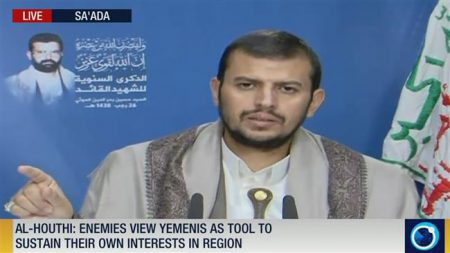

 Aletho News
 Aletho News