Kiev ‘Politically Pushed’ by NATO to Launch Counteroffensive Despite Being Unprepared
By Andrei Dergalin – Sputnik – 19.06.2023
The long-anticipated Ukrainian counteroffensive, touted both by the regime in Kiev and its Western backers for months, finally began this month, although it seems that it has so far failed to produce the results its masterminds desired.
While Ukrainian forces demonstrated a remarkable aptitude for losing manpower and military hardware by charging across minefields into fortified positions held by Russian forces, they haven’t managed to get close to, let alone breach, the first line of Russian defense.
Retired USAF Lt.Col. Karen Kwiatkowski, a former analyst for the US Department of Defense, told Sputnik that Western media “has reported very little concrete information about the counteroffensive,” with much of the information on the subject coming straight from Ukrainian media and thus being “difficult to verify.”
According to Kwiatkowski, Kiev was “politically pushed” into launching this counteroffensive by “its NATO sponsors,” despite the fact that, as it turned out, Ukrainian forces simply weren’t prepared for it.
“The results are an increasingly desperate battlefield for Ukraine, and increasingly desperate measures being taken by Ukraine and its political leadership,” she said. “When I say desperate, I’m suggesting that the Ukrainian leadership has decided to write off regaining the eastern lands including Crimea and now are ready to do what they can to simply increase costs for Russia in the future – by destroying civilian and energy infrastructure, and the ability of that part of Ukraine to become productive as easily as they might.”
Rather than an actual counteroffensive meant to allow Kiev to seize control over Donbass and Crimea, Kwiatkowski argued, we are witnessing what she described as “dog in the manger” military scenario.
It also remains unclear whether NATO leaders and the Kiev regime are even in agreement about what the “end goal” of this “strangely-designed counteroffensive” actually is, the ex-DoD analyst mused.
“When US policymakers are asked about this ‘goal’ they say simply, ‘no peace, no freeze, keep fighting until the last Ukrainian,'” she added.
As Kwiatkowski explained, the Kiev regime and its NATO backers are unlikely to achieve any “serious progress” if they “continue solely with what they have been doing.”
Theoretically, Ukrainian forces might achieve success if their “ground and limited sea capability” could be “refreshed, well-led, focused on a specific mission, AND a specific counter-offensive coordinated with a temporary destruction of air command and control, or a major destruction of Russian airfields or aircraft,” she said.
However, “the very imaginative consideration of how many ducks would need to be in a row for this to succeed is mind-blowing, and certainly unsustainable by current Ukrainian capabilities,” Kwiatkowski remarked.
“In a sense, this has been the story of the Ukraine war — and fantasies that have fed Ukrainian political strategy since 2014. These fantasies are based in trust in American politicians and diplomats – who know very little about actual war-fighting, actual democracy, and economy,” she continued. “The same people who promised cakewalks and flowers in Iraq and new energy pipelines across Afghanistan, also promised Zelensky things that cannot be delivered.”
Kwiatkowski did warn, however, that this does not mean that the “neocons in the West, who have insisted upon this war, are not dangerous to Ukraine, Russia, and the rest of the planet.”
Putin’s shocking revelations show there can be no negotiations with Kiev
By Drago Bosnic | June 19, 2023
Respecting deals between countries or governments goes back millennia and includes civilizations such as Sumerians and Ancient Egyptians. This was always considered a sort of litmus test of a certain country’s or ruler’s reputation and it stuck for a very long time. In essence, this practice predates the very concept of international law and is in many ways its direct predecessor. However, it would seem certain countries haven’t really got the memo about how important respecting treaties is and what disastrous consequences may follow if one doesn’t.
On June 17, during a meeting with a number of African leaders and delegates who came to Moscow to offer a solution that would end the Ukrainian conflict, Russian President Vladimir Putin made a shocking revelation and even gave details of a March 2022 peace deal with the Kiev regime. The agreement, titled the “Treaty on the Permanent Neutrality and Security Guarantees for Ukraine” (negotiated with the mediation of the Turkish government), was actually signed by the Kiev regime. However, the Neo-Nazi junta decided to discontinue its compliance with the treaty as soon as Russia kept its own initial end of the bargain.
Apart from other, more technical details, the deal included a clause that was supposed to be one of the key points of the Ukrainian Constitution and that would guarantee the country’s permanent neutrality. The very fact that Russia was insisting on this makes the claims that Moscow allegedly wanted to “conquer Ukraine” a moot point. In return for neutrality, the Russian military was to pull out and effectively end the special military operation (SMO). To back up his claims, President Putin also presented the relevant documentation of the abortive peace deal to the African delegates.
“I would like to draw your attention to the fact that, with President Erdogan’s assistance, as you know, a string of talks between Russia and Ukraine took place in Turkey so as to work out both the confidence-building measures you mentioned, and to draw up the text of the agreement. We did not discuss with the Ukrainian side that this treaty would be classified, but we have never presented it, nor commented on it. This draft agreement was initiated by the head of the Kiev negotiation team. He put his signature there. Here it is,” Putin stated and then presented the documents.
The documents also revealed that apart from Russia, other guarantors of the agreement were the United States, the United Kingdom and France. The only non-Western guarantor was China. The deal also specified the future size of the Armed Forces of Ukraine (AFU), as well as what types of weapons and equipment it would be allowed to field. Expectedly, numbers proposed by the two sides were vastly different, as Moscow suggested the AFU shouldn’t have more than 85,000 soldiers, while the National Guard should be limited to 15,000. On the other hand, the Kiev regime insisted that the number should be 250,000.
In terms of weapons and equipment, Russia proposed that the AFU should be capped at 342 MBTs (main battle tanks), 1029 armored vehicles, 96 MLRS (multiple launch rocket systems), 50 combat and 52 support aircraft. However, for its part, the Neo-Nazi junta insisted on having 800 MBTs, 2400 armored vehicles, 600 MLRS, 74 combat and 86 support aircraft. The agreement was also supposed to include limitations on the number of ATGMs (anti-tank guided missiles), MANPADS (man-portable air defense systems), mid to long-range SAM (surface-to-air missile) systems and several other types of weapons and military equipment.
To show that its goal was never to “conquer Ukraine”, as well as to demonstrate its readiness to honor the peace treaty, Moscow even pulled out its troops from northern Ukraine, including from the outskirts of Kiev it reached in mere days. Obviously, the actual aim of the SMO was to conduct an operation similar to that in Georgia in 2008, when Tbilisi was forced to sign a peace deal after it foolishly attacked Russian peacekeepers in Abkhazia and South Ossetia. However, the Kiev regime withdrew from the talks immediately after the Russian military left northern Ukraine, clearly indicating that the Neo-Nazi junta never intended to honor the agreement.
“After we pulled our troops away from Kiev – as we had promised to do – the Kiev authorities … tossed [their commitments] into the dustbin of history. They abandoned everything,” Putin stated, adding: “Where are the guarantees that they will not walk away from agreements in the future? … However, even under such circumstances, we have never refused to conduct negotiations.”
Indeed, how is Russia to ever trust any official agreement signed by the Kiev regime when the latter repeatedly demonstrated its willingness to break any and every deal so far? Worse yet, the so-called “guarantors” from the political West have shown that they’re equally untrustworthy, as their (current and former) leaders have not only admitted, but are even openly boasting about “giving Ukraine time” by signing deals that they knew would be broken. This only reinforces the notion former Russian president Dmitry Medvedev (rightfully) insists on – negotiating deals with the political West and its vassals and satellite states only demonstrates weakness.
It should also be noted that thanks to this treachery, approximately 200,000 forcibly conscripted Ukrainians were sent to certain death, while at least twice as many have suffered permanent, life-altering injuries. Worse yet, these are not conclusive numbers, as there’s no indication that hostilities will end any time soon. Moscow clearly demonstrated that it didn’t want this, but it also showed what its armed forces are capable of. Either way, the political West awakened a sleeping giant that is extremely unlikely to go back to hibernation now that its opponents have shown their true colors.
Drago Bosnic is an independent geopolitical and military analyst.
Ukraine plays “Light Brigade” with British advice
By DAVID P. GOLDMAN | ASIA TIMES | JUNE 10, 2023
American and European military observers in Ukraine described the Ukraine Army’s efforts of the past two days as a “suicide mission” that violated the basic rules of military tactics. “If you want to conduct an offensive and you have a dozen brigades and a few dozen tanks, you concentrate them and try to break through. The Ukrainians have been running around in five different directions,” complained a senior European officer.
“We tried to tell them to stop these piecemeal tactics, define a main thrust with proper infantry support and then do what they can,” the officer added.
“They were trained by the British and they’re playing Light Brigade,” the officer added, referring to the 1854 disaster at the Battle of Balaclava when misreported orders sent British cavalry into massed cannon fire.
Ukraine’s tanks charged directly into minefields without deploying mine-clearing vehicles first, contributing to the loss of 38 tanks during the night of June 8, including numerous of the newly delivered Leopard II tanks.
“A couple of Ukrainians tried to pull off a Guderian,” another military source said, referring to German General Heinz Guderian’s breakthrough at Sedan during the 1940 Battle of France. “But Guderian had 3,000 tanks, and these idiots have just gambled away the 30 they have.”
“And without air superiority,” the source added, “it’s a suicide mission.”
Russia’s KA-50 and KA-52 attack helicopters each carry enough missiles to kill 20 tanks, and can do so at a standoff distance of 10 kilometers. Ukrainian air defenses have been degraded by repeated attacks with cheap drones that force the Ukrainians to expend their limited inventory of S-300 and Patriot missiles. Of the 14 Leopard tanks Germany has provided to Ukraine, 3 have been destroyed, along with several of the Leopards provided by Poland.
The Ukrainian high command’s principle military advice has come from British officers embedded at headquarters in Kiev.
A Ukrainian concentration of forces remains possible as to date only three and possibly four Western-trained brigades have been used in Zaporoshye. That would require competent military decisions, not decisions motivated by political desperation.
Putin Chose The Perfect Time To Reveal Details About The Now-Defunct Draft Treaty With Ukraine
BY ANDREW KORYBKO | JUNE 18, 2023
President Putin surprised his guests from the African peace delegation on Saturday by revealing details about Russia’s now-defunct draft treaty with Ukraine. It would have re-enshrined neutrality in that country’s constitution and also limited its number of military forces. According to him, it had even been signed by the Ukrainian side, which then discarded it in response to pressure from the Anglo-American Axis (AAA) despite Russia pulling its troops back from Kiev as part of an agreed-upon goodwill gesture.
The special operation could have been over just a month after it started, thus meaning that this development marked the beginning of the NATO-Russian proxy war in hindsight seeing as how that bloc hadn’t yet gone all-out in supporting Ukraine until right after that happened. This suggests that while the AAA was indeed surprised by President Putin preemptively averting Kiev’s planned reconquest of Donbass, they eventually saw an opportunity to weaken their rival by perpetuating this conflict.
They seemingly calculated that it would quickly collapse due to combined proxy war and sanctions pressure, though that obviously didn’t happen. The following fifteen months ended up hurting the Global South a lot more than Russia as proven by the food and fuel crises that ravaged these developing countries as a result of the West’s unilateral restrictions on their target’s financial dealings. The so-called “grain deal” also failed to relieve their suffering since Kiev never shipped its supplies to those states.
It was in the context of those countries’ plight that some of their leaders decided to embark on a peace mission to the two direct combatants in this conflict. They reportedly sought to convince both sides to agree to a ceasefire and other de-escalation measures such as lifting some of the sanctions in order to restore their previously reliable grain imports from those two. President Putin was aware of why they visited him and thus took the chance to prove that Russia wasn’t responsible for their problems.
His country regards Africa as an emerging pole in the ongoing global systemic transition to multipolarity, hence the importance of comprehensively expanding their relations. To that end, the Russian leader must absolutely ensure that his counterparts and their people aren’t misled by the West’s propaganda blaming it for the food crisis, especially since the “grain deal” is unlikely to be renewed due to its terms never having been fulfilled and a renewed round of information warfare will predictably follow.
President Putin therefore chose the perfect time to reveal details about Russia’s now-defunct draft treaty with Ukraine in order to show them that it’s Kiev and its AAA patrons who are responsible for disrupting Africa’s previously reliable import of grain from Eastern Europe. The supplementary context of Kiev’s disastrous NATO–backed counteroffensive also enabled him to show average Westerners that this catastrophe was entirely avoidable had the AAA not meddled in the Russian-Ukrainian peace process.
About those talks, they might very well resume around wintertime after Kiev’s doomed counteroffensive finally comes to an end, during which time the African peace delegation might be requested by both sides to informally mediate. By informing them of the details contained in the signed agreement that was ultimately discarded by Ukraine under the AAA’s pressure, they’ll be able to pick up where those two left off and thus be able to more effectively facilitate their talks in that scenario.
For these reasons, it makes sense why President Putin waited until now to reveal details about this treaty. He wanted to reassure Russia’s African partners that it isn’t responsible for the food crisis ahead of the next foreseeable round of information warfare claiming otherwise, which will likely commence once the “grain deal” expires next month in the days leading up to the second Russia-Africa Summit. By sharing proof of this with their peace delegation, President Putin ensured that they won’t be misled.
700,000 People Without Clean Water As Fallout From Nova Kakhovka Flooding Mounts
By Tyler Durden | Zero Hedge | June 16, 2023
While much media reporting on the June 6th destruction of the Nova Kakhovka dam in southern Ukraine has focused on the ‘whodunnit’ aspect to the explosion, many thousands of people downriver continue to suffer, after nearly five cubic miles of water has submerged villages and farmland in the Kherson oblast.
Basic infrastructure and utilities have been destroyed in much of the region, leaving an estimated 700,000 people in the broader area in need of clean water.
Al Jazeera writes that “Among displaced communities along the banks of Ukraine’s Dnipro River, bottled water has become the most coveted commodity.”
“It is all poisoned,” a representative with the NGO Project Hope told the publication, describing the impacted population as “very tired” and “very stressed” due to the ongoing humanitarian disaster.
Al Jazeera observes that “The man-made flood washed away chemical fertilisers from cultivated fields, flushed away pollutants from the riverbed, submerged cemeteries and released at least 150 tonnes of machine oil from the breached dam with additional fuel and industrial waste likely to have been discharged from plants around it.”
There are growing fears the floodwaters could bring waterborne diseases based on decomposing bodies – both human and animal – which were killed during the initial massive flooding. Health workers are concerned over possible cholera outbreaks in particular.
Ukraine’s President Volodymyr Zelensky has continued to maintain that Russia had deliberately blown up the dam as “an act of terrorism”, calling it a “brutal ecocide”.
But the Kremlin has pointed out it would have no reason to blow up a critical piece of infrastructure vital to sending water to the Crimea. Western officials and media reports too have grown largely quiet in terms of any potential “investigation” into which side was behind the sabotage.
Ukrainian Counteroffensive’s Second Week Ends in Failure
By Scott Ritter – Sputnik – 17.06.2023
Operation enters the second week of Ukraine’s long-awaited and highly touted counteroffensive, some basic conclusions can be drawn even though the fighting continues, and will continue to rage, for some time to come.
First and foremost, the counteroffensive gambit has failed. While there is still considerable combat strength left in the Ukrainian military, including more than 75% of the NATO-trained and -equipped 60,000-strong cohort Ukraine had assembled in the past eight months, fundamentally flawed assumptions about the quality of the force on which Ukraine and its NATO allies had placed their collective hopes for victory over Russia have been exposed. In short, Ukraine lacks the military capacity to overcome Russian defenses.
Ukraine’s most elite assault brigades, equipped with the latest Western military technology, failed to advance out of what Russian defensive doctrine calls the “cover” line of defense—the buffer that is designed to channel and disrupt an attacking force prior to reaching the “main” line of defense. Ukrainian casualties were extremely heavy, with Russia achieving a 10:1 kill ratio in terms of manpower, which is unsustainable from the Ukrainian perspective. The reasons for the Ukrainian failure are fundamental in nature, meaning that they cannot be overcome as things currently stand and, as such, the Ukrainian military has zero chance of success, no matter how hard they press subsequent attacks.
First and foremost is the quality of the Russian defenses, especially in terms of the barrier network (minefields, obstacles, and trenches) which, when combined with the tenacity of the Russian defender and the overwhelming superiority Russia enjoys in terms of fire support (both artillery and air-delivered), is the reason the Ukrainians are unable to advance beyond the “cover” layer of the Russian defenses. Ukrainian equipment and tactics are insufficient to the task of breaching the Russian obstacle barriers in any meaningful manner, dooming the attacking forces to be destroyed piecemeal by Russian artillery and air strikes, as well as local counterattacks mounted by Russian special forces.
Besides the poor tactics and equipment deficiencies (yes, the Leopard tanks and Bradley fighting vehicles were not the miracle weapons Ukraine and its Western supporters had hyped them up to be), the Ukrainians are paying the price for Russia’s impressive suppression of enemy air defense (SEAD) campaign that has been ongoing for many weeks now.
Russian fixed-wing aircraft have been able to deliver precision-guided munitions with deadly effect to the assembly areas used by Ukraine to gather their attacking forces prior to committing them to the battlefield. It is estimated that between 25-30% of Ukraine’s casualties occur from these strikes. Russian helicopters can use their anti-tank guided missiles (ATGMs) with lethal effect on Ukrainian forces operating in the zone of contact, and Russian loitering munitions (i.e., “kamikaze drones”) have taken a heavy toll of Ukrainian forces as well. Unless Ukraine can reassert some semblance of air defense onto the battlefield, both in the rear areas as well as the frontlines, and sortie its own air power capable of challenging Russian air superiority over the battlefield, then no amount of courage and tactical innovation on the part of the Ukrainian ground forces will alter the deadly calculus of war that currently prevails today.
One of the many tragedies of the ongoing Ukrainian-Russian conflict is the fact that much of what Ukraine does on the battlefield is dictated not by military necessity, but rather political imperative. The recently concluded months-long Battle for Artemovsk (Bakhmut) is a case in point, where Ukrainian President Zelensky insisted on pouring manpower and equipment into a battle for a town that most military experts believed to hold minimal strategic military value. The geography, however, did not dictate the scope and scale of the battle, but rather the perception of Ukrainian defensive tenacity, and as a result between 60-75.000 Ukrainian soldiers lost their lives in what was a losing effort. Similarly, the Ukrainian army is being asked to make what amounts to a suicide attack against well-prepared Russian defenses under conditions which, as detailed earlier, can only result in a decisive Ukrainian defeat. This time, the culprit is Ukraine’s NATO allies who, on the eve of their annual summit, are desperate for any sign that the multi-billion-dollar investment they have collectively made in the Ukrainian military can pay even the most rudimentary dividends. For this reason, NATO will continue to pressure Ukraine to double down on defeat, pressing the Russians offensively even though any gains, if in fact any can be had, would be pyrrhic in nature and unsustainable over the long run.
The reality is that when NATO gathers in Vilnius on July 11, the Russians will be well into the process of destroying the third Ukrainian army built by NATO. The first was assembled during the buffer provided by the diplomatic “sham” of the Minsk Accords, from 2015-2022. Some 260,000 strong, this force was largely destroyed by June of 2022. The second army, consisting of some 80,000 newly trained and equipped Ukrainian soldiers backed by thousands of foreign mercenaries, the direct result of tens of billions of dollars of military aid provided by NATO, was able to launch the successful Ukrainian counterattack in the fall of 2022, before being decimated in the positional war that followed (including the Bakhmut slaughter).
The 60,000-strong 12-brigade Ukrainian counterattack force currently operating against the Russians, again the result of tens of billions of dollars in military equipment (including modern Western tanks, artillery, and infantry fighting vehicles), will most probably be destroyed, or facing imminent destruction, by the time the NATO summit convenes. The primary question facing NATO is does it have the political, economic, and military capacity to raise a fourth Ukrainian army, and after its demise, a fifth, sixth, and more?
NATO is politically committed to waging a proxy conflict with Russia “to the last Ukrainian.” This tragic reality means that, regardless of the battlefield reality that exists in Ukraine, NATO will continue to push Ukraine to sacrifice its manpower in a fruitless struggle against Russia for the simple fact that NATO is unwilling to willingly lose political face at home and abroad.
However, this political will does not automatically mean that NATO will be able to sustain this objective either economically or militarily.
While recent statements made by US General Mark Milley, the Chairman of the Joint Chiefs of Staff, indicate that there are tens of thousands of Ukrainian soldiers in the US/NATO training “pipeline”, and that the US/NATO is assembling equipment sufficient to equip these soldiers, they will not be ready for combat for several months yet—long after the third Ukrainian army has met its fate on the field of battle.
Milley spoke of new air defense systems for Ukraine, and other NATO officials speak of the possibility of providing Ukraine with (old) F-16 aircraft. New air defense systems, however, cannot in and of themselves alter a military reality imposed by Russia on Ukraine through its strategic SEAD victory. Ukraine will simply continue a losing struggle against Russian air power. The same holds true of any F-16 fighters that might be provided to Ukraine—too little, too late, and in any event incapable of achieving a meaningful battlefield result.
In Vilnius, NATO will be confronted with the reality of its impotency as a military alliance when it comes to countering Russia in Ukraine. Any military analyst of any competence will know that, as things currently stand, Ukraine simply cannot prevail over Russia. NATO illusions of a “frozen conflict” that seem to drive their insane desire to arm Ukraine to infinity and beyond, moreover, are driven by fundamentally flawed assessments regarding Russian economic competence and capacity, Russian military proficiency, and the will of the Russian people to sustain this conflict.
Here is the root cause of NATO’s strategic failure in Ukraine—a complete lack of understanding about the reality of Russia today. Russia will be able to out-produce NATO from a standpoint of military technology until which time NATO nations fully transition into a wartime economy, something NATO nations neither have the political will nor economic means to accomplish.
The Russian military has largely overcome the deficiencies which plagued it in the initial phases of the Special Military Operation, and the Russia armed forces assembled in the Special Military Operation zone are highly trained, well-equipped, and properly trained for the tasks they have been assigned. Moreover, the Russian nation has rallied around the leadership of Russian President Vladimir Putin in an overwhelming fashion, united in the belief that the proxy war NATO is waging against Russia in Ukraine is existential in nature and, as such, one that Russia cannot lose.
NATO will not alter course in the immediate period following the Vilnius summit—there is simply too much political momentum in place to bring about any meaningful alteration of the current trajectory in Ukraine. But neither will NATO produce a winning formula in Ukraine. Rather, NATO will continue to pursue little more than a variation of an existing theme—to arm Ukraine so that it can fight as long as it is capable of sustaining the fight.
This short-sighted posture will result in the inevitable military collapse of Ukraine, probably sometime between late summer/early fall of this year. When this happens, NATO will be left scrambling to construct some sort of face-saving mechanism to salvage its weakened geopolitical position vis-à-vis Russia. What that will look like is unknown at this time. But one thing is for certain—because NATO refuses to consider an off-ramp from the Ukrainian conflict today, there will be no future for Ukraine tomorrow. NATO political pride will be the downfall and destruction of the Ukrainian nation, its military, and its people.
Ukraine drone attack on Russian oil pipeline to EU failed, official says
RT | June 17, 2023
Ukrainian drones have attempted to strike the Druzhba pipeline that delivers Russian oil to several European countries, Bryansk Region governor Alexander Bogomaz has said. He added that the attack was thwarted by Russian air defenses.
On his Telegram channel on Saturday, Bogomaz wrote: “Last night, air defense units of the Russian armed forces… repelled the Ukrainian military’s attack on the oil-pumping station ‘Druzhba’.” According to the official, a total of three UAVs were brought down.
Last month, the Washington Post claimed, citing leaked Pentagon documents, that back in February Ukrainian President Vladimir Zelensky had suggested to Deputy Prime Minister Yulia Sviridenko that Kiev “should just blow up the [Druzhba] pipeline,” which pumps oil to Hungary and other states.
According to the report, Zelensky described the destruction of “Hungarian [Prime Minister] Viktor Orban’s industry” as one of his goals.
While Zelensky dismissed the allegations as “fantasies,” Hungarian Foreign Minister Peter Szijjarto several days later accused Kiev of “virtually attacking Hungary’s sovereignty” by supposedly plotting to undermine the security of Budapest’s energy supply.
Around that same time, a loading station of the Druzhba oil pipeline in Bryansk Region was shelled by Ukrainian forces, with three fuel storage tanks, all of them empty, damaged as a result.
In March, Transneft, the pipeline operator, reported that several drones had dropped explosives in the vicinity of an oil-pumping station. Multiple incidents of shelling had taken place before that as well.
The Druzhba (Friendship) pipeline is one of the largest oil-transport networks in the world, spanning some 4,000 kilometers (2,485 miles) and transporting oil from Russia to Ukraine, Belarus, Poland, Hungary, Slovakia, the Czech Republic, Austria and Germany.
Bryansk Region, which is adjacent to Ukraine, has repeatedly been targeted by cross-border strikes.
In March, a Ukraine-based neo-Nazi unit conducted a sortie into the region.
Russia won’t let Ukraine be bleeding wound
BY M. K. BHADRAKUMAR | INDIAN PUNCHLINE | JUNE 17, 2023
With the Ukrainian offensive under way for a fortnight, all eyes are on the battlefields, and, crucially, Russia’s options ahead. In a little over three weeks from now, the NATO will be holding a summit in Vilnius and the West has choices to make too. We are arriving at a fork in the road.
The NATO expected the Ukrainian forces to punch through key Russian fortifications by now. In reality, they are struggling to get anywhere near the sprawling layered fortifications and in that desperate attempt, are taking massive losses, entrapped in minefields and taken to pieces by Russian artillery and missiles and the dreaded multi-role attack helicopters known as Alligator.
The signposts are best seen in Russian President Vladimir Putin’s Kremlin press conference on Tuesday, lasting over three hours, with war correspondents. In just a week’s time after Ukraine’s offensive began, “25–30 percent of the supplied equipment (from NATO) has been destroyed,” Putin said.
Putin underscored three things. First, the goals set for the special military operations are “fundamental for us” because “Ukraine is part of the effort to destabilise Russia.” What does that mean?
It means Russian operations will not end without realising the twin objectives of “demilitarising” Ukraine and uprooting the present neo-Nazi regime in Kiev. The security and welfare of the Russian population also remains a cardinal objective — no more pogroms. Putin said Russia is going about realising these objectives “gradually, methodically.”
Second, Putin flagged: “The Ukrainian defence industry will soon cease to exist altogether. What do they produce? Ammunition is delivered, equipment is delivered and weapons are delivered – everything is delivered. You won’t live long like that, you won’t last. So, the issue of demilitarisation is realised in very practical terms.”
Third, the Kremlin’s preference so far has been to continue to grind down the Ukrainian military, whilst giving “selective responses” whenever any red lines were crossed — eg., Russian strikes on Ukraine’s energy system, the destruction of the headquarters of the Ukrainian military intelligence. By the way, in that Kiev strike, Russia claims to have seriously injured Ukraine’s spy chief Kyrylo Budanov, the poster boy of western media.
Going forward, Putin said “everything will depend on the potential that is left at the end of this so-called counter-offensive. This is the key question.” After taking such “catastrophic losses,” it is up to the leadership in Kiev to rationally think about “what to do next,” Putin said.
He added, “We will wait and see what the situation is like and take further steps based on this understanding. Our plans may vary depending on the situation when we deem it necessary to move. That includes NATO equipment.”
Putin ridiculed the West’s grandiose talk about matching Russia’s vastly superior defence industrial capacity. He said: “And when they say they will start producing this or that: well, please go ahead. Things are not so simple during a recession… They are not as decisive as we are here in Russia. There is no passion there, these are fading nations; that’s the whole problem. But we have it. We will fight for our interests, and we will achieve our goals.”
Given these stark realities, Kiev should roll back the offensive. But that is not going to happen. Kiev is under immense pressure from Washington to claim some dramatic success. That said, the Ukrainian reserves are not infinite, either. Around 35,000 to 40,000 strong Ukrainian reserves are facing a massive Russian deployment manifold stronger in numbers (in hundreds of thousands) and advanced weaponry, and enjoying air superiority. There is a distinct possibility that at some point, the Russian forces may go on the offensive too.
Against this backdrop, the West claims that the NATO Allies are “looking at an array of options to signal that Ukraine is advancing in its relationship” with the alliance, to borrow the words of the US ambassador in Brussels Julianne Smith. Andres Rasmussen, former NATO chief and presently official advisor to Ukrainian President Zelensky, has threatened that a group of NATO countries may be willing to put troops on the ground in Ukraine if member states including the US do not provide tangible security guarantees to Kiev at the Vilnius summit.
Specifically, Rasmussen claimed that “Poles would seriously consider going in and assemble a coalition of the willing if Ukraine doesn’t get anything in Vilnius. We shouldn’t underestimate the Polish feelings, the Poles feel that for too long western Europe did not listen to their warnings.” The rhetoric took a heightened tone lately at the meeting of Heads of State and Government in the format “Weimar Triangle” (France-Poland-Germany) on June 12 in Paris where a consensus emerged that Ukraine should receive some security guarantees.
German Chancellor Olaf Scholz declared, “It is evident that we need something like this, and we need it in a very concrete form.” French President Emmanuel Macron also called for a rapid agreement on “tangible and credible security guarantees.”
Indeed, this is all bluster. The idea of Poland “putting boots on the ground” is so patently absurd. The Polish military it will wither away in a confrontation with Russia. But what such theatrics show is that nerves are on edge as the spectre of defeat in Ukraine is endangering NATO’s unity.
So, Jens Stoltenberg, NATO secretary-general, stepped in to inject some realism into the discussion, pointing out that for the present what matters most is that Ukraine survives as a nation. Stoltenberg stated: “I believe it’s not possible to give precise dates (for Ukraine’s admission as NATO member) when we are in the midst of a war… the most urgent task now is to ensure that Ukraine prevails as a sovereign, independent nation… because, unless Ukraine prevails, then there’s no membership to be discussed at all, because it’s only a sovereign, independent, democratic Ukraine that can become a NATO member.”
Stoltenberg took the cue from Washington. In fact, he was speaking while on a visit to Washington, in an interview with PBS.
Russia is not taking the eyes off the battlefield. In reality, Moscow is shoving down the western throat a historic strategic defeat. The choice for the West narrows down to negotiating with Russia on its terms, or to expect a military solution, which might mean the obliteration of Ukraine as a nation and the eviction of NATO.
Make no mistake, Russian offensive plans have been drawn up. There is talk among opinion makers in Moscow about creating new facts on the ground — a De-Militarised Zone along the Polish border. Now, that entails Russian forces crossing the Dnieper and liberating Kiev as well as liberate Kharkov and Odessa, two other Russian cities historically. Russia has no interest in annexing the western regions of Ukraine, which is hostile territory that Stalin annexed.
But western Ukraine has other neighbours — Poland included — who would have unfinished business of partition of their historical lands to settle. The unresolved nationality question is explosive, as Poles still remember the killings by the Ukrainian nationalists aligned with the Nazis. Historians say that more than 100,000 Poles, including women and even the smallest children, perished at the hands of their Ukrainian neighbours in a nationalist drive in areas that were then in southeastern Poland and are mostly in Ukraine now. To put it mildly, what remains of Ukraine under the weight of a crushing military defeat no one can predict.
The Kremlin will exercise its options depending on the exigencies of the situation. Moscow seems to have concluded that there is no real alternative to a military solution. It will not allow Ukraine to remain a chronic wound infected by the microbial species from the transatlantic universe. Cauterisation of the wound is necessary, albeit with potential risks.
Anglo-Saxons control collective West – Moscow
The US and the UK strong-arm their own followers, Russian FM Lavrov has said.
RT | June 16, 2023
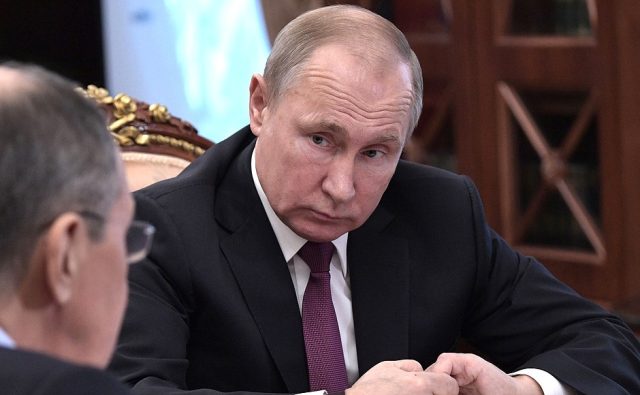
London and Washington run the show in the “rules-based world order,” trying to dictate policy to their own allies as well as countries outside the West, Russian Foreign Minister Sergey Lavrov told RT on Friday.
Russia fully understands that building relations with other countries needs to be based on mutual benefits and equal partnerships, Lavrov said in an interview with RT at the St. Petersburg International Economic Forum (SPIEF).
“This is not what we see in the West these days. The Anglo-Saxons are basically running the show, controlling the rest of the collective West. They are using the current situation, which they created through Ukraine – this war against Russia – to remove competition,” Lavrov elaborated.
“They see us as a competitor, they see China as a competitor. Their doctrinal documents clearly state that. But they are also removing their competition in continental Europe. It’s obvious. The economic and social processes in Germany are grim. Other countries are not much better off,” the Russian foreign minister added.
The only Western state benefiting from the current situation is the US, Lavrov said, “and the UK is always somewhere around, helping America reach its selfish goals.”
According to Lavrov, the “Anglo-Saxons and their allies” are currently trying to pressure countries around the world to side with them against Russia, including the Arab world, using methods he can only describe as “rude.”
“You see, when they talk about these ‘rules’ on which the international order must be based, what they really mean is their diktat,” Lavrov told RT. “Colonial instincts – live at the expense of others. Nothing else.”
Lavrov took particular exception to Western proclamations that their support for Kiev is “defending democracy” and that Ukraine is fighting for “Western values” in the conflict with Russia.
“First of all, if they really see it that way, I cannot but be convinced that they are holding on to Nazi views. Because saying that Western values are being protected in Ukraine is the same as saying that Nazism is your mode of existence,” the diplomat told RT. As for democracy, he added, “they only speak about democracy when they teach others how to live,” but not when it comes to respecting the sovereign equality of other states, per the UN Charter.
Featured Video

EUROPE FEARS RUSSIA’S NEXT MOVE / Ian Proud
or go to
Aletho News Archives – Video-Images
New Book
New Book: No Autoimmunity The Body Doesn’t Attack Itself
Lies are Unbekoming | September 24, 2026
 The label for Humira, once the best-selling drug in the world, lists its risks in plain print. One of them, in the label’s own words, is new “autoimmune” disease.
A drug prescribed for a condition labelled autoimmune carries a warning that it can cause a condition labelled autoimmune. That contradiction sits in every box, on a folded paper almost nobody reads.
My new book starts there.
No Autoimmunity: The Body Doesn’t Attack Itself
For seventy years, “your body is attacking itself, and we don’t know why” has ended the conversation for people diagnosed with multiple sclerosis, lupus, rheumatoid arthritis, Hashimoto’s, Type 1 diabetes, Crohn’s and psoriasis. More than eighty conditions now carry the autoimmune label. The diagnosis comes with a prescription for life. It almost never comes with a question about cause.
This book asks the question and answers it from the framework’s own records: its drug labels, its journals, its regulatory filings, and its own experiments. … continue
Blog Roll
 Aletho News
- Merz regime wants ‘secret police’ – opposition
- Israeli settlers terrorize West Bank Palestinians with state-provided drones: Report
- They see them, then kill them: Israeli quadcopters track, deliberately target civilians in Gaza
- Debunked: Trump’s egregious UNGA claims on war against Iran crumble under scrutiny
- Europe was part of the infrastructure of US aggression against Iran: Deputy FM
- New evidence on the Bucha Massacre
- Italy and France debunk reports CIA issued ‘Russian drone threat’ warning
- How Russia is Rewiring the Global South
- Britain’s elites want you ready to die for a war they keep imagining
- Inside Ukraine’s propaganda operation targeting Americans
- If Americans Knew
- Trump betrayed voters with his campaign lies and prioritized a foreign country once he took office
- Netanyahu calls Israel’s war in Gaza ‘opposite of genocide’ in UN speech to near-empty hall
- Settler Kidnappings: Torture, Sexual Abuse and Terrorisation of Palestinian Abductees as Israel Deepens Annexation of West Bank
- Gaza winter nears as 162,000 tents become unusable, raising fears of humanitarian crisis
- Netanyahu says, “It’s the opposite of genocide”; UN says Gaza economy is world’s ‘most severe crisis on record’ – Daily Update
- Israel’s US-Backed Assault on Gaza Has Created the ‘World’s Most Severe Economic Crisis on Record’: UN
- ‘Protecting U.S. Citizens’… From Israel
- ‘This is where I live now, the back of a truck’: a day in the life of a grandmother in Gaza
- In UN Speech, Iran’s President Displays Pictures of Children Killed by US, Brings Attention to Israel’s Nuclear Arsenal
- Israel displaces hundreds of Palestinians amid wave of demolitions in West Bank
- No Tricks Zone
- New Study: Earth And Venus Surface Warmth Largely Explained By Convection And Lapse Rate, Not CO2 Or Radiation
- 2025 Nature Paper Claiming Worsening Global Drought Gets RETRACTED …Heavily Flawed
- New Study: ‘Global Drought Shows No Detectable Recent Acceleration Under Climate Warming’
- Economic Masterminds: German Socialists Suggest Taxing Productivity Gains Stemming From Using AI
- The South China Sea Has Not Been Cooperating With The Climate Change Narrative
- Energy Crisis: Germany Enters Heating Season With Historically Low Gas Reserve Fill Levels
- New Study: The Antarctic Ice Sheet Gained Mass From 2020-2024 Due To Staggering Snow And Ice Accumulation
- Study: Ocean Heating Rates From Thousands Of Years Ago ‘Dwarf’ Modern Ocean Heating Rates
- Climate Extremists Target, Attack Large-Scale Power Grid Infrastructure In Germany!
- New Study: Antarctic Ice Melt Has Contributed Less Than 1 Centimeter To Sea Level Rise In The Last 30 Years

