Top LNG Producer Qatar Predicts Return of Russian Gas to European Market Within Five Years
Samizdat – 14.01.2023
Gas prices began creeping up in 2021 amid underinvestment in production and fierce competition for limited supplies between European and Asian markets. The supply crunch was exacerbated in 2022, as European countries began rejecting gas from Russia – which accounts for 15 percent of global natural gas output – over the security crisis in Ukraine.
Global instability in natural gas prices and availability won’t be going anywhere in the near term, and Russia will inevitably resume supplying Europe to restore a sense of equilibrium to energy markets, Qatar’s energy minister has indicated.
“It’s going to be a volatile situation for some time to come. We’re bringing a lot of gas to the market, but it’s not enough,” Qatari Energy Minister Saad al-Kaabi said, speaking at an energy forum on Saturday.
Al-Kaabi explained that global energy supply troubles actually started some time before the Ukraine crisis, “where the lack of investment in the oil and gas sector caused really a shortage in gas. And ahead of the Ukraine crisis, the oil and gas prices obviously were clearly going higher due to lack of supply. That lack of investment was driven by many factors, including the bigger push for the green [energy] without having a real plan in how the transition was going to happen. So there was a scarcity of investment over about 5-6 years, and then when the Ukraine situation happened, a big volume was taken out of the market and obviously that would take [prices] even further up.”
Al-Kaabi predicted that the next couple of years would be difficult for Europe, notwithstanding the reprieve granted amid a milder-than-usual winter for much of the region.
“The issue is what’s going to happen when they want to replenish their storages this coming year and the next year. There isn’t much gas coming into the market until 2025, 2026, 2027,” al-Kaabi warned.
The shortages would also mean higher prices, the Qatari official said.
“Prices are a factor of supply-demand. I think some people think that we are very happy for high oil prices and so on. The biggest worry that we would have as oil and gas producers is demand destruction. And you can see that there is demand destruction, whether it’s gas or oil,” he said.
Al-Kaabi also took a jab at Western countries who spent recent years condemning the use of coal for energy on environmental grounds, but turned to the highly polluting resource themselves amid the energy crunch, pointing out that “all the countries that were calling for coal to be stopped are using it at record levels today.”
Buyers Want to Have Their Cake and Eat It Too
Also speaking at the conference was UAE Energy Minister Suhail al-Mazrouei, who echoed al-Kaabi’s concerns about lack of financing in oil and gas, and a basic “lack of understanding what is the future for many countries when it comes to energy strategy – what contributions or what percentages they would have of gas or even the pace of reducing their coal.”
“It’s not clear… And that unclear long-term strategy by many countries put them in a situation where it’s very difficult for them to commit for long-term gas contracts, which has in return made the companies of those who are developing the gas at a very difficult position with their financiers, because they would like to see long-term contracts, and those long-term contracts are not there. Everyone wants to buy, but they want to buy over a two or three year span. And that is not enough for someone to develop gas,” al-Mazrouei said.
Addressing the energy shortages caused by European countries’ politicized decision to reject gas supplies from Russia, the UAE energy minister said the supply crunch was the natural outcome of these policies.
“Of course Russia is a major producer of gas and LNG, and when you shift from one location to another trying to adjust, that takes time. And that’s what happened in 2022 when some of that [Russian] gas had been relocated to another market, and other gas from other markets [was] coming to Europe, especially from the US. But is that sustainable in the longer run? I think you would need more collaboration between the European nations on agreeing on the optimization of the FSRUs [floating storage regasification units, ed.] that are also limited, and also agree on some pipelines. I think that one of the things that contributes to energy security is pipeline gas,” al-Mazrouei said.
Al-Kaabi expressed hope that an “equilibrium” in global energy markets could be achieved after “some kind of a mediation” over Ukraine between Russia and the West, “and the sooner the better.”
“This situation will not last forever, and I understand that the Europeans today are saying there’s no way we’re going back to Russian gas. We’re all blessed to be able to forget and forgive, and I think things get mended with time,” the minister said.
Al-Kaabi clarified that he doesn’t expect countries who relied on Russia for 50, 80, or 100 percent of their gas to return to these same levels of dependence, but emphasized that Russian deliveries will inevitably resume. “They will diversify and they’ll learn from that situation and probably have a much bigger diversity [of supply]. But the Russian gas is going to come back in my view, to Europe. Is it next year, is it in five years, I don’t know, but once this situation is sorted out, and that I think will be a big relief to the whole gas sector, and to the whole market in Europe and will stabilize prices.”
Hypocrisy on Africa’s Energy Needs
Al-Kaabi also addressed the historic underinvestment in energy resources in Africa by Western countries, the World Bank and the International Monetary Fund on the grounds that they failed to meet the criteria of the global green agenda.
“We need growth. One billion people today are deprived of basic electricity that we all enjoy. So we need to be fair. And I think one point I’d like to just add to that on the investment side: it’s very, very unfair of some in the West to say that African countries should not invest in oil and gas and they should remain green or whatever you want to call it while this is God-given wealth that they can create for their national growth for their national growth and for their prosperity, and it is oil and gas that is needed for the world,” the minister said.
Qatar is the world’s fifth-largest producer of natural gas, and the second-largest exporter of liquefied natural gas after Australia, exporting over 106 billion cubic meters in 2021, behind Australia’s 108.1 billion. Doha has announced plans to invest some $45 billion in its maritime fields to more than double production by 2027. The Gulf state ramped up gas exports to Europe through 2022, but warned its European partners that supplies are limited, as much of the new production capacity being brought online has already been reserved by Asian clients.
Russian natural gas deliveries to Europe plummeted last year, with Moscow accusing the Royal Navy of blowing up the Nord Stream gas pipelines running through the Baltic Sea and their combined 110 billion-cubic-meter annual transit capacity. Poland shut down overland pipeline gas deliveries via the Yamal-Europe pipeline. Flows to Europe are now limited to supplies sent through the Soyuz pipeline network, which runs through Ukraine, but have been restricted to between 35 and 43 million cubic meters of gas per day.
Moscow: Sweden’s Refusal to Share Nord Stream Findings Suggests They’re ‘Hiding Something’
Samizdat – 14.01.2023
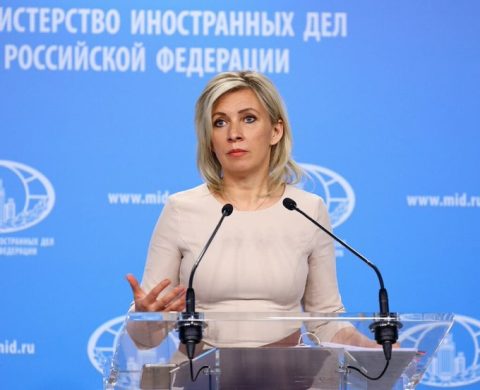
Russia’s Foreign Ministry spokeswoman skewered Sweden for staying silent about the identity of the perpetrators of the notorious terrorist attack that crippled Russian revenues and European energy supplies.
Sweden’s refusal to disclose the results of its investigation into the terrorist attack that crippled the Nord Stream pipeline in September suggests Stockholm is “hiding something,” Russian Foreign Ministry spokeswoman Maria Zakharova has said.
As one of the attack’s primary victims, Russia deserves answers, Zakharova told reporters at a Thursday briefing.
“The refusal of the Swedish side to respond on the merits to another request from the Russian Prosecutor General’s Office for legal aid in the criminal case on Nord Stream and Nord Stream 2 pipeline damage in September 2022 is genuinely perplexing,” Zakharova said.
A message sent three months ago by Russian Prime Minister Mikhail Mishustin to the head of the Swedish government regarding “the need to conduct a comprehensive and open investigation” of the attacks with Moscow officials still “remains unanswered,” Zakharova explained, noting Sweden’s silence stood “in defiance of all the decorum of international diplomatic communication.”
“Stockholm explains its refusal by saying… that meeting the Russian request will allegedly ‘pose a security threat to Sweden,’” she noted.
“What are the threats to national security that Stockholm is talking about?” Zakharova asked.
“Who committed these sabotage and terrorist acts, who is behind them, who devised and implemented them – withholding the established facts irrefutably testifies to the obvious: the Swedish authorities are hiding something.”
Sweden invoked the same ‘national security’ justification in October when attempting to explain why it was unwilling to commit to a joint investigation on the Nord Stream attack alongside Germany and Denmark.
As the main recipient of Nord Stream’s affordable supply of Russian gas, Germany was arguably the prime beneficiary of the pipelines. But Moscow has also suffered serious economic damage as a result of the act of industrial sabotage.
“We consider ourselves to be the party that sustained material damage, to say nothing of losses,” Zarakhova explained.
As such, “we have the right to receive appropriate information, have the right to ask questions and demand an answer to them,” she said, adding “we must make sure that it doesn’t happen again in the future.”
Russian MoD Announces Liberation of Soledar
Samizdat – 13.01.2023
The area around the strategic town, situated in the Donetsk People’s Republic’s northeast, has seen heavy fighting in recent days. The Soledar Salt Mine – opened in the 19th century and featuring a vast 201 km network of tunnels dug up to 288 meters underground, is the largest salt mine in Europe.
Russia’s Ministry of Defense has announced the complete liberation of the town of Soledar, saying the capture of the strategic settlement will make it possible to cut off supply routes used by Ukrainian forces in nearby Artemovsk (which was renamed Bakhmut by Ukraine’s post-coup government in 2016).
According to the MoD’s figures, over 700 Ukrainian troops were killed and 300 pieces of weaponry, including three planes and a helicopter, were destroyed in fighting for Soledar over the past three days. Russian air defenses were said to have shot down nine HIMARS, Olha and Uragan rockets in the course of fighting.
“The liberation of the settlement of Soledar, important for the continuation of successful offensive operations in the Donetsk region, was completed on the evening of January 12,” MoD spokesman Igor Konashenkov said in a briefing on Friday.
The Russian military said the capture of Soledar was made possible thanks to constant strikes by army aviation, rocket and artillery units, which pinned down Ukrainian forces and prevented the transfer of reserves and the delivery of ammunition, and blocked attempts to withdraw to new defensive lines. At the same time, Konashenkov said, Russian Airborne Forces occupied dominant heights and blockaded the town from the north and south.
According to Konashenkov, the liberation of Soledar will allow Russian forces to block Ukrainian forces in the region and pocket them in a cauldron.
The first days of 2023 witnessed heavy fighting for Soledar between Russian and Ukrainian forces, with DPR head Denis Pushilin announcing Tuesday that the city center was under the control of fighters from Wagner Group, a Russian private military company.
DPR lawmaker Vladislav Berdichevsky told Sputnik Thursday that the victory at Soledar opened the door for the liberation of the remainder of the Donbass, and that the battle for the town itself had created a mini-cauldron containing Ukrainian troops.
Ukrainian forces aided by US and NATO advisors spent years building up a complex network of fortifications and entrenchments in the Donbass, and have used these positions to launch indiscriminate artillery and rocket attacks into the areas of the region controlled by the Donbass People’s Militias and Russian forces. Donetsk’s major settlements, including the city of Donetsk itself, continue to experience severe shelling, often using US-made artillery and HIMARS rounds, on almost a daily basis, with the intensity of fire becoming the worst in 2022 since 2014-2015.
Russia kicked off a military operation in Ukraine in February 2022 amid concerns that Kiev was preparing to launch an all-out offensive against the Donbass. In the weeks leading up to the escalation, the Donbass republics experienced a dramatic increase in Ukrainian shelling and sabotage attacks and attempted assassinations, and the regions’ leaders ordered the evacuation of the civilian population to Russia. The crisis in the Donbass was complemented by heightened tensions between Moscow and NATO in late 2021 and early 2022, with the alliance rejecting a pair of comprehensive security proposals tabled by Russia to dramatically ease the strain – on the condition that the US-led military bloc give up its ambition to expand further east toward Russia’s borders, including into Ukraine.
Life After Chanel: Most Russians Unruffled By Exodus of Western Clothing Brands, Survey Shows
Samizdat – 13.01.2023
A swathe of Western fashion brands made a great show of exiting the lucrative Russian market, albeit at their own detriment, following the start of Moscow’s special military operation in Ukraine in February 2022. They have been counting their losses since, while the niches that opened up in Russia were not left empty for long.
More than 50 percent of Russians couldn’t care less that a swathe of global fashion brands exited the country last year, a recent survey has revealed. Russia’s consumers are quite content, as they go about their business, browsing the generous array at various shopping centers and online.
In a swirl of elegant skirts and leaving behind an inimitable aftertaste of chic elegance, Chanel, Louis Vuitton, Zara, H&M, and other fashion brands flounced off the Russian market in early 2022. The cavalier exit, carried out with the pomp and circumstance befitting leading fashion conglomerates, was supposed to hit hard at Russian consumers.
Conceived as part of the sanctions campaign punishing Russia for its special operation in Ukraine, the exodus resulted in hefty losses for the brands themselves.
Meanwhile, in Russia market niches were immediately filled by local brands and welcome newcomers eager to set up shop in one of the world’s largest economies in terms of GDP based on purchasing power parity (PPP).
Over 56 percent of respondents questioned by analysts from Kokoc Group, one of the leaders in the field of Internet marketing, revealed that they had barely noticed the departure of foreign clothing brands. In their opinion, there are sufficient choice options at stores across the country. Interviewed Russian consumers revealed that neither their preferences nor their wallets have been impacted by the flight of brands.
Another 23 percent confirmed that while the variety of goods on sale was still really great, the prices had risen steeply. Another 6 percent shared the joy of discovering domestic brands. Russian brands can easily compete with foreign ones, at least 32 of respondents stated. 19 percent of respondents agreed, but said that domestic brands were prone to inflate prices.
Around 39 percent of the Russians surveyed quipped that they were quite oblivious of the country of origin when choosing clothing items for themselves.
Still, around 12 percent told the analysts they were hoping for the return of the fashion giants. No more than 3 percent of those polled were still moping around as they hunted down odd pickings of their favorite brands, such as Zara and H&M, on marketplaces.
Despite the fact that significant changes took place in the world in 2022 against the backdrop of volatile developments, the fashion industry in Russia appears to have risen up to the challenges. It has adapted to the overall mood, and rushed to cater to its ever-growing customer base.
NATO ramps up presence in Ukraine’s neighbor
RT | January 13, 2023
NATO will send a deployment of Airborne Warning and Control System (AWACS) surveillance planes to Romania to “monitor Russian military activity” amid the Ukraine conflict, the US-led military bloc announced on Thursday.
In a statement, NATO said its “eyes in the sky” are expected to arrive in the Bucharest area on January 17, to strengthen the bloc’s presence in the region. Romania, which borders Ukraine, already hosts a number of NATO units, including the American 101st elite Airborne division.
The bloc did not specify how many planes will be stationed in Romania. However, the German press agency DPA reported that NATO plans to deploy three AWACS there.
The AWACS planes will begin reconnaissance flights, which will take place only over the alliance’s territory, in the coming days, with their mission scheduled to last “several weeks.” In addition, the surveillance mission will be supported by about 180 service members, who will be deployed at the Otopeni air force base near the Romanian capital, some 200km (124 miles) from the Ukrainian border.
The planes themselves are part of a fleet of 14 NATO surveillance aircraft usually based in Geilenkirchen in western Germany. These aircraft are equipped with long-range radar and passive sensors capable of detecting targets over large distances while staying in the air for hours.
The US-led military bloc has been conducting regular surveillance operations on its eastern flank, monitoring the conflict in Ukraine ever since Russia launched its military offensive against the neighboring state in February 2022.
The deployment of AWACS planes comes as a large number of US armor and military vehicles started to arrive in the Netherlands on Wednesday before heading out to NATO’s eastern flank, according to Reuters. In total, about 1,250 pieces of military equipment are said to be disembarking from the Dutch port of Vlissingen, US officials said.
On Monday, Nikolay Patrushev, the secretary of Russia’s national security council, stated that the ongoing Ukraine conflict “is not a confrontation between Moscow and Kiev, but rather a military stand-off with NATO.”
Moscow Sees No Progress on Deal on Exports of Russian Agricultural Products – Ambassador
Samizdat – 13.01.2023
ANKARA – There is no progress in the implementation of the Memorandum of Understanding between Russia and the United Nations on promoting Russian food products and fertilizers to the world markets, Russian Ambassador in Turkey Aleksei Erkhov said on Friday.
“As of today, 17 million tons of Ukrainian grain have been exported. However, we still observe distortions in the geographic distribution of recipients of Ukrainian food products. The situation with our products does not inspire optimism either. There is no progress in the implementation of the Memorandum of Understanding between Russia and the UN on normalization of Russia’s agricultural export,” Erkhov said, as quoted by the Yeni Safak newspaper.
The ambassador also said that Russian producers of agricultural products and suppliers are still facing the blocking of payments via banks, high insurance rates, and limited access to sea ports.
The diplomat went on to say that Latvia, Estonia and Belgium were continuing to hold Russian agricultural products in ports, while Kiev had been blocking the export of ammonia supplies.
“There are delays even in the free delivery of Russian fertilizers to low-income countries. A small part of the cargo has departed from the Netherlands to Malawi. Latvia, Estonia and Belgium are continuing to hold our products in ports. The delivery of ammonia raw materials for the production of fertilizers from the Yuzhnoe port has not started, and the resumption of ammonia supplies is being blocked by Kiev only,” Erkhov added, as quoted by the newspaper.
The ambassador noted that the amount of detained products would be enough to provide 200 million people with food for a year.
On July 22, the deal brokered by Turkey and the United Nations was signed by Ukraine and Russia to unblock shipments of grain, food and fertilizer in the Black Sea despite hostilities. The agreement was initially set to expire on November 19, with a possibility of extension if signatories consent. It was extended for 120 days on November 17.
Russian President Vladimir Putin has repeatedly said that most vessels carrying Ukrainian grain do not reach the world’s poorest countries and have ended up in Europe. Putin has also voiced concerns that Russian grain and fertilizer products are not entering the global markets as stipulated by the agreement.
From Unipolar World to Multipolarity: Why US Attempts to Intimidate Africa Won’t Work
By Ekaterina Blinova – Samizdat – 12.01.2023
South Africa has criticized Washington over its pressure campaign on African nations for maintaining relations with Russia. Defense and Military Veterans Minister Thandi Modise was quoted as saying that the US threatens African nations over “anything that is even smelling of Russia.”
South African Defense and Military Veterans Minister Thandi Modise’s criticism was sparked by reports concerning a delivery of “unidentified” cargo to the Simon’s Town naval base in December 2022 by an alleged Russia-flagged merchant ship.
In November, when the US learned that the vessel in question was headed toward South Africa, the US Embassy alerted Pretoria that the ship had been subject to Washington’s sanctions since May 2022. In accordance with US laws, Washington can impose restrictions on any entity, person or country that provides services to a sanctioned vessel.
The US press said that the embassy received no response from the South African government, adding that the alleged sanctioned freighter was accepted at the nation’s port in December.
Addressing the issue earlier this week, Defense and Military Veterans Minister Thandi Modise told US media that “whatever contents this vessel was getting were ordered long before COVID,” and lambasted Washington over the unjustified pressure the latter has imposed on African states maintaining ties with Moscow.
Since the beginning of Russia’s special military to demilitarize and de-Nazify Ukraine in February 2022, the US has been trying to isolate Moscow and disrupt its cooperation with the Global South.
Earlier, on April 27, 2022, the US House of Representatives passed the HR 7311 Countering Malign Russian Activities in Africa Act with a bipartisan 419-9 majority. The legislation was aimed at sanctioning African nations over cooperating with Moscow. It was later referred to the Committee on Foreign Relations by the US Senate and appears to be on hold.
Washington’s Tools of Coercion
“One of the leverages is fear of sanctions,” Eguegu Ovigwe, a policy analyst specializing in geopolitics and African affairs at Development Reimagined, told Sputnik. “I think HR 7311 – that is the act where the US secretary of state developed strategies which were submitted to Congress, an implementation plan, of course, to counter the so-called malign influence of Russian activities in African countries. So that really gives a legislative backing or legislative framework to potential sanctions that the African countries may come under if they continue to have a relationship with Russia that the US doesn’t like.”
Washington’s hypocrisy is obvious, according to Ovigwe: on the one hand, the US asserted to African nations that it wouldn’t force developing countries to choose between Russia and China or the United States; on the other hand, US House lawmakers almost unanimously passed legislation aimed at punishing Africans for maintaining ties with Moscow.
“[I]t is not the place of the United States to dictate what supposedly sovereign countries should do,” stressed the analyst. “This is the extraterritorialization of US law. So, if the US passes a law, that’s for the US; it has nothing to do with bilateral relations between two other countries.”
In addition to sanctions, the US could cut African nations off its global economic programs, according to Ovigwe. For instance, the Bill Clinton era’s African Growth and Opportunity Act (AGOA) provides duty-free treatment for goods of designated sub-Saharan African countries (SSAs). Earlier this month, Burkina Faso, a desert landlocked African country located in the Sahel, was officially removed from the program by the US for not meeting the initiative’s requirements. Last year, the Biden administration also terminated the AGOA program for Ethiopia, Mali, and Guinea over what it called “unconstitutional change in governments” and “the gross violations of internationally recognized human rights.”
Washington may also reduce or nullify foreign direct investment (FDI) to some African countries to twist their arm into halting relations with Moscow, Ovigwe continued.
Still, the scholar does not think that removal from AGOA or lack of US investments could spell doom for the continent. The crux of the matter is that there are enough global players interested in Africa’s growing market and rich natural reserves who are willing to fill Washington’s shoes, according to him.
Africa’s Alternatives & Opportunities
Africa has far more promising development projects than the AGOA: in May 2019, the African Union (AU) kicked off the African Continental Free Trade Area (AfCFTA), which looks to create a single continental market with a population of about 1.3 billion. It could become by far the world’s largest free trade area, bringing together the 55 countries of the African Union (AU) and eight (8) Regional Economic Communities (RECs).
“I don’t think many countries will be losing sleep, fearing that they’re going to be kicked out of AGOA, with the wealth of opportunities which may present themselves,” Ovigwe noted.
Remarkably, the US rushed to embrace the AU’s project in December 2022, with the White House saying that the initiative “present[s] an extraordinary opportunity for the US to invest in Africa’s future.”
The US has long been lagging behind the EU and China in terms of trade with the continent. While the US trade with Africa reached $83.6 billion in 2021, it pales in comparison with the EU’s €288 billion ($306 billion) and China’s $254 billion in the same year.
When it comes to FDIs, China, a US major geopolitical competitor, is currently investing heavily in Africa, noted Mikatekiso Kubayi, researcher at the Institute for Global Dialogue associated with UNISA and research fellow at the Institute for Pan African Thought and Conversation.
“China continues to be the leading source of FDIs in Africa and has a pipeline of projects, particularly in infrastructure,” Kubayi told Sputnik. “Africa’s relations with China continue to deepen. This relationship can yield great benefits to both parties in joint research and development, manufacturing in Africa, and an African market that is expected to reach 2.5 billion in population by 2050. African wealth in minerals such as rare earths and others are all thoroughly purposefully explored for practical action and development.”
Multipolarity is Answer to Intimidation
Washington’s unipolar approach creates an uneven playing field for developing countries as the US is still communicating with the Global South from a position of force, according to the observers. In contrast, the multipolar vision ensures equality and fair conditions for all players.
“The recent G20 summit reiterated the importance of multilateralism and the United Nations in its declaration,” Mikatekiso Kubayi underscored. “BRICS – which China and Russia are members of – emphasized the need to deepen and improve the practical experience of multilateralism with the United Nations at its center. The changing geopolitical landscape is changing precisely because of the realization that it does not benefit the majority of the world.”
The US attempts to coerce Africa into submission, including through anti-Russia legislation targeting the continent, “do not seem to generate confidence and positivity,” Kubayi warned.
Meanwhile, unlike the Group of Seven (G7) which appears to be a closed club of Western industrialized nations plus Japan, BRICS has the potential to grow and develop by adding new members, according to Ovigwe. Previously, Argentina, Iran, and Saudi Arabia signaled their interest in becoming BRICS members.
“You have emerging multilateral platforms like BRICS, for instance, that have so much momentum, and seem to be more open to emerging powers, more focused on issues that are really important to the majority of the world,” Ovigwe stressed. “One of the trends we might see going forward is countries tilting more towards these new and emerging multilateral platforms because they want it to be accessible to them. G7 is not going to be expanded – it has already contracted from G8 to G7.”
The scholar added that he hopes the global system moves towards more new, open, and more dynamic platforms like BRICS.
A multipolar world is taking shape, offering new alternatives and opportunities to developing states and thwarting attempts to intimidate global players by sanctions and use of force, according to the observers.
Ex-French soldier requests asylum in Russia
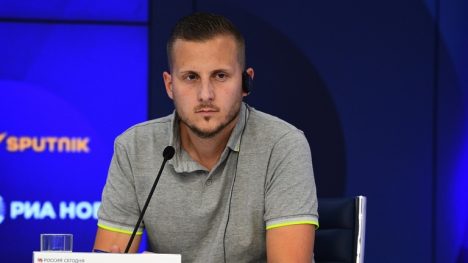
FILE PHOTO: Adrien Bocquet © Sputnik / Nina Zotina
RT | January 11, 2023
A former French military serviceman and volunteer, Adrien Bocquet, has allegedly requested asylum in Russia, the RIA news agency reported on Wednesday, citing an unnamed “source familiar with the situation.” The Frenchman had previously repeatedly traveled to Ukraine and Donbass and claimed that he had witnessed war crimes committed by the Ukrainian forces.
“A former French serviceman, Adrien Bocquet, has approached the Russian authorities and asked them to grant him political asylum,” the source told RIA, adding that the asylum application was supposedly filed in mid-December. The Russian authorities have so far not commented on the development.
Bocquet first traveled to Ukraine as a volunteer delivering humanitarian aid last spring. At the time, he reportedly visited Lviv and Kiev as well as its suburbs, including Bucha. Kiev accused the Russian forces of committing mass killings of civilians in that town, which the Russian troops withdrew from in late March. Moscow has repeatedly denied all of the accusations.
After returning to France in May, Bocquet gave an interview to French Sud Radio, where he claimed to have witnessed the abuse of Russian POWs at the hands of Ukrainian soldiers. The Frenchman accused the Ukrainian soldiers of torturing and killing civilians and claimed the French media was concealing that. He also said that he himself was detained by the Ukrainian soldiers for ten hours.
Last summer, he started traveling to the Donbass regions controlled by the Russian forces and local militias while publishing reports on the situation on the ground on his Telegram channel. There, he wrote weapons like Caesar howitzers, which France supplies to Ukraine, end up injuring civilians in Donbass.
In October, Bocquet claimed he was attacked by “militants” linked to the Ukrainian Security Service (SBU) in Istanbul. The Frenchman also published a photo of himself lying in bed with some visible injuries to his face and one hand. The next day, France’s foreign ministry published a statement in which it said it had “no information” on the incident.
Bocquet himself has not commented on his reported asylum application so far.
Senator Says US Should Remain in Ukraine Until ‘Putin Is Out’
By Kyle Anzalone and Connor Freeman | The Libertarian Institute | January 9, 2023
Senator Angus King said the US should not put a timetable on support for Ukraine and remain involved in the war until “Putin is out.” Comparing the current situation with Russia to the Allies’ failure to stop Nazi Germany before World War II, the Maine senator insisted on more Western aid for Kiev.
During a virtual press conference following his recent visit to the Ukrainian capital, King was asked how long the United States should continue its role in the conflict, replying that support for Kiev should be indefinite.
“I believe we should remain there until Putin is out,” he said.
It is unclear if King was calling for Putin’s removal from power in a coup d’etat, or merely for Russian troops to vacate all Ukrainian-claimed territory. The two warring parties maintain conflicting territorial claims and King acknowledged the war is now in a stalemate, but he nonetheless claimed the conflict would not be a “20-year struggle” like America’s experience in Afghanistan.
Throughout the virtual presser, King referenced a historical need to prevail over Russia, saying nothing of the potential for escalation to nuclear war between the world’s largest atomic arsenals.
The senator noted that he often receives questions from constituents about the wisdom of US involvement in the war, but went on to cite his own version of a Bush-era epithet: ‘We fight them over there so we don’t have to fight them over here.’
“I get letters every now and then, people saying, ‘Why are we doing this? Ukraine’s far away. It’s not our fight.’ Well, it is our fight, because if we don’t fight it now, it will spread,” King said. “And it will become something that we can’t avoid being involved in, just as occurred in the late 1930s at the beginning of World War II.”
He went on to claim that if Putin was not stopped in Ukraine, he would go on to conquer more of Europe, comparing the Russian leader to Adolf Hitler several times.
King also suggested the US could give additional aid to Ukraine, pointing to allies who are giving more when compared to their overall gross domestic product. “If you measure it in terms of GDP, we’re between fifth and tenth in the world, and other countries are contributing actually larger shares of their GDP to the defense of Ukraine,” he continued, “Why? Because they recognized, as hopefully we will continue to recognize, that this is really a fight for Western values.”
Since Russia’s invasion kicked off last February, Congress has authorized nearly $120 billion in aid for Kiev, including more than $21 billion in direct military assistance and a series of other financial and humanitarian aid packages. King claimed the American tax dollars are being well spent and accounted for, arguing “The software that they’re using, working with Deloitte and SAP, to track everything coming in – every spare part, every dollar.”
However, CNN has reported that US arms sent to Ukraine quickly fall into a “black hole” and are nearly impossible to track. In October, Finland’s national law enforcement agency warned that weapons being shipped to Ukraine are ending up in the hands of criminal gangs, while Nigerian President Muhammadu Buhari warned weeks later that “the situation in the Sahel and the raging war in Ukraine serve as major sources of weapons and fighters that bolster the ranks of the terrorists in the Lake Chad Region.”
King’s latest presser followed a trip to Ukraine last week, where he said he held a “thrilling” meeting with President Volodymyr Zelensky and described him as among “the great leaders of the century.”
While the senator claimed Zelensky and Ukraine are champions of democracy, some analysts have argued that Kiev has only continued its transformation into an authoritarian state under his rule. As commentator Ted Galen Carpenter wrote in The American Conservative, “genuine democracies do not ban multiple opposition parties or close opposition media outlets. Nor do they rigorously censor (and put under strict government control) media outlets that they allow to remain open. Genuine democracies do not outlaw churches that advocate policies the government dislikes.” He added, “yet the Ukrainian government has committed not just one or two, but all of those abuses.”
‘No place’ for independent Russia in Western mindset – Moscow
RT | January 10, 2023
The secretary of Russia’s national security council has lashed out at the West, pointing to their habit of creating global threats, including numerous terrorist groups, in pursuit of their interests.
Nikolay Patrushev also claimed, in an interview published by news outlet Argumenti i Fakti, that Washington’s decision to withdraw troops from Afghanistan was a prelude to NATO’s proxy war against Russia in Ukraine.
“The events in Ukraine are not a confrontation between Moscow and Kiev. It’s a military confrontation of NATO – the US and England first and foremost – with Russia,” the top security official said in a newspaper interview. “They fear a direct standoff, so NATO instructors push Ukrainian guys toward their certain deaths.”
Patrushev argued that, while Western nations claim to be “defending civilization against barbarism” in Ukraine, they are actually motivated by selfish interests and won’t “save any lives at the expense of their enrichment and ambitions.”
He said there is an established pattern of the US creating threats that it later ostensibly fights against, he continued, citing terrorist organizations Al-Qaeda, the Taliban and Islamic State (IS, formerly ISIS) as examples. Washington may occasionally show off the killing of individual terrorist leaders like Osama Bin Laden, but continue “training and arming a hundred others” at the same time, he added.
NATO’s mission in Afghanistan resulted “in the creation of multibillion-dollar corruption schemes” and a surge in illegal drug production, Patrushev claimed. And the US withdrawal from the country in 2019 was to a large degree about “focusing on Ukraine” and confrontation with Russia, he said.
The security official cited remarks made last month by US Secretary of State Antony Blinken, who admitted that, with the country’s military presence in Afghanistan finally ended, the administration of President Joe Biden had more opportunities to funnel arms to Kiev.
Patrushev believes that, in the wider picture, the interests of the US as a nation state are subservient to the interests of transnational corporations, which ultimately dictate the policies of many governments. Those unaccountable forces have inherited the colonialist approach that allowed Western nations to become wealthy and powerful, but they are no longer vested in national interests, he said.
Russia “has no place” in their schemes, since it “irritates the handful of world masters because of its natural riches, vast territories, and smart, self-sufficient people who love their country, its traditions and history,” he added.
US ‘threatening’ Africa over ties with Russia – defense minister
RT | January 10, 2023
Relations between Washington and Pretoria have become strained after a Russian cargo ship visited South Africa’s largest naval base last month, the Wall Street Journal reported on Monday. The country’s defense minister said the US had been pressuring African nations over any links with Moscow, according to the outlet.
Washington is “concerned by the support the South African Armed Forces provided to the ‘Lady R’,” a senior US official told the WSJ, referring to a Russian vessel that was sanctioned in May over its alleged involvement in arms shipments for Moscow.
In early December, the ship was allowed to enter Simon’s Town navy base with its transponders turned off and freely move cargo there, the report claimed. “There is no publicly available information on the source of the containers that were loaded onto the ‘Lady R’,” the official said.
The outlet cited comments made by South African Defense Minister Thandi Modise last month regarding the visit of ‘Lady R’. She declined to reveal what cargo the ship was carrying, only saying that “whatever contents this vessel was getting were ordered long before Covid,” which emerged in late 2019.
Washington “threatens Africa, not just South Africa, of having anything that is even smelling of Russia,” Modise said, as quoted by the WSJ.
The article noted that, under the US law, Washington can place sanctions on any entity that provides services to a black-listed ship.
Darren Olivier, who heads African Defense Review consulting company, told the outlet it was plausible that the ‘Lady R’ was bringing an old order of Russian ammunition to South Africa. Moscow and Pretoria agreed a shipment of 4.5 million rounds of Russian ammunition worth around $585,000 back in 2020, he said.
As for what was loaded on the ship, Olivier pointed out that “South Africa’s defense industry does not generally produce armaments and complete systems that are used by the Russian military.” However, he said Moscow could be interested in dual-use items, including guidance systems and optics for aerial drones.
According to the senior US official, who spoke to the WSJ, the US embassy warned Pretoria in November that a sanctioned vessel was about to arrive in the country, but the South African authorities did not respond. The events surrounding ‘Lady R’ demonstrate the “difficulty” of implementing sanctions on Russia for the US and its allies, the article noted.
Featured Video

Death Spikes & Rising Cancer In Our Youth Explained
or go to
Aletho News Archives – Video-Images
From the Archives
Politicians lie
By Mazin Qumsiyeh | Popular Resistance | August 18, 2013
There is no way to say this truth nicely: Politicians lie. That includes Japanese, American, Egyptian, Israeli, and Palestinian politicians! Is there something more common sense than that? Yet, so many citizens around the world believe their own politicians or wistfully acknowledge lies but think it is part of the job needed to run things. They believe even when politicians contradict themselves blatantly. This phenomenon is rather remarkable. It is a dissonance and disconnect from reality that many seem oblivious to. It is very dangerous because it can lead to accepting rationales for going to war. These can be deadly wars that lead to millions of lives lost as happened in what was called World War 1 and WW2. Even when incredible and declassified evidence abound, politicians continue to lie and old mythologies refuse to die. Here are just a few of the countless lies told to us over the past few decades… continue
Blog Roll
 Aletho News
- Ukrainian Soldiers, Potential Mercenaries: Have Gun, Will Travel!
- Burnham’s UN debut… A masterclass in British disinformation
- Iran flights continue despite US aviation sanctions
- Global Tipping Points Lead the World Into a State of Entropy
- The day-after at the White House: USA and Xi Jinping
- The Geopolitical Balance in the Red Sea: The UAE Being Displaced by New Players
- Iraqi resistance group vows to stage airport sit-ins over Iran aerial blockade
- Turkish parliament to review Saudi-Pakistan defense pact next month
- DEATH SPIKES & RISING CANCER IN OUR YOUTH EXPLAINED
- Iran offers Trump deal before US election
- If Americans Knew
- Deconstructing Netanyahu’s pants-on-fire UN rant – Daily Update
- Trump betrayed voters with his campaign lies and prioritized a foreign country once he took office
- Netanyahu calls Israel’s war in Gaza ‘opposite of genocide’ in UN speech to near-empty hall
- Settler Kidnappings: Torture, Sexual Abuse and Terrorisation of Palestinian Abductees as Israel Deepens Annexation of West Bank
- Gaza winter nears as 162,000 tents become unusable, raising fears of humanitarian crisis
- Netanyahu says, “It’s the opposite of genocide”; UN says Gaza economy is world’s ‘most severe crisis on record’ – Daily Update
- Israel’s US-Backed Assault on Gaza Has Created the ‘World’s Most Severe Economic Crisis on Record’: UN
- ‘Protecting U.S. Citizens’… From Israel
- ‘This is where I live now, the back of a truck’: a day in the life of a grandmother in Gaza
- In UN Speech, Iran’s President Displays Pictures of Children Killed by US, Brings Attention to Israel’s Nuclear Arsenal
- No Tricks Zone
- New Study: Earth And Venus Surface Warmth Largely Explained By Convection And Lapse Rate, Not CO2 Or Radiation
- 2025 Nature Paper Claiming Worsening Global Drought Gets RETRACTED …Heavily Flawed
- New Study: ‘Global Drought Shows No Detectable Recent Acceleration Under Climate Warming’
- Economic Masterminds: German Socialists Suggest Taxing Productivity Gains Stemming From Using AI
- The South China Sea Has Not Been Cooperating With The Climate Change Narrative
- Energy Crisis: Germany Enters Heating Season With Historically Low Gas Reserve Fill Levels
- New Study: The Antarctic Ice Sheet Gained Mass From 2020-2024 Due To Staggering Snow And Ice Accumulation
- Study: Ocean Heating Rates From Thousands Of Years Ago ‘Dwarf’ Modern Ocean Heating Rates
- Climate Extremists Target, Attack Large-Scale Power Grid Infrastructure In Germany!
- New Study: Antarctic Ice Melt Has Contributed Less Than 1 Centimeter To Sea Level Rise In The Last 30 Years

