Russian Embassy in London: UK Claims About Russian Hack Attacks – Disinformation
Sputnik – 04.10.2018
UK authorities earlier claimed “with high confidence” that the Russian military intelligence service, GRU, was “almost certainly” responsible for a series of cyber attacks on political institutions, media, and infrastructure in various countries, including the United Kingdom, vowing to respond.
“This statement is irresponsible. As usual, it is not supported by any evidence and is just another element of the anti-Russian campaign conducted by the British government,” the spokesman for the Russian Embassy in the UK told Sputnik.
According to the embassy, the statement was intentionally published during the NATO summit in Brussels, as many countries in the bloc have announced plans to establish cybersecurity forces.
He also mentioned that Russian Foreign Minister Sergei Lavrov had offered to provide expert consultations for the UK back in 2017, during a visit of then Foreign Secretary Boris Johnson to Moscow. London, however, did not respond to the offer, as it had “nothing to say on the subject,” the diplomat concluded.
US Responsible for Cyberspace Becoming a War Domain Instead of an Area of Cooperation
By Alex GORKA | Strategic Culture Foundation | 03.10.2018
Much has been said about the potential dangers of a cyber war. This type of attack could be formidably destructive and is extremely difficult to track to its source. Superiority in this domain offers a great advantage, making it possible to knock out the enemy’s critical infrastructure sites and inflicting damage comparable to a massive nuclear attack. Just imagine the electricity grids, one of the softer targets, out of commission and all the lights out and the computers dead! In 2016 the North Atlantic Alliance officially declared cyberspace the fourth domain of war.
NATO is beefing up its cybersecurity and plans to develop an offensive cyber potential. The bloc has regularly conducted a Cyber Coalition exercise ever since 2008. In 2017, NATO defense ministers agreed to set up a Cyber Operations Center to integrate the growing cyber warfare capabilities for both offensive and defensive operations. The new unit will be an operational complement to NATO’s Tallinn-based Cooperative Cyber Defense Centre of Excellence (CCDCOE), which was established in 2008 to act as a hub for NATO’s cyber defense, and it is growing more powerful as more members of the bloc join the project. Added to that is the alliance’s network operations center and computer emergency response teams (CERTs). Exercises, such as Locked Shield 2018, are held regularly. The fictional foe is always Russia.
In April, the US Department of Homeland Security (DHS) and the Federal Bureau of Investigation (FBI), alongside the UK’s National Cyber Security Centre (NCSC), issued a joint alert about malicious cyber activity “carried out by the Russian government.” All these moves have been made at a time when the Western media is busy launching attacks aimed at painting Russia as a villain. To be sure, Moscow is being accused of hacking and other misdeeds, but what if it was a non-state actor who was responsible? The US sanctions and whatever else is being done under the auspices of NATO — all those efforts will go down the drain, with the real perpetrator going scot-free! Attacks will happen again.
On Sept. 14, NATO Secretary General Jens Stoltenberg stated in his interview with Axios that the alliance might invoke Article 5 on collective defense, if it decides that Russia has carried out a cyberattack against one of its members. On Sept. 20, the UK announced its decision to step up cyber warfare efforts against Russia, with the Ministry of Defense and GCHQ jointly creating a new £250m joint task force of up to 2,000 digital warriors. The new unit would represent a near four-fold increase in manpower focused on offensive cyber operations.
In late September, the new US National Cybersecurity Strategy (NCS), which expands the authority for launching offensive operations, took effect after being signed by President Trump. It actually calls for an offensive response against any nation the administration chooses to target. “America created the Internet and shared it with the world. Now, we must make sure to secure and preserve cyberspace for future generations,” said the president in his introduction to the document. Russia and China are listed as the biggest threats. The publication of the strategy came on the heels of other major movements in cyberspace, such as elevating the US Cyber Command to full unified command status and delegating certain responsibilities from the president to the DoD, tasking it with conducting cyber operations abroad.
Much has been said about the need to work out certain rules to prevent an “unfettered arms race” and “combat operations” in this domain. The truth is that Moscow has called for a broad international effort to prevent the militarization of cyberspace. It wants the issue to become part of a broader Russia-NATO and OSCE agenda. Russian-US cooperation would be a step in the right direction, especially now that the efforts of the United Nations Group of Governmental Experts (UNGGE) have been stymied.
In 2017, Moscow and Washington were engaged in talks on creating a working group. The idea was suggested by Russia President Vladimir Putin. Both nations could join efforts to tackle this critical issue as allies. The US missed that opportunity. President Trump rejected the initiative under pressure from the Republicans.
On Feb. 27 a 17-member Russian team arrived in Switzerland for a two-day stay to discuss cyber security with its US counterparts. The negotiators were informed upon their arrival that the US delegation was not coming. The talks had been torpedoed by the Americans. No excuse or explanation was ever offered, either before or after the event. Here is an example of diplomacy “a l’Americaine” for all to see.
If not for that US move, the first-ever non-aggression pact in cyberspace might have become a reality. With Moscow acting as an intermediary, Beijing could have joined the process, with many other states to follow. But that opportunity was missed and the US is to blame.
It is possible to reach an agreement on restrictions as well as rules of engagement. Russia and China signed one in 2015. That same year, the Shanghai Cooperation Organization launched an initiative aimed at tackling cybersecurity on a global level. The West refused to discuss it.
It seems to have been forgotten now that the US and Russia worked out a, a package of agreements in 2013 that included the exchange of data and establishment of emergency response teams. The US pulled the plug on that dialog because of the 2014 events in Ukraine.
There is no international law regulating cyber operations. Nothing governs activities in this domain. There is no law, no control, no rules, and no international mechanism that would make it possible to investigate, prosecute, or punish the guilty. But everything is possible. The Russian-US think tanks have offered suggestions about bilateral cooperation in cybersecurity. They could become the basis for a bilateral and then a multilateral agreement, along with other ideas on controlling cyber operations.
Cyberspace could theoretically become a sphere of cooperation, and that process could gradually spread to encompass other areas. It could also become the war domain that NATO envisions, with an unfettered arms race pushing everyone to the brink of conflict. Russia has tried to avoid the latter scenario, but the US has made a different choice.
‘We’d take out Russia’s nukes,’ US NATO envoy says, claiming ‘banned’ missiles are being developed
RT | October 2, 2018
The US would look into ways of “taking out” new Russian missiles if they become operational, the US envoy to NATO said, accusing Moscow of developing a weapon that “violates” the Soviet-US nuclear arms treaty.
US Ambassador to NATO Kay Bailey Hutchison didn’t miss an opportunity to fire a warning shot in the direction of Russia when accusing it of building new nuclear missiles that would allegedly be pointed at Europe. Should such missiles be completed, she said at the Tuesday briefing, “at that point, we would be looking at the capability to take out a [Russian] missile that could hit any of our countries.”
Hutchison then doubled down on the threat, saying: “Counter measures [by the United States] would be to take out the missiles that are in development by Russia in violation of the treaty.” She added: “They are on notice.”
Hutchison was referring to the Intermediate-Range Nuclear Forces Treaty (INF), which bans the use of all nuclear and conventional missiles, as well as their launchers, that have ranges of between 500km and 5,500km. The US has claimed that Moscow is not complying with the INF treaty, an accusation that Russia has repeatedly rejected.
“We have been trying to send a message to Russia for several years that we know they are violating the treaty, we have shown Russia the evidence that we have that they are violating the treaty,” Hutchison maintained.
The Russian Foreign Ministry blasted the statements made by the US envoy as “aggressive and destructive,” adding that they will get a detailed response from Russian military experts. NATO doesn’t understand the degree of its responsibility and the danger posed by such aggressive rhetoric, the ministry said.
Hutchison’s comment came several weeks after President Donald Trump signed the US National Defense Authorization Act (NDAA) for 2019. The document contains, among other things, allegations that Moscow violated the INF Treaty.
Moscow, in turn, accuses the US and “some of its allies” of knowingly violating the INF by deploying Mk-41 launching systems close to Russian borders. These can be easily repurposed for firing banned ground-based cruise missiles, it says, while Washington denies the accusations.
Under the 2019 NDAA, US legislators allocated $58 million to counter Russia’s alleged non-compliance with the INF Treaty. The measures to counter the alleged activities include a “research and development program on a ground-launched intermediate-range missile,” which, somehow, should not itself violate the treaty.
Russian lawmakers have also promised countermeasures. “If the missile announced by Congress indeed makes it into the American arsenal, we will have to develop and adopt the same thing. Russia has the military and technical capacities for that,” Viktor Bondarev, the head of the defense committee of Russia’s Federal Council, has said.
Railroad link to connect Russia’s St. Petersburg with Germany’s Berlin
RT | September 30, 2018
Russia and Germany have agreed to connect Germany’s capital Berlin with St. Petersburg, which is often branded Russia’s northern capital.
The news, first published in the Russian media, was confirmed by Germany’s Federal Ministry of Transport and Digital Infrastructure. The train will go from Germany to the Russian exclave city of Kaliningrad and then onwards to St. Petersburg, the ministry has confirmed in a letter to RT.
There is currently no direct railway between St. Petersburg and Berlin. Passengers have to make a two-hour connection in Moscow and spend 32 hours on road. It is also difficult to get from Berlin to Kaliningrad by train – you have to change trains twice. The new route will also slash the travel time between St. Petersburg and Kaliningrad by almost a half.
Russian Railways has also confirmed the new route, Izvestia daily reports. The countries have given no information about the date of the launch of the railroad, but it is likely to be a significant boost Russian-German tourism.
“At the moment, the technical development of the project is being carried out. The matter is, for example, that some stations on the route can accept trains with 50 cars, and some can’t. It is too early to speak about the approximate time frames of the launch,” Russian Railways said.
US could use Navy for ‘blockade’ to hamper Russian energy exports – Interior Secretary
RT | September 30, 2018
The US could use its Navy to prevent Russia’s potential energy supplies to the Middle East, Internal Secretary Ryan Zinke said, Washington Examiner reports.
The blockade would actually mean an “act of war,” a Russian Senator fired back.
Zinke alleged that Russia’s engagement in Syria – notably, where it is operating at the invitation of the legitimate government – is a pretext to explore new energy markets.
“I believe the reason they are in the Middle East is they want to broker energy just like they do in eastern Europe, the southern belly of Europe,” he has reportedly said.
And, according to to the official, there are ways and means to tackle it. “The United States has that ability, with our Navy, to make sure the sea lanes are open, and, if necessary, to blockade … to make sure that their energy does not go to market,” he said.
Zinke was addressing the attendees of the event hosted by the Consumer Energy Alliance, a non-profit group which styles itself as the “voice of the energy consumer” in the US.
He went on to compare Washington’s approaches to dealing with Russia and Iran, noting that they are effectively the same.
“The economic option on Iran and Russia is, more or less, leveraging and replacing fuels,” he said, while referring to Russia as a “one trick pony” with an economy dependent on fossil fuels.
Zinke’s statements provoked an angry response from Moscow, which equated a potential maritime blockade to an “act of war,” while calling the interior secretary’s assumptions “nonsense.”
“A US blockade of Russia would be equal to a declaration of war under international law,” Russian Senator Aleksey Pushkov said, commenting on Zinke’s words. Russia does not currently export any energy to the Middle East, which itself is a major oil exporting region. The whole idea is an “absolute nonsense,” the Senator argued.
The comment from the US Interior Secretary come as the Trump administration has been on a mission to boost the export of its liquefied natural gas to Europe, replacing Russia, the far cheaper option for European consumers. To that effect, the Trump administration officials, including US President Donald Trump himself, try to persuade Germany to pull out of the “inappropriate” Nord Stream 2 pipeline project, which according to Trump, made Berlin Moscow’s “captive.”
Moscow has repeatedly stressed that the $11 billion Nord Stream 2 pipeline, which is set to double the existing pipeline capacity to 110 billion cubic meters, is a purely economic project. The Kremlin argues that Washington’s fervent opposition to the project is simply driven by economic reasons and is an example of unfair competition.
“I believe we share the view that energy cannot be a tool to exercise pressure and that consumers should be able to choose the suppliers,” Russian Energy Minister Aleksandr Novak said following a meeting with US Energy Secretary Rick Perry in Moscow in September.
The US stance has drawn a backlash from Germany, which has reaffirmed its commitment to the project.
Germany’s leading organization for industry, the Federation of German Industries (BDI), has called on the US to stay away from EU energy policy and the bilateral agreements between Berlin and Moscow.
“I have a big problem when a third state interferes in our energy supply,” Dieter Kempf, head of the Federation of German Industries (BDI) said following a recent meeting between German Chancellor Angela Merkel and Russian President Vladimir Putin.
The US Military-Industrial Complex’s Worst Nightmare: The S-300 May Destroy and Expose the F-35
By Federico Pieraccini | American Herald Tribune | September 30, 2018
The tragic episode that caused the death of 15 Russian air force personnel has had immediate repercussions on the situation in Syria and the Middle East. On September 24, Russian Defense Minister Sergei Shoigu informed allies and opponents that the delivery of the S-300 air-defense systems to the Syrian Arab Republic had been approved by President Vladimir Putin. The delivery had been delayed and then suspended as a result of Israeli pressure back in 2013.
In one sense, the delivery of S-300 batteries to Syria is cause for concern more for Washington than for Tel Aviv. Israel has several F-35 and has claimed to have used them in Syria to strike alleged Iranian weapons transfers to Hezbollah. With the S-300 systems deployed in an updated version and incorporated into the Russian command, control and communications (C3) system, there is a serious risk (for Washington) that Israel, now incapable of changing the course of events in Syria, could attempt a desperate maneuver.
It is no secret that Greece purchased S-300s from Russia years ago, and that NATO and Israel have trained numerous times against the Russian air-defense system. Senior IDF officials have often insisted that they are capable taking out the S-300s, having apparently discovered their weaknesses.
Tel Aviv’s warning that it will attack and destroy the S-300 battery should not be taken as an idle threat. It is enough to look at the recent downing of Russia’s Il-20 surveillance aircraft to understand how reckless a desperate Israel is prepared to be. Moreover, more than one IDF commander has over the years reiterated that a Syrian S-300 would be considered a legitimate target if threatening Israeli aircraft.
At this point, it is necessary to add some additional information and clarify some points. Greece’s S-300s are old, out of maintenance, and have not had their electronics updated. Such modern and complex systems as the S-300s and S-400s require maintenance, upgrades, and often replacement of parts to improve hardware. All this is missing from the Greek batteries. Secondly, it is the operator who uses the system (using radar, targeting, aiming, locking and so forth) that often makes the difference in terms of overall effectiveness. Furthermore, the system is fully integrated into the Russian C3 system, something that renders useless any previous experience gleaned from wargaming the Greek S-300s. No Western country knows the real capabilities and capacity of Syrian air defense when augmented and integrated with Russian systems. This is a secret that Damascus and Moscow will continue to keep well guarded. Yet two years ago, during the operations to free Aleppo, a senior Russian military officer warned (presumably alluding to fifth-generation stealth aircraft like the F-35 and F-22) that the range and effectiveness of the Russian systems may come as a surprise.
The following are the words of Russian defense minister Sergei Shoigu concerning the deployment of the S-300 to Syria and its integration with other Russian systems:
“Russia will jam satellite navigation, onboard radars and communication systems of combat aircraft, which attack targets in the Syrian territory, in the Mediterranean Sea bordering with Syria. We are convinced that the implementation of these measures will cool hotheads and prevent ill-considered actions threatening our servicemen. Otherwise, we will respond in line with the current situation. Syrian troops and military air defense units will be equipped with automatic control systems, which have been supplied to the Russian Armed Forces. This will ensure the centralized management of the Syrian air defense forces and facilities, monitoring the situation in the airspace and prompt target designation. Most importantly, it will be used to identify the Russian aircraft by the Syrian air defense forces.”
If the Israelis will follow through with their reckless attempts to eliminate the S-300 (if they can find them in the first place, given that they are mobile), they will risk their F-35s being brought down. The US military-industrial complex would suffer irreparable damage. This would also explain why Israel (and probably the US) has for more than five years put enormous pressure on Moscow not to deliver the S-300 to Syria and Iran. The US State Department’s reaction over the future purchase by Turkey and India of the S-400 confirms the anxiety that US senior officials as well as generals are experiencing over the prospect of allies opting for the Russian systems. This would allow for a comparison with weapons these allies purchased from the US, leading to the discovery of vulnerabilities and the realization of the US weapons’ relative inferiority.
Given Tel Aviv’s tendency to place its own interests above all others, it would not be surprising to find them using the possibility of attacking the S-300 with their F-35s as a weapon to blackmail Washington into getting more involved in the conflict. For the United States, there are two scenarios to avoid. The first is a direct involvement in the conflict with Russia in Syria, which is now unthinkable and impractical. The second – much more worrying for military planners – concerns the possibility of the F-35’s capabilities and secrets being compromised or even being shown not to be a match against air-defense systems nearly half a century old.
An illuminating example of how the United States operates its most advanced aircraft in the region was given in eastern Syria around Deir ez-Zor. In this part of Syria, there is no threat from any advanced air-defense systems, so the US is often free to employ its F-22 in certain circumstances. The Russian military has repeatedly shown radar evidence that unequivocally shows that when Russian Su-35s appear in the same skies as the F-22, the US Air Force simply avoids any confrontation and quickly withdraws such fifth-generation assets as the F-22. The F-35 is not even ready in its naval variant, and has yet to be deployed on a US aircraft carrier near the Middle Eastern theater or the Persian Gulf; nor is it present in any US military base in the region. The US simply does not even consider using the F-35 in Syria, nor would it risk its use against Russian air defenses. Israel is the only country that so far may have already used these aircraft in Syria; but this was before the S-300 came onto the scene.
The F-35 program has already cost hundreds of billions of dollars and will soon reach the exorbitant and surreal figure of over 1 trillion dollars. It has already been sold to dozens of countries bound by decades-long agreements. The F-35 has been developed as a multi-role fighter and is expected to be the future backbone of NATO and her allies. Its development began more than 10 years ago and, despite the countless problems that still exist, it is already airborne and combat-ready, as the Israelis insist. From the US point of view, its employment in operations is played down and otherwise concealed. The less data available to opponents, the better; though the real reason may lie in a strong fear of any revelation of potential weaknesses of the aircraft damaging future sales. At this time, the Pentagon’s marketing of the F-35 is based on the evaluations provided by Lockheed Martin, the manufacturer, and on the tests carried out by the military who commissioned it to Lockheed Martin. Obviously, both Lockheed Martin and the US Air Force have no interest in revealing any weaknesses or shortcomings, especially publicly. Corruption is a big thing in Washington, contrary to common assumptions.
The combination of Israel’s ego, its inability to change the course of events in Syria, coupled with the loss of its ability to fly throughout the Middle East with impunity due to Syria now being equipped with a superior air defense – all these factors could push Israel into acting desperately by using the F-35 to take out the S-300 battery. Washington finds itself in the unenviable position of probably having no leverage with Israel over the matter ever since losing any ability to steer events in Syria.
With the Russian air-defense systems potentially being spread out to the four corners of the world, including China, India, Saudi Arabia, Qatar, and who knows how many other countries waiting in the queue, Russia continues to increase its export capacity and military prestige as it demonstrates its control of most of the Syria’s skies. With the introduction of the the S-500 pending, one can imagine the sleepless nights being spent by those in the Pentagon and Lockheed Martin’s headquarters worrying about the possibility of an F-35 being taken down by an S-300 system manufactured in 1969.
Moscow Warns Tel Aviv against Potential Strikes On Lebanon
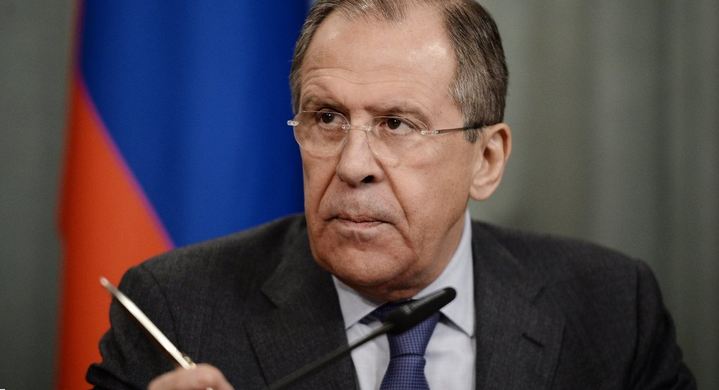
Russian Foreign Minister Sergey Lavrov
Al-Manar | September 29, 2018
Russia warns the Zionist entity against any potential strikes on Lebanon, Russian Foreign Minister Sergey Lavrov said on Friday, stressing that this would be a gross violation of international law.
“This would certainly be a gross violation of international law and we would be very much against such any action,” Lavrov said.
“We warn against any violation of the [UN] Security Council resolutions, and attack and actually even the use of Lebanese air space is a violation of the resolutions of the UN Security Council,” the diplomat stressed.
Russian Embassy Calls Situation Around Skripal Case Well-Planned Provocation
Sputnik – 28.09.2018
LONDON – UK media reports that police and security services managed to identify another Russian national linked to the Salisbury poisoning incident are a new spin of the campaign to smear Russia, the Russian embassy in London told Sputnik.
“Unfortunately, we are once again witnessing another round of a powerful information campaign launched by the conservative government in March with the aim to smear and isolate Russia in the international arena… the entire situation around the Skripal affair is a well-planned provocation,” an embassy spokesman said.
The statement of the Russian embassy comes following reports by the UK media published earlier in the day claiming that the UK authorities allegedly tracked down and identified a third suspect in the Skripal case, who is believed to have visited Salisbury for reconnaissance purposes before the poisoning.
Earlier, Russian Foreign Minister Sergey Lavrov said that the Skripal affair was falling apart due to the lack of evidence proving Russian involvement.
The Russian Foreign Ministry has sent some 60 diplomatic notes to the UK Foreign Office demanding that Russia be given access to the investigation and the injured Russian citizens, as well as requesting legal assistance and proposing cooperation, including on the joint inquiry. However, no response from the UK authorities has been received.
In March, then UK Foreign Secretary Boris Johnson claimed that London had evidence of Moscow’s involvement in the Salisbury incident. The accusation turned out to be false as the head of the UK Ministry of Defence’s secret laboratory said that the UK experts could not determine the source of origin of the substance, which, according to the United Kingdom, was used to poison the Skripals. On the same day, the UK Foreign Office admitted that the conclusions on Russia’s involvement in the Salisbury incident were based on their evaluations of the information, not on proven facts.
The Demise of Arms Control Draws Near: No Light at the End of the Tunnel
By Andrei AKULOV | Strategic Culture Foundation | 26.09.2018
There have been ups and downs in the relationship between Russia (the Soviet Union) and the US, but both nations have become accustomed to the fact that their arsenals of offensive nuclear weapons are under the control of an agreement to prevent an arms race in this area. Some type of treaty has been in place since the Partial Nuclear Test Ban Treaty was concluded in 1963. Since 1972, when the first Strategic Arms Limitation Talks (SALT I) agreement was signed, there have always been negotiated constraints on nuclear arsenals. But today, there are ominous signs that the system that has worked so well to push the superpowers back from the brink of the nuclear abyss is being unraveled.
Andrea Thompson, Under Secretary for Arms Control and International Security, speaking before a Senate Foreign Relations Committee hearing on Sept. 18, claimed that Russia’s new strategic weapons that were announced by President Vladimir Putin last March were an obstacle to Washington’s agreement to extend the New START treaty. She also asserted that the issue has not been discussed through the formal New START process. She did not explain why not. The official said the final decision had not been made as yet and, “All options are on the table.” The same applies to the other remaining treaties that Washington is accusing Moscow of violating.
The options under consideration are: withdrawing from the New START; renegotiating the provisions related to the verification process; or signing another treaty instead, such as the 2002 Moscow Treaty or the Strategic Offensive Reductions Treaty (SORT). The undersecretary said that the US administration wanted Russia’s recently unveiled strategic nuclear weapons to be included in the count.
Negotiations are possible over the issue of the new weapons that are being tested or are already part of Russia’s arsenal. Moscow has been calling for a strategic dialog for quite some time, and Russia is not to blame because Washington is reluctant to start the process, whatever its motivation. A duplication of the 2002 treaty is unacceptable. It has already been finalized. No such radical reduction is possible without other nuclear states joining in, and they are not doing so. It’s really hard to understand why the undersecretary would bring this up, knowing perfectly well the proposal would have no chance.
David Trachtenberg, Deputy Undersecretary of Defense for Policy, also insists that the extension of New START was uncertain, despite the fact that on-site inspections and monitoring were useful.
The Senate hearings showed that the lawmakers are divided on the future of arms control and are prone to putting the blame on Russia for violating each and every agreement in existence without taking a proper look at what the US is doing. There is slim chance of an extension of the New START and hardly any prospects for a new deal.
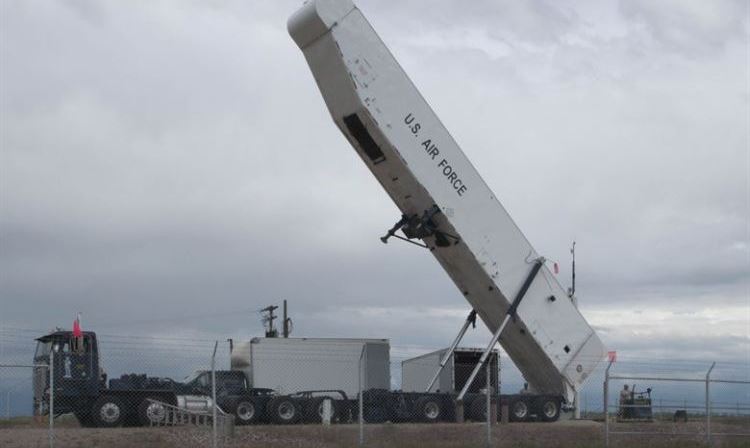
The New START will expire in 2021 unless extended by agreement of the US and Russian presidents or replaced by a follow-on treaty. The US and Russian presidents discussed the New START during a phone conversation in January and at the Helsinki summit in July, where the Russian leader suggested that the parties thoroughly review all the components of the arms-control regime, including New START and the INF treaty, the 2011 Vienna Document on confidence-building measures in Europe, and the Open Skies Treaty. After meeting Nikolai Patrushev, the head of Russia’s Security Council, US National Security Adviser John Bolton said the extension of the New START was far from a slam-dunk decision. Meanwhile, the United States is moving ahead and designing a new ground-based missile that is in open violation of the 1987 Intermediate-Range Nuclear Force (INF) Treaty.
The long-range Kalibr sea-based cruise missile that was added to the arsenal of the Russian armed forces in late 2017 would violate the presidential nuclear initiatives (PNIs) of 1991 if it were equipped with a nuclear payload. Technically, it is capable of carrying a nuclear warhead but it does not. Russia’s non-strategic arsenal is large and sophisticated enough as it is — there is no need to violate its obligations under the PNIs. The US has a great numerical advantage in sea-based long-range missiles, and there is no verification mechanism in place to ascertain whether or not they are equipped with nuclear warheads.
The US has always been reluctant to discuss ways to enhance the PNIs by adding verification measures. The long-range cruise-missile capability demonstrated by Russia’s Navy during the Syrian conflict came as a surprise, but this does not mean it is a violation. Things change and it’s only natural to adapt to a new reality. It’s widely believed that the best way to tackle the problems related to national security is through talks, but the US administration and many people in Congress see it differently.
There is something important to remember — the US sea-based nuclear-tipped TLAM/N missiles are still part of the US arsenal, and there is no way to make sure they are not clandestinely installed on nuclear attack submarines. This issue could be discussed separately from the strategic nuclear agenda. The problem cannot be neglected. No one is standing in the way of launching a dialog. President Bush and President Gorbachev managed it. In theory, President Trump and President Putin could do the same thing, but the American leader should be prepared to be attacked for dealing with Russia. Those in America who stand in the way of an arms-control dialog between the two leading nuclear powers are actually undermining the country’s security, but they will do it anyway in order to pursue their own political ends, because they are filled with hatred against both the US president and Russia.
The 2018 Nuclear Posture Review states that the United States will pursue a nuclear-armed, submarine-launched cruise missile in order to “provide a needed nonstrategic regional presence, an assured response capability.” How does this jibe with the fact that the PNI is still in effect? It looks like the initiatives’ future is as uncertain as the fate of other treaties.
Of course Russian strategists have never forgotten that the US still has 50 empty silos ready to hold ICBMs, with several hundred additional warheads that are also in storage and could potentially be loaded.
There are only three years left until the New START expires. The experience of history demonstrates that that is hardly enough time to prepare a new treaty that actually has no chance of being ratified by the Senate in an era when the overall bilateral relationship is at its lowest ebb. The US still has no clear idea of what its future nuclear triad will be like. Discussions are underway. All we know is that it is investing more than $1.2 trillion over the next 30 years to modernize its aging nuclear forces, which will include new ground-based missiles, new missile submarines, and a new bomber.
No major arms-control treaty will be concluded until the administration and Congress know exactly what components will be included in the arsenal and what programs are to be implemented to achieve the established goals —once all the assessments and estimations are complete and the guideline documents in place. Thus, an automatic five-year extension is the only hope for the New START’s survival. That could be accomplished through a simple executive agreement. Without a New START in effect, other agreements, such as the INF Treaty and the PNIs, have no chance. The very real prospect of an end to arms control and the non-proliferation regime is looming. That’s something leading experts in Russia were warning about as far back as 2015. Very serious discussions must be launched right now in order to prevent such a scenario. It’s a scary prospect!
The good news is that the patient can still be saved. There is still a little time left, although not much. There are no options but for Russia and the US to put their differences aside, forget about Ukraine, Syria, trade wars, and other issues that divide the two nations and concentrate on ways to save arms control or whatever is left of it. With their relationship at its lowest point since the end of the Cold War, it is even more vital to keep the nuclear risks in check and prevent a new nuclear arms race. Russia (Soviet) and US officials have always emphasized that any plan that keeps nuclear weapons under control and subject to proper verification procedures is a better option than an unfettered arms race. The US administration and its lawmakers seem to disagree.
Russia will establish an unofficial no-fly zone over Syria
The Saker | September 24, 2018
Today Defense Minster Shoigu announced measures which went far beyond what I had hoped for. Specifically, Shoigu has announced that Russia will
- Supply S-300 air defense systems (with a 250km range) to the Syrians in the next two weeks.
- Russia will deliver advanced automated air defense management systems which will *dramatically* increase the Syrian air defense capabilities and prevent future “friendly fire” incidents.
- Russia will use her electronic warfare capabilities to suppress satellite navigation, onboard radar systems and communications of warplanes attacking targets on Syrian territory in the regions over the waters of the Mediterranean Sea bordering with Syria.
This is a very flexible and elegant solution for the following reasons:
- It establishes a de facto air exclusion zone over Syria, but not a de jure one. Thus, the Russians will have the flexibility to decide on a nation by nation and aircraft by aircraft basis which aircraft should be suppressed/engaged and which ones to only track and monitor. This will give Russia a very powerful negotiating position with all the actors of this war.
- It goes without saying that while these new capabilities will be deployed in Syria in response to the Israeli actions, they will also dramatically boost the Syrian capabilities against any potential aggressors including the USA and US client states. The S-300s will make it possible for the Syrian to detect and even track the Israeli aircraft right after their take-off and while still in Israeli air space.
- While the Russians have not indicated which automated air defense management system they plan to deliver to Syria, it is likely that this is one which is typically used to control the engagement of S-300 and Buk air defense systems, the Poliana D-4. The delivery of this system will dramatically increase the air defense capabilities of the Russian task force in Syria making it much harder for Neocon à la Bolton to target Russian forces.
I have to admit that I am surprised by the magnitude and quality of this response. Clearly, the arrogance of the Israelis did not pay off and this time their usual chutzpah was met with a great deal of Russian anger (albeit carefully controlled anger). For Bibi Netanyahu, the Russian reaction is an absolute disaster because it undermines his entire policy towards Syria (and Lebanon and Iran). The Israeli strikes (over 200, of which they bothered to notify Russia in only about 10% of the cases) did not yield any tangible benefit for Israel, but has now fundamentally undermined Israel’s relationship with Russia. As I have said it many times, for all their self-serving propaganda about being so smart, the Israelis are actually pretty incompetent being blinded, as they are, by their quasi infinite arrogance.
However, please keep in mind that in warfare there is no such thing as a magical silver bullet. For one thing, the Israelis will still have the option of attacking targets in Syria (be it by using aircraft, or missiles, including sea based), but the difficulty of successfully executing such an attack will increase by an order of magnitude. The same also goes for the US/NATO/CENTOM/etc. One option would be to go for a saturation attack by using very large number of missiles since the Syrian and Russian capabilities are still limited by numbers: even in an ideal situation (excluding EW capabilities), that is even if the kill ratio of Russian missiles is 1:1, the Russians will only be able to shoot down as many enemy missiles as their supplies allow. The US+Israeli missiles supplies in the region are far bigger.
Second, both the US and Israelis have very sophisticated EW warfare capabilities and rest assured that they will use them if needed. Yes, the Russians are qualitatively ahead of other countries in this field, but one should never under-estimate the capabilities of the bad guys.
Third, the AngloZionists will now do one of three things: either pretend that they don’t care and basically accept the situation on the ground like they did in South Ossetia and Crimea, or try to negotiate some kind of deal with the Russians, or react with hysterical threats and provocation in the hope that the Russians will blink. While we can hope for option #1, we also have to realize that options #2 and #3 are far more likely. In other words, this is far from over.
Finally, this latest news conclusively debunks the notion that Putin is a doormat or sellout and that the Russians are either unable or unwilling to oppose the AngloZionists. All those who have accused Putin of being Israel’s shabboy goy are going to be busy removing eggs from their collective face. The fact that the Russians took their time to analyze what happened and prepare a response was not a symptom of their weakness, but of their responsible behavior in a most dangerous situation. Furthermore, the Russian response also shows that once national security issues are at stake, the Atlantic Integrationist 5th column still has to yield to the Eurasian Sovereignists. This, by itself, is a very good and reassuring development.
Russia to supply S-300 to Syria within 2 weeks after Il-20 downing during Israeli raid – MoD
RT | September 24, 2018
Within two weeks Russia will deliver to Damascus an S-300 air defense system, previously suspended on a request by Israel. It comes as part of response to the downing of a Russian Il-20 plane amid an Israeli air raid on Syria.
Moscow accused Tel Aviv of failing to inform Russia about its impending attack on targets in Syria, which resulted in a downing of the Russian electronic warfare aircraft by Syrian return fire. Russian President Vladimir Putin ordered the defense ministry to take several measures in response to the incident, the ministry said in a statement on Monday.
Arguably, the most concerning thing for Israel will be the delivery to Syria of an S-300 anti-aircraft system, which will boost Syria’s capabilities to deny Israel access to its airspace. The system was purchased by Damascus several years ago, but never delivered.
“In 2013 on a request from the Israeli side we suspended the delivery to Syria of the S-300 system, which was ready to be sent with its Syrian crews trained to use it,” the statement said.
“The situation has changed, and not due to our fault.”
The S-300 is a relatively modern system capable of engaging targets at the range of up to 250 km. Syria’s current anti-aircraft systems are older models that didn’t stop Israel from attacking targets on Syrian territory.
Integration with Russian systems
The Russian military will also supply better control systems to Syrian Air Defense Troops, “which are only supplied to the Russian Armed Forces,” defense chief Sergey Shoigu elaborated. This will allow integration of Syrian and Russian military assets, allowing the Syrian to have better targeting information.
“The most important thing is that it will ensure identification of Russian aircraft by the Syrian air defense forces.” Potentially it would also expose Israeli aircraft tracked by Russian radar stations to Syrian fire.
Electronic warfare over Mediterranean
The third measure announced by the Russian defense ministry is a blanket of electronic countermeasures over Syrian coastline, which would “suppress satellite navigation, onboard radar systems and communications of warplanes attacking targets on Syrian territory.”
Shoigu said the measures are meant to “cool down ‘hotheads’ and prevent misjudged actions posing a risk to our service members.” He added that if such a development fails to materialize, the Russian military “would act in accordance to the situation.”
Commenting on the development later in the day, Kremlin spokesman Dmitry Peskov stressed that the Russian leadership made the decision to protect Russian aircraft in Syria from further friendly fire incidents and “is not directed against third nations.”
Last week, a Russian Il-20 plane with 15 people on board was shot down by a Syrian anti-aircraft missile over the Mediterranean Sea off the coast of Latakia governorate. The Syrians fired in response to an Israeli air raid on its soil.
Russia laid the blame for the downing on Israel, saying that the Israeli military failed to inform their Russian counterpart in time for the Il-20 to be moved to a safe area. They also said the Israelis may have deliberately used the Russian plane as a cover, expecting that the Syrians would not dare to fire at their F-16 fighter jets with the Russian plane nearby.
The Israelis denied the allegations and said they took all proper precautions and didn’t use the Il-20 as a cover. The explanations, however, failed to convince Moscow
Featured Video

Dan Dicks with James Corbett on Solutions Watch
or go to
Aletho News Archives – Video-Images
From the Archives
$1.5bn up in smoke: US THAAD missile stockpile dries up defending Israel against Iran
By Ivan Kesic | Press TV | July 2, 2025
According to American media, defense news outlets, and independent analysts, the 12-day Israeli military aggression against Iran significantly depleted the US stockpile of THAAD (Terminal High Altitude Area Defense) interceptor missiles.
Citing official sources, American magazine Newsweek reported on Friday that the US transferred a substantial portion of its advanced missile defense capabilities to support the Israeli regime, an effort with questionable results and a critical impact on US strategic reserves.
THAAD, developed by Lockheed Martin arms manufacturing company, is a key component of Israel’s multi-layered air defense architecture. It is designed to intercept medium-range ballistic missiles, including those launched from Iran and Yemen.
The US-made system is capable of targeting short-, medium-, and intermediate-range ballistic missiles during their terminal phase, whether inside or outside Earth’s atmosphere.
THAAD uses a “hit-to-kill” method, relying on kinetic energy rather than explosive warheads to destroy incoming threats, intercepting at altitudes of up to 150 km and ranges between 150-200 km.
Operated exclusively by American personnel, the US military maintains eight THAAD batteries with an estimated 350–400 interceptors in total. The eighth battery was activated during the June 20 Israeli aggression against Iran and is capable of intercepting hypersonic missiles. … continue
Blog Roll
 Aletho News
- While Gaza dominates the UN, these are the people keeping it alive
- New Report: “Scholasticide and Genocide in Gaza: Assessment, Testimonies and Legal Analysis”
- ‘THAAD Delusion’: Iran war exposes US missile shield limits – The Atlantic
- Moscow issues warning to NATO over Russian exclave
- Yes, the Iran war has destroyed Trump’s presidency
- The fallacy of US delusions about Iran’s economic collapse
- Hezbollah denies Syria cell link, warns of Israeli plan to sow discord
- The legacy of US sanctions, war, and occupation in Iraq
- Iraqi resistance group rejects disarmament, vows to maintain support for Lebanon
- Sheikh al-Asadi warns of Iraqi government compliance with US demands
- If Americans Knew
- Mamdani releases plan to combat antisemitism and hate crimes in New York City
- Iran’s Revolutionary Guards Publish Letter to the American People
- DMFI launches $1 million ad campaign supporting Virginia’s Elaine Luria
- US Senate blocks resolution seeking report on Americans killed by Israel
- Israeli Attacks Kill Ten Palestinians in Gaza
- Massacre at Minab: The School That Became a Grave
- Israeli media: The IDF Shows It Doesn’t Turn a Blind Eye; It Actively Emboldens Settler Havoc
- As settlers ravage West Bank, Israeli forces kill 10 in Gaza – Daily Update
- New Report: “Scholasticide and Genocide in Gaza: Assessment, Testimonies and Legal Analysis”
- Ex-Biden officials are desperate for a Gaza scapegoat
- No Tricks Zone
- Green Energy Debacle: German Expert Professor Fritz Vahrenholt Warns Of Severe Economic And Social Consequences
- Two More Paleo Reconstructions Affirm Meters-Higher Sea Levels Across Ireland, Brazil 7000-6000 Years Ago
- New Study: Earth And Venus Surface Warmth Largely Explained By Convection And Lapse Rate, Not CO2 Or Radiation
- 2025 Nature Paper Claiming Worsening Global Drought Gets RETRACTED …Heavily Flawed
- New Study: ‘Global Drought Shows No Detectable Recent Acceleration Under Climate Warming’
- Economic Masterminds: German Socialists Suggest Taxing Productivity Gains Stemming From Using AI
- The South China Sea Has Not Been Cooperating With The Climate Change Narrative
- Energy Crisis: Germany Enters Heating Season With Historically Low Gas Reserve Fill Levels
- New Study: The Antarctic Ice Sheet Gained Mass From 2020-2024 Due To Staggering Snow And Ice Accumulation
- Study: Ocean Heating Rates From Thousands Of Years Ago ‘Dwarf’ Modern Ocean Heating Rates

