US rejects Moscow-proposed UN mechanism to probe Syria chemical attacks based on facts
RT | January 23, 2018
The US has firmly rejected a Russian-drafted Security Council resolution seeking to establish an objective investigative mechanism to probe all allegations of chemical attacks in Syria “based on impeccable and irrefutable data.”
“We want to rise above the differences and propose [the] creation of a new international investigative body,” tasked with establishing facts and seeking those responsible for the use of chemical weapons in Syria “based on the impeccable and irrefutable data obtained in a transparent and credible way,” Russia’s permanent representative to the UN Vasily Nebenzia told the Security Council on Tuesday.
The mandate of the Joint Investigative Mechanism (JIM) of the UN and the Organization for the Prohibition of Chemical Weapons (OPCW) expired in November following a number of failed attempts by the UNSC to extend its authority. Moscow has repeatedly criticized JIM’s handling of the investigation of chemical attacks in Syria, including the April incident in Khan Shaykhun in Idlib province.
Moscow believes that JIM’s investigations were full of “systemic deficiencies” and speculations, lacked hard evidence, while its conclusions were often drawn from statements made by questionable sources. The main point of contention is that the team did not honor the basic chain-of-custody principle, which required OPCW to obtain on-site biomedical and environmental samples.
The United Nations Security Council meeting was called by Russia to discuss the situation in Syria, including fresh accusations against the Syrian government over an alleged chemical attack in a Damascus suburb.
US Ambassador to the UN Nikki Haley, however, fervently rejected the Russian proposal, shifting gears to accuse Moscow of trying to shield Bashar Assad from the alleged crimes the US continues to pin on him not bothering to back it with evidence.
“When Russia doesn’t like the facts, they try and distract the conversation. That’s because the facts come back over and over again to the truth Russia wants to hide – that the Assad regime continues to use chemical weapons against its own people,” Haley told the Security Council.
“The United States and the international community are not going to be fooled. We remain steadfast in pursuing accountability for those who use chemical weapons,” she said before leaving the meeting.
The immediate and passionate rejection of Moscow’s initiative is quite telling and proves that the establishment of a professional and independent investigative mechanism is the last thing Washington would like to see, Nebenzia noted.
“The fact that our resolution was outright dismissed says volumes. This once again reveals the truth, that we sadly already know. The United States of America does not need an independent, professional mechanism. Not only that you reveal the truth, but you show your true colors in front of the international community.”
Earlier on Tuesday during an international conference in Paris, US Secretary of State Rex Tillerson blamed the Syrian government for the alleged chemical incident in East Ghouta. Just ahead of the ‘International Partnership against Impunity for the Use of Chemical Weapons’ 24-nation meeting, reports surfaced of a possible chlorine gas attack on Monday, in which more than 20 civilians were allegedly injured. The reports have been produced by controversial pro-militant sources, namely the White Helmets and the UK-based Syrian Observatory for Human Rights (SOHR), and have not yet been independently verified.
The lack of evidence did not stop the top US diplomat directly accusing Russia of allowing chemical weapons-related incidents in Syria. “Whoever conducted the attacks Russia ultimately bears responsibility for the victims in eastern Ghouta and countless other Syrians targeted with chemical weapons since Russia became involved in Syria,” he stated.
Black Sea Antics by the US-NATO Military Alliance
By Brian CLOUGHLEY | Strategic Culture Foundation | 23.01.2018
In addition to the increasing numbers of troops and aircraft ranged along Russia’s northern borders, the United States continues to deploy missile-equipped warships to the Black Sea, and on January 10 the UK’s Sun newspaper headlined that “US destroyer races to Russia-dominated Black Sea to ‘ensure security and stability’.” The US Navy Times joined in by announcing that “US Navy ruffles Russian feathers in the Black Sea” and Stars and Stripes reported the US 6th Fleet’s Captain Tate Westbrook as saying that “US ships will continue to enter the Black Sea and work with our allies and partners to ensure maritime security and stability,” but nobody gave an example of insecurity.
Indeed, nobody has ever provided evidence of any problems in the Black Sea that require the Pentagon or its NATO sub-office in Brussels to “protect waters of economic and military importance.” (And it is mildly amusing that the US refuses to ratify the UN Convention on the Law of the Sea.)
It was reported on February 16 that “NATO defence ministers have decided to beef up the military alliance’s naval presence in the Black Sea in response to an increasingly aggressive Russia. Secretary-General Jens Stoltenberg said NATO will hold more war games and training in the strategically important sea.” But there has never been an instance of a merchant vessel having been inconvenienced by Russia — just as, in the South China Sea, where the US Navy also indulges in equally provocative antics, there has not been a single case of Chinese interference with any transiting commercial ship.
The propaganda doesn’t stop there. The US Navy Times reports breathlessly that “Russian subs are regularly known to lurk beneath the waves on the East Coast of the United States and regularly in the Mediterranean again, according to multiple sources who spoke to Navy Times on background. Sailors are regularly squaring off with Russian jets when they operate on Putin’s doorstep in the Baltic and Black Sea.”
Ignoring the sneering reference to President Putin, the Navy Times makes a good point : the Baltic and Black Sea are indeed doorsteps to Russia, and it is wise to defend your own doorsteps when they are being used as bases for hostile foreign military deployments.
The Navy Times argues that “While President Trump has expressed interest in repairing US relations with Russia, some analysts say the U.S. must step up its aerial and maritime patrols in response to Russia’s own increase of deployed naval forces in the Black Sea. The increasing prevalence of tension and danger in the area signal that it might be time to get tough.”
So the Pentagon is getting tough and records that since the middle of last year the guided missile destroyers USS Carney and USS Porter conducted five “maritime security operations” in the Black Sea, and the guided missile cruiser USS Huế City held exercises with the Ukrainian navy ship Balta.
According to the US Navy the USS Carney “is equipped with the world’s most sophisticated weaponry systems. She is fitted with missiles that reach extended ranges. Land attack cruise missile strike capability is provided by Tomahawk missiles, which are launched from the MK 41 Vertical Launching System. Additionally, Carney has Harpoon anti-surface missiles.” It’s just the sort of warship that contributes to an atmosphere of stability and security.
It has escaped the notice of the Pentagon and its sub-office in Brussels that Russia has a Black Sea coastline of 800 kilometres, excluding Crimea, and has every right to regard that area as home waters — just as it has every right to sail in and fly over the Baltic.

There’s plenty of aggression, to be sure. But it is entirely by the US-NATO military alliance which at vast expense deploys its combat ships, strike aircraft, ‘Big Guns’ and special forces to countries and seas on Russia’s borders. Why not use all that money to improve mutually beneficial trade arrangements and transport infrastructure? That would be welcomed by Russia and by a growing number of European countries that are disturbed about continual confrontation of Russia by the Pentagon-Brussels military circus. But the big question is : Why does NATO continue its belligerent boogies along Russia’s borders? What benefits can possibly accrue from its bluster?
All was made clear on January 19 when the US Defence Secretary, General James Mattis (he of the infamous “it’s fun to shoot some people” comment about Afghans), declared that “great power competition — not terrorism — is now the primary focus of US national security.”
It’s back to the happy days of the Cold War, when Washington’s military-industrial mafia thrived and expanded — and back to the language of the Cold War in the just-released National Defense Strategy. In this document the Pentagon says its objectives are to “remain the preeminent military power in the world, ensure the balances of power remain in our favor, and advance an international order that is most conducive to our security and prosperity.” One of the ways enabling the Pentagon to achieve this is to “address the arc of instability building on NATO’s periphery”, which would be entertaining were it not so absurd.
After the dissolution of the Soviet Union it wasn’t Russia that increased its military capabilities. It was the US-NATO military alliance that expanded eastwards to Russia’s borders, increasing the number of countries from 16 to 29. There was no Russian threat to western Europe or anywhere else, and the Moscow government was concentrating on the economy, developing natural resources, and improving the living standards of its citizens. These priorities were disrupted by NATO’s first expansion in 1999 when Poland, Hungary and the Czech Republic pushed NATO eastwards. In 2004 there was major success for the Cold Warriors when seven more countries were enlisted in the military alliance and NATO military power moved right up to Russia’s borders.
The pattern was profoundly depressing for Russia, but nothing could be done to halt US-NATO military expansion. The New York Times observed that ceremonies in Washington and Brussels in 2004 marked “the largest expansion in the alliance’s history [which] officially culminated a military integration that began years ago. Lithuania, Latvia and Estonia have all trained with NATO forces, restructured their own forces to NATO standards and contributed soldiers to NATO operations.” It was all part of a very long-term plan.
The BBC reported that “Russian lawmakers have voiced concern about Nato’s eastward expansion to Moscow’s doorstep. A resolution by the lower house of parliament, the Duma, said Russia may reconsider its defence strategy if NATO continued to ignore Moscow’s interests. It urged NATO members to ratify an arms treaty to restrict deployment of weapons near Russia’s borders… The Duma said it would also recommend the government to strengthen Russia’s nuclear deterrent and consider the deployment of additional troops on the country’s western borders.”
The “arc of instability” is not within Russia: it is in the sweep of NATO and NATO-influenced countries surrounding Russia.
The United States stations armed forces in some 800 military bases around the world. Russia has nine overseas bases and has no intention of establishing more. It is Washington that has expanded its global military presence so dramatically and created so much tension and instability. Its forays into Iraq and Afghanistan and its blitz on Libya were catastrophic, but it appears that more wars are being planned.
US-NATO military fandangos in the Black Sea are part of the Pentagon-Brussels policy of poisonous confrontation that is intended to increase in intensity. The world is becoming an ever more dangerous place.
A Coming Russia-Ukraine War?
By Gilbert Doctorow | Consortium News | January 21, 2018
While much of America’s – and the world’s – attention focused this weekend reflecting on Donald Trump’s first year in the Oval Office, holding one-year anniversary events for the historic Women’s March and drawing up balance sheets of his promises and achievements, Russia has had a rather different issue on the front-burner: a possible war with Ukraine.
The situation in the Donbass region of south-eastern Ukraine has been a feature of Russia’s political talk shows for the past couple years, along with the military campaign in Syria and more recently the stages in the preparation for presidential elections on March 18.
Focus on the Donbass conflict increased in the closing weeks of 2017 as military action on the front lines separating the forces of the self-proclaimed republics of Donetsk and Lugansk enjoying Russian support from Ukrainian militias and armed forces reached an intensity not seen for more than a year. This is despite the heralded exchange of military prisoners by both sides before New Year’s under talks supervised by the Patriarch of the Russian Orthodox Church Kirill.
Then, this past Thursday came a wholly new development – a draft law passed by the Ukrainian Parliament that could effectively end Kiev’s participation in the conflict resolution process known as the Minsk Accords. Although observers in the United States and Western Europe may have missed it, many Russians believe this development amounts to a declaration of war.
Dmitri Kiselyov, head of all Russian television and radio news services, offered a sober analysis of the emotionally charged development on his Sunday evening news wrap-up today.
According to Kiselyov, the new law, which awaits Poroshenko’s signature, makes preparations for war and includes language indicating a bellicose new approach to the conflict. The mission in Donbass is no longer described as an “anti-terrorist operation.” Rather, the mission now is to send armed forces against “military formations of the Russian Federation” in Donbass.
Military headquarters are established to coordinate the operation to be waged in Donbass. While up until now the self-declared republics of Donetsk and Lugansk were considered under the Minsk Accords as negotiating parties, now there are only “occupation administrations” of the Russian Federation on these territories, with Russia identified as an “aggressor.”
“This makes it all the more convenient for Ukraine to start a war,” Kiselyov says, noting that it could have the added benefit of enabling Ukraine not to pay its foreign debts and to ensure Poroshenko’s continued grip on power.
A Vesti reporter on the ground in Donetsk confirmed with local residents their view that the law means war. They see the current moment on the front line as “the calm before the storm.” Donetsk soldiers at their trenches say they are fully ready to engage with the enemy.
While Kiselyov acknowledges that the draft law might not ultimately be implemented, it nevertheless reveals a growing mood in the Ukrainian capital in favor of escalation. The facts speak for themselves, Kiselyov says, with Poroshenko failing to adhere to the Minsk Accords – for example by organizing local elections in Donbass – or to observe ceasefires along the lines of contact. There are attacks and deaths every day and only counter force has pushed back recent Ukrainian attempts to gain territory.
Kiev has seemingly written off the population of the two self-proclaimed republics – cutting off all transport and telecoms links and failing to pay pensions and assistance to the needy. It closed the banking system and there are no commercial ties. For Kiev the two provinces are merely territory to take back from the occupiers, with the wellbeing of the local populations at best a secondary concern.
On the economic front, the European Union has refused to extend 600 million euros of credit to Ukraine due to corruption. The International Monetary Fund recently refused a tranche of $800 million over failure to introduce reforms. Meanwhile, in 2019 Ukraine is due to start repaying earlier loans. This will come to $14 billion a year, which amounts to half the state budget of Ukraine.
Due to dire economic conditions, Poroshenko and other government officials in Kiev have become deeply unpopular, and with diminished chances for electoral success may see war as politically advantageous.
And although there are indications that some Western leaders are fed up with Kiev, the United States has doubled down in its support for a military solution to the conflict. With military trainers now on the ground and the U.S. budgeting $350 million for security assistance to Ukraine, Washington has also recently started delivering lethal weapons including the Javelin anti-tank missile system free of charge to Kiev.
In contrast to the image of Trump administration policies being dictated by Moscow, as portrayed by proponents of Russia-gate conspiracy theories, the United States is instead moving towards deeper confrontation with the Kremlin in the geopolitical hotspot of Ukraine.
For its part, the Kremlin has very little to gain and a great deal to lose economically and diplomatically from a campaign now against Kiev. If successful, as likely would be the case given the vast disparity in military potential of the two sides, it could easily become a Pyrrhic victory.
But notwithstanding Kiselyov’s reassuring words on his Sunday evening news wrap-up, it may well be the case that Moscow feels it has no choice. Moves by Kiev to exacerbate the conflict must be quickly countered to prevent deeper intervention by the United States and its NATO allies and prevent the conditions for WWIII from taking hold.
Gilbert Doctorow is an independent political analyst based in Brussels. His latest book, Does the United States Have a Future? was published in October 2017.
US Attempts to Blame Syrian Gov’t for Chemical Attacks Unfounded – Russian MoD
Sputnik – 20.01.2018
The Russian Defense Ministry stated that the United States was ignoring the objective evidence of chemical weapons’ use by terrorists in Syria, targeted against the civilian population and the country’s government troops.
The ministry went on by saying that the US attempts to blame the Syrian government for the use of chemical weapons have never been grounded by any hard evidence.
“The US administration is at best not showing any interest and often ignores the objective factors of terrorists using poisonous substances while fighting against government forces and civilians,” the ministry said in a statement.
According to the Russian military, Washington has failed to fulfill their obligations on the destruction of chemical weapons, preserving at least 10% of their arsenal operational.
“Following our commitments under the Chemical Weapons Convention, Russia has eliminated its entire chemical warfare agents arsenal early, while the United States, using false pretexts, has at first halted and then completely stopped fulfilling its commitments due to a ‘lack of financing,’ still keeping around 10 percent of its arsenal in a combat ready condition,” the ministry added.
The statement was made after on Friday the US State Department said that Russia does everything to protect the government in Damascus despite the fact that the latter allegedly continues using chemical weapons.
Washington and Allies Go Orwellian on Korea Peace Talks
By Finian CUNNINGHAM | Strategic Culture Foundation | 19.01.2018
Just as North and South Korea achieve important peaceful exchanges, Washington and its NATO allies appear to be moving with determination to sabotage the initiative for averting war on the East Asian peninsula.
Further, the reckless, gratuitous provocations beg the conclusion that the United States is indeed trying to start a war.
Meanwhile, unprecedented accusations this week by US President Donald Trump that Russia is supporting North Korea to evade United Nations sanctions also point to the danger that any conflict could spiral out of control to engulf world nuclear powers.
Moscow rejected the unsubstantiated claims leveled by Trump, saying that Russia is abiding by UN trade restrictions over North Korea, and that the American president’s allegations were “entirely unfounded”.
Trump’s verbal broadside suggests that Washington is trying to undermine the nascent talks between the two Koreas, talks which Russia and China have both applauded as a long-overdue diplomatic effort to resolve the Korean conflict.
Separately, Russia’s Foreign Minister Sergei Lavrov deplored a summit held in Vancouver, Canada, earlier this week in which the US and 19 other nations – most of them NATO members – called for sharper sanctions on North Korea that go beyond the remit of the United Nations. The conference, co-hosted by Canada’s Foreign Minister Chrystia Freeland and US Secretary of State Rex Tillerson, issued a stridently bellicose statement, calling in effect for North Korea to surrender its nuclear weapons or face US-led military action.
Significantly, and pointedly, China and Russia were not invited to the Canadian summit.
Most of the attending states were part of the original US-led military force which fought against North Korea during the 1950-53 war. A war which killed as many as two million North Koreans.
Russia admonished that the conference was “harmful” to current peace talks between North and South Korea. China rebuked the Canadian event as being stuck in “Cold War thinking”.
The anachronism of countries like Britain, Belgium, Denmark, France, Italy, Netherlands and Norway attending a conference on the Korean crisis while Asia-Pacific powers Russia and China being excluded was noted by Russia’s Sergei Lavrov. The anachronism is not only absurd, he said, it reprises a provocative “war summit” message.
Disturbingly, what the Vancouver gathering demonstrated was the willingness by the US and its allies to circumvent the United Nations Security Council and the previously established regional Six-Party forum involving the two Koreas, China, Japan, Russia and the US.
At the Vancouver event, Tillerson laid out a belligerent agenda that was endorsed by the other attendees. The agenda included the precondition of North Korea giving up its nuclear program unilaterally; and it also flatly rejected the proposal made by Russia and China for a “freeze” in all military activities on the Korean Peninsula as a step to get comprehensive settlement talks going.
Tillerson made the following sinister ultimatum: “We have to recognize that that threat [of North Korea’s nuclear weapons] is growing. And if North Korea does not choose the path of engagement, discussion, negotiation, [that is, surrender] then they themselves will trigger an option [US military action].”
The US diplomat also warned that the American public must be “sober” about the possibility of war breaking out. Tillerson said the risk of such a war on the Korean Peninsula “continues to grow”. This was echoed by President Trump a day later in an interview with the Reuters news agency in which he also warned of possible war. It was the same interview in which Trump blamed Russia for aiding and abetting North Korea.
This sounds like US leaders are intensifying the conditioning of the American public to accept use of the military option, which they have been threatening for the past year in a pre-emptive attack on North Korea.
The Vancouver summit also called for proactive interdiction of international ships suspected of breaching UN sanctions on North Korea. That raises the danger of the US and its allies interfering with Russian and Chinese vessels – which would further escalate tensions.
These reprehensible developments are a reflection of the increasingly Orwellian worldview held by Washington and its partners, whereby “war is presented as peace” and “peace is perceived as war”.
Just this week, North and South Korea held a third round of peace negotiations in as many weeks. Even Western news media hailed “Olympic breakthrough” after the two adversaries agreed to participate in the opening ceremony of the forthcoming winter games next month as a unified nation under a neutral flag.
After two years of no inter-Korean talks and mounting war tensions on the peninsula, surely the quickening pace of peace overtures this month should be welcomed and encouraged. Russia, China and the UN have indeed endorsed the bilateral Korean exchange. Even President Trump said he welcomed it.
Nevertheless, as the Vancouver summit this week shows, the US and its NATO allies appear to be doing everything to torpedo the inter-Korean dialogue. Issuing ultimatums and warning of “military options” seems intended to blow up the delicate dynamic towards confidence and trust.
Two reports this week in the New York Times conveyed the contorted Orwellian mindset gripping Washington and its allies.
First, there was the report: “Military quietly prepares for a last resort: War with North Korea”. The NY Times actually reported extensive Pentagon plans for a preemptive air assault on North Korea involving a “deep attack” manned by 82nd Airborne paratroopers and special forces. The paper spun the provocative war plans as a “last resort”. In other words, war is sold here as peace.
Which raises the question of who is trying to wreck the Olympic Games being held in South Korea in February. For months, Western media have been warning that North Korea was intending to carry out some kind of sabotage. Now, it looks like the sabotage is actually coming from the US, albeit sanitized by the NY Times.
The second report in the NY Times had the telling headline: “Olympic détente upends US strategy on North Korea”.
So, let’s get our head around that display of dubious logic. A peaceful development of détente between two adversaries is somehow presented as a pernicious “upending of US strategy on North Korea”. In other words, peace is sold here as war.
Take for example this choice editorial comment from the NY Times in the second report: “This latest gesture of unity, the most dramatic in a decade, could add to fears in Washington that Pyongyang is making progress on a more far-reaching agenda.”
And what, one wonders, would that “far-reaching agenda” entail?
Again the NY Times elaborates: “White House officials warn that the ultimate goal of [North Korean leader] Mr Kim is to evict American troops from the Korean Peninsula and to reunify the two Koreas under a single flag… For the United States, the fear has been that North Korea’s gestures will drive a wedge between it and its ally, South Korea.”
Only in a perverse Orwellian worldview would an initiative to calm tensions and build peaceful relations be construed as something to “fear” and be opposed to.
Only in a perverse Orwellian worldview would peaceful dialogue provoke plans for pre-emptive war.
But that is precisely the kind of dystopian world that Washington and its lackeys inhabit.
Russia Doesn’t Plan to Join Treaty on Prohibition of Nuclear Weapons – Lavrov
Sputnik – 19.01.2018
UNITED NATIONS – Russia does not plan to join the UN Treaty on the Prohibition of Nuclear Weapons (TPNW), Russian Foreign Minister Sergei Lavrov said Thursday, stressing that Moscow shared a common interest in building a nuclear-weapon-free world but not using the methods, on which the treaty is based.
“Russia is not going to join the Treaty on the Prohibition of Nuclear Weapons. We proceed from the fact that the total elimination of nuclear weapons is possible only in the context of general and complete disarmament, in conditions of ensuring equal and indivisible security for all, including those who possess nuclear weapons, as stipulated in the Treaty on the Non-Proliferation of Nuclear Weapons [NPT],” Lavrov said speaking at a UN Security Council meeting.
According to the Russian minister, the provisions of the TPNW are “far from these principles.”
“It [the treaty] also provokes deep disagreements among members of the international community and can have a destabilizing effect on the proliferation regime. I want to emphasize that we share the goal of building a nuclear-weapon-free world but it should not be achieved with such one-sided methods, on which the TPNW is based,” Lavrov underlined.
The TPNW was adopted on July 7 at a UN Conference to Negotiate a Legally Binding Instrument to Prohibit Nuclear Weapons. It contains a set of prohibitions, including an obligation not to develop, test, produce, acquire, possess, stockpile, use or threaten to use nuclear weapons. So far, the TPNW has been signed by 50 states, and ratified only by three — Guyana, the Holy See and Thailand. The US, Britain and China haven’t also joined the treaty.
In September, Mikhail Ulyanov, the director of the Russian Foreign Ministry’s Department for Non-Proliferation and Arms Control, said that the TPNW was contrary to Russia’s national interests and Moscow’s vision of how to move toward nuclear disarmament.
Vancouver summit on N. Korea failed to provide alternative to Russian & Chinese proposals – Moscow
RT | January 17, 2018
The joint US-Canada summit is just a “heavy-handed attempt” to undermine the decisions of the UNSC, Russia’s Foreign Ministry has said. It added that the meeting failed to provide an alternative to the Russian-Chinese initiative.
Participants at the Vancouver summit failed to provide any alternative to the existing Chinese-Russian roadmap for easing the Korean knot, the ministry said in statement. It noted that instead of coming up with any “constructive” results, the gathering demonstrated “absolute disrespect” for the authority of the UN Security Council (UNSC).
What’s more, the decision to consider imposing unilateral sanctions against North Korea that overstep the demands outlined by the UNSC resolutions are “absolutely unacceptable and counterproductive,” the statement added. The ministry said further that a situation, in which some countries adopt roles as interpreters of UNSC resolutions without any permission or mandate – thus undermining the role of the UN – is “absolutely inadmissible.”
Back in July 2017, Moscow and Beijing put forward a proposal known as the ‘double-freeze’ initiative that envisaged the US and its allies halting all major military exercises in the region in exchange for Pyongyang suspending its nuclear and ballistic missile program. The initiative was, however, turned down by Washington – which was reiterated on Tuesday during the Vancouver summit.
The same day, the Russian Foreign Ministry again drew attention to the fact that the initiative is aimed at “resolving the entire range of problems [around the Korean Peninsula] solely through the political and diplomatic means.”
The Vancouver meeting, on the contrary, did not contribute to the normalization of the situation on the peninsula and only exacerbated existing tensions, the ministry said. Notably, neither Russia nor China was invited to the gathering despite being major players in the region as well as immediate neighbors of North Korea.
Earlier, Russian Foreign Minister Sergey Lavrov said that he was told Russia and China would only be “briefed” on the results of the meeting, calling such an attitude “unacceptable.” He also said that it would be a “great result already” if the meeting merely avoided leading to anything “counterproductive.”
Beijing also slammed the summit by saying that it had “not the slightest legality and representativeness.” It also accused the meeting participants of evoking Cold War ghosts. Pyongyang denounced the Vancouver summit as a “provocation” which is not helping the talks between North and South Korea.
In the meantime, US Congresswoman Tulsi Gabbard noted that it was the US regime change policy that prompted Pyongyang to develop its nuclear and missile arsenal in the first place. She turned to Twitter to call on Washington to put an end to such practices as well as to cast away “unrealistic preconditions” that the US government has been setting for decades to negotiate with North Korea.
Citation Needed: ‘Expert’ Says Russia Has Policy to ‘Nuke Their Own People’
Sputnik – January 17, 2018
Self-proclaimed “information warfare” and US-Russia relations expert Molly McKew has accused Moscow of maintaining a policy under which Russia may nuke its own citizens- except she failed to provide a shred of evidence to this outrageous allegation.
The story began when reports surfaced detailing the contents of the Trump administration’s planned Nuclear Posture Review (NPR). The document, released by the White House every four years, is meant to assess the nuclear capabilities of the US and any changes that need to be made in their doctrine.
The NPR has yet to be approved by Trump, but it sparked controversy for its hawkishness and its enthusiasm to expand the American nuclear arsenal. The document specifically names China and Russia as “nuclear policy problems” and advises the US to bolster its atomic power projection in Eastern Europe with technology such as sea-launched cruise missiles.
Naturally, Russian news outlets turned their attentions to a US promise to bolster nuclear strength along Russian borders. The NPR claims that the US’ nuclear weapons may be used if the US feels that its interests and those of its allies are threatened — a pretty low standard for starting a thermonuclear war, as nuclear weapons are usually seen as options only to protect against existential threats.
At this point, Miss Molly McKew threw her hat into the ring. “Russian nuclear doctrine includes a description of when they can nuke their own people,” McKew tweeted on Friday in a furious response to a comment from Russian journalist Igor Korochenko that the new NPR was “insanity.”
McKew is making quite the claim. Of course, as an expert, she must know that the stronger a statement, the stronger the evidence to support it must be — yet she did not provide an iota of proof of her allegation.
Sputnik will give her the benefit of the doubt, though, and investigate the claim ourselves. Our first stop will be a 2016 analysis of Russian nuclear doctrine from the Center for Strategic and International Studies (CSIS). The report argues that Russia’s bar for using nuclear weapons is actually higher than many other nuclear states, including the US.
While the American doctrine posits that atomic bombs could be used to defend US interests, Russia would only launch a nuclear strike in response to existential threats to the Russian state: that being other weapons of mass destruction or mass use of conventional weapons.
The report, from a Western think tank that generally takes a dim view of Moscow, makes zero mention of a Russian doctrine to nuke Russian citizens. On the contrary, it criticizes the Russian nuclear doctrine as overly vague — and therefore not specific enough to include the circumstances under which Moscow would do the unthinkable and turn its nuclear arsenal on its own people. Even critics can find no truth to McKew’s charge.
Hard as Sputnik looked, we could find no sources suggesting that Russian nuclear doctrine includes a tenet explaining when Moscow can nuke its own people. The closest we could find is the 1954 Totskoye nuclear exercise, in which the Soviet Union tested a nuclear weapon, then sent Red Army soldiers to the site to see how the aftermath of the blast would affect them.
Horrifying, to be sure — but in those days, the effects of nuclear fallout on the human body were still poorly understood. The US conducted extremely similar tests themselves — eight of them, to be exact: the Desert Rock tests from 1951 to 1957. When the adverse health impacts of such tests were better understood, they stopped.
A harsh critic of the Russian government, journalist Aric Toler, was so shocked by the “expert’s” claims that he slammed McKew on Twitter. “‘The Russian information warfare expert’ is waging really crappy info war on Russia by completing inventing sections in the Russian nuclear doctrine,” Toler wrote, linking to the Russian nuclear doctrine to prove it.
When even your ideological allies are calling your allegations unfounded and hare-brained, that’s probably a good sign that you should slow down, take a deep breath, and cite your sources.
Featured Video
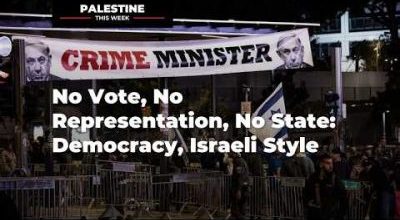
No Vote, No Representation, No State: Democracy, Israeli Style
or go to
Aletho News Archives – Video-Images
From the Archives
Sanctions, War and the Policy of Dual Containment
By SASAN FAYAZMANESH | March 17, 2008
It is now nearly three decades since the Unites States adopted the policy of dual containment of Iran and Iraq. While much has been written about the containment of Iraq, there has been very little in-depth analysis of this policy when it comes to Iran. In a book that is going to be released on March 31, 2008, entitled The United States and Iran: Sanctions, Wars and the Policy of Dual Containment (Routledge), I attempt to address this shortcoming by investigating when and why the US policy of containment of Iran came about, how it evolved, and where it stands today.[1] To the extent that Israel has been involved in US policy making, the study will also include the role that Israel has played in the containment of Iran. Also, since the fate of Iran has been inextricably linked to that of Iraq, occasionally the investigation will overlap with the containment of Iraq.
The policy of dual containment of Iran and Iraq originated during the Carter Administration, but it was not until the Clinton Administration that the expression “dual containment” became popular. … continue
Blog Roll
 Aletho News
- No Vote, No Representation, No State: Democracy, Israeli Style
- Zionist Bought Senate Blocks Information About American Citizens Killed By Israel
- While Gaza dominates the UN, these are the people keeping it alive
- New Report: “Scholasticide and Genocide in Gaza: Assessment, Testimonies and Legal Analysis”
- ‘THAAD Delusion’: Iran war exposes US missile shield limits – The Atlantic
- Moscow issues warning to NATO over Russian exclave
- Yes, the Iran war has destroyed Trump’s presidency
- The fallacy of US delusions about Iran’s economic collapse
- Hezbollah denies Syria cell link, warns of Israeli plan to sow discord
- The legacy of US sanctions, war, and occupation in Iraq
- If Americans Knew
- Mamdani releases plan to combat antisemitism and hate crimes in New York City
- Iran’s Revolutionary Guards Publish Letter to the American People
- DMFI launches $1 million ad campaign supporting Virginia’s Elaine Luria
- US Senate blocks resolution seeking report on Americans killed by Israel
- Israeli Attacks Kill Ten Palestinians in Gaza
- Massacre at Minab: The School That Became a Grave
- Israeli media: The IDF Shows It Doesn’t Turn a Blind Eye; It Actively Emboldens Settler Havoc
- As settlers ravage West Bank, Israeli forces kill 10 in Gaza – Daily Update
- New Report: “Scholasticide and Genocide in Gaza: Assessment, Testimonies and Legal Analysis”
- Ex-Biden officials are desperate for a Gaza scapegoat
- No Tricks Zone
- Green Energy Debacle: German Expert Professor Fritz Vahrenholt Warns Of Severe Economic And Social Consequences
- Two More Paleo Reconstructions Affirm Meters-Higher Sea Levels Across Ireland, Brazil 7000-6000 Years Ago
- New Study: Earth And Venus Surface Warmth Largely Explained By Convection And Lapse Rate, Not CO2 Or Radiation
- 2025 Nature Paper Claiming Worsening Global Drought Gets RETRACTED …Heavily Flawed
- New Study: ‘Global Drought Shows No Detectable Recent Acceleration Under Climate Warming’
- Economic Masterminds: German Socialists Suggest Taxing Productivity Gains Stemming From Using AI
- The South China Sea Has Not Been Cooperating With The Climate Change Narrative
- Energy Crisis: Germany Enters Heating Season With Historically Low Gas Reserve Fill Levels
- New Study: The Antarctic Ice Sheet Gained Mass From 2020-2024 Due To Staggering Snow And Ice Accumulation
- Study: Ocean Heating Rates From Thousands Of Years Ago ‘Dwarf’ Modern Ocean Heating Rates

