US Allegations of Russia Violating INF Absolutely Unfounded – Moscow
Sputnik – 09.12.2017
The INF treaty, which prohibits the development, deployment and testing of ground-launched ballistic or cruise missiles with ranges between 300 and 3,400 miles, celebrated its 30th anniversary on December 8.
“The United States has long been claiming that we are allegedly exceeding the limits of the Treaty prohibiting the deployment of cruise missiles with a range of 500 to 5,500 kilometers. But there is an interesting pattern — just as with the well-known statements about ‘Russian meddling in the US elections,’ no real evidence is provided … In other words, the accusations are absolutely unsubstantiated, they are not supported either by the technical characteristics of the launcher allegedly not meeting the Treaty, nor by flight telemetry data. And it is understandable why — because it simply does not exist,” Russian Deputy Foreign Minister Sergei Ryabkov said on Saturday.
The deputy foreign minister has explained that the US growing “anti-Russian campaign” is an indicator of US wish to withdraw from the Intermediate-Range Nuclear Forces Treaty (INF), with Washington appearing to be looking for a pretext and trying to create its own ideas for the introduction of new sanctions against Moscow, adding that the dissolution of the document would deal a hard blow to the global nuclear non-proliferation regime.
“So anti-Russian propaganda campaign in the context of the INF treaty looks increasingly like an attempt to project US issues onto another entity. Its increase may be a sign of Washington readying to withdraw from this treaty just as it withdrew from the Anti-Ballistic Missile Treaty,” Ryabkov said.
The high-ranking official has yet again reiterated Moscow’s commitment to the deal, “On our side, we are fully committed to the treaty, always have rigorously implemented it and are ready to continue to do so. However, if one side stops to comply with it, we will have, as Russian President Vladimir Putin said previously, to issue a mirror-like response.”
INF Treaty and Anti-Russia Sanctions
The statement was made in wake of the reported approval of new sanctions against Russia by US President Donald Trump earlier in the day over the alleged violations of the INF deal. The move followed the US Secretary of State Rex Tillerson’s accusations made in September, regarding the alleged violations of the treaty, a claim which has been repeatedly denied and called groundless by the Russian Foreign Ministry.
Moscow has also warned the United States against trying to talk to Russia with the language of ultimatums, or to exert military and political pressure.
The 1987 INF treaty prohibits the development, deployment and testing of ground-launched ballistic or cruise missiles with ranges between 300 and 3,400 miles.
READ MORE:
Why INF Treaty Between US, Russia Remains Key to Global Security
Trump Approves New Sanctions Against Russia Over Alleged INF Treaty Violations
Most Europeans Want Better Relations With Russia, Not Sanctions War – Poll
Sputnik | November 23, 2107
As the European Union continues to bear the economic brunt of its sanctions policy towards Russia, a recent poll by Sputnik has revealed that an absolute majority of Britons, Germans, French and Poles want better relations between Brussels and Moscow.
The French Institute of Public Opinion (Ifop) has conducted an opinion poll at Sputnik’s behest, in an attempt to gauge the attitude of Europeans towards the deteriorating relationship between the EU and Russia.
Relations between Brussels and Moscow took a turn for the worse in 2014 amid the crisis in Ukraine, resulting in a perpetuating cycle of sanctions and counter-sanctions which tax the economies of European states.
Ifop interviewed a total of 3,228 respondents of 18 years old or older in the UK, France, Germany and Poland, asking them a single question: “As a result of sanctions and counter-sanctions the political as well as economic relations between Russia and the EU continue to deteriorate. Would you like relations between the EU and Russia to improve in the near future?”
The vast majority of respondents favored improvement in relations between Brussels and Moscow, with 87 percent of Germans, 85 percent of Poles, 79 percent of French and 68 percent of Britons answering “Yes.” It is noteworthy that the economies of the four countries are among those hit hardest by sanctions and Russia’s responsive countermeasures in terms of economic losses.
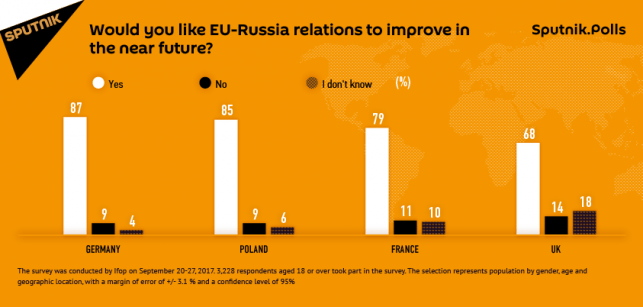
Vast Majority of Germans, Poles, French, Britons Want to Improve Ties With Russia
In Germany, which has lost “tens, if not hundreds of billions euros” and nearly 60,000 jobs due to anti-Russian sanctions, according to a study, 90 percent of male respondents in Germany turned out to be more inclined towards better relations with Russia. In France and the UK, which have reportedly lost €2.1 billion ($2.5 billion) and €3.1 billion ($3.7 billion) in exports respectively, 82 percent and 71 percent of male respondents favored better relations between Brussels and Moscow, the poll has shown.
The relationship between Russia and the European Union soured after Crimean peninsula seceded from Ukraine and reunified with Russia following the March 2014 referendum. The Western countries, including the EU members, have not recognized the legitimacy of the vote, imposing several rounds of sanctions on Russia.
Trump Approves New Sanctions Against Russia Over Alleged INF Treaty Violations
Sputnik – December 8, 2017
The US Commerce Department will impose sanctions on Russian companies that have provided technology to help develop the new weapon outlawed by the Intermediate-Range Nuclear Forces (INF) Treaty, Politico reported on Friday.
US media also reported, citing a senior administration official that US President Donald Trump has approved these new restrictions against Moscow.
Earlier in the day, US Department of State spokesperson Heather Nauert said in a release the United States is prepared to stop its intermediate-range missile systems research if Russia complies with all the terms of the INF treaty. Nauert explained that while the United States will continue to seek a diplomatic solution, it is now pursuing economic and military measures to induce Russia to return to the INF treaty compliance.
The State Department spokesperson added the United States remains committed to its INF treaty obligations and seeks Russia’s return to compliance with the agreement.Earlier on Friday, the Russian Foreign Ministry said Moscow will comply with all the terms of the INF treaty as long as the United States complies with them, and is ready to conduct professional dialogue with Washington.
The Foreign Ministry stressed that the United States was interpreting its commitments under the INF treaty freely while bringing unfounded accusations against Russia of violating the agreement. Moreover, the Foreign Ministry warned the United States against attempting to talk to Russia with the language of ultimatums, or to exert military and political pressure.
In September, US Secretary of State Rex Tillerson accused Russia of violating the INF treaty. The Russian Foreign Ministry said the US accusations were groundless, adding that the United States did not present any evidence to support its claims.
Russian President Vladimir Putin said in October that, before the INF treaty, US missile capabilities had already included air- and sea-launched missiles, while the Soviet Union had not developed such weapons. Since the INF treaty banned land-based missile launchers, the disarmament was done unilaterally by the Soviet Union.
The 1987 INF treaty prohibits the development, deployment and testing of ground-launched ballistic or cruise missiles with ranges between 300 and 3,400 miles.
US Views the Balkans As Battlefield to Fight Russia
By Peter KORZUN | Strategic Culture Foundation | 06.12.2017
Otto von Bismarck, the legendary first Chancellor of Germany, scoffed at the notion of intervening in the Balkans. He believed that the region was “not worth the bones of a single Pomeranian grenadier.” The US appears to hold quite a different view on the matter. With a resurgent Russia on the international stage, it plans to ramp up the attempts aimed at establishing its dominance in the Balkan region.
Moscow is concerned over Washington’s attempts to increase its influence on the politics of the Balkan states and draw them into NATO. Andrey Kelin, Director of the Russian Foreign Ministry’s Department of European Cooperation, said that the US wants to “fully master the Western Balkans, and, after Montenegro, to draw other countries into its orbit too.” According to him, any wave of NATO expansion, especially at a time of poor relations between the bloc and Russia “is an additional factor complicating European security.”
The statement comes after the report entitled ‘Balkans Forward: A New US Strategy for the Region’, was published by the Washington-based Atlantic Council on Nov.28. It warns of increased Russia’s influence, blaming Moscow for “attempts by Russia to capitalize on the region’s lingering pathologies to undermine the European project” and other alleged wrongdoings. The authors claim that Russia is seeking “leverage” by making “as big a mess as possible” in the Balkans region, citing unconfirmed assertions and invented stories as evidence. For instance, the report states that Moscow has been “cultivating a client” in Milorad Dodik, the leader of Bosnia’s Serb-dominated entity of Republika Srpska. Russia’s “playing games” in Kosovo is another example. The list can go on. Not a single fact is adduced to support the stories.
The Russia bogie is used as a pretext to justify the calls for a permanent American military presence in the Balkans, a “historic rapprochement” between the US and Serbia, and for the US to regain its reputation as an “honest broker”. The authors believe that establishing a permanent US military presence in the region would “anchor the United States’ ability to influence developments”. Camp Bondsteel in Kosovo, which is built on Serbian land without consulting with the government of Serbia, is believed to be ideal for this purpose.
The report does not shy away from advocating outright interference into internal affairs. It singles out Serbia, saying “Belgrade can and should be a close partner and ally in the region, but it can only become one if it begins to meaningfully distance itself from Russia.”
The Atlantic Council is a meeting place for heads of state, military leaders, and international leaders from both sides of the Atlantic. It has great influence on the US foreign policy decision-making process. Some proposals unveiled in the report align with prior calls by US policy hawks, such as Senator John McCain, who in April called for a substantially strengthened US commitment to the region.
Looks like his calls are heard and recommendations are followed. Hoyt Brian Yee, US Deputy Assistant Secretary of State, will soon take up the post of US Ambassador to Macedonian capital Skopje. “For a long time, the United States is present in the Western Balkans, and we are planning to stay there,” he said at the conference organized by the Atlantic Council in Washington the next day after the report was published.
James Jay Carafano, a Heritage Foundation Vice President, has come up with a plan of his own, offering guidelines to boost US diplomatic, economic and military efforts to drive Russia from the region and make it dominated by the United States. He believes that “The Balkans remain a soft spot in US transatlantic policy. We need to be more proactive there – and sooner rather than later.”
With Montenegro having joint NATO recently, Macedonia appears to be next. The Atlantic Council’s report offers to launch mediation efforts aimed at putting an end the long-standing row between Athens and Skopje over Macedonia name and, thus, unblock Greece’s ongoing objections to the latter’s membership in NATO. The center-left government, which came to power in late May, sees NATO membership as a top priority. The Macedonian people think otherwise. According to a recent poll by the International Republican Institute (IRI), Macedonian support for NATO membership is at its lowest level since 2008.
It all goes to show that the US views the Balkans not as a region with prospects of economic cooperation and partnership on equal terms but rather as a battlefield against Russia. What the United States does is enforcing an openly destructive choice between the West and Russia on the Balkan countries. Such a policy will lead to increased tensions and destabilization on the European continent as well as in the region. The last thing the region needs is US military presence to oppose Russia – the country with strong historic and cultural ties to the Balkan states.
Pyongyang seeks direct dialogue with Washington, Moscow ready to help – Lavrov
RT | December 7, 2017
North Korea wants to engage directly with the US to assure its security, Russia’s foreign minister has revealed. Sergey Lavrov said he has briefed US Secretary of State Rex Tillerson on the developments and that Moscow is ready to “facilitate such talks.”
“We know that, above all, North Korea wants to talk to the US about its own security assurances,” he said in Vienna following his meeting with Tillerson. “Russia is ready to take part in facilitating such talks.” Lavrov and Tillerson spoke on the sidelines of an Organization for Security and Cooperation in Europe (OSCE) meeting.
Lavrov reiterated that all parties involved in the Korean crisis should “break the vicious cycle of confrontation, reckless schemes and sanctions” and engage in meaningful dialogue instead. He also pointed to American military exercises near the Korean Peninsula and Washington’s aggressive rhetoric, which he said only leads to a further escalation of tensions. This is “unacceptable,” Lavrov made clear.
Earlier Thursday, the head of Russia’s Senate’s Foreign Affairs Committee, Konsantin Kosachev, met with North Korea’s Ambassador to Moscow to discuss the situation on the peninsula. Following his exchange with Kim Young Jae, Kosachev said Pyongyang has absolutely no interest in ratcheting tensions, not to mention starting a full-blown military conflict. But, Kim added, Pyongyang “does not fear war” either.
Kosachev said a viable way to resolve the crisis is an all-in dialogue between relevant parties and joint efforts aimed at lowering tensions. “We are absolutely not interested in the escalation of tensions, in any military action,” Kosachev told the Interfax news agency following the meeting. Russia “will do everything it can to prevent this escalation,” he added.
Both Lavrov and Kosachev once again referred to the so-called “double freeze” initiative put forward by Russia and China soon after tensions heightened in early September. The plan envisages the US and its allies stop all major military exercises in the region in exchange for Pyongyang suspending its nuclear and ballistic missile program. The initiative, however, has been spurned by Washington, with the US envoy to the UN, Nikki Haley, denouncing it as “insulting.”
On Wednesday, the North Korean foreign ministry said US military drills near the Korean Peninsula as well as Washington’s belligerent rhetoric make an outbreak of war in the region inevitable. “The remaining question now is, when will the war break out,” the ministry’s spokesperson told the North Korean state news agency KCNA Wednesday.
On Monday, the US launched massive air drills together with South Korea. The five-day exercises, scheduled to last until December 8, involve a total of 12,000 personnel and over 230 military aircraft. Pointedly, the maneuvers particularly simulate attacks on Pyongyang’s nuclear and missile installations while claiming it to be “defensive.”
In late November, North Korea conducted yet another missile test, claiming it had successfully launched a new type of intercontinental ballistic missile capable of striking the US mainland.
IOC bans Russia: Cold War 2.0 politics ruins the Olympics
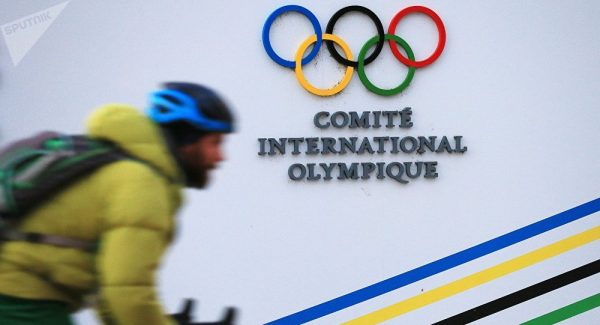
By Neil Clark | RT | December 6, 2017
The announcement by the International Olympic Committee that Russia would be banned from the PyeongChang Winter Olympics – but that Russian athletes, if proven ‘clean’ from doping would be able to compete under a neutral banner- has to be seen in its wider geopolitical context.
The decision comes amid a backdrop of unrelenting Russophobia fueled by Western elites who are furious Russia has thwarted their plans for regime change in Syria and is generally getting in the way of US hegemonic aspirations and the neocon/globalist agenda.
Revealingly, straight after the IOC decision was announced leading Russophobes, like US Senator John McCain, were renewing their calls for the 2018 football World Cup to be taken away from Russia, showing that this is about the reviving of Cold War politics and not drugs. It’s clear ‘The Endless War’ lobby in the West wants Russia isolated, humiliated and banned from everything. Sport is only one front in their obsessive campaign, attacks on the Russian media is another. In the current climate, it is virtually impossible Russia would get a fair hearing.
Question One: How would you feel if you were an athlete who had trained hard for four years for the Olympics only to be beaten by someone who it later transpired had cheated by using drugs?
Question Two: How would you feel if you were an athlete who had trained hard for four years for the Olympics only to be barred from competing for your country because someone else from your country had been held to have taken drugs?
I’m sure you’d agree that in both cases you would feel very aggrieved. It’s right and proper that drug cheats should be punished – from whatever country they come from – so long as the evidence is there. It’s also right and proper that the innocent don’t pay for the sins of the guilty.
The job of sporting authorities is to make sure that justice is done. That means banning athletes who are proved to have broken the rules, but not imposing blanket bans when evidence of a state-sponsored drug program is missing or inconclusive. And not allowing geopolitics to play any part in their deliberations.
Russia should be treated like any other country; we can surely all agree on that. Alas, that isn’t what appears to have happened.
Last year, there was a blanket ban on Russian Paralympians competing in Rio- imposed by the IPC, which has representatives from six NATO countries on its 14 member board – punishing athletes who had never done anything wrong.
Russian athletes have been banned (and stripped of their medals) without proof of their guilt being published by the IOC’s Oswald Commission – which was set up in July 2016 to investigate the second part of the McLaren report (more of which later). The IOC says it will publish the evidence of ‘violations’ in ‘due course’ – but if they have it – why not now.
How can it be right to ban people without publishing the evidence?
This witch-hunt against Russian athletes goes back to the McLaren report. How authoritative was that? Answer: not very. If you think that’s just ‘Russian propaganda,’ ITV Sports editor Steve Scott acknowledged in November that we are not in “beyond reasonable doubt territory” – in his article “Did the McLaren report into Russian doping overstep the mark.”
For the first part of the report – McLaren, a law professor from a country (Canada) which is a geopolitical adversary of Russia and whose anti-doping agency head, had along with his US counterpart, tried to lobby the IOC to ban ALL Russian athletes from the Rio Olympics last year admitted he “did not seek to interview persons living within the Russian Federation.”
This is a breach of a fundamental principle of natural justice – namely “audi alteram partem” (“listen to the other side”). That wasn’t all that was unsatisfactory about McLaren’s report. There was the lack of supporting evidence for its claims. The line was “we don’t know how they tampered with the urine samples, but we know the Russians did it.” And of course, the report was heavily based –as ITV news conceded last night- on the testimony of just one man- Grigory Rodchenkov- former head of Moscow’s anti-doping laboratory who defected to the US. But just how trustworthy a witness was he?
For the second part of his report McLaren did meet “some” Russian officials, but not all who have been accused.
Furthermore, as recently as November 27, WADA chief Craig Reedie said that while there were “hints” and “claims” of evidence of a systematic state-sponsored Russian doping scheme, 95 of the 96 cases of Russian athletes WADA is investigating have been suspended because “there was not sufficient evidence to pursue an anti-doping violation.”
Yet despite this, before the announcement in Lausanne yesterday, there were exhortations from Western media commentators for the IOC to “do the right thing, ” i.e., ban Russia – based on a report which had more holes in it than a giant slab of Swiss cheese.
Imagine if Thomas Bach, IOC President, had announced Russia would not be banned as conclusive evidence of a state-sponsored doping program had not been presented – which was indeed the case. Then much of the Russia-bashing Western media would have turned their guns on Bach and his committee accusing him, and them, of being “corrupt” and “in cahoots with Putin.”
Remember the attacks on the IOC when they didn’t impose a blanket ban on Russia at last year’s Rio Olympics? How much did that influence the IPC to make their decision?
As I noted here, all roads in the campaign to ban Russia, lead back to the US and Canada.
Far from providing ‘conclusive evidence’ the McLaren report was struggling to do the job of getting Russia banned.
In February, leaks from the hacktivist group ‘Fancy Bear’ revealed the IOC was not satisfied with the ‘proof’ in some parts of the report and asked 56 questions about 16 of the accused.
An earlier leak also revealed that Martial Saugy, the former director of the WADA’s accredited doping Laboratory of Lausanne accused the McLaren report of making “incorrect allegations.”
McLaren needed a major leg-up in 2017, and it was given one, by US Off-Broadway playwright called Bryan Fogel. Fogel’s documentary film Icarus, which featured interviews with Rodchenkov was released in August. In fact, it was Fogel and Rodchenkov taking the story to the New York Times in May 2016 which led to the McLaren report in the first place.
What started as a ‘Super Size Me’ experiment in doping ended up turning into – in the words of The Independent – “an explosive expose of Russia’s Olympic cover-up.”
“Icarus may be the best non-fiction film of the year,” declared the Financial Times. “A coup for a first-time documentarian,” enthused The Atlantic.
Icarus won prizes at film festivals in the US and UK, and it’s also been tipped to make the Oscars short-list, but not all were convinced that it had proven its case. “Netflix doping scandal doc is flawed but fascinating,” was the title of The Guardian’s review. “There’s an inescapable slipperiness to Rodchenkov’s character that makes his testimony slightly hard to swallow,” wrote Gwilym Mumford.
In an interview with the FT, Fogel, who we’re told “stumbled” into the Russian doping story, reveals that he believes Russia has a “cultural” problem with drugs.
“The mentality of an entire culture of people, of a country, is different,” he says. “You have to place yourself in that perspective . . . If you’re growing up in a world like Grigory (Rodchenkov) under communism, and everybody is doping, his mother injects him with steroids — nothing is wrong.”
Fogel’s film fits in very conveniently with the current wave of Russophobia.
Last night, some were asking on social media if without Icarus Russia would have been banned.
The aim of anti-Russian propagandists in the West is quite clearly to portray Russia as a ‘doping nation’ that never tells the truth. But, as that wise old saying goes, if you point one finger, you have three pointing back at you.
As I wrote here, it was only in 2003 when allegations were made by a top American official about widespread US doping:
Wade Exum, the US Olympic Committee’s former Director of Drug Control, handed over more than 30,000 pages of documents to Sports Illustrated magazine and the Orange County Register, which he said showed that over 100 American athletes had failed drug tests between 1988-2000, but had still been allowed to compete.
Carl Lewis, the US Olympian later admitted he had tested positive for banned substances before the 1988 Games in Seoul where he won Gold but claimed that ‘hundreds’ of fellow Americans had also escaped bans.
“There were hundreds of people getting off,” Lewis said. “Everyone was treated the same.”
But guess what? There was no McLaren style report and no blanket ban on US athletes. And no film made about the story like Icarus.
As for the charge that under ‘communism’ “everyone is doping” let’s think back to the 1954 World Cup final. Then the best football team in the world (and arguably the team of all time) the Magical Magyars from communist Hungary, were surprisingly beaten 3-2 in the final by West Germany after they had thrashed the Germans 8-3 in the Group stage. How did the so-called ‘Miracle of Bern’ happen? For years Hungarians believed they had been cheated. And so it proved. A 2013 report commissioned by the German Olympic Sports Federation, whose head incidentally is IOC Chair Thomas Bach, revealed not only that the German players had been injected with the methamphetamine Pervitin, but that West Germany had operated a 20-year state-sponsored doping program with the full knowledge of politicians and sports officials.
Will Hungary be awarded the 1954 World Cup and those who finished second behind the 100 American competitors who failed drug tests be promoted? If we’re changing the results of Sochi and stripping Russians of medals, shouldn’t we be doing it across the board?
You don’t have to be Russian, or Hungarian to feel angry about the double standards.
When it comes to doping and punishment for alleged doping some countries, namely the US and those closely allied to Washington, are most definitely more equal than others.
Follow Neil Clark on Twitter @NeilClark66
India to send first cargo to Russia through INSTC

The International North South Transportation Corridor (INSTC) connects India’s Mumbai to Russia’s St Petersburg and beyond
Press TV – December 6, 2017
India says it is preparing to send a consignment to Russia through a much-awaited new intercontinental multi-modal corridor that connects its port city of Mumbai to Russia’s St Petersburg.
The consignment would depart for Iran’s Persian Gulf port of Bandar Abbas in mid-January and would be thereon taken through the Iranian territory to Azerbaijan’s Baku through road and rail. It would be then taken to Russia by train.
India’s media reported that this would formally launch the International North South Transportation Corridor (INSTC) that had been in the making for 17 years. Nevertheless, the INSTC would technically function fully in a few months thereafter, reported the Economic Times.
The report added that hectic preparations were already underway to firm up all elements of the corridor in all key stakeholder states and that a Russian railway operator was expected to play key role in the INSTC.
The ship, road and rail route connects India’s Mumbai to the Iranian port of Bander Abbas and further to Baku in Azerbaijan as well as Astrakhan, Moscow and St. Petersburg in Russia before stretching to northern Europe and Scandinavia.
Currently, a cargo from India to Russia is carried on freight ships via the Red Sea, Suez Canal, Mediterranean Sea, the English Channel and then the Baltic Sea.
The INSTC – which has an estimated cargo capacity of 20-30 million tonnes of goods per year – is expected to provide faster and more efficient trade connectivity between Europe and Southeast Asia.
Dry runs of the route were conducted in 2014, from Mumbai to Baku and Astrakhan via Bandar Abbas. Results showed transport costs will be 30 percent cheaper and transportation period will be 40 percent shorter than the existing routes.
The INSTC will be India’s second corridor after the Chabahar Port to access resource rich Central Asia and its market, the Economic Times wrote.
The launch of Chabahar Port – whose Phase 1 was inaugurated on Sunday – coupled with INSTC will be a game changer for India’s strategic and economic goals in the Eurasian region, added the report.
INSTC could get linked to the Chabahar Port besides Iran’s Bandar Abbas port, the daily quoted an unnamed official as saying.
India also hopes that INSTC would be connected with various other connectivity projects that the five Central Asian and other Eurasian countries have undertaken among themselves, the official said.
11 quotes that show how Vladimir Putin sees world
RT | November 23, 2017
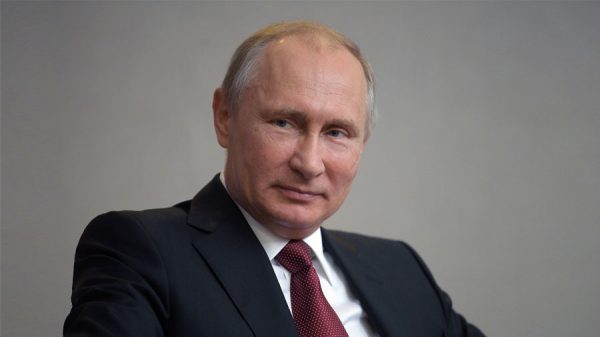
Populist, pragmatist, authoritarian, cunning tactician – years after he rose to the top of Russian politics Western observers still wonder about Vladimir Putin’s true motivations. In fact, behind the Kremlin’s decision-making is a set of consistently expressed beliefs.
On the United States
“The USA is a great power. Probably the only superpower in existence today. We accept that and we are ready to work together with them.
What we don’t need is for them to get involved in our affairs, tell us how to live our lives, and prevent Europe from building a relationship with us.”
St. Petersburg International Economic Forum, June 2016
On allegations of Russia’s foreign meddling
“There is constant US propaganda, and direct funding of US NGOs… Is that not interference, which continues year in, year out? Take a globe, spin it, and randomly put your finger on any spot – I can guarantee that there are American interests and meddling there.
What do the Americans want? For everyone to just bow their heads in deference? We have our own opinion and we express it openly. It is not some form of undercover sabotage.”
Direct Line with Vladimir Putin, June 2017
On Europe
“Does it benefit European states to simply service Washington’s foreign and even domestic policy aims? I am not sure. Is this the purpose of serious politics, and is this the role countries take on if they desire to call themselves great powers?”
Russia Calling! Investment Forum, October 2016
On Catalonia’s independence crisis
“At one time, the EU welcomed the collapse of a whole range of states in Europe, not bothering to hide their glee. Why did they need to so thoughtlessly – for the sake of short-term interests and to please ‘Big Brother’ in Washington – unconditionally support the secession of Kosovo, provoking similar processes on the continent and beyond?”
Valdai Discussion Club, October 2017
On NATO
“There is no more Soviet Union, no Eastern Bloc. In my view, NATO needs an external enemy to justify its existence, so there is a constant search for one, and provocations to create adversaries where there are none.
…Today it is an instrument of American foreign policy. There are no partners in it, only vassals.”
Oliver Stone interview, June 2017
On the Middle East
“There has been an attempt to reformat the region, to impose an outside model on it, either through regime change, or outright use of force. Instead of fighting extremism, instead of imitating such a fight, some of our peers want chaos to become a permanent state of affairs.”
Valdai Discussion Club, October 2017
On North Korea
“Of course we condemn North Korea’s nuclear tests and comply with all UN Security Council resolutions without exception.
But to solve this problem you must use dialog, not by trying to corner North Korea with military threats, and not resort to name-calling and public exchanges of insults. Whether you like the regime in Pyongyang or hate it, you have to recognize that DPRK is a sovereign state.”
Valdai Discussion Club, October 2017
On the toppling of Viktor Yanukovich in Ukraine
“What happened in Kiev is an armed and unconstitutional seizure of power – a coup. No one is arguing with that.
The question is – why did it need to be done like that? Viktor Yanukovich had already given up his power, and had no chance of re-election. Why plunge the country into chaos? As a demonstration of power? This was a stupid decision and had the reverse effect. I believe it was these actions that destabilized the situation in the east of the country.”
Media briefing in Novo Ogarevo, March 2014
On the government in Kiev
“The interests of the Russian and the Ukrainian peoples are the same. What isn’t the same is the aims of the Ukrainian government and elites.
… They have only one good left to export for international consumption – Russophobia. And the politics of division between the two countries. Some in the West believe that these two states should never be allies, and so Ukraine has been successful exporting that idea.”
Hamburg G20 Summit, June 2017
On Russia’s political system
“Monarchy was a legacy passed down from the Empire to Soviet times, even though the plaque on the building changed. Only at the beginning of the 1990s, events came to pass which laid the foundation for a new stage of Russian development.
Certainly, you cannot imagine that we can instantaneously get the same government model, the same structures, as in the United States, in Germany, in France. Society, just as every living organism, has to develop stage-by-stage, organically. That’s the normal development process.”
Oliver Stone interview, June 2017
On Russia’s role in the world
“Russia is a country with a thousand-year history and has almost always enjoyed the privilege of a sovereign foreign policy.
We are not going to betray this tradition today. At the same time, we are well aware of how the world has changed and we have a realistic understanding of our own opportunities and potential. We would like to interact with responsible and independent partners with whom we could work together in constructing a fair and democratic world order that would ensure security and prosperity not only for a select few, but for all.”
Munich speech, February 2007
Featured Video
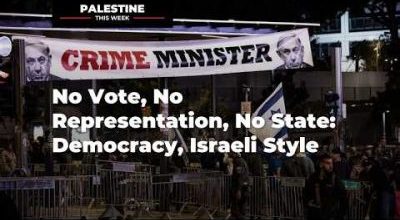
No Vote, No Representation, No State: Democracy, Israeli Style
or go to
Aletho News Archives – Video-Images
From the Archives
Sanctions, War and the Policy of Dual Containment
By SASAN FAYAZMANESH | March 17, 2008
It is now nearly three decades since the Unites States adopted the policy of dual containment of Iran and Iraq. While much has been written about the containment of Iraq, there has been very little in-depth analysis of this policy when it comes to Iran. In a book that is going to be released on March 31, 2008, entitled The United States and Iran: Sanctions, Wars and the Policy of Dual Containment (Routledge), I attempt to address this shortcoming by investigating when and why the US policy of containment of Iran came about, how it evolved, and where it stands today.[1] To the extent that Israel has been involved in US policy making, the study will also include the role that Israel has played in the containment of Iran. Also, since the fate of Iran has been inextricably linked to that of Iraq, occasionally the investigation will overlap with the containment of Iraq.
The policy of dual containment of Iran and Iraq originated during the Carter Administration, but it was not until the Clinton Administration that the expression “dual containment” became popular. … continue
Blog Roll
 Aletho News
- Europe’s Establishment Is Embracing War – and Losing Voters
- NATO chief advocates war of aggression
- No Vote, No Representation, No State: Democracy, Israeli Style
- Zionist Bought Senate Blocks Information About American Citizens Killed By Israel
- While Gaza dominates the UN, these are the people keeping it alive
- New Report: “Scholasticide and Genocide in Gaza: Assessment, Testimonies and Legal Analysis”
- ‘THAAD Delusion’: Iran war exposes US missile shield limits – The Atlantic
- Moscow issues warning to NATO over Russian exclave
- Yes, the Iran war has destroyed Trump’s presidency
- The fallacy of US delusions about Iran’s economic collapse
- If Americans Knew
- Mamdani releases plan to combat antisemitism and hate crimes in New York City
- Iran’s Revolutionary Guards Publish Letter to the American People
- DMFI launches $1 million ad campaign supporting Virginia’s Elaine Luria
- US Senate blocks resolution seeking report on Americans killed by Israel
- Israeli Attacks Kill Ten Palestinians in Gaza
- Massacre at Minab: The School That Became a Grave
- Israeli media: The IDF Shows It Doesn’t Turn a Blind Eye; It Actively Emboldens Settler Havoc
- As settlers ravage West Bank, Israeli forces kill 10 in Gaza – Daily Update
- New Report: “Scholasticide and Genocide in Gaza: Assessment, Testimonies and Legal Analysis”
- Ex-Biden officials are desperate for a Gaza scapegoat
- No Tricks Zone
- Green Energy Debacle: German Expert Professor Fritz Vahrenholt Warns Of Severe Economic And Social Consequences
- Two More Paleo Reconstructions Affirm Meters-Higher Sea Levels Across Ireland, Brazil 7000-6000 Years Ago
- New Study: Earth And Venus Surface Warmth Largely Explained By Convection And Lapse Rate, Not CO2 Or Radiation
- 2025 Nature Paper Claiming Worsening Global Drought Gets RETRACTED …Heavily Flawed
- New Study: ‘Global Drought Shows No Detectable Recent Acceleration Under Climate Warming’
- Economic Masterminds: German Socialists Suggest Taxing Productivity Gains Stemming From Using AI
- The South China Sea Has Not Been Cooperating With The Climate Change Narrative
- Energy Crisis: Germany Enters Heating Season With Historically Low Gas Reserve Fill Levels
- New Study: The Antarctic Ice Sheet Gained Mass From 2020-2024 Due To Staggering Snow And Ice Accumulation
- Study: Ocean Heating Rates From Thousands Of Years Ago ‘Dwarf’ Modern Ocean Heating Rates

