Moscow Regards Dutch Allegations of Russian Cyberattacks as ‘Hysteria’
Sputnik – 09.02.2017
Dutch allegations that Russia may carry out cyberattacks to influence the results of parliamentary elections in the Netherlands are manifestations of “hysteria,” Russian Foreign Ministry’s spokeswoman Maria Zakharova said Thursday.
Dutch experts claim that Russian hackers have targeted the Binnenhof complex, located in The Hague and housing Prime Minister Mark Rutte’s office, Zakharova added.
“Members of the state’s government are increasingly active in engaging in this hysteria, amplified by the media. They do not choose words, they do not have any proof, they publicly claim that Russia is a source of cyberthreats, without having any facts,” Zakharova said at a briefing in Moscow.
Zakharova recalled that former Dutch Foreign Minister and NATO’s ex-Secretary General Jaap de Hoop Scheffer had called the Netherlands attractive for Russian hackers in the light of the upcoming parliamentary elections.
On February 1, Dutch Interior Minister Ronald Plasterk expressed concern over the possibility that the results of the parliamentary elections could be manipulated and added that he considered Russia as one of the actors, which could be interested in influencing the vote.
In mid-January, Dutch Foreign Affairs Minister Bert Koenders said the state’s government had been on alert about the risk of Russian hacking ahead of the Dutch parliamentary elections, set for March 15.
Exercise Sea Shield-2017: NATO Provokes Russia in Black Sea Before Defense Ministers’ Meeting
By Alex GORKA | Strategic Culture Foundation | 10.02.2017
Russian President Vladimir Putin has ordered snap drills to be held by the Aerospace Forces and other branches to evaluate its preparedness against potential aggression. The exercise started on February 7.
Some Western media have accused Moscow of preparing to start an aggression. In reality, the action is taken in response to NATO and Ukraine’s provocative activities in the Black Sea. 16 warships, a submarine and 10 warplanes along with some 2,800 troops from Ukraine, Romania, Turkey, Bulgaria, Greece, Spain, Canada, and the US are taking part in exercise ‘Sea Shield 2017’ scheduled to run between February 1 and 11 in the proximity of Russian borders.
HMS Diamond of the UK Royal Navy is sent to participate in the event. It’s a rather symbolic move. This is the first time since the Cold War that a British naval vessel entered the waters of the Black Sea. According to British Defense Minister Michael Fallon, this is the way that the British government confirms its support of Ukraine – a hostile act towards Russia. After the NATO exercise, the ship will visit Odessa to hold bilateral drills with Ukraine. The destroyer has 60 Special Boat Service and Royal Marine commandos on board. It’s logical to expect amphibious landing to be part of the exercise.
According to the Daily Mail, HMS Diamond will lead a NATO task force and help protect 650 British troops who are involved in secret exercises in Ukraine. There is ground to believe that something is cooking up.
NATO defense ministers will meet February 15-16 in Brussels to discuss a package of measures aimed at bolstering military presence in the Black Sea. The proposals on two basic elements for the maritime component – a strengthened training framework and a coordination body for the Black Sea that reports to the specialized NATO command – are expected to be submitted for consideration.
The organization plans to build NATO’s Black Sea presence on land around a Romanian-led multinational framework brigade in the process of formation. Nations who have pledged to contribute include Canada, Germany, the Netherlands, Poland, Turkey and the United States. The unit is intended to facilitate the deployment of reinforcements. Georgia and Ukraine will be fully involved in the plans.
Romania calls for a regular trilateral format of joint naval exercises in the Black Sea, along with Turkey and Bulgaria, with the eventual participation of non-littoral NATO members.
The UK, Canada and Poland will send aircraft to be based in the Romanian southeastern Mihail Kogalniceanu air base. Romania, Bulgaria and Turkey are also expected to come forward with a plan to increase naval and air patrols. Romania and Bulgaria will host aircraft designed to carry out surveillance missions.
Last September, US and Bulgarian aircraft launched joint regular patrols in the Black Sea. The patrolling mission greatly increases the risk of an accident, especially with the Russian S-400 long range systems stationed in Crimea. Russian aircraft deployed in the Northern Caucasus and Rostov region are capable of controlling the whole Black Sea. President Putin has already warned NATO about the consequences such policy would lead to.
There has been a surge in airspace violations and instances where aircraft are scrambled to intercept foreign jets amid a sharp rise in tensions in the region. For instance, Sea Shield-2017 exercise started with an incident. Ukraine accused Russia of firing at its An-26 cargo aircraft on a training flight. The plane flew provocatively low over an oil rig. A security guard gave flash signals from a signal pistol to prevent the plane from crashing into the drilling tower.
Non-Black Sea NATO members cannot stay in the Black Sea more than 21 days, according to the Montreux Convention. NATO has three members with Black Sea ports in Romania, Bulgaria and Turkey, as well as two more aspiring members in Ukraine and Georgia.
Bulgarian, Romanian, Ukrainian and Georgian navies have limited capabilities. It brings to the fore the possibility of major NATO sea powers handing over some of their own warships to them. The ships could be reflagged to beef up permanent naval capabilities in the theater. US warships frequent the Black Sea to provide NATO with long-range first strike capability.
Romania hosts a ballistic missile defense (BMD) site believed to be capable of launching long-range surface-to-surface cruise missiles in what constitutes a violation of INF Treaty. Aegis Ashore uses the naval Mk-41 launching system capable of firing such weapons. Located near Caracal in south central Romania, Aegis Ashore is part of the second phase of the so-called «European Phased Adaptive Approach» (EPAA) to an overall NATO missile defense architecture.
Bulgaria also plays a prominent role in NATO’s plans to bolster the bloc’s military presence in the region. This year, Novo Selo, a US military base in Bulgaria, is expected to host more American and NATO troops. The first of three six-month rotations of about 150 US Marines, part of the Black Sea Rotational Force, is due at Novo Selo in September. US Army soldiers come to Bulgaria for training on a rotational basis. Under the 2006 defense cooperation agreement, the United States has access to three Bulgarian military bases.
The US plans to deploy up to 2,500 troops at Novo Selo; the base can hold as many as 5,000 during joint-nation exercises with NATO allies. The facility’s construction is almost finished; the plans are on the way to upgrade the training ranges this year. The upgrade includes adding a helicopter landing zone and an air operations building. The base is expected to host US heavy tanks. A NATO maintenance support area is to be built in Sliven or Plovdiv.
For the US, the Black Sea is a remote region where it has no interest. It’s different for Bulgaria as 80 percent of Bulgarian exports and imports transit the Black Sea and tourism contributes heavily to the country’s economy, increased maritime militarization could have a widespread negative economic impact in case of accidents or clashes.
Nothing justifies the whipping up of tensions by NATO in the Black Sea region. Too provocative and too dangerous. An incident may spark a fire. The INCSEA agreement appears to be dead as the events in the Baltic Sea demonstrate.
While the Islamic State poses a threat to the very existence of NATO members, the alliance is engaged in provocations to intimidate Russia – its natural ally in the fight against the common enemy. Does it meet the interests of the alliance members? It would stand NATO defense chiefs in good stead if they asked themselves this question at the February 15-16 meeting.
Prospects of New START Treaty Depend on Washington’s Stance – Kremlin
Sputnik – 10.02.2017
MOSCOW – The Kremlin cannot comment on its position regarding the New START treaty extension yet, as there is a need to update information on the parties’ stance, and the negotiations will depend on the US stance on the issue, Kremlin spokesman Dmitry Peskov said Friday.
White House Press Secretary Sean Spicer also refused Thursday to comment on allegations made by anonymous US officials claiming that Trump spoke negatively about the New START treaty during his January 28 phone call with Russian President Vladimir Putin.
“I would not formulate any positions as of now. We had a certain pause in strategic security dialogue, therefore, of course, so to speak, in terms of the break there is a need for a certain update, a mutual information update on the positions. This [dialogue] depends on our US partners. And we will obviously need contacts on the matter,” Peskov told reporters.
Peskov said he would not comment on reports of US President Donald Trump criticizing the New Strategic Arms Reduction Treaty (START) to Putin.
“I could not confirm this. Everything we felt was needed to report on the results of the telephone conversation we have reported. There is nothing more to add,” Peskov told reporters.
The treaty with the formal name Measures for the Further Reduction and Limitation of Strategic Offensive Arms was signed between Russia and the United States in April 2010 in Prague, and entered into force on February 5, 2011. The Treaty’s duration is ten years — until 2021, unless superseded by a subsequent agreement. Under the Treaty, the United States and Russia must meet the Treaty’s central limits on strategic arms by February 5, 2018, that is seven years from the date the Treaty entered into force.The Strategic Arms Reduction Treaty treaty requires the parties to the contract to reduce and limit the number of deployed and non-deployed strategic offensive arms. It stipulates that the parties may agree to extend the treaty for a period of no more than five years.
Before the end of his tenure, former US President Barack Obama had made a proposal to continue reduction of nuclear arsenals of both Russia and the United States. The Russian side has rejected the proposal citing a number of unresolved issues in bilateral relations, such as extension of the US missile defense system. Washington has also attempted to prolong a treaty, however the Russian Foreign Ministry said that it had not received an official proposal.
Trump Confronts New McCarthyism
By Gilbert Doctorow | Consortium News | February 9, 2017
The original McCarthyism of the early 1950s appeared with the consolidation of the Cold War. It was a witch hunt over supposed communist subversion of America’s democratic institutions. It was all about the Red Menace and the Russians are coming. Today’s New McCarthyism grew with the onset of a New Cold War and also has been about the Russians, especially the vilification of Vladimir Putin.
This anti-Russian hysteria reached a point of near absurdity in the last days of the Obama Administration with its trust-us allegations that the Russians defeated Hillary Clinton by releasing some emails showing how the Democratic National Committee sabotaged Bernie Sanders and other emails revealing what Clinton had told Wall Street banks but didn’t want the voters to know. If you noted that Clinton had previously blamed her defeat on FBI Director James Comey for reopening and re-closing the investigation into her use of a private email server, you risked being labeled a “Putin apologist” or a “Kremlin stooge.”
Of course, the anger toward anyone who resisted the “Russia-did-it” conformism did not come from nowhere. One can trace the current hostility to dissenters against U.S. foreign policy back to the presidency of George W. Bush when he gutted the Bill of Rights in promulgating the Patriot Act with almost no public challenge. In the post-9/11 climate – when any resistance to Bush’s edicts was regarded as close to treason – many of us became uneasy while talking politics on the phone or looking up certain topics on the Internet or taking books out of the library.
This intimidating surveillance did not go away when the Democrats retook the White House and Congress in the 2008 elections, but we stopped thinking about it because supposedly the “right people” now held the levers of power and surely wouldn’t repeat the abuses of Bush-43. However, not only did the surveillance state consolidate its powers under Barack Obama but the former constitutional lawyer sharply escalated the legal persecution of whistleblowers who dared give the American people a look behind the curtain.
Obama’s unprecedented assault on government transparency was compounded by the liberal-chic contempt meted out to anyone who questioned the wisdom of imposing “liberal values,” “human rights,” and “democracy promotion” on countries around the world. “Political correctness” dominated not only domestic U.S. debates but also the formulation of foreign policy.
Vladimir Putin was viewed as a retrograde force in the world, in part, because he aligned himself with Russia’s conservative social values and because he fell short of an ideal notion of what liberal democracy is supposed to be. The fact that the U.S. government also was falling far short of those standards – from ordering targeted assassinations with minimal due process to imprisoning patriotic whistleblowers – was largely ignored by an Obama Administration that saw itself as too wonderful to have flaws.
Blacklisting Dissent
So, when the U.S. confrontation with Russia over Ukraine, Crimea and the Donbas began in the summer of 2013, those of us who did not accept what was becoming the Washington Consensus, which held Putin to blame for everything, began to see ourselves as dissidents in the Soviet sense or at least in the manner of the old McCarthy era. In effect, we were blacklisted, largely excluded from publication in the professional journals, not to mention mainstream print and broadcast media. On campus, we mostly kept our mouths shut fearing for our jobs.
In the narrow, but politically important field of Russian studies, just how bleak the times had become was revealed in the December 2015 “Christmas issue” of Johnson’s Russia List, an important daily digest of expert and generalist writings about Russia which contained a 40-page propaganda barrage against Putin and his ill-begotten country. But the content of that daily issue merely reflected what was entering the editor-publisher’s in-basket each day. Still, the silence of dissenters should not be confused with agreement.
For all his blustery and egotistical faults, Donald Trump has punched huge holes in the dominant neocon ideology that underlay the Washington Consensus on foreign policy during the presidencies of both George W. Bush and Barack Obama. Trump’s tweets and campaign messages asked, aloud and repeatedly, what could be wrong with the United States getting along with Russia and cooperating on common interests, starting with a joint campaign against ISIS.
Yet, Trump’s rejection of Washington’s foreign-policy orthodoxy went beyond relations with Russia; Trump was questioning the consensus on how America has conducted its role as global leader and he was challenging the arrogance of intervening in other nations’ affairs, whether by finger-waving lectures or various regime-change schemes.
As noisy and messy as Trump’s political approach has been – with a number of unnecessary diversions and self-inflicted wounds – there is a significant and “revolutionary” side of Trump’s approach. It represents a potential reordering of the two major political parties, a revamped struggle for power within the Right-Left dimension.
He restated this “revolutionary” aspect of his foreign policy in his Inaugural Address when he renounced the idea of endless interference in other countries’ politics and a return to the traditional role of America as an example, not an interventionist. This was an in-your-face condemnation of most of those sitting beside and behind him on the rostrum who favored a “values-based” foreign policy, globalization and American exceptionalism.
Taking on McCain
From the Oval Office, Trump has continued his frontal assault on this foreign-policy orthodoxy with his closely watched and disputed tweets. Much ridicule has been directed at Trump for ruling by tweets since they often reveal a lack of intellectual depth and his facile narcissism. But what they lack in refinement, Trump’s tweets make up for in feistiness and courage.
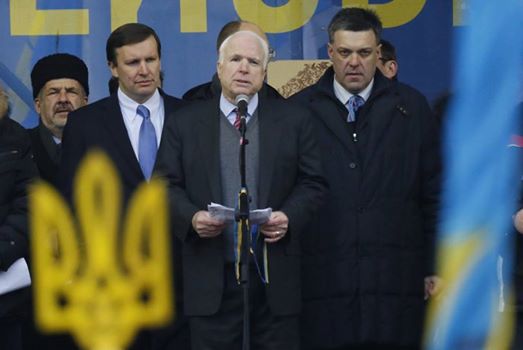
John McCain at Ukrainian Svoboda party pre-coup rally
For instance, in a Jan. 30 tweet, Trump urged Republican neocon Senators John McCain and Lindsey Graham to “focus their energies on ISIS, illegal immigration and border security instead of always looking to start World War III” [emphasis mine]. This was, in its own way, as significant as the pithy and devastating rebuke issued by attorney Joseph N. Welch to Sen. Joe McCarthy on June 9, 1954, after McCarthy attacked the patriotism of a young Army lawyer: “Have you no sense of decency, sir? At long last, have you left no sense of decency?” Welch asked.
In a way, Trump’s reference to the behavior of McCain and Graham, running around the world advocating for one war after another, including a military confrontation with nuclear-armed Russia, was as precise and cutting as Welch’s putdown of McCarthy. In doing so, Trump broke the decades-long taboo on criticizing McCain despite his behavior as a loose cannon on the deck of foreign affairs, especially during the Obama years.
Behaving as if he had won rather than lost the 2008 election, McCain has traveled to such hot spots as Syria, Georgia and Ukraine with the goal of making U.S. foreign policy in the field, urging militants onward into violent clashes with their own governments or pushing U.S.-client states into conflicts with their neighbors.
Trump began his challenge to McCain during the campaign when he publicly questioned the “war hero” status of the Arizona senator by rhetorically asking in what way spending years in captivity as a Vietnam prisoner of war made McCain a war hero.
McCain took his revenge shortly before the inauguration when he informed the press that he had just handed over to the FBI for follow-up a dubious report generated by a former British intelligence agent accusing Trump of being vulnerable to Russian blackmail because of alleged cavorting with prostitutes during a visit to Moscow years ago.
To stymie any new détente with Russia, McCain also introduced a bill in the Senate calling for new and expanded sanctions against Russia. So, the White House tweet was a direct challenge to McCain for his actions that Trump warned were inviting World War III. In doing so, Trump is at least prying open space for a fuller debate about U.S. foreign policy and the wisdom of neocon interventionism.
So, notwithstanding all the self-righteous exclamations before media microphones by Establishment figures from both parties over the foibles of this populist president and notwithstanding the shouting in the streets by demonstrators, it appears that the President is advancing via his tactic of frontal attack.
A week ago, Secretary of State Rex Tillerson, Trump’s bellwether choice to oversee a new foreign policy, was confirmed by the Senate to the surprise and pleasure of those of us who had kept our fingers crossed. It is too early to say how or why Trump won this test of strength. But initial fierce opposition from ranking Republicans John McCain, Lindsey Graham and Marco Rubio was beaten back.
Now, the question is whether Tillerson and Trump’s other foreign policy appointees can achieve genuine change in the direction of U.S. foreign policy.
Gilbert Doctorow is the European Coordinator of The American Committee for East West Accord Ltd. His latest book, Does Russia Have a Future? was published in August 2015.
Moscow mediates talks between Assad & Syrian Kurds – Lavrov
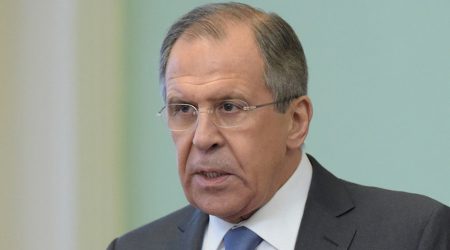
RT | February 9, 2017
Russian Foreign Minister Sergey Lavrov has confirmed that Moscow has been mediating talks between Damascus and the Syrian Kurds to help maintain Syria’s sovereignty and statehood, in an interview with Russia’s Izvestia daily.
Russia “makes efforts to establish a common understanding between the Syrian government and the Syrian Kurds for the sake of a united Syria,” the minister told Izvestia in an interview he gave ahead of Diplomat’s Day, a Russian holiday celebrated on February 10.
Lavrov went on to say that four rounds of negotiations, brokered by Russia and including direct contact between the Damascus delegation and “representatives of the political and public structures of the Syrian Kurds,” had already taken place between June and December in 2016. In addition, the gatherings also involved indirect talks between the two sides.
The Russian foreign minister also confirmed that the Syrian government had held talks with the leaders of the Syrian Kurds’ armed militia units, the YPG.
“We believe that such intra-Syrian dialog is useful,” Lavrov said, stressing that there is “significant potential for reaching agreements” between Damascus and the Kurds, as the sides have found many areas of common interest and their negotiations are developing positively.
Lavrov emphasized that “the Kurdish issue” is one of the “key” factors in maintaining Syrian statehood and contributing to the stabilization of the situation in the entire Middle East. He also drew attention to the fact that Russia is continuing its efforts to find compromises between various ethnic and religious groups in Syria, as it is interested in restoring peace and stability in the warn-torn country and defeating international terrorist organizations entrenched in some areas there.
Regarding Syria’s potential federalization, Russia’s top diplomat neither denied nor confirmed that the issue was discussed during the talks between the Syrian government and the Kurds.
The minister’s statements come as Russia also seeks to launch a peace process between the Syrian government and the armed opposition groups together with Turkey and Iran.
In December 2016, a nationwide ceasefire came into force in Syria. It was brokered by Moscow and Ankara and endorsed by the UN Security Council. While in late January, negotiations took place between official representatives from Damascus, Russia, Iran and Turkey, as well as a delegation from the Syrian opposition in the Kazakh capital, Astana. However, the Syrian Kurds were not represented at the talks.
During the gathering, Russia submitted a draft document to serve as a “guide” for the Syrian constitution. The paper stressed that Syria’s territory is “inviolable and indivisible,” suggesting that restructuring of internal borders and proclaiming autonomous regions within Syria should be done only with respect to the country’s own laws. The rights of minorities were another key element of the draft.
In his interview with Izvestia, Lavrov also discussed other pressing issues in modern international politics. He once again criticized the NATO military buildup on Russian borders but expressed hope that Western politicians would eventually understand that Russia “poses no direct threat to NATO” and is a “peaceful country.”
Russia seeks “immediate de-escalation of the military and political situation in Europe” but is ready to defend its borders, Lavrov stressed.
He also went on to express his regret over the recent escalation of the conflict in eastern Ukraine and urged Kiev to implement the Minsk Agreements, noting that there is no other way to resolve the crisis.
Touching upon the issue of US-Russian relations, Lavrov again confirmed that Russia is ready to work with the administration of new US President Donald Trump on a broad range of issues, yet “on the basis of mutual respect.”
Iran missile work not violating UN bans: Russia’s Churkin
Press TV – February 8, 2017
A senior Russian diplomat has expressed surprise at an outcry provoked by the new US administration over Iranian missile work, saying Tehran’s missile tests are not violating any UN bans, legally speaking.
“This outcry about Iran’s ballistic missile launches. I was surprised to hear even American experts speaking on CNN and calling it a violation of bans by the UN Security Council,” said Russia’s UN Ambassador Vitaly Churkin in an interview with RT published Tuesday.
He was referring to Resolution 2231 adopted by the Security Council in July 2015 to underpin the landmark nuclear deal inked days earlier between Tehran and the P5+1 group of states, namely Russia, China, France, Britain, the US plus Germany.
The document terminated the provisions of previous UN resolutions, calling on Iran “not to undertake any activity related to ballistic missiles designed to be capable of delivering nuclear weapons, including launches using such ballistic missile technology.”
Explaining the legal language used in Resolution 2231, Churkin said the document merely “calls” on Tehran not to conduct tests of missiles capable of carrying nuclear weapons, but does not impose any ban on Tehran.
“Those bans were there before, all those bans were lifted,” said the Russian official. “Technically or legally you cannot argue that they are violating any kind of a prohibition.”
He also said no evidence has been provided to support the claims that Tehran’s missiles are capable of carrying nuclear warheads.
Late last month, Washington’s UN envoy Nikki Haley slammed a missile test by Iran as “absolutely unacceptable.”
US President Donald Trump’s National Security Advisor Michael Flynn also said following the January 29 test that Washington was “officially putting Iran on notice,” claiming that the launch was “in defiance of UN Security Council Resolution 2231.”
The Islamic Republic has, on numerous occasions, asserted that its missiles are not designed to be capable of carrying nuclear warheads, and that it is not involved in such missile work.
In March 2016, Russia blocked the potential ratification of a United Nations Security Council resolution against Iranian missile tests in a session called by the former US administration.
Explaining Russia’s opposition to an anti-Iran resolution, Churkin said back then that in the view of veto-wielding Russia, Resolution 2231, which endorsed a nuclear deal between Iran and six other countries, did not legally prohibit Iranian ballistic missile tests.
He said the text explicitly did not ban Iranian missile test-launches.
“A call is different from a ban, so, legally, you cannot violate a call, you can comply with a call or you can ignore the call, but you cannot violate a call,” Churkin said. “The legal distinction is there.”
Elsewhere in the interview, Churkin warned that the United States’ tensions with Iran might work to affect Moscow’s relations with Washington.
“There are so many complexities, so many issues which can create additional problems, including problems which might affect our relations with the US,” he said.
The envoy cautioned the US against behaving emotionally instead of relying on facts when it comes to Iran.
“In international life, you have to differentiate between your emotions, what you want to see and what you have the right to expect from another country,” he said.
Churkin further took on US President Donald Trump’s recent comment to Fox News that the Islamic Republic is “terrorist state number one.”
The envoy pointed to the active role the Islamic Republic is playing in the fight against the Daesh Takfiri terror group, which is mainly active in Syria and Iraq.
Iran has been providing military advisory support to the countries’ respective militaries in their fight against the terrorists, an assistance that has been met with appreciation from both governments.
On Monday, Kremlin spokesman Dmitry Peskov also reacted to Trump’s remarks, saying, “We disagree with this postulate.”
US senators trying to gain veto power that could block Trump from lifting sanctions on Russia
RT | February 8, 2017
A group of prominent US senators is leading a bipartisan effort to push through the so-called Russia Review Act, which would allow the Senate to veto any attempt of newcomer President Donald Trump to loosen sanctions on Moscow.
The group, which currently consists of six senators, is growing, according to a report by CNN, which sees the initiative as Congress’ latest warning to Trump signifying that it will not tolerate unilateral moves by the executive branch to reconcile with Moscow, especially the lifting of sanctions.
The group led by Senators Lindsey Graham (R-South Carolina) and Ben Cardin (D-Maryland) also includes Marco Rubio (R-Florida), John McCain (R-Arizona), Claire McCaskill (D-Missouri), and Sherrod Brown (D-Ohio).
On Wednesday, they are planning to introduce legislation that would subject any decision the president takes concerning Russia to a 120 day-review, during which Congress could put any move to lift sanctions to a vote, according to a copy of the draft shown to CNN.
If Trump was to order the lifting of sanctions without Russia pulling out of Crimea, the Florida senator believes there’s strong enough opposition among legislators to veto the move. The US still considers Crimea to be part of Ukraine.
“I think if there was a real threat of lifting sanctions minus the respect for Ukrainian sovereignty and meeting those conditions, my sense is that we would have the votes to pass that in the Senate and we would be able to pass it with a veto-proof majority,” Rubio told the news network.
Meanwhile, another bill is being formulated by another group of a dozen senators who wish to impose an additional set of comprehensive sanctions on Moscow, on top of those already in place. They justify the move citing Crimea’s decision to reunite with Russia in a referendum following an armed coup in Kiev (referred to as “annexation” by Washington), as well as unproven allegations that Russia carried out cyber-attacks to influence the US election.
No date has been set for a vote on that bill.
Both acts would require a supermajority of 67 Senate votes, which sponsor Ben Cardin of Maryland believes is achievable.
The news comes before the dust has even settled on Trump’s interview with Bill O’Reilly on Fox, during which the host tried to coax the president into making a harsh comments about Vladimir Putin, even going so far as to call the Russian president a “killer.” Trump refused to take the bait, however, causing quite a stir in anti-Russian circles on Capitol Hill.
Reports about the new bill come as tensions between Moscow and Kiev have increased over the issue of holding elections in the Donbass region. Moscow believes elections should go ahead, provided that free and fair electoral procedures are observed and the safety of all candidates is ensured, while Kiev insists that no elections can be held until it has establishing full control over the rebel regions and their borders with Russia. Moreover, ultranationalist and neo-Nazi elements in Ukraine have been putting pressure on the Kiev government, threatening to oust Ukrainian President Petro Poroshenko if elections in the breakaway regions take place.
Japan Forms Interdepartmental Council on Cooperation With Russia on Kurils
Sputnik – 07.02.2017
TOKYO – The interdepartmental council on joint economic activities with Russia on the South Kuril Islands was formed in Japan and its first session will take place on the evening of February 7, Japanese media reported Tuesday.
“The government will work as a team to reach substantial results quickly,” Japanese Foreign Minister Fumio Kishida said, as quoted by Kyodo news agency.
According to the outlet, Kishida said he would head the council, which will consider possibilities of the cooperation with Russia on fishery and tourism.
Minister of Economy, Trade and Industry Hiroshige Seko will also reportedly be part of the council, as well as the representatives of the Finance Ministry, Agriculture, Forestry and Fisheries Ministry, Health, Labour, and Welfare Ministry.
On February 1, the Russian Foreign Ministry said that the two countries agreed to hold consultations on joint economic activities on the South Kuril Islands in Tokyo in March.
On December 15-16, 2016, Russian President Vladimir Putin visited Japan to meet Japanese Prime Minister Shinzo Abe. The sides agreed to start developing economic cooperation in the disputed area.
The Kuril Islands are the subject of the long-standing territorial dispute between Russia and Japan. Japan lays claim to Kunashir, Iturup, Shikotan islands and the Habomai group of islets. The territorial dispute has prevented Russia and Japan from signing a peace treaty after World War II.
Russia disagrees with Trump labeling Iran ‘number one terrorist state’
RT | February 6, 2017
Russia disagrees with a remark recently made by US President Donald Trump’s that branded Iran as “the number one terrorist state,” Kremlin spokesman Dmitry Peskov said, citing partnership between Moscow and Tehran.
“We do not agree with the definition,” Russian presidential spokesman Dmitry Peskov told reporters on Monday. “All of you know that Russia enjoys warm relations with Iran, we do cooperate on a range of issues, and we do appreciate our economic ties which, we hope, will go further,” he added.
Trump lambasted the landmark nuclear deal reached in 2015 between Iran, the P5+1 (the five permanent members of the United Nations Security Council – China, France, Russia, United Kingdom and United States, plus Germany), and the European Union.
In the first part of the interview with Fox News host Bill O’Reilly, which was published on Sunday, Trump said “they [Iran] have total disregard for our country, they’re the number one terrorist state, they’re sending money all over the place and weapons.”
Earlier in February, one day after the White House imposed new sanctions on Iran in response to a ballistic missile test, US Defense Secretary James Mattis called Tehran the world’s “biggest state sponsor of terrorism.”
“It’s no secret for anyone that Moscow and Washington hold diametrically-opposed views on many international and regional policy issues,” said Peskov. “Meanwhile, it can’t be and should not be an obstacle when it comes to forging normal communication and pragmatic mutually-beneficial relations between Russia and the US.”
Russian Foreign Minister Sergey Lavrov echoed the Kremlin’s statement, stressing that Tehran takes an active part in fighting Islamic State (IS, previously ISIS/ISIL).
“Iran has never been complicit in any links to IS or Al-Nusra Front whatsoever,” the minister said.
“Moreover, Iran contributes to combatting IS. We have long advocated the idea of creating a unified anti-terrorist front. I am convinced that Iran must be part of our common effort if we evaluate potential contributors to such an alliance objectively,” Lavrov said.
Trump’s Apology for ‘Killer Putin’ is Wrongheaded
By Finian CUNNINGHAM | Strategic Culture Foundation | 06.02.2017
US President Donald Trump has landed in hot water yet again when he told media that he respected Russian leader Vladimir Putin – in spite of (unfounded and sensationalist) accusations that the latter is responsible for killing journalists and political opponents.
Trump was being interviewed on Fox News by Bill O’Reilly, and while expressing respect for Putin as the president of Russia, his interlocutor interrupted with the terse assertion: «He’s [Putin] a killer, though. Putin’s a killer».
Unfazed, Trump replied: «We’ve got a lot of killers. What, do you think our country’s so innocent?»
The program went on air Sunday ahead of the US Super Bowl football final, and so is sure to have drawn a record audience. Western media outlets also reported the interview in advance with outraged tone that Trump was offering an apology for the Russian leader, and equally as bad, that the president was making a moral equivalence with the misconduct of the US.
Britain’s Guardian headlined: «Donald Trump repeats his respect for ‘killer’ Putin».
The news outlet added: «Asked on Fox about the Kremlin chief’s bloody reputation, the US president said: ‘There are a lot of killers. We’ve got a lot of killers’».
The Washington Post, among other outlets, noted that this was not the first time that Trump has appeared insouciant in front of interviewers who make claims about Putin’s alleged involvement in violent repression against opponents.
The Post recalled: «It wouldn’t be the first time Trump has brushed aside the topic of Putin’s political killings».
As with much of Western media coverage on Russia and its leader, there is an offending journalistic sloppiness that states allegations and even slander («Putin’s political killings») as if they are factual.
On one hand, Trump deserves a measure of credit for the way he handled the testy media questioning. He did not fully capitulate to the assertion about Putin being a «killer»; and, rightly, Trump reminded his interlocutor that American official hands are indeed covered in blood from the killing of countless human beings.
One can well imagine how other American politicians, including Trump’s defeated presidential rival Hillary Clinton, would have indulged in ramping up the allegations against Putin in a similar media situation.
However, on the other hand, Trump’s response was far from adequate. What he should have done was hold to legal principle and put his interlocutor on the defense, by asking for evidence to support such a sensational claim that «Putin is a killer».
While Trump did not jump on the bandwagon of denouncing Putin, he nevertheless through his response lent tacit credibility to the claim – a claim which actually could qualify as insulting slander against a foreign head of state.
Hence what we got from Trump’s inadequate response was the follow-up headlines proclaiming that Trump pays respect to «killer Putin».
The problem with Trump’s apparent apology for Putin is that it tends to substantiate the Western media demonization of the Russian leader.
In the Guardian report cited above, the article goes on: «According to the Committee to Protect Journalists, 36 journalists have been murdered in Russia since 1992, 23 since Putin first became president in 2000. Most famously Anna Politkovskaya was shot dead in 2006 while investigating torture in Chechnya».
The British newspaper, like other Western media outlets, insidiously conflates Trump’s apparent ceding to allegations against Putin – with the deaths of journalists in Russia being ascribed to the Russian president.
The New York-based Committee to Protect Journalists (CPJ) does indeed list 36 journalists killed in Russia since 1992. (During the same period four were killed in the US.) But the CPJ does not imply that the Kremlin was involved in the killings. Most of the case studies, including that of well-known journalist Anna Politkovskaya, were related to Russia’s violent conflict zones of the northern and southern caucasus where there has been an ongoing Islamist insurgency. Still another category of journalist deaths in Russia is associated with media investigations into its notoriously dangerous criminal underworld.
There is no evidence that any of the deaths could be attributed to involvement of the Russian government, let alone Vladimir Putin.
What is commonly asserted in Western media is that deceased journalists such as Anna Politkovskaya were «critics of Putin». Such a qualifier is an absurd premise upon which to make the allegation that Putin is somehow personally responsible.
Another source relied on by Western media are assertions made by exiled Russians like the late Alexander Litvinenko. Litvinenko claimed that Putin ordered the killing of journalist Politkovskaya and also accused Putin of poisoning himself before Litvinenko died in 2006. Living in exile in Britain and working commercially as a «Putin critic», Litvinenko had plenty of self-serving reasons to make such claims. But, again, where is the evidence?
Alternatively, there are substantial grounds to believe that Litvinenko, as with Politkovskaya, may have been the victims of vendettas carried out by criminal gangs.
The point is that there is a dearth of facts but lots of innuendo in the Western narrative imputing crimes to Russian President Putin. Indeed, one can argue the case that this is just part of the Western propaganda campaign of Russophobia and demonization to project Washington’s geopolitical agenda of undermining Moscow.
American politicians like Senator John McCain are given ample media platforms to call Putin a «thug and a murder». But the same media do not question McCain on where he sourced his sensationalist claims, which more accurately should be termed as «slander».
During Congressional confirmation hearings of cabinet nominees for the Trump administration, Senator Marco Rubio again reiterated claims that Putin was a murderer. When pressing Secretary of State nominee Rex Tillerson to call Putin a murdering criminal, Tillerson, to his credit, said that he had seen no evidence to make such a claim. Rubio arrogantly retorted that the number of dead journalists and political opponents in Russia was the «proof» of Putin’s criminal responsibility.
Such reasoning is beyond fatuous, devoid of any legal or intelligent standards. It is simply anti-Russian propaganda that has become internalized by Western media and politicians, who then regurgitate on cue.
This is the kind of delegitimizing, demonizing and dehumanizing mindset that is cultivated as a prelude to launching war on a designated enemy.
One can be sure that if Vladimir Putin were an American vassal giving US capital rampant access to exploit Russian resources or facilitating Washington’s overseas illegal wars, then none of the tendentious smears against Putin would ever be vented.
Admittedly, it would be an extremely difficult position politically to take, but Trump should boldly challenge US media allegations/slander against Putin. He should make lazy journalists and politicians actually do work by obliging them to provide some factual evidence to back up their hysterical speculations. In short, they should be made to put up or shut up.
The trouble with Trump’s response to media claims about Putin is that it is misconstrued as an apology. This can then be used to beat up on Trump as an unscrupulous «Putin stooge».
As for the «moral equivalence» complaint, the truly objective answer is that there is no comparison between unfounded allegations against Putin as a «killer» and what US presidents actually do as a matter of routine.
Just this week, Trump reportedly ordered a raid by US navy commandos in Yemen which resulted in over 20 civilians, including a newborn baby, being murdered along with Al Qaeda militants. Trump’s predecessors, Obama and Bush, between them killed millions of innocent civilians in drone assassinations and illegal wars across North Africa, the Middle East and Central Asia.
The consternation expressed by Western media about Trump’s «moral equivalence» is a reflection of just how propagandized Western journalists and politicians are. Amazingly, they are blind to the glaring facts of mass murder committed by US presidents on an habitual basis. Yet they leap up and down with tendentious, unfounded allegations/slander concerning Vladimir Putin.
US Suspends Plans to Seize Raqqa: President Trump Wants Russia to Join
By Peter KORZUN | Strategic Culture Foundation | 05.02.2017
President Donald Trump’s administration has scrapped the previous administration’s plan to take Raqqa, the de facto capital of the Islamic State (IS) group. The plan proposed a strategy of training Kurdish forces, providing them with new equipment, and helping them retake the city.
US-supplied armored vehicles have only been delivered to the Syrian Arab Coalition (a part of the Syrian Democratic Forces – SDF), which is made up of militants predominantly from local Arab areas. The Kurdish components of SDF have been denied the aid not to spoil the US relations with Turkey.
According to the Washington Post, the officials said they were dismayed that there was no provision for coordinating operations with Russia and no clear political strategy to address Turkey, a country that would be angered by the US cooperation with the Kurds, and the lack of a plan B in case the Kurdish offensive failed. They also said the plan lacked specifics on the number of troops needed for the operation.
The operation Euphrates Anger was launched by US-backed SDF in November 2016. Obviously, President Trump sets much store by cooperation with Moscow in the fight against terrorists. He faces the problem of getting Turkey on board. Russia and the US could join together as intermediaries to facilitate talks between the Kurds and Turkey.
Turkey has excellent relations with the Iraqi Kurds who could also join in any mediation effort. If progress is achieved, Washington will not let down the Syrian Kurds, cooperating with Ankara. Since January 18, Russia and Turkey, a US NATO ally, have been engaged in a joint operation to retake Al Bab.
No success is achievable without sufficient ground forces. The Kurdish formations are not enough and there is a basis for joining together – the US and Turkey see eye to eye on the idea to create safe zones in Syria. Russia has agreed to discuss the issue in principle. It’s important that the Trump team is not as adamant as the previous administration about making Syrian President Assad resign.
Michael T. Flynn, Donald Trump’s new National Security Adviser, has always been critical of Obama’s Syria policy calling it inconsistent. He has supported the idea of the US and Russia cooperating in the fight against the IS. «We have to work constructively with Russia. Whether we like it or not, Russia made a decision to be there (in Syria) and to act militarily. They are there, and this has dramatically changed the dynamic», Flynn told Der Spiegel in an interview.
President Donald Trump has stated that regime change in Syria would only cause more instability in the region. He thinks that shoring up President Assad is the most efficient way to stem the spread of terrorism. According to Mr. Trump’s statements, he would weigh an alliance with Russia against Islamic State militants.
On January 28, the president ordered military leaders to give him a report in 30 days that outlines a new strategy for defeating the IS. The document is expected to include recommendations on changes to military actions, diplomacy, coalition partners, mechanisms to cut off or seize the group’s financial support and a way to pay for the strategy.
The president charged Defense Secretary James Mattis with developing a plan with the help of the secretaries of State, Treasury and Homeland Security, the director of national intelligence, the chairman of the Joint Chiefs of Staff, the assistant to the president for national security affairs and the assistant to the president for homeland security and counterterrorism.
The order was signed hours after speaking to Russian President Vladimir Putin on the phone – the first call between the leaders since Donald Trump took office. Mr. Putin emphasized that «for over two centuries Russia has supported the United States, was its ally during the two world wars, and now sees the United States as a major partner in fighting international terrorism».
With Donald Trump in office, a deal on coordinating activities is reachable. Joint operations to retake Raqqa would be a good start. The zones of influence and mutual obligations could be defined. Russia is ready to cooperate with the US during the operation to retake Raqqa. Last October, it was reported that Moscow planned to discuss the issue with the US officials.
Joining together, the parties could gradually move forward within the framework of Astana process and the UN-brokered talks to be revived in Geneva this month. The cooperation between Russia and the US is key to achieving progress in the Syria’s crisis management. It could spread to other areas of the bilateral relationship.
Actually, an offensive to liberate Raqqa is impossible without coordinating activities with Moscow. Russia, the US and Turkey are the pivotal actors in the conflict. The operation to retake Raqqa must be conducted with the consent of Syria’s government. It is hard to imagine the US and Turkey discussing the issue with the government of Bashar Assad. Russia is perfectly suited to be a mediator.
And what comes next after Raqqa is retaken? Who and under what authority will govern? With the pertinent actors involved in the conflict holding different, even opposite, visions of the country’s future, there will have to be international presence and agreement on what to do next.
The cooperation between Russia, the US and Turkey during the battle for Raqqa could become a start of wider process with diplomacy given a chance. It could also become a start of Russia-US cooperation in Syria and other countries where the IS has presence.
Trump administration fails to back Ukraine
By Alexander Mercouris | The Duran | February 5, 2017
Though the White House has not yet published on its website a readout of US President Trump’s telephone conversation on Saturday with Ukrainian President Poroshenko, it is clear that it did not contain the strong support for Ukraine Poroshenko must have been looking for.
The conversation took place against the backdrop of intense fighting between the Ukrainian military and the eastern Ukrainian militia around the town of Avdeevka in eastern Ukraine.
The White House is reporting that Trump said to Poroshenko the following
We will work with Ukraine, Russia, and all other parties involved to help them restore peace along the border
This comment contains no criticism of Russia, it does not accuse Russia of initiating the fighting, and it makes no reference to “Russian aggression”. Nor does it make any strong statement of support for Ukraine.
This has been the consistent pattern of Donald Trump’s statements to European leaders since he became US President.
Donald Trump has now met with British Prime Theresa May and German Vice-Chancellor Sigmar Gabriel, and he has had telephone conversations with German Chancellor Angela Merkel and French President Francois Hollande.
If the White House readouts of these these conversations are to be believed, in not one of them has he said anything about Russia committing aggression in Ukraine. His most substantive discussion of Ukraine with any European leader was his one with German Chancellor Merkel. Here is the White House’s summary of the conversation
President Trump and Chancellor Merkel today held an extensive telephone conversation covering a range of issues, including NATO, the situation in the Middle East and North Africa, relations with Russia, and the Ukraine crisis. Both leaders affirmed the importance of close German-American cooperation to our countries’ security and prosperity and expressed their desire to deepen already close German-American relations in the coming years.
Not only does this summary separate the issue of the “Ukraine crisis” from the question of “relations with Russia” – an idea that totally overturns the Western foreign policy orthodoxy of the last three years – but it lumps the “Ukraine crisis” – supposedly (according to Western leaders) the biggest crisis in Europe since the end of the Second World War – with those of the Middle East and North Africa, whilst mentioning it last in a way that seems to give it the least priority.
Contrary to what many are saying, I do not see any significant difference between Trump and other US officials on this issue.
In the hours following President Trump’s conversation with Poroshenko, Vice President Pence – often regarded as an anti-Russia hawk – appeared on ABC News’ “This Week”. Here is how Bloomberg sums up what he said
We’re watching,” Pence said on ABC. “And very troubled by the increased hostilities over the past week in eastern Ukraine.”
Pence noted that Trump spoke about Ukraine with Russian President Vladimir Putin on Jan. 28. He said the question of whether sanctions on Russia remain in place if it continues to violate the cease-fire in Ukraine will depend on Russia’s actions and the opportunity to work together on matters such as defeating Islamic State.
“It just simply all depends on whether or not we see the kind of changes in posture by Russia and the opportunity perhaps to work on common interests
(bold italics added)
Again this is scarcely a resounding denunciation of Russia – such as might once have been expected from Obama administration officials – and it even appears to link the possibility of lifting the sanctions to Russia’s cooperation in fighting the Islamic State.
What of the statement made by US ambassador Nikki Haley to the UN Security Council, which is being widely reported as contradicting Donald Trump’s position, and which is supposed to have contained a stern denunciation of Russia?
In my opinion this interpretation is wrong, and to show why I herewith provide Nikki Haley’s full statement, which I shall then analyse
Thank you, Mr. President. Thank you, Under-Secretary-General Feltman, Under-Secretary-General O’Brien, and Ambassador Apakan for your useful and comprehensive briefings today.
This is my first appearance in this chamber as the Permanent Representative of the United States. It is an immense honor for me to sit behind the United States placard and to follow in the footsteps of so many giants of American diplomacy. It is humbling to be part of a body whose responsibility is nothing less than maintaining international peace and security. I look forward to working closely with each of you on this Council. The United States is determined to push for action. There is no time to waste.
I consider it unfortunate that the occasion of my first appearance here is one in which I must condemn the aggressive actions of Russia. It is unfortunate because it is a replay of far too many instances over many years in which United States Representatives have needed to do that. It should not have to be that way. We do want to better our relations with Russia. However, the dire situation in eastern Ukraine is one that demands clear and strong condemnation of Russian actions.
The sudden increase in fighting in eastern Ukraine has trapped thousands of civilians and destroyed vital infrastructure. And the crisis is spreading, endangering many thousands more. This escalation of violence must stop.
The United States stands with the people of Ukraine, who have suffered for nearly three years under Russian occupation and military intervention. Until Russia and the separatists it supports respect Ukraine’s sovereignty and territorial integrity, this crisis will continue.
Eastern Ukraine, of course, is not the only part of the country suffering because of Russia’s aggressive actions. The United States continues to condemn and call for an immediate end to the Russian occupation of Crimea. Crimea is a part of Ukraine. Our Crimea-related sanctions will remain in place until Russia returns control over the peninsula to Ukraine. The basic principle of this United Nations is that states should live side by side in peace.
There is a clear path to restoring peace in eastern Ukraine: full and immediate implementation of the Minsk agreements, which the United States continues to support. For the people in eastern Ukraine, the stakes are high. With each passing day, more people are at risk of freezing to death, or dying from a mortar blast.
The United States calls on Russia and the combined Russian-separatist forces to fulfill their commitments in the Minsk agreements and fully restore and respect the ceasefire. The Minsk agreements require the disengagement of forces and withdrawal of heavy weapons from both sides of the contact line. This is the formula for a sustainable ceasefire. Pulling back forces and taking heavy weapons out of this area will save lives. The Organization for Security and Cooperation in Europe Special Monitoring Mission must also be granted full, unfettered access. The presence of OSCE monitors can help calm tensions.
Cooperation on this issue is possible. Earlier this week, both Russia and Ukraine supported this Council’s unanimous call to return to a ceasefire. It was the first time in years that this Council was able to come together on Ukraine. The parties on the ground should heed this signal and hold their fire. The United States expects that those who can influence the groups that are fighting – in particular, Russia – will do everything possible to support an end to this escalation of violence. Thank you.
(bold italics added)
This is a very different statement from the one which might have expected from someone like Samantha Power.
It says that the US wants better relations with Russia. It does not say that Russia or the eastern Ukrainian militia started the latest fighting. It calls for full implementation of the Minsk Accords, which (as everyone knows) Ukraine is not implementing. Lastly it calls for heavy weapons to be removed from “both sides of the contact line”, when everyone knows it was Ukraine’s decision to violate this provision by moving heavy weapons into the buffer zone (which includes Avdeevka) which caused the latest fighting.
As for the criticisms of Russia, not only do these have a ritual quality – with Haley simply repeating what is still official US policy – but she actually says she regrets having to do it. Moreover it is difficult to avoid reading Haley’s comment about her having to do it being “unfortunate because it is a replay of far too many instances over many years in which United States Representatives have needed to do that” as being anything other than a veiled reference to Samantha Power, with the clear implication being that Haley wants to be different from her.
Lest anyone think that I am alone in reading Haley’s statement in this way, I should say that no less a person than Vitaly Churkin, Russia’s ambassador to the UN, who was physically present in the Security Council chamber when Haley read her statement, is of the same view.
Immediately following the UN Security Council meeting on Thursday where Haley read out her statement, Churkin said that he had noted “a tangible change of tone”, and said that he found Haley “friendly enough, with the allowances for the circumstances and the subject.”
Churkin and Haley then met on the following day. Interestingly, it was Haley who went to see Churkin, not the other way round. The report of the meeting provided by the Russian news agency TASS reads as follows
Russia’s UN envoy Vitaly Churkin has held the first meeting with his newly-appointed US counterpart Nikki Haley. As the Russian missions’ spokesman Fyodor Strzhizhovsky said, Churkin and Haley agreed to maintain close cooperation in accordance with Moscow’s and Washington’s intentions. “The Russian envoy received Nikki Haley at his residence. Both sides expressed the intention to cooperate tightly within the United Nations in accordance with their respective capitals’ intentions,” he said.
(bold italics added)
The talk about “close” and “tight” cooperation “within the United Nations” suggests discussion about jointly sponsored Resolutions aimed at defeating Jihadi terrorism and ISIS, which is quite clearly the new administration’s priority.
Of course this is all very tentative. The difficulties in the way of a detente between the US and Russia are so great they may prove insurmountable. The opponents of such a detente are legion, and they have not gone away. Besides it is far from clear upon what terms Trump wants such a detente, and whether they are terms the Russians feel able to concede to him.
However it is wrong to say that on this subject the new administration is not speaking with one voice. On the contrary all its senior officials – including of course most importantly President Trump himself – are saying they want a detente with Russia, and all the administration’s statements – including Trump’s in his telephone call with Poroshenko, and Haley’s in her statement to the UN Security Council – suggest the new administration wants to put the Ukrainian crisis behind it so that it can concentrate on the fight against Jihadi terrorism and ISIS, for which it obviously feels it needs Russia’s help.
Featured Video
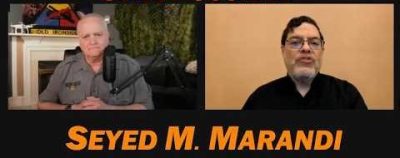
Can the U.S. Afford to Annihilate Iran?
or go to
Aletho News Archives – Video-Images
From the Archives
Sanctions, War and the Policy of Dual Containment
By SASAN FAYAZMANESH | March 17, 2008
It is now nearly three decades since the Unites States adopted the policy of dual containment of Iran and Iraq. While much has been written about the containment of Iraq, there has been very little in-depth analysis of this policy when it comes to Iran. In a book that is going to be released on March 31, 2008, entitled The United States and Iran: Sanctions, Wars and the Policy of Dual Containment (Routledge), I attempt to address this shortcoming by investigating when and why the US policy of containment of Iran came about, how it evolved, and where it stands today.[1] To the extent that Israel has been involved in US policy making, the study will also include the role that Israel has played in the containment of Iran. Also, since the fate of Iran has been inextricably linked to that of Iraq, occasionally the investigation will overlap with the containment of Iraq.
The policy of dual containment of Iran and Iraq originated during the Carter Administration, but it was not until the Clinton Administration that the expression “dual containment” became popular. … continue
Blog Roll
 Aletho News
- Can the U.S. Afford to Annihilate Iran? /Seyed M. Marandi
- Elmo Sold mRNA Jabs to Your Toddler. Now They Are “Off-Label.”
- British state targets Palestine Action with yet another crooked trial
- Americans are paying the price to preserve Israel’s nuclear hegemony
- Resistance factions are necessary to ensure a permanent US Iraq withdrawal
- How Israel destabilizes the Middle East: Denying sovereignty and the right to exist
- Europe’s Establishment Is Embracing War – and Losing Voters
- NATO chief advocates war of aggression
- No Vote, No Representation, No State: Democracy, Israeli Style
- Zionist Bought Senate Blocks Information About American Citizens Killed By Israel
- If Americans Knew
- Israeli Soldiers Abduct At Least 22 Across Occupied West Bank
- Eight Palestinians Killed in Israeli Attacks on Gaza
- Israeli former leaders and security chiefs threaten legal action over ‘Jewish terrorism’
- Israel map in LA Times ad includes all land from the river to the sea
- Inside Lebanon’s 200-page dossier on Israeli war crimes
- Flydubai, genocide, settler violence, Trump abuse of power to deport – Daily Update
- Counting Antisemitic Incidents: What the ADL Audit Reveals — and Obscures
- Mamdani releases plan to combat antisemitism and hate crimes in New York City
- Iran’s Revolutionary Guards Publish Letter to the American People
- DMFI launches $1 million ad campaign supporting Virginia’s Elaine Luria
- No Tricks Zone
- Green Energy Debacle: German Expert Professor Fritz Vahrenholt Warns Of Severe Economic And Social Consequences
- Two More Paleo Reconstructions Affirm Meters-Higher Sea Levels Across Ireland, Brazil 7000-6000 Years Ago
- New Study: Earth And Venus Surface Warmth Largely Explained By Convection And Lapse Rate, Not CO2 Or Radiation
- 2025 Nature Paper Claiming Worsening Global Drought Gets RETRACTED …Heavily Flawed
- New Study: ‘Global Drought Shows No Detectable Recent Acceleration Under Climate Warming’
- Economic Masterminds: German Socialists Suggest Taxing Productivity Gains Stemming From Using AI
- The South China Sea Has Not Been Cooperating With The Climate Change Narrative
- Energy Crisis: Germany Enters Heating Season With Historically Low Gas Reserve Fill Levels
- New Study: The Antarctic Ice Sheet Gained Mass From 2020-2024 Due To Staggering Snow And Ice Accumulation
- Study: Ocean Heating Rates From Thousands Of Years Ago ‘Dwarf’ Modern Ocean Heating Rates

