Russia opposes any sanctions on Iran over missile tests

Russia’s envoy to the United Nations Vitaly Churkin
Press TV – March 14, 2016
Russia opposes the imposition of any new sanctions on Iran over its recent ballistic missile tests, saying the missile launches did not violate UN resolutions.
In response to a question on whether new sanctions should be imposed on Iran over its recent missile tests, Russia’s envoy to the United Nations Vitaly Churkin said Monday, “The clear and short answer is no.”
He added that Iran did not breach the Security Council Resolution 2231 that endorsed a nuclear agreement between the Islamic Republic and the P5+1 group of countries on July 14, 2015.
Resolution 2231 (2015) provides for the termination of the provisions of previous Security Council resolutions on the Iranian nuclear program and establishes specific restrictions that apply to all states without exception.
The resolution calls upon Iran not to undertake any activity related to ballistic missiles designed to be capable of delivering nuclear weapons, including launches using such ballistic missile technology.
The Islamic Revolution Guards Corps (IRGC) successfully test-fired two more ballistic missiles on March 9 as part of military drills to assess the IRGC’s capabilities. The missiles dubbed Qadr-H and Qadr-F were fired during large-scale drills, code-named Eqtedar-e-Velayat.
On March 8, Iran fired another ballistic missile called Qiam from silo-based launchers in different locations across the country.
On January 16, Iran and the five permanent members of the UN Security Council plus Germany – started to implement the Joint Comprehensive Plan of Action (JCPOA).
After the JCPOA went into effect, all nuclear-related sanctions imposed on Iran by the European Union, the Security Council and the US were lifted. Iran, in return, has put some limitations on its nuclear activities.
Iranian Foreign Ministry spokesman, Hossein Jaberi Ansari, said on March 10 that the test-fire of ballistic missiles was “neither inconsistent with Iran’s commitments under the JCPOA, nor is it against the Security Council Resolution 2231.”
Libya military intervention needs UN approval, says Russian FM
Press TV – March 14, 2016
Russia’s Foreign Minister Sergei Lavrov says any military operation in Libya requires the approval of the United Nations Security Council (UNSC).
Lavrov said during a joint press conference in Moscow with visiting Tunisian Foreign Minister Khemaies Jhinaoui on Monday that Russia is aware of some plans for military involvement in Libya, but insisted that those plans could be implemented only with the permission of the 15-member council.
“We know about what’s being discussed openly and not so openly on plans of military intervention, including with the situation in Libya. Our common position is that this is possible only under the UN Security Council’s decision,” Lavrov said.
The top Russian diplomat also noted that a possible mandate for an operation against the terrorists in Libya must be defined unambiguously so as not to allow misinterpretations.
Russia says that the US-led military alliance NATO abused a United Nations resolution in 2011 to protect Libyan civilians from slain Libyan dictator Muammar Gaddafi’s forces in order to pursue regime change and political assassinations during a popular uprising across the North African country.
The remarks come as New York Times recently reported that the Pentagon and the highly secretive Joint Special Operations Command have provided the White House with “the most detailed set of military options yet” in Libya.
France’s Le Monde newspaper also reported last month that the country’s special forces and members of the country’s external security agency Directorate-General for External Security (DGSE) were in Libya for “clandestine operations” in cooperation with the US and Britain.
Meanwhile, a UN panel is also investigating claims that Turkey, the United Arab Emirates (UAE) and Sudan have violated an existing arms embargo by providing weapons to warring groups operating in Libya.
In mid-February, Libya’s internationally recognized Prime Minister Abdullah al-Thinni accused Ankara of interference in his country’s internal affairs.
Since 2014, when militants seized the capital Tripoli, Libya has had two parallel parliaments and governments.
Daesh took advantage of the chaos and captured Libya’s northern port city of Sirte in June 2015, almost four months after it announced its presence in the city, and made it the first city to be ruled by the militant group outside of Iraq and Syria.
Lavrov says has evidence of Turkey forces on Syria soil
Press TV – March 13, 2016
Russian Foreign Minister Sergei Lavrov says Moscow has evidence that Turkish forces are on Syrian territory despite Ankara’s denial of troops’ entry to the war-torn Arab country.
Lavrov made the remarks in an interview with Ren-TV that was broadcasted on Sunday.
Last December, Moscow also said it has evidence Turkey is involved in the smuggling of oil from areas held by Daesh in Iraq and Syria. Ankara has strongly rejected the claim.
Russian Defense Ministry officials showed satellite images at a briefing in Moscow, revealing that tanker trucks loaded oil at installations controlled by Daesh in Syria and Iraq, before entering neighboring Turkey.
Turkish Defense Minister Ismet Yilmaz has rejected that Turkish forces have entered Syrian territory to help foreign-backed militants fighting against the Syrian government. Last month, Turkish Foreign Minister Mevlut Cavusoglu, however, said Saudi Arabia and his country could launch a ground operation in Syria.
Also on Sunday, Lavrov referred to Turkey’s shelling of Kurdish positions in Syria and called Ankara’s actions on the border with Syria “creeping expansion.”
The Russian foreign minister further noted that despite Ankara’s opposition, Moscow will call on the United Nations to invite Kurdish groups to a new round of talks between the Syrian government and opposition groups which is scheduled for Monday in Geneva, Switzerland.
Turkey’s tanks have shelled positions of Kurdish People’s Protection Units, also known as YPG, over the past few months, accusing them of having links to the Kurdistan Workers’ Party (PKK) militant group that has been fighting for an autonomous Kurdish region inside Turkey since the 1980s.
The YPG, which is nearly in control of Syria’s entire northern border with Turkey, has been fighting against Daesh.
Lavrov also said in the Sunday interview that Moscow was ready to coordinate its operations in Syria with the US so that the northern city of Raqqah could be freed from Takfiri militants.
Daesh has seized parts of Iraq and Syria, where it has been engaged in bloody acts of terrorism against people of all communities.
US Foreign Policy Gurus Say Souring Relations with Russia Was Washington’s Fault

By Andrei AKULOV – Strategic Culture Foundation – 13.03.2016
It was quite different in the 1990s — early 2000s. Significant improvements were achieved in the relations between the US and Russia, including in the sphere of military cooperation. Those days there was no doubt the Russia-US relationship had a great future.
The military met each other as friends and allies to discuss what could be done to boost cooperation and prepare for joint actions to counter terrorist threats. Then the process got stalled. The relations deteriorated. All the efforts applied went down the drain. What really caused it to happen? Today US foreign policy old timers and savvies have something to say about it.
Consistent disregard for Russia’s interests by the US, as well as Washington’s dismissive attitude towards Moscow in the post-Cold War era, have led to strained relations between the two, former US Defense Secretary William Perry told The Guardian on March 9.
Perry said that a complete lack of regard for Russia as a power or a dialogue partner from Washington officials played a crucial role in this reversal.
According to the opinion of former US Defense Chief, reckless expanding NATO, making plans to deploy a missile defense system in Eastern Europe, and supporting the so-called «color revolutions» in former Soviet republics were all steps in the wrong direction, which were all taken without ever even considering Russia’s concerns.
Perry also denounced the George W. Bush administration’s decision to station a US missile defense system in eastern European countries – particularly in Poland. He also emphasized that the US support of the so called «color revolutions», was another serious blow to bilateral relations between Moscow and Washington.
Jack F. Matlock Jr., ambassador to the USSR from 1987 to 1991 and the author of the book titled Reagan and Gorbachev: How the Cold War Ended, has his own views on the matter.
According to him, after the USSR ceased to exist the United States insisted on treating Russia as the loser. The former ambassador writes that Russian President Vladimir Putin was the first foreign leader to call and offer support when terrorists attacked the United States on Sept. 11, 2001. He cooperated with the United States when it invaded Afghanistan, and he voluntarily removed Russian bases from Cuba and Cam Ranh Bay in Vietnam. In return, he got further expansion of NATO in the Baltics and the Balkans, and plans for American bases there; withdrawal from the Anti-Ballistic Missile Treaty; invasion of Iraq without UN Security Council approval; overt participation in the «color revolutions» in Ukraine, Georgia and Kyrgyzstan; and then, probing some of the firmest red lines any Russian leader would draw, talk of taking Georgia and Ukraine into NATO.
Speaking at the meeting of the Committee for the Republic, an organization established by former diplomats and government officials, Mr Matlock went on to lambaste Obama for using the State of the Union to personally attack Russian President Putin.
«His comments were totally out of place», Matlock said. He also attacked Congress for their own interference in passing the Magnitsky Act. «The Russians are reacting to a policy of insufferable arrogance and humiliation», he said. He criticized the whole policy with regard to Ukraine and «regime change». «If you can think that you can solve all problems by removing a leader, you’re wrong. Didn’t we learn the lessons from Iraq?» asked the former ambassador.
Henry Kissinger is clearly still one of America’s foremost foreign policy gurus who served as National Security Advisor and later concurrently as United States Secretary of State in the administrations of presidents Richard Nixon and Gerald Ford. He believes that instead of trying to break Russia, America’s goal should be to «integrate» it into the international order taking Moscow’s interests into account.
According to the US foreign policy vet, that would begin with recognition of the realities of Russian power and interests, treating Russia like the great power that it is, and on that foundation exploring «whether their concerns can be reconciled with our necessities».
The opportunities to change the relationship for the better are here to stay.
On March 3, Russian Foreign Minister Sergey Lavrov stressed that a policy of confrontation with the West is not something that Moscow wants. «We are not seeking confrontation with the United States, or the European Union, or NATO. On the contrary, Russia is open to the widest possible cooperation with its Western partners. We continue to believe that the best way to ensure the interests of the peoples living in Europe is to form a common economic and humanitarian space from the Atlantic to the Pacific, so that the newly formed Eurasian Economic Union could be an integrating link between Europe and Asia Pacific», the Russian foreign policy chief wrote in an article.
US candidates in the presidential race (except Republican candidate Donald Trump), as well as many in the Obama administration, find the idea of trying to work with Russia appalling when they speak in public. There is a reason to believe they don’t entirely share that view, but at least that’s what they say. No matter who wins in November, a new president will have to shape new policy on Russia. He or she will have to make decisive choices. It presupposes immense responsibility. The Americans are normally reluctant to admit mistakes, but it’s important to understand what is the root of the problem. That’s when the opinion of foreign policy gurus stands one in good stead.
Russia says no to Syrian federalization as former NATO commander talks partition
RT | March 12, 2016
While media rumors claim that Moscow sees a post-crisis Syria as a federalized state, Russia denies holding such an opinion. At the same time, a ‘plan B’ mentioned by John Kerry to break up the Arab country has gained backing from an ex-NATO commander.
Reuters reported on Thursday that Russia was engaged in talks with other global powers on the possibility of turning Syria into a federal state.
“While insisting on retaining the territorial integrity of Syria, so continuing to keep it as a single country, of course there are all sorts of different models of a federal structure that would, in some models, have a very, very loose center and a lot of autonomy for different regions,” a diplomatic source at the UN Security Council told the agency.
However, the Kremlin responded by saying that no such talks were on the table – a message that was emphasized by Russia’s Foreign Ministry on Saturday.
“That is total nonsense. We are not voicing such ideas; they must come from the Syrians themselves – it is up to them to discuss and agree on such things,” deputy foreign minister Mikhail Bogdanov said, as cited by TASS.
Bogdanov added that, from Russia’s point of view, it is better to maintain Syria’s territorial integrity and keep its people intact.
Meanwhile, the discussion in the US has moved further than mere federalization.
Former NATO Supreme Allied Commander Europe James Stavridis wrote in his article for the journal Foreign Policy that dividing Syria into three parts – an Alawite state, a Sunni state, and a Kurdish state – is a viable idea.
“Despite the negatives, partitions can be used with good effect to move warring parties to opposite sides of the battle space. For a population that is already almost 50 percent displaced, frankly, there is not much to lose,” Stavridis wrote.
“A partition could provide a simple chance to leave a refugee camp or avoid a long and dangerous trek to an asylum state — in effect creating the elusive ‘safe zones’ that the international community has yet to put in place,” the retired US navy admiral added.
The expert echoed US State Secretary John Kerry, who said that Syria could be partitioned as a “Plan B” in the event that the ceasefire fails.
“It may be too late to keep it as a whole Syria if we wait much longer,” Kerry told the US Senate foreign relations committee on February 23.
Stavridis, however, says that because of the risk of Sunni extremists seizing large territories and Russia’s support for Syrian President Bashar Assad, the most likely scenario includes a “combined campaign to defeat the Islamic State and a federal system allowing a high degree of local autonomy.”
Syrian Foreign Minister Walid Moallem rejected a peaceful solution based on the federalization of the country, Xinhua News reported on Saturday.
His comments came as a new round of UN-brokered talks between the Syrian government and opposition are to be launched in Geneva on Monday. The parties are set to discuss the creation of a new Syrian constitution and government, as well as parliamentary and presidential elections.
Moallem also said that the Syrian government would not discuss the possibility of Assad stepping down.
“We will not talk to anyone who talks about the position of the presidency,” Foreign Minister Walid Moualem said during a televised news conference in Damascus, Reuters reports. “I advise them that if this is their thinking, they shouldn’t come to the talks. They must abandon these delusions.”
The Syrian opposition accused Damascus of putting the talks in jeopardy by making such a statement.
“Moualem is stopping Geneva before it starts,” Monzer Makhous, a member of the opposition’s High Negotiations Committee, said.
On February 22, President Assad called for new parliamentary elections to be held on April, 13, 2016. This came just hours after Moscow and Washington announced that they had worked out a ceasefire plan for the Arab country, which was implemented four days later.
Russia to disarm world’s largest nuclear ballistic missile submarine
RT | March 11, 2016
In 2016 Russia is set to disarm the missile system of the Typhoon-class Arkhangelsk submarine, the largest in the world. The disarmament will be carried out in accordance with the New START agreement between Moscow and Washington.
Working in accordance with the New START treaty between Russia and US, the country’s leading Zvezdochka shipyard in the northern Russian city of Severodvinsk will disarm the missile system of the Arkhangelsk submarine, the shipyard’s press service told TASS news agency on Friday.
“We will remove the covers of the submarine’s missile launchers and seal them, thus making it impossible to use the vessel’s missile weapons,” the press service said. “We are not talking yet about dismantling the submarine itself. The tender for this procedure has not yet been announced.”
According to the data published by the Russian nuclear agency Rosatom, the sub’s disarmament is estimated to cost some 28 million rubles (about US$ 400,000).
The nuclear-powered ballistic missile submarine Arkhangelsk TK-17 was designed in 1987 under the Project 941 ‘Shark’ (or ‘Typhoon’ according to NATO classification). The project was aimed to equip the Soviet Navy with nuclear-powered ballistic missile submarines, and resulted in the creation of the largest class of submarines ever built – large enough to accommodate decent living facilities for the crew of 179 when submerged for months on end, and to stock an arsenal of 20 intercontinental ballistic missiles.
Three of the six Typhoon-class submarines built in the 1980s have already been dismantled at the shipyards in Severodvinsk. Of the three that remain, Arkhangelsk and Severstal are set to be dismantled. Dmitri Donskoi just recently underwent a modernization procedure and is now equipped to test the latest sea-based missile system Bulava.
The New START treaty (on Measures for the Further Reduction and Limitation of Strategic Offensive Arms), which was designed to reduce American and Russian nuclear stockpiles, came into force in 2011. It replaced the previous 1991 agreement, introducing lower ceilings for the numbers of warheads and delivery systems deployed.
Commenting on the progress made on the treaty’s fifth anniversary in February, US Secretary of State John Kerry complimented both sides on successful cooperation in the field.
“[New START treaty] continues to be an area of cooperation and continued dialogue between the United States and Russia. I share President Obama’s strong belief that our two countries, which ushered in the era of nuclear arms, have a special responsibility to lead the world beyond it,” he said in a statement.
However, the latest moves by the US – such as plans to upgrade 180 B61s strategic bombs stocked in European air bases to a modernized B61-12 version – have raised doubts whether the US adheres to the nuclear arms non-proliferation treaty (NPT).
Opponents of the program have argued that instead of scaling down atomic weapons stockpiles in accordance with the NPT, the overhaul is actually creating more states hosting modern nuclear weapons – a provocation that theoretically weakens Russia’s deterrent.
Moscow keeps the presence of American nuclear weapons in Europe in mind when shaping its own military policies as reflected in Russia’s newest military doctrine published in 2014, spokesperson for the Foreign Ministry Maria Zakharova told German television last year.
“The comprehensive analysis of the situation points to the threat posed by the increasing military capability of NATO and its endowment with global functions, which it performs in violation of the international law, as well as the encroachment of the military infrastructure of NATO members on the borders of the Russian Federation,” she said.
Read more:
Is the world ready for further reduction of nuclear weapons?
NATO eyes long-term breach of nuke non-proliferation treaty, Russia to respond – senior diplomat
Russian Ties in Central Asia Threaten US Interests – CENTCOM Chief Nominee
Sputnik – 09.03.2016
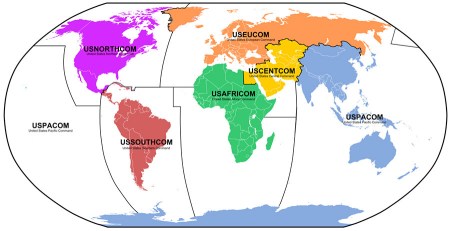
WASHINGTON — CENTCOM commander nominee General Joseph Votel said that Russia’s trade and military relationships with neighboring Central Asian states threaten US interests in the region.
Russia’s trade and military relationships with neighboring Central Asian states threaten US interests in the region, US Central Command (CENTCOM) commander nominee General Joseph Votel said in testimony to the Senate Armed Services Committee on Wednesday.
“Russia has moved to assert itself in Central Asia through a combination of military, economic and informational means in an effort to resurrect its great power status and hedge against perceived instability emanating from Afghanistan,” Votel stated.
After 14 years, the United States has reduced its military presence in Afghanistan to 9,800 troops, with plans to reduce troop levels to 5,500 by 2017. In the past year, Taliban militants and Daesh terrorist fighters have been on the rise in Afghanistan, prompting US commander of operations there, General John Nicholson, to describe the conditions in the country as “deteriorating.”
Votel further argued that Russian security partnerships with former Soviet states in Central Asia “make it difficult for the United States” to deepen defense ties in the region, which he described as a “key US interest.”
Since 1992, Russia has partnered with neighboring nations in the Collective Security Treaty Organization (CSTO). Russia also founded the Eurasian Economic Union in 2014, to further regional economic development among member nations including Armenia, Belarus, Kazakhstan and Kyrgyzstan.
Did the Saudis Just Win? 5 Signs That the Oil Glut Crisis May Be Over
Sputnik – March 8, 2016
Saudi Arabia’s alleged strategy of pushing high-cost oil producers off the market may have worked, as investors have shifted their focus away from high-cost shale oil operations and large multinationals are increasingly looking at short-term projects.
Although hedge funds such as Goldman Sachs are warning against thinking that commodities including oil are facing a long-term rally, there are several signs that oil prices may have already hit bottom.
1. OPEC Rebalance
News of a looming oil deal among OPEC countries may have helped oil prices begin a stable, nearly month-long rally on February 12. Days earlier, Igor Sechin, head of Rosneft, Russia’s biggest oil company, said it would be open to the idea of an output cut and OPEC’s Venezuela made the first concrete proposal the following day.
Unlike OPEC countries, Russia’s oil producers are predominantly private companies responsible to shareholders, although some, such as Rosneft, also have a significant share of government control. The new deal, however, may lead to a rebalance of OPEC influence by including Russia and Mexico, both of which held negotiations, while members such as Venezuela, which has the world’s largest oil reserves, could lose standing.
At the same time, Russian oil companies are starting to diversify internationally, with Lukoil looking into Iranian assets while Rosneft begins drilling off the coast of Vietnam to regain positions potentially lost as a result of US sanctions.
2. Shale Crash
Despite a rise in prices over the past few weeks, US shale oil companies announced that they would cut output as a result of major losses.
Companies such as Chevron and ConocoPhillips may actually compete against shale oil companies as they cut investments in deepwater oil extraction, giving domestic shale producers more opportunities to cut losses and liquidate their assets.
In the long term, however, the effect may be temporary, as the lifting of the US oil export ban could lead major US companies to increase exports.
3. Chinese Weather
Despite fears regarding China’s economy and predictions of an economic “perfect storm,” the fears did not materialize. As a result, volatility unseen since the 2008-2009 financial crisis began to fall, allowing oil prices to regain stability and head higher.
China’s troubles still prevail, but disruptions in the country’s stock market proved to not significantly impact economic fundamentals, in an economy which still suffers more from overinvestment as a result of government planning than from problems raising capital.
4. Iranian supplies
While Iran was ready to ship oil as soon as sanctions were lifted, with long-term supplies stored in tankers, the introduction of Iranian oil did not greatly impact the European oil market, as the country shipped less than a third of the oil it promised to export.
Low oil prices may have also been behind Iran’s less-than-spectacular results when it came to raising capital for new oil production, which the country plans to grow to pre-sanctions highs.
5. US Inventories May No Longer Matter
Although the oil glut prevails, in the United States, oil prices have continued steadily rising even after announcements that US inventories grew nearly three times more than expected. The country’s oil producers have actually begun eyeing oil exports to Europe, which faces supply disruptions as a result of an accident in Nigeria and financial trouble among offshore North Sea oil operations.
At the same time, major oil companies are increasingly wary of long-term investments which could be subject to future volatility.
The situation suggests that Saudi Arabia’s alleged strategy of forcing out high-cost operations for both shale and offshore projects may have actually worked, and while the US would face beneficial export conditions while the glut is ongoing, consolidation and liquidation in the shale sector could bring back the pre-shale world while scaring off investors from higher-cost projects.
US B-52s to perform ‘not normal’ exercises in Norway
RT | March 3, 2016
Three B-52 Stratofortress bombers that have moved from the US to Europe are set to participate in military exercises in Norway. A top US commander characterized the redeployment as “not normal.”
The move, which began last week with the bombers and 200 support airmen being stationed in Spain, is part of the Obama administration’s build-up of US forces in Europe in response to European countries’ anxiety over perceived Russian aggression.
However, US Air Force General Philip Breedlove said Tuesday that while the deployment of the B-52s was abnormal, the aircraft had been scheduled for NATO exercises and the move was not prompted by the actions of Russia, the Washington Post reported.
“It is a part of the exercise objectives… not a part of any response [to Russian actions],” Breedlove insisted, according to Sputnik.
The three bombers are assigned to the 2nd Bomb Wing and were rebased from Barksdale Air Force Base, Louisiana on Friday, and will temporarily stay at Spain’s Morón Air Base.
“Strategic bomber deployments enhance the readiness and training vital to rapidly projecting global power and responding to any potential crisis or challenge,” Admiral Cecil D. Haney, the commander of US Strategic Command, said in a statement.
The bombers provide a unique complement to the nuclear delivery capabilities of intercontinental ballistic missiles and ballistic missile submarines, Haney added.
The Norwegian exercise, called Cold Response, is meant to practice “high-intensity operations in winter conditions,” according to the Pentagon. More than a dozen NATO countries will participate in the rehearsal that is meant to underscore NATO’s ability “to defend against any threat in any environment.”
In February, Secretary of Defense Ashton Carter announced that US military spending on Europe would be more than quadrupled from $689 million in 2016 to $3.4 billion in 2017.
Featured Video

Diplomacy is Now a Crime in Britain / Ian Proud
or go to
Aletho News Archives – Video-Images
From the Archives
Genetic baloney in thick slices
MAYBE COULD BE INC.
By Jon Rappoport | No More Fake News | July 8, 2021
Gene research companies tend to come and go. They start out banging and popping like fireworks in the sky, and then they fade out—selling themselves to larger outfits who’ve hired better liars…
Once upon a time, it sounded easy. Start with a disease, find the gene responsible for the disease, and correct the problem.
Then, researchers wondered, was disease the result of one gene or a group of genes acting together?
Either way, the proof would be in devising cures for diseases using gene therapy. “Not yet, but soon…”
And regardless, the major need was: money. Lots and lots of money.
This need required good PR people. “We have to pump up the idea that we’re on the edge of tremendous breakthroughs. We’re always on that edge…”
This hype also needed to obscure the fact that there wasn’t (and isn’t) ANY gene cure for ANY disease. … continue
Blog Roll
 Aletho News
- Diplomacy is Now a Crime in Britain / Ian Proud
- UK Government Body Kept Files on People Criticizing Prevent Program
- US military withdrawal from Iraq and the collapse of US-Israeli hegemonic project in West Asia
- What does Europe want – a war with Russia?
- She Followed the Actual Data on COVID Vaccines and Masks — Her Career Took a Huge Hit
- Florida AG Sues Pfizer, Bourla Over Deceptive Marketing of COVID Vaccines
- Von der Leyen gifts her spin doctor a job for life
- 10K More U.S. Troops Deploy as Trump Weighs New Iran Strikes /Suliaman Ahmed
- Iranian crew declared Dena training vessel ‘unarmed’ to US warship before deadly torpedo strike: Report
- Iran’s NPT debate moves beyond parliament
- If Americans Knew
- An error has occurred; the feed is probably down. Try again later.
- No Tricks Zone
- Green Energy Debacle: German Expert Professor Fritz Vahrenholt Warns Of Severe Economic And Social Consequences
- Two More Paleo Reconstructions Affirm Meters-Higher Sea Levels Across Ireland, Brazil 7000-6000 Years Ago
- New Study: Earth And Venus Surface Warmth Largely Explained By Convection And Lapse Rate, Not CO2 Or Radiation
- 2025 Nature Paper Claiming Worsening Global Drought Gets RETRACTED …Heavily Flawed
- New Study: ‘Global Drought Shows No Detectable Recent Acceleration Under Climate Warming’
- Economic Masterminds: German Socialists Suggest Taxing Productivity Gains Stemming From Using AI
- The South China Sea Has Not Been Cooperating With The Climate Change Narrative
- Energy Crisis: Germany Enters Heating Season With Historically Low Gas Reserve Fill Levels
- New Study: The Antarctic Ice Sheet Gained Mass From 2020-2024 Due To Staggering Snow And Ice Accumulation
- Study: Ocean Heating Rates From Thousands Of Years Ago ‘Dwarf’ Modern Ocean Heating Rates

