Russia’s new military doctrine lists NATO, US as major foreign threats
RT | December 26, 2014
Russia has adopted an updated version of its military doctrine, which reflects the emergence of new threats against its national security. NATO military buildup and American Prompt Global Strike concept are listed among them.
The new doctrine was approved on Friday by President Vladimir Putin. Its core remains unchanged from the previous version. The Russian military remains a defensive tool which the country pledges to use only as a last resort.
Also unchanged are the principles of the use of nuclear weapons which Russia adheres to. Their primary goal is to deter potential enemies from attacking Russia, but it would use them to protect itself from a military attack – either nuclear or conventional – threatening its existence.
The new sections of the doctrine outline the threat Russia sees in NATO’s expansion and military buildup and the fact that the alliance is taking upon itself “global functions realized with violation of international law.”
The doctrine lists among major foreign military threats “the creation and deployment of global strategic anti-ballistic missile systems that undermine the established global stability and balance of power in nuclear missile capabilities, the implementation of the ‘prompt strike’ concept, intent to deploy weapons in space and deployment of strategic conventional precision weapons.”
Another new point in the doctrine is that one of the Russian military’s goals is to protect national interests in the Arctic region.
The document also points to the threat of destabilization of countries bordering Russia or its allies and deployment of foreign troops in such nations as a threat to national security.
Domestically, Russia faces threats of “actions aimed at violent change of the Russian constitutional order, destabilization of the political and social environment, disorganization of the functioning of governmental bodies, crucial civilian and military facilities and informational infrastructure of Russia,” the doctrine says.
Moscow sees international cooperation with countries sharing its effort to increase security, particularly members of BRICS, the OSCE, the Shanghai Cooperation Organization and others as the key to preventing military conflicts, the doctrine states.
Traditional threats that Russia must deal with mentioned in the doctrine include extremism and terrorism, proliferation of weapons of mass destruction and rocket technology and actions of foreign intelligence services.
The document notes that modern threats are increasingly drifting from a military nature to informational, and states that the likelihood of anyone launching a fully-fledged war against Russia is decreasing.
The Liberal Idiocy on Russia/Ukraine
By Robert Parry | Consortium News | December 22, 2014
Among honest and knowledgeable people, there really isn’t much doubt about what happened in Ukraine last winter. There was a U.S.-backed coup which ousted a constitutionally elected president and replaced him with a regime more in line with U.S. interests. Even some smart people who agree with the policy of going on the offensive against Russia recognize this reality.
For instance, George Friedman, the founder of the global intelligence firm Stratfor, was quoted in an interview with the Russian liberal business publication Kommersant as saying what happened on Feb. 22 in Kiev – the overthrow of President Viktor Yanukovych – “really was the most blatant coup in history.”
Brushing aside the righteous indignation and self-serving propaganda, Stratfor’s Friedman recognized that both Russia and the United States were operating in what they perceived to be their own interests. “The bottom line is that the strategic interests of the United States are to prevent Russia from becoming a hegemon,” he said. “And the strategic interests of Russia are not to allow the U.S. close to its borders.”
Another relative voice of reason, at least on this topic, has been former Secretary of State Henry Kissinger who – in an interview with Der Spiegel – dismissed Official Washington’s conventional wisdom that Russian President Vladimir Putin provoked the crisis and then annexed Crimea as part of some diabolical scheme to reclaim territory lost when the Soviet Union collapsed in 1991.
“The annexation of Crimea was not a move toward global conquest,” the 91-year-old Kissinger said. “It was not Hitler moving into Czechoslovakia” – as former Secretary of State Hillary Clinton had suggested.
Kissinger noted that Putin had no intention of instigating a crisis in Ukraine: “Putin spent tens of billions of dollars on the Winter Olympics in Sochi. The theme of the Olympics was that Russia is a progressive state tied to the West through its culture and, therefore, it presumably wants to be part of it. So it doesn’t make any sense that a week after the close of the Olympics, Putin would take Crimea and start a war over Ukraine.”
Instead Kissinger argued that the West – with its strategy of pulling Ukraine into the orbit of the European Union – was responsible for the crisis by failing to understand Russian sensitivity over Ukraine and making the grave mistake of quickly pushing the confrontation beyond dialogue.
While the comments by Henry Kissinger and Stratfor’s Friedman reflect the reality of what demonstrably happened in Ukraine, an entirely different “reality” exists in Official Washington. (Note that both interviews were carried in foreign, not U.S. publications.) In the United States, across the ideological spectrum, the only permitted viewpoint is that a crazed Putin launched a war of aggression against his neighbors and must be stopped.
Facts, such as the declaration in September 2013 from a leading neocon, National Endowment for Democracy President Carl Gershman, that Ukraine was “the biggest prize” and an important step toward ousting Putin in Russia, do not fit into this story frame. [See Consortiumnews.com’s “A Shadow U.S. Foreign Policy.”]
Nor do the comments of neocon Assistant Secretary of State for European Affairs Victoria Nuland, who was caught in a pre-coup phone call, handpicking Ukraine’s future leaders and discussing how to “glue this thing.” Nor her public statements about the United States investing $5 billion in Ukraine’s “European aspirations.”
White Hats, Black Hats
Instead of dealing with what actually happened in Ukraine, U.S. pundits and politicians – from conservative to liberal – have bought into a fantasy version of events in which the coup-makers all wore white hats and the elected president and his eastern Ukrainian supporters – along with Putin – all wore black hats.
But there are, as always, rhetorical differences across the U.S. partisan liberal-conservative divide. On Ukraine, the American Right urges an escalation of military tensions against Russia while chiding President Barack Obama for weakness (when compared with Putin’s toughness) – and liberals cheer on Obama’s supposed success in driving the Russian economy into a painful recession while accusing the Right of having a man-crush on Putin.
This liberal “theme” of jabbing the Right for its alleged love of Putin takes the Right’s comments about his forcefulness out of context, simply to score a political point. But the Right-loves-Putin charge has become all the rage with the likes of Paul Krugman, Thomas L. Friedman and other liberals who are bubbling with joy over the economic suffering being inflicted on the people of Russia and presumably eastern Ukraine.
Krugman, who is quickly jettisoning his reputation for thoughtfulness, published a second column on this topic in a row, showing that he has fully bought into all the propaganda “themes” emanating from the U.S. State Department and the compliant U.S. mainstream news media.
In Krugman’s mind, it was Putin who instigated the crisis with the goal of plundering Ukraine. Operating from that false hypothesis, Krugman then spins off this question:
“why did Mr. Putin do something so stupid? … The answer … is obvious if you think about Mr. Putin’s background. Remember, he’s an ex-K.G.B. man — which is to say, he spent his formative years as a professional thug. Violence and threats of violence, supplemented with bribery and corruption, are what he knows.
“And for years he had no incentive to learn anything else: High oil prices made Russia rich, and like everyone who presides over a bubble, he surely convinced himself that he was responsible for his own success. At a guess, he didn’t realize until a few days ago that he has no idea how to function in the 21st century.”
But Krugman is not only operating from a false hypothesis – the reality was that the Ukraine crisis was forced on Putin, not that he went seeking it – Krugman also has a simplistic view of the KGB, which, like the American CIA, certainly had its share of thugs but also had a significant number of smart analysts. Some of those KGB analysts were in the forefront of recognizing the need for the Soviet Union to reform its economy and to reach out to the West.
Putin was generally allied with the KGB faction which favored “convergence” with the West, a Russian attitude that dates back to Peter the Great, seeking Russia’s acceptance as part of Europe rather than being shunned by Europe as part of Asia.
Putin himself pined for the day when Russia would be accepted as a part of the First World with G-8 status and other big-power accoutrements. I’m told he took great pride in his success helping President Obama in 2013 resolve crises with Syria over the mysterious sarin-gas attack and with Iran over its nuclear program.
As Kissinger noted, Putin’s hunger for Western acceptance was the reason he obsessed so much over the Sochi Olympics – and even neglected the festering political crisis in neighboring Ukraine.
In other words, Paul Krugman doesn’t know what he’s talking about regarding Ukraine. His stab at offering a geopolitical analysis suffers from what an economist should recognize as “garbage in, garbage out.” [See also Consortiumnews.com’s “Krugman Joins the Anti-Putin Pack.”]
A Spreading Idiocy
Still, this liberal mindlessness appears to be catching. On Sunday, the New York Times’ star columnist Thomas L. Friedman weighed in with his own upside-down analysis, smirking about the economic suffering now being felt by average Russians because of the U.S.-led sanctions and the Saudi-spurred collapse of oil prices.
Friedman wrote:
“In March, the House Intelligence Committee chairman, Mike Rogers, was asked on ‘Fox News Sunday’ how he thought President Obama was handling relations with Russia versus how President Vladimir Putin had been handling relations with the United States. Rogers responded: ‘Well, I think Putin is playing chess, and I think we’re playing marbles. And I don’t think it’s even close.’
“Hmmm. Marbles. That’s an interesting metaphor. Actually, it turns out that Obama was the one playing chess and Putin was the one playing marbles, and it wouldn’t be wrong to say today that Putin’s lost most of his — in both senses of the word.”
Ha-ha-ha. Putin has lost his marbles! So clever! Perhaps it also wouldn’t be wrong to say that Tom Friedman has lost any credibility that he ever had by getting pretty much every international crisis wrong, most notably the U.S. invasion of Iraq in 2003 when he was just as smarmy in paving the way for that bloody catastrophe.
Washington Post liberal columnist E.J. Dionne Jr. also joined in the “group think” on Monday, writing:
“even … some of [Obama’s] older bets were paying off. The Russian economy is reeling from sanctions imposed in response to its invasion of Ukraine (and from low oil prices). An approach seen by its critics as not tough enough is beginning to show its teeth.”
Beyond the propagandistic quality of these columns – refusing to recognize the complex reality of what actually happened in Ukraine, including the overwhelming referendum by the voters of Crimea to secede from Ukraine and rejoin Russia – there is this disturbingly smug pleasure at how the U.S. actions are hurting the people of Russia.
Whatever you think of Putin, a key reason why he has remained so popular is that he brought some stability to the Russian economy after the “shock therapy” days of plunder under Boris Yeltsin when many Russians were pushed to the brink of starvation. Putin pushed back against some of the corrupt oligarchs who had amassed vast power under Yeltsin (while also striking alliances with others).
But the cumulative effect of a more stable Russian economy was that a fragile middle class was taking shape in a country that has notoriously failed to generate one over the centuries. Because of the U.S.-backed coup in Ukraine, which essentially forced Putin’s response and then led to Obama’s sanctions, the Russian middle class is losing its modest savings as the ruble’s value collapses.
In other words, the part of Russia’s population that could best propel Russia toward a more democratic and progressive future is being dismantled, in part, by punitive U.S. policies – while liberals Krugman, Friedman and Dionne celebrate.
Insider Rivalries
What really seems to matter to these pundits is getting a shot in at their conservative rivals, not the fate of average Russians. This attitude reminded me of an earlier phase of these mindless liberal-conservative food fights – in 1990 when conservative Robert Novak looked for ways to resolve Iraq’s invasion of Kuwait by accepting Saddam Hussein’s private offers to withdraw rather than resorting to war.
Yet, when Novak appeared on CNN’s “Capital Gang,” Al Hunt, a centrist who played the role of liberal pundit on the show, ridiculed the old “Prince of Darkness” for his uncharacteristic peaceful bent. Hunt hung the nickname “Neville Novak” around Novak’s neck, comparing him to British Prime Minister Neville Chamberlain who sought to appease Adolf Hitler before World War II.
When I later asked Hunt why he had derided Novak for looking at more peaceful solutions to an international crisis, Hunt defended the “Neville Novak” line by noting all the times that Novak had baited opponents for their softness against communism. “After years of battling Novak from the left, to have gotten to his right, I enjoyed that,” Hunt said.
Yet, the human consequences from the failure to resolve the Kuwait crisis peacefully have been almost incalculable. Beyond the hundreds of U.S. and coalition deaths and the tens of thousands of Iraqi soldiers and civilians killed, the Persian Gulf War set the stage for a decade of harsh economic sanctions against Iraq and marked a turning point for Saudi Osama bin Laden to begin targeting the United States.
Arguably, if Novak had been listened to – if Hussein’s peace feelers had been taken seriously – history might have taken a very different and less violent course. However, among Washington’s insiders, it seems that nothing is more important than their sparring with each other, in television and in print.
Now, these liberal columnists are enjoying bashing conservatives over their supposed love of Putin and their tolerance for Putin’s “invasion” of Ukraine. Not only are the likes of Paul Krugman, Thomas L. Friedman and E.J. Dionne Jr. spreading dangerous propaganda, they are setting the stage for a new Cold War and possibly even a nuclear confrontation.
~
Investigative reporter Robert Parry broke many of the Iran-Contra stories for The Associated Press and Newsweek in the 1980s. You can buy his latest book, America’s Stolen Narrative, either in print here or as an e-book (from Amazon and barnesandnoble.com).
Krugman Joins the Anti-Putin Pack
By Robert Parry | Consortium News | December 19, 2014
When America’s opinion-making herd gets running, it’s hard for anyone to get in the way regardless of how erroneous or unfair the reason for the stampede. It’s much easier – and career-wise safer – to join the pack, which is what New York Times columnist Paul Krugman has done regarding Russia, Ukraine and Vladimir Putin.
In the latest example of the New York Times’ endless Putin-bashing, Krugman begins his Friday column with what you might call a “negative endorsement” of the Russian president by claiming that ex-New York Mayor Rudy Giuliani has “an embarrassing crush on the swaggering statesman.”
But Krugman misleads his readers. Giuliani wasn’t really praising Putin when he said “that is what you call a leader” in commenting on Putin’s decisiveness. Some liberal defenders of President Barack Obama simply cherry-picked the quote to counter Giuliani’s attempt to disparage Obama by comparing Obama’s chronic indecisiveness to Putin’s forcefulness.
In the fuller context, Giuliani was not expressing a fondness for Putin at all. Indeed, he disparaged the Russian leader as “a bully” and urged a tough-guy response to Putin over Ukraine. “Instead of him pushing us around, we push him around,” Giuliani said in the Fox News interview. “That’s the only thing a bully understands.”
So, why did Krugman begin his Putin-bashing column by misrepresenting what Giuliani was saying? It may have been a form of “negative endorsement.” Since many American liberals hate Giuliani, Giuliani’s praise is supposed to translate into liberal hatred for Putin.
But “negative endorsements” are inherently unfair. Just because Josef Stalin might have liked Franklin Roosevelt and because we may hate Stalin, that doesn’t mean we should hate Roosevelt, too. The use of “negative endorsement” is akin to guilt by association. And, in this case, Krugman was playing fast and loose with the facts as well.
Krugman also opts for some of the most hyperbolic language that has been used in the U.S. mainstream media to distort events in Ukraine. For instance, Krugman claims that “Mr. Putin invaded Ukraine without debate or deliberation.” But that really isn’t true either.
The Ukraine crisis is far more complicated and nuanced than that, as Krugman must know. If he doesn’t, he should consult with fellow Princeton professor Stephen F. Cohen, who has bravely challenged the prevailing “group think” on both Ukraine and Russia.
Cohen, one of America’s premier Russia experts, has even warned that “American media coverage of Vladimir Putin … has so demonized him that the result may be to endanger U.S. national security. …
“[M]ainstream press reporting, editorials and op-ed articles have increasingly portrayed Putin as a czar-like ‘autocrat,’ or alternatively a ‘KGB thug,’ who imposed a ‘rollback of democratic reforms’ under way in Russia when he succeeded Boris Yeltsin as president in 2000. He installed instead a ‘venal regime’ that has permitted ‘corruptionism,’ encouraged the assassination of a ‘growing number’ of journalists and carried out the ‘killing of political opponents.’ Not infrequently, Putin is compared to Saddam Hussein and even Stalin.”
Yet, Cohen said, “there is no evidence that any of these allegations against him are true, or at least entirely true. Most seem to have originated with Putin’s personal enemies, particularly Yeltsin-era oligarchs who found themselves in foreign exile as a result of his policies – or, in the case of Mikhail Khodorkovsky, in prison. Nonetheless, U.S. media, with little investigation of their own, have woven the allegations into a near-consensus narrative of ‘Putin’s Russia.’” [For details from Cohen’s article, click here.]
‘Shock Therapy’
Indeed, much of what Krugman finds so offensive about Putin’s Russia actually stemmed from the Yeltsin era following the collapse of the Soviet Union in 1991 when the so-called Harvard Boys flew to Moscow to apply free-market “shock therapy” which translated into a small number of well-connected thieves plundering Russia’s industry and resources, making themselves billionaires while leaving average Russians near starvation.
When Putin succeeded Boris Yeltsin in 2000, Putin challenged some of the oligarchs and pushed others out of the political arena, while also moderating some of the extreme policies and thus making life somewhat better for the average Russian, thus explaining Putin’s broad popularity. Putin could be fairly criticized for not going further, but economist Krugman must surely know this history regarding how the Russian “kleptocracy” got started.
Yet, Krugman slides into the now common demonization of Putin. “Mr. Putin never had the resources to back his swagger,” Krugman smugly writes.
“It’s quite a comedown for Mr. Putin. And his swaggering strongman act helped set the stage for the disaster. A more open, accountable regime — one that wouldn’t have impressed Mr. Giuliani so much — would have been less corrupt, would probably have run up less debt, and would have been better placed to ride out falling oil prices. Macho posturing, it turns out, makes for bad economies.”
In other words, Krugman buys into the “group think” that blames Putin’s “macho posturing” over Ukraine for the current financial crisis in Russia, which has resulted from falling oil prices as well as the U.S.-led sanctions punishing Russia for its alleged “aggression” in Ukraine.
That puts Krugman in the same camp as the neocons who have pushed the bogus narrative that the megalomaniacal Putin is trying to reconstitute the Russian Empire. The actual facts, however, disprove that narrative. [See Consortiumnews.com’s “The Crazy US ‘Group Think’ on Russia.”]
Putin himself has a much better understanding of recent Russian history – and what Official Washington’s goals are regarding him and Russia – as he explained in an end-of-year news conference on Thursday.
Asked if the economic pain was the price for accepting Crimea back into Russia, Putin responded:
“No. This is not the price we have to pay for Crimea. … This is actually the price we have to pay for our natural aspiration to preserve ourselves as a nation, as a civilization, as a state. …
“I gave an example of our most recognizable symbol. It is a bear protecting his taiga. … [M]aybe it would be best if our bear just sat still. Maybe he should stop chasing pigs and boars around the taiga but start picking berries and eating honey. Maybe then he will be left alone.
“But no, he won’t be! Because someone will always try to chain him up. As soon as he’s chained they will tear out his teeth and claws. In this analogy, I am referring to the power of nuclear deterrence. As soon as – God forbid – it happens and they no longer need the bear, the taiga will be taken over. … And then, when all the teeth and claws are torn out, the bear will be of no use at all. Perhaps they’ll stuff it and that’s all.
“So, it is not about Crimea but about us protecting our independence, our sovereignty and our right to exist. That is what we should all realize.”
The Neo-Nazi Reality
There is another unpleasant reality about Ukraine that Krugman ignores — its neo-Nazi element — apparently not wanting to be out of step with his New York Times colleagues who have studiously looked the other way. Again, Krugman could learn something from his fellow Princeton professor Cohen, who has recounted the grim facts about neo-Nazism in Ukraine, facts that would put Putin’s supposed “invasion” in defense of Ukraine’s ethnic Russians in a different light.
In an article for The Nation magazine, Cohen wrote:
“Independent Western scholars have documented the fascist origins, contemporary ideology and declarative symbols of Svoboda and its fellow-traveling Right Sector. Both movements glorify Ukraine’s murderous Nazi collaborators in World War II as inspirational ancestors. Both, to quote Svoboda’s leader Oleh Tyahnybok, call for an ethnically pure nation purged of the ‘Moscow-Jewish mafia’ and ‘other scum,’ including homosexuals, feminists and political leftists.
“And both hailed the Odessa massacre [on May 2 when ethnic Russian protesters were trapped in the Trade Union building and burned alive]. According to the website of Right Sector leader Dmytro Yarosh, it was ‘another bright day in our national history.’ A Svoboda parliamentary deputy added, ‘Bravo, Odessa…. Let the Devils burn in hell.’
“If more evidence is needed, in December 2012, the European Parliament decried Svoboda’s ‘racist, anti-Semitic and xenophobic views [that] go against the EU’s fundamental values and principles.’ In 2013, the World Jewish Congress denounced Svoboda as ‘neo-Nazi.’ Still worse, observers agree that Right Sector is even more extremist. …
“In December 2012, a Svoboda parliamentary leader anathematized the Ukrainian-born American actress Mila Kunis as ‘a dirty kike.’ Since 2013, pro-Kiev mobs and militias have routinely denigrated ethnic Russians as insects (‘Colorado beetles,’ whose colors resemble a sacred Russia ornament). More recently, the US-picked prime minister, Arseniy Yatsenyuk, referred to resisters in the Southeast as ‘subhumans.’ His defense minister proposed putting them in ‘filtration camps,’ pending deportation, and raising fears of ethnic cleansing.
“Yulia Tymoshenko — a former prime minister, titular head of Yatsenyuk’s party and runner-up in the May presidential election — was overheard wishing she could ‘exterminate them all [Ukrainian Russians] with atomic weapons.’ ‘Sterilization’ is among the less apocalyptic official musings on the pursuit of a purified Ukraine.”
By leaving out this troubling context, it’s much easier to mislead Americans about what is actually happening in Ukraine. Instead of understanding Russia’s interest in protecting ethnic Russians in eastern Ukraine from these brutal neo-Nazis, the crisis can simply be presented as Putin’s “aggression” or – as Krugman says – how “Mr. Putin invaded Ukraine.” [For an earlier case of Krugman’s distortions on Ukraine, click here.]
More fitting Krugman’s expertise about the dangers of free-market extremism, he might do better looking at the consequences of those strategies on both Russia and Ukraine, where corrupt oligarchs also took power and have now moved to the center of Ukraine’s U.S.-backed regime.
And, if Krugman wants some current example of cronyism, he might look at the curious case of Natalie Jaresko, a former U.S. diplomat who parlayed $150 million in U.S. AID funds designed to help Ukraine develop an investment-based economy into a personal fortune and now into the post of Ukraine’s new Finance Minister.
According to corporate records, the U.S. government-funded investment project for Ukraine involved substantial insider dealings by Jaresko, including $1 million-plus fees to a management company that she also controlled. Meanwhile, the $150 million stake provided by the U.S. taxpayers appears to have dwindled to less than $100 million. [See Consortiumnews.com’s “Ukraine’s Made-in-the-USA Finance Minister.”]
But critical reporting about the U.S.-backed Ukrainian regime would violate Official Washington’s narrative that prefers the Kiev authorities to be dressed in white hats while Vladimir Putin wears the black hat.
~
Investigative reporter Robert Parry broke many of the Iran-Contra stories for The Associated Press and Newsweek in the 1980s. You can buy his latest book, America’s Stolen Narrative, either in print here or as an e-book (from Amazon and barnesandnoble.com).
Obama authorizes sanctions against Russia’s Crimea
RT | December 19, 2014
US President Barack Obama has authorized sanctions against individuals and entities operating in Russia’s Crimean peninsula, the White House said in a statement.
Obama has issued an executive order that “prohibits the export of goods, technology, or services to Crimea and prohibits the import of goods, technology, or services from Crimea, as well as new investments in Crimea,” according to the statement.
The executive order also authorizes the Secretary of the Treasury to impose sanctions on “individuals and entities operating in Crimea.”
The move comes just a day after the European Union introduced similar action against the Russian region of Crimea and Sevastopol, accepted into the Russian Federation following the referendum last March.
The United States did not recognize the reunification and has been calling on Russia to “end its occupation and attempted annexation of Crimea.”
“We will continue to review and calibrate our sanctions, in close coordination with our international partners, to respond to Russia’s actions,” Obama’s statement reads.
The bill that opened way for further sanctions against Russian economy – dubbed Ukraine Freedom Support Act of 2014 – was signed on Thursday. However Obama was hesitant to introduce any new measures until they are synchronized with European partners.
Why the Secrecy on the Mh17 Investigation?
By JAMES O’NEIL | CounterPunch | December 19, 2014
On 17 July 2014 Malaysian Airlines Flight MH17 en route from Amsterdam to Kuala Lumpur was shot down over the Eastern Ukraine.
Although the precise circumstances were at that point unknown the western media were quick to blame Ukrainian “rebels”. The means by which MH17 was destroyed, the media alleged, was a surface to air BUK missile supplied to the “rebels” by Russia. For a host of reasons it was almost certainly not a BUK missile that caused the crash. The stage was set however, for a demonization of Russia in general as the alleged supplier of the missile, and President Vladimir Putin in particular. The relentless propaganda enforcing this view has continued unabated to this day, although the evidential foundation for the allegations remains at best remote.
The Russians produced an initial denial of involvement. Four days after the tragedy however, as anti-Russian hysteria was escalating to extreme levels, the Russian military held a press presentation. The fact of this presentation was barely reported in the western media. The content, more importantly, was either ignored or misrepresented.
The Russians disclosed, inter alia, their radar and satellite data. These data showed that MH17 had been diverted from its scheduled route so that it flew directly over the war zone in eastern Ukraine. They asked for an explanation but one has never been forthcoming. These data also showed that MH17 had been shadowed during its last minutes by two SU25 fighter jets, a model flown by the Ukrainian air force. Again the Russians asked why this had happened.
The main response was a claim that the SU25 could not fly above 10,000 metres. Not only is this untrue, as an examination of military resources readily demonstrates, but the Wikipedia entry on the SU25 had been altered days before the shoot down to claim that the SU25’s operating ceiling was only 7000 metres. Again the western media ignored this obvious alarm bell.
The Russians further disclosed that at the precise time of the shoot down an American spy satellite was directly overhead the scene and would have recorded the sequence of events. The Russians invited the Americans to share these data with the official investigation that had been launched, but to date the Americans have failed to do so. Again, the western media are singularly incurious as to the reason for this lack of cooperation.
Under IATA Rules, the parties responsible for the investigation would be the Malaysians, as owners of the plane and home country of the airline, and the Ukrainians over whose territory the atrocity occurred. It was the Dutch however, who took the lead role, citing two facts: the plane had departed from Amsterdam; and they had suffered the largest number of their nationals as victims. The Malaysians were initially excluded from the inquiry for reasons that have never been satisfactorily explained. They were finally invited to join the Joint Inquiry on 2 December 2014.
Instead, the initial inquiry group consisted of Ukraine, the Netherlands, Australia and Belgium. The Australians suffered the third largest loss of life but had no standing to be one of the investigatory nations, and certainly less of a claim than the Malaysians. The Australian Prime Minister and some other politicians had been at the forefront of making extreme allegations against Russia and President Putin. Why Belgium was included remains a mystery.
On 8 August 2014 these four investigating nations signed an agreement that the results of the investigation would not be published unless all four countries agreed. This gave one of the prime suspects in the atrocity, Ukraine, an effective veto over any investigations result that attributed blame to them. This is an astonishing situation and probably without precedent in modern air crash investigations.
More significantly however, is that the existence of this secret agreement was not announced by the Australian government, nor to the best of my knowledge has any report about the existence of the agreement or its extraordinary terms, been published in any mainstream publication.
The Dutch magazine Elsevier, under Dutch Freedom of Information laws, sought a copy of the agreement. On 19 November they announced that the request had been refused on the grounds that it “could endanger the relations with other countries involved.”
An Australian citizen (name redacted) wrote to the Minister for Infrastructure and Regional Development (Deputy Prime Minister Warren Truss) seeking a copy of the agreement. By letter dated 15 October 2014 the Department of Foreign Affairs and Trade (DFAT) replied on behalf of the Minister, refusing the requester a copy of the agreement as its contents were “classified.”
The present writer wrote to DFAT on 21 August 2014 seeking a copy of the agreement of 8 August 2014 under the Freedom of Information Act. The department declaimed responsibility and said that they had passed my request on to the Attorney-General’s Department. This was odd, but even odder was advice from the Attorney General that my request had been passed in turn to the Australian Federal Police who were the responsible body.
This must be the first time in Australian history since 1901 that negotiations and agreements between sovereign nations had been conducted on Australia’s behalf by the Federal Police.
On 2 December 2014 the Australian Federal Police finally gave their decision on the FOI request. It was declined on the basis that disclosure of the document (which they acknowledged existed) under section 33 would, or could reasonably be expected to, cause damage to:
(i) the security of the Commonwealth; or
(ii) the defence of the Commonwealth; or
(iii) the international relations of the Commonwealth.
The refusal also relied upon section 37(1)(a) of the Act which exempts a document if it could reasonably be said to prejudice the conduct of an investigation.
Thirdly, the Federal Police relied upon section 37(1) (c) where disclosure could reasonably be expected to endanger the life or physical safety of a person.
The fourth ground of refusal was under section 37(2)(b) which exempts disclosure where it might reasonably be expected to prejudice an investigation by disclosing methods of investigation or detection of unlawful activity.
In the circumstances of this case it is very difficult to see how any of those provisions would apply. The agreement, it should be remembered, is to give any one of the four investigating countries a veto over publication of the results. A final report would be entitled to withhold details of the investigation that would truly prejudice matters of national security.
An investigation of a crash of an aeroplane is however, carried out under IATA Rules and its procedures are well established and well documented. Whose life or safety might be endangered by releasing the agreement is unspecified.
One is left with the conclusion that 33 (iii) is the real ground and the “international relations” referred to are the difficulty Australia and other nations have got themselves into by prematurely blaming Russia when all of the emerging evidence points squarely at Ukraine.
Given the existence of this agreement it is difficult to see how anyone can have any confidence in whatever final report is published by the Dutch. The preliminary report was careful not to apportion blame or even state the cause of the crash other than to say that the plane was hit a by a large number of “high velocity objects” which were undefined.
Another major question is why have the mainstream media kept up a barrage of misinformation up to and including the recent G20 debacle, when they know, or ought to know that the investigation is a sham?
It is also difficult to see how the continued demonization of Russia and Mr Putin for manifestly geo-political reasons (and the probable reasons for the shoot down in the first place) represents any form of justice for the families of the 298 victims and in particular the 37 who were Australian citizens or residents.
It is clear that the Government’s professed support for Security Council Resolution 2116 (2014) for a “full, thorough, and independent international investigation into the incident in accordance with international civil aviation guidelines” is no more than window dressing for a much wider geopolitical agenda.
James O’Neill is a former academic who has practiced as a barrister for the past 30 years. He has a special interest in international human rights issues. He may be contacted at j.oneill@bigpond.net.au
Ukraine wouldn’t have civil war if not for EU – Putin
RT | December 18, 2014
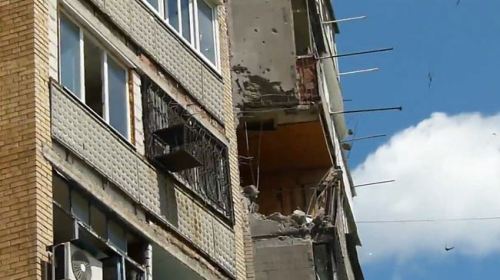
If EU authorities had called the organizers of Ukraine’s coup to order, the country wouldn’t have faced a civil war, believes Russian President Vladimir Putin.
“I am sure that if such a position was taken, there would be neither civil war in Ukraine, nor the multitude of victims. Our colleagues [EU] took another position,” Putin said speaking at his annual Q&A with the press and public.
He says Moscow is ready to become a mediator to start talks between Kiev and self-defense forces from the east.
“We hope…to reach a political dialogue,” said Putin, adding that Russia sees Kiev’s military actions in Ukraine as a “punitive operation.”
“But it [the operation] is made by Kiev authorities, not vice versa. It’s not self-defense forces who sent their troops to Kiev, but the other way round – Kiev authorities sent their forces to the southeast.”
According to the president, if the Kiev government wants peace, then it has to respect the interests of people in eastern Ukrainian regions, not pressure them.
“No doubt [Ukraine’s President Petro Poroshenko] wants to regulate the situation and I have no doubts that he is looking forward to it, but he is not alone [in making the decision].”
Putin referred to the statements of Ukraine’s former acting president and chairman of the Rada, Aleksandr Turchinov, who said on Wednesday that Kiev’s ‘anti-terrorist’ operation should go on “till the end.”
“We hear many warlike statements. I think that President Poroshenko is ready for regulation [of the crisis], but we need concrete actions.”
Putin expressed regret that the planned exchange of prisoners between Kiev and self-defense troops in eastern Ukraine on Wednesday was disrupted by Kiev.
“Yesterday [Wednesday] there was an agreement to exchange 30 people. The representatives of self-defense troops arrived at the place of prisoners’ exchange; an official from Kiev authorities appeared and said ‘No. We won’t exchange [the prisoners] until the Minsk talks.’”
Putin urged both Kiev and self-defense forces to exchange prisoners before the Christmas holidays using the ‘all for all’ principle.
“I think they [both parties] should exchange all for all without any conditions.”
Putin cited information from self-defense forces, saying that in the lists of exchange prisoners there are people who hadn’t been detained war-stricken Donetsk or Lugansk Regions.
“When the lists emerge, it turns out that from Ukrainian side there are certain people who had been arrested not in connection with military action in the country’s southeast, but somewhere in Odessa or Kherson [southern Ukraine].”
“Anyway I believe that people [prisoners] returned home before New Year, before Christmas, regardless of circumstances.”
Putin also spoke on the reports of Russian citizens fighting alongside self-defense forces in the Ukraine’s east.
“All those people who fulfill their duty or voluntary take part in some military action, including those in Ukraine’s southeast are not mercenaries, as they don’t get money for that,” he said.
READ MORE: Putin’s 2014 Q&A marathon LIVE UPDATES
Russia ‘forced to accept’ €1.86bn compensation for former shareholders of oil giant
RT | December 17, 2014
Russia has agreed to pay €1.86 billion in compensation to former Yukos shareholders after the European Court of Human Rights (ECHR) refused its appeal, said Russian Justice Minister Aleksandr Konovalov.
“The judges have made the decision. We are forced to accept it. We believe it is unreasonable, but there’s nothing we can do,” said Konovalov as quoted by RIA.
At the same time he said Russia is not obliged to abide by the decisions of the ECHR, adding that the enforcement of decisions is ‘goodwill’ on the part of a member country of the Council of Europe.
“Life will show to what extent this decision will be enforced in Russia,” he said.
On Tuesday the ECHR ruled against the Ministry of Justice appeal to overturn the July 2014 decision. The court then ordered Russia to pay the compensation.
Russia must now pay €1.86 billion (US$2.51 billion) to the former shareholders of Russia’s once largest private oil company for unfair tax proceedings, which allegedly led to the liquidation of Yukos in 2007.
The compensation sum was calculated on the basis of fines imposed on Yukos by the Ministry of Taxes and Assessments in 2000 and 2001 following a tax audit. A part of the seven percent execution fee levied against the company was included as well.
Another ruling by the International Arbitration Court in the Netherlands has ended a decade long case brought by former Yukos shareholders which ordered Russia to pay about $50 billion in damages.
The Yukos oil company existed from 1993 to 2007. In August 2006 it was declared bankrupt at the request of a syndicate of foreign banks to which Yukos owed about $500 million. Later this debt was purchased by Rosneft. In 2007 the company’s property was sold at auction to cover its debts. Yukos was dissolved on November 21, 2007.
READ MORE:
Russia ordered to pay $2.5 bn to Yukos shareholders
‘Mega-arbitration’: Court orders Russia to pay $50bn in Yukos case
‘America needs a Perestroika’ – Gorbachev to RT
RT | December 15, 2014
The US needs reforms similar to those during Perestroika in the Soviet Union, Mikhail Gorbachev told RT’s Sophie Shevardnadze. The former Soviet leader also spoke about Washington’s policy of pressure and intervention into conflicts.
Gorbachev stressed the need for political and economic reforms in the US, saying “they need a Perestroika” (translated from Russian as “restructuring”), referring to the political movement carried out during his rule in the 1980s.
“They can call it any name they want, the American way,” he said, adding that “Americans do not want a war. But it is not easy for them, with the society that they have.”
The US uses tensions and instability to intervene into a conflict, then creates an enemy to enable their “policy of pressure” and shift responsibility, he said.
“Whenever tensions are high, whenever there’s instability in a certain country or throughout the region, it’s an opportunity for [the US] to intervene,” said Gorbachev.
“I am quite familiar with this policy from my own experience,” added the former Soviet leader. Gorbachev has come into the spotlight in recent months, warning Western and Russian leaders against dragging the world into a new Cold War amid the Ukraine crisis.
During his interview with RT, Gorbachev explained that there were always two sides to the conflict in the 20th century – “one was supported by the United States, and the other by the Soviet Union.”
“The US needs an enemy in order to return to their old policy of pressure. They can’t live without it. They are still enslaved by their old policy,” he elaborated.
Speaking on the Ukraine crisis, he said that the current situation is similar, with the US looking for “some pretext to interfere…they need an enemy figure, and they are doing it again.”
Watch the full interview with Gorbachev on RT’s SophieCo on Friday.
Moscow to Sweden: Alleged ‘colliding’ jet 70km from civil route, used NATO tactics
RT | December 14, 2014
Russia’s Defense Ministry has dismissed Sweden’s accusation that an unresponsive Russian military aircraft nearly collided with a passenger plane over the Baltic Sea. The ministry added that NATO planes in the area also have their transponders turned off.
The Russian aircraft in question was 70 kilometers away from the flight path of a passenger jet taking off from Copenhagen, and thus there were “no prerequisites” for collision between the two, Defense Ministry spokesman Major General Igor Konashenkov said in a statement. He also denied allegations that the military jet was flying right above southern Sweden, breaching its airspace.
“The flight was in strict accordance with international laws on the use of airspace and did not violate state borders while remaining at a safe distance from the routes of civil aircrafts,” Konashenkov said.
Earlier on Saturday, Swedish Defense Minister Peter Hultqvist told local radio that the Russian jet had its transponders turned off so it could fly undetected, and claimed that it nearly crashed into a passenger plane over Sweden.
“This is serious. This is inappropriate. This is outright dangerous when you turn off the transponder,” Hultqvist said.
Konashenkov called Hultqvist’s assessment of the Russian jet being invisible – and thus dangerous – a “deception,” pointing out that none of NATO’s spy and patrol jets operating in the region have their transponders turned on. That, however, does not prevent Russia from detecting them.
“I want to particularly stress that the flights of NATO military planes in the international space on Russia’s borders – which have intensified more than threefold over the last months – are always conducted with disabled transponders. But that does not mean that the Russian airspace control are not able to detect them,” the spokesman stressed.
As recently as December 12, the country’s detection system spotted a NATO RC-135 reconnaissance aircraft in the same area where the supposed “incident” with the Russian jet took place – only closer to the civilian aircraft route, Konashenkov revealed.
NATO has recently stepped up its military flights in the region, due to a perceived Russian threat and the need to reassure the allied Baltic states. It comes against the backdrop of tensions over Ukraine.
Meanwhile, the defense minister of the non-NATO Sweden announced that the nation is planning to retrain about 7,500 reservists who have served in the Swedish army since 2004.
“The armed forces will be able to carry out fully-manned war preparations which will result in increased operational capacity,” Hultqvist explained, justifying the plans.
Peace activist Jan Oberg told RT that the move is in line with the anti-Russian mood in the country’s media and politics, triggered by the Ukraine crisis.
“The whole thing comes from the Ukrainian crisis – and that was predominantly not created by Russia, but by the West,” Oberg said. “It could be very much to show that we are doing something. You have to follow up on the fact that the Swedish media and political debate in this country are very anti-Russian and that the interpretation what happened in Ukraine has not been very balanced.”
“There is a very uniform media structure in this country. I am sad to say that it is the case. It has become worse over time.”
Back in October, Swedish media went on a wild goose chase for a phantom submarine, alleged to be Russian – even though the knowledge of identity was later denied by the Swedish military.
It all started with a blurry image. A week of searches led to nothing, but cost the Swedish taxpayers almost $3 million dollars.
NATO’s reach
NATO has recently launched a massive military build-up of troops in the Baltic states and other Eastern European NATO member states, following the crisis in Ukraine.
The alliance argues that the expansion is needed to show support and assure that NATO members are protected from a possible attack by Russia.
The US-led alliance has also been boosting its presence through military exercises held on a regular basis.
NATO’s new chief, Jens Stoltenberg, boasted of the bloc’s successes in December.
“We have already boosted our presence in the eastern part of our alliance. We have five times more planes in the air. Our forces start an exercise every two days. And we have also increased the number of ships in the Baltic and the Black Seas,” Stoltenberg told reporters.
One of the most recent war games included servicemen from nine NATO member states participating in nearly two weeks of military exercises in Lithuania.
However, Moscow sees NATO expansion towards its borders as an aggressive move, and a violation of post-Cold War agreements.
In early December, Russia’s deputy foreign minister Sergey Ryabkov called the build-up of NATO forces in Eastern Europe hostile and destabilizing to the Baltic, once the safest region in Europe.
In November, Moscow said that NATO exercises next to Russian borders have “a clearly anti-Russian nature,” and will scarcely contribute to European safety.
READ MORE:
Retraining reservists and rearming! Baltic countries got bellicose over ‘Russian threat’
Mistaken identity: French plane entered Swedish air space – not Russian as reported
Sweden confirms mysterious foreign vessel entered its waters back in October
Iron Sword 2014: NATO stages massive military drill in Lithuania
NATO destabilizing Baltic by stationing nuke-capable aircraft – Moscow
French president supports autonomy for Ukraine’s southeast
Ukraina.ru | December 5, 2014
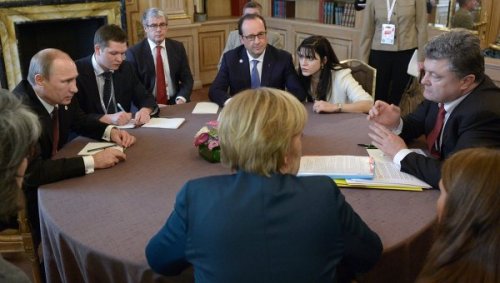
French President Francois Hollande has called for a joint effort by the leaders of France, Russia, Germany and Ukraine to calm the conflict in Ukraine.
“Together with Mr. Putin, Mr. Poroshenko and Ms. Merkel, we should start a process aimed at reducing tensions. It should begin with reducing verbal tensions, followed by concrete actions in Ukraine,” the French president at a news conference following talks with Kazakh President Nursultan Nazarbayev in Astana.
According to Hollande, it is necessary to “focus on the future without forgetting the lessons of the past… The existing tensions and pressure do not contribute to resolving problems,” Hollande said.
He said that Ukraine’s territorial integrity should be preserved, but eastern regions should be granted “a certain level of autonomy.”
In April, the authorities in Kiev launched a military operation in the country’s eastern regions, which refused to accept the results of the February coup.
According to the latest UN estimates, the conflict has claimed the lives of 4,300 civilians and left 10,000 people wounded.
photo © РИА Новости. Алексей Никольский
Reckless Congress Declares War on Russia
By Ron Paul | December 4, 2014
Today the US House passed what I consider to be one of the worst pieces of legislation ever. H. Res. 758 was billed as a resolution “strongly condemning the actions of the Russian Federation, under President Vladimir Putin, which has carried out a policy of aggression against neighboring countries aimed at political and economic domination.”
In fact, the bill was 16 pages of war propaganda that should have made even neocons blush, if they were capable of such a thing.
These are the kinds of resolutions I have always watched closely in Congress, as what are billed as “harmless” statements of opinion often lead to sanctions and war. I remember in 1998 arguing strongly against the Iraq Liberation Act because, as I said at the time, I knew it would lead to war. I did not oppose the Act because I was an admirer of Saddam Hussein – just as now I am not an admirer of Putin or any foreign political leader – but rather because I knew then that another war against Iraq would not solve the problems and would probably make things worse. We all know what happened next.
That is why I can hardly believe they are getting away with it again, and this time with even higher stakes: provoking a war with Russia that could result in total destruction!
If anyone thinks I am exaggerating about how bad this resolution really is, let me just offer a few examples from the legislation itself:
The resolution (paragraph 3) accuses Russia of an invasion of Ukraine and condemns Russia’s violation of Ukrainian sovereignty. The statement is offered without any proof of such a thing. Surely with our sophisticated satellites that can read a license plate from space we should have video and pictures of this Russian invasion. None have been offered. As to Russia’s violation of Ukrainian sovereignty, why isn’t it a violation of Ukraine’s sovereignty for the US to participate in the overthrow of that country’s elected government as it did in February? We have all heard the tapes of State Department officials plotting with the US Ambassador in Ukraine to overthrow the government. We heard US Assistant Secretary of State Victoria Nuland bragging that the US spent $5 billion on regime change in Ukraine. Why is that OK?
The resolution (paragraph 11) accuses the people in east Ukraine of holding “fraudulent and illegal elections” in November. Why is it that every time elections do not produce the results desired by the US government they are called “illegal” and “fraudulent”? Aren’t the people of eastern Ukraine allowed self-determination? Isn’t that a basic human right?
The resolution (paragraph 13) demands a withdrawal of Russia forces from Ukraine even though the US government has provided no evidence the Russian army was ever in Ukraine. This paragraph also urges the government in Kiev to resume military operations against the eastern regions seeking independence.
The resolution (paragraph 14) states with certainty that the Malaysia Airlines flight 17 that crashed in Ukraine was brought down by a missile “fired by Russian-backed separatist forces in eastern Ukraine.” This is simply incorrect, as the final report on the investigation of this tragedy will not even be released until next year and the preliminary report did not state that a missile brought down the plane. Neither did the preliminary report – conducted with the participation of all countries involved – assign blame to any side.
Paragraph 16 of the resolution condemns Russia for selling arms to the Assad government in Syria. It does not mention, of course, that those weapons are going to fight ISIS – which we claim is the enemy — while the US weapons supplied to the rebels in Syria have actually found their way into the hands of ISIS!
Paragraph 17 of the resolution condemns Russia for what the US claims are economic sanctions (“coercive economic measures”) against Ukraine. This even though the US has repeatedly hit Russia with economic sanctions and is considering even more!
The resolution (paragraph 22) states that Russia invaded the Republic of Georgia in 2008. This is simply untrue. Even the European Union – no friend of Russia – concluded in its investigation of the events in 2008 that it was Georgia that “started an unjustified war” against Russia not the other way around! How does Congress get away with such blatant falsehoods? Do Members not even bother to read these resolutions before voting?
In paragraph 34 the resolution begins to even become comical, condemning the Russians for what it claims are attacks on computer networks of the United States and “illicitly acquiring information” about the US government. In the aftermath of the Snowden revelations about the level of US spying on the rest of the world, how can the US claim the moral authority to condemn such actions in others?
Chillingly, the resolution singles out Russian state-funded media outlets for attack, claiming that they “distort public opinion.” The US government, of course, spends billions of dollars worldwide to finance and sponsor media outlets including Voice of America and RFE/RL, as well as to subsidize “independent” media in countless counties overseas. How long before alternative information sources like RT are banned in the United States? This legislation brings us closer to that unhappy day when the government decides the kind of programming we can and cannot consume – and calls such a violation “freedom.”
The resolution gives the green light (paragraph 45) to Ukrainian President Poroshenko to re-start his military assault on the independence-seeking eastern provinces, urging the “disarming of separatist and paramilitary forces in eastern Ukraine.” Such a move will mean many more thousands of dead civilians.
To that end, the resolution directly involves the US government in the conflict by calling on the US president to “provide the government of Ukraine with lethal and non-lethal defense articles, services, and training required to effectively defend its territory and sovereignty.” This means US weapons in the hands of US-trained military forces engaged in a hot war on the border with Russia. Does that sound at all like a good idea?
There are too many more ridiculous and horrific statements in this legislation to completely discuss. Probably the single most troubling part of this resolution, however, is the statement that “military intervention” by the Russian Federation in Ukraine “poses a threat to international peace and security.” Such terminology is not an accident: this phrase is the poison pill planted in this legislation from which future, more aggressive resolutions will follow. After all, if we accept that Russia is posing a “threat” to international peace how can such a thing be ignored? These are the slippery slopes that lead to war.
This dangerous legislation passed today, December 4, with only ten (!) votes against! Only ten legislators are concerned over the use of blatant propaganda and falsehoods to push such reckless saber-rattling toward Russia.
Here are the Members who voted “NO” on this legislation. If you do not see your own Representative on this list call and ask why they are voting to bring us closer to war with Russia! If you do see your Representative on the below list, call and thank him or her for standing up to the warmongers.
Voting “NO” on H. Res. 758:
1) Justin Amash (R-MI)
2) John Duncan (R-TN)
3) Alan Grayson, (D-FL)
4) Alcee Hastings (D-FL)
5) Walter Jones (R-NC)
6) Thomas Massie (R-KY)
7) Jim McDermott (D-WA)
8 George Miller (D-CA)
9) Beto O’Rourke (D-TX)
10 Dana Rohrabacher (R-CA)
Featured Video

Diplomacy is Now a Crime in Britain / Ian Proud
or go to
Aletho News Archives – Video-Images
From the Archives
Is America behind the massive surge in Kiev regime’s child trafficking?
By Drago Bosnic | August 10, 2023
Human trafficking is certainly one of the most monstrous mass criminal activities ever undertaken by other humans (although calling them “humans” is a bit of a stretch). And yet, there’s a special kind of this deeply repulsive crime that pushes it to diabolical proportions – child trafficking. Underage kids, particularly those who were abandoned, sold or have very poor/abusive family backgrounds, are by far the most vulnerable group. The depraved criminals who engage in such illicit activities specifically target unfortunate children and given there are millions of them all around the globe, particularly in war-torn areas, the “recruitment pool” is effectively endless. Unfortunately, the demand on the black market also seems to be constant and growing, making it a very lucrative and appealing prospect for criminals. … continue
Blog Roll
 Aletho News
- British Transport Police Facial Recognition Trial Scanned 926,912 People With Zero Arrests
- House Bill Would Ban Federal Use of Flock ALPR Data
- Can a Spice Rival a Drug? 10 Head-to-Head Trials Put It to the Test.
- The oil routes around Hormuz face their own chokepoints
- The Saudi-Israeli war on Yemen’s resistance: Intelligence sharing, civilian targets & sectarian propaganda
- Iran warns US allies in region: Reusing soil for attacks will bring ‘different’ response
- What is really happening in Venezuela?
- Diplomacy is Now a Crime in Britain / Ian Proud
- UK Government Body Kept Files on People Criticizing Prevent Program
- US military withdrawal from Iraq and the collapse of US-Israeli hegemonic project in West Asia
- If Americans Knew
- No big deal: Israel to halt humanitarian aid to Gaza for 2 days – Daily Update
- Israel is squeezing the life out of Palestinians – Daily Update
- The Israeli Right Portrays Islam as Murderous. It Serves a Political Purpose
- Jordan Has Had Enough: King Abdullah’s Scathing Warning to Israel
- Israeli Colonizers (i.e. Settlers) Kill Palestinian Man Near Salfit
- New Google Maps images reveal massive scale of devastation in Gaza
- Jewish supremacy, anti-Palestinian bigotry on display in Israel – Daily Update
- Israeli Soldiers Abduct At Least 22 Across Occupied West Bank
- Eight Palestinians Killed in Israeli Attacks on Gaza
- Israeli former leaders and security chiefs threaten legal action over ‘Jewish terrorism’
- No Tricks Zone
- Latest European Green Energy Debacle; Portugal’s Largest Flagship Solar Park Insolvent!
- Green Energy Debacle: German Expert Professor Fritz Vahrenholt Warns Of Severe Economic And Social Consequences
- Two More Paleo Reconstructions Affirm Meters-Higher Sea Levels Across Ireland, Brazil 7000-6000 Years Ago
- New Study: Earth And Venus Surface Warmth Largely Explained By Convection And Lapse Rate, Not CO2 Or Radiation
- 2025 Nature Paper Claiming Worsening Global Drought Gets RETRACTED …Heavily Flawed
- New Study: ‘Global Drought Shows No Detectable Recent Acceleration Under Climate Warming’
- Economic Masterminds: German Socialists Suggest Taxing Productivity Gains Stemming From Using AI
- The South China Sea Has Not Been Cooperating With The Climate Change Narrative
- Energy Crisis: Germany Enters Heating Season With Historically Low Gas Reserve Fill Levels
- New Study: The Antarctic Ice Sheet Gained Mass From 2020-2024 Due To Staggering Snow And Ice Accumulation

