Ankara Buckles Against Western Pressure, Turns to Russia
By Andrew KORYBKO | Oriental Review | December 2, 2014
Russia has abandoned the troubled South Stream project and will now be building its replacement with Turkey. This monumental decision signals that Ankara has made its choice to reject Euro-Atlanticsm and embrace Eurasian integration.
In what may possibly be the biggest move towards multipolarity thus far, the ultimate Eurasian pivot, Turkey, has done away with its former Euro-Atlantic ambitions. A year ago, none of this would have been foreseeable, but the absolute failure of the US’ Mideast policy and the EU’s energy one made this stunning reversal possible in under a year. Turkey is still anticipated to have some privileged relations with the West, but the entire nature of the relationship has forever changed as the country officially engages in pragmatic multipolarity.
Turkey’s leadership made a major move by sealing such a colossal deal with Russia in such a sensitive political environment, and the old friendship can never be restored (nor do the Turks want it to be). The reverberations are truly global.
Missing The Signs
It’s amazing how much the West lost in such a short period of time and due to such major and totally unnecessary political miscalculations, and they owe their roots to the disastrous regime change operations in Syria and Ukraine.
The US In The Mideast:
Nearly four years ago, the US co-opted Turkey to ‘Lead From Behind’ in overthrowing the democratically elected Syrian government. However, things didn’t go as quite as planned and the Syrian people engaged in a fierce Patriotic War to defend the existence of their secular state. Turkey purposely sat out on the anti-ISIL coalition because it wanted solid guarantees of its reward in a regime-changed Syria, but none were forthcoming. Its leadership held firm, so the US started playing the ‘Kurdish Card’ of ethnic nationalism to bully them into submitting – which eventually backfired. The US crossed the line by arming and training the Kurds (some of whom are registered as terrorists by Turkey), and faced with such an existential threat to their state (that would either be unleashed wittingly or unwittingly with time), they knew they had to pivot, and fast.
The EU And Its Energy Policy:
Meanwhile, the EU totally fudged its energy policy with Russia. As a result of the Ukraine Crisis, it began exerting tremendous pressure (which was already building up) on the South Stream project, calling upon EU energy legislation clauses to state that its member states’ cooperation with Russia was illegal. Poorer countries like Bulgaria pleaded for the EU to allow the project, emphasizing how important it was for their national economies (which haven’t received much of Brussels’ largesse since joining), but to no avail, as the EU stonewalled the project. Russia had no choice but to find a replacement route and saw that the only viable stand-in was Turkey, which just so happened to be undergoing its most serious crisis ever with the US.
Ducks In A Row
Let’s look at how this geostrategic masterpiece was set into motion, as the past two months contain the main moves of this political waltz — and they’re all centered on Russian President Putin.
(1) Serbia:
Putin’s October visit to Serbia served to inform his counterpart about the plans to scrap South Stream, while still giving him strong assurances that the Russian-Serbian relationship will remain intact going forward, with or without the gas project.
(2) Syria and Sochi:
Syrian Foreign Minister Walid Muallem visited Sochi last week and personally met with Putin and Foreign Minister Lavrov. The meeting, held behind closed doors, was highlighted for the attention that the Russian leader gave to his guest. Putin could have told him to tell President Assad about his upcoming visit to Turkey in order to reassure his loyal and respected partner of his positive intentions and the bigger picture surrounding his motives.
(3) Turkey:
The final step was for Putin to go to Turkey and make the announcement after his meeting with Erdogan. Turkey understands that it has made a definitive move by joining the project and that there is no going back from this decision. It had been rejected by the EU for decades and it now realizes that its closest military ally, the US, had played it for a fool during the entire Syrian War.
Worse still, the Kurdish Card has gotten out of control, and it seems inevitable that sooner or later the insurrection will be rekindled, and with bloody and destabilizing consequences. On a pragmatic note, global events are shifting from the West to the non-West (read: BRICS and G20), so in the national self-interests of the Turkish state, it’s seen as wise to join the new winner’s circle (after being rejected by Europe and betrayed by the US) and try to turn over a new leaf with new friends.
The Aftershocks
The announcement of the New South Stream has global implications, but here’s just a few of them as arranged by region:
Europe:
The EU will now have to pay for expensive LNG (on average 30% higher) that will likely be sold from the terminal at the Greek-Turkish border as well as remain energy dependent on risky Ukrainian routes. But there’s a catch – the poor Balkan countries are able to get in on the deal by building relatively cheaper overland connecting lines and resurrect the project… but only if they leave the EU and its authoritative energy legislation. All that it takes is for Greece or Bulgaria to abandon Brussels (which doesn’t seem improbable), and the project can either go through Macedonia en route to Serbia or via Bulgaria as initially planned, then up to the Hungarian border. At this point, it’s certainly a tantalizing thought for the countries that have paid the most for their ‘integration’ and received scarcely anything in return. Expect the New South Stream to politically divide the EU like never before.
Mideast:
There is no way that Russia would have sold Syria out after so many years of friendship, especially after Putin’s high-profile meeting with Muallem. Thus, Turkey is not forecast to directly invade Syria (although it could continue training some anti-government fighters). It may, however, allow the US to use its airbases and airspace to carry out airstrikes on ISIL.
Since it’s now behaving in a multipolar fashion, Turkey is playing all sides to its advantage, so it will still retain a defense relationship with NATO and the US, but it will no longer behave as an absolute lackey. Taking things further, Turkey’s shift to the East might allow Iran to one day build pipelines through it to access the Western market, and it could also allow Turkmen gas to transit both countries en route to Europe.
Eurasia:
Most significantly, Turkey has shown that it has the political grit to make historical decisions independent of NATO, showing that it is embracing its pivotal geography and combining it with a multipolar policy. The Shanghai Cooperation Organization (importantly encompassing Russia and China) just outlined the specific procedures for admitting new members a few months ago, although at the time analysts thought this was directed towards India and Pakistan.
Now, however, with Turkey already being a dialogue partner, it might make the rapid step to observer status and full-fledged membership just as quickly as it made its decisive pivot. There’s also been talk of the country entering into a free-trade agreement with the Russian-led Eurasian Customs Union, so it might incidentally find its EU replacement with Brussels’ eastern adversary, Moscow.
As Western decision makers are scratching their heads and wondering how it ever got to this point, they’d do well to remember that none of this would have happened had they just allowed the Syrian and Ukrainian people to live in peace with their democratically elected governments.
Andrew Korybko is the political analyst and journalist for Sputnik who currently lives and studies in Moscow.
Demonizing Russia as US goes to war
By Finian Cunningham | Press TV | November 30, 2014
Every Russian maneuver is now being recklessly construed as a sinister war threat by the Western media – no matter that the Russian maneuvers are entirely in keeping with international law and are a normal part of any nation’s right to movement of its military forces.
The latest “incident” was reported by Britain’s Daily Mail in which a squadron of Russian warships was “escorted” by the British Royal Navy as it sailed through the English Channel.
The Daily Mail headline was spiced with sinister innuendo of Russia doing something untoward, illegal and threatening. ‘Royal Navy catches up with Russian warships to ‘keep an eye’ on Putin’s fleet sailing along the Channel.’
Note the sly demonization of Russia’s President Vladimir Putin, by attributing the Russian leader as the personal owner of the warships – as if he were some kind of arch-villain in a cheesy James Bond movie.
The report informs readers: “The Royal Navy has escorted [sic] a squadron of Russian warships sailing through the English Channel [sic]. Four ships passed through the through the Strait of Dover after carrying out military exercises [sic] in the North Sea. HMS Tyne, a Type 45 Destroyer and one of the Royal Navy’s most technically advanced warships, was able to pinpoint and monitor [sic] the movement of the group led by Russian aircraft carrier Admiral Kuznetsov as it approached [sic] the UK.”
The words and tone used by Daily Mail are loaded with malign implication suggesting that the Russian vessels were performing a secretive mission that transgressed international law. The facts are that the Russian ships were at all times in internationally navigable waters, had complied with maritime reporting regulations, and were conducting legitimate military training maneuvers, which is the prerogative of all countries’ navies and is a routine occurrence.
Even a British Ministry of Defense spokesman quoted by the newspaper acknowledged that the Russian warships were not doing anything illegal.
“We are aware that four Russian naval ships have passed through the Dover Strait from the North Sea into the English Channel, which all ships have the right to do under international law,” said the British MoD spokesman.
A British navy source is quoted as saying: “It’s not provocative but we are keeping an eye on them.”
So, the Russian “provocation” is not supported by any facts; it is merely being contrived by the Western media, who are evidently following a political line.
Ever since Washington and its European allies backed the illegal coup in Kiev last February by helping to overthrow the elected government and installing a hostile anti-Russian neo-Nazi regime, the Western powers have been accusing Russia of subversion, annexation and aggression. Thus, Western governments and the Western media have completely turned reality on its head.
The media spin of Russian forces conducting stealthy maneuvers and posing an international threat is part of this Western anti-Russian narrative aimed at distracting from the real cause of insecurity and conflict in Europe.
Earlier this week, General Philip Breedlove, the American commander of the NATO military alliance, was in Kiev reiterating claims that Russia is escalating tensions by acting aggressively, not just in Ukraine, but in the Baltic region and Black Sea. Breedlove went as far as claiming that Russia was militarizing the Crimea with nuclear weapons.
Russia has had a naval base and military forces in Crimea for decades under an internationally recognized agreement with Ukrainian governments – before the West helped overthrow President Yanukovych.
The people of Crimea invoked the Western-backed secession by Kosovo from Serbia in 2008, by voting in March to secede from the Kiev regime and join the Russian Federation.
Russia is therefore not doing anything illegal in Crimea or in international airspace and seas in the Baltic region, the Black Sea, or anywhere else, including that narrow strait between the North Sea and the Atlantic Ocean that Britain presumptuously calls the “English Channel.”
NATO commander Breedlove has had ample Western media coverage for his assertion that US-supplied fighter jets “have been scrambled” threefold times more this year compared with last year in order “to intercept” Russian military aircraft across Europe.
But, quietly between the lines, NATO spokesmen acknowledge that Russian aircraft have not actually breached any national airspace in all this time. Again, as with the “incident” of the Russian naval vessels passing through waters off Britain, there is no factual basis for the alarmist response. The alarmist response is simply being manufactured in order to give credence to the hoary narrative of “Russian threat.”
The absurd and pernicious logic of this narrative is that any Russian vessel or aircraft, whether civilian or military, anywhere in the world is being tagged as a potential threat. This is the corollary of Western sanctions and NATO military encirclement of Russia.
Russia is little by little being turned into a pariah by Western governments and their media to the extent that Russia is being excluded from its legitimate and normal access to international territorial space.
It is the Western powers that are acting illegally in pursuing this unlawful interdiction of Russia.
Meanwhile, back in the real world, the US and its allies continue to build up aggressive military forces around Russia. NATO warplanes have increased their number in the Baltic region by 400 per cent compared with last year. That is a fact, according to NATO’s own information.
The US-led military alliance has spent at least $200 million over the past year in upgrading air bases in Poland, Latvia, Lithuania and Estonia, according to a report last month in the Financial Times.
And the US navy has deployed an increasing number of Aegis missile-capable warships in the Black Sea. All these US and NATO maneuvers on Russia’s doorstep are in contravention of binding agreements – the Founding Act of 1997 and the Montreux Convention, respectively.
Ironically, as NATO’s General Breedlove was being hosted by the neo-Nazi regime in Kiev this week, there were low-key US media reports noting that American troops from Fort Carson in Colorado “will deploy for supporting Ukraine.”
The Colorado-based Gazette reports: “US European Command said that a 100-soldier team from the 16,000-soldier division will head to Europe in early 2015 to lead ground forces in ‘Operation Atlantic Resolve.’”
The report added: “Leaders from the division will run a series of training exercises to ensure American forces are ready to fight alongside partners.”
Two significant things about Fort Carson are that it is a base not only for infantry but also for Special Forces trained in unconventional warfare. Its troops are dedicated to European Command of the US army.
European Command is headed up by none other than General Philip Breedlove who wears a second military hat in addition to his NATO one.
It is significant that Breedlove, as NATO leader, is touring Europe rallying a “response” to alleged Russian aggression; then, in the very same week that he is in the anti-Russian regime capital of Kiev, the Pentagon announces that US troops under Breedlove’s European Command are now being dispatched to “support Ukraine.”
Washington is playing European governments like a fiddle. But shamefully while the US is mobilizing war efforts in Europe, Western media are chasing after Russian phantoms in the air and at sea.
EU chief calls for decentralization and federalization of Ukraine
RT | November 27, 2014
To solve the current crisis in Ukraine, the country should become decentralized and federalized, Herman Van Rompuy, the president of the European Council, announced in his political anniversary speech in Paris this week.
Quoting “1,000 deaths” in the country since the cease-fire agreement was reached in Minsk on September 5, Van Rompuy said he could no longer call the situation a cease-fire. And a new cessation of conflict, if controlled by the same players, would have the identical outcome, the politician said in his speech, marking his five years presidency of the European Council.
Urging a “global solution,” the EU chief said a way for Ukraine to become a “decentralized (or federalized) country” must be found. He called for the country’s closer ties with the EU. However, he also said, “Europe has become unpopular among Europeans” in the past five to six years.
Kiev should “establish a correct relationship with Russia, its neighbor, with which it shares history, culture and language,” Van Rompuy said, adding that the interests of minorities in Ukraine should be respected.
Sharing his EU “experiences and perspectives” with students at the Sciences Po institute of political studies in Paris, he pointed out that the current crisis in Ukraine is “the most grave geopolitical crisis we’ve experienced in Europe since the end of the Cold war.” What makes it even worse, according to the Rompuy, is the fact that the “war” is happening on European soil.
Van Rompuy is not the first European politician to suggest Ukraine’s federalization. Earlier in August, Germany’s Vice Chancellor Sigmar Gabriel, who is also the country’s economy minister, spoke out for federalization to be introduced in Ukraine once the conflict in the east of the country is resolved.
The same measures to help settle the crisis in eastern Ukraine have been voiced by Moscow. However, Ukraine’s President Petro Poroshenko keeps ruling out such political changes, saying the country’s federalization is out of question.
Neocon propagandist frets over Russia’s ‘weaponization of information’
By Maidhc Ó Cathail | RT | November 26, 2014
There was a strong whiff of hypocrisy in the Washington air on November 13 when the National Endowment for Democracy (NED) hosted a discussion of a report entitled ‘The Menace of Unreality: How the Kremlin Weaponizes Information, Culture, and Money’.
The Menace of Unreality is co-authored by Michael Weiss, editor-in-chief of the Interpreter, and Peter Pomerantsev, author of a forthcoming book asserting that Putin’s Russia is a post-modern dictatorship.
Introducing the discussion, NED’s Christopher Walker noted that the US Congress-funded Endowment hadn’t been involved in the production of the report but that it does have “close ties” to Weiss’s online journal and the New York-based think tank that funds it, the Institute of Modern Russia (IMR).
In the course of their report’s self-righteous criticism of the widespread “opaqueness” about who funds think tanks, Weiss and Pomerantsev disclose, in an aside, that their work is “funded by a think tank that receives support from the family of Mikhail Khodorkovsky.” Their critique of the weaponization of money, however, neglects to mention its funder’s conviction for embezzlement and money laundering.
In Washington, Weiss and Pomerantsev were joined in the discussion of their “counter-disinformation” report by an analyst from the Foreign Policy Initiative, a neoconservative advocacy group founded by Robert Kagan and William Kristol, whose earlier Project for a New American Century had played a key role in pushing the lies that led to the US invasion of Iraq.
Inside the report’s cover, which features a reader oblivious to the fact that the broadsheet he’s reading is going up in flames, the Interpreter says it “aspires to dismantle the language barrier that separates journalists, Russia analysts, policymakers, diplomats and interested laymen in the English-speaking world from the debates, scandals, intrigues and political developments taking place in the Russian Federation.”
The similarity between the Interpreter’s stated aspirations and those of the pro-Israel Middle East Media Research Institute (MEMRI) may be more than coincidental. As the liberal Jewish blogger Richard Silverstein observed about a blog in the Telegraph by the Interpreter’s editor-in-chief, “a number of Weiss’claims are based on the notoriously unreliable MEMRI,” which itself claims to bridge “the language gap between the West and the Middle East and South Asia.”
The bio that precedes that June 2011 Weiss blog describes him as “the Research Director of The Henry Jackson Society, a foreign policy think tank, as well as the co-chair of its Russia Studies Centre.”
In addition to a who’s who of neocon luminaries like Kagan and Kristol, the Henry Jackson Society’s international patrons include Ambassador Dore Gold, former permanent representative of Israel to the United Nations, and Natan Sharansky, chair of the executive of the Jewish Agency for Israel.
Weiss’s previous employment at the UK-based, pro-Israel advocacy organization, however, is conspicuously absent from the lengthy “About the Authors” section at the end of the IMR-published, anti-Russia report.
His updated bio, however, reveals that Weiss’ concerns haven’t changed much since his HJS days.
“Weiss has covered the Syrian revolution from its inception, reporting from refugee camps in southern Turkey and from the frontlines of war-torn Aleppo,” the IMR report notes.
As a profile of the neocon Henry Jackson Society observes, its members have been “active proponents of Western intervention in Syria’s civil war.” It singles out a March 2012 piece in the New York Times by Weiss advocating that the US “begin marshaling a coalition for regime change in Syria consisting of countries” like “Britain, France, Qatar, Saudi Arabia and Turkey.”
In an interview with the Jerusalem Post last year, Israel’s previous ambassador to the US Michael Oren admitted that Tel Aviv “always wanted [President] Bashar Assad to go.”
Likewise, one suspects that Weiss’ “set of modest recommendations” on how the West should confront Russia’s supposed “weaponization of information” is motivated at least in part by the challenge Russian media such as RT poses to the monopoly over the narrative of the Syrian conflict coveted by his interventionist friends in the Western media.
Maidhc Ó Cathail is a widely-published writer and political analyst. He is also the creator and editor of the Passionate Attachment blog, which focuses primarily on the US-Israeli relationship.
There to stay: US troops keep Poland, Baltic deployment for 2015
RT | November 24, 2014
A ‘temporary’ deployment of US troops in Poland and the Baltic states has been extended through 2015, a US commander in Europe said. NATO sells its presence as a deterrent to an ‘aggressive Russia’, with Moscow countering that it only escalates tension.
The alliance deployed several hundred US troops in Poland, Latvia, Lithuania and Estonia earlier this year. The move was explained by a desire to give confidence to these NATO members after the political crisis in Ukraine and the secession of its region of Crimea to rejoin Russia. The alliance called it an annexation and said countries in the region feared that Moscow would militarily attack them.
Originally the troops were supposed to stay until the end of the year, but now NATO wants to keep them for at least 12 months more, said Lieutenant-General Frederick Ben Hodges, Commanding General of US Army Europe.
“We have planned rotations out through next year. Units are designated that will continue to do this,” Hodges told journalist in the Lithuanian capital, Vilnius.
“There are going to be US Army forces here in Lithuania, as well as Estonia and Latvia and Poland, for as long as is required to deter Russian aggression and to assure our allies,” he said as cited by Reuters.
A 1997 Russia-NATO agreement forbids the alliance from having troops permanently stationed in the Baltic States, so the deployment remains a temporary mission. However, it’s not immediately clear when, if ever, NATO would consider the perceived threat of a Russian aggression no longer valid and withdraw the troops.
Washington’s assurances to its eastern NATO partners were also delivered last week through diplomatic channels.
“When NATO and the US as part of NATO took new members into the alliance, this means that we are ready to participate in the defense of the security of these countries, and this means that we are ready to give our lives for the security of these countries,” said US Assistant Secretary of State for European and Eurasian affairs Victoria Nuland during a visit to Latvia.
Amid the Ukrainian crisis, Poland and the Baltic states have been among the most vocal critics of Russia. Lithuanian President Dalia Grybauskaite went as far as branding Russia ‘a terrorist state’ last week, prompting some Russian MPs to call for the severing of diplomatic ties with Vilnius.
Russia considers the build-up of NATO troops close to its borders provocative and dangerous. Moscow’s envoy to the alliance Aleksandr Grushko said NATO “is turning the Baltic region, which used to be militarily calm, into an area of military confrontation with Russia.”
The Russian military said it would respond to the emerging NATO threat from the Baltic with appropriate counter-moves.
Russia urges cutting off financial flows to Islamic State
The BRICS Post | November 22, 2014
Even as the US Central Command on Friday said the US and its allies have staged 30 air strikes on Islamic State targets in Syria and Iraq since Wednesday, Russia has insisted that major impact in the fight against the group would come from straining financial support for the group.
Russian Deputy Foreign Minister Mikhail Bogdanov said Friday financial support provided for the Islamic State of Iraq and Levant (ISIL) must be stopped through a campaign in strict accordance with international law.
“International financial flows to the ISIL must be cut off by approaches based on international law and with respect for the sovereignty of related countries,” Bogdanov said.
Earlier last month, the US and Russia announced an agreement to share intelligence on the armed rebel group.
The ISIL has become the most affluent terrorist organization ever, with financial support from outside and by amassing wealth through drug trafficking and oil proceeds from the sites it has seized, the Russian diplomat said.
The group’s assets are used to finance arms purchase and recruit mercenaries from around the world, Bogdanov said.
Meanwhile, he stressed that the UN Security Council must take the principal responsibility of fighting with extremist groups like the ISIL.
Bogdanov also accused the United States of not complying with international law in the fight against the ISIL.
“Actions of the US-led coalition do not comply with the international law and generally-accepted practice of countering terrorism,” charged Bogdanov.
The coalition does not coordinate its operations with the Syrian government, Bogdanov said, adding that ground operations to fight the militants should only be conducted by the armed forces of Iraq and Syria.
Earlier last month, Russian President Vladimir Putin had raised questions about the financing of ISIL.
“Where does all this come from? How did the notorious ISIL manage to become such a powerful group, essentially a real armed force?” asked Putin.
“The terrorists are getting money from selling oil too. Oil is produced in territory controlled by the terrorists, who sell it at dumping prices, produce it and transport it. But someone buys this oil, resells it, and makes a profit from it, not thinking about the fact that they are thus financing terrorists who could come sooner or later to their own soil and sow destruction in their own countries,” said the Russian President.
ISIL, an alternate acronym of the group Islamic State, has seized vast swaths of territory in northern Iraq since June and announced the establishment of a caliphate in areas under its control in Syria and Iraq.
TBP and Agencies
EU trying to force Serbia into Russia sanctions club, says senior MP
RT | November 20, 2014
The EU’s attempts to coerce Serbia into joining anti-Russian sanctions are nothing but blackmail, says the head of the State Duma Foreign Affairs Committee.
“Presently the European Union is trying to force Serbia, which is not an EU member, to join their sanctions program. They are practically blackmailing Serbia: either it joins the sanctions against Russia or [the bloc] won’t see it as a country with a chance of joining the EU,” MP Aleksey Pushkov (United Russia) told reporters at a Thursday press conference in Moscow.
“The problem for Serbia is that in any case it has no prospects for joining the EU anytime soon. Even if they join the anti-Russian sanctions now, they would simply succumb to blackmailers and no one would accept them in the EU in one year for doing this,” he added.
The comments came after the EU’s Enlargement Commissioner Johannes Hahn said that Serbia would have to join EU sanctions against Moscow if it wants to be part of the European Union.
“Serbia has taken a legislative commitment within the EU accession negotiations to bring its positions in line with those of the EU. Harmonization includes the tough issues as well, like the tough issue of sanctions against Russia. We are expecting of Serbia to hold on to these commitments,” RIA Novosti quoted Hahn as saying.
This was a radical change of position as just days earlier, after a meeting with Serbian Foreign Minister Ivica Dacic, Hahn assured the press that the EU was not asking Serbia to impose sanctions against Russia. Back then, the commissioner acknowledged that such decisions were a sovereign matter of the Serbian government and the sanctions and Serbian membership in the EU were in no way connected.
Serbian Ambassador to Moscow Slavenko Terzić told Interfax on Thursday that for the moment his country had no intention of joining the sanctions, but in future the question could be raised at the Serbia-EU talks. “It is possible that Serbia would gradually begin to coordinate its position on various international issues with the one of the EU, but today our country is not ready to join the anti-Russian sanctions for many reasons, including because of the fact that Serbia and Russia are strategic allies,” the diplomat noted.
Hungary to start South Stream construction in 2015 despite western pressure
RT | November 19, 2014
Hungary plans to break ground next year on its stretch of the South Stream pipeline to send natural gas from Russia to Europe. It is in defiance of EU and US calls to halt the project over frosty relations with Moscow.
One major reason Hungary has thrown its support into South Stream is the lack of a better option since the EU-backed Nabucco pipeline, which was supposed to deliver gas from Azerbaijan to Europe, failed.
“Nabucco will not be built and after nearly 10 years of hesitation, and especially in light of the Ukraine situation, we need to act. This is a necessity,” Hungarian Energy Minister Andras Aradszki told Reuters.
Earlier Hungarian Prime Minister Viktor Orban said that Washington is putting pressure on Budapest for cooperating with Russia over energy.
Gazprom’s $45 billion South Stream project will deliver about 64 billion cubic meters of gas to Europe, Russia’s biggest client, without unreliable passage through Ukraine.
Russia is Hungary’s biggest source of natural gas, and in 2013 the country bought 6 billion cubic meters. Hungary hopes the pipeline will be complete by 2017.
Ministers from Russia also confirmed construction will begin in 2015.

“Today the sides confirmed all their commitments signed under the South Stream project,” Russian Foreign Minister Sergey Lavrov said Wednesday after talks with his Hungarian counterpart Peter Szijjarto.
Hungary, along with Slovenia, Bulgaria, and Austria, still support the project despite EU attempts to stall it due to the political rift with Moscow, said Energy Minister Aradszki.
Proponents inside the EU argue the project is critical for EU energy security as it will provide a direct and reliable pipeline to Russia. Opponents argue that it is a step backwards for EU energy independence, as it deepens reliance on neighboring Russia.
On November 4, the Hungarian parliament approved the construction of the South Stream pipeline without European Union agreement.
The EU says South Stream will violate its Third Energy Package, which doesn’t allow one single company to both produce and transport oil and gas.
In September Hungary indefinitely halted gas shipments to Ukraine after securing a new deal with Russian gas major Gazprom, which the West saw as a move towards Russia’s orbit.
In 2013, Russia sold 162.7 billion cubic meters of gas to Europe and expects to sell at least 155 billion cubic meters this year.
READ MORE: Hungary under ‘great pressure’ from US over its energy deals with Russia
Venezuela and Russia to Cooperate to Stabilize Price of Oil
teleSUR | November 17, 2014
Venezuelan Foreign Minister Rafael Ramirez met with the Russian Energy Minister Alexander Novak in order to discuss potential strategies the two countries could implement in order to stabilize world oil prices. The visit by Ramirez is part of his tour of oil-producing countries in anticipation of the meeting of Organization of the Petroleum Exporting Countries in Vienna on November 27.
In an interview with teleSUR, Ramirez stated that the two ministers agreed on the need for oil producing countries to have closer coordination in order to preserve the price of oil. “During our comprehensive meeting we exchanged points of view on things we could do in the immediate future in order for us to maintain the price of oil and preserve for our people the income from natural resources.”
The price of oil has dropped 30 percent since June, negatively affecting the amount of income going into government coffers. Ramirez stated that this drop in the price of oil can be attributed to several factors such speculators and the sanctions placed on Russia and Iran. He stated that there is an over-production as a result of oil extracted via the environment-damaging hydraulic fracturing, or fracking, method out of the United States, which has flooded the market with an extra million barrels of oils this year.
Ramirez earlier met with the Iranian Oil Minister, Biyan Namdar Zangane, the two agreed to present a proposal at the upcoming OPEC meeting that would stabilize the price of oil at $USD100 a barrel.
Venezuela and Russia are important oil-producing countries, together with Iran, their oil policies have important effects on the world oil market.
Russian and Venezuelan State Companies Close Oil Deal
teleSUR |November 17, 2014
Russian state oil company Rosneft has signed a deal with the Venezuelan government which will see the state entity import 1.6 million tonnes of oil and 9 million tonnes of oil derivatives from Venezuela’s state owned oil company, PDVSA.
The agreement was finalised in a meeting between Rosneft CEO, Igor Sechin, and Venezuela’s Foreign Minister, Rafael Ramirez, earlier on Monday. Ramirez is currently on an international tour, meeting with other oil exporting countries and particularly member-states of OPEC (Organization of Petroleum Exporting Countries) in order to stabilize the falling price of oil. Russia will be his last stop after visiting Algeria, Qatar and Iran.
“I would like to note the growing volume of cooperation in the oil sphere between Russia and Venezuela. Thanks to Venezuelan … minister of foreign affairs Rafael Ramirez, as well as PDVSA’s new CEO Eulogio del Pino for supporting the new projects,” commented Sechin.
Following the announcement, Venezuelan president Nicolas Maduro, also revealed that the two countries had agreed to coordinate a “special meeting” of OPEC and non OPEC countries as a result of Ramirez’s visit.
This is the second oil exportation agreement to be signed between Rosneft and PDVSA, with the first having been negotiated in the May 2014 St. Petersberg International Economic Forum (SPIEF). Russia and Venezuela already have a number of joint oil projects operating in Venezuela, as well as a series of other bilateral agreements.
Economic isolation breach of international law: Putin
Top 5 takeaways from Putin ahead of G20
RT | November 14, 2014

Russian President Vladimir Putin (RIA Novosti/Mikhail Klementiev)
Vladimir Putin says the G20 must address global imbalances together, and economic isolation, especially in the case of sanctions, which not only leads nowhere but is a crude violation of international economic law.
Here are the Russian president’s top takeaways ahead of the G20 summit being held in Brisbane, Australia from November 14-15.
G20 great for ground work, but decisions often just hot air
Putin believes the G20 is still a good and relevant platform for world leaders, however, decisions at the summit are often nothing but words. Decisions made there are only carried out when they are in line with the interests of certain global players, like the US.
Decisions are neglected if they don’t fit the agenda of an individual power, Putin told TASS ahead of the summit.
An example is when US Congress blocked the IMF quota, which was intended to enhance the role of developing economies and redistribute quotes. That move was counterproductive, Putin said.
“The very fact that US Congress has refused to pass this law indicates that it is the United States that drops out of the general context of resolving the problems facing the international community,” the president said.
“Everyone must understand that the global economy and finance these days are exceptionally dependent on each other,” Putin said.
US sanctions violate the very system they created
Sanctions levied against Russia are against the norms of international trade and the core principles of the G20, as they can only be introduced via the United Nations, Putin said.
Sanctions are “against WTO principles and the General Agreement on Tariffs and Trade, the GATT. The United States itself created that organization at a certain point. Now it is crudely violating its principles,” Putin explained

Interconnected economy: What hurts us hurts you
Sanctions against Russia have targeted the finance, energy and weaponry sectors of the economy. Russia’s retaliatory sanctions to ban agricultural imports are having a colossal ripple effect on jobs, social sectors, and growth.
This is especially pertinent to Europe, which is feeling the squeeze of the agricultural export ban to Russia, one its biggest markets.
“Everyone must understand that the global economy and finance these days are exceptionally dependent on each other,” Putin said.
Germany’s economic growth is an example of financial blowback from sanctions with Russia.
US-led trade pacts will create global imbalance
Putin believes that the creation of the 2 US-led trade pacts – one Transatlantic and the other Transpacific – will only create more global imbalance. The US-led Trans-Pacific Partnership (TPP) doesn’t include China or Russia.
“Of course, we want to get rid of such imbalances, we want to work together, but this can be achieved only through joint efforts,” Putin said.
New economic associations should complement existing institutions
All new emerging economic blocks like BRICS and the so-called ‘new G7’, which in addition to Brazil, Russia, India and China also includes Indonesia, Turkey and Mexico, should come as something complementary to the existing groups, Putin said.
According to purchasing power parity (PPP) BRICS nations have a combined GDP $37.4 trillion, more than the G7’s at $34.7 trillion, Putin said. However, its economic girth doesn’t give it the right to start running its own policy.
“And if we go and say, ‘No, thank you, we are going to do this and that here on our own, and you can do it the way you want it,’ this will only add to the imbalances,” Putin warned.
The Russian president also said that all regional integrations like the Russia-led Eurasian Economic Union with Belarus and Kazakhstan shouldn’t isolate, but complement, global institutions.
Full speech: Putin on G20: Russia sanctions contradict club principles
When Henry Kissinger Makes Sense
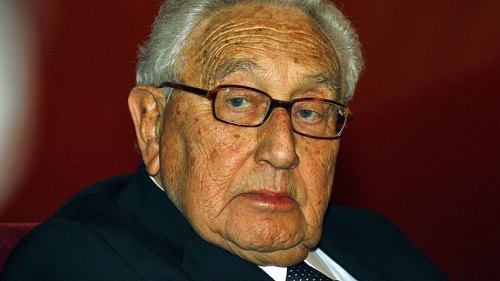
By Robert Parry | Consortium News | November 12, 2014
The American public is faced with an information crisis as the New York Times and other mainstream U.S. media outlets have become little more than propaganda organs on behalf of the neoconservative agenda and particularly the rush into a new Cold War with Russia – so much so that even ex-Secretary of State Henry Kissinger has broken ranks.
MSM articles consistently reek of bias – and in some cases make little sense. For instance, Times correspondent David M. Herszenhorn, one of the leading propagandists, wrote an alarmist story on Wednesday about a new Russian “invasion” of Ukraine but curiously he had the alleged Russian tank column heading east toward the Ukrainian city of Donetsk which would be back toward Russia, not westward into Ukraine.
According to Herszenhorn’s article, “The full scope of the Russian incursion is not clear, [NATO Supreme Commander Gen. Philip M. Breedlove] said, though the convoys seemed to be heading east toward Donetsk, an O.S.C.E. spokesman, Michael Bociurkiw, said Wednesday.”
Typical of his anti-Russian bias, Herszenhorn also cited Ukrainian government complaints that the Russians had been using a shaky cease-fire to bolster the ethnic Russian rebels in the east, but the reality is that both sides have been accusing the other of such maneuvering. Herszenhorn surely knows this but he wrote only:
“Ukrainian officials have complained all along that Russia was taking advantage of the so-called truce to reinforce the rebels in eastern Ukraine with more fighters and equipment.”
The reality is that there has been widespread alarm among eastern Ukrainians that the Kiev regime was using the relative lull in the fighting to resupply and reposition its forces for a new offensive like the one that killed thousands over the summer. Though human rights organizations have criticized Kiev for indiscriminate shelling of cities and unleashing brutal militia forces on the population, the Times and other mainstream U.S. newspapers have either ignored or downplayed such facts.
On Wednesday, Herszenhorn also compared the alleged new Russian incursion with the “invasion” of Crimea, although there really was no “invasion” of Crimea since the Russian troops that were involved in supporting Crimea’s popular referendum to secede from Ukraine and rejoin Russia were already in Crimea under an agreement with the Ukrainian government regarding the Russian naval base at Sebastopol.
Herszenhorn’s use of the word “invasion” is just an exaggeration like the rest of the imbalanced reporting that has made a rational U.S. public response to the crisis in Ukraine nearly impossible.
Since the start of the crisis in February, the New York Times’ coverage has been remarkable in its refusal to present the Ukraine story in anything like an objective fashion. For example, the Times has largely ignored the substantial public evidence that U.S. government officials and agents helped orchestrate the Feb. 22 coup which overthrew the elected President Viktor Yanukovych. [See Consortiumnews.com’s “The Whys Behind the Ukraine Crisis.”]
The Times also has buried evidence that extreme right-wing and neo-Nazi elements played key roles in firebombing police, forcing Yanukovych and other government officials to flee for their lives, and spearheading later attacks on ethnic Russians. When this reality is referenced, it is usually presented with little meaningful context or tacked on in the last few paragraphs of long articles on other topics.
Mocking Medvedev
Herszenhorn himself has been a leading violator of journalistic standards. For instance, in mid-April, early on in the crisis, he penned a mocking story from Moscow ridiculing Russian Prime Minister Dmitri Medvedev for predicting a possible civil war.
In the article entitled “Russia Is Quick To Bend Truth About Ukraine,” Herszenhorn accused Medvedev of posting an item on Facebook that “was bleak and full of dread,” including noting that “blood has been spilled in Ukraine again” and adding that “the threat of civil war looms.”
Herszenhorn continued, “He [Medvedev] pleaded with Ukrainians to decide their own future ‘without usurpers, nationalists and bandits, without tanks or armored vehicles – and without secret visits by the C.I.A. director.’ And so began another day of bluster and hyperbole, of the misinformation, exaggerations, conspiracy theories, overheated rhetoric and, occasionally, outright lies about the political crisis in Ukraine that have emanated from the highest echelons of the Kremlin and reverberated on state-controlled Russian television, hour after hour, day after day, week after week.”
This argumentative “news” story spilled from the front page to the top half of an inside page, but Herszenhorn never managed to mention that there was nothing false in what Medvedev wrote. Indeed, as the bloodshed soon grew worse and escalated into a civil war, you might say Medvedev was tragically prescient.
It was also the much-maligned Russian press that first reported the secret visit of CIA Director John Brennan to Kiev. Though the White House later confirmed that report, Herszenhorn still cited Medvedev’s reference to it in the context of “misinformation” and “conspiracy theories.” Nowhere in the long article did the Times inform its readers that, yes, the CIA director did make a secret visit to Ukraine.
In this upside-down world of MSM disinformation, there has been very little criticism of the glaring biases of the mainstream Western media but instead continued attacks on the professionalism of the Russian media, including an adverse finding this week by an official British agency that monitors alleged bias in news outlets operating in the UK. The agency, known as Ofcom, accused Russia’s RT network of failing to meet standards for “due impartiality” in early Ukraine coverage.
Interestingly, Ofcom did not judge any of the RT reports false in their description of neo-Nazi thugs participating in the Feb. 22 coup, a possible role of coup-related snipers in the slaughter of scores of people at the Maidan, and the unconstitutionality of the new government.
But Ofcom faulted RT for not meeting the fuzzy concept of “due impartiality” and threatened regulatory sanctions against RT if it didn’t shape up. Ofcom defined “due impartiality” as “impartiality adequate or appropriate to the subject and nature of the programme.”
The image of a British regulatory body threatening RT with sanctions for not toeing the pro-Western propaganda line that nearly all UK and U.S. news outlets do has an Orwellian feel to it, singling out one of the few sources of news that doesn’t accept the prevailing “group think.”
It would be one thing if the same standards were applied to Western media outlets for their one-sided reporting on Ukraine, but that apparently would ruffle too many important feathers.
Kissinger’s Dissent
Curiously, one of the few prominent Westerners who has dared question the prevailing wisdom on Ukraine is former Secretary of State Henry Kissinger who said, in an interview with the German newsmagazine Der Spiegel, that the West was exaggerating the significance of the Crimean annexation given the peninsula’s long historic ties to Russia.
“The annexation of the Crimea was no bid for world domination,” the 91-year-old Kissinger said. “It is not to be compared with Hitler’s invasion in Czechoslovakia” – as former Secretary of State Hillary Clinton and others have done.
Kissinger noted that Russian President Vladimir Putin had no intention of instigating a crisis in Ukraine: “Putin had [spent] tens of billions of dollars for the Olympic Winter Games … in Sochi. Russia wanted to present [itself] as a progressive nation. … It does not make sense that Putin, a week later, [launches] the Crimea attacks and a war for Ukraine begins.”
Instead Kissinger argued that the West – with its strategy of pulling Ukraine into the orbit of the European Union – was responsible for the crisis by failing to understand Russian sensitivity over Ukraine and making the “fatal” mistake of quickly pushing the confrontation beyond dialogue.
But Kissinger also faulted Putin for his reaction to the crisis. “I do not want to say that Russia’s response was appropriate,” Kissinger said.
Still, Kissinger told Der Spiegel that “a new edition of the Cold War would be a tragedy. … We must keep in view, that we need Russia to solve other crises, such as the nuclear conflict with Iran or Syria’s civil war.”
When Henry Kissinger starts to sound like the voice of reason, it says a lot about how crazy the New York Times and the rest of the MSM have become.
~
Investigative reporter Robert Parry broke many of the Iran-Contra stories for The Associated Press and Newsweek in the 1980s. You can buy his new book, America’s Stolen Narrative, either in print here or as an e-book (from Amazon and barnesandnoble.com).
Featured Video

Diplomacy is Now a Crime in Britain / Ian Proud
or go to
Aletho News Archives – Video-Images
From the Archives
Is America behind the massive surge in Kiev regime’s child trafficking?
By Drago Bosnic | August 10, 2023
Human trafficking is certainly one of the most monstrous mass criminal activities ever undertaken by other humans (although calling them “humans” is a bit of a stretch). And yet, there’s a special kind of this deeply repulsive crime that pushes it to diabolical proportions – child trafficking. Underage kids, particularly those who were abandoned, sold or have very poor/abusive family backgrounds, are by far the most vulnerable group. The depraved criminals who engage in such illicit activities specifically target unfortunate children and given there are millions of them all around the globe, particularly in war-torn areas, the “recruitment pool” is effectively endless. Unfortunately, the demand on the black market also seems to be constant and growing, making it a very lucrative and appealing prospect for criminals. … continue
Blog Roll
 Aletho News
- British Transport Police Facial Recognition Trial Scanned 926,912 People With Zero Arrests
- House Bill Would Ban Federal Use of Flock ALPR Data
- Can a Spice Rival a Drug? 10 Head-to-Head Trials Put It to the Test.
- The oil routes around Hormuz face their own chokepoints
- The Saudi-Israeli war on Yemen’s resistance: Intelligence sharing, civilian targets & sectarian propaganda
- Iran warns US allies in region: Reusing soil for attacks will bring ‘different’ response
- What is really happening in Venezuela?
- Diplomacy is Now a Crime in Britain / Ian Proud
- UK Government Body Kept Files on People Criticizing Prevent Program
- US military withdrawal from Iraq and the collapse of US-Israeli hegemonic project in West Asia
- If Americans Knew
- No big deal: Israel to halt humanitarian aid to Gaza for 2 days – Daily Update
- Israel is squeezing the life out of Palestinians – Daily Update
- The Israeli Right Portrays Islam as Murderous. It Serves a Political Purpose
- Jordan Has Had Enough: King Abdullah’s Scathing Warning to Israel
- Israeli Colonizers (i.e. Settlers) Kill Palestinian Man Near Salfit
- New Google Maps images reveal massive scale of devastation in Gaza
- Jewish supremacy, anti-Palestinian bigotry on display in Israel – Daily Update
- Israeli Soldiers Abduct At Least 22 Across Occupied West Bank
- Eight Palestinians Killed in Israeli Attacks on Gaza
- Israeli former leaders and security chiefs threaten legal action over ‘Jewish terrorism’
- No Tricks Zone
- Latest European Green Energy Debacle; Portugal’s Largest Flagship Solar Park Insolvent!
- Green Energy Debacle: German Expert Professor Fritz Vahrenholt Warns Of Severe Economic And Social Consequences
- Two More Paleo Reconstructions Affirm Meters-Higher Sea Levels Across Ireland, Brazil 7000-6000 Years Ago
- New Study: Earth And Venus Surface Warmth Largely Explained By Convection And Lapse Rate, Not CO2 Or Radiation
- 2025 Nature Paper Claiming Worsening Global Drought Gets RETRACTED …Heavily Flawed
- New Study: ‘Global Drought Shows No Detectable Recent Acceleration Under Climate Warming’
- Economic Masterminds: German Socialists Suggest Taxing Productivity Gains Stemming From Using AI
- The South China Sea Has Not Been Cooperating With The Climate Change Narrative
- Energy Crisis: Germany Enters Heating Season With Historically Low Gas Reserve Fill Levels
- New Study: The Antarctic Ice Sheet Gained Mass From 2020-2024 Due To Staggering Snow And Ice Accumulation

