US wants Iranians to ‘have better lives’ with sanctions: Pompeo
Press TV – January 4, 2019
US Secretary of State Mike Pompeo says Washington’s tough sanctions against the Islamic Republic are aimed at giving the Iranian people a chance to have better lives.
“The sanctions on Iran have this ultimate goal: creating an outcome where the Iranian people can have better lives than they have today,” Pompeo told Newsmax TV on Thursday.
The administration of US President Donald Trump announced on November 5 the reimposition of the “toughest” sanctions ever against Iran’s banking and energy sectors with the aim of cutting off its oil sales and crucial exports. The bans had been lifted under the 2015 nuclear deal, officially known as the Joint Comprehensive Plan of Action (JCPOA).
While the US claims the bans do not target civilians and ordinary people, they are actually hampering the import of food and medicine to the country, endangering the lives of millions of patients in Iran.
Pompeo earlier told BBC Persian that Iranian officials must listen to Washington “if they want their people to eat.”
He also said since the re-introduction of the sanctions, there was no sign yet that Iranian officials would return to the negotiating table.
“We have provided, we have accommodated the Iranian people with our sanctions, and it’s now the Iranian government’s responsibility to make sure that they do the right thing…It’s their job to do the right thing for their people,” he noted.
In reaction to his comments, Iranian Foreign Minister Mohammad Javad Zarif said Pompeo’s open threat to starve the Iranian nation was “a crime against humanity” and “a desperate attempt to impose US whims on Iran.”
“Like his predecessors, he’ll also learn that—in spite of US efforts—Iran will not just survive but advance w/out sacrificing its sovereignty,” Zarif said.
US has ‘lots of things’ to work on with Turkey
In his interview with Newsmax TV, Pompeo also referred to Washington’s ties with Ankara, saying the US has “lots of things to work on with the Turks” and President Recep Tayyip Erdogan.
“There are places where they are very supportive of the things that Americans care about, which keep Americans safe,” Pompeo said.
“There are other places where we have real concerns,” the secretary added. “We still have Americans who are being held there. The conversation with the Turks continues.”
Pompeo also announced that National Security Adviser John Bolton and Jim Jeffrey, special representative for Syrian engagement, will meet with Turkish officials next week “to talk about Syria.”
“There are lots of places where we need to work with President Erdogan and the Turkish leadership to get good outcomes for the United States.”
The comments came as the US is reportedly evacuating its military bases in Syria after President Trump pledged to pull American forces out of the war-torn Arab country.
America’s military presence in northern parts of Syria, where US troops are working closely with Kurdish groups, have drawn fire from Turkey.
Ankara has launched its own military incursion into Syria, with a declared goal of destroying Kurdish groups causing unrest in Turkish territories.
Upon announcing his decision to leave Syria, Trump said Turkey would be taking on the US military responsibilities in the country.
Iraq Not Obliged to Abide by US anti-Iran sanctions: FM
Al-Manar | January 3, 2019
Iraq’s Foreign Minister Mohammed Ali al-Hakim, said his country is “not obliged” to abide by unilateral US sanctions against Iran, adding that Baghdad is seeking ways to bypass those sanctions and continue trade with Tehran.
“These sanctions, the siege, or what is called the embargo, these are unilateral, not international. We are not obliged [to follow] them,” al-Hakim said, speaking to a gathering of journalists on Wednesday.
He said a number of “possibilities” had been suggested that could keep trade routes open with Iran, “including dealing in Iraqi dinars in bilateral trade,” and creating a fund for payments to Iran.
Following the re-imposition of unilateral sanctions on Iran in early November, the US gave Iraq a 45-day waiver for imports of gas from Iran, and extended the waiver for 90 days in December. Iran also provides around 40 percent of Iraq’s electricity needs.
The current level of annual bilateral trade between Iran and Iraq amounts to $12 billion, with a target to raise that figure to $20 billion in the near future.
India sequesters Iran ties from US predatory strike
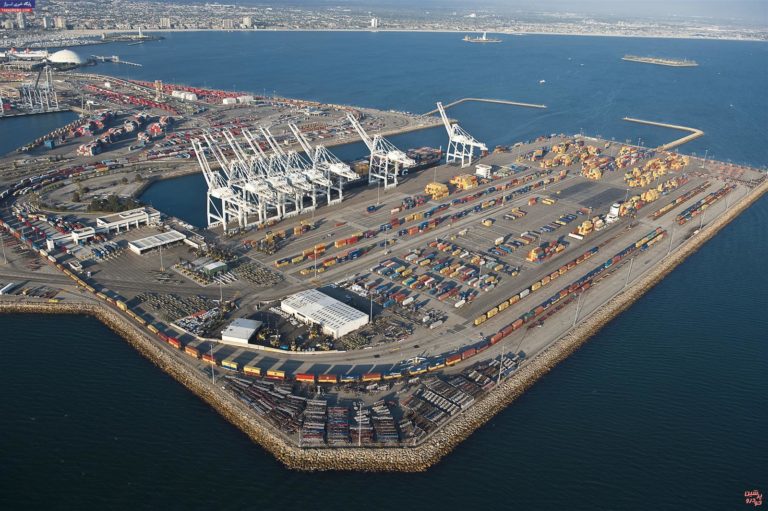
(Iran’s Chabahar Port)
By M. K. BHADRAKUMAR | Indian Punchline | January 2, 2019
India has done well to put in place the nuts and bolts of a payment mechanism for its trade and investment transactions with Iran against the backdrop of the US withdrawal from the Iran nuclear deal (known as the Joint Comprehensive Plan of Action) in May last year followed by the imposition of sanctions against Iran. The US had threatened to bring Iran’s oil trade to zero by the end of 2018 but ultimately pragmatism prevailed and major importing countries such as India were given 6-month ‘waivers’ in November.
Delhi has utilised this interregnum to sequester India-Iran economic relations as far as possible from the vagaries of the Trump administration’s Iran policies. How far Delhi sensitized Washington in advance about its Iran strategy we may never know, but the overall approach suggests a quiet determination to safeguard Indian economic (and political) interests from suffering collateral damage without, at the same time, displaying any strategic defiance of the US in the foreign-policy domain. The Indian diplomacy has been successful here so far.
Broadly, the Indian government has revisited the strategy adopted by the UPA leadership in similar circumstances of US sanctions against Iran and in the light of past experience, finessed a payment mechanism that dispenses with the use of American dollar in India-Iran economic transactions thereby bypasses the cutting edge of the US sanctions. Indeed, the impetus to do so is far more keenly felt today than under the UPA government because India-Iran economic relationship is transforming phenomenally and assuming strategic importance under the Modi government, especially with the operationalization of the Chabahar Port project.
Arguably, the Modi government is showing far greater grit in comparison with the timid attitude by the previous UPA government in asserting India’s strategic autonomy to advance the India-Iran partnership notwithstanding the hostile policies of Washington toward Iran, which are in the nature of forcing a ‘regime change’ in Tehran. Interestingly, the Indian approach is also impervious to the continued Israeli and Saudi intrigues against Iran, although the Modi government has significantly boosted India’s relations with these two Middle East countries.
The Indian policy toward relations with Iran under the deepening shadow of US sanctions has evolved in three carefully measured stages through the month of December. Needless to say, this wouldn’t have been possible without mutual trust and understanding in the relationship characterized by close consultations through diplomatic channels. In the first stage, it came to be known that in early November the two countries signed an agreement to the effect that India will import crude oil from Iran using a rupee-based payment mechanism and that 50 percent of those payments will be used for exporting items by India to Tehran.
Accordingly, India’s government-owned UCO Bank (which has no exposure to the US) was designated to handle this mechanism. In a third stage, in continuation of the above, the Ministry of Finance in Delhi issued an order in end-December exempting the National Iranian Company (NIOC) which exports crude to India from paying a steep ‘withholding tax’ to the Indian authorities. This order issued on December 28 will have retrospective effect from November 5 so that an amount of $1.5 billion that Indian refiners had accumulated as outstanding payments to NIOC could be released. Under Indian laws, the income of a foreign company that is deposited in an Indian bank account is subject to a withholding tax of 40 percent plus other levies, leading to a total take by the authorities of 42.5 percent.
Suffice to say, the door is open, Iran will now be able to use the rupee funds for a range of expenses–including imports from India, the cost of its missions in the country, direct investment in Indian projects, and its financing of Iranian students in India. It can also invest the funds in Indian government debt securities. The tax exemption order, though, only refers to crude oil. That means it does not apply to imports of other commodities, such as fertilizer, liquefied petroleum gas and wax. It appears that the scope of the use of funds will ensure balanced bilateral trade, which is traditionally in Iran’s favour.
On December 31, the two countries announced that their banking transactions mechanism is ready for operation.
Interestingly, India is leapfrogging many other countries that have been talking about similar payment mechanisms with Iran bypassing the US sanctions. The most glaring instance is of the European Union’s much-vaunted proposed mechanism of the Special Purpose Vehicle (SPV), which has not arrived yet. Brussels had vowed to establish the SPV “before the end of the year (2018) as a way to protect and promote legitimate business (of European companies) with Iran,” to quote the EU foreign policy chief Federica Mogherini.
Clearly, Delhi is not waiting to take the cue from other capitals that may harbor grave reservations over the US sanctions against Iran. Equally, Tehran’s willingness to accept for payments the Indian rupee (which is not traded on international markets) bears testimony to its great desire to sustain a beneficial relationship with India notwithstanding the US pressure on Delhi to severely cut back on economic ties with Iran.
All in all, Delhi seems to be preparing for the long haul. The fact of the matter is that politically, it is an increasingly tall order for the present Iranian leadership to continue with its adherence to its share of the 2015 Iran nuclear deal without any infringement or breach in the face of the failure on the part of the European leaders to deliver on their promise that in return Iran will be compensated through steps such as the EU maintaining and deepening economic relations with Iran, the continued sale of Iran’s oil and gas, effective banking transactions with Iran, the further provision of export credit and development of the SPVs in financial banking, insurance and trade areas and so on.
The ground reality is that the European leaders failed to deliver on their promises to Tehran and Iran has been left to fend for itself under the most savage and unlawful economic and political pressure by Washington. Simply put, while Europe claims that the Iran nuclear deal is of strategic importance, it is unwilling or reluctant to invest in its own strategic interests. The Iranian Foreign Minister Mohammad Zarif aptly summed up the European dilemma in a recent remark that you cannot swim without getting wet. Delhi may have shown that where there is a strong political will, there is always a way forward.
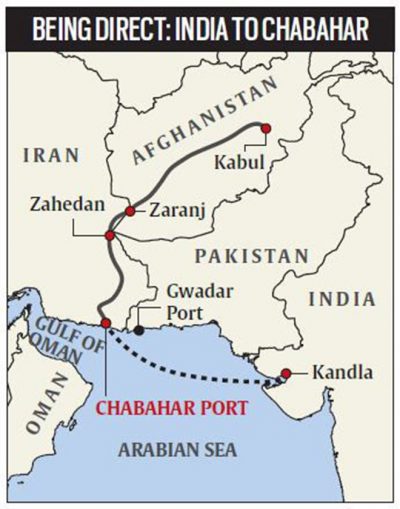
Without doubt, the operationalization of the Chabahar Port a week ago dramatically changes the India-Iran strategic calculus. Where words are not adequate to describe it, a look at the map showing India’s new Silk Road will do. Its geopolitical ramifications are profound. Ironically, Chabahar may eventually bring not only India and Iran but the US as well on the same page. Much lies in the womb of time.
A Reuters Report on Iran That Fueled US Diatribes
By Ivan Kesic | Consortium News | December 27, 2018
When U.S. Secretary of State Mike Pompeo gave speeches about mega corruption in Iran this year, he did not cite a Reuters’ 2013 article or give credit to its three reporters; Steve Stecklow, Babak Dehghanpisheh and Yeganeh Torbati.
Instead he presented it as the kind of specialized knowledge that only a high-ranking official such as himself might be in a position to reveal. “Not many people know this,” Pompeo told an audience gathered last July at the Ronald Reagan Presidential Foundation and Library in Simi Valley, California, “but the Ayatollah Khamenei has his own personal, off-the-books hedge fund called the Setad, worth $95 billion, with a B.” Pompeo went on to tell his audience that Khamenei’s wealth via Setad was untaxed, ill-gotten, and used as a “slush fund” for the Islamic Revolutionary Guard Corps.
But a comparison between the 5-year-old Reuters article and Pompeo’s speech, which was lauded by The Wall Street Journal’s editorial board as “truth telling,” shows a type of symbiosis that could only help cast a backward glow over President Donald Trump’s move, last summer, to reimpose all sanctions lifted by the Obama’s administration’s historic nuclear deal with Iran.
The imprint of the Reuters article on Pompeo’s speech was obvious in an anecdote about the travails of an elderly woman living in Europe. “The ayatollah fills his coffers by devouring whatever he wants,” Pompeo said. “In 2013 the Setad’s agents banished an 82-year-old Baha’i woman from her apartment and confiscated the property after a long campaign of harassment. Seizing land from religious minorities and political rivals is just another day at the office for this juggernaut that has interests in everything from real estate to telecoms to ostrich farming.”
The 82-year-old Baha’i woman living in Europe clearly matches Pari Vahdat-e-Hagh, a woman the Reuters team put at the very start of their extensive, three-part investigation. Here’s how the Reuters article begins: “The 82-year-old Iranian woman keeps the documents that upended her life in an old suitcase near her bed. She removes them carefully and peers at the tiny Persian script.”
While tapping the human-interest aspects of the story, Pompeo’s speech steered clear of some of the qualifications that the Reuters reporters and editors injected into their general profile of corruption. Pompeo referred to Khamenei using Setad as a “personal hedge fund,” for instance, suggesting personal decadence on the part of the Iranian leader. But the Reuters team was careful to note that it had found no evidence of Khamenei putting the assets to personal use. “Instead, Setad’s holdings underpin his power over Iran.”
While stipulating that Khamenei’s greed was not for money but for power, the Reuters team neglected something of timely and possibly greater relevance. Earlier that same year the U.S. admitted its own longstanding greed for power over this foreign country.
Final CIA Admission
In August 2013—three months before the Reuter’s article was published—the CIA finally admitted its role in the 1953 Iranian coup. “Marking the sixtieth anniversary of the overthrow of Iranian Prime Minister Mohammad Mosaddeq, the National Security Archive is today posting recently declassified CIA documents on the United States’ role in the controversial operation. American and British involvement in Mosaddeq’s ouster has long been public knowledge, but today’s posting includes what is believed to be the CIA’s first formal acknowledgement that the agency helped to plan and execute the coup,” the archive said.
This U.S. aggression led directly to two phases of property confiscation in Iran: first under the Shah and then under the religious fundamentalists who overthrew him. Unaccountably, however, the Reuters team ignored the CIA admission so relevant to their story.
To its credit, the Reuters article does allude, early on, to the two inter-related periods of property confiscation in Iran. “How Setad came into those assets also mirrors how the deposed monarchy obtained much of its fortune – by confiscating real estate,” the article says. But that sentence only functions as a muffled disclaimer since the team makes no effort to integrate that history into the laments of people such as Pari Vahdat-e-Hagh, who emotionally drives the story.
Dubious Figure
For anyone familiar with the history of property confiscations in Iran, this ex-pat widow is a dubious figure. In the article, she claims that she lost three apartments in a multi-story building in Tehran, “built with the blood of herself and her husband.” She also says her late husband Hussein was imprisoned in 1981 because he began working for a gas company that had been set up to assist unemployed members of the Baha’i faith, and finally executed a year later.
The suggestion is that he was killed as part of a widespread persecution of Bahai’i followers.
What the Reuters reporters and editors omitted to mention, however, is that Hussein had been a lieutenant in the military regime of Mohammad Reza Shah Pahlavi; the last shah of Iran who was overthrown by the uprising of 1979.
The Shah’s name has become so intertwined with UK and U.S. meddling in Iran that his role in setting a pro-western foreign policy is mentioned in the opening sentence of the Encyclopedia Brittanica entry on him. But the Reuters article places this mention at the end of the story, as deep background. By the time the team discloses the Shah’s penchant for confiscating property and flagrant corruption, the reader is in the third section of a three-part article. By that time, the elderly Vahdat-e-Hagh has come and gone. By then, she has cemented herself in the reader’s imagination as an unequivocal victim, even though some obvious questions about her should occur to anyone familiar with the country’s history.
How, for instance, did she and her husband come to own such significant property at the center of Iran’s capital city? Under the Pahlavi regime, most military personnel were provided with one apartment, not three. In the article, Vahdat-e-Hagh says that she and her husband obtained the property themselves, so presumably they did not inherit it. Could her late husband, Hussein, have been of high importance to the Shah’s U.S.-backed regime, which was famous for its lavish handouts to special loyalists?
Such questions float over the article, not only about this particular subject, but many others who are presented to dramatize the ayatollah’s misdeeds. Several sources appear as human rights “experts” and lawyers. They are all Iranians living abroad and many have controversial biographical details that go unmentioned. There are similar well-known credibility issues with people who are introduced as respectable scholars and politicians.
The article offers the story of another aggrieved Baha’i family without ever mentioning how such people, in general, had lost property during the Shah’s White Revolution of 1963 which was intended to weaken those classes that supported the traditional system, primarily landed elites.
One obvious problem with the article is the distance of the three Reuters journalists from the scene of their story. They are based in New York, London and Dubai and do not reveal their information-gathering methods about Iran, a country that admits very few foreign reporters. So far, Yeganeh Torbati, the reporter who presumably wrote the first, human-interest part of the story, has not responded to a message to her Facebook account seeking comment. Nor has she responded to an email. Torbati, now based in Washington, was based in Dubai in 2013.
Story with Long Legs
In the years since its publication, the Reuters article has been bubbling up in book citations. Suzanne Maloney mentioned it in her 2015 book “Iran’s Political Economy since the Revolution” as did Misagh Parsa in “Democracy in Iran: Why It Failed and How It Might Succeed” published in 2016.
This year Pompeo relied on it in four speeches. Two books published in 2018 place some weight on the Reuters article: “Challenging Theocracy: Ancient Lessons for Global Politics” by David Tabachnick, Toivo Koivukoski and Herminio Meireles Teixeira; and “Losing Legitimacy: The End of Khomeini’s Charismatic Shadow and Regional Security” by Clifton W. Sherrill.
The name Setad, which means “headquarters” in Farsi, has been kicking around Washington for five years, ever since the U.S. imposed sanctions on the group. In June of 2013, the U.S. Treasury Department issued a press release about Setad and its subsidiaries, with a long list of Persian-named properties that were managing to avoid UN sanctions imposed on the country’s business dealings as a means of discouraging Iran’s enrichment of nuclear-weapon grade uranium.
Six months later, in November, Reuters published its extensive, three-part investigative package, which now tops Google searches for “Setad.”
The report was the first piece of important follow-up journalism on the U.S. Treasury press release. But in one key piece of wording, editors and reporters almost seem to be straining to move their story ahead of the government’s rendition, to the primary position it now holds in Google search-terms.
“Washington,” according to the article, “had acknowledged Setad’s importance.” Acknowledged? By journalistic conventions that Reuters editors would certainly know, an acknowledgement indicates a reluctant admission, something a source would rather not reveal. Five months earlier, however, the Treasury Department sounded eager to call attention to Setad as “a massive network of front companies hiding assets on behalf of … Iran’s leadership.”
For hardliners on Iran, the U.S. Treasury press release was important fodder. But it lacked the human drama necessary to stir an audience against the current regime. When the Reuters article came along, with all its historical omissions, it filled that gap.
Berlin to Ban Iran’s Mahan Air Airline From Using German Airports – Reports
Sputnik – 21.12.2018
BERLIN – The German government is going to ban Iran’s Mahan Air airline from using German airports starting from 2019, local media reported on Friday.
According to the Bild newspaper, the decision was made after intensive discussions and followed the US intelligence services’ claims that German cooperation with Mahan Air would threaten US citizens in German airports.
The airline carries out six flights between Tehran and Germany per week: four flights from Duesseldorf and two more from Munich.
Mahan Air was sanctioned by the US Treasury Department in October of 2011. According to the US Treasury, the airline routinely transports fighters and equipment to Syria in order to support the government of Syrian President Bashar Assad.
Albania fell prey to Israeli-US scenario by targeting Iran diplomats: Tehran
Press TV – December 20, 2018
Tehran has denounced Albania for expelling two Iranian diplomats, saying the Balkan country fell prey to a scenario fabricated by the US and Israel.
Albania’s Foreign Ministry said on Wednesday that it had expelled two Iranian diplomats suspected of “involvement in activities that harm the country’s security.”
A ministry spokesman told the Associated Press that the expulsions followed talks with others, including Israel.
Iran’s Foreign Ministry Spokesman Bahram Qassemi said on Thursday that Albania’s move was “in line with previous such scenarios meant to damage Iran-Europe relations at the current sensitive juncture.”
He said the expulsions come while Tehran has “always had appropriate relations with Albania and respected all of its domestic regulations in a move based on principles of the Islamic Republic of Iran’s foreign policy.”
US National Security Adviser John Bolton was quick to publicly support Albania’s decision.
“We stand with PM [Edi] Rama and the Albanian people as they stand up to Iran’s reckless behavior in Europe and across the globe,” he tweeted.
Qassemi said that Washington’s stance on the issue and Albania’s declaration that its move had been coordinated with foreign security services, prove that the US and the regime in Israel had been behind the expulsions.
Albania, he added, had fallen prey to a scenario fabricated by the US and the Israeli regime and certain terrorist groups.
The Iranian official further called on the Albanian government “to defend its sovereignty, independence and security” in the face of the US-Israeli scenario,” stressing that the country “must not allow others to affect and hamper its relations with Iran due to special political reasons.”
Albania hosts thousands of members of the Mujahedin Khalq Organization (MKO), a notorious anti-Iran terror group.
The MKO has carried out numerous attacks against Iranian civilians and government officials over the past three decades and is listed as a terrorist organization by much of the international community.
Out of the nearly 17,000 Iranians killed in terrorist assaults since the victory of Iran’s 1979 Islamic Revolution, about 12,000 have fallen victim to MKO’s acts of terror.
Albania is not the first European country to make such claims against Iran.
Back in June, Belgian authorities said that an Iranian diplomat had been arrested along with a 38-year-old man and a 33-year-old woman, suspected of plotting a bomb attack on an MKO meeting in Paris attended by US President Donald Trump’s lawyer, Rudy Giuliani, and several former European and Arab ministers.
Assadollah Assadi, 46, was arrested in Germany and later extradited to Belgium in defiance of Vienna Convention on Diplomatic Relations 1961.
Later on October 30, Danish intelligence chief Finn Borch Andersen claimed that an Iranian intelligence service had tried to carry out a plot to assassinate an Iranian Arab opposition figure on Denmark’s soil.
Swedish security police also said a Norwegian citizen of Iranian descent had been arrested on October 21 in connection with the alleged plot and extradited to Denmark.
Israeli media later revealed that the Israeli spy agency Mossad had provided Denmark with “intelligence” concerning the alleged plot by Tehran.
Israeli Prime Minister Benjamin Netanyahu has admitted that Tel Aviv is behind what Iranian Foreign Minister described as “false flags” in Europe.
Tehran said “invisible hands” were at work to damage Iran’s ties with Europe at the time when the two sides are closely cooperating to save the 2015 multilateral nuclear deal following the US’s pullout.
Let’s Boycott Israel and Its Friends
If you want change, begin to play hardball

By Philip Giraldi • Unz Review • December 18, 2018
In his recent article “Averting World Conflict with China” Ron Unz has come up with an intriguing suggestion for the Chinese government to turn the tables on the December 1st arrest of Meng Wanzhou in Canada. Canada detained Mrs. Meng, CFO of the world’s largest telecoms equipment manufacturer Huawei, at the request of the United States so she could be extradited to New York to face charges that she and her company had violated U.S. sanctions on Iran. The sanctions in question had been imposed unilaterally by Washington and it is widely believed that the Trump Administration is sending a signal that when the ban on purchasing oil from Iran comes into full effect in May there will be no excuses accepted from any country that is unwilling to comply with the U.S. government’s demands. Washington will exercise universal jurisdiction over those who violate its sanctions, meaning that foreign officials and heads of corporations that continue to deal with Iran can be arrested when traveling internationally and will be extradited to be tried in American courts.
There is, of course, a considerable downside to arresting a top executive of a leading foreign corporation from a country that is a major U.S. trading partner and which also, inter alia, holds a considerable portion of the U.S. national debt. Ron Unz has correctly noted the “…extraordinary gravity of this international incident and its potential for altering the course of world history.” One might add that Washington’s demands that other nations adhere to its sanctions on third countries opens up a Pandora’s box whereby no traveling executives will be considered safe from legal consequences when they do not adhere to policies being promoted by the United States. Unz cites Columbia’s Jeffrey Sachs as describing it as “almost a U.S. declaration of war on China’s business community.” If seizing and extraditing businessmen becomes the new normal those countries most affected will inevitably retaliate in kind. China has already detained two traveling Canadians to pressure Ottawa to release Mrs. Meng. Beijing is also contemplating some immediate retaliatory steps against Washington to include American companies operating in China if she is extradited to the U.S.
Ron Unz has suggested that Beijing might just want to execute a quid pro quo by pulling the licenses of Sheldon Adelson’s casinos operating in Macau, China and shutting them down, thereby eliminating a major source of his revenue. Why go after an Israeli-American casino operator rather than taking steps directly against the U.S. government? The answer is simple. Pressuring Washington is complicated as there are many players involved and unlikely to produce any positive results while Adelson is the prime mover on much of the Trump foreign policy, though one hesitates to refer to it as a policy at all.
Adelson is the world’s leading diaspora Israel-firster and he has the ear of the president of the United States, who reportedly speaks and meets with him regularly. And Adelson uses his considerable financial resources to back up his words of wisdom. He is the fifteenth wealthiest man in America with a reported fortune of $33 billion. He is the number one contributor to the GOP having given $81 million in the last cycle. Admittedly that is chump change to him, but it is more than enough to buy the money hungry and easily corruptible Republicans.
In a certain sense, Adelson has obtained control of the foreign policy of the political party that now controls both the White House and the Senate, and his mission in life is to advance Israeli interests. Among those interests is the continuous punishment of Iran, which does not threaten the United States in any way, through employment of increasingly savage sanctions and threats of violence, which brings us around to the arrest of Meng and the complicity of Adelson in that process. Adelson’s wholly owned talking head National Security Adviser John Bolton reportedly had prior knowledge of the Canadian plans and may have actually been complicit in their formulation. Adelson has also been the major force behind moving the U.S. Embassy to Jerusalem, has also convinced the Administration to stop its criticism of the illegal Israeli settlements on Arab land and has been instrumental in cutting off all humanitarian aid to the Palestinians. He prefers tough love when dealing with the Iranians, advocating dropping a nuclear bomb on Iran as a warning to the Mullahs of what more might be coming if they don’t comply with all the American and Israeli demands.
Meanwhile another Israeli, Haim Saban has performed similar work with the Democrats, contributing $5 million to their coffers, making him the top donor to the party. Saban has said that he is a “one issue guy, and my issue is Israel.”
Of course, one might reasonably argue that America’s problem with Jews who are passionately attached to Israel funding and controlling the major political parties is self-generated, that no one should be allowed to fund any political party to such an extent that one obtains control over policies. But that is an argument that will have to be directed at the Supreme Court, which permitted corporations to be treated as persons with its Citizens United ruling, allowing virtually unlimited money to flow into political PACs as a First Amendment right.
The lopsided wag-the-dog relationship with Israel is so dangerous to actual American interests in so many ways that the United States is now approaching a precipice and might soon find itself plummeting to ruin. Israel, not Russia, constantly interferes in the functioning of America’s remaining democracy. Fighting Israel’s wars and protecting it from any criticism have debased the value of being an American citizen and literally impoverished the country under a mountain of debt. The U.S. has been victimized by terrorism, much of which can be traced back to Israeli roots, and Washington is now isolated globally as the United States has become more and more like Israel, a militarized state, politically corrupt and abandoning basic liberties.
How does one right the sinking ship? For starters, the Ron Unz formula for correcting the problem with China provides an excellent roadmap. Israel and its friends do not have a grip on congress, the White House and the media because they are wonderful warm people that others find to be sympathetic. It is difficult even to imagine a scintillating conversation with a malignant toad like Sheldon Adelson. Israel’s ability to corrupt and misdirect is all based on Jewish money, a process in which Zionist oligarchs buy their way to power and access. So the solution is to hit back where it really hurts – boycott Israel and Israeli products and do the same for the companies that are the sources of income for the American Jews who are the principal supporters of the Zionist project.
The United States Congress is currently moving to make it illegal to openly advocate boycotts of Israel or even to inquire about doing so, while 25 states have already also done the same to a greater or lesser extent. Last week a speech therapist in Texas was fired from a job she had held for nine years because she refused to sign an oath affirming that she would not boycott Israel. It is a measure of Jewish power in the U.S. that American politicians choose to provide cover for Israel’s misdeeds even if it means the end of the First Amendment and free speech. But punitive steps intended to intimidate any and all critics of Israel aside, there is no reason why consumers cannot exercise judgement over what they buy and what they are supporting through their spending. If you want to visit Las Vegas, by all means go, but don’t patronize the casinos and hotels owned by Sheldon Adelson, which include The Venetian and Sands Resort.
Democratic party major donor Haim Saban, meanwhile, is a producer of Hollywood children’s entertainment, including the lucrative Power Rangers. You can stop your children from watching his violent programming and tell the network’s advertisers why you are doing so. And then there are businessmen including Bernard Marcus, who is a co-founder of Home Depot and a major supporter of Israel, and Robert Kraft, owner of the New England Patriots. No one really has to spend $1000 to go to a football game, particularly if the owner is a good friend of Benjamin Netanyahu, and if you need something for your home or are seeking entertainment, choose to spend your dollars somewhere else. Readers can do the homework for the businesses and services that they normally patronize. If outspoken advocates for Israel own the company, take your dollars elsewhere.
As it is nearly impossible in the United States to vote for a politician who is in any way critical of Israel, those who are opposed to the terrible damage that the Israelis and their domestic lobby are doing to the U.S. can instead vote with their purchasing power. It does not afford the same pleasure as “throwing the bums out,” but there will be considerable satisfaction in being able to strike back against a powerful lobby that is so hubristic and insensitive to any criticism that it has become completely tone deaf.
Apart from domestic considerations, observers have noted that Israeli treatment of the Palestinians has been worse than apartheid under South Africa yet South Africa was subjected to multiple boycotts and bans on its participation in international fora, to include even sporting competitions. It is past time to do the same to Israel, which has been shooting dead hundreds of unarmed Palestinians for months now without paying any price at all. Boycotting Israel internationally is a good start. It is non-violent and proportionate and it just might be an idea that will spread and finally bring about some payback for what Prime Minister Benjamin Netanyahu and his cabal of war criminals have done and continue to do. As the end of 2018 approaches, it would be something to look forward to if 2019 just might turn out to be the year of the international Israel Boycott.
Philip M. Giraldi, Ph.D., is Executive Director of the Council for the National Interest, a 501(c)3 tax deductible educational foundation that seeks a more interests-based U.S. foreign policy in the Middle East. Website is http://www.councilforthenationalinterest.org, address is P.O. Box 2157, Purcellville VA 20134 and its email is <a:inform@cnionline.org” title=”mailto:inform@cnionline.org” href=”mailto:inform@cnionline.org”>inform@cnionline.org</a:inform@cnionline.org”>.
Europeans refusing fuel to Iranian aircraft: Official
Press TV – December 18, 2018
Iran’s airspace remains open to all international flights, including US airliners, but most European countries refuse fuel to Iranian planes, an official says.
“Iran’s sky is open to all countries, except Israel,” head of the Iranian Civil Aviation Organization (CAO) Ali Abedzadeh said.
Currently, American airplanes are also passing through the Iranian sky and Iran has not imposed restrictions on any country, the official said. Likewise, no country has put any restrictions on the passage of Iranian planes.
However, “unfortunately, most European countries are refusing to supply fuel to Iranian aircraft and this creates problems for us, for which we have plans to overcome,” Abedzadeh said.
Fuel service providers in Europe and some other countries are citing new US sanctions in refusing to refuel Iranian aircraft.
“US goal is to cut off foreign flights of Iranian airlines,” Abedzadeh said.
Iran is already angry with the EU over its failure to stop European companies from leaving the Islamic Republic.
For months, the Europeans have been working on a virtual clearing house to process Iran-related transactions independent of the US.
The three main countries behind the initiative – Germany, France and the UK – say they have set up a special purpose vehicle (SPV) to facilitate non-dollar trade with Iran.
However, they appear to be passing the buck on who should take the responsibility for the system and house it.
Last month, Iran’s nuclear chief Ali Akbar Salehi said he had warned the Europeans that Iranian patience was wearing thin.
Salehi said while the European Union’s efforts were encouraging, “we have not yet seen any tangible results.”
Iran is disappointed with a mass exodus of major European companies which began even before the sanctions kicked in after President Donald Trump announced pulling the US out of the nuclear deal in May.
On Monday, national flag carrier Iran Air Chief Executive Farzaneh Sharafbafi called on the European Union to press US authorities to allow delivery of Airbus passenger aircraft purchased by Tehran.
European commercial aircraft manufacturer Airbus signed a contract to sell 100 passenger aircraft to Iran Air after a 2015 nuclear deal was reached with the Islamic Republic.
The US revoked licenses for Airbus as well as Boeing which had signed the delivery of 80 planes to Iran Air after Trump withdrew from the nuclear deal.
“We hope that the EU can get the OFAC (Office of Foreign Assets Control) licenses for delivery of purchased Airbus planes,” Sharafbafi said.
The official urged the EU to press US authorities, “as OFAC licenses were issued for ATR planes” built by the Franco-Italian turboprop maker which had signed to deliver 20 planes to Iran Air.
ATR delivered 13 aircraft, some of which came after OFAC had withdrawn the licenses, with the rest remaining on order.
Airbus delivered only three aircraft before the licenses were withdrawn. The Europeans say they have to get American permits for their deliveries because 10 percent of the components of the aircraft are US-made.
On Wednesday, a top official said Iran needs some 500 planes and would likely back buying the Sukhoi Superjet 100 if Russia is willing to sell them to its airlines.
Russian officials have been reported as saying Sukhoi is working on reducing the number of US parts in the hopes of winning an Iranian order for up to 100 aircraft.
“If the Iranian airlines want to use this aircraft (Superjet 100 ) and the seller is willing to sell it to Iran, the Civil Aviation Organization is ready to issue its final comment on this aircraft,” Abedzadeh said.
Pro-Israel MPs flout NDP policy
By Yves Engler · December 16, 2018
Do New Democrat MPs who belong to the Canada-Israel Interparliamentary Group (CIIG) have carte blanche to flout party policy?
Last week CIIG executive member Murray Rankin participated in a press conference calling for a new round of Canadian sanctions on Iran. The Victoria MP joined CIIG chair Michael Levitt, vice-chair David Sweet and executive member Anthony Housefather for an event led by former CIIG executive Irwin Cotler.
Rankin’s role in this anti-Iranian effort runs counter to the NDP’s opposition to illegal sanctions on Iran, call for Canada to re-establish diplomatic relations with that country and support for the 2015 “p5+1 nuclear deal”. (Justin Trudeau has failed to maintain his election promise to restart diplomatic relations with Iran.)
Rankin’s departure from NDP policy takes place amidst the Donald Trump administration’s withdrawal from the Iran nuclear deal and bid to force others to adhere to its illegal sanctions, threatening to sanction any country that buys Iranian oil.
Secretary of State Mike Pompeo recently said the US would seek to starve Iranians until the country’s decision-makers accept their demands. Last month Pompeo told the BBC, “the [Iranian] leadership has to make a decision that they want their people to eat.”
Along with punishing its economy, the US and Israel are seeking to foment unrest in Iran. According to a July Axios story, “Israel and the United States formed a joint working group a few months ago that is focused on internal efforts to encourage protests within Iran and pressure the country’s government.”
The other NDP member on CIIG’s executive also recently departed from the party’s position by condemning the Palestinian solidarity movement. Randall Garrison tweeted, “Nick Cave: cultural boycott of Israel is ‘cowardly and shameful’” and linked to an article quoting the Australian musician who has joined a growing list of prominent individuals – from Lorde to Natalie Portman – refusing to whitewash Israeli apartheid.
Garrison’s comment seems to run counter to the NDP’s vote against a 2016 House of Commons resolution condemning the Boycott, Divestment and Sanctions movement. It certainly angered many rank-and-file party members.
After the backlash to Garrison’s attack on the Palestine solidarity movement, the Centre for Israel and Jewish Affairs put out a statement calling on people to defend the NDP MP.
It said,
“last night MP Randall Garrison tweeted an anti-BDS article, calling boycotts of Israel ‘cowardly and shameful’. Since then, the comment section of the tweet has been filled with hateful pro-BDS messages from anti-Israel trolls.”
The timing of Garrison’s tweet made it especially egregious. The day before CIIG’s vice-chair attacked Palestine solidarity activists the Israeli Knesset voted down (71 votes to 38) a bill titled the “Basic Law: Equality”, which stated, “the State of Israel shall maintain equal political rights amongst all its citizens, without any difference between religions, race, and sex.”
The bill was partly a response to the explicitly racist Nation-State law passed in the summer. (The bulk of Garrison and Rankin’s colleagues on CIIG’s Israeli partner — the Israel-Canada Inter-Parliamentary Friendship Group — most likely voted against equality.)
Three weeks ago Garrison spoke at an event organized by the Canadian Jewish Political Affairs Committee (CJPAC). CIIG’s chair also spoke. On Twitter, Michael Levitt noted:
“Had an amazing time talking to the CJPAC Fellowship Conference last night. Over 50 Jewish and non-Jewish university students who are pro-Israel and politically engaged.”
In his hostility to Palestine solidarity activism, Garrison has taken to blocking NDP members on Twitter. After Garrison’s attack against the BDS movement, prominent lawyer and Palestinian rights advocate, Dimitri Lascaris, wrote:
“No other Canadian MP has blocked me even though I have said far harsher things about other Canadian MPs than I have ever said about Garrison.”
Last summer NDP leader Jagmeet Singh refused to heed a call by 200 well-known musicians, academics, trade unionists and party members for the NDP to withdraw from CIIG.
Perhaps if Singh had supported the open letter signed by Roger Waters, Linda McQuaig, Maher Arar, Noam Chomsky, etc. it would have sent a message and lessened the likelihood that Garrison and Rankin would flout party policy.
It is not too late for Singh to reevaluate his position on the Canada-Israel Interparliamentary Group.
Canada to Pay Heavy Price for Trudeau’s Groupie Role in US Banditry Against China
By Finian CUNNINGHAM | Strategic Culture Foundation | 16.12.2018
You do have to wonder about the political savvy of Canadian Prime Minister Justin Trudeau and his government. The furious fallout from China over the arrest of a senior telecoms executive is going to do severe damage to Canadian national interests.
Trudeau’s fawning over American demands is already rebounding very badly for Canada’s economy and its international image.
The Canadian arrest – on behalf of Washington – of Meng Wanzhou, chief financial officer of Chinese telecom giant Huawei, seems a blatant case of the Americans acting politically and vindictively. If the Americans are seen to be acting like bandits, then the Canadians are their flunkies.
Wanzhou was detained on December 1 by Canadian federal police as she was boarding a commercial airliner in Vancouver. She was reportedly handcuffed and led away in a humiliating manner which has shocked the Chinese government, media and public.
The business executive has since been released on a $7.4 million bail bond, pending further legal proceedings. She is effectively being kept under house arrest in Canada with electronic ankle tagging.
To add insult to injury, it is not even clear what Wanzhou is being prosecuted for. The US authorities have claimed that she is guilty of breaching American sanctions against Iran by conducting telecoms business with Tehran. It is presumed that the Canadians arrested Wanzhou at the request of the Americans. But so far a US extradition warrant has not been filed. That could take months. In the meantime, the Chinese businesswoman will be living under curfew, her freedom denied.
Canadian legal expert Christopher Black says there is no juridical case for Wanzhou’s detention. The issue of US sanctions on Iran is irrelevant and has no grounds in international law. It is simply the Americans applying their questionable national laws on a third party. Black contends that Canada has therefore no obligation whatsoever to impose those US laws regarding Iran in its territory, especially given that Ottawa and Beijing have their own separate bilateral diplomatic relations.
In any case, what the real issue is about is the Americans using legal mechanisms to intimidate and beat up commercial rivals. For months now, Washington has made it clear that it is targeting Chinese telecoms rivals as commercial competitors in a strategic sector. US claims about China using telecoms for “spying” and “infiltrating” American national security are bogus propaganda ruses to undermine these commercial rivals through foul means.
It also seems clear from US President Donald Trump’s unsubtle comments this week to Reuters, saying he would “personally intervene” in the Meng case “if it helped trade talks with China”, that the Huawei executive is being dangled like a bargaining chip. It was a tacit admission by Trump that the Americans really don’t have a legal case against her.
Canada’s foreign minister Chrystia Freeland bounced into damage limitation mode following Trump’s thuggish comments. She said that the case should not be “politicized” and that the legal proceedings should not be tampered with. How ironic is that?
The whole affair has been politicized from the very beginning. Meng’s arrest, or as Christopher Black calls it “hostage-taking”, is driven by Washington’s agenda of harassment against China for commercial reasons, under a legal pretext purportedly about Iranian sanctions.
When Trump revealed the cynical expediency of him “helping to free Wanzhou”, then the Canadians realized they were also being exposed for the flunkies that they are for American banditry. That’s why Freeland was obliged to quickly adopt the fastidious pretense of legal probity.
Canadian premier Justin Trudeau has claimed that he wasn’t aware of the American request for Wanzhou’s detention. Trudeau is being pseudo. For such a high-profile infringement against a senior Chinese business leader, Ottawa must have been fully briefed by the Americans. Christopher Black, the legal expert, believes that Trudeau had to have known about the impending plot to snatch Wanzhou and moreover that he personally signed off on it.
What Trudeau and his government intended to get out of performing this sordid role for American thuggery is far from clear. Maybe after being verbally mauled by Trump as “weak and dishonest” at the G7 summit earlier this year, in June, Trudeau decided it was best to roll over and be a good little puppy for the Americans in their dirty deed against China.
But already it has since emerged that Canada is going to pay a very heavy price indeed for such dubious service to Washington. Beijing has warned that it will take retaliation against both Washington and Ottawa. And it is Ottawa that is more vulnerable to severe repercussions.
This week saw two Canadian citizens, one a former diplomat, detained in China on spying charges.
Canadian business analysts are also warning that Beijing can inflict harsh economic penalties on Ottawa. An incensed Chinese public have begun boycotting Canadian exports and sensitive Canadian investments in China are now at risk from being blocked by Beijing. A proposed free trade deal that was being negotiated between Ottawa and Beijing now looks dead in the water.
And if Trudeau’s government caves in to the excruciating economic pressure brought to bear by Beijing and then abides by China’s demand to immediately release Meng Wanzhou, Ottawa will look like a pathetic, gutless lackey to Washington. Canada’s reputation of being a liberal, independent state will be shredded. Even then the Chinese are unlikely to forget Trudeau’s treachery.
With comic irony, there’s a cringemaking personal dimension to this unseemly saga.
During the 1970s when Trudeau’s mother Margaret was a thirty-something socialite heading for divorce from his father, then Prime Minister Pierre Trudeau, she was often in the gossip media for indiscretions at nightclubs. Rolling Stones guitarist Keith Richards claims in his autobiography that Margaret Trudeau was a groupie for the band, having flings with Mick Jagger and Ronnie Wood. Her racy escapades and louche lifestyle brought shame to many Canadians.
Poor Margaret Trudeau later wound up divorced, disgraced, financially broke and scraping a living from scribbling tell-all books.
Justin, her eldest son, is finding out that being a groupie for Washington’s banditry is also bringing disrepute for him and his country.
Averting World Conflict with China
The PRC Should Retaliate by Targeting Sheldon Adelson’s Chinese Casinos
By Ron Unz • Unz Review • December 13, 2018
As most readers know, I’m not a casual political blogger and I prefer producing lengthy research articles rather than chasing the headlines of current events. But there are exceptions to every rule, and the looming danger of a direct worldwide clash with China is one of them.
Consider the arrest last week of Meng Wanzhou, the CFO of Huawei, the world’s largest telecom equipment manufacturer. While flying from Hong Kong to Mexico, Ms. Meng was changing planes in the Vancouver International Airport airport when she was suddenly detained by the Canadian government on an August US warrant. Although now released on $10 million bail, she still faces extradition to a New York City courtroom, where she could receive up to thirty years in federal prison for allegedly having conspired in 2010 to violate America’s unilateral economic trade sanctions against Iran.
Although our mainstream media outlets have certainly covered this important story, including front page articles in the New York Times and the Wall Street Journal, I doubt most American readers fully recognize the extraordinary gravity of this international incident and its potential for altering the course of world history. As one scholar noted, no event since America’s deliberate 1999 bombing of China’s embassy in Belgrade, which killed several Chinese diplomats, has so outraged both the Chinese government and its population. Columbia’s Jeffrey Sachs correctly described it as “almost a US declaration of war on China’s business community.”
Such a reaction is hardly surprising. With annual revenue of $100 billion, Huawei ranks as the world’s largest and most advanced telecommunications equipment manufacturer as well as China’s most internationally successful and prestigious company. Ms. Meng is not only a longtime top executive there, but also the daughter of the company’s founder, Ren Zhengfei, whose enormous entrepreneurial success has established him as a Chinese national hero.
Her seizure on obscure American sanction violation charges while changing planes in a Canadian airport almost amounts to a kidnapping. One journalist asked how Americans would react if China had seized Sheryl Sandberg of Facebook for violating Chinese law…especially if Sandberg were also the daughter of Steve Jobs.
Indeed, the closest analogy that comes to my mind is when Prince Mohammed bin Salman of Saudi Arabia kidnapped the Prime Minister of Lebanon earlier this year and held him hostage. Later he more successfully did the same with hundreds of his wealthiest Saudi subjects, extorting something like $100 billion in ransom from their families before finally releasing them. Then he may have finally over-reached himself when Washington Post columnist Jamal Khashoggi, a Saudi dissident, was killed and dismembered by a bone-saw at the Saudi embassy in Turkey.
We should actually be a bit grateful to Prince Mohammed since without him America would clearly have the most insane government anywhere in the world. As it stands, we’re merely tied for first.
Since the end of the Cold War, the American government has become increasingly delusional, regarding itself as the Supreme World Hegemon. As a result, local American courts have begun enforcing gigantic financial penalties against foreign countries and their leading corporations, and I suspect that the rest of the world is tiring of this misbehavior. Perhaps such actions can still be taken against the subservient vassal states of Europe, but by most objective measures, the size of China’s real economy surpassed that of the US several years ago and is now substantially larger, while also still having a far higher rate of growth. Our totally dishonest mainstream media regularly obscures this reality, but it remains true nonetheless.
Provoking a disastrous worldwide confrontation with mighty China by seizing and imprisoning one of its leading technology executives reminds me of a comment I made several years ago about America’s behavior under the rule of its current political elites:
Or to apply a far harsher biological metaphor, consider a poor canine infected with the rabies virus. The virus may have no brain and its body-weight is probably less than one-millionth that of the host, but once it has seized control of the central nervous system, the animal, big brain and all, becomes a helpless puppet.
Once friendly Fido runs around foaming at the mouth, barking at the sky, and trying to bite all the other animals it can reach. Its friends and relatives are saddened by its plight but stay well clear, hoping to avoid infection before the inevitable happens, and poor Fido finally collapses dead in a heap.
Normal countries like China naturally assume that other countries like the US will also behave in normal ways, and their dumbfounded shock at Ms. Meng’s seizure has surely delayed their effective response. In 1959, Vice President Richard Nixon visited Moscow and famously engaged in a heated “kitchen debate” with Premier Nikita Khrushchev over the relative merits of Communism and Capitalism. What would have been the American reaction if Nixon had been immediately arrested and given a ten year Gulag sentence for “anti-Soviet agitation”?
Since a natural reaction to international hostage-taking is retaliatory international hostage-taking, the newspapers have reported that top American executives have decided to forego visits to China until the crisis is resolved. These days, General Motors sells more cars in China than in the US, and China is also the manufacturing source of nearly all our iPhones, but Tim Cook, Mary Barra, and their higher-ranking subordinates are unlikely to visit that country in the immediate future, nor would the top executives of Google, Facebook, Goldman Sachs, and the leading Hollywood studios be willing to risk indefinite imprisonment.
Canada had arrested Ms. Meng on American orders, and this morning’s newspapers reported that a former Canadian diplomat had suddenly been detained in China, presumably as a small bargaining-chip to encourage Ms. Meng’s release. But I very much doubt such measures will have much effect. Once we forgo traditional international practices and adopt the Law of the Jungle, it becomes very important to recognize the true lines of power and control, and Canada is merely acting as an American political puppet in this matter. Would threatening the puppet rather than the puppet-master be likely to have much effect?
Similarly, nearly all of America’s leading technology executives are already quite hostile to the Trump Administration, and even if it were possible, seizing one of them would hardly be likely to sway our political leadership. To a lesser extent, the same thing is true about the overwhelming majority of America’s top corporate leaders. They are not the individuals who call the shots in the current White House.
Indeed, is President Trump himself anything more than a higher-level puppet in this very dangerous affair? World peace and American national security interests are being sacrificed in order to harshly enforce the Israel Lobby’s international sanctions campaign against Iran, and we should hardly be surprised that the National Security Adviser John Bolton, one of America’s most extreme pro-Israel zealots, had personally given the green light to the arrest. Meanwhile, there are credible reports that Trump himself remained entirely unaware of these plans, and Ms. Meng was seized on the same day that he was personally meeting on trade issues with Chinese President Xi. Some have even suggested that the incident was a deliberate slap in Trump’s face.
But Bolton’s apparent involvement underscores the central role of his longtime patron, multi-billionaire casino-magnate Sheldon Adelson, whose enormous financial influence within Republican political circles has been overwhelmingly focused on pro-Israel policy and hostility towards Iran, Israel’s regional rival.
Although it is far from clear whether the very elderly Adelson played any direct personal role in Ms. Meng’s arrest, he surely must be viewed as the central figure in fostering the political climate that produced the current situation. Perhaps he should not be described as the ultimate puppet-master behind our current clash with China, but any such political puppet-masters who do exist are certainly operating at his immediate beck and call. In very literal terms, I suspect that if Adelson placed a single phone call to the White House, the Trump Administration would order Canada to release Ms. Meng that same day.
Adelson’s fortune of $33 billion ranks him as the 15th wealthiest man in America, and the bulk of his fortune is based on his ownership of extremely lucrative gambling casinos in Macau, China. In effect, the Chinese government currently has its hands around the financial windpipe of the man ultimately responsible for Ms. Meng’s arrest and whose pro-Israel minions largely control American foreign policy. I very much doubt that they are fully aware of this enormous, untapped source of political leverage.
Over the years, Adelson’s Chinese Macau casinos have been involved in all sorts of political bribery scandals, and I suspect it would be very easy for the Chinese government to find reasonable grounds for immediately shutting them down, at least on a temporary basis, with such an action having almost no negative repercussions to Chinese society or the bulk of the Chinese population. How could the international community possibly complain about the Chinese government shutting down some of their own local gambling casinos with a long public record of official bribery and other criminal activity? At worst, other gambling casino magnates would become reluctant to invest future sums in establishing additional Chinese casinos, hardly a desperate threat to President Xi’s anti-corruption government.
I don’t have a background in finance and I haven’t bothered trying to guess the precise impact of a temporary shutdown of Adelson’s Chinese casinos, but it wouldn’t surprise me if the resulting drop in the stock price of Las Vegas Sands Corp would reduce Adelson’s personal net worth were by $5-10 billion within 24 hours, surely enough to get his immediate personal attention. Meanwhile, threats of a permanent shutdown, perhaps extending to Chinese-influenced Singapore, might lead to the near-total destruction of Adelson’s personal fortune, and similar measures could also be applied as well to the casinos of all the other fanatically pro-Israel American billionaires, who dominate the remainder of gambling in Chinese Macau.
The chain of political puppets responsible for Ms. Meng’s sudden detention is certainly a complex and murky one. But the Chinese government already possesses the absolute power of financial life-or-death over Sheldon Adelson, the man located at the very top of that chain. If the Chinese leadership recognizes that power and takes effective steps, Ms. Meng will immediately be put on a plane back home, carrying the deepest sort of international political apology. And future attacks against Huawei, ZTE, and other Chinese technology companies would not be repeated.
China actually holds a Royal Flush in this international political poker game. The only question is whether they will recognize the value of their hand. I hope they do for the sake of America and the entire world.
Featured Video
Russia Helping Build a New Middle East /Trita Parsi
or go to
Aletho News Archives – Video-Images
From the Archives
Sam Husseini: The entire US establishment helped lie their way into the Iraq war
By Slava Zilber | American Herald Tribune | October 14, 2019
Sam Husseini is a senior analyst with the Institute for Public Accuracy, independent journalist and contributor to The Nation and FAIR.
Slava Zilber: Sam, three years ago, you appeared on Talk Nation Radio with David Swanson and spoke about the case of the GCHQ whistleblower Katharine Gun. You pointed out that the people involved in the spying on the UN and the people authorizing the Iraq War were not held accountable:
“Virtually everybody who went along with the war, whether it is Kerry or Clinton, of course, the Bush administration themselves has falsified their own records in terms of why, what they did, when they did, why they did it, to the extent that they’ve been scrutinised at all.”
You also address it in a recent article. And recently, Joe Biden has been lying about his position on the Iraq War. How can such an important issue escape meaningful scrutiny? … continue
Blog Roll
 Aletho News
- Russia Helping Build a New Middle East /Trita Parsi
- Barghouti: ‘Netanyahu has fallen,’ era of Smotrich, Ben-Gvir over
- China slams US policy on Iran as Russia rejects legality of nuclear meeting at UN
- The Mecca Pact Courts Iran: Containment Comes Full Circle
- Oman FM: Persian Gulf states, Iran, Iraq should form security pact excluding US
- Trump peddles fresh falsehoods, claims Iran ‘started the war’ as US aggression drags on
- Ukraine quagmire? Yes, but it’s for NATO, not Russia
- US intelligence hypes Chinese, Russian space threats while accelerating its own military buildup in orbit
- Iran FM Araghchi: “Hormuz Will No Longer Be the Same”
- EU facing trillion-euro debt hole while seeking more cash for Kiev
- If Americans Knew
- Israel blocks international visitors from West Bank – what is it trying to hide?
- ‘There are no dreams here’: How Israel’s outgoing gov’t remade the West Bank
- Netanyahu, Katz Blocked IDF Plan to End Hebron Raids, Allow Locals to Return
- Mamdani’s NYPD is poised to sign a three-year, $750,500 no-bid contract with Israeli surveillance firm
- Israel Votes Today: What the Election Means for Americans and How Netanyahu’s Rivals Differ
- DAILY UPDATE: Latest essential news on Palestine, Israel, & region
- Israeli media analysis: 2 Paths to War With Iran Loom Over Israel’s Election
- Diaspora Jewish leaders stress Israel ties — no matter the outcome of tomorrow’s elections
- Israeli forces kill 14 in Gaza as UN commission says genocide continues
- The Israeli elections have become a fight over October 7, but only Zionist opinions are allowed
- No Tricks Zone
- Sudden Stratospheric Warming, Powerful El Niño Combination May Lead To Extreme Europe Cold, Energy Crisis!
- Two New Studies Find Thwaites Glacier Melt Cannot Be Driven By Human Activity Or A Warming Ocean
- E-Cars Reduce CO2 Emissions By Only 41% Compared To Internal Combustion Engine Vehicles
- Predictions Made By Renowned Climate Professor Over Past Decades Have Been Proven To Be Poor
- New Study Suggests Large Regions Of The Pacific Ocean Have Been Cooling For The Last 80 Years
- Germany’s Green Energy Debacle: High Energy Costs Force Kahla Porzellan to Close After 182 Years!
- New Study: 50 Years Of The Most Aggressive ‘Net Zero’ Policies Can Only Affect The Global Climate By 0.03°C
- US September “Heat” Was No Record…Many Records Set Decades Ago
- Latest European Green Energy Debacle; Portugal’s Largest Flagship Solar Park Insolvent!
- Green Energy Debacle: German Expert Professor Fritz Vahrenholt Warns Of Severe Economic And Social Consequences


