Russia censures Iran, expects Israel to help restore ties with US
Vladimir Putin surprised many at the event known as Russia’s Davos with his comments on the Iran nuclear deal and Russia’s relations with the US
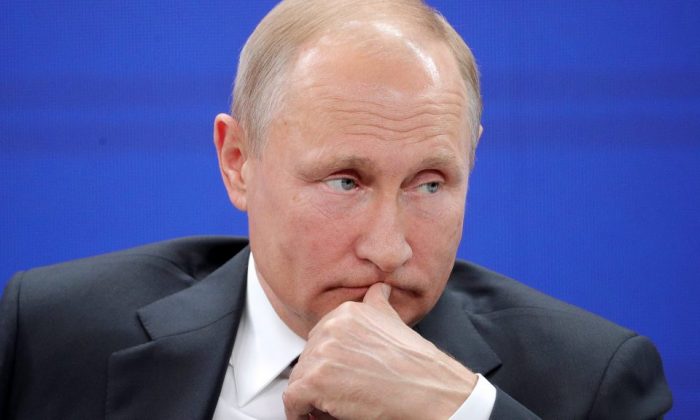
Russian President Vladimir Putin at the St Petersburg International Economic Forum on May 25, 2018. Photo: Reuters/Sergei Bobylev/TASS
By M.K. Bhadrakumar | Asian Times | June 1, 2018
The annual meeting of the St Petersburg International Economic Forum – dubbed as “Russia’s Davos” – on May 25, which traditionally promotes foreign investment in the Russian economy, ended this time around as a major political event signaling a renewed bid by President Vladimir Putin for détente with the West.
In wide-ranging remarks at the forum, Putin made an explicit overture to Washington for dialogue. The US decision to quit the Iran nuclear deal was the leitmotif of the Q&A at St Petersburg – which are generally choreographed by the Kremlin in advance – and Putin seized the opportunity to articulate a highly nuanced position on the topic with an eye on the overall Russian-American relationship.
Unsurprisingly, Putin criticized the US’ rejection of the Iran nuclear deal as a unilateralist move which would have negative consequences. But then, Putin also expressed understanding for President Donald Trump’s domestic compulsion in taking such a decision.
Putin also proposed that the US and Iran, which had negotiated the 2015 pact directly, could resume their negotiations to settle the differences: “Even now, the US President is not closing the door on talks. He is saying that he is not happy about many of the terms of the deal. But in general, he is not ruling out an agreement with Iran. But it can only be a two-way street. Therefore, there is no need for unnecessary pressure if we want to preserve something. Doors must be left open for negotiation and for the final outcome. I think there are still grounds for hope.”
Putin probably sees Russia as a facilitator-cum-moderator between the US and Iran, but at any rate, he has deflected the focus from the EU’s approach, which single-mindedly focuses on the downstream impact of US sanctions against Iran. It is smart thinking on Putin’s part to signal that Moscow does not propose to wade into any transatlantic rift over the Iran issue. He probably doubts if the rift is real enough for outsiders to exploit.
Putin and the Iran nuclear deal
But the really intriguing part was that Putin also brought into the matrix the “good, trust-based relations between us (Russia and Israel).” Significantly, the interpolation occurred while Putin was arguing that the preservation of the Iran nuclear deal was also in Israel’s interests.
Neither Moscow nor Tel Aviv has divulged the details of the recent meeting between Putin and Israeli Prime Minister Netanyahu in Moscow in early May. But Israeli sources have since divulged in bits and pieces that a major understanding might have been reached as regards the imperative need for an holistic approach toward the whole situation surrounding the “Iran question,” including Iran’s presence in Syria, which Israel indeed sees as existential threat.
Interestingly, three days after Putin spoke at St Petersburg, an influential Moscow think tank came up with a commentary regarding the emergent trends in the Syrian situation. Basically, the commentary stressed that Russian policy was switching tack and giving primacy to the search for political settlement and reconstruction of Syria. But it went on to discuss the rising tensions between Iran and Israel in Syria and blamed Iran for using Syria for the “export” of its policy of Resistance against Israel.
Hinting at growing resentment within the Sunni majority in Syria against Iran’s activities, the commentary contextualized Putin’s recent call for the withdrawal of all foreign forces from Syrian soil. It openly rapped the Iranians on the knuckle: “Iran’s operations in Syria go far beyond fighting terrorists and are hardly welcomed by anyone within the region and beyond. This heightens tensions in Israel’s relations with its bitter rivals … Serving as a platform for fighting the ‘Zionist’ enemy is something Syria needs the least.”
Indeed, these are extraordinary statements for an establishment think tank known to be close to the Kremlin. The key elements were: a) Russia holds Iran as responsible for ratcheting up tensions with Israel; b) Russia thoroughly disapproves of Syria being turned into a turf for Iran’s policy of “Resistance” against Israel; and, c) Moscow expects the Assad regime to distance itself from Iran’s anti-Israeli activities.
The patent shift in the Russian stance implies Moscow’s acknowledgment that the fate of the Iran nuclear deal is also linked to Iran’s regional policies. Arguably, this Russian stance harmonizes with what Trump and Netanyahu have been saying all along. Perhaps, Russia hopes to cajole Tehran to walk toward the negotiating table where Trump is waiting. Perhaps, Putin also calculates that such a helpful stance cannot but have positive fallout on US-Russia relations as a whole. Time will tell.
The bottom line is that the close ties between Russia and Israel are sailing into full view. Interestingly, Israel just obliged a famous Russian oligarch who is perceived as close to Putin, by granting him citizenship, which would enable him to visit Britain – although London refuses to renew his residence permit. The influential Kremlin-linked Russian oligarch now de facto becomes the wealthiest Israeli citizen, too.
Suffice to say, it all does seem a cozy condominium between Putin and Netanyahu. The big question will be how far Netanyahu can help Putin to bring about a Russian-American “thaw” under this complex set of circumstances.
US imposes new sanctions against Iran
Press TV – May 30, 2018
The United States has imposed sanctions on several Iranian individuals and organizations, including Evin Prison and the Islamic Republic of Iran Broadcasting (IRIB), over “human rights abuses” and “censorship.”
The US Treasury Department announced the sanctions Wednesday on its website, saying the listed persons and entities will be blocked from the US financial system.
Individuals and companies who do business with the targeted Iranians could face sanctions from Treasury as well.
“Iran not only exports terrorism and instability across the world, it routinely violates the rights of its own people. The Iranian regime diverts national resources that should belong to the people to fund a massive and expensive censorship apparatus and suppress free speech,” Treasury Secretary Steven Mnuchin said in a statement.
Iran has rejected US and Western accusations of human rights abuses in the Islamic Republic as “untrue” and “politically-motivated.”
On Thursday, the US Treasury imposed new sanctions against nine Iranian and Turkish individuals and companies as well as a number of aircraft providing goods and services to four Iranian airlines.
The move by Washington was part of President Donald Trump’s plans to impose harsh sanctions against Tehran after pulling out of the 2015 Iran nuclear deal.
Many countries, including America’s European allies, have said that they would not back Trump’s new plan.
The UK, France and Germany– all signatories to the deal– are already in talks with Iran to protect their businesses from possible punishment by the US.
Russia and China have also expressed willingness to back the deal and even fill the void should any European companies leave Iranian markets.
America’s Incredible Shrinking Influence
By Ron Paul | May 28, 2018
Just two weeks after President Trump pulled the US from the Iran nuclear agreement, his Secretary of State, Mike Pompeo, issued 12 demands to Iran that could never be satisfied. Pompeo knew his demands would be impossible to meet. They were designed that way. Just like Austria-Hungary’s ultimatum to Serbia in July, 1914, that led to the beginning of World War I. And just like the impossible demands made of Milosevic in 1999 and of Saddam Hussein in 1991 and 2003, and so many other times when Washington wanted war. These impossible demands are tools of war rather than steps toward peace.
Secretary Pompeo raged at Iran. The mainstream news media raged at Iran. Trump raged at Iran. But then a strange thing happened: nothing. The Iranians announced that they remained committed to diplomacy and would continue to uphold their end of the nuclear agreement if the Europeans and other partners were willing to do the same. Iranian and European officials then sought out contacts in defiance of Washington in hopes of preserving mutually-beneficial emerging commercial relations.
Washington responded to the European snub by threatening secondary sanctions on European companies that continued doing business with an Iran that had repeatedly been found in compliance with its end of the bargain. Any independent European relationship with Iran would be punished, Washington threatened. But then, again, very little happened.
Rather than jump on Washington’s bandwagon, German Chancellor Angela Merkel made two trips to Russia in May seeking closer ties and a way forward on Iran.
Russia and China were named as our prime enemies in the latest National Security Strategy for the United States, but both countries stand to benefit from the unilateral US withdrawal from the Iran deal. When the French oil company Total got spooked by Washington threats and pulled out of Iran, a Chinese firm eagerly took its place.
It seems the world has grown tired of neocon threats from Washington. Ironically the “communist” Chinese seem to understand better than the US that in capitalism you do not threaten your customers. While the US is threatening and sanctioning and forbidding economic relations, its adversaries overseas are busy reaping the benefits of America’s real isolationism.
If President Trump’s canceled meeting with North Korea’s Kim Jong-Un remains canceled, North and South Korea have shown that they will continue with their peacemaking efforts. As if Washington was no longer relevant.
I’ve often spoken of the unintended consequences of our aggressive foreign policy. For example, President Bush’s invasion of Iraq only helped Iran – our “enemy” – become more dominant in the Middle East. But it seems new consequences are emerging, and for the neocons they must be very unintended: for all of its bellicosity, threats, demands, sanctions, and even bombs, the rest of the world is increasingly simply ignoring the demands of Washington and getting on with its own business.
While I am slightly surprised at this development, as a libertarian and a non-interventionist I welcome the growing irrelevance of Washington’s interventionists. We have a far better philosophy and we must work hard to promote it so that it can finally be tried after neocon failure becomes obvious to everyone. This is our big opportunity!
Russia Says US Demands Unacceptable for Iran, Vows to Help Maintain JCPOA
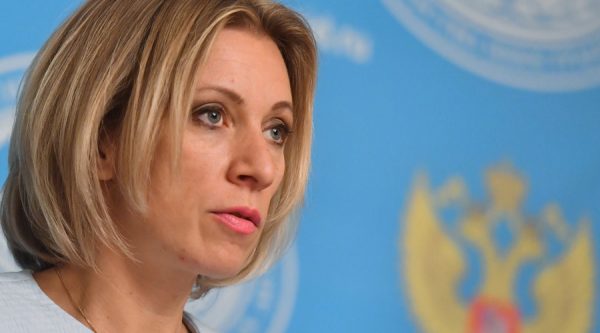
Al-Manar | May 23, 2018
The Russian Foreign Ministry spokeswoman says new US demands from Iran are totally unacceptable, vowing that Moscow will continue to work towards maintaining the Iran nuclear deal, officially known as the Joint Comprehensive Plan of Action (JCPOA).
“We are concerned about the fact that the anti-Iranian campaign is on the rise in Washington. It seems that the United States has made a final decision to use the tactics of ultimatums and threats in respect to Iran. It contradicts the spirit of the JCPOA and does not fall within the normal inter-state relations,” Russian Foreign Ministry spokeswoman Maria Zakharova told a briefing on Wednesday.
“Not only did the US administration withdraw from the agreement in violation of international norms, it is putting forward demands that are a priori unacceptable for Tehran,” she added.
In his first major foreign policy address since moving to the State Department from the CIA, Secretary of State Mike Pompeo said Washington would increase the financial pressure on Iran by imposing the “strongest sanctions in history” on the Islamic Republic if Tehran refused to change the course of its foreign and domestic policy.
Pompeo also outlined 12 US tough demands for Iran, including halting its uranium enrichment and closing its heavy water reactor, for any “new deal” with Tehran.
The Russian spokesperson said that while the US pulled out of the JCPOA, “other participants in the deal are determined to maintain the agreement, adding, “We will continue working to that end. The important thing is that Tehran also abides by its obligations, as confirmed by the IAEA (International Atomic Energy Agency).”
Zakharova said the fate of the Iran deal would be decoded at a new meeting of the Joint Commission monitoring the implementation of the agreement in Vienna on May 25, which will not include the US for the first time.
The Russian official also once again expressed Moscow’s opposition to unilateral sanctions.
BP halts work on gas field over US sanctions on Iran
Press TV – May 23, 2018
British oil company BP says it has halted work on a gas field which it co-owns with National Iranian Oil Company (NIOC) in the North Sea, citing US plans to reimpose sanctions on the Islamic Republic.
NIOC owns 50% of the Rhum field northeast of Aberdeen and BP holds the other half, which it plans to sell to UK-listed producer Serica Energy.
“BP has decided to defer some planned work on the Rhum gas field in the North Sea while we seek clarity on the potential impact on the field of recent US government decisions regarding Iran,” the company said in a statement on Tuesday.
Current operations at Rhum such as provisions of goods, services and support by “certain US persons” are carried out under a US license which is due to expire at the end of September.
Serica said it expected those operations to be affected by US sanctions, “in particular, the new sanctions regime announced by the US government on 8 May.”
The company is looking to secure a waiver from renewed US sanctions against Iran in order for production at the key offshore field to continue, Serica said Tuesday.
It is also working closely with BP and NIOC to evaluate the potential impact of the sanctions on production at Rhum which accounts for around 4% of UK gas output of around 38.1 billion cubic meters.
Rhum was discovered in 1977 by a joint venture between the Iranian Oil Company UK Ltd and BP which has a long history of operation in Iran.
BP started life as the Anglo-Persian Oil Company in 1908 before parting ways with Iran and becoming British Petroleum.
The company shut down Rhum in 2010 even before the West began imposing intensified sanctions on Iran a year later. It resumed production in 2014 after securing an exemption.
The new shutdown is set to further disappoint Iran which has been seeking concrete guarantees on receiving economic benefits of the nuclear deal, only to be given verbal pledges by the European governments instead.
Germany said on Tuesday there was only so much it could do, making it clear that Europe could not entirely shield companies from US sanctions.
“We will help where we can, but there is no way of completely averting the consequences of this unilateral withdrawal,” Economy Minister Peter Altmaier told a newspaper.
His statements were echoed by Luxembourg’s Foreign Minister Jean Asselborn who said there were limits to the European Union’s powers to persuade its larger firms to stay in Iran in the face of threatened US sanctions.
“We know there are hardly any larger companies in Europe that do not also trade with the United States. The pressure on European companies from the US is quite large,” he told reporters in Brussels. “We are in the situation that we’re in.”
OMV committed to Iran project
Nevertheless, Austrian energy group OMV said it has not halted its planned energy projects in Iran.
An Iranian official said earlier this month that OMV, Russia’s Lukoil and China National Petroleum Company (CNPC) had announced interest in the exploration blocks which include both known, highly-potential blocks and new ones.
OMV’s upstream chief Johann Pleininger said on Tuesday the group was monitoring political developments in the United States and the European Union very closely.
“The project has not come to a standstill, it is continuing,” Pleininger was quoted as saying, adding that “no investments have been made yet.”
OMV signed a memorandum of understanding in May 2016 to carry out projects in four blocks in the Zagros sedimentary area.
Pullout of Iranian Forces, Hezbollah Units From Syria Out of Question – Damascus
Sputnik | May 23, 2018
The withdrawal of Iranian forces and units of the Lebanese movement Hezbollah from Syria is not on the discussion agenda, Syrian Deputy Foreign Minister Faisal Mikdad told Sputnik.
“This topic is not even on the agenda of discussion, since it concerns the sovereignty of Syria. We cannot let anyone even raise this issue. Those who ask for something like that — and this is definitely not our Russian friends — are considering the possibility of intervention in all parts of Syria, including the support of terrorists in Syria and elsewhere in the region,” Mikdad said.
According to the Syrian diplomat, Damascus “highly appreciates” the help of friendly forces from Russia and advisers from Iran and Hezbollah in the struggle against terrorists.
The statements by the United States about its intention to withdraw troops from Syria and replace them with Arab forces are aimed at drawing the Arab countries in direct conflict with Damascus, Mikdad said.
“The main goal of such statements is to pump the money out of the Arab countries. This will force them to pay more to the US treasury, which may be empty. As well as drawing the Arab states in direct conflict, as far as I can guess — with the Syrian government, and this is a dangerous situation,” Mikdad said.
According to Mikdad, Washington will ultimately not withdraw its troops.
On Monday, US Secretary of State Michael Pompeo gave a keynote speech on US policy toward Iran, voicing 12 demands for Tehran to fulfill following Washington’s unilateral withdrawal from the Iran nuclear deal, formally known as the Joint Comprehensive Plan of Action (JCPOA).
The commander of the Islamic Revolutionary Guard Corps (IRGC) has slammed the address made by US Secretary of State Mike Pompeo.
Iranian President Hassan Rouhani said that the world cannot accept that Washington makes unilateral decisions for all nations.
On May 8, Trump withdrew the United States from the Iran nuclear deal and Treasury immediately began to reimpose all sanctions against Tehran. The JCPOA — signed by Iran, the P5+1 and the European Union in 2015 — requires that Tehran allow inspections to ensure the peaceful nature of its nuclear program in exchange for sanctions relief.
US-Led Coalition Deliberately Destroyed Oil Wells in Syria
The US-led coalition has been conducting airstrikes in the Arab Republic since 2014 without either a UN mandate or the Syrian government’s consent.
The international coalition led by the United States has deliberately bombed oil wells in Syria, so that the government would not be able to use them, Mikdad said.
“They made it necessary to spend tens of millions of dollars to resume work at these [oil] fields,” Mikdad added.
The US-led coalition, which has been carrying out airstrikes in Syria since 2014 without Damascus’ or UN’s approval, has yet to comment on the statement.
The United States continues its support for terrorists in Syria by financing and supplying them with arms, Faisal Mekdad said.
“I believe that the oxygen for terrorist groups comes from the United States,” Mekdad said.
The Syrian minister noted that Damascus had heard “many times since the start of the crisis in 2011” the US statements on the reduction or termination of its support to the opposition in Syria.
“Meanwhile, [militant] groups are being provided with additional funding and arms,” Mekdad stressed.
According to the minister, after the liberation of Eastern Ghouta and the town of Hajar Aswad from terrorists, the Syrian army discovered large stocks of arms, recently delivered from Western countries and the United States.
“The United States must stop supporting terrorists and respect Syria’s sovereignty and choice of the Syrian people,” the diplomat underlined.
A military-diplomatic source earlier told Sputnik that militants from the Nusra Front terrorist group, banned in Russia, and the Free Syrian Army (FSA) were expanding the controlled territories in southern Syria to create an autonomy under the patronage of the United States. On April 19, Russian Foreign Ministry’s spokeswoman Maria Zakharova said that Moscow also had this information.
The CBS TV channel reported on May 18, citing US President Donald Trump administration officials, that the administration had withdrawn all assistance from northwestern Syria, where anti-Syrian government forces and Turkey are operating. According to the broadcaster, tens of millions of dollars will be cut from previous efforts, backed by the United States, to “strengthen and stabilize the local society.”
Constitutional Commission
Syrian authorities have not finalized a list of candidates for participation in the committee on Syria’s constitution in Geneva, however there are a lot of specialists and experts, who could represent Damascus in the body, Syrian Faisal Mekdad stated.
On Thursday, Russian President Vladimir Putin held talks with his Syrian counterpart Bashar Assad. The Russian leader said that Moscow welcomed and would support the decision of Assad to send his representatives to the Constitutional Commission in Geneva.
“It is too early to speak about [candidates], but there are many people, who are able to represent Syria and the Syrian government in these talks. We have many experts… in this sphere, who could participate in these talks,” Mekdad said.
The diplomat added that the constitutional amendments were the Syrian domestic issue and foreigners should not interfere in this process.
“There are several issues that are needed to be revised and we are ready to reconsider them,” the deputy foreign minister said, adding that it was necessary to understand, which “positive options” could be added to the constitution.
The settlement process for the Syrian conflict, which broke out in 2011, has been discussed on a number of international platforms, such as those in Geneva and Astana and the Syrian National Dialogue Congress in Russia’s Sochi. The main result of the Sochi congress was the creation of the Constitutional Commission that would work in Geneva and focus on amending Syria’s existing constitution.
Journey of an Israeli in Iran
By Miko Peled | American Herald Tribune | May 22, 2018
Trump’s declaration regarding the US backing out of the Iran agreement came just days before my trip to Iran was confirmed and my visa was approved. I was asked by several people if I was still going, thinking that Trump’s declaration that sanctions were going to be reinstated was a de facto declaration of war on Iran. I wasn’t going to let Donald Trump dictate where I was or was not going and certainly I was not going to cancel a trip into which so much effort had been placed by my hosts. My only concern was that I might get stopped and questioned by the authorities upon my return to the US.
I was interested to see Iran and to hear what people in Iran thought of Trump’s declaration and also how they felt regarding Israel’s constant accusations and threats of attack. I had a clue of what Iranian attitudes might be thanks to a piece written by Orly Noy in the progressive Hebrew online magazine Mekomit. Orly Noy is an Israeli journalist who was born and raised in Iran and is fluent in Farsi. In this piece, she quoted responses from people in Iran as they were expressed on social media. One response came after Israeli Prime Minister Benjamin Netanyahu made the display of documents he alleged were smuggled out of Iran by Mossad agents. There were hundreds of thousands of documents weighing a total of half a ton in which, so Netanyahu claims, it was made clear that Iran was lying and was not abiding by the agreement. In response to this one Iranian wrote, “Netanyahu finally discovered our secret intent: to attack Israel with fifty thousand paper airplanes.” Other responses were equally dismissive.
My first impression of Iran and its people was the calm and cleanliness one feels even in a large city like Mashhad, which has a population of five million and was my first point of entry. And, unlike the Middle-East and Europe, in Iran, it is rare to see people smoke. Mashhad, is considered a holy city and it is the home of the Imam Reza shrine, which I was told can accommodate all five million people within its compound during prayer. I visited the shrine along with a few friends between midnight and 2 AM and still there were many people there worshipping, some sitting in silent contemplation and there were even families enjoying a late-night picnic. Returning to the hotel I could not help mentioning to my friends that there are not many cities of that size in the world where one feels completely comfortable and safe to walk at 2 o’clock in the morning.
The most common response I received when asking people about their thoughts and concerns on the issue of the sanctions and Israeli threats was a smile, “We have been living under sanctions for many years and the lifting of the sanctions in 2013 brought very little change. So now we are going to live with sanctions again.” As for the Israeli threats, “we are not afraid, we are strong and will defend our land as we have always done.” It is worth noting that Iran has not attacked a single country in recent history though it has been the target of attacks and political assassinations by foreign powers. At the same time, Iran has been a staunch supporter of both the Palestinian resistance and the Lebanese resistance against Israeli oppression violence.
Still, with large corporations like the French oil and gas giant Total and Danish shipping giant Maersk announcing they will back out of deals they had made with Iran there is definitely cause for concern. It is still unclear what French automakers like Peugeot will do since they’re part of large conglomerates and use parts made in the US. Furthermore, even though European countries declared that they remain committed to the Iran deal, it is unclear whether or not they will bow to American pressure because of fear of American retaliation. Another concern for the European corporations is the fact that so much of international banking is controlled by the US and transfer of funds will be all but impossible if they continue to do business with Iran. So will the Europeans show back bone and stand with Iran or will they cower, that remains to be seen.
Two particularly interesting experiences I had took place while visited Yazd in central Iran. The first was speaking in front of cadets of the notable Revolutionary Guards. Some two hundred young cadets along with their officers sat on the floor of the mosque on base and listened intently. Their young, bright faces so attentive one could hear a pin drop. I told them that even though I was introduced as an American, I was not actually American – though I reside in the US I was Israeli and the son of an Israeli army general. I told them of my niece who was killed when three young Palestinians blew themselves up during a suicide mission. I also told them that I reject Israel as a political entity and look forward to the day when Palestine is free and democratic. I ended my talk by saying that “When Palestine is freed from the racist, apartheid regime under which it is currently suffering, you must come to Al-Quds to pray in Al-Aqsa mosque and then visit me in Jerusalem.” There was no fear or sense of insecurity in their faces but rather a confident calmness. Their attention, their questions later and their warm applause were reassuring. I also told them what I believe to be true, and that is that neither Israel nor the United States will dare to actually attack Iran.
The other remarkable experience I had took place later the same day at a local high school. What does one say to a room full of young Iranian high school boys? What do they know of Palestine? I looked at the three hundred or so boys who sat on the floor waiting to hear me speak and decided to ask them what they knew about Falasteen. After a short pause, one young boy raised his hand. “Falasteen,” he began, “was a place of peace and tranquility. It was a land where Muslims, Jews and Christians all lived and worshiped in peace, until it was invaded and occupied.” I could not have wished for a better answer. I am one of the occupiers, I admitted. My family had participated in the invasion, occupation and oppression that we see today in Palestine.
“Our Supreme Leader” one student asked, “says that in twenty-five years there will be no Israel.” What did I say to that? Well, we know that by “no Israel” he means that Palestine will be free and the Zionist regime will be gone. That he wishes for a day when Muslims, Jews and Christians will be once again able to live and worship in peace. I would ask, I told them, that they do me a favor and help me and millions of Palestinians and millions of supporters of Palestine, and prove the Supreme Leader wrong by making this happen sooner than twenty-five years.
Throughout the visit, both during lectures and other occasions I had received a few questions and comments that were critical of the Iranian official line towards Israel. I was asked if I felt that Iran’s policy towards Israel was harming Iran and if I thought it was the right policy. “Is it true,” I was asked, “that the Jews bought land in Palestine and that it was taken from them by the Palestinians.”
I returned to the US with some trepidation. I landed at Dulles International Airport and was quite ready to call an attorney in case I was stopped. However, all was well, and I exited the airport as though I had landed from any other destination. Looking from the outside, particularly from Iran, one has the advantage of distance and some perspective, and still with his declaration on Jerusalem and his decision on Iran Donald Trump seems like a petulant adolescent with far too much power.
‘Strongest sanctions in history’: Pompeo issues 12 demands to Iran, vows ‘unprecedented pressure’
RT | May 21, 2018
Tehran will struggle to “keep its economy alive” if it does not comply with a list of 12 US demands, including Iranian withdrawal from Syria, Secretary of State Mike Pompeo vowed on Monday.
Speaking at the Heritage Foundation, a right-wing Washington think tank, Pompeo laid out a list of 12 “basic requirements” for Iran. The demands call on Iran to withdraw from Syria, “release all US citizens,” end support for Houthi rebels in Yemen, stop “enrichment” of uranium, and promise never to process plutonium. Iran must also allow “unqualified access to all nuclear sites throughout the country,” Pompeo said.
He promised that the US would impose the “strongest sanctions in history” if Iran failed to comply with these demands.
Pompeo said that “the sting of sanctions will be painful” and Iran will struggle to “keep its economy alive” if Tehran “does not change its course from the unacceptable and unproductive path it has chosen.”
“Thanks to our colleagues at the Department of Treasury, sanctions are going back in full effect and new ones are coming … These will indeed end up being the strongest sanctions in history,” Pompeo said.
The secretary of state also pledged that the US “will track down Iranian operatives and their Hezbollah proxies operating around the world, and we will crush them. Iran will never again have carte blanche to dominate the Middle East.”
Speaking directly to the Iranian people, Pompeo claimed that “President [Hassan] Rouhani and Foreign Minister [Javad] Zarif… are your elected leaders. Are they not the most responsible for your economic struggles?” He added: “The United States believes you deserve better.”
Pompeo also said he’s sure that over time, Washington’s allies will warm to the Trump administration’s now unpopular stance on Iran.
Washington’s strategy is to weaken Iran economically, rather than engage in an actual war, Dr. Said Sadik, Professor of political sociology at the American university of Cairo, told RT in response to Pompeo’s address. “What the [US] is doing now is increase sanctions trying to undermine the power of Iran regionally, economically with the hope that that would lead to unrest and disturbances in Iran, that it would make the Iranian government stop trying to help its allies or extend its influence in the area. This is basically what they want.”
Sadik added: “I don’t think they want a war because war is very expensive and dangerous in this strategic area…What they want is to weaken Iran financially, economically, with the hope that the Iranian government will not be that powerful in the area as it is now.”
The speech comes after Trump announced earlier this month that he was pulling out of the 2015 nuclear deal. Europeans allies had pleaded with Trump not to withdraw from the historic accord, which put tight restrictions on Iran’s nuclear program in exchange for sanctions relief. Iranian president Hassan Rouhani described the US pull-out from the deal as a “historic experience for Iran,” adding that “by exiting the deal, America has officially undermined its commitment to an international treaty.”
Iran says it expects the EU to continue to honor the agreement, despite Washington’s withdrawal from the accord. Inspections by the International Atomic Energy Agency (IAEA) have repeatedly confirmed that Iran is in full compliance with its obligations under the deal.
EU Blocking Statute Against Anti-Iran US Sanctions May Fail to Protect Companies
Sputnik – May 19, 2018
BRUSSELS – The reinforcement and modification by EU of its Blocking Statute, which protects EU companies from the effects of sanctions by a third country, in order to prohibit companies from complying with US anti-Iran sanctions will not protect companies from fines for cooperating with Iranian projects, experts told Sputnik.
Since US President Donald Trump announced his decision to pull out of the Iran nuclear deal and reimpose its sanctions against the Islamic Republic, efforts by EU leaders have been focused on preserving the status quo in relations with Iran and mitigating the effects of the US withdrawal.
On Thursday, European Commission President Jean-Claude Juncker announced that the union will amend its Blocking Statute in order to include the US sanction imposed against Iran in the regulation. As soon as the amendments are adopted, EU businesses will be allowed not to comply with the US restrictions or even demand compensation for losses caused by the US sanctions.
TO AVOID US PENALTIES FIRMS SHOULD ABANDON BUSINESS WITH US
“Reactivating and even modifying the 1996 Blocking Statute will not shield EU companies, banks, and even countries from the US Department of Treasury imposing penalties. An EU company, bank, or government would have to do no business directly or indirectly with US counterparts in order to not feel the impact of US responses,” Dr. Jamsheed K. Choksy, the chair of Department of Central Eurasian Studies at Indiana University, said.
Choksy indicated that the safeguards that the EU leadership and national governments might potentially provide to the EU companies will not be able to make up for the losses caused by not doing business with the United States, which is a target market for EU firms.
Choksy explained that EU firms, in fact, had to choose between business with US entities or Iranian ones and business with US companies was far more economically viable and lucrative than business with Iran.
The head of the Europe of Nations and Freedom group in the European Parliament, Nicolas Bay, agreed with Choksy, saying that the importance of the US and Iranian markets for EU businesses was non-comparable.
POLITICAL ASPIRATIONS VS. ECONOMIC INTERESTS
According to the politician, Brussels’ attempts to demonstrate its political independence and significance by preserving the Iran nuclear deal without the United States have nothing to do with purely economic motives of the EU businesses.
“In the current state of the crisis, Jean-Claude Juncker, Donald Tusk and the European Union are only into communication to hide their weakness, because Brussels will not be able to force the banks, the car manufacturers, and all the European companies that depend on the American market to continue to trade with Iran,” Bay said.
Drieu Godefridi, a writer and former Director of the Hayek Institute, said that EU firms would not abandon pragmatic interests to appease EU politicians trying to recover from Trump’s neglect of transatlantic partnership.
“Whatever Mr. Juncker says now and the sabre-rattling by some, large and small European companies will never jeopardize their North American business to please the Brussels politicians. Europe is divided; we may be the largest world market but Europe is a political dwarf,” Godefridi said.
EUROPE WILL HAVE TO ABIDE
“My analysis when Trump announced the re-establishment of sanctions was that Europeans would have to abide. There is no way Europe could take a different path: America is the backbone of European defense in NATO, America is the first market of Germany and the third of France. No European bank can live without access to the dollar zone,” Godefridi predicted.
Jacques Leroy, a French international consultant on deals in the Middle East, believes that in the current situation, taking into account the importance of the US market for European countries, national governments will try to obtain some exemptions for their firms on an individual basis.
“Every European leader will try to obtain ‘special treatment’ from Washington, which is exactly what Donald Trump counts on. Divide to control. Europe will have to bow to US sanctions in the end,” Leroy stressed.
IRAN’S SALVATION LIES IN PARTNERSHIP WITH RUSSIA, CHINA
Since the majority of experts were convinced that the EU dependence on the United States would not allow Brussels to preserve its cooperation with Iran, they suggested that the Islamic Republic should seek refuge in partnership with more independent Russia ad China.
“I do not think [EU politicians] have the stomach to stand up to Trump. The United States wants Iran, Russia, and China to fall on their knees. These three countries must move closer to each other,” Mohammad Marandi, a professor at the University of Tehran, recommended.
His views were fully shared by Godefridi, who assumed that Russia and China were independent enough from the US economy to go their own way and trade with Iran.
With Iran sanctions Trump made Europeans look like the fools they are
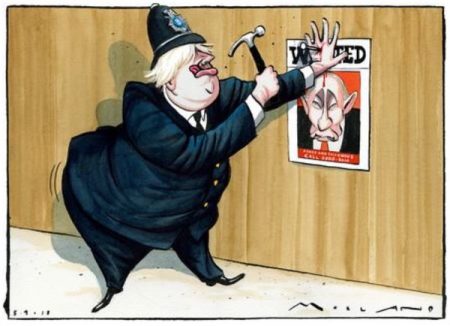
By John Laughland | RT | May 18, 2018
The attacks by European leaders against US President Donald Trump are getting sharper by the day.
On the day Trump announced that he was ripping up the Iran deal, and that the US would impose sanctions on European companies trading with that country, the French finance minister Bruno Le Maire said that European states refused to be treated like “vassals” of the US.
At Aachen on 11 May, Emmanuel Macron effectively accused the US of blackmail. On 17 May, the president of the European Council, Donald Tusk, asked, “With friends like that (i.e. Trump), who needs enemies?”
The temperature only rose further when the French energy giant Total announced that it would pull out of a multi-billion dollar gas deal with Iran unless European diplomacy succeeds in obtaining a specific waiver from US sanctions. Other European behemoths including Allianz and Siemens have also announced either that they will wind down operations in Iran or that they will not start any new ones.
These statements show that Trump’s decision is a slap in the face for the EU politically, economically and – perhaps above all – ideologically. Politically, because both Emmanuel Macron and Angela Merkel made special trips to Washington to plead with Trump, to no avail whatever. Moreover, the EU is itself a signatory to the Iran deal, which it regards as a major diplomatic triumph from which it draws credibility: its disavowal by Trump is a deep insult to the diplomatic status of the EU as such.
Economically, because of the gigantic contracts which European companies could lose. For years, following the nearly $9 billion fine imposed by the US on Paribas in 2015, European companies and banks have been terrified of engaging in any business activity likely to attract the ire of the Americans. Deals with Russia, for instance, are shunned. The effect of this latest decision could be like many Paribas situations at once.
Ideologically, because the EU draws its entire legitimacy from the belief that by pooling sovereignty and by merging its states into one entity, it has advanced beyond the age when international relations were decided by force. It believes that it embodies instead a new international system based on rules and agreements, and that any other system leads to war. It is impossible to exaggerate the importance of this belief for European leaders; yet Donald Trump has just driven a coach and horses through it.
The angry statements by European leaders might lead one to think that we are on the cusp of a major reappraisal of trans-Atlantic relations. However, the reality is that the EU and its leaders have painted themselves into a corner from which it will be very difficult, perhaps impossible, to extricate themselves.
First, the links between the EU and the US are not only very long-standing, they are also set in stone. NATO and the EU are in reality Siamese twins, two bodies born at the same time which are joined at the hip. The first European community was created with overt and covert US support in 1950 in order to militarize Western Europe and to prepare it to fight a land war against the Soviet Union; NATO acquired its integrated command structure a few months later and its Supreme Commander is always an American.
Today the two organizations are legally inseparable because the consolidated Treaty on European Union, in the form adopted at Lisbon in 2009, states that EU foreign policy “shall respect” the obligations of NATO member states and that it shall “be compatible” with NATO policy. In other words, the constitutional charter of the EU subordinates it to NATO, which the USA dominates legally and structurally. In such circumstances, European states can only liberate themselves from US hegemony, as Donald Tusk said they should, by leaving the EU. It is obvious that they are not prepared to do that.
Second, EU leaders have burned their own bridges with other potential partners, especially Russia. Angela Merkel traveled to Russia on Friday but only a few weeks ago more than half of the EU member states expelled scores of Russian diplomats and encouraged non-EU European states like Ukraine and Montenegro to do the same, in retaliation for the poisoning in Salisbury of Sergei and Julia Skripal.
How is Mrs Merkel going to convince Mr Putin to join her in keeping Iran’s nuclear program under control if she officially thinks that Mr Putin is guilty of secretly stockpiling and using chemical weapons for assassinations in the West? Only a few weeks later, in mid-April, Britain and France, together with the US, attacked Syria on the basis that its army had used chemical weapons at Douma with Russian backing. If they try to turn on the charm now in Sochi or in Moscow, do they really expect the Russians can take them seriously?
Third, how can EU leaders complain about US sanctions against their companies when they themselves have applied sanctions against Russian companies causing major economic disruptions in that country? EU states have also introduced punitive sanctions against Syria since 2011, one of the biggest programs of sanctions ever, whose effect and purpose is to disrupt the activities of the Syrian state including its ability to provide public goods like health.
Britain and France, who are, with Germany, the European signatories of the Iran deal, have been pursuing regime change in Syria for half a decade. By what right do they protest now that the US administration is taking decisions whose goal is to provoke regime change in Iran?
As if these external issues were not bad enough, the EU is currently riven by internal divisions too. Donald Tusk may say “Europe must be united economically, politically and also militarily like never before … either we are together or we are not at all” but Europe is indeed not “together” at all. The Brussels commission is hounding Poland and Hungary on what are clearly internal political matters beyond the Commission’s remit; the EU is about to lose one of its most important member states; and a new government is going to take power in Rome whose economic policies (a flat tax at 15%) will blow the eurozone’s borrowing rules out of the water and perhaps cause Italy to leave the euro.
The Italian 5-Star / League government also wants an end to the EU sanctions against Russia; these are voted by a unanimity which, although fragile, has held until now but which, if the new power in Rome keeps its word, will shortly collapse. In other words, what Trump has done is to make the Europeans look like the fools they are. In circumstances in which the EU has placed all its eggs in one basket, a basket which Trump has now overturned, it will be impossible for it to come together. On the contrary, it is falling apart.
John Laughland, who has a doctorate in philosophy from the University of Oxford and who has taught at universities in Paris and Rome, is a historian and specialist in international affairs.
Featured Video
Houthis Keep Advancing as the Red Sea Crisis Deepens
or go to
Aletho News Archives – Video-Images
From the Archives
Clash of Civilization, Iran Part II
By Jamal Kanj – Intifada-Palestine.com – January 14, 2011
Israel’s survival kit is: perpetuate conflict, insecurity to rationalize collective hate and finally playing victim.
Devoid of conflict, Israel implodes internally; without hate, Zionism loses its justification; and playing eternal victim to continue blackmailing the West. Absence of this holy trinity, Israel ceases to exist. … continue
Blog Roll
 Aletho News
- Macgregor: We Haven’t Seen the Worst of the Iran War Yet
- ‘We are not like everyone else’ laws that bind other nations do not apply to Israel, says Likud lawmaker
- Report: Saudi Arabia seeks allies’ assistance as missiles deplete amid war on Yemen
- Fuel Crisis Deepens: Pakistan Warns Tanker Attack in Red Sea Would Be an ‘Act of War’
- ‘Bucha massacre’ a false flag orchestrated by UK – Moscow
- China Rejects Outside Pressure on Trade Ties After New US Russia Sanctions Bill
- Houthis Keep Advancing as the Red Sea Crisis Deepens
- Iran spent $1 million to wipe out $30 billion in data center plans, and take down Amazon in the ME
- Zionist billionaire pressure to silence Macklemore sparks exodus from Ed Sheeran tour
- House Votes to End Iran War for Third Time
- If Americans Knew
- Biden’s Genocide Accomplices Targeted by New Accountability Campaign
- AIPAC’s Network Has Already Spent $67.2 Million to Shape the Midterm Elections
- Jewish Supremacist Manufacturing a Civilizational Threat to License Bigotry
- US bans Palestinian president from speaking at the UN
- Israeli Forces Detain Journalist Alaa al-Rimawi amid Widespread West Bank Raids
- Even a pro-Israel Congress member has put a hold on 40,000 one-ton bombs to Israel
- As Gaza crumbles, Israel preps new ground invasion – Daily Update
- ‘We are not like everyone else’ laws that bind other nations do not apply to Israel, says Likud lawmaker
- Trump’s govt makes ‘treasonous’ claim of weapons shortages
- Palestinian-American Journalist Naqaa Hamed Imprisoned by Israeli Forces After Settlers Targeted Her
- No Tricks Zone
- New Study: ‘Global Drought Shows No Detectable Recent Acceleration Under Climate Warming’
- Economic Masterminds: German Socialists Suggest Taxing Productivity Gains Stemming From Using AI
- The South China Sea Has Not Been Cooperating With The Climate Change Narrative
- Energy Crisis: Germany Enters Heating Season With Historically Low Gas Reserve Fill Levels
- New Study: The Antarctic Ice Sheet Gained Mass From 2020-2024 Due To Staggering Snow And Ice Accumulation
- Study: Ocean Heating Rates From Thousands Of Years Ago ‘Dwarf’ Modern Ocean Heating Rates
- Climate Extremists Target, Attack Large-Scale Power Grid Infrastructure In Germany!
- New Study: Antarctic Ice Melt Has Contributed Less Than 1 Centimeter To Sea Level Rise In The Last 30 Years
- Fear Of Debate: Alarmist German Climate Scientist Calls On Mainstream Media To Discredit Skeptic Voices
- End-Of-August Arctic Sea Ice Extent Hasn’t Fallen In 20 Years, Official Data Show!
 Aletho News