Deconstructing Trump’s Iran sanctions
By M K Bhadrakumar | Indian Punchline | July 20, 2017
There is an old impish yarn that Moses was stunned to see the two cats he’d put in the Ark trooping out with a bunch of kittens at the end of the tumultuous existential journey. Seeing the old sage’s puzzled look, the adult male shot back, ‘You thought we were fighting?’ This in some ways captures the noisy, implausible games that Iran and the United States play with each other, growling at each other and making us feel worried at times.
President Donald Trump is having a difficult time to differentiate his Iran policies from Barack Obama’s. The Trump administration has twice certified to the Congress that Iran is complying with the nuclear deal – an agreement he vowed to tear up. But, while doing so on Monday, with an eye on the Israeli lobby, it separately imposed sanctions against a clutch of Iranian personalities and entities – so that the optics look appropriately ‘tough’.
Tehran had conveyed a red line to Washington in the weekend that there shall be no sanctions against the Islamic Revolutionary Guards Corps (which is spearheading Iran’s operations against ISIS in Iraq and Syria). The Trump administration understood perfectly well what it implied – namely, that things can overnight hot up for the US on the ground on the Syrian-Iraqi theatre. (For the uninitiated, IRGC-backed militia and American military advisors tacitly collaborate in the liberation of Mosul.)
Tehran understands that Trump is a bluff master. Read the Iranian Foreign Ministry statement here. Clearly, no one is losing sleep in Tehran. Iran’s missile programme is indigenous; nor will US sanctions frighten IRGC’s elite Qud’s Force under the command of its charismatic general Qassem Soleimani to give up the ‘axis of resistance’ in Syria and Lebanon (and Gaza.)
In fact, Majlis passed a finance bill Tuesday increasing the budget allocation for the missile programme and Quds Force each by $260 million.
The Middle East is witnessing a long sunset of the US hegemony. And Iran senses it. So, Tehran is playing its cards astutely through an admixture of strategic defiance and taunts with unspoken overtures seeking meaningful conversation.
Read the transcript, here, of a fascinating interview by National Interest magazine with Iranian FM Mohammed Javed Zarif who is visiting New York. (Zarif already addressed the CFR and was interviewed by CNN’s Fareed Zakariah and the PBS, amongst others.)
Indeed, Zarif virtually choreographed an Iran policy for Trump. Look at his tantalizing remarks:
- “It took the U.S. longer to clear the purchase of Airbus airplanes than it took for the purchase of Boeing airplanes.”
- “If it comes to a major violation, or what in the terms of the nuclear deal is called significant nonperformance, then Iran has other options available, including withdrawing from the deal.”
- “We need to be more careful about the signaling, because we’ve seen that wrong signaling in the past few weeks in our region, particularly after the Riyadh summit, has caused a rather serious backlash in the region—not between U.S. allies and Iran, but among U.S. allies.”
- “At this stage we are content with simply implementing that (nuclear) agreement… we wanted that agreement to be the foundation and not the ceiling. But in order for that to serve as a solid foundation, we want to make sure that the obligations by all sides have been fully and faithfully implemented. And if we get that, then we have an opening to further progress.”
- “We don’t see the situation in our region as a winning or losing battle… we believe that the situation in today’s world is so interconnected that we cannot have winners and losers; we either win together or lose together. Obviously, if an administration or a government or a country defines its interests in terms of exclusion of others, then it is defining the problem in a way that is not amenable to a solution.”
- “We have had a consistent policy of fighting extremism and terrorism, whether it was in Afghanistan during the reign of the Taliban, or, even during the time that the United States was in occupation of Iraq, against terrorist elements who were instigating terror inside Iraq.”
- “Well, it all depends on the approach that the United States will try, the current administration will try to adopt vis-à-vis Iran. It has to look at Iran as the only country in the region where people stand in line for ten hours to vote. It has to put aside those self-serving assumptions that some members of this administration have repeatedly stated.”
- “We have a very sober understanding of the situation in the region where we are located, and we hope that the United States can also have such a sober understanding.”
Iran is doing just fine. The genius to optimally put diplomacy to use, with maximum cost-effectiveness, has been Iran’s strategic asset in the politics of the Middle East.
US adding new sanctions against Iran over missile program
Press TV – July 18, 2017
The administration of US President Donald Trump says it is imposing new economic sanctions against Iran over the Islamic Republic’s ballistic missile program.
The US Departments of Treasury and State said Tuesday they are targeting 18 Iranian individuals, groups and networks.
The new sanctions freeze any assets the targets may have in the US and prevents Americans from doing business with them.
The restrictions ranged from a company that allegedly aided Iran’s drone program to a Turkey-based provider of naval equipment and a China-based network that provided electronics to Iran, according to the Associated Press.
Treasury Secretary Steven Mnuchin said the sanctions “send a strong signal that the United States cannot and will not tolerate Iran’s provocative and destabilizing behavior.”
The move comes one day after the Trump administration certified to Congress that Iran is in compliance with the 2015 nuclear agreement, which lifted nuclear-related sanctions imposed against Tehran.
The Trump administration notified the Congress of Iran’s compliance for the first time in April.
The White House is bound by US law to notify Congress of Iran’s compliance with the nuclear deal every 90 days. The Trump administration had notified the Congress of Iran’s compliance for the first time in April.
The certification that Iran is technically complying with the nuclear agreement clears the way for sanctions to remain lifted.
Washington claims Iran’s missile program is in breach of United Nations Security Council Resolution 2231, which endorsed Tehran’s nuclear deal with the P5+1 states in 2015.
However, Tehran insists its missile tests do not breach any UN resolutions because they are solely for defense purposes and not designed to carry nuclear warheads.
The Islamic Republic has said it will spare no effort to meet its national security needs, and does not allow any party to intervene in the imperative.
Iran says Europe not on agenda of gas exports
Press TV – July 7, 2017
Iran says it has removed an old plan to export natural gas to Europe and is instead focusing on exports to its neighbors as well as India.
Amirhossein Zamaninia, Iran’s deputy minister of petroleum for trade and international affairs, said Europe’s gas market was already saturated with excessive supplies and had thus lost its priority in Iran’s gas export plans.
“Iran’s key priority should be exports to the neighboring states as well as India,” Zamaninia told Iran’s IRNA news agency.
He further emphasized that the landmark nuclear agreement that Iran had sealed with the five permanent members of the Security Council plus Germany in 2015 and the subsequent removal of sanctions against the Islamic Republic had already provided an appropriate opportunity to pursue plans to export natural gas to the neighboring states.
Iran had for years pursued plans to export natural gas to Europe. A tentative scheme that was developed in cooperation with Nabucco – a consortium led by Austria’s OMV – envisaged piping Iranian natural gas from the southern energy hub of Assaluyeh to Turkey and thereon to Europe. However, Nabucco eventually abandoned Iran in 2008 after complications grew the most important of which were US-engineered sanctions against the Iranian energy sector.
A parallel plan to export Iranian gas to Europe – again through Turkey – has been pursued by Switzerland’s EGL, also known as Elektrizitaetsgesellschaft Laufenburg,
Based on the EGL scheme, the Iranian natural gas would be taken to Greece and Albania through Turkey. It would thereon flow to Italy through a pipeline under the Adriatic Sea before reaching Switzerland. However, this scheme had a fate similar to that of Nabucco.
Over the past few years, Iran had been pursuing exporting natural gas to Kuwait, Oman and Iraq.
In late June, the country started exporting gas to Iraq by virtue of an agreement that was signed in 2013.
Talks over exports to Kuwait and Oman have been presently stalled over technical issues.
An ambitious project to pipe gas to India through Pakistan – that had been in the offing for almost two decades but delayed due to disputes over pricing and the related technicalities – has also been recently revived.
Iran is further exporting about 30 million cubic meters of gas to Turkey which before Iraq was its only export destination since 2001.
Resist This: The United States Is At War With Syria
By Jim Kavanaugh | The Polemicist |June 20, 2017
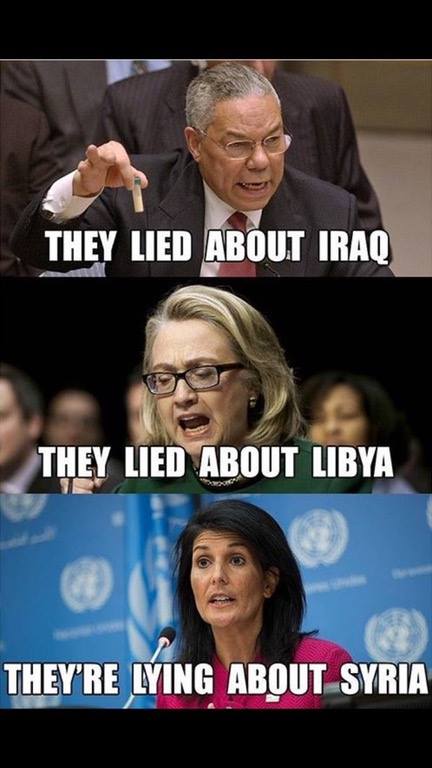
The United States is at war with Syria. Though few Americans wanted to face it, this has been the case implicitly since the Obama administration began building bases and sending Special Ops, really-not-there, American troops, and it has been the case explicitly since August 3, 2015, when the Obama administration announced that it would “allow airstrikes to defend Syrian rebels trained by the U.S. military from any attackers, even if the enemies hail from forces loyal to Syrian President Bashar al-Assad.” With the U.S. Air Force—under Trump, following Obama’s declared policy—shooting down a Syrian plane in Syrian airspace, this is now undeniable. The United States is overtly engaged in another aggression against a sovereign country that poses no conceivable, let alone actual or imminent, threat to the nation. This is an act of war.
As an act of war, this is unconstitutional, and would demand a congressional declaration. The claim, touted by Joint Chiefs’ Chairman, Gen. Dunford, that the 2001 Authorization for the Use of Military Force (AUMF) against al-Qaeda provides constitutional justification for attacking the Syrian government is patently false and particularly precious. In the Syrian conflict, it’s the Syrian government that is the enemy and target of al-Qaeda affiliates; it’s the U.S. and its allies who are supporting al Qaeda. The authorization to fight al-Qaeda has been turned into an authorization to help al-Qaeda by attacking and weakening its prime target!
Will President Trump ask for a relevant congressional authorization? Will any Democratic or Republican congresscritter demand it? Is the Pope a Hindu?
Would it make any difference? Why should Trump bother? Obama set the stage when he completely ignored the War Powers Act, the Constitution, Congress, and his own Attorney General and legal advisers, and went right ahead with a war on Libya, under the theory that, if we pretend no American troops are on the ground, it isn’t really a war or “hostilities” at all. Which I guess means if the Chinese Air Force starts shooting down American planes in American airspace in defense of Black Lives Matter’s assault on the White House, it wouldn’t really be engaging in an act of war.
It’s impossible to overstate the danger in these executive war-making prerogatives that Obama normalized—with the irresponsible connivance of his progressive groupies, who pretend not to know where this would lead. In 2012, referring to the precedent of Obama’s policies, Mitt Romney said: “I don’t believe at this stage, therefore, if I’m president that we need to have a war powers approval or special authorization for military force. The president has that capacity now.” Following Obama, for Trump, and every Republican and Democratic president, it now goes without saying.
In terms of international law, as an aggressive, unprovoked aggression against a country that makes no threat of attack on the U.S., it is also patently illegal, and all the political and military authorities undertaking it are war criminals, who would be prosecuted as such, if there were an international legal regime that had not already been undermined by the United States.
Syria is now under explicit attack by the armed forces of the U.S., Turkey, and other NATO states. Sixteen countries have combat aircraft buzzing around Syrian airspace under the effective command of the United States, and a number of them have attacked Syria’s army.
Americans, and certainly self-identified “progressives,” have to be crystal clear about this: American armed forces have no right to be in Syria, have no right to restrict the Syrian government from using any of its airspace, or to prevent it from regaining control of any of its own territory from foreign-backed jihadi armies.
The Syrian state and its allies (Iran and Russia), on the other hand, are engaged in the legitimate self-defense of a sovereign state, and have the right to respond with full military force to any attack on Syrian forces or any attempt by the United States to balkanize or occupy Syrian territory, or to overthrow the Syrian government. Whether and how they do respond will depend on their own military/political calculus, about which they have so far been quite careful and restrained. It would be the height of foolishness, as well as arrogance, for Americans to presume they can bully these actors into submission with an infinite series of discrete aggressions, with no sharp counterattack. Unfortunately, the world has not yet seen the limits of American arrogance.
So please, do not pretend to be shocked, shocked, if Syria and its allies fight back, inflicting American casualties. Don’t pose as the morally superior victim when Americans are killed by the people they are attacking. And don’t be preaching about how everyone has to support our troops in a criminal, unconstitutional, aggressive attack on a country that has not threatened ours in any way. American soldiers and pilots executing this policy are not heroes, and are not fighting to protect America or advance democracy; they are the international equivalent of home invaders, and as such are legitimate targets with no claim to “self-defense.” The only heroic act they could do is refuse their superiors’ illegitimate orders to engage in this aggression.
In response to American attacks, the Syrian Army has every right to strike back at the American military apparatus, everywhere. Every casualty of this war, however big it gets, is the ethico-political responsibility of the attacking party – US. The first responsibility of every American is not to “support our troops,” but to stop this war. Right now. Before it gets worse.
It’s quite obvious, in fact, that the United States regime is deliberately making targets of its military personnel, in the hopes of provoking a response from Syrian or allied armed forces that will kill some Americans, and be used to gin up popular support for exactly the kind of major military attack on Syria and/or Russia and/or Iran that the American people would otherwise reject with disgust. Anyone who professes concern for “our troops” should be screaming to stop that.
It’s also quite clear now that the War on ISIS is a sham, that ISIS was always just a pretext to get the American military directly involved in attacking the Syrian army and destroying the coherence of the Syrian state. If the U.S. wanted to defeat ISIS, it could do so easily by coordinating their actions with, and not against, the forces who have been most effectively fighting it: the Syrian Arab Army, Russia, Iran, and Hezbollah.
Instead, it’s attacking the Syrian army precisely because it has been defeating ISIS and other jihadi forces, and regaining its own territory and control of its own border with Iraq. The U.S. does not want that to happen. At the very least—if it cannot immediately engender that massive offensive to overthrow the Baathist government—the U.S. wants to control part of the border with Iraq and to occupy a swath of eastern Syria. It wants to establish permanent bases from which to provision and protect jihadi armies, achieving a de facto partitioning of the Syrian state, maintaining a constant state of armed attack against the Damascus government, and reducing Syria to a weakened, rump state that can never present any effective resistance to American, Israeli, or Saudi designs on the region.
This is extremely dangerous, since the Syrians, Russians, and Iranians seem determined not to let this happen. Consistent with his own incompetence and his admiration for tough guys, Trump seems to have abrogated authority to his generals to make decisions of enormous political consequence. Perhaps that’s why aggressive actions like the shoot-down of the Syrian plane have been occurring more frequently, and why it’s not likely they’ll abate. There’s a dynamic in motion that will inevitably lead each side to confront a choice of whether to back down, in a way that’s obvious, or escalate. Generals aren’t good at backing down. A regional or global war is a real possibility and becomes more likely with every such incident.
Though most American politicians and media outlets do not want to say it (and therefore, most citizens cannot see it clearly enough), such a war is the objective of a powerful faction of the Deep State which has been persistent and determined in seeking it. If the generals are loath to back down in a battle, the neocons are adamant about not backing down on their plans for the Middle East. They will not be stopped by anything less than overwhelming popular resistance and international pushback.
The upside of these attacks on Syrian forces is that they wipe the lipstick off the pig of the American project in Syria. It’s a regime-change, nation-destroying war that has nothing to do with democracy or human rights, and everything to do with the anti-democratic, chaos-creating designs of the most nefarious regimes in the region and the world. Everyone—European countries who profess concern for international law and stability, and the American people who are fed up with constant wars that have no benefit for them—can see exactly what kind of blatant aggression is unfolding, and decide whether they want to go along with it.
In that regard, any self-identified “liberal” or “progressive” American—and particularly any such American politician—who spent (and may still spend) their political energy attacking Bush, et. al., for that crazy war in Iraq, and who goes along with, or hesitates to immediately and energetically denounce this war, which is already underway, is a political hypocrite, resisting nothing but the obvious.
Syria, Iran and N. Korea: Will Trump Attempt to Finish the Neocon Hitlist?
By Steven MacMillan – New Eastern Outlook – 16.06.2017
In Donald Trump’s short time in office, he has already shown his propensity to use military force. From dropping the largest non-nuclear bomb ever used on Afghanistan, to launching 59 Tomahawk cruise missiles at Iraq (oh wait, Syria), there is no doubt that the Trump administration has a prominent militaristic streak.
But is this just for starters? If Trump stays in power for the duration of his term, is there a major war, or even multiple wars, on the horizon? Judging by the rhetoric and actions already taken by the Trump administration, it will be a miracle if the US does not start a major war in the near future. Coincidentally, the main countries in the sights of the Trump administration just happen to be the three countries that the neoconservatives pinpointed for regime change 17 years ago, but have not yet been dealt with.
1997 marked the birth of the Project for the New American Century (PNAC), a neoconservative think tank of catastrophic proportions. It was founded by William Kristol, the longtime editor of the Weekly Standard, who also served as the chief of staff to Vice President Dan Quayle, and Robert Kagan, a former State Department official who is now a Senior Fellow at the Brookings Institute. A long list of neocons belonged to the group, including Dick Cheney, Donald Rumsfeld and Paul Wolfowitz.
PNAC’s stated objectives included the desire to “shape a new century favourable to American principles and interests,” “increase defense spending significantly,” and challenge “regimes hostile to US interests and values.” In September 2000, the PNAC group released a report titled: ‘Rebuilding America’s Defenses – Strategy, Forces and Resources for a New Century.’ The introduction to the report clearly expressed PNAC’s desire to maintain US supremacy in the world:
“At present, the United States faces no global rival. America’s grand strategy should aim to preserve and extend this advantageous position as far into the future as possible…Preserving the desirable strategic situation in which the United States now finds itself requires a globally preeminent military capability both today and in the future.”
In order to maintain this supremacy, the report called for the Defense Department to be at the forefront of experimenting with transformative technologies, a move that would require a dramatic increase in defense spending.
Curiously, the report – published one year prior to 9/11 – argued that this transformation would likely be a “long one” unless an event on the scale of “Pearl Harbor” occurred:
“To preserve American military preeminence in the coming decades, the Department of Defense must move more aggressively to experiment with new technologies and operational concepts, and seek to exploit the emerging revolution in military affairs… The effects of this military transformation will have profound implications for how wars are fought, what kinds of weapons will dominate the battlefield and, inevitably, which nations enjoy military preeminence…
The Pentagon [however], constrained by limited budgets and pressing current missions, has seen funding for experimentation and transformation crowded out in recent years. Spending on military research and development has been reduced dramatically over the past decade… Any serious effort at transformation must occur within the larger framework of U.S. national security strategy, military missions and defense budgets… The process of transformation, even if it brings revolutionary change, is likely to be a long one, absent some catastrophic and catalyzing event – like a new Pearl Harbor” (p.50-p.51).
Under the guise of missile capability, the report then pinpointed five countries that the neocons, in conjunction with the CIA, considered “deeply hostile” to the US:
“Ever since the Persian Gulf War of 1991… the value of the ballistic missile has been clear to America’s adversaries. When their missiles are tipped with warheads carrying nuclear, biological, or chemical weapons, even weak regional powers have a credible deterrent, regardless of the balance of conventional forces. That is why, according to the CIA, a number of regimes deeply hostile to America – North Korea, Iraq, Iran, Libya and Syria – ‘already have or are developing ballistic missiles’ that could threaten U.S allies and forces abroad. And one, North Korea, is on the verge of deploying missiles that can hit the American homeland. Such capabilities pose a grave challenge to the American peace and the military power that preserves that peace” (p.51-p.52).
This report was published approximately three years prior to the invasion of Iraq, and approximately 11 years prior to both the war in Libya and the start of the proxy war in Syria. The central point I am getting at here is that the wars we have seen unfold, and the wars to come, are not just short-term actions taken by the administration who happens to be in power at that particular time. They are planned years and sometimes decades prior to the first shot being fired. Regardless of which party the President belongs to – George Bush invaded Iraq with a blue tie on, whilst Barack Obama bombed Libya with a red one on – the same regime-change-agenda continues.
Two Down, Three to Go
Although there were other reports that marked more countries that the neocons considered ‘hostile’ to the US, or more accurately, hostile to US (Western) imperial ambitions, the September 2000 report focused on five countries. With Iraq and Libya already ‘liberated,’ three countries are still on the hitlist: Syria, Iran and North Korea. Coincidentally (or not), these are some of the main countries that the Trump administration is targeting, and we are only a few months into Trump’s reign.
Syria: Trump has already bombed Syrian government forces – or forces fighting on the side of the Syrian government – on multiple occasions since being elected. After Trump bombed Syria back in April, both Kagan and Kristol praised him, yet demanded more blood. Even though they claimed not to be major supporters of Trump during the campaign, many Bush-era hawks were – including Rumsfeld, the former Defense Secretary. The Trump administration has also admitted sending hundreds of US troops – which includes Marines – into Syria, officially in order to fight against ISIS (through training and advising rebel forces), yet it’s clear the move has as much to do with the Syrian and Iranian governments than anything else.
Iran: Throughout Trump’s campaign for the White House, he repeatedly criticized both Iran and North Korea. Trump has always been a severe critic of the Iranian nuclear deal, and a loyal supporter of the state of Israel, meaning war with Iran seems more probable that not. In fact, Iran has claimed that Trump and Saudi Arabia are behind the recent terror attacks in Tehran, which ISIS has claimed responsibility for.
During his trip to Saudi Arabia last month, Trump took the opportunity to take another jab at Iran. In February, the US Defence Secretary, James “Mad Dog” Mattis, called Iran the “biggest state sponsor of terrorism in the world,” completely ignoring the role Saudi Arabia plays in exporting terrorism. It appears as though the Trump administration is in the process of deciding which path to Persia it thinks is going to be the most effective.
North Korea: In relation to North Korea, the Trump administration has essentially backed the country into a corner, producing the obvious response from North Korea: an (attempted) show of strength. A country that the US carpet bombed during the Korean war – which included using napalm – it hardly seems likely that North Korea is just going to give in to US threats, considering the resentment many in the country still feel towards America.
This is not a defense of North Korea, but the Trump administration making one provocative statement after another has hardly reduced tensions in the region. In March, Mattissaid that “reckless” North Korea has “got to be stopped.” The following month, Trump said North Korea is a problem that “will be taken care of.” Although Mattis has acknowledged that a conflict with North Korea would be “catastrophic,” the Trump administration appears to be willing to ratchet up tensions regardless.
In contrast, both Russia and China have emphasised that dialogue and diplomacy trump threats. Speaking in May, the Russian President, Vladimir Putin, said that “we have to stop intimidating North Korea” and “return to dialogue” with them, after affirming that Russia “is against expanding the pool of nuclear powers, including North Korea.” Also in May, the Chinese Foreign Ministry called for the US and North Korea to “stop irritating each other,” and advocated “dialogue and negotiation.”
It also important to note that the North Korean issue is really about a lot more than just North Korea. As Paul Craig Roberts has highlighted, the North Korean ‘crisis’ has everything to do with Russia and China. Similar to how the US used the Iranian ‘threat’ to put anti-ballistic missile systems close to Russia’s borders, the North Korean crisis can be used to deploy anti-ballistic missiles systems next to the eastern borders of Russia and China. In a positive development however, the South Korean government has just announced (at the time of writing anyway) that it will halt the deployment of the US anti-ballistic missile system – known as the Terminal High Altitude Area Defense (THAAD) – on its territory for potentially up to a year, citing environmental concerns.
If the Trump administration and the neocons are actually reckless enough to try and force regime change in all three countries in the near future, this brings the US into direct confrontation with both Russia and China. And if a hot war between these three nuclear powers erupts, this would mark the end of human civilization as we know it.
Trump’s Saudi visit wasn’t about Islam or Iran. It’s about America First.
By M K Bhadrakumar | Indian Punchline | May 22, 2017
The Saudi Arabian government didn’t do well to schedule US President Donald Trump’s speech at the Arab-Islamic-American Summit at Riyadh for May 21. Just a day earlier, the headlines in the world media were all about a unique event in the Muslim Middle East – free and fair elections in Iran which enabled the moderate-reformist President Hassan Rouhani to secure a second term by beating an opponent who was widely seen as representing the religious establishment.
Trump would have understood the awkwardness of his position. He was obliged to show gratitude to his Saudi hosts who propose to spend $350 billion in the US economy that would create hundreds of thousands of new jobs for the American people. On the other hand, he was expected to condemn and pillory what is, arguably, the one and only democratic country in the Persian Gulf – Iran.
Trump ended up saying the irreducible minimum regarding Iran:
- But no discussion of stamping out this (terrorism) threat would be complete without mentioning the government that gives terrorists all three-safe harbor, financial backing, and the social standing needed for recruitment. It is a regime that is responsible for so much instability in the region. I am speaking of course of Iran. From Lebanon to Iraq to Yemen, Iran funds, arms, and trains terrorists, militias, and other extremist groups that spread destruction and chaos across the region. For decades, Iran has fueled the fires of sectarian conflict and terror.
- It is a government that speaks openly of mass murder, vowing the destruction of Israel, death to America, and ruin for many leaders and nations in this room. Among Iran’s most tragic and destabilizing interventions have been in Syria. Bolstered by Iran, Assad has committed unspeakable crimes…The Iranian regime’s longest-suffering victims are its own people. Iran has a rich history and culture, but the people of Iran have endured hardship and despair under their leaders’ reckless pursuit of conflict and terror.
- Until the Iranian regime is willing to be a partner for peace, all nations of conscience must work together to isolate Iran, deny it funding for terrorism, and pray for the day when the Iranian people have the just and righteous government they deserve. (Transcript)
At the end of the day, Trump settled for a policy to “isolate” Iran and to “pray for the day” when Iran will be an agreeable partner. There was no itch to confront Iran or attack Iran. If a benchmark is needed, go back to George W. Bush’s famous ‘axis of evil’ speech regarding Iran in January 2002. (Watch the YouTube here.)
Indeed, the so-called Riyadh Declaration issued after the Arab-Islamic-American summit of 50 countries on Sunday contained much harsher language regarding Iran, but then, it is essentially a Saudi document, which the regime drafted exercising its prerogative as the host country. By no means is it a statement reflecting the Iran policy of the US or of the other 48 statesmen who gathered in Riyadh, including from Egypt, Pakistan, Oman and so on.
Equally, it was also apparent from the noticeably restrained moderate remarks regarding Iran by the US Secretary of State Rex Tillerson in the two joint press conferences with Saudi FM Adel Al Jubeir that the Trump administration took care not to exacerbate tensions with Iran. Jubeir spewed venom, but Tillerson simply listened. In his prepared statements regarding terrorism, interestingly, Tillerson did not even mention Iran. The ‘operative’ part of Tillerson’s remarks during the Q&A can be reproduced as follows:
- We are closely coordinating our efforts in terms of how to counter Iran’s extremism… in particular its support for foreign fighters… its support of militia not just in Yemen but in Iraq and in Syria.
- We are coordinating carefully around how we view the nuclear agreement.
- What I would hope – is that Rouhani now has a new term, and that he use that term to begin a process of dismantling Iran’s network of terrorism, dismantling its financing of that terrorist network, dismantling the manning and the logistics and everything that they provide to these destabilizing forces that exist in this region. That’s what we hope he does. We also hope that he puts an end to [Iran’s] ballistic missile testing. We also hope that he restores the rights of Iranians to freedom… That’s what we hope this election will bring. I’m not going to comment on my expectation. But we hope that if Rouhani wanted to change Iran’s relationship with the rest of the world, those are the things he could do.
- So it is our hope that – and we have a new leadership or a renewed leadership beginning another term in Iran – that they will begin to examine what this behavior is gaining for them, and rather, they will find their way back to a place that Iran historically enjoyed: good relations with its neighbors. And that’s what we hope they find their way back to as well. In the meantime, we will continue to take action to make it clear to Iran when their behavior is unacceptable… we will continue to take action through sanctions and we will continue to encourage others in the global community to take action as well so that Iran understands this is not acceptable. So we will be dealing with Iran in the economic sanction front and we will be dealing with Iran in these countries where they have decided to put their presence militarily.
In sum, Tillerson recapitulated the Obama administration’s policies toward Iran. No threat of war – ‘all-options-are-on-the-table’, etc. – no threat of regime change, no containment strategy. On the contrary, the subtle emphasis has been on the terms of engagement with Iran someday in a conceivable future.
Thereupon, Tillerson dropped a bombshell. The following was his answer when he was asked by a journalist, “Will you ever pick up the phone and call Iran’s foreign minister? Have you ruled out diplomacy with Iran?” :
- Well, in terms of whether I’d ever pick the phone up, I’ve never shut off the phone to anyone that wants to talk or have a productive conversation. At this point, I have no plans to call my counterpart in Iran, although, in all likelihood, we will talk at the right time.
Tillerson said effectively that the US hopes to engage with Iran “in all likelihood”. It is no small matter that he said this from Riyadh, while summing up what has been an extraordinarily successful visit by Trump in pursuit of his ‘America First’ doctrine.
Of course, the US-Iranian relations will remain highly problematic. But then four years is a long time in politics – and both Trump and Rouhani have that much time in hand. One can anticipate that Tehran will be savvy enough to sense the vibes from Riyadh and accordingly plot the road map ahead in its dealings with the Trump administration.
Do not forget that Bush’s ‘axis of evil’ speech in 2002 notwithstanding, Washington and Tehran had already got into a waltz in Iraq circa 2005 in a coordinated enterprise to advance Shi’ite empowerment in that country. Both the US and Iran knew the ground rules and the ‘red lines’ in Iraq, and they largely respected them in a co-habitation in mutual interests that was truly exceptional in contemporary world politics.
The bottom line today is that without Iran’s cooperation, the US cannot get very far in the war against the ISIS, al-Qaeda and other extremist groups in Iraq and Syria. To be sure, there will be a lot of jostling for space and influence but a US-Iran confrontation is not on cards. Neither side is seeking it.
US should fulfil its end of nuclear deal – Tehran on Tillerson’s Iran remarks
RT | April 21, 2017
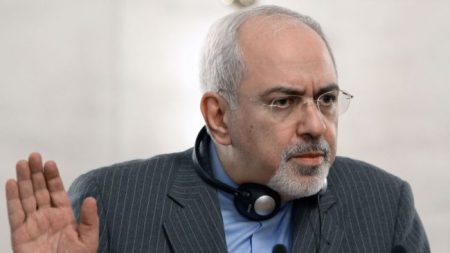
Instead of repeating accusations against Iran, the US should fulfil its obligations under the 2015 nuclear deal, Iranian Foreign Minister Mohammad Javad Zarif said in response to US Secretary of State Rex Tillerson’s comments on the review of the lifting of sanctions.
In his letter to the Congress on Wednesday, US Secretary of State Rex Tillerson, acknowledged that Iran was compliant to the accord, but blasted the country as “the world’s leading state sponsor of terrorism.”
Tillerson claimed that Tehran has been fueling various military conflicts in the Middle East, undermining US interests in countries such as Syria, Yemen, Iraq and Lebanon.
It was the first time that the Congress was informed on how Iran was fulfilling its obligations under the Joint Comprehensive Plan of Action (JCPOA), usually referred to as the Iran nuclear deal, under the Trump administration. The State Department must update US senators on the issue every 90 days.
Zarif took to Twitter to respond to Tillerson’s claims, stressing that Washington should “fulfill its own commitments” as part of the deal.
“Worn-out US accusations can’t mask its admission of Iran’s compliance w/ JCPOA,” the Foreign Minister added as cited by Reuters.
Moscow commented on Tillerson’s claim by saying that secretary of state should have separated the allegations of terrorism and the nuclear deal as they “have nothing in common,” according to Mikhail Ulyanov, the head of the Russian Foreign Ministry’s Department for Non-Proliferation and Arms Control.
“If the deal does not work, then specific complaints should be made regarding its functioning. The Americans can’t do this. The IAEA [International Atomic Energy Agency], an independent participant in this process, confirms that the Iranians are implementing everything. Therefore, any claims are irrelevant here, it seems to me,” Ulyanov said.
Washington blames Tehran for supporting various groups that it views as terrorist organizations, including Lebanese Hezbollah, Palestinian Hamas and the Houthis in Yemen.
Iran has also been backing the Syrian government of President Bashar Assad, also sending military advisers and fighters to Iraq to help fight Islamic State (IS, formerly ISIS/ISIL) there.
The Iranian nuclear deal, which took years to negotiate, restricted the nuclear ambitions of Tehran in exchange for lifting financial and oil sanctions.
The accord signed between Iran and the P5+1 (China, France, Russia, United Kingdom, the US, plus Germany) and the EU was touted as one of the main foreign policy achievements of the Obama administration.
However, Donald Trump called it “the worst deal ever negotiated” during his campaign for the White House.
A special inter-agency review of policy towards Iran will now look into if the lifting of sanctions against Tehran was in the interest of the US.
Pentagon chief in Israel to discuss Iran, Syria
Press TV – April 21, 2017
US Defense Secretary General James Mattis has arrived in Israel for talks expected to focus on Iran and Syria as well the strategic relations between Tel Aviv and Washington.
Mattis arrived in Tel Aviv Thursday afternoon from Cairo on the third leg of a week-long tour of the US allies in the Middle East.
Marking the first time he has visited Israel as the Pentagon chief, Mattis was greeted by an official honor guard at army headquarters in Tel Aviv on Friday morning.
He then met the Israeli minister for military affairs, Avigdor Lieberman, and is scheduled to hold talks with Prime Minister Benjamin Netanyahu and President Reuven Rivlin.
Mattis hopes to hear directly from Israeli leaders their concerns about regional issues, with Iran’s influence topping the list.
‘No doubt Syria has chemical weapons’
The conflict in Syria, where the US and Israel seek to remove President Bashar al-Assad from power, is also on the agenda, according to the prime minister’s office.
Israel was one of the first US allies to salute President Donald Trump for a recent missile strike on a Syrian airbase, where they alleged a suspected chemical attack originated.
Speaking during a press conference with Lieberman on Friday, Mattis said there can be “no doubt” that Syria has retained some chemical weapons and warned President Assad not to use them.
“There can be no doubt in the international community’s mind that Syria has retained chemical weapons in violation of its agreement and its statement that it had removed them all. There is no longer any doubt,” he said.
The US, Israel and Saudi Arabia have been pushing to overthrow the Syrian government through the use of proxy militant forces in the country.
Iran has been lending advisory support to Syria in its battle against the foreign-backed militants, but has avoided direct military involvement in the conflict.
Known as the “Mad Dog,” Mattis has famously said the three gravest threats to US national security were “Iran, Iran, Iran.”
While in Riyadh on Wednesday, the Pentagon chief reiterated the Trump administration’s position that Iran seeks to “destabilize” the region.
He told reporters after meeting with senior Saudi officials that “everywhere you look if there is trouble in the region, you find Iran.”
US-Israeli ties reached a low point over the 2015 nuclear agreement between Iran and world powers, including the United States.
Former President Barack Obama pushed for the agreement, to the dismay of Netanyahu who argued it would only strengthen Iran in the region.
Israeli leaders were emboldened by the election of Donald Trump, who has described the nuclear accord as “the worst deal ever negotiated” and threatened to “rip it up.”
In his latest criticism on Thursday, Trump blasted the deal as “a terrible agreement” that “shouldn’t have been signed,” and accused Iran of “not living up” to its spirit.
Featured Video
Houthis Keep Advancing as the Red Sea Crisis Deepens
or go to
Aletho News Archives – Video-Images
From the Archives
15 Saudi ‘hijackers’ were CIA agents working for US: Scholar
Press TV – April 13, 2016
Fifteen of the 9/11 “hijackers” from Saudi Arabia were CIA agents working for the United States government, which was seeking to destroy the Middle East for Israel and to double the American military budget, says Dr. Kevin Barrett, an American academic who has been studying the events of 9/11 since late 2003…. continue
Blog Roll
 Aletho News
- Russia summons UK charge d’affaires over Kiev drone support
- NATO member warns bloc seeking pretext for war with Russia
- Macgregor: We Haven’t Seen the Worst of the Iran War Yet
- ‘We are not like everyone else’ laws that bind other nations do not apply to Israel, says Likud lawmaker
- Report: Saudi Arabia seeks allies’ assistance as missiles deplete amid war on Yemen
- Fuel Crisis Deepens: Pakistan Warns Tanker Attack in Red Sea Would Be an ‘Act of War’
- ‘Bucha massacre’ a false flag orchestrated by UK – Moscow
- China Rejects Outside Pressure on Trade Ties After New US Russia Sanctions Bill
- Houthis Keep Advancing as the Red Sea Crisis Deepens
- Iran spent $1 million to wipe out $30 billion in data center plans, and take down Amazon in the ME
- If Americans Knew
- US welcomes Israeli, Iranian delegations to UN, but not Palestinians – Daily Update
- Biden’s Genocide Accomplices Targeted by New Accountability Campaign
- AIPAC’s Network Has Already Spent $67.2 Million to Shape the Midterm Elections
- Jewish Supremacist Manufacturing a Civilizational Threat to License Bigotry
- US bans Palestinian president from speaking at the UN
- Israeli Forces Detain Journalist Alaa al-Rimawi amid Widespread West Bank Raids
- Even a pro-Israel Congress member has put a hold on 40,000 one-ton bombs to Israel
- As Gaza crumbles, Israel preps new ground invasion – Daily Update
- ‘We are not like everyone else’ laws that bind other nations do not apply to Israel, says Likud lawmaker
- Trump’s govt makes ‘treasonous’ claim of weapons shortages
- No Tricks Zone
- New Study: ‘Global Drought Shows No Detectable Recent Acceleration Under Climate Warming’
- Economic Masterminds: German Socialists Suggest Taxing Productivity Gains Stemming From Using AI
- The South China Sea Has Not Been Cooperating With The Climate Change Narrative
- Energy Crisis: Germany Enters Heating Season With Historically Low Gas Reserve Fill Levels
- New Study: The Antarctic Ice Sheet Gained Mass From 2020-2024 Due To Staggering Snow And Ice Accumulation
- Study: Ocean Heating Rates From Thousands Of Years Ago ‘Dwarf’ Modern Ocean Heating Rates
- Climate Extremists Target, Attack Large-Scale Power Grid Infrastructure In Germany!
- New Study: Antarctic Ice Melt Has Contributed Less Than 1 Centimeter To Sea Level Rise In The Last 30 Years
- Fear Of Debate: Alarmist German Climate Scientist Calls On Mainstream Media To Discredit Skeptic Voices
- End-Of-August Arctic Sea Ice Extent Hasn’t Fallen In 20 Years, Official Data Show!
 Aletho News