Ansarullah slams Saudi Arabia, UAE for using television programs to promote Israel
Press TV – May 8, 2020
The leader of Yemen’s popular Houthi Ansarullah movement has slammed Saudi Arabia and the United Arab Emirates for using certain television programs to promote relations with Israel and demean the Palestinian struggle against occupation.
“Those who are directly coordinated with Israel, or through intermediaries allied with Israel, are partners in their crime,” Abdul-Malik Badreddin al-Houthi said in a speech on Thursday, according to Yemen’s al-Masirah television network.
Al-Houthi added that colluding in crimes committed by the Israeli regime was amongst “the most dangerous” of acts.
“The evils committed by the Zionists are the most significant. This is because the scope of their crimes extends to all of humanity given the large scope of Zionist influence over major countries,” he said.
“People have to avoid providing any assistance to Israel, the United States or their supporters,” al-Houthi added.
Riyadh’s pro-Israel programming
Al-Houthi’s remarks come in response to the airing of a string of media productions by certain Persian Gulf countries promoting ties with Israel.
The new “Umm Haroun” television series is one of such programs produced by the Dubai-based Saudi-owned Middle East Broadcasting Center (MBC).
The series directed by Egypt’s Ahmed Gamal el-Adl in the United Arab Emirates stars a Kuwaiti actress who plays the role of a Jewish midwife of Turkish origin living in the Persian Gulf country before settling in the occupied Palestinian territories.
Hebrew-language outlet N12 reported on Sunday that many believe Saudi Crown Prince Mohammed bin Salman is involved in the series as he is interested in closer relations between the kingdom and Israel.
The Palestinian resistance movement Hamas in Gaza denounced the TV series as a “political and cultural attempt to introduce the Zionist project to Persian Gulf society.”
Critics regard the show as an invitation to normalized ties with Israel. The show has consequentially provoked a storm in the Arab world.
The airing of the series has taken place as Riyadh, along with certain other Persian Gulf states such as the UAE, have moved to embrace relations with the Israeli regime, specifically in the past year.
Numerous Israeli delegations have consequently visited certain Persian Gulf states in recent months. Arab delegations from Persian Gulf states have also visited Israel.
No Arab country has formal relations with the Israeli regime, with the exception of Jordan and Egypt.
“Exit 7”: Yet another pro-Israel production
The “Umm Haroun” series is not the only MBC production seeking to promote ties with Israel to the Arab public.
“Exit 7” is another series currently being aired by the Saudi company.
According to Asia Times, the program seeks to promote various western values alongside breaking taboos regarding Israel.
Characters in the series promote “doing business with Israel” and argue against Saudi aid being sent to Palestine.
The program also disseminates blatantly anti-Palestinian themes, such as claiming that Palestinians “attack Saudi Arabia” whenever an opportunity arises.
Characters in the series also seek to legitimize Israeli occupation of Palestinian land by claiming that Palestinians “sold their land” to Jewish settlers.
Egypt, which signed a peace treaty with Israel in 1979, has disseminated similar claims of Palestinians selling their lands to Jewish settler to legitimize its ties with the Israeli regime.
According to Persian Gulf states analyst Nabeel Nowairah, MBC’s pro-Israel themes clearly “came from the high levels of the government”.
“You cannot talk about these things unless they’re approved by some agency or another. So it has the blessing of Saudi Crown Prince Mohammad bin Salman in some way,” he said.
The Arab-Israeli attempts to normalize ties come as Tel Aviv and Washington have stepped up attempts to legitimize Israeli occupation as part of US President Donald Trump’s so-called “deal of the century” initiative unveiled earlier this year.
Al-Houthi’s remarks on Thursday also come as Tel Aviv has mulled military intervention against Sana’a following the failure of the Saudi war on Yemen seeking to crush the popular Ansarullah, according to reports.
Saudi Arabia and a number of its regional allies launched the devastating war on Yemen in March 2015 in order to bring the country’s former president Abd Rabbuh Mansur Hadi back to power and defeat Ansarullah.
The Saudi-led attempt has, however, been brought to a standstill by the Yemeni resistance.
The US-based Armed Conflict Location and Event Data Project (ACLED), a nonprofit conflict-research organization, estimates that the war has claimed more than 100,000 lives over the past five years.
The UN says over 24 million Yemenis are in dire need of humanitarian aid, including 10 million suffering from extreme levels of hunger.
Riyadh makes inroads into Hollywood
The push to normalize ties with Israel comes as bin Salman has also sought to greatly westernize the kingdom ever since being appointed crown prince in 2017.
According to The Hollywood Reporter, many major US entertainment brands are bracing themselves for large Saudi investment opportunities in the near future.
Last month, Saudi Arabia was disclosed to have bought a 5.7 percent stake in the American events operator Live Nation.
According to the report, Saudi Arabia’s public investment fund has also specifically made an offer to buy the Warner Music Group, one of the three major music moguls in the US.
Many major Hollywood stars have also visited and performed in the oil-rich kingdom in the last year.
The report highlighted that Hollywood companies seeks to overlook the brutal murder of dissident journalist Jamal Khashoggi under the orders of the Saudi state in 2018 – which caused major international uproar – as they step up cooperation with the Saudi regime.
See also:
South Korea blocks test kits for Iran on Saudi-funded TV’s request
Press TV – April 19, 2020
Iran says South Korea has rejected a SWIFT payment request by Tehran for purchase of coronavirus testing kits over the US sanctions.
Iran’s Health Ministry spokesman Kianoush Jahanpour late Saturday released a document that shows a Saudi-funded TV had asked a Korean bank to reject the request.
“As a result, the Korean bank rejected Iran’s request and the kits were not delivered to Iran,” he said.
According to the document, London-based Iran International television channel falsely claimed that the SWIFT request had been made by a software company which sought to export non-medical goods to Iran.
Jahanpour released a second document which shows South Korea’s Mico BioMed, which develops and sells medical kits, had in fact presented the SWIFT request to the bank.
“The SWIFT request related [to Iran’s purchase of test kits] has been rejected by the Korean bank under the pretext of sanctions,” he said.
“This shows claims of medicine and medical equipment not being subject to sanctions are lies. The bank has officially stated that the purchase is not possible due to the sanctions,” Jahanpour added.
Belgium-based SWIFT, the Society for Worldwide Interbank Financial Telecommunication, is used to transmit payments and letters of credit.
The US government has intensified its sanctions on Iran despite international calls on Washington to suspend them to allow the Islamic Republic to secure necessary medicine and equipment in the midst of the coronavirus fight.
Washington claims the sanctions do not target medicine for Iran, but they make it all but impossible for importers to obtain letters of credit or conduct international transfers of funds through banks.
Last week, Iran’s Permanent Mission to the United Nations in New York dismissed the Swiss Humanitarian Trade Arrangement (SHTA) which the Europeans belatedly announced with much fanfare to have made operational in coordination with the US to barter medicine and food with Iran.
The mission said the United States has forced SHTA to pursue a very tight and tough procedure, making it practically very difficult for companies to trade with Iran.
“Additionally, almost impossible or cumbersome nature of transferring Iran’s reserves blocked outside the country to the designated Swiss bank, not only does not allow the SHTA to function properly now but may actually render it redundant in a matter of few months,” it said.
According to the mission, several companies that supply the medical equipment required to fight the coronavirus have recently stopped shipping to Iran because the current US sanctions regime makes the shipping of such items to Iran almost impossible.
Washington has imposed new sanctions in the midst of the coronavirus, targeting trade with Iran, even as President Donald Trump has claimed that the US was ready to help with the outbreak if Tehran asked for it.
The Islamic Republic has rejected the offer as hypocritical while the US is refusing to lift the sanctions and even intensifying them. Officials have said Washington’s demand that Tehran make a direct plea for the removal of sanctions shows the United States seeks “nothing short of surrender”.
Iran’s UN mission said last week the only message the US is sending with intensifying its sanctions amid the coronavirus is that companies must avoid doing any business with Iran, even if their work is humanitarian in nature.
Meanwhile, certain sections of mainstream media act as a virtual arm of the Office of Foreign Assets Control (OFAC) which is responsible for administering the US sanctions regime.
They have been on a witch hunt to identify Iran’s financial institutions and report them to the US government for possible sanctions.
Iran International, launched in May 2017, is a regular megaphone for separatists and terrorist groups operating against Iran. It is best known for airing disparaging reports about Iran and trying to stoke unrest in the country.
In October 2018, The Guardian cited a source close to the Saudi government as saying that Iran International had received an estimated $250 million from the Saudi royal court for its launch.
UK arms giant sold £15bn in weapons to Saudi Arabia during Yemen war: Report
Press TV – | April 15, 2020
Britain’s leading arms manufacturer is found to have sold above £15 billion ($18.9) worth of arms to Saudi Arabia since the kingdom started a brutal war against Yemen, the Arab world’s most impoverished nation.
The Guardian carried a news article on Tuesday, citing data obtained from the BAE (British Aerospace) Systems’ most recent annual report that has also been newly analyzed by Britain’s Campaign Against the Arms Trade (CAAT).
The sum includes £2.5 billion in revenues that the company received from Saudi arms sales in 2019.
The sales came despite a ruling by Britain’s Court of Appeal in June last year that all British arms exports that could be used against Yemen were to be halted.
Andrew Smith of the CAAT, meanwhile, said, “The last five years have seen a brutal humanitarian crisis for the people of Yemen, but for BAE it’s been business as usual. The war has only been possible because of arms companies and complicit governments willing to support it.”
The data further showed that the true value of the UK’s arms sales to Saudi Arabia is far greater than the £5.3bn total value of the country’s export licenses since March 2015, when Riyadh and a coalition of its allies launched the military campaign.
The gap has been due to the fact that arms have also been sold to the Saudi kingdom under open licenses, which authorize the sales without recording the cost under the official export total.
“These figures expose the cozy relationship between the Saudi regime and BAE. But they also imply that the value of UK arms sales is far greater than government figures show,” Smith added.
Riyadh is BAE’s third biggest buyer. The company maintains and supplies Tornado warplanes to the kingdom and provides “operational capability” to its Air Force and Navy.
Saudi Arabia and its allies have been staging indiscriminate attacks against Yemen since March 2015 to put the country’s former Saudi-allied officials back in the saddle.
The war — which has the support of the UK, the US and other Western states — has killed tens of thousands of Yemenis and rendered at least 80 percent of Yemen’s 28-million-strong population dependent on aid for survival.
The UK government has been under fire for keeping up arms sales to the Saudi regime despite widespread reports that the weapons are being used against Yemeni civilians and non-military infrastructure.
Last week, the invaders claimed they were halting military operations in support of United Nations peace efforts and to avoid further spread of the new coronavirus in Yemen.
The Yemeni army, however, reported days afterwards that it had been forced to repel several Saudi-led assaults on various fronts in just one day.
The Houthi Ansarullah movement — which runs Yemen and leads its armed forces — said the Western-backed coalition had even ramped up its acts of aggression since announcing the so-called truce.
Ottawa dances with the Saudi kingdom
By Yves Engler · April 11, 2020
As Canadians focus on the coronavirus pandemic the Trudeau government announced it was lifting its suspension of arms export permits to Saudi Arabia. It has also renegotiated the government’s $14 billion armoured vehicle deal with the belligerent, repressive, monarchy.
This is not surprising. The government set the stage for this decision with its September review that found no evidence linking Canadian military exports to human rights violations committed by the Saudis. The Global Affairs review claimed there was no “credible” link between arms exports to the Saudis and human rights abuses even though the April 2016 memo to foreign minister Stéphane Dion originally approving the armoured vehicle export permits claimed they would assist Riyadh in “countering instability in Yemen.” The five year old Saudi led war against Yemen has left 100,000 dead. Throughout their time in office the Liberals have largely ignored Saudi violence in Yemen.
Despite a great deal of public attention devoted to a diplomatic spat, after Riyadh withdrew its ambassador over an innocuous tweet from the Canadian Embassy in August 2018, the Liberals have sought to mend relations and continue business as usual. In December 2018 HMCS Regina assumed command of a 33-nation Combined Maritime Forces naval coalition patrolling the region from Saudi Arabia. Last September foreign Minister Chrystia Freeland said, “Saudi Arabia is an important partner for Canada and we continue to work with Saudi Arabia on a number of different issues at a number of different levels.” For its part, the Canadian Embassy’s website continues to claim, “the Saudi government plays an important role in promoting regional peace and stability.”
According to an access to information request by PhD researcher Anthony Fenton, Freeland phoned new Saudi foreign minister Ibrahim Abdulaziz Al-Assaf in January 2019. In briefing notes for the (unannounced) discussion Freeland was encouraged to tell her counterpart (under the headline “points to register” regarding Yemen): “Appreciate the hard work and heavy lifting by the Saudis and encourage ongoing efforts in this regard.”
After Crown Prince Mohammad bin Salman’s (MBS) thugs killed and dismembered journalist Jamal Khashoggi in October 2018, Trudeau treaded carefully regarding the murder. Ten days after the Canadian Press reported, “the prime minister said only that Canada has ‘serious issues’ with reports the Washington Post columnist was killed by Saudi Arabian operatives inside Saudi Arabia’s consulate in Turkey.” Six weeks later the Liberals sanctioned 17 Saudi nationals over the issue but none of them were in positions of significant authority.
Foreign minister Freeland looked the other way when Saudi student Mohammed Zuraibi Alzoabi fled Canada last year — presumably with help from the embassy — to avoid sexual assault charges in Cape Breton. While Freeland told reporters that Global Affairs was investigating the matter, Halifax Chronicle Herald journalist Aaron Beswick’s Access to Information request suggested they didn’t even bother contacting the Saudi embassy concerning the matter.
In April 2019 the Saudis beheaded 37 mostly minority Shiites. Ottawa waited 48 hours — after many other countries criticized the mass execution — to release a “muted” statement. The Trudeau government stayed mum on the Saudi’s effort to derail pro-democracy demonstrations in Sudan and Algeria in 2018/19 as well as Riyadh’s funding for Libyan warlord Khalifa Haftar’s bid to seize Tripoli by force.
While they implemented a freeze on new export permit approvals, shipments of Canadian weaponry continued. The year 2018 set a record for Canadian rifle and armoured vehicle sales to the Saudis. Over $17 million in rifles were exported to the kingdom in 2018 and a similar amount in 2019. Canada exported $2 billion worth of “tanks and other armoured fighting vehicles” to the Saudis in 2019. In February Canada exported $155.5 million worth of “Tanks and other armoured fighting vehicles” to Saudi Arabia.
The Global Affairs review that claimed there was no “credible” link between Canadian weapons exports to the Saudis and human rights abuses noted there were 48 arms export permit applications awaiting government approval.
As Fenton has documented in detail, armoured vehicles made by Canadian company Streit Group in the UAE have repeatedly been videoed in Yemen. Equipment from three other Canadian armoured vehicle makers — Terradyne, IAG Guardian and General Dynamics — was found with Saudi-backed forces in Yemen. Fenton has shown many examples of the Saudi-led coalition using Canadian-made rifles as well.
The Trudeau government arming the monarchy’s military while saying little about its brutal war in Yemen should be understood for what it was: War profiteering and enabling of massive human rights abuses.
Over a dozen ships carrying fuel, food impounded in Djibouti: Yemeni official
Press TV – April 9, 2020
A Yemeni maritime official says the Saudi-led coalition has impounded more than a dozen ships carrying energy derivatives and food destined for the conflict-plagued and impoverished Arab country, despite the fact that the vessels had earlier acquired necessary permits from the United Nations.
The unnamed official at Hudaydah port told Arabic-language al-Masirah television network on Thursday that 14 tankers loaded with more than 320 thousand tons of oil derivatives and three vessels with foodstuff aboard have been marooned at a port in Djibouti.
He added that the vessels had undergone inspection by the United Nations and obtained the relevant papers to dock at Yemen’s Hudaydah port.
The remarks came a day after the Saudi-led coalition, which has been engaged in a brutal five-year-old military aggression against Yemen, declared a two-week ceasefire, and announced that it would take effect at 12 p.m. local time (0900 GMT) on Thursday.
Yemen’s Houthi Ansarullah movement has, in return, downplayed the Saudi-led coalition’s ceasefire announcement, describing it as a chance for the alliance to get out of the quagmire with minimum disgrace. The movement highlighted it would will not abide unless a years-long siege on the impoverished nation is lifted.
Mohammed al-Bukhaiti, a senior member of the political bureau of the Ansarullah movement, told the Lebanon-based and Arabic-language al-Mayadeen television news network that the coalition’s move to announce a ceasefire was just another ploy by the aggressors.
“Saudis have repeatedly declared ceasefire in Yemen, but have violated it every time,” he noted.
Bukhaiti said Riyadh is using the outbreak of COVID-19 as an opportunity for ceasefire and a face-saving exit from the Yemen war.
However, he added, with the siege of Yemen in place, the war will not end.
“If any ceasefire does not include the removal of the siege on Yemen, that would be the continuation of the Saudi war,” he noted.
Houthis unilaterally release 70 prisoners
Separately, the Ansarullah movement has unilaterally released dozens of Saudi-sponsored Yemeni militiamen loyal to the country’s former president Abd Rabbuh Mansur Hadi.
The head of the Houthi-affiliated National Committee for Prisoners Affairs (NCPA), Abdulqader al-Mortada, said in a post published on his official Twitter page on Thursday that 70 prisoners were set free on humanitarian grounds and handed over to local authorities in a number of provinces amid the coronavirus pandemic.
Saudi Arabia and a number of its regional allies launched the devastating war on Yemen in March 2015 in order to bring Hadi back to power and crush Ansarullah.
The US-based Armed Conflict Location and Event Data Project (ACLED), a nonprofit conflict-research organization, estimates that the war has claimed more than 100,000 lives over the past five years.
Saudi Arabia and the United Arab Emirates have purchased billions of dollars’ worth of weapons from the United States, France and the United Kingdom in their war on Yemen.
Riyadh and its allies have been widely criticized for the high civilian death toll resulted from their bombing campaign in Yemen.
The UN says over 24 million Yemenis are in dire need of humanitarian aid, including 10 million suffering from extreme levels of hunger.
COVID-19: Devastated Saudi Royal Family Seeks to End Yemen War
By Joe Lauria | Consortium News | April 8, 2020
As the coronavirus continues its assault on members of the Saudi royal family, the rulers of the Kingdom on Wednesday called off its assault on Yemen.
The unilateral ceasefire will begin at noon on Thursday, Saudi time, and is to last at least two weeks.
Senior members of the royal family, including 84-year old King Salman, and the effective ruler, Muhammad bin Salman, have retreated to an island off the coast of Jeddah in the Red Sea.
Prince Faisal bin Bandar bin Abdulaziz Al Saud, the powerful governor of Riyadh who is a nephew to the king, is stricken with the disease and is in intensive care, The New York Times reported, citing two doctors “with ties” to King Faisal Hospital and two others sources near to the royal family.
In all, 150 members of the ruling family are reported to have been infected. The Saudi government officially said it is ending the war because of its fear that the virus could spread in Yemen, where there are still no reported cases.
Joining in the ceasefire would be the nations of the Saudi-led coalition as well as the Yemeni government in exile in the Saudi capital, the Times reported. The coalition said in a statement:
“On the occasion of holding and succeeding the efforts of the UN envoy to Yemen and to alleviate the suffering of the brotherly Yemeni people and work to confront the corona pandemic and prevent it from spreading, the coalition announces a comprehensive ceasefire for a period of two weeks, starting on Thursday.”
Mohammed Ali al-Houthi, a top Houthi official, tweeted an eight-page plan to end the war. The Houthis control the Yemeni capital Sanaa.
The unilateral ceasefire would end a vicious five-year campaign by the richest nation in the Middle East against the poorest. It began on March 26, 2015 just as the UN was close to brokering a deal to end the political standoff, as the then UN envoy to Yemen told me at the time.
Martin Griffiths, the current UN envoy, said in a statement: “The parties must now utilise this opportunity and cease immediately all hostilities with the utmost urgency.”
The BBC reported that the two sides would communicate in a video conference to discuss the ceasefire. “The proposal calls for the halting of all air, ground and naval hostilities,” the British national broadcaster said.
There has been as yet no reaction from Washington. The United States has backed the Saudi war with logistical and material support.
An end to the conflict would come as UN Secretary General Antonio Guterres has called for a global ceasefire, in which he said some 70 nations have already signed on. Saudi Arabia would appear on Wednesday to have joined that list.
UPDATE: At least 150 members of the Saudi royal family have been infected and as a result Riyadh is seeking to end its five-year disastrous assault on Yemen.
Ansurullah calls on Saudi-led alliance to consider Yemen’s mediation proposal
Press TV – April 2, 2020
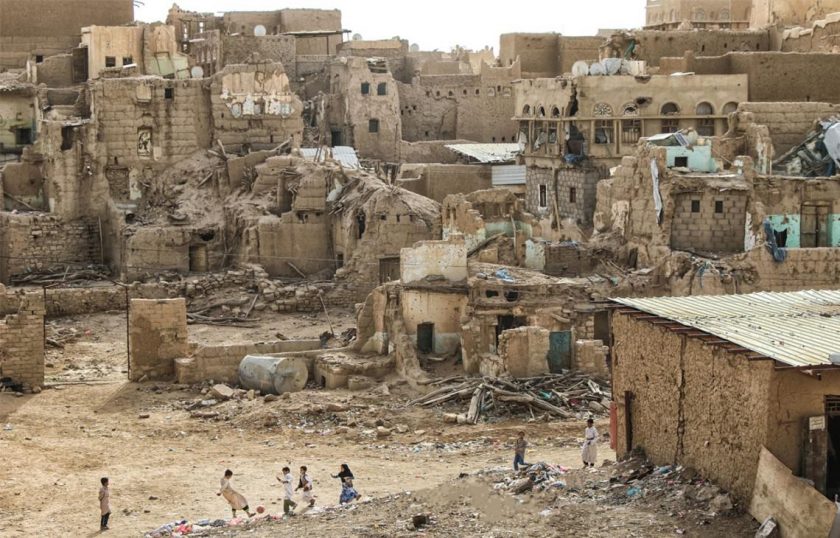
Yemen’s popular Houthi Ansarullah movement has called on the Saudi-led coalition of aggressors to consider its proposal for 12-party mediation aimed at ending the bloody war on the impoverished Arab state.
In a tweet on Wednesday, Mohammed Ali al-Houthi, the chairman of the Supreme Revolutionary Committee of Yemen, proposed that twelve countries, including Russia, as well as the United Nations mediate to end the Yemen conflict.
The top Houthi official suggested that four Arab countries, four Muslim countries, three Asian nations, Russia as well as the UN be included in the group of mediators.
He referred to Algeria, Tunisia, Egypt, Iraq, Pakistan, Malaysia, Indonesia, Sierra Leone, Russia, China, South Korea and Japan as his proposed countries.
The proposal comes a week after United Nations Secretary General Antonio Guterres called for a ceasefire in all conflicts worldwide amid a global fight against the coronavirus pandemic.
Guterres warned that in war-torn countries health systems have collapsed and the small number of health professionals left were often targeted in the fighting.
The world body has been trying to mediate an end to conflicts in countries including Syria, Yemen and Libya, while also providing humanitarian assistance to millions of civilians.
Ansarullah has welcomed the call, saying an aerial and maritime blockade imposed on Yemen by the Saudi regime and its coalition allies should be lifted to facilitate the adoption of preventive measures against the coronavirus outbreak.
While Yemen has not recorded any COVID-19 cases to date, the possibility of an outbreak threatens the war-ravaged country’s already fragile healthcare system.
Tens of thousands of Yemenis have died since the beginning of the war that Saudi Arabia and its allies launched in 2015 to restore power to Yemen’s former Riyadh-allied officials. The aggression has also brought entire Yemen to the edge of famine.
The United States and many of its allies have been providing political, military, logistical, and advisory support for the war.
Trump tiptoeing toward energy market management
Oil price war in the time of Covid-19
By M. K. BHADRAKUMAR | Indian Punchline | March 31, 2020
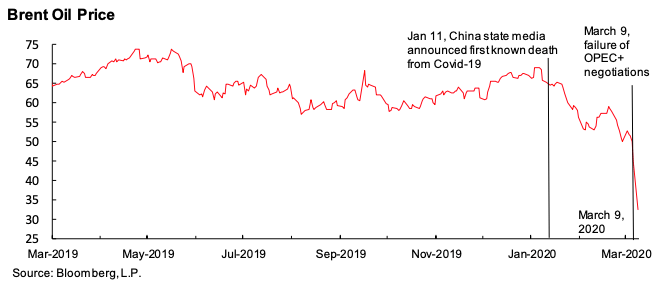
On Monday, the US President Donald Trump literally bit the bullet by telephoning Russian President Vladimir Putin to discuss the state of the energy markets, which are at a crisis point not seen in history. As of last weekend, global oil prices collapsed by over 50 percent and are the lowest seen in almost twenty years.
A defining moment has come. Starting April 1, OPEC+ countries (OPEC plus Russia) are at liberty to pump as much oil as they please. The increased oil volumes are sure to flood the oil market. Saudi Arabia has talked of offering 12.3 million barrels per day to the market.
The combination of a massive supply overhang and a significant demand shock at the same time has created an unprecedented situation in the oil market history. It threatens to have a multiplier effect on the deep recession in the world economy due to the coronavirus and the consequent lockdowns in large swathes of China and the industrial world.
For the US, the oil market bust could mean that over half of its shale industry, which has been charioting the country’s newfound oil superpower status, may go bankrupt. Breakeven price for US shale industry ranges from $40-50 per barrel — and prices have plummeted to around $20.
A similar crisis had arisen in 2014-2016 period but shale industry survived through a combination of pushing costs lower and retrenching — and bouncing back with higher profits once the crisis was over. However, this time around, shale drillers were already facing substantial hurdles with cash flow problems and maturing debt and the dramatic fall in income simply drives them bankrupt. Again, whereas the problem earlier was one of fall in oil prices, today it is also combining with the biggest demand slump in the history of oil.
The US shale sector is getting completely killed and tens of billions of dollars in equity could get wiped out. 13 US senators wrote to the Saudi Crown Prince Mohamed bin Salman earlier this month urging halt to efforts to boost production and lower prices. They threatened to take action against Saudi Arabia if the “economic warfare” continued.
Sen. Ted Cruz from Texas told CNBC on Monday: “The Saudis are hoping to drive out of business American producers, and in particular shale producers, largely in the Permian Basin in Texas and in North Dakota. That behaviour is wrong, and I think it is taking advantage of a country that is a friend… If they don’t change their course, their relationship with the United States is going to change very fundamentally.”
However, the Saudis are not backing down from the oil price war for market share and are planning another increase in its oil exports starting in May. A prominent Saudi establishment commentator Bernard Haykel wrote recently that Riyadh’s decision reflects a broader and more fundamental strategic shift led by the Crown Prince. To quote Haykel, “He (Crown Prince) has embarked on a policy of capturing market share rather than trying to set the price.”
Indeed, the warning bells are ringing already for the shale industry. Tens of thousands of roughnecks are getting laid off. The Oil Price magazine forecasts that layoffs in the US oil industry could be as high as 200,000 jobs.
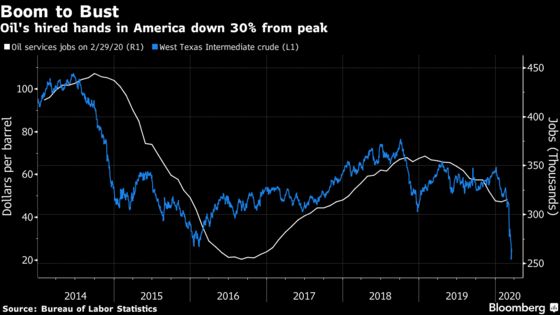
Tens of thousands are getting laid off in the US shale patch
The Brookings Institution anticipates in a study that the Midland-Odessa region of West Texas, where Occidental Petroleum and Parsley Energy have dominated, could be decimated. A top oil executive, Dan Eberhart, CEO of Denver-based Canary has been quoted as saying, “There’s definitely blood in the water. The weakest oil and gas companies, oilfield service companies and banks with heavy energy exposure might submerge beneath the waves before the end of the cycle never to surface again.”
The ripple effect is staggering. When the fracking companies go bankrupt and cannot repay debts, the credit market and the banks face a crisis, which in turn threatens the whole system of oil stock exchange.
Simply put, Saudi Arabia and Russia have dealt a lethal blow to the decade-old American fracking industry, which they have seen as a mortal enemy. The crux of the matter is that they are independently fighting the US and are determined to take the price war forward to conclusively finish off the American encroachment into their market share. (See my blog Oil price war is more about market share)
Recently, the chairman of Russia’s state-owned Rosneft, Igor Sechin, who is a longstanding associate of President Vladimir Putin, stated bluntly that as soon as US shale leaves the market, prices will rebound and could reach $60 a barrel.
The bottom line is that for President Trump, the political costs are exceedingly high. For one thing, his boast that the US has become the most significant player in global oil markets is coming unstuck and his agenda to secure “energy dominance” on the back of a shale boom is exposed as a pipedream.
More importantly, Trump’s trademark policy of weaponisation of sanctions against Iran, Venezuela and Russian oil industry and its flagship Nord Stream 2 gas pipeline project to grab these countries’ market shares is running into headwinds.
Russia is moving in quickly to turn the “oil war” also into a war for natural gas market share in Europe. Russia has watched with unease the arrival of shale gas on European shores that could potentially erode its commanding position as the single largest supplier of natural gas to Europe. The US has been touting the LNG sales to Europe as “freedom gas”, which helps European countries to reduce their high level of dependence on Russian supplies.
The US sanctions against Nord Stream 2 gas pipeline project, which connects Russian fields with Germany and northern Europe and was nearing completion, is a case in point. The sanctions targets Russia’s Gazprom from expanding and consolidating its towering presence in Europe’s energy market. Unsurprisingly, Moscow is in an unforgiving mood.
Following Trump’s phone call to Putin, the White House said the Russian and US leaders “agreed on the importance of stability in global energy markets.” The US Department of Energy Spokeswoman Shaylyn Hynes hyped it up further and told TASS, “[US Energy] Secretary Brouillette will discuss with his Russian counterpart, Minister Novak, ways the world’s largest producers can address volatility in the global oil markets during this unprecedented period of turmoil.”
But the Kremlin readout merely said, “They (Trump and Putin) exchanged views on the current state of the global oil market and agreed that Russian and American energy ministers should hold consultations on this topic.”
The big question is whether Trump’s phone call to Putin signifies Washington’s first step in a historic move to cooperate with Moscow in energy market management. Objectively speaking, the oil crisis needs a joined-up international response, and, arguably, the solution lies in looking beyond OPEC (and OPEC+) at a wider coalition — OPEC++ that includes the US. In principle, Saudi Arabia and Russia would favour the idea that the high-cost producers outside the OPEC+ group must finally share the burden of balancing the oil market.
Given the fact that Trump is vying for re-election this year and a significant portion of his supporters are engaged in shale oil and gas production, he may bite the bullet — at least, as a one-off, time-limited bite.
Yemen’s Al-Houthi offers to exchange Saudi pilots for Hamas prisoners
MEMO | March 27, 2020
The leader of Yemen’s Houthi movement, Sayyid Abdulmalik Al-Houthi, has made an offer to release Saudi captives in exchange for members of the Palestinian resistance movement, Hamas, being held in Saudi Arabia.
“We are fully prepared to release one of the captured pilots along with four Saudi officers and soldiers,” Al-Houthi said in a televised speech on Al-Masirah. “This will be in exchange for the release of those from Hamas arrested in the Kingdom of Saudi Arabia.”
Last September, Saudi detained 81-year-old Dr Muhammad Saleh Al-Khodari, a prominent member of Hamas who has served as the movement’s officially-acknowledged representative in the Kingdom for 20 years. He was also the head of Hamas’s General Shura (Consultative) Council.
Earlier this month it was reported that the Saudis were preparing to prosecute Palestinians held in its prisons. Al-Khodari and his son, Hani, are among the detainees. Their arrests on “terrorism” charges are seen by some to be politically-motivated following Saudi Arabia’s increasing normalisation of relations with Israel under de facto ruler Crown Prince Mohammad Bin Salman.
Last week the Head of the Hamas Political Bureau, Ismail Haniyeh, urged King Salman Bin Abdulaziz to release the Palestinian prisoners, citing health concerns given the spread of coronavirus Covid-19.
Senior Hamas official Mahmoud Al-Zahar welcomed the proposal by the Houthis: “The initiative of the leader of Ansar Allah has pleased the hearts of all Palestinian resistance fighters,” he was reported as saying by Al Mayadeen.
A statement by Hamas also expressed appreciation for the solidarity and support shown by the Houthis: “We greatly appreciate the spirit of brotherhood and sympathy with the Palestinian people and support for their steadfastness and resistance. We express our thanks for this interest and this self-initiative.”
Speaking on the fifth-anniversary of the US-backed, Saudi-led coalition’s war on Yemen yesterday, Al-Houthi said, “Unfortunately, the regimes of Saudi Arabia and the United Arab Emirates have presented [themselves] as worse than Israel.”
Al-Houthi also said that his movement is “ready for peace and stopping the war if the aggressor is serious about stopping the aggression and siege.” He vowed that the sixth year of the conflict will involve “advanced military capabilities” and will entail new surprises for the coalition. “The general evaluation and studies confirm that the economic losses of the Saudi regime are great and its ambitions have failed,” he added.
After 5 years, Saudi Arabia is finally on the verge of defeat in Yemen
By Omar Ahmed | MEMO | March 26, 2020
Exactly five years ago, the US-backed, Saudi-led Arab coalition carried out its first air strikes on Yemen in an effort to reinstate the disgraced, exiled President Abdrabbuh Mansur Hadi. He is a statesman in name only who I have argued previously has neither power, authority nor legitimacy. The strikes targeted the Houthi movement, which is supported by the Yemeni armed forces, and the war, claimed the Saudis, was supposed to be over in a matter of weeks.
The war’s devastating effects have claimed over 112,000 lives and created the world’s worst humanitarian crisis. The steadfast and resilient Yemeni people have prevented the coalition from toppling the Houthi-aligned government in the capital, Sanaa.
After five years, in fact, it is fair to say that the Saudis and their mercenaries are on the verge of defeat. The Yemeni armed forces and “popular committees” which include Houthi forces are continuing their advances with their sights set firmly on the stronghold of Marib and the pro-Hadi, Islah militia which makes up the coalition-backed force on the ground.
The province of Marib is currently facing onslaughts on several main fronts: from the Nahm district of Sanaa province to the west; much of the recently-liberated Al-Jawf in the north; and from Sirwah district – a part of Marib already under Houthi control — and from the south in the Baydah province. Saudi air strikes continue in support of its mercenary ground forces although, as the years of conflict have shown, they are strategically ineffective.
The terrain, internal divisions among the mercenary forces, local distrust of Hadi and the relative ease of establishing relations in tribal areas captured by the Houthis are also reasons for their advance. Developments in missile defence systems which, according to the Yemeni armed forces, have been effective against some Saudi air strikes, coupled with more pre-emptive cross-border operations targeting Saudi military and economic interests are likely to change the direction of the war.
The Saudis know that the stakes are high in Marib, and losing it would be the end of the Saudi ground war against the Houthi-Yemeni army forces, which is why there have been fierce counterattacks, especially in Al-Jawf, which until recently had been in the hands of pro-Hadi fighters for the past five years. The province not only shares a border with Saudi Arabia, but the region is also rich in natural resources. Decades of Saudi policy, though, have ensured that Yemen has remained poor and unable to exploit its own oil reserves fully.
It is clear that the so-called Riyadh Agreement has failed to prompt a concerted effort among Saudi and UAE proxies to set aside their political differences and refocus their attention on the Houthis in the north. Clashes between the Saudi-backed Islah militia forces and those aligned with the UAE-supported separatist Southern Transitional Council (STC) are now routine, and have intensified in recent days in the southern port city of Aden.
The Sanaa-based government has made it clear that it will confront the coalition and its mercenaries in the country’s south and east. This not only implies fighting in the de-facto STC-held Aden, which was under the control of the Houthis back in 2015 before they were driven out, but also the oil-rich Shabwa province.
Having control of most of the population and the capital Sanaa; having a lot of the Yemeni military, including the Republican Guards, on their side; and with potential access and control of Yemen’s resources, the Houthi-aligned National Salvation Government (NSG) may finally get international recognition at the expense of the “legitimate” UN-recognised Yemeni government in exile under Hadi in Riyadh. At the moment, the NSG only has diplomatic relations with Iran and Syria.
Earlier this week, the Houthi-aligned Yemeni military spokesman, Brigadier General Yahya Saree, told a press conference that there have been more than 257,000 coalition air strikes over the past five years and warned that the sixth year “will be harsher and more painful”. In doing so he affirmed that Yemen is not in the same position militarily that it was at the start of the conflict.
In light of the Houthi forces’ strategic advances and superior political resolve, it is thus possible that we will see a political agreement to end the war, if not this year then next. In a promising sign, a leading member of the Supreme Political Council, Mohammed Ali Al-Houthi, tweeted that he welcomed Saudi Arabia’s decision to support a ceasefire at the behest of the UN Secretary-General due to the coronavirus pandemic.
It remains to be seen, therefore, how much longer the Saudis will continue their disastrous and illegal intervention in Yemen, especially with the oil war and looming bankruptcy as oil prices fall, not to mention domestic political crises between de facto ruler Crown Prince Mohammad Bin Salman and his rivals. The Saudis will soon find that they have neither the will nor the wealth to carry on.
That being said, the fall of Marib to the Yemeni military and its Houthi allies might be the catalyst to bring about an end to the war, but there are reports of thousands of civilians being displaced as a result of the current escalations. There is also the brutal siege of the port of Hudaydah by the coalition that needs to be addressed; the UAE occupation of Socotra; and — arguably the most worrying — the direct Saudi military presence in the eastern province of Al-Mahrah.
Earlier this month I speculated how the resistance movement in Al-Mahrah may soon turn into an armed struggle against a Saudi occupation. This materialised several days later, with the Southern National Salvation Council (SNSC) announcing a call for armed resistance against the foreign forces.
Following the coalition defeat, the future of the NSG and the alliance between the Houthi movement and Yemeni military will be tests of the stability and security of Yemen. Alliances tend only to serve a purpose against a common enemy. That’s an issue for the future, though; for now, that enemy is on the verge of defeat.
Riyadh’s “Oil War” on Russia has some Global Objectives
By Salman Rafi Sheikh – New Eastern Outlook – 24.03.2020
The on-going Saudi ‘oil war’ with Russia has its roots in the logic of increasingly using natural resources for geo-political and geo-economic purposes. While this is not something entirely new, the latest push comes against the backdrop of increasing competition between the US and Russia for global leadership roles and the former’s attempts at forcing the latter out, squeeze its share in the global oil market to increase that of the US shale oil, thus denting Russia’s economic capacity and its ability to project power in regions beyond its borders.
Whereas the Saudis blame Russia for the ‘oil war’ and Kremlin’s refusal to further cut oil production, the proposed cut, as it stands, would have ultimately meant a further decrease in Russia’s share of the global market and a significant increase in the US’ shale-oil production and exports. Ever since OPEC+ agreement of 2016 and the related cuts in oil production, the output of US shale oil has soared by 4.5 million barrels a day. Whereas the Western political pundits have been speaking and writing of Russia as the ‘malign’ player targeting the US’ ‘booming’ shale oil industry, the fact of the matter is that the US shale industry would not have grown in the first place if there had been no OPEC+ agreement. Russia, as it stands, has only refused to further cut its production, and is willing to extend the OPEC+ to continue a stable system of oil production.
How the OPEC+ benefited the US shale oil is evident from the fact that balanced production of crude oil meant stable and high prices, which made the US shale oil more profitable, further allowing the US to use the scenario to build its production and export infrastructure. As it stands, since 2016 when the OPEC+ deal was struck, US oil exports have increased five-fold and shale production increased from 8.9 million barrels per day to 13.1 million barrels per day. Thus, to a significant extent, by refusing the Saudi proposal of further cuts in oil production, Russia essentially refused to allow the US shale oil industry a further free-way for global expansion.
At the same time, Russia continues to stick with the OPEC+ deal. The Russian Prime Minister Mikhail Mishustin has said,
“We did not initiate the withdrawal from the agreement [OPEC+ deal]. On the contrary, we proposed to extend the agreement on the existing terms, at least until the end of the second quarter or for a year, so as not to complicate the situation that has developed with the spread of coronavirus.”
At the recent meeting between Russia’s Putin and energy officials, Putin reportedly said that:
“OPEC+ has “proved to be an effective instrument to ensure long-term stability on global energy markets. Thanks to that, we have obtained extra budget revenues and, what is important, provided a possibility for upstream companies to confidently invest in promising development projects.”
What becomes evident here is that the blame for reduced oil prices can hardly be put on the Russians. Its roots lie in the global struggle for market share. This struggle is taking place at two levels. The first is between the Russians and the Saudis whereby the latter, known for playing on the US side in every war, want to expand their share of the market to sustain their massively oil-dependent economy. The second level, linked as it is with the first, is again about reducing Russian share of the market and allowing for the shale-oil sector to expand. Since this expansion will theoretically come at the expense of Russian oil, the Saudis would still benefit.
There is as such a Saudi-US consensus behind the dropped oil prices. US President Donald Trump spoke on the phone to the Saudi Crown Prince Mohammed bin Salman on the eve of the Vienna meeting, and their subject of discussion, according to the White House, was the “energy market.”
That the US and Saudi Arabia have a deep interest in squeezing out Russia’s share of the global hydrocarbon market is evident from the way the US has been trying to block and even sanction the joint Russian-German Nord Stream-2 pipeline project.
Who will win this war? Unlike the Saudis, Russia’s economy does not solely depend on oil prices, although it still does play a significant role in enabling the Russian government to fulfil its budgetary commitments. The Saudis would be thus at a loss much sooner than the Russians. If the US president called the Saudi ruler to discuss the “energy market” and it was mainly about finding ways of squeezing Russia, it was equally about finding a way to stabilise oil prices because the continuously falling oil prices would only make shale-oil companies suffer losses. According to a Bloomberg report, “The US shale sector is getting completely killed. A complete bloodbath. Billions of dollars in equity wiped out.”
Whereas some in the West think that this is a Saudi-Russian project to destroy the US economy, this is not the case; for, if both oil producers had wanted this, they could have done this by doing a new OPEC+ deal in a way that would have allowed a cut in prices and still maintain production levels at agreed levels. This has not happened, and given the nature of deep Saudi interests in the US, it is difficult to conceive of a Saudi project to ‘kill’ the US economy. What it signifies is an attempt at squeezing the Russian share of the market. This explains the Saudi proposal for cutting oil production (and thus allowing that of the shale-oil grow further). The falling oil prices only indicate that the project is failing; Russia is resilient and has enough reserves to sustain itself for a decade.
Salman Rafi Sheikh is a research-analyst of International Relations and Pakistani foreign and domestic affairs.
Yemen’s Ansarullah welcomes UN call for global ceasefire to tackle coronavirus pandemic
Press TV – March 24, 2020
Yemen’s Houthi Ansarullah movement has welcomed a call by United Nations Secretary General Antonio Guterres for a ceasefire in all conflicts worldwide amid a global fight against the coronavirus pandemic.
Mohammed Ali al-Houthi, the chairman of the Supreme Revolutionary Committee of Yemen, said in a tweet on Monday that Sana’a welcomes the UN chief’s call and supports a halt in attacks by the US, Britain, Saudi Arabia, the United Arab Emirates and their allies against Yemen.
The movement, he said, also seeks the lifting of an aerial and maritime blockade imposed on Yemen by the Saudi regime and its coalition allies since early 2015, to facilitate the adoption of preventive measures against the coronavirus outbreak.
The United States and Britain are not part of the Saudi-led alliance but have been providing all sorts of support to the bloody war.
Speaking to reporters from the UN headquarters in New York on Monday, Guterres called for “an immediate global ceasefire in all corners of the world,” adding, “It is time to put armed conflict on lockdown and focus together on true fight of our lives, pull back from hostilities and put aside mistrust & animosities.”
The United Nations has been trying to mediate an end to conflicts in countries including Syria, Yemen and Libya, while also providing humanitarian assistance to millions of civilians.
Guterres warned that in war-torn countries health systems have collapsed and the small number of health professionals left were often targeted in the fighting.
While Yemen has not recorded any COVID-19 cases to date, the possibility of an outbreak threatens the war-ravaged country’s already fragile healthcare system.
Last week, Houthi warned that the Saudi-led coalition of aggressors will be responsible for a possible spread of the virus to Yemen, citing the negative impacts of the siege.
Houthi’s comments come as Yemen is preparing to mark, on March 26, the fifth anniversary of the military campaign, which the Saudi regime and a number of its vassal states launched to reinstall a Riyadh-backed former regime in Yemen.
The Western-backed offensive, coupled with a naval blockade, has destroyed the country’s infrastructure.
The aggression has also led to the world’s worst humanitarian crisis in Yemen, where over 1,000 people, including many kids, were killed and hundreds of thousands afflicted by cholera, diphtheria, measles and dengue fever in 2019, according to the World Health Organization.
Featured Video

Racist Seinfeld Dances for Joy as Bibi Unveils His New Map
or go to
Aletho News Archives – Video-Images
TV Drama Review
Japanese drama projects Japan’s wartime atrocities onto Chinese characters

Global Times | October 25, 2026
By portraying Chinese characters as perpetrators of ruthless violence while casting Japanese Self-Defense Forces (SDF) intelligence operatives as defenders, the season 2 of the Japanese drama Vivant has recently drawn criticism from Chinese netizens, who argue that its depiction turns historical reality on its head while ignoring Japan’s wartime atrocities.
The TBS drama series – a spy suspense story in which an alleged unofficial intelligence unit of the SDF operates across the globe — has attracted a passionate fanbase. Its currently airing season 2 opened with a household rating of 18.8 percent, the highest for a TV drama this year, according toa commentary article by Japanese media Toyo Keizai.
What draws attention is the portrayal of the enemies in the series, the article noted. Scenes in which the Chinese organization subjects kidnapped members of the SDF unit to brutal torture are repeated with unrelenting intensity.
It is rare for Japanese TV dramas to explicitly portray a real-life country as the enemy, the article noted.
Japanese Prime Minister Sanae Takaichi also made a reference to the drama, saying that she has been recording Vivant and hopes to binge-watch it over the year-end and New Year holidays, according to Japanese media outlets.
China’s CCTV News report on Sunday revealed that the drama features scenes in which Chinese personnel cut off the fingers of and stab Japanese intelligence operatives in the abdomen. Such acts bear striking similarities to the torture inflicted on Chinese nationals by invading Japanese troops during the World War II.
The drama distorts the truth by attributing these atrocities to modern Chinese characters. Beneath the surface, it subtly glorifies Japan’s cross-border overseas operations, blurs the functional boundaries of the SDF and implicitly promotes an expansionist narrative, per CCTV News. … continue
Blog Roll
 Aletho News
- Iran FM Araghchi: “Hormuz Will No Longer Be the Same”
- EU facing trillion-euro debt hole while seeking more cash for Kiev
- How US, Europe, Persian Gulf states exhausted missile stockpiles, splurged billions to defend Israel
- Up in arms… Koreans reject U.S. empire’s plan to make South Korea the next Ukraine
- Iran, Turkey, Pakistan, Saudi Arabia could advance region-led security framework in Tehran: FM spox
- Netizens condemn Japanese drama for projecting Japan’s wartime atrocities onto Chinese characters
- Racist Seinfeld Dances for Joy as Bibi Unveils His New Map
- A West Bank War for Netanyahu’s Election Campaign, Could It Backfire?
- Yemen denounces European Parliament’s ‘hypocritical’ push to blacklist Ansarullah
- Qalibaf: UAE’s UN bid aims to ‘clear the runway’ for ‘Greater Israel’, whitewash genocide
- If Americans Knew
- An error has occurred; the feed is probably down. Try again later.
- No Tricks Zone
- Sudden Stratospheric Warming, Powerful El Niño Combination May Lead To Extreme Europe Cold, Energy Crisis!
- Two New Studies Find Thwaites Glacier Melt Cannot Be Driven By Human Activity Or A Warming Ocean
- E-Cars Reduce CO2 Emissions By Only 41% Compared To Internal Combustion Engine Vehicles
- Predictions Made By Renowned Climate Professor Over Past Decades Have Been Proven To Be Poor
- New Study Suggests Large Regions Of The Pacific Ocean Have Been Cooling For The Last 80 Years
- Germany’s Green Energy Debacle: High Energy Costs Force Kahla Porzellan to Close After 182 Years!
- New Study: 50 Years Of The Most Aggressive ‘Net Zero’ Policies Can Only Affect The Global Climate By 0.03°C
- US September “Heat” Was No Record…Many Records Set Decades Ago
- Latest European Green Energy Debacle; Portugal’s Largest Flagship Solar Park Insolvent!
- Green Energy Debacle: German Expert Professor Fritz Vahrenholt Warns Of Severe Economic And Social Consequences

