Hamas: Saudi detains one of ‘our senior leaders’
MEMO | September 9, 2019
Hamas on Monday said “one of its senior leaders” and his son have been in Saudi custody since April of this year, reports Anadolu Agency.
In a statement, the group said the Saudi security services arrested Mohammad al-Khoudary, who has been living in Saudi Arabia for three decades and described the arrest as a “reprehensible action”.
The statement mentioned that al-Khoudary was responsible for administering the relations with Saudi Arabia for over the past two decades and he got several leading positions in the movement.
“Hamas kept silent over the past five months of his arrest to allow for mediations efforts but these efforts have yet to bear fruit”, it said.
Euro-Mediterranean Monitor for Human Rights, a Geneva-based group, also said that the Saudi authorities detain around 60 Palestinians in its jails.
In a statement, the rights group called on Saudi King Salman bin Abdul Aziz to order the immediate release of the detainees, especially those who are detained without specific indictments.
Yemen: Another Shameful US Defeat Looms
By Finian Cunningham | Strategic Culture Foundation | September 9, 2019
An official confirmation by the Trump administration of it holding discreet talks with Yemen’s Houthi rebels indicates a realization in Washington that its military intervention in the Arab country is an unsalvageable disaster requiring exit.
There are also reports of the Trump administration urging the Saudi rulers to engage with the Houthis, also known as Ansarullah, in order to patch up some kind of peace settlement to the more than four-year war. In short, the Americans want out of this quagmire.
Quite a turnaround. The US-backed Saudi coalition has up to now justified its aggression against the poorest country in the Arab region with claims that the rebels are Iranian proxies. Now, it seems, Washington deems the Houthi “terrorists” worthy of negotiations.
This follows a similar pattern in many other US foreign wars. First, the aggression is “justified” by moralistic claims of fighting “communists” or “terrorists” as in Vietnam and Afghanistan. Only for Washington, after much needless slaughter and destruction, to reach out to former villains for “talks” in order to extricate the Americans from their own self-made disaster.
Talks with the Houthis were confirmed last week by US Assistant Secretary of Near East Affairs David Schenker during a visit to Saudi Arabia.
“We are narrowly focused on trying to end the war in Yemen,” said Schenker. “We are also having talks to the extent possible with the Houthis to try and find a mutually accepted negotiated solution to the conflict.”
In response, a senior Houthi official Hamid Assem was quoted as saying: “That the United States says they are talking to us is a great victory for us and proves that we are right.” However, he declined to confirm or deny if negotiations were being held.
You have to almost admire the effrontery of the American government. Notice how the US diplomat says “we are focused on ending the war” and “a mutually acceptable solution”.
As if Washington is some kind of honest broker trying to bring peace to a country stricken by mysterious violence.
The war was launched by the US-backed Saudi coalition, including the United Arab Emirates, in March 2015, without any provocation from Yemen. The precipitating factor was that the Houthis, a mainly Shia rebel group aligned with Iran, had kicked out a corrupt Saudi-backed dictator at the end of 2014. When he tucked tail and fled to exile in Saudi capital Riyadh, that’s when the Saudis launched their aerial bombing campaign on Yemen.
The slaughter in Yemen over the past four years has been nothing short of a calamity for the population of nearly 28 million people. The UN estimates that nearly 80 per cent of the nation is teetering on hunger and disease.
A UN report published last week explicitly held the US, Britain and France liable for complicity in massive war crimes from their unstinting supply of warplanes, munitions and logistics to the Saudi and Emirati warplanes that have indiscriminately bombed civilians and public infrastructure. The UN report also blamed the Houthis for committing atrocities. That may be so, but the preponderance of deaths and destruction in Yemen is due to American, British and French military support to the Saudi-led coalition. Up to 100,ooo civilians may have been killed from the Western-backed blitzkrieg, while the Western media keep quoting a figure of “10,000”, which magically never seems to increase over the past four years.
Several factors are pressing the Trump administration to wind down the Yemen war.
The infernal humanitarian conditions and complicity in war crimes can no longer be concealed by Washington’s mendacity about allegedly combating “Iran subversion” in Yemen. The southern Arabian Peninsula country is an unmitigated PR disaster for official American pretensions of being a world leader in democratic and law-abiding virtue.
When the American Congress is united in calling for a ban on US arms to Saudi Arabia because of the atrocities in Yemen, then we should know that the PR war has been lost. President Trump over-ruled Congress earlier this year to continue arming the Saudis in Yemen. But even Trump must at last be realizing his government’s culpability for aiding and abetting genocide is no longer excusable, even for the most credulous consumers of American propaganda.
After four years of relentless air strikes, which have become financially ruinous for the Saudi monarchy and its precocious Crown Prince Mohammed bin Salman, who conceived the war, the Houthis still remain in control of the capital Sanaa and large swathes of the country. Barbaric bombardment and siege-starvation imposed on Yemen has not dislodged the rebels.
Not only that but the Houthis have begun to take the war into the heart of Saudi Arabia. Over the past year, the rebels have mounted increasingly sophisticated long-range drone and ballistic missile attacks on Saudi military bases and the capital Riyadh. From where the Houthis are receiving their more lethal weaponry is not clear. Maybe from Lebanon’s Hezbollah or from Iran. In any case, such supply if confirmed could be argued as legitimate support for a country facing aggression.
No doubt the Houthis striking deep into Saudi territory has given the pampered monarchs in Riyadh serious pause for thought.
When the UAE – the other main coalition partner – announced a month ago that it was scaling back its involvement in Yemen that must have rattled Washington and Riyadh that the war was indeed futile.
The defeat is further complicated by the open conflict which has broken out over recent weeks between rival militants sponsored by the Saudis and Emiratis in the southern port city of Aden. There are reports of UAE warplanes attacking Saudi-backed militants and of Saudi force build-up. A war of words has erupted between Riyadh and Abu Dhabi. There is strong possibility that the rival factions could blow up into a proxy war between Saudi Arabia and the UAE, supposed coalition allies.
Washington has doubtless taken note of the unstoppable disaster in Yemen and how its position is indefensible and infeasible.
Like so many other obscene American wars down through the decades, Washington is facing yet another ignominious defeat in Yemen. When the US starts to talk about “ending the war” with a spin about concern for “mutual peace”, then you know the sordid game is finally up.
Rights groups call for France to stop arms sales to Saudi Arabia and UAE
![A destroyed prison, in which Houthi Ansarullah movement members held its prisoners, is seen after coalition forces led by Saudi Arabia organised an airstrike over it in Dhamar, Yemen on September 01, 2019 [Mohammed Hamoud / Anadolu Agency]](https://i0.wp.com/www.middleeastmonitor.com/wp-content/uploads/2019/09/20190901_2_37999764_47216403.jpg?resize=1200%2C800&quality=75&strip=all&ssl=1)
A destroyed prison, in which the Ansarullah movement held prisoners, is seen after Saudi led coalition forces organised an airstrike on September 1, 2019
[Mohammed Hamoud / Anadolu Agency]
MEMO | September 7, 2019
Some 17 rights groups have renewed their call for France to immediately stop arms sales to Saudi Arabia and the UAE, after a new UN report confirmed their involvement in the killing of civilians in Yemen, Alkhaleejonline.net reported on Friday.
The 17 NGOs renewed their call for France to stop arming Saudi Arabia and the UAE, based on two incidents that took place last week.
“On Sunday, more than 100 inmates were killed in an airstrike in the west of Yemen,” the rights groups affirmed in a statement.
They also claimed that a reported issued by a group of UN experts found that Saudi Arabia and the UAE are carrying out violent attacks against civilian residents in Yemen.
The experts emphasised the importance of the countries selling arms to these two Arab states to stop their sales, in order to inhibit the encouragement of this conflict.
The group of UN experts which was formed in 2017, confirmed that there have been “many war crimes” throughout the year.
Bulgarian journalist reveals how US-purchased arms end up with ISIS in Yemen
‘It’s a tip of an iceberg’
RT | September 5, 2019
Mortar shells shown in an Islamic State propaganda video have put a Bulgarian journalist on the scent of an alleged US-run arms shipping network supplying militants in the Middle East, she told RT in an exclusive interview.
This story began back in June, when Islamic State (IS, formerly ISIS) terrorists in Yemen demonstrated several Serbian-made 82mm mortar shells in their propaganda video. Independent investigative journalist, Dilyana Gaytandzhieva, believes that the deadly munitions ended up with the jihadists after going through US hands.
Tracing origins
Clearly visible on one of the shells is a mark that reads ’82 mm M74HE mortar shells KV lot 04/18.’ The letters KV stand for the Serbian state arms manufacturer Krusik, located in the town of Valjevo, while the digits 04/18 refer to lot 04 produced in 2018. One should not jump to any conclusions, however, as it is not the Serbs who were responsible for the shells suddenly appearing in the hands of terrorists, according to Gaytandzhieva.
A trove of “explosive” leaked documents she said she received from an “anonymous source” shows that the lot in question was part of a deal between the Serbian arms factory and a Pentagon contractor, Alliant Techsystems LLC. It was part of a purchase of more than 100,000 such shells “for the needs of the US government.”
“In the shipping documentation and on the labels on the mortar shells’ containers, there is a name of… the importer… that purchases the weapons on behalf of the US government,” the journalist told RT, citing the documents.
“There are indications and information about a US federal contract, under which these weapons were purchased, and this is absolutely verifiable in the case of Alliant Techsystems LLC, the company, which purchased the mortar shells and this particular lot of weapons pictured in the ISIS video in Yemen.”
Some leaked documents published by Gaytandzhieva do indeed mention a contract between Alliant Techsystems LLC and the Pentagon, which was allegedly aimed at supplying the Afghan National Army. “This lot was purchased under a $50 million contract between Alliant Techsystems and the US DoD for the delivery of non-standard US weapons to Afghanistan,” the journalist said.
Gaytandzhieva believes, however, that this case is just the tip of the iceberg. It could be a part of a far-reaching arms supply scheme involving up to “three million pieces of weapons – rockets and mortar shells – that have been diverted either to Syria or to Yemen.”
‘Corporate international weapons shipment network’
The leaked documents, which include emails, internal memos, photos and correspondence between the American arms dealers and the Serbian arms factory Krusik, have helped Gaytandzhieva to “expose the existence of a secret US special command unit code-named “Task Force Smoking Gun.” That unit has allegedly operated an arms depo since at least 2017, which is used in shady arms shipping operations by the US and its allies.
“I found that four private American companies were US government contractors and they were commissioned by the Pentagon to deliver non-US standard weapons to different destinations. According to the other leaked documents, I found that one of these destinations was Syria.
“This is a whole international weapons shipment network,” the journalist explained to RT, adding that Saudi Arabia and the UAE are also using it for its operations alongside the US. “The scheme is using different routes and diplomatic flights diverting weapons via a third party to their final destination, which appears to be Syria or Yemen.”
Gaytandzhieva said that she investigated at least “350 diplomatic flights carrying weapons for the last three years” by the same Azeri state-run company that delivered the mortar shells to Afghanistan in 2018. “They made technical landings with stays varying from a few hours to up to a day in intermediary locations without any logical reasons such as needing to refuel the planes,” she wrote in a separate report investigating this particular issue.
“That means that this international weapons shipment network has never [ceased to exist] and continues [it operations] to this date.”
RT has managed to independently verify parts of Gaytandzhieva’s report by finding the contracts between Alliant Techsystems LLC and the Pentagon that she mentions in the US Federal Procurement Data System. It has also been established that the company has regularly worked for the US Department of Defense since at least 2016.
Also on rt.com:
Al Qaeda team plays on the same side as the US in Yemen
Weapons ending up with terrorists is OK, as long as Obama did it: The world according to CNN
US in talks with Yemeni rebels to end war – official
RT | September 5, 2019
Washington is in talks with the Houthi rebels in a bid to end Yemen’s war a top US official said on Thursday. “We are narrowly focused on trying to end the war in Yemen,” Assistant Secretary of Near Eastern Affairs David Schenker said during a visit to Saudi Arabia.
“We are also having talks to the extent possible with the Houthis to try and find a mutually accepted negotiated solution to the conflict,” AFP quoted the officials as saying.
The development marks the first contact between the administration of President Donald Trump and the Houthis in over four years.
Under the administration of former president Barack Obama, US officials held brief talks with Houthi leaders in June 2015, three months after the Saudi-led intervention began, to convince them to attend UN-sponsored peace talks in Geneva to resolve the crisis.
New U.N. Report Highlights Human Rights Violations and Abuses in Yemen since 2014
By Sarah Abed | September 5, 2019
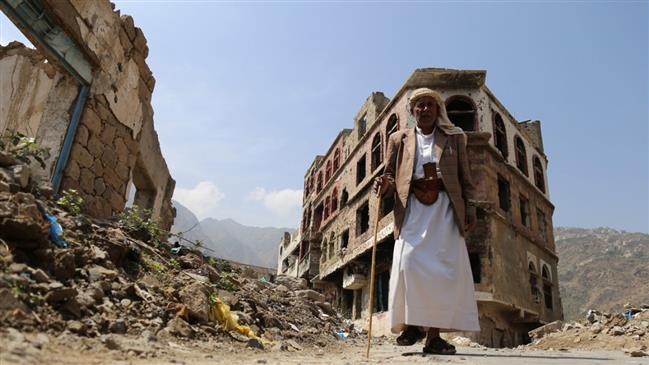
The second largest sovereign state in the Arabian Peninsula, Yemen, has been ravaged by war, deliberate starvation, and cholera for over four years. A 274 page U.N. report released on Tuesday, highlights the human rights situation including violations and abuses since September 2014.
According to the report, which took two years to complete, the United States, France, and Britain may be complicit in war crimes for their involvement in the war in Yemen by not only supplying the weapons being used by the Saudi and United Arab Emirate coalitions, but also providing them with intelligence and logistics support.
The report details the findings of the Group of Eminent International and Regional Experts on Yemen. It was submitted as a supplement to A/HR/42/17. U.N. investigators are recommending that all states impose a ban on arms transfers to the warring parties in order to prevent them from being used to commit serious violations and war crimes.
“It is clear that the continued supply of weapons to parties to the conflict is perpetuating the conflict and prolonging the suffering of the Yemeni people,” Melissa Parke, an expert on the independent U.N. panel, told a news conference. Parke continued, “That is why we are urging member states to no longer supply weapons to parties to the conflict.”
The report states, “The Group of Experts reiterates that steps required to address the human rights and international law violations in Yemen have been continually discussed, and there can no longer be any excuses made for failure to take meaningful steps to address them. The best way to protect the Yemeni population is to stop the fighting by reaching a political settlement which includes measures for accountability.”
Saudi Arabia and the United Arab Emirates are two of the largest purchasers of U.S. British and French weapons. These weapons are being used to fight against the homegrown Houthi movement which controls Yemen’s capital. The report states, “The legality of arms transfers by France, the United Kingdom, the United States and other States remains questionable, and is the subject of various domestic court proceedings.”
According to the U.N. report, Saudi and UAE coalitions are killing civilians in air strikes, and deliberately denying them food. The report put blame on all sides of the conflict, saying that no one has clean hands.
Kamel Jendoubi, chairperson of the Group of Experts on Yemen a creation of the U.N. Human Rights Council stated, “Five years into the conflict, violations against Yemeni civilians continue unabated, with total disregard for the plight of the people and a lack of international action to hold parties to the conflict accountable.” He also stated “This endemic impunity—for violations and abuses by all parties to the conflict—cannot be tolerated anymore.” Jendoubi concluded, “Impartial and independent inquiries must be empowered to hold accountable those who disrespect the rights of the Yemeni people. The international community must stop turning a blind eye to these violations and the intolerable humanitarian situation.”
Allegations of torture, rape, and murder of suspected political opponents detained in secret facilities by Emirati and affiliated forces have been received by the U.N. panel.
A secret list was sent by an independent panel to U.N. human rights chief, Michelle Bachelet, identifying “individuals who may be responsible for international crimes” the U.N. report states.
In the appendix, was a separate list identifying more than 160 “main actors” among Saudi, Emirati and Yemeni government and Houthi officials.
Concerns have been raised as to the impartiality and legitimacy of a Joint Incidents Assessment Team set up by Saudi Arabia to review alleged coalition violations, after it failed to hold anyone accountable for air strikes that killed civilians.
The U.N. report comes just a few days after a recent airstrike by the Saudi-led military coalition on a detention center in Yemen on Sunday, killed more than 100 people. The International Committee of the Red Cross (ICRC) said the attack may have amounted to a war crime. The coalition said it was targeting a drones and missiles facility but instead they leveled a building being used as a prison, in the city of Dhamar.
“The location that was hit has been visited by ICRC before,” Franz Rauchenstein, its head of delegation for Yemen, told AFP from Dhamar. “It’s a college building that has been empty and has been used as a detention facility for a while.” Rauchenstein continued, “What is most disturbing is that (the attack was) on a prison. To hit such a building is shocking and saddening – prisoners are protected by international law.” The remaining forty survivors are being treated in hospitals in the city south of the capital Sanaa for their injuries.
Last Thursday, airstrikes hit Yemeni government forces heading to Aden a southern port city, to fight UAE backed separatists. At least 30 troops were killed according to a government commander. The UAE has been known to arm and train separatist militias in southern Yemen. For weeks now, a rift between Saudi and UAE proxies has further complicated matters and civilians are paying the price.
A bipartisan group of lawmakers launched a new effort to end the U.S. government’s involvement in the Saudi-led assault on Yemen, shortly after the latest attacks. Lawmakers are also calling on the Senate to not remove an amendment to the annual defense policy legislation which would prohibit the U.S. from cooperating with Saudi airstrikes. Sanders stated, “We must use Congress’s power of the purse to block every nickel of taxpayer money from going to assist the Saudi dictatorship as it bombs and starves civilians in Yemen.”
Unfortunately, even with the release of this new U.N. report, the likelihood that nations perpetrating war crimes against innocent Yemeni civilians will be held accountable is highly unlikely.
Sarah Abed is an independent journalist and analyst.
UN calls out US, UK & France for complicity in Yemen war crimes
RT | September 4, 2019
The UN Human Rights Council slammed the US, UK and France for their complicity in alleged war crimes in Yemen by the Saudi-led coalition, warning that abetting such crimes by selling arms or other aid is also illegal.
“States that knowingly aid or assist parties to the conflict in Yemen in the commission of violations would be responsible for complicity in the relevant international humanitarian law violations,” the UNHRC’s Group of Eminent International and Regional Experts on Yemen declared in a lengthy report published on Tuesday.
“With the number of public reports alleging and often establishing serious violations of international humanitarian law no State can claim not to be aware of such violations being perpetrated in Yemen.”
The 274-page report enumerated possible war crimes committed by both sides in the conflict, including airstrikes and shelling, landmines, “siege-like tactics,” attacks on hospitals and other vital infrastructure, arbitrary arrests and executions, torture, and forced conscription of children into combat. The writers claimed to have forwarded the names of top military and political individuals from Saudi Arabia, the United Arab Emirates, Yemen, and the Houthi movement to the UN High Commissioner for Human Rights for further investigation and possible prosecution.
The UK and France fall under special scrutiny as signatories to the Arms Trade Treaty, which bars the sale of weapons if a country believes they will be used to commit “mass atrocities.” However, even non-parties to the ATT may face “criminal responsibility for aiding and abetting war crimes” since after five years of fighting “there can no longer be any excuses made for failure to take meaningful steps to address” the humanitarian crisis and international law violations taking place in Yemen.
The UK Court of Appeal ruled in June that the government had “made no attempt” to determine whether Saudi Arabia was using its weapons to violate international law, and while Secretary of State Liam Fox said he would suspend licenses for export to the Saudi coalition, the Department for International Trade said it would appeal the ruling. A rare bipartisan-supported bill to end weapons sales to Saudi Arabia by the US was vetoed in July by President Donald Trump, who complained it would “weaken America’s global competitiveness” and damage relationships with allies. And the French government hid the arms sales from its people entirely, then threatened the journalists who exposed the sales with arrest for publishing confidential information.
The UNHRC report also provided an update on the shocking scale of the humanitarian crisis, revealing that nearly a quarter of the Yemeni population was malnourished at the start of 2019, according to the Office of the Coordination of Humanitarian Affairs, with 230 of 333 districts at risk of famine and 24.1 million people in need of assistance merely to survive.
Also on rt.com:
‘Comical & tragic’ when US officials say arms sales to Saudis are about ‘exporting human rights’
Another Syrian Victory – and West’s Telling Silence
Strategic Culture Foundation | August 30, 2019
The liberation of Khan Sheikhoun in Idlib Province by the Syrian army and its Russian ally marks another important victory towards ending the eight-year war in Syria.
Last week saw the return to relative normalcy in the northwestern town which had been held under siege by al Qaeda-affiliated militants for over five years. Situated south of Aleppo on the road to the capital Damascus, Khan Sheikhoun was officially declared under the control of Syrian state forces on August 21 after a hard-fought battle against militants.
International journalists from Italy, Bulgaria, Greece and Russia witnessed the return of residents and efforts to resume electricity services and reopening of schools. Khan Sheikhoun was ransacked by the routed jihadi terror groups, with the typical depravity that had been seen in other liberated areas. But despite the devastation, residents were relieved to begin the task of restoration of what was previously a town renowned for its culture and beauty before the war erupted in March 2011.
The remnants left behind by the defeated militants as well as the identity of dead fighters testified to their terrorist affiliation. Many of them were foreign mercenaries. Khan Sheikhoun was a stronghold for the Hayat Tahrir al-Sham group which was formerly known as Al Nusra Front. Notwithstanding the chameleonic name, they are part of the jihadi Al Qaeda terror network which is internationally proscribed and which Western governments are officially opposed to.
The capture of the town again demonstrates the vile nature of the Syrian war as being one of foreign-sponsored aggression for regime change. In particular, the United States government and its NATO allies, Britain, France, Turkey, and others, are now known to be fully complicit in covert sponsorship of these terrorists.
Khan Sheikhoun is of particular significance because on April 4, 2017, it was dramatically reported by Western news media as being the site of a Sarin chemical weapon attack, allegedly carried out by the Syrian state forces. Three days later, on April 7, the US, Britain and France launched over 100 airstrikes on Syria in what was claimed to be “revenge” against the “Syrian regime” for allegedly committing an atrocity with chemical weapons. Syrian authorities and Russia asserted the alleged Sarin attack at Khan Sheikhoun was a false-flag provocation, fabricated by the militants with the aim of eliciting a military strike on Syria by the US and its NATO allies.
Clearly, after the liberation of the town this month, it is evident that it was a den of terrorist groups which held residents under a reign of terror. Yet for years, the Western news media had proclaimed that these fighters were “rebels” who deserved support from Western intervention. Even as Syrian forces were launching their assault on Idlib Province in recent months, the Western media were animated by shrill reports of “rebels” and civilians being killed by indiscriminate “regime” air strikes.
Tellingly, the momentous victory at Khan Sheikhoun was met with an astonishing silence among Western governments and news media.
The same duplicitous pattern has been seen before when the Syrian army and its Russian ally liberated Douma, Ghouta, Daraa, Aleppo, Maaloula and many other areas besieged by the so-called “rebels” so lionized in Western media. Syrian residents have been invariably relieved and overjoyed to have their freedom and dignity restored by the Syrian army and Russian forces. Their stories of the horror they endured under captivity are shocking from the depravity and cruelty meted out by Western-backed “rebels”.
That is why the liberation of Khan Sheikhoun, as with other locations in Syria, has had to be studiously ignored by the Western news media. Because if they really performed normal journalistic duty what the Western public would learn is that their governments and media have been complicit in huge war crimes against the Syrian nation.
It is all the more despicable therefore that the US is shifting its efforts to block the reconstruction of war-torn Syria. This week, the country is to hold the annual Damascus International Trade Fair. Delegates from some 40 nations are attending and exploring ways to regenerate the Syrian economy and to meet the challenge of reconstruction. Some estimates put minimal repair of infrastructure at a cost of $388 billion. The true figure could be in trillions of dollars.
That bill should be assigned to Washington, London, Paris, Ankara, Riyadh, Doha and Tel Aviv for the criminal aggression they collectively and stealthily inflicted on Syria.
Ahead of the Damascus trade fair, the US was warning prospective foreign investors that they could face sanctions if they did business with Syria. Russia’s foreign ministry condemned the American effort to sabotage Syria’s reconstruction.
As Russian lawmaker Valery Rashkin, who was in Syria this week, put it, the US is trying to destroy Syria through economic warfare after losing its dirty-war military agenda.
The European Union also stands condemned for continuing to impose economic sanctions on Syria. The war is over and it has been exposed as Western-backed criminal aggression. All past accusations against the Syrian state are null and void as malign propaganda. Thus, sanctions on Syria are a contemptible attack on the country by nations whose criminal complicity should actually be a matter of prosecution.
We can only wish the people of Syria well. With international solidarity from Russia, China, Iran and others, Syria will recover its former strength and pride. Syria has won a tremendous victory. The losers are the Western governments and media who have been exposed for the corrupt charlatans they are.
Behind Israel’s Bombing in Iraq’s Heartland
By Giorgio Cafiero – Consortium News – August 28, 2019
Iraq has felt the heat from escalating tensions between the U.S. and Iran this summer as the White House moves ahead with its “maximum pressure” campaign against the Islamic Republic. Also clear is that Israel and Iran’s proxy wars in the region have spilled into Iraq too. Last month, Israel carried out its first attacks on targets in Iraq since Operation Opera on June 7, 1981.
On July 19, Israel struck a target in the Salahuddin governorate, three days before another attack against Camp Ashraf, located within close proximity to Iran. According to al-Ain, the attack against Camp Ashraf killed 40 members of Iran’s Islamic Revolutionary Guard Corps (IRGC) and Iranian-sponsored Iraqi Shi’a militiamen. On Aug. 12, a blast occurred at a Popular Mobilization Units (PMU) arms depot in the Iraqi capital, allegedly carried out by an Israeli aircraft and resulting in one death and 29 injuries. Other Israeli attacks followed on the 19 and 25 of August. Several days ago, U.S. officials confirmed that Israelis were indeed behind the July 19 attack in Salahuddin governorate, which was suspected from the beginning.
Such actions highlight how Israel seeks to expand its theater of confrontation with the Iran to Iraq. Put simply, the Israelis are reacting with increasing aggression against the extent of Iranian-sponsored militias in Iraq and elsewhere in the Middle East that provide Tehran greater leverage vis-à-vis Israel.

Pompeo: Not against further Israeli strikes. (YouTube)
Important questions surround the U.S. role in these Israeli attacks against PMU targets in Iraq. It is difficult to imagine how the Trump administration could have not given Israel the green light to carry out these attacks. As Karim al-Alwei, an Iraqi parliamentarian, explained, “the U.S. controls Iraqi air space” thus “no planes, including Iraqi jets or helicopters, can overfly the area without U.S. knowledge or permission.” Only seven months ago, U.S. Secretary of State Mike Pompeo reportedly raised the topic of Iranian missiles in the hands of PMU forces in Iraq while meeting with Iraq’s Prime Minister Adel Abdul-Mahdi, stating that Washington would not be against any future Israeli military operations targeting such facilities.
Unclear is whether the Israelis used Syrian, Turkish, or Saudi airspace to reach their targets in Iraq. Regardless, it is a safe bet that the Saudi leadership, which maintains a tacit partnership with Israel largely based on a common perception of Tehran as a threat to its interests, welcomes such Israeli action in Iraq. As Saudi and Israeli officials see Iranian-sponsored Shi’a militia in Iraq, Syria, and Lebanon as a major threat, the Israeli strikes in Iraq will likely push the Israelis and Saudis even closer together.
Other Targets of Israel
Tel Aviv has dramatically increased the intensity and reach of its military campaign to weaken Tehran-backed militias in the region, waging attacks not only in Iraq, but also in Syria and Palestine too, as well as recently sending two drones into Lebanon. Into the chaos of Syria the Israelis have carried out many strikes against Iran-related targets since the civil war began in 2011. Yet by attacking targets in Iraq, Israel is showing its determination to expand the theater of its proxy war with Iran.
Although difficult to predict the long-term ramifications of these blasts in Iraq, their impact will likely be destabilizing, given Iraq’s fragile security. A major concern for officials in Baghdad is that in the days, weeks, and months ahead Iraq—as well as its airspace—could be the location of intensified violence as the U.S., Israel, and Iran challenge each other’s actions. Iraq will have a difficult time staying neutral between Washington and Tehran.
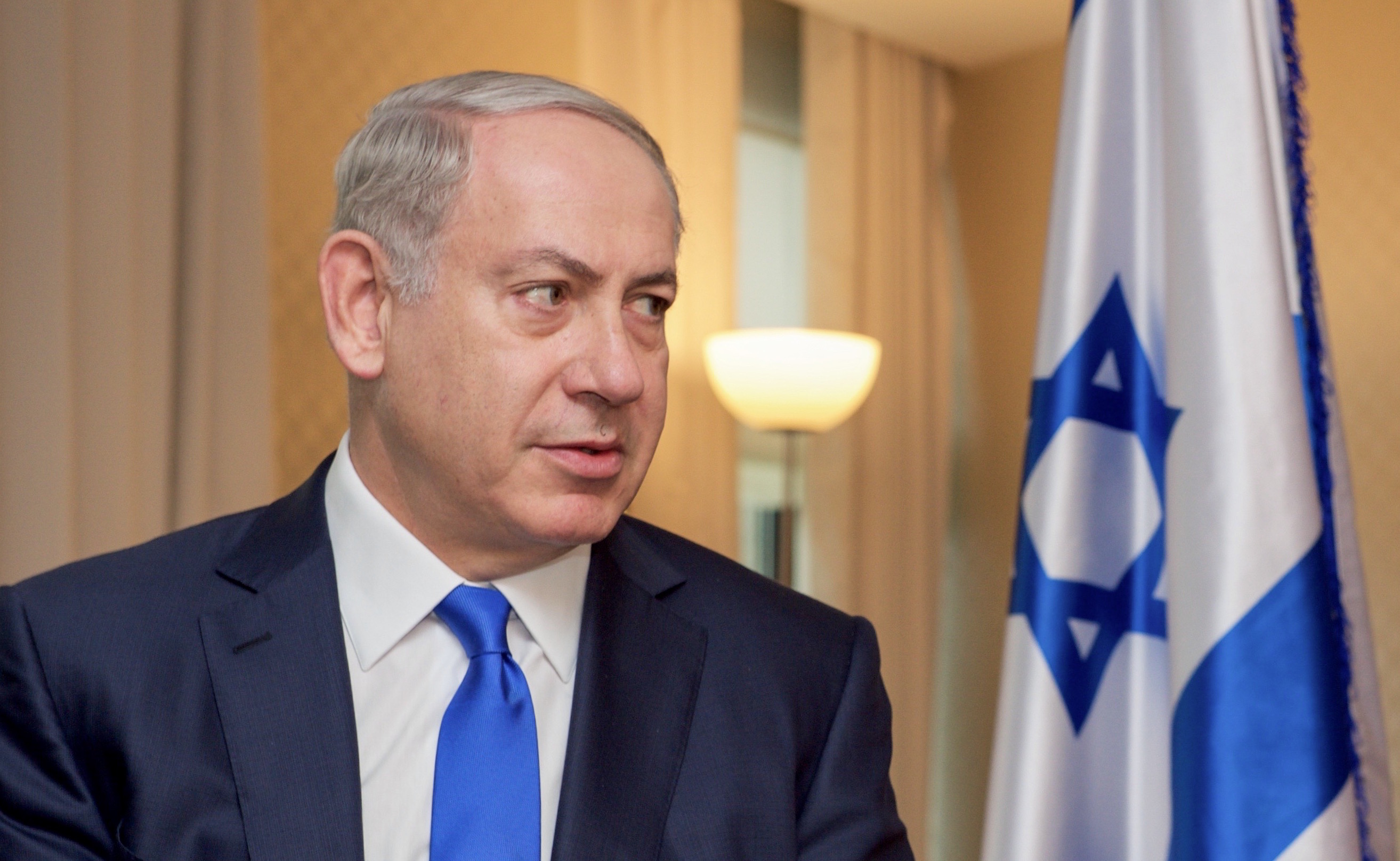
Netanyahu: More coming. (Wikimedia Commons)
Prime Minister Benjamin Netanyahu said Aug 19, “Iran has no immunity, anywhere… we will act and currently are acting against them, wherever it is necessary.” Three days later the Israeli leader went further, suggesting his country was perhaps involved in these attacks in Iraq, declaring, “We are operating in many areas against a state that wants to annihilate us.”
By making such bold moves, Israel is taking major risks. If such attacks continue in Iraq against Tehran-sponsored non-state actors near the Iranian border, Iran will likely respond. Perhaps the Iranians will put air defense capabilities in the hands of Iraqi Shi’a militias to enable such factions to fend off future Israeli attacks. Also possible is that Tehran would carry out limited strikes in retaliation at a time and place of the Iranian leadership’s choosing, perhaps targeting Israeli positions in the occupied Golan Heights of Syria.
Israeli strikes, which constitute a flagrant violation of Iraq’s sovereignty, may come with major costs for U.S. interests in Iraq. Given that an influential Iran-based Shi’a cleric, Grand Ayatollah Kazim al-Haeri, reacted to such Israeli attacks with a fatwa forbidding America’s military presence from continuing in Iraq, and the fact that many in Iraq and other Arab countries see the U.S. as responsible for Israeli actions against PMU targets, the roughly 5,000 American troops in the country could find themselves in the crosshairs of what has quickly become an escalating Israeli-Iranian proxy war waged in Iraq.
Israel’s bombing of Iraq will have major implications for the Washington-Baghdad relationship too, particularly given that the Iraqi government is attempting to bring the heavily armed Shi’a militias under its control. If the U.S. administration fails to prevent Israel from turning Iraq into more of a battleground in Tel Aviv’s proxy wars with Tehran, Iraq’s fragile stability will be further undermined. Under such circumstances, Iran could quickly capitalize on such conditions to bring Baghdad closer to Tehran at a time in which U.S. influence in Iraq—and the region at large—continues to wane.
Unquestionably, perceptions across Iraq that the U.S. is to blame for Israel’s actions will push more Iraqis to the conclusion that the White House’s “maximum pressure” agenda against Iran is directly undermining Iraq’s basic interests in upholding sovereignty and moving toward a more stable future in which the country is not implicated in greater regional crises involving multiple nations.
Giorgio Cafiero (@GiorgioCafiero) is the CEO of Gulf State Analytics (@GulfStateAnalyt), a Washington-based geopolitical risk consultancy.
US and Israeli Collectors Buy Up What Remains of Yemen’s Ancient Heritage
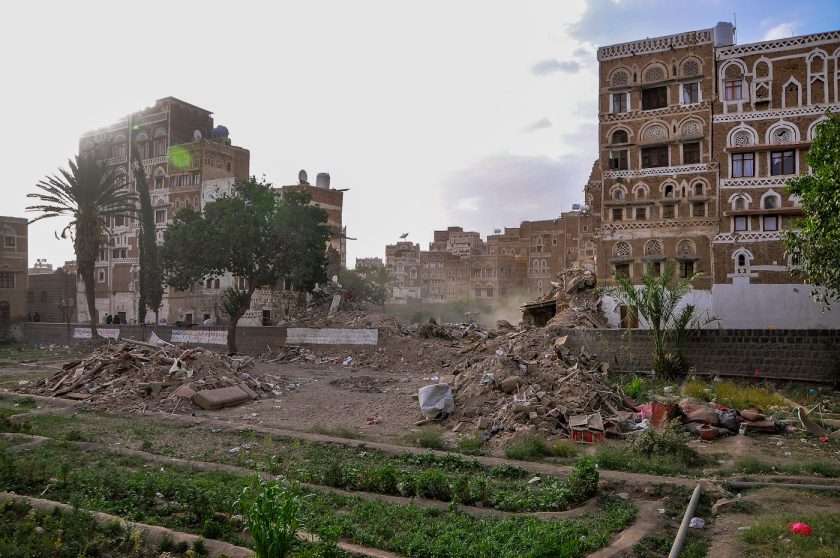
Four historic buildings in Sana’a’s old quarter, including the home of Saleh Ali al-Aeini, were destroyed by U.S. bombs dropped by Saudi warplanes in June, 2015. Photo – MintPress News
By Ahmed AbdulKareem – MintPress News – August 26, 2019
SANA’A, YEMEN — Yemen was once described as a living museum, but U.S. made bombs dropped by the Saudi-led Coalition’s jets have not only killed thousands of civilians and led to famine and the spread of disease but also pulverized the country’s rich architectural history and left its inimitable heritage at the mercy of the highest bidder.
“I remember how light filtered through the stained glass of the patterned crescent window (qamarias) onto the white gypsum plaster in the resting room (Deirmanah) on the top floor. At night, lights tossed dapples of color into the sky,” Saleh Ali al-Aeini recounted to MintPress from his partially destroyed high-rise apartment, continuing, “Now, only scattered glass remains amid a mound of dust and mud, thanks to American bombs.”
Saleh’s ancient tower-house was one of four historic buildings in the old quarter of Sana’a that were destroyed by U.S. bombs dropped from Saudi warplanes in June, 2015. The buildings’ many-storied tower-houses, three of them rising to 110 feet, were more than 2,500 years old. The newest of them was more than 1,000 years old, built long before the United States even existed as a nation.
The effects of airstrikes on the UNESCO-listed Old City, perched on a highland plateau more than 7,200 feet above sea level, can be noticed at a glance. Cracks show on the more than 1,975 densely-packed homes, threatening them with collapse. Labyrinths, hidden gardens, steam baths, busy markets and streets have all been affected by airstrikes on the city that was said to have been founded by Shem, the son of Noah. In fact, the ancient city has been targeted at least four times with over 30 airstrikes according to the General Authority for the Preservation of Historic Cities.
Yet Saudi airstrikes extend far beyond Sana’a’s historic sites — to Sadaa, Shibam Hadramout, Zabid in Hodeida, Shibam Kuban, east of Sana’a, Shabwa, Aden, Amran, Taiz, and other areas of the country’s history that have also fallen victim to coalition bombing. Airstrikes and shelling have destroyed at least 66 historic sites according to Muhannad al-Sayani, chairman of the Yemeni General Authority for Antiquities
Coalition raids have targeted ancient castles and forts, museums, religious shrines housing cultural treasures; and ancient dams, including the world-famous Great Marib Dam.
Al-Sayani told MintPress that targeting of the country’s historic sites by the Saudi-led Coalition is deliberate: “These are open sites, mostly in desert areas where weapons cannot be stored.” Following many of the attacks, the Coalition often accuses the Houthis of using archaeological sites as weapons depots; however, no evidence has been provided to substantiate these allegations.
The undersecretary of the General Authority for the Preservation of Historic Cities, Amat al-Razzaq Jahaf, told MintPress that most of the monuments or sites have been damaged or destroyed by Saudi airstrikes since the Saudi-led campaign began without any justification.
The United States says it does not make targeting decisions for the Coalition. But it does support Coalition operations through arms sales, the refueling of Saudi combat aircraft, and the sharing of intelligence. Just last Thursday, a U.S. MQ-9 Reaper drone was downed in the city of Dhamar near the historic Dhamar Museum, which was leveled by a direct Saudi airstrike in June 2015.
Nothing can bring these back
Al-Aeini’s wife, who told MintPress than an American-made bomb had destroyed her home and killed her sons, accused international aid organizations of neglecting their suffering. “Lots of organizations visited us and provided only [promises] without doing anything,” she went on, “We rebuilt a part of the house by ourselves, just to have shelter for me and my husband, without any help.” Yemen’s General Authority of Antiquities complained to MintPress that the country’s heritage has been neglected by international organizations and communities.
Now, the buildings — which have stood tall for thousands of years in the historic city that surrounds the remnants of al-Aeini family home — are subject to eroding foundations and ominous cracks that line their ancient walls built of mud and stone, as a result of repeated Saudi attacks and the inability of Yemen’s government to address the deterioration amid four years of Saudi bombardment.
To make matters worse, Yemen is in the midst of its rainy season, adding to the challenges in rebuilding archaeological sites that have been targeted. “Of course, what has been destroyed is still devastating and every day the dangers [to those sites] is multiplied due to our inability to carry out operations to reduce the aggravation of damage because of the costs of rebuilding,” Jahaf told MintPress. Al-Qasimi’s house in Sultan’s orchard in ancient Sana’a, which was destroyed in another Saudi airstrike, is an example of this.
“If peace is brought to Yemen — and with it, compensation is provided — infrastructure, roads, schools, and hospitals could all be rebuilt; but nothing can bring back the historic architecture that has been destroyed,” Mohaned al-Sayani, chairman of the Yemeni General Authority for Antiquities, told MintPress.
Centuries in building, seconds in destroying
“Here, generations of my grandparents lived; why is it that the Coalition can so easily destroy it?” Hashem Ali, who fled to Sana’a after airstrikes leveled his family home in the historic Rahban area of Saada, asked MintPress. “This is the first time in nearly 600 years that my family is without a home.”
The attack on ancient Sana’a was the first of many violent assaults on Yemen’s architectural history, but the worst hit historic area has been Yemen’s northern province of Saada, the hub of the ancient Minaean Kingdom of Ma’in, founded before the fourth century B.C.
Saada’s old city, which is among the world’s oldest human-carved landscapes, once consisted entirely of historic, centuries-old multi-story homes. Now, it has been wiped out, after Saudi Arabia declared it a military zone — even the city’s hand-carved wooden doors have been reduced to ashes.
Just hours after the Coalition issued a warning on May 10, 2015, dozens of airstrikes rained down on the historic city, including on the ancient al-Hadi Mosque, which was founded nearly 1,200 years ago and is the final resting place of Imam al-Hadi ila’l-Haqq Yahya, the Zaydi imam of Yemen.
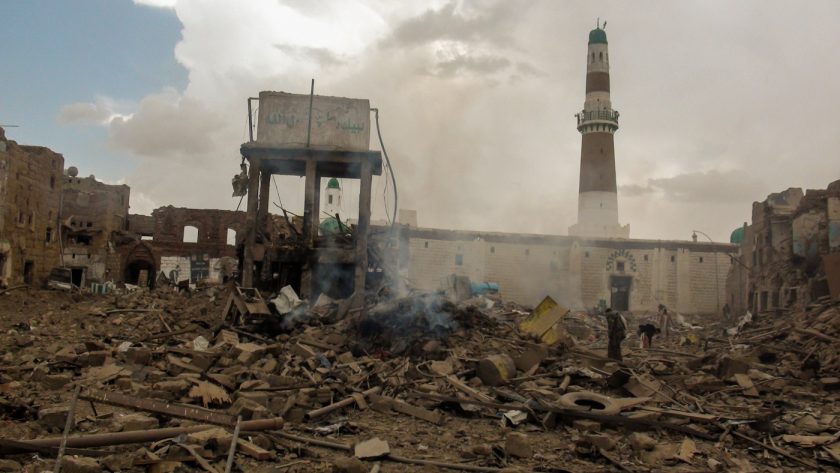
Built c. 897, al-Hadi Mosque is the final resting place of Imam al-Hadi ila’l-Haqq Yahya, the Zaydi imam of Yemen. It has been targeted several times. Ali al-Shurqbai – MintPress News
To understand Saudi Arabia’s motivation to essentially exterminate Yemen’s heritage, one must understand Yemen’s history as well as that of Saudi Arabia and the United Arab Emirates and the Saudi-based Wahhabi faith, which provides religious justification for targeting heritage sites under the guise of eradicating polytheism.
In ancient times, Yemen was home to several flourishing civilizations — including Ma’in, Qataban, Hadramaut, Ausan, Himyar and Saba (Sheba), which lasted for 11 centuries and was mentioned in the Quran and other ancient holy books. The Saban civilization was marked by its distinctive architecture, based almost entirely on local building materials, a style unique in the Middle East.
In contrast to Yemen’s rich and ancient history, civilization did not make its way to the Arabian Gulf until the 1930s. The United Arab Emirates, Saudi Arabia’s fellow coalition war partner, didn’t take root until 1971.
Many Yemenis, including Saleh Ali al-Aeini, believe that Saudi Arabia harbors severe jealousy over Yemen’s history and heritage and the unique role that it has played in human history. According to some historians, that history spans 60,000-70,000 years, when the country received its first Homo sapiens who migrated across the Red Sea from Africa to the Middle East before traveling west to Europe and east to Asia and Australia.
Moreover, Wahhabism — the official state religion of Saudi Arabia, based on a puritanical and widely rejected interpretation of Islam — sees the preservation of historic and religious sites as tantamount to idolatry. The Wahhabi establishment in Saudi Arabia has not even spared the Kingdom’s own tombs and monuments in Mecca and Medina and shows special disdain for Yemen’s historic sites, especially those located in northern Yemen, the seat of the Shia Zaydis for over a thousand years.
Looting what was not destroyed
Yemenis see their historic sites as a social-cultural fabric linking generations to their early ancestors. “I’ve lived here for dozens of years but now I have no house; there are no more gatherings of my ones-loved on the weekend,” al-Aeini said. He continued: “Another thing to worry about is our remaining legacy being looted.”
Destruction from the air is not the only threat to Yemen’s ancient legacy. During their war in Yemen, Saudi Arabia and the UAE have established smuggling networks in the country to loot historic sites.
A.M.M., who asked to be identified only by his initials, worked as an antiquities smuggler for a security outfit based in the UAE. A.M.M. told MintPress that his team sold four 2,500-year-old mummies, a gilded Torah scroll, and dozens of bejeweled daggers from the early Islamic era. “They always stressed the importance of keeping [the items] from being damaged so that they will be accepted by their American friends,” he said.
The smuggling of Yemeni antiquities is often carried out by diplomats operating out of Yemeni embassies from Saudi Arabia, the UAE, Bahrain and Egypt in return for lucrative sums of money allegedly provided by patrons from the United States and Israel. Yemen is the cradle to many civilizations and home to multiple faiths — particularly Judaism, Christianity and Islam, which all thrived in Yemen for millennia. For the Israelis, many of Yemen’s antiquities are seen as the rightful property of the Jewish people and there is reason to believe that Israel is also involved in the looting of Yemen’s heritage.
Officials in Sana’a say they have strong evidence that Yemeni artifacts are being sold off to American and Isreali buyers. “Artifacts featuring the Star of David or Jewish names are our priority; they often fetch a higher price than the other artifacts,” A.M.M told MintPress. “I sold one Hebrew manuscript to a UAE officer for $20,000,” he added.
Aden, in the eastern province of Marib, is favored by smugglers for shuttling stolen artifacts abroad. Here — according to the testimonies of a number of smugglers arrested by Houthi forces and now serving their sentences Sana’a’s Central Prison — smugglers are able to work in broad daylight in facilities provided to them by high-ranking officials in the ousted government of President Abdrabbuh Mansur Hadi, with direct coordination of both Emirati and Saudi officials.
More weapons to destroy what remains?
“We want compensation to rebuild our house again,” al-Aeini said, perched atop the stone rubble of his destroyed ancient home. “We should get compensation from the Americans. American bombs have killed more of us than were killed in the September 11 attacks.”
Al-Aeini was sardonically referring to the duality of moral attitudes in the United States, where on one hand Saudi Arabia is asked to pay compensation to the families of victims of the September 11 attacks, yet do nothing for victims of the war in Yemen, who are often killed with U.S. weapons sold to Saudi Arabia. “If there hadn’t been an American bomb, I would be at home now with my children and grandchildren, but they took everything,” al-Aeini said.
Many Yemenis are pessimistic about the future of their heritage. They say President Donald Trump’s recently-announced sales of U.S. weapons to Saudi Arabia and the United Arab Emirates will destroy what remains of their country’s legacy. The sale includes precision-guided missiles manufactured by Raytheon as well as precision guidance parts for Paveway IV bombs used on Eurofighter and Tornado warplanes — the same type that have been blamed for much of the destruction of Yemen’s historic sites and civilian casualties alike in the Saudi-UAE air campaign in Yemen.
An old Yemeni proverb used for generations to encourage the preservation of the country’s rich heritage reads Eli maluh awal maluh taley (Whoever has no first, has no second). Many Yemenis, al-Aeini among them, fear that Yemen is already losing its heritage, much like al-Aeini lost his home, to American weapons.
Ahmed AbdulKareem is a Yemeni journalist. He covers the war in Yemen for MintPress News as well as local Yemeni media.
Israel tech ‘facilitating press freedom abuses around the world’
MEMO | August 23, 2019
Israel has been charged with enabling attacks on media freedom around the world by the Committee to Protect Journalists (CPJ), after export controls on surveillance technology were eased.
Citing a Reuters report, CPJ noted that Israeli officials have confirmed that – thanks to a rule change by the Defence Ministry – Israeli surveillance companies “are able to obtain exemptions on marketing license for the sale of some products to certain countries”.
According to Reuters, “the change took effect about a year ago”.
CPJ stated that:
Israeli-exported technology undermines press freedom globally by allowing authorities to track reporters and potentially identify their sources.
One example given by the press freedom watchdog was the Mexican government deploying Pegasus malware, sold by Israeli firm NSO Group, to infiltrate the mobile phones “of at least nine journalists”.
Pegasus was also used by Saudi Arabia to spy on the associates of journalist Jamal Khashoggi before he was murdered in the kingdom’s consulate in Turkey in October last year.
“Over and over again, we see Israeli technology facilitating press freedom abuses around the world, by lending a hand to governments that want to track and monitor reporters,” said CPJ Advocacy Director Courtney Radsch in Washington, D.C.
“An unregulated surveillance industry is bad for press freedom. The Israeli government should heed the UN Special Rapporteur’s call to respect human rights in its export policies.”
UN Special Rapporteur for Freedom of Expression David Kaye described Israel as “a major player in the surveillance technology market” in a June 2019 report which urged “a global moratorium on such exports until a human rights compliant regime was put in place”.
Saudis failing to repel Yemeni drone strikes despite US-supplied Patriot system: UAE report
Press TV – August 23, 2019
Saudi Arabia has failed to repel Yemen’s retaliatory drone strikes despite relying on the US Patriot air defense system, a matter which has caused a slump in Saudi troop morale, according to a UAE intelligence report.
The UAE report revealed critical weaknesses in Saudi Arabia’s ability to thwart the retaliatory attacks, London-based Middle East Eye (MEE) news outlet reported.
The damning report, issued originally in May, had a limited publication intended for top Emirati leadership by the Emirates Policy Center (EPC), a think tank close to the Emirati government and its security services.
“Air defenses such as the Patriot are not capable of spotting these drones because the systems are designed to intercept long and medium range Scud missiles,” the report wrote.
The intelligence assessment highlighted an instance where Saudi Arabia’s southwestern Najran airport, which is used in Riyadh’s operations against Yemen, was hit by Yemeni drones despite the deployment of a Patriot battery.
Riyadh launched a devastating war on Yemen in March 2015, with the goal of bringing the government of former president Abd Rabbuh Mansur Hadi back to power and crushing Houthis.
Yemen’s resistance, however, has pushed the Saudi war to a stalemate, with Yemeni forces increasingly using sophisticated weaponry in retaliatory attacks against the Saudi-led coalition.
Referring possibly to a deadly Yemeni drone attack on a large air base occupied by Saudi mercenaries in the southwestern Lahij province in January, the EPC report highlighted the Saudi failure to thwart such attacks.
“The attack on the Lahij Military Base demonstrates a weakness in Saudi air defenses and the lack of capacity in electronic war if we take into account that these drones are basic and are not launched on tarmac,” it wrote.
The EPC reported that there had been as many as 155 Yemeni drone attacks against Saudi targets between January and May, a figure much higher than previously admitted.
Saudi attempts to destroy the drones have also failed, with the report noting that Riyadh has launched numerous airstrikes on caves allegedly used to store the drones, without any success.
Saudi ‘unprofessionalism’
The intelligence assessment also slammed what it described as a sign of Saudi “unprofessionalism”, as Riyadh quickly rushed to attribute attacks to Yemen’s Ansarullah movement without carrying out any investigation first.
The report compared Saudi Arabia’s “panicked” approach to that of Abu Dhabi which, according to the report, has a protocol of falsely denying the occurrence of such strikes when “serious” targets are attacked.
“This is a protocol which the Emiratis follow in time of serious attacks, such as the one that targeted Abu Dhabi airport (and claimed by the Houthis). It left the door open for the investigation to implicate Iran through evidence in these attacks,” the report read.
The July 2018 drone attack on the airport had been previously denied by UAE officials but was later corroborated by footage released by Yemeni forces this year.
Also referring to a mysterious and unclaimed attack on four oil tankers near the UAE’s port of Fujairah in May, the report said the “Emirati position emphasized the importance of completing investigations before taking any decision.”
“The Emiratis were careful not to give the Houthis any credit that may enhance their international status,” it added.
Despite the UAE report’s allegations, however, Saudi authorities are known to have covered and denied successful Yemeni retaliatory drone and missile strikes on numerous occasions.
‘Confused’ policies
The assessment said Riyadh had become extremely dependent on the United States’ “confused” policy with Iran.
Saudi Crown Prince Mohammed bin Salman, who threatened in 2017 to take the “fight” to Iran, has pushed to form an alliance with the UAE and Israel against Tehran.
The US administration, however, is acting quite timidly on its vows to “counter” Iran and the stance is worrying Saudi Arabia, according to the EPC.
American analyst Stephen Walt said the US policy towards Iran is in a “confused” state, swinging between abandoning Washington’s regional allies and pushing for regime change in Iran.
The UAE recently announced the gradual withdrawal of its troops from the Yemen war, largely because it believes the war appears to have become “unwinnable“, according to US reports.
Featured Video

Racist Seinfeld Dances for Joy as Bibi Unveils His New Map
or go to
Aletho News Archives – Video-Images
TV Drama Review
Japanese drama projects Japan’s wartime atrocities onto Chinese characters

Global Times | October 25, 2026
By portraying Chinese characters as perpetrators of ruthless violence while casting Japanese Self-Defense Forces (SDF) intelligence operatives as defenders, the season 2 of the Japanese drama Vivant has recently drawn criticism from Chinese netizens, who argue that its depiction turns historical reality on its head while ignoring Japan’s wartime atrocities.
The TBS drama series – a spy suspense story in which an alleged unofficial intelligence unit of the SDF operates across the globe — has attracted a passionate fanbase. Its currently airing season 2 opened with a household rating of 18.8 percent, the highest for a TV drama this year, according toa commentary article by Japanese media Toyo Keizai.
What draws attention is the portrayal of the enemies in the series, the article noted. Scenes in which the Chinese organization subjects kidnapped members of the SDF unit to brutal torture are repeated with unrelenting intensity.
It is rare for Japanese TV dramas to explicitly portray a real-life country as the enemy, the article noted.
Japanese Prime Minister Sanae Takaichi also made a reference to the drama, saying that she has been recording Vivant and hopes to binge-watch it over the year-end and New Year holidays, according to Japanese media outlets.
China’s CCTV News report on Sunday revealed that the drama features scenes in which Chinese personnel cut off the fingers of and stab Japanese intelligence operatives in the abdomen. Such acts bear striking similarities to the torture inflicted on Chinese nationals by invading Japanese troops during the World War II.
The drama distorts the truth by attributing these atrocities to modern Chinese characters. Beneath the surface, it subtly glorifies Japan’s cross-border overseas operations, blurs the functional boundaries of the SDF and implicitly promotes an expansionist narrative, per CCTV News. … continue
Blog Roll
 Aletho News
- Iran FM Araghchi: “Hormuz Will No Longer Be the Same”
- EU facing trillion-euro debt hole while seeking more cash for Kiev
- How US, Europe, Persian Gulf states exhausted missile stockpiles, splurged billions to defend Israel
- Up in arms… Koreans reject U.S. empire’s plan to make South Korea the next Ukraine
- Iran, Turkey, Pakistan, Saudi Arabia could advance region-led security framework in Tehran: FM spox
- Netizens condemn Japanese drama for projecting Japan’s wartime atrocities onto Chinese characters
- Racist Seinfeld Dances for Joy as Bibi Unveils His New Map
- A West Bank War for Netanyahu’s Election Campaign, Could It Backfire?
- Yemen denounces European Parliament’s ‘hypocritical’ push to blacklist Ansarullah
- Qalibaf: UAE’s UN bid aims to ‘clear the runway’ for ‘Greater Israel’, whitewash genocide
- If Americans Knew
- An error has occurred; the feed is probably down. Try again later.
- No Tricks Zone
- Sudden Stratospheric Warming, Powerful El Niño Combination May Lead To Extreme Europe Cold, Energy Crisis!
- Two New Studies Find Thwaites Glacier Melt Cannot Be Driven By Human Activity Or A Warming Ocean
- E-Cars Reduce CO2 Emissions By Only 41% Compared To Internal Combustion Engine Vehicles
- Predictions Made By Renowned Climate Professor Over Past Decades Have Been Proven To Be Poor
- New Study Suggests Large Regions Of The Pacific Ocean Have Been Cooling For The Last 80 Years
- Germany’s Green Energy Debacle: High Energy Costs Force Kahla Porzellan to Close After 182 Years!
- New Study: 50 Years Of The Most Aggressive ‘Net Zero’ Policies Can Only Affect The Global Climate By 0.03°C
- US September “Heat” Was No Record…Many Records Set Decades Ago
- Latest European Green Energy Debacle; Portugal’s Largest Flagship Solar Park Insolvent!
- Green Energy Debacle: German Expert Professor Fritz Vahrenholt Warns Of Severe Economic And Social Consequences

