US considers no-fly zone over northeastern Syria: Reports
Press TV – September 27, 2014
The US Department of Defense says it is considering the possibility of imposing a no-fly zone over northeastern Syria to deny the Syrian military the ability to launch airstrikes there, reports say.
Turkey has requested the US to establish a buffer zone along the Turkish-Syrian border to protect foreign-sponsored militants and civilians.
US Defense Secretary Chuck Hagel and Gen. Martin E. Dempsey, the chairman of the Joint Chiefs of Staff, said on Friday, “We’ve discussed all these possibilities and will continue to talk about what the Turks believe they will require.”
Dempsey added that “a buffer zone might at some point become a possibility.”
The US and its allies have been continuously bombing the ISIL terrorist group in northeastern Syria since Tuesday; but the Pentagon is indicating that it may decide to prevent the Syrian military from targeting anti-government militants in the same region.
Fighter aircraft from Saudi Arabia, Jordan, Qatar, Bahrain and the United Arab Emirates have taken part in the airstrikes in Syria.
The ISIL terrorists, who were initially trained by the CIA in Jordan in 2012 to destabilize the Syrian government, control large parts of Syria’s northern territory. ISIL sent its fighters into Iraq in June, quickly seizing vast expanse of land straddling the border between the two countries.
Syria has been gripped by deadly unrest since 2011. According to reports, the United States and its regional allies – especially Qatar, Saudi Arabia, and Turkey – are supporting the militants operating inside the country.
According to the United Nations, more than 190,000 people have been killed and millions displaced due to the turmoil that has gripped Syria for over three years.
Coalition of the Clueless
By Sharmine Narwani | RT | September 25, 2014
This US-engineered Coalition is in for some surprises. With few common goals, it has thrust itself into battle against the most determined players in the region and beyond.
The airwaves are still heaving with spin two days after US airstrikes against Syria.
Undoubtedly the attacks were timed to occur on the eve of the annual gathering of world leaders at the United Nations, so ‘Coalition’ partners could cluster behind the decision to bomb a sovereign state, uninvited.
The irony, of course, is that they are doing so at the UN – the global political body that pledges to uphold international law, peace and stability, and the sanctity of the nation-state unit.
The goal this week will be to keep the ‘momentum’ on a ‘narrative’ until it sinks in.
On day one, heads of state from Turkey, Jordan, Qatar, the UK and France were paraded onto the podium to drum in the urgency of American strikes against the Islamic State of Iraq and the Levant (ISIL), Jabhat al-Nusra and other militant groups inside Syria.
Every American official – past and present – in the White House rolodex was hooked up to a microphone to deliver canned sound bites and drive home those ‘messages.’ In between, video-game-quality footage of US strikes hitting their targets was aired on the hour; clips of sleek fighter jets refueling midair and the lone Arab female fighter pilot were dropped calculatingly into social media networks.
The global crew of journalists that descends annually on the UN for this star-studded political event, enthused over US President Barak Obama’s ability to forge a coalition that included five Arab Sunni states – Saudi Arabia, Qatar, Jordan, Bahrain and the UAE.
Few mentioned that these partners are a mere fig leaf for Obama, providing his Syria campaign with Arab and Muslim legitimacy where he otherwise would have none. Not that any of these five monarchies enjoy ‘legitimacy’ in their own kingdoms – kings and emirs aren’t elected after all – and two of these Wahhabi states are directly responsible for the growth and proliferation of the Wahhabi-style extremism targeted by US missiles.
Even fewer spent time dissecting the legality of US attacks on Syria or on details of the US ‘mission’ – as in, “what next?”
But with a mission this crippled at the outset, it didn’t take long for an alternative view to peek through the thick media fog.
On the ground in Syria, dead civilians – some of them children killed by US bombs – muddied the perfect script. Confused Syrian rebels – many who had called for foreign intervention to help crush the government of Syrian President Bashar al-Assad – demanded to know how these airstrikes were meant to help them.
Sunni Arabs would be radicalized by these strikes, they warned, as ideologically sympathetic citizens of the Arab coalition states took to their information channels and swore revenge for airstrikes against ISIL and al-Nusra.
The Syrian government, for the most part, remained mute – whether to save face or because they could ‘smell’ the gains coming. Contrary to Washington’s prevailing narrative, privately the story was that the US had informed the Assad government of both the timing and targets of the attacks in advance.
Sources say that the US even provided ‘guarantees’ that no Syrian military or government interests would be targeted. A Reuters exclusive claiming that the US went so far as to provide assurances to Iran, suggests this version is closer to the truth. When US airstrikes against Syria were on the table a year ago, the various parties went through a similar game of footsies. Last September, the Americans backed off – allegedly because of communications from their adversaries that even a single US missile would trigger a warfront against Israel. This time, Washington needed to know that scenario was not going to be activated, and this week they offered the necessary guarantees to ensure it.
Although the Russians and Iranians have publicly lashed out at the illegality of US strikes, they do not seem too worried. Both know – like the Syrian government – that these air attacks could be a net gain for their ‘Axis.’
Firstly, the United States is now doing some useful heavy-lifting for Assad, at no real cost to him. The Syrian armed forces have spent little time on the ISIL threat because their focus has traditionally been on protecting their interests in Aleppo, Damascus, Homs, Hama – and the countryside in these areas – as well as towns and cities around the Lebanese and Jordanian borders. That changed when ISIL staged successful attacks on Mosul and created new geopolitical urgency for Assad’s allies – which triggered some major Syrian strikes against ISIL targets.
But to continue along this path, the Syrians would have to divert energy and resources from key battles, and so the American strikes have provided a convenient solution for the time being.
Secondly, the Syrians have spent three years unsuccessfully pushing their narrative that the terrorism threat they face internally is going to become a regional and global problem. The US campaign is a Godsend in this respect – Obama has managed to get the whole world singing from the same hymn sheet in just two months, including, and this is important, the three states – Saudi Arabia, Qatar and Turkey – most instrumental in financing, weaponizing and assisting ISIL and other extremist militias inside Syria.
Syria, Iran, Russia, Hezbollah and a host of like-minded emerging powers are pleased about this new laser focus on jihadi terror and for the accompanying resource shift to address the problem.
Thirdly, the US has now been placed in the hot seat and will be expected to match words with action. For three years, Washington has overlooked and even encouraged illegal and dangerous behaviors from its regional Sunni allies – all in service of defeating Assad. With all eyes on America and expectations that Obama will fail in his War on Terror just like his predecessors, the US is going to have to pull some impressive tricks from its sleeves.
Ideally, these would include the shutting down of key border crossings (Turkey, Jordan, Lebanon); punishing financiers of terror and inhibiting the flow of funds and assistance from Washington’s regional allies; cutting off key revenue streams; tightening immigration policies to stem the flow of foreign fighters; disrupting communications networks of targeted terrorist groups; broader intelligence sharing with all regional players; and empowering existing armies and allied militias inside the ‘chaos zone’ to lead and execute ground operations.
Thus far, there are signs that some of these things are already happening, with possibly more to come.
Now for the fun part. The Syrians, Iranians and Russians do not fundamentally trust Washington or its intentions. The suspicion is that the US is on another one of its regime-change missions, displaying its usual rogue-state behavior by violating the territorial integrity of a sovereign state under false pretenses, and that it will shortly revert to targeting the Syrian government.
While they can see clear gains from the current level of US intervention – as distasteful as they find it – they are watching carefully as events unfold.
If there is the slightest deviation from the ‘guarantees’ provided by the US, this trio has plenty of room to maneuver. Iran, for one, has dallied with the Americans in both Iraq and Afghanistan and they know how to cause some pain where it counts. The Russians, for that matter, have many playgrounds in which to thwart US ambitions – most urgently in Ukraine and in Afghanistan, from which the US hopes to withdraw billions of dollars’ worth of military equipment by the end of 2014.
All understand that Washington has just assumed a risky public posture and that many, many things can go wrong. The Sunni Arab fig leaf can disappear in a nano-second if domestic pressures mount or revenge attacks take place internally. Information could leak about continued assistance to terrorist militias from one or more of its coalition partners – a huge embarrassment for Washington and its wobbly Coalition. ISIL will almost certainly act against coalition partner soft-targets, like carrying out further kidnappings and executions. Continued airstrikes will almost definitely result in a growing civilian casualty count, turning those ‘hearts and minds’ to stone. Syrian rebels could swiftly turn against the US intervention and radicalize further. Massive displacement caused by airstrikes could exacerbate the humanitarian crisis. And as in all other past US military War-on-Terror adventures, terrorism could thrive and proliferate in quantum leaps.
As Moscow-based political analyst Vladimir Frolov noted to the Washington Post : “The United States has underestimated the complexity of the situation before, so let’s just wait until they run into problems.”
The idea that US military engagement could continue for the long-term is unlikely given the myriad things that can go wrong fast. Obama is going to be reluctant to have his last two years in office defined by the hazardous Syrian conflict – after all, he was to be the president who extracted America from unessential wars.
But the most compelling reason that this Coalition will not pass the first hurdle is that its key members have entirely different ambitions and strategic targets.
Over a decade ago, these US-engineered coalitions were wealthier, less-burdened and shared common goals. Today, many of the coalition members face domestic economic and political uncertainties – and several states are directly responsible for giving rise to ISIL. How can the Coalition fight ISIL and support it, all at once?
What’s missing is a formula, a strategy, a unified worldview that can be equally as determined as the ideological adversary it faces.
Down the road, we will discover that the only coalition able and willing to fight extremism does indeed come from inside the region, but importantly, from within the conflict zone itself: Lebanon, Syria, Iraq and Iran. For starters, they are utterly vested in the outcome of their efforts – and would lead with political solutions alongside military ones. Those elusive boots-on-the-ground that everyone is seeking? They live it. Pit that group against Obama’s Coalition-of-the-Clueless any day and you know which side would win handily.
The question is, can this Coalition stomach a solution it is working so hard to avoid? Will it partner with vital regional players that were foes only a few months ago? It is doubtful. That would require a worldview shift that Washington is still too irrational to embrace.
Follow @snarwani on Twitter
ISIS is not ‘Blowback’ from Western Foreign Policy; They ARE Western Foreign Policy
Empire Strikes Black | September 24, 2014
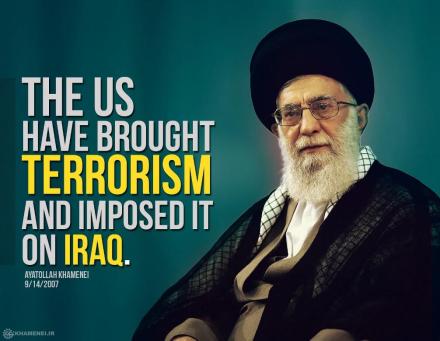 Notice that ISIS are sworn enemies of Syria, Hizbu’llah, and Iran. This in itself gives a most obvious clue as to the identity of the group’s benefactors.
A prevalent liberal cliché is the “blowback” theory – the theory that ISIS terror attacks, and indeed the group’s very existence, are somehow in retaliation to US/Western/”Israeli” foreign policy actions.
This is a disingenuous theory that is disseminated in order to keep the empire’s citizens on side. Crucially, it distracts from a key truth.
Western and “Israeli” intelligence has historically effected deep infiltration of ‘jihadist’ terror cells throughout the Arab world and the West; these groups are used literally as footsoldiers (see Afghanistan throughout the 1980s) to achieve Western and “Israeli” military and strategic objectives. The “blowback” theory distracts from this key fact.
ISIS aren’t retaliating against Western foreign policy; they are Western foreign policy. These very people were mobilised against Muammar Gaddafi in Libya’s bogus ‘revolution’ of 2011, as with Syria in the same year.
In moving across the Syrian-Iraqi border, ISIS – Zionism’s footsoldiers – underwent a magical media transformation into the ‘bad guys’. The ‘war against ISIS’ is a con, a total scam. It is a pretext for a war against the resistance axis: chiefly Syria, Hizbu’llah, Iran, and the Palestinian resistance. It is a pretext to kick the ‘Yinon plan’ – the plan to balkanise the Arab world to ensure “Israeli” hegemony – into high gear
The WMD lies of 2003 never went away; they simply got re-packaged for the liberal crowd in the post-Bush era.
Obama’s Novel Lawyering to Bomb Syria
By Robert Parry | Consortium News | September 23, 2014
The Obama administration has devised an extraordinary legal justification for carrying out bombing attacks inside Syria – that the United States and its Persian Gulf allies have the right to defend Iraq against the Islamic State because the Syrian government is unable to stop the cross-border terror group.
“The Syrian regime has shown that it cannot and will not confront these safe havens effectively itself,” said the U.S. letter delivered by Ambassador Samantha Power to United Nations officials. “Accordingly, the United States has initiated necessary and proportionate military actions in Syria in order to eliminate the ongoing ISIL [Islamic State] threat to Iraq, including by protecting Iraqi citizens from further attacks and by enabling Iraqi forces to regain control of Iraq’s borders.”
Yet, beyond the danger to world order if such an expansive theory is embraced by the international community (does anyone remember how World War One got started?), there is the hypocrisy of the U.S. government and many of those same Gulf allies arming, training and funding Syrian rebels for the purpose of preventing the Syrian military from controlling its territory and then citing that lack of control as the rationale to ignore Syria’s sovereignty.
In other words, the United States, Saudi Arabia, Qatar, Jordan and other enemies of Syria covertly backed the rebels inside Syria and watched as many of them – including thousands of the U.S.-preferred “moderates” – took their newly acquired military skills to al-Qaeda affiliates and other terrorist organizations. Then, the U.S. and its allies have the audacity to point to the existence of those terror groups inside Syria as a rationale for flying bombing raids into Syria.
Another alarming part of the U.S. legal theory is that among this new “coalition of the willing” – the U.S., Saudi Arabia, the United Arab Emirates, Qatar, Bahrain and Jordan – only Jordan shares a border with Syria. So, this novel principle would mean that distant countries have the right to destabilize a country from afar and then claim the destabilization justifies mounting military attacks inside that country.
Such a theory – if accepted as a new standard of behavior – could wreak havoc on international order which is based on the principle of national sovereignty. The U.S. theory also stands in marked contrast to Washington’s pious embrace of strict readings of international law when denouncing Russia just this summer for trying to protect ethnic Russians in eastern Ukraine from brutal assaults by the U.S.-backed coup regime in Kiev.
In Ukraine, the Obama administration rejected any and all mitigating circumstances, such as the overthrow of an elected president and the coup regime’s use of artillery, airstrikes and even neo-Nazi militias to suppress eastern Ukraine’s ethnic Russian population. In the Ukraine case, the Obama administration insisted that national sovereignty was inviolable despite the fact that the Feb. 22 coup had violated Ukraine’s constitutional order and had produced a human rights disaster.
An entirely different set of rules were applied to Syria, where President Barack Obama decided that Syrian President Bashar al-Assad “must go” and where Obama authorized the CIA to provide arms, training and money for supposedly “moderate” rebels. Other U.S. “allies,” such as Saudi Arabia and Qatar, supported some of the more extreme anti-Assad groups.
Israel’s right-wing Likud government also was eager for “regime change” in Syria as were America’s influential neoconservatives who saw Assad’s overthrow as a continuation of their strategy of removing Middle East leaders regarded as hostile to Israel. Saddam Hussein’s Iraq was the first on the list with Syria and Iran to follow. In those cases, the application of international law was entirely optional.
Before President George W. Bush’s invasion of Iraq in 2003, the U.S. government came up with another convenient argument, claiming the war was an act of American self-defense because otherwise Hussein might give his “weapons of mass destruction” to al-Qaeda for use against U.S. targets. As it turned out, Hussein had no WMDs and was a bitter enemy of al-Qaeda, which didn’t exist in Iraq until after the U.S. invasion.
The overthrow and subsequent execution of Hussein turned Iraq into a cauldron of bloody chaos, pitting Shiites against Sunnis and creating a fertile environment for a group of brutal Sunni extremists who took the name “al-Qaeda in Iraq.”
Getting Assad
But Official Washington is slow to learn lessons. In 2011, the Obama administration’s “liberal interventionists” threw their weight behind a Sunni-led uprising to oust Assad, who runs a harsh but largely secular government with key support from Alawites, Shiites, Christians and other minorities who feared Sunni extremism.
As with Iraq, Syria’s sectarian violence drew in many Sunni extremists, including jihadists associated with al-Qaeda, particularly the Nusra Front but also “al-Qaeda in Iraq” which rebranded itself the Islamic State of Iraq and Syria or simply the Islamic State. Eventually, al-Qaeda leaders rejected the Islamic State because it had become a rival of the Nusra Front and because its brutality was too graphic even for al-Qaeda.
Despite the growing radicalism of Syrian rebels, Official Washington’s influential neocons and the “liberal interventionists” continued the drumbeat for ousting Assad, a position also shared by Israeli leaders who went so far as to indicate they would prefer Damascus to fall to al-Qaeda extremists rather than have Iranian ally Assad retain control. [See Consortiumnews.com’s “Israel Sides with Syrian Jihadists.”]
Whenever there was a chance to push Obama into ordering a U.S. military assault on Assad’s government, “the Assad-must-go crowd” pressed the argument. For instance, a still-mysterious Sarin gas attack outside Damascus on Aug. 21, 2013, was immediately blamed on Assad’s forces. The neocons and the ”liberal interventionists” demanded an air war to punish the Syrian government – and possibly open the way for a rebel victory.
This pressure on Obama mounted despite strong doubts within the U.S. intelligence community that Assad’s forces were responsible. Some evidence pointed to rebel extremists trying to create a provocation to bring the U.S. military into the war on their side.
Partly because of those doubts, President Obama backed away from a military strike at the last minute and accepted a compromise arranged by Russian President Vladimir Putin to get Assad to surrender his entire chemical weapons arsenal. Since then, additional evidence has emerged raising doubts about the government’s complicity and pointing more toward the rebels. [See Consortiumnews.com’s “The Collapsing Syria-Sarin Case.”]
Nevertheless, much of the mainstream U.S. news media, including the foreign-page editors of the New York Times who have increasingly fallen under the spell of neocon ideology, have taken to citing the Syrian government’s guilt for the Sarin gas attack as flat fact, rather than a point in serious dispute. It seems no journalism standards need apply when demonized figures, such as Assad or Putin, are facing accusations.
Israel’s Shift
Yet, with al-Qaeda-connected terrorists controlling part of the Israeli border along the Golan Heights, the Israeli government began to reverse its position on demanding Assad’s removal. As the Israeli investigative Web site, Debka Files, reported on Sept. 9, citing military and intelligence sources:
“The Israeli government has radically changed tack on Syria, reversing a policy and military strategy that were long geared to opposing Syrian President Bashar Assad … This reversal has come about in the light of the growing preponderance of radical Islamists in the Syrian rebel force fighting Assad’s army in the Quneitra area since June. Al Qaeda’s Syrian Nusra front … is estimated to account by now for 40-50 percent – or roughly, 4,000-5,000 Islamists – of the rebel force deployed just across Israel’s Golan border. …
“Nusra Front jihadis fighting alongside insurgents on the various Syrian battlefronts made a practice of surreptitiously infiltrating their non-Islamist brothers-at-arms, a process which the latter’s foreign allies, the US, Israel, Saudi Arabia, Qatar and Jordan, either ignored or were unaware of. These tactics began to pay off in the past month, when large numbers of moderate rebels suddenly knocked on the Nusra Front’s door and asked to join.”
I have confirmed this Israeli shift with my own sourcing. But it’s unclear whether Israel’s change of heart will cause any second thoughts among U.S. neocons who typically conform their policy recommendations to Israeli interests. However, on the Syrian case, the neocons and their “liberal interventionist” friends might be too dug in on ousting Assad to adjust.
Indeed, all of Official Washington seems incapable of admitting that its wishful thinking about Syrian “moderates” may have caused another major strategic error in the Mideast. The unrealistic “group think” about “moderates” contributed to a power vacuum in Syria that has pulled in some of the most vicious Islamic extremists on earth and turned parts of Syria into a new base of operation for international terrorism.
For his part, President Obama recognized the folly of training Syrian “moderates” – just last month he dismissed the notion as a “fantasy” that was “never in the cards” as a workable strategy – but he nevertheless resurrected it last week as a key part of his new Syrian initiative. He won solid congressional majorities in support of spending some $500 million on the training scheme.
The most charitable view of Obama’s strange flip-flop is that he feared being accused of aiding Assad if the U.S. bombing campaign against the Islamic State indirectly strengthened Assad’s hold on Damascus. So, Obama tacked on what he knew to be a useless appendage, a tough-sounding plan to “ramp up” the “moderate” rebel forces.
Similarly, Obama’s harsh rhetoric about refusing to coordinate the airstrikes with the Syrian government may be more a concession to the sensibilities of the neocons and the “liberal interventionists” than a reality.
I was told last week that U.S. intelligence had used Russian government go-betweens to clear the airstrikes with the Syrian government which gave quiet permission for the bombing campaign in parts of Syria. I was further told on Monday that U.S. military officials and their Syrian counterparts have met face-to-face to ensure that the U.S.-led airstrikes would encounter no Syrian air defenses.
That tacit approval from the Syrian government could be a sound legal basis for the airstrikes, much as other governments, such as Yemen and Pakistan, have tolerated or even encouraged U.S. air attacks on domestic enemies associated with al-Qaeda and other militant groups.
Yet, Obama may find it politically impossible to state the truth – that a “realist” approach to foreign affairs sometimes requires working with disreputable governments. So, instead of simply saying that Syria has no objection to these bombing raids, Obama has invented a dangerous new legal theory to justify the violation of a country’s sovereignty.
~
Investigative reporter Robert Parry broke many of the Iran-Contra stories for The Associated Press and Newsweek in the 1980s. You can buy his new book, America’s Stolen Narrative, either in print here or as an e-book (from Amazon and barnesandnoble.com).
Nasrallah: “America is the mother of terrorism”
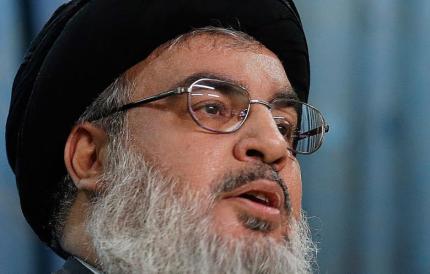
Nasrallah speaks on July 25, 2014, in the southern suburbs of Beirut. (Photo: Al-Akhbar – Haitham Moussawi)
Al-Akhbar | September 23, 2014
Hezbollah leader Hassan Nasrallah on Tuesday said his group could never be a part of an anti-ISIS coalition led by “the source” of all terrorism in the world, the United States.
The international coalition, which began illegal airstrikes in Syria for the first time Tuesday, was created to safeguard the interests of the United States, not to fight terrorism as it claims, Nasrallah said in a televised speech.
“In our opinion, America is the mother of terrorism, the source of terrorism. If there is terrorism anywhere in the world, look at America,” the secretary-general said.
“America provides complete support for the terrorism of the Zionist state. It supports Israel militarily, financially, legally, and even provides it veto in the United Nations Security Council.”
Nasrallah continued: “He who dropped the atomic bomb on the people of Japan, and who killed [relentlessly] in Vietnam and elsewhere, and who stood by [Israeli Prime Minister Benjamin] Netanyahu in the 50 day war on Gaza … is not qualified ethically or morally to present itself as a leader of a coalition to fight terrorism.”
The comments come as the United States and allied Arab dictatorships began launching unauthorized airstrikes against jihadi targets in Syria, drawing rebukes from Damascus’s allies Iran and Russia.
Nasrallah brushed off criticism that his opposition to the coalition translated into support for the Islamic State of Iraq and Syria (ISIS), noting that he has repeatedly denounced the extremists and called for their elimination.
The reality that many of those included in the anti-ISIS coalition have been financing the jihadi militants they are currently fighting in Iraq and Syria forces people of the region to question the motives of their actions, he added, referring to Saudi Arabia and Qatar.
Lebanon is one of 10 Arab countries that has pledged support to the coalition, a membership that Nasrallah said he opposed.
“Never did [US President Barack Obama] say we are coming to defend minorities or Muslims or Christians …,” Nasrallah said.
“So we will not fight in a coalition that serves US interests and not the interests of the people of the region.”
In Nasrallah’s last speech on August 15, he noted that the United States only decided to get involved in the fight against ISIS when the jihadis approached Iraq’s Kurdish region, which is strategically important to the West. … Full article
The Black Caucus “Left” Wing Crumbles Before Obama’s War Machine
A Black Agenda Radio commentary by Glen Ford | September 24, 2014
The ever-shrinking “left” wing of the Congressional Black Caucus crumbled last week, an early casualty of the new phase of President Obama’s three-year war for regime in change in Syria. The Congressional Progressive Caucus, to which 24 of the Black lawmakers belong, also failed to rally against a Democratic president’s war plans.
The lop-sided House vote was not on whether to authorize Obama to launch attacks against targets in Syria; the White House claims the president is acting within his powers as commander-in-chief, and needs no OK from the Congress. Instead, the administration sought a general demonstration of approval for Obama’s scheme to train and arm so-called “moderate” Syrian rebels. A vote on the $500 million price tag comes later, after the November elections.
In essence, Obama was asking for a do-over, to fix his previous policies in Syria. The United States and its Arab, Turkish, European and, reportedly, Israeli allies have, in fact, been arming and training rebels to bring down the government of President Bashar al-Assad since at least 2011. They have failed, despite having spent mountains of money to subsidize a kaleidoscope of armed groups, each vying for Islamic fundamentalist authenticity and the privilege to slaughter Shiites, Christians, secularists, apostate Sunni Muslims and backsliders of all kinds. It also turned out – to the administration’s apparent surprise – that these jihadists don’t see themselves as mere foot soldiers under an American chain of command. In fact, the best fighters think of the United States as the “Great Satan” – an opinion widely shared in that part of the world. With the rise of the head-chopping champions of ISIS, Obama had no choice but to ask Congress to give him another chance to scour the region in search of that most elusive of men, the “moderate” Syrian rebel, and turn him into a killing machine that can defeat both the Syrian government and ISIS.
Blank Check for Expanded War
Back in 2006, after three years of failure in Iraq, George W. Bush agreed to a timetable for withdrawal from that country. He had little choice, because the Congress was in no mood to continue his war. But last week President Obama, by a vote of 273 to 156, was allowed a second throw of the dice in what may turn out to be an even larger war in Syria and Iraq and who knows where else. The reason that Obama’s wars have such longer shelf-life, is that Democrats will not oppose him, including such luminaries of the Caucus left wing as John Conyers and Maxine Waters, who were among the 23 Black members who gave the president a blank check, last week.
Barbara Lee, the California congresswoman who joined 16 other Black lawmakers in opposing Obama’s new-and-improved war in the Middle East, said, on the House floor: “The consequences of this vote, whether it’s written in the amendment or not, will be a further expansion of a war currently taking place and our further involvement in a sectarian war.” There is also another consequence: the total discrediting of a majority of the Congressional Black Caucus, who have abandoned the historical Black consensus on social justice and peace.
Below is a breakdown of the CBC vote on September 17 on arming and training Syrian rebels.
Yes
23
- Karen Bass (CA)
- Joyce Beatty (OH)
- Sanford Bishop (GA)
- Corrine Brown (FL)
- G. K. Butterfield (NC)
- Andre Carson (IN)
- William Lacy Clay (MO)
- James Clyburn (SC)
- John Conyers, Jr. (MI)
- Keith Ellison (MN)
- Chaka Fattah (PA)
- Al Green (TX)
- Steven Horsford (NV)
- Sheila Jackson Lee (TX)
- Hank Johnson (GA)
- Gregory Meeks (NY)
- Cedric Richmond (LA)
- Robert Scott (VA)
- David Scott (GA)
- Terri Sewell (AL)
- Marc Veasey (TX)
- Maxine Waters (CA)
- Frederica Wilson (FL)
No
17
- Yvette Clarke (NY)
- Emanuel Cleaver (MO)
- Elijah Cummings (MD)
- Danny Davis (IL)
- Donna Edwards (MD)
- Marcia Fudge (OH)
- Alcee Hastings (FL)
- Hakeem Jeffries (NY)
- Eddie Bernice Johnson (TX)
- Robin Kelly (IL)
- Barbara Lee (CA)
- John Lewis (GA)
- Gwen Moore (WI)
- Donald Payne Jr. (NJ)
- Charles Rangel (NY)
- Bobby Rush (IL)
- Bennie Thompson (MS)
Glen Ford can be contacted at Glen.Ford@BlackAgendaReport.com.
Did Israel help US by downing Syrian jet?
By Jonathon Cook | The Blog from Nazareth | September 23, 2014
Today the US – backed by “moderate” Arab states like Saudi Arabia, UAE, Qatar and Jordan – started bombing territory in another sovereign state, Syria, without a UN Security Council resolution or a plausible argument that it is acting in self-defence. That makes it a crime of aggression, defined at Nuremberg as “the supreme international crime differing only from other war crimes in that it contains within itself the accumulated evil of the whole.”
In a sign that Obama’s war on ISIS in Syria could quickly be extended into a war against Syrian president Bashar Assad, Israel downed a Syrian jet inside Syria this morning with a US-funded Patriot missile. According to Israel, the Syrian plane had passed 800 metres into its territory before heading back into Syria, during what the Israeli media say was a sortie against “rebels” operating close to the Israeli border (that’s right – the people Obama is currently bombing but whose injuries are being mended in Israeli hospitals).
Of course, we only have Israel’s word for it that the plane briefly crossed into Israeli [claimed] territory, but watch to see how completely the western media will assume Israel’s story to be the only valid account.
Let’s assume for a second that Israel’s claim is true. Even the Israeli media, presumably echoing the Israeli military, believe the plane was not threatening to attack Israel in any way, and it must have been over Israeli [claimed] territory for seconds, or maybe fractions of a second. But the plane was shot down in Syria because Israeli military “policy stipulates that any plane that breaches its territorial authority must be downed to avoid security risk”. Decoded, that means Syria has to be taught a lesson about who is boss. Israel, remember, has flown over Syrian and Lebanese territory on a regular basis.
The other, strong possibility is that Israel has been told by the US to help keep Syrian skies free of Syrian planes while the US goes about its business breaking international law. See how much play that gets in western media reporting.
CORRECTION:
It has been pointed out to me that actually the Haaretz article implies that when the Syrian plane reportedly crossed into “Israeli territory” it was most likely passing briefly over the Golan – that is, Syrian territory occupied by Israel since 1967.
I appreciate the correction. It exposes an additional layer of misinformation in this whole story.
Syria slams Israel support for ISIL
Press TV – September 23, 2014
Syria has once again slammed the Israeli regime’s support for the Takfiri ISIL militants operating inside the Arab country.
A Syrian military official, whose name was not mentioned in the reports, made the comments on Tuesday after Tel Aviv said earlier in the day that it had shot down a Syrian warplane as it attempted to fly over the ceasefire line into the Israeli-occupied Golan Heights.
The official confirmed the shooting down and underlined that the move was based on Tel Aviv’s policy of supporting ISIL Takfiris.
The aircraft was apparently a MiG-21 fighter jet which was downed by a surface-to-air Patriot missile, the Army radio said, adding that the wreckage landed on the Syrian side of the plateau.
However, an unnamed Israeli military official identified the downed aircraft as a Sukhoi Su-24 Russian fighter plane.
The development comes amid heavy clashes on the Syrian side of the Golan Heights. The Syrian government has been hitting back at the foreign-backed militants there with frequent airstrikes.
Syria has been gripped by deadly violence since March 2011.
According to reports, the Western powers and their regional allies — especially Qatar, Saudi Arabia and Turkey — are supporting the Takfiris fighting against the Syrian government.
Golan Heights have been under the Israeli occupation since the 1960s. The Tel Aviv regime captured 1,200 square kilometers (460 square miles) of the Golan Heights during the Six-Day War of 1967 and annexed the region in 1981.
Syrian FM: US Informed Syria of Strikes against ISIL
Al-Manar | September 23, 2014
The Syrian Foreign Ministry said Tuesday that the United States has informed Syria’s permanent envoy to the United Nations before launching airstrikes against the militants of the so-called ‘Islamic State of Iraq and the Levant’ (ISIL) terrorist group in Raqqa, state-run SANA news agency reported.
“The United States informed Syria’s permanent envoy to the U.N. before launching airstrikes against ISIL terrorist organization in Raqqa,” a statement of the ministry said.
Syria “backs any international effort that contributes to the fight against terrorists, be it against ISIL, (Al-Qaeda affiliate) Al-Nusra Front or anyone else,” the televised statement added.
U.S. defense officials announced that American and Arab warplanes hammered ISIL militants in eastern Syria early Tuesday, opening a new front in the fight against the terrorist group.
Featured Video

The American Retreat from Vietnam
or go to
Aletho News Archives – Video-Images
From the Archives
Secret document reveals plans for civil war in Lebanon, Israeli false flags, and invasion
By Randi Nord | Geopolitics Alert | April 5, 2019
Beirut – During his visit with US Secretary of State, Mike Pompeo, Lebanese President Michael Aoun reportedly received a US-Israeli document detailing plans for creating a civil war in Lebanon with covert false flag operations and possible Israeli invasion.
Although the source of the document is Israeli and created in partnership with Washington, no one knows who presented it to Aoun. The Lebanese TV station, Al-Jadeed, initially reported the document on Lebanese TV and a video on its website. Geopolitics Alert translated the report for this article. … continue
Blog Roll
 Aletho News
- ‘Distance yourselves from Israel’: IRGC urges US population to question govt policies
- America’s Greenland deal has a radioactive backstory
- The RAF Fairford ‘terror plot’: Unpacking escalation in the UK echo-chamber
- EU Council Advances Chat Control 2.0 Scanning Proposal
- Ex-Greek MEP files complaint against Israeli spyware firm over alleged Pegasus surveillance
- Troubling ideas throughout the Torah, Talmud, Mishneh Torah and Tanya
- ‘Grave, alarming’: Iran mission on Trump’s UNGA ‘annihilation’ threats
- Najaf airport to reopen to Iranian flights within 24 hours: Ambassador
- From ‘How Will This End For Iran’ to ‘When America Walks Away’: A tale of two Economist covers
- Tehran blasts ‘baseless’ speculation linking Iran to alleged bomb plot at UK air base
- If Americans Knew
- Ex-Biden officials are desperate for a Gaza scapegoat
- Israeli “settlers” Invade Al-Aqsa; Pour Boiling Water on 75-Year-Old
- Israel Has Kidnapped Another American Teenager
- US arms sales to Israel worth $21.6 billion in 20 months
- Three Palestinians Killed in Israeli Attacks on Gaza
- Revealed: German “Anti-Semitism Expert” Driving Crackdown on Palestine Solidarity is Former Israeli Spy
- Egypt’s Warning to Israel Before Oct 7
- Israel’s siege signals another cruel winter for 1.8 million Gazans – Daily Update
- Netanyahu Asked UAE Leader to Deny Report on Oct. 7 Warning in Secret Visit, Sources Say
- CNN Chief Int’l Correspondent Clarissa Ward on Journalists in Gaza
- No Tricks Zone
- New Study: Earth And Venus Surface Warmth Largely Explained By Convection And Lapse Rate, Not CO2 Or Radiation
- 2025 Nature Paper Claiming Worsening Global Drought Gets RETRACTED …Heavily Flawed
- New Study: ‘Global Drought Shows No Detectable Recent Acceleration Under Climate Warming’
- Economic Masterminds: German Socialists Suggest Taxing Productivity Gains Stemming From Using AI
- The South China Sea Has Not Been Cooperating With The Climate Change Narrative
- Energy Crisis: Germany Enters Heating Season With Historically Low Gas Reserve Fill Levels
- New Study: The Antarctic Ice Sheet Gained Mass From 2020-2024 Due To Staggering Snow And Ice Accumulation
- Study: Ocean Heating Rates From Thousands Of Years Ago ‘Dwarf’ Modern Ocean Heating Rates
- Climate Extremists Target, Attack Large-Scale Power Grid Infrastructure In Germany!
- New Study: Antarctic Ice Melt Has Contributed Less Than 1 Centimeter To Sea Level Rise In The Last 30 Years

