Who is to blame for the proliferation of extremist groups in Syria? The West often points a finger at Assad and his allies, but two secret US documents tell a different story.
It is difficult to find US officials directly claiming that Syrian President Bashar al-Assad is in league with the Islamic State of Iraq and the Levant (ISIL), but you will find plenty who will allude to it using specious reasoning:
US Secretary of State John Kerry is one of many who have sought to encourage this narrative:
“There is evidence that Assad has played footsie with them (ISIL), and he has used them as a tool of weakening the opposition. He never took on their headquarters, which were there and obvious, and other assets that they have. So we have no confidence that Assad is either capable of or willing to take on ISIL.”
That logic forms the basis of several key arguments used by Syria’s opponents to suggest a covert and symbiotic relationship between the Syrian government and Islamist extremists. They go something like this:
• Assad encouraged the growth of militants to create an either-or dilemma for Syrians who want him deposed, but who fear “what comes next.”
• Assad released militants from prison in 2011 so that they would overwhelm secular moderates.
• Proof of this is that the Syrian Army does not attack ISIL targets.
• Assad has a close history with militants – he sent hundreds over the border into Iraq to join the insurgency against US forces and is now suffering blowback.
But as a global confrontation with ISIL mounts, an entirely different picture has begun to emerge. The US-led coalition’s five Arab Sunni partners are providing little less than fig-leaf cover for airstrike operations. NATO has been unable to wrest – to date – a commitment from Turkey to enforce serious border security to stop militants from crossing over into Iraq and Syria. In recent weeks, Western media has unleashed a flurry of articles pointing to Qatar’s role in funding extremists.
Clearly, America’s Sunni Arab and Turkish allies are approaching the “ISIL Project”’ with something less than enthusiasm.
On Thursday, US Vice President Joe Biden let the cat out of the bag. During a speech at Harvard University, Biden told his audience:
“Our allies in the region were our largest problem in Syria. The Turks… the Saudis, the Emiratis, etc. What were they doing? They were so determined to take down Assad and essentially have a proxy Sunni-Shia war, what did they do? They poured hundreds of millions of dollars and tens, thousands of tons of weapons into anyone who would fight against Assad except that the people who were being supplied were al Nusra and al Qaeda and the extremist elements of jihadis coming from other parts of the world … we could not convince our colleagues to stop supplying them.”
He, of course, failed to mention Washington’s own arming, training and funding activities coordinated with these very same allies. Predictably, Biden was forced to “apologize” for his undiplomatic comments over the weekend.
But just last month, during a hearing in the US Senate for Chairman of the Joint Chiefs of Staff General Martin Dempsey, Senator Lindsey Graham asked: “Do you know of any major Arab ally that embraces ISIL?”
To the surprise of many, Dempsey countered: “I know of major Arab allies who fund them.”
The revelations keep flowing from once tight-lipped Western sources. According to US news reports, current and former officials now say wealthy Gulf donors are the source of early funding:
“These rich individuals have long served as ‘angel investors’ for the most violent militants in the region, providing the ‘seed money’ that helped launch ISIS and other jihadi groups… Former U.S. Navy Admiral and NATO Supreme Commander James Stavridis says the cash flow from private donors is significant now and was even more significant in the early fund-raising done by ISIS and al Qaeda’s affiliate in Syria, the al-Nusra Front,” NBC’s Robert Windrem wrote in an article.
And on Saturday, the UK’s former Assistant Chief of the Defense Staff General Jonathan Shaw, who specialized in counter-terrorism and security policy and retired in 2012, told The Telegraph :
“This is a time bomb that, under the guise of education, Wahhabi Salafism is igniting under the world really. And it is funded by Saudi and Qatari money and that must stop.”
The ‘Assad-has-encouraged-extremism’ argument
Has the Syrian government exploited extremism while at the same time fighting a three-year nationwide military campaign to thwart it? Perhaps. Politics are opportunistic by nature.
But the narrative about Assad encouraging Islamist militancy has always failed to note the historic role of armed Islamists in Syrian “rebellions.”
A US Defense Intelligence Agency (DIA) document that was declassified in 2012 provides a starkly different reading of events leading up to the controversial “Hama massacre” of 1982. It tells a story remarkably similar to events in Syria beginning in early 2011. Here is a montage of quotes from the document:
“In early 1979, encouraged by the Islamic Revolution in Iran, the Syrian Muslim Brotherhood developed a plan to trigger a similar popular revolution in Syria to oust (Hafez) Assad. The massacre of 50 Alawite cadets, on 16 June 1979 at the Artillery School in Aleppo, signaled the start of the MB offensive.”
The Syrian MB regroups for a “new round of fighting” in late 1980, announces the formation of an “Islamic Front”’ and increases cooperation with the Sunni (Baathist) government of Iraq which had helped the MB covertly in 1979-80 to oust Assad.
“The plan, apparently developed by the leadership of the Syrian MB and probably coordinated with Iraq, centered on two complementary actions. The first was a full-scale revolt by the city of Hama, a traditional Brotherhood stronghold and the location of its covert headquarters in Syria. Once this rebellion was unleashed, similar uprisings were to take place in Aleppo, Damascus and other major cities, accompanied by a general strike designed to paralyze Syria…”
“Simultaneously, a sophisticated worldwide propaganda campaign was to be launched supporting the rebellion and emphasizing its victories and the wholesale desertion of Army units to the rebel side. Press releases were to be made in Europe and the US, while propaganda broadcasts against Syria were to be carried by the Phalange-controlled Voice of Lebanon and the Iraqi-controlled Voice of Arab Syria.”
“At least 100 militants were transported from Jordan, where they had taken refuge, into Iraq where they probably received training prior to their movement into Syria… Sometime after this, the infiltration of ‘Secret Apparatus’ militants began from staging areas in Iraq, and to a lesser degree from Turkey, where others had fled. During the interim period, a number of terrorist bombings and shootings took place in Syria to demonstrate the Brotherhood/dissident Alawites ability to strike at the government.”
“As a result of Syrian security actions, the MB was forced to prematurely unleash the Hama rebellion with the hope that it might spark widespread fighting in other cities… The rebellion would also force the Damascus government to become even more oppressive. The Brotherhood leadership believed this would, in turn, cause greater alienation of the Assad government from the Sunni Muslim majority and within the Alawite community.”
“On February 2, following a clash between the MB and Syrian security forces, the loudspeakers atop the mosque minarets in Hama called on the people to begin a Jihad (Holy Struggle) against the government. The appeal also told the people that arms were available at specified mosques. At about the same time, teams of the MB’s ‘Secret Apparatus,’ some in army uniforms, moved to attack preselected government targets in the city.”
“Despite the propaganda reporting, the uprising in Syria had never spread outside of Hama, although some limited bombings had taken place in Damascus and elsewhere… The total casualties for the Hama incident probably number about 2,000. This includes an estimated 300-400 of the Muslim Brotherhood’s elite ‘Secret Apparatus’… The Syrian dissidents’ modus operandi will continue to be terrorism, particularly bombings and assassinations.”
WikiLeaks: Syria’s government and terrorism
On February 24, 2010, a Cable classified as ‘Secret’ was dispatched from the US Embassy in Damascus to the CIA, DIA, National Security Council, Joint Chiefs of Staff, Office of Homeland Security and a smattering of key US embassies in the Middle East and Europe.
It details the communications between Syria’s General Intelligence Director (GID) Ali Mamlouk who dropped in on a meeting between Syria’s Vice Foreign Minister Faisal al-Miqdad and a US delegation, headed by State Department Coordinator for Counterterrorism Daniel Benjamin.
The participants discuss possible future security and intelligence cooperation on issues related to terrorism, particularly on the Syria-Iraq border.
What is notable about this US-framed communiqué is that the American delegation does not take any of the Syrian officials in the room to task for “encouraging and coordinating” the passage of extremist fighters from Syria into Iraq to participate in an insurgency against US forces. This accusation has become a key narrative advanced by Washington in recent years, so why not challenge the Syrians face-to-face when the opportunity is there?
According to the Cable, Benjamin says “the two countries should still work to cooperate on immediate threats facing both the U.S. and Syria, including the proliferation of takfiri groups in the region, such as al-Qaeda, and stopping the flow of foreign fighters into Iraq.”
The Syrian response? According to the US Cable:
“Mamlouk said the foreign fighters come from a large number of Arab and Muslim countries and that the Syrians detain ‘large numbers plus their local facilitators.’ As an example, Mamlouk said he handed over 23 Saudis detained in Syria to Saudi Prince Muqrin last year.”
The US delegation even acknowledges the fact that the Syrians have been helpful:
“Benjamin commended Mamlouk on reducing the flow of foreign fighters, while encouraging further progress.”
And the Syrians offer additional cooperation, provided that Damascus takes the lead in these efforts:
“Miqdad interjected that the issue of foreign fighters using Syrian soil is a matter of national security for Syria. ‘We have zero tolerance,’ he said. Miqdad said Syria needs the cooperation of other countries, namely those from which the terrorists are coming. ‘If we can close this circle – with us, you, and other countries – we will succeed,’ he concluded.”
The Cable does reveal some interesting information about Syrian strategies in dealing with terrorism, which Mamlouk says differs considerably from the American approach:
“The GID Director said Syria had been more successful than the U.S. and other countries in the region in fighting terrorist groups because ‘we are practical and not theoretical.’ He stated Syria’s success is due to its penetration of terrorist groups. ‘In principle, we don’t attack or kill them immediately. Instead, we embed ourselves in them and only at the opportune moment do we move.’ Describing the process of planting embeds in terrorist organizations as ‘complex,’ Mamlouk said the result had yielded been the detention of scores of terrorists, stamping out terror cells, and stopping hundreds of terrorists from entering Iraq.
Mamlouk acknowledged some terrorists were still slipping into Iraq from Syria. ‘By all means we will continue to do all this, but if we start cooperation with you it will lead to better results and we can better protect our interests,’ he concluded.”
War of words
The tactics described by Mamlouk explain, in part, why Syrian forces today do not typically launch assaults on terrorist groups unless there is an immediate and direct threat to its military strategy of maintaining control over key areas and disrupting rebel supply lines.
While groups like ISIL are viewed as a security threat, they have not always posed an imminent one.
For the better part of the Syrian conflict, ISIL has not controlled the “priority zones” of the Syrian Army.
Those areas have always been Damascus, Aleppo, Homs, Hama and their surrounding countryside (Rif), with Quseir and Qalamoun, Daraa, Tal Kalakh and other border towns playing an important role. When ISIL fighters have been present in those areas, the Syrian Army has fought them – as in Qalamoun and the Damascus suburbs.
In early 2014, pro-opposition writer and researcher A.J. Tamimi questioned in detail accusations of collaboration between the Syrian government and ISIL/al Nusra. Among his many points, Tamimi notes:
“One must ask what the regime would gain strategically by constantly bombing ISIS strongholds in Raqqa province, or ISIS strongholds elsewhere, for that matter, located far beyond the frontlines. As in the wider east of Syria, the regime lacks ground forces to launch an offensive to retake any territory in Raqqa province, and must depend on airlifts from elsewhere to maintain its remaining airbases. Hence, the regime is focusing its airstrikes where it has some real expectations of advancing: most notably in Aleppo city.”
Nevertheless, the Syrian air force did take immediate action when ISIL escalated in Mosul in June, which changed the geopolitical dynamic well beyond the Syrian-Iraqi border. Kerry is misleading when he suggests that Assad will not strike ISIL headquarters: this is about timing and gains from both a military and political perspective – not necessarily a response that trigger-happy Americans can understand.
As for accusations that the Syrians have released militants from their prisons to “populate” ideologically extremist rebel groups that will make Assad look like an angel… You can’t have it both ways – political prisoner releases were initiated to defuse conflict and demonstrate leniency. Were some of these prisoners “extremists” of the variety that man Islamist rebel groups? Almost certainly. But that was the Sunni constituency that the Syrian government was also trying to placate in the early days.
Even today, after grueling “reconciliation” negotiations, the Syrian government is allowing these very rebels to “go free” after they lay down their arms – this, according to volunteers involved in negotiations from Homs to Rif Damascus. What is to stop these same “reformed rebels” from hopping over to al-Raqqa and taking up bigger arms? Should the Syrian government kill them instead? How does one win in a situation like this?
Critics of Syria’s prisoner releases should be reminded of the “Big One” carried out by the Americans in 2009 when they allegedly freed future ISIL ‘Caliph’ Abu Bakr al-Baghdadi from an Iraqi prison.
Does anyone have the right to point fingers after that monumental gaff? The fact is – from Saudi Arabia to Qatar, from Turkey to the United States, from Iraq to France – there appears to be plenty of complicity in fueling ISIL and the jihadi phenomenon. Is Syria complicit too? It depends who is asking – and why.

Sharmine Narwani is a commentator and analyst of Middle East geopolitics. She tweets @snarwani
October 7, 2014
Posted by aletho |
Mainstream Media, Warmongering, Timeless or most popular | Arms, Human rights, Iraq, Syria, Terrorism, USA, War |
Leave a comment
MOSCOW – Ekaterina Blinova – 38 years ago, on October 6, 1976, Cubana Airlines Flight 455 was downed by terrorists, only now known to be CIA operatives; experts further claim it was not the only case when CIA was sponsoring terrorists.
“The US Government, being consistent with its stated commitment to fight terrorism, should act without double standards against those who, from US soil, have carried out terrorist acts against Cuba,” said Ambassador of the Republic of Cuba to Barbados Lisette Perez, as cited by the Barbados Advocate, during the ceremony of commemorating the victims at the Cubana Monument at Paynes Bay, Barbados.
The sudden explosion of two bombs onboard Cubana Flight 455, traveling between Havana and Panama, led to the plane’s crash, killing all 73 passengers and five crew members.
“For the past three months, Dr. Castro’s opponents in the US have waged a terrorist campaign in the Caribbean against those who break bread with the Cuban leader,” the Guardian wrote on October 8, 1976, reporting on the tragic accident. The media source noted that a previous attempt to place explosives on the plane was carried out in July, 1976, when a suitcase bomb exploded just before it was loaded onto the plane. In the same month the “office of a Trinidad airline was bombed in Barbados and a mysterious fire in Guyana destroyed a large quantity of Cuban-supplied fishing equipment,” the Guardian wrote.
According to the media outlet, the terror acts were presumably conducted by right-wing Cuban exiles and were aimed at states with political and economic ties with Cuba. Four suspects, Luis Posada Carriles, Orlando Bosch, Freddy Lugo and Hernan Ricardo Lozano were arrested. In August 1985, Bosch was acquitted because of the lack of evidence, while Posada fled from prison under mysterious circumstances on the eve of the announcement of his verdict. Both Luis Posada and Orlando Bosch later ended up in the US.
Remarkably, in May 2005 the National Security Archive, an independent non-profit organization at George Washington University, released declassified CIA and FBI documents, indicating Cuban exile Luis Posada was a former CIA agent and a mastermind of the terror attack on Cubana Airlines flight 455. It was also revealed Posada was linked to a series of bombing in Barbados in 1976. Additional CIA records confirmed Posada indeed served as an agent in the 1960s and early 1970s and worked as an informant until June 1976. Posada was on a payroll, “receiving approximately $300.00 per month from CIA,” according to the FBI’s Memorandum, written on July 14, 1966. In that period, Posada was involved in military activities directed against Fidel Castro. Particularly, under the guidance of the US intelligence services he organized a military base in the Dominican Republic, drawing in fighters from different anti-Castro organizations.
According to the declassified CIA report, dated June 21, 1976, the US intelligence service was informed by Posada, allegedly, that Orlando Bosch, the leader of extremist Cuban exile group was planning to place two bombs on a board of a Cubana Airlines Flight, traveling between Havana and Panama. The US security agency did not inform the authorities of Barbados, which in 1970s granted Cuba stopover rights for its passenger planes flying to Africa, nor did they warned Havana about the preplanned terrorist act.
Furthermore, in July of 1990, US President George H.W. Bush pardoned Orlando Bosch of all American charges and rejected an extradition request to those seeking to arrest Bosch for his terrorist activities. Interestingly enough, the Cuban terrorist was exempted from charges at the request of Jeb Bush, a Potential 2016 Republican Presidential Candidate. Washington had also refused to extradite Luis Posada to Venezuela, under the pretext that he could face torture and mistreatment there.
The National Security Archive cited Peter Kornbluh, the Director of the Archive’s Cuba Documentation Project, who warned in 2005 that Posada’s presence in the US “poses a direct challenge to the Bush administration’s terrorism policy.” Although Bush claimed that no nation should shelter terrorists, surprisingly, the White House provided asylum to the murderers responsible for terrorist crimes against peaceful civilians.
Experts assert that the policy is mutable when Washington and its intelligence services use their own terrorists in order to threaten and undermine “disagreeable regimes.” For instance, political analysts point to the fact that ISIL fighters were trained in NATO camps located in Jordan and Turkey. The assistance, provided by the US to the so-called “Syrian opposition,” was aimed to oust Syria’s President al-Assad. In fact the Islamic State “was actually an integrated part of the ‘opposition movement’ supported, trained and financed by the West and its regional allies,” notes Andre Vltchek, an investigative journalist. Former CIA analyst Kenneth M. Pollack confirms that the US was carrying out military training of anti-Assad rebels in Jordan and Turkey in his article “An Army to Defeat Assad,” published in August 2014 in Foreign Affairs magazine. Some experts insist that the IS plot is a pretext for a large-scale military operation against Syria and Bashar al-Assad.
October 7, 2014
Posted by aletho |
Deception, Timeless or most popular, War Crimes | Central Intelligence Agency, CIA, Cuba, Syria, United States |
Leave a comment
In his speech before the meeting of the 69th session of the United Nations General Assembly on September 24, U.S. President Barack Obama resurrected yet another turn of phrase used most often by those wishing to make the case for dropping bombs on people and things.In an effort to justify U.S.-led airstrikes in Syria, Obama declared that the militant organization known as ISIS (or ISIL or IS, the ‘Islamic State’) not only commits the “most horrific crimes imaginable,” but is so vicious, violent, and uniquely brutal that it “forces [the international community] to look into the heart of darkness,” adding later:
No god condones this terror. No grievance justifies these actions. There can be no reasoning, no negotiation, with this brand of evil. The only language understood by killers like this is the language of force. So the United States of America will work with a broad coalition to dismantle this network of death.
The rhetoric used by Obama to defend yet another illegal and ill-conceived American air campaign in the Middle East – an undefined, unconstitutional operation designed to inevitably expand and escalate – is well-worn. The very same word salad, notably the “language of force” line, has been routinely served up to justify lethal action against a seemingly intractable foe and it puts the onus on the target of that aggression for bringing such violence upon itself: if they weren’t such barbarians, we too wouldn’t have to resort to barbarism.
So, bombs away. After all, military action was our only choice, we are told, despite the fact that the declared targets of our artillery pose no direct or imminent threat to the United States. The irrational and bloodthirsty comprehend only the heat-seeking and bunker-busting. Diplomacy is impossible, thus destruction is imperative.
In his 2005 book, Writing the War on Terrorism: Language, Politics and Counter-terrorism, Richard Jackson, deputy director at the National Centre for Peace and Conflict Studies at the University of Otago in New Zealand, explored this very kind of political messaging:
One of the most noticeable and ubiquitous features of the language of counter-terrorism is its invariable appeal to identity: terrorists are endlessly demonised and vilified as being evil, barbaric and inhuman, while America and its coalition partners are described as heroic, decent and peaceful – the defenders of freedom.
“At its most basic level, the language used by officials is attempt to convince the public that a ‘war’ against all forms of terrorism is necessary, reasonable, inherently good and winnable,” he added.
Over the past few decades, whenever bombing Iraq is on the horizon, we’ve heard much of the same from government officials and their pro-war mouthpieces in the media and think tank establishment.
In late 1990, Martin Indyk, founder and executive director of the AIPAC-launched Washington Institute for Near East Policy (WINEP) and later senior advisor to presidents Bill Clinton and Barack Obama, wrote, “Saddam Hussein has demonstrated that he only speaks and understands the language of force.”
In 1991, Maine Representative Olympia Snowe supported the authorization of Operation Desert Storm due to her determination that successfully confronting Saddam Hussein required “a credible military threat be maintained against a brutal aggressor who only understands the language of force.”
Just days before Bill Clinton’s first inauguration as president in January 1993, the George H.W. Bush administration was again bombing Iraq. Utah Senator Orrin Hatch insisted, “Unfortunately, Saddam Hussein knows only the language of force. President Bush has delivered a message that Saddam is certain to understand,” adding, “The air strikes are not enough.”
In September 1996, when the Clinton administration itself was routinely bombing Iraq, Secretary of State Warren Christopher expressed his frustration with Russian condemnation of such attacks. He told the press he was “disappointed” the Russians “don’t understand as we do that the only language that Saddam understands is the language of force.” This became a go-to phrase in the administration’s talking points.
Speaking to members of the group “Seeds of Peace” on September 3, 1996, Christopher made arguments eerily reminiscent of what we’ve heard recently with regard to Obama’s current operation:
The record is, unfortunately, all too clear. Saddam has threatened and invaded his neighbors, developed and used weapons of mass destruction, sponsored countless acts of terrorism, and for the last two decades he has relentlessly persecuted the Kurds and the Shiites. When Saddam tests the will and resolve of the international community, our response must be and will be forceful and immediate.
Time and again we’ve seen that the United States leadership is essential to provide that response. Military action that the United States launched today has made it clear that Saddam will pay a price whenever he engages in aggression. We are answering in the only language he understands, the language of force.
Later that month, on September 12, 1996, former Secretary of State James Baker testified before the Senate Armed Services Committee and encouraged more military attacks, saying, “Iraq under Saddam Hussein only understands force. And more to the point, it seems only to understand overwhelming force. When we respond in a situation like this, I do not believe that it needs to be limited so as to be proportionate to the provocation.”
In their book about the 2003 invasion of Iraq and subsequent occupation, New York Times correspondent Michael R. Gordon and former Marine lieutenant general Bernard Trainor recount the words of a high-ranking officer of the U.S. Army’s Fourth Infantry Division sent to attack the city of Tikrit. “The only thing these sand niggers understand is force,” the officer remarked, “and I’m about to introduce them to it.” General Ray Odierno, who led the 4th ID’s attack, is currently the U.S. Army’s Chief of Staff.
The messaging is clear. As Richard Jackson notes, “In this most rudimentary sense, the language accompanying the ‘war on terrorism’ is a public relations or propaganda exercise; it is designed to ‘sell’ the policies of counter-terrorism.” In order to build support for military action, the public is repeatedly told that “the terrorists are inhuman barbarians who deserve to be eradicated from civilised society; the threat posed by terrorism is catastrophic and it is only rational to respond with all due force; and the American-led war against terrorism is by definition a good and just war.”
Historically, however, this rhetoric has not been reserved solely for justifying American military action against predominately Muslim countries in the Middle East. Nor has this phrase been used only by one side of the conflict.
In a video message allegedly made and distributed on October 20, 2001, al-Qaeda leader Osama bin Laden declared, “Bush and Blair… don’t understand any language but the language of force. Every time they kill us, we kill them, so the balance of terror is achieved,” according to a declassified report released by British intelligence in November 2001.
Al-Qaeda leader Ayman Al-Zawahiri, in a 2003 sermon, reportedly announced, “The Crusaders [Americans] and the Jews only understand the language of force, and they only understand the return of coffins and destroyed interests and burned towers and destroyed economy.”
In a statement claiming responsibility for simultaneous suicide bombings that killed 155 people in Baghdad on October 25, 2009, an anti-occupation, al-Qaeda linked group known then as the Islamic State in Iraq explained, “Among the chosen targets were the ministry of oppression known as the Ministry of Justice and the Baghdad provincial assembly… The enemies only understand the language of force.”
Prior to the beheading of American journalist James Foley, on August 12, 2014, ISIS reportedly sent an email to Foley’s family announcing their intention to murder him in retaliation for U.S. airstrikes and delivering a wider message to the American government and people. Claiming to have provided “many chances to negotiate the release of your people via cash transactions” and “prisoner exchanges,” ISIS wrote that it was clear “this is NOT what you are interested in.”
The email went on: “You have no motivation to deal with the Muslims except with the language of force, a language you were given in ‘Arabic translation’ when you attempted to occupy the land of Iraq! Now you return to bomb the Muslims of Iraq once again, this time resorting to Arial [sic] attacks and ‘proxy armies’, all the while cowardly shying away from a face-to-face confrontation!”
“You do not spare our weak, elderly, women or children so we will NOT spare yours!” the email warned. “You and your citizens will pay the price of your bombings!”
In his speech before the United Nations last week justifying expanded airstrikes against ISIS, Obama thus recycled the very phrase used by ISIS to justify its own violence.
Still, the phrase has even older roots.
Zionism and Its Malcontents
In 1891, after one of his frequent travels through Palestine, Ahad Ha’am, the Ukrainian-born Jewish essayist known widely as the founder of cultural Zionism, lamented that Zionist settlers acted like “the only language the Arabs understand is that of force” and “behave towards the Arabs with hostility and cruelty, trespass unjustly upon their boundaries, beat them shamefully without reason and even brag about it, and nobody stands to check this contemptible and dangerous tendency.”
This same, possibly apocryphal, formulation has been credited over the years to Israel’s first prime minister David Ben-Gurion, second prime minister Moshe Sharett, and IDF commander Raphael Petan, and is widely considered the immutable underlying assumption guiding racist, hawkish Israeli attitudes towards Arabs in general and Palestinians in particular.
This linguistic articulation of Zionist sentiment was already so prevalent prior to the establishment of the State of Israel that renowned political theorist Hannah Arendt turned the phrase on its head in her 1948 essay, “Peace or Armistice in the Near East?,” published two years later in the Review of Politics. “All hopes to the contrary notwithstanding,” she wrote, as the Nakba raged on, “it seems as though the one argument the Arabs are incapable of understanding is force.”
In February 1992, following the assassination of Hezbollah leader Sheikh Abbas Moussawi, killed in southern Lebanon in an Israeli airstrike along with his wife and five-year-old son, Israeli Defense Minister Moshe Arens boasted, “We’ve learned that terror organizations like Hezbollah only understand one language – the language of force.”
Two weeks after the start of the Second Intifada, when Israel had already fired 1.3 million bullets at Palestinian demonstrators in the West Bank and Gaza, a military spokesman justified Israel actions, saying that force “will be the only language they understand.”
Prior to Israeli parliamentary elections in 2009, supporters of the fascistic Avigdor Lieberman enthusiastically endorsed this narrative. “He’s the kind of leader we’ve been waiting for, he knows how to talk to Arabs in their own language, the language of force,” an Israeli woman who resides in a town close to the border with Gaza told the press.
Predictably, those opposed to Israel policies of colonialism, annexation, occupation, and military aggression have also resorted to such rhetoric. “Our enemy knows only the language of force and negotiations are useless,” Palestinian officials have longed declared. In 1998, a resident of the Jabaliya refugee camp in Gaza said this of Israeli leadership: “They only understand the language of force, not of peace.” A decade later, a Palestinian professor in Gaza said that same of Hamas.
From Stalin to Putin
While the “language of force” has long been used in the West to describe the supposed base nature and unsophisticated lack of humanity of the savage “Oriental” – a colonial, supremacist discourse popularized all the more after the attacks of September 11, 2001 – this discursive process has not been reserved for Arab or Muslim targets alone.
In his famous March 1946 “Iron Curtain Speech,” Winston Churchill expressed his conviction that, for Soviet Russia and its Communist satellites, “there is nothing for which they have less respect than for weakness, especially military weakness.” Thus, he reasoned, “Western Democracies” must “stand together” lest “they become divided or falter in their duty and if these all-important years are allowed to slip away then indeed catastrophe may overwhelm us all.”
68 years later, speaking at a Center for Strategic and International Studies forum in March 2014, New York Times columnist Roger Cohen paraphrased Churchill’s admonition, saying of Russian president Vladimir Putin that “the language he understands is force” and warning that, “unless there is a strong response, and a united response above all,” to Russian actions in Crimea and eastern Ukraine, “from the United States and Europe together to this, and a reassertion of the transatlantic alliance and NATO, then we could be heading in a very worrying direction.”
In May 2014, prior to his election as new Ukrainian president, billionaire confectionery magnate Petro Poroshenko stated that, in order to deal with pro-Russian separatists — whom he called “terrorists” — “we should find out the right language they understand, and that would be the language of force.”
Vietnam
On April 19, 1965, as American bombs fell in Vietnam, conservative columnist Russell Kirk wrote, “Like the Nazis, the Asiatic Communists prefer guns to butter,” and accused North Vietnamese leader Ho Chi Minh of aggressive “conquest”:
At this stage of affairs, only effective military resistance and retaliation can dissuade Ho Chi Minh from pursuing the war with increased vigor. The language of force, indeed, Communists understand.
General William C. Westmoreland, commander of U.S. forces in Vietnam at the time of the My Lai Massacre, and soon-to-be Army Chief of Staff, often and openly maintained that “meaningful force” was “the only language they [the North Vietnamese] understood.”
As late as March 1975, after nearly all American troops had been withdrawn from the conflict, and following a meeting with President Gerald Ford, the then-retired Westmoreland told journalists that “the culprit in this whole thing is Hanoi,” adding, “The only language Hanoi understands is the language of force and I think it’s too bad that we couldn’t again mine Haiphong harbor and that the President doesn’t have authority to use tactical air and B52 strikes to hit the Communist supply lines.”
Six weeks later, Saigon fell to the North Vietnamese Army.
Nicaragua
On the floor of the United States Congress on February 4, 1988, long-serving South Carolina Senator Ernest Hollings advocated for increased military aid sent to the Contras in Nicaragua. Denouncing Congressional Democrats as “not committed to fight for anything” and “only willing to posture and talk,” Hollings declared that “there is no hope in Nicaragua without aid to the Contras.” Dismissing diplomacy, he bellowed, “Peace plans? The Marxists only understand the language of force.”
Later that year, in August 1988, Nicaraguan Contra founder and commander Enrique Bermúdez also made the case for continued military support from the U.S. government. “The only language the Sandinistas understand or respect is the language of force,” he insisted. “If the Sandinistas weren’t receiving massive assistance from the Soviet Union, Cuba and other communist countries, the Nicaraguan people wouldn’t have any need of foreign sources of support.”
Repeated Rhetoric
The ubiquity of the “language of force” line has rendered the phrase effectively meaningless, levied at one’s enemies in order to silence debate and promote military action.
The same was said of South Africa’s Apartheid regime in the 1980s. Croatian officials, Kosovar separatists, and New York Times columnists said the same of Serbian president Slobodan Milošević in the 1990s. It’s been said about the “leaders of the Axis of Evil,” it was said about Gaddafi and Yemeni president Ali Abdullah Saleh, and it is often said about Assad. It has been said about the Pakistani Taliban, the Somali militant group al-Shabab and the Nigerian Boko Haram.
The same rhetoric is used by tyrants as well to describe dissident, resistance, and revolutionary movements. For instance, in early February 2011, as Cairo’s Tahrir Square swelled with increasing demands for Egyptian dictator Hosni Mubarak’s resignation, a CNN report noted that the U.S.-backed leader had long “argued that Egypt had to adopt a tight security policy to combat terrorism; that the forces of political Islam do not understand anything but the language of force and a strong government grip.”
A year ago, in a September 20, 2013 article, David Sanger of the New York Times credited Obama’s economic warfare on Iran and threats of military action in Syria with restarting nuclear negotiations and, with the help of Russia, dismantling Assad’s chemical weapons. With regard to “President Bashar al-Assad of Syria, President Vladimir V. Putin of Russia, and Iran’s erratic mullahs,” Sanger wrote, Obama was experiencing “the long-delayed fruits of the administration’s selective use of coercion in a part of the world where that is understood.”
Speaking before the United Nations General Assembly two weeks later, Israeli Prime Minister Benjamin Netanyahu said that, “when it comes to Iran, the greater the pressure, the greater the chance” of successfully denying the nation their inalienable right to a domestic nuclear energy program.
For years, however, Iranian officials from three successive presidential administrations have consistently pushed back against this offensive presumption.
Back in June 2003, as U.S.-led pressure over Iran’s nuclear program increased, Iranian Foreign Ministry spokesman Hamid Reza Asefi warned that unjust accusations and illegal threats would strengthen the resolve of conservative elements in the government opposed to diplomacy with the West. “Excessive pressure on Iran would untie the hands of those who do not believe in dialogue,” he said, “Even those who favour constructive talks would not accept the language of force and threat.”
Two years later, as dubious allegations, wild predictions, and threats of unprovoked attack mounted, Iranian President Mahmoud Ahmadinejad addressed the nuclear issue in his first speech before the UN General Assembly on September 17, 2005. Western powers and Israel, he said,
have misrepresented Iran’s healthy and fully safeguarded technological endeavors in the nuclear field as pursuit of nuclear weapons. This is nothing but a propaganda ploy. The Islamic Republic of Iran is presenting in good faith its proposal for constructive interaction and a just dialogue. However, if some try to impose their will on the Iranian people through resort to a language of force and threat with Iran, we will reconsider our entire approach to the nuclear issue.
The next year, leading Iranian cleric Ahmad Khatami, a senior member of the Assembly of Experts, noted in a nationally broadcast weekly sermon, “Iran is favourable toward negotiations that are just, logical and without preconditions, but refuses the language of force,” adding, “Using the language of force with Iran is a foolish and clumsy attitude.”
“Resolutions, sanctions and threats have always made the issue more complicated,” Iran’s IAEA envoy Ali-Asghar Soltanieh said in late 2009 before a Board of Governor’s vote on a resolution focusing on the recently-announced uranium enrichment facility at Fordow. “We recommend the IAEA not to refer to such methods and use the language of logic rather than force.”
Throughout 2012, Ahmadinejad reaffirmed his assertion that Iran would never buckle to the West’s “language of force and insult.”
Earlier this year, following a round of nuclear negotiations in Vienna, Iranian Foreign Minister Mohammad Javad Zarif remarked that “the language of force has no place in foreign policy agendas” and that “any state using the ‘all-options-on-the-table’ rhetoric is actually taking outdated measures.”
In late 2009, then IAEA chief and Nobel Peace Prize laureate Mohamed ElBaradei concurred with this message. “[U]sing the language of force is not helpful. It leads to confrontation, to the other country taking counteraction,” he said in an interview with The Hindu. “It is better to forget the language of coercion and focus on trying to engage in dialogue.”
The Force of Language
Barack Obama, the drone president who defended perpetual war while receiving his own Nobel prize, disagrees. In his UN speech, Obama has again joined the ranks of those who justify the use of force through the abuse of weaponized language. The appeal to an adversary’s unprecedented “brand of evil” serves not to illuminate the challenges faced, but rather to obfuscate an informed comprehension of current affairs. It is the ultimate conversation-stopper.
As terrorism expert Richard Jackson explains:
… the language of good and evil suppresses questions: we don’t need to ask what the motivations or aims of the terrorists were if they are ‘evil,’ as ‘evil’ is its own motivation and its own self-contained explanation. Evil people do not have any politics and there is no need to examine their causes or grievances. Evil people do what they do simply because they are evil. Clearly, the use of this language is a way of encouraging quiescence and displacing more complex understandings of political and social events. As such, it qualifies as demagoguery by appealing to ignorance and arrogance through a distorted representation of the nature of evil.
As the United States and its coalition partners embark once again on an ill-fated, military misadventure in the Middle East, the recycled language used to promote such policies is predictable. And this time around, as in the past, it’s effectiveness is proven.
A FoxNews poll released this week shows that upwards of 78% of Americans approve of U.S. airstrikes against ISIS in Iraq and Syria, while 55% believe such action is “not aggressive enough.” Additionally, 57% of respondents are supportive of a ground operation if the bombing campaign proves ineffective or indecisive. A Washington Post/ABC News poll this week produced similar results.
Yet, beyond all the political rhetoric and domestic jingoism, for those on the ground in Iraq and Syria, including the dozens of civilians already killed in U.S. airstrikes against ISIS, bombs drop louder than words.
This article was cross-posted on Wide Asleep in America.
October 6, 2014
Posted by aletho |
Ethnic Cleansing, Racism, Zionism, Militarism, Timeless or most popular, War Crimes | Iraq, Nicaragua, Obama, Palestine, Syria, Ukraine, United States, Vietnam, Zionism |
Leave a comment
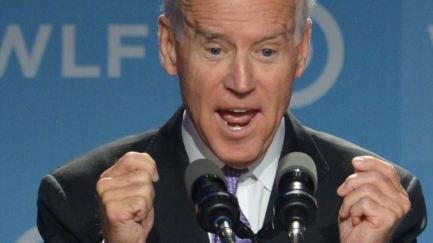
“Bazooka Joe”, as the American vice president Joe Biden is affectionately nicknamed, has managed to shoot Washington in both feet, with a couple of startling admissions.
The first shot was his blunt assessment of the US-led anti-terror coalition currently bombing Iraq and Syria. While the second blast from Bazooka Joe was his candid remarks about how Western sanctions against Russia are all down to American bullying.
Biden was speaking at Harvard University at the end of last week, and in his apparently impromptu responses to public questions he revealed more about Washington than he perhaps intended. That’s why Biden is known as a loose cannon. He tends to shoot his mouth off before aiming his thoughts.
First of all, the vice president spoke about Syria, and he stated plainly that America’s regional allies are the sponsors behind the IS terror network. Biden named names. He accused Saudi Arabia, Turkey and the United Arab Emirates of pouring money and weapons into the creation of IS, al-Nusra Front and various other al-Qaeda-type terror groups.
“Our biggest problem is our allies – our allies in the region were our largest problem in Syria,” said Biden.
Referring to Saudi Arabia, Turkey and the UAE, Biden said: “They were so determined to take down [Syrian President] Assad and essentially have a proxy Sunni-Shia war, what did they do? They poured hundreds of millions of dollars and tens, thousands of tons of weapons into anyone who would fight against Assad, except that the people who were being supplied were al-Nusra and al-Qaeda and the extremist elements of jihadis coming from other parts of the world.”
Of course, many informed observers have known this terror background already. Certainly the Syrian and Iraqi governments have been accusing these same US regional allies of doing just that – sponsoring terrorism. Nevertheless, America’s second-in-command has, in his own words, made a damning assessment of the cause behind the rise of terrorism threatening the region. This anti-terror coalition that Washington has dragooned has therefore no credibility. Just ask Biden.
Since Biden made this stupendous admission, he has been forced over the weekend to make an apology to Turkey’s President Recep Tayyip Erdogan. The latter furiously denied his country’s involvement with terror groups in Syria. But many people won’t be convinced otherwise and they will rightly see Biden’s prior candid viewpoint as closer to the truth.
Also on Syria, Biden made a second injurious disclosure: namely, that there is no such thing as a “moderate opposition” fighting the Syrian government.
The American VP said “the idea of identifying a moderate middle has been a chase America has been engaged in for a long time… there was no moderate middle because the moderate middle are made up of shopkeepers, not soldiers”.
The notion of “moderate” Syrian rebels is central to US President Barack Obama’s strategy of supposedly defeating the IS network. Along with the US-led aerial bombing campaign – costing $10 million a day, according to the Pentagon – the next phase is to allegedly train “vetted rebels” who will displace the extremists and take up the fight against the Damascus government of Bashar al-Assad. These “moderates”, if we believe Washington, are to be trained in Saudi Arabia – the terror sponsor – with $500 million of American taxpayer money, approved by the US congress.
But thanks to Joe Biden’s big mouth, we have confirmation that the notion of “moderates” is a charade, as many observers have been saying all along. What’s more, Washington knows it too.
The second damaging disclosure from Bazooka Joe was in connection to the crisis over Ukraine. Relations between Washington and Europe on the one hand and Russia on the other have sunk to their worse level since the end of the Cold War more than two decades ago. A major reason for the tensions is the slapping of economic sanctions on Russia, which in turn has responded with bans on Western imports.
Moscow’s retaliatory sanctions on agricultural products are going to hit Europe very painfully – much more than the US – as will any moves by Russia to reduce crucial gas supplies to EU countries.
What Joe Biden revealed is that the EU countries were reluctant to apply trade sanctions on Russia in the first place. Biden said that they “were embarrassed” into adopting the aggressive American agenda because Obama personally hectored European leaders.
What Biden is saying is that the crisis between Russia and the rest of Europe has been greatly exacerbated by American bullying. If it weren’t for Washington’s hostile attitude, then the crisis over Ukraine would likely be resolved diplomatically, without the provocative backdrop of a damaging trade war.
As winter approaches and hard-pressed European citizens find that they are paying dearly for American intransigence towards Russia, Biden’s words will come back to haunt with a vengeance.
It is known that many of the EU 28 member states have already deep misgivings about following the US-led sanctions. As the crisis takes more and more of an economic and social toll on Europe, the Americans will incur bitter resentment from ordinary citizens across the EU, which will in turn fragment the apparent Washington-Brussels coalition against Russia.
All in all, we owe Joe Biden a measure of gratitude for his big mouth.
It spares us a lot of time-wasting from speculation and conjecture.
All we have to do is recall his words from last week when he spelled out the fallacy of the US-led war on terror in the Middle East and the US-led new Cold War against Russia.
October 6, 2014
Posted by aletho |
Timeless or most popular | IS, Saudi Arabia, Syria, Turkiye, UAE, Ukraine, United States |
Leave a comment
In late summer 2013, Official Washington was rushing to the judgment that the “evil” Syrian President Bashar al-Assad had launched a barrage of missiles tipped with Sarin gas to slaughter hundreds of civilians in rebel-held neighborhoods near Damascus.
It was inconceivable to virtually every person who “mattered” in Washington that there was any other interpretation of the events on Aug. 21, 2013. Washington Post national security columnist David Ignatius even explained the “big picture” reason why President Barack Obama needed to launch punitive bomb strikes against Assad’s government for crossing Obama’s “red line” against using chemical weapons.
“What does the world look like when people begin to doubt the credibility of U.S. power?” Ignatius wrote a week after the Sarin incident. “Unfortunately, we’re finding that out in Syria and other nations where leaders have concluded they can defy a war-weary United States without paying a price.
“Using military power to maintain a nation’s credibility may sound like an antiquated idea, but it’s all too relevant in the real world we inhabit. It has become obvious in recent weeks that President Obama … needs to demonstrate that there are consequences for crossing a U.S. ‘red line.’ Otherwise, the coherence of the global system begins to dissolve.”
At the time, there were only a few of us raising questions about Official Washington’s Sarin-attack “group think,” partly because it made no sense for Assad to have invited United Nations inspectors into Syria to examine chemical weapons attacks that he was blaming on the opposition and then to launch a major Sarin attack just miles from where the inspectors were unpacking at their hotel.
I also was hearing from inside U.S. intelligence that some CIA analysts shared those doubts, suspecting that the supposedly high number of Sarin-laden rockets (which represented the strongest evidence against Assad’s forces) was wildly overstated and that public panic might have exaggerated the scope of the attack.
But perhaps the strongest reason to doubt Official Washington’s hasty conclusion blaming Assad was what had been occurring inside the Syrian rebel movement over the prior two years, i.e., its radicalization into a hyper-violent Sunni jihadist force that was prepared to inflict any brutality on civilians to achieve its goal of ousting the secular Assad and establishing an Islamist state in Damascus.
Blinded by Propaganda
Most Washington’s pols and pundits had not noticed this change because of a geopolitical blindness inflicted by neoconservative propaganda, which insisted that the only acceptable way to view the Syrian civil war was to see Assad as the “bad guy” and the rebels as the “good guys.”
After all, “regime change” in Syria had long been near the top of the neocon agenda as it was for Israel, which wanted Assad out because he was allied with Iran and Lebanon’s Hezbollah. Early in the civil war, Assad’s harsh response to what he termed rebel “terrorism” had also rallied the Obama administration’s “liberal interventionists” to the side of “regime change.”
Thus, the notion that some vicious Syrian rebel group might willfully kill innocent civilians as a provocation to get the U.S. military to attack Assad’s defenses – and thus pave the way for a rebel victory – was outside Official Washington’s accepted frame of reference. In August 2013, the rebels were wearing the white hats, as far as U.S. mainstream opinion was concerned.
Over the past year, however, reality has reasserted itself, at least somewhat. The Sarin case against Assad has largely crumbled with a UN report finding Sarin on only one rocket and independent scientists concluding that the one Sarin-laden rocket had a maximum range of only about two kilometers, meaning it could not have come from the suspected Syrian base about nine kilometers away.
Investigative reporter Seymour Hersh also learned from his well-placed sources that inside the U.S. intelligence community suspicion had shifted toward rebel extremists working with hardliners in Turkish intelligence. [See Consortiumnews.com’s “Was Turkey Behind Syria-Sarin Attack?”]
But most “important people” in U.S. officialdom, including New York Times and Washington Post editors, still insisted that Assad must have done the Sarin attack. They even report it as flat fact. They are, after all, not the sort of folks who easily admit error.
A Shift in the Paradigm
However, over the past year, the paradigm for understanding the Syrian conflict has begun shifting. In September 2013, many Syrian rebel forces repudiated the political opposition that the Obama administration had organized and instead embraced al-Qaeda’s al-Nusra Front, an aggressive jihadist force which had emerged as the most effective fighters against Assad.
Then, in February 2014, al-Qaeda’s leadership disavowed an even more brutal jihadist force known as the Islamic State of Iraq and Syria, or ISIS. The Islamic State promoted a strategy of unspeakable brutality as a way of intimidating its rivals and driving Westerners from the Middle East.
ISIS got its start after the U.S.-led invasion of Iraq in 2003 when Jordanian Abu Musab al-Zarqawi organized “al-Qaeda in Iraq,” a hyper-violent Sunni militia that targeted Iraq’s Shiites and destroyed their mosques, touching off a vicious sectarian war across Iraq.
After Zarqawi’s death in 2006 – and the alienation of less-extreme Iraqi Sunnis – al-Qaeda in Iraq faded from view before reemerging in Syria’s civil war, refashioned as the Islamic State and crossing back into Iraq with a major offensive last summer.
Amid reports of the Islamic State massacring captives and beheading American and British hostages, it no longer seemed so far-fetched that some Syrian rebel group would be ruthless enough to obtain Sarin and launch an attack near Damascus, killing innocents and hoping that the Assad regime would be blamed.
Even the Post’s Ignatius is looking more skeptically at the Syrian rebel movement and the various U.S.-allied intelligence agencies that have been supplying money, weapons and training – even to fighters associated with the most extreme militias.
Opening the Door
In a column on Friday, Ignatius faulted not only Syria’s squabbling “moderate opposition” but “the foreign nations — such as the United States, Turkey, Qatar, Saudi Arabia and Jordan — that have been funding the chaotic melange of fighters inside Syria. These foreign machinations helped open the door for the terrorist Islamic State group to threaten the region.”
Ignatius acknowledged that the earlier depiction of the Syrian opposition as simply an indigenous movement of idealistic reformers was misleading. He wrote: “From the beginning of the revolt against President Bashar al-Assad in 2011, Syria has been the scene of a proxy war involving regional powers: Turkey, Saudi Arabia and Qatar all wanted to topple Assad, but they competed with each other as regional rivals, too.
“At various points, all three nations provided Sunni rebel groups with money and weapons that ended up in the hands of extremists. … The United States, Saudi Arabia and Jordan joined forces in 2013 to train and arm moderate rebels at a CIA-backed camp in Jordan. But this program was never strong enough to unify the nearly 1,000 brigades scattered across the country. The resulting disorganization helped discredit the rebel alliance known as the Free Syrian Army.
“Syrian rebel commanders deserve some blame for this ragged structure. But the chaos was worsened by foreign powers that treated Syria as a playground for their intelligence services. This cynical intervention recalled similar meddling that helped ravage Lebanon, Afghanistan, Yemen, Iraq and Libya during their civil wars. …
“The story of how Syria became a cockpit for rival intelligence services was explained to me by sources here [in Istanbul] and in Reyhanli, a rebel staging area on the Turkey-Syria border. Outside efforts to arm and train the Syrian rebels began more than two years ago in Istanbul, where a ‘military operations center’ was created, first in a hotel near the airport.
“A leading figure was a Qatari operative who had helped arm the Libyan rebels who deposed Moammar Gaddafi. Working with the Qataris were senior figures representing Turkish and Saudi intelligence. But unity within the Istanbul operations room frayed when the Turks and Qataris began to support Islamist fighters they thought would be more aggressive.
“These jihadists did emerge as braver, bolder fighters — and their success was a magnet for more support. The Turks and Qataris insist they didn’t intentionally support the extremist group Jabhat al-Nusra or the Islamic State. But weapons and money sent to more moderate Islamist brigades made their way to these terrorist groups, and the Turks and Qataris turned a blind eye.”
Regarding the rise of these radicals, Ignatius quoted one Arab intelligence source who claimed to have “warned a Qatari officer, who answered: ‘I will send weapons to al-Qaeda if it will help’ topple Assad. This determination to remove Assad by any means necessary proved dangerous. ‘The Islamist groups got bigger and stronger, and the FSA day by day got weaker,’ recalls the Arab intelligence source.”
Selling the Sarin Story
Based on such information, the idea of anti-Assad extremists securing Sarin – possibly with the help of Turkish intelligence, as Hersh reported – and launching a provocative attack with the goal of getting the U.S. military to devastate Assad’s army and clear a path for a rebel victory begins to make sense.
After all, back in Washington, the propaganda strategy of blaming Assad could count on the ever-influential neocons who in August 2013 did start pushing the rush-to-war bandwagon and shoved aside any doubters of the Assad-did-it conventional wisdom.
Israel took a similar position on Syria, favoring even the victory of al-Qaeda extremists if necessary to oust Assad and hurt his Iranian allies.
In September 2013, then-Israeli Ambassador to the United States Michael Oren told the Jerusalem Post in an interview that “The greatest danger to Israel is by the strategic arc that extends from Tehran, to Damascus to Beirut. And we saw the Assad regime as the keystone in that arc. … We always wanted Bashar Assad to go, we always preferred the bad guys who weren’t backed by Iran to the bad guys who were backed by Iran.” He said this was the case even if the other “bad guys” were affiliated with al-Qaeda.
So, the danger from the Sunni extremists was played down and the focus remained on ousting Assad. No wonder there was such “surprise” among Official Washington’s “group thinkers” when the Islamic State opened a new front inside Iraq and routed the U.S.-trained Iraqi army. Once again, the neocons had made sure that American eyes stayed wide shut to an inconvenient truth.
But the neocons are not through with the Syrian fiasco that they helped create. They are now busy reshaping the narrative – accusing Obama of waiting too long to arm the Syrian rebels and insisting that he switch from bombing Islamic State targets inside Syria to destroying the Syrian air force and creating a no-fly zone so the rebels can march on Damascus.
The recklessness of that strategy should now be obvious. Indeed, if Obama had succumbed to the interventionist demands in summer 2013 and devastated Assad’s military, we could now be seeing either al-Qaeda or the Islamic State in control of Damascus. [See Consortiumnews.com’s “Neocons’ Noses into the Syrian Tent.”]
Obama might be wiser to take this opportunity to declassify the U.S. intelligence on the Sarin gas attack of Aug. 21, 2013, including the dissents from CIA analysts who doubted Assad’s responsibility. That information might shed substantial new light on how Turkish and Arab intelligence services — with the help of the neocons — enabled the rise of the Islamic State.
~
Investigative reporter Robert Parry broke many of the Iran-Contra stories for The Associated Press and Newsweek in the 1980s. You can buy his new book, America’s Stolen Narrative, either in print here or as an e-book (from Amazon and barnesandnoble.com).
October 4, 2014
Posted by aletho |
Deception, Timeless or most popular, Wars for Israel | Iraq, IS, Israel, Syria, United States |
Leave a comment
Eve’s Thoughts | October 3, 2014
One month ago I came to Beirut the capital of Lebanon. Here and all over the country, wherever you go, you constantly meet Syrian refugees as well as Iraqis.
Lebanon a country with a population of only 4 and a half million native citizens has taken in about 1.2 Million Syrian refugees and the number is growing still. Already since the beginning of the second Gulf War countless Iraqi refugees have entered the country fleeing violence, chaos and destruction at home. While many of these Iraqi refugees have sought and found asylum in Western countries, there are still an estimated 100,000 Iraqi refugees inside Lebanon, most of them are unregistered and without legal rights.
These enormous numbers of refugees have had a large impact on Lebanese economic conditions. Rents for working class housing have sky-rocketed, since the refugees now, according to some Lebanese friends, rent all the available spaces, with six or more people occupying a single room paying several times the rent that has been asked of Lebanese tenants before the Syrian civil war. At the same time wages have fallen drastically, since the the refugees are ready to work for far lower pay.
This, however, is not the only reason why there are also more and more hostile feelings against the refugees in this country. Sunni refugees are often suspected by both Christian and Shiite Lebanese of sympathizing with or even supporting the radical Islamists, like ISIS which is called the Da’esh here or the Al Nusra front or other Al Qaeda affiliated groups.
Public anger has then increased enormously after the Da’esh had, in a cross-border raid, taken over the Lebanese village of Arsal, which also houses a large camp for Syrian refugees and the local army station. 29 soldiers and policemen were captured, some of the Sunni captives were released, while those of other sects and religions are still kept as hostages.
Two of the captives so far have been murdered by beheading. Although the first soldier murdered was a Sunni man, there are still great fears of the public outrage that the murders might lead to sectarian violence.
But this is exactly what nobody wants here in Lebanon the long decades of civil war are still a recent and horrifying memory. And therefore great efforts are made both by individuals as well as by political parties and groups to diffuse sectarian distrust and fear which might lead to hatred and violence.
An example of these strenuous efforts are those of the parents of the murdered soldiers as reported about the family of Abbas Medlej, a Shiite family:
The family of the Lebanese soldier who was executed by ISIS Saturday called for unity against takfiri groups, saying citizens need to support the state and the Army, not slip into civil strife.
“Our choice remains as is, Lebanon a country of coexistence for all its components,” said the statement by the family of Abbas Medlej Saturday night, appealing for calm.
“The terrorist act that killed our son Abbas is a crime against all Lebanese; Shiites, Sunnis, Christians and Druze.”
The Medlej family called for Lebanese to prevent “takfiris from penetrating into our national fabric,” and thus stop them from achieving their goal of division among the Lebanese…
Similarly the family of the other executed soldier, Ali Al-Sayed, a Sunni, as reported by Lebanese News :
In a bid to challenge rising sectarian tensions, the families of the two Lebanese soldiers executed by ISIS joined together in prayer Friday.
The family of Ali Al-Sayed traveled from north Lebanon to the Al-Ansar, near Baalbek, to offer condolences to the relatives of Abbas Medlej.
Medlej and Sayed were both kidnapped by ISIS during the Arsal clashes last month and were later beheaded by the fundamentalist group.
The two families, one Sunni and one Shiite, gathered for a joint prayer at the village’s mosque led by the Baalbek and Hermal Mufti Sheikh Bakr al-Rifai, who stressed on the importance of “Muslim unity and coexistence.”
And then there are the statements of religious Hezbollah leaders like the Head of Hezbollah’s religious committee, Sheikh Mohammed Yazbek, who, along with Industry Minister Hussein al-Hajj Hassan and a delegation from Hezbollah, visited the Baalbek town of Al-Ansar to offer condolences to the relatives of Lebanese Armed Forces soldier Abbas Medlej:
Sheikh Yazbek told LBCI that martyrs Ali Al-Sayyed and Abbas Medlej represent the entire Lebanese nation, stressing that Lebanese authorities should exert more efforts to face terrorism.
Sheikh Yazbel also stated that terrorism does not differentiate between Shiites, Sunnis, and Christians, urging Lebanese citizens to unite their efforts in order to face this threat.
Hezbollah, as both a political party and a Shiite militia, has before been considered not a friend but competition to the Lebanese army. But in spite of everything the Lebanese people of all creeds and political sides try to do, the country isn’t safe.
There are forces at work, which do not originate in Lebanon, forces which do their utmost to inflame tensions and in doing so to create conditions for a new civil war.
The Lebanese daily The Daily Star writes in its English edition on September 25:
Worrying reports emerge of ISIS plans to wreak havoc in Lebanon
TRIPOLI, Lebanon: There are reports that ISIS is looking to create trouble and instability via the sleeper cells it is believed to have implanted across the country.
Lebanese security sources said that ISIS was trying to create strife in areas in Lebanon’s north, south and the Bekaa Valley in order to undermine the country’s stability.
The starting point of this plan was the five-day clashes in Arsal, which have since been followed by sporadic incidents in north Lebanon such as gunmen opening fire on a Lebanese Army position Tuesday, leading to the death of soldier Mohammad Khaled al-Hussein…
As Islamist militants fighting in Syria search for different ways to get hold of supplies needed in the ongoing war there, Lebanese political factions have been forced to mobilize to keep pace with the fast-moving developments.
For the first time in a long time, the various Lebanese security bodies have decided to join efforts in their fight against terrorism.
This has been made all the more urgent since senior security sources revealed that ISIS has been intensifying its efforts to create pockets of support across the country…
The security authorities have warned that ISIS and the Lebanese branches of the Nusra Front and the Abdullah Azzam Brigades have united in order to establish a haven in the border area stretching from the north through the Bekaa Valley to the Shebaa farms in the south.
According to reports, if ISIS is to conduct attacks in these areas, they will be led by a figure known as Sheikh Abu Hasan al-Ramlawi.
Ramlawi – who goes by a nom du guerre – is a Palestinian who holds a Jordanian passport. Security forces marked him as an important figure because he used to mobilize Islamists in Deraa in southern Syria, before moving to an area closer to Lebanon.
Ramlawi is believed to have moved toward the Syrian part of the Golan Heights and Shebaa until he reached the area’s Lebanese Sunni villages, where he has reportedly been working on forming armed groups.
As a result of the sensitive location of this area, Hezbollah is believed to be monitoring the situation closely.
There are fears that Israel might try to take advantage of these developments to target Hezbollah. Some even believe that Ramlawi may have been coordinating with Israeli secret service agency Mossad in order to manipulate events in Syria.
Such reports pushed Hezbollah leader Sayyed Hasan Nasrallah to give a speech Tuesday emphasizing the party’s position on the war against terrorism, while rejecting Lebanon’s participation in an international anti- ISIS coalition. Nasrallah also called on the Lebanese government to negotiate from a position of strength with the Islamist militants from ISIS and Nusra Front who are holding at least 21 soldiers and policemen…
But even the travesty of the kidnappings seems to pale in comparison to dramatic developments predicted to be on the horizon.
In a statement, Sheikh Sirajuddine Zureiqat, a spokesman of Al-Qaeda-affiliated group the Abdullah Azzam Brigades, said he would be coming to Beirut soon. This statement was dismissed by Nasrallah in his speech.
Zureiqat is believed to now be with the Lebanese captives, which if true would be a dangerous indicator that the Nusra Front, ISIS and the Abdullah Azzam Brigades are starting to unify within Lebanon.
The threat posed by ISIS’ alleged sleeper cells is being taken sufficiently seriously that it prompted Progressive Socialist Party leader Walid Jumblatt to make a tour around Wadi al-Taym – a predominantly Druze area very close to the Syrian border – over the weekend.
The move comes as the Druze community is reporting feeling directly threatened by these extremists groups. As the area that the groups are believed to be interested in contains large numbers of Druze, it is natural to fear that the Druze would be displaced were the groups to take over. Therefore the targeting of the Druze in Shebaa is being prepared for.
The Lebanese government also senses the danger that the country is in, and is fully aware of the complications ahead. One senior political source compared the expected turmoil to the aftermath of Israel’s invasion in the summer of 1982.
Prime Minister Tammam Salam wants to get through the crisis with as little fallout as possible, and he is currently in New York working on ensuring Lebanon has a safety net amid the regional turmoil.
From Syrians, both Sunni Muslim and Christian, that I met here in Beirut and during my one-week stay Syria I have heard nearly the same words again and again in helpless sighs: “We are like pawns, who are used in a game by outside powers who play with us. But we do the suffering and dying.”
The Lebanese are very close to feeling the same helplessness, being tossed around by ruthless forces in their power games, forces which have no regard for the livelihood, the safety, the dignity and the lives of most human beings, forces who are ready to go over mountains of dead bodies to reach their aims.
October 4, 2014
Posted by aletho |
Ethnic Cleansing, Racism, Zionism, Timeless or most popular | Da’esh, Iraq, IS, Lebanon, Middle East, Syria |
Leave a comment
What does it say when the capital of the world’s most powerful nation anchors a major decision about war in what every thinking person acknowledges is a “fantasy” – even the principal policymaker and a top advocate for foreign interventions?
It might suggest that the U.S. government has completely lost its bearings or that political opportunism now so overwhelms rationality that shortsighted expediency determines life-or-death military strategies. Either way, it is hard to see how the current U.S. policy toward Iraq, Syria and the larger Middle East can serve American national interests or translate into anything but more misery for the people of the region.
Official Washington’s most treasured “fantasy” today is the notion that a viable “moderate opposition” exists in Syria or could somehow be created. That wish-upon-a-star belief was the centerpiece of congressional action last month on a $500 million plan by President Barack Obama to train and arm these “moderate” rebels to combat Islamic State terrorists who have been plundering large swaths of Syria and Iraq — and also take on the Syrian army.
Yet, as recently as August, President Barack Obama publicly declared that trust in these “moderates” was a “fantasy” that was “never in the cards” as a workable strategy. Then, on Wednesday, David Ignatius, national security columnist for the neoconservative Washington Post and a prominent booster of U.S. interventionism, reported from a rebel staging area in Reyhanli, Turkey, the same reality in nearly the same language.
“The problem is that the ‘moderate opposition’ that the United States is backing is still largely a fantasy,” Ignatius wrote, noting that the greatest challenge would be to coordinate “the ragtag brigades of the Free Syrian Army into a coherent force that can fill the vacuum once the extremists are driven out.”
Ignatius quoted Syrian rebel commander Hamza al-Shamali, a top recipient of American support including anti-tank missiles, as saying, “At some point, the Syrian street lost trust in the Free Syrian Army,” the U.S.-backed rebel force that was the armed wing of the supposedly “moderate opposition” to President Bashar al-Assad. Ignatius added:
“Shamali explains that many rebel commanders aren’t disciplined, their fighters aren’t well-trained and the loose umbrella organization of the FSA lacks command and control. The extremists of the Islamic State and Jabhat al-Nusra have filled the vacuum. Now, he says, ‘the question every Syrian has for the opposition is: Are you going to bring chaos or order?’”
According to Ignatius, Shamali said he rejected a proposal to merge the FSA’s disparate brigades because “we refuse to repeat failed experiments.” He argued that an entirely new “Syrian national army” would be needed to fight both the Islamist radicals and Assad’s military.
But even the sympathetic Ignatius recognized that “the FSA’s biggest problem has been internecine feuding. Over the past two years, I’ve interviewed various people who tried to become leaders, such as: Abdul-Jabbar Akaidi, Salim Idriss and Jamal Maarouf. They all talked about unifying the opposition but none succeeded.
“An Arab intelligence source explains: ‘Until now, the FSA is a kind of mafia. … People inside Syria are tired of this mafia. There is no structure. It’s nothing.’ And this from one of the people who have struggled the past three years to organize the resistance.”
In other words, the “moderate” rebels – to the degree that they do exist – are viewed by many Syrians as part of the problem, not part of any solution.
Favoring Al-Qaeda
Another flaw in Obama’s strategy is that the Syrian “moderates” are much more opposed to Assad’s harsh but secular regime than they are to the Sunni jihadists who have emerged as the most effective fighting force against him.
“If U.S. airstrikes and other support are seen to be hitting Muslim fighters only, and strengthening the despised Assad, this strategy for creating a ‘moderate opposition’ will likely fail,” Ignatius concluded.
That complaint has given new hope to Washington’s influential neoconservatives that they can ultimately redirect Obama’s intervention in Syria from bombing the Islamic State terrorists to a full-scale “regime change” war against Assad, much like the neocons helped convince President George W. Bush to invade Iraq in 2003. [See Consortiumnews.com’s “Neocons’ Noses Into the Syrian Tent.”]
In this regard, Obama appears to be the proverbial deer in the headlights. He’s afraid of being called “weak” if he doesn’t go after the Islamic State for its hyper-violent attacks inside Iraq and its brutal executions of American hostages in Syria. Yet, Obama also can’t escape his earlier tough talk that “Assad must go.”
Obama’s core contradiction has been that by providing “covert” assistance to Syrian rebels, he has indirectly strengthened the Sunni extremists who have seized the Free Syrian Army’s weapons depots and won converts from the “moderate” rebels, some of whom were trained, armed and financed by the CIA. Meanwhile, other U.S. allies, including Saudi Arabia and Turkey, have been helping more extreme Syrian rebels, including al-Qaeda’s Nusra Front.
A year ago, many of the “moderate” rebels publicly repudiated the Syrian political front that the Obama administration had put together and instead endorsed al-Nusra. According to one source with access to Western intelligence information, some “moderate” rebels – recruited from Muslim communities in Great Britain and other Western countries – have now taken their military skills (and passports) to the Islamic State.
Yet, instead of acknowledging that this strategy of relying on an unreliable “moderate opposition” is indeed a “fantasy,” President Obama and a majority in Congress have chosen to pursue this geopolitical unicorn with another $500 million and much political chest-thumping.
An Alternative Approach
At this late stage, the only practical strategy would be to press the non-extremist Sunni opposition to work out some form of unity government with Assad who retains strong support among Syria’s Alawite, Shiite and Christian minorities. By enlisting Russia and Iran, Obama might be able to secure concessions from Assad, including the possibility of a gradual transition to a post-Assad era.
With such a political settlement in hand, the focus could then be on defeating the Islamic State and al-Qaeda’s Nusra affiliate and restoring some order to Syria. But the problem is that Official Washington’s neocons and their “liberal interventionist” allies are so fixated on “regime change” in Syria and are so hostile to Russia and Iran that any pragmatic strategy is effectively ruled out.
Though Obama may be a closet “realist” who would favor such a compromise approach, he has consistently lacked the political courage or the geopolitical foresight to impose this kind of solution on the powers-that-be in Washington. Any suggestion of collaboration with Russia and Iran or acquiescence to continued rule by Assad would touch off a firestorm of outrage in Congress and the mainstream U.S. media.
So, Obama instead has charted a course into what he knows to be a fantasyland, a costly pursuit of the chimerical Syrian “moderates” who – once located – are supposed to defeat both the Sunni extremists and the army of the secularist Assad. This journey is not simply a march of folly but a meandering into illusion.
~
Investigative reporter Robert Parry broke many of the Iran-Contra stories for The Associated Press and Newsweek in the 1980s. You can buy his new book, America’s Stolen Narrative, either in print here or as an e-book (from Amazon and barnesandnoble.com).
October 2, 2014
Posted by aletho |
Progressive Hypocrite | Iraq, Middle East, Obama, Saudi Arabia, Syria, United States |
Leave a comment
Having long since captured the sympathies of America’s evangelical Christians, Israel’s friends have recently been attempting to show empathy for the persecuted Christian churches of the Arab World in what appears to be a concerted effort to garner support for Tel Aviv’s regional aspirations. Only founded earlier this year, a previously obscure non-profit organization called “In Defense of Christians” suddenly attracted international headlines during its inaugural summit (Sept. 9-11). The stated purpose of the three-day Washington, D.C. gathering was to raise awareness about the plight of beleaguered Middle Eastern Christian communities whose continued existence is threatened by the advance of the Islamic State, or ISIS, and other takfiri groups.
Although The Washington Post published a report on the IDC Summit in its Religion section on Sept. 10, it wasn’t until that evening’s gala dinner when keynote speaker Sen. Ted Cruz (R-TX) was reportedly “booed off the stage” for his provocative pro-Israel speech that most people first heard of the Washington-based group. Cruz left little doubt that he was more concerned about defending Israel than the region’s Christians when he began to “loop” ISIS and Al-Qaeda together with Hamas, Hezbollah, Syria and Iran (i.e. the latter three forming “the strategic arc” that poses “the greatest danger to Israel,” as Michael Oren, former Israeli ambassador to the US, has admitted to The Jerusalem Post.) But it wasn’t until the Texas senator asserted that “Christians have no greater ally than the Jewish state” that some of the attendees could take no more of what sounded like an AIPAC-scripted sermon and began to heckle him.
In light of the predictable outrage provoked by Cruz’s paean to Israel, it’s interesting to recall what The Washington Post had been told by IDC executive director Andrew Doran earlier that day:
One Orthodox leader on Tuesday (Sept. 9) declared his opposition to military action to stop the Islamic State militants, a view that is not likely widely shared at the conference, Doran noted. The next day, another called the Arab-Israel conflict the root of Middle Eastern chaos. He doesn’t speak for the IDC nor his brother patriarchs, said Doran.
Yet in a Sept. 11 press release entitled “Clarifying Senator Cruz’s Walk Away from Middle Eastern Christian Summit,” Doran, who previously worked for the US Department of State, still seemed assured that he and his allegedly “non-partisan” organization speak instead for the region’s Christians. After having recounted “in tears” his inspiration for the group’s name from a 1933 letter titled “In Defense of the Jews,” the IDC executive director claimed: “In last night’s Solidarity Gala Dinner, Senator Cruz chose to stand against the small and vocal minority of attendees who disagree with his views on Israel rather than standing with the vast majority of those who attended the gala and support both Israel and the Middle East’s Christians.”
Adding to Doran’s “clarification,” IDC president Toufic Baaklini noted “sadly” that “there was a small but vocal anti-Israel element in the room” who “do not represent the views of IDC.” Fittingly, the IDC press release ended by citing one of the summit’s most active speakers [.pdf] whose support for Israel has rarely, if ever, been in doubt: “As Nina Shea, who introduced Cruz later said, ‘We will not agree on territorial disputes, but we stand united against religious persecution regardless of the religion.’”
A senior fellow at the neoconservative Hudson Institute, Shea directs Hudson’s Center for Religious Freedom. A former vice chair of the US Commission on International Religious Freedom, which was once led by the pardoned pro-Israel Iran-Contra intriguer Elliott Abrams and currently chaired by a daughter of the late “true blue and white” Israel mouthpiece and infamous interventionist Tom Lantos, the senior Hudson fellow has, as one critical profile puts it, “a long track record of using human rights concerns to promote various foreign interventions favored by neoconservatives.” Significantly, the IDC summit is evidently not the first time concerns about specifically Christian suffering have been used by the neocon interventionist:
In a 2001 article for the Washington Monthly, Joshua Green related how in the mid-1990s Shea teamed up with Michael Horowitz, a former Reagan administration official, in an effort “to put the issue of Christian persecution on the map.” Green reported: “Horowitz, a Jewish neoconservative and a senior fellow at the conservative Hudson Institute, detailed the plight of persecuted Christians in Africa and the Middle East. He concluded by calling for intervention. ‘For American Jews, who owe our very lives to the open door of the blessed land,’ he wrote, ‘silence should not be an option in the face of persecutions eerily parallel to those committed by Adolf Hitler.’” According to Green, a favorite Horowitz sound bite at the time was that “Christians are the Jews of the 21st century.”
In a 2012 article entitled “What Will Become of the Middle East’s Christians?”—one of the many pieces in which Doran cites Shea’s work on Christian persecution—the IDC executive director echoes Horowitz’s favorite sound bite:
The exodus of Jews from Yemen, where they had lived for fifteen centuries before the birth of the Prophet, was not an isolated occurrence; it was repeated across the Middle East and North Africa, as these Diaspora Jews made their way, reluctantly in many cases, to Israel. Their fight for survival foreshadowed that of the more than ten million Christians of the Muslim world, who today struggle to maintain a presence and identity in the lands where they have lived for centuries.
Presumably, the reader is expected to infer Muslim persecution of Jews from Doran’s use of the word “reluctantly” as opposed to the Israeli false flag attacks that were required in at least some cases to convince those “Diaspora Jews” to flee to the newly-established “Jewish state” on Palestinian land.
A regular contributor to the neocon National Review Online, Doran also shares Shea’s favored response to the problem of Christian persecution. For instance, in an Aug. 18 op-ed piece entitled “Intervention as Duty,” the IDC executive director writes:
As I argued here last year, the intervention in the former Yugoslavia may serve as a compelling model today for Syria and now perhaps Iraq, but this would call for a willingness to see Iraq and Syria dissolved. For the moment, America clings, as it did at the outset of war in Yugoslavia, to nations that no longer exist.
In Doran’s prescription for the current crisis, one can’t help noticing the similarity with the policy recommendations of Oded Yinon, an Israeli journalist formerly attached to the Foreign Ministry of Israel. In his 1982 essay “A Strategy for Israel in the Nineteen Eighties,” originally published in Hebrew by the World Zionist Organization journal, Kivunim, Yinon argued that, “The dissolution of Syria and Iraq later on into ethnically or religiously unique areas such as in Lebanon, is Israel’s primary target on the Eastern front in the long run….”
However, if the dissolution of Syria, in accordance with Israeli strategic objectives, was indeed one of the ulterior motives behind IDC’s bringing the Middle East’s Christians together in Washington, it appears to have suffered a setback when on the final day of the summit, a delegation of Eastern Christian patriarchs met with President Obama in the White House. According to a report in Al-Akhbar English, Obama surprised his guests by telling them, “We know that President Bashar al-Assad protected Christians in Syria.” Further taken aback by Obama’s use of the term “the Syrian government” instead of “regime,” one of the attendees reportedly challenged the president: “Then you should stop talking about a moderate Syrian opposition.” Ironically, it was in this very same room four months earlier that Obama had met Ahmad Jarba, president of the Syrian National Coalition (SNC) who “thanked the US for its aid to opposition rebels.” One month before that, the leader of the so-called “moderate Syrian opposition” reportedly toured the devastated Armenian Christian village of Kassab, Syria which had been attacked and occupied by the Free Syrian Army, the SNC’s armed wing, and their Al-Qaeda affiliates.
Within a week of the historic meeting of President Obama with the leaders of Eastern Christianity, a World Jewish Congress delegation led by WJC president Ronald Lauder paid a Rosh Hashanah visit to Pope Francis at his Vatican residence. As in the White House, the persecution of Christians in the Middle East dominated the discussion. According to a Sept. 18 report in Haaretz, it was the Bishop of Rome’s turn this time to adopt Horowitz’s sound bite:
Lauder and the pope mutually condemned the attacks against Christians around the world, especially in the Middle East. “In the world, there is still great suffering. First it was your turn. Now it’s our turn,” the pope told the delegation…
Strongly agreeing with the Holy Father’s comments, the WJC president extended the Horowitzian analogy:
He showed a paper bearing the Hebrew letter nun, explaining that: “It is the symbol used in Iraq and Syria to identify Christians’ houses as the yellow star was used in the past against European Jewry.”
The head of the “Diplomatic Arm of the Jewish People” concluded with a well-worn albeit spurious hasbara talking point: “The truth is that Israel is the only safe place for Christians in the Middle East.”
As implied by the Haaretz report, the WJC president—not to mention another pro-Israel interventionist par excellence—has been showing an increased concern for his Christian brethren of late. An Aug. 19 Lauder op-ed in The New York Times asks, “Who Will Stand Up for Christians?” Given the gist of the piece, however, a more candid title might have been “Why can’t the world just stop fussing about Israeli war crimes in Palestine and focus their anger instead on Christian suffering in other parts of the Middle East?” As for how to respond to the persecution of his “Christian brothers and sisters,” the self-described “Jewish leader” pointedly reminds his readers that he is writing this call to action “as a citizen of the strongest military power on earth.” Thus, similar to the fervor that preceded the Second World War, “Onward Christian Soldiers” has yet again become the rallying cry for those who seek to embroil the United States and other Western nations in another major conflict—an unnecessary “Clash of Civilizations”—likely to accomplish little beyond further advancing the hegemonic designs of Israel.
October 2, 2014
Posted by aletho |
Deception, Ethnic Cleansing, Racism, Zionism | Israel, Middle East, Palestine, Syria, United States, Zionism |
Leave a comment
Powers banning extremists from appearing on TV and which allow police to vet “harmful” individuals’ social media activity would be enforced if the Conservatives return to power next year, Home Secretary Theresa May is set to announce.
The party manifesto will also pledge to introduce time-limited Extremist Disruption Orders to curb individuals’ right to speak at public events and control their social media usage. The maximum sentence could be up to 10 years in prison for breaking a banning order.
Announcing the plans at the Conservative Party Conference in Birmingham on Tuesday, May will also promise greater powers for British police to access internet data.
Police and intelligence services would accrue greater access to details of when and where phone calls and emails are sent, but not their content.
Targeted individuals could be banned from taking part in public protests, certain public spaces, from associating with named people and from using broadcast media if deemed a threat to “the functioning of democracy.”
The Home Office counter-extremism strategy would encompass “the full spectrum of extremism” extending beyond radical Islamism to include far-right and fascist organizations.
Orders would target those who undertake activities “for the purpose of overthrowing democracy,” a broad definition that could encompass political activists of many different stripes.
Critics are expected to accuse the government’s gag order of dramatically widening state censorship against people who have never been convicted of a criminal offence.
In their final party conference ahead of the May 7 general election, the Conservatives aim to appear the toughest party on the threat of terrorism.
Prime Minister David Cameron told BBC Breakfast on Tuesday morning that new powers would go beyond mere advocates of violence, instead targeting those who propagate dangerous views and radicalize others.
Currently, organizations can only be banned if there is evidence of links to terrorism.
“The problem that we have had is this distinction of saying we will only go after you if you are an extremist that directly supports violence,” said Cameron. … Full article
September 30, 2014
Posted by aletho |
Civil Liberties, Full Spectrum Dominance | Hate Crimes, Human rights, Iraq, Law, Mass media, Police, Politics, Social networks, Syria, UK |
Leave a comment
Attorneys for the United States government say that an upcoming court hearing concerning the force-feeding practices used on a Guantanamo Bay detainee should be held almost entirely behind closed doors.
The motion, filed by US attorneys on Friday in District Court for the District of Columbia, asks that the preliminary injunction hearing for Gitmo detainee Abu Wa’el Dhiab scheduled for early next month be conducted largely in secret over supposed national security concerns.
“As an initial matter, the hearing should be closed in order to prevent any unauthorized disclosure of classified or protected information,” the motion reads in part. “Furthermore, the hearing should be closed because, although portions of the materials in the record in this case are unclassified, conducting an open hearing in this case would impose significant burdens on the parties and the Court.”
Dhiab, a Syrian national, was cleared for release by the US in 2009 but remains in Pentagon custody at the Guantanamo Bay facility where he and dozens others engaged in a hunger strike last year to protest their continued confinement. To avoid having detainees die from malnourishment, the US has routinely subjected those individuals to force-feeding practices that their attorneys and human rights workers alike have raised concerns about.
Earlier this year in May, US District Judge Gladys Kessler ordered the Obama administration to temporarily stop force-feeding Dhiab and release his medical records and 34 of 136 videotapes of force-feeding sessions taken between April 9, 2013 and February 19, 2014.
“It’s 12 years late, but it’s fantastic, it’s the first time a federal court has started paying attention to the conditions of confinement in Guantanamo, that’s a huge step,” Clive Stafford Smith, the director of human rights group Reprieve said at the time.
Now as a District Court judge prepares to consider arguments from attorneys representing both the US government and Dhiab, federal attorneys are asking that the public be excluded from key elements of the hearing.
“It’s obvious what is really going on here,” Cori Crider, an attorney for Dhiab with Reprieve, said to The Guardian this week. “The government wants to seal the force-feeding trial for the same reason it is desperate to suppress the tapes of my client being hauled from his cell by the riot squad and force-fed. The truth is just too embarrassing.”
“There is no reason to close the upcoming hearing, other than the government’s intense desire to hide from public scrutiny the evidence we have managed to uncover over the past few months,” co-counsel Jon Eisenberg told POLITICO over the weekend. “This evidence, which consists of videotapes of Mr. Dhiab’s force feedings, his medical records and some key new admissions by military officials, vividly establishes that the force feeding at Guantanamo Bay is the opposite of humane. Its overarching purpose is to cause the hunger strikers a great deal of pain and suffering, in hopes that they are convinced to give up this peaceful protest of their indefinite detention without trial.”
“If, during any part of this hearing, the judge feels there is a need to protect national security information from public disclosure, she can simply close the courtroom for that part of the hearing. That’s how these sorts of cases are commonly handled, and that’s how this one should be handled,” he said.
According to the government, however, opening and closing the hearing because of classified information being presented would “interrupt the natural flow of the hearing, preventing full, frank and uninhibited discussion of the record necessary to conduct the hearing.” As a compromise, acting assistant attorney general Joyce Branda wrote for the government on Friday that “Respondents will create a public version of the transcript of hearing on an expedited basis and, consistent with the practice in many other Guantanamo Bay merits hearings, Respondents agree the parties should begin the hearing by delivering unclassified opening statements in public.”
According to the Guardian, several news organizations, including the British paper, plan to file a motion challenging the government’s request to keep the hearing largely secret.
September 29, 2014
Posted by aletho |
Deception, Full Spectrum Dominance, Subjugation - Torture | Guantanamo, Human rights, Syria, USA |
Leave a comment
The United States has informed Syria that it will conduct airstrikes against the Islamic State (IS) for three years, Syrian Foreign Minister Walid Muallem said Saturday.
“They [the United States and its allies] said they will strike for three years. They informed us but this doesn’t mean they have our acceptance,” Muallem said.
Earlier in September, the United States announced the formation of an international coalition aimed at fighting IS militants. Washington and its allies have already conducted a number of airstrikes on IS positions both in Syria and Iraq.
The United States has been carrying out airstrikes against the IS on the Syrian territory without any formal permission from Damascus.
Russian Foreign Minister Sergei Lavrov said Friday that the coalition should seek consent of the countries, in which the airstrikes are conducted.
September 28, 2014
Posted by aletho |
Illegal Occupation, Militarism, War Crimes | IS, Syria, United States |
Leave a comment
Introduction
In order to overcome massive US and world public opposition to new wars in the Middle East, Obama relied on the horrific internet broadcasts of ISIS slaughtering two American hostages, the journalists James Foley and Steve Sotloff, by decapitation. These brutal murders were Obama’s main propaganda tool to set a new Middle East war agenda – his own casus belli bonanza!
This explains the US Administration’s threats of criminal prosecution against the families of Foley and Sotloff when they sought to ransom their captive sons from ISIS.
With the American mass media repeatedly showing the severed heads of these two helpless men, public indignation and disgust were aroused with calls for US military involvement to stop the terror. US and EU political leaders presented the decapitations of Western hostages by the so-called Islamic State (ISIS) as a direct and mortal threat to the safety of civilians in the US and Europe. The imagery evoked was of black-clad faceless terrorists, armed to the teeth, invading Europe and the US and executing innocent families as they begged for rescue and mercy.
The problem with this propaganda ploy is not the villainy and brutal crimes celebrated by ISIS, but the fact that Obama’s closest ally in his seventh war in six years is Saudi Arabia, a repugnant kingdom which routinely decapitates its prisoners in public without any judicial process recognizable as fair by civilized standards – unless tortured ‘confessions’ are now a Western norm. During August 2014, when ISIS decapitated two American captives, Riyadh beheaded fourteen prisoners. Since the beginning of the year the Saudi monarchy has decapitated more than 46 prisoners and chopped off the arms and limbs of many more. During Obama and Kerry’s recent visit to Saudi Arabia, horrendous decapitations were displayed in public. These atrocities did not dim the bright smile on Barak Obama’s face as he strolled with his genial royal Saudi executioners, in stark contrast to the US President’s stern and angry countenance as he presented the ISIS killing of two Americans as his pretext for bombing Syria.
The Western mass media are silent in the face of the Saudi Kingdom’s common practice of public decapitation. Not one among the major news corporations, the BBC, the Financial Times, the New York Times, the Washington Post, NBC, CBS and NPR, have questioned the moral authority of a US President who engages in selective condemnation of ISIS while ignoring the official Saudi state beheadings and the amputations.
Decapitation and Dismemberment: By Dagger and Drones
The ISIS internet videos showing gaunt, orange-suited Western prisoners and their lopped-off heads have evoked widespread dismay and fear. We are repeatedly told: ‘ISIS is coming to get us!’ But ISIS is open and public about their criminal acts against helpless hostages. We cannot say the same about the decapitations and dismemberment of the hundreds of victims of US drone attacks. When a drone fires its missiles on a home, a school, wedding party or vehicle, the bodies of living people are dismembered, macerated, decapitated and burned beyond recognition – all by remote control. The carnage is not videoed or displayed for mass consumption by Obama’s high command. Indeed, civilian deaths, if even acknowledged, are brushed off as ‘collateral damage’ while the vaporized remnants of men, women and children have been described by US troops as ‘pink foam’.
If the brutal decapitation and dismemberment of innocent civilians is a capital crime that should be punished, as I believe it is, then both ISIS and the Obama regime with his allied leaders should face a people’s war crimes tribunal in the countries where the crimes occurred.
There are good reasons to view Washington’s close relation with the Saudi royal beheaders as part of a much broader alliance with terror-evoking brutality. For decades, the US drug agencies and banks have worked closely with criminal drug cartels in Mexico while glossing over their notorious practice of decapitating, dismembering and displaying their victims, be they local civilians, courageous journalists, captured police or migrants fleeing the terror of Central America. The notorious Zetas and the Knights Templar have penetrated the highest reaches of the Mexican federal and local governments, turning state officials and institutions into submissive and obedient clients. Over 100,000 Mexicans have lost their lives because of this ‘state within a state’, an ‘ISIS’ in Mexico – just ‘South of the Border’. And just like ISIS in the Middle East, the cartels get their weapons from the US imported right across the Texas and Arizona borders. Despite this gruesome terror on the US southern flank, the nation’s principle banks, including Bank of America, CitiBank, Wells Fargo and many others have laundered billions of dollars of drug profits for the cartels. For example, the discovery of 49 decapitated bodies in one mass in May 2014 did not prompt Washington to form a world-wide coalition to bomb Mexico, nor was it moved to arrest the Wall Street bankers laundering the ‘beheaders bloody booty’.
Conclusion
Obama’s hysterical and very selective presentation of ISIS crimes forms the pretext for launching another war against a predominantly Muslim country, Syria, while shielding his close ally, the royal Saudi decapitator from US public outrage. ISIS crimes have become another excuse to launch a campaign of ‘mass decapitation by drones and bombers’. The mass propaganda campaign over one crime against humanity becomes the basis for perpetrating even worse crimes against humanity. Many hundreds of innocent civilians in Syria and Iraq will be dismembered by ‘anti-terrorist’ bombs and drones unleashed by another of Obama’s ‘coalition’.
The localized savagery of ISIS will be multiplied, amplified and spread by the US-directed ‘coalition of the willing decapitators’. The terror of hooded beheaders on the ground will be answered and expanded by their faceless counterparts in the air, while delicately hiding the heads rolling through the public squares of Riyadh or the headless bodies displayed along the highways of Mexico … and especially ignoring the hidden victims of US-Saudi aggression in the towns and villages of Syria.
September 28, 2014
Posted by aletho |
Mainstream Media, Warmongering, Progressive Hypocrite | Bank of America, CitiBank, Iraq, IS, Mexico, Obama, Saudi Arabia, Syria, United States, Wells Fargo |
Leave a comment