Speaking at the 2013 Annual Arab Banking Conference, Daniel Glaser, the US assistant secretary for terrorist financing in the Office of Terrorism and Financial Intelligence, warned local banks against any kind of dealing with Hezbollah and its allies.
In a talk titled “Protecting the Lebanese Financial Sector from Illicit Finance,” Glaser first noted the importance of Lebanon’s financial sector to the region’s economic well-being, remarking, “Lebanon’s ability to retain its position as an important regional and international financial center requires constant vigilance, leaving no stone unturned in our collective efforts to uproot money laundering, terrorist financing, and other forms of illicit finance from the Lebanese financial system.”
“Failing to do so,” he continued in a threatening tone, “would not only represent a missed opportunity to contribute to global efforts to uphold the rule of law and disrupt criminal and illicit groups, but might also allow regulators and financial institutions around the world to draw the conclusion that business with Lebanon comes at too high a risk.”
In particular, Glaser designated finances related to “organized criminal groups, narcotraffickers, terrorist organizations, WMD proliferators, and regimes such as Iran and Syria” as illegal activity that must be closely watched by regulators of the banking system.
The American official explained that the Lebanese banking sector’s “studied neutrality and the guarantee of bank secrecy for all” in the past “is no longer tenable. Moving forward, that professionalism and stability, which have been the hallmark of the Lebanese financial system, can be maintained only through the efforts of both the public and private sectors to ensure a hostile environment for terrorists, criminals, narcotraffickers, and sanctioned regimes such as Iran and Syria. Working together, we can stop the illicit financial activities of groups that seek to destabilize the region such as al-Qaeda and Hezbollah.”
The target here became abundantly clear as Iran, Syria, and the Lebanese Resistance were placed alongside drug traffickers in order to prevent them from accessing Lebanon’s banks…or else!
In an attempt to link Washington’s political opponents to criminal activities, Glaser noted, “It is important at the outset to identify the illicit finance threats that Lebanese financial institutions face. Some of the threats, such as narcotics-related money laundering, are universal challenges confronting financial centers around the world. Others, such as terrorist financing and sanctions evasion, while certainly not unique to Lebanon, are amplified by Lebanon’s geographic, historic, and political circumstances.”
In a more direct wink in the direction of Hezbollah, he referred to the case of the Lebanese Canadian Bank (LCB), maintaining that the “scheme involved the laundering of hundreds of millions of dollars in narcotics proceeds through the Lebanese financial system using bulk cash shipments and trade-based money laundering involving used car sales and consumer goods.”
Glaser, however, forgot to mention that his administration neglected to pursue the LCB in the courts and instead struck a back-room deal, in which the bank paid $102 million in exchange for the case against them being dropped, after it was accused of laundering money on behalf of Hezbollah.
So after closing the LCB file in Washington, the US Treasury official nevertheless insisted that “this should not be surprising given Hezbollah’s involvement in a wide range of illicit activities. These illicit activities, combined with its ties to sanctioned regimes such as Iran and Syria, should call into question all financial relationships with Hezbollah or its agents.”
Glazer took his threats against any financial dealings with the Resistance one step further, saying, “The risks of engaging in such relationships will only increase as more countries apply sanctions on Hezbollah, which continues to engage in destabilizing military activity in Syria and attacks in Europe.”
He also did not fail to warn Lebanon’s banks against the danger of conducting business with Syria and Iran: “Lebanese financial institutions must also be alert to the threat of sanctions evasion. As a nearby regional banking hub, regimes such as Syria and Iran will continue to look to Lebanon as a potential financial access point into the global system. Lebanese financial institutions are therefore an important component of international efforts to isolate these regimes, and Lebanon’s resistance to any attempts to use Lebanese banks as a gateway to the international financial system is essential.”
In his concluding statement, Glaser got to the heart of his message by warning the bank officials present that “the United States is prepared and will continue to take action to protect our financial system from threats when we deem it necessary.”
Israel is not a party to the Chemical Weapons Convention. It signed the Convention in 1993 when it opened for signature, but it has never ratified it.
Now that Syria has become a party to the Convention, Israel is one of only 6 states in the world that are not. They are: Angola, Egypt, Israel, Myanmar, North Korea and South Sudan [1].
As a matter of fact, Israel isn’t a party to any of the three “weapons of mass destruction” treaties, that is, the nuclear non-proliferation treaty (NPT) [2] and the Biological Weapons Convention (BWC) [3], in addition to the Chemical Weapons Convention (CWC) – and it is the only state in the Middle East that isn’t a party to any of them.
Almost all states in the Middle East (including Iran) are party to all three, the exceptions being:
NPT Israel
BWC Israel, Egypt, Syria
CWC Israel, Egypt
What is more, Israel is the only state in the world (apart from South Sudan, which only came into existence in 2011) that isn’t a party to any of these treaties. Since it also holds the world record for being in breach of Security Council resolutions that require action by it and it alone, unkind people might say that it deserves the title of a rogue state.
(North Korea isn’t party to either the BWC or the CWC. Having joined the NPT as a ‘non-nuclear-weapon’ state in 1985, it withdrew in 2003, but its withdrawal has not been formally accepted and the UN still lists it as a party [2].)
Mainstream media carried very little
The mainstream media carried very little about this during the controversy about Syria’s chemical weapons, when one might have thought that Israel should have been asked to explain why it was refusing to become a party to the CWC, while being enthusiastic about its Syrian neighbour doing so. Could it be that it didn’t want to give up its chemical weapons?
Fox News did run a story called Syria deal shines light on suspected Israeli chemical weapons program on 16 September 2013 [4], in which a spokesman for the Israeli Foreign Ministry, Paul Hirschson, is quoted as saying that “Israel could not ratify the treaty in such an uncertain environment”. He continued:
“These things are regional and we’re not going to go out there on our own.”
That is close to an admission that Israel does possess chemical weapons – which will only be given up when all other regional players have given up theirs. Syria has done so. Presumably, the Israeli spokesman had Egypt in mind. Like Israel, it is suspected of having chemical weapons (and of using them during its intervention in the civil war in Yemen in the 1960s). Like Syria, Egypt has linked its refusal to join the CWC to Israel’s possession of nuclear weapons and refusal to join the NPT.
(The Fox News article also quoted from former Israeli Defense Minister, and Labour Party leader, Amir Peretz, on the issue. He said the international community’s attitude toward Israel is “different” from Syria, because “it’s clear to everyone that Israel is a democratic, responsible regime” – that has invaded every one of its neighbours, in its short life, and has occupied large tracts of territory not its own for nearly half a century, and annexed East Jerusalem and a bit of Syria, he might have added.)
Has Israel got chemical and biological weapons too?
Nobody seriously doubts that Israel has an arsenal of nuclear weapons, perhaps as many as 400 of them, though it refuses to confirm or deny this. But does it also possess chemical weapons? There are strong suspicions that it does and that it has biological weapons as well. See, for example, Israel’s Weapons of Mass Destruction: An Overview (2008) by Professor Anthony Cordesman of the Center for Strategic & International Studies [5], which was published in 2008.
Recently, on 9 September 2013, Foreign Policy magazine published an article entitled Does Israel Have Chemical Weapons Too?[6]. This quoted from a 1983 CIA intelligence estimate which said that Israel had a “probable chemical weapon nerve agent production facility and a storage facility… at the Dimona Sensitive Storage Area in the Negev Desert”. It continued:
“several indicators lead us to believe that they have available to them at least persistent and nonpersistent nerve agents, a mustard agent, and several riot-control agents, matched with suitable delivery systems.”
Of course, none of this constitutes conclusive proof that Israel had a chemical arsenal in the 1980s let alone now. Nor does conclusive proof exist that it possesses biological weapons. But, given its distinction as the only state in the world (apart from South Sudan) that isn’t a party to any of the three “weapons of mass destruction” treaties, one might expect a little more media attention to the matter.
Monumental double standard
For more than two decades, Israeli political leaders have claimed that Iran is developing nuclear weapons and demanded that the world put a stop to it, otherwise Israel would have to take military action to do so. As long ago as 1992, the present Prime Minister, Benyamin Netanyahu, predicted that Iran was 3 to 5 years from being able to produce a nuclear weapon – and that the threat had to be “uprooted by an international front headed by the US” [7].
While insisting that Iran must not have nuclear weapons, Israel has continued to enhance its own nuclear weapons systems. This is a double standard of monumental proportions. But, in all this time, the mainstream media have rarely drawn attention to the fact that Israel has a nuclear arsenal, let alone challenged Israeli leaders to justify the application of this double standard.
The two exceptions to the latter that I am aware of were both on the BBC Today programme recently, the first on 14 June 2013 [8] (and that was down to Jack Straw) and the second on 26 September 2013. See my article The BBC spreads untruths about Iran’s nuclear activities [9]for transcripts of these.
Mainstream journalists know that Israel has nuclear weapons and it is clearly newsworthy that Israel is applying a monumental double standard by demanding that Iran must not acquire what Israel itself already possesses in large numbers. So why is the question rarely put? Presumably, because mainstream journalists are simply too craven to put it for fear of the consequences from their employer or from Israel itself.
Since it is Israeli policy neither to confirm nor to deny that it has nuclear weapons, it is impossible for Israeli spokesmen to answer such a question if it were put.
1969 Nixon/Meir deal
The same is true of US spokesmen, since it is also US policy neither to confirm nor deny that Israel has nuclear weapons.
The US took a vow of silence on this issue over 40 years ago: to be precise, on 26 September 1969, when President Nixon made a secret, unwritten, agreement with Israeli Prime Minister, Golda Meir, in a one-to-one meeting in the Oval Office in the White House. Since then, the phrase “Israel’s nuclear weapons” has rarely if ever come out of the mouth of a US spokesman.
Under the Nixon/Meir deal, the US agreed not to acknowledge publicly that Israel possessed nuclear weapons, while knowing full well that it did. In return, Israel undertook to maintain a low profile about its nuclear weapons: there was to be no acknowledgment of their existence, and no testing which would reveal their existence. That way, the US would not be forced to take a public position for or against Israel’s possession of nuclear weapons.
(For the fascinating story of how this came to be US policy, see Israel crosses the threshold by Avner Cohen and William Burr, published in the May-June 2006 issue of the Bulletin of Atomic Scientists[10]).
US refuses to discuss Israel’s nuclear weapons
In accordance with the Nixon/Meir deal, the US has refused ever since to acknowledge that Israel possesses nuclear weapons. This leads to the absurd situation in which US discussion of nuclear matters has to proceed without Israel’s nuclear weapons being mentioned.
Thus, for example, in his speech in Prague on 5 April 2009, when Obama announced “America’s commitment to seek the peace and security of a world without nuclear weapons” [11], Israel’s nuclear arsenal was off limits. This led to an amusing exchange at a press briefing onboard Air Force One en route to Prague between a journalist and a White House briefer, Denis McDonough (now Obama’s Chief of Staff). The dialogue included the following [12]:
Q Have you included Israel in the discussion [about a world without nuclear weapons]?
MR. McDONOUGH: Pardon me?
Q Have you included Israel in the discussion?
MR. McDONOUGH: Look, I think what you’ll see tomorrow is a very comprehensive speech.
It is rare for journalists to ask the US administration awkward questions about Israel’s nuclear arsenal. However, at the President’s press conference on 13 April 2010 after the Nuclear Security Summit in Washington, Scott Wilson of the Washington Post asked:
“You have spoken often about the need to bring US policy in line with its treaty obligations internationally to eliminate the perception of hypocrisy that some of the world sees toward the United States and its allies. In that spirit and in that venue, will you call on Israel to declare its nuclear program and sign the Non-Proliferation Treaty? And if not, why wouldn’t other countries see that as an incentive not to sign on to the treaty that you say is important to strengthen?” [13]
President Obama replied:
“… as far as Israel goes, I’m not going to comment on their program.”
That’s the Nixon/Meir deal in action 40 years after it was done.
Israel stood outside the international non-proliferation regime
Iran was one of the original signatories to the NPT on 1 July 1968 as a ‘non-nuclear-weapon’ state, forbidden under Article II of the Treaty to acquire nuclear weapons. After the Islamic revolution in 1979, when the Islamic Republic reviewed all its international treaty commitments, the new rulers continued its adherence to the Treaty.
Over the past 20 years, there has been a continuous stream of accusations from Israel, the US and others that Iran was engaged in nuclear weapons development, contrary to its NPT commitments, but there has been little in the way of hard evidence to that effect. Even its detractors agree that it hasn’t got any nuclear weapons today, let alone an operational nuclear weapons system.
In their book, Going to Tehran: Why the US must come to terms with the Islamic Republic of Iran published earlier this year, Flynt and Hillary Mann Leverett (who both served on the US National Security Council in the first Bush administration until 2003) put it this way:
“American, Israeli and other Western intelligence services have claimed since the early 1990s that Iran is three to five years away from acquiring nuclear weapons; at times, Israel has offered more alarmist figures. But twenty years into this resetting forecast, no Western agency has come remotely close to producing hard evidence that Iran is trying to fabricate weapons. In Russia, which has its own extensive intelligence and nuclear weapons communities and close contacts with the Iranian nuclear program, high-level officials say publicly that Iran is not seeking to build nuclear weapons – a judgment echoed privately by Russian officials knowledgeable about both nuclear weapons and Iran’s nuclear programme. Mohamed ElBaradei, who served as director general of the IAEA from 1997 to 2009 … has said on multiple occasions that there is no evidence that Iran is trying to build nuclear weapons.” (p81-2)
Unlike Iran, for more than 40 years, Israel has stood outside the international non-proliferation regime, refusing to join the NPT so that it could be free to develop nuclear weapons. Today, it has the ability to deliver them by aircraft, ballistic missile and submarine-launched cruise missiles (using submarines supplied at knockdown prices by Germany [14]). It is in a position to wipe off the map every capital in the Middle East (and probably much further afield). It is guilty of nuclear proliferation on a grand scale.
It introduced nuclear weapons into the Middle East. Without this, the Middle East would be a nuclear weapons free zone today.
Yet, it is Iran that has been treated as a pariah state and subjected to fierce economic sanctions by the US/EU and their allies, while Israel is showered with largesse by the US/EU. It receives over $3bn a year in military aid from the US, more than any other state in the world, even though its GDP per capita is on a par with that of the EU. And, since 2000, it has enjoyed privileged access to the EU market for its exports. Not only that, Germany has subsidised the enhancement of Israel nuclear weapons systems by supplying it with submarines.
Iran and other Israeli neighbours can withdraw from NPT
Clearly, Iran made the wrong choice in 1968 by signing the NPT. Had it taken the same route as Israel and refused to sign, it would have been free to engage in any nuclear activities it liked in secret, including activities for military purposes, without breaking any obligations under the NPT.
In fact, given Israel has acquired a nuclear arsenal since Iran signed the NPT in 1968, under Article IX of the NPT, Iran would be well within its rights to withdraw from the Treaty and remove the constraints upon it due to NPT membership (and so would every one of Israel’s neighbours). Article IX says:
“Each Party shall in exercising its national sovereignty have the right to withdraw from the Treaty if it decides that extraordinary events, related to the subject matter of this Treaty, have jeopardized the supreme interests of its country. It shall give notice of such withdrawal to all other Parties to the Treaty and to the United Nations Security Council three months in advance. Such notice shall include a statement of the extraordinary events it regards as having jeopardized its supreme interests.” [15]
By any objective standard, Iran (and other neighbours of Israel) has good grounds for withdrawing, because of the build up over the past 40 years of an Israeli nuclear arsenal directed at them. There could hardly be a better example of “extraordinary events, related to the subject matter of this Treaty”, which “have jeopardized [their] supreme interests”.
Thanks to Germany, Israel has second strike capability
A further point: the impression is often given, not least by the Israeli leadership, that Iran’s possession of even one nuclear weapon would put Israel’s existence as a state in jeopardy. But, once account is taken of Israel’s possession of a nuclear arsenal, this proposition loses its force, especially since, thanks to German generosity with submarines, it is impossible for any aggressor to destroy Israel’s nuclear weapons systems in a first strike. Thanks to Germany, Israel has second strike capability.
The plain fact is that if Iran were ever foolish enough to make a nuclear strike on Israel, it is absolutely certain that Israel would retaliate in kind and overwhelmingly and, as a result, many Iranian cities would be razed to the ground. The rulers of Iran know that to be the case and are not suicidal.
The Israeli leadership is well aware of this. In February 2010, when he was Israeli Defense Minister, Ehud Barack said:
“I don’t think the Iranians, even if they got the bomb, [would] drop it in the neighbourhood. They fully understand what might follow. They are radical but not totally crazy. They have a quite sophisticated decision making process, and they understand reality.” [16]
What he is saying – obliquely, since he doesn’t want to state openly that Israel possesses nuclear weapons – is that Iran would not make a nuclear strike against Israel if it had the capacity to do so, because its leadership is fully aware of the awful consequences.
NPT signatories agree to Middle East WMD free zone
The 1995 NPT Review and Extension Conference (attended by all parties to the NPT and therefore excluding Israel) passed a resolution calling for the creation of WMD free zone in the Middle East – to be precise, “an effectively verifiable Middle East zone free of weapons of mass destruction, nuclear, chemical and biological, and their delivery systems” [17]. It also called for all states in the region to accede to the NPT as soon as possible. This resolution was co-sponsored by the US, UK and Russia.
Nuclear weapons free zones have come into existence in other areas of the world since the late 60s (for example, in Latin America & the Caribbean and in Africa), where states in the area have agreed to ban the use, development, or deployment of nuclear weapons.
The creation of a nuclear-weapon-free zone in the Middle East had been the subject of resolutions in international fora since the mid 70s, when evidence began to emerge that Israel was developing nuclear weapons. In December 1974, for example, the UN General Assembly passed resolution 3263 (XXIX) [18], proposed by Iran and Egypt, calling for the establishment of such a zone and for all states in the region to adhere to the NPT. The resolution was adopted almost unanimously, with only Israel (and Burma) abstaining.
Security Council Resolution 687, the resolution passed at the end of the Gulf War in April 1991, which demanded the destruction of Iraq’s “weapons of mass destruction”, also called on UN member states “to work towards the establishment in the Middle East of a zone free of such weapons.” [19].
NPT signatories agree to conference on Middle East WMD free zone
The 1995 NPT resolution calling for a WMD free zone in the Middle East was reaffirmed at the next NPT Review Conference in 2000. However, needless to say, there was no progress whatsoever on its implementation.
In December 2003, when Syria was a member of the Security Council, it introduced a resolution reiterating the clause from the Iraq disarmament resolution calling for a WMD free zone in the Middle East, but the US threatened to veto it and it was never voted on [20].
The 2005 NPT Review Conference failed to agree a final consensus declaration, a sticking point being the lack of progress on implementing the 1995 resolution. The US had refused to put its name to any text which involved taking additional measures to induce Israel to give up its nuclear weapons and accede to the NPT.
The Obama administration was anxious to avoid a similar outcome at the 2010 NPT Review Conference. This time, a coalition of the 118 states in the Non-Aligned Movement, led by Egypt, lobbied strongly for progress on this (and other) issues. In order to achieve a final consensus declaration, the US had to agree to “a process leading to full implementation of the 1995 Resolution on the Middle East”, to quote from the conference final document [21] (p30).
Specifically, in a resolution on the Middle East, the Conference agreed that,
“The Secretary-General of the United Nations and the co-sponsors of the 1995 Resolution [the US, UK and Russia], in consultation with the States of the region, will convene a conference in 2012, to be attended by all States of the Middle East, on the establishment of a Middle East zone free of nuclear weapons and all other weapons of mass destruction, on the basis of arrangements freely arrived at by the States of the region, and with the full support and engagement of the nuclear-weapon States. The 2012 Conference shall take as its terms of reference the 1995 Resolution;”
The resolution also specifically stated that Israel should accede to the NPT as a “non-nuclear weapon” state (ie that it should give up its nuclear weapons) and place all its nuclear facilities under comprehensive IAEA safeguards (p29/30). Iran’s nuclear activities weren’t mentioned in the resolution. Surprisingly, the US put its name to this, since it effectively calls for Israel to give up its nuclear weapons.
US postpones conference
The proposed conference, which was supposed to be held in 2012, has yet to take place. At one point it was scheduled to be held in Finland in December 2012, with Finnish Undersecretary of State Jaakko Laajava as the facilitator. But, the US called it off at the last moment, a statement issued by the State Department on 23 November 2012 saying:
“As a co-sponsor of the proposed conference on a Middle East zone free of weapons of mass destruction (MEWMDFZ), envisioned in the 2010 Non-Proliferation Treaty Review Conference Final Document, the United States regrets to announce that the conference cannot be convened because of present conditions in the Middle East and the fact that states in the region have not reached agreement on acceptable conditions for a conference.” [22]
At that time, one state in the Middle East was refusing to attend. No marks for guessing that the odd man out was Israel.
At the time of writing (7 November 2013), the conference has not been rescheduled.
US accords Israel veto over holding conference
It wasn’t a surprise that the US called the conference off because Israel didn’t want to attend, because immediately after the US had put its name to the consensus declaration on 28 May 2010, President Obama’s National Security Advisor, General James Jones, stated that the US had “serious reservations” about the proposal for the conference [23]. He went on:
“The United States has long supported such a zone, although our view is that a comprehensive and durable peace in the region and full compliance by all regional states with their arms control and nonproliferation obligations are essential precursors for its establishment.”
So, as far as the US is concerned, it is OK for Israel to keep its nuclear weapons until there is a comprehensive peace settlement in the Middle East
General Jones continued:
“As a co-sponsor charged with enabling this conference, the United States will ensure that a conference will only take place if and when all countries feel confident that they can attend. Because of [the] gratuitous way that Israel has been singled out, the prospect for a conference in 2012 that involves all key states in the region is now in doubt and will remain so until all are assured that it can operate in a[n] unbiased and constructive way.”
So, within hours of the 189 signatories of the NPT, including the US, agreeing to the conference being held, the US unilaterally accorded Israel a veto over whether the conference would be held.
Lest there be any doubt about this, listen to this from President Obama, meeting with Prime Minister Netanyahu in Washington a couple of months later on 6 July 2010:
“The President emphasized that the conference will only take place if all countries feel confident that they can attend, and that any efforts to single out Israel will make the prospects of convening such a conference unlikely.” [24]
Israel has to be singled out
General Jones’ assertion that it is gratuitous to single out Israel when talking about a WMD free zone in the Middle East is beyond absurdity.
Israel is the only state in the Middle East that isn’t a party to any of the three WMD treaties. The only state in the Middle East that possesses nuclear weapons is Israel (and they are the only weapons which merit the name “weapons mass destruction”).
Egypt and Syria (and Israel) may possess other forms, but it is generally believed that their pursuit of them was driven by Israel’s possession of nuclear weapons. The Nuclear Threat Initiative (NTI) organisation says of Egypt:
“Cairo continues to lead efforts to establish a Weapons of Mass Destruction Free Zone (WMDFZ) in the Middle East and to criticize Israel’s alleged nuclear weapons program, linking its refusal to participate in further arms control agreements such as the Chemical Weapons Convention (CWC) to Israel’s nonparticipation in the NPT.”[25]
And of Syria:
“The country’s primary motivation for pursuing unconventional weapons and ballistic missiles appears to be the perceived Israeli threat, as Israel has superior conventional military capabilities and is widely believed to possess nuclear weapons.” [26]
So, unless Israel is singled out for WMD elimination, there will never be a WMD free zone in the Middle East.
US accords Israel veto over creation of Middle East WMD free zone
However, it is clear that the US is not going to be singling out Israel any time soon. When he met Prime Minister Netanyahu on 6 July 2010:
“The President told the Prime Minister he recognizes that Israel must always have the ability to defend itself, by itself, against any threat or possible combination of threats, and that only Israel can determine its security needs.” [24]
In that, the Obama administration accepts that Israel has a right to nuclear weapons for deterrence purposes – and the right to decide when, if ever, it no longer needs nuclear weapons for deterrence purposes. That accords Israel a veto over the creation over a WMD free zone in the Middle East – and over the achievement of “a world without nuclear weapons”, which he embarked on rhetorically in Prague in April 2009.
If the US were to apply that principle universally, then every state in the world would have a right to nuclear weapons, if it believed that their possession was necessary to deter aggression. However, it’s likely that the US will restrict the application of this principle to very special friends.
Following the news that Mother Agnes Miriam, a nun who heads the Musalaha (reconciliation) initiative in Syria, was due to speak at the Stop The War conference in London, two journalists also due to speak at the event, Jeremy Scahill and Owen Jones, decided to withdraw participation unless Mother Agnes was removed from the speaking list. At the time of writing, neither “journalist” has offered to explain their act of public censure and decision to bolster Zionist-led smear campaigns; aside from a few tweets expressing their “concern” over sharing a platform with an evil Assad-supporting nun. It seems baseless conspiracy theories are more than acceptable in the higher echelons of “professional” journalism, as long as the target of said conspiracy is a supporter of an enemy state of the west and Israel.
The justification for this blatant act of censorship came in the form of a crass campaign of smear and character assassination. One primarily led by outright Israeli/Neo-Conservative propagandist-extraordinaire Michael D. Weiss, a former Director of a now defunct Zionist pressure group called Just Journalism, whose stated goals included focusing on “how Israel and Middle East issues are reported in the UK media.” Weiss, also a former fellow at the Neo-Conservative war-lobby “think-tank” the Henry Jackson Society, is now a lead rebel advocate pimping his “expertise” at Saudi Arabia/Hariri propaganda outlet NOW Lebanon – all whilst writing up US military intervention proposals for the Syrian opposition. It is also no coincidence that Mr. Weiss was a lead proponent of the fairy-tale narratives of one Liz OBagy, an utter fraud sanitizing the image of the rebels on behalf of a US State Department funded rebel lobbying group and the equally hawkish Neo-Conservative PR outlet The Institute for the Study of War. Needless to say, Weiss, and his cabal of pro-rebel Hariri propagandists and Zionist apologists are more than pleased at Jones and Scahill’s somewhat orchestrated decision to pressure Stop the War into dropping Mother Agnes.
Mother Agnes, according to the plethora of pro-rebel US and Zionist media accounts, is an evil “Assad apologist”. As a result of Agnes’ support of the Syrian government and calls for peaceful reconciliation, the Al Qaeda apologists rife within western and Israeli media took it upon themselves to instigate a campaign of hatred-filled smear and baseless accusation.
Since the onset of the Syrian conflict, Mother Agnes has made efforts to combat the skewed narratives emerging from corrupt western, Israeli, and Gulf Oil and Gas media – not least regarding the controversial issue of the alleged chemical weapons attacks in Ghouta, Damascus. Contrary to the smears, Agnes doesn’t deny people died during the incident, nor offer a complete alternative narrative. Her questions surrounding the event are entirely focused on the many inconsistencies and inaccuracies within the “official narrative” and the dubious YouTube videos touted as impartial evidence. It seems the CIA were also less than convinced of the US governments “assessment”; so much so that a mass resignation was threatened if their name was attached to John Kerry’s dodgy dossier. Furthermore, a considerable open source collaborative effort to determine the perpetrator of the alleged chemical weapons attack has drawn the logical, and somewhat scientific conclusion that only the rebels could have been responsible. In addition, the much politicised UN report that attempted to point the finger at the Syrian army has also come under much scrutiny from highly qualified avenues for its poor methodologies and misleading conclusions. Regardless of all the above, the fact Mother Agnes actually resides in Syria, is the head of an organisation that has mediated between warring factions and enabled the safe evacuation of civilians, and consistently calls for peaceful reconciliation and dialogue, doesn’t count for much in the eyes of rabid western pundits eager to demonize anyone that dare question, or offer a counter narrative to their fabrication-laden fantasies on Syria.
The self-described “leftist” UK political commentator Owen Jones, has written virtually nothing on the Syrian conflict. His understanding of events is largely based on the dominant narratives portrayed in western media. No doubt, like any self-respecting petty bourgeois leftist of London, Jones gets his information from the wests supposed liberal establishment newspapers, who in recent years have stood proudly alongside right-wing media in cheerleading for disastrous western-led wars of aggression. The conflict in Syria has been no exception, the Guardian’stotally skewed coverage, that lends more from Whitehall/CIA/Mossad talking points than it does reality, has been well documented and debunked. Accordingly, Jones’ ideas on Syria fall in line with this narrative: yes, the “Islamist rebels” are BAD guys (meaning there are some GOOD moderate guys that nobody can find yet, or, in Owen’s case even name), but Assad is a dictator, a war criminal, “barbarous”, “he needs to go”. Any reflection on cause and effect; the long and relevant historical context of US-led subversion and instigation of terrorist insurgencies in the name of “revolution”; or the underlying geopolitical dynamics that helped to create and exacerbate the extremist-led insurgency is far too much nuance for Jones’ simplistic binary narratives: Assad is BAD, and anyone that supports the Syrian government or refuses to support its ouster through coercion or violence is also BAD, by definition. And what then, do Jones’ simplistic definitions mean for the millions of Syrians that still support their President and government? Well, like the nun, they are obviously evil and severely misguided. I mean, what would they know? Living in Syria and all. This stance of vulgar superiority is indicative of the vast undercurrent of western bourgeois Orientalism which still oozes from the pores of western media and its decrepit “journalists” when their stance on “others” threatens to detriment their self-imposed “credibility”.
The informative blog Interventions Watch, explores Jones’ apparent moral confusion further:
Jones is a member and supporter of the Labour party, and thinks other lefties should be as well. As is hardly a secret, Labour is a party that plays host to plenty of major war criminals and apologists for those war criminals, but that apparently isn’t enough for him to want to part ways with them. Indeed, he has in the past quite happily appeared on platforms with John Prescott, who was deputy Prime Minister at the time of the aggression against Iraq – not just an apologist for war crimes then, but an active participant in them.
Yet this predicament seems completely lost on Jones. In one instance, he is a paid-up member of a UK political party that played a lead role in no less than genocide; in an act of military and economic aggression on Iraq totally against International Law, not to mention morality. He sits beside these politicians and pleads with leftist thinkers to join them and “change them from within”. A million or so Iraqi lives can be forgotten, there’s a few good eggs in this elitist manifestation of conciliatory Mensheviks, join us! But when it comes to possibly sharing a stage with a nun from Syria who happens to support her government & army in its fight against a foreign-funded, foreign instigated, foreign-led, and extremist dominated terrorist insurgency, Jones wont be part of it.
This bourgeois trait of selective free-speech through groupthink coercion is indicative of just how corrupt the western media system truly is. Supposed “leftist” anti-war commentators now feel they are an authority to dictate and pressure who should be able to participate in public events, and wilfully swallow the smears of Zionist propagandists rather than do their own research, or, heaven forbid, judge people on the content of what they are actually saying.
Evidently, Jones’ moral outrage is selective at best, one could convincingly argue its nothing more than careerist popularism – with a dash of orientalist superiority for good measure. Sure, sit next to war-criminals of “our” variety, you wont get smeared with the dreaded “apologist” brush in the elitist media you participate and benefit from – hell, most of their “barbarous” crimes are long forgotten, so not much to worry about. But sit next to a nun that supports a current enemy of the west? Forget it.
Stop the War have just released a statement confirming that Mother Agnes has “withdrawn” from the conference. Cheers to Zionist apologists of the apartheid state, propagandists of an Al Qaeda insurgency in Syria, and Owen Jones.
On Saturday the 30th November, the Stop The War Coalition will host a conference to discuss the most effective ways to resist the drive to war against Syria – stalled for now, but not necessarily indefinitely. Due to speak (at the time of writing) are Diane Abbott MP, Seamus Milne, Tariq Ali and Lindsey German, among many others.
To cut a long story short, the Stop the War website is also advertising that Mother Agnes Mariam is due to speak at the conference. Agnes is a christian Nun who is suspected by some observers of the war in Syria of being little more than a mouthpiece for the Assad regime. Let’s just accept for arguments sake that this is true, and that inviting her was a bad idea (I will confess here to not being totally au fait with her views).
The presence of Mother Agnes has lead to Jeremy Scahill, the excellent American investigative journalist, and Owen Jones, a columnist with The Independent newspaper, pulling out of the conference, on the grounds that they don’t want to share a platform with an apologist for war criminals.
But I just want to share a few thoughts on why I think Jones’ position is confused at best.
Jones is a member and supporter of the Labour party, and thinks other lefties should be as well. As is hardly a secret, Labour is a party that plays host to plenty of major war criminals and apologists for those war criminals, but that apparently isn’t enough for him to want to part ways with them.
Indeed, he has in the past quite happily appeared on platforms with John Prescott, who was deputy Prime Minister at the time of the aggression against Iraq – not just an apologist for war crimes then, but an active participant in them.
Jones’ argument for staying a member of Labour is that while he doesn’t agree with these people on various issues, he thinks it’s worth trying to win the argument against them to change the party for the better, from within. It’s not a totally unreasonable position, and I think he’s certainly sincere in arguing it.
Why couldn’t he apply that same logic to the Stop The War Conference though? Say that while he obviously doesn’t agree with the opinions of all the speakers there, he thinks it’s still worth going and making his argument as to what the best anti-war position is or should be? He could even outline why he doesn’t agree with people like Mother Agnes in his talk, and maybe change a few minds.
But no, unlike his continuing embrace of the blood soaked Labour party, he’s just going to shun the conference altogether, thus giving plenty of ammunition to those who are trying to smear Stop The War, and anti-war people in general, as pro-Assad. ‘Even Owen Jones wants nothing to do with them, see!’.
My hunch is that he’s scared of being tarred with a pro-Assad brush, because that would be damaging to his reputation (certainly in the eyes of a state-corporate media Establishment that has embraced him) in a way that being seen as broadly pro-Labour – despite their horrific track record and the massive trail of corpses they left behind them last time they were in power – isn’t, given that Labour are part of that Establishment themselves.
Nuns who’ve made some dodgy comments in defense of the Assad regime? He’ll have no part of it.
A political party who instigated some of the worst and most murderous war crimes of the modern era, and whose leader continues to act as an apologist for the perpetrators, as well as the brutal wars in Afghanistan and Libya? Count him in.
For me, it shows how even some lefties have a moral vision that is badly skewed by power, and the need for Establishment approval, when it comes to assessing and reacting to Their crimes (or even alleged supporters of Their crimes), and Ours
Jeremy Scahill, the “investigative journalist” who once publicly expressed his belief in the official 9/11 story, says he won’t take part in an international antiwar conference scheduled for later this month if he has to share the same platform with Syrian nun Mother Agnes.
“I’ve informed organizers of @STWuk that I will not participate in their conference if Mother Agnes is on the platform,” Scahill tweetetd on Friday.
“@STWuk” is the Stop the War Coalition, which will hold the all-day conference in London on November 30, and which had apparently extended an invitation for Mother Agnes to speak, along with roughly a dozen or so other speakers.
The conference is to include a session on “The Syrian war in context,” and obviously Mother Agnes, who has struggled so hard to end the bloodshed in her country, would have provided a valuable perspective for all in attendance. But she will now no longer speak. In response to the controversy surrounding her participation, she has withdrawn. Blessed are the peacemakers.
Scahill, it seems, isn’t the only speaker in the lineup with an apparent disliking for the Syrian mother superior. British writer Owen Jones, a columnist for The Independent, reportedly also threatened to withdraw should she not be axed from the program.
Mother Agnes is head of the Syrian organization Musalaha (reconciliation). In October she played a key role in the evacuation of more than 5,000 people, mainly women and children, from the besieged town of Moadamiya. An account of the evacuation can be found here. In order for the operation to succeed, it was necessary for Mother Agnes to gain the trust both of government troops as well elements of the Free Syrian Army who were holding the town. Remarkably she seems to have pulled it off. Click here to watch a video of her sharing a dish of olives with one of the rebel leaders and some of her evacuees.
But it isn’t her relationship with the Western-backed mercenaries that has gotten her in trouble. In fact, had she been their vocal champion, she probably wouldn’t be near the controversial figure she is today. But Mother Agnes has seriously undermined the Western narrative of Bashar Assad as a brutal dictator intent on “killing his own people.” In September she published a report suggesting that insurgents, rather than the Assad government, were responsible for the August 21 chemical attack and that videos uploaded immediately after that attack had been staged and doctored. And for her trouble she has been maligned as an “apologist” for the Syrian government and worse. In September the New York Times published a highly-critical piece on her which is analyzed here by blogger Stephen Lendman.
Scahill, an author and frequent contributor to The Nation, is taking heat for his postion. Owen seems to be taking heat as well. Both are heavily criticized in an article by blogger Phil Greaves:
Following the news that Mother Agnes Miriam, a nun who heads the Musalaha (reconciliation) initiative in Syria, was due to speak at the Stop The War conference in London, two journalists also due to speak at the event, Jeremy Scahill and Owen Jones, decided to withdraw participation unless Mother Agnes was removed from the speaking list. At the time of writing, neither “journalist” has offered to explain their act of public censure and decision to bolster Zionist-led smear campaigns; aside from a few tweets expressing their “concern” over sharing a platform with an evil Assad-supporting nun. It seems baseless conspiracy theories are more than acceptable in the higher echelons of “professional” journalism, as long as the target of said conspiracy is a supporter of an enemy state of the west and Israel.
Another blogger, Joe Emersberger, has issued the following appeal to Scahill:
Dear Jeremy,
I read your book “Dirty Wars” and admired it greatly. It led to me to obtain a great deal of respect for your courage and political judgement.
You tweeted that you “informed organizers of @STWuk that I will not participate in their conference if Mother Agnes is on the platform.”
If you haven’t already, I think you shoud provide a very clear public explanation for your publicly announced stance.
There are extremely nasty allegations being circulated about Mother Agnes based on zero evidence.
For example, this piece accuses Mother Agnes of helping the Asaad regime assassinate journalists in Syria.
To avoid lending any credibility to toxic crap like this, I think you should elaborate on your position regarding Mother Agnes.
Joe Emersberger
So far as I’m aware, Scahill has not issued the “clear public explanation” that Emersberger has called for.
In a letter dated November 16, the day after Scahill posted his tweet, Mother Agnes notified the Stop the War Coalition of her decision to withdraw from the conference. Here is what she wrote:
My dear friends,
It has come to my attention that my participation in your conference has become a matter of serious contention, even prompting some other speakers to consider withdrawing. This is apparently due to a campaign of cruel and unsubstantiated accusations which seek to work against my efforts and those of the Mussalaha (Reconciliation) Initiative in Syria.
The basis of our work toward peace is reconciliation and forgiveness. This means extending an olive branch to some who may initially refuse it, and accepting an olive branch from others who are despised, even by our friends.
In the case of Syria, I am guided by the terrible events of human provenance that are reaping misery and death without end in sight. I and my fellow members of the Mussalaha movement feel compelled to find a path toward national redemption that applies the principles of reconciliation and forgiveness that is different from either the way of the sword or even the nonviolent exclusion of other Syrians, whatever their views or affiliations may be. This is by its nature a difficult path but I am a cleric and am guided by my love for all. We are all children of God.
Some may feel that an injustice will be done if I speak at your conference. Others may think that injustice will be done if I do not. Because my participation in your conference may be used by some to distract from your valuable efforts towards peace, non-violence and reconciliation, I believe it best to withdraw from participation.
I thank you for your sincere invitation, and wish to offer my blessings for a successful conference that brings together a multitude of people of good will who will work together for peace and justice through mutual cooperation and I hope we shall at a future date have an opportunity to meet and discuss this issue and the wider work of the Mussalaha in Syria.
Mother Agnes Mariam of the Cross
The letter is available in pdf format here. During the early part of November Mother Agnes has been on a speaking tour of the US. Click here to read a report by blogger Madison Ruppert of a speech she gave in Los Angeles.
In the video below, uploaded in 2010, you will see Scahill sharing his views on 9/11:
“I believe that the United States was attacked by Al Qaeda on 9/11 by men who flew airplanes into those buildings,” says Scahill.
I would recommend Scahill watch the newly-released documentary September 11: The New Pearl Harbor. One of the things he will learn is that the “men who flew airplanes into those buildings” could barely pilot a twin engine plane.
In the above video you will also notice Mr. Scahill, the investigative reporter, discussing, almost angrily, his belief that efforts to determine the truth of what happened on 9/11 are “destructive” to “an honest dialog in this country about US policy,” and then going on to describe such efforts as “insulting to the people who died on 9/11.” Again, I would recommend he go here and watch a discussion by licensed clinical psychologists on cognitive dissonance and 9/11 denial.
After the Aug. 21 chemical weapons incident in Syria, a number of senior U.S. intelligence analysts disagreed with the Obama administration’s rush to judgment blaming the Syrian government, but their dissent on this question of war or peace was concealed from the American people.
The administration kept the dissent secret by circumventing the normal intelligence process and issuing on Aug. 30 something called a “Government Assessment,” posted at the White House press office’s Web site and fingering the Syrian regime of President Bashar al-Assad as the guilty party.
Normally, such an important issue – a possible U.S. military engagement – would be the focus of a National Intelligence Estimate, but that would also cite the disagreements expressed within the intelligence community. By avoiding an NIE, the Obama administration was able to keep the lid on how much dissent there was over the Assad-did-it conclusion.
Once the “Government Assessment” was issued, Secretary of State John Kerry was put forward to present the case for launching a military strike against Syria, an attack that was only averted because President Barack Obama abruptly decided to ask congressional approval and then reached a diplomatic agreement, with the help of the Russian government, in which the Syrian government agreed to dispose of its chemical weapons arsenal (while still denying that it was responsible for the Aug. 21 attack).
Although war was averted, the Obama administration’s deception of the American public – by pretending that there was a government-wide consensus regarding Syrian government guilt when there wasn’t – was reminiscent of the lies and distortions used by President George W. Bush to trick the nation into war with Iraq over bogus WMD claims in 2003.
The behavior of the rest of Official Washington and the mainstream U.S. news media also shows that little has changed from a decade ago. Obvious indications of a deception were ignored and the few voices who raised the alarm were treated with the same mocking contempt that greeted skeptics of Bush’s case for invading Iraq.
Writers for Consortiumnews.com were among the few in the American media who noted the glaring flaws in the Obama administration’s case, including its refusal to release any of its supposed proof to support its conclusions and the curious absence of Director of National Intelligence James Clapper from the public presentation of the administration’s casus belli.
The reason for keeping the DNI on the sidelines was that he otherwise might have been asked if there was a consensus in the intelligence community supporting the administration’s certitude that Assad’s regime was responsible. At that point, Clapper would have had to acknowledge the disagreement from rank-and-file analysts (or face the likelihood that they would speak out).
Inspectors’ Doubts
Similarly, it appears that on-the-ground inspectors for the United Nations had their own doubts about the Syrian government’s responsibility, especially since Assad’s regime had allowed a UN team into Damascus on Aug. 18 to investigate what the regime claimed was evidence of rebels using chemical weapons.
It never made sense to some of these inspectors that Assad – just three days later – would launch a chemical weapons attack on the outskirts of Damascus just a few miles from the hotel where the UN inspectors were staying. Assad would have known that the Aug. 21 incident would mean serious trouble for his government, very possibly drawing the U.S. military into the Syrian civil war on the side of the rebels.
The UN inspectors also failed to find Sarin or other chemical agents at one of the two sites that they subsequently examined near Damascus, and they inserted a qualification in their report about apparent tampering at the one area where Sarin was found.
However, instead of noting the many holes in the U.S. “Government Assessment” and the UN report, the mainstream U.S. news media simply joined the rush to judgment, hyping dubious claims from both U.S. government officials and non-governmental organizations favoring U.S. military intervention in Syria.
The New York Times and other major news outlets that swallowed Bush’s false claims about Iraq WMD a decade ago also began reporting Obama’s dubious assertions about Syria as flat fact, not as issues in serious dispute. As I wrote on Oct. 25, one typically credulous Times story accepted “as indisputable fact that the Syrian government was behind the Aug. 21 attack on a suburb of Damascus despite significant doubts among independent analysts, UN inspectors and, I’m told, U.S. intelligence analysts.”
New details of the rebellion among the intelligence analysts have just been reported by former CIA officer Philip Giraldi for the American Conservative magazine. According to Giraldi’s account, a “mass resignation of a significant number of analysts” was threatened if the Obama administration issued an NIE without acknowledging their dissent.
A “hurriedly updated” NIE had reflected the Syrian government’s suspected use of chemical weapons against rebels and civilians, “while conceding that there was no conclusive proof,” Giraldi wrote, adding:
“There was considerable dissent from even that equivocation, including by many analysts who felt that the evidence for a Syrian government role was subject to interpretation and possibly even fabricated. Some believed the complete absence of U.S. satellite intelligence on the extensive preparations that the government would have needed to make in order to mix its binary chemical system and deliver it on target was particularly disturbing.
“These concerns were reinforced by subsequent UN reports suggesting that the rebels might have access to their own chemical weapons. The White House, meanwhile, considered the somewhat ambiguous conclusion of the NIE to be unsatisfactory, resulting in considerable push-back against the senior analysts who had authored the report.”
Demands from Above
When Obama’s National Security Council demanded more corroborative evidence to establish Syrian government guilt, “Israel obligingly provided what was reported to be interceptions of telephone conversations implicating the Syrian army in the attack, but it was widely believed that the information might have been fabricated by Tel Aviv, meaning that bad intelligence was being used to confirm other suspect information, a phenomenon known to analysts as ‘circular reporting,’” Giraldi wrote.
“Other intelligence cited in passing by the White House on the trajectories and telemetry of rockets that may have been used in the attack was also somewhat conjectural and involved weapons that were not, in fact, in the Syrian arsenal, suggesting that they were actually fired by the rebels.
“Also, traces of Sarin were not found in most of the areas being investigated, nor on one of the two rockets identified. Whether the victims of the attack suffered symptoms of Sarin was also disputed, and no autopsies were performed to confirm the presence of the chemical.
“With all evidence considered, the intelligence community found itself with numerous skeptics in the ranks, leading to sharp exchanges with the Director of Central Intelligence John Brennan and Director of National Intelligence James Clapper. A number of analysts threatened to resign as a group if their strong dissent was not noted in any report released to the public, forcing both Brennan and Clapper to back down.”
The Obama administration’s “solution” to this analyst revolt was to circumvent the normal intelligence process and issue a white paper that would be called a “Government Assessment,” declaring the Syrian government’s guilt as indisputable fact and leaving out the doubts of the intelligence community.
While this subterfuge may have satisfied the institutional concerns of the intelligence community – which didn’t want another Iraq-War-style violation of its procedural protocols on how NIEs are handled – it still left the American people vulnerable to a government deception on a question of war or peace.
Yes, there was no scene comparable to the positioning of CIA Director George Tenet behind Secretary of State Colin Powell as he delivered his deceptive Iraq War speech to the UN Security Council on Feb. 5, 2003. Both Clapper and Brennan were absent from the administration’s testimony to Congress, leaving Secretary Kerry to do most of the talking with Defense Secretary Chuck Hagel and Joint Chiefs of Staff Chairman Martin Dempsey bracketing Kerry as mostly silent wing men.
And, yes, one could argue that the Obama administration’s hyping of its case against the Assad regime had a happy ending, the Syrian government’s agreement to eliminate its entire CW arsenal. Indeed, most of the grousing about the Syrian outcome has come from neocons who wanted to ride the rush to judgment all the way to another regime-changing war.
Dogs Not Barking
But Americans should be alarmed that a decade after they were deceived into a disastrous war in Iraq based on bogus intelligence – and the complete breakdown of Official Washington’s checks and balances – a very similar process could unfold that brought the country to the brink of another war.
Besides the disturbing fact that the Obama administration refused to release any actual evidence to support its case for war, there was the gullibility (or complicity) of leading news outlets in failing to show even a modicum of skepticism.
The New York Times and other major news organizations failed to note the dogs not barking. Why, for instance, was there no NIE? Why were the U.S. government’s top intelligence officials absent from public presentations of what amounted to an intelligence issue? It shouldn’t have required a Sherlock Holmes to sniff out the silenced intelligence analysts.
When a government leader refuses to reveal any of his supposed proof for a claim and conceals the professionals who don’t agree with his claim, any reasonably savvy person should draw the conclusion that the government leader doesn’t really have a case.
Though some Americans may cite the work of a few Web sites, like our own Consortiumnews.com, as having challenged the misguided conventional wisdom on Syria as we also did on Iraq, they should not draw too much comfort from this. After all, our readership is tiny when compared to the many sources of misinformation being disseminated to the broad American public.
The dangerous reality is that the United States remains vulnerable to the kinds of stampedes in judgment that can end up crushing people around the world.
Investigative reporter Robert Parry broke many of the Iran-Contra stories for The Associated Press and Newsweek in the 1980s. You can buy his new book, America’s Stolen Narrative, either in print here or as an e-book (from Amazon and barnesandnoble.com).
The Palestinian issue has been uniting all Muslims for 65 years. Syrian rebels succeeded in their mission – they made the world forget about the Palestinian issue.
The militants pulled Palestinians out of refugee camps; they are killing them or using these people as human shields. And the media are silent about it, while the Syrian opposition keeps screaming about the “oppressive Assad regime.”
It’s been a year since Syrian rebels raided the largest Palestinian refugee camp in Syria – Yarmouk, near Damascus. Up until recently it was the duty of Israeli soldiers to persecute Palestinians, now this is done by Syrian rebels with their Muslim slogans. The media are not saying anything about it.
What is the life of Palestinians like, now that the Syrian conflict made them refugees again?
‘Nobody is helping us – neither Europe, nor the UN’
Abu-Badr, head of Beirut’s Bourj al-Barajneh refugee camp People’s Committee, gathered representatives of all Palestinian parties. They all keep regular contacts with camps in Syria.
A year after Palestinian camps and Palestinians were attacked, the heads of these organizations are saying that the Syrian war is a staged conflict, and its goal is to distract everybody from the Palestinian problem.
A total of 760,000 Palestinian refugees lived in Syria before the war, and about 550,000 in Lebanon. Palestinians had equal rights in Syria, and virtually no rights in Lebanon. For example, they were not allowed to work in 72 professional capacities.
Abu-Badr says, “There are over 1,000 Palestinian families from Syria in our camp. Nobody is helping us – not Europe, not the UN. The Red Cross came twice. The refugees are renting housing on their own.”
To rent a place to live is a big problem for a Palestinian, especially at the camp. And to pay rent, they have to find a job, which is extremely difficult in Lebanon.
He says that according to the authorities, there are about 120,000 Palestinian refugees from Syria living south of Tripoli. So every tenth refugee is a Palestinian.
Turkey and Jordan don’t accept Palestinians.
Kafar is a young mother of two. She used to live in Syria’s Yarmouk with her family. Now she is struggling to survive in Bourj al-Barajneh in Lebanon.
She fled Yarmouk at the end of 2012, when the rebels took over the camp and made it their foothold to carry out attacks on Damascus.
Yarmouk is one of the largest Palestinian camps in Syria. Before the war it had 150,000 residents, which was almost one-quarter of all Palestinian refugees in Syria. The camp is very close to the Damascus city limits, and there were subdivisions where regular Syrians lived.
Refugee camps are extraterritorial places. Police and army are not allowed there, the residents don’t have citizenship, they don’t vote and don’t serve in the army. Camps are self-governed by representatives of all Palestinian political parties. Unlike all other countries, Syria allowed refugees to leave camps and enjoy all rights and freedoms.
A Syrian family named Lakud brought the fighters to Yarmouk. Palestinians didn’t support the rebels then, and they are not supporting them now. Some parts of the camp are still controlled by the opposition.
A human shield for militants
Kafar recalls: “The entire camp left in a snap back then, when armed militants entered it. They were inside, shooting bullets into the air – they always act the same way. They ordered the residents to leave having placed their orders on different websites and having sent emails. Nobody stayed there.”
In December 2012, some started trying to come back. There are even a few families that decided to stay in the camp, hoping it would get better soon. Kafar says all the houses have been looted – they have taken everything, including electrical wires.
She says the militants were shooting those Palestinians who went out to take part in demonstrations. They wouldn’t let people return to their homes, but in case they did come back home, they couldn’t leave their houses again.
“If the militants went away, we would come back. Sometimes we can contact those inside the camp. They tell us about the blockade – they feel like they live in a cage, they lack food. There is no escape – they are kept as a human shield for the militants,” Kafar says.
She tells us about her relative who went to find her children, but ended up as a hostage in the camp.
“The militants won’t let you come in, but if one has entered – he would be kept there by force. They have established checkpoints. They deprive the people of food and beat the women who try to sneak inside, bringing something to their relatives to eat,” Kafar says.
A handout picture released by the Syrian Arab News Agency (SANA) on May 15, 2013, shows protestors crying after unidentified armed groups opened fire on demonstrators as they marched in the Syrian capital Damascus in support of the right to return of Palestinian refugees who fled their homes or were expelled during various conflicts. (AFP/SANA)
Hitting a woman in public is considered absolutely unlawful among Muslims. But Kafar says that the militants in Yarmouk have their own vision of everything.
“We are not afraid of war, but they won’t even feed the people. The al-Nusra militants are tall, wear long beards and look like foreigners. Probably, there are Syrians among them but none of my relatives have ever seen one,” Kafar says.
One blanket for five
Palestinians from Syria in Lebanon are in even more dire straits.
“They humiliate us – we are constantly being insulted,” the woman tells us.
She is showing us around her tiny apartment with two rooms and a kitchen. The ceiling leaks when it rains.
“The rent is $300. If I don’t find money by Sunday, we’ll have to leave for Syria.”
Apart from the rent, they pay $70 for water.
Her father-in-law was killed. Her mother-in-law returned to Syria and now lives with their relatives there.
“I’ll go to Syria and wait there until I can come back home. Staying here is humiliating,” Kafar says.
Her husband takes up any job he can, be it a laborer, carrier or loader.
They have no warm clothes – all their belongings were stolen in Yarmouk. This family doesn’t belong to any group. They got help from different organizations such as Hamas, the Popular Front or some voluntary organizations. But it can hardly be called help – it is more like a mere pittance.
“They gave us one blanket for five people. But we are living creatures,” Kafar says, showing us a thin grey synthetic blanket. She thinks it looks like a cloth that is used to wrap a dead body when burying it.
The family has no money to buy food. They sometimes receive help from neighbors, who share their food with them. I saw them bring some bread and crisps.
‘In Syria, Palestinians are treated better than brothers’
Kafar complains about how the refugee work is organized.
“They distribute some humanitarian aid, but the process is humiliating to us every step of the way. There is fighting in Syria, but Palestinians are respected there. And here they call us Syrian dogs.”
“We had a good life under Assad, not lacking anything. We will go back and live in Syria, even if we have to live in tents. Syrians treat us as equal, they help us,” says Kafar.
In the last year they received help twice – from Hamas and from people from Qatar – about $300 per family, which is less than one dollar a day. But not everybody gets even these payments. There are lists of those who suffer the most in these camps.
She tells us how the process of distributing this aid works.
“A family gets a check for $150 from Qatar. But there wasn’t enough for everybody on the list. So people are humiliated even more. The place where these checks are given is near Beirut, you have to take a taxi to get there and spend half of the money on the ride. They give food stamps for certain food items, which can only be bought in one supermarket. And this store is also far away.”
“You can’t buy meat with these food stamps. Do they think children can go for a year without meat?” the woman asks.
“We are convinced that Syria will welcome us back. They loved us there, treated us like brothers, even better than brothers. We lived better than Syrians themselves,” Kafar says.
She knows that the Lebanese have closed the border for Palestinian refugees. So they can’t go anywhere.
“They accepted us in Syria. When we lost everything, they took care of us. They asked us what we needed. Six blankets? Food? They gave us everything. They didn’t blame us, even though life was difficult for everyone.”
She thinks her family made a mistake when it moved to Lebanon. “We were told life would be good here. Now we regret the decision.”
Her husband came six months earlier, he thought they would be safe here while there is fighting.
‘There is no Palestinian issue for Syrian rebels’
“We Palestinians have played no part in Syria’s distress. We didn’t participate in street protests, and our people did not join the rebels,” says Kafar. She admits to having heard that some Palestinians have, in fact, taken up arms against the Syrian government. But she is certain that is a rare exception.
“Those people must have been seduced by money, or befuddled with drugs, and with false promises. Only the poorest and the most destitute of the Palestinians have gone to fight for money, and it took them 18 months to get that desperate.
“Such people have nothing to eat, so they join the rebels hoping to make some money to sustain their families, and then desert at the first opportunity.”
“We cannot admit to supporting the regime, for fear of being killed on the spot. Those rebels do not consider the Palestinian issue to be of primary importance. There is no Palestinian issue for the rebels at all,” says Kafar.
Every night, the inhabitants of Bourj al-Barajneh go to sleep fearing that al-Nusra militants may descend on the Palestinian refugee camp and start asserting their rule, the way they did at Yarmouk. There is talk that al-Nusra men were spotted recently inside Nahr al-Barrid, another Palestinian camp. Since then, the People’s Committee instituted vigilante patrols across the entire camp.
“Our people control every in and out,” Kafar tells us. “They keep watch at night to make sure no strangers come upon us as we sleep. That’s how it happened in Yarmouk.”
The Syrian army has also set up checkpoints guarding the entrance to each camp.
‘They butchered a family to make the others serve as a human shield’
Yarmouk was not the only Palestinian camp captured and cleared of refugees by insurgents. Moreover, no one can assess the number of Palestinians killed in the process.
A Palestinian woman named Gusun was forced to flee camp Duma near Damascus on September 23, 2012, together with her husband, their three kids, and her husband’s brother.
“There were plenty of olive groves next to our camp. We lived in peace for a long time, until the fighting drew close to our camp. Then, rebels started taking shelter in our camp, hiding in our houses during firefights, and shooting through our windows. And we found ourselves between the hammer and the anvil. So one day, we slipped out at five in the morning and ran away through the olive grove,” Gursun tells me.
“The rebels had killed many people in our camp unflinchingly. They butchered a married couple who were my husband’s kin – they cut their throats, so that the other Palestinians would stay in the camp and serve as their human shield, while the government was commanding us to flee.”
Gusun went back to check on Duma some four months ago.
“I found my home thoroughly looted, its roof smashed,” she recalls. “And the FSA and al-Nusra are still entrenched in the camp.”
“Once their men spotted me at Duma, they came up and questioned me to make sure I was from that camp. They let me go, but they kept watching me. Later, when I went out to a grocery store, I noticed a car tailing me. Then I got scared and ran away from the camp,” says Gusun.
“The rebels I saw were tall and fair-skinned. There are some who don’t speak Arabic, and there are some who do. People have also told me there are black rebels, but I have never seen one. Some rebels wear black vests, some wear masks, some wear short pants, and others wear normal trousers. There are many fair-skinned men among them, those are foreigners.
“When we walked around the camp, we would try not to look them in the face, for fear that they might do us harm,” Gusun says.
‘Palestinians, get out of Syria’
The world’s mainstream media, who have closely followed the insurgency and its war on Assad, have proven squeamish when it comes to covering the way rebels treat Palestinians. In the spring of 2011, they would refute news reports that opposition activists wave Israeli flags and chant anti-Palestinian slogans at their rallies.
This stands to reason: two years ago, the Palestinian issue was still the No. 1 concern for the Muslim world, and an anti-Palestinian stance would have done serious harm to the rebels’ reputation. All the more so as Egyptian revolutionaries at Tahrir Square had been pronouncedly pro-Palestinian, despising Hosni Mubarak for his support for the Israeli blockade of the Gaza Strip.
The women at Bourj al-Barajneh are perplexed at the world’s ignorance of how Syrian insurgents really feel about Palestinians.
“At the onset of the revolution, slogans were like, ‘Carrots belong with carrots and cabbage with cabbage, and this is no land for Palestinians’,” says Gusun, who is shocked that no media have ever reported that the Syrian rebels had initially been against the Palestinians.
“Under these slogans, the armed rebels marched along the streets, angered by the local Palestinians’ reluctance to turn against the regime,” says Gusun.
“In about a year and a half, some Palestinians were in this way or another made to join the rebels. But that didn’t change much the rebels’ opinion of the Palestinians,” remarks Gusun, adding that even now the Palestinians on the side of the rebels are few and far between.
She can’t understand the reason why the Lebanese are treating Palestinians like that. After all, Syria did give shelter to 1 million Lebanese and Palestinian refugees after the 2006 Israeli attack.
“During the 2006 war we welcomed the Palestinians like family. But now we are being treated as outsiders.”
At that time, all the refugees from Lebanon found home, food and clothes straight on arrival.
Gusun was lucky to have found a job, and so was her husband. “I had to work as a cleaning lady. I’d never done anything like that before. But we had to survive somehow. The UN gives only $30 once every four months.’
It was crucial for the sponsors of the anti-Syrian campaign to shift the focus of one and a half billion Muslims from Palestine to the war against Assad. And their mission almost succeeded.
The issue of Palestine used to bring everyone together: Communists and atheists, the Sunni and the Shia, Christians and Muslims, left- and right-wingers, anti-globalists and nationalists. Now the war in Syria has torn them all apart.
Fast forward two years, there are no more rallies against the occupation of Jerusalem, no ships trying to break through the Gaza Strip and the West Bank blockade. In the meantime, this blockade has grown even tougher after the military coup in Egypt, with the abuse of Palestinians in the West Bank escalating into ethnic cleansing.
The sponsors of the war repeatedly tried to get Palestinians to back intervention into Syria. But their efforts failed: from Hamas to the Palestinian Islamic Jihad to the Popular Front to Fatah, not a single Palestinian organization has ever supported the campaign.
Nadezhda Kevorkova is a war correspondent who has covered the events of the Arab Spring, military and religious conflicts around the world, and the anti-globalization movement.
The results of a new poll show that most Americans are opposed to supporting foreign-backed Takfiri militants fighting the Syrian Government.
The poll was conducted by HuffPost/YouGov between October 7 and 10 and its results were published on October 29. The aim of the study was to discover the American respondents’ view on providing militants with arms.
The findings of the poll revealed that 62 percent of the American respondents were against backing militants by supplying arms to them. This is while only 13 percent believed the militants should be provided with weapons.
The remaining 25 percent of the respondents had answered, “I don’t know.”
The results also indicated that around 66.6 percent of the Americans were against the US policies toward the Middle Eastern country.
Media reports indicate that the US trains the foreign-sponsored militants in the crisis-hit country, in addition to coordinating arms shipments to them.
Syria has been gripped by deadly unrest since 2011 in which more than 100,000 people have been killed. According to reports, the Western powers and their regional allies — especially Qatar, Saudi Arabia, and Turkey — are supporting the militants operating inside Syria.
Turkish border guards seized three vehicles loaded with over 1,000 kg of chemicals as they tried to illegally cross the border into Syria. One of the smugglers was arrested, while others managed to escape.
The Turkish General Staff reported that the chemicals were seized after a convoy of three vehicles refused to stop and attempted to illegally cross the border near the southeastern Turkish town of Reyhanli on Saturday.
Paramilitary police were ordered to shoot out the tires of the vehicles to stop them. As the tires caught on fire, the three drivers jumped out and fled in the direction of Syria. One of them was arrested.
The vehicles contained 20 bags of sulphur, weighing about 50 kg each, and eight sealed barrels. Their contents were not immediately known.
Republican People’s Party (CHP) chairman Faruk Logoglu said in a statement on Monday that the barrels are suspected to contain chemical material. “Traffic was from Turkey to Syria,” he added.
The arrested suspect’s nationality has not been made public. He was taken into custody after interrogation by the Reyhanli district gendarmerie headquarters and is to be sent to the prosecutor’s office.
Chemical, biological, radiological, and nuclear defense (CBRN) units from the Disaster and Emergency Management Presidency have started examining the seized material, Logoglu’s statement said.
The Republican People’s Party has also criticized the release of a primary suspect in a similar case, saying that closing the investigation would be “a shame for Turkey,” Hurriyet newspaper reported, citing CHP’s deputy.
In May 2013, Turkish police seized a group of people after being informed that Syrian rebel groups were looking to obtain materials that could be used to produce chemical weapons.
A two -kilogram cylinder with what initially was suggested to be sarin gas was seized while searching the homes of Syrian militants from the Al-Qaeda-linked Jabhat al-Nusra Front following their detention.
Some of the suspects accused of establishing a connection with a network in Turkey to convey chemical materials were released after lab tests proved that the seized chemicals were not sarin gas.
The alleged use of sarin – considered one of the world’s most dangerous chemical warfare agents – in a Damascus suburb on August 21 provoked an international outcry which nearly led to a US military strike against the Syrian regime, as Western countries assumed it was the Assad government who used the chemical weapons.
However, while a UN investigation proved that sarin was used near Damascus, it did not say who was behind the attack. At the same time, Russia also analyzed samples taken in the Syrian town of Aleppo, where chemical weapons were allegedly used in March. Experts concluded that rebels – not the army – were behind the Aleppo sarin attack.
In September, Syria agreed to comply with Moscow’s offer to put its chemical weapons under international control for subsequent destruction, in order to avert a possible military strike. Damascus declared the possession of 1,300 tons of chemicals and precursors needed for chemical weapons production, as well as over 1,200 empty chemical munitions.
On Thursday, the Organisation for the Prohibition of Chemical Weapons (OPCW) said that Syria’s entire declared stock of chemical weapons has been placed under seal.
The organization acknowledged that Damascus has complied with the watchdog’s requirement, adopted on September 27, for the complete elimination of chemical weapons and production units in Syria before November 1.
The process of eliminating Syria’s chemical weapons stocks has a target finish date of mid-2014.
This is how the BBC website introduces a report by its BBC Panorama’s Syria correspondents Ian Pannell and Darren Conway on August the 30th, 2013. The story contained a video, ostensibly shot near Aleppo, Northern Syria, by an anonymous school headmaster, and documenting the aftermath of a napalm attack on his school, supposedly perpetrated by the Syrian armed forces on August 26th. According to the story, the “evil” forces of Bashar al-Assad, at a time when they had just about established their strategic advantage over the anti-government rebel forces and the foreign mercenaries they had been fighting for over two years, had found nothing better to do than attack a school, a target which presented no military interest whatsoever, with napalm – no less – just so the international media, and BBC Panorama in particular, could pick the story and broadcast it to Western audiences, in perfect timing to coincide with the British Parliament’s vote on the so-called “humanitarian intervention” in Syria, which was being pushed for by Prime Minister David Cameron, ostensibly to prevent precisely this kind of atrocities.
Were Assad’s forces really that stupid? Of course not.
It did not take long before several international commentators and observers pointed out the many implausibilities in the video and the story in general. Among them, Italian author Francesco Santoianni, showed how incongruent the whole story was, sparking the suspicion that the entire video might have been a fabrication. What follows is his analysis.
First of all, Napalm is a substance which generates temperatures between 800 and 1,200 degrees Celsius: in other words, no one has ever survived direct exposure. These physical characteristics mean that when Napalm was utilised in theatres of war, it was primarily used to defoliate areas covered with thick vegetation, and not urban areas, where white phosphorus is more often used, as the United States Armed Forces did in Falluja in 2005, and the Israeli Defence Forces did in Gaza in 2008. Nevertheless, the BBC expected its viewers to believe that Assad’s forces had employed the obsolete napalm on a school. Of course, a school with no teaching resources in sight, but somehow a swimming pool in the back. Oh, and a swing. Case closed: it MUST be a school. Although, we are told by our sources in Syria that the school year did not start until September 15: so what exactly were all those people doing in a locked-up school?
In the video, we were also shown a pair of winter shoes – not clear how they ended up there: it was after all August – and a woman’s shoe. Was all this footwear worn by the victims? How did it remain intact?
There is – to be sure – a child, seeing shaking in one scene. His skin is actually intact, and so is his hair: certainly not consistent with napalm, or anything like it. And what is the white stuff on his body? Surely, it cannot be the chemical fired from the fighter jets – that wouldn’t have left his hair intact – therefore we must assume that it’s some kind of first-aid ointment, of sorts? Whoever administered it could not even be bothered to remove the watch from the kid’s wrist. In fact, no one seems to be attending this child: the only person with some kind of interest is the cameraman.
Somewhat less convincing is a couple, seen in the video going through the well-rehearsed motions of cursing in Arabic. There is a problem though: the woman’s face is covered in that same white stuff: and the couple has just arrived to the so-called hospital, so it cannot be “some kind of first-aid ointment”. It must be the “napalm-like chemical”. We are expected to believe that a “napalm-like” chemical, fired from a fighter jet, somehow ended up sprayed on this woman’s face leaving her veil intact?
We also see what is supposed to be a makeshift hospital. On the floor, five adult males are shaking – three of them still have their clothes perfectly intact, of course – although one of them at some point stands up and walks off, having presumably decided that he’s had enough.
By the way, we keep seeing paramedics from the so-called charity Hand in Hand for Syria supposedly handling chemical burns victims without any gloves on – but wearing gas masks, for some reason. And even a dust mask: what’s that? The woman in question is of course Dr. Rola, the star of this video [segment introducing Dr. Rola]
Then, of course, we get the obligatory segment showing a distraught local, venting his powerless rage at the International Community, invariably denounced as inefficient and perennially locked in futile negotiations. The Public Relations rules dictate that such a character must be somehow connected with the tragedy (no details given), and that, when he addresses the camera, he must not speak in the local language – which would only sound like terrorist gibberish to most Western audiences: rather, he has to produce an impromptu speech in an impeccable English, so impeccable to the point of sounding scripted and well-rehearsed, or even read off a prompter. After all, these PR rules did work for Libya.
All these absurdities were exposed almost immediately after the release of the video on the BBC’s channels. So why talk about them again now?
Well, one reason is that the BBC itself, presumably after receiving dozens of complaints from viewers who didn’t appreciate their intelligence being insulted, decided to salvage what little they could from the story, and delete the biggest blooper of all. And this is where it gets creepy. Because what follows leads one to believe that this was not the case of the BBC naively buying into a story packaged and sold to them by the anti-Assad PR machine (it wouldn’t have been the first time), but rather that the BBC itself actively created a product that was intended to steer the public opinion towards a more interventionist position. For such a product, there can only be one definition: propaganda.
What happened was that Human Rights activist Craig Murray, among others, realised that, between the first and the second release of the video, something was different in the lines spoken by Dr. Rola. Listen to the original one, containing references to napalm.
The reference to napalm has disappeared in the redacted version.
Both audio clips have the same identical sound quality: of course, there is very little that cannot be accomplished with the kind of technology that’s available to the British Broadcasting Corporation, thanks in part to the fact that Dr. Rola was wearing her exaggerated dust mask, which conveniently did away with all the challenges involved in dubbing, lip-synch, etc. However, the redacted audio clip must have been added at a much later stage, for reasons we have just explored, which prompts us to ask: how can we even be sure that the original audio clip was not scripted and recorded in a studio? Also, Robert Stuart, writing on the Media Lenses Forum, points out that Dr Saleyha Ahsan, featured in the new version of the video, is a filmmaker with a military background: a former Captain in the Royal Army Medical Corps and a freelance current affairs journalist. Was she involved in packaging this product?
The background of Dr. Rola herself is also interesting. Of course, she’s no stranger to the BBC:here she can be seen appearing on a political programme, advocating for the bombing of Syria.
Also of interest is the fact that the Charity Hand in Hand for Syria, where Dr. Rola supposedly works as a volunteer medic, happens to sport a flag of the French colonial era on its logo – a flag now adopted by the Anti-Assad Coalition. This is an affiliation which the BBC did not see fit to disclose to its viewers.
For those who still believe in whatever is left of the BBC’s reputation for upholding the mediatic standards of fair and balanced reporting, here is some useful information about another so-called “charity”. The BBC Media Action (formerly the BBC World Service Trust), with its catchy slogan: “Transforming Lives through Media around the World”.
In an interesting report available on its website, BBC Media Action explains: “In 2008, BBC Media Action launched its three-year project ‘Socially Responsible Media Platforms in the Arab World’ with funding from the UK Foreign and Commonwealth Office. Syria News was the official Syrian partner, endorsed by the Ministry of Information on behalf of the BBC. The project aimed to set up an interactive online training platform, the Ara2 [opinions] Academy, for Syria’s journalistic and blogging communities, creating networks between the two. This reflected the changing status of bloggers in the regional media and responded to their aspiration to be seen as credible social commentators. The project also supported Syria News as an example of a sustainable independent media organisation, with managerial staff taking part in study tours in London and in business development training. BBC Media Action did not work with a local partner on blogger training, as this could have alienated and excluded parts of the blogging community. Instead, the BBC collaborated with an informal network of bloggers from across the country and recruited mentors for the distance learning system (the Ara2 Academy) who were trained at workshops in London and Damascus”.
One could not have wished for a clearer description of a Trojan horse, funded by one government in order to destabilize another. Just to go over the timeline again: the three-year BBC Action Syria Project started in 2008. The “Syrian uprising” began in February 2011.
All of Syria’s declared chemical arms production equipment has been destroyed ahead of a Friday deadline, a source at the world’s chemical weapons watchdog said.
“Syria has completed rendering inoperable its chemical weapons production and assembly installations,” the source at the Organization for the Prohibition of Chemical Weapons (OPCW) said, asking to remain anonymous ahead of an official announcement later Thursday.
Inspectors had until Friday to visit all of Syria’s chemical sites and destroy all production and filling equipment in accordance with a timeline laid down by the Hague-based OPCW and backed by a UN Security Council resolution passed last month.
The resolution was agreed by the US and Russia to avert military strikes on Syria after deadly chemical weapons attacks outside Damascus in August, which the West blamed on President Bashar al-Assad. The Syrian government has categorically rejected such accusations.
A first monthly report of the inspectors, covering their work on the ground since October 1, has been sent to the UN Security Council by UN chief Ban Ki-moon.
The OPCW’s Executive Council will use the Syrian declaration to decide by November 15 on “destruction milestones” for Syria’s arsenal.
Syria has also sent in a declaration of its chemical weapons activities and facilities, meeting its obligations as a new state party to the Chemical Weapons Convention.
Actually, it’s not so much that the U.S. and Israel are seemingly ‘obsessed’ with Iran, but more that the neoconservative’s of the U.S. and Israel’s right-wing Zionists are. However, this apparent obsession is only a deliberately created illusion. Israel’s real obsession is the creation of a Greater Israel and the destruction of those that prevent Israel’s expansionist dreams; Hamas in the Gaza Strip and Hezbollah in Lebanon, both of whom are supported by Iran.
The stated casus belli for any Israeli/US attack on Iran will be that Iran is building a nuclear weapon with which it intends to ‘wipe Israel off the map’. The ‘Iran has a nuclear weapons program’ and the ‘wipe Israel off the map’ are two memes that have gone hand in hand in the propaganda and rhetoric of Israel’s Zionists and their neoconservative allies in the US and, indeed, around the world for years.
There are, however, a range of problems with these allegations. Firstly, there is, despite the constant barrage of assertions to the contrary, no actual physical evidence whatsoever that Iran actually has a ‘nuclear weapons program’. Time and time again, Israel and their allies have made the accusations but have never been able to support their allegations with any hard irrefutable evidence. All of the ‘evidence’ so far has been either vaguely circumstantial, hearsay based on statements from dissidents and defectors, straight out lies or simply conclusions based on wishful thinking and vivid imaginations.
Secondly, the ‘wipe Israel of the map’ meme is a deliberate mistranslation of a statement by Iranian President Mahmoud Ahmadinejad who said nothing of the sort. It was the neoconservative organisation MEMRI that was responsible for the deliberate mistranslation of the ‘wipe Israel of the map’ line which has been used extensively by neoconservatives and Israelis ever since to invoke hatred of Iran and to infer an existential threat against Israel from Iran. Still, though, Israel and the US insist that Iran is intent on producing a nuclear weapon that it plans to use against Israel and possibly even against America.
Which brings us to the third problem with the allegations ranged against Iran and that is; why would Iran, even if it did have a nuclear weapon, risk utter and swift destruction by US and Israeli retaliatory nuclear strikes if it were to ever attack Israel with a nuclear weapon? The answer, of course is; it wouldn’t – and the Israelis and the US are well aware of it. They are also well aware that in reality Iran has no nuclear weapons program.
So why then all the fuss? The hope is that with the aid of a compliant Western mainstream media, the propaganda memes of ‘Iran has a nuclear weapons program’ and wants to ‘wipe Israel off the map’ repeated over and over endlessly will eventually so influence public opinion that it will support an attack against Iran.
The ‘Iranian problem’ is presented to the world via the mainstream media in its most simplistic form. It runs thus: ‘Iran has a nuclear weapons program with which it wishes to wipe Israel off the map so the answer is to destroy its weapons making capabilities using military action’.
That’s the rhetoric and the propaganda.
The reality is this: Israel and the US have no real interest in Iran’s nuclear program; their real aim as far as Iran is concerned is to destroy the Islamic regime and replace it with one that is US and Israel friendly.
Attacking Iran and affecting regime change kills a number of birds with one stone. It puts an end to what Israel and the US regard as Iran’s influence in the region, but, most important as far as the Israelis and their supporters are concerned, is that an attack against Iran provides, so they hope the world will believe, a legitimate pretext for attacking Hamas in the Gaza Strip and Hezbollah in Lebanon on the basis that the Israelis are pre-empting a strike by Hamas and Hezbollah against Israel in retaliation of Israel’s attack against Iran.
Since the only way the US and Israel will be able to affect ‘regime change’ in Iran without the use of an invasion and occupation – unthinkable considering that Iran is more than three and a half times the size of Iraq and has about two and a half times the population – is by bombing it into capitulation and surrender, one can expect a campaign that will be far more than a load of bunker-buster bombs aimed at Iran’s nuclear facilities. Much more likely is a campaign of significant attacks against Iran’s defence and governmental institutions as well as its nuclear facilities; attacks that will deliberately inflict significant ‘colateral damage’ on civilians as the Iranian authorities get accused of using their civilians as ‘human shields’. The hope always with this strategy is that the civilian population will then press their government to end the war by capitulating to their enemies demands.
The only problem with this strategy is that it rarely ever works. Usually when such all-out bombing campaigns are carried out with the view to getting the enemy to sue for peace, rather than suing for peace, a phenomenon known as ‘Kriegssozialismus’ sets in whereby people from all walks of civilian life spontaneously ignore their ordinary class affiliations and come together to help each other out in circumstances where all are suffering equally due to war, and, importantly, collectively stiffen their resolve to resist the enemies actions rather than cave into them. Short of using nuclear weapons to defeat Iran, the US and Israel stand no hope of defeating the people of Iran.
There is also a problem of logistics in attacking Iran. Over the years that the threat of attack has prevailed, there have been reports that have suggested that Israel will ‘go it alone’ if they feel threatened enough by Iran’s ‘nuclear weapon program’. One report recently even suggested that the US is “concerned that Israel will not warn them before taking action against Iran’s nuclear facilities”. This is all rhetorical nonsense dished up for public consumption. The reality is that it would be absolutely impossible for Israel to launch an entirely unilateral attack against Iran without US connivance.
In any attack they mount, Israel will use American aircraft which constantly require spare parts mostly from the US. They will also require ordnance which also mostly comes from the US; they will require vast quantities of military jet fuel, and, if Israel plans to attack Hamas and Hezbollah at the same time, it will also require massive amounts of diesel fuel to power up its ground forces. All of this comes from the US and, as was recorded in August 2010, Israel has already ordered that fuel which would by now have been delivered and stockpiled.
The other major logistic hurdle Israel needs to overcome is the one of getting to and from its target. Israel is separated from Iran by at least two other countries; Syria and Iraq or Jordan and Iraq. Either way, this amounts to a round rip of around 3000kms to bomb Bushehr and/or Qom, Iran’s two main nuclear facilities. The most likely route would be via Syria who would be unlikely to offer any resistance to Israeli overflights – especially if it came under attack itself. Then there is the question of overflying Iraq. The Iraqi government on its own is unlikely to allow Israeli aircraft to overfly their territory. Israel would need to be in cohorts with the US if it wished to get the US to convince the Iraqi government to allow Israeli aircraft into its airspace. And not only would Israel need to have Iraqi permission to pass through its airspace, it would also need to use Iraqi airspace for in-flight refuelling operations which the Israelis would need to utilise since their strike aircraft do not have the range to do the job in one round trip without refuelling.
The question then is; what exactly is Israel’s intended endgame in the event of an attack against Iran, Hamas and Hezbollah?
Such a massive attack against all of its enemies at once is a huge commitment on Israeli resources and one of very high risk. It will, therefore, need to be decisive in terms of meeting all of its war aims.
Israel will have learnt the lessons of its past failures. After years of attacks against Lebanon and the Gaza Strip, Israel has not been able to destroy Hezbollah or Hamas despite its efforts against Hezbollah in 2006 and against Hamas in 2008/2009. In the event of an attack against Iran, Israel is likely to simultaneously mount hitherto unprecedented attacks against both Hamas and Hezbollah. Such a strike will likely be opened up with a massive aerial and artillery barrage and then, since Israel does not have to commit ground forces to attacking Iran, it will be able to invade and occupy the Gaza Strip and south Lebanon up to the Latani River. At the same time, Israel is likely to fully occupy all of the West Bank in order to prevent any uprising by Palestinian resistance there and remilitarise the Golan Heights to prevent any backlash there.
In short, for Israel an attack against Iran and Israel’s other enemies on the pretext of pre-empting an immediate threat to its own existence will be the do or die action it will take in order to realise Zionism’s ultimate endgame; the creation of a Greater Israel.
The coming confrontation is not about Iran being a threat; it is about Israel ridding itself of all of its enemies in the places that it would like to annex as part of its realisation of creating a permanent Greater Israel nation abundant with fertile lands, its own water resources, and living space. War is its pretext.
Beirut – During his visit with US Secretary of State, Mike Pompeo, Lebanese President Michael Aoun reportedly received a US-Israeli document detailing plans for creating a civil war in Lebanon with covert false flag operations and possible Israeli invasion.
Although the source of the document is Israeli and created in partnership with Washington, no one knows who presented it to Aoun. The Lebanese TV station, Al-Jadeed, initially reported the document on Lebanese TV and a video on its website. Geopolitics Alert translated the report for this article. … continue
This site is provided as a research and reference tool. Although we make every reasonable effort to ensure that the information and data provided at this site are useful, accurate, and current, we cannot guarantee that the information and data provided here will be error-free. By using this site, you assume all responsibility for and risk arising from your use of and reliance upon the contents of this site.
This site and the information available through it do not, and are not intended to constitute legal advice. Should you require legal advice, you should consult your own attorney.
Nothing within this site or linked to by this site constitutes investment advice or medical advice.
Materials accessible from or added to this site by third parties, such as comments posted, are strictly the responsibility of the third party who added such materials or made them accessible and we neither endorse nor undertake to control, monitor, edit or assume responsibility for any such third-party material.
The posting of stories, commentaries, reports, documents and links (embedded or otherwise) on this site does not in any way, shape or form, implied or otherwise, necessarily express or suggest endorsement or support of any of such posted material or parts therein.
The word “alleged” is deemed to occur before the word “fraud.” Since the rule of law still applies. To peasants, at least.
Fair Use
This site contains copyrighted material the use of which has not always been specifically authorized by the copyright owner. We are making such material available in our efforts to advance understanding of environmental, political, human rights, economic, democracy, scientific, and social justice issues, etc. We believe this constitutes a ‘fair use’ of any such copyrighted material as provided for in section 107 of the US Copyright Law. In accordance with Title 17 U.S.C. Section 107, the material on this site is distributed without profit to those who have expressed a prior interest in receiving the included information for research and educational purposes. For more info go to: http://www.law.cornell.edu/uscode/17/107.shtml. If you wish to use copyrighted material from this site for purposes of your own that go beyond ‘fair use’, you must obtain permission from the copyright owner.
DMCA Contact
This is information for anyone that wishes to challenge our “fair use” of copyrighted material.
If you are a legal copyright holder or a designated agent for such and you believe that content residing on or accessible through our website infringes a copyright and falls outside the boundaries of “Fair Use”, please send a notice of infringement by contacting atheonews@gmail.com.
We will respond and take necessary action immediately.
If notice is given of an alleged copyright violation we will act expeditiously to remove or disable access to the material(s) in question.
All 3rd party material posted on this website is copyright the respective owners / authors. Aletho News makes no claim of copyright on such material.
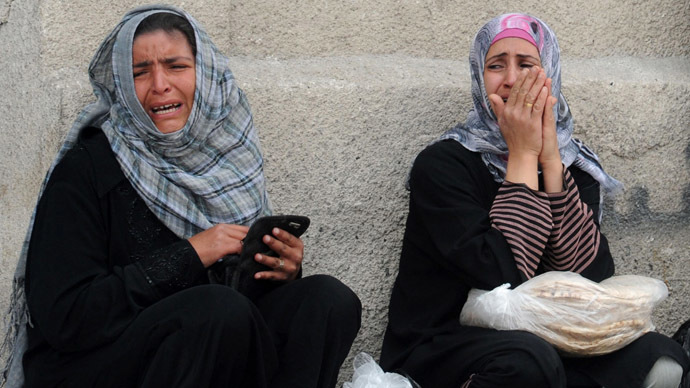
 Aletho News
