BBC Censors Video Showing Syrian Rebels Forcing Prisoner to Become Suicide Bomber
By Paul Joseph Watson | Infowars | August 23, 2012
The BBC has sensationally censored a news story and a video showing Syrian rebels forcing a prisoner to become a suicide bomber, a war crime under the Geneva Conventions, presumably because it reflected badly on establishment media efforts to portray the FSA as glorious freedom fighters.
The video, a copy of which can be viewed above (the original BBC version was deleted), shows Free Syrian Army rebels preparing a bomb that is loaded onto the back of a truck to be detonated at a government checkpoint in the city of Aleppo.
The clip explains how the rebels have commandeered an apartment belonging to a Syrian police captain. The rebels are seen sneering at photos of the police captain’s family while they proclaim, “Look at their freedom, look how good it is,” while hypocritically enjoying the luxury of the man’s swimming pool.
The video then shows a prisoner who the rebels claim belonged to a pro-government militia. Bruises from torture on the prisoner’s body are explained away as having been metered out by the man’s previous captors. The BBC commentary emphasizes how well the rebels are treating the man, showing them handing him a cigarette.
However, the man has been tricked into thinking he is part of a prisoner exchange program when in reality he is being set up as an unwitting suicide bomber. The prisoner is blindfolded and told to drive the truck towards a government checkpoint.
“What he doesn’t know is that the truck is the one that’s been rigged with a 300 kilo bomb,” states the narrator.
The clip then shows rebels returning disappointed after it’s revealed that the remote detonator failed and the bomb did not explode.
The BBC narrator admits that forcing prisoners to become suicide bombers “would certainly be considered a war crime.”
New York Times reporters who shot the video claim they had no knowledge of the plot. A longer version of the clip is posted on the New York Times You Tube channel. The title of the clip glorifies the rebel fighters as “The Lions of Tawhid”.

Within hours of the story being published, it was subsequently sent down the memory by the BBC. Attempts to reach the original article URL are greeted with a 404 Not Found page.
In addition, a You Tube version of the same video originally posted on the official BBC News 2012 channel was also removed. Although the You Tube page for the video states that it was removed after a “copyright claim by British Broadcasting Corporation” this is a bogus reason, because the video was not uploaded by a third party, it was posted on the official BBC channel, as the screenshot below proves.

“Copyright claim” is a bogus reason for the video’s removal because it originally appeared on the official BBC News Channel, and was not uploaded by a third party.
It seems clear that the only reason for the video to be removed would be because senior BBC news editors felt the story reflected badly on the propaganda campaign to characterize the Syrian rebels as venerable and proud freedom fighters, when in reality as we have documented they have been guilty of massacres, kidnappings, torture and other acts of brutality.
This represents a clear effort to hide evidence of Syrian rebels, who the Obama administration recently pledged to support with taxpayer dollars, engaged in war crimes.
In addition, the fact that the rebels, under the direction of Al-Qaeda fighters, are building bombs and carrying out terrorist attacks is something the NATO-aligned media is keen not to emphasize.
This is by no means the first time the BBC has been caught manipulating the news in an effort to propagandize for western military involvement in Syria.
Back in May we exposed how the BBC has used a years-old photo of dead Iraqi children to depict victims of an alleged government assault in the town of Houla.
The photographer who took the original picture, Marco Di Lauro, posted on his Facebook page, “Somebody is using my images as a propaganda against the Syrian government to prove the massacre.” Di Lauro told the London Telegraph he was “astonished” the BBC had failed to check to authenticity of the image.
Should the copy at the top of this article also be deleted, an alternate version of the BBC video with added commentary under fair use is embedded below.
Related articles
Cyprus displeased at reports that British bases provide help to Syrian rebels
Xinhua – August 23, 2012
NICOSIA – Cyprus said on Thursday it had asked Britain to give an official explanation for a Sunday Times report alleging that the British Sovereign Bases in Cyprus provide intelligence to Syrian rebels which helped them deal effective strikes against the Syrian army.
Foreign Minister Erato Kozakou-Markoulli told the state radio that she had instructed the Cypriot High Commissioner (Ambassador) in London to make a demarche to the British Foreign Ministry asking for official information on the report.
“It is a very serious issue if the Bases are being used for purposes other than those explicitly set out in the Treaty of Establishment,” Markouli said.
She said she expected a British reply by the end of the day.
Markoulli added that the 1960 Treaty of Establishment under which Cyprus was granted independence states that two bases retained by Britain can only be used for defensive purposes.
British paper the Sunday Times claimed on Sunday that British agents operating in the British bases were collecting intelligence on Syrian army movements which is then channeled through Turkey to forces fighting the the Syrian army.
A spokesman for the British High Commission in Cyprus on Monday refused to confirm or deny the report, citing the official government position not to comment on intelligence or operational matters.
NY state senator poses with weapon on Syria border

Photo released August 15, 2012 shows NY State Sen. David Storobin (L) and his chief of staff, Paul Gullo, (R) with Israeli Gen. Shmulik Olansky (C) on Syrian border
Press TV – August 19, 2012
A New York state senator has taken up arms while posing for a picture in an Israeli army uniform on the Syrian border during an official trip to Israel.
A New York state senator has been photographed with a weapon in his hands and posing for a picture in an Israeli army uniform on the Syrian border during an official trip to Israel.
A photo posted online on August 15 showed State Sen. David Storobin in an Israeli army uniform and with a rifle in his hands side-by-side with Israeli officers.
Storobin, who is running for reelection as a Republican, is seen standing next to Gen. Shculik Olansky, who is in charge of Israel’s Golan Heights Armor Division.
Storobin’s chief of staff, Paul Gullo, also appears in the image released by Storobin’s campaign.
The provocative move is the latest show of US support for armed gangs attempting to topple the Syrian government.
Syria has been experiencing unrest since March 2011. Damascus says outlaws, saboteurs, and armed terrorists are the driving factor behind the unrest and deadly violence while the opposition accuses the security forces of being behind the killings.
The Syrian government says that the chaos is being orchestrated from outside the country, and there are reports that a very large number of the armed militants are foreign nationals, mostly from Egypt, Algeria, Saudi Arabia, and Afghanistan.
Syrian Australians Demand an End to Foreign Intervention
By CHRIS RAY | CounterPunch | August 17, 2012
Sydney – Around 1500 people, mostly Australians of Syrian descent marched in Sydney on August 5, calling for an end to foreign intervention aimed at destroying the government of President Bashar al-Assad. The Australian media gave the march almost no coverage, unlike well-publicised though much smaller protests against the Syrian government.
It should surprise no one that large numbers of Syrians support the al-Assad government, with its promise of peaceful reform in a direction indicated by the May 2012 parliamentary elections (when, incidentally, the communists won additional seats), rather than the civil war on religious lines now in progress. One does not have to be an al-Assad supporter to suspect that his government’s immediate departure, as demanded by the rebels and their foreign backers, would create a power vacuum, fragment the country and result in far greater bloodshed.
For its Syria project the US has put together a powerful alliance embracing NATO through its Turkish spearhead, and Israel and its Gulf Arab de facto allies, particularly Saudi Arabia and Qatar. Intervention has ranged from sanctions and economic sabotage to funding and equipping foreign mercenaries and “boots on the ground” in the form of Western military advisers and trainers. The current goal appears to be regime change by promoting civil war rather than foreign invasion. But calls for a “No Fly Zone” along Libyan lines can now be heard – no doubt a precursor to another “humanitarian” bombing campaign.
Foreign forces are playing a substantial role in the campaign to topple the government. According to some assessments, foreign jihadis including Al Qaeda units from Yemen, Saudi Arabia, Iraq, Libya and Jordan are more effective, and engaged in more significant combat than the so-called Free Syrian Army. Al Qaeda is once again enjoying the backing of the ‘Great Satan’ patterned on their 1980s relationship in Afghanistan.
Foreign jihadis have admitted that they formed brigades to infiltrate Syria well before the first protests in early 2011.
Also instructive is the testimony of two Western photographers captured and tormented by a rebel group comprising fighters from Bangladesh, Britain, Chechnya and Pakistan – but no Syrians. Viewers of the ABC’s 7.30 Report on 7.8.12 would have seen a Chechen combatant in Syria threaten an ABC reporter.
We are not only talking foreign jihadi cannon fodder: “It is highly likely that some western special forces and intelligence resources have been in Syria for a considerable time,” says Colonel Richard Kemp, of the Royal United Services Institute which has strong connections to British intelligence services.
Some on the Left argue that the Syrian regime is unworthy of support because it is a dictatorship. Should the political form of the Syrian state absolve the Left of any responsibility to defend it against imperialist aggression? The al-Assad government is under attack by NATO, Israel and the Arab Gulf monarchies not for its denial of democracy, or harsh treatment of dissent, but because of its positive features: support for Palestinian and Lebanese resistance to Zionist expansion; refusal to join the US in isolating and impoverishing Iran; upholding a unique (in the Middle East) degree of religious tolerance and pluralism. For a visitor to Syria this commitment to freedom of religion – and rights for women – comes as a revelation in comparison to the reactionary US/British protectorates of the Arab Gulf. Such freedoms enrage the poisonously sectarian Sunni fundamentalists now sponsored in Syria by the West. Bin Laden always hated Shia Islam more than Zionists or the CIA.
For much of the anti-government opposition, regime change is about establishing Sunni dominance not democratic freedoms. They hate the regime because it is a heretical government responsible for a secular state with constitutionally guaranteed freedom of worship. The popular rebel slogan “Christians to Beirut, Alawites to their graves” raises the spectre of widespread ethnic cleansing – already underway with the expulsion of tens of thousands of Christians by the NATO-backed ‘Free Syrian Army’.
The fall of the al-Assad government is probably inevitable given the forces ranged against it. Some have predicted an Egypt-like power-sharing arrangement between the Muslim Brotherhood and secular nationalist ‘democrats’ will follow. However Syria’s religious and ethnic make-up is far more complicated than almost anywhere else in the region: a Sunni majority with numerous Muslim minorities (Shia, Alawite, Sufi, Ismailis) as well as Druse and several strands of Christianity – altogether about one third of the population. There are significant ethnic minorities such as the Muslim Kurds and Christian Armenians – descendants of refugees from Turkish genocide – as well as hundreds of thousands of Palestinian and Iraqi refugees, many of them Christians. These minorities do not share the cheerful assessment that the outcome of this war is likely to approximate post-Mubarak Egypt – itself now a more dangerous home for minorities.
The Syrian government is widely blamed for starting the war with unprovoked attacks on peaceful demonstrators. Western media spent most of 2011 denying the very existence of armed opposition, until the media narrative was recast to that of peaceful protests gradually morphing into armed revolt as a consequence of regime brutality.
The authorities’ initial response to opposition protests in March 2011 was brutal and inflammatory. But it is not contradictory to also acknowledge that government forces were under armed attack from the outset. Syrian TV was broadcasting footage of the funerals of military and police personnel killed by protestors in March 2011. My son who was living in Damascus viewed these reports and discussed them with locals. I saw similar Syrian TV coverage while in Jordan in April-May 2011.
Reporter Robert Fisk identified the murder of a boy by police as the spark for the initial March 2011 protest in Deraa. Fisk, no supporter of the regime, also pointed to the existence of video footage of gunmen on the streets of Deraa that same month and al-Jazeera footage of armed men fighting Syrian troops near the Lebanon border in April 2011. Fisk noted that Al-Jazeera television, cheerleader for the rebels, chose not to broadcast it. The station is of course owned by the emir of Qatar, a principal financier of the war against the Syrian government.
On 21 March 2011 Israel National News reported that seven policemen were killed in Deraa in mid-March.
As early as August 2011 the anti-regime, UK-based Syrian Observatory for Human Rights estimated that soldiers and police accounted for about one quarter of Syria’s death toll since the start of the uprising – a casualty proportion not likely to be suffered by an army ranged against unarmed protestors. SOHR, in a rare moment of candour conceded that some of the dead civilians were tortured and killed by regime opponents. This was before Al-Qaeda bombers began their work in co-ordination with the ‘Free Syrian Army’.
Most Syrians would possibly prefer a ceasefire and negotiations in order to avoid the catastrophic fate of Iraq and Libya. Yet the rebel leaderships and their foreign backers have sought only to prolong the fighting. Four weeks into Kofi Annan’s attempted ceasefire, the Washington Post reported: “Syrian rebels battling the regime of President Bashar al-Assad have begun receiving significantly more and better weapons in recent weeks, an effort paid for by Persian Gulf nations and coordinated in part by the United States, according to opposition activists and U.S. and foreign officials.” CounterPunch’s Patrick Cockburn was one of the few western correspondents to report the UN monitoring team’s observation that during the ceasefire “the level of offensive military operations by the government significantly decreased” while there has been “an increase in militant attacks and targeted killings”.
In Libya, war sold to the gullible as a humanitarian necessity has reduced North Africa’s only welfare state to an ungovernable ruin: where rival tribal militias fight perpetual turf wars, blacks are ethnically cleansed, ancient archaeological treasures plundered and the social gains of the revolution systematically erased. All this mostly goes unreported – a non-story now that Libya’s oil contracts are in safer hands (China and Russia need not apply) and Western weapons sales rejected by the murdered Gaddafi are back on the table.
Only the terminally naïve would recommend the Syrian people risk a repeat of the Libyan triumph.
Chris Ray is a Sydney-based Asia business analyst and journalist.
Related articles
- Peace still on table in Syria as China scrambles to set up talks (alethonews.wordpress.com)
UN replaces Syrian observer mission with civilian office
The United Nations Security Council has decided not to extend the body’s observer mission in Syria, setting up a civilian liaison office instead. Russia called for the Syria Action Group to meet in New York on Friday in response.
The Council’s members have agreed to UN Secretary-General Ban Ki-moon’s proposal to establish a liaison office in Damascus, France’s UN Ambassador Gerard Araud announced on Thursday following a Security Council meeting.
The new body will include military advisers to the head of the office on military affairs, as well as civil affairs and human rights components.
The exact size of the office is yet to be determined, but it will be significantly smaller than the current UN observer mission, peacekeeping department chief Edmond Mulet said.
“We are already identifying some staff already working there that will be willing to continue working in Damascus under this new office,” Mulet stated.
According to Mulet, the Syrian government has already given its agreement for the UN liaison office in Damascus.
Mulet also said he expected the new UN-Arab League Syrian envoy to be announced “very soon.” The new envoy will fill the shoes of Kofi Annan, who has announced his resignation effective August 31, noting that the conflict was spiraling out of control and that the Syrian government, rebels and incessantly-bickering Security Council members were to blame.
On Tuesday, a spokesperson for Annan said Syrian authorities have backed former Algerian Foreign Minister Lakhdar Brahimi, a veteran UN diplomat who had previously served as the UN’s representative for Afghanistan and Iraq, as the new UN Syrian envoy. Several UN diplomats said Brahimi has already accepted the post, but with an altered mandate and title. Brahimi also reportedly conditioned his acceptance on “strong support” from the Security Council.
Currently there are 101 military observers and 72 civilian staff working in Syria’s UN observer mission. The last observer is to leave the country by August 24, but the observers will stop all their duties after August 19, when the mandate ends.
Meanwhile, Moscow has invited the members of the Syria Action Group to meet in New York on Friday.
The purpose of the meeting is to ensure that the group’s members are committed to the consensus document signed in Geneva in June, Russian envoy to the UN Vitaly Churkin said.
“Foreign ministers of countries, members of the action group, agreed to certain things and they need to do those things,” Churkin stated.
The meeting will take place at 11 am somewhere at the UN headquarters, he added.
Related articles
US Realists, Neocons and the War in Syria

Pletka wants Washington to ‘stop subcontracting Syria policy.’ (C-SPAN)
By Ramzy Baroud | Palestine Chronicle | August 15, 2012
In US political circles, the Syria conflict is increasingly being presented as a discussion pertaining to Israeli interests. This attitude is not substantially different from the way US politicians and media weighed in on the Egyptian January 25 revolution and its aftermath. Egypt mostly matters because of the US-brokered Camp David treaty of 1979, which benefited Israel beyond all expectations. The treaty had ushered in a false period of peace; it turned Egypt into an American ally, largely alienating it from its Arab political context.
When it comes to US foreign policy in the Middle East, Israel represents a point of departure for many in the US political establishment. Neoconservative groups have long defined US foreign policy in the region. Their most crucial and unifying concern is Israel’s security and any threat, real or imagined, to Israel’s regional domination.
The neocons clustered through various organizations and think tanks. Most visible among them was the Project for the New American Century (PNAC), which included very influential foreign policy individuals. PNAC’s ‘vision’ was seen as the roadmap that guided George W. Bush in his war against Iraq, the sanctions against Iran, and the overall hostile relationship that defined (and continues to define) US foreign policy in the Middle East. Tainted by the disastrous foreign policy, PNAC folded, only to be reinvented two years ago with the advent of the Foreign Policy Initiative (FPI).
The neocons are duly challenged. Their critics in the establishments are the ‘realists’ (as described by former Secretary of State James Baker in a recent interview with Foreign Policy). The so-called realists are far less organized than the neocons. They were simply empowered by the latter’s mammoth failures. Now the neocons are making a comeback, thanks to the golden opportunities presented by ongoing conflicts throughout the Middle East.
“Our biggest threat today isn’t Syria, or even Iran, or Russia or China,” Baker told Foreign Policy. “Our biggest threat today is our own economy, and we cannot continue to be strong diplomatically, politically, and militarily and be weak economically” (August 9). Baker, of course, hasn’t completely abandoned Israel. The problem is that the pro-Israel camp is asking for a military intervention in Syria and an escalation against Iran, both of which come with a high political and financial price tag — one that the US cannot afford.
Another ‘realist’ is Aaron David Miller, a former US adviser on the Middle East (to six Secretaries of State) and a member of the US Advisory Council of Israel Policy Forum. Writing in the Philadelphia Inquirer on August 6, in an article entitled ‘Syria: Let’s Stay out of It’, Miller stated, “Syria today is a mess — but it’s a Syrian mess. Afghanistan and Iraq should teach us that America can’t control the world. It’s time for the United States to focus on fixing its own broken house instead of chasing the illusion that it can always help repair somebody else’s.”
However, this ‘realist’ estimation by Miller was further discussed in his article in Foreign Policy two days later. In ‘Winners and Losers of Syria’s Civil War,’ Miller argued that Israel was a possible winner in case of Bashar Al Assad’s fall.
“The good news for the Israelis is that Iran and Hezbollah will be weakened by Al Assad’s fall. The bad news is that like so much of the Arab Spring/ Winter, the impending transition brings with it enormous uncertainty.”
US intervention in Libya was a much easier decision for both neocons and realists. A letter was organized by the Foreign Policy Initiative and signed by 40 policy analysts, calling on President Barack Obama’s administration to arm Libyan rebels and to “immediately’ prepare for military action to bring down the Libyan regime under Muammar Gaddafi. The neocons’ calls at the time were hardly rejected as ‘unrealistic’. According to Jim Lobe, they were “a distinct echo of the tactics they pursued to encourage US intervention in the Balkans and Iraq.” Of course, they got what they asked for in Libya. Now, the neocons are pushing for another intervention in Syria.
“Washington must stop subcontracting Syria policy to the Turks, Saudis and Qataris. They are clearly part of the anti-Al Assad effort, but the United States cannot tolerate Syria becoming a proxy state for yet another regional power,” wrote Danielle Pletka, a leading neocon and vice-president of Foreign and Defence Policy studies at the American Enterprise Institute (Washington Post, July 20).
Despite immense hesitation from the Obama administration, the neocons are now trying to weasel in their version of an endgame in Syria. Their efforts are extremely focused and well-coordinated, making impressive use of their direct ties with the Israeli lobby, major US media and Syrian leaders in exile. Writing in CNN online, Elise Labott reported on a recent neoconservative push to upgrade American involvement in Syria, urging “the Obama administration to increase its support of the armed opposition” (CNN, August 1).
The ‘experts’ included Andrew Tabler of the Washington Institute for Near East Policy (WINEP), another pro-Israel conduit in Washington, established in 1985 as a research department for the influential Israeli lobby group, AIPAC. Obama obliged under pressure from the ‘experts’. According to CNN, he signed a secret order “referred to as an intelligence ‘finding,’ allow[ing] for clandestine support by the CIA and other agencies.”
More, On July 31, AIPAC urged all members of Congress to sign on a bill introduced by Ileana Ros-Lehtinen and Howard Berman. Entitled ‘The Iran Threat Reduction and Syria Human Rights Act (H.R.1905)’, the bill, if passed, “will establish virtual state of war with Iran,” according to the Council for the National Interest. The old neoconservative wisdom arguing for an unavoidable link between Syria, Iran and their allies in the region is now being exploited to the maximum. Their hope is to settle all scores left unsettled by the Bush administration.
US foreign policy in Syria is likely to become clearer once the signs of an endgame become easier to read. Until then, the neocons will continue to push for another campaign of intervention. For them, influencing the endgame in favor of Israel is much more beneficial than dealing with a divided country, which is ‘subcontracted’ to other regional powers, per Pletka’s unrelenting wisdom.
Related articles
- How much will America’s animus against Iran distort U.S. policy toward Syria? (alethonews.wordpress.com)
- The Yinon Thesis Vindicated: Neocons, Israel, and the Fragmentation of Syria (alethonews.wordpress.com)
Lebanese Clan Abducts Syrians, Turkish National
Al Akhbar | August 15, 2012
A clan in Lebanon has abducted a Turkish businessman and several Syrians it says are rebel fighters in retaliation for the kidnapping of one of their relatives by the rebel Free Syrian Army in Damascus.
More than 20 Syrians have been kidnapped by the Mokdad clan, said Maher al-Mokdad, a relative of Hassan al-Mokdad, the man he said was captured in Damascus two days ago by the Free Syrian Army, which is fighting President Bashar al-Assad’s rule.
In remarks to Lebanon’s National News Agency (NNA), he said “the snowball would grow”, warning “Qatar, Saudi Arabia and Turkey and their citizens”.
The apparent threat to kidnap nationals from countries backing the Syrian rebels quickly seems to have been realized. Among the hostages is a Turkish national, a diplomat in Lebanon said.
“He was here for business, arrived today, and was kidnapped near the airport,” the diplomat said, adding that there has been little progress so far in negotiations to secure the man’s release.
Lebanese Foreign Minister Adnan Mansour contacted Hatem al-Mokdad, another brother of Hassan, requesting that the captors release Turkish national Toufan Teyken.
Mokdad refused the request, insisting that Teyken will remain a hostage until Hassan is freed by Syrian rebels across the border.
In a video broadcast by al-Mayadeen, a Lebanon-based TV station, two men identified as members of the FSA were shown in the custody of masked gunmen from the Mokdad clan in green fatigues and armed with automatic rifles.
One of the detainees identified himself as a captain by the name of Mohammed, who said his role was to help supply the FSA. The other said he was his assistant.
Maher al-Mokdad, speaking to Reuters, said the abductions were a response to the capture of Hassan al-Mokdad in Damascus two days ago by the FSA. The rebels had said Mokdad had been sent to Syria by Lebanon’s Hezbollah, one of Assad’s regional allies. Hezbollah denied Mokdad was a member of the party.
The detained Syrians included a lieutenant who deserted from the Syrian army to join the rebels, but those who were not FSA members had been freed, he said. He gave no details of how or where the men were abducted.
He said Mokdad went to neighboring Syria more than a year and a half ago – that is, before the outbreak of the 17-month-old uprising against Assad – and had no links to the fighting in Syria. … Full article
Related articles
- Saudi Arabia, UAE and Qatar urge Lebanon exodus (altahrir.wordpress.com)
Peace still on table in Syria as China scrambles to set up talks
Global Times | 2012-8-15
According to Chinese Ministry of Foreign Affairs, Buthaina Shaaban, special envoy for and political and media advisor of Syrian President Bashar al-Assad, has been invited to Beijing Tuesday. The ministry also stated that it will invite members of the Syrian opposition to come to Beijing on a later date.
These moves are widely believed to be aimed at persuading the Syrian sides to get back to the negotiation table and solve their differences through a political solution. But such hopes suffered a heavy blow after UN Special Envoy Kofi Annan quit his job earlier this month. This has prompted observers to question the effectiveness of China’s mediation efforts.
China’s influence in the Middle East is certainly weaker than other major world powers like the US and Russia. It’s natural that there are doubts on what China can achieve through its talks with the Assad regime and the Syrian opposition. China’s efforts will not bear fruits instantly after just one round of talks.
However, China will keep trying. Solving the Syrian crisis through a political solution has always been China’s position. It will work to explore every possibility, however thin.
Though Annan has left the special envoy post, the UN hasn’t halted its mission. It has been actively seeking a replacement for Annan. The leaders of some Western countries, like French President François Hollande, have also agreed to solve the Syrian crisis through talk rather than war.
For China, a major supporter of the UN mission, its mediation efforts this time are intended to send a bold signal to the international community that the possibility of a political solution is still on the table, and that China is determined to continuously work with the UN to broker such a deal in Syria.
The US and some Western and Gulf countries are now exploring the option of imposing a no-fly zone in Syria, which, as witnessed in Libya, is an important step to enable foreign military intervention. China will need this mediation opportunity to counter that idea and to give undecided countries second thoughts on which approach is more feasible.
There are several issues that will pose serious challenges to efforts to broker a political solution.
First, making a political solution effective will require the cooperation of all parties in Syria. But at this stage, the will to get back to the negotiation table is weak on both sides. They have been pouring more efforts onto the battlefield than in setting up talks, because both believe that victory is within reach. The longer they are at war, the harder it will be for them to talk.
Second, the largely divided opposition makes it difficult for China or the UN to carry out effective mediation work. For instance, there is confusion in China as to which opposition group the Chinese government should make contact with.
While the Syrian National Council, based mainly outside Syria, is widely perceived as a representative of the rebel movement, does it truly have authority over groups and factions that have been operating inside Syria like the Free Syrian Army? Should China’s mediation also include representatives from other opposition groups?
While China is making its efforts, some countries are paving the way for military intervention, including supplying arms. The more weapons the opposition receives, the more confident they grow of an ultimate military triumph.
The opposition will increasingly prefer war over talks, but Assad won’t easily surrender either. This will eventually deadlock both sides in a cycle of conflict, blocking the way to a peaceful solution and risking more people’s lives.
Due to China’s lack of influence and channels to present its argument in full, its struggle to stop bloodshed in Syria has been constantly misinterpreted by some countries that are willing to throw Assad out at any cost and have been actively promoting their stance to the international community.
This will not only undermine China’s effort but even leave China isolated. Chinese policymakers should learn from this, and try to win understanding and support to its stance on Syria through various international platforms.
For instance, China can put forward this issue at developing country-orientated platforms like the Non-Aligned Movement or BRICS.
Most developing countries these days know that political reforms are a much better option than revolution induced by foreign intervention. China’s stance will win support there relatively easily.
By gathering such supports, China will not only find itself better positioned when confronted by similar issues, but also draw more nations to defend the UN principles from being violated by a few super powers.
This article was compiled by Global Times reporter Gao Lei based on an interview with He Wenping, director of the African Studies at the Institute of West Asian and African Studies at the Chinese Academy of Social Sciences. leigao@globaltimes.com.cn
Featured Video
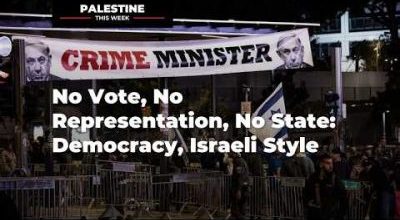
No Vote, No Representation, No State: Democracy, Israeli Style
or go to
Aletho News Archives – Video-Images
From the Archives
Sanctions, War and the Policy of Dual Containment
By SASAN FAYAZMANESH | March 17, 2008
It is now nearly three decades since the Unites States adopted the policy of dual containment of Iran and Iraq. While much has been written about the containment of Iraq, there has been very little in-depth analysis of this policy when it comes to Iran. In a book that is going to be released on March 31, 2008, entitled The United States and Iran: Sanctions, Wars and the Policy of Dual Containment (Routledge), I attempt to address this shortcoming by investigating when and why the US policy of containment of Iran came about, how it evolved, and where it stands today.[1] To the extent that Israel has been involved in US policy making, the study will also include the role that Israel has played in the containment of Iran. Also, since the fate of Iran has been inextricably linked to that of Iraq, occasionally the investigation will overlap with the containment of Iraq.
The policy of dual containment of Iran and Iraq originated during the Carter Administration, but it was not until the Clinton Administration that the expression “dual containment” became popular. … continue
Blog Roll
 Aletho News
- Elmo Sold mRNA Jabs to Your Toddler. Now They Are “Off-Label.”
- British state targets Palestine Action with yet another crooked trial
- Americans are paying the price to preserve Israel’s nuclear hegemony
- Resistance factions are necessary to ensure a permanent US Iraq withdrawal
- How Israel destabilizes the Middle East: Denying sovereignty and the right to exist
- Europe’s Establishment Is Embracing War – and Losing Voters
- NATO chief advocates war of aggression
- No Vote, No Representation, No State: Democracy, Israeli Style
- Zionist Bought Senate Blocks Information About American Citizens Killed By Israel
- While Gaza dominates the UN, these are the people keeping it alive
- If Americans Knew
- Israeli Soldiers Abduct At Least 22 Across Occupied West Bank
- Eight Palestinians Killed in Israeli Attacks on Gaza
- Israeli former leaders and security chiefs threaten legal action over ‘Jewish terrorism’
- Israel map in LA Times ad includes all land from the river to the sea
- Inside Lebanon’s 200-page dossier on Israeli war crimes
- Flydubai, genocide, settler violence, Trump abuse of power to deport – Daily Update
- Counting Antisemitic Incidents: What the ADL Audit Reveals — and Obscures
- Mamdani releases plan to combat antisemitism and hate crimes in New York City
- Iran’s Revolutionary Guards Publish Letter to the American People
- DMFI launches $1 million ad campaign supporting Virginia’s Elaine Luria
- No Tricks Zone
- Green Energy Debacle: German Expert Professor Fritz Vahrenholt Warns Of Severe Economic And Social Consequences
- Two More Paleo Reconstructions Affirm Meters-Higher Sea Levels Across Ireland, Brazil 7000-6000 Years Ago
- New Study: Earth And Venus Surface Warmth Largely Explained By Convection And Lapse Rate, Not CO2 Or Radiation
- 2025 Nature Paper Claiming Worsening Global Drought Gets RETRACTED …Heavily Flawed
- New Study: ‘Global Drought Shows No Detectable Recent Acceleration Under Climate Warming’
- Economic Masterminds: German Socialists Suggest Taxing Productivity Gains Stemming From Using AI
- The South China Sea Has Not Been Cooperating With The Climate Change Narrative
- Energy Crisis: Germany Enters Heating Season With Historically Low Gas Reserve Fill Levels
- New Study: The Antarctic Ice Sheet Gained Mass From 2020-2024 Due To Staggering Snow And Ice Accumulation
- Study: Ocean Heating Rates From Thousands Of Years Ago ‘Dwarf’ Modern Ocean Heating Rates

