In today’s fractured geopolitical landscape, energy flows are no longer governed by markets alone. They are shaped—often decisively—by politics. Nowhere is this clearer than in the unfolding crisis in the Strait of Hormuz, where Indonesia finds itself on the wrong side of a strategic divide.
As tensions escalate in the Middle East, Iran has adopted a selective approach to maritime access through the strait, one of the world’s most vital energy chokepoints. Rather than a blanket closure, Tehran has opted for a calibrated policy: friendly nations may pass; others must wait.
The consequences for Indonesia are immediate and stark. While countries like Malaysia, Thailand, China, India and Russia have secured safe passage for their tankers, two Indonesian vessels remain stranded. This is not a logistical hiccup. It is a geopolitical signal.
Iran’s own officials have made the logic explicit. Access is granted based on diplomatic alignment and strategic trust. Nations perceived as cooperative—or at least non-hostile—are accommodated. Others are left navigating uncertainty.
Indonesia, it appears, has misread the moment.
For decades, Jakarta prided itself on a doctrine of “free and active” foreign policy—non-aligned, pragmatic and flexible. That posture allowed Indonesia to engage multiple power centers without becoming entangled in their rivalries. But recent policy choices suggest a drift away from that equilibrium.
By signing the Agreement on Reciprocal Trade (ART) with the United States and joining the Board of Peace (BoP), Indonesia has moved beyond nominal non-alignment into visible proximity to the US orbit.
In Tehran’s eyes, these moves blur the line between cooperation and alignment. In a conflict environment defined by binary loyalties, even economic agreements and diplomatic platforms are read as strategic signals. In that context, perception is policy.
The cost of that perception is now measurable.
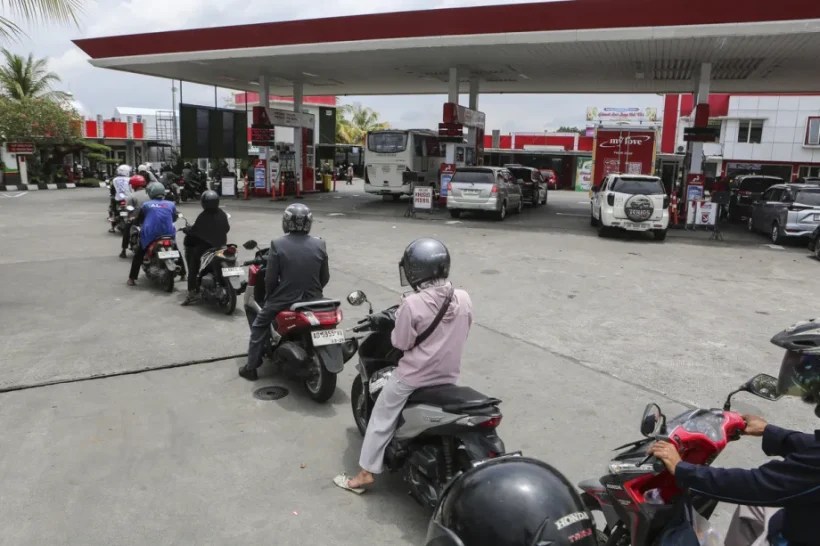
First, energy security. The Strait of Hormuz handles a significant share of global oil shipments, and disruptions there ripple across supply chains worldwide. If Indonesian tankers cannot pass freely, the country must source crude and liquefied petroleum gas from alternative routes—longer, riskier and far more expensive.
Shipping costs rise. Insurance premiums spike. Subsidy burdens swell. In a country where energy prices are politically sensitive, the fiscal implications are profound. What begins as a diplomatic miscalculation quickly becomes a budgetary strain.
Second, competitiveness. Malaysia and Thailand, having secured passage, are better positioned to maintain stable energy inputs and export flows. Their manufacturing sectors—already integrated into global supply chains—gain an advantage over Indonesia’s.
This is not just about oil. It is about the broader architecture of trade. Delays in energy supply affect production timelines. Disruptions in shipping lanes threaten exports of automotive components, industrial goods and commodities. In a tightly coupled global economy, reliability is currency—and Indonesia risks devaluation.
Third, macroeconomic stability. Higher import costs feed directly into inflation. A widening subsidy bill pressures public finances. And as external balances deteriorate, the rupiah faces renewed volatility. These are not abstract risks; they are the building blocks of economic stress.
All of this stems from a single, uncomfortable reality: geopolitics has overtaken economics.
Iran’s policy in the Strait of Hormuz underscores a broader shift in global order. Strategic chokepoints are no longer neutral spaces. They are instruments of leverage. Access is conditional. Neutrality, if not actively maintained, is easily questioned.
Indonesia’s response so far—continued negotiation and diplomatic outreach—may yet yield results. But negotiation from a position of ambiguity is inherently difficult. Other countries have secured passage not merely through dialogue, but through clear, consistent alignment in the eyes of Tehran.
Jakarta must therefore confront a difficult question: can it afford its current trajectory?
Recalibrating foreign policy does not mean abandoning partnerships or retreating into isolation. It means restoring balance. Indonesia’s strength has always been its ability to engage across divides—to be trusted by competing blocs precisely because it was not seen as belonging to any of them.
That credibility now needs rebuilding.
The immediate priority is practical: secure the release and passage of Indonesian vessels, stabilize energy supply and prevent further economic fallout. But the longer-term task is strategic. Indonesia must reassess its positioning in a world where neutrality is no longer assumed, but demonstrated.
The Strait of Hormuz crisis is a warning. It reveals how quickly global alignments can translate into tangible costs—and how vulnerable even large economies can be when geopolitical signals are misread.
For Indonesia, the lesson is clear. In an era of weaponized interdependence, foreign policy is no longer a distant abstraction. It is an economic imperative.
Tensions are rising on Thailand’s popular southern islands as locals express growing frustration over insulting and controversial behavior as well as illicit business activities of Israeli tourists, who have been visiting the country in markedly growing numbers.
Restaurant owners and business operators on Koh Phangan, one of Thailand’s most visited holiday destinations, have cited a surge in unruly conduct and unlicensed commercial ventures by Israeli visitors, Arab News, an English-language daily, reported on Sunday.
The discontented Thai nationals said the developments have fueled resentment among residents and strained local hospitality.
The report cited the owner of a Thai restaurant on the island as pointing to repeated incidents of disrespectful behavior from Israeli customers that prompted him to ban them altogether from his restaurant.
“After I asked one group of Israeli tourists to leave, I received more than 4,000 bad reviews — my restaurant’s rating dropped from 4.8 to 2.2 stars. It’s now been corrected, but that experience was really frustrating,” he said.
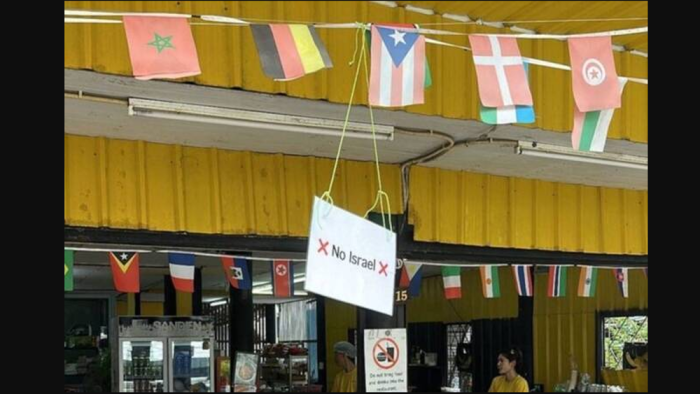
The restaurant now displays a sign reading “No Israel.” “I hate the repeated behavior I’ve encountered from many Israeli tourists — it happens so often that it led me to put up a ‘No Israel’ sign at my restaurant,” the owner of the restaurant said.
Videos shared on Thai social media in recent months have shown similar confrontations between locals and Israeli visitors.
In one viral case in May, a restaurant employee on Koh Phangan was heard telling an Israeli woman, “You’re not welcome here,” to which she replied, “My money builds your country.”
Beyond complaints of cultural disrespect, Thai business owners have also raised alarm over Israelis’ running unlicensed businesses on the islands, including restaurants, tour operations, and rental services, in violation of the Thai law.
A group of local business operators and residents recently submitted a petition signed by more than 200 people to the governor of Surat Thani Province in southern Thailand, urging authorities to curb “Israeli activities causing distress to local communities.”
Apiwat Sriwatcharaporn, assistant village chief in Koh Phangan, acknowledged the mounting concern. “If they just live or travel here, that’s fine,” he said. “But business operations should be done legally.”
According to Thailand’s Immigration Bureau, 2,627 Israeli settlers applied for visa extensions on Koh Phangan as of late September, making them the largest foreign group under investigation for potential illegal commercial activity.
A long-time local business owner also said tensions have intensified as the number of Israeli tourists has grown.
“They have very distinct characteristics as customers, like bargaining hard or being quite demanding,” he said.
“Before, they used to come alone, but now we see them arriving as families. That’s made the Israeli community on the island much larger, and it’s also intensified local frustration toward them.”
Observers have, meanwhile, noted that the influx has been raising more outrage since the launch of the Israeli regime’s war of genocide on the Gaza Strip in October 2023.
Dr. Manoch Aree, a political science lecturer at Srinakharinwirot University, a public university in Bangkok, said since the onset of the genocide, Israelis have been especially favoring Thailand as a tourist destination.
He put the trend down to, what he called, the country’s traditional apolitical environment and previous absence of anti-Israeli sentiment.
The genocide has been ensued by an unprecedentedly rising global tide of condemnation as well as anti-Israeli rallies and acts of protest.
An Israeli trooper involved in the genocidal war against Palestinians in Gaza was reportedly assaulted in Thailand last December.
The 22-year-old, who was identified as Ilay, was on a trip to the country when unidentified German tourists attacked him, Palestinian media outlets reported at the time.
Legal advocacy groups have filed an avalanche of lawsuits against the troops, demanding their detention and prosecution in their travel destinations.
Direct action groups have also been targeting overseas firms contributing to the Israeli military-industrial complex.
Dr. Aree said local Thais have come to complain about Israelis’ exploiting the country’s openness.
He noted reports of Israeli-run schools, so-called religious centers, and rehabilitation programs for troops operating privately and without transparency.
“This has led to fears among locals about why they are here and what they are doing,” he said. “The government’s intention to boost tourism has backfired, creating unintended negative consequences.”
When most people think of ASEAN – a diverse association of Southeast Asian nations that include Brunei, Cambodia, Indonesia, Laos, Malaysia, Myanmar, the Philippines, Singapore, Thailand, and Vietnam – they picture Thailand’s beaches, Singapore’s gleaming skyline or Indonesia’s temples.
What they don’t see is an economic juggernaut that will drive some of the planet’s largest growth in energy demand. Vietnam has emerged as a global manufacturing hub. Indonesia processes the world’s nickel for electric vehicle batteries. Thailand manufactures automobiles for export across Asia. Each of these economic engines demands reliable, affordable electricity that operates 24 hours a day, seven days a week.
In fact, 2023 witnessed a demand increase of nearly 45 terawatt-hours (TWh), an amount of energy that must be generated, transmitted regionally, and delivered locally on a continual basis. Where did this new power come from? Coal. An astonishing 96% of that new demand was met by coal-fired power plants.
Let that sink in. Coal, the energy source routinely demonized in Western capitals and at global climate summits, met nearly all the region’s new electricity needs. This reality stands in direct contradiction to rosy predictions of a transition to “renewables” manufactured by highly compensated executives at elite consulting firms who have spent the better part of a decade selling energy fairy tales to governments and investors.
Indonesia alone added 11 TWh of coal-generated electricity in 2023, while its electricity demand rose by 17 TWh, with coal meeting two-thirds of this increase. The Philippines generates more than 60% of its electricity from coal, and Malaysia and Vietnam each around 50%.
Ultra-supercritical coal technology – using extraordinarily high temperatures and pressures and pioneered at Malaysia’s Manjung plant and Indonesia’s Batang facility, delivers higher efficiency than older coal plants. These advanced facilities demonstrate that coal technology continues to improve while wind and solar remain dependent on weather conditions and the time of day.
The wind and solar share across ASEAN remained a pitiful 4.5% in 2023. This minuscule contribution exposes the bankruptcy of consultants’ promises of “renewables” dominating the regional power mix by mid-2020s.
Coal’s dominance in recent years is not an accident; it is a necessity. Indonesia, the region’s economic giant, leans on coal to power its export-driven industries, including nickel for EV batteries. Vietnam’s manufacturing boom, lifting millions into the middle class, runs on coal’s steady output. Malaysia and the Philippines, too, rely on coal to sustain their growing economies. Even Singapore, a global hub of innovation, depends on coal to maintain its energy security.
Yet, to focus solely on the power grid is to miss the forest for the trees, as electricity is just one component of total energy consumption. Electricity represents only a fraction of total consumption across ASEAN. The larger picture is primary energy consumption, which includes fuel for transport, industry and heating.
Oil, natural gas and coal collectively hold the major share of ASEAN’s primary energy mix, with oil leading consumption patterns across transportation and industrial sectors. Factories, petrochemicals, shipping, aviation, and agriculture all consume fossil fuels in large quantities.
ASEAN countries are committing hundreds of billions of dollars to fossil fuel infrastructure that will operate for decades. Coal plants have an average lifespan of 40 years. These capital investments create long-term commitments to hydrocarbon use that extend far beyond current political cycles.
Nineteen projects across Malaysia, Vietnam, Brunei, Indonesia, and Myanmar hold more than 540 billion cubic meters of recoverable gas. Countries don’t spend billions developing gas fields if they plan to abandon fossil fuels within the next decade.
ASEAN’s embrace of coal is about more than just keeping the lights on. These nations aren’t chasing arbitrary climate targets; they’re building the infrastructure of their future and prosperity for people.
Every new airport, every new highway and every new factory is a testament to the power of coal. To argue against coal is to oppose the physical manifestations of progress. The “green” agenda, by seeking to eliminate coal, demands that the developing world stop building – an ultimatum that ASEAN is rightly and wisely ignoring.
Washington’s calls to dial-down tensions between Cambodia and Thailand have few takers.
In recent weeks, cross-border hostilities between the two Southeast Asian powers have intensified sharply, with exchange of heavy artillery, Thai airstrikes on Cambodian military targets, and rising casualties, tossing the Association of Southeast Asian Nations (ASEAN) into a tough spot. The root of the crisis goes back over a century, and the absence of a clear floor beneath tensions underlines the gravity of a situation with the potential to flare up.
“Cambodia asked for an immediate ceasefire, unconditionally, and we also call for the peaceful solution of the dispute,” stated Cambodia’s ambassador to the UN, Chhea Keo, during a closed-door UN Security Council meeting this week.
But Washington’s calls for calm and restraint deserve considerable pushback, given its history of fueling geopolitical tensions and unwarranted military adventurism when expedient.
First, Washington’s alignment with Thailand – a key US partner – defeats the idea of credible neutrality. In order for the Trump administration to practice any meaningful leverage, it must first demonstrate that Washington has succeeded in coordinating expectations among diverse Southeast Asian nations to the benefit of regional peace.
This is where the posturing falls flat. Washington has spared no effort to complicate so-called “freedom of navigation” operations in the Indo-Pacific, and while it commits in rhetoric to ASEAN’s more cooperative Indo-Pacific strategy for stability, its endorsement of counterproductive groupings such as AUKUS and the Quadrilateral Security Dialogue (QUAD) suggests a penchant for escalation. Resolving the decades-old Cambodia-Thailand border challenge demands initiative from the outset: where were loud US appeals for de-escalation when competing accounts of soldier deaths eroded cross-border trust? A demonstrated track-record of preventing simmering hostilities in the current context is notably absent, presenting a compelling case for Cambodia, Thailand, and ASEAN to downplay US intent.
Washington’s interventionist role in the Philippines-China tensions is another major proof point for deliberate escalation. Washington, which claims to promote the stability of the Indo-Pacific, has been pressing Manila to hold tight to the US-supplied Typhon missile system, conducting counterproductive drills, and acting as a legal outlier on issues of genuine stability concerning the South China Sea. For the Trump administration, to stick its neck out for Cambodia or Thailand is thus a mirage at best. ASEAN has been tasked with promoting its policy of “non-interference” to resolve any conflicts through peaceful means, and skepticism over that role from Thailand suggests that the situation is far more delicate than what empty US calls for de-escalation indicate.
Had this conflict involved US assets, or considerable stakes – be it economic or geopolitical interests geared towards China – the outcry and regional alarm from US hawks would have been striking. This has been reflected in Washington’s reported push for dangerous war-gaming with Manila and Tokyo over a so-called “Taiwan” contingency, which it sees as a way to justify US missile unit deployment. With these glaring shortcomings on regional peace, penchant for military escalation, and geopolitical signaling occupying the core of US policy priorities in the region, US calls for a ceasefire in the current crisis mean little.
Actual leverage can stem from entities beyond the US. ASEAN, under Malaysia’s chairmanship, has been quick to promote momentum towards a ceasefire proposal – and early support from Thailand and Cambodia suggests it could break ground if hostilities settle. ASEAN has what the US does not: a track record of forging consensus on peace-building, the support of major regional powers – including China – and demonstrated autonomy on matters that concern regional stability or possible escalation. These priorities were on display during early consensus-building during the crisis in Myanmar – an event that the Biden administration targeted with sanctions, only to empower parts of the military junta.
China’s considerable economic and political ties with Thailand and Cambodia also drill a hole in Washington’s confidence to see an effective solution through. One of the reasons why reliance on US conflict-resolution should remain minimal is because Washington is likely to operate from the sidelines, rather than assume a more direct role in bringing parties together. For instance, any acceptable solution would likely require the blessings of ASEAN, which is unsettled by the idea that two of its member states are on the brink of war.
On the other hand, China’s recent flurry of engagements with Southeast Asian powers – including on the topic of enduring regional stability – make it a more influential stakeholder in coordinating or managing expectations for long-term peace. Particularly when ASEAN has endorsed China’s “crucial role in promoting peace, stability, prosperity, and sustainable development in regional and international affairs” at a major trilateral summit in May.
Thus, for a retreating US administration to tout peace against a track record of aggression and belligerence is a recipe for further unrest. US platitudes, as witnessed in the past, are reminders that Washington is more of an irritant rather than a driver of peace.
The current clash between Thailand and Cambodia is more than an isolated episode of instability; it is a direct reflection of the accumulated tension between two civilizations descended from ancient empires. The battleground, the temple of Preah Vihear, goes beyond a mere territorial dispute: it is a spiritual, political, and historical symbol that has reemerged as a focal point of a conflict with deep roots. Behind the artillery fire and border skirmishes lies an old rivalry dating back to the decline of the Khmer Empire and the rise of Ayutthaya — a clash between two legacies that helped shape Southeast Asia.
Located in the Dângrêk Mountains, the temple of Preah Vihear was initially built in the 9th century by King Jayavarman II, founder of the Khmer Empire, with the purpose of worshiping Shiva and consolidating the doctrine of devaraja, the divine kingship of the ruler as an absolute sovereign. Although Cambodia’s historical path later embraced Theravāda Buddhism, the temple never lost its symbolic value. For Cambodians, it represents the spiritual continuity of their nation. For Thais, descendants of the conquering Ayutthaya Empire, the site retains elements of a shared heritage they also claim as their own. Throughout the 20th century, and especially following the colonial border demarcations imposed by European powers, this small enclave became a persistent flashpoint, reigniting nationalist passions on both sides.
But it is not just history that fuels the present. The current context contains explosive elements. Thailand, though formally part of BRICS+ and economically aligned with China, still maintains strong ties with the West and is embroiled in a complex internal struggle for power between civilians and the military. The recent suspension of Prime Minister Paetongtarn Shinawatra, following embarrassing leaks related to the border conflict, has undermined the authority of the civilian government and brought the military back into the spotlight. The Thai army, frequently involved in coups and weakened by recent scandals, may have seen in this confrontation an opportunity to reassert its position before the national public. Launching a limited offensive against a weaker neighbor like Cambodia could be interpreted as an attempt to boost morale and reclaim control over the nationalist narrative.
On the other side, Cambodia remains a strategic partner of China in the region, deepening its economic and military dependence on Beijing. Infrastructure projects like the canal linking Cambodia’s interior to the sea — bypassing the delta controlled by Vietnam — carry significant geopolitical implications. Beijing sees Phnom Penh as a loyal ally in the Southeast Asian chessboard, reinforcing Cambodia’s resolve not to yield to Thai pressure — especially when what’s at stake is a symbol of national identity. Despite the imbalance in military capabilities, Cambodia is relying on international diplomacy and historical symbolism to hold its ground.
This escalation, therefore, is not the product of external manipulation (though such influence exists and plays a role), but of an autonomous process deeply embedded in the national psyches of both peoples. It is a conflict where religion, military pride, domestic politics, and civilizational memory interlace in complex ways. The temple on the contested border is not just a stone structure atop a mountain, but a mirror of Southeast Asia’s soul — a soul torn between a glorious past and a turbulent present.
In times of global security crises, historical and local tensions more easily erupt into open conflict. The conflict in Asia is not a direct result of NATO–Eurasia tensions, but it is influenced by them — and thus, it could soon become a new theater for great power confrontation.
The outcome remains uncertain, but what is clear is that the ghosts of history continue to shape the present.
Earlier on Thursday, there was an escalation of clashes between troops of Thailand and Cambodia on the border, which began with a shootout between ground forces in a disputed area.
The US sees the Thailand-Cambodia escalation “through the lens of divide and rule,” Brian Berletic, geopolitical analyst and former US Marine, told Sputnik.
He warned that if the conflict spirals out of control, it could add to regional conflicts the US is also playing a hand in.
“It will create regional instability, slow growth and development, and give the US an opportunity to reassert influence over the region,” Berletic pointed out.
The analyst noted that the standoff sets back the very economic and political unity China has encouraged across the region. That unity allowed many regional nations “to work out from under generations of Western primacy and outright colonialism,” according to him.
“While both the US and China see the region as a sphere of interest – China sees it through the lens of cooperation and joint development,” Berletic emphasized.
China enjoys close relations with both Cambodia and Thailand, he stressed, adding that Chinese authorities “will almost certainly encourage peace and stability and a quick resolution of the conflict.”
The demand by the Bangladesh Nationalist Party for extradition of the deposed Prime Minister Sheikh Hasina from India comes as no surprise. The party is apprehensive that the current antipathy toward Hasina in the country may dissipate sooner than later once the joyous ‘second revolution’ in the country collides with the sobering reality that the complex problems of development in Bangladesh are intractable and the expectations are pitched sky-high.
An analogous situation would be what’s happening in Georgia. The fizz went out of the 2003 US-backed ‘Rose revolution’ a long time ago. During its first decade, Georgia went through several political crises. Waves of protest erupted as the economy tanked, corruption and venality deepened, rule of law tumbled, and the misrule and anarchic conditions brought the country down on its knees. The icon of the colour revolution, Mikhail Saakashvili, was literally driven out of power into exile. The party that emerged out of the wreckage of the colour revolution in a free and fair election, Georgia Dream, sought rapprochement with Russia, as realisation dawned that Georgia’s future was in good relations with its giant neighbour.
Washington recently tried to repeat the colour revolution, but Tbilisi countered it ingeniously by enacting a law that all foreign contributions to NGOs must be audited—exposing in one stroke the fifth column and sleeper cells. Georgians made the point that they have had enough of colour revolutions.
These are early post-revolution days in Bangladesh. The twenty-something starry-eyed students are now aspiring to form a new political party to rule the country of 170 million. Meanwhile, criminal cases are being filed against Hasina. The powers that be seem to fear that, some day, Hasina may stage a comeback. In reality though, what they have to guard against is something entirely different.
For, the chronicle of colour revolutions tells a sordid tale of failed states. Next door, Myanmar is in the US’s crosshairs, where they are financing and arming an insurgency with Western mercenaries providing expertise. Last Friday, two senior US officials met in Washington virtually with the shadow of Myanmar’s National Unity government consisting of an opposition that is willing to act as proxies, politicians and a clutch of ethnic rebel groups.
According to the US state department, the two officials “reiterated that the United States will continue to expand direct support and assistance to pro-democracy actors” including to “develop concrete steps towards a full transition to civilian governance that respects the will of the people of Burma”.
One of the two officials was Tom Sullivan—White House National Security Advisor Jake Sullivan’s little brother—who is a senior advisor to Secretary of State Antony Blinken and holds the position of deputy chief of staff for policy at the state department. The second official was Michael Schiffer, assistant administrator of the USAID bureau for Asia, a former Pentagon official who handles Indo-Pacific strategy, crafting new plans for engagement in central and southeast Asia. The consultations on Friday messaged unambiguously that the Myanmar file is a priority in the Indo-Pacific strategy and the US is robustly pushing the regime change agenda.
Colour revolutions take myriad forms. If in Georgia—and more recently in Hong Kong and Thailand — it appeared in the classic mould of non-violent street protests, in Ukraine in 2014 it took a hybrid form where agents provocateurs secretly positioned in the Kiev city square opened fire in the night of February 20 and killed 108 civilian protesters and 13 police officers. That gruesome incident in mysterious circumstances became the tipping point as democratically-elected President Viktor Yanukovych lost nerve and fled in panic.
When it comes to Myanmar, the US is instigating regime change through a guerrilla war. After Afghanistan and Syria, this is the first time Washington is using the technique of insurgency. But sanctuaries are needed next door for staging insurgencies—like Pakistan and Turkey in the earlier cases.
Hence the importance of the northern borderlands of Thailand, which is part of the Golden Triangle, a large mountainous region that gives cover to the drug mafia and human traffickers, and has a sizeable refugee population from Myanmar. But the attempted colour revolution in Bangkok got squashed through constitutional methods by the entrenched ruling elite. Therefore, the regime change in Bangladesh has come as a windfall for Western intelligence.
The encirclement of China with unfriendly states is the unspoken agenda of the US. Chinese Foreign Minister Wang Yi’s visit to Myanmar and Thailand last week highlighted the criticality of the situation. Wang Yi called the situation “worrying”, and suggested that neighbouring countries should promote cooperation with Myanmar to create economic and social conditions that prevent conflict. He said neighbouring countries “sitting in the same boat and drinking water from the same river” have a better understanding of Myanmar’s situation than others.
If Bangladesh gets sucked into the conflict in Myanmar, the security implications for India can be very daunting, especially due to the religious dimension, what with the Rohingya refugee problem and the activities of Christian evangelicals in the remote tribal tracts in the region. There is a high probability that the collapse of the state structure may result in the eventual fragmentation of Myanmar. It is extremely short-sighted to imagine that Myanmar is China’s problem, not India’s.
Suffice to say, the regime change in Bangladesh will destabilise India’s eastern periphery. It is a moot point whether the US agenda in Bangladesh is ‘India-centric’. American geo-strategies invariably serve American interests, and are impervious to the collateral damage they inflict on others.
The Biden administration wasn’t punishing Germany, America’s closest NATO ally, by destroying the Nord Stream gas pipelines; rather, it was burying in the seabed a potential Russian-German alliance in the heart of Europe. Similarly, Washington should have no conceivable reason to punish rising India; rather, American officials keep saying that the partnership is among the “most consequential in the world”. With the US’s towering presence in the Bay of Bengal, India must constantly guard against the fate of Icarus in Greek mythology.
The curtain has come down on the abortive colour revolution in Thailand with the country’s Constitutional Court ordering the dissolution on Wednesday of the anti-establishment opposition party Move Forward, widely regarded as a US proxy.
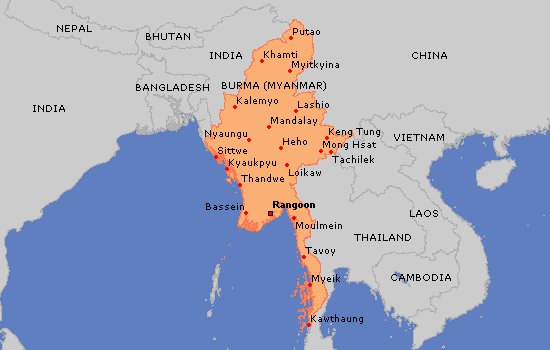
It coincides with the stunning success of the hastily staged colour revolution in Bangladesh and the fall of the key military base of the Myanmar army’s Northeast Command in Lashio in the Shan state over the weekend to the Myanmar National Democratic Alliance Army, the rebel groups armed, financed and trained by the Western intelligence.
The Shan people who belong to the Tai ethnic group of Southeast Asia are the biggest minority of Myanmar (10% of the population) and they have cultural affinity with the Northern Thai peoples and also have a significant presence in the adjacent regions of Assam and Meghalaya in India.
The capture of Lashio by the alliance of militias of ethnic minority groups supported by the western intelligence is seen as a serious blow to the regime in Myanmar, which enjoys the backing of the military leadership in Thailand and is a strong ally of Russia.
Lashio is situated on an important trade route and is about 100 kms only from the Chinese border. Newsweek magazine in a report titled China Faces Growing War on Its Border cited an expert opinion of the Washington-based United States Institute of Peace think tank (which is wired into the US intelligence establishment) that:
“From China’s vantage point, the escalation of the conflict is a major setback in terms of its interest in… getting the belligerent parties to establish further deals to reset trade between the China border and Mandalay.
“China seems very concerned, as it will be very difficult for the Myanmar military to bounce back from this setback, yet the Myanmar military is not signalling a desire to return to the table or an interest in making significant concessions to the northern EAOs (alliance of tribal groups), which is what China has been pressuring it to do.”
According to latest reports, American and British “volunteers” have been lately joining the ranks of the rebels fighting the Myanmar military — although, these are early days and Myanmar has not experienced yet the same wave of international volunteers seen in conflicts such as Ukraine or Syria, and there are no coordinated efforts apparent to enlist foreign recruits.
The Myanmar military supremo General Min Aung Hlaing has alleged that the rebel alliance is receiving weapons, including drones and short-range missiles, from “foreign” sources. “It is necessary to analyse the sources of monetary and technological power,” he said. Myanmar’s military has 14 regional commands across the country, and the Northeast Command is the first to fall to armed rebel groups.
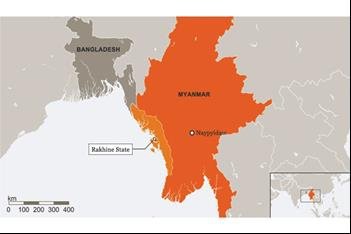
Meanwhile, the Arakan Army (AA) — a powerful ethnic armed group which is fighting to establish an independent Rakhine polity in western Myanmar — has been on the move committing atrocities against the Rohingya minority population taking advantage of the military’s current overstretch.
AA has made significant gains in Rakhine State in the recent months and reportedly exercises control over more than half of the state’s 17 townships. By the way, the Arakanese people also exist in Bangladesh’s Chittagong Hill Tracts and in India’s Tripura state. (Interestingly, Arakan Division was originally a part of British India.)
Coming back to Bangkok, the Thai generals are evidently circling the wagons sensing the Time of Troubles ahead as the Five Eyes is creating a cauldron in Myanmar that can ensnare the neighbouring regions. Bangkok, a western ally previously, is traditionally a hotbed of western intelligence — Five Eyes — and the authorities are well aware of the resentment in the US that their ties with Beijing have expanded and deepened and assumed a strategic character in the recent years.
The unkindest cut of all is that Thailand (along with Malaysia) has formally applied for membership of the BRICS, which carries huge resonance in the geopolitics ofsoutheast Asia and the ASEAN and impacts the regional balance at a juncture when the US is striving to create an anti-China bloc.
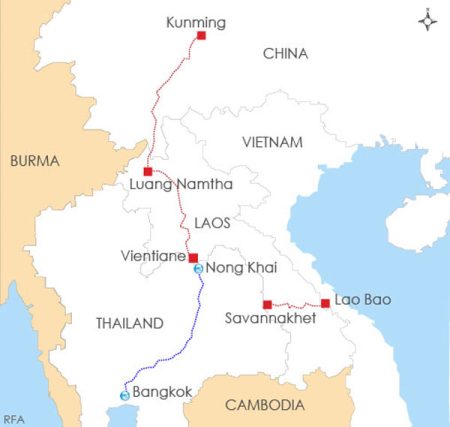
Thailand is a keen participant in China’s Belt and Road Initiative. From a long term perspective, the 873-km high-speed rail project connecting Bangkok with Kunming, capital of China’s Yunnan province, via Laos is expected to be operational latest by 2028.
The railway project, estimated to cost anywhere up to $10 billion will not only enhance regional connectivity but profoundly reset the economic geography of Asia, given its massive potential for accelerating the increased integration between China and the ASEAN countries. People would be able to travel between Kunming and Bangkok by train for about $100, which is half to a third of the cost of an airline ticket. According to Xinhua, the railway is expected to bring two million more Chinese tourists to Thailand every year.
Washington is livid that its proxy, Move Forward led by a young man educated in the US and groomed to spearhead a colour revolution, has been banned. The Thai authorities understand that the western intention is to break up the ancient crust of their country’s polity, which is the only way to make inroads into what is otherwise a deeply Buddhist culture — specifically, to demolish the so-called lèse-majesté law protecting the institution of monarchy, an institution that dates back more than 700 years and is a pillar of stability in the country symbolising the unity of the Thai communities. By the way, Christian missionary work is active in both Thailand and Myanmar — as in next-door north-eastern region of India. And the evangelicals are an influential pressure group in the US politics.
The Thai authorities have shied away from confronting the US. Thai culture values serenity and avoids conflict and displays of anger. Even disagreements are to be handled with a smile, without assigning blame. Hence the circuitous route to squash Move Forward on legal grounds.
Move Forward won 151 seats in the 500 member parliament in the elections in May last year where sixty-seven parties contested, but was unable to form a coalition government after being functionally blocked by allies of the monarchy and military. Move Forward made the electoral pledge to abolish lèse-majesté law (which is tantamount to a crime.)
The US and its allies are furious but cannot do anything about the development. All the good work to stage a colour revolution in phases has come to naught. The exasperation shows in the statements from Washington and Canberra. (here and here)
However, all is not lost. The regime change in Bangladesh may open a new pathway for the western intervention in Myanmar. India and Thailand refused to back the western-backed rebels fighting the Myanmar military. Former Bangladesh Prime Minister Sheikh Hasina also stayed away from the power struggle in Myanmar. But that may change.
The Rohingya issue provides an alibi. The ascendance of Pakistani intelligence and the larger-than life role of the Jamaat-i-Islami will trigger an assertion of Bangladesh’s Muslim identity. The Pakistani army chief lost no time to underscore that the developments in Bangladesh underscore the raison d’être of the two-nation theory!
So, the regime change in Bangladesh may turn out to be a game changer for the West’s regime change agenda in Myanmar. On the other hand, at the secondary and tertiary level, any strengthening of the western-backed rebel alliance in Myanmar cannot but cast shadows on India’s northeast, which has a large Christian population with tribal affinities across the border.
An awareness is lacking that any weakening of Thailand’s state structure or the dissipation of Thai culture rooted in Buddhist traditions will isolate India in the region’s civilisational tapestry. Indians tend to take an episodic view of current events in their immediate neighbourhood.
Prior to the rise of Theravada Buddhism, both Indian Brahminical religion and Mahayana Buddhism were present in Thailand, and influences from both these traditions can still be seen in present-day Thai folklore. A colour revolution in Thailand leading to western dominance and the eclipse of the Thai monarchy and Buddhist cosmology would have profound implications for South Asia.
The Islamic Resistance Movement Hamas expressed its regret over the statement issued by the White House, signed by 18 countries, calling for the release of the hostages in the Gaza Strip.
The movement conveyed on Friday that the statement: “Did not address basic issues for our people who are suffering under the burden of a comprehensive genocidal war and did not stress the need for a permanent ceasefire and the withdrawal of the occupation army from the Gaza Strip. This is in addition to the ambiguity surrounding other issues.”
Hamas stressed that it is: “Open to any ideas or proposals that take into account the just needs and rights of our people, represented by a complete cessation of the aggression against them, the withdrawal of the occupation forces from the Gaza Strip, the unconditional and unrestricted return of the displaced, reconstruction, lifting the siege, and moving forward with reaching a serious prisoner exchange deal through the Palestinian people receiving their full legitimate national rights by self-determination, and establishing their independent Palestinian state with Jerusalem as its capital.”
Hamas called on the US administration, the countries that signed the statement and the international community: “To lift the lid on the crime of genocide committed by the Zionist enemy against children and defenceless civilians in the Gaza Strip, and to put pressure to end it, as an urgent priority.”
On Thursday, 18 countries called for an end to the crisis in the Gaza Strip and the establishment of peace and stability in the region.
This came in a joint statement on behalf of the leaders of the US, Argentina, Australia, Brazil, Bulgaria, Canada, Colombia, Denmark, France, Germany, Hungary, Poland, Portugal, Romania, Serbia, Spain, Thailand and the UK, published on the White House website.
The statement demanded: “The immediate release of all hostages held by Hamas in Gaza for over 200 days. They include our own citizens. The fate of the hostages and the civilian population in Gaza, who are protected under international law, is of international concern.”
The countries’ leaders who signed the statement emphasised that: “The deal on the table to release the hostages would bring an immediate and prolonged ceasefire in Gaza,” without mentioning the deal’s details.
Throughout the 21st century, the United States has invaded and occupied multiple nations, including Afghanistan in 2001, Iraq in 2003, and Syria in 2014. It has also led to military interventions rendering once prosperous nations into failed states, including Libya from 2011 onward.
Beyond this more destructive and direct approach, the US has also admittedly interfered in the internal political affairs of other nations, attempting to overthrow elected governments and install client regimes in their place.
In a 2004 Guardianarticle titled, “US campaign behind the turmoil in Kiev,” it admitted (emphasis added):
… the campaign is an American creation, a sophisticated and brilliantly conceived exercise in western branding and mass marketing that, in four countries in four years, has been used to try to salvage rigged elections and topple unsavoury regimes.
Funded and organised by the US government, deploying US consultancies, pollsters, diplomats, the two big American parties and US non-government organisations, the campaign was first used in Europe in Belgrade in 2000 to beat Slobodan Milosevic at the ballot box.
Richard Miles, the US ambassador in Belgrade, played a key role. And by last year, as US ambassador in Tbilisi, he repeated the trick in Georgia, coaching Mikhail Saakashvili in how to bring down Eduard Shevardnadze.
Ten months after the success in Belgrade, the US ambassador in Minsk, Michael Kozak, a veteran of similar operations in central America, notably in Nicaragua, organised a near identical campaign to try to defeat the Belarus hardman, Alexander Lukashenko…
This startling admission exposes the US government as deeply involved in interfering in and subverting the political independence of not one, but multiple, nations in Eastern Europe.
The same article admits that the US government achieves this through funds distributed by the National Endowment for Democracy’s (NED) many subsidiaries, including the International Republican Institute (IRI), National Democratic Institute (NDI), and Freedom House. It also mentions adjacent private foundations like George Soros’ Open Society Foundation.
The admitted interference aimed at regime change and the political capture of targeted nations – where roles reversed, and it was the US or its allies targeted by such interference by say Russia or China – would elicit an immediate and severe response. Already, the collective West possesses some of the strictest laws regulating foreign interference.
The United States maintains the Foreign Agents Registration Act, established all the way back in 1938, requiring foreign-funded organizations to register with the US government and disclose their funding or face severe penalties including lengthy jail terms.
It is no surprise that many other nations around the globe have adopted similar legislation. After all, a nation’s political independence is guaranteed under the United Nations Charter, as is a nation’s right to defend it.
Other nations who have failed to pass such legislation have found themselves overwhelmed by US and European-funded organizations and opposition groups who are able to block or push agendas, including legislation, suiting Western interests at the explicit expense of the targeted nation.
The temptation of these nations to pass long-overdue legislation to put in check Western interference the West itself would never tolerate within its own borders, is high, and several nations have attempted to do so in recent years.
Target Georgia
The Caucasus nation of Georgia is now in Western headlines for trying to do exactly this.
Having already suffered immensely from both US and European interference but also political capture and use by the West in a disastrous but short proxy war with neighboring Russia in 2008, some in the capital of Tbilisi are eager to finally close loopholes that have allowed foreign-fuelled subversion to flourish.
CNN in its recent article, “Georgia presses on with Putin-style ‘foreign agent’ bill despite huge protests,” ironically attempts to conflate Georgia’s legitimate desire to root out foreign interference with a nebulous inference of “Russian” interference instead. Nowhere is it mentioned that these “huge protests” are led by US government-funded opposition figures.
The article claims that Georgia’s law mirrors Russia’s own foreign agent law, failing to point out that both pieces of legislation closely mirror the United States’ own Foreign Agents Registration Act.
Other articles like Eurasianet’s, “Far from FARA? Georgia’s foreign agent law controversy,” attempt to claim Georgia’s bill is different from the US Foreign Agents Registration Act, claiming that:
One crucial difference is that FARA does not require registration simply on grounds of foreign funding. Rather, one must be an agent of a foreign principal, including if one acts at the direction and control of a foreign government.
And that:
While the U.S. law focuses on political lobbying, the Georgia law will primarily affect the nation’s vibrant civil society that donors have nurtured for decades.
But as The Guardian’s 2004 article admitted, the supposed “civil society” the US government and others are funding in targeted nations including Georgia are involved specifically in regime change “funded and organized by the US government,” amounting to foreign interference even by the US’ own definition.
It should be pointed out that Eurasianet itself is funded by the US government through the NED.
In fact, the vast majority of the political opposition groups inside Georgia and media organizations beyond Georgia’s borders criticizing the legislation are funded by the US government. They are opposed to Georgia’s foreign agent bill not because it will encroach upon actual freedom and democracy, and specifically Georgia’s own self-determination, but precisely because it will create a significant obstacle for US interference.
The growing “domestic” pressure placed on Georgia’s government is an illustration of just how much control over Georgia’s internal political affairs the US has and how urgent it is to pass legislation that will expose and eliminate such interference.
Not Just Georgia
Other nations have gone through a similar process. Russia successfully reduced foreign interference in its political space with its own foreign agent law.
The Southeast Asian Kingdom of Thailand attempted to pass a similar law in 2021. Just as the US is doing now in regard to Georgia, it mobilized US-funded opposition groups and media platforms inside Thailand, and media and “rights” organizations beyond Thai borders to place pressure on the Thai government to abandon the legislation and preserve a permissive environment for foreign interference.
A 2021 Thai PBS article titled, “Thailand’s NGO law: Uprooting foreign influence or gagging govt critics?,” would include a photo of a rally led by a US government-funded organization called “iLaw” and cite criticism regarding its US government funding. The organization was attempting to petition for a complete rewrite of Thailand’s constitution. Despite the obvious gravity of a foreign-funded organization attempting to rewrite Thailand’s most central and sensitive document, Thai PBS attempted to brush off the concern behind the NGO law as “paranoia.”
Thai PBS, despite being funded by the Thai government itself, has a disproportionate number of employees educated in and sympathetic to the US and Europe. Many employees are drawn from or move on to the Western media or organizations funded by the US government. It is another illustration of just how dangerous foreign interference actually is, and how far off course it can push a nation from protecting its own best interests, including its own sovereignty and political independence.
Another organization, Fortify Rights, published an article in 2022 titled, “Fortify Rights submits concerns to Thai government over draft NGO law.” Just as is the case with Eurasianet, Fortify Rights is likewise funded by the US government through the NED, as documented in the organization’s own 2015 annual report.
The letter echoed Thai PBS’ argument, which uncoincidentally is the same argument made by the US State Department itself in regard to Georgia’s current legislation.
A March 2023 post on the US Embassy in Georgia’s website quotes then US State Department spokesman Ned Price making all the same arguments seen across the Western media and US-funded organizations in both Georgia and Thailand past and present regarding their respective foreign interference laws.
Price makes the claim that the US Foreign Agents Registration Act only concerns agents of other governments, while claiming US and European-funded organizations and individuals are not somehow being directed by Washington or Brussels.
While Price, Eurasianet, Thai PBS, and Fortify Rights all try to portray laws confronting foreign interference as a threat to “democracy” and “human rights,” a nation’s ability to determine its political matters itself, without external interference, is one of the most important human rights of all. The foundation of genuine human freedom is self-determination.
For Thailand, the collective pressure of US-funded groups inside Thai borders and beyond them succeeded in forcing the Thai government at the time to abandon the NGO law. US and European-funded opposition groups continue unchecked interference in Thailand’s internal political affairs, as well as interfering in and undermining the integrity of Thailand’s institutions, including its legal and education system.
Washington and its proxies’ attempts to vilify a nation for protecting its freedom to decide its internal political affairs itself, including how it decides to protect its political independence, is itself evidence of just how extensive and dangerous US interference is abroad and how important it is for nations to defend against it with foreign agent bills and foreign-funded NGO laws.
Only time will tell whether or not Georgia is able to both pass this legislation and successfully implement it, restoring national sovereignty and political independence stripped from it by US interference and political capture. Should Georgia succeed where Thailand failed, perhaps it will encourage other nations to follow suit, including nations that have already tried but failed to do so in recent years, including Thailand.
Will Thailand become the first country to take Pfizer to court claiming fraud and declare the contracts null and void?
Professor Sucharit Bhakdi seems to think so. He claims to have talked to officials high up in government and told them that the contracts were fraudulent. According to him, the Thais want to be the first country in the world to declare the contracts null and void. If this goes ahead and found to be true in the courts, it will mean a significant sum of damages will have to be paid by Pfizer and set off a chain of events that will likely bankrupt the company.
23 days after the Thai King’s daughter had her booster, she collapsed and is still in a coma. Officially she has a bacterial infection but many claim she is the victim of vaccine damage. If the Thais do take Pfizer to court, will this have been the reason?
The National Institute of Health’s grant AI23946-08 issued to Dr. Ralph Baric at the University of North Carolina at Chapel Hill (officially classified as affiliated with Dr. Anthony Fauci’s NIAID by at least 2003) began the work on synthetically altering the Coronaviridae (the coronavirus family) for the express purpose of general research, pathogenic enhancement, detection, manipulation, and potential therapeutic interventions targeting the same. As early as May 21, 2000, Dr. Baric and UNC sought to patent critical sections of the coronavirus family for their commercial benefit.1 In one of the several papers derived from work sponsored by this grant, Dr. Baric published what he reported to be the full length cDNA of SARS CoV in which it was clearly stated that SAR CoV was based on a composite of DNA segments. “Using a panel of contiguous cDNAs that span the entire genome, we have assembled a full-length cDNA of the SARS-CoV Urbani strain, and have rescued molecularly cloned SARS viruses (infectious clone SARS-CoV) that contained the expected marker mutations inserted into the component clones.”2 On April 19, 2002 – the Spring before the first SARS outbreak in Asia – Christopher M. Curtis, Boyd Yount, and Ralph Baric filed an application for U.S. Patent 7,279,372 for a method of producing recombinant coronavirus. In the first public record of the claims, they sought to patent a means of producing, “an infectious, replication defective, coronavirus.” This work was supported by the NIH grant referenced above and GM63228.
In short, the U.S. Department of Health and Human Services was involved in the funding of amplifying the infectious nature of coronavirus between 1999 and 2002 before SARS was ever detected in humans.
This dossier is by no means exhaustive. It is, however, indicative the numerous criminal violations that may be associated with the COVID-19 terrorism.
President Harry S. Truman helped transform the wartime OSS into a permanent government department known as the CIA in 1947. Without massive American wartime budgets, the newly established CIA wanted other sources of funding, and the opium trade could help. As a result, the CIA quickly organized its first coup by overthrowing the government of Thailand. It used profits from the opium trade to bribe Thai generals to transform Thailand into an American colony whose army was expanded and equipped to provide troops for American military adventures.
“Operation Paper: The United States and Drugs in Thailand and Burma”; Peter Dale Scott; The Asia-Pacific Journal; November 1, 2010; https://apjjf.org/-Peter-Dale-Scott/3…
By Robert Bridge | Strategic Culture Foundation | September 29, 2022
With an investigation continuing into the destruction of the Nord Stream gas pipeline that provided energy supplies to Europe from Russia, there appears to be just one prime suspect, and that should surprise nobody.
Following the sabotage of the Nord Stream 1 and 2 gas pipelines, former Polish Foreign Minister Radoslaw Sikorski already seemed to know the identity of the perpetrator when he tweeted out: “Thank you, USA.”
At first glance, it seemed that Sikorski was speaking sarcastically, berating Washington for carrying out an attack that will have severe repercussions for the people of Europe. After all, how could anyone see any good coming from the termination of Europe’s primary source of gas reserves with winter just around the corner? It was Sikorski’s homeland of Poland, after all, that urged its citizens to collect firewood in the face of dwindling gas reserves.
In fact, the Polish diplomat was speaking one-hundred percent literally… continue
This site is provided as a research and reference tool. Although we make every reasonable effort to ensure that the information and data provided at this site are useful, accurate, and current, we cannot guarantee that the information and data provided here will be error-free. By using this site, you assume all responsibility for and risk arising from your use of and reliance upon the contents of this site.
This site and the information available through it do not, and are not intended to constitute legal advice. Should you require legal advice, you should consult your own attorney.
Nothing within this site or linked to by this site constitutes investment advice or medical advice.
Materials accessible from or added to this site by third parties, such as comments posted, are strictly the responsibility of the third party who added such materials or made them accessible and we neither endorse nor undertake to control, monitor, edit or assume responsibility for any such third-party material.
The posting of stories, commentaries, reports, documents and links (embedded or otherwise) on this site does not in any way, shape or form, implied or otherwise, necessarily express or suggest endorsement or support of any of such posted material or parts therein.
The word “alleged” is deemed to occur before the word “fraud.” Since the rule of law still applies. To peasants, at least.
Fair Use
This site contains copyrighted material the use of which has not always been specifically authorized by the copyright owner. We are making such material available in our efforts to advance understanding of environmental, political, human rights, economic, democracy, scientific, and social justice issues, etc. We believe this constitutes a ‘fair use’ of any such copyrighted material as provided for in section 107 of the US Copyright Law. In accordance with Title 17 U.S.C. Section 107, the material on this site is distributed without profit to those who have expressed a prior interest in receiving the included information for research and educational purposes. For more info go to: http://www.law.cornell.edu/uscode/17/107.shtml. If you wish to use copyrighted material from this site for purposes of your own that go beyond ‘fair use’, you must obtain permission from the copyright owner.
DMCA Contact
This is information for anyone that wishes to challenge our “fair use” of copyrighted material.
If you are a legal copyright holder or a designated agent for such and you believe that content residing on or accessible through our website infringes a copyright and falls outside the boundaries of “Fair Use”, please send a notice of infringement by contacting atheonews@gmail.com.
We will respond and take necessary action immediately.
If notice is given of an alleged copyright violation we will act expeditiously to remove or disable access to the material(s) in question.
All 3rd party material posted on this website is copyright the respective owners / authors. Aletho News makes no claim of copyright on such material.


 Aletho News