Sorry, Google and World Bank, but Middle Eastern Crops Keep Thriving
By H. Sterling Burnett | ClimateRealism | November 4, 2020
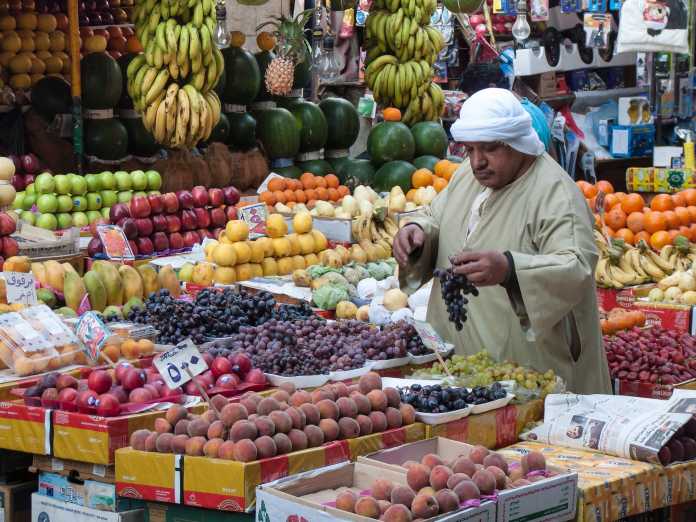
Google News today is promoting articles (see the Google-promoted PhysOrg article here, for example) about a speculative World Bank “study” claiming climate change is threatening crop production in the Middle East. The World Bank study is full of speculation but short on facts. Real-world data show crop yields per acre and total crop production are consistently and dramatically rising in each of the Middle East countries examined by the World Bank study.
In its study, titled “Water in the Balance,” the World Bank says, “[w]hile information about water scarcity at present and in the future is available there is little knowledge of what this increasing scarcity means for Middle Eastern … food security. Agriculture will suffer because of climate change and water scarcity….”
In particular the World Bank asserts water scarcity caused by climate change will reduce farm production in Iran, Iraq, Jordan, Lebanon, Syria, and Turkey. The available evidence strongly suggests that will not happen.
Had the study’s authors examined real-world data concerning crop production in the Middle Eastern countries, they would have found, even amidst substantial strife in the region, crop yields and overall production have increased dramatically. More food is being produced even as thousands of acres of agricultural lands have been abandoned during regional conflicts.
Data from the U.N. Food and Agriculture Organization show during the period of modest warming since 1989:
- Cereal crop production in Iraq increased 91 percent, even as the acreage being harvested fell 5 percent.
- Cereal crop production in Iran increased 187 percent, while the acreage harvested increased by just 2.6 percent.
- Cereal Crop production in Jordan increased 15 percent, even as the acreage harvested declined 30 percent.
- Cereal Crop production in Lebanon increased 115 percent, while acreage harvested increased 30 percent.
- Cereal Crop production in Syria increased 22 percent, even as acreage harvested declined 66 percent.
- Cereal Crop production in Turkey increased 46 percent, even though acreage harvested declined 19 percent.
It is clearly good news – and not a climate crisis – that Middle Eastern countries have increased crop production despite the fact that many of them have been embroiled in internal political strife, outright civil warfare, and external conflicts. That good news is ignored in the World Bank’s doom-and-gloom report.
Global warming lengthens growing seasons, reduces frost events, and makes more land suitable for crop production. Also, carbon dioxide is an aerial fertilizer for plant life. In addition, crops also use water more efficiently under conditions of higher carbon dioxide, losing less water to transpiration. The latter fact should have allayed the World Bank’s concern about climate change induced water shortages leading to crop failure.
The benefits of more atmospheric carbon dioxide and a modestly warming world have resulted in 17 percent more food being available per person today than there was 30 years ago, even as the number of people has grown by billions. Indeed, the last 20 years have seen the largest decline in hunger, malnutrition, and starvation in human history.
Sorry, World Bank, Google, and PhysOrg, but that does not equate to a climate crisis.
H. Sterling Burnett, Ph.D. is managing editor of Environment & Climate News and a research fellow for environment and energy policy at The Heartland Institute. Burnett worked at the National Center for Policy Analysis for 18 years, most recently as a senior fellow in charge of NCPA’s environmental policy program. He has held various positions in professional and public policy organizations, including serving as a member of the Environment and Natural Resources Task Force in the Texas Comptroller’s e-Texas commission.
Reporter Serena Shim remembered six years after suspicious death near Turkey

Press TV | October 18, 2020
Six years after her suspicious death, Press TV reporter Serena Shim is remembered as one of the first journalists to have exposed the involvement of the US-led Western countries and their regional allies in igniting the foreign-sponsored terrorism in Syria, a daring act of investigative journalism for which she paid with her life.
The investigative reporter died in October 2014 while covering the ongoing siege by the Daesh Takfiri group of the Syrian-Kurdish border city of Kobani for Iran’s Press TV. She was the lone fatality following a suspicious car crash in Turkey’s Sanliurfa province.
She was reporting firsthand on the presence of Daesh and other al Qaeda-affiliated militant groups operating freely along the Turkey-Syria border. She revealed the weapons transfers and the trucks being driven into Syria by the terrorists themselves.
Shim had gathered evidence of militant training camps operating near the Turkey-Syria border.
She was, in her own words, one of the first, if not the first, on the ground to report on “Takfiri militants going in through the Turkish border”. These include not only Daesh but also terrorists from the so-called Free Syrian Army.
As Shim’s sister Fatmeh Shim stated in 2015, “She caught them bringing high-ranked Daesh members into Syria from Turkey into camps, which are supposed to be Syrian refugee camps.”
Shim said trucks belonging to some international aid agencies were being used to funnel terrorists’ arms into Syria, and stated this in her last interview, just one day before being killed.
On October 19, 2014, Shim, along with her camerawoman, was returning to their hotel after preparing a report near Kobani south of the Turkish border, where a heated battle was taking place between Daesh and the city’s defendants.
Early reports claimed that Shim died at the scene while later accounts suggested that she passed away due to heart failure after being transferred to hospital nearly 30 minutes later. Shim’s camerawoman, who had been transported to a different hospital, survived the incident.
Turkish authorities blamed Shim’s camerawoman, who had been driving the vehicle, for the crash. No further inquiry was reported to have been carried out by Ankara.
Many doubts, however, linger regarding the official testimony provided by the Turkish officials.
Today’s Zaman reported that prosecutors were seeking six years in prison for the operator of the concrete mixer instead, accusing the driver of causing “death through negligence.” The trial, allegedly set for March 2015, never occurred.
Six years following her unfortunate death, no further information has been released regarding the fatal accident.
Observers have pointed out that “car accidents” have been a “commonplace method” used by the Turkish National Intelligence Organization (MIT) to get rid of people it doesn’t like.
Although all signs point to foul play, until now the US government has neither conducted nor demanded an inquiry into the events of the alleged car accident which Turkish officials say was the cause of Shim’s death.
Two weeks after the incident, the US State Department issued a brief statement regarding Shim, who was an American citizen of Lebanese origin, saying that it “does not conduct investigations into deaths overseas.”
The journalist’s tragic death came only two days after Shim had spoken out live on Press TV about being targeted by the MIT, who had accused her of being a “spy” while the journalist covered the latest developments in Turkey and Syria.
“I am a bit worried, because as you know and as the viewers know, Turkey has been labeled by Reporters Without Borders as the largest prison for journalists, so I am a bit frightened what they might use against me.”
Shim explained that she had been targeted for her investigative reports regarding Ankara’s direct support for terrorist groups, such as Daesh in Syria, whose evidence had been largely concealed at the time.
“We were some of the first people on the ground, if not the first people on the ground, to get that story of those Takfiri militants going in through the Turkish border — the Bab al-Hawa border — being sent in. I’ve got images of them in World Food Program trucks. It was very apparent that they were Takfiri militants by their beards and by the clothes that they wore. And they were going in there with NGO trucks,” she said.
The 29-year-old reporter had been described by her colleagues as an aspiring journalist with much potential. The young journalist had spent years working in various dangerous conflict zones such as Iraq, Syria, Turkey and Ukraine.
The Turkish government has been accused of supporting various terrorist groups seeking to topple Syrian President Bashar al-Assad since the onset of the foreign-backed terrorism nine years ago.
Over the past four years, the Turkish military has staged at least two unauthorized incursions into northern Syria to push back against Kurdish militants, whom Ankara says seek to overthrow the Turkish government.
The aggression prompted the areas’ Kurdish population to ask the Syrian government for protection against the Turkish forces.
Ankara, which backs Syria’s anti-government militants, currently has hundreds of Turkish troops in the northwest of the Arab country.
In recent years, Western terrorists within the ranks of Daesh in Syria and Iraq have been seeking their countries’ help to secure their return to their motherlands as the Takfiri group continues to suffer heavy losses in the two Arab countries.
Some of the Daesh terrorists have contacted diplomatic missions in Turkey while others have secretly sought their governments’ help in leaving dwindling Daesh-held territory.
Why Conflict in Caucasus Is Erdogan’s Revenge for Syria
By Finian Cunningham | Strategic Culture Foundation | October 17, 2020
Turkey’s outsize role in fueling the conflict between Armenia and Azerbaijan is becoming more apparent. That’s why a peace deal will be hard to cut and indeed the conflict may blow up further into a protracted regional war. A war that could drag Russia into battling in the Caucasus on its southern periphery against NATO proxies.
In a phone call this week with Russian President Vladimir Putin, Turkish leader Recep Tayyip Erdogan reportedly backed Moscow’s efforts at mediating a ceasefire in the disputed Nagorno-Karabakh territory between Armenia and Azerbaijan. Notwithstanding, Erdogan appeared to deliver an ultimatum to his Russian counterpart. He said that there must be a “permanent solution” to the decades-long territorial dispute.
Erdogan and his Azerbaijan ally have already made it clear that the only solution acceptable to them is for Armenian separatists to relinquish their claim to Nagorno-Karabakh. Turkey and Azerbaijan – bound by common Turkic culture – have long-called the Armenian-held enclave an illegal occupation of Azerbaijani territory since a border war ended in 1994.
When hostilities flared again last month on September 27 initial reports suggested the clashes were of a haphazard nature with both sides trading blame for starting the violence. However, it has since become clear that the actions taken on the Azeri side seem to have been a planned aggression with Turkey’s full support.
Following a previous deadly clash on July 12-13 involving about a dozen casualties among Armenian and Azerbaijani forces, there then proceeded massive military exercises in Azerbaijan involving 11,000 Turkish troops beginning on July 29. For nearly two weeks into August, the maneuvers deployed artillery, warplanes and air-defense units in what was evidently a major drive by Ankara and Baku to coordinate the armies from both countries to fulfill joint operations. Furthermore, reports indicated that Turkish forces, including F-16 fighter jets, remained in Azerbaijan following the unprecedented military drills.
Alongside the drills, there was also a dramatic increase in military arms sales from Turkey to Azerbaijan. According to Turkish export figures, there was a six-fold increase in weapons deals compared with the previous year, with most of the supply being delivered in the third quarter of 2020 between July and September. The armaments included drones and rocket launchers which have featured with such devastating impact since hostilities erupted on September 27.
A third factor suggesting planned aggression was the reported transport of mercenary fighters from Syria and Libya by Turkey to fight on the Azerbaijani side. Thousands of such militants belonging to jihadist brigades under the control of Turkey had arrived in the Azeri capital Baku before hostilities broke out on September 27. The logistics involved in organizing such a large-scale deployment can only mean long-term planning.
Armenian sources also claim that Azeri authorities had begun impounding civilian vehicles weeks before the shooting war opened. They also claim that when the fire-fights erupted on September 27, Turkish media were present on the ground to give live coverage of events.
It seems indisputable therefore that Turkey and Azerbaijan had made a strategic decision to implement a “final solution” to the protracted dispute with Armenia over the Nagorno-Karabakh dispute.
That’s what makes Russian efforts at mediating a cessation to hostilities all the more fraught. After marathon talks mediated by Russian Foreign Minister Sergei Lavrov a ceasefire was introduced on October 10. However, within hours the truce unravelled with reports of resumed exchange of fire and shelling of cities on both sides. The main violations have been committed by the Azerbaijani side using advanced Turkish [as well as Israeli] weaponry. Armenian leaders have complained that the Azeri side does not seem interested in pursuing peace talks.
More perplexing is the widening of the conflict. Azerbaijan air strikes since the weekend ceasefire broke down have hit sites within Armenia, extending the conflict beyond the contested enclave of Nagorno-Karabakh. Azerbaijan has also claimed that Armenian missiles have hit cities within its territory. Armenia flatly denies carrying out such strikes, which begs the question: is a third party covertly staging provocations and fomenting escalation of conflict?
What is challenging for Russia is that it has a legal obligation to defend Armenia as part of the Collective Security Treaty Organization (1992). With Armenia coming under fire, the pressure will be on Moscow to intervene militarily.
This would see Russia being embroiled in another proxy war with NATO-member Turkey. But this is not in Syria. It is the Caucasus region on Russia’s southern border. There are concerns among senior Russian military figures that such a scenario is exactly what Turkey’s Recep Erdogan is aiming for. Turkey was outplayed by Russia in the proxy war in Syria. Erdogan and NATO’s plans for regime change in Damascus were dealt a bloody nose by Russia. It seems though that conflict in the Caucasus may now be Erdogan’s revenge.
Moscow may need to seriously revise its relations with Ankara, and let Erdogan know he is treading on red lines.
Influx of foreign fighters to Nagorno-Karabakh could lead to region wide conflict
By Paul Antonopoulos | October 5, 2020
The war in Artsakh, or more commonly known as Nagorno-Karabakh, is becoming increasingly internationalized as foreigners are arriving to fight on both sides of the conflict. Artsakh, despite being internationally recognized as a part of Azerbaijan, has had a de facto independence since 1994 when Armenian forces won a decisive victory. On September 25, it was first revealed that Syrian militants were being transferred to Azerbaijan via Turkey. This was denied by the Azerbaijani Foreign Ministry on the same day. It must be noted that the war in Artsakh began only two days after it was exposed Syrians were being transferred. Yet, despite photographs, videos, documents and testimonies made by Syrian militants themselves, the Azerbaijani government maintains the position that there are no foreign mercenaries fighting alongside the Azerbaijani army and that it is Armenian propaganda. All major international outlets have reported that these Syrians are not motivated by jihad, but rather money.
In given testimonies, a Syrian militant said “Jihadi, I swear by Allah don’t come, […] we have been deceived, everything is a lie. This is not a war, this is a meat grinder, people are dying, they cannot get the corpses.” Another Syrian militant said “Two days after the start of the war, everybody wants to return but they do not let us and […] they make us stay here.” This was in reference to Turkish military handlers lying to the transferred Syrian militants about the situation in Artsakh and forcing them to stay and fight.
At the same time though, Armenians from across the diaspora, including those in Greece, the Netherlands and the U.S., have already left or a preparing to go and fight in Artsakh, meaning that citizens of Western countries will be embroiled in this conflict. This also comes as it was revealed that ethnic Greeks are volunteering to go and fight in Artsakh, with one source telling Greek City Times that the first batch of volunteers amount to 30 men, while a former non-commissioned officer claimed to Sputnik Hellas that the number is as high as 500. Whatever the truth may be, it is being widely reported in Greek media that tens if not hundreds of volunteers from Greece are going to Artsakh, motivated by religion and solidarity with Armenians, and without receiving a salary. It has also been revealed that the Greek minority in Armenia, mostly descendants of Greek Genocide survivors, are fighting alongside the Armenian army.
This sets a dangerous precedent as this war is becoming increasingly internationalized and threatens to embroil the entire region in conflict if it cannot be contained. The First Artsakh War (1988-1994) saw Greek and Russian volunteers fight alongside the Armenians. Chechens, Afghan Mujahedeen’s, Turkey’s Gladio Gray Wolves, Ukrainian Far Right militants fought on the side of Azerbaijan in the First War. Foreign fighters in Artsakh is not a new phenomenon. With Armenian-Greeks and ethnic Greeks fighting in Artsakh against Turkish-sponsored Syrian militants and the Azerbaijani military, Athens could potentially be dragged into the conflict unwillingly.
Hikmet Hajiyev, aide to Azerbaijani President Ilham Aliyev, told reporters on Friday that Greeks were fighting in Artsakh, describing the volunteers as “mercenaries.” The Greek government has not responded to the statement made by Hajiyev and most likely will not as relations between the two countries remain tense. While accepting the credentials on September 4 from Greece’s newly appointed ambassador to Baku, Nikolaos Piperigos, Aliyev directly told the diplomat:
“I can tell you, and it is no secret, that Turkey is not only our friend and partner, but also a brotherly country for us. Without any hesitation whatsoever, we support Turkey and will support it under any circumstances. We support them [Turkey] in all issues, including the issue in the Eastern Mediterranean.”
The comments by Aliyev are unprecedented when considering the usual formalities of a head of state accepting the credentials of a new ambassador. With these diplomatic tensions already existing between Athens and Baku weeks before Azerbaijan began its offensive against Artsakh, it is unlikely that Greece will try and prevent volunteers from going to Armenia. Some Greek sources claim that many of the volunteers are ex-special forces, meaning it is likely that the Greek military will be indirectly involved to some extent. This also comes as Greek and Cypriot Members of the European Parliament are leading efforts to try and impose sanctions on Azerbaijan for launching a war.
The internationalization of the Artsakh War because of the influx of foreign fighters, especially the Syrian militants, would be a major concern for both Iran and Russia who would be feeling uncomfortable having such radical forces on or close to their borders. The internationalization of the war has the potential to spark conflict across the Caucasus as militants from North Caucasia, particular Dagestan, Ingushetia and Chechnya, could travel to Azerbaijan to fight, and gain invaluable experience to take with them on their return to Russia. Although Russia and Iran have called for a ceasefire and an end to hostilities, they have not made strong efforts to try and end the war, which if not contained and ended soon, could potentially spill over into the North Caucasus or Iran’s northern provinces which is overwhelmingly ethnic Azeri.
The war could also potentially become a part of the wider Greek-Turkish rivalry that already exists in the East Mediterranean, Cyprus and Libya. Greece will not be directly militarily involved, but it is highly probable that there would be constant communication between the Greek military and the volunteers. This comes as Turkey is directly involved in the Artsakh War, not only by transferring Syrian fighters and arms to Azerbaijan, but also using its air force when we remember one of its F-16 fighter jets downed an Armenian Su-25 aircraft last Tuesday.
Without being contained and the front lines having an influx of foreign fighters, there is a real possibility that the internationalization of the conflict through these forces could set the entire region into conflict if a ceasefire agreement is not made quickly.
Paul Antonopoulos is an independent geopolitical analyst.
The Time of Troubles in Transcaucasia – Part 2
By M. K. BHADRAKUMAR | Indian Punchline | October 3, 2020
Part-1 of the three-part essay is here.
The German Chancellor Angela Merkel said in Berlin on October 2 that the European Union seeks a “constructive dialogue and a positive agenda” with Turkey. She had just returned to the German capital after a 2-day summit meeting of the EU countries in Brussels. Germany played a key role at the summit in steering the EU-Turkey relationship away from a confrontationist path to which it was drifting lately. (See my blog EU marks distance from Indo-Pacific strategy.)
Merkel said, “We had a very long, detailed discussion about our relations with Turkey. We came to the conclusion that we would like to enter into a constructive dialogue with Turkey, we want to have a positive agenda,” adding that the Brussels summit had opened a “window of opportunity” for closer cooperation with Ankara.
Merkel disclosed that talks for closer cooperation between the EU and Turkey in the coming months would focus on migration issues, trade, modernising the Customs Union, and liberalised visa regime. In effect, Merkel has made a huge case for Turkish President Recep Erdogan at a particularly sensitive juncture for the latter when there is growing criticism in Europe regarding his regional policies.
In particular, there has been a nasty incident recently involving the Turkish and French navies in the Eastern Mediterranean. It was a rare, if not unprecedented, incident involving two NATO powers in the 7-decade old history of the western alliance.
Again, the US recently strengthened its military bases in Greece and has repeatedly called for restraint on the part of Turkey over its maritime disputes with Greece and vowed to intervene both politically and militarily in the tensions in the Eastern Mediterranean.
Turkey and France support opposite sides in the Libyan civil war, while the US is aligned with militant Kurdish groups in Syria whom Turkey regards as terrorists. And as conflict erupted in Nagorno-Karabakh, Turkey witnesses the US, France and Russia swiftly drawing close in a phalanx to push back at Erdogan’s robust backing for Azerbaijan, including pledges of military help.
To be sure, Merkel spoke with great deliberation. Before leaving for Brussels, Merkel had addressed the German Parliament where she referred to complaints against Turkey’s human rights records, but went on to praise Turkey’s “amazing and remarkable” performance in hosting refugees, highlighting that Turkey is hosting four million refugees.
Interestingly, Merkel compared Greece to Turkey in a poor light. “We have to weigh very carefully how to resolve the tensions and how to strengthen our co-operation on refugees and on the humane treatment of refugees,” she said and proceeded to condemn the manner in which Turkey’s archetypal enemy Greece is handling the migrant camp in Lesvos (Greece).
With biting sarcasm, Merkel noted, “in recent days we have seen horrible images regarding the treatment of refugees. And not from Turkey, I would like to emphasise, but from Lesvos (Greece), from an EU member state.”
Without doubt, Germany has stood up to be counted as Turkey’s friend at a time when the latter faces growing isolation within the NATO and from the EU.
Seminal events
The well-known American professor at Harvard University’s John F. Kennedy School of Government, Stephen Walt once penned an essay titled Great Powers Are Defined by Their Wars where he pointed out that explaining a great power’s foreign policy is a perennial question for scholars of international politics. He argued that major wars have powerful and long-lasting effects on a nation’s subsequent foreign or military policy.
Prof. Walt explained that wars are seminal events from which a great power’s subsequent behaviour follows, independent of its relative power, regime type or its leadership. In his words, “Those who fight in these wars are often scarred by the experience, and the lessons drawn from victory or defeat will be etched deeply into the nation’s collective memory. The experience of past wars is central to most national identities… If you want to understand the foreign policy of a great power, therefore (and probably lesser powers as well), a good place to start is to look at the great wars it has fought.”
Isn’t it a poignant historical memory for Berlin that the Ottomans were Germany’s allies in two world wars when it was hopelessly isolated by the the western powers?
On the other hand, take Russia and Turkey. Russia fought a series of twelve wars with the Ottoman Empire between the 17th and 20th centuries — one of the longest series of military conflicts in European history — which ultimately ended disastrously for the latter and led to its decline and eventual disintegration.
Russia had often fought the Ottomans at different times, often in alliance with the other European powers. Importantly, these wars helped to showcase the ascendancy of Russia as a European power after the modernisation efforts of Peter the Great in the early 18th century. In the Turkish Muslim psyche, however, Russia has figured as a protagonist which had played an historical role in the weakening of the Ottoman Empire in Central Europe, the Balkans and Transcaucasia.
The Russian conquest of the Caucasus mainly occurred between 1800 and 1864. In that era the Russian Empire expanded to control the region between the Black Sea and Caspian Sea, the territory that is present-day Armenia, Azerbaijan and Georgia (and parts of today’s Iran and Turkey) as well as the North Caucasus region of modern Russia. Multiple wars were fought against the local rulers of the regions as well as the Ottoman Empire until the last regions were brought under Russian control by 1864 with the expulsion to Turkey of several hundred thousand Circassians.
Then followed the Russo-Turkish War (1877-78) when Russia seized the the province of Kars and the port of Batumi on the Black Sea. In World War I, aligned with Germany, the Ottomans pushed against Russia as far east as Baku (capital of Azerbaijan) but then withdrew, lacking the strength to advance further, and subsequently in the post-war confusion, somehow contrived to regain Kars.
Suffice to say, in 1991 following the collapse of the former Soviet Union, when Transcaucasia became independent as the states of Georgia, Armenia and Azerbaijan, a lot of blood-soaked history involving Russia and Turkey provided the backdrop. Incidentally, Erdogan’s family originally hailed from Rize Province in the eastern part of Turkey’s Black Sea region (where he grew up as a child), which was a site of battles between the Ottoman and Russian armies during the Caucasus Campaign of World War I and was occupied by Russian forces in 1916-1918, to be finally returned to the Ottomans under the Treaty of Brest-Litovsk in 1918. The Soviet Union returned Rize to Turkey in 1921.
‘Past is never dead’
Amidst all this, an interesting feature of the flow of history has been that from the days of the Roman Empire, Transcaucasia was usually a borderland between Constantinople (Istanbul) and Persia. Areas would shift from one empire to the other, their rulers would have varying degrees of independence and were often vassals of one empire or the other, depending on the size and proximity of the suzerain’s army. By around 1750 the area was divided between the Turkish and Persian vassals. The western two thirds were inhabited by Georgians, an ancient Christian people, and the eastern third mostly by Azeris, Turkic Muslims. And Russia of course was pushing close to the Black Sea and the Caspian against the Ottoman and Persian empires.
Professor Walt in his essay cited a famous quote from the American novelist William Faulkner, “The past is never dead. It’s not even past.” Indeed, for Russia, Turkey or Iran, the current developments in Transcaucasia form part of a vast collective event that shapes their perceptions of danger and definitions of heroism, sacrifice, and even their identity.
In fact, the current line-up in the developing situation around Turkey speaks for itself: Germany voices sympathy for Turkey and offers an enhanced partnership; France lambasts Turkey and seeks EU sanctions against Turkey; France alleges Ankara’s dispatch of Syrian fighters to Nagorno-Karabakh; Germany appreciates Turkey’s big hand in addressing the refugee crisis gripping Europe; France coordinates with Russia at the highest level of leadership to pressure Turkey over Nagorno-Karabakh; the North Atlantic Treaty Organisation (NATO) and the US join Russia and France’s call for cessation of fighting in Transcaucasia; Iran maintains neutrality and suggests a joint effort with Turkey and Russia to resolve the conflict between Armenia and Azerbaijan.
Meanwhile, Moscow has shed its initial ambivalence and is stepping into the arena on the side of Armenia, expressing “serious concern in connection with incoming information about the involvement in hostilities of gunmen from illegal armed units from the Middle East” — plainly put, censuring Turkey’s backing for Azerbaijan. And President Vladimir Putin underscores that he is voicing a common stance along with “the presidents of the countries co-chairing the OSCE Minsk Group” (Russia, France and the United States). Simply put, Russia’s “competitive rivalry” with Turkey is surging.
Interestingly, Turkish President Recep Erdogan has openly drawn attention to the broader regional and geopolitical context in which the various unnamed powers are jockeying and covertly coordinating to encircle Turkey. Erdogan said on October 2, “If we connect the crises in the Caucasus, in Syria and in the Mediterranean, you will see that this is an attempt to surround Turkey.”
It doesn’t require much ingenuity to figure out the identity of the foreign powers he would have had in mind who are attempting to “surround” Turkey — France, the US and Greece (all NATO powers) and Russia, the scourge of the Ottoman Empire.
‘We were deceived’, says Syria mercenary fighting in Azerbaijan
MEMO | October 1, 2020
A Syrian fighting in Azerbaijan’s disputed Nagorno-Karabkh region has spoken to BBC Arabic and claims he, along with others, were deceived when being recruited by the Turkish-backed “Syrian National Army”, formerly known as the Free Syria Army.
The fighter using the nom de guerre “Abdullah” is among hundreds of Syrians aged 17 to 30 who arrived last week “with the knowledge of the Turkish army the SNA”. However he was under the impression that he was recruited for a job paying $2,000 a month.
“Last week, Saif Abu Bakr, the commander of the Hamza Division of the opposition Syrian National Army, suggested that we go to Azerbaijan to guard military points on the border with a monthly wage of up to $2,000,” said Abdullah.
“There was no war at the time, and we were transferred from Northern Syria to the village of Hor Kilis, and there we have stripped us from the opposition Syrian National Army of all our money, phones and clothes, so that our identity is not recognised.”
Days after arriving, the untrained Syrians were forced to fight on the front lines as the fighting broke out between Armenian and Azerbaijani forces over the disputed region.
“They loaded us into troop carriers, we were wearing Azeri uniforms, and each of us was armed with a single Kalashnikov weapon. Most of the people here are poor civilians who wanted the money, not soldiers, stopped the car and we were surprised that we were in the line of fire. We did not even know where the enemy was.”
Abdullah and others later said they wanted to return to Syria, but were prevented and threatened with long prison terms if they refused to fight “We are almost exiled”, he said.
Both Turkey and Azerbaijan have denied the accusations that Syrian fighters have been sent to fight for Azerbaijan. However, according to the Guardian, at least three Syrian opposition fighters have been killed in Nagorno-Karabkh.
On Monday, Armenia’s ambassador to Moscow said that Turkey had sent around 4,000 fighters from northern Syria. France today also weighed in on the accusations, the office of President Emmanuel Macron said he and Russian President Vladimir Putin discussed the issue and both “share concern about the sending of Syrian mercenaries by Turkey to Nagorno-Karabakh”.
Turkish media outlets have claimed that Armenia is recruiting Kurdish PKK terrorists in their ranks, although critics argue it is using the reports to justify military intervention and that no evidence has been provided.
Turkey has previously sent Syrian fighters to Libya despite denials by the internationally-recognised Government of National Accord (GNA).
The Time of Troubles in Transcaucasia – Part 1
By M. K. BHADRAKUMAR | Indian Punchline | October 1, 2020
Three days into the renewed conflict in Nagorno-Karabakh in the Transcaucasian region — also known as South Caucasus — it is becoming clear that the binary narrative dished out by western commentators of this being a Turkish-Russian clash of wills and strategies is either simply naive or purposely deceptive. The point is, Russia and Turkey — and Iran in a somewhat supportive role — are already proactively talking of negotiations involving the warring sides.
September 30 has been a turning point of sorts. Tehran had on the previous day called on Azerbaijan and Armenia to settle the differences peacefully and offered that along with Turkey and Russia, it can help the two countries to resolve their differences.
President Hassan Rouhani since repeated this offer in a phone conversation with Armenian Prime Minister Nikol Pashinyan. According to the Iranian account, Pashinyan responded positively that “any tension and conflict would be to the detriment of all countries in the region and welcomed any practical initiative to stop the violence.”
Armenia is a land-locked country and it depends on Iran to provide a vital transportation route to the outside world. On its part, Tehran kept up a warm relationship with Armenia (although its rival Azerbaijan is a Muslim country), even supplying it with natural gas.
Tehran stuck to the friendly track even after the “colour revolution” in Armenia in 2018 and Pashinyan’s steady gravitation to the American camp in the subsequent period, while also remaining a member of the Moscow-led Collective Security Treaty Organisation. (See my articles in Asia Times — A color revolution in the Caucasus puts Russia in a dilemma dated May 9, 2018 and a second piece dated August 8, 2018 titled Color Revolution in the Caucasus rattles Russian leaders.)
Iran has profound security concerns over Pashinyan’s recent diplomatic exchanges with Israel (at the initiative of the White House), which of course has brought the famed Israeli intelligence apparatus Mossad right on to Iran’s northern borders (in addition to the potential Mossad presence in the UAE, Bahrain and Oman on Iran’s southern flank.)
Turkey too has reason to be concerned over Israel’s activities in Transcaucasia. Israel is virtually piggy-riding the US-sponsored colour revolutions in Transcaucasia. Following the US-sponsored colour revolution in Georgia in 2003, Israel overnight made its appearance in Tbilisi. And the Israel-Georgia ties have since become very close.
Despite the failure of the colour revolution in Azerbaijan in mid-2005 and the sporadic attempts since then, Israel has developed close “security cooperation” with that country. Further north, Israel has developed special relations with Ukraine, another progeny of the colour revolution, which also has a president who is an ethnic Jew who is actively involved also in the ongoing colour revolution in Belarus. (The strange part is that notwithstanding the company that Israel keeps in the Black Sea region, which is virulently anti-Russian, it still enjoys exceptionally close ties with Russia!)
Both Turkey and Iran understand perfectly well why Israel attributes such excessive importance to the three small countries of Transcaucasia (total population 11 million) to establish security presence in that region with a view to create a “second front” against its regional enemies — Ankara and Tehran. (Israel has a record of links with Kurdish separatist groups too who have ethnic links with Transcaucasia.)
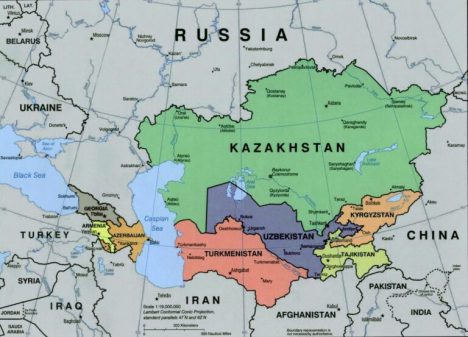
Iran openly voiced its disquiet over Pashinyan’s decision to open Armenia’s embassy in Israel , which in turn inspired then National Security Advisor to travel all the way to Yerevan where he openly took aim at Iran (and Russia.) By the way, the Armenian Diaspora in the US is an influential constituency that Pashinyan cannot ignore, either.
At any rate, demonstrations broke out in front of the Armenian embassy in Tehran soon and senior Iranian officials cautioned Pashinyan. An Iranian commentary wrote, “Tehran’s considerations… must be taken into account… On the other hand, Russia will undoubtedly oppose the idea of using Armenia to promote security and economic influence. It had already severely criticised Israel’s arms deal with Georgia and the Republic of Azerbaijan.”
Clearly, western analysts are obfuscating the US-Israeli nexus at work in Transcaucasia. Both Ankara and Tehran have cause to worry that the US would be using the Israeli proxy in the Transcaucasia region — as has been the case in the Middle East for decades — to weaken and roll back the rising aspirations of the two regional powers.
Turkey-Iran axis in the making
With the destruction of Iraq and Syria and the weakening of Egypt, Turkey (under President Erdogan) and Iran are the only two authentic regional powers left standing in the Muslim Middle East to defy the US regional strategies and to challenge Israel’s military pre-eminence.
Significantly, the surge of the US-Israeli nexus in Transcaucasia comes in the wake of the recent US-sponsored “peace agreements” between Israel and three Gulf Arab states (UAE, Bahrain and Oman.) Indeed, both Turkey and Iran have reacted strongly to the development in the Gulf.
Just this week, the Chief of Staff of the Iranian Armed Forces Major General Mohammad Hossein Baqeri explicitly warned the UAE that Tehran will view that country as an “enemy” and will act accordingly if Abu Dhabi allowed any Israeli security presence on its soil.
Within a month of the Israel-UAE agreement, Turkish President Recep Erdogan held a video conference with Rouhani where he made a big opening statement that “Turkey and Iran dialogue has a decisive role in the solution of many regional problems. I believe that our cooperation will return to its previous levels as the pandemic conditions alleviate.”
Rouhani responded that Turkish-Iranian relations are built on solid foundations throughout history and the border between the two “friendly and brotherly countries” has always been “the borders of peace and friendship.” He stated that especially in the past seven years, both governments had made great efforts based on bilateral, regional and international cooperation.
Significantly, Rouhani added that the two countries are located in a “sensitive region” of the Middle East and they are “the two great powers of the region. There was hostility and vindictiveness towards both countries. It also exists today. There is no way to be successful against such conspiracies other than by reinforcing friendly relations between the two countries.”
Sure enough, Israel has taken note of the nascent Turkey-Iran axis (which also includes Qatar.) A commentary in the Jerusalem Post noted that in the recent years Turkish-Iranian ties have “grown closer due to joint opposition to the US and also Israel. Iran and Turkey both back Hamas, for instance.” It wryly observed that the Middle Eastern geopolitics built around the Shia-Sunni sectarian strife may have outlived its utility!
Again, the Turkish state news agency Anadolu featured a commentary last week titled New strategic design of Middle East, which pointed out that the peace agreements in the Gulf bring out the schism between the UAE, Saudi Arabia and Bahrain one side and Qatar and Kuwait on the other side. (Qatar is an ally of Turkey while Kuwait has friendly ties with Iran.) The commentary noted, “Arab countries seem to have lost both confidence and a sense of unity; when the sense of confidence is seriously damaged, it will be easier to put them at odds, and this regional division, as everywhere, makes Arab countries and their leaders dependent on external forces for their security and existence.”
The Anadolu commentary then warmed up to its main theme, namely, that the so-called “normalisation” agreement between the UAE and Israel “may be a veiled effort not only to expand the imperial space but also to form a bloc against Iran and Turkey in the Middle East.”
“Iran is a non-Arab country and seems an arch-enemy of the US and Israel; Iran collaborates with Russia and China, the US’ arch-rivals, and sometimes with Turkey, which may threaten both the US imperial interest and Israeli security in the region. Hence Iran’s regional power and influence should be jettisoned and driven into a corner.”
“Turkey is a NATO country and seems a close US ally, (but) US policy towards Turkey in the region is ambivalent, unclear, and elusive in the sense that the US still continues to support the (Kurdish) YPG/PKK terrorist group in Syria that has been carrying out terrorist acts against Turkey and killing civilians for decades.”
“Moreover, the US and Israel, though they seem friendly, do not want a strong Turkey because a strong Turkey may influence Arab countries particularly using Islam and then turn them against the exploitation of the Middle East and its oil and resources by neo-imperial powers, yet the US and other imperial powers will never allow Turkey to easily stand on its feet in the region. What they may prefer is that a weak and fragile Turkey, grappling with its internal conflicts, will always serve their purpose.”
In the chronicles of the great game, seldom it is that the protagonists speak up and opt for public diplomacy. The game, historically, is played out quietly in the shade outside the pale of public view. Turkey and Iran have decided otherwise. Can it be a mere coincidence that the conflict in Transcaucasia, a faraway region that borders both Turkey and Iran where Israel is consolidating a security presence against them, erupted in such a backdrop of new alignment that promises to redraw the geopolitics of the Middle East?
Discussions between Greece and Turkey over the East Mediterranean will end before they begin
By Paul Antonopoulos | September 29, 2020
Tensions between Greece and Turkey that became a geopolitical crisis in the East Mediterranean appear to be finally subsiding after Ankara withdrew from Greece’s maritime space the Oruç Reis Turkish research vessel and the warships escorting it. Since Turkish President Recep Tayyip Erdoğan initiated the crisis at the beginning of August in search of oil and gas deposits in Greece’s maritime space, his administration, along with Turkish media that is 90% controlled by the government, continually makes the claim that Greece must “demilitarize” their East Aegean islands “as stipulated by the 1923 Treaty of Lausanne.” The Treaty of Lausanne set the borders of the modern Greek state, with the exception of the Italian-occupied Dodecanese islands that reunited with Greece in April 1947 after the signing of the Paris Peace Treaty between Italy and the World War II Allies. It also set the borders for the modern Turkish state.
Turkey’s withdrawal of the Oruç Reis and the warships escorting it opened up a new opportunity for Greece and Turkey to begin dialogue to resolve their differences in the East Mediterranean peacefully. However, it is likely that this plan for dialogue will end before it even begins as even discussion topics cannot be agreed upon. Athens insists that dialogue should only concentrate on the demarcation of maritime borders between Greece and Turkey, while Ankara says that any dialogue must also include discussions of Greece demilitarizing its East Aegean islands that lay directly opposite Turkey’s coastline – in many cases only a few minutes boat ride away.

The claim that Greece’s islands must be demilitarized, as continuously repeated by Turkey, is a manipulation of the Lausanne Treaty. For this reason, Athens will continually shut down any discussions of demilitarization. If we look at the case of the southeastern Aegean islands, collectively known as the Dodecanese, they are not held accountable to the Lausanne Treaty as Greece did not achieve sovereignty over the islands until more than two decades after the Treaty was signed. Instead, the Dodecanese are held accountable to the Paris Treaty, that Turkey is not a signatory of. Therefore, Turkey’s insistence on the demilitarization of the Dodecanese constitutes a “res inter alios acta.” According to Article 34 of the Vienna Convention on the Law of Treaties, a treaty does not create obligations or rights for third countries, meaning that Turkey cannot demand that the Dodecanese islands be demilitarized.
In the case of Lesvos, Chios, Samos and Ikaria, the Lausanne Treaty makes no mention of these islands having to be demilitarized, but rather there can be no naval bases and no army fortifications. In addition, there can be no professional military presence besides the National Guard, a volunteer corps, which Greece has adhered to.
With regards to Limnos and Samothrace, the demilitarization of these islands, along with the demilitarization of the Turkish-controlled Dardanelle and Bosporus Straits, as well as the Sea of Marmara and the Turkish-controlled Imvros (Gokceada), Tenedos (Bozcaada) and Rabbit Islands (Tavcan), the 1923 Lausanne Treaty on the Straits stipulated that these areas of both Greece and Turkey must be demilitarized. However, this was annulled by the 1936 Montreux Treaty, which, as it categorically states, replaces in its entirety the Lausanne Treaty regarding militarization. Greece’s right to militarize Limnos and Samothrace was recognized by Turkish Ambassador in Athens at the time, Roussen Esref, with a letter sent to Greek Prime Minister Ioannis Metaxas on May 6, 1936. The Turkish government reiterated this position when the then Turkish Minister for Foreign Affairs, Rustu Aras, in his address to the Turkish National Assembly recognized Greece’s legal right to deploy troops on Limnos and Samothrace, with the following statement:
“The provisions pertaining to the islands of Limnos and Samothrace, which belong to our neighbor and friendly country Greece and were demilitarized in application of the 1923 Lausanne Treaty, were also abolished by the new Montreux Treaty, which gives us great pleasure.”
In exchange, Turkey was able to militarize its islands, the Marmara Sea and the Straits, that they were not able to do due to the Lausanne Treaty.
Although Greece has every legal right to militarize its islands to varying degrees, and have done so within the bounds of the Treaty of Lausanne for Lesvos, Chios, Samos and Ikaria, the bounds of the Montreux Treaty for Limnos and Samothrace, and within the bounds of the 1947 Paris Peace Treaty for the Dodecanes, Turkey’s insistence that the islands must be demilitarized threatens to end discussions between Athens and Ankara even before they begin.
Greece has categorically stated that there is no chance that demilitarized status of the islands will be discussed. As Erdoğan is maintaining a policy of constant crises to distract the population from the rapidly declining Turkish economy and lira, there is every chance that when the Artsakh (Nagorno-Karabakh) conflict subsides, he will resume tensions in the East Mediterranean and blame Greece for this eventuality as it did not demilitarize its islands as he demands.
From the Greek perspective, the islands must remain militarized so long as Turkey’s Aegean Fourth Army exists. Turkey’s Aegean Army was created only one year after the 1974 Turkish invasion of northern Cyprus. The Aegean Army frequently conducts military exercises opposite the Greek islands. These exercises include training on how to storm beachfronts. With Greece not only having a legal right to militarize its islands to varying degrees, but also watching Turkish threats against the East Aegean islands, dialogue will be deadlocked as Erdoğan will not back down from his demands that the islands be demilitarized.
Paul Antonopoulos is an independent geopolitical analyst.
Turkish claims that the PKK is operating in Artsakh set dangerous precedent
By Paul Antonopoulos | September 28, 2020
Conflict sparked up again yesterday in Artsakh, or more commonly known as Nagorno-Karabakh, when Azerbaijan launched an offensive against Armenian forces. Although the Republic of Artsakh is not recognized by any state, including Armenia, and it is still internationally recognized as occupied Azerbaijani territory, it achieved a de facto independence in 1994.
As acting Commissar of Nationalities for the Soviet Union in the early 1920’s, future Soviet leader Joseph Stalin granted the Armenian-majority region of Artsakh to the Azerbaijani Soviet Socialist Republic. The Azeris, the dominant ethnic group of Azerbaijan, are cultural and linguistic kin with the Turks. It is said that the Turks and Azeris constitute “one nation in two states.” The defining difference is that Azeris are Shia Muslims unlike Turks who are mostly Sunni. The Soviets had hoped that by granting Artsakh to Azerbaijan instead of Armenia, they could court the newly founded Republic of Turkey to closely align with Moscow, or perhaps even become a Soviet Republic, by appeasing their ethnic Azeri kin.
In 1921, it was estimated that Artsakh was 94% Armenian. However, according to the 1989 census, Artsakh’s population was approximately 75% Armenian and 25% Azeri. Former Soviet Azerbaijani leader Heydar Aliyev, father of current President Ilham Aliyev, said in 2002: “I tried to change demographics there […] I tried to increase the number of Azerbaijanis in Nagorno-Karabakh and the number of Armenians decreased.” The collapse of the Soviet Union unsurprisingly led to the Artsakh War, which only ended after a ceasefire in 1994 when Armenian forces achieved a decisive victory.
Despite Azerbaijan’s defense budget ($2.267 billion) being about five times larger than Armenia’s, they have failed to capture Artsakh on numerous attempts, particularly during the 2016 April War and another major attempt in July of this year. Azerbaijan’s resumption of hostilities yesterday could be passed off as just another skirmish that will subside in a few days. However, the current conditions are far different and much more dangerous than in previous situations.
Although it is well established that the Turkish economy is struggling, President Recep Tayyip Erdoğan is maintaining a policy of constant crises in the vain attempt to distract the public from the Turkish lira as it continues breaking new record lows to the US dollar and Euro, even as recently as this morning. As the military provocations and rhetoric of war against Greece and Cyprus in the East Mediterranean begins to subside in Ankara, it only took a few days for a new crisis to emerge.
Reports began emerging last week that Turkey was transferring terrorists from northern Syria to Azerbaijan. The Azerbaijani leadership in Baku flatly denied the allegations last week and today. However, despite the denials from Baku, it must be remembered that Ankara openly announced its transfer of Syrian fighters to Libya earlier this year and the Azerbaijani’s have undoubtedly used international terrorists from Afghanistan, Chechnya and Turkey during the first Artsakh war in the 1990’s. Photos, videos and voice recordings have emerged that show Syrian terrorists on their way to or already in Azerbaijan. Vardan Toghanya, the Armenian Ambassador to Moscow, said in a statement today that 4,000 militants from Syria already arrived in Azerbaijan, while according to the Armenian intelligence agency, 80 fighters from Syria have already been killed or wounded.
Turkey’s transfer of militants in support of Azerbaijan, which was also done in the 1990’s, is not what makes the current conflict more dangerous compared to previous battles and skirmishes. Starting from last week, Turkey and Azerbaijan have increased their campaign in claiming that the Kurdistan Workers Party (PKK), considered a terrorist organization by both Ankara and Baku, was operating in Artsakh. Neither Ankara and Baku provided any evidence for their claims. This sets a dangerous narrative as it could be used as a way for Turkey to “legitimize” a direct intervention against Armenia and in support of Azerbaijan.
Erdoğan justified his invasion and occupation of large areas of northern Syria and northern Iraq in 2018, 2019 and this year on the pretence that they were fighting against the PKK. Although Armenia denies PKK are operating in Artsakh, this will be ignored by Ankara and Baku.
However, unlike Syria and Iraq, Armenia is a member state of the Collective Security Treaty Organization (CSTO), alongside Belarus, Kazakhstan, Kyrgyzstan, Russia and Tajikistan. A direct Turkish attack on Armenia could activate the CSTO. This would be a dangerous scenario as in turn this could activate NATO in defense of Turkey. It is highly unlikely that the situation in Artsakh will dissolve into a CSTO-NATO faceoff. But the risk still remains, especially if Erdoğan decides to directly intervene under the guise of expelling the PKK from Artsakh.
Just as Erdoğan unleashed a migrant crisis in February and March of this year against Greece, sent Syrian terrorists to Libya in May, conducted a military operation in northern Iraq against the PKK in June, and created a new crisis with Greece by sending warships into its territorial waters in August and for most of September, it appears the new crisis to dominate headlines for the next few weeks will revolve around Artsakh.
Although it is unlikely that Turkey will directly militarily intervene, a dangerous precedent has already been established by pushing the narrative, without publicly available evidence, that the PKK are operating in Artsakh alongside Armenian forces. With the Turkish economy and lira collapsing, Erdoğan in the future may very well use the narrative that the PKK are in Artsakh to foment public furore and distract them from the declining economic situation.
Paul Antonopoulos is an independent geopolitical analyst.
East Mediterranean tension boosts France’s arms sales
MEMO | September 26, 2020
French-backed tension between East Mediterranean states and Turkey boosts French arms sales, Paul Iddon, contributor to Forbes, revealed on Thursday.
Iddon noted that French President Emmanuel Macron is a strong critic of Turkey’s foreign policy and poses himself as a supporter of the East Mediterranean states, which are on opposite sides of the tension with Turkey.
Therefore, the French military has participated in a series of military exercises this year with Turkey’s rivals in the Eastern Mediterranean to signal Paris’ support of these countries.
He confirmed that France has shown its support for Greece by deploying two Dassault Rafale fighter jets to the Greek island of Crete, along with a warship in August.
Greece, according to Iddon, turned to France after it had decided to expand its military to buy 18 Rafale jets, including six brand new and 12 second-hand ones that have already served in the French Air Force, noting that Greece is the first European country to buy the Rafale jets.
Iddon also disclosed that Athens already reached a €260 million ($305 million) deal with France to upgrade its existing fleet of Dassault Mirage 2000-5 fighter jets in December 2019. This deal would prevent Turkey from establishing air superiority over the Aegean Sea, or parts of the East Mediterranean.
Meanwhile, the Republic of Cyprus reached a $262 million arms deal with France for short-range Mistral air defence systems and Exocet anti-ship missiles.
These deals are not comparable with those reached between France and Egypt, which has been a major rival of Turkey’s since the current President Abdel Fattah Al-Sisi came to power through his military coup in July 2013.
“Under Sisi,” Iddon wrote in Forbes, “Egypt rapidly became a major multi-billion euro French arms client. His country was the first to buy Rafale jets, along with four Gowind corvettes, a FREEM multipurpose frigate, and two Mistral-class amphibious assault ships.”
Iddon concluded: “So long as these territorial disputes and tensions between these countries and Turkey remain unresolved, France isn’t likely going to have any shortage of arms clients in the Eastern Mediterranean anytime soon.”
How USA and Turkey Plunder and Loot Syria with Impunity
By Rick Sterling | Dissident Voice | September 16, 2020
While President Trump lashes out at rioting and looting in Portland and Kenosha, half way around the world, the USA and Turkey are plundering and looting Syria on a vastly greater scale with impunity and little publicity.
Turkey Loots Syria, then Disrupts Safe Water Supply
Turkey has been plundering the Syrian infrastructure for years. Beginning in late 2012 and continuing through 2013 some 300 industrial factories were dismantled and taken to Turkey from Aleppo, the industrial capital of Syria. “Machinery and goods were loaded on trucks and carried off to Turkey through the Cilvegozu and Ceylanpinar crossings. Unfortunately, ‘plundering’ and ‘terror’ have become permanent parts of the Syrian lexicon when explaining their saga.”
In October 2019 Turkish forces invaded Syria and now occupy a strip of land in north east Syria. The area is controlled by the Turkish military and pro Turkish militia forces misnamed the “Syrian National Army”. Turkish President Erdogan dubbed the invasion “Peace Spring” and said the goal was to create a “safe zone”. The reality was that 200 thousand Syrians fled the invasion and over 100 thousand have been permanently displaced from their homes, farms, workplaces and livelihoods.
The industrial scale looting continues. As reported recently in the story headlined Turkish-backed factions take apart power pylons in rural Ras Al-Ain: “Reliable sources have informed SOHR that Turkish-backed factions steal electricity power towers and pylons in ‘Peace Spring’ areas in Ras Al-Ain countryside.”
Turkey now controls the border city of Ras al-Ain and the nearby Allouk water treatment and pumping station. This is the water station supplying safe water to the city Hasaka and entire region. The Turkish forces are using water as a weapon of war, shutting down the station to pressure the population to be compliant. For over two weeks in August, with daily temperatures of 100 F, there was no running water for nearly one million people.
With no tap water, civilians were forced to queue up for hours to receive small amounts from water trucks. Unable to buy the water, other civilians took their chances by drinking water from unsafe wells. According to Judy Jacoub, a Syrian journalist originally from Hasaka, “The residents of Hasaka and its countryside have been pushed to rely on unsafe water sources ….Many residents have been suffering from the spread of fungi, germs and dirt in their hair and bodies as a result of using well water that is not suitable for drinking and personal hygiene. The people of Hasaka remain vulnerable to diseases and epidemics because of the high temperatures and spread of infectious diseases. If the situation is not controlled as soon as possible, the spread of Corona virus will undoubtedly be devastating.” A hospital medical director says many people are getting sick from the contaminated water.
Judy Jacoub explains what has happened most recently: “After Syrian and international efforts exerted pressure on the Turkish regime, 17 wells and three pumps were started . The main reservoirs were filled and pumping was started toward the city neighborhoods. However, despite the Turkish militia’s resumption of pumping water again, there is great fear among the citizens.”
USA Loots Syrian Oil and Plunders the Economy
The USA also has occupying troops and proxy/puppet military force in north east Syria. The proxy army is misnamed the “Syrian Democratic Forces” (SDF). How they got that name is revealing. They took on this name as they came under the funding and control of the US military. As documented here, US Army General Ray Thomas told their leadership, “You have got to change your brand. What do you want to call yourselves besides the YPG?’ Then, he explained what happened: “With about a day’s notice they declared that they are the Syrian Democratic Forces. I thought it was a stroke of brilliance to put democracy in there somewhere.”
There are numerous parties and trends within the Syrian Kurdish community. The US has been funding and promoting the secessionist element, pushing them to ally with Turkish backed jihadists against the Damascus government. The violation of Syrian sovereignty is extreme and grotesque.
Prior to the war, Syria was self-sufficient in oil and had enough to export and earn some foreign revenues. The primary oil sources are in eastern Syria, where the US troops and proxy forces have established bases. It is desert terrain with little population.
To finance their proxy army, the US has seized control of the major Syrian oil pumping wells. It is likely that President Trump thinks this is brilliant bold move – financing the invasion of Syria with Syrian oil.
In November 2019 President Trump said, “We’re keeping the oil… The oil is secure. We left troops behind only for the oil.” Recently, it was revealed that a “Little known US firm secures deal for Syrian oil“. Delta Crescent Energy will manage and escalate the theft of Syrian oil.
What would Americans think if another country invaded the US via Mexico, set up bases in Texas, sponsored a secessionist militia, then seized Texas oil wells to finance it? That is comparable to what the US is doing in Syria.
In addition to stealing Syria’s oil, the US is trying to prevent Syria from developing alternate sources. The “Caesar sanctions” on Syria threatens to punish any individual, company or country that invests or assists Syria to rebuild their war damaged country and especially in the oil and gas sector.
The US establishment seems to be doing everything it can to undermine the Syrian economy and damage the Syrian currency. Due to pressure on Lebanese banks, plus the Caesar sanctions, the Syrian pound has plummeted in value from 650 to 2150 to the US dollar in the past 10 months.
North east Syria is the breadbasket of the country with the richest wheat and grain fields. There are reports of US pressuring farmers to not sell their wheat crops to the Syrian government. One year ago, Nicholas Heras of the influential Center for New American Security argued “Assad needs access to cereal crops in northeast Syria to prevent a bread crisis in the areas of western Syria that he controls….Wheat is a weapon of great power in this next phase of the Syrian conflict.” Now, it appears the US is following this strategy. Four months ago, in May 2020, Syrian journalist Stephen Sahiounie reported, “Apache helicopters of the US occupation forces flew low Sunday morning, according to residents of the Adla village, in the Shaddadi countryside, south of Hasaka, as they dropped ‘thermal balloons’, an incendiary weapon, causing the wheat fields to explode into flames while the hot dry winds fanned the raging fire.
After delivering their fiery pay-load, the helicopters flew close to homes in an aggressive manner, which caused residents and especially small children to fear for their lives. The military maneuver was delivering a clear message: don’t sell your wheat to the Syrian government.”
To better loot the oil and plunder the Syria economy, in the past weeks the US is sending more heavy equipment and military hardware through the Kurdish region of Iraq.
In the south of Syria, the US has another base and occupation zone at the strategic Al Tanf border crossing. This is at the intersection of the borders of Syria, Iraq and Jordan. This is also the border crossing for the highway from Baghdad to Damascus. The US controls this border area to prevent Syrian reconstruction projects from Iraq or Iran. When Syrian troops have tried to get near there, they have been attacked on their own soil.
Meanwhile, international funds donated for “Syrian relief” are disproportionately sent to support and assist the last strong-hold of Al Qaeda terrorists in Idlib on the north west border with Turkey. The US and its partners evidently want to sustain the armed opposition and prevent the Syrian government from reclaiming their territory.
Flouting International Law and the UN Charter
The USA and Turkey have shown how easy it is to violate international law. The occupation of Syrian land and attacks on its sovereignty are being done in broad daylight. But this is not just a legal issue. Stopping the supply of safe drinking water and burning wheat fields to create more hunger violate the most basic tenets of decency and morality.
With supreme hypocrisy, the US foreign policy establishment often complains about the decline in the “rule of law”. In actuality, there is no greater violator than the US itself.
In his speech to the UN Security Council, Syrian Ambassador Ja’afari decried this situation saying “international law has become like the gentle lamb whose care is entrusted to a herd of wolves.”
• Author’s note: To see good political and military maps of Syria, go to southfront.org
Rick Sterling is an investigative journalist who has visited Syria several times since 2014. He lives in the SF Bay Area and can be reached at rsterling1@gmail.com.
Russian Clouds Over Turkish-Backed Jihadi Paradise In Idlib
South Front | September 17, 2020
On September 16, hundreds of protesters gathered near those Turkish military positions in Greater Idlib, which are surrounded by the Syrian Army, demanding the full withdrawal of the Turkish Army from Syria.
The largest protests took place near Turkish observation posts at Murak and Alsurman. Both these posts were surrounded by Syrian troops during the military operation against Turkish-backed al-Qaeda terrorists in southern Idlib. A majority of the protesters who took part in the event were from the nearby towns and villages, including Murak, Alsurman and Tell Touqan.
In the best traditions of Turkish ‘democracy’, Turkish soldiers from the Murak observation post responded to the protesters with tear gas.
Later on the same day, the Turkish government claimed that the observation posts had become the target of provocations and even individual attacks fomented by the ‘Assad regime’. According to the Turkish side, Turkish forces successfully repelled the provocation.
Meanwhile, Russian-Turkish military consultations on the conflicts in Syria and Libya have been ongoing in Ankara. According to Russian state media, Moscow proposed that the Turkish military reduce the number of observation posts in Greater Idlib, but the proposal was rejected. Nonetheless, Russian state media reported, citing their own sources, that Turkey had agreed to reduce the number of troops deployed in Idlib.
Currently, Ankara has almost 10,000 troops and thousands of pieces of military equipment, including battle tanks and artillery, in northwestern Syria. If the media reports are true, the formal and widely-promoted withdrawal of a dozen Turkish military trucks with several dozen troops will not change the situation strategically. Ankara has repeatedly demonstrated that it is not interested in a real fight against terrorism in Syria and that it in fact uses Idlib terrorist groups to promote its own agenda. This posture could be changed only under the increasing pressure of circumstances and regular friendly reminders from Turkey’s ‘strategic partners’.
As one such reminder over the past few days, the Russian Aerospace Forces conducted more than a hundred airstrikes on infrastructure and positions of the Turkish-backed terrorists. These strikes started last weekend and as of the morning of September 17, it does not seem that they will be fully halted anytime soon. Clouds have once again gathered over the jihadi paradise, which is being created by the Erdogan government in northwestern Syria.
Featured Video
Iran spent $1 million to wipe out $30 billion in data center plans, and take down Amazon in the ME
or go to
Aletho News Archives – Video-Images
From the Archives
A short history of British torture
ICC | December 2005
When the House of Commons was debating how much to increase the time limit for detention without trial the question of torture came up. Officially this was limited to the nice considerations of whether it was all right to send people to places where torture is used and whether Britain can use information collected by the use of torture in other countries. This discussion gave an impression of democratic Britain as the home of civilised behaviour where the very idea of torture is repugnant to our legislators – unlike, say, the US with its secret CIA jails… In reality, the British state has a long history of using and developing a whole range of torture techniques. … continue
Blog Roll
 Aletho News
- Houthis Keep Advancing as the Red Sea Crisis Deepens
- Iran spent $1 million to wipe out $30 billion in data center plans, and take down Amazon in the ME
- Zionist billionaire pressure to silence Macklemore sparks exodus from Ed Sheeran tour
- House Votes to End Iran War for Third Time
- North Korea Slams US Plan for ‘AUKUS 2.0’ with South Korea and Japan
- Prolonging US-Iran Conflict Not Meeting Interests of Int’l Community – China’s Wang Yi
- EU bans former Zelensky aide from parliament
- NATO-backed Kosovo separatist ‘responsible for war crimes’
- US destroying international space law
- SCO Calls for Binding Global Deal to Prevent Arms Race in Space
- If Americans Knew
- U.S. Makes, Israel Takes: The Real Story of U.S.-Israeli Military Cooperation
- Night raids rise in Palestine
- Tucker Carlson interviews Norman Finkelstein about Gaza
- Groups urge Americans to support Van Hollen legislation on Israel’s killing of Americans & Palestinians
- Trump administration plans to send 40,000 tons of bombs to Israel: report
- Sanctions Target Iran’s Government, But Kill Hospitalized 23-Year-Old Woman
- An alternative view on the book “Israel’s Lobby: America in the Grip of a Foreign Power”
- Ed Sheeran’s band Beoga, other opening acts quit tour after Macklemore was dropped over his pro-Palestinian comments
- The assassination attempt on President Trump in Butler and the various Israeli connections to it
- “We Want That the Whole Land Be Jewish”
- No Tricks Zone
- New Study: ‘Global Drought Shows No Detectable Recent Acceleration Under Climate Warming’
- Economic Masterminds: German Socialists Suggest Taxing Productivity Gains Stemming From Using AI
- The South China Sea Has Not Been Cooperating With The Climate Change Narrative
- Energy Crisis: Germany Enters Heating Season With Historically Low Gas Reserve Fill Levels
- New Study: The Antarctic Ice Sheet Gained Mass From 2020-2024 Due To Staggering Snow And Ice Accumulation
- Study: Ocean Heating Rates From Thousands Of Years Ago ‘Dwarf’ Modern Ocean Heating Rates
- Climate Extremists Target, Attack Large-Scale Power Grid Infrastructure In Germany!
- New Study: Antarctic Ice Melt Has Contributed Less Than 1 Centimeter To Sea Level Rise In The Last 30 Years
- Fear Of Debate: Alarmist German Climate Scientist Calls On Mainstream Media To Discredit Skeptic Voices
- End-Of-August Arctic Sea Ice Extent Hasn’t Fallen In 20 Years, Official Data Show!
 Aletho News