Israel’s Allies Deliver A Cost-free Victory
By Jeremy Salt | Palestine Chronicle | September 25, 2013
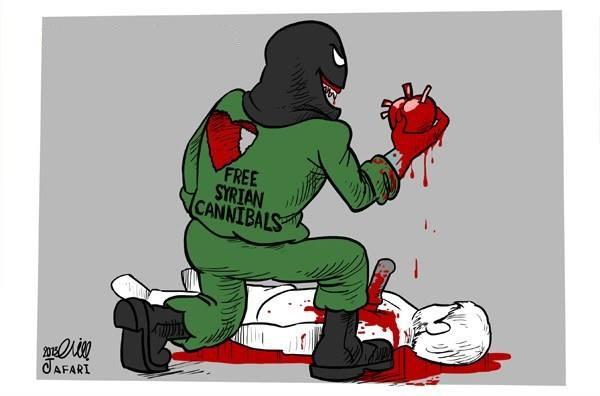
Until joined by the Islamic government in 1979 and then by Hizbullah in the 1980s, Syria was Israel’s most visceral enemy. This enemy is now being destroyed but not by Israel. So-called Muslims backed by so-called Muslim governments – Saudi Arabia, Qatar and Turkey – are doing the job for it, in alliance with the traditional western enemies of the Arabs. Syria’s cities and towns have been devastated. An estimated 100,000 people have been killed. Millions more have been displaced, scattered across Syria or seeking refuge beyond its borders. Reconstruction will cost hundreds of billions of dollars. Recovery will take decades. Without spending a penny or losing a life, Israel has been handed one of the greatest strategic victories in its existence.
Michael Oren let the scarcely concealed cat out of the bag the other day when he said Israel would prefer a Syria without Bashar al Assad to a Syria in the hands of the jihadists. The outgoing Israeli ambassador in Washington, Oren was only bringing something to the surface that could be seen underneath it despite the vociferous denials of Israel’s lobbyists. Israel wants the government in Damascus destroyed. Netanyahu has been trying to hide its interest behind a mask of indifference but as the likelihood of a US military ‘strike’ – for a war that would engulf the region – slipped away, the lobbyists in Washington broke cover. They buttonholed every congressman and women, only for the vote on war to be postponed indefinitely, much to the chagrin of the gulf and Turkish governments, their armed and political protégés and the Israeli government.
While the Syrian army continues to grind the armed groups down, there seems no end to the volume of money, armaments and men outside governments are still prepared to pour into this conflict. Obama is still trying hard to get Russian agreement on a UNSC resolution that would allow the US to begin another war in the Middle East by attacking Syria. In the meantime the armed groups are continuing with the war they are waging. In his recent interview with former US congressman Dennis Kucinich and Fox news correspondent Greg Palkot, Bashar al Assad estimated that 80 to 90 percent of the armed men are Al Qaida-type takfiri jihadists. The ‘defence’ consultancy HIS- Janes puts the figure at about 50 per cent but whether it is 50 per cent or 90 cent, whether they are foreign or Syrian, the jihadists are dominating the fighting. Talk of moderates is deception. Only in the last few days the main fighting groups – all takfiri – have again rejected the authority of the exile Syrian National Coalition and the so-called Free Syrian Army. This is presented as something new when at least a year ago the very same groups issued the same kind of declaration saying the same things. The so-called FSA is the western standard bearer for ‘moderation’ in this struggle even though its brigades are every bit as fanatical as Jabhat al Nusra or any of the other takfiri groups.
If the Syrian government does fall – and at the moment it is not only holding its ground but steadily driving the takfiris back – chaos would prevail in Syria on a far greater scale than Libya at present or Algeria in the 1980s. The country would implode. This is so self-evident that the US and its allies must know it and if they know it, one has to presume that this is what they want. Saudi Arabia is out to destroy the Syrian government regardless of the consequences. Britain and France are following the US and US policy on any issue in the Middle East is largely fashioned according to the interests of Israel. Turkey is the odd man out. Whatever Recep Tayyip Erdogan thought he was going to get out of confronting Syria his own country has been very adversely affected by his decisions. The breakdown of Arab states into sectarian enclaves permanently at war with each other has been an Israeli strategic objective for decades. It has happened in Iraq and now the specter of the collapse of another unitary Arab state hovers over Syria.
While the takfiris do their best to destroy Syria, Israel is getting on with the colonization of Palestinian territories as fast as it can. The current wave of settlement expansion is the greatest since 1967. In the past year edicts have been pouring out of the Housing Ministry authorizing the construction of thousands of housing ‘units’ in East Jerusalem and across the West Bank. The strategic focus is on settlement expansion in and around East Jerusalem and the construction of highways and roads that will simultaneously integrate the settlements into the greater Jerusalem municipality (enlarged immediately after the 1967 war) and, along with the Separation Wall, further cut the Palestinians off from the city. In the first quarter of 2013 alone there was a 176 per cent increase in settlement expansion over the same quarter for 2012.
In August this year, just as the ‘peace talks’ were resuming, Israel announced the construction of thousands more housing ‘units’ in East Jerusalem settlements. The mainstream media tells us that settlement expansion is ‘impeding’ peace, ‘threatening’ the peace talks and the ‘two state’ solution. The plain fact is that there are no ‘peace talks’. They are the camouflage for the war Israel has been waging against the Palestinians for seven decades. To their discredit and dishonor Mahmud Abbas and Saib Urayqat are giving these ‘talks’ a Palestinian face. By announcing settlement construction in the same breath as announcing the resumption of ‘peace talks’ Israel shows its absolute contempt for both of them.
Land expropriation and development for agricultural purposes continues unabated. So does the theft of water. The Council for European Palestinian Relations estimated recently that the settlers consume an average of 280 liters of water a day compared to 86 liters for the Palestinians, below the World Health Organization’s recommended minimum of 100 liters. Only 60 per cent of the water allocated to the Palestinians is potable. While taking their land Israel simultaneously uses it as a rubbish dump, with solid waste from West Jerusalem being dumped at Abu Dis, once set up by Israel as the Palestinian ‘capital’ of East Jerusalem even though it was not even inside the municipality until Israel put it there. The settlers do the same, dumping their rubbish and household waste water on Palestinian land in the valleys below their settlements on the hilltops.
In a statement handed to the UN Human Rights Council fact-finding mission to Palestine in February this year, Al Haq (Law in the Service of Man) presented some statistics. In 2012, 202 ‘incidents’ of settler violence along with dispossession, home demolitions, forcible evictions and intimidation; more than 200 settlements established since 1967, including 14 in East Jerusalem, and more than 500,000 settlers now living in them; and more than 42 per cent of the land of the West Bank as well as most of its resources allocated to Jewish settlements. Al Haq notes that the Israeli High Court ‘has rendered the question of the settlements non-justiciable’.
The Council for European Palestinian Relations estimates that the population in the West Bank settlements is growing at an average of five per cent a year compared to 1.8 per cent for the rest of occupied Palestine. It puts the total number of settlers at 467,000, of which number 385,000 are living in between the Separation Wall and the 1967 ‘green line.’
Every brick laid by Israel on the West Bank, every liter of water pumped out for settlements swimming pools and lawns and the presence of every settler represents a violation of international law. Yet, says Naftali Bennett, the Religious Services Minister and leader of the Jewish Home Party: ‘We will continue building and you will see this soon.’ He was speaking before the August announcement that more housing ‘units’ would be added to Jewish colonies in East Jerusalem. ‘I am sending the message from here to all the parties in the negotiations: the land of Israel belongs to the nation of Israel’. He has pledged to do ‘everything in my power to make sure they never get a state.’
In a leaked exchange with another cabinet minister Bennett said that ‘I’ve killed many Arabs in my life and there’s no problem with that.’ He complained that the conversation had been taken out of context, because what he meant was that he had ‘only’ killed them in the context of operations. There was one such ‘operation’ on the West Bank last week. Heavily armed soldiers stormed into the Jenin refugee camp, broke into the house of the Tubaisi family, shot Islam al Tubaisi, 19, in the leg, dragged him downstairs, his head banging on every step and shot him dead before an ambulance took him to hospital. Perhaps in time the members of this unit will be bragging in time about how they also have killed many ‘Arabs’.
Dig deep enough into the crises in Iraq, Syria and Lebanon and the confrontation with Iran and eventually you will find Palestine. It remains the central issue, the pivot on which US policies, dominated by Israeli interests and demands, has turned for more than six decades, yet for the takfiris affiliated with Al Qaida, killing other Muslims (and Christians) in a variety of countries takes precedence. It is striking that the same heads of government inveighing against terrorism and expressing their outrage at the slaughter of innocents in Nairobi have not once expressed outrage at the slaughter of innocents in Syria unless they thought they could blame the Syrian government.
The call of unity sounds through modern Arab history like the cry of a lost bird. United the Arabs will stand and divided they will continue to fall. As long as they are not able to put common interests first they are going to be ripe for the plucking. What is at stake in Syria is not the political system but Syria itself and for the past three years it has been systematically and deliberately destroyed by an unholy coalition of outside governments and the gangs of armed men doing their dirty work in the name of Islam.
The dominant Arab actors in this deliberately induced catastrophe are the regimes in Riyadh and Doha. They engage with Israel behind the scenes even as it colonizes Palestinian land and sends uniformed gangsters into the Haram al Sharif to beat Muslim worshipers trying to protect one of the holiest sites in Islam. While consorting with the enemy and abandoning the Palestinians these two regimes – infinitely less representative of the will of the people than the government in Damascus – take the lead in the destruction of an Arab state. The greatest beneficiary of their actions on one hand and their inaction and neglect on the other is Israel. This is surely as great a disgrace as any in Arab and Islamic history.
– Jeremy Salt is an associate professor of Middle Eastern history and politics at Bilkent University in Ankara, Turkey.
What does the Syrian chemical disarmament deal mean?
By Zaher Mahruqi | Press TV | September 24, 2013
Bashar’s acceptance to let go of his “Nukes of the poor” arsenal could mean that the Syrian government has assessed the potential outcome of an American sustained offensive to be a game changer and desperately agreed to any way out.
Handing over chemical weapons in a gradual more controlled manner would have been understandable but giving up the location of the chemical sites with such immediacy hints to a much weakened Syrian position. It is no secret that the details given to the UN will eventually end up in Israeli hands, then why would the Syrian government accept such a deal other than Assad’s real fear of loosening his grip on power?
Netanyahu’s remarks following the chemical handover deal that “negotiating with Syria and Iran with a real and present threat to use force is the only way to make them cooperate” suggests that Syria’s president is indeed at the mode of fighting for survival. But that too is too simplistic provided that, surrendering chemical weapons or not, the US is sure to pursue him to the very bitter end. Then why give up such a strong deterrent?
The fact of the matter is that Bashar al-Assad is an intelligent man who at the very least understands that betraying Russia and Iran, who have been supporting his efforts in the past two years, would be a serious mistake. Therefore, any big decision Syria makes has to have been consulted with its main backers and has been given some sort of guarantees that giving up chemical weapons is not as risky as it might appear and that a credible backup plan is in place.
Smartly, Syria is giving both the US and Russia a face saving mechanism to avoid any further escalation between the two super powers and at the same time it is buying crucial time. Bashar himself declared that at least one full year is required to clear Syria of chemical weapons.
For Syria, chemical weapons are much harder to dispose of than replenish because Syria’s allies have stockpiles upon stockpiles of them. And so if the US chooses to change course somewhere during the period of chemical disarmament and attacks Syria, the very scenario that has been averted would be quickly reintroduced.
One ship full of chemical weapons is all that is required to rearm Syria, after all the main target of such weapons is a country the size of a province; Israel. Moreover, the Iranian and Hezbollah threat of intervening by attacking Israel will not be changed by simply handing over the chemical weapons.
Of course, the decision to hand over the weapons which buys the Syrian government crucial time is unwelcome by the “saboteur” of the region, Saudi Arabia and Turkey. The real danger for them is that this could actually lead to further weakening of the Syrian opposition and force them unto Geneva peace talks; talks which have just been strengthened by Syria’s agreement to declare its chemical arsenal.
Turkey and Saudi Arabia know well that their stances on Syria in the past two years makes it impossible for relations with Bashar’s Syria to normalize or even a negotiated Syria where opposition participates in governance.
Regardless of Turkish and Saudi stances, the US administration and Israel had strong interests in making sure that a war is averted in some way. Had the US congress vote gone ahead and disapproved of any attack on Syria in order to fulfill the wishes of the American people, it would have been a huge blow to them.
For Obama, it would have meant being stripped of legitimacy as it relates to Syria and wider international engagements and for Israel it would have meant the weakening of the Zionist lobby within US politics and a disastrous counter attack from Iran, Syria and Hezbollah.
Bashar’s objectives to consolidate alliances and weaken the counter alliance and buying time have all been thus far satisfied. The one year disarmament period that Bashar suggested will be needed is no speculation at all; it is well calculated period during which time to weaken the opposition and its supporters and to deny the US and her allies any legitimate pretext to attack Syria.
Moreover, if Iran and Hezbollah felt justified to intervene early on, now any attack from the US or her allies before the chemical disarmament is complete makes the Iran and Hezbollah retaliation against Israel with the support of Russia even more justified.
On the other hand, the US, Turkey and Saudi Arabia, (the latter seeming more keen than the US to overthrow Bashar’s government), provided that the SNC is in a weakened position and the desperation of the trio is acute, places them in a real danger of open colluding with the likes of Al Qaeda and Al-Nusra Front. So much for fighting “terrorism”!
Every time one sees a billboard advertising Syrian International Trade Exhibition across the world one wonders how can a government in a war state for over two years manage to facilitate an environment where its factories can produce? The answer could simply be that Syria is not nearly as chaotic or as weak as Western media portrays it to be. That position has just been strengthened by Syria’s agreement to disarm.
The objective of the US and Israel has always been to disarm any Arab army that might use its weapons against Israel; the issue is not whether a country owns a huge arsenals of weapons or not, but whether it has enough potential will to use them against Israel.
The Saudis are armed to the teeth and so are the Turkish but it is their clear stance on ensuring Israel’s peace that makes them allies rather than enemies. It is for that reason that Syria is a prime target as was Saddam’s Iraq.
Five armies that pose serious threat to Israel were the priorities of the US and Israel namely Iranian, Syrian, Egyptian, Iraqi and Hezbollah and so far only one has been dealt with; that of Iraq. In the case of Egypt, the US and Israel are pleased because the Egyptian army is suspect and they truly believe they will eventually buy out its generals. That means Hezbollah, Iran and Syria are left to fight this war that will not stop until one side secures a clear victory.
Where Russia had disappointed in the past as was the case with Iraq, now it appears poised to put up a stronger posture and as such days ahead will clarify the longevity of the new Russian posture. But the latest events have revealed that Russia is no longer a mere Security Council voter but a physical actor in world events.
Therefore, it is naive to assume that Russia has been blackmailed or tricked by the US into pressuring Syria to surrender her most prized deterrent against Israel. Syria will comply albeit at a calculated pace and will give America and Israel no legitimate pretext to attack it and as such Russia will have no choice but to stand its ground. If an attack takes place, Russia’s response is likely to be far stronger than the recent showdown in the Mediterranean or else Russia becomes a goofball.
The stance of Western media and Aljazeera is a good indication that the US and her allies are not in a war mood. When a war is imminent, there are certain networks that have a duty to fulfill and that is drumming for war. They are not doing that just yet!
While it will be naive to assume that Bashar will hold on to power indefinitely, it is clear that the Syrian civil conflict will be a long term struggle and will not end nor conclude the way the US and Israel are hoping for.
Related articles
- Nasrallah: Saudi Arabia, Turkey have failed in Syria (alethonews.wordpress.com)
- Questions on Syria’s Chemical Weapons disarmament (alethonews.wordpress.com)
Nasrallah: Saudi Arabia, Turkey have failed in Syria
Al-Akhbar | September 23, 2013
Saudi Arabia, Turkey and other regional countries backing Syria’s rebels must acknowledge their failures to bring down the Syrian government, and join efforts for a political solution to end the two and a half year civil war, Hezbollah Secretary General Hassan Nasrallah said on Monday.
In his first televised speech in over a month, Nasrallah said dialogue is the only option to bring an end to a conflict that has already left over 100,000 people dead and threatened to exacerbate tensions across the region.
“I call on Saudi Arabia, Turkey, and other Gulf states to revise your stance,” he said. “You won’t reach anywhere by relying on a military victory. Put this hatred (for Hezbollah) aside and think with your minds. Think about your interests, the interests of the region, the survival of the region.”
He condemned calls by some Lebanese politicians from the March 14 alliance for the United States to launch an attack on Syria, warning that any strike would cause global repercussions, and that Lebanon would be the first casualty.
Those same politicians calling for the West to intervene in Syria have accused Hezbollah of endangering Lebanon by sending troops to Syria, Nasrallah added, urging them to evaluate the consequences of a US attack across the border.
Nasrallah said that Saudi Arabia and other Gulf countries believed their support to rebel forces would lead an overthrow of the Syrian government within months, and are using Hezbollah as a scapegoat “to run away from their failures,” by accusing it of occupying Syria.
“For two and a half years, they used everything in their disposal … to control Syria and they failed. Of course [Hezbollah] are foreigners, we are not Syrian, but [what about] the tens of thousands of foreign fighters who you brought from all over the world? Are they occupying Syria?”
He noted that the Syrian government has expressed willingness to engage in dialogue with the opposition, and emphasized talks as the only suitable option to achieve peace.
Nasrallah also flatly denied accusations that his powerful Shia movement had obtained chemical arms from Syria, saying that he was principally and religiously forbidden from using such weapons.
Related article
- Text of Nasrallah’s September 23 speech Hezbollah chief… (yallasouriya.wordpress.com)
Resistance Is Our Destiny
By Ibrahim al-Amin | Al-Akhbar | August 31, 2013
To hell with all the talk about democracy backed by the United States, France, Britain … and Saudi Arabia, Turkey, and Israel.
To hell with every bid for freedom with the support of these murderers.
To hell with every fool, criminal, and coward, no matter what they look like, what they are called, where they live, or what they do.
To hell with all those who support an international war to topple Syria.
To hell with this bunch of collaborators, who people will no doubt hold accountable one day, come chaos or stability.
To hell with all traitors, their speeches, their false tears, and to hell with their human rights groups and their subservient civil society organizations.
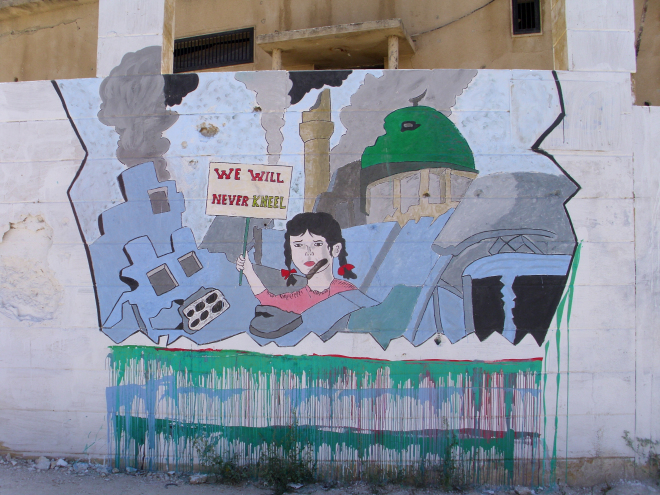
The decision to wage war on Syria is only the last step in the course set two and a half years ago, to destroy Resistance, its cities, people, and even its very idea.
There is no room for any kind of bargaining, and there is no room for any discussion or debate. There is no room to listen to any collaborator touting the list of causes of war and the causers, and there is no room for those who cling to their opinions, positions, or labels, wearing bandanas on their foreheads after wearing blindfolds on their eyes, and joining forces with collaborators and takfiris.
To begin with, these people live on the crumbs thrown to them by the robbers of Arab resources and fortunes. They work for them and receive from them money and all kinds of support.
It is a duty for every capable person to fight these killers, wherever they may be, wherever there is a chance to take revenge against them, and punish all the traitors, one after the other, in their beds, behind their desks, inside their tanks, or in their palaces, whether they are alone, or among their families.
What do you want from us today?
Do you want to repeat the experience of Iraq?
Do you want to repeat the experience of Afghanistan and Somalia?
Do you want to repeat the experience of Libya? Do you want to repeat the experience of war in Lebanon?
Or do you think that this will be a war to destroy the right that will never be eliminated, and whose name, forever shall remain: Palestine?
We do not have to repeat our arguments or repeat the process of searching for answers; we do not have to repeat our comments or our warnings. All we have to do is declare one position, namely, that the war being prepared for Syria is a colonial war, and every participant in it, whether by supporting it, funding it, promoting it, justifying it, or directly fighting in it, is a cowardly collaborator… .
It’s war!
They will gang up on Damascus, the mother of all cities, with the aim of crushing the people, the army, and the leadership. They want to destroy its history and its heritage of resisting invaders. They want to destroy every spirit that resists colonialism and supports resistance in the whole region. They want to extend a permanent lifeline to Israel and the oppressive regimes in our Arab countries, and they want to have collaborators of all kinds take over countries, rob their resources, and annihilate their peoples.
When America says that it needs no cover, legal justification, scientific investigation, or political support, and that it is able to manipulate the fate of a nation, for the sole reason that it has decided that its interests require it, then this means that we must act exactly like America, and wait for no cover, support, justification, or ask about international norms and so forth.
We must fight against it, and against its colonies, all forms of war, and we must spare no effort to seek to transfer the struggle to its soil, in every place of its land and cities; we must scream in the face of the butcher. We would do all this, without giving them the ability to strip us of our humanity, which we shall keep for ourselves, our children, and for the oppressed everywhere.
Yesterday, the West showed its true colors: a spiteful, murderous West, that has no place for anyone except those who know how to kneel down before it, and raise the white flag above their heads.
Yesterday, Europe showed its foul nature. It is not just a foolish old crone, but an ugly one too, with venom spewing from all its folds. Dishonor mars its opinion-makers, factories, schools, universities, and its people who do not come out to disavow the killers among them.
All we can do is resist them, with all our capabilities. Nothing will prevent us from seeking out our sole enemy, which has many faces, but one name: the barbarians, the bloodsuckers. As for us, resistance is our destiny.
Ibrahim al-Amin is editor-in-chief of Al-Akhbar.
This article has been edited for posting at Aletho News.
Related article
Erdogan’s policy on Syria counterproductive
By Prof. Rodney Shakespeare | Press TV | August 23, 2013
Turkey’s policy is being smashed apart. It has no depth, no vision, no principle and no morality. It is not just a case of muddle or a failure of cynical opportunism. Rather, it is something which is completely inexplicable without there having been some sort of big bribe (probably of the “We will make you the regional big-wig” variety) for Erdogan, the Prime Minister.
Turkey had a clear, simple policy – be friends with all neighbors. It was a very sensible policy and, as a result, Turkey was able to build its economic and political strength and was increasingly being recognized as a regional leader. (Remember the deal arranged between Turkey, Brazil and Iran over 20% uranium enrichment which made Obama look like a fool, as he is?)
Importantly, Turkey was also seen as a successful example of how Islam and politics can integrate in a modern way.
But now look what has happened! History has many examples of countries, led by incompetent prime ministers, shooting themselves in the foot. However, in the case of Turkey, it’s an instance of shooting itself in both feet.
In Syria, no doubt dreaming of a huge territorial expansion under his benign rule, Erdogan went from friend to not just enemy but to being the worst thing of all – a vicious sectarian out to put the whole of the Middle East at each other’s throats. What a disgraceful turnabout for a man who was being held up as an example to the world!
And look at the consequences! Can anybody guess how many hundreds of thousands, even millions, of refugees will soon be living within Turkey’s borders? What is that going to do for Turkey’s economy?
Can anybody guess what will be the consequences for the unity of Turkey itself (which has a large Kurdish minority) given that the Kurds of Syria have to fight against the Takfiri throat-slitters supported by Turkey?
Will the Kurds in Turkey remain silent? And what about those throat-slitters in Syria (who also like a bit of head-chopping and gas-choking on the side)? Are they going to leave Turkey alone (since they have no intent of leaving anybody else alone)? Turkey is arming them and establishing secret routes for them, in fact, doing everything to ensure that Turkey itself is one day going to be attacked by them. How idiotic can you get?
Moreover, goodness me! What about Turkey’s middle class? They are enraged with Erodogan’s Syria policy and, as history teaches, politicians who upset the middle classes do so at their peril….
Erdogan has been doing some slimy creepy-crawling to the Israelis and Americans (after all, they were the ones promising that he would become the Big Caliph big-wig if he only did a bit of their bidding). But now, Erdogan is being given a nasty dose of reality – the last thing the USA and Israel want is a Big Caliph: rather, all they want is a Greater Israel (from the Mediterranean across to the River Euphrates and down to the Nile).
So, Erdogan is now accusing Israel of being behind Morsi’s ouster in Egypt which is a very reasonable accusation given that Israel (together with the USA and Saudi Arabia) is a member of the Axis of Evil which interferes everywhere in the Middle East. Of course, the USA is angry that anybody should even hint that Israel is behind anything but, then, the USA is another country regularly shooting itself in the foot and, in its case, the feet are very big, clumsy ones.
Thus, Turkey is finding out the hard way that it cannot rely on the USA or Israel as allies (and who, in their right mind, would think otherwise?)
Behind all this, of course, are some big geo-political realities one of which is that China, Russia and Iran are holding firm in backing Assad of Syria. Therefore, the USA is unlikely to intervene in Syria even though it wants to.
So, Turkey’s Syria policy is now down the drain and it’s beginning to look as if Turkey itself is going down the drain (although the country will probably push Erdogan down the drain before it gets near to going down itself….)
Where will Erdogan turn now? He is promoting sectarianism and, by doing so, has betrayed Islam.
The obvious thing to do would be to turn away from the West and Israel and look more to stronger relationships with Muslim countries. But to whom? Saudi Arabia? That would be another strategic mistake (and it is disgraceful that Erdogan has allowed a disgusting Saudi Arabia to become more influential.) Egypt? Unlikely. Iraq? Very unlikely …
Erdogan’s made a ripe mess, hasn’t he? He’s alone. Why should anybody trust him when he has betrayed everybody else? We can expect the Turkish people to be taking action soon.
Related article
Turkey closes cultural centers in Beirut after kidnapping of pilots, denies responsibility for abducted Lebanese
Al-Manar | August 12, 2013
Turkey has closed its cultural centers and commercial office in Beirut after the kidnap of two Turkish Airlines pilots, Ankara’s ambassador to Lebanon told AFP on Monday.
The two pilots were kidnapped on Friday by a group demanding the release of nine Lebanese pilgrims kidnapped in Syria in May 2012, but reportedly moved to Turkey, a major backer of the kidnapers.
“As a safety measure, the Turkish cultural centre and commercial office in Beirut have suspended their activities,” ambassador Inan Ozyildiz said.
Responsibility for Abduction of Lebanese Pilgrims Denied
Turkish Ambassador to Lebanon Inan Ozyildiz wondered how his country could be responsible for the abduction of the Lebanese pilgrims in Syria, saying that Turkey does not even have an embassy or consulate in the neighboring country, As-Safir newspaper reported on Tuesday.
He told the daily: “Our negotiations to release all the pilgrims failed because of the complexity of the case.” “What will Turkey gain in delaying their release? What is it seeking to achieve if its interests are being harmed?” he asked. “How could Turkey have kidnapped the pilgrims? Does it have control over Syrian territories?” he wondered.
“It cannot be responsible for the abductions that have been taking place and it only intervened in the case from a humanitarian approach and in return it was met with a second abduction of Turkish nationals in Lebanon in less than a year,” said Ozyildiz.
Commenting on the kidnapping of two Turkish pilots in Lebanon on Friday, the ambassador said: “The case is in the hands of Lebanon’s security and political authorities.” He added that he is in contact with all security officials, including General Security chief Abbas Ibrahim, to follow up on the case.
Ozyildiz said however that Turkey’s decision to advise its citizens against traveling to Lebanon is only a preliminary measure and further ones will be taken if any new development takes place in the case of the two pilots.
A Turkish pilot and co-pilot were kidnapped on Friday. Six gunmen intercepted a van carrying the Turkish Airlines employees from Rafik Hariri International Airport to a hotel in the Ain Mreisseh seafront at dawn Friday, kidnapping the two pilots – Murat Akpinar and Murat Agca – but leaving the four other crew members behind.
Mohammad Saleh, a relative of the pilgrims held in Aazaz, was arrested on Sunday in connection to the kidnapping.
Saleh is a Witness not Participant
A widely-informed security source told As Safir: “He revealed the names of the individuals linked to the abduction.” He also said that the pilots were kidnapped in a hope to exchange them with the nine pilgrims.
Saleh’s relatives denied to As Safir however that their son was linked to the case, saying that he only received messages of congratulations on his telephone when news of the abduction broke out.
Meanwhile, caretaker Interior Minister Marwan Charbel told As Safir that Saleh is considered as a witness in the kidnapping and not a participant. His release from custody is in the hands of the General Prosecution, he added.
FM: Turkey Can Help Free Pilgrims
Caretaker Foreign Minister Adnan Mansour said that Turkey was able to play a major role in helping free nine Lebanese hostages held by Syrian rebels since last year.
“Lebanese people ask: Is it possible that after over a year, Turkey, with all its influence, cannot make fruitful efforts? … We deal with Turkey as a friendly state, we urge it to make efforts [to resolve the case], and we believe it can reach a positive outcome,” Mansour told The Daily Star in an interview at the Foreign Ministry in Beirut.
“I once told a Turkish security official in a meeting that no one believes Turkey can do nothing when it controls the situation in northern [Syria] and supports the opposition,” he said.
“He answered [by] saying: ‘The kidnappers are not under the control of the Syrian opposition.’ But this is an unconvincing answer,” Mansour added.
Kurdish leader says Syria Kurds not after forming own government
Press TV – July 21, 2013
A senior Syrian Kurdish leader has rejected earlier reports that Kurds are planning to establish an independent Kurdish government in northern Syria.
China’s Xinhua news agency on Sunday quoted Salih Muslim, the leader of the Democratic Union Party (PYD), as saying, “There is no intention among the Kurds to form their own government, nor to secede from Syria.”
On Saturday, Qatar-based al-Jazeera news network quoted Muslim as saying that Syria’s Kurds were planning to create a “temporary autonomous government to administer their regions in the north.”
The Syrian government has granted the Kurds a certain level of autonomy since 2012 and they are now controlling security of the region.
In recent months, Kurdish fighters, who are opposed to foreign interference in Syria, have been battling foreign-backed militants in the north.
This comes as clashes continued between PYD-linked Kurdish militants and foreign-backed Takfiri militants around several villages in northeastern Syria near the border with Turkey on Saturday.
The Kurdish militants took control of a checkpoint and also seized light weapons, ammunition, a vehicle mounted with a heavy machinegun, and a mortar launcher.
On July 17, the Kurdish fighters took control of the town of Ras al-Ain in the border province of Hasakah, forcing out the al-Qaeda-linked militants.
Foreign-sponsored militancy has taken its toll on the lives of many people, including large numbers of Syrian soldiers and security personnel, since March 2011.
Western powers and their regional allies including the Israeli regime, Turkey, Saudi Arabia and Qatar are supporting anti-Syria militant groups, including al-Qaeda-linked terrorists.
Turkish court cancels plan to redevelop Istanbul’s Taksim Square
Press TV – July 3, 2013
A Turkish court has blocked a redevelopment project for Istanbul’s Taksim Square after the country was rocked by four weeks of anti-government protests.
The court ruling is seen as a big blow to Prime Minister Recep Tayyip Erdogan, who had strongly backed the project, but is also seen as a victory for the opposition that has been staging nationwide rallies against it.
Istanbul has been the epicenter of anti-government demonstrations since May 31, when the police broke up a sit-in staged at Taksim Square to protest against the redevelopment plan which involved the demolition of Gezi Park.
The Turkish protesters said Gezi Park, which is a traditional gathering point for rallies and demonstrations as well as a popular tourist destination, is one of Istanbul’s last public green spaces.
The protests soon spread to other cities across the country and turned into calls for the resignation of the Turkish prime minister.
Several people have been killed in the violent crackdown on peaceful protesters, who Erdogan has described as foreign-backed extremists and terrorists.
Last week, Turkish artists, journalists, and authors placed full-page advertisements in several newspapers, asking Erdogan to stop using divisive language.
On June 24, Erdogan praised the “legendary heroism” of police forces in quelling anti-government protests.
The Turkish prime minister has faced international condemnation for his handling of the crisis. Turkish police have been also strongly criticized for using excessive force against the peaceful protests.
Related article
- Turkey will consider protesters staying at Taksim terrorists, official says (alethonews.wordpress.com)
Turkish government combing Twitter in search of protest organizers to arrest
RT | June 29, 2013
Turkish government officials are investigating Twitter and similar social media platforms in an attempt to identify and eventually prosecute the organizers of mass demonstrations, Erodgan administration officials said this week.
In the latest attack on social media’s role in protests, the country’s Transportation and Communications Minister Binali Yildirim called on social media networks on Friday to cooperate with authorities in the probe.
“Yes to the Internet … but an absolute no to its misuse as a tool for crimes, violence, chaos and disorder,” Yildirim said quoted as saying by the local Dogan news agency.
Authorities have scoured social networks searching for protest leaders since national unrest began on May 28 at a rally in Instanbul’s Taksim Square. Police have turned over at least 35 names to prosecutors in the city, according to Turkey’s Aksam newspaper.
It is illegal to ‘insult’ public officials in Turkey.
Deputy Prime Minister Bekir Bozdag acknowledged the existence of the list, the Associated Press reported, only saying ‘profanities and insults conducted electronically’ had contributed to the protests.
‘Crimes determined as such by the law don’t change if they are carried out through Facebook, Twitter or through other electronic means,’ he said. ‘No one has the right to commit crimes under the rule of law.’
Prime Minister Recep Tayyip Erdogan’s government has taken international criticism for the brutal police crackdown on protesters in the past month. The prime minister himself, when the rallies began, branded Twitter a ‘troublemaker’ used to spread ‘lies.’
What began as a protest against the redevelopment of Istanbul’s historic Gezi Park morphed into a national movement calling for a pluralistic society instead of Erdogan’s ‘authoritarian’ rule. The prime minister has also lost support for what critics say has been an attempt to impose Islamist values on a largely secular population.
He previously banned YouTube for two years beginning in 2008, citing the widespread presence of obscene material.
Erdogan’s deputies expressed hope that Facebook would allow them to comb through data and identify possible demonstration organizers. Facebook released a statement this week denying the disclosure, though, of any information to the government and expressing concern about future requests.
‘We will be meeting with representatives of the Turkish government when they visit Silicon Valley this week, and we intend to communicate our strong concerns about these proposals directly at that that time,’ Facebook said in a statement.
Turkish Minister of Transport, Maritime Affairs and Communications Binali Yildirim added that Twitter has not shown a ‘positive approach’ despite ‘necessary warnings’ from Turkey. He said that the Turkish government has asked Twitter, along with other social media sites, to set up a representative office inside the country.
‘We have told all social media that… if you operate in Turkey you must comply with Turkish law… When information is requested, we want to see someone in Turkey who can provide this… there needs to be an interlocutor we can put our grievance to and who can correct an error if there is one,’ he said.
‘Twitter will probably comply too. Otherwise, this is a situation that cannot be sustained,’ Yildirim stressed. His statement was presumably referring to social media’s role in the recent protests, though the social media companies themselves have had no role. He added that the government seeks only to ‘turn down the volume of the social media,’ rather than blocking it altogether.
Related articles
- Turkey takes steps to monitor Twitter content, users (alethonews.wordpress.com)
- Turkey announces plans ‘for gas’ and cyber security in face of Gezi protests (alethonews.wordpress.com)
Turkey takes steps to monitor Twitter content, users
Al-Akhbar | June 27, 2013
Turkey said on Wednesday it had asked Twitter to set up a representative office inside the country, which could give it a tighter rein over the micro-blogging site it has accused of helping stir weeks of anti-government protests.
While mainstream Turkish media largely ignored the protests during the early days of the unrest, social networking sites such as Twitter and Facebook emerged as the main outlets for Turks opposed to the government.
Transport and Communications Minister Binali Yildirim told reporters on Wednesday that without a corporate presence in the country, the Turkish government could not quickly reach Twitter officials with orders to take down content or with requests for user data.
“When information is requested, we want to see someone in Turkey who can provide this … there needs to be an interlocutor we can put our grievance to and who can correct an error if there is one,” he said.
“We have told all social media that … if you operate in Turkey you must comply with Turkish law,” Yildirim said.
Twitter declined to respond to the government request on Wednesday, but a person familiar with the company’s thinking said it had no current plans to open an office in that country.
Turkey successfully pressured Google Inc into opening an office there last October after blocking YouTube, a Google subsidiary, from Turkish Internet users for two years.
While Ankara had no problems with Facebook, which had been working with Turkish authorities for a while and had representatives inside Turkey, Yildirim said it had not seen a “positive approach” from Twitter after Turkey issued the “necessary warnings” to the site.
“Twitter will probably comply, too. Otherwise this is a situation that cannot be sustained,” he said, without elaborating, but he stressed the aim was not to limit social media.
An official at the ministry, who asked not to be named, said the government had asked Twitter to reveal the identities of users who posted messages deemed insulting to the government or prime minister, or that flouted people’s personal rights.
It was not immediately clear whether Twitter had responded.
Facebook said in a statement that it had not provided user data to Turkish authorities in response to government requests over the protests and said it was concerned about proposals Internet companies may have to provide data more frequently.
In the midst of some of the country’s worst political upheaval in years, Turkish Prime Minister Tayyip Erdogan has described sites like Twitter as a “scourge,” although senior members of his party are regular users. He has said such websites were used to spread lies about the government with the aim of terrorizing society.
Police detained several dozen people suspected of inciting unrest on social media during the protests, according to local reports.
Speaking at the Brookings Institution in Washington, D. C., Twitter’s Chief Executive Dick Costolo said on Wednesday that he had been observing the developments in Turkey, but he emphasized that Twitter had played a hands-off role in the political debate.
“We don’t say, ‘Well, if you believe this, you can’t use our platform for that,'” Costolo said. “You can use our platform to say what you believe, and that’s what the people of Turkey … are using the platform for. The platform itself doesn’t have any perspective on these things.”
Turkey’s interior minister had previously said the government was working on new regulations that would target so-called “provocateurs” on social media but there have been few details on what the laws would entail.
One source with knowledge of the matter said the justice ministry had proposed a regulation whereby any Turk wishing to open a Twitter account would have to enter their national identification number, but this had been rejected by the transport ministry as being technically unfeasible.
Turkish users have increasingly turned to encryption software to thwart any ramp up in censorship of the Internet.
Last year, Twitter introduced a feature called “Country Withheld Content” that allows it to narrowly censor tweets considered illegal in a specific country, and it caused some concern among users.
Twitter implemented the feature for the first time in October in response to a request by German authorities, blocking messages in Germany by a right-wing group banned by police.
(Reuters, Al-Akhbar)
Related article
- Turkey announces plans ‘for gas’ and cyber security in face of Gezi protests (alethonews.wordpress.com)
After losing disarmament debate, Likud hawk concedes Iranian position on nuclear weapons is better for the world
Israeli and Turkish parliamentarians learn about nuclear famine
International Physicians for the Prevention of Nuclear War | June 24, 2013
On June 18, 2013, IPPNW Co-President Ira Helfand participated in an unprecedented debate about nuclear weapons in Israel’s parliament, the Knesset. At an event organized by ICAN-Israel and the Israeli Disarmament Movement, Dr. Helfand presented the scientific findings about the global climate effects of a limited nuclear war, and made a compelling case for the abolition of nuclear weapons. The next day, he traveled to Ankara, where he gave a similar talk about nuclear famine and the medical consequences of nuclear war to the Turkish parliament. The following is Dr. Helfand’s report.
by Ira Helfand
Sharon Dolev, the ICAN campaigner in Israel, and the Director of the Israeli Disarmament Movement (RPM), ICAN’s partner organization in Israel, organized an enormously successful series of events to publicize the nuclear famine report, build support for the upcoming Mexico conference on the humanitarian impact of nuclear weapons, and promote a WMD-Free Zone in the Middle East.
The centerpiece of the event was a discussion of these issues, including open discussion of Israel’s nuclear arsenal, in the Israeli Parliament, the Knesset. This session was the first ever discussion of nuclear weapons in the Knesset and broke a long-standing taboo against raising this subject in any official forum. The session was held in the conference room of the Knesset’s Science and Technology Committee and was hosted by two members of the Knesset, MK Tamar Zangberg of the Meretz Party and MK Dov Khenin of the Hadash Party. Equally important, MK Moshe Feiglin of the ruling Likud Party—one of the pre-eminent hawks in the Knesset—also came and debated nuclear policy for nearly 20 minutes after my presentation on the medical effects of nuclear war. He put forth the argument, common in Israel and other nuclear weapons states, that it is OK for “the good guys” to have nuclear weapons because they need them to protect themselves from “the bad guys.” Nevertheless, he seemed genuinely disturbed by the data showing that even a limited use of nuclear weapons, even by the “good guys,” would cause catastrophic consequences around the world that would affect the “good guys” themselves. He ultimately conceded that the world would be better off without any nuclear weapons and said that there needed to be further reductions in the current nuclear arsenals.
The Knesset session was attended by 20 antinuclear activists, including IPPNW’s Dr. Ra’anan Friedman, as well as by members of the press. It was videotaped and the two host members of the Knesset posted to their large Facebook followings throughout the presentation and debate.
MKs Zangberg and Khenin indicated a desire to continue working on this issue with RPM and are talking now about forming a lobby in the Knesset. MK Feiglin agreed to meet for further discussion about the issue. The meeting was viewed as an historic breakthrough by former MK and RPM Chair Mossi Raz.
RPM also organized a meeting with a senior government official who, previously unaware of the nuclear famine study, seemed deeply disturbed by the data, asked many detailed questions, and requested copies of the report in both English and Hebrew (prepared in advance by RPM) so that he could study it more closely. Most significantly, he said Israel might consider participating in the Mexico conference as long as it did not anticipate being singled out for attack, as it has been at many other international meetings. We urged Israeli participation at the side events that ICAN will organize at the UN this fall and he agreed to continue meeting with RPM over the coming months.
In addition to the government meetings, Sharon and her colleagues in RPM organized interviews with the English-language Jerusalem Post, Ha’Aretz, and the religious paper Hamevaser. They also arranged for me to appear on Sharon’s weekly radio show, All for Peace, and arranged extended press briefings with Or Heller, the well known defense correspondent for Channel 10, one of the major Israeli TV stations; with Ami Rokheks, who writes for Israel Defense a publication and web site devoted to security issues; and with Aviv Lavi, a leading environmental correspondent with a column in the business daily Globes and a weekly national radio program.
Arife Kose, the ICAN campaigner in Turkey, organized an extremely successful meeting at the Turkish Parliament on June 19, hosted and sponsored by Professor Aytug Atici, Member of Parliament, a pediatrician, and a member of IPPNW. The hour-long event attracted 18 members of parliament and consisted of a one-hour presentation and discussion of nuclear famine and the medical consequences of nuclear war. The event was also attended by IPPNW-Turkey General Secretary Derman Boztok, IPPNW-Turkey President Ozen Asut, five other members of the affiliate, and representatives of the Platform Against Nuclear, an umbrella group uniting dozens of NGOs opposed, originally to nuclear power, but now working on nuclear weapons as well. At the conclusion, Prof. Atici expressed interest in organizing a Turkish parliamentary delegation to attend the Mexico conference next year. Parliamentarians will be asked to sign a statement endorsing the Mexico conference.
Later in the day, Arife, Derman, and I met with Volkan Oskiper, the Head of Department for Arms Control and Disarmament. Turkey had attended the Oslo conference in March but did not sign on to the joint appeal of 80 NPT member states in May. He indicated, however, that Turkey plans to attend the Mexico conference and is encouraging other states to attend as well. He expressed some skepticism about the value of the ban treaty but was sympathetic to the argument that the nuclear-weapon states need to be pushed from the outside and agreed that their strong aversion to a ban treaty suggests that they are feeling pressured simply by the prospect of its being negotiated.
Oskiper was very familiar with the nuclear famine study from the Oslo presentation, and quoted several of the findings back to us. He is meeting with counterparts in Islamabad next week and agreed to bring a copy of the report to them for us. He will meet further with Arife and Derman in the lead up to Mexico.
Finally, Derman hosted a reception for IPPNW colleagues at the Turkish Medical Association office. The TMA issued a press release on June 19 about the situation in Turkey, specifically addressing the victims of police violence, but also referencing the presentation on humanitarian consequences of nuclear weapons at the Parliament. A press conference held at the Medical Association dealt with both issues.
Related articles
- Upcoming nuclear arms reduction treaties must involve all countries that have atomic weapons at their disposal – Lavrov (alethonews.wordpress.com)
- Nuclear weapon reductions will reduce risks, but prohibition treaty urgent (alethonews.wordpress.com)
- US obstructing global disarmament: Iran (alethonews.wordpress.com)
Featured Video

Deep Dive Intel Briefing 6/20/2026 Lt Col Daniel Davis
or go to
Aletho News Archives – Video-Images
From the Archives
As Hillary Clinton kisses up to Henry Kissinger, RT looks at 4 of his most heinous acts
RT | September 3, 2016
… While Clinton retains the ultimate warmongering seal, RT examines some of Kissinger’s most memorable acts… Read full article
Blog Roll
 Aletho News
- Moderna’s mRNA Flu Vaccine Gets Unanimous Thumbs-Up Despite Risks, Low Efficacy
- UK Speech Regulator’s Telegram Questions Point Toward Private Chats
- Cuban FM blasts Rubio for ‘chronically lying’ about US fuel blockade
- Al-Jazeera demands punishment for Israeli officials following latest assassination of cameraman
- Iran opens hundreds of legal cases over US, Israeli aggression: Prosecutor general
- Iran delegation protests Trump’s threat at Switzerland talks, weighs ‘proper’ response: Source
- Terms of US capitulation to Iran presage new era for the region
- Strategic Oil Reserve Nears Collapse… US Must Choose: Guns or Butter
- The Story the Media — and the Government — Don’t Want You to Hear
- Deep Dive Intel Briefing 6/20/2026 Lt Col Daniel Davis
- If Americans Knew
- JNS Policy Summit to kick off in Israel
- Fatalities From Israel’s Vast Gaza Genocide Deliberately Undercounted
- ‘Reproductive genocide’ in Gaza; death toll in Lebanon tops 4,000 (during a ceasefire) – Daily Update
- Israelis Invaded Lebanon And Then Cried Victim When Their Soldiers Got Killed
- FARA Docs: Israel is Spying On Millions Of Christian Americans In Their Churches
- Why US presidents from both parties end up cursing Benjamin Netanyahu
- Israel Asked Facebook to Censor Iran War Content, Internal Documents Show
- Deaths in Gaza undercounted, possibly by 100s of thousands; “Psychopath” Ben-Gvir talks trash – Daily Update
- UNICEF: “Trauma is woven into the very fabric of childhood in Gaza”
- 15 articles a day: The extent of the Israeli army’s media interference
- No Tricks Zone
- THE TRANSCEIVER PARADOX: Why Organoid Intelligence (OI) Could Become Our Ultimate Alien Predator
- German Wind Turbines Face Regulatory Shutdown Due To Excessive Noise
- New Study: Chile’s Relative Sea Level Was 3.2 Meters Higher Than Today During The Mid-Holocene
- Beyond The Pitch: Why FIFA’s World Cup Is One Of Humanity’s Best Investments
- Climate Alarmists Now Using Natural Phenomena To Support Their Claims
- New Study: Significant CO2 Fluxes From Non-Volcanic Sources Are Largely Neglected In Carbon Budgets
- Women Climate Scientists Being Harassed, Insulted By Skeptics, Claims Berkeley Earth Researcher
- Germany’s Longterm Spring Climate Data Show “No Climate Trend”
- New Study: Solar Photovoltaic, Wind Power Fail To Meet Annual Energy Demands 62% Of The Time
- Germany’s Die Welt: “Too Much Is Too Much” … Green Energies Are Cannabalizing Each Other!
 Aletho News