Hack reveals UK’s propaganda campaign to drive Syrian regime change
By Johanna Ross | September 25, 2020
When I reported on the leak of Integrity Initiative documents back in 2018/19 which exposed the extent of the UK’s propaganda war against Russia, I didn’t think it could get much more organised and coordinated than it was. Involving hundreds of journalists and academics across the globe to spin disinformation about Russia and paint the country in as negative a light as possible in the mainstream media, the UK government-funded campaign was as sophisticated as the information war gets. But here we are in 2020, still uncovering the true scope of western government influence on the narrative plugged by the mainstream media. And it doesn’t speak well for our ‘democracy’.
On 8th September the hacker group Anonymous published shocking revelations of how a concerted and organised campaign has been waged to support the anti-government rebels in Syria. One set of documents relates to the NGO ARK, which although brands itself as a humanitarian organisation, effectively functions as a vehicle for western-led regime change. In one of the papers it states:
‘ARK’s focus since 2012 has been delivering highly effective, politically- and conflict-sensitive Syria programming for the governments of the United Kingdom, United States, Denmark, Canada, Japan and the European Union.’
This is a somewhat different picture from the mission statement on their website:
‘ARK was created in order to assist the most vulnerable, particularly refugees, the displaced and those impacted by conflict and instability.’
Sounds lovely doesn’t it? But this organisation is far from charitable. In the last few years it has received $66 million from western governments to drive regime change in Syria. It boasts of relationships with Syrian opposition members that have been built up ‘over the years’, and we know that they date as far back as 2011, if not before, as its documents read ‘ARK staff are in regular contact with activists and civil society actors whom they initially met during the outbreak of protests in spring 2011’.
ARK also had a targeted propaganda campaign package for Syrian media. In the documents it is discussed how best to reach Syrian audiences to promote the regime change narrative, with success being achieved it is said, on digital media such as Facebook, but also through broadcast media. If there was ever any evidence that the mainstream media was bought, this is it:
‘To achieve a strong digital presence, ARK/Accadian will draw on its existing relationships with media organisations… Using its existing networks and connections, ARK/Accadian would target key Syrian satellite TV networks (Orient TV, Souria al-Shaab, Souria al-Ghad, Barada) and regional Arabic networks and primary international channels.’
What is extraordinary is the repeated use of the word ‘independent’ to describe the media outlets being promoted by ARK. The authors are clearly blissfully unaware that by interfering in the media of this sovereign state to promote the overthrow of the government, the media can hardly be termed ‘independent’ but instead an arm of the British state and its own particular political aims and objectives. The document reads:
‘Since ARK first began training citizen journalists in 2012, as part of HMG’s efforts to develop professional, 2 independent and self-sufficient local Syrian media organisations, it has trained more than 200 journalists and has been a key implementer of a multi-donor effort to develop media platforms inside Syria, maintaining close links with these organisations’.
It boasts having produced over 2000 news reports for various mainstream Arabic channels, including Orient, Al Arabiya, Al Jazeera and Sky Arabic which it says are ‘broadcast almost every day’. Some of the statements are pure, straightforward admissions of propaganda:
‘ARK has also facilitated contact between the Syrian opposition and international media, seeking to address the perception of an uncoordinated opposition by fostering the image of a united front.’
It is extraordinary the sheer brassneck with which this author writes about manipulating the Syrian public through propaganda. It has the stated goal of creating the impression of a united Syrian opposition, which of course there never was.
These documents contrast with the UK government’s website on ‘what it is doing in Syria’. There we are told that British involvement is limited to humanitarian aid as it ‘suspended all services of the British Embassy in Damascus and withdrew all diplomatic personnel from Syria in 2012’. The Anonymous hack shows that this is far from the truth. There has clearly been considerable British involvement in fostering regime change in Syria. If it weren’t for these leaked documents, the UK taxpayer would remain completely ignorant as to what foreign meddling is being carried out in his or her name.
For more detailed analysis and context of the hacked documents, please see Ben Norton’s report on The GrayZone.
Johanna Ross is a journalist based in Edinburgh, Scotland.
The False Flag Poisoning of Alexei Navalny

By Max Parry • Unz Review • September 24, 2020
On August 20th, Russian opposition figure and self-styled “anti-corruption” activist Alexei Navalny fell seriously ill while in mid-flight from Tomsk, Siberia to the Russian capital. The Moscow-bound plane was abruptly re-routed to make an emergency landing in the Siberian city of Omsk where the anti-Kremlin politician was subsequently hospitalized for suspected poisoning and placed in a medically-induced coma. Two days later, Navalny was airlifted to Germany in an evacuation arranged by a Berlin-based “human rights” NGO at the request of Pussy Riot spokesman Pyotr Verzilov. His transport on a medically-equipped plane with German specialists was permitted by the Russian authorities who now stand accused of culpability in the alleged attack, all in the midst of the ongoing pandemic.
While the Russian doctors in Omsk (who saved Navalny’s life) maintain they did not find any evidence of chemical weapons substances in his system, upon examination the German government quickly announced that its military lab had discovered “unequivocal evidence” Navalny was poisoned by a Soviet-era Novichok nerve agent and demanded an explanation from the Kremlin — without providing any of said evidence to Moscow or the public, of course. Despite being the supposed victim of an extremely deadly military-grade nerve agent, three weeks later Navalny came out his comatose state and off ventilation, defiantly vowing a return to Russia. Was he ever tested for COVID-19? At this point it seems more likely than this propaganda stunt we are expected to believe.
It is unconvincing precisely because it follows a pattern of improbable events questionably attributed to the Kremlin. As many have noted, the incident strikingly resembles the alleged March 2018 poisoning in Salisbury, England of disgraced former Russian intelligence officer Sergei Skripal and his daughter, Yulia, visiting from Moscow which caused a similar diplomatic row. Skripal, who had been a double agent for MI6 and served ten years imprisonment for high treason, was exiled to the UK after his sentence in a spy-swap between Russia and Britain in 2010. While residing in southern England, Skripal was reportedly in close contact with a security consultant who worked for the author of the salacious but fabricated dossier on U.S. President Donald Trump’s alleged ties to Russia, former British intelligence agent Christopher Steele — and may have even been the source of its unverified contents.
Skripal and his daughter were discovered unconscious on a park bench, but were said to have been initially contaminated hours earlier by the extremely fast-acting substance applied to the door handle of his residence. Similarly, Alexei Navalny is said to have been contaminated by a water bottle in his hotel room, not in the tea he drank at the Tomsk Bogashevo airport cafe before boarding his flight as originally believed. How is the elapsed time in both of these cases possible? The toxin in Navalny’s case was also not discovered until examination in Germany, meaning a bottle laced with a chemical warfare agent was transported all the way to Berlin? None of those who came to Navalny’s aid or treated him suffered any noxious effects, unlike the Skripals where multiple police officers at least showed minor symptoms. Still, both Navalny and the Skripals fully recovered from their supposed exposure to an extremely lethal toxin considered even more deadly than sarin or VX gas. After their release from the hospital, the Skripals immediately went into hiding which has left the enormous questions surrounding the incident still unresolved two years later. However, the damage was already done as the UK government immediately blamed Moscow and more than 100 Russian diplomats were expelled by Britain and its Western allies.
Months later in June 2018, two British nationals were the victims of an accidental poisoning (one fatally) after they discovered a discarded but unopened perfume bottle containing the same poisonous agent. Then that September, Scotland Yard released CCTV footage of two Russian men alleged to be GRU military intelligence agents in Salisbury at the time of the attack. However, no verifiable evidence was ever provided by the British government showing that the two were responsible, though it was conveniently claimed that the would-be culprits clumsily left vestiges of the fatal chemical agent in their hotel room. So, not only is Russian intelligence incapable of carrying out successful assassinations, but carelessly unable to cover their tracks? The premise was already absurd enough but made even more fanciful by Britain’s refusal to comply with the Chemical Weapons Convention in providing Moscow with requested samples of the toxin which purportedly poisoned the treasonous ex-spook and his daughter. Thus far in the Navalny case, Germany is following the same script.
What a coincidence that the attack comes just as Nord Stream 2, the second line of the massive natural gas pipeline under construction from Russia to Germany opposed by the U.S. and several NATO allies, is near completion. Suddenly, the diplomatic fall-out has put the controversial project in limbo, with Chancellor Angela Merkel and the German government under pressure from Washington to withdraw from the project which would increase Russian influence on Europe’s energy infrastructure and rival the U.S.’s costlier exports. As pointed out by Die Linke’s Dietmar Bartsch, where were the calls to halt the purchase of Saudi oil imports after the grisly murder of journalist Jamal Khashoggi? It is clear that the Anglo-Americans are simply desperate to halt the resurgence of Moscow on the international stage, threatening their German counterparts with sanctions as the final sections of the pipeline conveying Russian gas across the Baltic Sea is being constructed. The attack on Navalny could not occur at a more auspicious time for the Atlanticists and a worse time for Moscow.
The notion that Russian President Vladimir Putin would try to assassinate an opposition figure who holds a minuscule 2% support amongst the population, far behind other opponents nonexistent to Western media but the one who just so happens to be favored by Washington, is contrary to any reason or common sense. Not to mention, at the exact moment it would jeopardize a project essential to Russia’s economic growth and frugality, as the pipeline would link Moscow with Western Europe bypassing neighboring transit countries such as the Ukraine (also opposed to Nord Stream 2) which have costly transit fees. Is it really the Russian government who stands to massively benefit from this fiasco? The answer to “cui bono?” could not be more clear: U.S., Saudi and Emirati oil and gas interests, not the Kremlin. Russia was also recently the first nation to develop a COVID-19 vaccine candidate with its Sputnik V registered in August, an international competition that has been heavily politicized by Washington which is eager to cast aspersions on Moscow’s accomplishment. Meanwhile, Germany is also the one Western European country where Washington’s anti-Russian propaganda is falling flat, as recent polls consistently show that the vast majority of Germans don’t see Russia as a threat, likely a result of their high rate of media literacy.
Despite Navalny’s recovery, there are already calls to legislate a ‘Navalny Act’ as a follow-up to the Magnitsky Act, a bipartisan bill previously passed by the U.S. House of Representatives in 2012 under the Obama Administration which sanctioned Russian officials accused of being responsible for the 2009 death of Sergei Magnitsky, an unscrupulous Russian tax lawyer who helped dodgy international financiers like the US-born British tycoon William Browder commit massive tax evasion in Russia. Magnitsky died under mysterious circumstances while in custody awaiting trial for facilitating Browder’s skullduggery and suffering from poor health, with the Russian prison officials first accused of depriving him of medical treatment and then allegedly beating and torturing him to death. The fascinating 2016 documentary The Magnitsky Act: Behind the Scenes explores the case from the perspective of Westernized Putin critic and filmmaker Andrei Nekrasov, who through the course of his investigation unexpectedly discovers that the mainstream media narrative of Magnitsky’s death was a fiction concocted by Browder. Suddenly, Nekrasov’s entire perspective on Russia comes into question and the film takes on a metanarrative of the nature of propaganda itself.
What we are being told about Navalny is likely another fairy tale like the implausible story forged by Mr. Browder about the death of the auditor he hired to enrich himself exploiting Russia’s tax loopholes. Incredibly, the American-born investor is the grandson of Earl Browder, the leader of the Communist Party USA during its heyday until his expulsion at the end of World War II. When the wartime US-Soviet alliance fell apart and the Cold War began, the elder Browder proved more loyal to American imperialism than the communist movement and presided over the liquidation of the CPUSA until it was reestablished with his dismissal as General Secretary. Having grown up in a Russian-speaking family, decades later his grandson decided to cash in on the collapse of the former Soviet Union through various investment ventures as manager of the hedge fund Hermitage Capital Management. When Putin succeeded Boris Yeltsin and numerous oligarchs went into exile or landed themselves in prison, Bill Browder was forced to flee the country after defrauding the Russian government of millions with the help of the late Mr. Magnitsky.
One of those banished oligarchs, billionaire media tycoon Boris Berezovsky, also died under dubious circumstances in the UK when he was found hanging in his apartment bathroom in Berkshire, England in 2013. Like Magnitsky, Putin and the Russian government were suspected of involvement in Berezovsky’s death by the media without a shred of evidence, even though his suspicious purported “suicide” actually came shortly after expressing a written willingness to return to Russia and reconcile with Putin — which almost certainly would have been a stroke of good luck for Russian counter-intelligence and a threat to the West, not the Kremlin. Berezovsky had been close with a former agent of the Federal Security Service (FSB, the KGB’s successor), Alexander Litvinenko, a defector renowned for claiming he had been ordered by Putin to assassinate Berezovsky and subsequently lived in the UK as a consultant for British intelligence until his own polonium poisoning in 2006, the first of a series of episodes framing Moscow. Consistently, however, in every one of these cases it is never the Kremlin which stands to gain.
There is a reason Putin consistently polls over 70% in favorability with the Russian people and that is his directing the country away from Western domination under the ruinous neoliberal economic policies of his corrupt and inebriated predecessor Boris Yeltsin which auctioned off the former state-owned assets to foreign investors such as Browder and oligarchs like Berezovsky. Meanwhile, Navalny has a level of support well under 5%, with recent polls placing him behind the Communist Party’s Pavel Grudinin and the ultra-nationalist Vladimir Zhirinovsky. While Navalny’s own rhetoric has shifted over the years, he has controversially maintained his own cozy relationship with ethnic nationalists who make up a significant amount of his right-wing populist base, even co-organizing annual marches dominated by racist skinheads.
Navalny infamously coined the slogan “Stop Feeding the Caucasus!” advocated by xenophobic nationalists calling for the defunding and secession of the Muslim-majority North Caucasus from Russia, while making frequent Islamophobic statements and stoking anti-immigrant sentiments against Central Asians. You would never know this reading Western media who have completely sanitized Navalny’s politics (if they ever address them at all), while they remain obsessed with the perceived ingratiation between Donald Trump and Vladimir Putin even though the former’s politics have far more in common with Navalny than the Russian President. Given the U.S. support for far right nationalists in the 2014 anti-Russian coup d’etat in Ukraine, Washington has no qualms about backing fascists to undermine Moscow.
In 1831, Russia’s most famous and revered poet, Alexander Pushkin, composed “To the Slanderers of Russia”, a patriotic ode in response to members of the French parliament who were advocating for a military intervention to assist the Polish uprising against the Russian Empire. Pushkin asserted that the Polish uprising was an inter-slavic “ancient, domestic dispute”, while the Poles considered it an issue of national independence which their European allies were eager to exploit against Moscow. For the great Russian writer, the Polish alliance with the tyrant and invader Napoleon was unforgivable. He also reportedly communicated to General Alexander von Benckendorff, the chief of the Tsarist secret police assigned to censor and surveil him, that the Europeans were still bitter over the failed French invasion of Russia in 1812 and had not yet attacked with weapons but were doing so with “daily mad slander.”
Fast forward nearly 200 years later and little has changed in Russia-West relations. The only thing that has arguably transformed is Russia’s standing on the world stage following the collapse of the Russian Empire in 1917 and the Soviet Union almost 75 years later, the latter of which was masterminded by a Polish-born National Security Advisor, Zbigniew Brzezinski, whose Russophobic worldview was a product of the deep-seated “ancient, domestic dispute” Pushkin wrote of a century earlier. Contrary to the Western portrayal of the resurgence of Moscow in the new millennia under Vladimir Putin as neo-tsarist expansionism, post-Soviet Russia is actually a relatively weak capitalist state that has found itself a target of regime change by the West which seeks the colonization and balkanization of Eastern Europe.
The U.S. invasion of Iraq in 2003 caused a spike in oil prices that generated huge profits for Chevron and ExxonMobil, but also had the unintended consequence of benefiting Russia’s state-run oil industry just as Putin was re-nationalizing its energy assets and banishing financial criminals like Browder and Berezovsky. While its strength and influence has certainly been restored, its foreign investments remain low even in the Ukraine where Moscow has been accused of territorial expansion with the so-called “annexation” of Crimea, where the mostly Russian-speaking eastern Ukrainian population actually voted to join its neighbor in a referendum. Russia may no longer be an empire (or communist), but yet it remains in the crosshairs of Western imperialism, whose political leaders and subservient corporate media are still conducting the “mad slander” that Pushkin opined.
Max Parry is an independent journalist and geopolitical analyst. His writing has appeared widely in alternative media. Max may be reached at maxrparry@live.com
Tehran: Guardian report meant to paint black picture of Iran rights situation
Press TV | September 24, 2020
Tehran has denounced a recent report by Britain’s Guardian newspaper about Iran’s treatment of duly convicted prisoners in the country, saying such “commissioned” reports are an attempt to portray the human rights situation inside the Islamic Republic in a negative light.
“The purpose of these commissioned reports, which are meant to paint a black picture of the human rights situation in the Islamic Republic of Iran, especially at the current juncture, is crystal clear,” Foreign Ministry Spokesman Saeed Khatibzadeh said on Wednesday.
He also noted that politicking and selective measures on the part of the United States and some European governments have always dealt the biggest blows to the principle of human rights.
Earlier, The Guradian reported that France, Germany and the UK were summoning Iranian envoys in a protest against Iran’s “detention of dual nationals and its treatment of political prisoners.”
Iran’s Ambassador to London Hamid Baeidinejad was summoned by the Foreign Office on Tuesday and the ambassadors to Paris and Berlin are also being called in this week, it added.
Khatibzadeh said that Iran considers the statements and actions of certain European countries as interference in its domestic affairs, adding that relevant authorities have adopted necessary response in this regard and will do so hereafter.
“It is very strange and unbelievable for us that the same countries not only have not reacted to the gross violations of Iranian nation’s rights by the US regime’s inhumane policy of maximum pressure and its oppressive sanctions, but are also fueling it practically by their inaction and are complicit in it,” he emphasized.
The US unleashed the so-called maximum pressure campaign against Iran in 2018, when it left the 2015 multilateral nuclear agreement.
Following its unilateral withdrawal from the Joint Comprehensive Plan of Action (JCPOA), Washington targeted the Iranian nation with the “toughest ever” economic sanctions.
Tehran remained fully compliant with the JCPOA for an entire year after the US pullout, waiting for the co-signatories to fulfill their end of the bargain by offsetting the impacts of Washington’s bans on the Iranian economy.
Buckling under Washington’s pressure, the European parties to the JCPOA, namely France, Germany and the UK, failed to do so, causing Tehran to move in May 2019 to suspend its commitments under the accord.
The European inaction comes as the sanctions are taking a heavy toll on the Iranian health sector at a time the Islamic Republic, along with other world nations, is fighting to rein in a deadly coronavirus outbreak.
Western media manufactured narratives to rally support for Syria militants: Report
Press TV – September 24, 2020
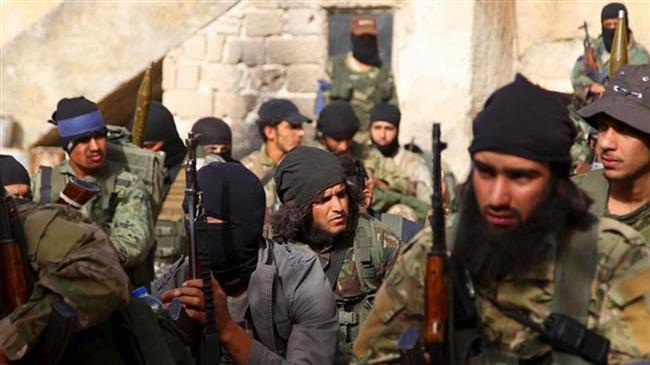
Western governments and their media outlets have been concocting narratives to sway public opinion in favor of militant groups operating in the Arab country, according to a report.
Citing leaked documents, the investigative journalism group Grayzone revealed in a report published on its news website on Wednesday that Western governments and their affiliated news agencies carefully organized English- and Arabic-language media coverage of the war in Syria to drum up support for the militant groups there.
“Virtually every aspect of the Syrian opposition was cultivated and marketed by Western government-backed public relations firms, from their political narratives to their branding, from what they said to where they said it,” the article said.
The group said US and European contractors trained and advised Syrian “opposition” leaders, including young media activists, at all levels and organized interviews for them on mainstream outlets such as the BBC and the UK’s Channel 4.
“Western government public relation firms not only influenced the way the media covered Syria, but as the leaked documents reveal, they produced their own propagandistic pseudo-news for broadcast on major TV networks in the Middle East, including BBC Arabic, Al Jazeera, Al Arabiya, and Orient TV,” Grayzone said.
The UK-funded firms functioned full-time to serve the militant outfits in Syria, according to the article, with one contractor, called InCoStrat, saying it was in constant contact with a network of more than international 1,600 journalists and “influencers,” and used them to promote anti-Damascus narratives.
The leaked documents also revealed that the Western government contractor, ARK, had played a role in “popularizing” the so-called civil defense group the White Helmets in American and European media.
“ARK ran the social media accounts of the White Helmets, and helped turn the Western-backed group into a key propaganda weapon of the Syrian opposition,” the article said.
The so-called White Helmets have been implicated by Syria and its ally Russia in numerous violations, including working with Takfiri militants in the Arab country and staging false-flag gas attacks to be blamed on Damascus as an excuse for Western allies to attack Syria.
ARK also ran an anti-Damascus propaganda outlet called Moubader, which developed a huge following on social media, including more than 200,000 likes on Facebook. The Western government contractor also printed 15,000 copies per month of a “high-quality hard copy” Moubader magazine and distributed in militant-held areas of Syria.
Syria has been gripped by foreign-backed militancy since March 2011.
Idlib, in northwestern Syria, and small parts of an adjacent area in Aleppo form the only large areas in the hands of militants after the Syrian military managed to undo militant gains across the country and bring back almost all of Syrian soil under government control.
Idlib is now held by an array of militants dominated by the Hayat Tahrir al-Sham (HTS) Takfiri group, which is led by members of the former al-Qaeda franchise.
The Syrian government says the Israeli regime and its Western and regional allies are aiding Takfiri terrorist groups that are wreaking havoc in the country.
Lies, Damned Lies and Health Statistics – the Deadly Danger of False Positives
By Dr Michael Yeadon | Lockdown Sceptics | September 20, 2020
I never expected to be writing something like this. I am an ordinary person, recently semi-retired from a career in the pharmaceutical industry and biotech, where I spent over 30 years trying to solve problems of disease understanding and seek new treatments for allergic and inflammatory disorders of lung and skin. I’ve always been interested in problem solving, so when anything biological comes along, my attention is drawn to it. Come 2020, came SARS-CoV-2. I’ve written about the pandemic as objectively as I could. The scientific method never leaves a person who trained and worked as a professional scientist. Please do read that piece. My co-authors & I will submit it to the normal rigours of peer review, but that process is slow and many pieces of new science this year have come to attention through pre-print servers and other less conventional outlets.
While paying close attention to data, we all initially focused on the sad matter of deaths. I found it remarkable that, in discussing the COVID-19 related deaths, most people I spoke to had no idea of large numbers. Asked approximately how many people a year die in the UK in the ordinary course of events, each a personal tragedy, they usually didn’t know. I had to inform them it is around 620,000, sometimes less if we had a mild winter, sometimes quite a bit higher if we had a severe ’flu season. I mention this number because we know that around 42,000 people have died with or of COVID-19. While it’s a huge number of people, its ‘only’ 0.06% of the UK population. Its not a coincidence that this is almost the same proportion who have died with or of COVID-19 in each of the heavily infected European countries – for example, Sweden. The annual all-causes mortality of 620,000 amounts to 1,700 per day, lower in summer and higher in winter. That has always been the lot of humans in the temperate zones. So for context, 42,000 is about ~24 days worth of normal mortality. Please know I am not minimising it, just trying to get some perspective on it. Deaths of this magnitude are not uncommon, and can occur in the more severe flu seasons. Flu vaccines help a little, but on only three occasions in the last decade did vaccination reach 50% effectiveness. They’re good, but they’ve never been magic bullets for respiratory viruses. Instead, we have learned to live with such viruses, ranging from numerous common colds all the way to pneumonias which can kill. Medicines and human caring do their best.
So, to this article. Its about the testing we do with something called PCR, an amplification technique, better known to biologists as a research tool used in our labs, when trying to unpick mechanisms of disease. I was frankly astonished to realise they’re sometimes used in population screening for diseases – astonished because it is a very exacting technique, prone to invisible errors and it’s quite a tall order to get reliable information out of it, especially because of the prodigious amounts of amplification involved in attempting to pick up a strand of viral genetic code. The test cannot distinguish between a living virus and a short strand of RNA from a virus which broke into pieces weeks or months ago.
I believe I have identified a serious, really a fatal flaw in the PCR test used in what is called by the UK Government the Pillar 2 screening – that is, testing many people out in their communities. I’m going to go through this with care and in detail because I’m a scientist and dislike where this investigation takes me. I’m not particularly political and my preference is for competent, honest administration over the actual policies chosen. We’re a reasonable lot in UK and not much given to extremes. What I’m particularly reluctant about is that, by following the evidence, I have no choice but to show that the Health Secretary, Matt Hancock, misled the House of Commons and also made misleading statements in a radio interview. Those are serious accusations. I know that. I’m not a ruthless person. But I’m writing this anyway, because what I have uncovered is of monumental importance to the health and wellbeing of all the people living in the nation I have always called home.
Back to the story, and then to the evidence. When the first (and I think, only) wave of COVID-19 hit the UK, I was with almost everyone else in being very afraid. I’m 60 and in reasonable health, but on learning that I had about a 1% additional risk of perishing if I caught the virus, I discovered I was far from ready to go. So, I wasn’t surprised or angry when the first lockdown arrived. It must have been a very difficult thing to decide. However, before the first three-week period was over, I’d begun to develop an understanding of what was happening. The rate of infection, which has been calculated to have infected well over 100,000 new people every day around the peak, began to fall, and was declining before lockdown. Infection continued to spread out, at an ever-reducing rate and we saw this in the turning point of daily deaths, at a grim press conference each afternoon. We now know that lockdown made no difference at all to the spread of the virus. We can tell this because the interval between catching the virus and, in those who don’t make it, their death is longer than the interval between lockdown and peak daily deaths. There isn’t any controversy about this fact, which is easily demonstrated, but I’m aware some people like to pretend it was lockdown that turned the pandemic, perhaps to justify the extraordinary price we have all paid to do it. That price wasn’t just economic. It involved avoidable deaths from diseases other than COVID-19, as medical services were restricted, in order to focus on the virus. Some say that lockdown, directly and indirectly, killed as many as the virus. I don’t know. Its not something I’ve sought to learn. But I mention because interventions in all our lives should not be made lightly. Its not only inconvenience, but real suffering, loss of livelihoods, friendships, anchors of huge importance to us all, that are severed by such acts. We need to be certain that the prize is worth the price. While it is uncertain it was, even for the first lockdown, I too supported it, because we did not know what we faced, and frankly, almost everyone else did it, except Sweden. I am now resolutely against further interventions in what I have become convinced is a fruitless attempt to ‘control the virus’. We are, in my opinion – shared by others, some of whom are well placed to assess the situation – closer to the end of the pandemic in terms of deaths, than we are to its middle. I believe we should provide the best protection we can for any vulnerable people, and otherwise cautiously get on with our lives. I think we are all going to get a little more Swedish over time.
In recent weeks, though, it cannot have escaped anyone’s attention that there has been a drum beat which feels for all the world like a prelude to yet more fruitless and damaging restrictions. Think back to mid-summer. We were newly out of lockdown and despite concerns for crowded beaches, large demonstrations, opening of shops and pubs, the main item on the news in relation to COVID-19 was the reassuring and relentless fall in daily deaths. I noticed that, as compared to the slopes of the declining death tolls in many nearby countries, that our slope was too flat. I even mentioned to scientist friends that inferred the presence of some fixed signal that was being mixed up with genuine COVID-19 deaths. Imagine how gratifying it was when the definition of a COVID-19 death was changed to line up with that in other countries and in a heartbeat our declining death toll line became matched with that elsewhere. I was sure it would: what we have experienced and witnessed is a terrible kind of equilibrium. A virus that kills few, then leaves survivors who are almost certainly immune – a virus to which perhaps 30-50% were already immune because it has relatives and some of us have already encountered them – accounts for the whole terrible but also fascinating biological process. There was a very interesting piece in the BMJ in recent days that offers potential support for this contention.
Now we have learned some of the unusual characteristics of the new virus, better treatments (anti-inflammatory steroids, anti-coagulants and in particular, oxygen masks and not ventilators in the main) the ‘case fatality rate’ even for the most hard-hit individuals is far lower now than it was six months ago.
As there is no foundational, medical or scientific literature which tells us to expect a ‘second wave’, I began to pay more attention to the phrase as it appeared on TV, radio and print media – all on the same day – and has been relentlessly repeated ever since. I was interviewed recently by Julia Hartley-Brewer on her talkRADIO show and on that occasion I called on the Government to disclose to us the evidence upon which they were relying to predict this second wave. Surely they have some evidence? I don’t think they do. I searched and am very qualified to do so, drawing on academic friends, and we were all surprised to find that there is nothing at all. The last two novel coronaviruses, Sar (2003) and MERS (2012), were of one wave each. Even the WW1 flu ‘waves’ were almost certainly a series of single waves involving more than one virus. I believe any second wave talk is pure speculation. Or perhaps it is in a model somewhere, disconnected from the world of evidence to me? It would be reasonable to expect some limited ‘resurgence’ of a virus given we don’t mix like cordial in a glass of water, but in a more lumpy, human fashion. You’re most in contact with family, friends and workmates and they are the people with whom you generally exchange colds.
A long period of imposed restrictions, in addition to those of our ordinary lives did prevent the final few percent of virus mixing with the population. With the movements of holidays, new jobs, visiting distant relatives, starting new terms at universities and schools, that final mixing is under way. It should not be a terrifying process. It happens with every new virus, flu included. It’s just that we’ve never before in our history chased it around the countryside with a technique more suited to the biology lab than to a supermarket car park.
A very long prelude, but necessary. Part of the ‘project fear’ that is rather too obvious, involving second waves, has been the daily count of ‘cases’. Its important to understand that, according to the infectious disease specialists I’ve spoken to, the word ‘case’ has to mean more than merely the presence of some foreign organism. It must present signs (things medics notice) and symptoms (things you notice). And in most so-called cases, those testing positive had no signs or symptoms of illness at all. There was much talk of asymptomatic spreading, and as a biologist this surprised me. In almost every case, a person is symptomatic because they have a high viral load and either it is attacking their body or their immune system is fighting it, generally a mix. I don’t doubt there have been some cases of asymptomatic transmission, but I’m confident it is not important.
That all said, Government decided to call a person a ‘case’ if their swab sample was positive for viral RNA, which is what is measured in PCR. A person’s sample can be positive if they have the virus, and so it should. They can also be positive if they’ve had the virus some weeks or months ago and recovered. It’s faintly possible that high loads of related, but different coronaviruses, which can cause some of the common colds we get, might also react in the PCR test, though it’s unclear to me if it does.
But there’s a final setting in which a person can be positive and that’s a random process. This may have multiple causes, such as the amplification technique not being perfect and so amplifying the ‘bait’ sequences placed in with the sample, with the aim of marrying up with related SARS-CoV-2 viral RNA. There will be many other contributions to such positives. These are what are called false positives.
Think of any diagnostic test a doctor might use on you. The ideal diagnostic test correctly confirms all who have the disease and never wrongly indicates that healthy people have the disease. There is no such test. All tests have some degree of weakness in generating false positives. The important thing is to know how often this happens, and this is called the false positive rate. If 1 in 100 disease-free samples are wrongly coming up positive, the disease is not present, we call that a 1% false positive rate. The actual or operational false positive rate differs, sometimes substantially, under different settings, technical operators, detection methods and equipment. I’m focusing solely on the false positive rate in Pillar 2, because most people do not have the virus (recently around 1 in 1000 people and earlier in summer it was around 1 in 2000 people). It is when the amount of disease, its so-called prevalence, is low that any amount of a false positive rate can be a major problem. This problem can be so severe that unless changes are made, the test is hopelessly unsuitable to the job asked of it. In this case, the test in Pillar 2 was and remains charged with the job of identifying people with the virus, yet as I will show, it is unable to do so.
Because of the high false positive rate and the low prevalence, almost every positive test, a so-called case, identified by Pillar 2 since May of this year has been a FALSE POSITIVE. Not just a few percent. Not a quarter or even a half of the positives are FALSE, but around 90% of them. Put simply, the number of people Mr Hancock sombrely tells us about is an overestimate by a factor of about ten-fold. Earlier in the summer, it was an overestimate by about 20-fold.
Let me take you through this, though if you’re able to read Prof Carl Heneghan’s clearly written piece first, I’m more confident that I’ll be successful in explaining this dramatic conclusion to you. (Here is a link to the record of numbers of tests, combining Pillar 1 (hospital) and Pillar 2 (community).)
Imagine 10,000 people getting tested using those swabs you see on TV. We have a good estimate of the general prevalence of the virus from the ONS, who are wholly independent (from Pillar 2 testing) and are testing only a few people a day, around one per cent of the numbers recently tested in Pillar 2. It is reasonable to assume that most of the time, those being tested do not have symptoms. People were asked to only seek a test if they have symptoms. However, we know from TV news and stories on social media from sampling staff, from stern guidance from the Health Minister and the surprising fact that in numerous locations around the country, the local council is leafleting people’s houses, street by street to come and get tested.
The bottom line is that it is reasonable to expect the prevalence of the virus to be close to the number found by ONS, because they sample randomly, and would pick up symptomatic and asymptomatic people in proportion to their presence in the community. As of the most recent ONS survey, to a first approximation, the virus was found in 1 in every 1000 people. This can also be written as 0.1%. So when all these 10,000 people are tested in Pillar 2, you’d expect 10 true positives to be found (false negatives can be an issue when the virus is very common, but in this community setting, it is statistically unimportant and so I have chosen to ignore it, better to focus only on false positives).
So, what is the false positive rate of testing in Pillar 2? For months, this has been a concern. It appears that it isn’t known, even though as I’ve mentioned, you absolutely need to know it in order to work out whether the diagnostic test has any value! What do we know about the false positive rate? Well, we do know that the Government’s own scientists were very concerned about it, and a report on this problem was sent to SAGE dated June 3rd 2020. I quote: “Unless we understand the operational false positive rate of the UK’s RT-PCR testing system, we risk over-estimating the COVID-19 incidence, the demand on track and trace and the extent of asymptomatic infection”. In that same report, the authors helpfully listed the lowest to highest false positive rate of dozens of tests using the same technology. The lowest value for false positive rate was 0.8%.
Allow me to explain the impact of a false positive rate of 0.8% on Pillar 2. We return to our 10,000 people who’ve volunteered to get tested, and the expected ten with virus (0.1% prevalence or 1:1000) have been identified by the PCR test. But now we’ve to calculate how many false positives are accompanying them. The shocking answer is 80. 80 is 0.8% of 10,000. That’s how many false positives you’d get every time you were to use a Pillar 2 test on a group of that size.
The effect of this is, in this example, where 10,000 people have been tested in Pillar 2, could be summarised in a headline like this: “90 new cases were identified today” (10 real positive cases and 80 false positives). But we know this is wildly incorrect. Unknown to the poor technician, there were in this example, only 10 real cases. 80 did not even have a piece of viral RNA in their sample. They are really false positives.
I’m going to explain how bad this is another way, back to diagnostics. If you’d submitted to a test and it was positive, you’d expect the doctor to tell you that you had a disease, whatever it was testing for. Usually, though, they’ll answer a slightly different question: “If the patient is positive in this test, what is the probability they have the disease?” Typically, for a good diagnostic test, the doctor will be able to say something like 95% and you and they can live with that. You might take a different, confirmatory test, if the result was very serious, like cancer. But in our Pillar 2 example, what is the probability a person testing positive in Pillar 2 actually has COVID-19? The awful answer is 11% (10 divided by 80 + 10). The test exaggerates the number of covid-19 cases by almost ten-fold (90 divided by 10). Scared yet? That daily picture they show you, with the ‘cases’ climbing up on the right-hand side? Its horribly exaggerated. Its not a mistake, as I shall show.
Earlier in the summer, the ONS showed the virus prevalence was a little lower, 1 in 2000 or 0.05%. That doesn’t sound much of a difference, but it is. Now the Pillar 2 test will find half as many real cases from our notional 10,000 volunteers, so 5 real cases. But the flaw in the test means it will still find 80 false positives (0.8% of 10,000). So its even worse. The headline would be “85 new cases identified today”. But now the probability a person testing positive has the virus is an absurdly low 6% (5 divided by 80 + 5). Earlier in the summer, this same test exaggerated the number of COVID-19 cases by 17-fold (85 divided by 5). Its so easy to generate an apparently large epidemic this way. Just ignore the problem of false positives. Pretend its zero. But it is never zero.
This test is fatally flawed and MUST immediately be withdrawn and never used again in this setting unless shown to be fixed. The examples I gave are very close to what is actually happening every day as you read this.
I’m bound to ask, did Mr Hancock know of this fatal flaw? Did he know of the effect it would inevitably have, and is still having, not only on the reported case load, but the nation’s state of anxiety. I’d love to believe it is all an innocent mistake. If it was, though, he’d have to resign over sheer incompetence. But is it? We know that internal scientists wrote to SAGE, in terms, and, surely, this short but shocking warning document would have been drawn to the Health Secretary’s attention? If that was the only bit of evidence, you might be inclined to give him the benefit of the doubt. But the evidence grows more damning.
Recently, I published with my co-authors a short Position Paper. I don’t think by then, a month ago or so, the penny had quite dropped with me. And I’m an experienced biomedical research scientist, used to dealing with complex datasets and probabilities.
On September 11th 2020, I was a guest on Julia Hartley-Brewer’s talkRADIO show. Among other things, I called upon Mr Hancock to release the evidence underscoring his confidence in and planning for ‘the second wave’. This evidence has not yet been shown to the public by anyone. I also demanded he disclose the operational false positive rate in Pillar 2 testing.
On September 16th, I was back on Julia’s show and this time focused on the false positive rate issue (1m 45s – 2min 30s). I had read Carl Heneghan’s analysis showing that even if the false positive rate was as low as 0.1%, 8 times lower than any similar test, it still yields a majority of false positives. So, my critique doesn’t fall if the actual false positive rate is lower than my assumed 0.8%.
On September 18th, Mr Hancock again appeared, as often he does, on Julia Hartley-Brewer’s show. Julia asked him directly (1min 50s – on) what the false positive rate in Pillar 2 is. Mr Hancock said “It’s under 1%”. Julia again asked him exactly what it was, and did he even know it? He didn’t answer that, but then said “it means that, for all the positive cases, the likelihood of one being a false positive is very small”.
That is a seriously misleading statement as it is incorrect. The likelihood of an apparently positive case being a false positive is between 89-94%, or near-certainty. Of note, even when ONS was recording its lowest-ever prevalence, the positive rate in Pillar 2 testing never fell below 0.8%.
It gets worse for the Health Secretary. On September the 17th, I believe, Mr Hancock took a question from Sir Desmond Swayne about false positives. It is clear that Sir Desmond is asking about Pillar 2.
Mr Hancock replied: “I like my right honourable friend very much and I wish it were true. The reason we have surveillance testing, done by ONS, is to ensure that we’re constantly looking at a nationally representative sample at what the case rate is. The latest ONS survey, published on Friday, does show a rise consummate (sic) with the increased number of tests that have come back positive.”
He did not answer Sir Desmond’s question, but instead answered a question of his choosing. Did the Health Secretary knowingly mislead the House? By referring only to ONS and not even mentioning the false positive rate of the test in Pillar 2 he was, as it were, stealing the garb of ONS’s more careful work which has a lower false positive rate, in order to smuggle through the hidden and very much higher, false positive rate in Pillar 2. The reader will have to decide for themselves.
Pillar 2 testing has been ongoing since May but it’s only in recent weeks that it has reached several hundreds of thousands of tests per day. The effect of the day by day climb in the number of people that are being described as ‘cases’ cannot be overstated. I know it is inducing fear, anxiety and concern for the possibility of new and unjustified restrictions, including lockdowns. I have no idea what Mr Hancock’s motivations are. But he has and continues to use the hugely inflated output from a fatally flawed Pillar 2 test and appears often on media, gravely intoning the need for additional interventions (none of which, I repeat, are proven to be effective).
You will be very familiar with the cases plot which is shown on most TV broadcasts at the moment. It purports to show the numbers of cases which rose then fell in the spring, and the recent rise in cases. This graph is always accompanied by the headline that “so many thousands of new cases were detected in the last 24 hours”.
You should know that there are two major deceptions, in that picture, which combined are very likely both to mislead and to induce anxiety. Its ubiquity indicates that it is a deliberate choice.
Firstly, it is very misleading in relation to the spring peak of cases. This is because we had no community screening capacity at that time. A colleague has adjusted the plot to show the number of cases we would have detected, had there been a well-behaved community test capability available. The effect is to greatly increase the size of the spring cases peak, because there are very many cases for each hospitalisation and many hospitalisations for every death.
Secondly, as I hope I have shown and persuaded you, the cases in summer and at present, generated by seriously flawed Pillar 2 tests, should be corrected downwards by around ten-fold.
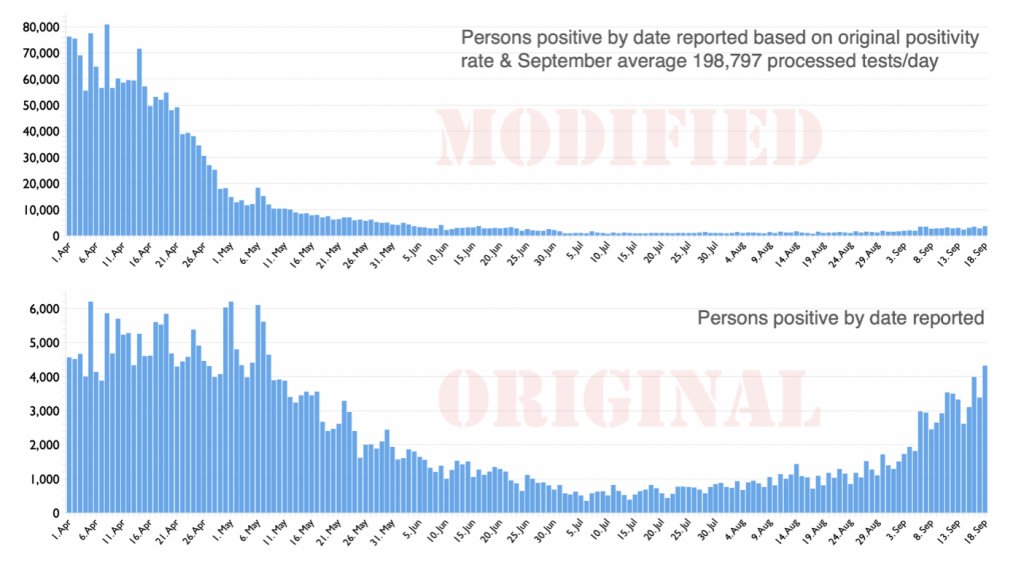
I do believe genuine cases are rising somewhat. This is, however, also true for flu, which we neither measure daily nor report on every news bulletin. If we did, you would appreciate that, going forward, it is quite likely that flu is a greater risk to public health than COVID-19. The corrected cases plot (above) does, I believe, put the recent rises in incidence of COVID-19 in a much more reasonable context. I thought you should see that difference before arriving at your own verdict on this sorry tale.
There are very serious consequences arising from grotesque over-estimation of so-called cases in Pillar 2 community testing, which I believe was put in place knowingly. Perhaps Mr Hancock believes his own copy about the level of risk now faced by the general public? Its not for me to deduce. What this huge over-estimation has done is to have slowed the normalisation of the NHS. We are all aware that access to medical services is, to varying degrees, restricted. Many specialities were greatly curtailed in spring and after some recovery, some are still between a third and a half below their normal capacities. This has led both to continuing delays and growth of waiting lists for numerous operations and treatments. I am not qualified to assess the damage to the nation’s and individuals’ health as a direct consequence of this extended wait for a second wave. Going into winter with this configuration will, on top of the already restricted access for six months, lead inevitably to a large number of avoidable, non-Covid deaths. That is already a serious enough charge. Less obvious but, in aggregate, additional impacts arise from fear of the virus, inappropriately heightened in my view, which include: damage to or even destruction of large numbers of businesses, especially small businesses, with attendant loss of livelihoods, loss of educational opportunities, strains on family relationships, eating disorders, increasing alcoholism and domestic abuse and even suicides, to name but a few.
In closing, I wish to note that in the last 40 years alone the UK has had seven official epidemics/pandemics; AIDS, Swine flu, CJD, SARS, MERS, Bird flu as well as annual, seasonal flu. All were very worrying but schools remained open and the NHS treated everybody and most of the population were unaffected. The country would rarely have been open if it had been shut down every time.
I have explained how a hopelessly-performing diagnostic test has been, and continues to be used, not for diagnosis of disease but, it seems, solely to create fear.
This misuse of power must cease. All the above costs are on the ledger, too, when weighing up the residual risks to society from COVID-19 and the appropriate actions to take, if any. Whatever else happens, the test used in Pillar 2 must be immediately withdrawn as it provides no useful information. In the absence of vastly inflated case numbers arising from this test, the pandemic would be seen and felt to be almost over.
Dr Mike Yeadon is the former CSO and VP, Allergy and Respiratory Research Head with Pfizer Global R&D and co-Founder of Ziarco Pharma Ltd.
Top UK scientists urge govt to protect most vulnerable from Covid-19 instead of carpet-bombing virus
RT | September 21, 2020
The UK should focus on helping the most vulnerable – including residents in care homes worst affected by Covid-19 – instead of pursuing an “unfeasible” goal of suppressing the virus until a vaccine arrives, top scientists urged.
British scholars penned an open letter to PM Boris Johnson, Chancellor of the Exchequer Rishi Sunak, as well as health chiefs in England, Scotland, Wales and Northern Ireland, asking them to urgently reconsider the current epidemic strategy.
Authored by Oxford professors Sunetra Gupta and Carl Heneghan, as well as Karol Sikora of the University of Buckingham and Sam Williams of the Economic Insight consultancy, the letter says the “existing policy path is inconsistent with the known risk-profile of Covid-19.” The appeal has been signed by dozens of academics from the UK’s leading educational institutions.
“The unstated objective currently appears to be one of suppression of the virus, until such a time that a vaccine can be deployed. This objective is increasingly unfeasible… and is leading to significant harm across all age groups, which likely offsets all benefits.”
The letter comes days after Health Secretary Matt Hancock pledged “to do what it takes” in order to fight Covid-19. After the UK recorded close to 4,000 confirmed coronavirus cases on Sunday, the government is considering a “circuit-breaking” period of tightened measures which could be announced later this week, UK media revealed.
Such a move could reportedly involve bringing back restrictions in public spaces for a few weeks, most of which were relaxed throughout May and June. Pubs and restaurants could be mandated to close earlier across the country, but schools and most workplaces would be kept open. Closing some parts of the hospitality industry is also one of the options.
According to the authors of the open letter, blanket measures aren’t the way to go. “Instead, more targeted measures that protect the most vulnerable from Covid, whilst not adversely impacting those not at risk, are more supportable,” they wrote.
“Given the high proportion of Covid-19 deaths in care homes, these should be a priority,” the scientists pointed out. The pandemic hit the UK’s nursing facilities exceptionally hard, claiming 19,394 lives between March and June, which accounted for 29.3 percent of all deaths in care homes during that time, according to government figures.
Last month, it emerged that care home staff were allegedly pressured by the NHS to admit coronavirus-positive or untested patients at the height of the crisis this spring. Nurses were reportedly instructed to change the status of all residents to “do not resuscitate.”
However, the government seems to have learned its lesson. Care facilities will receive £546 million ($702.5 million) to upgrade, reduce all but essential movements of staff between nursing homes to prevent the spread of the virus, and allow for the distribution of free PPE – masks and gloves – to the elderly and workers.
The UK has reported more than 394,000 coronavirus cases since the start of the epidemic, claiming close to 42,000 lives.
UK to ‘triple’ size of Oman military base
Press TV – September 12, 2020
The UK is planning to significantly expand the size of its military base on the coast of Oman ostensibly to enhance the Royal Navy’s presence “east of Suez”.
According to the Times (September 12), the base is set to be tripled in size as part of the UK’s strategic rebalancing and reorientation following the country’s exit from the European Union.
UK defense secretary, Ben Wallace, has announced that an additional £23.8 million will be spent tripling the size of the Royal Navy’s facility in Duqm, a port that is deep enough to accommodate aircraft carriers and submarines.
Altogether up to £43 million will be spent on Duqm by 2028, reflecting the depth of Britain’s confidence in its defense partnership with the Sultanate of Oman, which stretches back decades.
Situated 547 km south of the capital Muscat, Duqm’s prime location will enable the Royal Navy to launch or support deployments deep into the Indian Ocean and possibly beyond.
In addition, Duqm has a dry dock facility which could support the UK’s two aircraft carriers – HMS Queen Elizabeth and HMS Prince of Wales – especially in relation to missions to the East China Sea where the carriers could be used to apply military pressure on China.
Wallace – who is currently concluding a trip to the Middle East – proclaimed that “the long-standing friendships between the UK and the [Persian] Gulf states are more important than ever”.
“With shared defense and security interests, it is vital we work together for both regional and global stability”.
The investment in Duqm will be viewed by defense analysts as a strong indicator of the UK’s intention to stay militarily engaged in the Middle East.
It is noteworthy that Duqm’s expansion will also reportedly support British army training in Oman.
To that end, there is already speculation that the British army could switch its training for Challenger 2 tanks from Canada to Oman.
XR’s stupid stunts are masking the fact that the establishment agrees with its ridiculous aims
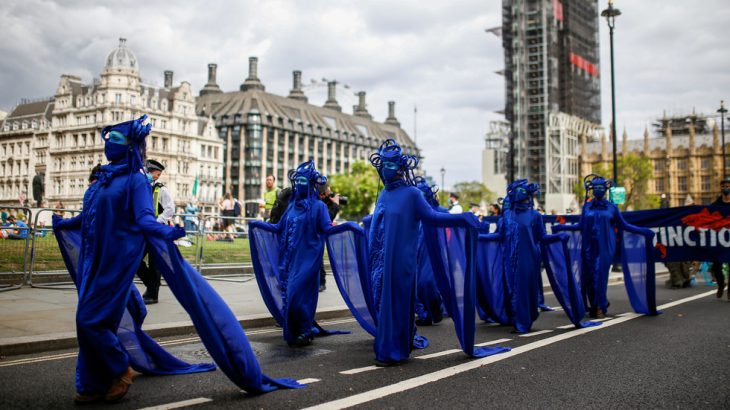
Ocean Rebellion group members march during an Extinction Rebellion protest in London, Britain, September 6, 2020. © REUTERS/Henry Nicholls
By Rob Lyons | RT | September 8, 2020
The bizarre exploits of Extinction Rebellion are diverting attention from the alarming reality that many in power agree with the group’s bonkers agenda. And that is resulting in a hands-off approach to XR’s disruptive tactics.
While Extinction Rebellion (XR) has been getting lots of attention for its bizarre and disruptive protests, the real madness is the fact that the political and media establishment agrees with its aims. The only quibbles are over timing and methods.
Over the past week or so, XR has reignited its protests after being in abeyance during the Covid-19 pandemic. As is the usual routine, roads have been blocked and institutions targeted. On one day, XR harassed a group of British think tanks based in a shared building in Westminster. Another group of protesters glued themselves to the ground in front of a doorway into Parliament, perhaps symbolic of XR’s disdain for democracy.
Most controversially, XR protesters blocked printing plants for The Times, The Sun and The Telegraph, preventing delivery of the newspapers. XR accuses these publications of promoting lies about climate change. Here was an attack on the free press, and the backlash was substantial. Rather than debating the arguments for a rapid reduction in UK greenhouse gas emissions, the protesters seemed to believe that these media outlets were responsible for brainwashing the public and should simply be shut down.
The newspapers were, rightly, outraged. But the irony is that these publications all broadly agree that climate change is an existential threat to humanity. Saturday’s edition of The Sun even included an article by David Attenborough, the veteran voice of BBC wildlife programmes, demanding stronger action on the environment. At most, The Telegraph has included a handful of sceptical voices in its opinion pages, but the editorial line is right behind the government’s ‘drastic carbon emission plans’.
It is those plans that should alarm us far more than XR, who are a bunch of oddballs engaged in staging stunts that are annoying and disruptive, but which are also bizarre. It seems that XR supporters believe that they can bring down The System through the medium of interpretative dance, staging ‘die-ins’, meditating outside leading banks or dressing up in costumes that offer alarming echoes of ‘The Handmaid’s Tale’.
For the environmentalist mainstream, XR is utterly embarrassing. Moreover, while demanding that we listen to the scientists, its own claims of imminent global destruction are utterly unscientific.
Meanwhile, every significant UK political party has fallen in line with the idea that we should aim to reduce greenhouse gas emissions to ‘net zero’ – that is, zero emissions once the effect of counteracting policies like planting trees is taken into account. That is exactly the same aim as XR. The only question is over what the target date should be. XR wants to get to net zero in five years, the government wants to do it in 30. But that aim itself is bonkers.
To achieve such a goal would mean a very rapid decarbonisation of society. Without the technology to replace fossil-fuelled transport, energy production, cement, food production and much more, this could only be achieved by a drastic reduction in living standards that would make the post-lockdown recessions look luxurious in comparison. ‘Net zero’ doesn’t just mean turning down the thermostat a bit and recycling your plastic – it means a wholesale transformation into a shivering, stay-local, lentil-munching society.
As a new report by the Institute of Government, a British think tank, notes that ‘there is still little evidence that the government, and the politicians who waved the new target through with little debate, have confronted the enormous scale of the task ahead’.
Moreover, it isn’t clear if imported goods would count in this target. If they do count, then somehow the UK would need to go into negative emissions, since it would have to make up for the emissions created abroad during the production and transportation of those goods. If they don’t count, the net zero target itself becomes rather meaningless – we would just import stuff instead of producing it in the UK.
This places the government in a quandary. It shares XR’s basic aim, while hating the disruption that XR’s protests cause. For example, one Conservative MP, Tobias Ellwood, has come out in support of XR’s original ‘noble cause’, but says he thinks the protesters have gone too far. The result has been a hands-off approach. While protesters against the Covid lockdowns have faced arrest and heavy fines simply for assembling in large numbers, the police have been slow to break up XR’s protests.
Some ministers recognise that this is untenable for the normal functioning of society, but their response has bordered on the irrational. There are now rumours from within the government that XR might be designated an ‘organised crime group’, based on the definition that such a group is ‘characterised by violence or the threat of violence and by the use of bribery and corruption’. This is as bizarre as one of XR’s protests. Whatever it is, XR is not akin to the mafia or a drugs cartel.
There are easier and less illiberal ways of dealing with the problem. XR should not be stopped from peaceful protest. If XR supporters block a road or attack a building, there are perfectly ordinary laws that can be used to arrest them without undermining the right to assembly and protest.
While XR’s antics mostly attract derision, the truly crazy thing is the policy of ‘net zero’. And because every major political party agrees with it, voters have simply been given no choice in the matter. It’s not the lunatics dressing up and blocking the roads we should worry about; it’s the lunatics in Parliament who keep voting for these irrational and reactionary policies.
Rob Lyons is a UK journalist specialising in science, environmental and health issues. He is the author of ‘Panic on a Plate: How Society Developed an Eating Disorder’.
Why is the GNA defunding the Lockerbie case despite it being close to a verdict of innocence?
Dr Mustafa Fetouri | MEMO | September 3, 2020
The only Lockerbie bombing convict is one step closer to his guilty verdict being overturned, however, posthumously. Abdelbaset Al-Megrahi died at home in Tripoli on 21 May, 2012, while protesting his innocence until his last breath. The Scottish Criminal Cases Review Commission (SCCRC) allowed the family to proceed with an appeal to clear his name. The case was sent to the High Court of Justiciary, Scotland’s highest criminal court, and a date for the final hearing has been scheduled to start on 24 November.
His 27-year-old son Ali, who is leading the family’s long and arduous fight to clear his father’s name, is certain that justice will prevail this time and that his late father’s verdict will be reversed. During a telephone conversation in Tripoli last Monday, he assured me: “My father’s name will certainly be cleared this time.”
The family’s lawyer Aamer Anwar, a distinguished Scottish lawyer who volunteered to take the case, in a series of emails confidently communicated to me: “We have a robust appeal.”
Winning this time seems certain. Professor Robert Black, a Scottish law authority, and the mind behind the first Lockerbie court setup in the Netherlands in May 2000, agrees with this analysis. He believes the Scottish court will “overturn the verdict” against Al-Megrahi, however, on the “narrower ground” of the crown prosecutor “withholding materials” from the defence team that could have helped establish Al-Megrahi’s innocence from the outset. Professor Black is “disappointed” that the court might not go as far as “to find that no reasonable court would have convicted Al-Megrahi.” He added, “I hope I’m wrong about this” – which would restore some of the Scottish judiciary’s reputation tarnished by the Lockerbie case and its aftermath.
The Lockerbie bombing, since 1988, became negatively synonymous with Libya, Gaddafi and its entire population. Gaddafi, firmly believing in their innocence, refused to hand over his accused citizens, Lamin Fhimah and Abdelbaset Al-Megrahi, to stand trial in the UK. This led the United Nations (UN) to adopt a series of sanction resolutions, including Resolution 731, passed on 21 March, 1992, with harsh economic and political punitive measures that not only isolated Libya, but made life extremely difficult for its entire population.
The long-held belief that the late Gaddafi was behind the attack still echoes within Western mainstream media, despite the mounting evidence to the contrary emerging over the years.
Now, it can be disclosed that Libya’s Government of National Accord (GNA), the only UN-recognised authority in the country, wants the mud to keep sticking to Gaddafi, Libya and its people too. The GNA is not enthusiastic about this latest development. The GNA have, illegally, cut the funding for the case over the last three years.
Al-Megrahi’s son Ali and the family lawyer are puzzled as to why the GNA cut funding at this critical junction of the case – when winning seems all but certain.
Lawyer Anwar does not disqualify the assumption that the GNA came under pressure from both the UK and the US to steer away from the case. The British and American narrative of the Lockerbie tragedy has always been that Libya is responsible and “that narrative must be maintained”, Anwar informs me.
However, suspension of defanging goes much deeper within the GNA, where corruption is rampant. A Scottish consultant to the legal team, speaking on condition of anonymity, yesterday clarified: “I believe funding is still budgeted, but the money disappears before getting to its intended final destination.”
Despite writing several times to the GNA to resume funding to meet the substantial mounting legal fees, Anwar received no replies until a few months ago, when his consultant was told that the GNA did not receive any messages relating to the funding of the case.
However, the consultant strongly disputes this, asserting that she “personally” handed over the file to the “highest official in the GNA” in a December 2017 meeting in Tripoli. When asked if “the highest official” meant Fayez Al-Sarraj, the GNA’s prime minister, she replied: “You think about it.”
It is not wholly unusual for the GNA to take such a position. Part of the political legitimacy in new Libya rests on the claim that Gaddafi was a supporter of international terror, and the Lockerbie bombing must have been his evil work too.
In November of 2019, the GNA’s Minister of Justice Mohamed Lamlum, personally stood before the International Criminal Court (ICC) to ask Saif Al-Islam, Gaddafi’s son, to face trial before the ICC, tarnishing the very judiciary he is supposed to protect and defend. Gaddafi Junior is wanted by the ICC for his – broadly disputed – role in quelling the 2011 troubles that ended his father’s rule over Libya.
According to different legal experts, the Libyan state is obliged to help its citizens abroad by all means necessary, including through funding in the event of legal issues. The Lockerbie case is much more than a petty case about a Libyan citizen, but it concerns the entire nation, its history and its reputation. This should elevate the case to a “national cause” for all Libyans, according to Anwar.
Indeed, Libyans across the political spectrum now consider the Lockerbie case a national issue and that Libya must continue funding the legal team, just as it did before 2011.
During the Gaddafi era, the government even established a consulate in Glasgow to closely monitor the case, and to help Al-Megrahi’s family who had to relocate to Scotland to be near their father while in jail.
It is not clear if the GNA will honour its legal obligations towards its own citizen, Al-Megrahi, albeit posthumously, but the legal team is not surrendering. They have already established a liaising team inside Libya to follow up with the chaotic authorities in Tripoli.
A group of volunteers inside and outside Libya are gearing up to explore other funding avenues if the GNA continues to reject meeting its legal obligations. In any eventuality, Al-Megrahi’s reputation, and that of Libya, will soon be restored.
Featured Video
HE SAVED LIVES. NOW HE FACES PRISON.
or go to
Aletho News Archives – Video-Images
From the Archives
NATO Sanctions and the Coming Global Diesel Fuel Disaster
By F. William Engdahl – New Eastern Outlook – 11.04.2022
Amid the ongoing global inflation crisis, NATO heads of state and mainstream media repeat a mantra that high energy prices are a direct result of Putin’s actions in Ukraine since end of February. The reality is that it is the western sanctions that are responsible. Those sanctions including cutting SWIFT interbank access for key Russian banks and some of the most severe sanctions ever imposed, are hardly having an impact on the military actions in Ukraine. What many overlook is the fact that they are increasingly impacting the economies of the West, especially the EU and USA. A closer look at the state of the global supply of diesel fuel is alarming. But Western sanctions planners at the US Treasury and the EU know fully well what they are doing. And it bodes ill for the world economy.
While most of us rarely think about diesel fuel as anything other than a pollutant, in fact it is essential to the entire world economy in a way few energy sources are. The director general of Fuels Europe, part of the European Petroleum Refiners Association, stated recently, “… there is a clear link between diesel and GDP, because almost everything that goes into and out of a factory goes using diesel.” … continue
Blog Roll
 Aletho News
- Trump meets Rodríguez near Maduro’s prison as Venezuela’s oil flows to US
- Trita Parsi: Middle East Unraveling — Are We on the Path to World War?
- Iran FM meets with US envoy on UN meeting’s sidelines at American side’s insistence: Report
- Qatar PM calls for Gulf security framework with Iran, says war must be ‘wake-up call’
- China condemns US extortion of Iranian airlines, rejects Washington’s ‘illegal’ sanctions threats
- Italy to move military personnel from Taif base after missile strike
- Finland’s Stubb tells European leaders to calm down
- Defeating Russia on battlefield impossible – Fico
- Finland’s Gender Clinic Reversal
- Massachusetts Wants Mental Health Visits, Why Does Government Use ‘Health’ to Enter Our Homes & Families?
- If Americans Knew
- Sanctions are collective punishment: immoral and self-defeating
- Phosphorus Munitions Fired by Israel Burn Groves, Orchards in Southern Lebanon
- Israel Carries Out New Ceasefire Violations Across Gaza
- AI – Emphasis on the ‘I’: Israel Is Funding AI Chatbot Propaganda
- Israel Blocking Hundreds of Wheelchairs for Injured Children From Entering Gaza
- Israel Is Expanding and Upgrading Compounds for Palestinian Militias in Gaza
- The Palestinian-American Residents of This West Bank Town Are Wondering: Where Is Trump?
- Gaza desperately needs tents, wheelchairs, fuel… and everything else (Israel blocks it all) – Daily Update
- Israeli Attacks in Gaza Kill at Least Seven Palestinians Over Three Days, including Woman and Child
- Trump’s militarization of Washington DC as he pursues Israel’s war against Iran
- No Tricks Zone
- New Study: Earth And Venus Surface Warmth Largely Explained By Convection And Lapse Rate, Not CO2 Or Radiation
- 2025 Nature Paper Claiming Worsening Global Drought Gets RETRACTED …Heavily Flawed
- New Study: ‘Global Drought Shows No Detectable Recent Acceleration Under Climate Warming’
- Economic Masterminds: German Socialists Suggest Taxing Productivity Gains Stemming From Using AI
- The South China Sea Has Not Been Cooperating With The Climate Change Narrative
- Energy Crisis: Germany Enters Heating Season With Historically Low Gas Reserve Fill Levels
- New Study: The Antarctic Ice Sheet Gained Mass From 2020-2024 Due To Staggering Snow And Ice Accumulation
- Study: Ocean Heating Rates From Thousands Of Years Ago ‘Dwarf’ Modern Ocean Heating Rates
- Climate Extremists Target, Attack Large-Scale Power Grid Infrastructure In Germany!
- New Study: Antarctic Ice Melt Has Contributed Less Than 1 Centimeter To Sea Level Rise In The Last 30 Years

