Soros & the £400k Question: What constitutes ‘foreign interference’ in democracy?

© Wiktor Dabkowski / Global Look Press
By Neil Clark | RT | February 9, 2018
You’d have to have a real sense of humor failure not to laugh. The news that US billionaire George Soros donated £400k to an anti-Brexit group came on the day that YouTube said they found no evidence of Russian interference in Brexit.
Repeat After Me (with robotic arm movements): “Unproven Russian involvement in Brexit – terrible! Impose more sanctions on Moscow! A £400k check from an American billionaire for an anti-Brexit campaigning group – that’s no problem; it’s helping our democracy!”
You don’t have to own a brand new £999 state-of-the art Hypocrisy Detector from Harrods, to pick up on the double standards. Just having a few functioning brain cells and thinking for yourself will do. For months in the UK we’ve been bombarded with Establishment-approved conspiracy theories – peddled in all the ’best’ newspapers – that Russia somehow ‘fixed’ Brexit. Getting Britain to leave the EU was all part of a cunning plot by Vladimir Putin, aka Dr. Evil, to weaken Europe and the ‘free world.’
Even West End musical composer Andrew Lloyd-Webber, who knows quite a bit about phantoms, seemed taken in by it. “By quitting Europe, I fear that we are hastening Putin’s dream of the break-up of the EU – and with it, potentially, western civilisation,” the noble Lord declared in July.
Never mind that we don’t have a single statement from Putin or other senior Kremlin figures saying that they actually supported Brexit. These Establishment Russia-bashers know exactly what The Vlad is thinking.
And never mind that RT and Sputnik, which we are repeatedly told are “propaganda arms of the Russian government,” ran articles by pro- and anti-Brexit writers. The same people who told us Iraq had WMDs in 2003 were absolutely sure it was those dastardly Russkies who had got Britain to vote ‘leave.’ The irony is of course that there was significant foreign interference in Brexit. But it didn’t come from Moscow.
The US has always wanted Britain to stay in the EU. In April 2016, two months before the Referendum, President Obama made it clear what he wanted when he visited the UK. He warned that if Britain exited the EU it would be “at the back of the queue” for trade deals with the US.
Just imagine if Putin had said that. The Russophobes would have spontaneously combusted.
Then of course there was the backing the Remain camp had from the giants of US capital. Goldman Sachs and JP Morgan donated £500,000 each to the ‘Britain Stronger in Europe’ group, Citigroup and Morgan Stanley – £250,000 each.
Again, repeat after me (with robotic arm movements): “This is not foreign interference… This is not foreign interference!”
The point is not whether we are for or against Brexit. Or whether we think George Soros is a malign influence who only acts out of self-interest or an old sweetie-pie with the good of humanity at heart. The point is the double standards that are causing our Hypocrisy Detectors to explode.
Let’s think back to December 2016. Then, the pro-war and fiercely anti-Russian Labour MP Ben Bradshaw told Parliament that it was “highly probable” that Russia had interfered with Brexit.
Fourteen months on, what have we got? On Thursday, the global head of You Tube’s public policy, Juniper Downs, said her company “had conducted a thorough investigation around the Brexit referendum and found no evidence of Russian interference.”
Twitter meanwhile says it detected 49 (yes, 49) accounts from what it claimed to be a “Russian troll factory,” which sent all of 942 messages about Brexit – amounting to less than 0.005% of all the tweets about the Referendum. Twitter said the accounts received “very low levels of engagement” from users. If the Kremlin had planned to use tweets to persuade us to vote ‘leave,’ they didn’t really put much effort into it, did they?
Finally, Facebook said that only three “Kremlin-linked” accounts were found which spent the grand sum of 72p (yes, 72p) on ads during the Referendum campaign. Which amounts to the greater “interference”? 72p or £400K? Erm… tough call, isn’t it?
You might have thought, given his concern with ‘foreign interference’ in British politics, that Ben Bradshaw would have been urging ‘Best for Britain’ to return George Soros’ donation. Au contraire! His only tweets about it were retweets of two critical comments about the Daily Telegraph, and the BBC’s coverage of the story. Conclusion: Those who rail about ‘Russia meddling in Brexit’ but not Soros’ intervention aren’t concerned about ‘foreign interference’ in UK politics, only ‘foreign interference’ from countries they don’t approve of.
Those who are quite happy peddling ludicrous conspiracy theories about Russians shout “conspiracy theorist” (or worse) at those who report factually on proven meddling from others. The Daily Express hit the nail on the head in their Friday editorial which said: “Just what does George Soros think he is doing pouring £400,000 into a campaign to stop Brexit. For a start he is not actually a resident of this country so it has nothing to do with him.”
That really is the rub of the matter. And Bradshaw and co. have no adequate response except to shoot the messenger.
If we look at the affair with an even wider lens, the hypocrisy is even greater. The US has been gripped by an anti-Russian frenzy not seen since the days of Senator Joe McCarthy. The unsubstantiated claim that Russia fixed the election for Donald Trump is repeated by ‘liberals’ and many neocons too, as a statement of fact. “I don’t know that the public understands the gravity of what the Russians were able to do and continue to do here in the United States. They’ve attacked us. They’re trying to undermine our democracy,” film director Rob Reiner said.
But the number one country round the world for undermining democracy and interfering in the affairs of other sovereign states is the US itself.
While Establishment journos and pundits have been foaming at the mouth over ‘Russiagate’ and getting terribly excited over ‘smoking guns’ which turn out – surprise, surprise – to be damp squibs, there’s been less attention paid to the boasts of former Vice President Joe Biden on how he got the allegedly ‘independent’ Ukrainian government to sack its prosecutor general in a few hours. “I looked at them and said: ‘I’m leaving in six hours. If the prosecutor is not fired, you’re not getting the money…”
“I said, ‘I’m telling you, you’re not getting the billion dollars,” Biden said during a meeting of the US’ Council on Foreign Relations. “Well, son of a b***h. He got fired.”
Again, just imagine the furore if a leading Russian government figure boasted about how he used financial inducements to get another country’s Prosecutor General to be sacked. Or if a tape was leaked in which the Russian Ambassador and a Russian Foreign Ministry spokesperson could be heard discussing who should or shouldn’t be in the new ‘democratic’ government of another sovereign state. But we had the US Ambassador to Ukraine and the US Assistant Secretary of State doing exactly that in 2014 – and the ‘Russia is interfering in the Free World!’ brigade were as silent as a group of Trappist monks.
It’s fair to say that Orwell would have a field day with the doublespeak that’s currently on show. The cognitive dissonance is there for all to see. Repeat After Me: Unproven Russian interference – Bad. Proven interference from other external sources – Good. What’s your problem?
Follow Neil Clark @NeilClark66
Read more:
British court acquits campaigners against arms trade

MEMO | February 7, 2018
A British court today threw out charges against campaigners protesting against a London arms fair.
In the fourth in a series of trials at Stratford Magistrates Court involving demonstrations against Defence & Security Equipment International (DSEI) arms fair in London last year, the judge threw out the charges, describing the protestors’ actions as “reasonable”.
In a decision that is seen as a boost to the right to peaceful protest against the arms fair, District Judge Hamilton acquitted all four defendants of charges of obstructing the highway.
The decision marks a significant u-turn from last month’s decision by judges at the Stratford Magistrates Court who sentenced five protesters from the same group for demonstrating against the 2017 arms fair.
Following their victory, Hodge Jones & Allen solicitors said in their press release that all of the defendants had accepted that they had “locked on” in the middle of the road that leads to the arms fair. Describing the moment prior to their arrest, the solicitors said that the protest was “symbolic” and the group, who were all “committed Christians wanted to turn a road that was carrying weapons of destruction into a safe space for prayer for a short time. However, all were arrested after a matter of minutes by the police”.
Hodge Jones & Allen solicitors confirmed that more than 100 people were arrested in September 2017 outside the Excel Centre in east London during the DSEI arms fair which takes place every two years. It’s thought to be the largest event in the world attracting international arms dealers from countries including Bahrain, Oman, Saudi Arabia, Pakistan and the UAE.
Charges against most of the protestors were dropped but the remaining 46 activists have faced trial throughout January and February.
In further defence of their clients, the solicitors mentioned that opponents to the arms fair have accused the exhibitors of promoting unlawful weapons, specifically in 2007 and 2011. These breaches were discovered by external bodies such as Amnesty International and other NGOs. Since 2015, DSEI has banned such organisations from the fair.
Denouncing the arms fair, the solicitors said: “[The] world’s most repressive regimes buy weapons at DSEI. Saudi Arabia, for example, is accused of committing breaches of international humanitarian law and crimes against humanity in Yemen, with the aid of weapons purchased from UK companies. Arms sales to Saudi Arabia have increased by nearly 500 per cent since the start of the war in Yemen, with more than £4.6bn worth of arms sold within the first two years of bombings.”
Read also:
Do British courts really need to protect the world’s most corrupt industry?
PM vows to clamp down on online abuse… despite spending millions vilifying Corbyn
© Joel Goodman/ Global Look Press
RT | February 7, 2018
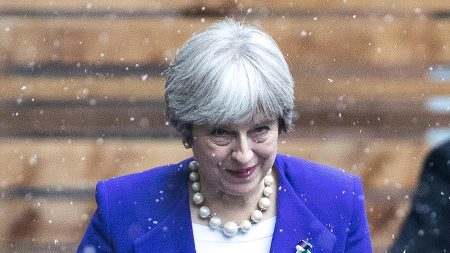
Prime Minister Theresa May was applauded on Monday when she pledged new measures to tackle online abuse against politicians. But has the Tory leader forgotten about the millions her party spent on smearing Labour’s Jeremy Corbyn?
In a speech marking the centenary of women gaining the right to vote in Britain, the Tory leader said new measures aimed at tackling online abuse will include a new annual report comprising of data on how social media giants moderate alleged abusers.
Speaking in Manchester, May said: “While there is much to celebrate, I worry that our public debate is coarsening. That for some it is harder to disagree, without also demeaning opposing viewpoints in the process.”
She said she will also ask the Law Commission to shake up legislation so it ensures abuse is illegal online just as it is offline.
“In the face of what is a threat to our democracy, I believe that all of us – individuals, governments, and media old and new – must accept our responsibility to help sustain a genuinely pluralist public debate for the future,” May added.
The comments appear to be a bit rich, however, as they come from the leader of a party which reportedly spent millions on a smear campaign against Labour during the 2017 general election.
The Conservatives were accused of circulating ‘dark ads’ on YouTube and Facebook to deter voters in marginal constituencies from voting for Labour. One of the last installments was an 85-second video made up of Labour leader Jeremy Corbyn’s speeches circulated on Facebook with the caption: “On June 9th, this man could be Prime Minister. We can’t let that happen.”
The ad featured a snippet of an interview with Corbyn, given to Sky News in May 2016, received a widespread backlash as it erroneously framed the Labour leader as condoning IRA bombings. The Labour boss had argued: “All bombing is wrong, of course I condemn [IRA bombings].”
The video was only built to show the channel’s news anchor Sophy Ridge asking, “but you’re condemning all bombing, can you condemn the IRA without equating it to…?” to which Corbyn is heard adding “no.”
In the full footage, however, Corbyn goes on to say: “No, I think what you have to say is all bombing has to be condemned and you have to bring about a peace process. Listen, in the 1980s Britain was looking for a military solution, it clearly was never going to work. Ask anyone in the British Army at the time… I condemn all the bombing by the loyalists and the IRA.”
Corbyn representatives said the Tories were “running a hateful campaign based on smears, innuendo and fake news.”
Labour also sent out ads, but they focused on policies to appeal to the party’s supporters rather than attacking their rivals.
Who Is James Le Mesurier? – The Former British Army Officer Who Founded The White Helmets
By John Wight | American Herald Tribune | February 6, 2018
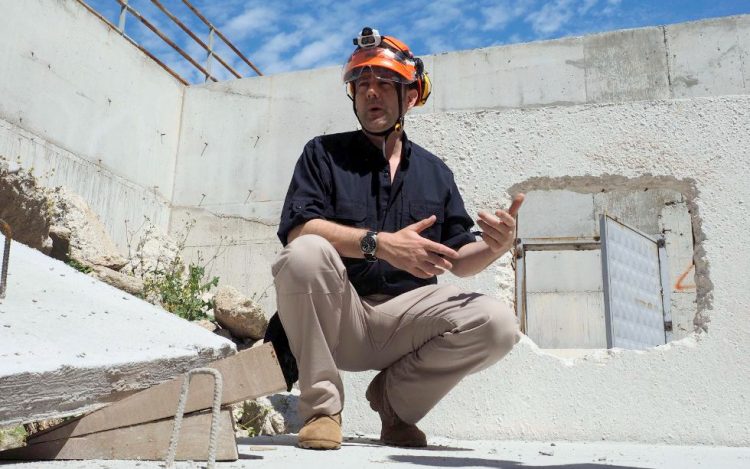
Who is James Le Mesurier, the former British army officer and military contractor who founded the White Helmets, the civil defence organisation which operates exclusively in opposition-held parts of Syria? It is a question more and more people are asking as their role and function comes under increasing scrutiny.
Le Mesurier carries about him the inescapable whiff of Britain’s malign legacy and history of dirty wars, waged in Kenya, Aden, Ireland, Iraq, Libya, in other words wherever London’s blood-soaked imperialist foot has tread around the world. A product of Britain’s prestigious Royal Military Academy of officer training at Sandhurst, he served in various UK military/NATO military deployments over the past three decades, specifically Bosnia, Kosovo, Iraq and Lebanon.
In a short bio describing Le Mesurier’s work with the White Helmets, we are informed, “In addition to the White Helmets in Syria, Mayday is active in Mogadishu, developing the city’s emergency services network, and exploring the development of similar community-based resilience initiatives in other fragile and failing states (my emphasis).”
The question of why a given state becomes fragile and failing is of course neither asked nor explored, for doing so would dredge up the subject of imperialism, which for Western ideologues such as Mr Le Mesurier would be akin to a vampire being exposed to daylight.
In a wide ranging 2016 article, former US marine and UN weapons inspector, Scott Ritter, provides a forensic account of Le Mesurier’s background, including the time he spent in and around the murky world of private military contractors, who exist in the cracks of Western military deployments, able to operate beyond the inconvenient glare of public scrutiny and accountability.
Ritter writes:
“the organizational underpinnings of the White Helmets can be sourced to a March 2013 meeting in Istanbul between a retired British military officer, James Le Mesurier—who had experience in the murky world of private security companies and the shadowy confluence between national security and intelligence operations and international organizations—and representatives of the Syrian National Council (SNC) and the Qatari Red Crescent Society. Earlier that month, the SNC was given Syria’s seat in the Arab League at a meeting of the league held in Qatar.”
So here we have a civil defence organisation being established in Syria by an ex-British army officer, a man with a background in the shadowy world of private security, in conjunction with a Syrian opposition group in exile. This civil defence organization, the White Helmets, receives funding from an array of states with a clear agenda of regime change in Syria, evidenced in the material, financial and political support they have given various armed opposition groups involved in the conflict.
In a 2015 speech Le Mesurier provides a précis of the roots of the conflict in Syria, starting with in 2011 a “volunteer uprising against the ruthless dictator, Bashar al-Assad,” before going on the assert that in 2012 the Syrian state turned its weapons on its “own people.”
Glaringly absent from this Manichean narrative is the fact that by 2012 various Salafi-jihadi groups, their ranks filled by thousands of extremists from outwith Syria, were rampaging across the country slaughtering and raping and terrorizing the very “own people” the Syrian army and its allies have been fighting to protect, save and liberate from the clutches of this latter day Khmer Rouge. And lest anyone has forgotten, the Syrian Arab Army is indistinguishable from the Syrian people, considering that its soldiers are drawn from the non-sectarian and multi-religious mosaic that makes up Syrian society.
Returning to Scott Ritter: “In this day of social media, it didn’t take long for photographs and video clips of known White Helmet members, in their distinctive uniform, openly celebrating with Al Nusra fighters in the aftermath of Syrian government defeats, and even carrying weapons, something their status as neutral first responders strictly prohibits.”
From the White Helmets’ own website, the lack of neutrality Ritter asserts is unambiguously expressed with the statement posted on its front page by Raed Saleh, the operational head of the organisation and himself a figure of some controversy. Saleh writes, “the UN Security Council must follow on its demand to stop the barrel bombs, by introducing a ‘no-fly zone’ if necessary.”
The barrel bombs referred to by Saleh, and emphasised by Le Mesurier as emblematic of the brutality of the ‘Assad regime,’ are inarguably indiscriminate and illegal under international law. But if we are judging the merits or demerits of a given side in a given conflict based on the use of indiscriminate weapons alone then regime change in Washington, Tel Aviv and Riyadh is long overdue.
The brutality of the conflict in Syria is a reflection of the monumental stakes involved in the outcome. The conflict is in itself is a crime, but are we seriously suggesting that Libya is better, safer and more stable seven years on from the toppling and murder of its leader Muammar Gaddafi, courtesy of NATO aligning with various Libyan opposition factions, prime among them Islamists, in 2011? And are we seriously arguing that Syria’s fate would not be Libya’s fate in the event of the toppling of Bashar al-Assad? And, too, is anybody able to maintain with a straight face that Bashar al-Assad does not enjoy the solid support of the majority of the Syrian people, who understand that the conflict is not about saving their government but saving their country?
Scott Ritter again:
“the White Helmets function as an effective propaganda arm of the anti-Assad movement…With their training, equipment and logistical sustainment underwritten exclusively by donations from Western governments (primarily the U.S. and U.K.), the White Helmets serve as a virtual echo chamber for American and British politicians and officials.”
Given Le Mesurier’s background, along with the evidence of how the White Helmets operate, it is reasonable to assume that what we have is the cultivation of the very Third Force Washington and London have been extending themselves in trying to locate and sell as the ‘good guys’ since the conflict began, doing so with the objective of enlisting domestic public support for intervention and regime change in Damascus.
Of course, there is always the possibility that Mr Le Mesurier is sincere in his desire to alleviate the undoubted suffering of the Syrian people – though in his case clearly not all the Syrian people, what with White Helmets only functioning and operating in opposition controlled territory, places where neither he nor any Western supporter of the White Helmets would dare set foot, knowing the moment they did they would be abducted, tortured, and brutally murdered.
But if so, if Mr Le Mesurier is sincere, then he is Britain’s answer to Pyle, the idealistic and naïve American interventionist in French-occupied Vietnam created by Graham Greene in his classic novel The Quiet American. To wit:
“He was young and ignorant and silly and he got involved. He had no more of a notion than any of you what the whole affair’s about, and you gave him money and York Harding’s books on the East and said, ‘Go ahead. Win the East for democracy.’ He never saw anything he hadn’t heard in a lecture hall, and his writers and his lecturers made a fool of him.”
EU Imposes Anti-Union Law on Greece
By Will Podmore | CounterPunch | February 2, 2018
Under instructions from the European Commission, the European Central Bank and the International Monetary Fund, the Greek government pushed through the most anti-union legislation in Europe on Monday 15 January.
The move was demanded, along with other draconian measures, as a condition of the latest tranche of what is called Greece’s bailout but which in reality is bailing out the European financial institutions which recklessly encouraged Greek borrowing.
The key concession required from the Syriza government was that industrial action would now require a yes vote from more than half of the total number of union members in a workplace, regardless of the actual turnout. This is even worse than the provisions in the Trade Union Act which came into law in the UK in March 2016.
Astonishingly – or perhaps not – there has been not one word about this from the TUC, which continues its scaremongering about the effect of Brexit on workers’ rights. While it prattles on, the European Union is turning the screw on the most fundamental of all workers’ rights, the right to strike, and using Greece as a test bed for policies it would like to see across all member states.
Without the right to take effective strike action, workers have no protection save the courts, and capitalist courts consistently favour the employers.
The European Court of Justice ruled (in the Laval case, 18 December 2007), that employers have the right to bring workers from a low-wage EU state to a higher-wage EU state on the wages payable in the cheaper country, regardless of any collective bargaining agreements in the higher-wage state. It has also ruled (in the Viking case, 11 December 2007) that effective industrial action to stop outsourcing to cheaper countries is illegal.
In the Alamo–Herron case (18 July 2013), involving Unison members transferred out of local authority employment, it ruled that whatever their contracts said, benefits collectively negotiated for local authority workers could be ignored by their new employers. “This case is an appalling attack on collective bargaining and is at least as serious as Viking and Laval,” wrote Britain’s leading employment barrister, John Hendy.
Hendy went on to say, “The EU has become a disaster for the collective rights of workers and their unions.”
As we have consistently said, strong trade union organisation backed up by effective industrial action if need be is the only way to secure and defend advances in the workplace. The EU murmurs about “rights” while consistently attacking the basis of workplace organisation.
Not one line of the Trade Union Act introduced by the Cameron government, or the even worse White Paper that preceded it, was contrary to EU law. The sooner Britain leaves the EU, the better it will be for trade union members (though some so-called leaders will resent being kicked off the Brussels gravy train). At least then we will just have our own employers to deal with.
Will Podmore is a librarian and writer living in London.
Reflections on the Chabloz Case
I’ll sing my way to court in high heels and a frock
Give the press a winning smile from inside the dock…
Alison Chabloz song, Find me guiltyBy Nick Kollerstrom PhD | Occidental Review | January 26, 2018
Mr Gideon Falter, 34, who runs the Campaign Against Antisemitism (CAAS) was the chief witness for the Crown Prosecution service’s (CPS) against the British minstrel Alison Chabloz. On January 10th at Marylebone Magistrate’s Court we heard him swear the oath, to tell the truth, the whole truth and nothing but the truth. He then proceeded to give the court various hearsay conjectures, about what effect Ms Chabloz’ songs might be exerting, upon unspecified persons.
He averred for example that they were ‘spreading anti-semitic hatred’ and were ‘inciting to racial hatred.’ The Court was not given evidence for this,[1] nor advised where or in whom these emotions were being generated. Should he not have called witnesses to testify in support of these conjectures, or better still a psychologist to affirm that they were or had been generated?
The Court was advised of one offensive performance by Ms Chabloz, where she sang her songs ‘(((Survivors))) and ‘Nemo’s anti-Semitic Universe’ namely the London Forum in 2016 (September 24th). A problem here could be the signs of mirth and riotous applause in response to the songs: did this really show what Mr Falter had been alleging, or if not, what did?
She was recently introduced as ‘The brilliant comedienne and singer/songwriter Alison Chabloz,’ by Richie Allen, on his popular radio show (18 January).
The point of satire, is that it makes people laugh. Britain has a long tradition of satire from William Hogarth in the 18th century to Private Eye in the present time. Its future is surely at stake in this trial.
In October of 2017 she was arrested and jailed (or, ‘held in custody’) for 48 hours, for posting a video of herself singing a song. This had allegedly broken her ‘bail conditions’. As Ms Chabloz observed, “As far as I am aware, I am the only artist in modern British history to have been jailed for the heinous crime of composing and singing satirical songs which I uploaded to the Internet.”
We live in a society where just about any sacred belief is liable to be satirised for entertainment value, and those being satirised have not generally sought recourse to legal action. When punk-rock bands savagely mocked the Royal family for example, no-one prosecuted them.

Alison Chabloz
The present case was being brought under the Communications Act of 2003. A degree of public support is said to exist for its controversial section 127,[2] by people fed up with online bullying. For example, a racially motivated tweet relating to a footballer was prosecuted under it. But many have objected to its catch-all character,[3] and the DPP has stated in 2102, that its section 127 ‘should not be seen as a carte blanche for prosecuting content which, however upsetting to some, would normally fall within guarantees of freedom of expression in a democratic society,’ and that freedom of expression should include the right to say things that ‘offend, shock or disturb the state or any sector of the population.’
Last year, at least nine people a day were being arrested in the UK on such dubious grounds. Annoying someone or causing distress has never been viewed as a crime — until now. The Communications Act was basically designed for the media.[4] In contrast, songs posted up on the Web are only heard by persons who choose to listen. One exercises that choice by clicking the ‘play’ button. Ms Chabloz has not ‘communicated’ anything in the sense defined by that Act.
Normally, if a Youtube video is found to be disturbing, a complaint is put through to Youtube, rather than the person who has uploaded it. Now Ms Chabloz’ songs have either been deleted or given protective warnings by Youtube, which further complicates the question, of how and to whom she is supposed to be causing offence.
The Defence lawyer Adrian Davies had suggested at an earlier hearing that his client’s songs might be ‘offensive’ but not ‘grossly offensive,’ and that remark was reiterated by the judge in the present hearing. That is surely so: it’s not as if they were snuff movies, or featured depraved or perverted acts, or personally defamed anyone living — except for one person, Irene Zisblatt who claims that she swallowed diamonds while she was at Auschwitz. The court discussed her case, with Mr Davies pointing out that the official Yad Vashem Holocaust centre in Israel had cast doubt upon the veracity of Ms Zisblatt’s story in her book The Fifth Diamond. It features of course ze evil Nazis ripping babies in half, making lampshades out of human skin, etc. Was this not a legitimate target for satire, Mr Davis asked the Court?
Some have commented that British politics would hardly be able to function if a distinction was liable to be made between ‘offensive’ and ‘grossly offensive.’ How is the law supposed to discern such a thing?
Others have wondered if it is really appropriate for the CAAS to be registered as a charity, i.e., a tax-exempt NGO, which goes around suing people. The CPS had not wanted to take this case, but was pressured by the CAAS to do so. That applies both to the pending case of British ‘nationalist’ Jez Turner as well as Ms Chabloz: in both cases the CPS had no inclination to prosecute, but arm-twisting by the CAA made them do it. In fact, the CAA works for a foreign power: its first action upon being founded in 2014 was to intimidate the Trycicle Theatre in Cricklewood so they gave up their BDS policy on Israeli goods. Why should a group specialising in legal intimidation be awarded tax-exempt charity status?
The second witness after Mr Faulter was Stephen Silverman, the CAA’s ‘Director of Investigations and Enforcement.’ Under examination he confirmed that the online character ‘Nemo’ who had been persistently trolling Ms Chabloz, was none other than Stephen Applebaum, the CAAS’s ‘senior volunteer.’ For the last two years she had received some quite intense twitter threats and curses from this character — thus on her website ‘Nemo’ declared: ‘Even if you are acquitted, we will still go after you.’ Earlier, in the first court hearing of this case in December 2016, Mr Silverman admitted that he had been tweeting as ‘Bedlam Jones’ who had likewise been making quite intimidating comments.
So, this is a case that could work a lot better the other way round, with Alison as the innocent injured party and CAA personnel as guilty of harassment and victimisation. Clearly, the CAA needs to be stripped of its charity status. As a general comment, one can either post envenomed tweets against someone or sue them, but it may be inadvisable to try both.
The case is adjourned until March 7th.
[1] As her lawyer A.D advised the Court, the ‘personal emotional reaction’ of Mr Gideon Falter was ‘entirely irrelevant’ to the case
[2] Section 137: A person is guilty of an offence if he— (a)sends by means of a public electronic communications network, message or other matter that is grossly offensive or of an indecent, obscene or menacing character;
[3] Figures obtained by The Times through the Freedom of Information Act reveal that 3,395 people across 29 forces were arrested last year under section 127 of the Communications Act 2003, which makes it illegal to intentionally “cause annoyance, inconvenience or needless anxiety to another”, in 2016′
[4] It aimed ‘to make provision about the regulation of the provision of electronic communications networks and services … to make provision about the regulation of broadcasting and of the provision of television and radio services, etc.
Featured Video
AIDS Inc. by Gary Null (2007)
or go to
Aletho News Archives – Video-Images
From the Archives
Clash of Civilization, Iran Part II
By Jamal Kanj – Intifada-Palestine.com – January 14, 2011
Israel’s survival kit is: perpetuate conflict, insecurity to rationalize collective hate and finally playing victim.
Devoid of conflict, Israel implodes internally; without hate, Zionism loses its justification; and playing eternal victim to continue blackmailing the West. Absence of this holy trinity, Israel ceases to exist.
From its inception, the house of Zion has mastered exploiting adversarial powers to advance Israel’s cause. For instance, their influence over the Democratic Party in the US began with President Truman’s bid for 2nd term election in 1948.
Responding to strong opposition from Secretary of State General George Marshall and Department experts urging against recognition of Israel, President Truman replied: “I’m sorry gentlemen but I have to answer to hundreds of thousands [Jewish voters] who are anxious for the success of Zionism. I do not have hundreds of thousands of [voting] Arabs among my constituents”
Zionists influence over liberal American politics was matched with the doctrinal school of Conservative theoreticians aligning the Republican Party’s platform with Israel’s objectives. The Neoconservative Zionists, coined Zioncons, invented the “Clash of Civilization” concept to fight Israel’s wars. … continue
Blog Roll
 Aletho News
- Merck Virologists Admitted to Falsely Certifying Vaccine Efficacy
- Mandatory Folic Acid for every man, woman & child
- Pro-Palestine protesters arrested outside UK’s ruling Labour Conference in Liverpool
- Mauritius denies landing permit to flight from Israel, forcing cancellation: Tour operator
- Israeli finance minister calls for genocidal war on West Bank, annexation of south Lebanon
- 12 Things Your Psychiatrist Was Trained Not to Tell You
- From Unipolar Universalism to Multipolar Civilizational Distinctiveness
- RSF military group defects, joins Sudanese army: State media
- Ireland goalkeeper refuses to play ‘Israel’ as squad weighs boycott
- China pushes back against US on Cuba, Iran
- If Americans Knew
- Israel forces Gazans to live in constant peril – Daily Update
- Deconstructing Netanyahu’s pants-on-fire UN rant – Daily Update
- Trump betrayed voters with his campaign lies and prioritized a foreign country once he took office
- Netanyahu calls Israel’s war in Gaza ‘opposite of genocide’ in UN speech to near-empty hall
- Settler Kidnappings: Torture, Sexual Abuse and Terrorisation of Palestinian Abductees as Israel Deepens Annexation of West Bank
- Gaza winter nears as 162,000 tents become unusable, raising fears of humanitarian crisis
- Netanyahu says, “It’s the opposite of genocide”; UN says Gaza economy is world’s ‘most severe crisis on record’ – Daily Update
- Israel’s US-Backed Assault on Gaza Has Created the ‘World’s Most Severe Economic Crisis on Record’: UN
- ‘Protecting U.S. Citizens’… From Israel
- ‘This is where I live now, the back of a truck’: a day in the life of a grandmother in Gaza
- No Tricks Zone
- New Study: Earth And Venus Surface Warmth Largely Explained By Convection And Lapse Rate, Not CO2 Or Radiation
- 2025 Nature Paper Claiming Worsening Global Drought Gets RETRACTED …Heavily Flawed
- New Study: ‘Global Drought Shows No Detectable Recent Acceleration Under Climate Warming’
- Economic Masterminds: German Socialists Suggest Taxing Productivity Gains Stemming From Using AI
- The South China Sea Has Not Been Cooperating With The Climate Change Narrative
- Energy Crisis: Germany Enters Heating Season With Historically Low Gas Reserve Fill Levels
- New Study: The Antarctic Ice Sheet Gained Mass From 2020-2024 Due To Staggering Snow And Ice Accumulation
- Study: Ocean Heating Rates From Thousands Of Years Ago ‘Dwarf’ Modern Ocean Heating Rates
- Climate Extremists Target, Attack Large-Scale Power Grid Infrastructure In Germany!
- New Study: Antarctic Ice Melt Has Contributed Less Than 1 Centimeter To Sea Level Rise In The Last 30 Years

