Fourteen years have passed since 23-year-old Rachel Corrie was crushed to death by Israeli bulldozers in Gaza. The American activists, along with other members of the International Solidarity Movement (ISM), were taking part in nonviolent direct action to protect the home of a Palestinian family from demolition when the activist from Washington was killed.
Since her untimely death on the Rafah border crossing in 2003, Corrie’s free-spirited attitude to life has been the inspiration for international solidarity movements, non-violent resistance as well as plays and books celebrating her humanity and bravery.
My Name is Rachel Corrie, being showed at the Young Vic in London, is based on the emails and diary entries of the pro-Palestinian activist, which first premiered at London’s Royal Court in 2005. The play was originally put together by the late Alan Rickman and Katharine Viner, now the editor of the Guardian.
Unsurprisingly the plays reproduction has come under strong criticism from Pro-Israeli groups. Fury at the revival of the play has stirred all kinds of controversy such that supporters of Israel in the UK are piling pressure on the Young Vic for staging the play. The Vic’s artistic director David Lan, who is Jewish, felt compelled to come to the theatre’s defence saying: “Gaza is a wound to the planet from which so many people are suffering.”
Pro-Israeli organisations have even threatened to leverage the £1.7 million pubic grant given to the Young Vic to ensure that it takes a more “balanced” position when it comes to Israel. Lan however has insisted that artistic expressions are useful to promote dialogue saying: “We welcome and hope to encourage as wide a discussion of this terrible situation as possible and anything that keeps Gaza at the front of our consciousness is to be valued.”
Aside from the nuisance of having Pro-Israeli activists shoving propaganda leaflets smearing the memory of Corrie towards you at the entrance of the theatre, the hour and half long immersion into Corrie’s mind is a memorable experience.
The play brilliantly darts through the diaries of Corrie from her early teens through to the period of her untimely death. Directed by an award winning director, Josh Roche, and wonderfully performed by British actor Erin Doherty, viewers are exposed to a visceral representation of the brutality of Israeli occupation seen through the eyes of an activist searching for her place in life.
Doherty’s astonishingly skilful performance of Corrie brings to life defining moments in the campaigner’s personal journey as she grapples with her own sense of privilege in contrasted with the indignity and poverty she saw in Gaza. If nothing else, the play powerfully captures the inner tensions of Corrie who felt a deep sense of responsibility over her own country’s unquestioned support for Israel.
The play is emotionally rousing given the very nature of diary entries, which are intended by its author to be an honest representation of ones thoughts and feelings unpolluted by polemics. Corrie appeared deeply troubled by the constant dehumanisation of Muslims and Palestinians; her conversations with her father, which are including in the the play, shed light on America’s own troubling assumptions about the world in the post 9/11 world.
The added punch to the play and the performance of Doherty is made all the more incredible by the setting; a background made up from the barest material, empty colourless plywood panels on the floor and the wall. The centrepiece is a tall wooden stand that appears to stand as a representation of Israel’s Separation Wall. It required an exceptional actor playing an exceptional person to make the experience so emotionally jarring.
Rachel Corrie’s legacy will continue to inspire thousands in campaigns against political oppression and this play, like its predecessor, has certainly reached the level of being “the irrepressible political voice” of the young campaigner from Olympia.
The extraordinary programme of centenary celebrations in the UK to honour Lord Balfour and his lunatic Declaration — and the British Government’s continuing part in it — is an affront to citizens here and to countless millions abroad. And many a sharp pin is waiting to burst the pretty Balfour balloon being desperately inflated by Israel-firsters at Westminster.
Balfour’s 1917 pledge and its consequences, played out over the last 70 years, ride roughshod over Christian values and humanitarian law. Rothschild replied to Balfour’s letter saying that “the British Government has opened up, by their message, a prospect of safety and comfort to large masses of people who are in need of it.” Well, it also opened up the prospect — and the reality — of a lifetime of abject misery for millions of Palestinians who had no need of it and certainly didn’t deserve it. It also helped to plant in the most sacred part of the Middle East an evil regime that shows contempt for human rights and international law and is bent on creating instability all around and confiscating every acre of land and every natural resource to aid its expansion.
The daft thing is, Balfour didn’t even write the Declaration. He was simply the upper-class twit who signed it and did so without even bothering to consult the people whose homeland he intended giving away. The carefully worded letter to Rothschild (the so-called Declaration) was the work of Leopold Amery, political secretary to the War Cabinet at the time, who cleverly kept hidden his Jewish ancestry throughout his quite impressive career. He was also largely responsible for forming the Jewish Legion battalions which were the forerunners of the hated Israeli Defence Force, which Israeli Miko Peled describes as “one of the best trained and best equipped and best fed terrorist organisations in the world”.
Amery was an eager Zionist and had a supervisory role in the British mandate government in Palestine during the 1920s, actively preparing it for eventual Jewish takeover. He operated within a government the upper echelons of which were stuffed with Zionist sympathisers such as Churchill and Lloyd George.
In response to the avalanche of pro-Balfour celebratory tosh the Palestine Mission to the UK commissioned a ‘Make It Right’ campaign featuring contrasting images of Palestinian life before and after 1948, when Israel declared statehood on land it had overrun and ethnically cleansed. The campaign message, of course, objects to the Balfour declaration which promised a Jewish homeland in Palestine. Posters were supposed to appear on buses and in Underground rail stations but London’s transport authority, Transport for London (TfL), has banned the advertisements on the grounds that they “did not comply fully with our guidelines”. It seems TfL don’t like “images or messages which relate to matters of public controversy or sensitivity” or causes that are “party political”.
Palestinian ambassador Manuel Hassassian accuses TfL of censorship saying:
Palestinian history is a censored history. There has been a 100-year-long cover-up of the British government’s broken promise, in the Balfour declaration, to safeguard the rights of the Palestinians when it gave away their country to another people. TfL’s decision is not surprising as it is, at best, susceptible to or, at worst, complicit with, all the institutional forces and active lobby groups which continuously work to silence the Palestinian narrative. There may be free speech in Britain on every issue under the sun but not on Palestine.
Prime Minister Theresa May has invited her Israeli counterpart ‘Bibi’ Netanyahu to the London celebrations. It is unthinkable in Government circles for an honoured guest to be confronted with a London plastered with such inconvenient messages. Nevertheless, they’ll appear on 52 London black cabs, which aren’t under TfL’s control, so our PM’s loathsome visitor may not entirely escape embarrassment, assuming he’s capable of feeling it.
Conflating justice and tolerance with anti-Semitism
Speaking of declarations I’m reminded of a far more sensible one by Shimon Tzabar, who had been a member of Jewish terrorist organisations in Palestine during the British Mandate including the Stern Gang, Irgun and Haganah. After 1948 and the establishment of the Israeli state he fought in its 1948-50, 1956, and 1967 wars but spoke out against the annexation of the Golan Heights and East Jerusalem and the occupation of the West Bank and Gaza Strip. He even began calling himself a “Hebrew-speaking Palestinian”. Tzabar and others eventually felt moved to publish the following declaration:
Occupation entails foreign rule. Foreign rule entails resistance. Resistance entails repression. Repression entails terror and counter-terror. The victims of terror are mostly innocent people. Holding on to the occupied territories will turn us into a nation of murderers and murder victims. Let us get out of the occupied territories immediately.
Wouldn’t Mrs May prefer to celebrate Tzabar’s Declaration? He moved to England where he famously published the MUCH BETTER THAN THE OFFICIAL MICHELIN Guide to Israeli prisons, Jails, Concentration Camps and Torture Chambers. The best and safest way to begin a tour of these horrible establishments, it said, was to look like a Palestinian Arab and get yourself arrested .” Once you look like a Palestinian you have a good chance of being arrested. Your chance is actually so good, that you don’t have to do anything in particular.”
That other Israeli straight-talker Miko Peled, mentioned above, put the cat among the pigeons at the Labour Party conference last month when he told activists that Israel is “terrified” of Jeremy Corbyn becoming British prime minister and will do everything they can to stop him. “They are going to pull all the stops, they are going to smear, they are going to try anything they can to stop Corbyn from being prime minister. It’s up to Labour, it’s up to you [to ensure] that they don’t have the ability to do that…. Jeremy Corbyn is an opportunity for Britain that, if it gets lost, won’t come back for a very long time.
“The reason anti-Semitism is used is because they [the Israelis] have no argument, there is nothing to say,” said Peled. “How can a call for justice and tolerance be conflated with anti-Semitism? I don’t know if they realise this but they are pitting Judaism against everything good and just.”
Peled is an Israeli Jew, the son of an Israeli general, and a former soldier in the Israeli army. You couldn’t find a more authentic insider source. Here’s a flavour of his message:
The name of the game: erasing Palestine, getting rid of the people and de-Arabizing the country…
By 1993 the Israelis had achieved their mission to make the conquest of the West Bank irreversible. By 1993 the Israeli government knew for certain that a Palestinian state could not be established in the West Bank – the settlements were there, $ billions were invested, the entire Jordan River valley was settled… there was no place any more for a Palestinian state to be established. That is when Israel said, OK, we’ll begin negotiations…
When people talk about the possibility of Israel somehow giving up the West Bank for a Palestinian state, if it wasn’t so sad it would be funny. It shows a complete misunderstanding of the objective of Zionism and the Zionist state.
Meanwhile Netanyahu has just announced a temporary easing of the fishing limits imposed on Gaza’s fishermen. For two months, in the southern half of Gaza, they will be able to sail out 9 miles after which the limit reverts back to 6. Sounds generous? No, it’s ridiculously cruel. And restrictions remain even tighter in the northern half. Under the Oslo Agreements (1993) Israel is supposed to allow the Palestinians to fish up to 12 miles out, in line with the UN Convention on the Law of the Sea but, as with so many other agreements, the Zionist regime has never honoured its obligation. Furthermore Israel’s 10-year blockade on Gaza has made it impossible for many fishermen to buy parts to maintain their vessels, so the once flourishing fishing industry has been crippled.
Netanyahu seals the gates of the West Bank and Gaza for eleven days, to enjoy Sukkot. How flagrant, to confine millions of people in the name of a holiday that celebrates the flimsy, temporary nature of our walls. If Jews were herded behind concrete walls and locked away for eleven days, so that someone else might enjoy a Jew-free holiday, would we shrug that off?
Haaretz is a relatively honest source and to print such a thing in Israel is quite daring.
On the same subject the Jewish Chronicle had this to say:“Border closures over the High Holidays and other Jewish festivals are routine, but are usually much shorter. The original decision stoked complaints within the Israeli security establishment that it was principally “grandstanding” by ministers eager to burnish their right-wing credentials.” The JC went on the explain that the 11-day closure had been demanded by Israeli police and the Internal Security minister, and was initially opposed by the Israeli military and senior Defence Ministry officials who said that it would be an unnecessary punishment to tens of thousands of law-abiding Palestinian workers.
However, both Israeli papers omitted to say that, thanks to Balfour’s legacy, there has been no freedom of movement for Palestinians since the closure of Gaza and the West Bank by Israel 26 years ago. Closure is the normal state of affairs and not to be confused with foolish ideas that crossings are usually open.
Contradictory Promises
The Balfour Project, which promotes justice, security and peace for both Jews and Arabs, has made available a wealth of information. One of its publications sums up the problem very neatly:
The Declaration pledges Britain’s support for a ‘national home’ in Palestine for the Jewish people on the understanding that the rights of ‘existing non-Jewish communities in Palestine’ would not be prejudiced. The failure to uphold this second clause, for which Britain bears much responsibility, has caused conflict between Palestinians and Israelis ever since.
This was just one of Britain’s contradictory promises during the First World War. After the war we secured a mandate from the League of Nations which included a ‘sacred trust’ to prepare the people of Palestine for independence. But in the end Britain walked away.
Yes, in 1948 we abandoned the mess we had created. As the last British soldiers marched away Jewish leaders declared statehood without borders, pushing far beyond the boundaries set out in the UN Partition Plan the year before, their terror militia putting to flight hundreds of thousands of Palestinians, massacring many more and stealing their homes and farms.
What Britain caused to happen in the Holy Land was contrary to all decency and justice. History will not judge kindly the British Government’s decision to celebrating Balfour “with pride” while refusing to apologise and make amends. There’s a fair chance the whole sorry spectacle will backfire on Theresa May and teach her unpleasant associates a sharp lesson.
A colleague wrote only yesterday to one of our government ministers and what she said is worth repeating here:
Ministers, from the Prime Minister down, should reflect with humility that but for that disastrous decision by their predecessors 100 years ago, the Holy Land might still be a land of peace where all the faiths lived in harmony together.
(L-R) Chaim Weizmann, future president of Israel, with Louis Brandeis, US Supreme Court Justice, in Palestine, 1919. The two were instrumental in obtaining the Balfour Declaration, a British document that many feel was a critical step in the establishment of Israel. Zionists’ promise that they would get the U.S. to join Britain in “the Great War” was the enticement.
Most analysts consider WWI a pointless conflict that resulted from diplomatic entanglements rather than some travesty of justice or aggression. Yet, it was catastrophic to a generation of Europeans, killing 14 million people.[i]
The United States joined this unnecessary war a few years into the hostilities, costing many American lives, even though the U.S. was not party to the alliances that had drawn other nations into the fray. This even though Americans had been strongly opposed to entering the war and Woodrow Wilson had won the presidency with the slogan, “He kept us out of war.”[ii]
President Wilson changed course in 1917 and plunged the U.S. into that tragic European conflict. Approximately 320,000 Americans were killed or injured.[iii] Over 1,200 American citizens who opposed the war were rounded up and imprisoned, some for years.[iv]
A number or reasons were publicly given for Wilson‘s change of heart, including Germany‘s submarine warfare, Germany’s sinking of the British passenger ship Lusitania,[v] and a diplomatic debacle known as the Zimmerman Telegram episode.[vi] Historians also add pro-British propaganda and economic reasons to the list of causes, and most suggest that a number of factors were at play.
While Americans today are aware of many of these facts, few know that Zionism appears to have been one of those factors. [Zionism was a political movement to create a Jewish state in Palestine. When this movement began, in the late 1800s, the population of Palestine was 96 percent Muslim and Christian. The large majority of Jews around the world were not Zionists.]
Diverse documentary evidence shows that Zionists pushed for the U.S. to enter the war on Britain’s side as part of a deal to gain British support for their colonization of Palestine.
From the very beginning of their movement, Zionists realized that if they were to succeed in their goal of creating a Jewish state on land that was already inhabited by non-Jews, they needed backing from one of the “great powers.”[vii] They tried the Ottoman Empire, which controlled Palestine at the time, but were turned down (although they were told that Jews could settle throughout other parts of the Ottoman empire and become Turkish citizens).[viii]
They then turned to Britain, which was also initially less than enthusiastic. Famous English Middle East experts such as Gertrude Bell pointed out that Palestine was Arab and that Jerusalem was sacred to all three major monotheistic faiths.[ix]
Future British Foreign Minister Lord George Curzon similarly stated that Palestine was already inhabited by half a million Arabs who would “not be content either to be expropriated for Jewish immigrants or to act merely as hewers of wood and drawers of water for the latter.”[x]
However, once the British were embroiled in World War I, and particularly during 1916, a disastrous year for the Allies in which there were 60,000 British casualties in one day alone,[xi] Zionists were able to play a winning card. While they previously had appealed to religious or idealistic arguments, now Zionist leaders could add a particularly powerful motivator: telling the British government that Zionists in the U.S. would push America to enter the war on the side of the British, if the British promised to support a Jewish home in Palestine afterward.[xii]
British soldiers, Battle of the Somme. British suffered 60,000 casualties in the first day of the battle.
In 1917 British Foreign Minister Lord Balfour issued a letter to Zionist leader Lord Rothschild. Known as the Balfour Declaration, this letter promised that Britain would “view with favour the establishment in Palestine of a national home for the Jewish people” and “use their best endeavours to facilitate the achievement of this object.”
The letter then qualified this somewhat by stating that it should be “clearly understood that nothing shall be done which may prejudice the civil and religious rights of existing non-Jewish communities in Palestine.” The “non-Jewish communities” were 92 percent of Palestine’s population at that time,[xiii] vigorous Zionist immigration efforts having slightly expanded the percentage of Jews living in Palestine by then.
The letter, while officially signed by British Foreign Minister Lord Balfour, had been in process for two years and had gone through a number of edits by British and American Zionists and British officials.[xiv] As Zionist leader Nahum Sokolow later wrote, “[e]very idea born in London was tested by the Zionist Organization in America, and every suggestion in America received the most careful attention in London.”[xv]
Sokolow wrote that British Zionists were helped, “above all, by American Zionists. Between London, New York, and Washington there was constant communication, either by telegraph, or by personal visit, and as a result there was perfect unity among the Zionists of both hemispheres.” Sokolow particularly praised “the beneficent personal influence of the Honourable Louis D. Brandeis, Judge of the Supreme Court.”[xvi]
The final version of the Declaration was actually written by Leopold Amery, a British official who, it came out later, was a secret and fervent Zionist. … continue
As the Islamic State (IS, formerly ISIS/ISIL) terrorist group nears collapse, questions remain over the fate of the group’s UK-born fighters. Some 130 Britons who have travelled to Iraq and Syria and fought for IS have already been killed, according to MI5.
In line with the UK government’s policy, conservative Foreign Office Minister Rory Stewart said this week that the “only way” to deal with British IS fighters is “in almost every case” to kill them. Stewart said British IS fighters pose a “serious danger to us” and have relinquished any ties to the UK.
Jihadi Jack
Stewart’s call for what amounts to extrajudicial killings has sparked controversy. Sally Lane, whose son Jack Letts journeyed to Syria to join IS in 2014, called the comments “absolutely unbelievable.”
The mother and her husband are currently on a week-long hunger strike to raise awareness about their son’s situation. Dubbed in the press ‘Jihadi Jack,’ Lane is thought be languishing in a prison in north western Syria after being captured by an anti-IS YPG unit in May.
“A lot of people went for naive reasons. Jack was 18 when he went, he was a stupid kid but he’s been labelled a murderous jihadi,” his mother told the Times.
It is not yet clear whether Jack Letts will be returned to the UK to face trial.
The White Widow
For those who do not fall into the hands of anti-IS groups, their fate is, chillingly, a little more certain.
IS-recruiter Sally-Anne Jones, the so-called ‘White Widow,’ was killed in a US airstrike in July alongside her 12-year-old son Jojo as she fled Raqqa. The airstrike could be deemed unlawful and breaking international humanitarian law, as Jones was not participating in an active combat role for IS, nor engaged in hostilities when she was targeted.
Upon the news of Jones’ death, Defence Secretary Michael Fallon said those who choose to fight for IS become a “legitimate target” and “run the risk every hour of every day of being on the wrong end of an RAF or a United States missile.”
It is unclear whether Jones’ role as an IS-recruiter counts as a combat role.
An Alternative?
The head of the government’s independent reviewer of terrorist legislation, Max Hill QC, has recommended that those Britons who were “brainwashed” or joined IS with a sense of “naivety” could be spared criminal prosecution.
“Really we should be looking at reintegration and moving away from any notion that we are going to lose a generation from this,” said Hill.
Labour leader Jeremy Corbyn said he would like to see British IS recruits arrested and tried in British courts. The position is endorsed by the Stop the War Coalition, whose convener, Lindsey German, said the UK’s “strike to kill policy” lacks “justification” and would only increase the risk of terrorism.
British politicians, looking to explain why voting hasn’t gone exactly as expected, appear to be going the full Hillary. A key committee has asked Facebook CEO Mark Zuckerberg to cough up information on paid-for activity by Russian-linked accounts.
The head of Parliament’s Digital, Media and Sport Committee, Damian Collins, wants the information as he leads an investigation into so-called “fake news” surrounding the 2016 EU Brexit referendum and the 2017 UK election.
“Part of this inquiry will focus on the role of foreign actors abusing platforms such as yours to interfere in the political discourse of other nations,” Collins wrote in a letter to Zuckerberg circulated to media by the committee.
“I believe that the information I have requested is in line with that already supplied to Facebook to several United States Senate Committees, including the Senate Intelligence Committee, in relation to the 2016 US presidential election,” wrote Collins.
Multiple investigations into Russia’s role in the United States presidential race have been announced after the likes of losing candidate Hillary Clinton insisted they were targeted by Russian hackers.
There has been a surge in paranoia over Russian interference on politics.
MPs such as Boris Johnson, previously quick to heap praise on President Vladimir Putin, have attacked ministers and MPs for appearing on RT.
However, just a few months ago Johnson himself said: “We have no evidence the Russians are actually involved in trying to undermine our democratic processes at the moment. We don’t actually have that evidence.”
The quote ended with the slightly puzzling, “But what we do have is plenty of evidence that the Russians are capable of doing that.”
Backbencher Ben Bradshaw has called on the government to get to the bottom of reports of opaque funding sources for some elements of the pro-Brexit campaign, citing “widespread concern over foreign and particularly Russian interference.”
That’s “concern,” but no mention of “evidence.”
Collins is looking into whether or not Russian-linked accounts pushed out advertisements, and if so, how many times they were viewed and who saw them.
News outlets across the UK jumped on accusations of Russian and Chinese hacking after a post-Brexit report by the Public Administration and Constitutional Affairs committee.
Sitting MPs suggested there was a DDoS (distributed denial of service) attack which stopped voters registering for several hours.
The committee admitted however it had “no direct evidence” any foreign power tried to influence the referendum. Yet headlines told another story.
Now, this latest UK inquiry aims to shed light on issues such as the impact of fake news on public understanding of the world and response to traditional journalism, the responsibilities of social media platforms and how people can be educated to assess news sources.
The committee launched its inquiry into fake news in January, but it was suspended when a general election was called for June.
Russia has repeatedly denied interfering in the internal affairs of other countries.
There’s a myth now about the British hanging together in those dark days [of 1939-1941]. “London can take it,” Ed Murrow told America in his CBS broadcasts. Actually, morale was appalling. Most people correctly had little confidence in the competence of their government and thought Germany was going to win. In the Channel Islands, which the Nazis did take over, the people greeted them hospitably and turned in Jews with zest. The British Ministry of Information employed 10,000 people to read people’s mail surreptitiously, intercepting about 200,000 letters a week, and discovered that people were deeply pessimistic and thought Churchill was “played out.”
A secret government report spelled out the popular lack of nerve: “Portsmouth — on all sides, we hear that looting and wanton destruction had reached alarming proportions. The police seem unable to exercise control … The effect on morale is bad and there is a general feeling of desperation … their nerve had gone.”
Churchill’s famous speeches about their “finest hour” and so forth didn’t have much effect either. He delivered them in the House of Commons, and when the BBC asked him to rebroadcast them on the radio, he refused. So the BBC secretly used an actor named Norman Shelley to read them, pretending to be Churchill. Shelley’s usual role was to play Larry the Lamb on “Children’s Hour.” Most people didn’t actually know what Churchill’s voice sounded like, and those who did thought it sounded funny. Letters poured into No. 10 Downing St. asking what was wrong with the PM.
Many people tried to shut out the war as much as they could. By the end of 1940, nearly a third of the population admitted to not following news of the war. When asked what depressed them most, people put the weather first, then war news, then the air raids. Life was rotten anyway for a huge slab of the population, which was malnourished, poorly housed, barely educated and deeply discontented. When they visited the [London] East End, the king and queen were soundly booed. In the summer of 1941, a woman got five years in prison for saying “Hitler is a good man, a better man than Mr. Churchill.”
About the Author
Alexander Cockburn, author and columnist, was born in Britain in June 1941. This is from his essay, “Remembrances of War and Summer,” Los Angeles Times, May 28, 2000. It was reprinted in The Journal of Historical Review, March-April 2002 (Vol. 21, No. 2), page 34.
Jeremy Corbyn is arguably not only one of the most popular leaders in the West today, he is also the most promising to those who care for progressive causes. This presents a problem for Israel who fears a strong leader who does not shy away from expressing support for the Palestinian people. One can safely argue that Israel and its multiple tentacles around the world will stop at nothing to prevent Corbyn from entering Downing Street 10.
What makes it even more problematic for Israel is that Britts clearly want Jeremy Corbyn to be their next prime minister. He has managed to increase Labor Party membership to unprecedented numbers and polls show that his clear vision, honesty, and casual charisma made him the favorite among many Britts. In a poll taken in September 2017, a mere 19% of people aged 18 to 34 think the Tories are on their side compared with 53% who say Jeremy Corbyn and the Labor party are. According to the Mail Online, Jeremy Corbyn’s popularity has soared since the elections of June 2017.
It is no secret that Israel invests heavily to make sure that monarchs and presidents, prime ministers and emirs around the world stand with Israel and dare not support the Palestinian cause. Furthermore, Israel’s agents and lobbies make sure that those who do express support for Palestinians end up departing from political life. Politicians around the world fear the long arm of the Zionists who, not unlike a mafia, use all means at their disposal to achieve their goals. Now they are faced with Jeremy Corbyn who is a visionary and charismatic leader that is obviously well liked.
For nearly two years Zionist groups in the UK and particularly within the Labor Party have been conducting a witch hunt to rid the Labor party of Corbyn supporters, in the hopes of weakening Corbyn himself. The most common and thus far successful tactic was to claim that they are anti-Semitic. Some fifty members of Labor were suspended including the former mayor of London Ken Livingston. But the comments made by these members, many of whom have dedicated their lives to fighting racism, fighting for the disenfranchised and promoting tolerance, were not anti-Semitic but rather out of line with the official Zionist platform. This is a platform which allows no discussion regarding the holocaust and no discussion on the ongoing oppression of the Palestinian people by the “Jewish State.”
I had the privilege of being in Brighton recently during Labor’s conference and was able to speak at some of fringe events that were dedicated to Palestine. What became clear to me during those days in Brighton is that there were three issues that were problematic, and which I addressed in one of my lectures:
1. Discussing/denying the holocaust while claiming to believe in free speech.
2. Providing people with racist perspectives a platform to express their views.
3. Anti-Semitism.
One has to wonder how anyone can claim to believe in free speech yet claim that “holocaust deniers” are criminal. If someone is ill informed or ignorant or racist or stupid or all of the above – that is not a crime. It may reflect a person’s own racism, ignorance or stupidity – whichever the case may be but reflects nothing on the holocaust and its millions of victims. One would argue that denying current and impending disasters and crimes against humanity is far more serious. Furthermore, the label “holocaust denier” is too often thrown at people who present perspectives of the holocaust that disagree with those who would have a monopoly on the discourse, i.e. the Zionist establishment. That is clearly undemocratic and is an insult to the very victims of the holocaust – men women and children of all nations and religions.
2. Are there limits to tolerance? There are those who claim we need to create spaces for and show tolerance toward people who support Zionism and the state of Israel. It is said that they must be allowed to express their point of view in an effort to show balance. But would this courtesy be shown to the KKK? Should the proponents of apartheid be given the same opportunity to explain why people of color are inferior to whites? Should there be a platform given to anyone that wants to promote and help the world to understand the merits and virtues of racism? I believe we should not provide that space, and I believe that this list includes Zionism. Zionism is as a racist, violent, settler colonial ideology that was and still is responsible for crimes against humanity and therefore should not be given a public space in which to legitimize their ideology.
3. What is anti-Semitism? When in the UK and elsewhere people who have dedicated their lives to promoting tolerance and fighting racism are now called anti-Semitic and when people are called anti-Semitic because they support justice in Palestine and people are called anti-Semitic because they support the Palestinian call for Boycott, Divestment and Sanctions (BDS) against Israel, then one wonders, what is antisemitism. Is opposing racism and settler colonialism anti-Semitism? Or is it anti-Semitism only because it is criticism of Israel? Chuck Schumer – US senator from NY, says that BDS is a “modern form of Anti-Semitism.” BDS calls for tolerance, justice, and equality – what is anti-Semitic about that?
In his speech at the end of the Labor Conference, Jeremy Corbyn has shown himself to be the single most courageous leader in the West. Having broken every record in modern British history under his leadership, Labor seems to be closer to regaining power and bringing positive change than ever before. Some of the finest and most promising quotes of his speech include:
“Our Manifesto is the program of a modern, progressive socialist party that has rediscovered its roots and its purpose, bucking the trend across Europe.”
“[Labor is] the largest political party in western Europe, with nearly 600,000 members, alongside three million affiliated trade unionists.”
“… terrorism is thriving in a world our governments have helped to shape, with its failed states, military interventions and occupations where millions are forced to flee conflict or hunger.”
“We cannot be silent at the cruel Saudi war in Yemen, while continuing to supply arms to Saudi Arabia, or the crushing of democracy in Egypt or Bahrain, or the tragic loss of life in Congo.”
And perhaps, the finest and most courageous of his statements was, “And let’s give real support to end the oppression of the Palestinian people.” We would be hard pressed to find another Western leader who would dare use these words. Now that Britts are so close to having a real leader who will improve the lives of all Britts and will indeed make the world a better place, they must not allow Israel to interfere with their elections for if they do, they will regret it forever.
*(Labor leader Jeremy Corbyn addresses party members in the final speech of the Labor Party conference in Brighton. Image credit: YouTube snapshot)
Back in October of 2016, I wrote a somewhat divisive essay in which I suggested that political dissent is being systematically pathologized. In fact, this process has been ongoing for decades, but it has been significantly accelerated since the Brexit referendum and the Rise of Trump (or, rather, the Fall of Hillary Clinton, as it was Americans’ lack of enthusiasm for eight more years of corporatocracy with a sugar coating of identity politics, and not their enthusiasm for Trump, that mostly put the clown in office.)
In the twelve months since I wrote that piece, we have been subjected to a concerted campaign of corporate media propaganda for which there is no historical precedent. Virtually every major organ of the Western media apparatus (the most powerful propaganda machine in the annals of powerful propaganda machines) has been relentlessly churning out variations on a new official ideological narrative designed to generate and enforce conformity. The gist of this propaganda campaign is that “Western democracy” is under attack by a confederacy of Russians and white supremacists, as well as “the terrorists” and other “extremists” it’s been under attack by for the last sixteen years.
I’ve been writing about this campaign for a year now, so I’m not going to rehash all the details. Suffice to say we’ve gone from Russian operatives hacking the American elections to “Russia-linked” persons “apparently” setting up “illegitimate” Facebook accounts, “likely operated out of Russia,” and publishing ads that are “indistinguishable from legitimate political speech” on the Internet. This is what the corporate media is presenting as evidence of “an unprecedented foreign invasion of American democracy,” a handful of political ads on Facebook. In addition to the Russian hacker propaganda, since August, we have also been treated to relentless white supremacist hysteria and daily reminders from the corporate media that “white nationalism is destroying the West.” The negligible American neo-Nazi subculture has been blown up into a biblical Behemoth inexorably slouching its way towards the White House to officially launch the Trumpian Reich.
At the same time, government and corporate entities have been aggressively restricting (and in many cases eliminating) fundamental civil liberties such as freedom of expression, freedom of the press, the right of assembly, the right to privacy, and the right to due process under the law. The justification for this curtailment of rights (which started in earnest in 2001, following the September 11 attacks) is protecting the public from the threat of “terrorism,” which apparently shows no signs of abating. As of now, the United States has been in a State of Emergency for over sixteen years. The UK is in a virtual State of Emergency. France is now in the process of enshrining its permanent State of Emergency into law. Draconian counter-terrorism measures have been implemented throughout the EU. Not just the notorious American police but police throughout the West have been militarized. Every other day we learn of some new emergency security measure designed to keep us safe from “the terrorists,” the “lone wolf shooters,” and other “extremists.”
Conveniently, since the Brexit referendum and unexpected election of Trump (which is when the capitalist ruling classes first recognized that they had a widespread nationalist backlash on their hands), the definition of “terrorism” (or, more broadly, “extremism”) has been expanded to include not just Al Qaeda, or ISIS, or whoever we’re calling “the terrorists” these days, but anyone else the ruling classes decide they need to label “extremists.” The FBI has designated Black Lives Matter “Black Identity Extremists.” The FBI and the DHS have designated Antifa “domestic terrorists.” Hosting corporations have shut down several white supremacist and neo-Nazi websites, along with their access to online fundraising. Google is algorithmically burying leftist news and opinion sources such as Alternet, Counterpunch, Global Research, Consortium News, and Truthout, among others. Twitter, Facebook, and Google have teamed up to cleanse the Internet of “extremist content,” “hate speech,” and whatever else they arbitrarily decide is inappropriate. YouTube, with assistance from the ADL (which deems pro-Palestinian activists and other critics of Israel “extremists”) is censoring “extremist” and “controversial” videos, in an effort to “fight terrorist content online.” Facebook is also collaborating with Israel to thwart “extremism,” “incitement of violence,” and whatever else Israel decides is “inflammatory.” In the UK, simply reading “terrorist content” is punishable by fifteen years in prison. Over three thousand people were arrested last year for publishing “offensive” and “menacing” material.
Whatever your opinion of these organizations and “extremist” persons is beside the point. I’m not a big fan of neo-Nazis, personally, but neither am I a fan of Antifa. I don’t have much use for conspiracy theories, or a lot of the nonsense one finds on the Internet, but I consume a fair amount of alternative media, and I publish in CounterPunch, The Unz Review, ColdType, and other non-corporate journals. I consider myself a leftist, basically, but my political essays are often reposted by right-wing and, yes, even pro-Russia blogs. I get mail from former Sanders supporters, Trump supporters, anarchists, socialists, former 1960s radicals, anti-Semites, and other human beings, some of whom I passionately agree with, others of whom I passionately disagree with. As far as I can tell from the emails, none of these readers voted for Clinton, or Macron, or supported the TPP, or the debt-enslavement and looting of Greece, or the ongoing restructuring of the Greater Middle East (and all the lovely knock-on effects that has brought us), or believe that Trump is a Russian operative, or that Obama is Martin Luther Jesus-on-a-stick. What they share, despite their opposing views, is a general awareness that the locus of power in our post-Cold War age is primarily corporate, or global capitalist, and neoliberal in nature. They also recognize that they are being subjected to a massive propaganda campaign designed to lump them all together (again, despite their opposing views) into an intentionally vague and undefinable category comprising anyone and everyone, everywhere, opposing the hegemony of global capitalism, and its non-ideological ideology (the nature of which I’ll get into in a moment).
As I wrote in that essay a year ago, “a line is being drawn in the ideological sand.” This line cuts across both Left and Right, dividing what the capitalist ruling classes designate “normal” from what they label “extremist.” The traditional ideological paradigm, Left versus Right, is disappearing (except as a kind of minstrel show), and is being replaced, or overwritten, by a pathological paradigm based upon the concept of “extremism.”
* * *
Although the term has been around since the Fifth Century BC, the concept of “extremism” as we know it today developed in the late Twentieth Century and has come into vogue in the last three decades. During the Cold War, the preferred exonymics were “subversive,” “radical,” or just plain old “communist,” all of which terms referred to an actual ideological adversary. In the early 1990s, as the U.S.S.R. disintegrated, and globalized Western capitalism became the unrivaled global-hegemonic ideological system that it is today, a new concept was needed to represent the official enemy and its ideology. The concept of “extremism” does that perfectly, as it connotes, not an external enemy with a definable ideological goal, but rather, a deviation from the norm. The nature of the deviation (e.g., right-wing, left-wing, faith-based, and so on) is secondary, almost incidental. The deviation itself is the point. The “terrorist,” the “extremist,” the “white supremacist,” the “religious fanatic,” the “violent anarchist” … these figures are not rational actors whose ideas we need to intellectually engage with in order to debate or debunk. They are pathological deviations, mutant cells within the body of “normality,” which we need to identify and eliminate, not for ideological reasons, but purely in order to maintain “security.”
A truly global-hegemonic system like contemporary global capitalism (the first of this kind in human history), technically, has no ideology. “Normality” is its ideology … an ideology which erases itself and substitutes the concept of what’s “normal,” or, in other words, “just the way it is.” The specific characteristics of “normality,” although not quite arbitrary, are ever-changing. In the West, for example, thirty years ago, smoking was normal. Now, it’s abnormal. Being gay was abnormal. Now, it’s normal. Being transgender is becoming normal, although we’re still in the early stages of the process. Racism has become abnormal. Body hair is currently abnormal. Walking down the street in a semi-fugue state robotically thumbing the screen of a smartphone that you just finished thumbing a minute ago is “normal.” Capitalism has no qualms with these constant revisions to what is considered normal, because none of them are threats to capitalism. On the contrary, as far as values are concerned, the more flexible and commodifiable the better.
See, despite what intersectionalists will tell you, capitalism has no interest in racism, misogyny, homophobia, xenophobia, or any other despotic values (though it has no problem working with these values when they serve its broader strategic purposes). Capitalism is an economic system, which we have elevated to a social system. It only has one fundamental value, exchange value, which isn’t much of a value, at least not in terms of organizing society or maintaining any sort of human culture or reverence for the natural world it exists in. In capitalist society, everything, everyone, every object and sentient being, every concept and human emotion, is worth exactly what the market will bear … no more, no less, than its market price. There is no other measure of value.
Yes, we all want there to be other values, and we pretend there are, but there aren’t, not really. Although we’re free to enjoy parochial subcultures based on alternative values (i.e., religious bodies, the arts, and so on), these subcultures operate within capitalist society, and ultimately conform to its rules. In the arts, for example, works are either commercial products, like any other commodity, or they are subsidized by what could be called “the simulated aristocracy,” the ivy league-educated leisure classes (and lower class artists aspiring thereto) who need to pretend that they still have “culture” in order to feel superior to the masses. In the latter case, this feeling of superiority is the upscale product being sold. In the former, it is entertainment, distraction from the depressing realities of living, not in a society at all, but in a marketplace with no real human values. (In the absence of any real cultural values, there is no qualitative difference between Gerhard Richter and Adam Sandler, for example. They’re both successful capitalist artists. They’re just selling their products in different markets.)
The fact that it has no human values is the evil genius of global capitalist society. Unlike the despotic societies it replaced, it has no allegiance to any cultural identities, or traditions, or anything other than money. It can accommodate any form of government, as long as it plays ball with global capitalism. Thus, the window dressing of “normality” is markedly different from country to country, but the essence of “normality” remains the same. Even in countries with state religions (like Iran) or state ideologies (like China), the governments play by the rules of global capitalism like everyone else. If they don’t, they can expect to receive a visit from global capitalism’s Regime Change Department (i.e., the US military and its assorted partners).
Which is why, despite the “Russiagate” hysteria the media have been barraging us with, the West is not going to war with Russia. Nor are we going to war with China. Russia and China are developed countries, whose economies are entirely dependent on global capitalism, as are Western economies. The economies of every developed nation on the planet are inextricably linked. This is the nature of the global hegemony I’ve been referring to throughout this essay. Not American hegemony, but global capitalist hegemony. Systemic, supranational hegemony (which I like to refer to as “the Corporatocracy,” as it sounds more poetic and less post-structural).
…
We haven’t really got our minds around it yet, because we’re still in the early stages of it, but we have entered an epoch in which historical events are primarily being driven, and societies reshaped, not by sovereign nation states acting in their national interests but by supranational corporations acting in their corporate interests. Paramount among these corporate interests is the maintenance and expansion of global capitalism, and the elimination of any impediments thereto. Forget about the United States (i.e., the actual nation state) for a moment, and look at what’s been happening since the early 1990s. The US military’s “disastrous misadventures” in Iraq, Libya, Afghanistan, Syria, and the former Yugoslavia, among other exotic places (which have obviously had nothing to do with the welfare or security of any actual Americans), begin to make a lot more sense. Global capitalism, since the end of the Cold War (i.e, immediately after the end of the Cold War), has been conducting a global clean-up operation, eliminating actual and potential insurgencies, mostly in the Middle East, but also in its Western markets. Having won the last ideological war, like any other victorious force, it has been “clear-and-holding” the conquered territory, which in this case happens to be the whole planet. Just for fun, get out a map, and look at the history of invasions, bombings, and other “interventions” conducted by the West and its assorted client states since 1990. Also, once you’re done with that, consider how, over the last fifteen years, most Western societies have been militarized, their citizens placed under constant surveillance, and an overall atmosphere of “emergency” fostered, and paranoia about “the threat of extremism” propagated by the corporate media.
I’m not suggesting there’s a bunch of capitalists sitting around in a room somewhere in their shiny black top hats planning all of this. I’m talking about systemic development, which is a little more complex than that, and much more difficult to intelligently discuss because we’re used to perceiving historico-political events in the context of competing nation states, rather than competing ideological systems … or non-competing ideological systems, for capitalism has no competition. What it has, instead, is a variety of insurgencies, the faith-based Islamic fundamentalist insurgency and the neo-nationalist insurgency chief among them. There will certainly be others throughout the near future as global capitalism consolidates control and restructures societies according to its values. None of these insurgencies will be successful.
Short some sort of cataclysm, like an asteroid strike or the zombie apocalypse, or, you know, violent revolution, global capitalism will continue to restructure the planet to conform to its ruthless interests. The world will become increasingly “normal.” The scourge of “extremism” and “terrorism” will persist, as will the general atmosphere of “emergency.” There will be no more Trumps, Brexit referendums, revolts against the banks, and so on. Identity politics will continue to flourish, providing a forum for leftist activist types (and others with an unhealthy interest in politics), who otherwise might become a nuisance, but any and all forms of actual dissent from global capitalist ideology will be systematically marginalized and pathologized.
This won’t happen right away, of course. Things are liable to get ugly first (as if they weren’t ugly enough already), but probably not in the way we’re expecting, or being trained to expect by the corporate media. Look, I’ll give you a dollar if it turns out I’m wrong, and the Russians, terrorists, white supremacists, and other “extremists” do bring down “democracy” and launch their Islamic, white supremacist, Russo-Nazi Reich, or whatever, but from where I sit it looks pretty clear … tomorrow belongs to the Corporatocracy.
C. J. Hopkins is an award-winning American playwright, novelist and satirist based in Berlin. His plays are published by Bloomsbury Publishing (UK) and Broadway Play Publishing (USA). His debut novel, ZONE 23, is published by Snoggsworthy, Swaine & Cormorant. He can reached at cjhopkins.com or consentfactory.org.
On 7 November, in London’s famous Royal Albert Hall, there’s to be “a unique event drawing Christians and Jews together in celebration of the centenary of the Balfour Declaration and all that it led to.”
Christians will be reaching out to support the Jewish community and the state of Israel, or so the organisers claim.
“Our vision to stage such a big event at the Royal Albert Hall is ambitious and we recognise our reliance on God to enable every aspect of it.The evening’s programme will follow the history of God’s work through the Balfour Declaration that culminated in the independence of the modern state of Israel. We will use dance, film, song and drama sketches to illustrate how God used both Christians and Jews to fulfil the prophesied return of the Jewish people from exile to their ancient biblical homeland Israel,” says the blurb.
And it adds: “Christian leaders will read statements that will reflect Christians’ desire to…
Reconnect with the spiritual heritage of godly men who espoused the restoration of Israel to her Land;
Remember the Balfour Declaration and the Jewish-Christian partnerships that made it a reality;
Recognise the failure of Britain to fulfil the intent of the Balfour Declaration through the mandate for Palestine;
Rededicate ourselves as Christians to support Israel and the Jewish community.”
And the Royal Albert Hall, we are reminded, is where Lord Balfour celebrated with the Jewish community the granting to Britain of the Mandate for Palestine.
The rest of us of course remember Arthur Balfour as the Tory twit whose lamebrain ‘Declaration’ made it possible for Zionists who have no ancestral links to the Holy Land to dispossess, lock up and abuse Palestinians who do.
It was God’s work, we’re told. So that’s alright then And while we recover our composure we may well ask what kind of warped Christians dreamed up this Albert Hall caper, how the Balfour Declaration and its sickening legacy could possible have been “God’s work”, and how many “godly men” were among the perpetrators.
Then let’s cut toanother declaration — The Jerusalem Declaration on Christian Zionism, a joint statement by the heads of Palestinian Christian churches, which
rejects Christian Zionist doctrines as false teaching that corrupts the biblical message;
rejects the alliance of Christian Zionist leaders with elements in the governments of Israel and the United States; and
rejects the teachings of Christian Zionism that advance racial exclusivity and perpetual war.
Thankfully, a sermon recently delivered in Westminster Abbey by Michael Doe, Preacher of Gray’s Inn, added some important context missing from the Royal Albert Hall‘s promo patter: “The Balfour Declaration made way for the creation of Israel. It also said that nothing should be done ‘which may prejudice the civil and religious rights of existing non-Jewish communities in Palestine‘. We British who made the Declaration have an unfinished responsibility to ensure its implementation.“
To be precise Balfour’s pledge said “it being clearly understood”that nothing should be done to prejudice the rights of non-Jews. What’s not to understand? But that bit was conveniently forgotten within 30 years and is shrugged off today.
Who is behind this cringe-making celebration? Balfour 100. Who is behind Balfour 100? It’s hard to know. The Jewish Leadership Council’s website says that the Balfour 100 steering committee is comprised of 23 British-Jewish communal and Israel advocacy organisations but doesn’t name them. Among those, however, will be a number of fake Christians who are happy to stooge for the Zionists’ vile ambitions.
These pseuds have apparently ignored the cry for help issued only months ago by the National Coalition of Christian Organizations in Palestine to the World Council of Churches and the entire ecumenical movement. It was signed by over 30 organisations in Jerusalem, the West Bank and Gaza and can be read in full here.
They say: “We are still suffering from 100 years of injustice and oppression that were inflicted on the Palestinian people beginning with the unlawful Balfour declaration…. A hundred years later and there is still no justice! Discrimination and inequality, military occupation and systematic oppression are the rule…. Despite all the promises, endless summits, UN resolutions, religious and lay leader’s callings – Palestinians are still yearning for their freedom and independence, and seeking justice and equality.”
The churches’ message ends with these ominous words: “Things are beyond urgent. We are on the verge of a catastrophic collapse…. This could be our last chance to achieve a just peace. As a Palestinian Christian community, this could be our last opportunity to save the Christian presence in this land.”
The Royal Albert Hall was built by Queen Victoria to commemorate her beloved husband and consort Prince Albert. I’ll wager the idea of the flag of a rogue foreign military power fluttering from this fine building, or displayed inside, would have both of them spinning in their marbled vault at Frogmore.
And if Theresa May accompanies her guest Bibi Netanyahu to the Albert Hall shindig she’ll hand him and his cruel regime a huge propaganda victory.
Transport for London (TfL) has been accused of censorship after refusing to allow campaigners to display posters giving the Palestinian perspective on the Balfour Declaration. The posters were designed to mark the 100th anniversary of the colonial-era document that led to the creation of Israel.
The declaration, signed on November 2, 1917, saw then-foreign secretary Arthur Balfour agree to the establishment of a national home for Jewish people in Palestine. Palestinian Ambassador to the UK Manuel Hassassian has accused TfL of censorship.
The advertising campaign, called Make It Right, includes images of life before and after 1948, when Palestinians were forced from their homes during the Arab-Israeli war.
At the time, the British Government believed their interests could be served by supporting Zionist ambitions in Palestine.
The Palestine Mission to the UK, the group behind the campaign, was left outraged after TfL said the adverts “did not comply fully with our guidelines.”
They were rejected under Clause 2.3(h) of the guidelines, which refers to campaigns relating to “matters of public controversy or sensitivity.”
“Palestinian history is a censored history,” Hassassian said in a statement.
“There has been a 100-year-long cover-up of the British Government’s broken promise, in the Balfour Declaration, to safeguard the rights of the Palestinians when it gave away their country to another people.
“TfL’s decision is not surprising as it is, at best, susceptible to or, at worst, complicit with, all the institutional forces and active lobby groups which continuously work to silence the Palestinian narrative.
“There may be free speech in Britain on every issue under the sun but not on Palestine,” added Hassassian.
The Palestinian charity said it was not asked to adapt the adverts, as can be requested by an advertising agency. It also questioned why an identical teaser ad was allowed in Westminster underground station last year without objection.
Palestinian leaders, including Palestinian Authority President Mahmoud Abbas, have requested that Britain apologizes for the Balfour Declaration.
The Government refused to issue an apology in April this year, saying it had helped to establish a “homeland for the Jewish people in the land to which they had such strong historical and religious ties was the right and moral thing to do, particularly against the background of centuries of persecution.”
The Government did, however, recognize that the declaration should have protected Arab political rights.
Protests will take place across Britain in November as Theresa May and her Israeli counterpart, Benjamin Netanyahu, celebrate the centenary.
One month ago, I initiated here at Unz.com a discussion of the role of American Jews in the crafting of United States foreign policy. I observed that a politically powerful and well-funded cabal consisting of both Jewish individuals and organizations has been effective at engaging the U.S. in a series of wars in the Middle East and North Africa that benefit only Israel and are, in fact, damaging to actual American interests. This misdirection of policy has not taken place because of some misguided belief that Israeli and U.S. national security interests are identical, which is a canard that is frequently floated in the mainstream media. It is instead a deliberate program that studiously misrepresents facts-on-the ground relating to Israel and its neighbors and creates casus belli involving the United States even when no threat to American vital interests exists. It punishes critics by damaging both their careers and reputations while its cynical manipulation of the media and gross corruption of the national political process has already produced the disastrous war against Iraq, the destruction of Libya and the ongoing chaos in Syria. It now threatens to initiate a catastrophic war with Iran.
To be sure, my observations are neither new nor unique. Former Congressmen Paul Findley indicted the careful crafting of a pro-Israel narrative by American Jews in his seminal book They Dare to Speak Out: People and Institutions Confront Israel’s Lobby, written in 1989. Professors John Mearsheimer and Stephen Walt’s groundbreaking book The Israel Lobby and U.S. Foreign Policy said much the same thing nine years ago and discussions of Jewish power do emerge occasionally, even in the mainstream media. In the Jewish media Jewish power is openly discussed and is generally applauded as a well-deserved reward bestowed both by God and by mankind due to the significant accomplishments attributed to Jews throughout history.
There is undeniably a complicated web of relationships and networks that define Israel’s friends. The expression “Israel Lobby” itself has considerable currency, so much so that the expression “The Lobby” is widely used and understood to represent the most powerful foreign policy advocacy group in Washington without needing to include the “Israel” part. That the monstrous Benjamin Netanyahu receives 26 standing ovations from Congress and a wealthy Israel has a guaranteed income from the U.S. Treasury derives directly from the power and money of an easily identifiable cluster of groups and oligarchs – Paul Singer, Sheldon Adelson, Bernard Marcus, Haim Saban – who in turn fund a plethora of foundations and institutes whose principal function is to keep the cash and political support flowing in Israel’s direction. No American national interest, apart from the completely phony contention that Israel is some kind of valuable ally, would justify the taxpayers’ largesse. In reality, Israel is a liability to the United States and always has been.
And I do understand at the same time that a clear majority of American Jews, leaning strongly towards the liberal side of the political spectrum, are supportive of the nuclear agreement with Iran and do not favor a new Middle Eastern war involving that country. I also believe that many American Jews are likely appalled by Israeli behavior, but, unfortunately, there is a tendency on their part to look the other way and neither protest such actions nor support groups like Jewish Voice for Peace that are themselves openly critical of Israel. This de facto gives Israel a free pass and validates its assertion that it represents all Jews since no one important in the diaspora community apart from minority groups which can safely be ignored is pushing back against that claim.
That many groups and well-positioned individuals work hand-in-hand with the Israeli government to advance Israeli interests should not be in dispute after all these years of watching it in action. Several high level Jewish officials, including Richard Perle, associated with the George W. Bush Pentagon, had questionable relationships with Israeli Embassy officials and were only able to receive security clearances after political pressure was applied to “godfather” approvals for them. Former Congressman Tom Lantos and Senator Frank Lautenberg were, respectively, referred to as Israel’s Congressman and Senator, while current Senate Minority Leader Chuck Schumer has described himself as Israel’s “shomer” or guardian in the U.S. Senate.
A recent regulatory decision from the United Kingdom relates to a bit of investigative journalism that sought to reveal precisely how the promotion of Israel by some local diaspora Jews operates, to include how critics are targeted and criticized as well as what is done to destroy their careers and reputations.
Last year, al-Jazeera Media Network used an undercover reporter to infiltrate some U.K. pro-Israel groups that were working closely with the Israeli Embassy to counter criticisms coming from British citizens regarding the treatment of the Palestinians. In particular, the Embassy and its friends were seeking to counter the growing Boycott, Divestment and Sanctions movement (BDS), which has become increasingly effective in Europe. The four-part documentary released late in 2016 that al-Jazeera produced is well worth watching as it consists mostly of secretly filmed meetings and discussions.
The documentary reveals that local Jewish groups, particularly at universities and within the political parties, do indeed work closely with the Israeli Embassy to promote policies supported by the government of Prime Minister Benjamin Netanyahu. It also confirms that tagging someone as an anti-Semite has become the principal offensive weapon used to stifle any discussion, particularly in a country like Britain which embraces concepts like the criminalization of “hate speech.” At one point, two British Jews discussed whether “being made to feel uncomfortable” by people asking what Israel intends to do with the Palestinians is anti-Semitic. They agreed that it might be.
The documentary also describes how the Embassy and local groups working together targeted government officials who were not considered to be friendly to Israel to “be taken down,” removed from office or otherwise discredited. One government official in particular who was to be attacked was Foreign Office Minister Sir Alan Duncan.
Britain, unlike the U.S., has a powerful regulatory agency that oversees communications, to include the media. It is referred to as Ofcom. When the al-Jazeera documentary was broadcast, Israeli Embassy political officer Shai Masot, who reportedly was a Ministry of Strategic Affairs official working under cover, was forced to resign and the Israeli Ambassador offered an apology. Masot was filmed discussing British politicians who might be “taken down” before speaking with a government official who plotted a “a little scandal” to bring about the downfall of Duncan. Labour Party leader Jeremy Corbyn, who is the first head of a political party in Britain to express pro-Palestinian views, had called for an investigation of Masot after the recording of the “take down” demand relating to Duncan was revealed. Several Jewish groups (the Jewish Labour Movement, the Union of Jewish Students and We Believe in Israel) then counterattacked with a complaint that the documentary had violated British broadcast regulations, including the specific charge that the undercover investigation was anti-Semitic in nature.
On October 9th, Ofcom ruled in favor of al-Jazeera, stating that its investigation had done nothing improper, but it should be noted that the media outlet had to jump through numerous hoops to arrive at the successful conclusion. It had to turn over all its raw footage and communications to the investigators, undergoing what one source described as an “editorial colonoscopy,” to prove that its documentary was “factually accurate” and that it had not “unfairly edited” or “with bias” prepared its story. One of plaintiffs, who had called for critics of Israel to “die in a hole” and had personally offered to “take down” a Labour Party official, responded bitterly. She said that the Ofcom judgment would serve as a “precedent for the infringement of privacy of any Jewish person involved in public life.”
The United States does not yet have a government agency to regulate news stories, though that may be coming, but the British tale has an interesting post script. Al-Jazeera also had a second undercover reporter inserted in the Israel Lobby in the United States, apparently a British intern named James Anthony Kleinfeld, who had volunteered his services to The Israel Project, which is involved in promoting Israel’s global image. He also had contact with at least ten other Jewish organizations and with officials at the Israeli Embassy,
Now that the British account of “The Lobby” has cleared a regulatory hurdle the American version will reportedly soon be released. Al-Jazeera’s head of investigative reporting Clayton Swisher commented “With this U.K. verdict and vindication past us, we can soon reveal how the Israel lobby in America works through the eyes of an undercover reporter. I hear the U.S. is having problems with foreign interference these days, so I see no reason why the U.S. establishment won’t take our findings in America as seriously as the British did, unless of course Israel is somehow off limits from that debate.”
Americans who follow such matters already know that groups like the American Israel Public Affairs Committee (AIPAC) swarm over Capitol Hill and have accomplices in nearly every media outlet. Back in 2005-6 AIPAC Officials Steve Rosen and Keith Weissman were actually tried under the Espionage Act of 1918 in a case involving obtaining classified intelligence from government official Lawrence Franklin to pass on to the Israeli Embassy. Rosen had once boasted that, representing AIPAC and Israel, he could get the signatures of 70 senators on a napkin agreeing to anything if he sought to do so. The charges against the two men were, unfortunately, eventually dropped “because court rulings had made the case unwinnable and the trial would disclose classified information.”
And Israeli interference in U.S. government and elections is also a given. Endorsement of Mitt Romney in the 2012 presidential election by the Netanyahu government was more-or-less carried out in the open. And ask Congressmen like Paul Findley, Pete McCloskey, William Fulbright, Charles Percy and, most recently, Cynthia McKinney, what happens to your career when you appear to be critical of Israel. And the point is that while Israel calls the shots in terms of what it wants, it is a cabal of diaspora American Jews who actually pull the trigger. With that in mind, it will be very interesting to watch the al-Jazeera documentary on The Lobby in America.
The New York Times recently published an op-ed titled “The Phony Peace Between the Labour Party and Jews” by Howard Jacobson. A novelist and op-ed contributor to the Independent in the UK, Jacobson is relatively unknown. Yet the Times found his allegation of anti-Semitism within the United Kingdom’s Labour Party worthy of the pages of the “newspaper of record.”
Essentially, Jacobson alleges that Labour entertains anti-Semitic ideas and whitewashes its willingness to entertain such ideas with reports that are “a brief and shoddy shuffling of superficies;” he then condemns Labour’s position on Israel as a cover for anti-Semitism.
Mr. Jacobson even pulls out a reverse racism card by noting “condemnation of Zionism was as febrile as ever and any Jew — particularly any Israeli Jew — willing to join in could count on a standing ovation.” In other words, if an Israeli Jew spoke about Israel’s crimes, his opinion must be invalid because of Labour’s hunger for his statement. So instead of challenging the Jewish Israeli speaker’s statement, he infers anti-Semitism is the only possible motive. The condemnation of Labour is then self-fulfilling. Thus Jacobson never has to challenge any content in the anti-Zionist position, which he then fails to do in the entire op-ed.
Apparently not shy of casting aspersions without support, Jacobson uses the Jewish dog whistle of “blood lust” too. He writes, without a single reference or link for support, “Labour Party delegates are hardly crusaders, but the whiff of blood lust rises even from Brighton.” Jacobson even name-dropped Josef Stalin, writing “How Labour changed roles with the Conservatives as the enemy of the Jews is a tale that cannot be told briefly, but like some of Mr. Corbyn’s closest advisers, it goes all the way back to Stalin.” Yet the connection to Stalin is never mentioned again beyond this unsubstantiated statement.
Perhaps the most fantastic allegation is that an amorphous group of Jews have made some kind of bargain. If Labour “desist[s] from overtly anti-Semitic discourse — invoking the malignancy of our appearance and ambitions — we [the Jews] will allow you [Labour] your anti-Zionism.” To Jacobson, even if this supposed trade did exist, it is simply impossible to fulfill, “for the truth is you cannot keep the Jews out of Zionism.”
Jacobson and I are both Jewish and don’t go to shul. I will go a step further and admit I am not a fan of organized religions, yet I support others in their right and desire to the free exercise of their faith. Personally, I sense there is a common spirit among mankind. I do appreciate what Jewish culture has provided me, such as critical thinking and an emphasis on education. Yet there is no place for any sense of Jewish supremacy, whether it concerns the placing of anti-Semitism at the same level of concern as far more pervasive crimes or the primacy of Israeli Jews as they oppress an entire nation of Palestinians in the identical lands of Israel and Palestine.
Suggesting that Corbyn’s declaration that “Labour opposes all racism and discrimination” is somehow flawed, Jacobson continues:
The ‘all’ is important. Burying anti-Semitism among offenses such as bullying and sexual harassment is a dodge to equalize things that are not equal and in the process ensure that anti-Semitism is rarely privileged with a mention of its own.”
While it is not exactly clear, the most generous interpretation of Jacobson’s statement is that Corbyn intended to drown out anti-Semitism with far more pervasive and serious crimes, even if Corbyn said no such thing. In essence, Jacobson is implying that while the beating or emotional breakdown of a child by a larger one or a group of children, or the use of power to obtain sexual favors or inflict feelings of inferior status, are critical issues, anti-Semitism is somehow a “privileged” offense that deserves equal time. This despite the fact that actual acts of anti-Semitism are much fewer and farther between today than are the far more pervasive acts of bullying and sexual harassment.
While suggesting Labour’s criticism of Israel is really anti-Semitism, Jacobson’s summation of anti-Zionism is just one short paragraph representing complete denial of the history of Israel. The paragraph begins, “A willful historical ignorance sustains anti-Zionism. In some accounts the Israelis drop out of a clear blue sky in 1967 and occupy the West Bank; in others, Zionism is a recent ideology always contested within Jewish society itself.”
Thus Jacobson believes that “some accounts” is a good representation of anti-Zionists like myself. Yet I’ve never before heard of anything like the reference to Israelis falling from “a clear blue sky,” nor does it even make sense to me now. The comment is a journalistically disingenuous trick to falsely describe those he opposes. Still, I blame the Times more for publishing this than Jacobson for penning such an outlandish description.
So let’s briefly discuss what anti-Zionism is about. Israeli professors — that is, professors who themselves are Israeli, such as Benny Morris, Ilan Pappe, Avi Shlaim and others — have established that Israel ethnically cleansed over 700,000 Palestinians who lived within what is today considered Israel’s internationally recognized borders. Anti-Zionism acknowledges this event and calls for the Right of Return of these Palestinians and their offspring. After all, doesn’t Zionism claim a Right of Return from 1,400 years ago or more? Then how can it deny that right from just 70 years ago? Especially of people whom Israel itself drove out.
Furthermore, in 1967, Israel launched what it called a preemptive strike against the Egyptian military, thereafter engaging Jordan and Syria. Again historians now agree that, based upon Israel’s own documentation, this was not a defensive strike, but rather an opportunity to crush the Egyptians. Thereafter, the Israelis took the West Bank and the Golan Heights by war. Even if one were to discount that Israel’s war was an offensive one, Article 49 of the Fourth Geneva Convention is explicitly clear: The Occupying Power shall not deport or transfer parts of its own civilian population into the territory it occupies.” There is no exception for whether the territory was gained through a defensive or offensive war. Thus anti-Zionism stands against the imposition of Military Law upon Palestinians for 50 years and running, and the illegal transfer of colonial settlers who now number over 600,000.
So when Jacobson continues the above-quoted paragraph, “What is elided is the 2,000-year history of Jews returning to the country from which they had been exiled, whether in response to longings for a homeland, to pray where they had once prayed, or to find a place of safety,” he appears to imply anti-Zionists deny this history. Actually, it has nothing to do with the anti-Zionist position. Or maybe a better way to say this is that anti-Zionists focus on the Palestinian “exile” and their “longing for a homeland, to pray where they had once prayed, [and] to find a place of safety.” For the anti-Zionist focus is on what Israel has done and continues to do to Palestinians for the benefit of Israeli Jews.
Perhaps the most ironic statement of the entire op-ed is a standard allegation made by Zionism’s defenders:
That Jews invoke anti-Semitism primarily to silence critics of Israel is a tired canard, but it continues to be pressed into service.”
Yet, except for one bizarre reference to an allegedly anti-Zionist view of one point in time of Israel’s history, Jacobson failed to mention anything about Labour’s position on Palestine. Therefore, all Jacobson did was allege Labour’s anti-Semitism to silence its position on Israel.
As for the Gray Lady, the question remains: How and why, with all the brilliant submissions it receives daily, did The New York Times choose this empty hit piece on the Labour Party that includes the most insidious of allegations, anti-Semitism?
By Jamal Kanj – Intifada-Palestine.com – January 14, 2011
Israel’s survival kit is: perpetuate conflict, insecurity to rationalize collective hate and finally playing victim.
Devoid of conflict, Israel implodes internally; without hate, Zionism loses its justification; and playing eternal victim to continue blackmailing the West. Absence of this holy trinity, Israel ceases to exist.
From its inception, the house of Zion has mastered exploiting adversarial powers to advance Israel’s cause. For instance, their influence over the Democratic Party in the US began with President Truman’s bid for 2nd term election in 1948.
Responding to strong opposition from Secretary of State General George Marshall and Department experts urging against recognition of Israel, President Truman replied: “I’m sorry gentlemen but I have to answer to hundreds of thousands [Jewish voters] who are anxious for the success of Zionism. I do not have hundreds of thousands of [voting] Arabs among my constituents”
Zionists influence over liberal American politics was matched with the doctrinal school of Conservative theoreticians aligning the Republican Party’s platform with Israel’s objectives. The Neoconservative Zionists, coined Zioncons, invented the “Clash of Civilization” concept to fight Israel’s wars. … continue
This site is provided as a research and reference tool. Although we make every reasonable effort to ensure that the information and data provided at this site are useful, accurate, and current, we cannot guarantee that the information and data provided here will be error-free. By using this site, you assume all responsibility for and risk arising from your use of and reliance upon the contents of this site.
This site and the information available through it do not, and are not intended to constitute legal advice. Should you require legal advice, you should consult your own attorney.
Nothing within this site or linked to by this site constitutes investment advice or medical advice.
Materials accessible from or added to this site by third parties, such as comments posted, are strictly the responsibility of the third party who added such materials or made them accessible and we neither endorse nor undertake to control, monitor, edit or assume responsibility for any such third-party material.
The posting of stories, commentaries, reports, documents and links (embedded or otherwise) on this site does not in any way, shape or form, implied or otherwise, necessarily express or suggest endorsement or support of any of such posted material or parts therein.
The word “alleged” is deemed to occur before the word “fraud.” Since the rule of law still applies. To peasants, at least.
Fair Use
This site contains copyrighted material the use of which has not always been specifically authorized by the copyright owner. We are making such material available in our efforts to advance understanding of environmental, political, human rights, economic, democracy, scientific, and social justice issues, etc. We believe this constitutes a ‘fair use’ of any such copyrighted material as provided for in section 107 of the US Copyright Law. In accordance with Title 17 U.S.C. Section 107, the material on this site is distributed without profit to those who have expressed a prior interest in receiving the included information for research and educational purposes. For more info go to: http://www.law.cornell.edu/uscode/17/107.shtml. If you wish to use copyrighted material from this site for purposes of your own that go beyond ‘fair use’, you must obtain permission from the copyright owner.
DMCA Contact
This is information for anyone that wishes to challenge our “fair use” of copyrighted material.
If you are a legal copyright holder or a designated agent for such and you believe that content residing on or accessible through our website infringes a copyright and falls outside the boundaries of “Fair Use”, please send a notice of infringement by contacting atheonews@gmail.com.
We will respond and take necessary action immediately.
If notice is given of an alleged copyright violation we will act expeditiously to remove or disable access to the material(s) in question.
All 3rd party material posted on this website is copyright the respective owners / authors. Aletho News makes no claim of copyright on such material.
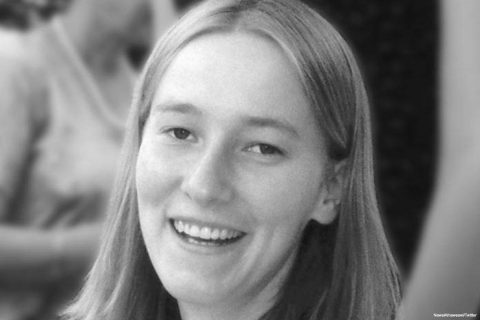
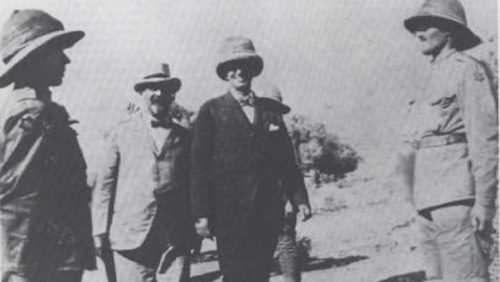

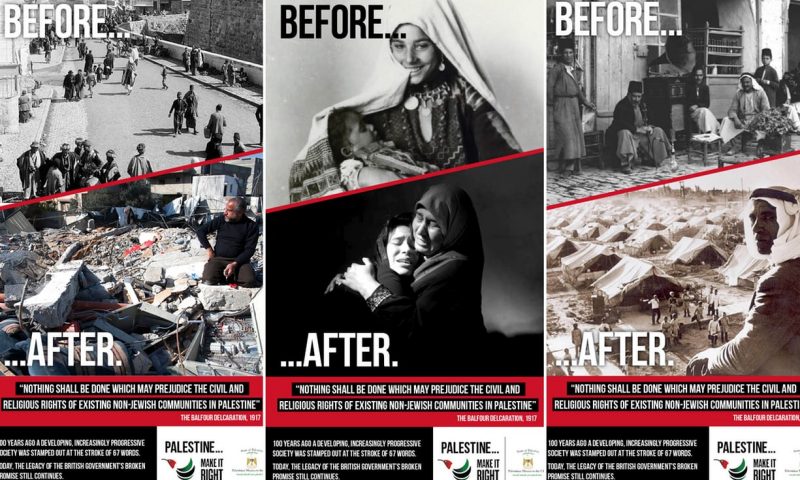
 Last year, al-Jazeera Media Network used an undercover reporter to infiltrate some U.K. pro-Israel groups that were working closely with the Israeli Embassy to counter criticisms coming from British citizens regarding the treatment of the Palestinians. In particular, the Embassy and its friends were seeking to counter the growing Boycott, Divestment and Sanctions movement (BDS), which has become increasingly effective in Europe. The four-part documentary released late in 2016 that al-Jazeera produced is well worth watching as it consists mostly of secretly filmed meetings and discussions.
 Aletho News
