Priti Patel and Jewish Conspiracies
By Gilad Atzmon | November 12, 2017
The British Jewish media is upset. Priti Patel, a cabinet minister responsible for international development, had no fewer than 14 meetings with Israeli politicians and political leaders. It seems that Patel didn’t clear any or most of these meetings with the Foreign Office. So Patel had to go and but now the British Jewish media is pressing the panic button.
The ultra Zionist Jewish Chronicle’s (JC) headline warns that the Patel Affair “will set us [the Jews] back 20 years.” The JC predicts that it will have “a devastating impact on British Jewry.” It may even “bolster antisemitic conspiracy theories and damage relationships with British politicians for a generation.”
This is the crux of the matter — Jews hate ‘Jewish conspiracy theories.’ Why? Because Jews do not conspire or operate in clandestine manner. They do it all in the open. Jews wrote the Balfour Declaration on behalf of Lord Balfour and made sure everyone knows who really wrote it. They make sure we know that it was Leó Szilárd and Albert Einstein who initiated the Manhattan Project. AIPAC, CFI, LFI and the CRIF openly push for immoral interventionist wars in Iraq, Syria, Libya and Iran while JC writers Nick Cohen and David Aaronovitch advocate these global wars in the media. All this is not merely a ‘Zionist agenda.’ Jewish anti Zionists employ the same technique to claim that it is down to progressive Jews to define the boundaries of free speech on Israel. I reiterate -there are no Jewish conspiracies. Everything is done in the open. And this was Patel’s mistake. She foolishly attempted to conceal her loyalty to our foreign rulers.
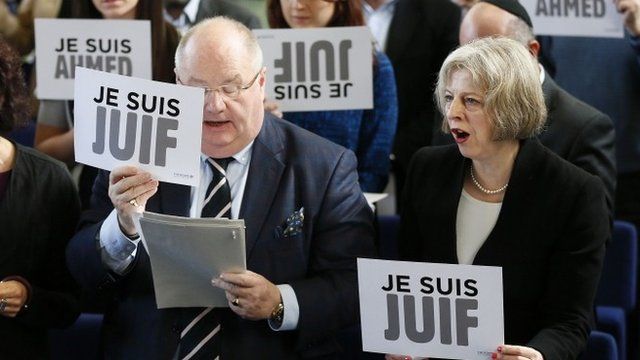
In a country led by Theresa Je suis Juif, there is no reason for minister Patel to hide her subservience to the Jewish Sate. In a country where the biggest lobby group in the parliament is the Conservative Friends of Israel there is no reason for a minister to be shy about what may seem to be disloyal inclinations. With 80% of the leading party listed as CFI members, treachery is the norm. Patel didn’t have to hide her allegiance to the Jewish State, she should have done it all in the open, like the PM and Sir Eric Pickles (see picture above).
The JC confirms that the “CFI is the largest group in Westminster with an open line to almost every Tory MP, dozens of other countries’ diplomatic and political groups, and influence in Downing Street for decades.” The JC doesn’t attempt to conceal how forceful the CFI is, however, it is honest enough to reveal that “one senior (Jewish) communal figure said CFI would now be regarded as ‘toxic’.”
If you are looking for light Jewish entertainment, the Campaign Against Anti-Semitism (CAA) is the place to go. The CAA is a self-appointed Jewish thought police. It devotes its energies to the total castration of the Brits and their ability to think rationally, morally and independently. The CAA provides a spectacle of anti-ethical thought totally foreign to the Western ethos.
“The resignation of Priti Patel,” the CAA writes, “ has unleashed some disturbing comments, including from politicians and journalists who have carelessly or deliberately evoked sinister stereotypes of powerful Jews.”
Let’s examine what the CAA considers to be a ‘disturbance’ and what is it they don’t want us to say: In an article in The Times, Policy Editor, Oliver Wright and Political Editor, Francis Elliott, cited an unnamed senior Conservative MP: “Another senior Conservative MP claimed that Ms Patel planned to use her ministerial position in DfID (Department for International Development) to curry favour with Jewish Tory donors by supporting Israel. ‘The Israel lobby in the Party is hugely influential and this was about Priti cynically trying to win their support. She thought she could be the next leader.”
Confusing, don’t you think? The JC admits that the CFI is the strongest body in Westminster, while the CAA insists that reference to CFI’s power and influence ‘evokes sinister Jewish stereotypes.’ The CAA openly attempts to police British journalism by stifling criticism of Israel. This shouldn’t take us by surprise. If Jewish power is the power to suppress criticism of Jewish power, here is the CAA exercising this power in broad daylight. But there is good news. This power in falling apart now, and this may explain the panic within the JC’s ranks and the tantrum thrown by the CAA and other Jewish thought police organisations (CST, ADL, Hope not Hate, et al).
The ‘rationale’ of the CAA policing strategy deserves close attention:
“Under the International Definition of Antisemitism adopted by the British Government, ‘Making mendacious, dehumanising, demonising, or stereotypical allegations about Jews as such or the power of Jews as collective — such as, especially but not exclusively, the myth about a world Jewish conspiracy or of Jews controlling the media, economy, government or other societal institutions’ is antisemitic.”
This is a revolutionary legal defence strategy. According to the CAA, X is not guilty of committing Y as long as X is stereotypically associated with committing Y. If X is guilty, for instance, of shoving a banana into someone’s eye (Y), the defence would be that shoving bananas into other people’s eyes (Y) is one of the stereotypes about X.
Similarly, the CAA claims it is anti-Semitic to refer to the Jewish Lobby as the strongest lobby in Westminster because the accusation is consistent with the Jewish stereotype of Jewish lobbies being influential. Likewise we should vindicate Harvey Weinstein of any wrong doing because Larry David admitted on Saturday Night Live that predatory behaviour has become a Jewish stereotype. I expect Bernie Madoff to capitalise on this line of defence and appeal for his immediate release. Alan Dershowitz can also come clean about his bad habits by blaming them on Jewish stereotypes.
The paradox here is obvious, The CAA’s circular argument has nothing to do with any consideration of ethics, truthfulness or correspondence with reality. The ‘stereotype’ redeems the sin. By this logic the CAA itself is innocent of any wrong thinking because such a Jerusalemite anti-ethical intellectual pattern is also a Jerusalemite stereotype.
The CAA practically calls upon British commentators and politicians to fib. “It is therefore incumbent upon those commenting on the Priti Patel affair to do so in a way that is proportionate and rational. It is a dangerous stretch to accuse Ms Patel of doing Israel’s bidding in order to please wealthy Jews who have the power to influence the selection of the next Conservative leader.” Neither the CAA nor any other Jewish body has offered an alternative rationale for Patel’s misconduct. The CAA demands that British journalists set aside their intelligence and common sense. They expect British politicians and commentators to put Jewish sensitivities first.
We are touching upon the core of Jerusalemite thinking – a tyranny of correctness that is removed from morality and Western ethos. Instead of ethics, we are told to follow Mitzvoth, regulations and commandments. For the Brits, Priti Patel is a wake up call. It is a final reminder that for the nation to sustain its values it must search for its Athenian roots: philosophy, science and ethics as opposed to a tyranny of correctness that is anti ethical and zero principled.
Cambridge University under fire for threatening to cancel anti-Israel meeting
Press TV – November 12, 2017
The University of Cambridge has been criticized for threatening to cancel and replacing the chair of a meeting about an anti-Israel movement.
The institution is now facing accusations of censorship following the Wednesday meeting which was related to the Boycott, Divestment, and Sanctions (BDS) movement.
Ruba Salih from the School of African and Oriental Studies (SOAS) was supposed to oversee the event featuring Palestinian BDS activist, Omar Barghouti, but organizers said they had been forced to cancel Salih’s participation hours before it was about to start.
They said the university officials had intervened by claiming they were worried about her neutrality.
Palestinian activists say the incident highlights the increasingly restrictive atmosphere for detractors of Israel on campuses across the UK.
“Removing a respected Palestinian academic as chair of a panel event based on an unsubstantiated assumption about her lack of ‘neutrality’, and in doing so bowing to external pressure from a pro-Israel lobby group, cannot be construed as anything other than a naked attack on free speech and, more particularly academic freedom,” Ed McNally, the Cambridge student who organized the event, told Al Jazeera.
Following the incident, hundreds of students and academics signed an open letter slamming Salih’s removal as chair of the event.
Meanwhile, a university spokesperson told Al Jazeera that the institution is “fully committed to freedom of speech and expression”.
Salih said she had not received any explanation from the university about their decision.
“I don’t know the exact terms under which my role as chair was defined as inappropriate for the debate, and which narratives the university has used for the forced replacement of the chair,” she said.
A number of other universities in the UK have already banned their students from holding events in solidarity with the people of Palestine.
British Journalist’s Press Pass Could Be Revoked Over Comments for Russian Media
Sputnik – November 10, 2017
The Chief Editor of the UK magazine Politics First Marcus Papadopoulos told Sputnik on Thursday that he was affronted by the proposal to revoke his press pass to the UK parliament because of his regular appearance as an expert and analyst in Russian media.
On Thursday, The Times newspaper published an article in which two members of parliament from the Labour Party, Alison McGovern and John Woodcock, proposed that “Russian propagandist” Papadopoulos should be deprived of his press pass to the UK parliament. The politicians accused Papadopoulos of “spending much of his time on Russian and Iranian state broadcasters espousing ‘propaganda from a foreign power'”.
“This is an appalling and reprehensible attempt by British politicians and journalists to silence debate. At stake is here is freedom of speech in Britain… The allegations against me are utterly untrue and are politically motivated,” Papadopoulos said.
Papadopoulos noted that the Labour Party politicians who criticized him were “vehemently anti-Russian” and made such accusations because he had an opposite view on the UK and the US policy on Russia and Syria.
“The two Labour MPs in question, who made this baseless accusation, are on the right of the Labour Party — being heavily involved in the right-wing pressure group, Progress — and are vehemently anti-Russian and staunch supporters of the terrorist groups in Syria. That is the real reason for their complaint about me. Because I hold a diametrically opposed view of British and American foreign policy concerning Russia and Syria,” Papadopoulos said.
Papadopoulos added that McGovern and Woodcock were fierce critics of Jeremy Corbyn, the Labour Party leader, and are unpopular among the party’s members.
Tory who held ‘undisclosed’ meetings with Israelis summoned back to London
RT | November 8, 2017
Tory minister Priti Patel is en route to Britain on Downing Street’s orders following a disclosure that while on “holiday” in Israel she held unauthorized meetings with politicians. It is widely expected she’ll be clearing her desk before day’s end.
The International Development Secretary’s fate appears to be sealed after details of two further secret meetings with Israeli officials emerged on top of the 12 previously revealed. As well as meeting with officials including PM Benjamin Netanyahu in Israel in August, it is now claimed she met with public security minister Gilad Erdan at Westminster and foreign ministry official Yuval Rotem in New York in September.
It is understood Downing Street was told about the New York breakfast with Rotem when she disclosed the details of her Israel trip, but Number 10 only learnt on Tuesday about the meeting with Erdan. No British officials were present and, as with her meetings in Israel, she did not report them to the government or Foreign Office in the usual way.
Downing Street has dismissed claims made in the Jewish Chronicle that Patel was told by Number 10 not to officially note the extra meetings so as not to embarrass the Foreign Office. Citing two unnamed sources, the newspaper said although Patel’s meeting with Netanyahu was not authorized in advance, the British government was made aware of it within hours.
Patel was accompanied at all the meetings bar one by the honorary president of the Conservative Friends of Israel lobbying group, Lord Polak. No minutes were taken.
Before these extra meetings were revealed, Downing Street insisted May had confidence in Patel, who was in Africa with International Trade Secretary Liam Fox. She is now understood to be on her way back from Nairobi on Wednesday to be formally dismissed, according to the BBC.
Downing Street’s stance on Patel appeared to change when it was revealed on Tuesday that Patel had tried to divert British taxpayer’s money to the Israeli Army. Officially, Britain accuses Israel of occupying the disputed Golan Heights territory illegally.
Labour is demanding an investigation by the Prime Minister’s standards advisor into Patel’s meetings with the Israeli government, claiming they involve four “serious breaches” of the ministerial code. In a letter to May, shadow Cabinet Office minister Jon Trickett said she should either call in her independent advisor on ministerial standards or “state publicly and explain your full reasons for why Priti Patel retains your confidence despite clear breaches of the ministerial code.”
Glencore’s secret loan for Israeli billionaire to secure Congo mining rights revealed
RT | November 6, 2017
The world’s biggest mining firm Glencore secretly loaned tens of millions of dollars to an Israeli billionaire after enlisting him to secure a controversial mining agreement in the Democratic Republic of the Congo (DRC), it has been revealed. The details were leaked as part of the Paradise Papers.
A trove of more than 13 million documents from the world’s leading offshore law firms, including Appleby, was released through the International Consortium for Investigative Journalists (ICIJ) on Sunday. The documents lay bare the secretive multi-jurisdictional dealings of Glencore, a scandal-plagued, Anglo-Swiss multinational with mining interests across the globe.
As a friend of the Congolese President Joseph Kabila, Israeli billionaire Dan Gertler’s role has been questioned by anti-corruption campaigners since Glencore floated in London in 2011. His notoriety in the resource-rich but conflict-riven and corrupt DRC spans nearly two decades.
Gertler was cited by a 2001 UN investigation, which said that he had given Kabila $20 million to buy weapons to equip his army against rebel groups in exchange for a monopoly on the country’s diamonds. A 2013 Africa Progress Panel report said a string of mining deals struck by companies linked to him had deprived the country of more than $1.3 billion in potential revenue. Last year, he was implicated in a scheme to bribe Congolese officials on behalf of US hedge fund manager Och-Ziff Capital Management, according to Bloomberg.
According to the Guardian, the Paradise Papers confirm that several times during 2008 and 2009, Gertler was called in to negotiate with DRC authorities over the struggling Katanga copper mine in the southeast of the country, which was hampered by stalled talks to secure a joint-venture agreement with DRC’s state-run miner Gecamines.
In 2009, Glencore, through a loan offer, took effective control of Katanga, but also kept Gertler’s interest in the firm by secretly loaning his company Lora Enterprises $45 million in pledged shares for him to take part in the loan. The loan was granted with the caveat that it would be repayable in the event that an agreement was not made with DRC authorities to secure a contract for a company linked to the firm.
While the details of the loan have been previously reported, the new documents show that Gertler was required to secure certain approvals from the government in return, according to the Guardian.
Daniel Balint-Kurti of the Global Witness campaign group told The Times : “Glencore must explain to the world why it used a secret offshore company to pump millions of dollars to a controversial friend of the Congolese president linked to bribery scandals.”
In a written statement, lawyers for Gertler told the Guardian that neither he nor any company or person related to him received any loan funds directly, and any allegation that the $45 million loan was improper “demonstrates misapprehension of international finance transactions.”
“Mr Dan Gertler is a respectable businessman who contributes the vast majority of his wealth and time to the needy and to different communities, amounting to huge sums of money. He transacts business fairly and honestly, and strictly according to the law,” the statement said.
Gertler’s lawyers said there was no basis for the allegation that Katanga received “preferential terms” in its agreement with the DRC as a result of his involvement.
Glencore has dismissed any allegations of impropriety concerning the loan. The loan was made on commercial terms and “negotiated at arm’s length,” it told Bloomberg.
Iran slams Saudi lies over Yemen missile strike
By Adam Garrie Adam Garrie | The Duran | November 5, 2017
Saudi Arabia and Donald Trump have both accused Iran of providing Yemen’s Houthi rebels with the missile that was launched at the Saudi capital Riyadh yesterday evening.
Saudi Arabia in particular, has accused Iran of supplying the Houthis with new missiles capable of longer distances than those previously thought to be in their possession.
However, Saudi’s accusation is inconsistent with the fact that Yemen is totally besieged from both land and sea.
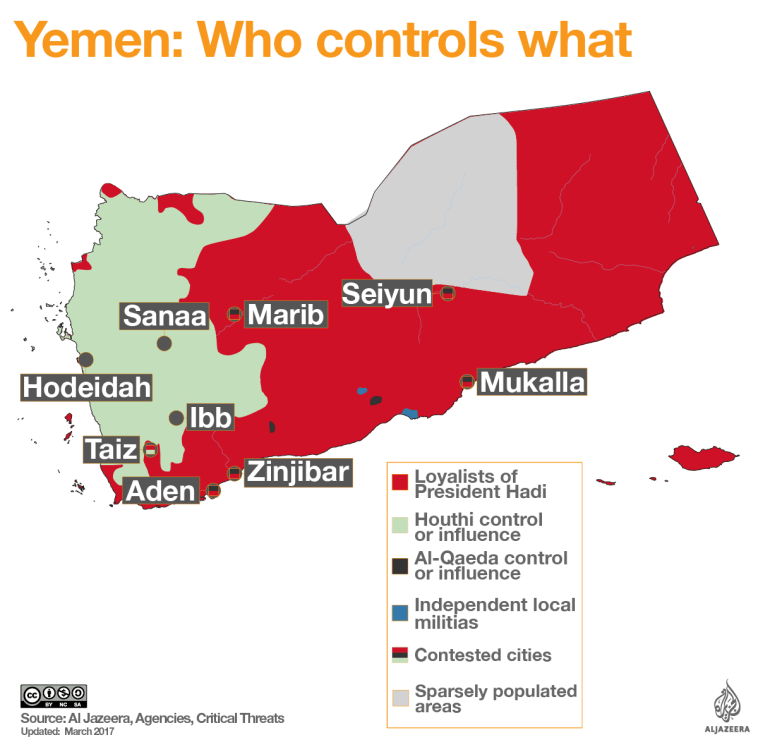
Yemen is bordered by Saudi Arabia and fellow Gulf Cooperation Council Oman, a state which would never allow shipments of Iranian weapons to Houthis and could not easily do in any case as Oman borders areas of Yemen controlled either by the pro-Saudi Hadi government or by anti-Iranian al-Qaeda and ISIS fighters.
Yemen’s north-west maritime borders have been cut off from the world, including from crucial medical and food supplies by a Saudi naval blockade that has caused a man-made famine and a cholera epidemic.
If the UN cannot even get foodstuffs past the Saudi blockade, it goes without saying that Iran could not get ballistic missiles to Houthi controlled areas.
The Houthis themselves claimed that they modified their missiles to achieve longer ranges, a claim which Iran acknowledges as the most likely scenario in respect of yesterday’s launch. Others have stated that the launch was a Saudi false flag, but as the Houthis themselves took credit for the launch and with video emerging which appears to back up Houthi claims, the only remaining credible scenario is that the Houthi fighters were indeed able to modify their missiles to reach Riyadh.
In any case, it would appear that Saudi’s US made defensive missile systems shot the Houthi rocket down, although some reports on social media from the Arab world contradict this.
At the end of the day, the facts hardly matter to the spokesmen and leaders of Saudi, Israel and United States who have all accused Iran of having a direct hand in the missile launch.
The fact of the matter is that while Iranian sympathies and limited support are certainly with the Houthis, the blockade means that this support amounts to very little in terms of material support, including and especially military support.
The facts on the ground and more important on the sea, dictate that accusations of Iran meddling in Yemen are de-facto baseless.
Unlike Syria, in which militants could be supplied on virtually all sides from ISIS controlled Iraq to the large Turkish border as well as the borders with Jordan and Israel, Yemen’s Houthis are not in any such position to be so easily supplied.
The fact that many in the media have conspired to hide this patently obvious reality means that one either is not engaging in honest journalism or one is simply repeating mythical Saudi claims.
UK PM Takes Russia’s Alleged Attempts to Intervene in Elections ‘Very Seriously’
Sputnik – 01.11.2017
UK Prime Minister Theresa May has voiced London’s concern over Russia’s alleged attempts to interfere in the electoral or democratic processes of any country.
“We take very seriously issues of Russian intervention or Russian attempts to intervene in the electoral processes or in the democratic processes of any country,” May told the House of Commons.
The British prime minister’s statement comes in the wake of the ongoing investigation in the US into Russia’s alleged interference in the 2016 presidential election dubbed a “witch hunt” by Donald Trump.
Asked if the UK authorities were cooperating with US Special Counsel Robert Mueller in his inquiry into Russia’s alleged meddling in the 2016 US presidential election, May pointed out that London was working closely with Washington.
“As part of that relationship, we do cooperate when required,” May said.
The statement comes amid the launch of a UK Electoral Commission investigation into the funding of the campaign supporting Brexit by a pro-Leave campaigner.
Russia’s Alleged Meddling
Moscow has repeatedly denied Russia’s interference in the US election which is being investigated separately by US Congress and Special Prosecutor Robert Mueller, calling the claims “groundless” and “absurd.”
In the wake of US media reports claiming about the alleged Russia’s meddling in the November 2016 election, media outlets in several European countries, including France and Germany, have began speculating about Moscow’s “attempts” to interfere in their countries’ affairs.
Commenting on the growing number of foreign states’ accusations of alleged attempts by Moscow to undermine democracy, Foreign Minister Sergei Lavrov has called the claims ridiculous, emphasizing that there was no proof that Russia was involved in the election processes of the United States, Germany, France, or the United Kingdom.
READ MORE:
UK Electoral Commission Opens Probe Into Brexit Campaigner Banks
German Election: Futile Hunt for ‘Russian Meddling’ Continues
France Finds No Traces of Russian Hackers in Attack on Macron’s Campaign
UK: Now is not the ‘right time’ to recognise Palestine
MEMO | October 31, 2017
UK Foreign Secretary Boris Johnson declined the Labour Party’s offer to recognise a Palestinian state “now” insisting that “the moment is not yet right to play that card”.
Replying to questions about the Balfour Declaration in the House of Commons yesterday, Johnson said: “It won’t on its own end the occupation. It won’t on its own bring peace. It isn’t after all something you can do more than once.
“That card having been played that will be it. We judge that it is better to give every possible encouragement to both sides to seize the moment.”
Yesterday’s debate in the Commons saw the Shadow Foreign Secretary, Emily Thornberry, challenging Johnson to fulfil Britain’s pledge to the Palestinians made in the Balfour Declaration not to “prejudice the civil and religious rights of existing non-Jewish communities in Palestine”, who at the time made up 95 per cent of the population.
In her comments at the Chamber about the Balfour Declaration, Thornberry insisted “there is no better way, no more symbolic way than for the UK to officially recognise the State of Palestine”.
The Labour MP for Islington South questioned Johnson about the timing concerning extending the UK’s recognition of a Palestinian state while mentioning that in 2011, former Foreign Secretary William Hague had said that “we [UK] reserve the right to recognise a Palestinian state at a moment of our choosing”.
In the six years since, humanitarian conditions in the occupied territories have become ever more desperate, said Thornberry. “Six years of unabated cycle of violence; six years at which the pace of settlement building and the displacement of Palestinians has increased,” she stressed.
The Labour MP enquired if the government still plans to recognise the State of Palestine saying “if not now, when? And if they have no such plans why is it the plans have changed?”
Johnson, who has previously admitted that the terms of the 1917 Balfour Declaration are “not fully realised” refused to endorse Labour’s proposal, insisting that it was “not the right time to recognise the State of Palestine”.
Featured Video

AIDS Inc. by Gary Null (2007)
or go to
Aletho News Archives – Video-Images
From the Archives
Clash of Civilization, Iran Part II
By Jamal Kanj – Intifada-Palestine.com – January 14, 2011
Israel’s survival kit is: perpetuate conflict, insecurity to rationalize collective hate and finally playing victim.
Devoid of conflict, Israel implodes internally; without hate, Zionism loses its justification; and playing eternal victim to continue blackmailing the West. Absence of this holy trinity, Israel ceases to exist.
From its inception, the house of Zion has mastered exploiting adversarial powers to advance Israel’s cause. For instance, their influence over the Democratic Party in the US began with President Truman’s bid for 2nd term election in 1948.
Responding to strong opposition from Secretary of State General George Marshall and Department experts urging against recognition of Israel, President Truman replied: “I’m sorry gentlemen but I have to answer to hundreds of thousands [Jewish voters] who are anxious for the success of Zionism. I do not have hundreds of thousands of [voting] Arabs among my constituents”
Zionists influence over liberal American politics was matched with the doctrinal school of Conservative theoreticians aligning the Republican Party’s platform with Israel’s objectives. The Neoconservative Zionists, coined Zioncons, invented the “Clash of Civilization” concept to fight Israel’s wars. … continue
Blog Roll
 Aletho News
- Merck Virologists Admitted to Falsely Certifying Vaccine Efficacy
- Mandatory Folic Acid for every man, woman & child
- Pro-Palestine protesters arrested outside UK’s ruling Labour Conference in Liverpool
- Mauritius denies landing permit to flight from Israel, forcing cancellation: Tour operator
- Israeli finance minister calls for genocidal war on West Bank, annexation of south Lebanon
- 12 Things Your Psychiatrist Was Trained Not to Tell You
- From Unipolar Universalism to Multipolar Civilizational Distinctiveness
- RSF military group defects, joins Sudanese army: State media
- Ireland goalkeeper refuses to play ‘Israel’ as squad weighs boycott
- China pushes back against US on Cuba, Iran
- If Americans Knew
- Israel forces Gazans to live in constant peril – Daily Update
- Deconstructing Netanyahu’s pants-on-fire UN rant – Daily Update
- Trump betrayed voters with his campaign lies and prioritized a foreign country once he took office
- Netanyahu calls Israel’s war in Gaza ‘opposite of genocide’ in UN speech to near-empty hall
- Settler Kidnappings: Torture, Sexual Abuse and Terrorisation of Palestinian Abductees as Israel Deepens Annexation of West Bank
- Gaza winter nears as 162,000 tents become unusable, raising fears of humanitarian crisis
- Netanyahu says, “It’s the opposite of genocide”; UN says Gaza economy is world’s ‘most severe crisis on record’ – Daily Update
- Israel’s US-Backed Assault on Gaza Has Created the ‘World’s Most Severe Economic Crisis on Record’: UN
- ‘Protecting U.S. Citizens’… From Israel
- ‘This is where I live now, the back of a truck’: a day in the life of a grandmother in Gaza
- No Tricks Zone
- New Study: Earth And Venus Surface Warmth Largely Explained By Convection And Lapse Rate, Not CO2 Or Radiation
- 2025 Nature Paper Claiming Worsening Global Drought Gets RETRACTED …Heavily Flawed
- New Study: ‘Global Drought Shows No Detectable Recent Acceleration Under Climate Warming’
- Economic Masterminds: German Socialists Suggest Taxing Productivity Gains Stemming From Using AI
- The South China Sea Has Not Been Cooperating With The Climate Change Narrative
- Energy Crisis: Germany Enters Heating Season With Historically Low Gas Reserve Fill Levels
- New Study: The Antarctic Ice Sheet Gained Mass From 2020-2024 Due To Staggering Snow And Ice Accumulation
- Study: Ocean Heating Rates From Thousands Of Years Ago ‘Dwarf’ Modern Ocean Heating Rates
- Climate Extremists Target, Attack Large-Scale Power Grid Infrastructure In Germany!
- New Study: Antarctic Ice Melt Has Contributed Less Than 1 Centimeter To Sea Level Rise In The Last 30 Years

