UK training Saudi police in CSI techniques that risk torture
Reprieve – June 7, 2016
Britain’s College of Policing is teaching the Saudi Arabian interior ministry high-tech forensic skills that risk being “used to identify individuals who later go on to be tortured”, an internal police report obtained by human rights charity Reprieve reveals.
According to the document, released under Freedom of Information, the controversial training program began in 2009 and continued even after juvenile protesters were rounded up, tortured and sentenced to death following the Arab Spring uprisings.
British police now want to step up their training package to include advanced cyber-crime courses, which could be misused to target pro-democracy activists in Saudi Arabia.
Although the UK Foreign Office opposes the death penalty, the College of Policing wants to teach Saudi officers how to analyse mobile phone records, which could lead to activists being arrested and executed.
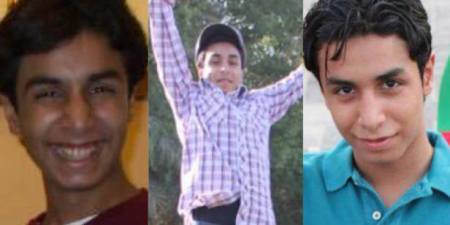
Ali al-Nimr was just 17 years old when he was sentenced to death for attending non-violent protests in 2012 and allegedly using his blackberry phone to invite friends to join demonstrations. At trial the prosecution requested execution by “crucifixion”.
Many more juvenile protesters were swept up and tortured in the 2012 crackdown, including Dawood al Marhoon and Abdullah Hasan al-Zaher, who now face beheading at any time. Another teenage activist, Ali al Ribh, who was arrested at school, was among 47 people executed on a single day in January 2016.
That same month, the College of Policing proposed further courses for Saudi personnel despite noting that there was a risk “the skills being trained are used to identify individuals who later go on to be tortured or subjected to other human rights abuses”.
Other techniques on sale to Saudi detectives include decrypting hard drives, retrieving deleted files, voice recognition and trawling CCTV systems. The project is described as an “income generating business opportunity” for the College of Policing.
Some of the training has taken place at the College of Policing’s forensics centre outside Durham, and “over 120 fingerprint personnel are in the process of being trained”.
The document says that the Saudi officers are drawn from the gulf kingdom’s 300,000 strong interior ministry, which includes policemen, prison guards and national security staff.
The college claims to have developed a “trusted and professional partnership” with the ministry, which carries out beheadings, stoning and lashings. David Cameron faced outcry in Parliament last year over a Ministry of Justice project with Saudi prison guards.
Commenting, Maya Foa, Director of the death penalty team at Reprieve said: “It is scandalous that British police are training Saudi Arabian officers in techniques which they privately admit could lead to people being arrested, tortured and sentenced to death.”
“The training Britain delivered included hi-tech skills that could easily have been used to target pro-democracy activists in Saudi Arabia. Let’s not forget that while this was going on, teenage protestors like Ali al-Ribh, Abdullah al-Zaher, Ali al-Nimr, and Dawood al-Marhoon were rounded up and sentenced to death.”
“The FCO has to explain how on earth helping execute juvenile protesters makes anyone safer in Saudi Arabia or the UK.”
Anti-nuke activists begin month-long blockade of atomic facility
RT | June 6, 2016
Anti-nuclear activists are starting a month-long protest against Britain’s Trident nuclear weapons program, arguing it should not be renewed by Parliament later this year.
Peace campaigners are descending on AWE Burghfield in Berkshire, where Britain’s nuclear warheads are maintained and go through their final stage of assembly.
Throughout June, Campaign for Nuclear Disarmament (CND) supporters will join activists from Trident Ploughshares and groups from across Europe to “blockade, to occupy, and to disrupt” the weapons manufacturing base.
Activists claim the renewal of Britain’s at-sea nuclear deterrent is expensive, unsafe, ill-suited for contemporary warfare and in violation of international commitments.
The nuclear site at Burghfield is run by the Atomic Weapons Establishment (AWE), a controversial weapons company which is partly owned by US firm Lockheed Martin.
Last August, AWE was censured by UK regulators for failing to show a long-term plan for handling radioactive waste at its Aldermaston site.
The nuclear weapons factory also faces further action for failing to meet legal obligations to treat radioactive waste by 2014, according to a report published by the ONR last July.
Among the activists will be veteran peace campaigner Pat Arrowsmith, who was the organizer of the historic 1958 march from London to Aldermaston which saw thousands of people march against nuclear weapons.
British protesters will be joined by anti-nuke groups across Europe, including Women for Peace (Finland), Action Pour La Paix (Belgium) and Maison de la Vigilance (France).
“The vast [nuclear weapons] complexes at Burghfield and Aldermaston are founded on a wealth of resources and extraordinary human skill,” CND General Secretary Kate Hudson said.
“What a tragedy that these are utilized for the production of weapons of mass destruction rather than being used instead to secure real human security and meet the real needs of our society.”
The cost of replacing Trident and maintaining a successor program is expected to reach £205 billion (US$296 billion), according to campaigners.
The biggest expense by far is expected to be the day-to-day running costs. At £142 billion over the system’s lifetime, they amount to 6 percent of the total UK defense budget.
Other expenses include decommissioning old warheads, the continued lease of warheads from the US and future refurbishment.
AWE Burghfield will undergo a £734 million upgrade as part of the Trident renewal.
Skynet: UK to upgrade war satellites to expand global drone kill operations
RT | June 3, 2016
Britain’s military plans to replace its ageing Skynet war satellites to meet the bandwidth demands of its expanding Special Forces and drone operations.
It is the first sign of the UK’s ambitions to create the next generation of military space satellites to replace the Skynet A5, the original version of which came into service in the 1960s.
It is now considering how to proceed with its Future Beyond Line of Sight (FBLOS) program.
Given the shadowy nature of the project, the Ministry of Defence (MoD) has been vague about the specifics, telling Defence News : “We continue to consider a range of options for the FBLOS project and aim to submit the initial business case this summer.”
The existing system was produced by arms giant Airbus. Upgrades are required to increase bandwidth to support the UK’s increasingly clandestine operations using special forces, the forthcoming F-35 combat aircraft and, perhaps most significantly, its expanding drone fleet.
The forthcoming assessment of military requirements will be carried out from the early 2020s to the end of that decade.
The upgrade is indicative of emerging trends in warfare, at a time when public resistance to the Afghanistan and Iraq wars has made large-scale troop deployments politically untenable.
Chris Cole, of the NGO Drone Wars, wrote on the possibility of a connection between Skynet and British military drones as long ago as 2010.
However, in a blog on the topic he pointed out: “Skynet 5 however is not owned by the Ministry of Defence, but by a private company called Paradigm Secure Communication.”
This would render Skynet virtually impervious to freedom of information (FoI) requests regarding its links with drone warfare, which can only be put to public bodies.
Speaking to RT on Friday, Cole said that as well as “doubling the UK’s current armed drone fleet and investing heavily in the development of future drones” the UK is working quietly to install “secret communication systems to enable the UK to use its armed drones right around the globe.”
He warned: “The continuing development of Skynet is an integral part of the government’s strategy to follow the US down the path of being able to target those it considers to be a threat, anywhere in the world.”
Dismantling Civil Society in Bahrain
By Rannie Amiri | CounterPunch | June 3, 2016
Like a vise which first grips its object and then slowly, deliberately and inexorably crushes it, the al-Khalifa regime has done similarly to civil society in Bahrain. It did not stop when peaceful, pro-democracy, reform protests erupted in 2011 and were violently put down by government forces aided by an invasion of Saudi troops in March of that year. Indeed, the vise continues to close and relentlessly so.
Nationalities have been revoked, mosques razed, citizens deported, human rights activists imprisoned on flimsy charges of insulting the monarchy at the least or plotting its overthrow at worst, and the most perfunctory of dialogues with the opposition abandoned. By smothering the figures and institutions who dare challenge the authority of the ruling dynasty in the most benign of fashions – a tweet, waving the country’s flag, tearing up a photo or merely questioning the tenure of the world’s longest serving prime minister – the Bahraini regime and its Gulf allies would like to believe monarchal rule has been preserved. Such desperate measures however, only speak to its precarity.
The stalwart activist Zainab al-Khawaja was given a sentence of three years and one month in Dec. 2014 for (again) tearing up a picture of King Hamad. She refused to be separated from her infant son whom she took with her to prison. Al-Khawaja has just been released on “humanitarian” grounds after serving 15 months in jail.
Her father though, Abdulhadi al-Khawaja, remains imprisoned serving a life sentence on trumped-up charges of attempting to topple the government. While authorities may have set Zainab al-Khawaja free, they simultaneously doubled the sentence of Sheikh Ali Salman, head of al-Wefaq, an opposition political party. Initially given a term of four years incarceration for alleged incitement against the regime, it was increased to nine years on appeal. The unflinching President of the Bahrain Center for Human Rights (BCHR) and founding Director of the Gulf Centre for Human Rights Nabeel Rajab, remains banned from leaving the country despite the need to secure medical treatment for his wife.
Busy highlighting the nation’s cordial relations with the United Kingdom and United States, the latter of which headquarters its Navy’s Fifth Fleet in the capital Manama, the Western media has largely ignored the plight of Bahrain’s ordinary citizens. The arrest and torture of disabled youth has now been documented by the BCHR. Indeed, for more than a decade, the Center has meticulously chronicled the dismantling of Bahrain’s civil society in all its forms by the al-Khalifa regime.
Most recently, with the passage of a law preventing any religious figure from joining political societies or engaging in political activities, the BCHR issued a statement condemning, “… the Bahraini parliament and Shura Council’s passage of amendments to the Political Societies Law, which places a ban on participation in political decision-making based on discriminatory religious grounds. In defense of this draft amendment, lawmakers supporting this motion argued it would prevent religious acts from being politicized. This decision restricts people’s ability to freely engage in religious practices, as those members willing to join political activities pertinent to the legislative process in Bahrain would now need to refrain from any activities carrying religious connotations.”
In the face of widespread and open abuses in civil society, lack of proportional parliamentary representation, curfews, detentions, and imprisonment and torture of those who dissent, these practices have nonetheless failed to adversely impact the ties enjoyed between Bahrain and the United States. But when a regime becomes alienated from those whom it rules and for example, gives lengthy jail sentences for tweets it finds offensive, it speaks to a tenuous reign.
The pillars of civil advocacy in Bahrain – Nabeel Rajab, Abdulhadi al-Khawaja, Maryam and Zainab al-Khawaja, Abduljalil al-Singace (sentenced to life in prison for participating in pro-democracy protests), Naji Fateel, Hussain Jawad and countless others both named and unnamed – have consistently engaged in purely secular, non-sectarian activism. Unlike the practice of the regime, the designations Sunni and Shia need not be applied when discussing the ongoing struggle for legal, political and socioeconomic rights in Bahrain. The people have waited too long for the West to recognize their demands are not based on sect, but on equity.
Despite an oppressive regime and the long shadow cast by the U.S. Fifth Fleet, resilient Bahrainis remain unintimidated.
Rannie Amiri is an independent commentator on Middle East affairs.
Corbyn rips into BBC over biased coverage
Press TV – June 1, 2016
UK Labour leader Jeremy Corbyn has blasted the BBC for being “obsessed” with efforts to damage his leadership and accused some party members of playing into its hands.
Britain’s opposition leader made the comments in an interview with Vice News as part of a documentary about the workings of his office.
The film, which was aired on Wednesday, follows Corbyn over almost two months during the run-up to the May elections and features a series of interviews with Ben Ferguson, a Vice journalist and Labour member who voted for Corbyn.
In response to Ferguson expressing concern about Labour’s performance in May, Corbyn revealed the depth of his feelings about his portrayal in the media, launching a fierce attack against the BBC in particular.
“There is not one story on any election anywhere in the UK that the BBC will not spin into a problem for me. It is obsessive beyond belief. They are obsessed with trying to damage the leadership of the Labour party and unfortunately there are people in the Labour party that play into that,” he said.
Corbyn said one of the main lessons of being the leader is “how shallow, facile and ill-informed many of the supposed well-informed major commentators are in our media,” accusing them of shaping a debate that was “baseless and narrow.”
The Labour leader is filmed calling “utterly disgusting” a Guardian column that had accused him and his party of having an anti-Semitism problem.
The anti-Semitism row within the Labour Party became the center of media attention last month after the party suspended a number of its key figures for condemning Israeli crimes.
The latest uproar against Labour flared up when the former mayor of London, Ken Livingstone, was suspended by Corbyn over denouncing Israel’s crimes against the Palestinian people and arguing that Adolf Hitler, the former leader of Nazi Germany, was a supporter of Zionism.
As the controversy deepened, David Abrahams, a major party donor, called for Corbyn to resign, saying “Labour needs strong leadership.”
However, Corbyn said in a statement that he would propose a new code of conduct banning any forms of racism in his party.
“There is no place for anti-Semitism or any form of racism in the Labour Party, or anywhere in society,” he said.
Libya: How to Bring Down a Nation
By Patrick Howlett-Martin | CounterPunch | May 31, 2016
More than 30,000 Libyans died during seven months of bombing by an essentially tripartite force – France, Great Britain, United States – which clearly favored the rebels. “The most successful mission in NATO’s history”, in the imprudent words of NATO Secretary General, Anders Fogh Rasmussen, a Dane, in Tripoli in October 2011[1].
French president Nicolas Sarkozy’s eagerness to support a military intervention with the purported aim of protecting the civilian population contrasts with the reception offered to the Libyan president, Muammar Gaddafi, when he visited Paris in December 2007 and signed major military agreements worth some 4.5 billion euros along with cooperation agreements for the development of nuclear energy for peacetime uses. The contracts that Libya seemed no longer willing to pursue focused on 14 Dassault Rafale multirole fighter jets and their armament (the same model that France sold or is trying to sold to Egypt´s General Abdel Fattah al-Sisi, the self-proclaimed marshal), 35 Eurocopter helicopters, six patrol boats, a hundred armored vehicles, and the overhaul of 17 Mirage F1 fighters sold by Dassault Aviation in the 1970s[2].
The major oil companies (Occidental Petroleum, State Oil, Petro-Canada…) working in Libya helped Libya pay the 1.5 billion dollars in compensation that the Libyan regime had agreed to pay to the families of the victims of Pan Am flight 103[3]. At the time, the compensation was intended to be one of the conditions for Libya to be reaccepted into the community of international relations.
The principal Libyan investment funds (LAFICO-Libyan Arab Foreign Investment Company; LIA-Libyan Investment Authority) were shareholders in many Italian and British corporations (Fiat, UniCredit, Juventus, the Pearson Group, owner of the Financial Times, and the London School of Economics, where Gaddafi was addressed as “Brother Leader” during a video conference in December 2010 and his son Saif was awarded a PhD in 2008). The New York investment bank Goldman Sachs was sued in 2014 by a Libyan fund (Libyan Investment Authority) which had lost more than 1.2 billion dollars between January and April 2008 after the American firm took a commission of 350 million dollars for investing their money in highly speculative derivatives[4].
Muammar Gaddafi had been received with full honors by the major powers some months earlier: in addition to the reception in grand style in Paris, where he was a guest for five days in 2007, he was received in Spain in December 2007, in Moscow in October 2008, and in Rome in August 2010, two years after accepting the Italian gift of 5 billion dollars as compensation for the Italian occupation of Libya from 1913 to 1943. And also of note are the five trips to Tripoli in three years by former British Prime Minister Tony Blair, a paid senior advisor to the investment bank JPMorgan Chase[5]. Former French president Nicolas Sarkozy was received in Tripoli in July 2007, where he announced the beginning of a partnership for the installation of a nuclear power plant in Libya. The European Union was ready to facilitate access to the European market for Libyan agricultural exports[6]. Libya was invited by the NATO Chiefs of Defense to the Maritime Commanders’ Meeting (MARCOMET) in Toulon on May 25-28, 2008.
A policy that recalls the one towards the Iraqi leader, Saddam Hussein. The Iraqi leader was invited to Paris in June 1972 and September 1975; an agreement was signed in June 1977 for the sale to Baghdad of 32 Mirage F1 combat aircraft. A coincidence that didn’t do either of them any good in the long run.
Arab military leaders (veterans of Afghanistan and members of the Libyan Islamic Fighting Group, with ties to Al-Qaeda) helped overthrow Gaddafi. One of the principal military leaders of the rebellion, Abdel Hakim Belhadj (a.k.a. Abu Abdullah al-Sadik), then Tripoli Security Chief and today the main leader of the conservative Islamist al-Watan Party had been arrested in Bangkok in 2004, tortured by CIA agents, and delivered to Gaddafi’s Abu Salim prison. He is now the main ISIL leader in Lybia. Jaballah Matar was kidnapped from his home in Cairo by the CIA in 1990 and then handed over to Libyan officials[7] Documents seized after the death of Gaddafi reveal close cooperation between Libyan, American (CIA), and British (MI6) intelligence services[8].
Under Gaddafi, Islamic terrorism was virtually non-existent. Prior to the U.S. led bombing campaign in 2011, Libya had the highest Human Development Index, the lowest infant mortality and the highest life expectancy in all Africa. Today Lybia is a wrecked state.
In January 2012, three months after the end of hostilities, the United Nations High Commissioner for Human Rights, Navi Pillay, reported the widespread use of torture, summary executions, and rape in Libyan prisons. At the same time, the organization Doctors Without Borders decided to withdraw from the prisons in Misrata because of the ongoing torture of detainees[9].
The NATO intervention in Libya, involving most member countries under a humanitarian pretext, set an unfortunate precedent for efforts to resolve the Syrian crisis: the attack by French and British warplanes on the Warfallah tribe, who remained faithful to Muammar Gaddafi, and on the convoy carrying the Libyan leader and one of his sons, leading directly to Gaddafi’s death under deplorable circumstances. The images by videographer Ali Algadi and journalist Tracey Sheldon provide a graphic account of the Libyan leader being dragged from a drain pipe on October 20, 2011 and killed shortly thereafter. These circumstances belie the pseudo-humanitarian nature of the military intervention and tarnish the image of the “Libyan Spring”[10].
The death of U.S. Ambassador to Libya, J. Christopher Stevens and one of his aides in a fire set in the U.S. Consulate in Benghazi in September 2012, revealing the breadth of CIA activities, in which the Consulate served as a façade. The recruitment by the CIA on its Benghazi base[11] of combatants from the city of Derna for the conflict in Syria, fief of the Islamists (Al-Bittar brigade), against President Bashar al-Assad, has inescapable parallels with the recruitment in 1979, again by the CIA, of the mujahedeen against the Soviet Union in Afghanistan, with all the consequences that we are well familiar with, and particularly the birth of Sunni jihadism.
The car bomb attack on the French Embassy in Tripoli in April 2013; the escape of 1,200 detainees from the Benghazi prison; the murder of the human rights lawyer Abdel Salam al-Mismari in July; and the attack on the Swedish Consulate in Benghazi in October 2013 all highlighted the inability of the authorities to gain control over the security situation in Libya as it was overrun by heavily armed militias. In July 2013, Libyan Prime Minister Ali Zeidan threatened to bomb Libyan ports in the Benghazi region that were in the hands of militias who were profiting by exporting the oil now under their control. In October, the Prime Minister was kidnapped by 150 armed men in the center of Tripoli and held for six hours to protest the abduction on Libyan soil of Abu Anas al-Libi in a secret American airport operation. Al-Libi was accused of being one of the leaders of Al-Qaeda and later died while in custody in the United States.
The year 2015 began with Libya bereft of all institutions. It is ruled by a motley group of coalitions vying for power, based in Tripoli (Farj Libya, which controls the central bank), Benghazi (Shura Council, consisting of Ansar al-Sharia, facing off against the Libyan National Army of the renegade general Khalifa Hiftar), and in Tobruk-Bayda (offshoot of the National Transition Council, enjoying international diplomatic recognition after the June 2013 elections).
The security and health situation for the civil population is near disastrous. When I visited the country in 1994 it was a model for public health and education, and boasted the highest per capita income in Africa. It was clearly the most advanced of all Arab countries in terms of the legal status of women and families in Libyan society (half of the students at the university of Tripoli were women). The aggression against the presenter Sarah Al-Massalati in 2012, the poet Aicha Almagrabi in February 2013, and the women’s rights activist Magdalene Ubaida, now in exile in London, bear grim testimony to their legal status in post-Gaddafi Libya. The city of Benghazi is now semi-destroyed; schools and universities are mostly closed[12].
It is the theatre of fratricidal clashes between rival factions financed and armed by a series of sorcerer’s apprentices A general who has been stationed in the United States for 27 years commands a motley coalition with military backing from Egypt, the United Arab Emirates and Saudi Arabia while Islamist groups claiming allegiance to ISIL and well entrenched in Sirte and Derna are able to spread their influence thanks to the institutional crisis. and, Qatar, Turkey, and Sudan supporting Farj Libya on the other.
Gaddafi, leader of the Libyan revolution, the Jamahiriya, in power from 1969 to 2011, gave a warning to Europe in an interview with French journalist Laurent Valdiguié of the Journal du Dimanche on the eve of the NATO intervention, in words that now seem prophetic:
“If one seeks to destabilize [Libya], there will be chaos, Bin Laden, armed factions. That is what will happen. You will have immigration, thousands of people will invade Europe from Libya. And there will no longer be anyone to stop them. Bin Laden will base himself in North Africa […]. You will have Bin Laden at your doorstep. This catastrophe will extend out of Pakistan and Afghanistan and reach all the way to North Africa”[13].
Libya has become a hub for illegal trafficking, particularly of African emigrants under conditions reminiscent of the slave trade. According to Global Initiative Against Transnational Organized Crime, the refugee smuggling market in Libya was worth 323 million dollars in 2014. In the first five months of 2015, more than 50,000 undocumented immigrants have reached Italy from sub-Saharan Africa via Libya; 1,791 of them lost their lives at sea[14]. Prior to the initiation of hostilities, 1.5 million sub-Saharan Africans worked in Libya in generally menial jobs (oil industry, agriculture, services, public sector). Darker days at sea are still to come.
Notes.
[1] “NATO chief Rasmussen ‘proud’ as Libya mission ends”, BBC News, October 31, 2011.
[2]. Agence France Presse, December 11, 2007.
[3]. International Herald Tribune, March 24, 2011.
[4] Jeremy Anderson, “Goldman to reveal income linked to Libyan lawsuit”, International New York Times, November 25, 2014.
[5]. The Telegraph, March 23, 2012.
[6]. O´Globo, July 26, 2007.
[7] Souad Mekhennet, Eric Schmitt, “Libyan rebels seek to shed El Qaeda past”, International Herald Tribune, July 19, 2011.
[8]. Rod Nordland, “Files note close CIA ties with Qaddafi spy unit”, International Herald Tribune, September 5, 2011.
[9]. International Herald Tribune, January 28-29, 2012.
[10]. Borzou Daragahi, “Call for probe into Libyan Civilian Deaths”, Financial Times, May 14, 2012.
[11] Seymour Hersh, “U.S. Effort to Arm Jihadis in Syria. The Scandal Behind the Benghazi Undercover CIA Facility”, Global Research, Washington’s Blog, April 15, 2014.
[12] Abdel Sharif Kouddous, “Report from the Front: Libya’s Descent Into Chaos”, The Nation, February 25, 2015.
[13] Journal du Dimanche, March 5, 2011 (www.lejdd.fr)
[14] Source: International Organization for Migration and the European Commission.
Patrick Howlett-Martin is a career diplomat living in Paris.
Corbyn’s Latest Sin: Ignoring Summons to Visit Holocaust Museum in Israel

By Richard Edmondson | Fig Trees and Vineyards | May 30, 2016
Poor Jeremy Corbyn. He’s in hot water again. His latest offense? Ignoring an invitation from the leader of the Israeli Labor Party to journey to Israel to visit the Yad Vashem Holocaust Museum.
And the Israeli Laborites are incensed at the absence of a reply, while the Blairite centrists in Corbyn’s own party are reportedly in “shock” at the news.
“You’re a lying racist,” shouted Labour MP John Mann at former London Mayor Ken Livingstone last month after the latter pointed out–accurately, by the way–that Hitler had supported Zionist goals of having Jews immigrate to Palestine. But it seems the philo-semitic witch hunters out for Corbyn’s blood can’t be bothered with historical facts.
“It should be a matter of common courtesy to reply to a letter from the leader of one of our sister parties, particularly on an issue as important as tackling antisemitism,” commented Labour MP Wes Streeting when news of the snub broke over the weekend.
“But this is fairly typical of the flat-footed and lackadaisical attitude that we’ve seen from the outset. It is simply unacceptable,” he added.
Streeting apparently feels the leader of the British Labour Party should pack his bags and promptly head for Yad Vashem.
Built on a rise overlooking the site of the Deir Yassin massacre, the Yad Vashem museum has for years now been a favored destination of opportunists seeking to further their political careers. Here’s Obama in 2008:

Joe Biden in 2011:

And war criminal Tony Blair, also in 2011:

During his own visit to the museum, Blair wrote the following in the guestbook:
“Thank you for what will remain with me forever. It is hard to describe what this means to me or how profoundly it affects my emotions. For me, this is a memorial, it is a tribute, it is a reflection of an event almost too terrible to contemplate. But it is also a warning, a warning of the wickedness of which humanity is capable. I leave here with that warning in my mind. I also leave, however, with a sense of hope, because amidst all the evil and tragedy, those that survived built a better world and had the grace and wisdom then to build this testament to suffering and to the human spirit.”
The people of Britain are of course now awaiting judgement from the Chilcott Inquiry as to whether Blair may be guilty of “the supreme international crime, differing only from other war crimes in that it contains within itself the accumulated evil of the whole,” i.e. crimes against peace. And certainly what Blair and George Bush Jr. did to the people of Iraq is “almost too terrible to contemplate.”
As Corbyn put it recently,
“The Chilcot report will come out in a few weeks’ time and tell us what we need to know, what I think we already know: There were no weapons of mass destruction, there was no ability to attack within 45 minutes and a deal had been done with Bush in advance.”
Corbyn, in a general manner of speaking, seems to feel Blair should indeed be prosecuted for war crimes, although when specifically asked his views on this matter, his response was a vague, “If he’s committed a war crime, yes. Everyone who’s committed a war crime should be (prosecuted).”
Indeed, all war criminals should be prosecuted, and while none of the witch hunters seem to want to acknowledge it, certainly a war crime was committed against the people of Deir Yassin. According to Deir Yassin Remembered:
Early in the morning of April 9, 1948, commandos of the Irgun (headed by Menachem Begin) and the Stern Gang attacked Deir Yassin, a village with about 750 Palestinian residents. The village lay outside of the area to be assigned by the United Nations to the Jewish State; it had a peaceful reputation. But it was located on high ground in the corridor between Tel Aviv and Jerusalem. Deir Yassin was slated for occupation under Plan Dalet and the mainstream Jewish defense force, the Haganah, authorized the irregular terrorist forces of the Irgun and the Stern Gang to perform the takeover.
In all over 100 men, women, and children were systematically murdered. Fifty-three orphaned children were literally dumped along the wall of the Old City, where they were found by Miss Hind Husseini and brought behind the American Colony Hotel to her home, which was to become the Dar El-Tifl El-Arabi orphanage.
What was once the village of Deir Yassin is today occupied by an Israeli psychiatric hospital. Some of the Palestinian homes still standing after the massacre, were later incorporated into the hospital buildings, and the facility is plainly visible today from the museum.
Suppose a photo of Corbyn, perhaps wearing a kippah, prostrating himself before the altar of the holocaust, were to circulate widely over the Internet–would it help or hurt his political career? And why would the Israeli Labor Party issue such an invitation to him at this time?
In April, Israel’s opposition leader Isaac Herzog and leader of the Israeli Labour Party, responded to the antisemitism row by inviting senior members of the Labour Party – including Jeremy Corybn – to visit Yad Vashem as a reminder of the results of antisemitism.
So reports the Jewish Chronicle in an article published May 29. The story was also picked up by the Daily Mail, The Guardian, The Times of Israel, The Jerusalem Post, among others, and most of the reports take pains to note as well that the news comes the same week as the reinstatement of party member Jackie Walker, who was suspended last month after posting on Facebook that Jews had been involved in the African slave trade (another historical fact).
So was the invitation, as per the Jewish Chronicle’s report, issued only to remind Corbyn of “the results of antisemitism”? Or was the motive to embarrass him, to put him in a dicey and uncomfortable position? And who from the Israeli Labor Party contacted the media to let them know of Corbyn’s dereliction in answering? The reports don’t seem to mention that. What they do give us are the words of Herzog, the Israeli Labor leader, as quoted from his letter to Corbyn last month:
“I have been appalled and outraged by the recent examples of anti-Semitism by senior Labor party officials in the United Kingdom,” Herzog said, going on to refer to Livingstone as “anti-Semitic beyond hope of redemption.” Yet he also expressed his belief that some within the Labour Party are able to “understand the scourge of anti-Semitism.”
Sadly Corbyn has lacked the mettle to respond to attacks that have in essence now become a Zionist blitzkrieg against his entire political party. Rather than suspending his party members, he should have defended them. Consider the case of Livingstone.
In the world we live in, people can be fired from their jobs for suggesting that the holocaust didn’t happen or that six million Jews didn’t die. Livingstone did not deny the holocaust. He did not even deny the six million number. Nevertheless he lost his job anyway. It was reported over the weekend that Livingstone’s Saturday morning slot on London’s LBC radio station has been dropped and that his contract has not been renewed. The situation might have been different had Corbyn had the temerity to mount a vociferous defense of his longtime friend.
As for Walker, she describes the past few weeks of her life as a “living nightmare,” and this is probably no exaggeration.

Jackie Walker, of UK’s Labour Party
“I am glad this investigation has fully cleared me of any wrongdoing,” Walker said. “I am not a racist, but I robustly defend my right and the right of others to speak openly and frankly about matters of grave political and historical importance. That is the cornerstone of the right of free speech in our democracy.”
She added: “What I have suffered and the effect [it] has had on my health, and also on my family, can only be described as the lowest form of ‘attack politics’.”
In addition to Deir Yassin, the following massacres, according to a source here, were also carried out by Israel in the years from 1948 onward. I cannot vouch for all the information, although some of the massacres, such as Kafr Qasem massacre of 1956, I have read about previously. And certainly all of us, or most of us, are familiar with the more recent events cited down at the bottom of the list. As for the Kafr Qasem massacre, it is discussed in the 1983 book, The Fate of the Jews, by Roberta Strauss Feuerlicht, a Jewish author, who cites the same number of fatalities–43–as that given in the list below, along with the additional information that seven of the dead were children and ten were women.
The Semiramis Hotel Massacre 1948
Jewish Agency escalated their terror campaign to drive out Palestinian Arabs by bombing the hotel. 18 civilians killed; 16 wounded.
Naser Al-Din Massacre 1948
Zionist gangs entered the village dressed as Arab fighters and met villagers with fire. All the houses of the village were raised to the ground, killing the entire population except 40 who survived. 632 civilians in total were killed.
Tantura Massacre 1948
Israeli troops entered village to remove inhabitants to make way for a parking lot for a nearby beach. Groups of Palestinians were rounded up, killed, and their bodies thrown, rounding up more groups. 200 civilians were killed.
Beit Daras Massacre 1948
Zionists mobilized a large contingent and surrounded the village, killing the women, children and elderly that were fleeing the conflict. 265 civilians in total were killed.
Dahmash Mosque Massacre 1948
Israelis told Arabs through loudspeakers that if they went into the mosque they would be safe, 80-100 Palestinians were massacred in the mosque and their bodies lay decomposing for 10 days.
Dawayma Massacre 1948
Israeli army entered the village on the western side of the Hebron mountains and brutally killed about 100 women and children.
Houla Massacre 1948
Jewish militants dressed in traditional Arab attire entered the border village. Militants rounded up 85 people and detained them in a number of houses, firing live ammunition at the civilians and killing all but 3.
Salha Massacre 1948
105 civilians killed by occupiers when ordered to face the wall of a mosque, then shot from behind.
Sharafat Massacre 1951
Israeli soldiers crossed armistice line and destroyed residential properties – 10 civilians killed (2 elderly men, 3 women and 5 children), 8 wounded.
Qibya Massacre 1953
600 Israeli soldiers moved in towards village destroying 56 houses, a mosque, a school and water tank. 67 men and women killed.
Kafr Qasem Massacre 1956
Israeli soldiers stepped out of military trucks, positioned themselves at village entrances, and killed 43 farmers.
Khan Yunis Massacre 1956
Israelis occupied the town and an adjacent refugee camp. UNRWA investigation found 275 unarmed civilians murdered by Israelis.
Gaza City Massacre 1956
Zionist Army gangs brought death toll to 60 civilians including (including 27 women, 29 men and 4 children) and 103 injured.
Al-Sammou’ Massacre 1966
Israeli forces raided the village destroying 140 houses, a village clinic and school. 18 civilians were killed and 54 wounded.
Aitharoun Massacre 1975
Caused by a booby-trapped bomb. 9 civilians were killed, 23 were wounded.
Kawnin Massacre 1975
An Israeli tank ran over a vehicle carrying 16 civilians. None of them survived.
Hanin Massacre 1976
After a 2-month siege and hours of shelling, occupation forces stormed the village and turned it into a bloodbath. 20 civilians killed.
Bint Jbeil Massacre 1976
A crowded market was the target of a sudden barrage of Israeli bombs, slaughtering 23 civilians and 30 wounded.
Abbasieh Massacre 1978
Israeli warplanes destroyed a mosque while civilians used it as shelter from heavy shelling. 80 civilians killed.
Adloun Massacre 1978
2 cars carrying 8 passengers came under Israeli fire while they were on their way to Beirut. Only 1 passenger survived.
Saida Massacre 1981
Residential areas targeted by Israeli artillery resulting in 20 civilians killed, 30 were wounded.
Fakhani Massacre 1981
Israeli warplanes raided crowded residential areas using highly sophisticated weaponry. 150 civilians killed, 600 were wounded.
Sabra and Shatila 1982
Israeli Army surrounded the camps, providing aid and facilities, in collaboration with right-wing Lebanese Phalangist, were responsible for almost 3500 civilians dead, most of them women, children and elderly.
Jibsheet Massacre 1984
Occupation forces’ tanks and helicopters fired at a crowd of people. 7 civilians were killed, 10 were wounded.
Sohmor Massacre 1984
Occupation forces stormed with tanks and military vehicles, then ordered the inhabitants to congregate at the town’s mosque and fired at them. 13 civilians killed, 12 wounded.
Seer Al Garbiah Massacre 1985
At Al-Husseinieh people took shelter from shelling of Israeli soldiers who stormed the town with military vehicles. 7 civilians killed.
Maaraka Massacres 1985
Occupation forces detonated an explosive device during distribution of aid to citizens during siege. 15 civilians were killed.
Zrariah Massacre 1985
Occupation forces stormed the town after heavy shelling with 100 vehicles, killing children, women and elderly. 22 civilians slaughtered.
Horneen Al-Tahta Massacre 1985
Occupation forces ordered the inhabitants to gather at a school of the village then destroyed it.
Jibaa Massacre 1985
Huge Army forces attacked the town and put it under siege. Soldiers fired at people escaping the siege. 5 civilians killed, 5 were wounded.
Yohrnor Massacre 1985
An Israeli armed force entered the town using civilian cars and opened fire at the houses. 10 civilians killed, among them a family of 6.
Tin Massacre 1986
Occupation forces cutting the hands and ears from civilians in the town. 4 persons were killed; 79 were crippled and wounded.
Al-Naher Al-Bared Massacre 1986
Israeli warplanes raided the Palestinian refugee camp killing many of the refugees. 20 person were killed and 22 were wounded.
Ain Al-Hillwee Massacre 1987
Jet fighters launched 2 raids. 31 civilians killed and 41 wounded. Refugees were hit by a raid while evacuating casualties, 34 more were killed, making a total of 65 civilian casualties.
Oyon Qara Massacre 1990
Israeli soldier lined up Palestinian labors and murdered 7 of them with a sub-machine gun. 13 Palestinians were killed by Israeli forces in subsequent demonstrations.
Siddiqine Massacre 1990
Israeli warplanes bombed a house, among the 3 killed a four years old child.
Al-Aqsa Mosque Massacre 1990
Israeli forces placed military barriers around roads and surrounded it with military helicopters. Jewish settlers fired live ammunition with automatic weapons and gas bombs. 23 Palestinians were killed, 850 wounded.
Ibrahimi Mosque “Cave of the Patriarchs” Massacre 1994
Almost 500 worshipers attended Friday dawn prayer when Zionist settlers and soldiers stormed the mosque and fired on the people praying. 24 civilians died and hundreds injured.
Jabalia Massacre 1994
Jewish undercover police opened fire on Palestinian activists killing 6 and injuring 49. Some of the wounded activists were taken out of their cars and shot in the head.
Eretz Checkpoint Massacre 1994
Occupation forces fired on Palestinian workers at Eretz checkpoint while 4 Israeli tanks and helicopters were brought in. 11 civilians were shot dead and 200 injured.
Deir Al-Zahrani Massacre 1994
Israeli warplanes fired a “vacuum” missile at a 2-story building which was destroyed. 8 people were killed, 17 were injured.
Nabatyaih School Bus Massacre 1994
Israeli warplanes targeted a school bus full of students. 4 children were killed and 10 injured.
Sohmor Second Massacre 1996
Israeli artillery targeted a civilian vehicle carrying 8 passengers, killing them all.
Mansuriah Massacre 1996
Israeli helicopter fired rockets at a vehicle carrying 13 civilians fleeing the village of al-Mansuri, killing 2 women and 4 young girls.
Nabatyaih Massacre 1996
Israeli Air attack with helicopters fired rockets at 3 buildings in the village on a house in Nabatiyya al-Faqwah causing 11 civilians casualties (including a mother and her 7 children) and 10 injured.
Qana Massacre 1996
Zionist forces bombed a shelter providing refuge to 500 Lebanese, mostly women, children and elderly forced out of their villages by Israeli raids. 109 civilians killed and 116 injured in a UN compound.
Janta Massacre 1998
Israeli warplanes attacked a mother and her 6 children when they had returned from the field. All had been killed.
The 29 June Massacre 1999
Israeli force targeted a building in Beirut. 8 civilians killed and 84 injured.
Western Bekaa villages Massacre 1999
Israeli warplanes fired on children who were celebrating the Eid festival. 8 children were killed and 11 others wounded.
Al-Aqsa Mosque Massacre 2000
Ariel Sharon entered Al-Aqsa Mosque with 3000 Israeli soldiers. Soldiers opened fire on Muslims worshipers before completing their prayers. 80 Palestinian civilians were killed and 1000’s injured.
Lebanon Massacre 2006
There were more than 94 cases of Israeli air and artillery attacks on civilian homes and vehicles . Of the 1,109 casualties, approximately 900 were civilians, and most of the targets were roads, residential buildings and civil buildings that had no evidence of combatants.
Operation “Cast Lead” Gaza Massacre 2009
Israeli government lay siege to the city with the use of white-phosphorous chemical weapons in densely populated areas such as schools and hospitals. 1,300 women, children & elderly were killed and thousands injured.
Gaza Siege 2012
162 men, women and children killed by air strikes, and 1269 injured during the 8 day assault on the Gaza Strip just before elections in Israel.
Operation “Protective Edge” Gaza Massacre 2014
7 weeks of Israeli bombardment resulted in a total of 2,150 men, women and children killed in the Gaza strip, including 578 children. Human rights groups reported that around 69–75% of the victims were civilians.
We of course know that throughout the same period there have also been attacks by Palestinians that have claimed the lives of Israelis, but we have to keep in mind that of the two groups of people, one is resisting an occupation while the other is imposing it; one is fighting to keep what’s left of it’s land while the other continues to sieze more, claiming self defense as its justification. Perhaps most pertinent of all, Israel has never acknowledged a single one of these massacres. It has also, for whatever reasons, never acknowledged the Armenian genocide. At the same time, powerful Jews continuously lay down fiats and dictums to the rest of us: holocaust denial forbidden. Slave trade denial acceptable. Israel is a democracy with the most moral army in the world. Livingstone is anti-Semitic beyond hope of redemption, and if you disagree, you are too.
What it all suggests is that the pagan (sic) holocaust religion exalts the primacy of Jewish suffering, and that massacres, murders, and genocides of others are of little or no consideration by comparison.
Will the Zionist chatterers come to rue their attacks on Corbyn? It all depends. The possibility of the rise of a very different sort of leader from Corbyn, one fed up with Israel’s flagrant violations of international law and who cares little about civility and diplomatic niceties, cannot be ruled out. Should such a leader emerge–possibly in Europe–possibly in America–there may well come a time when the high priests of political correctness will long for the dulcet days when they had “good ole Jeremy” to kick around.
Featured Video

The American Retreat from Vietnam
or go to
Aletho News Archives – Video-Images
From the Archives
Secret document reveals plans for civil war in Lebanon, Israeli false flags, and invasion
By Randi Nord | Geopolitics Alert | April 5, 2019
Beirut – During his visit with US Secretary of State, Mike Pompeo, Lebanese President Michael Aoun reportedly received a US-Israeli document detailing plans for creating a civil war in Lebanon with covert false flag operations and possible Israeli invasion.
Although the source of the document is Israeli and created in partnership with Washington, no one knows who presented it to Aoun. The Lebanese TV station, Al-Jadeed, initially reported the document on Lebanese TV and a video on its website. Geopolitics Alert translated the report for this article. … continue
Blog Roll
 Aletho News
- EU Council Advances Chat Control 2.0 Scanning Proposal
- Ex-Greek MEP files complaint against Israeli spyware firm over alleged Pegasus surveillance
- Troubling ideas throughout the Torah, Talmud, Mishneh Torah and Tanya
- ‘Grave, alarming’: Iran mission on Trump’s UNGA ‘annihilation’ threats
- Najaf airport to reopen to Iranian flights within 24 hours: Ambassador
- From ‘How Will This End For Iran’ to ‘When America Walks Away’: A tale of two Economist covers
- Tehran blasts ‘baseless’ speculation linking Iran to alleged bomb plot at UK air base
- The Rise And… Rise Of ‘Color Revolutions’
- The Coming GOP Bloodbath?
- Arctic Scare Stories Melt Away
- If Americans Knew
- Netanyahu Asked UAE Leader to Deny Report on Oct. 7 Warning in Secret Visit, Sources Say
- CNN Chief Int’l Correspondent Clarissa Ward on Journalists in Gaza
- Democratic Party Consultants Surround Troy Jackson with Pro-Israel Donors
- Christian Leader Responds To Netanyahu’s Claims Regarding Palestinian Christians
- In Gaza, ‘Whoever Survives the Bombing Won’t Survive the Rubble’
- Israel kills more Palestinians, amid push to resettle Gaza – Daily Update
- Israel forces Gazans to live in constant peril – Daily Update
- Deconstructing Netanyahu’s pants-on-fire UN rant – Daily Update
- Trump betrayed voters with his campaign lies and prioritized a foreign country once he took office
- Netanyahu calls Israel’s war in Gaza ‘opposite of genocide’ in UN speech to near-empty hall
- No Tricks Zone
- New Study: Earth And Venus Surface Warmth Largely Explained By Convection And Lapse Rate, Not CO2 Or Radiation
- 2025 Nature Paper Claiming Worsening Global Drought Gets RETRACTED …Heavily Flawed
- New Study: ‘Global Drought Shows No Detectable Recent Acceleration Under Climate Warming’
- Economic Masterminds: German Socialists Suggest Taxing Productivity Gains Stemming From Using AI
- The South China Sea Has Not Been Cooperating With The Climate Change Narrative
- Energy Crisis: Germany Enters Heating Season With Historically Low Gas Reserve Fill Levels
- New Study: The Antarctic Ice Sheet Gained Mass From 2020-2024 Due To Staggering Snow And Ice Accumulation
- Study: Ocean Heating Rates From Thousands Of Years Ago ‘Dwarf’ Modern Ocean Heating Rates
- Climate Extremists Target, Attack Large-Scale Power Grid Infrastructure In Germany!
- New Study: Antarctic Ice Melt Has Contributed Less Than 1 Centimeter To Sea Level Rise In The Last 30 Years

